1894 Morgan Silver Dollar Coin Value: How Much Is It Worth?
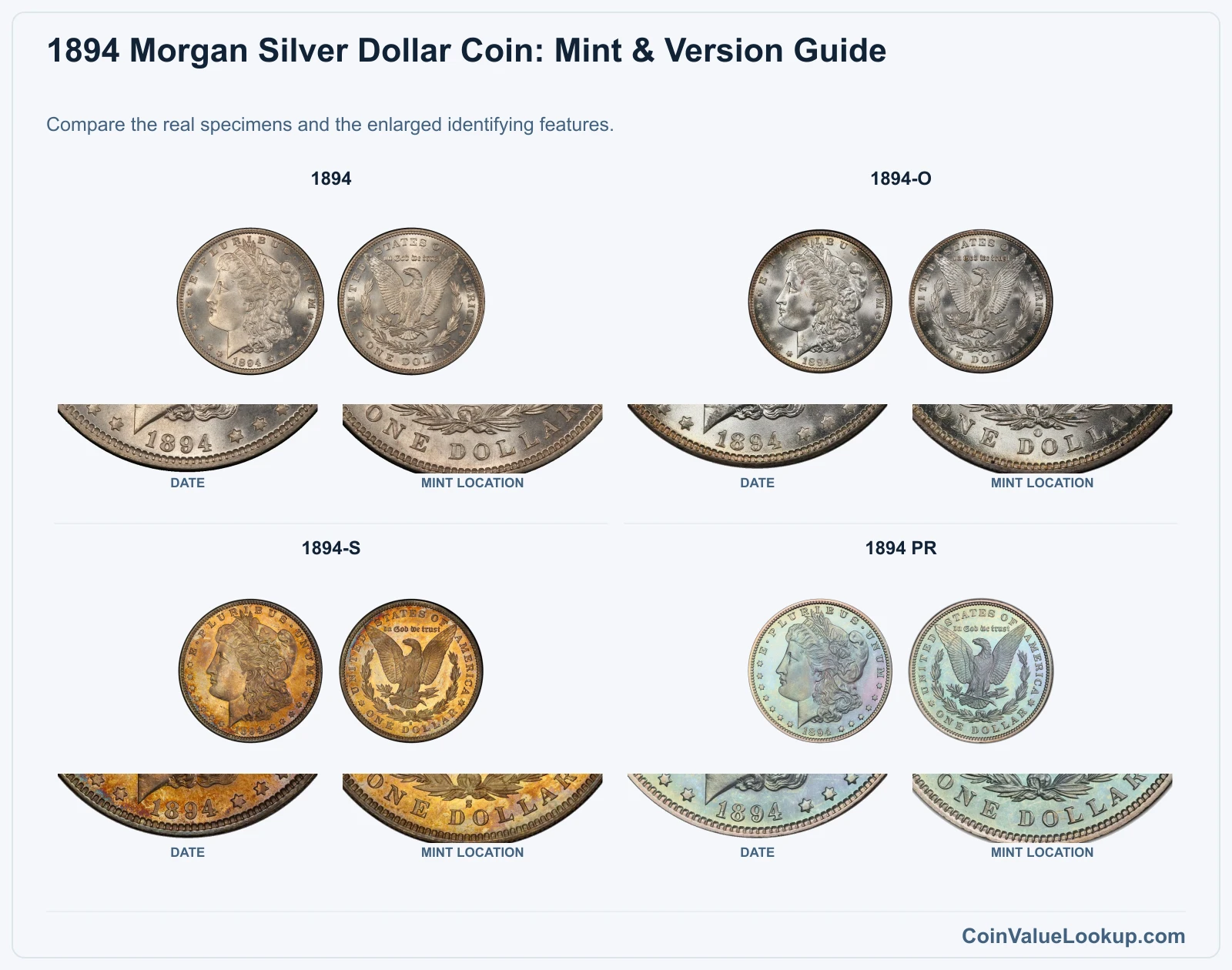
The 1894 Morgan Silver Dollar is a collectible piece struck in 90% silver and 10% copper, weighing 26.73 grams. Its value depends heavily on which mint produced it, its condition, whether it carries original surfaces, and if it is a proof or business strike.
Because this is an unusual date in the Morgan series, each version requires individual assessment based on authenticated identity and grade.
Fast Way to Identify Your 1894 Morgan Silver Dollar
The quickest way to start figuring out what your 1894 Morgan Dollar is worth is to upload clear photos of both the front and back of your coin. Our identifier can provide a preliminary identification of your coin's mint, design details, and general condition from those images alone.
That first step narrows things down before you dig deeper.
1894 Morgan Silver Dollar Value
Upload both sides of your 1894 Morgan Silver Dollar.
Front Obverse
Upload photo
Back Reverse
Upload photo
Which 1894 Morgan Silver Dollar Versions Are Worth Money?
- The 1894 Proof (PR) is a specially manufactured finish and the scarcest version to find; authentication is essential before assuming proof status.
- PL or DMPL surface designations on business strikes can carry premiums, but a shiny surface alone does not qualify; third-party attribution matters.
- Do not pay a premium for ordinary wear, cleaning, artificial plating, photographic glare, or an unverified error claim.
Step 1: Identify Your 1894 Morgan Silver Dollar Mint Mark and Version
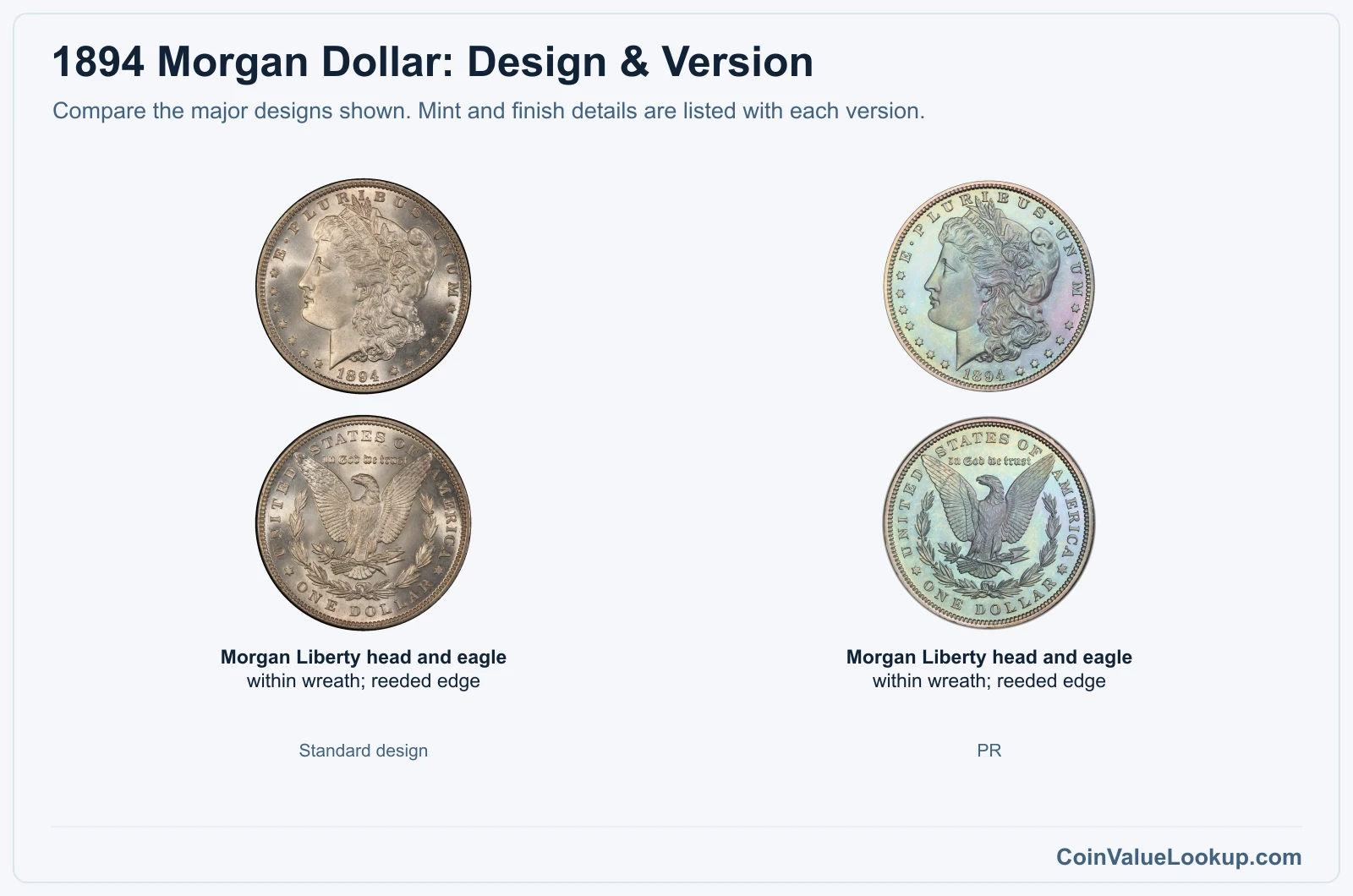
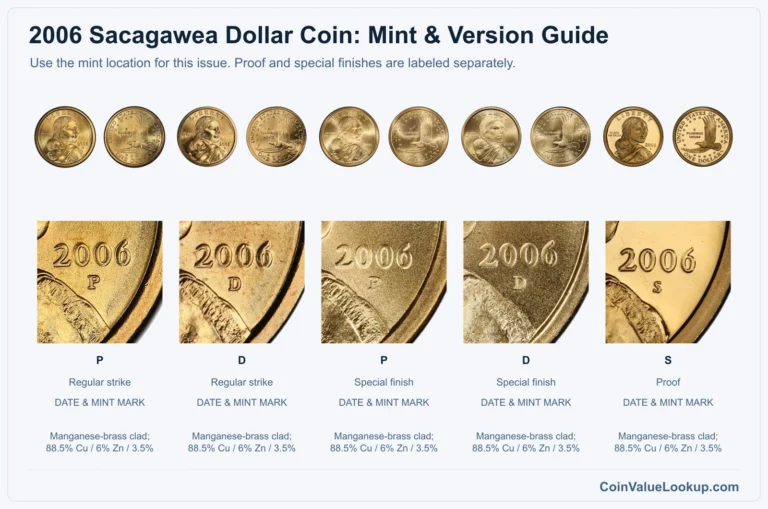
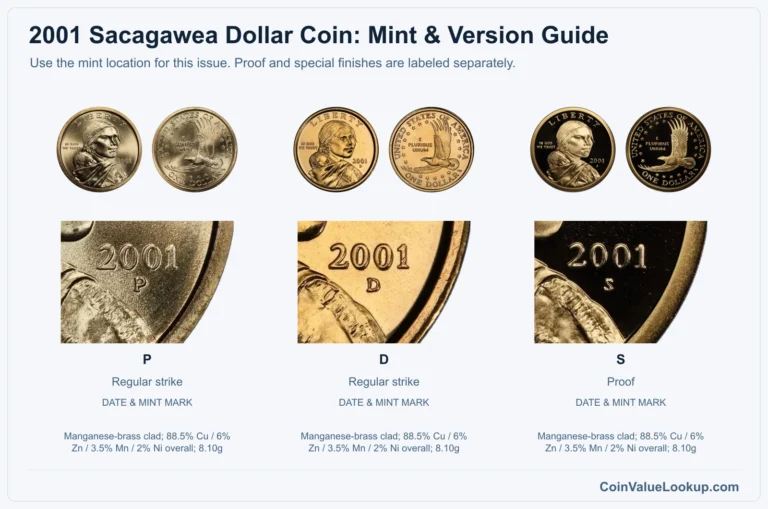
Flip the coin over and look below the bow of the wreath on the reverse. That is where the mintmark lives.
No letter means Philadelphia. An "O" means New Orleans, and an "S" means San Francisco.
There is no "D" or "CC" mintmark for 1894.
The obverse shows the Morgan Liberty head facing left, with a cap and laurel wreath. The reverse features an eagle with outstretched wings within a wreath.
The edge is reeded, meaning it has fine vertical lines around its circumference.
All genuine 1894 Morgan Dollars are 90% silver and 10% copper at 26.73 grams. A coin that feels too light, lacks reeding, or shows a different design is not a match.
Cleaned, polished, or plated coins lose the original surface character and are worth less than examples with natural toning and luster.
Coin Value Lookup is a good starting point if you want to look up guides for other dates and denominations in the Morgan series. You can quickly find the version that matches your coin and understand what drives its value.
Step 2: Check Your 1894 Morgan Silver Dollar Grade
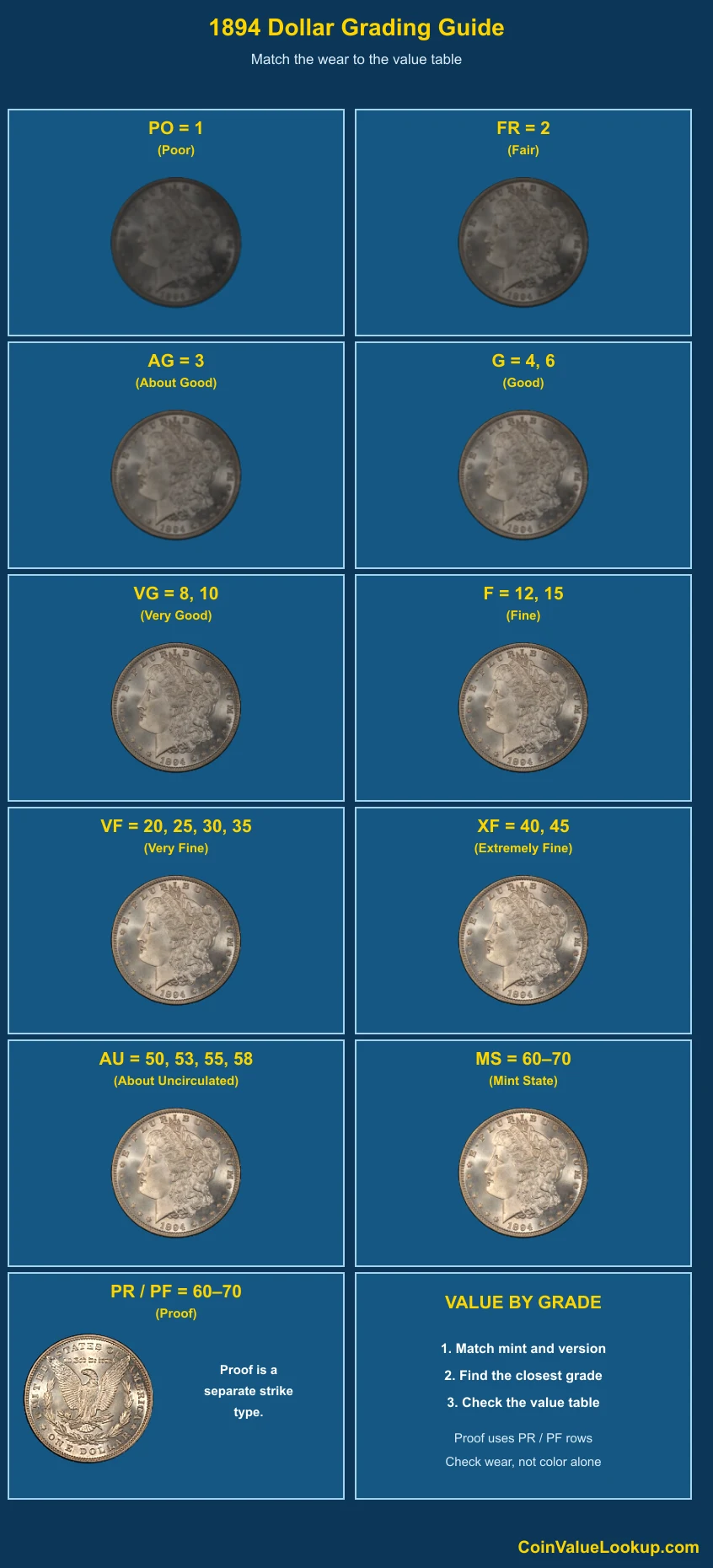
Start by examining Liberty's hair above the ear and the high point of her cheek. On a well-circulated coin, these areas are flat and smooth.
A lightly circulated piece, around AU grade, still shows some luster in the protected areas but has obvious friction on those high spots.
Mint State coins retain full original luster with no wear on the hair or cheek. However, bag marks, which are small nicks and dings from coins banging against each other in storage bags, can lower a Mint State coin's grade significantly.
A coin covered in bag marks is still uncirculated, but it will not grade as high as a clean, mark-free example.
Proof coins are a different category entirely and should not be compared side by side with business strikes for grading purposes. Use the comparison image to see the progression from circulated through AU to Mint State on the same coin type.
Details-graded coins, those that have been cleaned or damaged, are identified separately and typically bring less than problem-free examples at the same apparent wear level.
Prooflike and Deep Mirror Prooflike surfaces can appear on business strikes and are surface designations, not proof manufacture. A shiny coin is not automatically a proof or prooflike piece.
Step 3: Check 1894 Morgan Silver Dollar Value by Mint and Version
1894 Morgan Silver Dollar
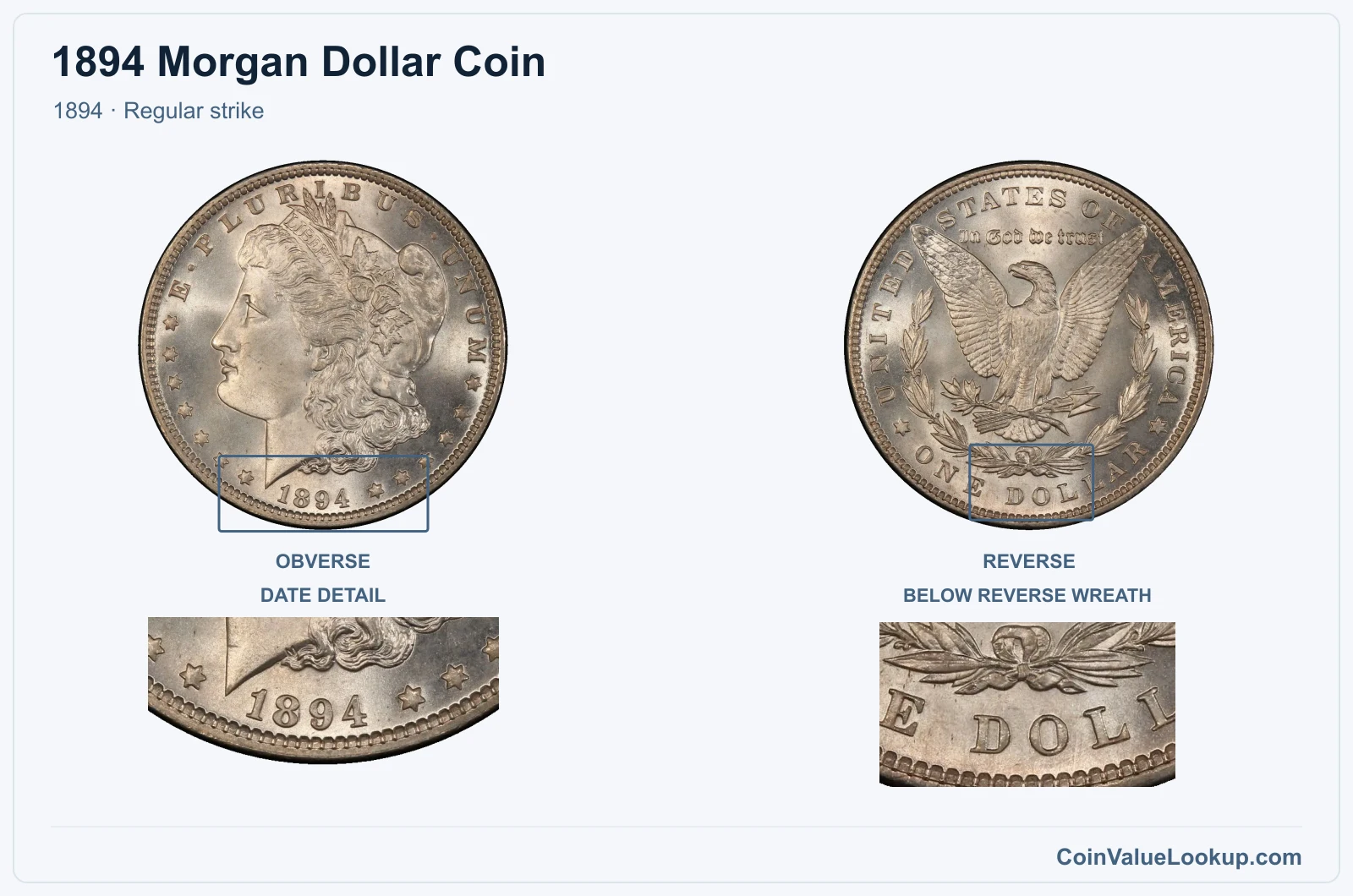
The 1894 Philadelphia Morgan Dollar has no mintmark below the wreath bow on the reverse. It is a business strike in 90% silver.
Before comparing value, confirm your coin truly lacks a mintmark and has not been altered to remove one.
Original surfaces matter more than you might expect. A coin that has been cleaned, dipped, or polished loses the natural luster and toning collectors prefer.
Prooflike (PL) and Deep Mirror Prooflike (DMPL) surface designations can apply to eligible business strikes from this mint and act as price filters, but they require professional attribution. Value depends on authenticated identity and condition, so having the coin graded by a major service is the clearest path to understanding what you have.
Range Grade
Price Auction Records Appraisal PO PO 1
—
Coin Identifier FR FR 2
—
Coin Identifier AG AG 3
Coin Identifier G G 4
Coin Identifier
G 6
Coin Identifier VG VG 8
Coin Identifier
VG 10
Coin Identifier F F 12
Coin Identifier
F 15
Coin Identifier VF VF 20
Coin Identifier
VF 25
Coin Identifier
VF 30
Coin Identifier
VF 35
Coin Identifier XF XF 40
Coin Identifier
XF 45
Coin Identifier AU AU 50
Coin Identifier
AU 53
Coin Identifier
AU 55
Coin Identifier
AU 58
Coin Identifier MS MS 60
Coin Identifier
MS 61
Coin Identifier
MS 62
Coin Identifier
MS 63
Coin Identifier
MS 64
Coin Identifier
MS 65
Coin Identifier
MS 66
Coin Identifier
MS 67
—
Coin Identifier
MS 68
—
—
—
MS 69
—
—
—
MS 70
—
—
—
1894 Morgan Silver Dollar — O
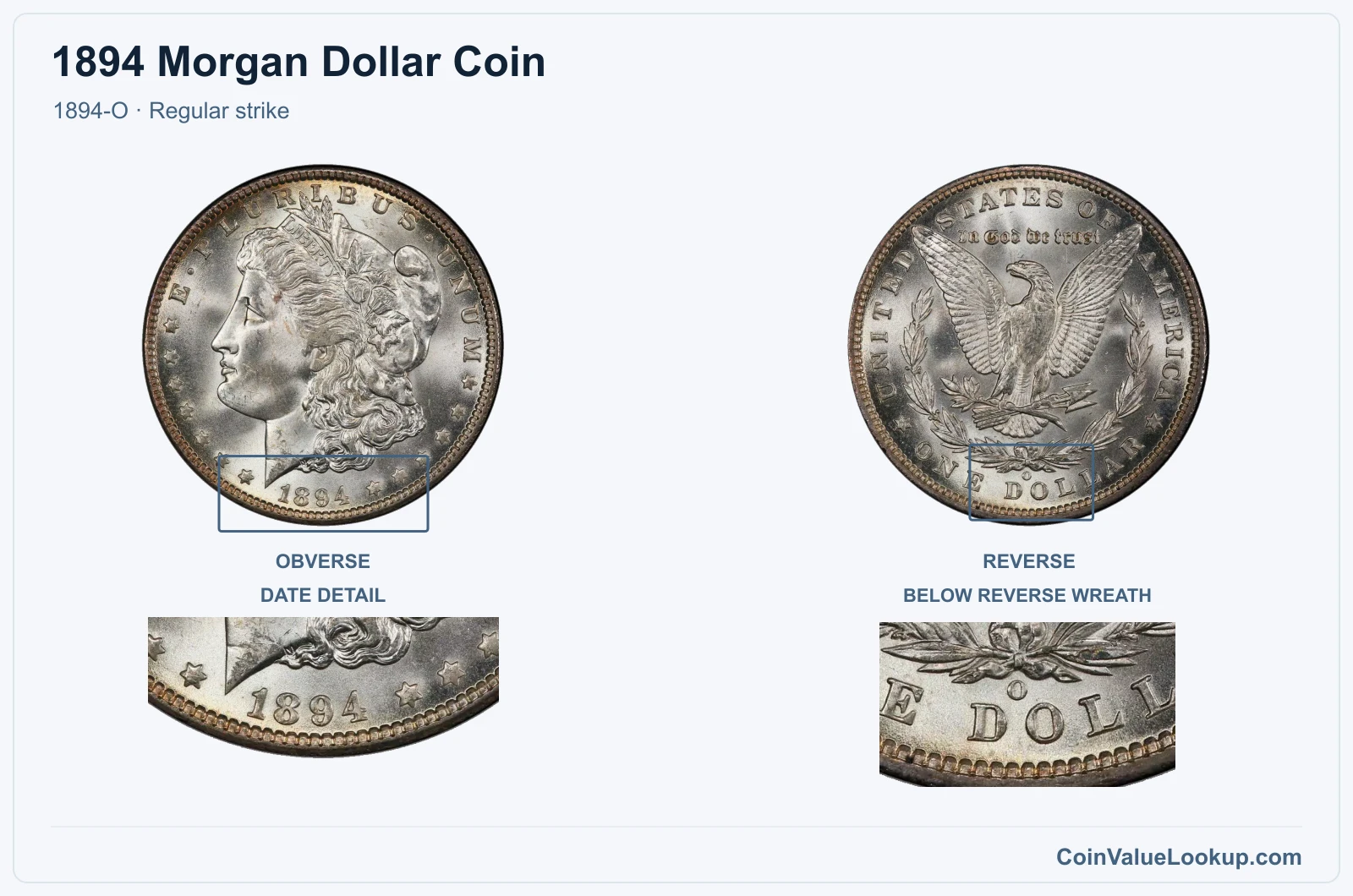
The 1894-O was struck at the New Orleans Mint. Look for a small "O" mintmark below the wreath bow on the reverse.
New Orleans coins from this era can vary widely in strike quality, so do not assume a soft strike means heavy wear.
Original, uncleaned surfaces are important for this version. PL and DMPL surface designations exist for eligible business strikes and may affect pricing, but they must be professionally attributed.
Value for the 1894-O depends on authenticated identity, grade, and the presence or absence of any errors. A professional grading service can clarify where your specific coin falls.
Range Grade
Price Auction Records Appraisal PO PO 1
—
Coin Identifier FR FR 2
—
Coin Identifier AG AG 3
Coin Identifier G G 4
Coin Identifier
G 6
Coin Identifier VG VG 8
Coin Identifier
VG 10
Coin Identifier F F 12
Coin Identifier
F 15
Coin Identifier VF VF 20
Coin Identifier
VF 25
Coin Identifier
VF 30
Coin Identifier
VF 35
Coin Identifier XF XF 40
Coin Identifier
XF 45
Coin Identifier AU AU 50
Coin Identifier
AU 53
Coin Identifier
AU 55
Coin Identifier
AU 58
Coin Identifier MS MS 60
Coin Identifier
MS 61
Coin Identifier
MS 62
Coin Identifier
MS 63
Coin Identifier
MS 64
Coin Identifier
MS 65
Coin Identifier
MS 66
—
—
—
MS 67
—
—
—
MS 68
—
—
—
MS 69
—
—
—
MS 70
—
—
—
1894 Morgan Silver Dollar — S
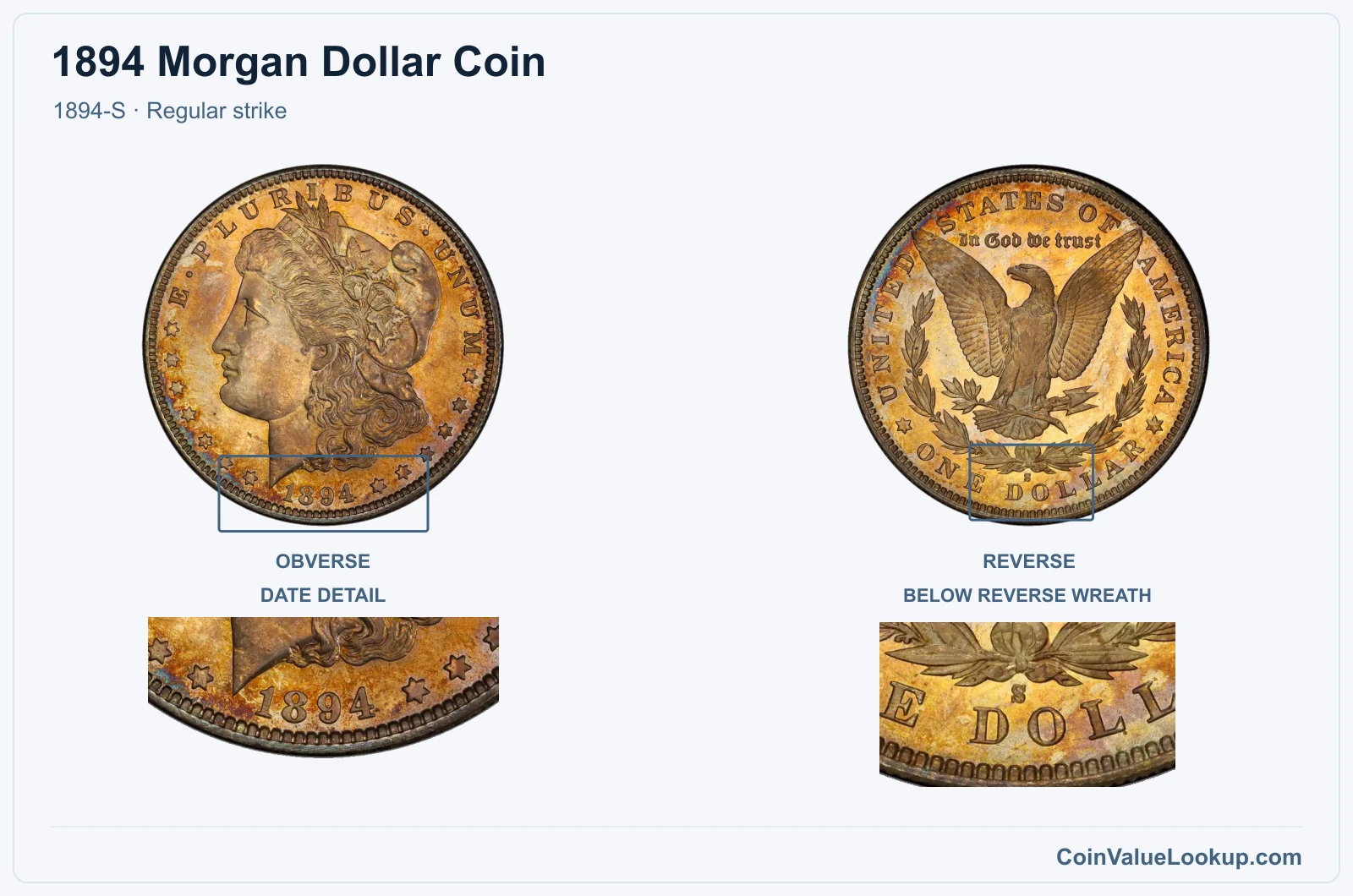
The 1894-S carries a small "S" mintmark below the wreath bow, indicating the San Francisco Mint. San Francisco strikes from this period are often better struck than their New Orleans counterparts, though quality still varies coin to coin.
Condition is king here. A coin with original surfaces and minimal bag marks will always outperform a cleaned or damaged example at the same apparent grade.
PL and DMPL designations can apply to business strikes from San Francisco and serve as price filters when professionally confirmed. Because no set numeric range is adopted for this version, individual assessment through authenticated grading is the best way to establish what your 1894-S is worth.
Range Grade
Price Auction Records Appraisal PO PO 1
—
Coin Identifier FR FR 2
—
Coin Identifier AG AG 3
Coin Identifier G G 4
Coin Identifier
G 6
Coin Identifier VG VG 8
Coin Identifier
VG 10
Coin Identifier F F 12
Coin Identifier
F 15
Coin Identifier VF VF 20
Coin Identifier
VF 25
Coin Identifier
VF 30
Coin Identifier
VF 35
Coin Identifier XF XF 40
Coin Identifier
XF 45
Coin Identifier AU AU 50
Coin Identifier
AU 53
Coin Identifier
AU 55
Coin Identifier
AU 58
Coin Identifier MS MS 60
Coin Identifier
MS 61
Coin Identifier
MS 62
Coin Identifier
MS 63
Coin Identifier
MS 64
Coin Identifier
MS 65
Coin Identifier
MS 66
Coin Identifier
MS 67
Coin Identifier
MS 68
—
—
—
MS 69
—
—
—
MS 70
—
—
—
1894 Morgan Silver Dollar — PR
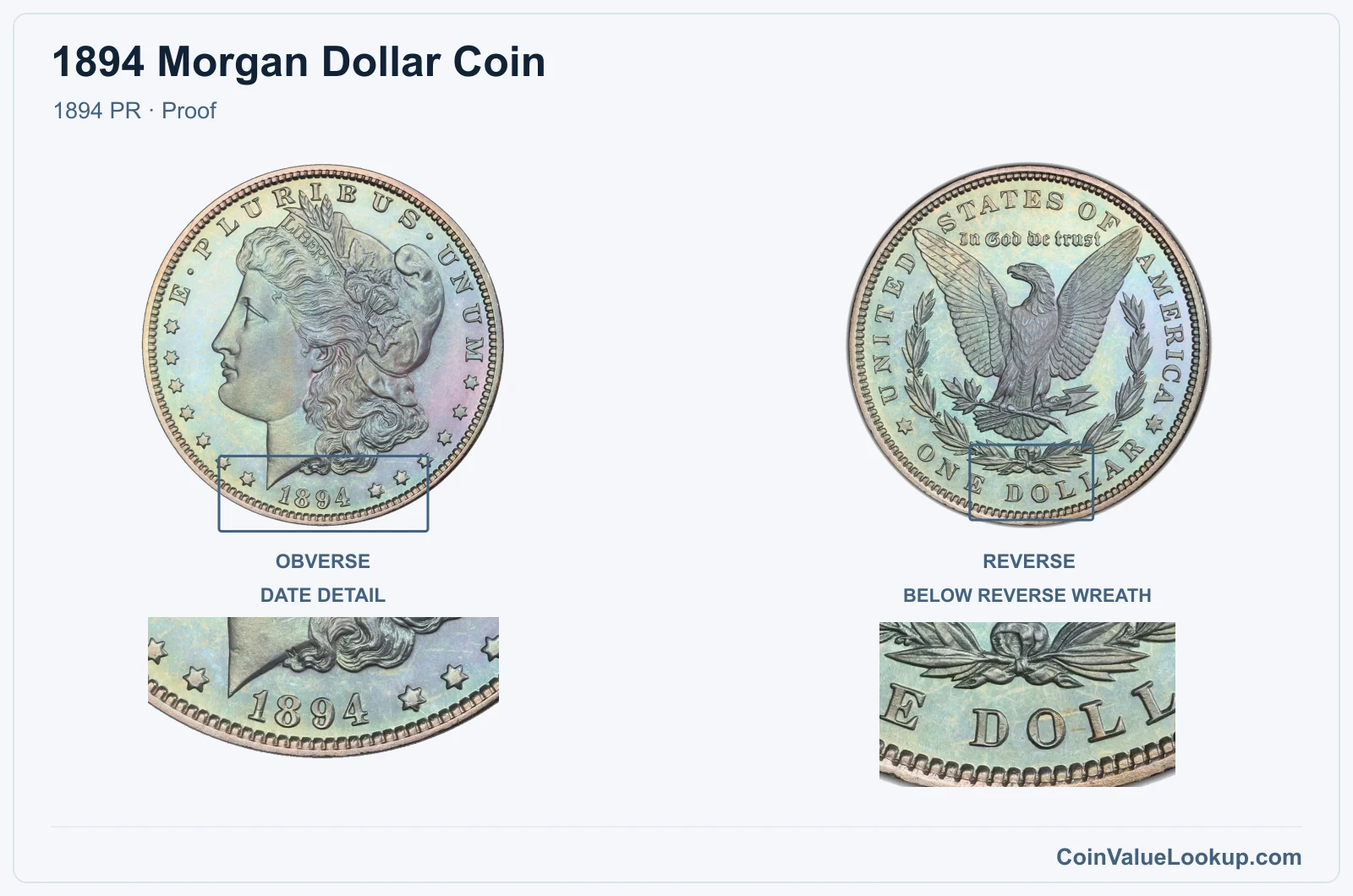
The 1894 Proof Morgan Dollar was manufactured at Philadelphia with a special finish, and it carries no mintmark. A proof is not simply a high-grade or shiny coin.
Proof manufacture involves specially prepared dies and planchets, producing sharp detail and mirror-like fields that differ from even the most pristine business strike.
Do not assume your coin is a proof because it looks shiny or lustrous. Many business strikes, especially those with PL or DMPL surfaces, can fool the untrained eye.
Professional authentication from a major grading service is essential before assigning proof status. The 1894 Proof had limited production, making it a genuinely scarce piece.
Value depends entirely on confirmed proof identity, grade, and the quality of the surfaces. Cleaned or impaired proofs are graded separately and bring considerably less than problem-free examples.
Range Grade
Price Auction Records Appraisal PR PR 1
—
Coin Identifier
PR 2
—
Coin Identifier
PR 3
—
Coin Identifier
PR 4
—
Coin Identifier
PR 6
—
Coin Identifier
PR 8
—
Coin Identifier
PR 10
—
Coin Identifier
PR 12
—
Coin Identifier
PR 15
—
Coin Identifier
PR 20
—
Coin Identifier
PR 25
—
Coin Identifier
PR 30
—
Coin Identifier
PR 35
Coin Identifier
PR 40
—
Coin Identifier
PR 45
Coin Identifier
PR 50
Coin Identifier
PR 53
Coin Identifier
PR 55
Coin Identifier
PR 58
Coin Identifier
PR 60
Coin Identifier
PR 61
Coin Identifier
PR 62
Coin Identifier
PR 63
Coin Identifier
PR 64
Coin Identifier
PR 65
Coin Identifier
PR 66
Coin Identifier
PR 67
Coin Identifier
PR 68
Coin Identifier
PR 69
—
—
—
PR 70
—
—
—
1894 Morgan Silver Dollar Error List
1. 1894 Morgan Silver Dollar — Struck-Through Error
A struck-through error on the 1894 Morgan Dollar occurs when foreign material, such as grease, thread, or a metal fragment, gets between the die and the planchet during striking. The result is a localized depression or incomplete area of design where the obstruction blocked the metal from flowing fully into the die.
Look for an impression that does not match normal design elements. A grease-filled die leaves a smooth, flat area, while a retained foreign object can leave a textured or oddly shaped imprint.
These are distinct categories.
Be careful not to confuse struck-through errors with ordinary wear, post-mint scratches, cleaning damage, or a simply weak strike. Genuine struck-through impressions are recessed into the coin's surface and were created at the moment of striking.
Condition, visibility, and the specific type of struck-through material all affect value, but no set price range is available for this error. Professional authentication is strongly recommended, as source-reported error listings are not independent confirmation that your specific coin has this variety.