1802 Draped Bust Dime Coin Value: How Much Is It Worth?
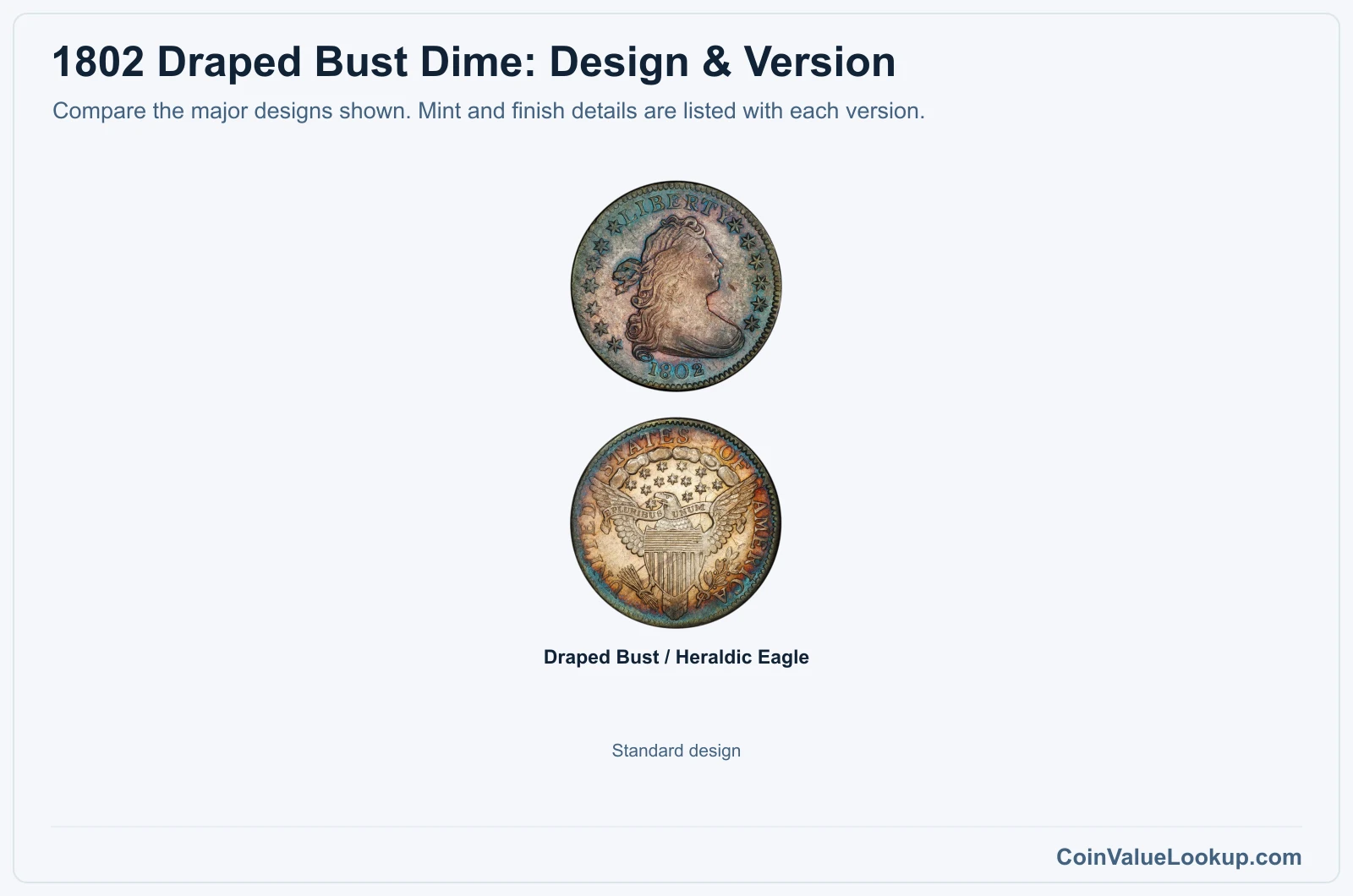
The 1802 Draped Bust Dime is one of the earliest silver dimes struck by the United States Mint. Guide estimates for this date range from about $1,881.00 in Good-4 condition to around $79,426.00 at the MS63 level, based on USA Coin Book figures.
These are guide anchors, not guaranteed offers. Your coin's actual value depends on the specific condition, original surfaces and whether it has been cleaned or damaged.
Fast Way to Identify Your 1802 Draped Bust Dime
If you have an 1802 dime and want a quick preliminary identification, upload clear photos of both the front and back. That lets us compare the design, date and overall condition against known references.
Sharp, well-lit images help distinguish wear from strike weakness, which matters a lot on these early coins.
1802 Draped Bust Dime Value
Upload both sides of your 1802 Draped Bust Dime.
Front Obverse
Upload photo
Back Reverse
Upload photo
Which 1802 Draped Bust Dime Versions Are Worth Money?
- The 1802 date is a low-mintage early silver issue, making any genuine example collectible regardless of grade.
- Coins retaining original, uncleaned surfaces command stronger premiums than bright, polished examples of similar wear.
- Well-preserved specimens approaching Mint State are exceptionally scarce and carry guide values many times higher than circulated pieces.
Step 1: Identify Your 1802 Draped Bust Dime Mint Mark and Version
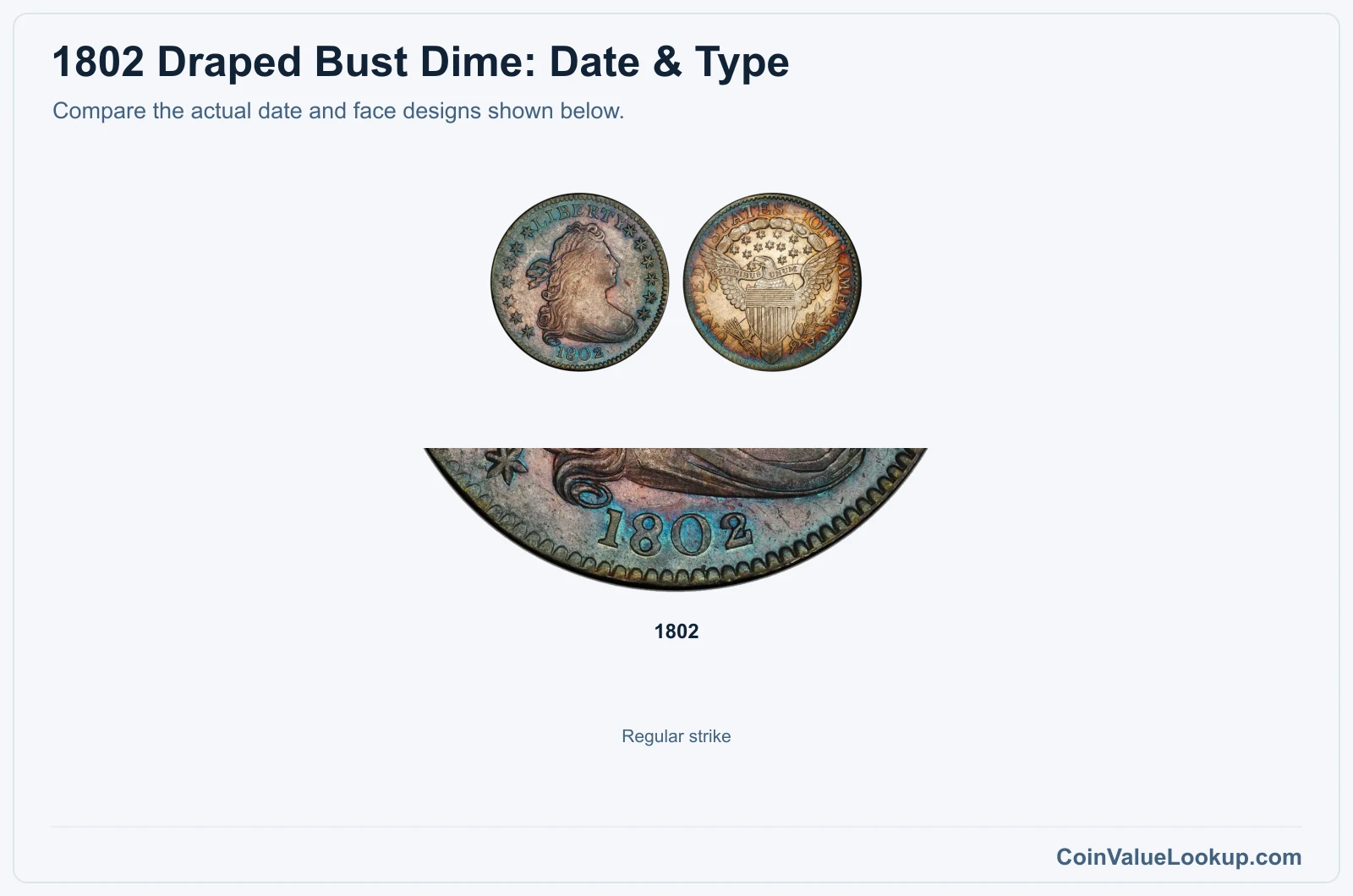
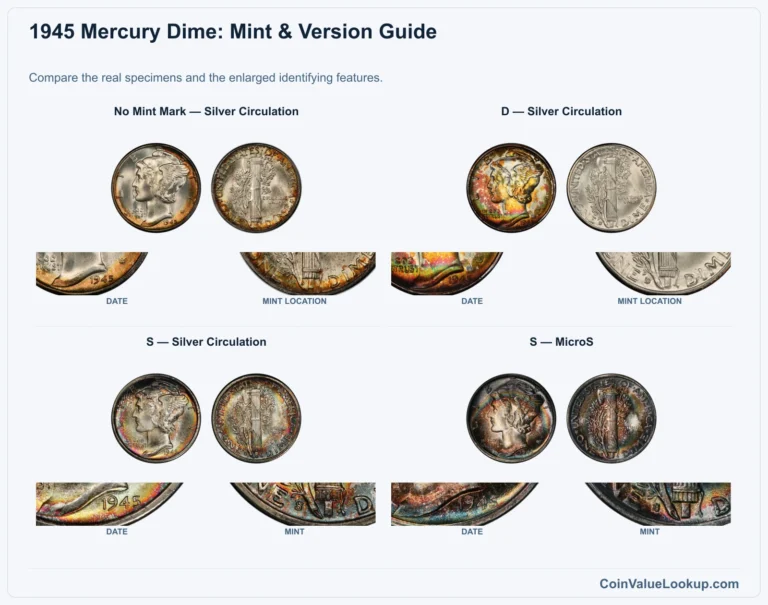
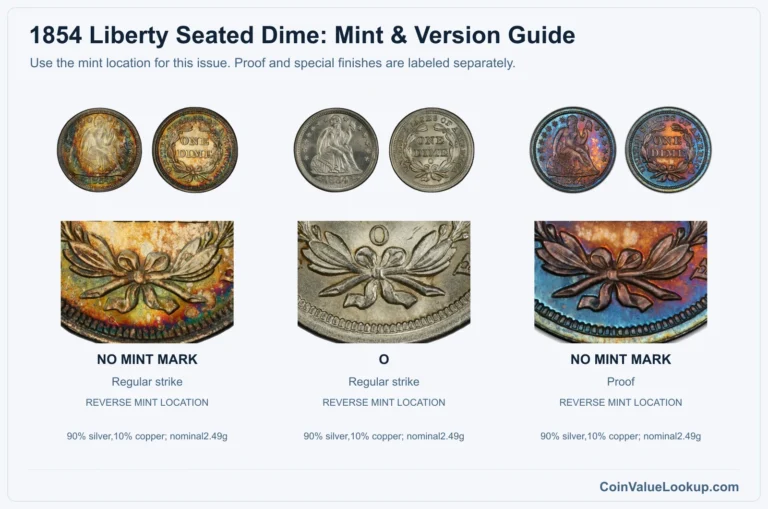
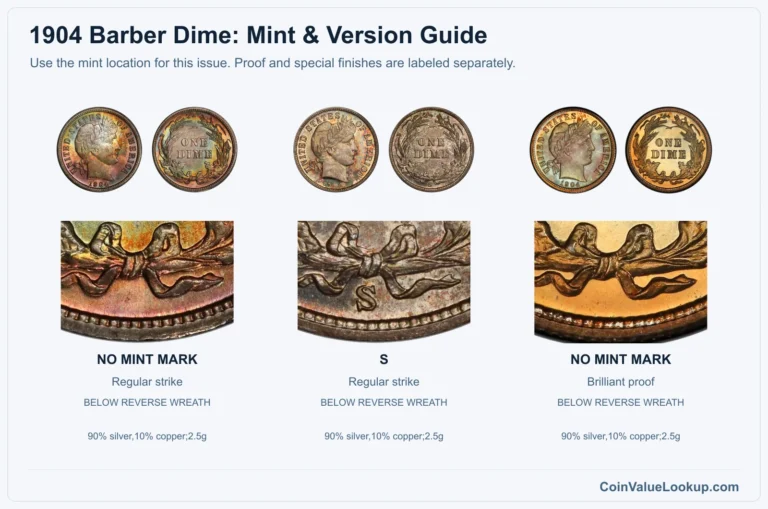
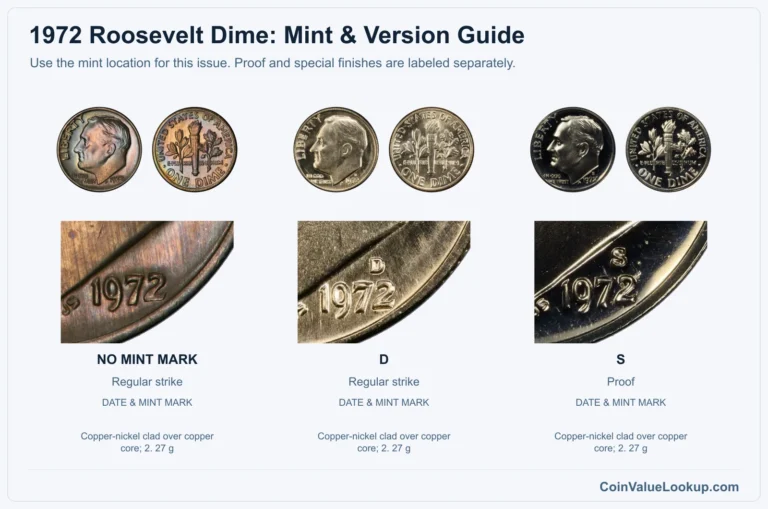
Every 1802 Draped Bust Dime was struck at Philadelphia. There is no mintmark to look for on this issue.
The obverse shows Liberty facing right with flowing, draped hair. The reverse features a Heraldic Eagle with a shield on its breast.
This design pairing was standard for the denomination in that era.
One easy mistake: Draped Bust dimes do not display a "10C" denomination anywhere on the coin. If you see a much smaller coin with a similar design, you may be holding a half dime, which is a completely different denomination and value category.
If it is much larger, it could be a half dollar or dollar. Confirm the size first.
The composition is a silver-copper alloy, approximately 89.24% silver. That silver content alone gives the coin bullion value, but the numismatic premium dwarfs the melt on any genuine 1802 dime.
Coin Value Lookup is a useful starting point if you are trying to figure out which early U.S. coin you actually have. You can look up guides by denomination and year to narrow things down before diving into condition assessment.
Step 2: Check Your 1802 Draped Bust Dime Grade
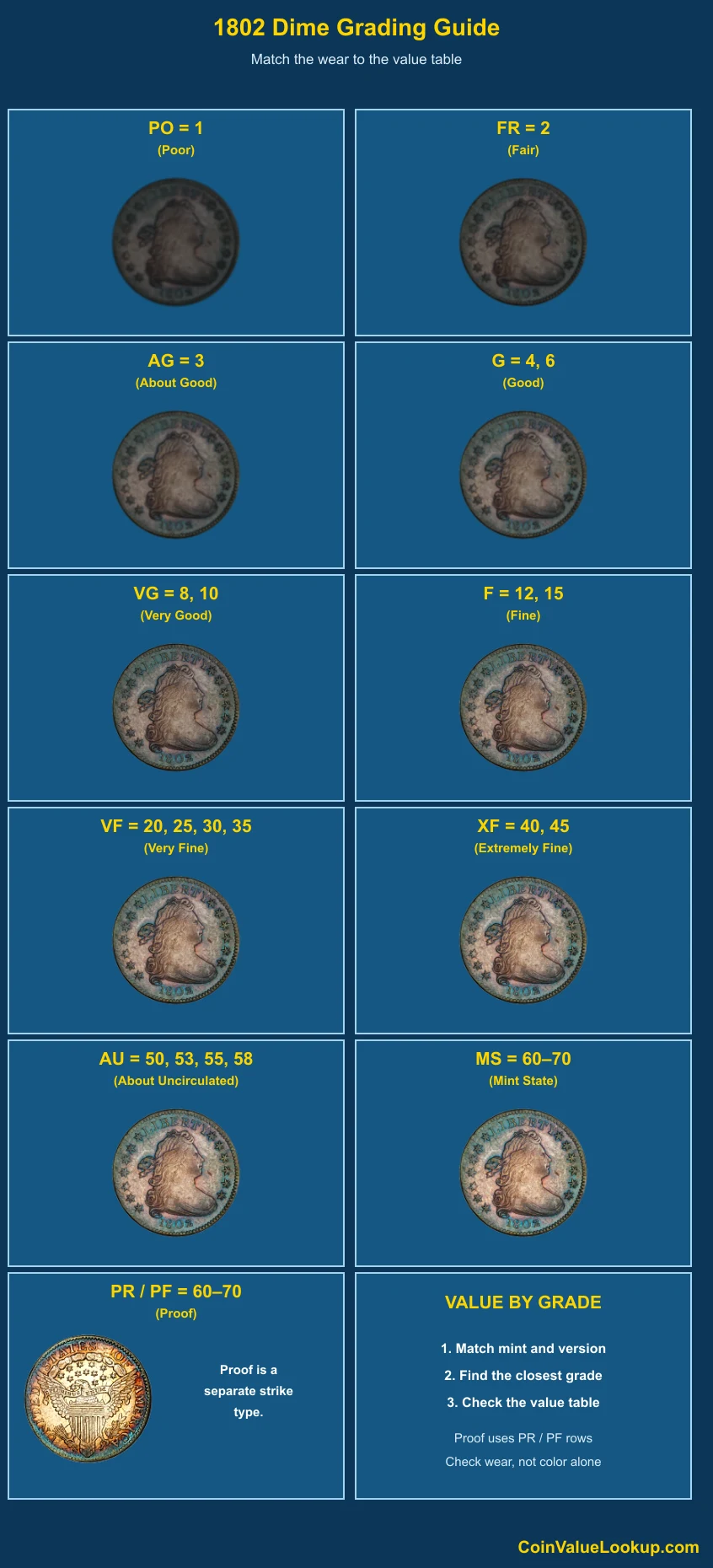
On the obverse, focus on Liberty's hair above the forehead, the cheek and the drapery across her bust. These are the highest points and the first to show friction.
A coin in Good condition will have a visible outline of Liberty with most detail worn smooth.
The reverse wears fastest on the eagle's breast feathers and wing tips. Check those areas carefully against the comparison image.
Here is the tricky part with early dimes: the Mint used hand-operated screw presses, and strike quality varied from coin to coin. A genuinely uncirculated example can still show soft detail in spots where the metal did not fully flow into the die.
Do not confuse flat strike areas with wear. Look at the surrounding luster instead.
Never clean or polish one of these coins. Original surfaces, even if dark or toned, are strongly preferred by collectors.
A cleaned 1802 dime loses a significant portion of its market appeal compared to one with honest, undisturbed patina.
Step 3: Check 1802 Draped Bust Dime Value by Mint and Version
1802 Draped Bust Dime
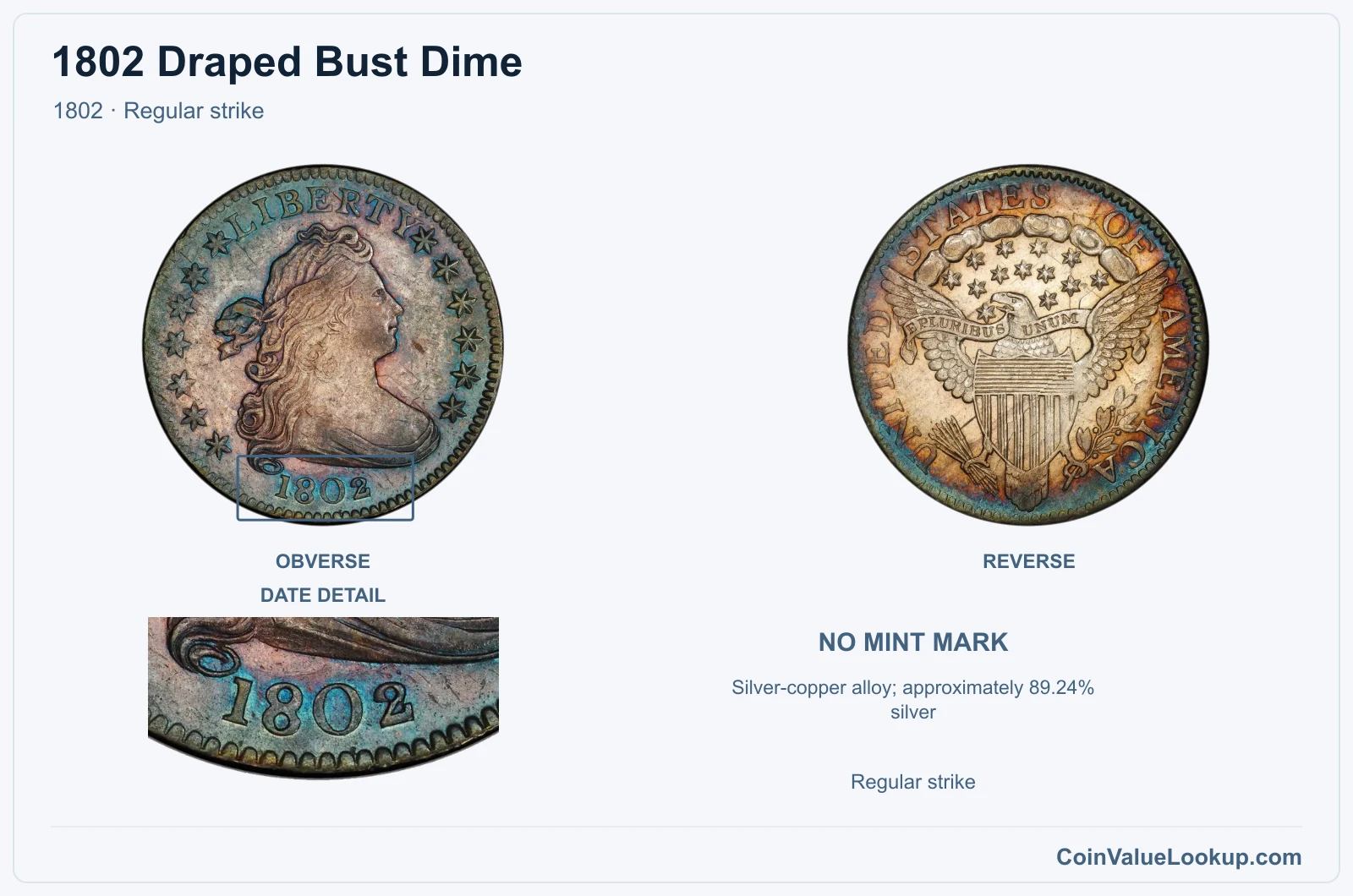
The 1802 Draped Bust Dime was struck only at Philadelphia with no mintmark. It features the Draped Bust obverse paired with the Heraldic Eagle reverse, composed of a silver-copper alloy at roughly 89.24% silver.
USA Coin Book guide estimates place a Good-4 example at about $1,881.00 and an MS63 at approximately $79,426.00. That is a wide spread, and it reflects how dramatically condition affects value on a coin this old and this scarce.
Match the actual date and design before comparing grade. Original surfaces and real wear patterns matter far more than how shiny the coin looks.
A bright, cleaned coin and a dark, original coin at the same technical grade are not worth the same money.
Range Grade
Price Auction Records Appraisal PO PO 1
—
Coin Identifier FR FR 2
Coin Identifier AG AG 3
Coin Identifier G G 4
Coin Identifier
G 6
Coin Identifier VG VG 8
Coin Identifier
VG 10
Coin Identifier F F 12
—
Coin Identifier
F 15
Coin Identifier VF VF 20
Coin Identifier
VF 25
Coin Identifier
VF 30
Coin Identifier
VF 35
Coin Identifier XF XF 40
Coin Identifier
XF 45
Coin Identifier AU AU 50
Coin Identifier
AU 53
—
Coin Identifier
AU 55
Coin Identifier
AU 58
—
Coin Identifier MS MS 60
Coin Identifier
MS 61
Coin Identifier
MS 62
Coin Identifier
MS 63
—
—
—
MS 64
—
—
—
MS 65
—
—
—
MS 66
—
—
—
MS 67
—
—
—
MS 68
—
—
—
MS 69
—
—
—
MS 70
—
—
—