1952 Roosevelt Dime Coin Value: How Much Is It Worth?
The 1952 Roosevelt Dime is a 90% silver coin that still turns up in old collections and occasional bank rolls. Guide estimates place circulated examples around $5.81 in G4 condition, while uncirculated MS65 business strikes range from about $15 to $18 depending on the mint.
Philadelphia proofs carry a separate estimate of roughly $53 in PR65. These are grade-specific retail reference points from USA Coin Book, not guaranteed buy prices, and the silver content means the baseline shifts with precious-metal markets.
Fast Way to Identify Your 1952 Roosevelt Dime
Want a quick read on your 1952 dime? Upload clear photos of the front and back, and our identifier can give you a preliminary take on which mint version you have and its general condition.
Good lighting and a steady shot of the mintmark area on the reverse help the most.
1952 Roosevelt Dime Value
Upload both sides of your 1952 Roosevelt Dime.
Front Obverse
Upload photo
Back Reverse
Upload photo
Which 1952 Roosevelt Dime Versions Are Worth Money?
- Uncirculated examples (MS65 and above) with strong, fully separated torch bands and original luster command the strongest premiums across all three mints.
- Philadelphia proofs in PR65 or higher are valued well above business strikes; independently graded cameo or deep-cameo examples carry additional premiums beyond the ordinary proof estimate.
- A 1952 Philadelphia dime struck with a partial collar on a ragged clip planchet is a compound error — confirm both features before expecting any premium.
- Broadstrike errors on the 1952-D expand the planchet beyond normal rim constraints and are documented at auction in high grade.
- The 1952-S repunched mintmark shows a second S shifted toward the upper left of the primary S — magnification is required to confirm.
- Die cracks and spike-head varieties on Philadelphia and San Francisco strikes are cataloged; each crack path is distinct and must be matched individually.
Step 1: Identify Your 1952 Roosevelt Dime Mint Mark and Version
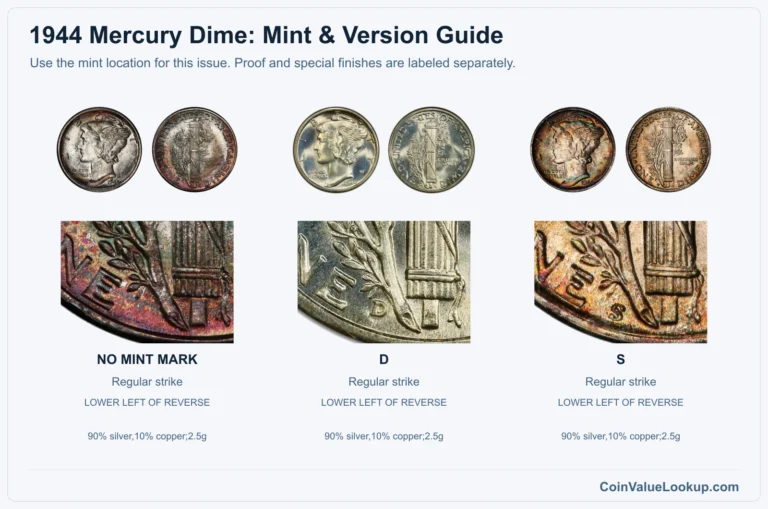
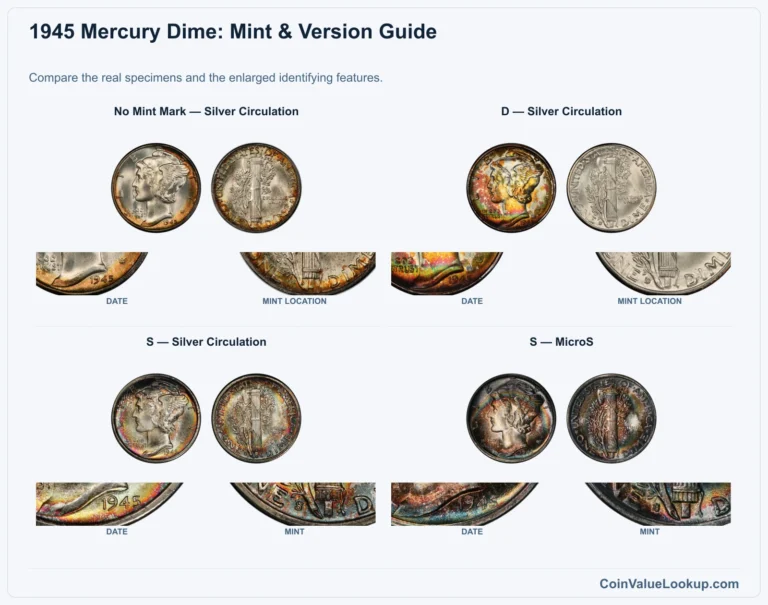
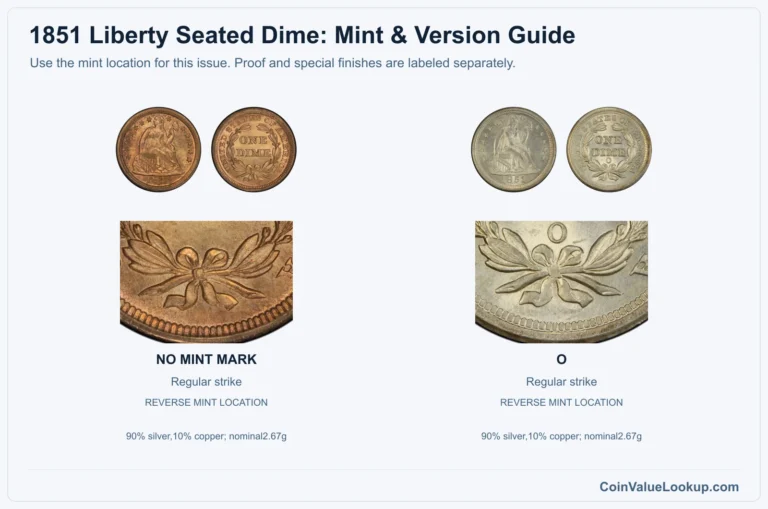
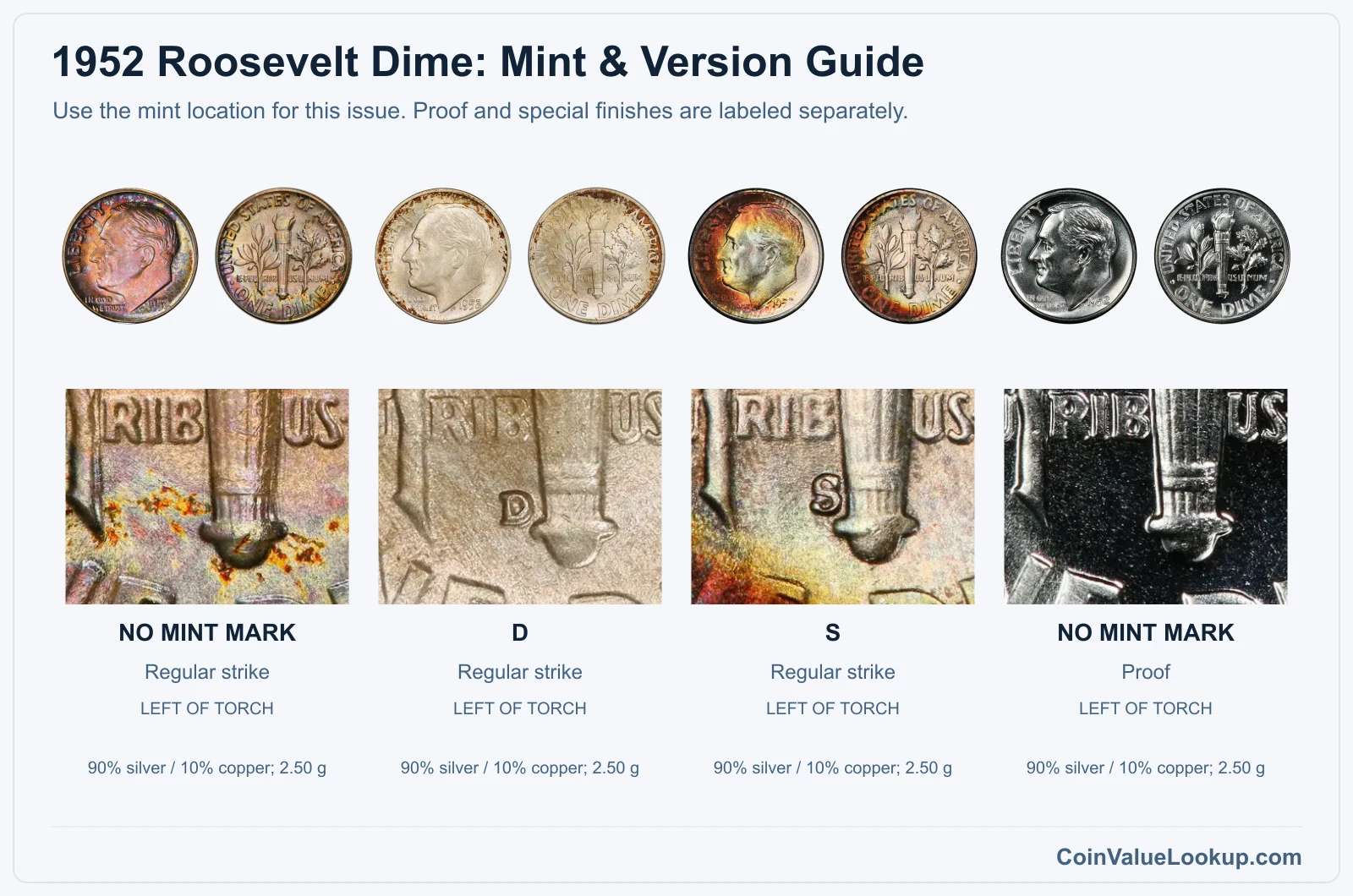
Start by confirming the date reads 1952 with Roosevelt's portrait on the obverse and a torch flanked by olive and oak branches on the reverse. Flip the coin over and look at the base of the torch for a small letter: a D means Denver, an S means San Francisco, and no letter at all means Philadelphia.
The absence of a mintmark on a Philadelphia coin is completely normal and not a missing-mintmark error.
Every regular 1952 dime is struck in 90% silver with 10% copper, weighing about 2.50 grams and measuring roughly 17.9 mm across. There is no clad version for this year.
If your coin sticks to a magnet or looks copper on the edge, it is not a genuine 1952 dime.
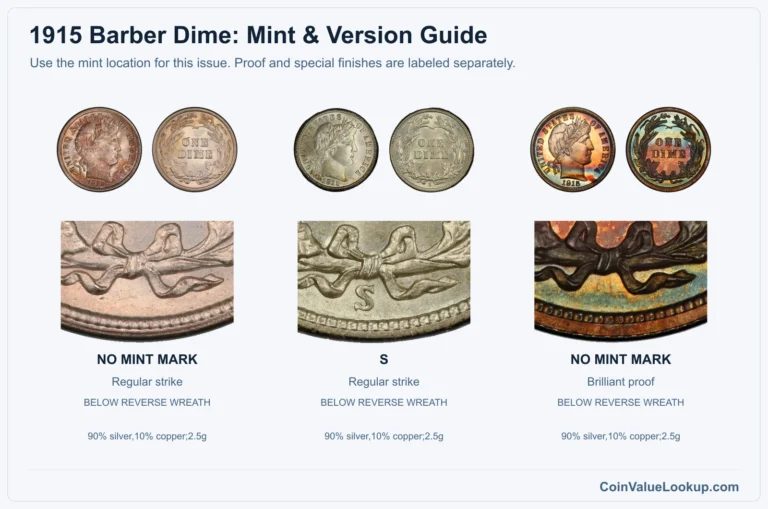
Proofs exist only from Philadelphia this year and must be evaluated separately from business strikes. A proof has mirrored fields and squared rims from a special manufacturing process.
Deep cameo is a contrast designation describing frosted devices against mirror fields, not a different alloy or a higher grade category.
Step 2: Check Your 1952 Roosevelt Dime Grade
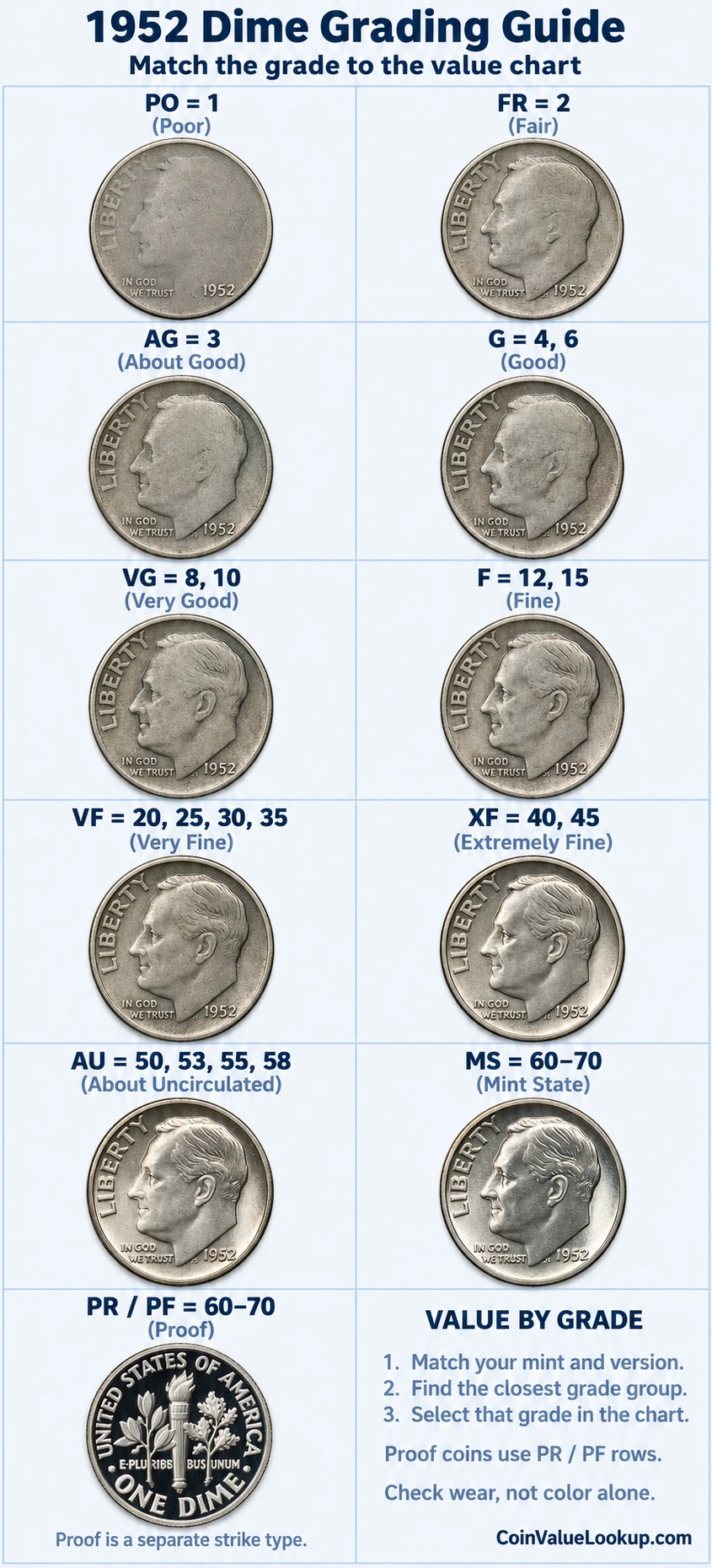
Focus on Roosevelt's cheek, the hair detail above the ear, and the jawline. These are the first places where circulation wear shows up.
On the reverse, check the upper torch lines and the leaf tips for flatness.
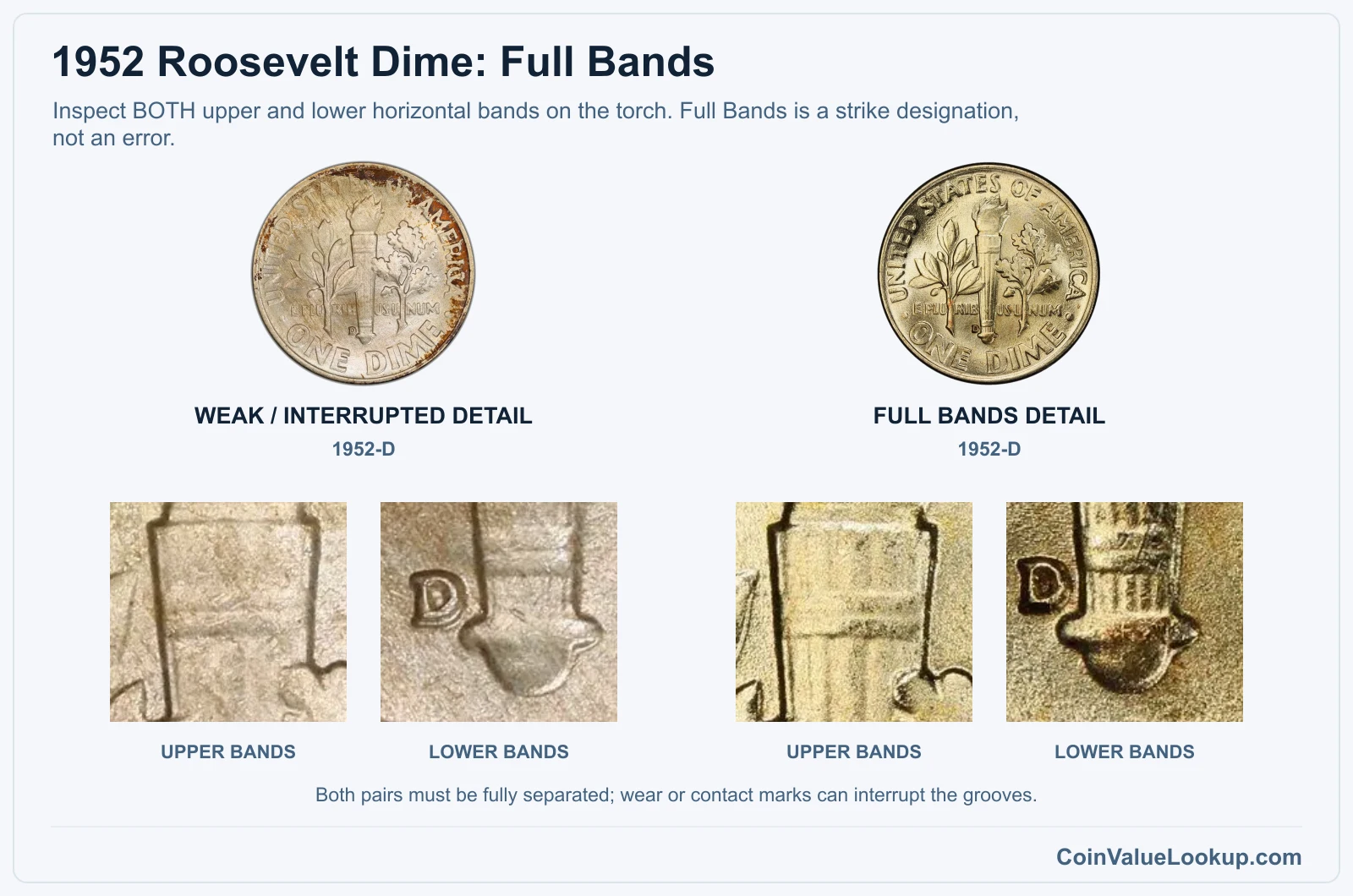
A common mistake is confusing a weak strike with actual wear. If the horizontal torch bands look soft but the cheek still has full luster, you may have a strike issue rather than a circulated coin.
Full Bands is a strike designation referring to complete separation of both horizontal torch-band pairs; it is not an error or a grade.
When comparing your coin to the reference image, match it to the same mint and the same finish. A Philadelphia proof should never be graded against a Denver business strike.
Look for original surfaces free of cleaning, which shows as unnatural brightness or hairline scratches under magnification.
Step 3: Check 1952 Roosevelt Dime Value by Mint and Version
1952 Roosevelt Dime — No Mintmark / Philadelphia
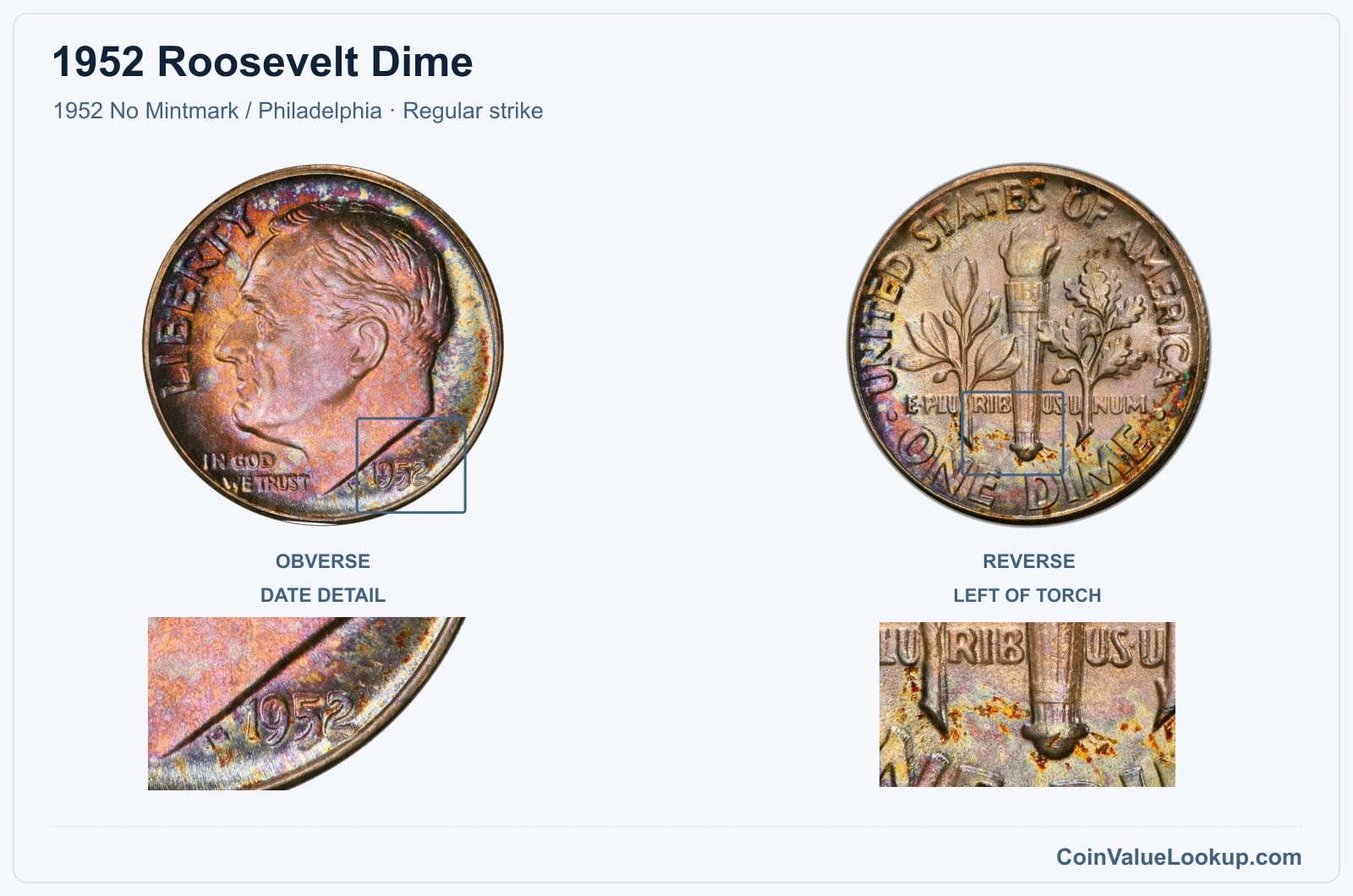
The 1952 Philadelphia dime has no mintmark, which is standard for this mint. In well-worn G4 condition, a guide estimate sits at about $5.81 — essentially its silver melt value.
An MS65 example jumps to around $16 per USA Coin Book.
What separates a $6 coin from a $16 coin is preservation. Look for unbroken luster across both sides, sharp torch bands, and clean fields free of bag marks.
A Full Bands designation, meaning both horizontal torch-band pairs show complete separation, adds appeal within the same numerical grade. Avoid cleaned coins; that unnatural shine actually hurts value.
Range Grade
Price Auction Records Appraisal PO PO 1
—
Coin Identifier FR FR 2
—
Coin Identifier AG AG 3
—
Coin Identifier G G 4
—
Coin Identifier
G 6
—
Coin Identifier VG VG 8
—
Coin Identifier
VG 10
—
Coin Identifier F F 12
—
Coin Identifier
F 15
—
Coin Identifier VF VF 20
—
Coin Identifier
VF 25
—
Coin Identifier
VF 30
—
Coin Identifier
VF 35
—
Coin Identifier XF XF 40
—
Coin Identifier
XF 45
—
Coin Identifier AU AU 50
—
Coin Identifier
AU 53
—
Coin Identifier
AU 55
—
Coin Identifier
AU 58
—
Coin Identifier MS MS 60
—
Coin Identifier
MS 61
—
Coin Identifier
MS 62
—
Coin Identifier
MS 63
—
Coin Identifier
MS 64
Coin Identifier
MS 65
Coin Identifier
MS 66
Coin Identifier
MS 67
Coin Identifier
MS 68
Coin Identifier
MS 69
—
—
—
MS 70
—
—
—
1952 Roosevelt Dime — D / Denver
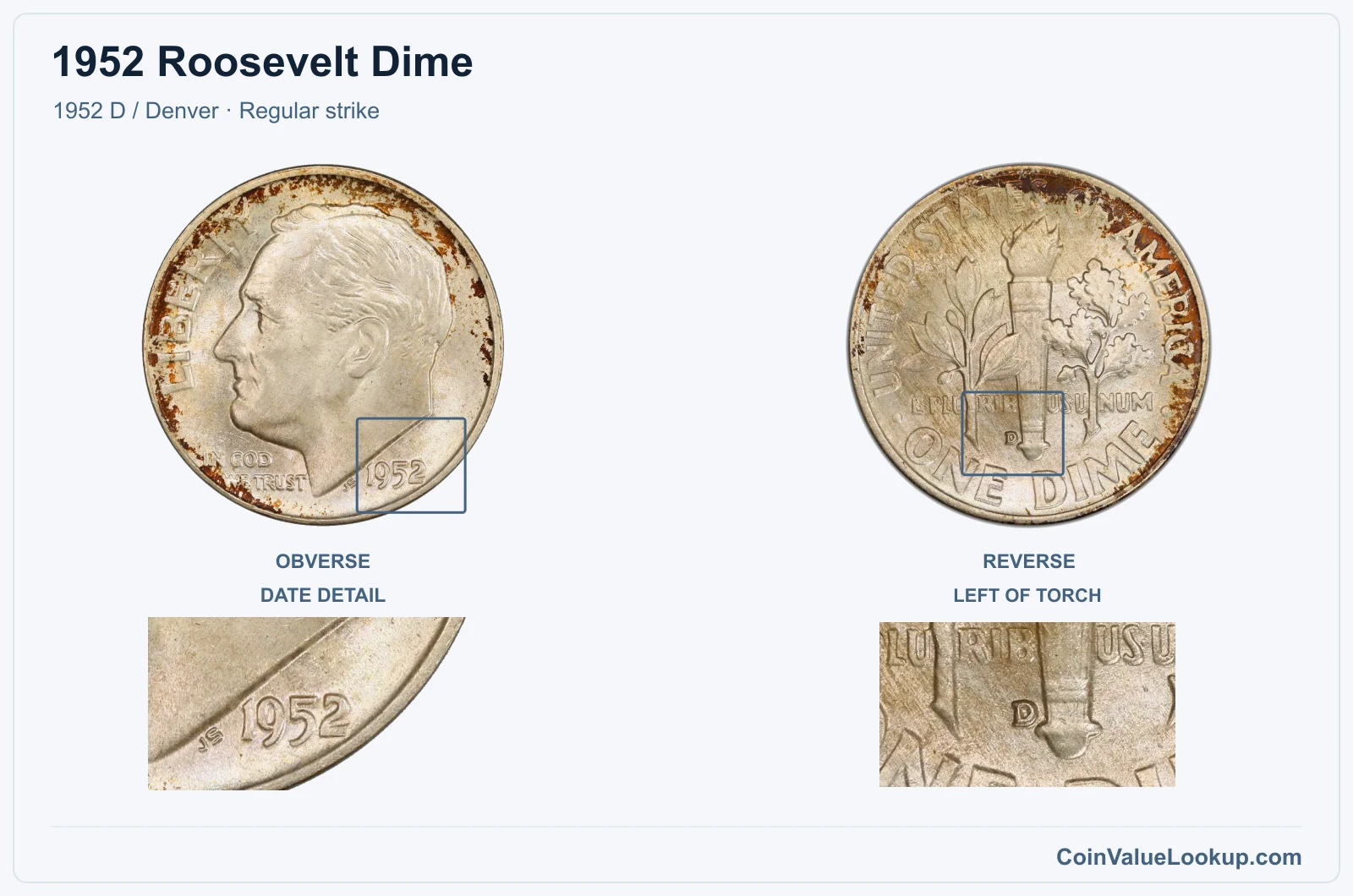
Denver struck 1952 dimes carry a small D to the left of the torch base. Circulated G4 pieces sit at about $5.81, and MS65 examples come in around $15 according to USA Coin Book.
Denver issues from this era can sometimes show softer strikes than Philadelphia, so pay attention to the torch detail before assuming wear. A coin with full luster but mushy bands may just be weakly struck.
Original toning on a Denver example is not damage — it can actually be a plus for collectors who appreciate natural surfaces.
Range Grade
Price Auction Records Appraisal PO PO 1
—
Coin Identifier FR FR 2
—
Coin Identifier AG AG 3
—
Coin Identifier G G 4
—
Coin Identifier
G 6
—
Coin Identifier VG VG 8
—
Coin Identifier
VG 10
—
Coin Identifier F F 12
—
Coin Identifier
F 15
—
Coin Identifier VF VF 20
—
Coin Identifier
VF 25
—
Coin Identifier
VF 30
—
Coin Identifier
VF 35
—
Coin Identifier XF XF 40
—
Coin Identifier
XF 45
—
Coin Identifier AU AU 50
—
Coin Identifier
AU 53
—
Coin Identifier
AU 55
—
Coin Identifier
AU 58
—
Coin Identifier MS MS 60
—
Coin Identifier
MS 61
—
Coin Identifier
MS 62
—
Coin Identifier
MS 63
—
Coin Identifier
MS 64
—
Coin Identifier
MS 65
Coin Identifier
MS 66
Coin Identifier
MS 67
Coin Identifier
MS 68
—
—
—
MS 69
—
—
—
MS 70
—
—
—
1952 Roosevelt Dime — S / San Francisco
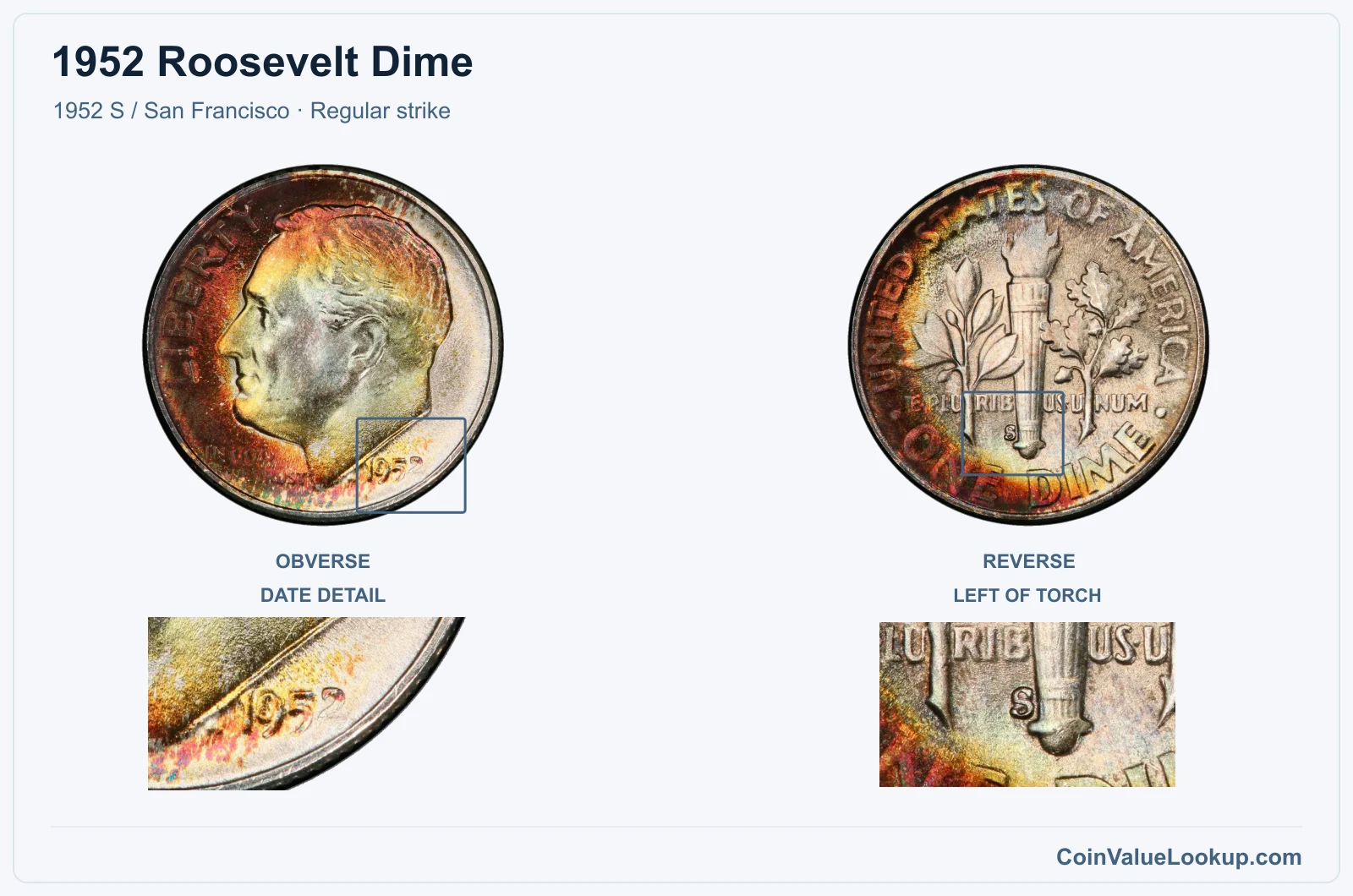
San Francisco's 1952 dime bears an S mintmark near the torch base. The guide estimate is the same $5.81 at G4 as the other mints, but MS65 examples edge up to about $18 per USA Coin Book, the highest of the three business-strike versions this year.
That small premium reflects the fact that well-preserved S-mint dimes from 1952 can be tougher to locate with full detail. Check for the Full Bands designation if your coin looks uncirculated.
When browsing Coin Value Lookup, you can compare this version against other years in the Roosevelt series to see where your coin fits in the broader picture.
Range Grade
Price Auction Records Appraisal PO PO 1
—
Coin Identifier FR FR 2
—
Coin Identifier AG AG 3
—
Coin Identifier G G 4
—
Coin Identifier
G 6
—
Coin Identifier VG VG 8
—
Coin Identifier
VG 10
—
Coin Identifier F F 12
—
Coin Identifier
F 15
—
Coin Identifier VF VF 20
—
Coin Identifier
VF 25
—
Coin Identifier
VF 30
—
Coin Identifier
VF 35
—
Coin Identifier XF XF 40
—
Coin Identifier
XF 45
—
Coin Identifier AU AU 50
—
Coin Identifier
AU 53
—
Coin Identifier
AU 55
—
Coin Identifier
AU 58
—
Coin Identifier MS MS 60
—
Coin Identifier
MS 61
—
Coin Identifier
MS 62
—
Coin Identifier
MS 63
—
Coin Identifier
MS 64
Coin Identifier
MS 65
Coin Identifier
MS 66
Coin Identifier
MS 67
Coin Identifier
MS 68
Coin Identifier
MS 69
—
—
—
MS 70
—
—
—
1952 Roosevelt Dime — Philadelphia Proof (No Mintmark)
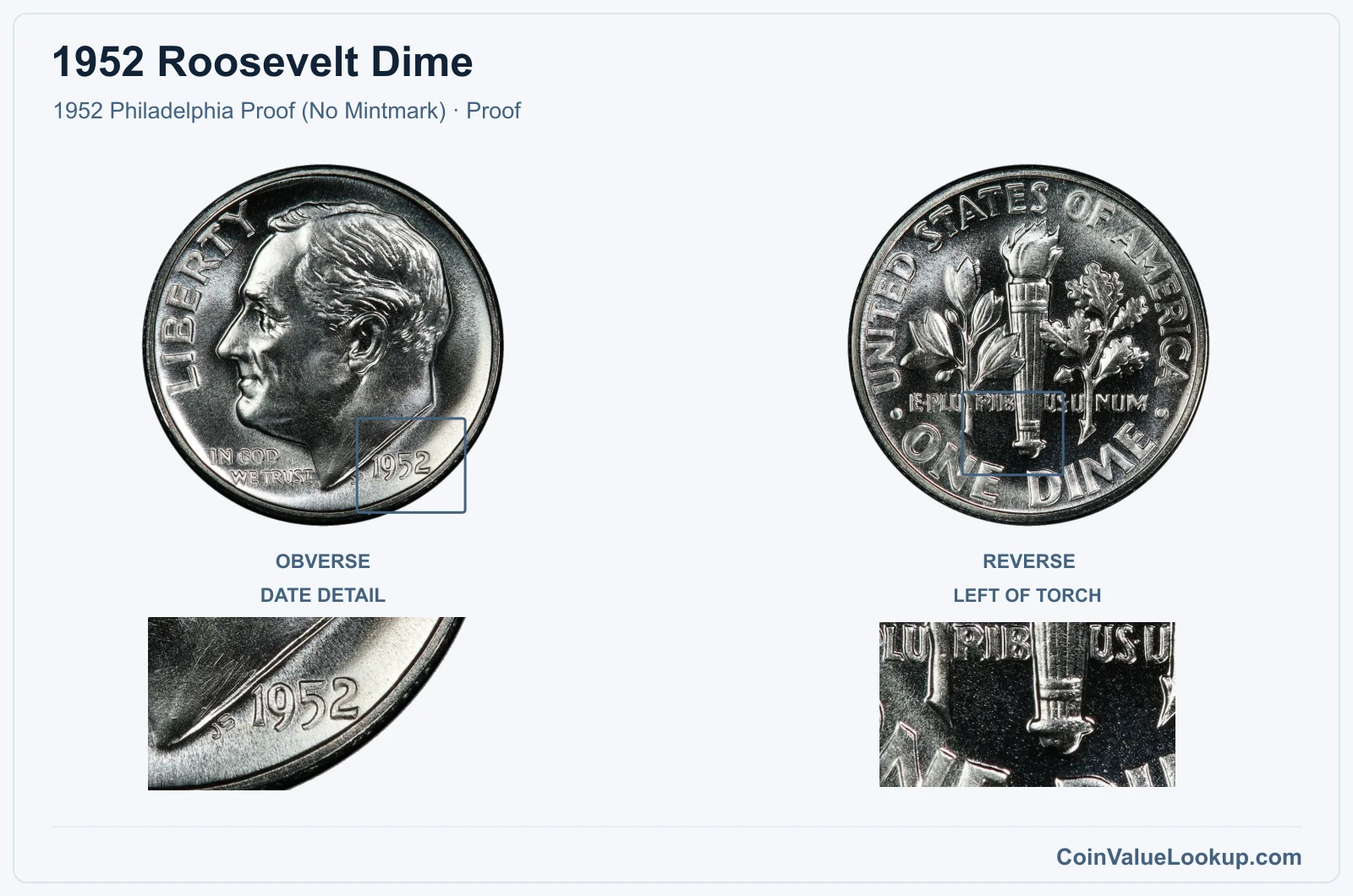
Philadelphia proofs from 1952 feature deeply mirrored fields, squared rims, and crisp device edges that no business strike can match. In PR65, the USA Coin Book estimate is about $53.
Cameo and deep-cameo designations describe the degree of frost on the raised design elements contrasted against the mirror fields. These are not separate alloys or higher grades — they are contrast labels applied by grading services.
A deep-cameo proof commands a significant premium over a standard proof at the same numerical grade, so independent grading matters here. Do not apply the ordinary $53 PR65 estimate to a cameo or deep-cameo example; those coins trade in a different tier entirely.
Range Grade
Price Auction Records Appraisal PR PR 1
—
Coin Identifier
PR 2
—
Coin Identifier
PR 3
—
Coin Identifier
PR 4
—
Coin Identifier
PR 6
—
Coin Identifier
PR 8
—
Coin Identifier
PR 10
—
Coin Identifier
PR 12
—
Coin Identifier
PR 15
—
Coin Identifier
PR 20
—
Coin Identifier
PR 25
—
Coin Identifier
PR 30
—
Coin Identifier
PR 35
—
Coin Identifier
PR 40
—
Coin Identifier
PR 45
—
Coin Identifier
PR 50
—
Coin Identifier
PR 53
—
Coin Identifier
PR 55
—
Coin Identifier
PR 58
—
Coin Identifier
PR 60
—
Coin Identifier
PR 61
—
Coin Identifier
PR 62
Coin Identifier
PR 63
Coin Identifier
PR 64
—
Coin Identifier
PR 65
Coin Identifier
PR 66
Coin Identifier
PR 67
Coin Identifier
PR 68
Coin Identifier
PR 69
Coin Identifier
PR 70
—
—
—
1952 Roosevelt Dime Error List
1. 1952 Roosevelt Dime — Partial Collar with Ragged Clip
This compound error on a 1952 Philadelphia business strike combines two problems in one coin: the planchet had an irregular, ragged edge before striking, and then only part of the collar engaged during the press. Look at the rim — you should see normal reeding on one portion and an unfinished or distorted edge on another, plus an area where the planchet itself is missing material with a rough boundary.
Both features matter. A plain clip by itself or simple edge damage does not qualify.
Normal reeding all the way around also rules this out. Authenticated examples exist in high grade, including an NGC MS65 specimen that appeared at Heritage Auctions.
No standard price range is adopted for this error; value depends on the severity of both the clip and the partial collar, the coin's overall condition, and independent authentication.
2. 1952 Roosevelt Dime — Broadstrike
A broadstrike happens when the collar that normally confines the planchet fails to engage, letting the metal spread outward during striking. On a 1952-D dime, this means the coin looks wider than normal, the rim is absent or uneven, and the full design extends past where the edge should be.
Check the edge alongside both faces to confirm.
Do not confuse this with a coin that has simply been squeezed or a normal dime with an unusually wide rim. A genuine broadstrike shows design elements flowing beyond the collar boundary.
Heritage Auctions has handled a 1952-D broadstrike graded NGC MS65. No standard price range is adopted; each coin's value depends on how dramatic the spread is, the grade, and third-party authentication.
3. 1952 Roosevelt Dime — Repunched S Mintmark
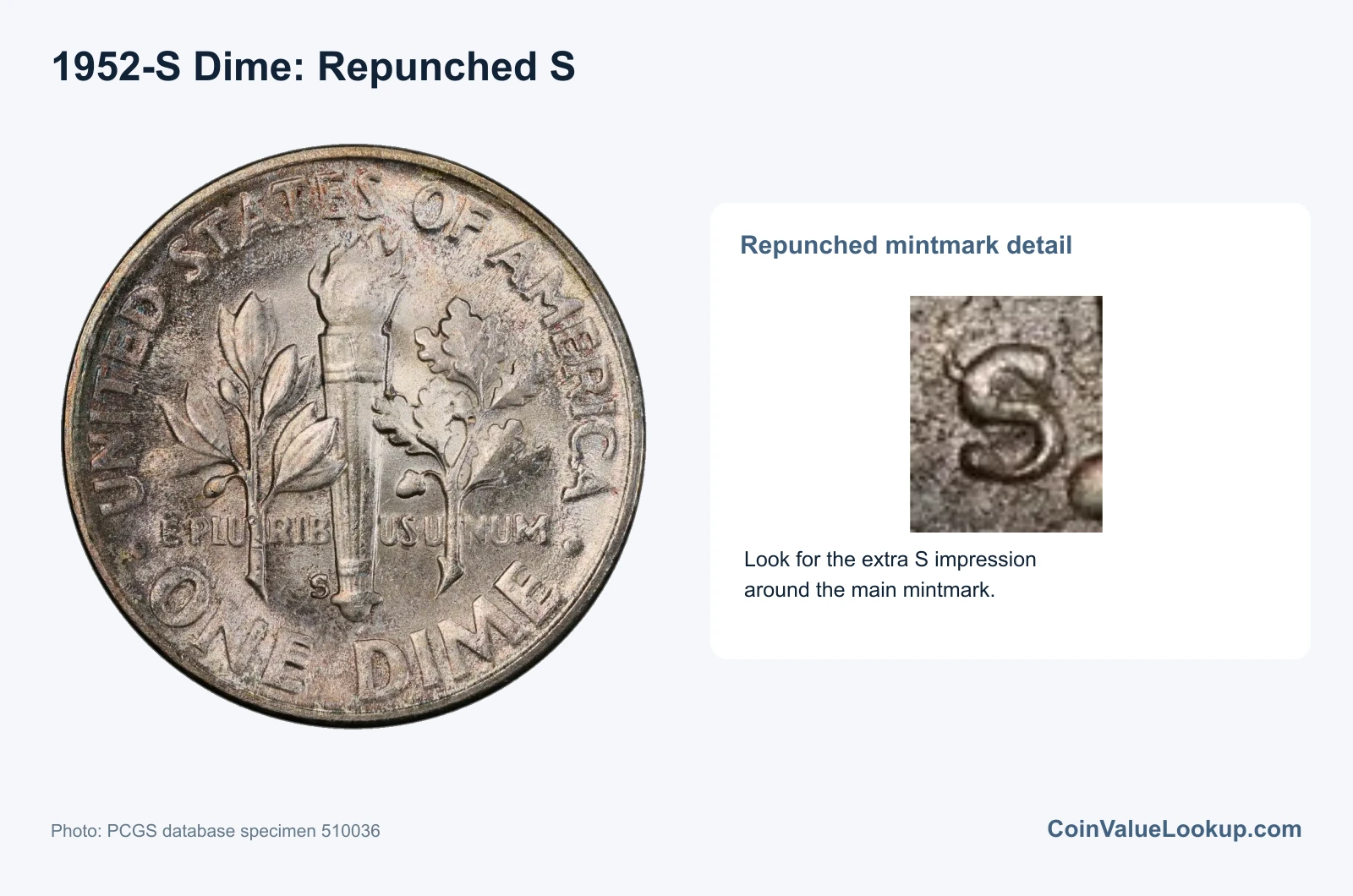
On certain 1952-S dimes, a second S mintmark is visible shifted toward the upper left of the primary S. Under magnification, look at the upper-left serif of the main S — you should see a rounded separation where the secondary punch sits.
The doubling is consistent and raised, not flat or shelf-like.
Flat machine doubling, which appears as a low shelf without independent serifs, is not the same thing. Surface debris near the mintmark can also mimic this.
A PCGS MS66 specimen attributed as 1952-S/S has appeared through GreatCollections. No standard price range is adopted for this variety; value depends on the clarity of the repunch, the coin's grade, and independent attribution.
4. 1952 Roosevelt Dime — Die Cracks / Spike Head
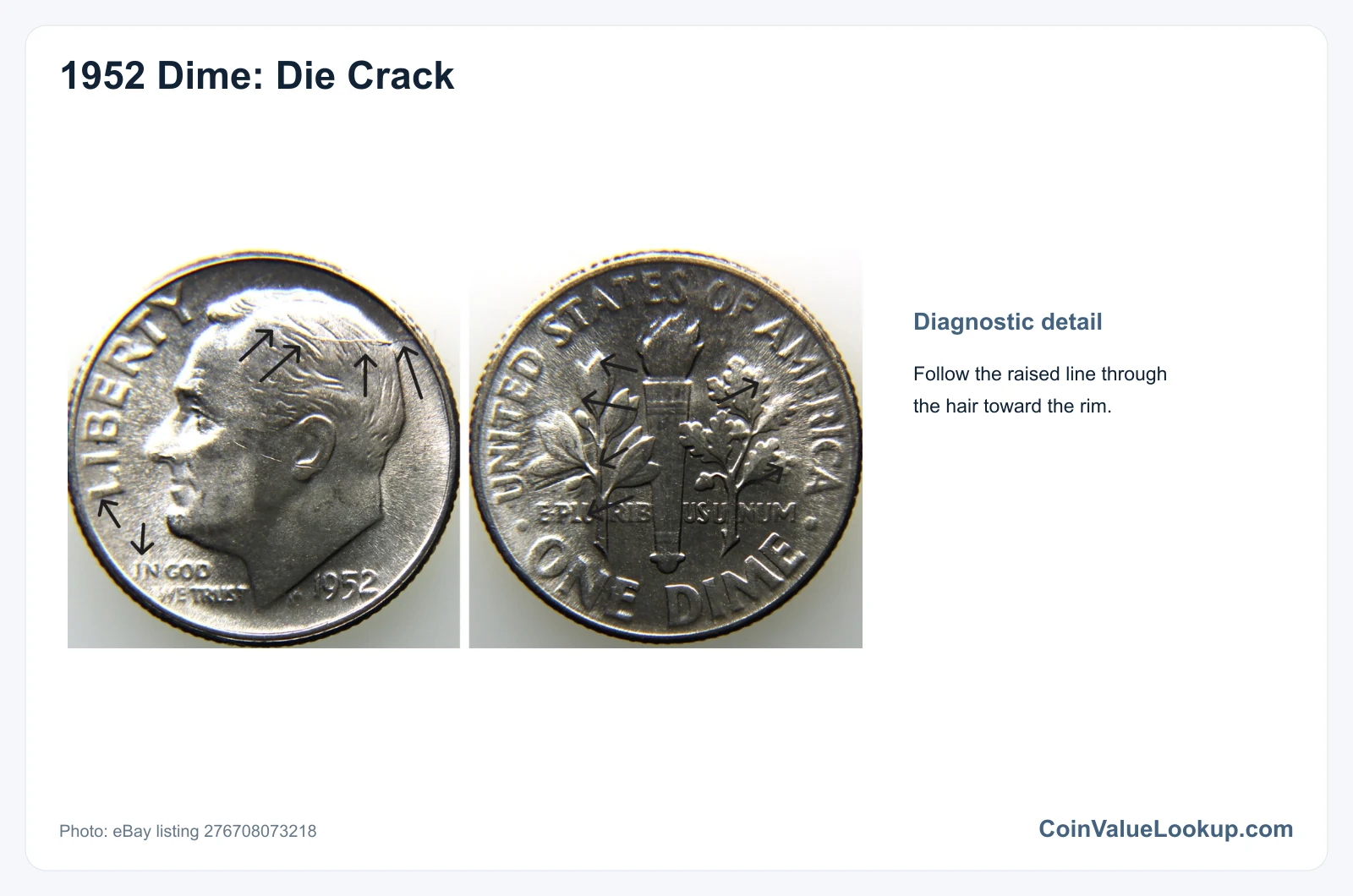
Die cracks on 1952 dimes show up as thin raised lines running across the coin's surface, caused by fractures in the steel die. Two distinct types are documented.
On Philadelphia strikes, a cataloged variety shows a raised crack connecting the rim to Roosevelt's head, sometimes called a spike head because the crack adds a small projection. On San Francisco strikes, a separate specimen shows a crack running roughly from the 3:30 position to 7:00 on the coin.
These are different crack paths and should not be treated as the same variety. Do not call every thin raised line a cud — a cud requires a piece of the die to break away entirely, leaving a blank raised blob.
Incuse scratches, contact marks, and planchet cracks are also lookalikes. No standard price range is adopted; value depends on prominence, location, grade, and whether the piece matches a cataloged die.
5. 1952 Roosevelt Dime — Doubled Die Obverse
A doubled die obverse has been reported for the 1952 dime. This type of error originates during die manufacture, resulting in consistent doubling on the obverse design elements such as lettering or date numerals.
Under magnification, look for separation or notching on the letters that remains uniform across the coin — genuine doubling will appear the same on every struck example from that die.
Machine doubling, which is flat and shelf-like with no independent letter profile, is the most common lookalike. Reflections under certain lighting can also trick the eye.
Worn die contours sometimes create a soft shadow effect that mimics doubling. No numerical price range is adopted for this variety; what a specific example is worth depends on the visibility of the doubling, the coin's condition, and independent attribution confirming the die variety.