1817 Capped Bust Half Dollar Coin Value: How Much Is It Worth?
A normal-date 1817 Capped Bust Half Dollar runs roughly $142 in G4 to $948 in AU50 based on USA Coin Book guide estimates. Your actual value hinges on which version you have and the condition of the surfaces.
Rare overdates, especially the 1817/4, can push into dramatically higher territory.
Fast Way to Identify Your 1817 Capped Bust Half Dollar
The quickest way to start figuring out what you have is to upload clear photos of both the front and back of your coin. Our identifier can give you a preliminary read on the version and general condition.
That is not a substitute for professional authentication, but it saves time before you dig deeper into the details.
1817 Capped Bust Half Dollar Value
Upload both sides of your 1817 Capped Bust Half Dollar.
Front Obverse
Upload photo
Back Reverse
Upload photo
Which 1817 Capped Bust Half Dollar Versions Are Worth Money?
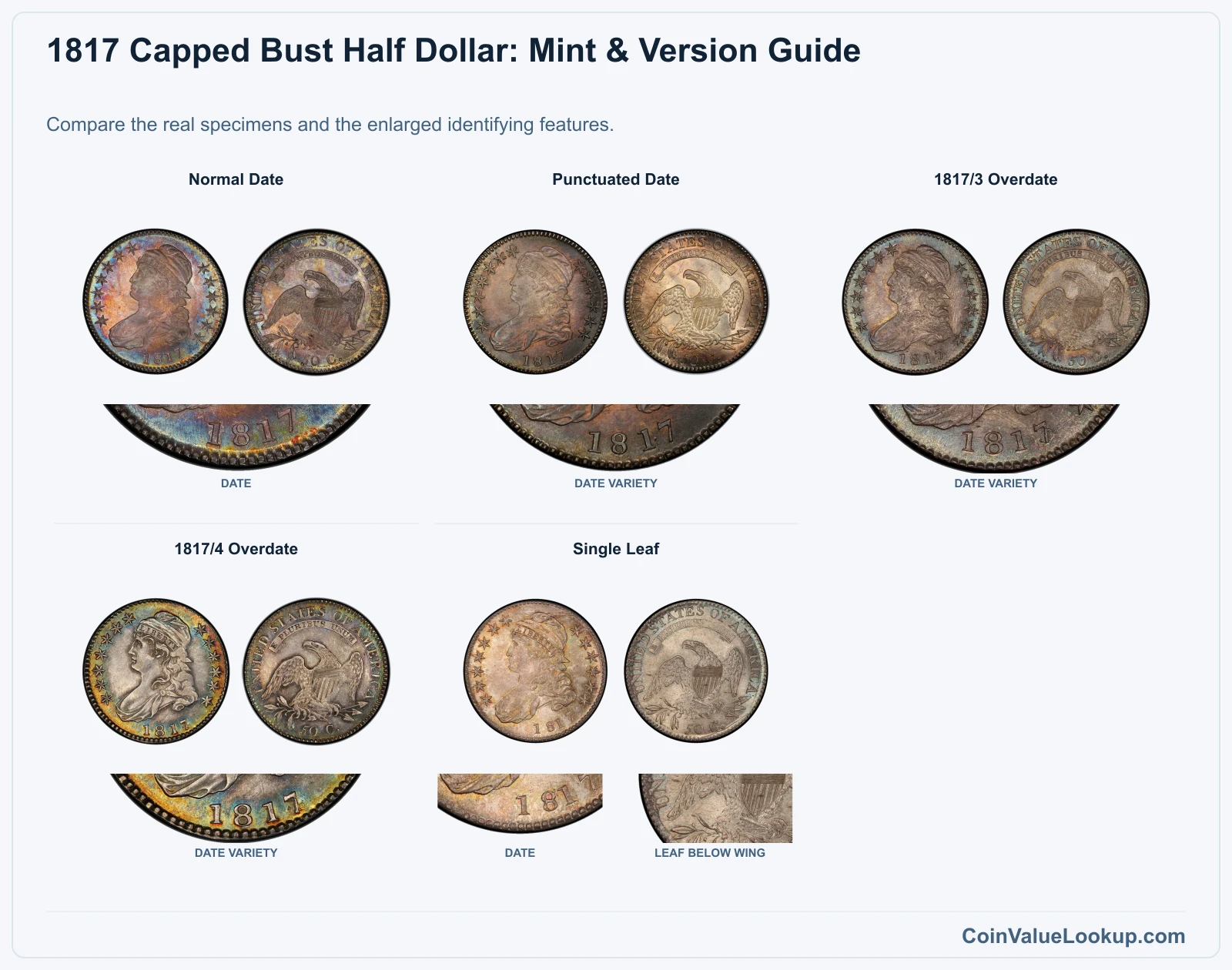
- Normal Date: The baseline version, worth checking only after you rule out the punctuated dot, overdates, and the single-leaf reverse. Guide values run about $142 at G4 to $948 at AU50.
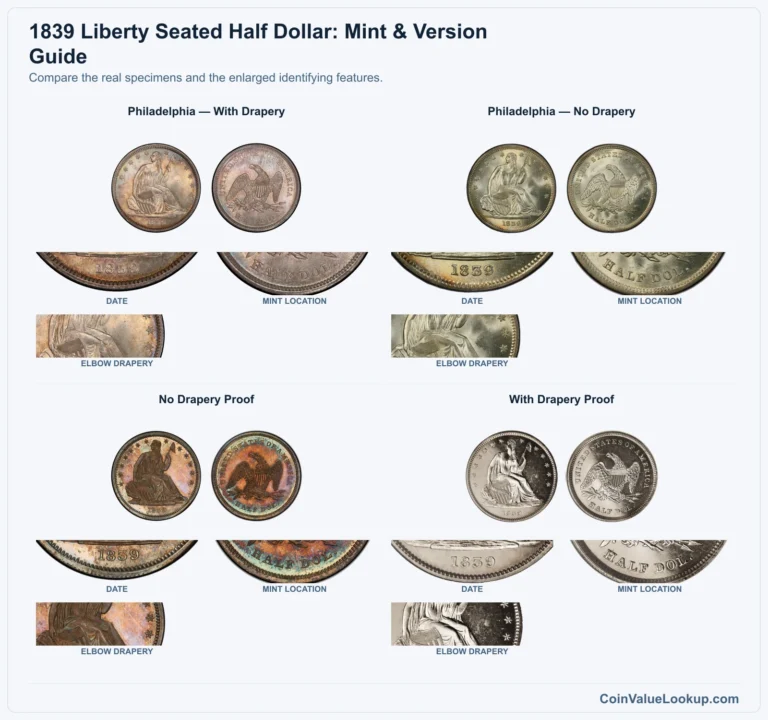
- Punctuated Date (181.7): A raised die chip sits between the 1 and the 7, creating what looks like a period. This variety carries a premium, with guide estimates from around $173 at G4 to $2,516 at AU50.
- 1817/3 Overdate: Remnants of a 3 are visible beneath the final 7. Guide estimates range from about $300 at G4 to $4,265 at AU50, well above normal-date levels.
- 1817/4 Overdate: Extremely rare and attribution-dependent. Guide benchmarks for authenticated examples start near $74,997 at G4 and climb past $461,682 at AU50. These are broad reference figures, not offers.
- Single Leaf: The upper olive leaf on the reverse is missing. This variety can also appear on the same die family as the Comet Head die state. Guide estimates range from about $173 at G4 to $1,541 at AU50.
Step 1: Identify Your 1817 Capped Bust Half Dollar Mint Mark and Version
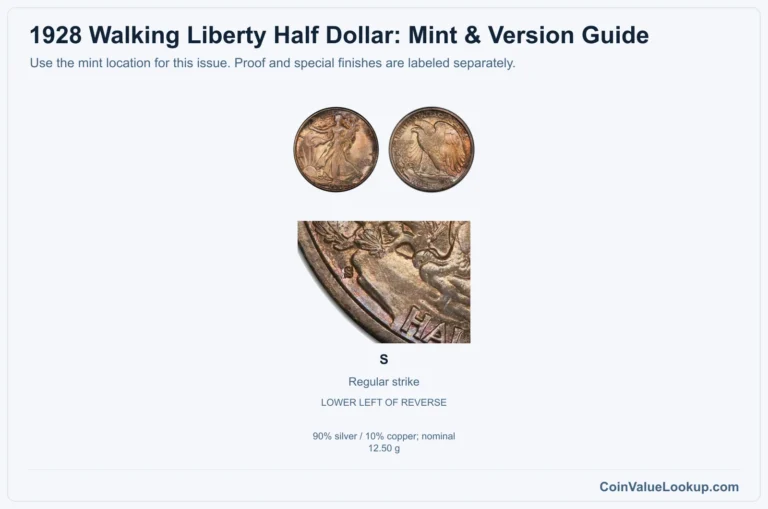
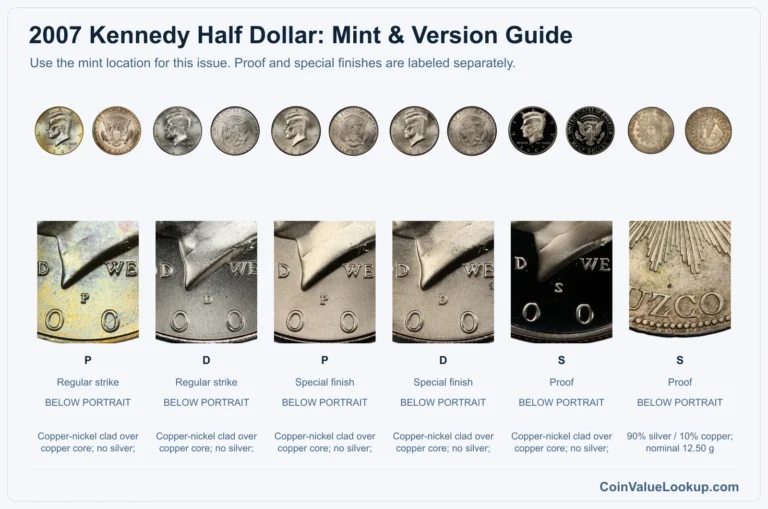
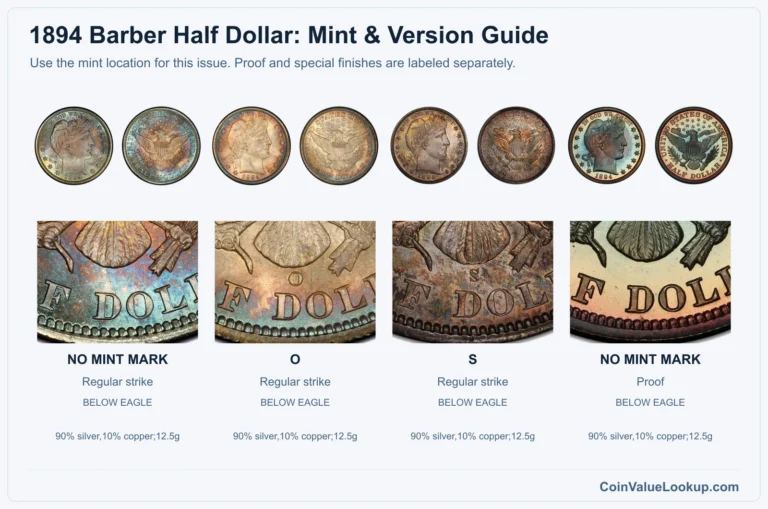
Every 1817 Capped Bust Half Dollar was struck at Philadelphia, so the absence of a mintmark is completely normal. The obverse shows a left-facing Liberty wearing a cloth cap, and the reverse features an eagle clutching arrows and an olive branch behind a heraldic shield, with 50C below.
The coin is a silver-copper alloy, approximately 89.24% silver, weighing about 13.48 grams and measuring roughly 32.5 mm across. Check the lettered edge, which should read FIFTY CENTS OR HALF A DOLLAR.
If your coin has a smaller bust facing right, you may have a Draped Bust issue, which is a different type entirely.
Now the important part: figuring out which variety you hold. Start with the date.
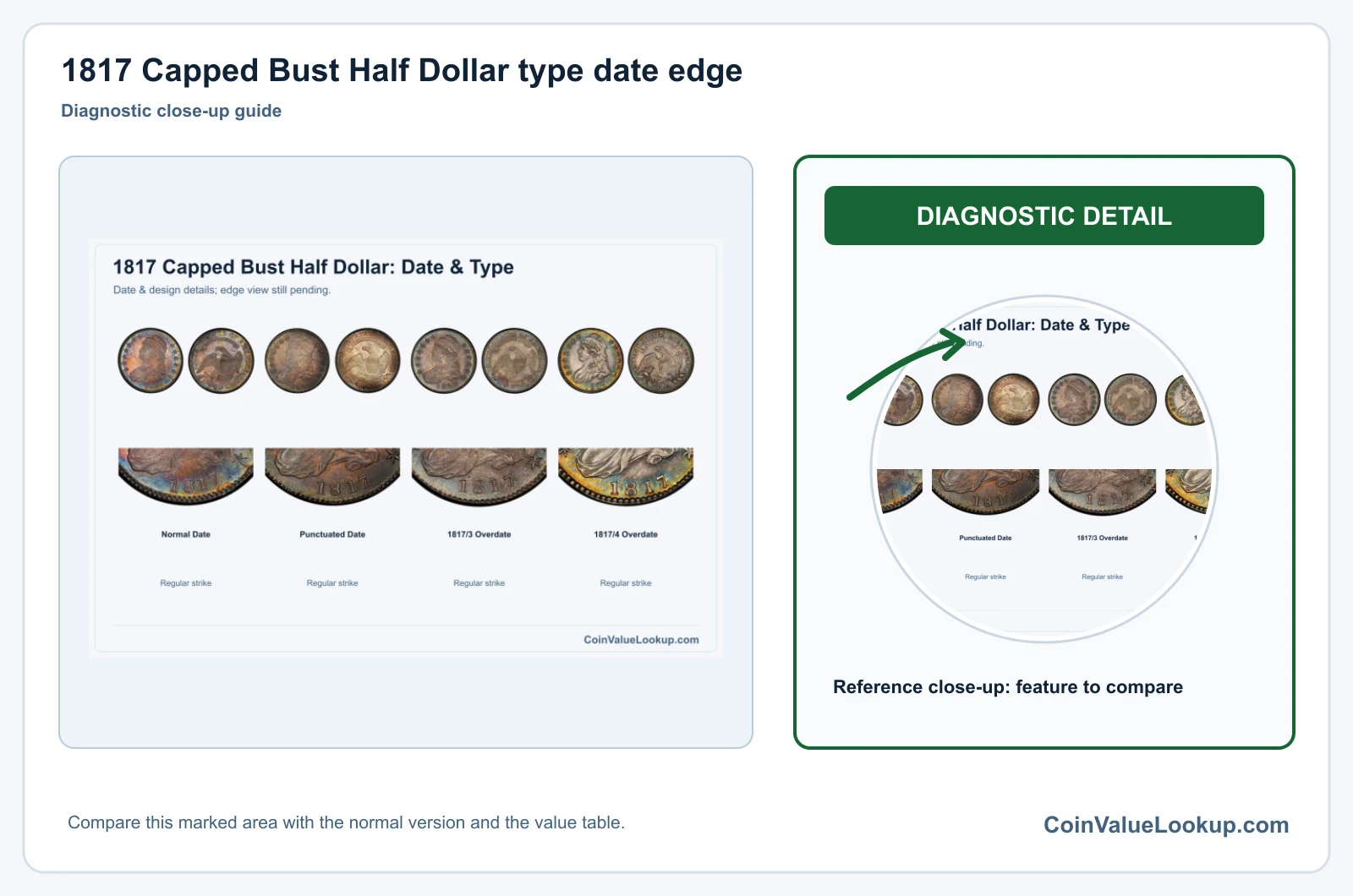
Look closely at the space between the 1 and 7 in the date for a raised dot, which would make it the Punctuated Date variety. Then examine the 7 for traces of a 3 or 4 underneath, indicating an overdate.
Finally, check the olive branch on the reverse for a missing upper leaf, the Single Leaf variety. These distinctions matter a lot for value.
Step 2: Check Your 1817 Capped Bust Half Dollar Grade
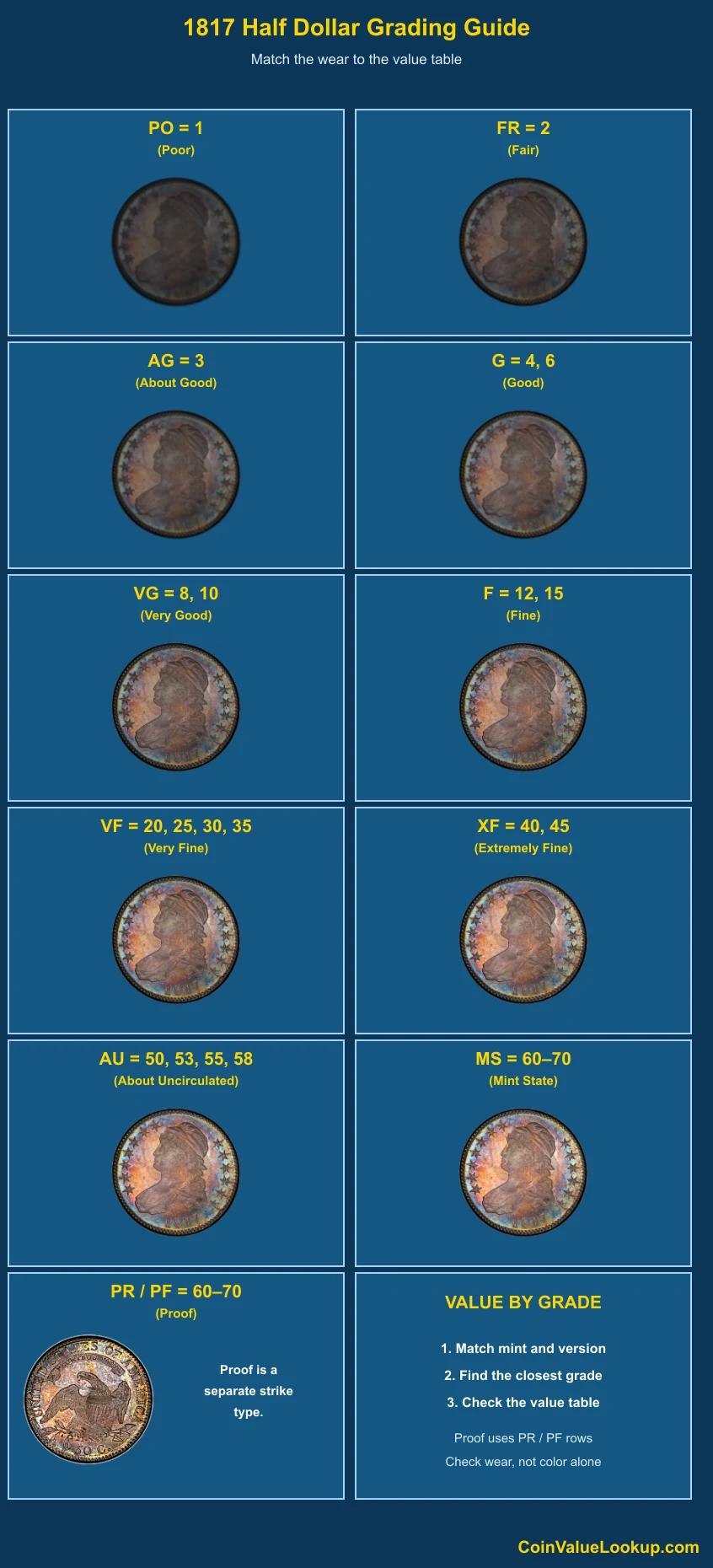
Focus first on Liberty's hair above the forehead and around the ear. In lower grades, these areas flatten into smooth zones.
The cheek and cap lose their finer contour lines early, too. On a well-preserved coin the shoulder clasp remains crisp and the hair strands are individually visible.
Flip to the reverse and inspect the eagle's breast feathers and wing tips. Weak strike is common on this series, so a soft breast does not always mean the coin circulated heavily.
Look for original cartwheel luster under angled light to separate a weakly struck AU from a truly worn VF.
Use the comparison image to match your coin's wear pattern against known grade benchmarks. If the coin has been cleaned, has holes, tooling, or heavy scratches, it falls into a "Details" category.
Do not price a details coin using the straight-grade scale; collectors discount those problems heavily.
Step 3: Check 1817 Capped Bust Half Dollar Value by Mint and Version
1817 Capped Bust Half Dollar — Normal Date
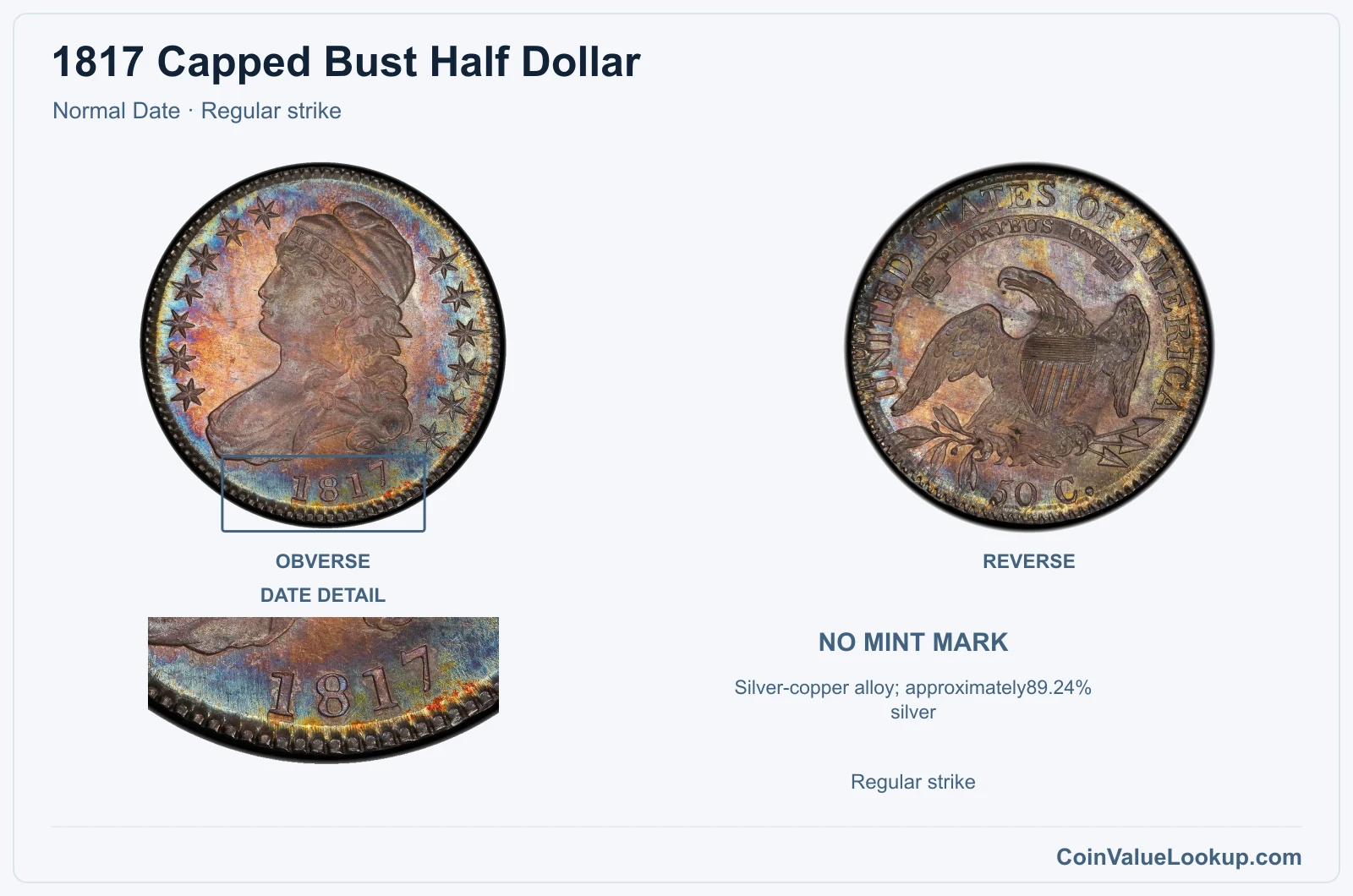
The Normal Date is the most commonly encountered 1817 half dollar. Before you settle on this attribution, check three things: the space between the 1 and 7 for a raised dot, the 7 itself for traces of an underlying digit, and the reverse olive branch for a missing upper leaf.
If none of those features are present, you have the standard issue.
USA Coin Book guide estimates place this version at about $142 in G4, $364 in VF20, and $948 in AU50. These are retail estimates, not guaranteed sale prices.
A coin with original surfaces and no damage will trade closer to those numbers than one that has been cleaned or repaired.
Range Grade
Price Auction Records Appraisal PO PO 1
—
Coin Identifier FR FR 2
—
Coin Identifier AG AG 3
Coin Identifier G G 4
Coin Identifier
G 6
Coin Identifier VG VG 8
Coin Identifier
VG 10
Coin Identifier F F 12
Coin Identifier
F 15
Coin Identifier VF VF 20
Coin Identifier
VF 25
Coin Identifier
VF 30
Coin Identifier
VF 35
Coin Identifier XF XF 40
Coin Identifier
XF 45
Coin Identifier AU AU 50
Coin Identifier
AU 53
Coin Identifier
AU 55
Coin Identifier
AU 58
Coin Identifier MS MS 60
Coin Identifier
MS 61
Coin Identifier
MS 62
Coin Identifier
MS 63
Coin Identifier
MS 64
Coin Identifier
MS 65
Coin Identifier
MS 66
Coin Identifier
MS 67
Coin Identifier
MS 68
—
—
—
MS 69
—
—
—
MS 70
—
—
—
1817 Capped Bust Half Dollar — Punctuated Date
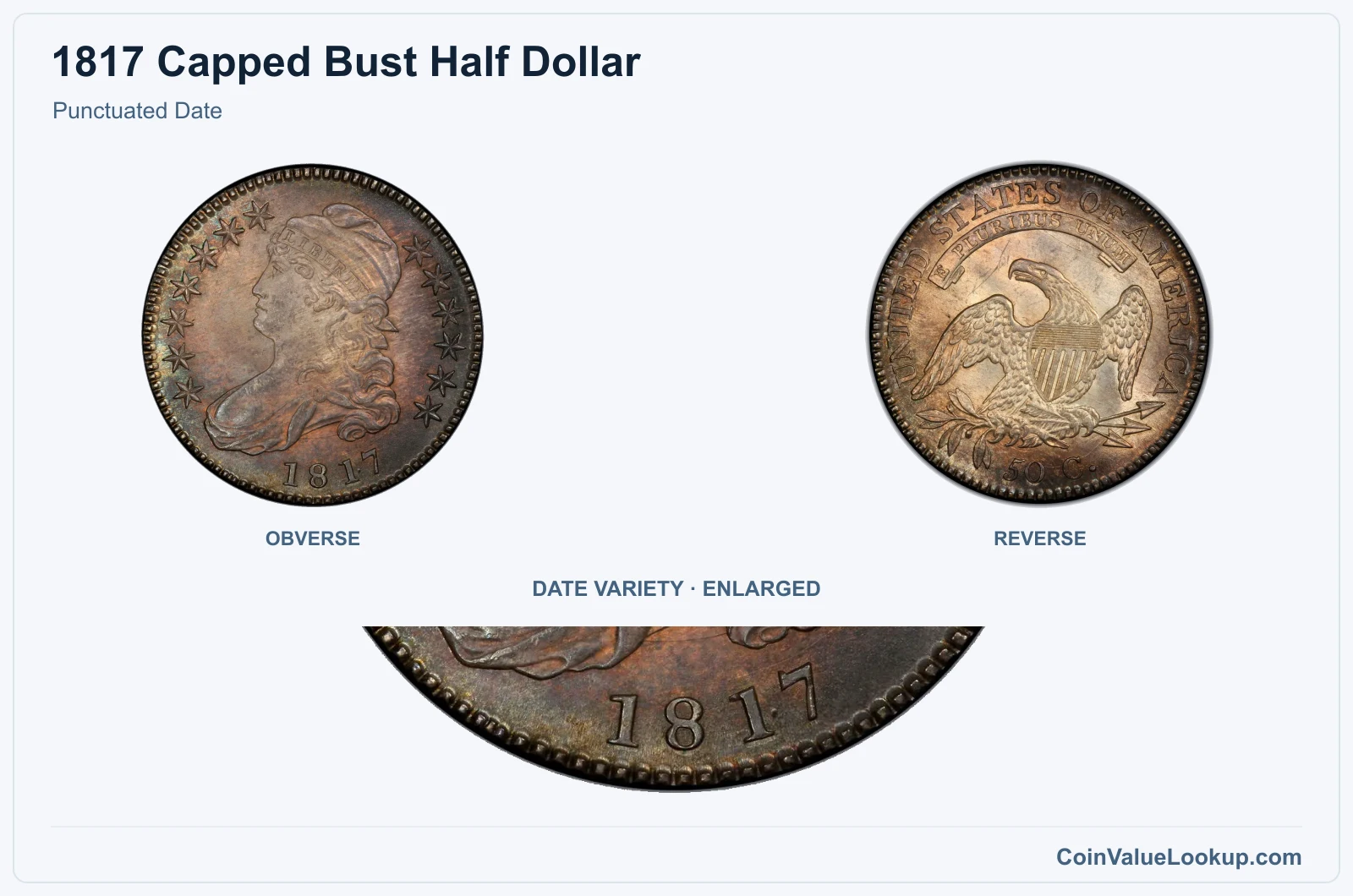
The Punctuated Date looks like someone slipped a period into the date: 181.7. The dot is actually a die chip, a small raised lump of metal between the final 1 and 7.
PCGS describes it as a die defect rather than an intentional punch, so do not confuse it with modern added marks or random damage.
To confirm you have the real thing, look for a small, rounded raised spot that sits naturally between those two digits. It should be consistent with the coin's overall surface texture, not scratched on or glued.
Guide estimates from USA Coin Book are approximately $173 at G4, $517 at VF20, and $2,516 at AU50. The premium over the normal date is meaningful, especially in higher grades where the dot remains clearly visible.
Range Grade
Price Auction Records Appraisal PO PO 1
—
Coin Identifier FR FR 2
—
Coin Identifier AG AG 3
—
Coin Identifier G G 4
—
Coin Identifier
G 6
—
Coin Identifier VG VG 8
—
Coin Identifier
VG 10
Coin Identifier F F 12
Coin Identifier
F 15
Coin Identifier VF VF 20
Coin Identifier
VF 25
Coin Identifier
VF 30
Coin Identifier
VF 35
Coin Identifier XF XF 40
Coin Identifier
XF 45
Coin Identifier AU AU 50
Coin Identifier
AU 53
Coin Identifier
AU 55
Coin Identifier
AU 58
Coin Identifier MS MS 60
—
Coin Identifier
MS 61
Coin Identifier
MS 62
Coin Identifier
MS 63
Coin Identifier
MS 64
Coin Identifier
MS 65
—
Coin Identifier
MS 66
—
—
—
MS 67
—
—
—
MS 68
—
—
—
MS 69
—
—
—
MS 70
—
—
—
1817 Capped Bust Half Dollar — /3 Overdate
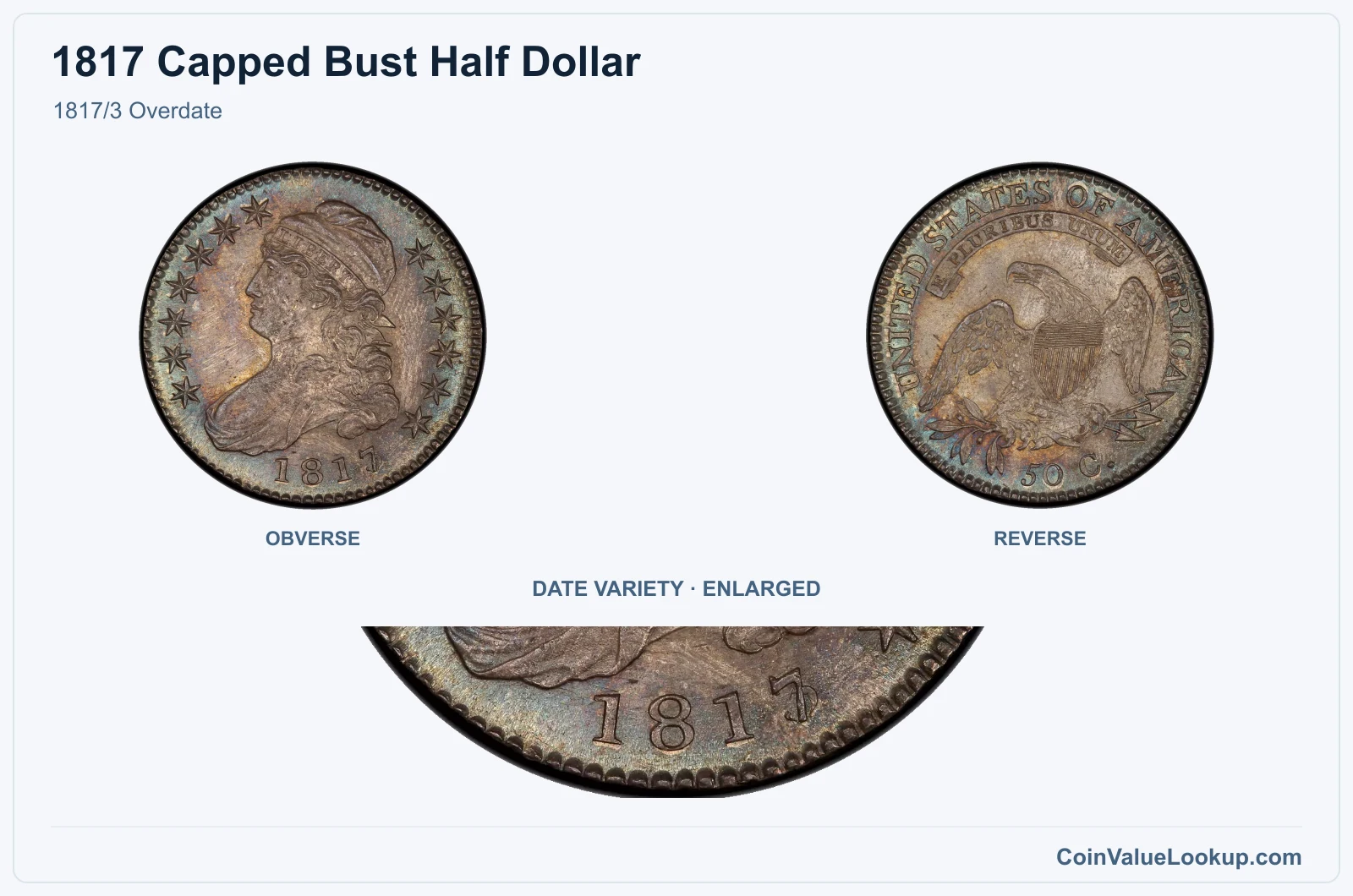
On the 1817/3 overdate, you can see the curved remnants of a 3 peeking out from beneath the final 7. The top loop of the 3 usually shows at the upper left area of the 7, and occasionally the lower curve is visible too.
This is a genuine overdate where a previously dated die was re-engraved.
Do not confuse machine doubling or die deterioration for overdate traces. The underlying digit should follow the specific geometry of a 3, not just appear as vague doubling.
Coin Value Lookup is a handy starting point if you want to look up guides for other Capped Bust dates and compare values across the series.
USA Coin Book guide estimates put this version at roughly $300 in G4, $948 in VF20, and $4,265 in AU50. These represent a strong step up from the normal date across all grades.
Range Grade
Price Auction Records Appraisal PO PO 1
—
Coin Identifier FR FR 2
—
Coin Identifier AG AG 3
—
Coin Identifier G G 4
—
Coin Identifier
G 6
Coin Identifier VG VG 8
Coin Identifier
VG 10
Coin Identifier F F 12
Coin Identifier
F 15
Coin Identifier VF VF 20
Coin Identifier
VF 25
Coin Identifier
VF 30
Coin Identifier
VF 35
Coin Identifier XF XF 40
Coin Identifier
XF 45
Coin Identifier AU AU 50
Coin Identifier
AU 53
Coin Identifier
AU 55
Coin Identifier
AU 58
Coin Identifier MS MS 60
—
Coin Identifier
MS 61
Coin Identifier
MS 62
Coin Identifier
MS 63
Coin Identifier
MS 64
Coin Identifier
MS 65
—
Coin Identifier
MS 66
—
—
—
MS 67
—
—
—
MS 68
—
—
—
MS 69
—
—
—
MS 70
—
—
—
1817 Capped Bust Half Dollar — /4 Overdate
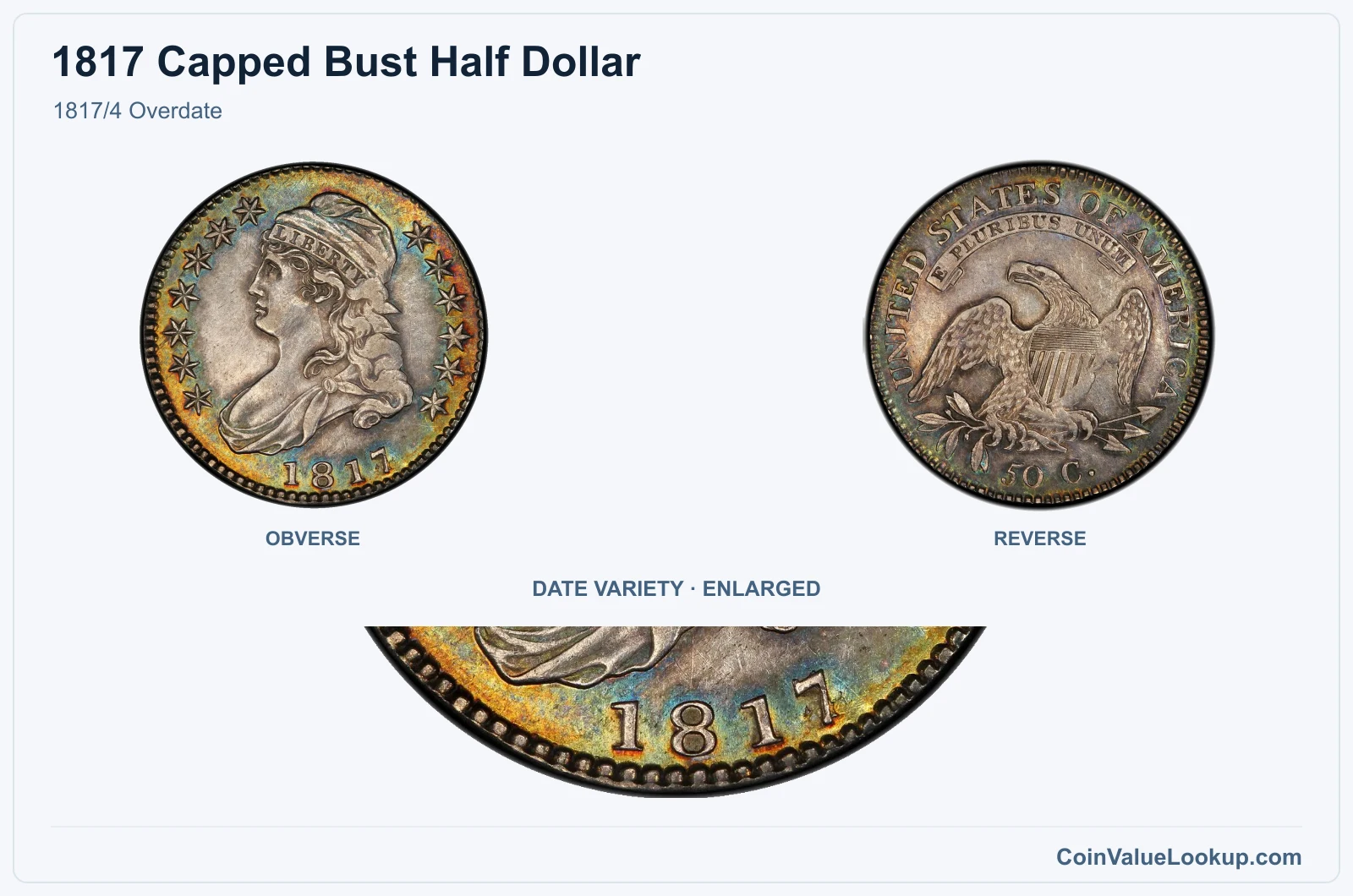
The 1817/4 overdate is one of the great rarities in the Capped Bust half dollar series. The key diagnostic is the underlying geometry of a 4 visible beneath the 7, particularly the angular crossbar and vertical stroke that distinguish a 4 from a 3.
Attribution matters enormously here. Irregular date damage, corrosion around the digits, or post-mint tooling cannot qualify a coin as this variety.
Any example claiming this attribution should be professionally authenticated before serious money changes hands.
USA Coin Book guide figures are approximately $74,997 at G4, $215,972 at VF20, and $461,682 at AU50. These are broad benchmarks intended for authenticated coins, not offers to buy or sell.
The number of surviving examples is extremely small, and do not treat published survivor estimates as original mintage figures. Each coin trades on its own merits.
Range Grade
Price Auction Records Appraisal PO PO 1
—
Coin Identifier FR FR 2
—
Coin Identifier AG AG 3
—
Coin Identifier G G 4
—
Coin Identifier
G 6
—
Coin Identifier VG VG 8
—
Coin Identifier
VG 10
—
Coin Identifier F F 12
—
Coin Identifier
F 15
—
Coin Identifier VF VF 20
Coin Identifier
VF 25
—
Coin Identifier
VF 30
—
Coin Identifier
VF 35
—
Coin Identifier XF XF 40
—
Coin Identifier
XF 45
—
Coin Identifier AU AU 50
Coin Identifier
AU 53
—
Coin Identifier
AU 55
—
—
—
AU 58
—
—
— MS MS 60
—
—
—
MS 61
—
—
—
MS 62
—
—
—
MS 63
—
—
—
MS 64
—
—
—
MS 65
—
—
—
MS 66
—
—
—
MS 67
—
—
—
MS 68
—
—
—
MS 69
—
—
—
MS 70
—
—
—
1817 Capped Bust Half Dollar — Single Leaf
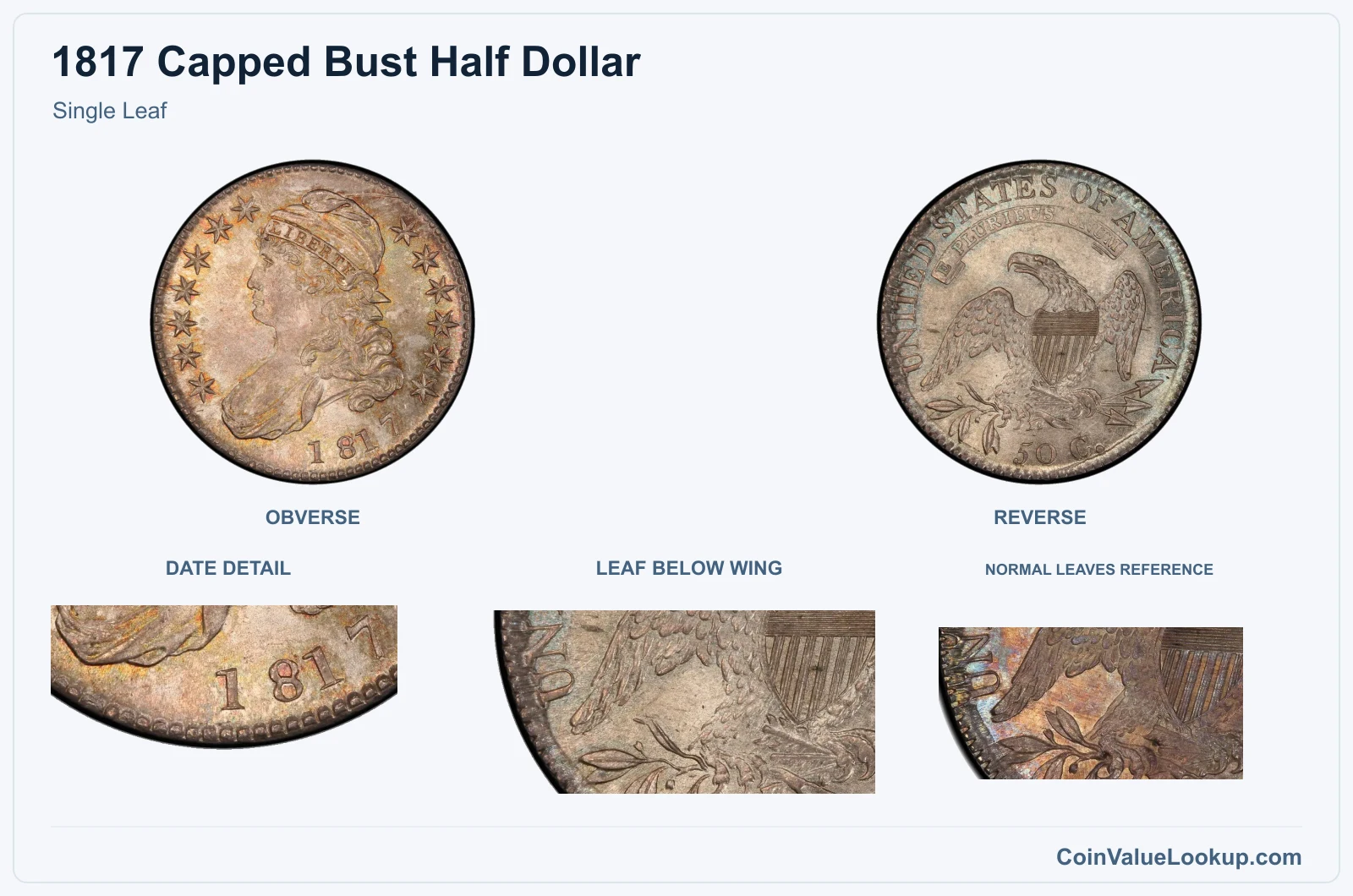
The Single Leaf variety is identified by checking the olive branch on the reverse. The upper olive leaf, which normally sits above the others near the eagle's talons, is simply absent.
The rest of the branch looks standard.
This variety shares a die family with the Comet Head die state, so you may find both features on the same coin. However, the missing leaf and the raised ridge on the obverse are two separate diagnostics; one does not require the other.
USA Coin Book guide estimates are about $173 at G4, $426 at VF20, and $1,541 at AU50. A modest premium over the normal date, but worth knowing about because it is easy to overlook if you only check the obverse.
Ordinary-issue reference: Ordinary-issue reference only: The table below shows prices for the 1817 Capped Bust Half Dollar (regular strike). It does not represent the value of the specific Single Leaf variety or its variety premium. Year, mint, metal and strike type are matched; the specific variety is not priced by this table.
Range Grade
Price Auction Records Appraisal PO PO 1
—
Coin Identifier FR FR 2
—
Coin Identifier AG AG 3
Coin Identifier G G 4
Coin Identifier
G 6
Coin Identifier VG VG 8
Coin Identifier
VG 10
Coin Identifier F F 12
Coin Identifier
F 15
Coin Identifier VF VF 20
Coin Identifier
VF 25
Coin Identifier
VF 30
Coin Identifier
VF 35
Coin Identifier XF XF 40
Coin Identifier
XF 45
Coin Identifier AU AU 50
Coin Identifier
AU 53
Coin Identifier
AU 55
Coin Identifier
AU 58
Coin Identifier MS MS 60
Coin Identifier
MS 61
Coin Identifier
MS 62
Coin Identifier
MS 63
Coin Identifier
MS 64
Coin Identifier
MS 65
Coin Identifier
MS 66
Coin Identifier
MS 67
Coin Identifier
MS 68
—
—
—
MS 69
—
—
—
MS 70
—
—
—
1817 Capped Bust Half Dollar Error List
1. 1817 Capped Bust Half Dollar — Comet Head Raised Die Defect
The Comet Head is a heavy raised ridge that runs from the top of Liberty's cap toward the rim, roughly above star 8 on the obverse. It looks like a streak or trail shooting off the head, which is how it earned the name.
This is a die defect specific to certain 1817 half dollar dies.
Do not confuse it with an incuse scratch running in the same area, glued material sitting on the surface, or corrosion buildup. The genuine ridge is raised and flows naturally with the die's texture.
It is also distinct from the missing upper olive leaf on the reverse, even though both features can appear on coins from the same die family.
No specific price range has been adopted for this error. Value depends on the visibility of the ridge, overall coin condition, and the specific die state.
Professional evaluation is the safest route if you believe you have a strong example.
2. 1817 Capped Bust Half Dollar — Die Crack / Die Chip
Die cracks on 1817 half dollars appear as thin raised lines on the coin's surface, typically on the reverse in later die states. As a die wore out from repeated strikes, it developed fractures that transferred as raised ridges onto the finished coins.
Die chips work similarly but produce small raised lumps rather than lines.
These are different from incuse scratches, which are cut into the surface rather than raised above it. Corrosion or foreign material stuck to the coin can also mimic a crack at first glance, but those lack the sharp, consistent profile of a genuine die fracture.
No specific price range has been adopted for die cracks on this date. The premium, if any, depends on how dramatic the crack is, where it falls on the design, and the coin's overall grade.
Late-state die cracks are documented on 1817 dies and are collectible as part of the die progression.
3. 1817 Capped Bust Half Dollar — Clashed Dies
Clashed dies occur when the obverse and reverse dies strike each other without a planchet between them. The result is a ghost-like transfer of one side's design onto the other.
On 1817 half dollars, vivid clashes have been documented, with transferred design elements visible on both sides of the coin.
One notable example involves an 1817/3 overdate showing strong clash marks, but the clash itself is a separate feature from the overdate attribution. Look for faint outlines of the eagle or shield appearing in the obverse fields, or traces of Liberty's portrait ghosted onto the reverse.
Do not mistake random scratches, raised lines from other causes, or brockage impressions for die clashes. Genuine clash marks follow the contour of the opposing die's design in a predictable mirror image.
No specific price range has been adopted for clashed 1817 half dollars; value depends on the strength of the clash and the coin's condition.