1858 Liberty Seated Quarter Coin Value: How Much Is It Worth?
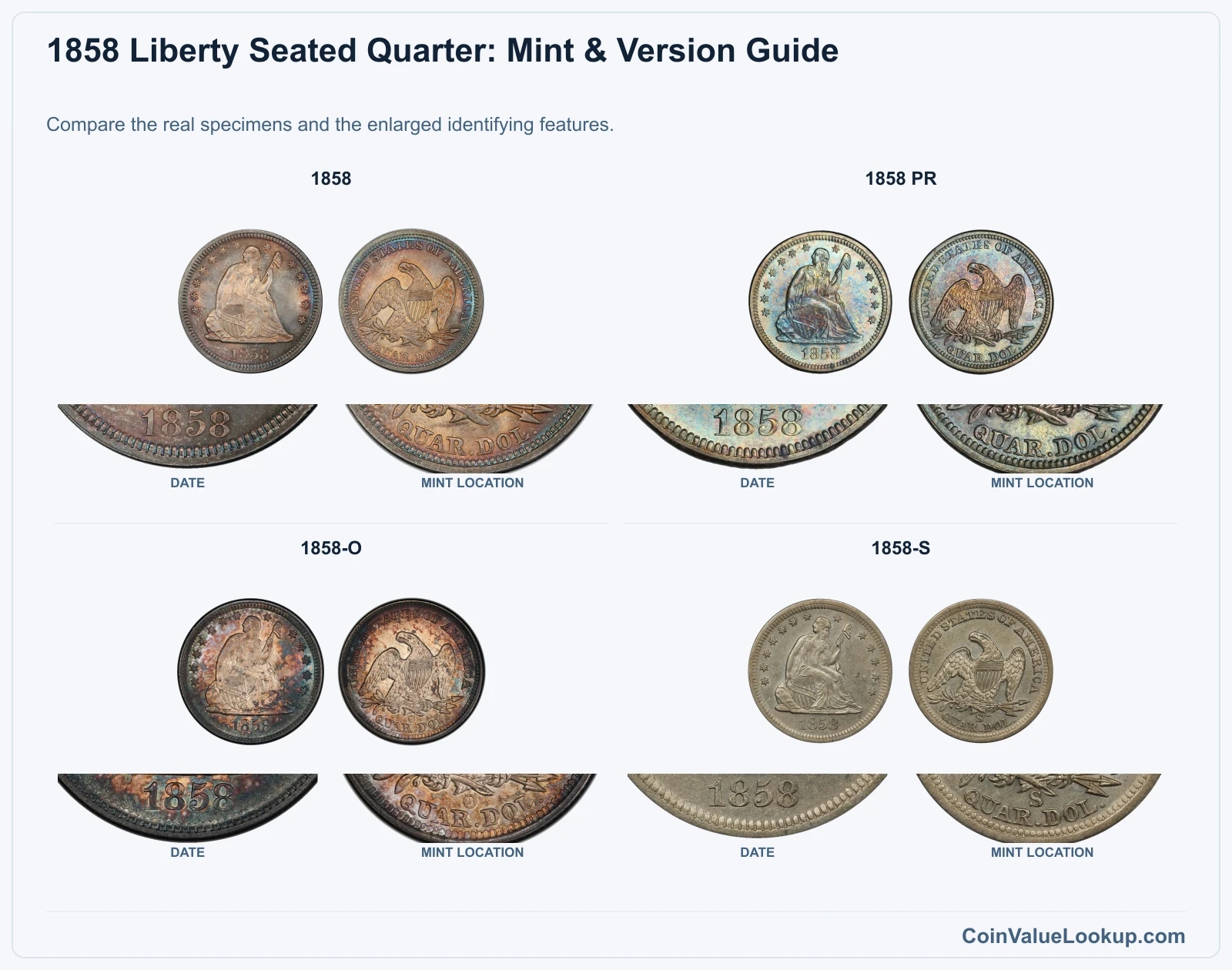
The 1858 Liberty Seated Quarter is a 90% silver coin struck at up to three different mints, and its value varies widely depending on which mint produced it, its condition, and whether it is a proof. Guide estimates across the listed versions range from about $46.00 to $24,610.00 at specific grades, so identifying your exact coin matters before you start comparing prices.
Fast Way to Identify Your 1858 Liberty Seated Quarter
The quickest way to start figuring out what you have is to upload clear photos of both the front and back of your coin. Our identifier can give you a preliminary read on the mint, design type, and general version so you know where to look next.
Grab a well-lit shot and let the tool do the first pass.
1858 Liberty Seated Quarter Value
Upload both sides of your 1858 Liberty Seated Quarter.
Front Obverse
Upload photo
Back Reverse
Upload photo
Which 1858 Liberty Seated Quarter Versions Are Worth Money?
- 1858-S quarters carry the highest guide anchor, with an MS60 estimate of $24,610.00; even in G4, the San Francisco issue lists at $321.00, reflecting its relative scarcity.
- 1858-O quarters from New Orleans jump sharply in higher grades, with guide estimates reaching $12,164.00 at MS63 compared to just $58.00 in G4.
- 1858 Proof quarters (PR63) carry a guide estimate of $2,505.00; confirm proof status through professional authentication rather than surface appearance alone.
Step 1: Identify Your 1858 Liberty Seated Quarter Mint Mark and Version
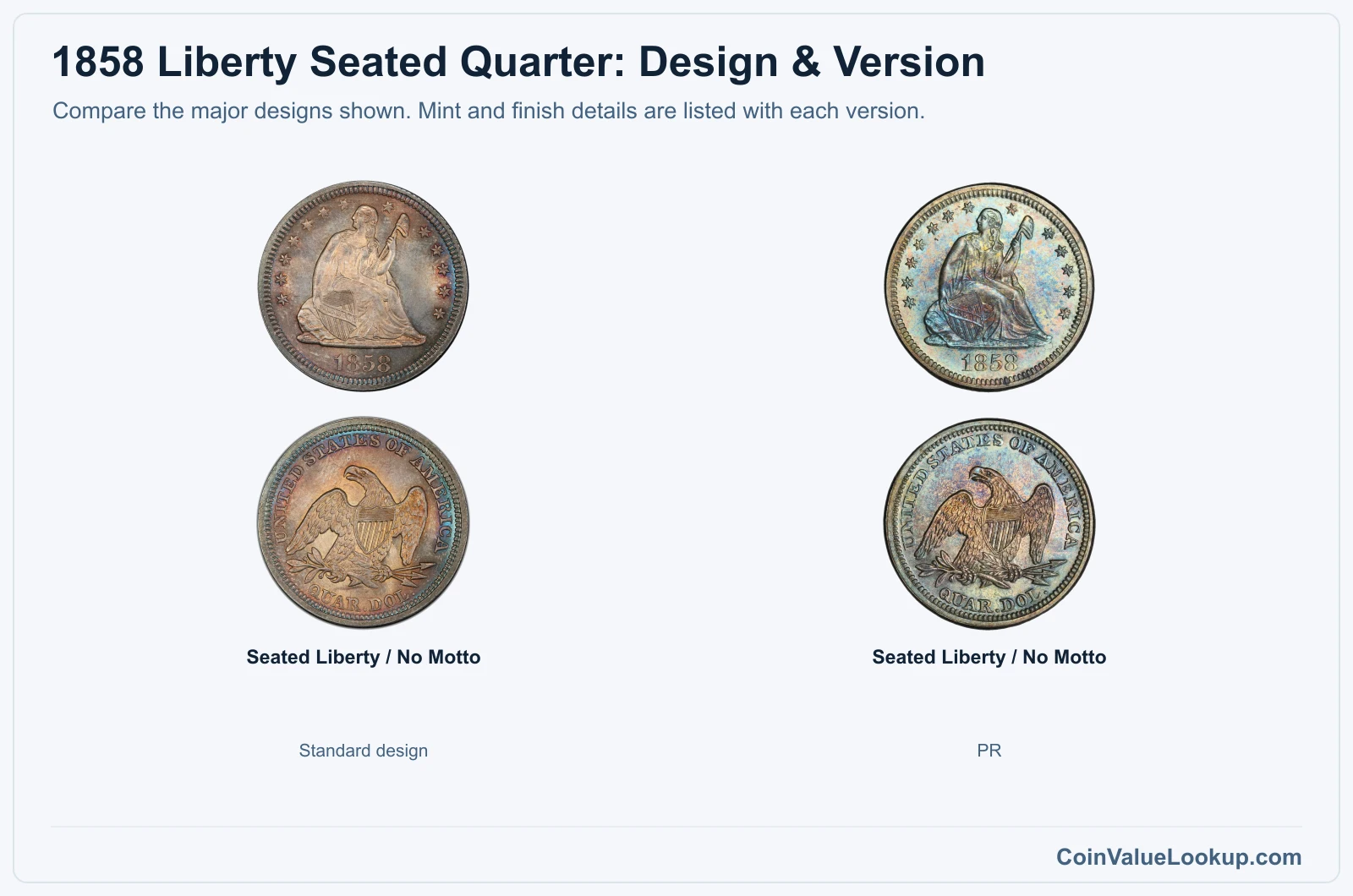
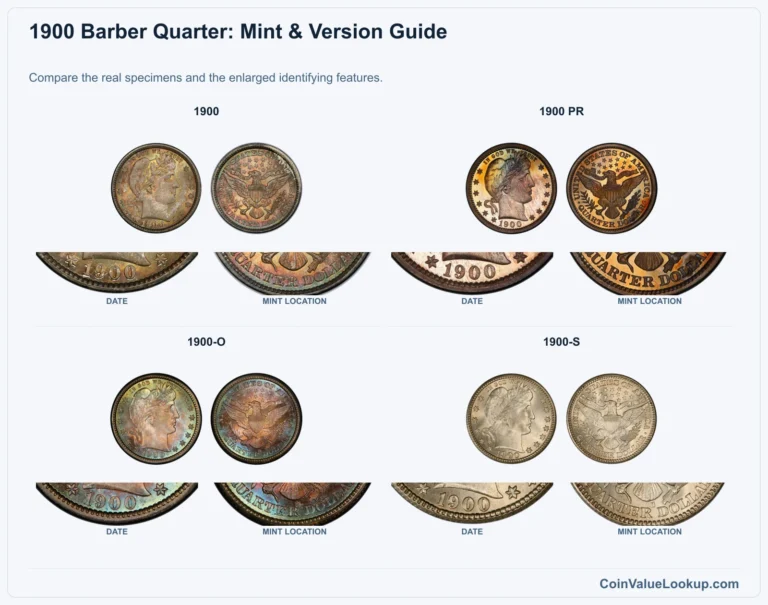
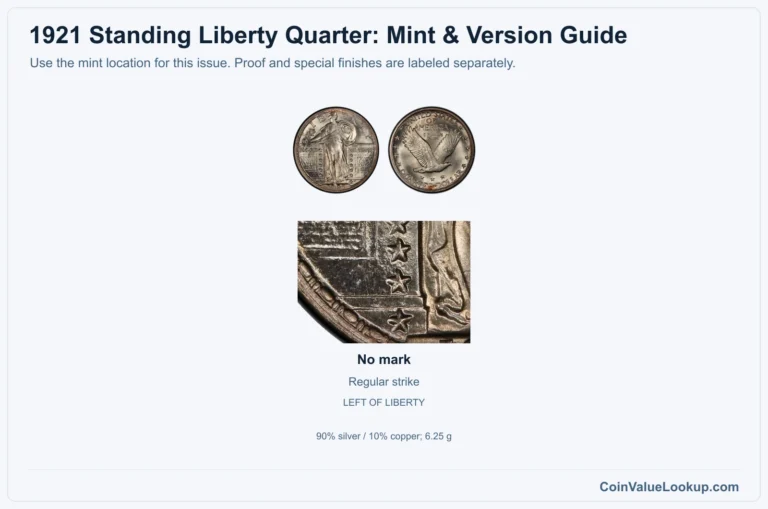
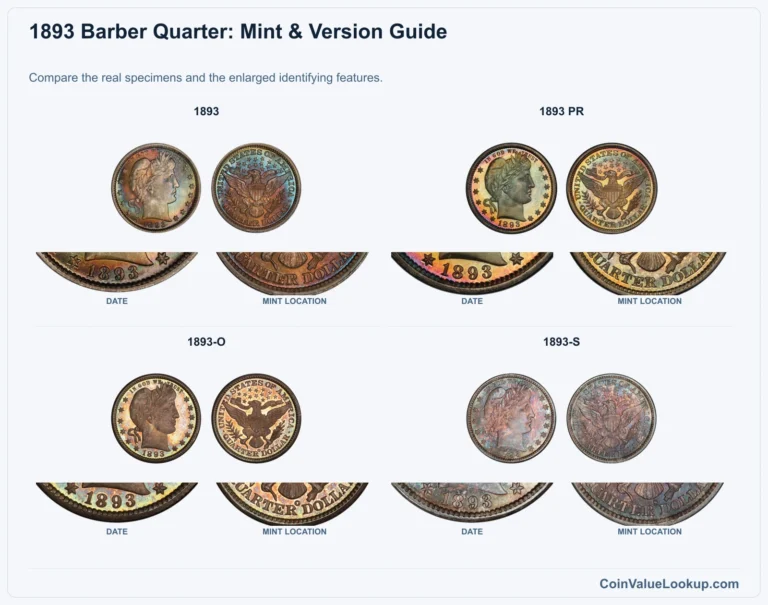
Flip the coin over and look below the eagle on the reverse. Philadelphia-struck coins carry no mintmark at all.
An "O" means New Orleans, and an "S" means San Francisco. Only those three mints produced this date, so ignore any talk of a Carson City mark, which did not exist yet in 1858.
All business strikes share the Seated Liberty obverse and the eagle reverse without a motto. The motto "In God We Trust" was not added to this series until 1866, so every 1858 quarter is a No Motto type.
The coin is made of 90% silver and 10% copper, with a standard weight of 6.22 grams. If yours feels suspiciously light or has a wrong color, that is worth investigating before you assume any value.
Proof 1858 quarters also exist from Philadelphia. They look sharper and have mirrored fields, but a shiny coin is not automatically a proof.
Cleaning can mimic reflectivity, and a strong business strike can look deceptively sharp. Professional authentication is the safe route for any suspected proof.
Step 2: Check Your 1858 Liberty Seated Quarter Grade
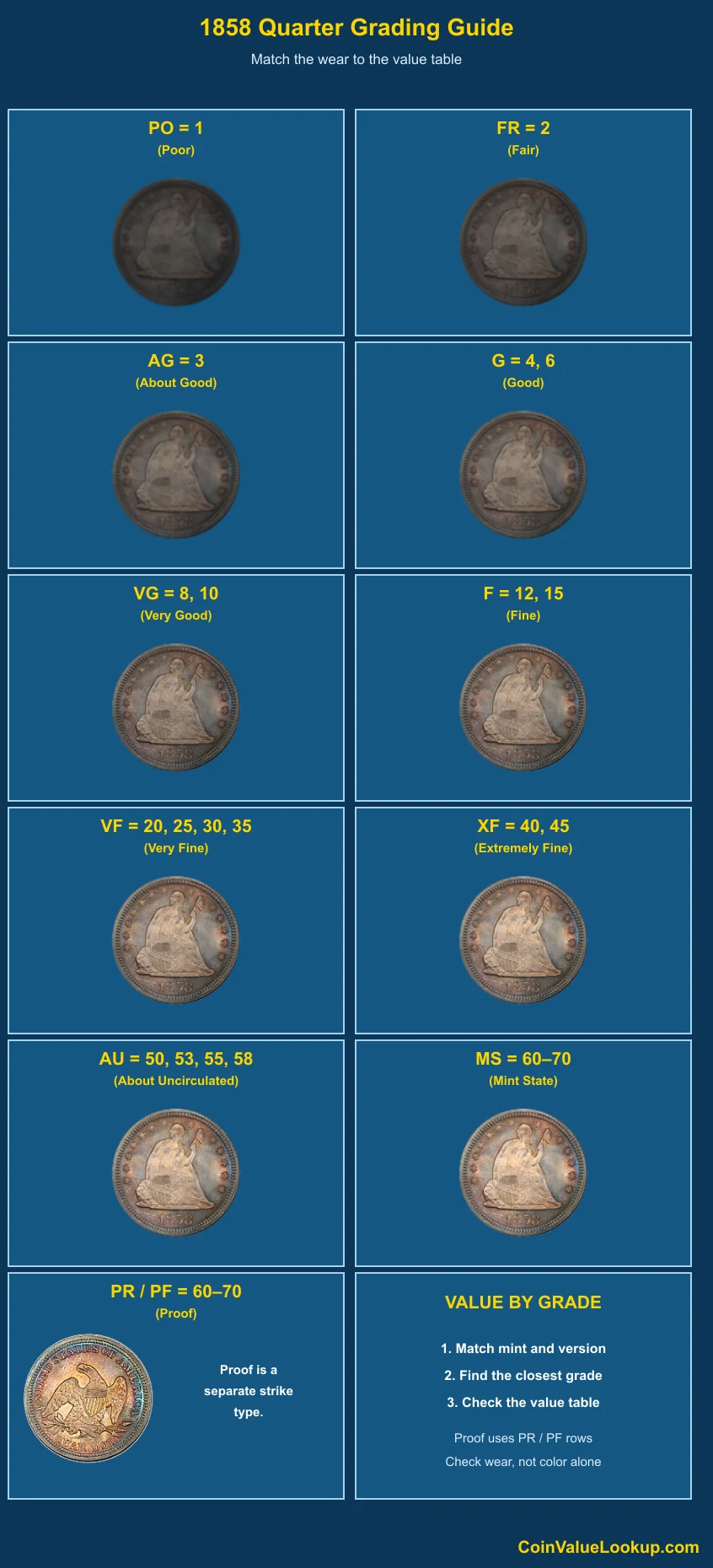
Focus on four main wear points: Liberty's head, the area across her breast and knee, and the details on her shield. On the reverse, check the eagle's breast feathers and the tops of the wings.
These are the highest-relief spots and the first to lose detail as a coin circulates.
A coin in Good-4 condition will show a clear outline of Liberty but most interior detail is gone. By Mint State, the original luster should be intact across the whole surface, with no wear on the high points.
Compare your coin against the reference image side by side. Pay attention to whether missing detail is from actual wear or a weak strike.
Some 1858 quarters left the press with soft centers, which is a manufacturing trait, not evidence of circulation.
Cleaning is the silent killer of value here. A coin that has been polished or dipped will have an unnatural brightness and may show fine hairlines under magnification.
That kind of surface damage can significantly reduce what a collector is willing to pay, regardless of how little wear the coin shows.
Step 3: Check 1858 Liberty Seated Quarter Value by Mint and Version
1858 Liberty Seated Quarter
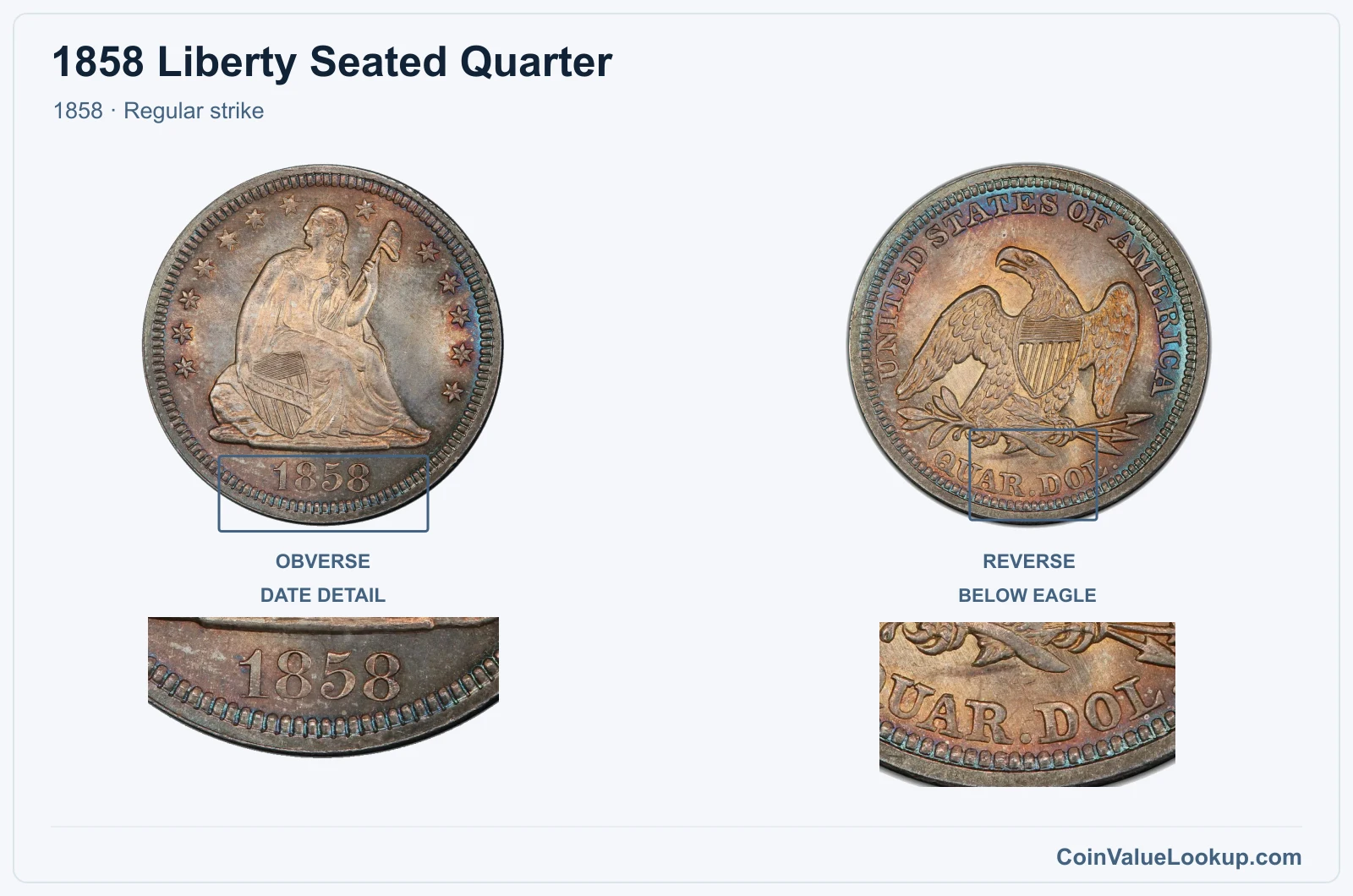
The 1858 Philadelphia quarter is the most accessible version of this date. It has no mintmark, so if you see a clean reverse below the eagle with no letter, this is your coin.
USA Coin Book guide estimates place the 1858 Philadelphia issue at $46.00 in G4 (a well-worn but identifiable coin), $446.00 in MS60 (uncirculated with possible bag marks), and $730.00 in MS63 (choice uncirculated with attractive surfaces). These are guide estimates, not guaranteed sale prices.
Original surfaces matter. A coin with natural gray toning and no signs of cleaning will generally command more collector interest than one that has been scrubbed bright.
Range Grade
Price Auction Records Appraisal PO PO 1
—
Coin Identifier FR FR 2
Coin Identifier AG AG 3
—
Coin Identifier G G 4
—
Coin Identifier
G 6
—
Coin Identifier VG VG 8
Coin Identifier
VG 10
—
Coin Identifier F F 12
—
Coin Identifier
F 15
Coin Identifier VF VF 20
—
Coin Identifier
VF 25
Coin Identifier
VF 30
Coin Identifier
VF 35
Coin Identifier XF XF 40
Coin Identifier
XF 45
Coin Identifier AU AU 50
Coin Identifier
AU 53
Coin Identifier
AU 55
Coin Identifier
AU 58
Coin Identifier MS MS 60
—
Coin Identifier
MS 61
Coin Identifier
MS 62
Coin Identifier
MS 63
Coin Identifier
MS 64
Coin Identifier
MS 65
Coin Identifier
MS 66
Coin Identifier
MS 67
Coin Identifier
MS 68
—
—
—
MS 69
—
—
—
MS 70
—
—
—
1858 Liberty Seated Quarter — PR
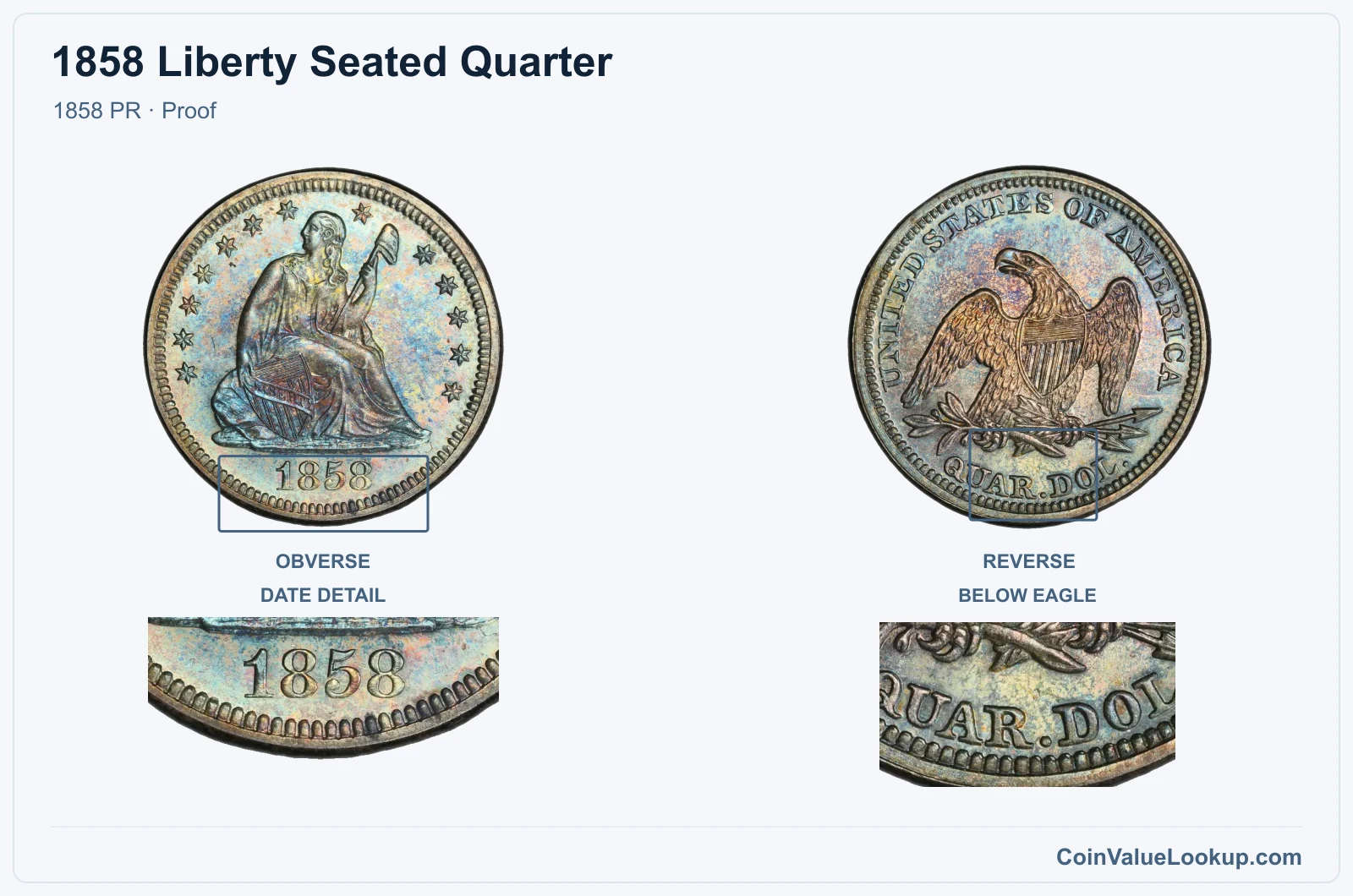
The 1858 Proof quarter was produced at Philadelphia in very small numbers for collectors, not for commerce. There is no mintmark, same as the business strike, so identifying a proof requires looking at the surfaces themselves.
Genuine proofs have deeply mirrored fields and sharp, squared-off design rims. The devices often show a frosty texture against the mirror background.
Hairlines from handling or cabinet friction are common on proofs of this era and affect the grade.
A USA Coin Book guide estimate places the 1858 Proof at $2,505.00 in PR63. That is a guide figure, not a guaranteed offer.
If you think you have a proof, professional certification is strongly recommended. A shiny business strike or a cleaned coin can fool even experienced eyes, and the price difference is significant enough to justify the cost of authentication.
Range Grade
Price Auction Records Appraisal PR PR 1
—
Coin Identifier
PR 2
—
Coin Identifier
PR 3
—
Coin Identifier
PR 4
—
Coin Identifier
PR 6
—
Coin Identifier
PR 8
—
Coin Identifier
PR 10
—
Coin Identifier
PR 12
—
Coin Identifier
PR 15
—
Coin Identifier
PR 20
—
Coin Identifier
PR 25
—
Coin Identifier
PR 30
—
Coin Identifier
PR 35
—
Coin Identifier
PR 40
—
Coin Identifier
PR 45
—
Coin Identifier
PR 50
—
Coin Identifier
PR 53
—
Coin Identifier
PR 58
—
Coin Identifier
PR 60
—
Coin Identifier
PR 61
Coin Identifier
PR 62
Coin Identifier
PR 63
Coin Identifier
PR 64
Coin Identifier
PR 65
Coin Identifier
PR 66
Coin Identifier
PR 67
Coin Identifier
PR 68
—
—
—
PR 69
—
—
—
PR 70
—
—
—
1858 Liberty Seated Quarter — O
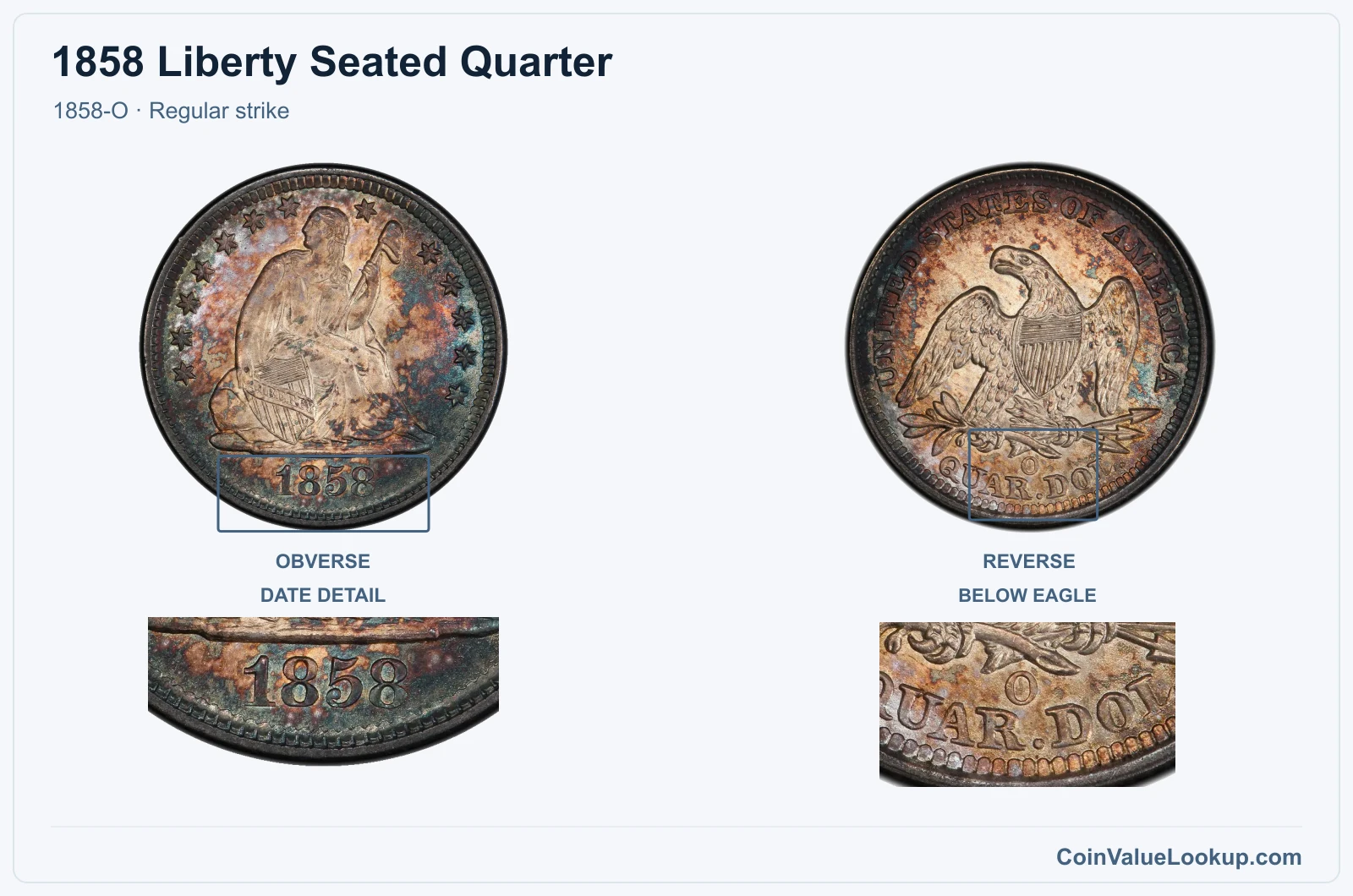
The 1858-O was struck at the New Orleans Mint, and you will find a small "O" mintmark on the reverse beneath the eagle. New Orleans coins from this period can have softer strikes than Philadelphia issues, so do not mistake weak details for heavy wear.
Guide estimates from USA Coin Book show this version at $58.00 in G4, $4,950.00 in MS60, and $12,164.00 in MS63. That dramatic jump from low grade to uncirculated tells you something: surviving mint-state examples are scarce.
Coin Value Lookup is a good starting point if you are trying to compare this coin against other dates and mints in the Liberty Seated Quarter series. It can help you quickly find the right guide for whatever you pull out of a collection.
Original, problem-free surfaces are essential if you want to realize anything close to upper-grade values. Cleaning or environmental damage will knock the price down hard.
Range Grade
Price Auction Records Appraisal PO PO 1
—
Coin Identifier FR FR 2
—
Coin Identifier AG AG 3
—
Coin Identifier G G 4
—
Coin Identifier
G 6
—
Coin Identifier VG VG 8
—
Coin Identifier
VG 10
—
Coin Identifier F F 12
—
Coin Identifier
F 15
—
Coin Identifier VF VF 20
—
Coin Identifier
VF 25
Coin Identifier
VF 30
Coin Identifier
VF 35
Coin Identifier XF XF 40
Coin Identifier
XF 45
Coin Identifier AU AU 50
Coin Identifier
AU 53
Coin Identifier
AU 55
Coin Identifier
AU 58
Coin Identifier MS MS 60
—
Coin Identifier
MS 61
—
Coin Identifier
MS 62
Coin Identifier
MS 63
Coin Identifier
MS 64
Coin Identifier
MS 65
Coin Identifier
MS 66
—
—
—
MS 67
—
—
—
MS 68
—
—
—
MS 69
—
—
—
MS 70
—
—
—
1858 Liberty Seated Quarter — S
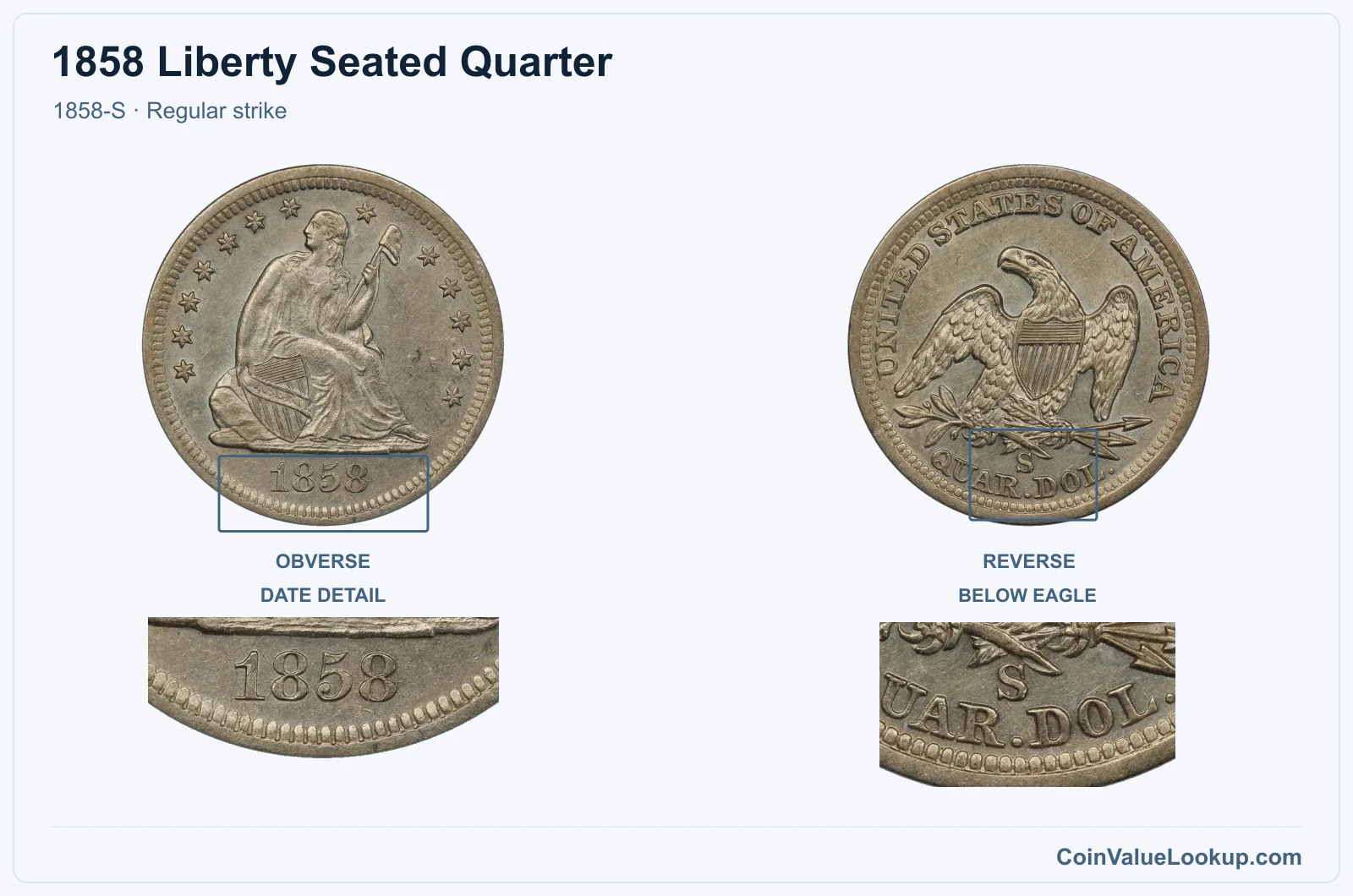
The 1858-S is the key coin of this date. Struck at the San Francisco Mint, it carries an "S" mintmark on the reverse below the eagle.
Even in well-worn G4 condition, the USA Coin Book guide estimate is $321.00, which is several times the Philadelphia or New Orleans issue in the same grade.
At MS60, the guide jumps to $24,610.00. That number reflects genuine rarity in uncirculated condition.
Very few 1858-S quarters survived without significant wear, and the ones that did are aggressively pursued by series collectors.
Make sure the mintmark is genuinely an "S" and not damage or a tooled letter. Confirm the coin's weight (6.22 grams standard) and diameter.
Given the values involved, professional grading and authentication are well worth the investment for any 1858-S quarter in decent shape.
Range Grade
Price Auction Records Appraisal PO PO 1
Coin Identifier FR FR 2
Coin Identifier AG AG 3
Coin Identifier G G 4
Coin Identifier
G 6
Coin Identifier VG VG 8
Coin Identifier
VG 10
Coin Identifier F F 12
Coin Identifier
F 15
Coin Identifier VF VF 20
Coin Identifier
VF 25
Coin Identifier
VF 30
Coin Identifier
VF 35
Coin Identifier XF XF 40
Coin Identifier
XF 45
Coin Identifier AU AU 50
Coin Identifier
AU 53
Coin Identifier
AU 55
Coin Identifier
AU 58
Coin Identifier MS MS 60
—
Coin Identifier
MS 61
—
Coin Identifier
MS 62
Coin Identifier
MS 63
—
—
—
MS 64
—
—
—
MS 65
—
—
—
MS 66
—
—
—
MS 67
—
—
—
MS 68
—
—
—
MS 69
—
—
—
MS 70
—
—
—
1858 Liberty Seated Quarter Error List
1. 1858 Liberty Seated Quarter — Clashed Dies
A clashed-die 1858 quarter has been reported, specifically involving a reverse clash with a one-cent die. This happens when two dies strike each other without a planchet between them, transferring faint ghost impressions of the opposing design onto each die's face.
Later coins struck from those dies carry traces of the wrong design.
Look for faint, out-of-place design elements in the fields of your coin. On a clashed reverse, you might see partial outlines from the obverse transferred into open areas around the eagle.
The ghost lines will align with where the opposing die's design would have contacted the surface.
Do not confuse random scratches, contact marks, or raised lines from a damaged die with a genuine clash. True clash marks follow the geometry of the opposing design and appear in predictable locations.
No specific price has been established for this variety, as the value depends on how visible the clash is, the coin's overall condition, and collector demand for the specific error.