1921 Standing Liberty Quarter Coin Value: How Much Is It Worth?
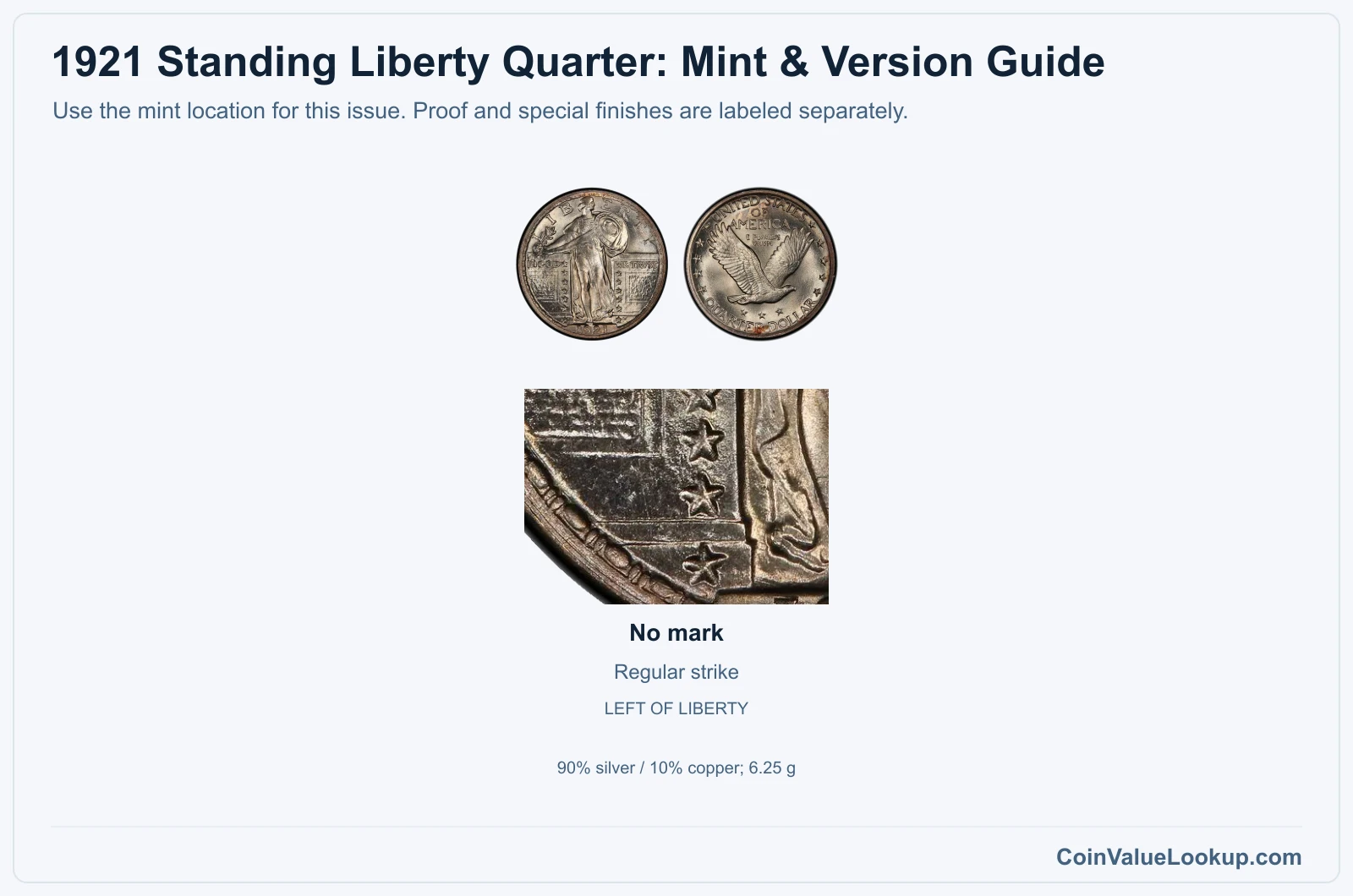
The 1921 Standing Liberty quarter is a coin that gets collectors' attention quickly. It was struck only at the Philadelphia Mint, and surviving examples range from well-circulated to occasional mint-state pieces.
Guide estimates for this date span from about $194.00 in Good-4 condition up to $2,350.00 at the MS63 level, according to USA Coin Book. Where your coin lands depends on its condition, surface quality and strike sharpness.
Fast Way to Identify Your 1921 Standing Liberty Quarter
The quickest way to start figuring out what you have is to upload clear photos of both sides of your coin. A sharp image of the obverse and reverse lets us provide a preliminary identification of the date, mint and design type.
That first step narrows things down before you dig into grading or version details.
1921 Standing Liberty Quarter Value
Upload both sides of your 1921 Standing Liberty Quarter.
Front Obverse
Upload photo
Back Reverse
Upload photo
Which 1921 Standing Liberty Quarter Versions Are Worth Money?
- The 1921 Philadelphia issue lists at $2,350.00 in MS63 according to the USA Coin Book guide, making higher-grade examples the ones to watch for.
- Always confirm the mint and finish first; wear, cleaning or damage does not transform a common-condition coin into a rare version.
Step 1: Identify Your 1921 Standing Liberty Quarter Mint Mark and Version
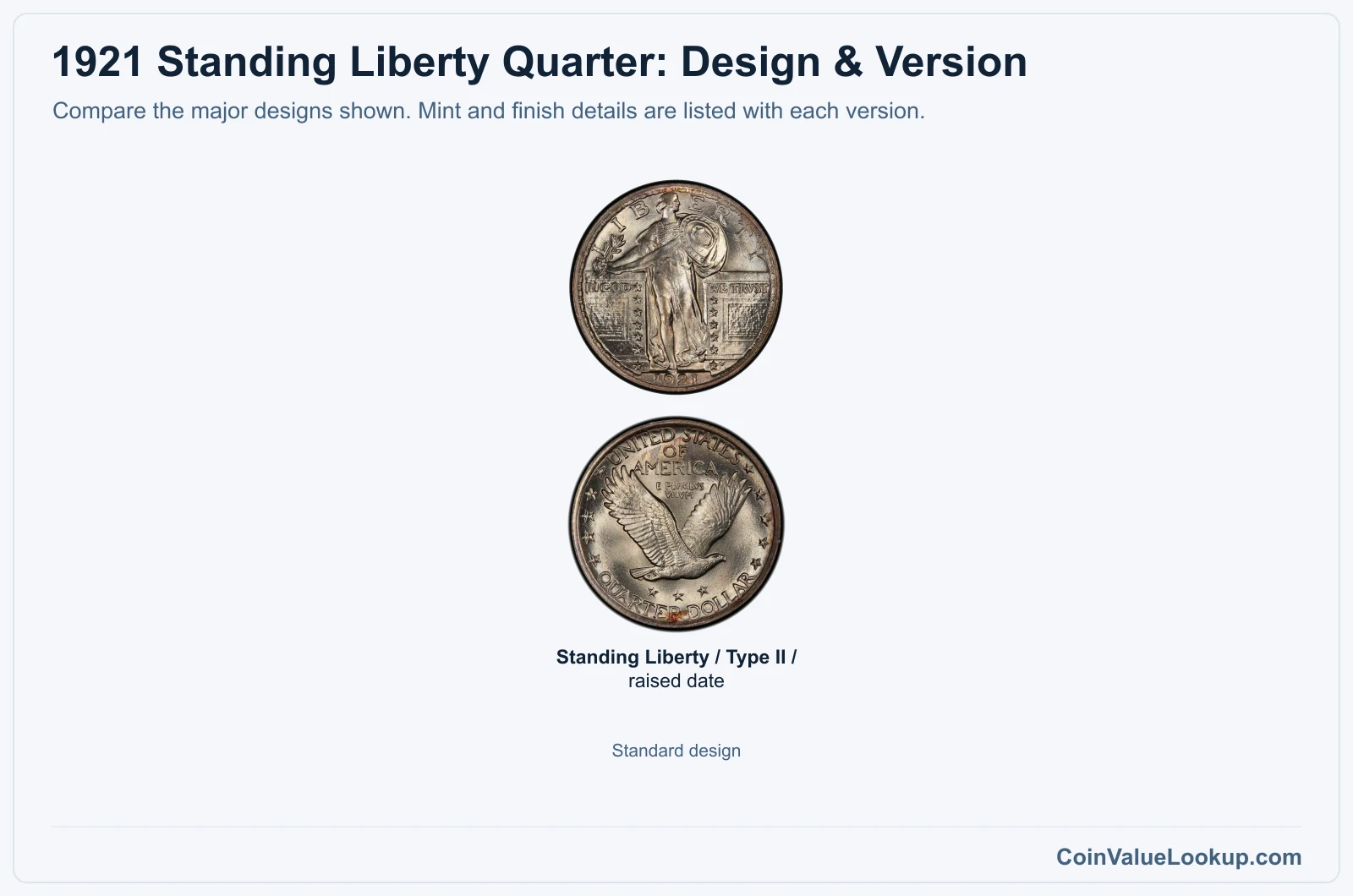
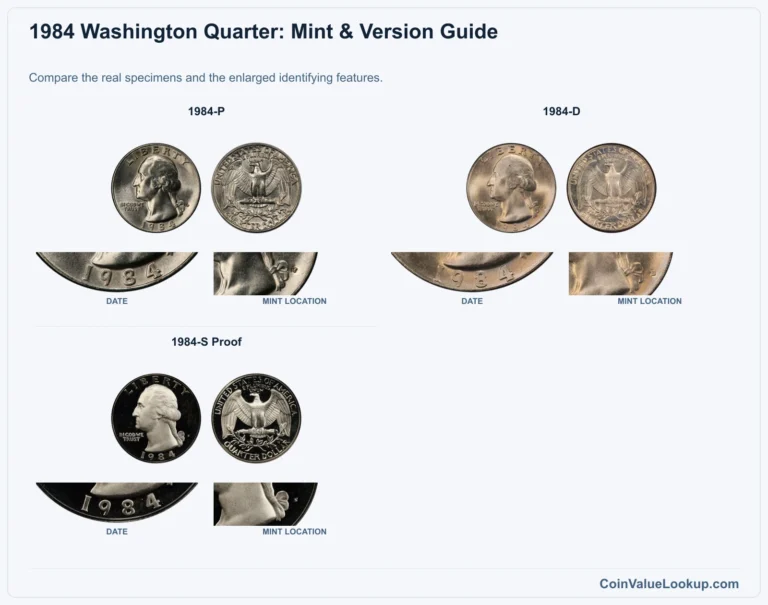
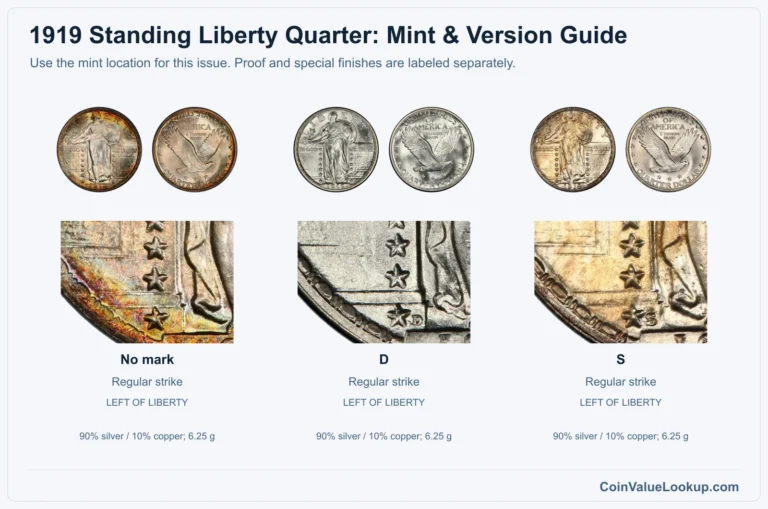
The 1921 quarter was produced only at the Philadelphia Mint, so there is no mintmark on genuine examples. On Standing Liberty quarters that do carry a mintmark, you would find it on the obverse near the left base of the wall beside Liberty.
No mark means Philadelphia.
This coin uses the Type II design. Liberty wears chain mail across her chest, and the reverse shows three small stars beneath the eagle.
The earlier Type I design, used from 1916 to partway through 1917, has an exposed breast and no stars below the eagle. If your quarter has the bare-breast design, it is not a 1921.
The date on the 1921 sits raised on the step below Liberty. Starting in 1925 the date was recessed into the step to reduce wear.
So on a 1921, expect the date to show wear quickly in circulation. The coin is struck in 90% silver and 10% copper, weighing 6.25 grams.
Step 2: Check Your 1921 Standing Liberty Quarter Grade
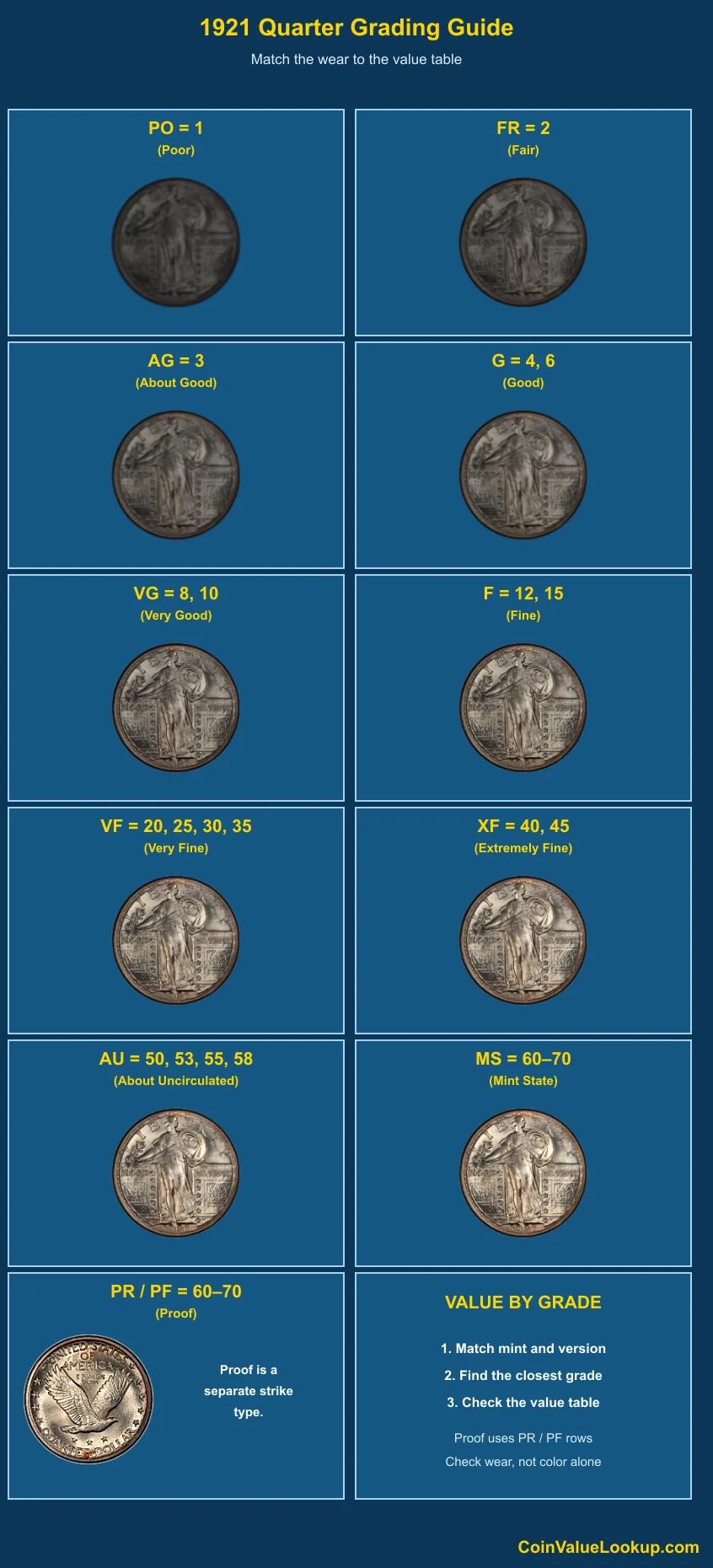
Start with Liberty's head. On a sharp strike you can see full hair detail, including the hairline above the forehead.
That is the "Full Head" designation, and it describes strike quality, not overall grade. A coin can be technically uncirculated yet still lack Full Head detail because of a weak strike.
Next check Liberty's breast, the shield and her forward knee. These are the first areas to lose definition as a coin circulates.
On the reverse, look at the eagle's breast feathers and wing tips.
Compare your coin's surfaces against the reference image. Luster matters as much as detail.
A coin with soft original luster and light rub grades differently than one scrubbed bright with a cleaning. Cleaned coins lose the natural cartwheel sheen and often show tiny hairlines under magnification, which reduces their collector value regardless of remaining detail.
Step 3: Check 1921 Standing Liberty Quarter Value by Mint and Version
1921 Standing Liberty Quarter
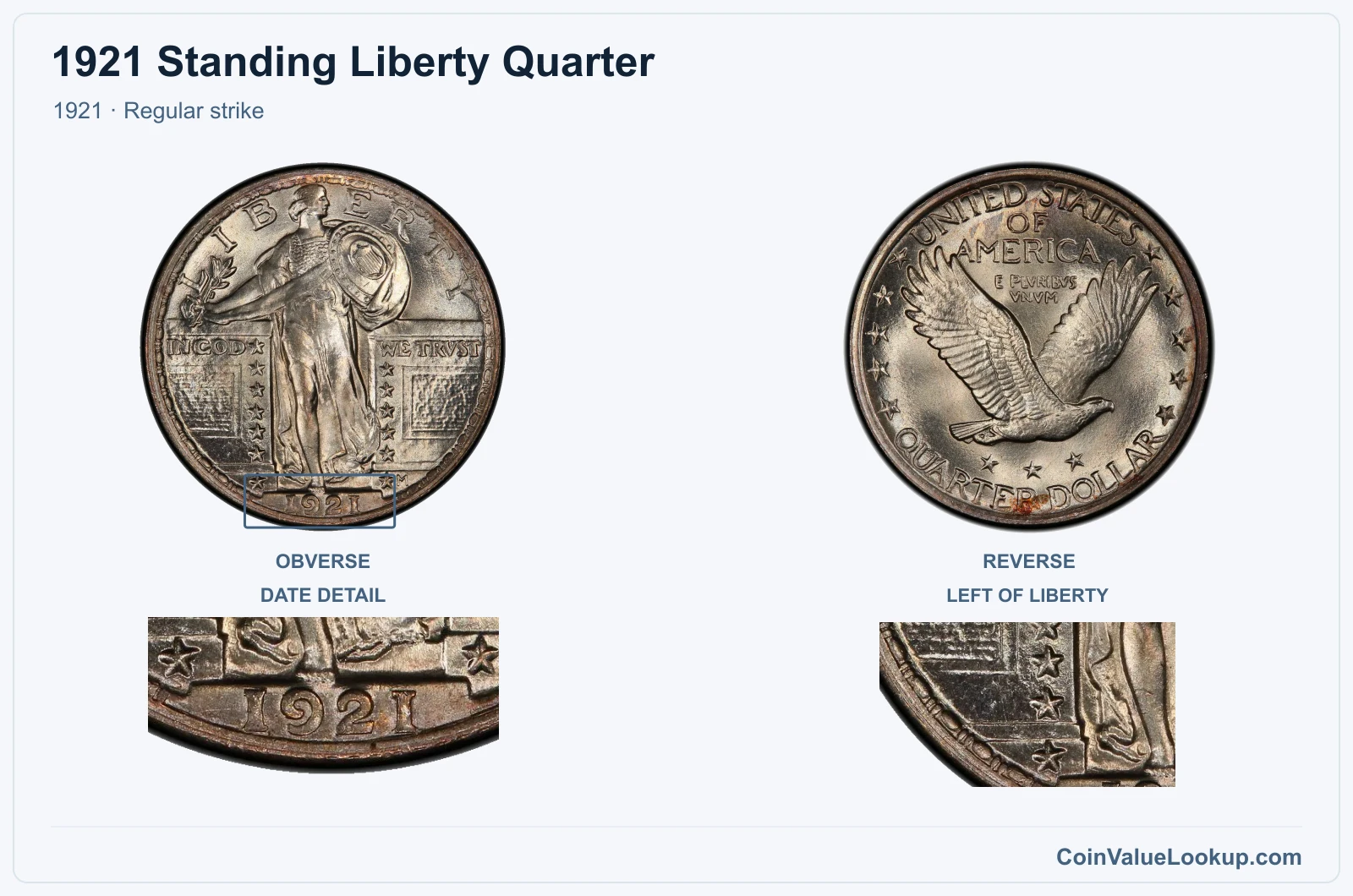
The 1921 quarter was struck only at the Philadelphia Mint with no mintmark. It uses the Type II reverse with three stars beneath the eagle and the chain-mail obverse.
The date is raised, not recessed, so it wore down fast in pocket change. That is why finding one with a fully legible date already puts you ahead of many survivors.
USA Coin Book lists guide estimates of $194.00 in G4, $1,683.00 in MS60 and $2,350.00 in MS63. These are retail guide figures, not guaranteed sale prices.
Original surfaces and strike sharpness control where a coin falls in that spread. A heavily worn piece with a partial date is still silver, but a well-struck example with a Full Head designation can command a serious premium.
Coin Value Lookup is a good starting point if you want to look up guide values for other dates and mints in the Standing Liberty series. It covers a wide range of U.S. coin types in one place.
Range Grade
Price Auction Records Appraisal PO PO 1
—
Coin Identifier FR FR 2
—
Coin Identifier AG AG 3
Coin Identifier G G 4
Coin Identifier
G 6
Coin Identifier VG VG 8
Coin Identifier
VG 10
Coin Identifier F F 12
Coin Identifier
F 15
Coin Identifier VF VF 20
Coin Identifier
VF 25
Coin Identifier
VF 30
Coin Identifier
VF 35
Coin Identifier XF XF 40
Coin Identifier
XF 45
Coin Identifier AU AU 50
Coin Identifier
AU 53
Coin Identifier
AU 55
Coin Identifier
AU 58
Coin Identifier MS MS 60
Coin Identifier
MS 61
Coin Identifier
MS 62
Coin Identifier
MS 63
Coin Identifier
MS 64
Coin Identifier
MS 65
Coin Identifier
MS 66
Coin Identifier
MS 67
Coin Identifier
MS 68
—
—
—
MS 69
—
—
—
MS 70
—
—
—
1921 Standing Liberty Quarter Error List
1. 1921 Standing Liberty Quarter — Off-Center Strike
An off-center strike happens when the planchet is not seated properly in the collar before the dies come together. The result is a crescent-shaped area of blank metal on one side and a displaced design on the other.
On a 1921 Standing Liberty quarter, this error has been reported as a category to look for.
The key diagnostic is that unstruck crescent paired with a shifted but otherwise complete design. The date should remain visible for the coin to hold strong collector interest.
The more dramatic the shift, the more attention it draws, but only if the coin is identifiable.
Watch out for lookalikes. A clipped planchet removes metal in a curved bite but does not shift the design.
Post-mint damage from a vise or hammer can flatten one side without producing the telltale blank crescent. One-sided die misalignment also mimics the look under casual inspection.
Condition, the degree of displacement and how much of the design survives all affect what a given example is worth.
2. 1921 Standing Liberty Quarter — Lamination / Split Planchet
A lamination error occurs when layers within the planchet separate, leaving a peeling flap, a missing patch or a visible crack in the metal itself. On the 1921 Standing Liberty quarter, this category has been reported as one to examine for.
Look for a raised flap of metal, a thin strip pulling away from the surface or a visible split along the edge. Photographing both the affected face and the coin's edge together gives the clearest documentation.
Laminations result from impurities or gas trapped in the alloy during the rolling process, before the blank was even punched.
Do not confuse this with surface scraping, corrosion pitting or a deliberately shaved coin. Post-mint scratches leave sharp grooves rather than separating layers, and corrosion eats inward rather than lifting outward.
The size, location and whether the flap is retained all influence how collectors value a specific example.
3. 1921 Standing Liberty Quarter — Die Crack / Die Chip
Die cracks and die chips show up as raised lines or small raised blobs on the coin's surface. They originate from damage to the steel die, not the coin itself, so every piece struck by that broken die carries the same mark.
This error category has been reported for the 1921 Standing Liberty quarter.
A die crack typically runs as a thin raised line, sometimes connecting design elements or running from the rim inward. A die chip appears as a small raised lump where a fragment broke out of the die, leaving a void that fills with metal during striking.
A larger break connecting to the rim is sometimes called a cud.
The main lookalikes are incuse scratches, which sit below the surface rather than above it, and corrosion or foreign material stuck to the coin. A genuine die crack is raised and follows a consistent path across every affected coin from that die pair.
Condition and prominence of the crack determine collector interest.