1966 Lincoln Penny Coin Value: How Much Is It Worth?
Most 1966 Lincoln pennies you pull from a jar are worth about what you paid for the jar. An ordinary example in uncirculated MS65 condition carries a USA Coin Book guide estimate around $1.24.
The real action starts with Special Mint Set coins and legitimate striking errors, which deserve their own careful look.
Fast Way to Identify Your 1966 Lincoln Penny
Snap a clear photo of both the front and back of your 1966 penny and upload them here. That gives us a starting point for preliminary identification of the coin's version, condition and any visible oddities.
It is not a substitute for professional authentication, but it helps you figure out what you are holding before you go further.
1966 Penny Value
Upload both sides of your 1966 Lincoln Penny.
Front Obverse
Upload photo
Back Reverse
Upload photo
Which 1966 Lincoln Penny Versions Are Worth Money?
- SMS (Special Mint Set) coins have a distinct strike and surface that set them apart from ordinary business strikes — value depends on authenticated identity, condition and color designation.
- Cents struck on a clad dime planchet are a dramatic wrong-planchet error; a PCGS XF45 example sold for $204 at auction in March 2025.
- Curved clipped planchets, obverse laminations and doubled die varieties are all reported for this date and can carry premiums above face value depending on severity and grade.
- Off-center strikes, die breaks, double strikes and other mechanical errors exist for 1966 cents and are worth individual assessment when authenticated.
Step 1: Identify Your 1966 Lincoln Penny Mint Mark and Version
The 1966 Lincoln cent shows Lincoln's portrait on the obverse and the Memorial building on the reverse. The alloy is 95% copper and 5% zinc, weighing about 3.11 grams.
These are not the copper-plated zinc cents that came later.
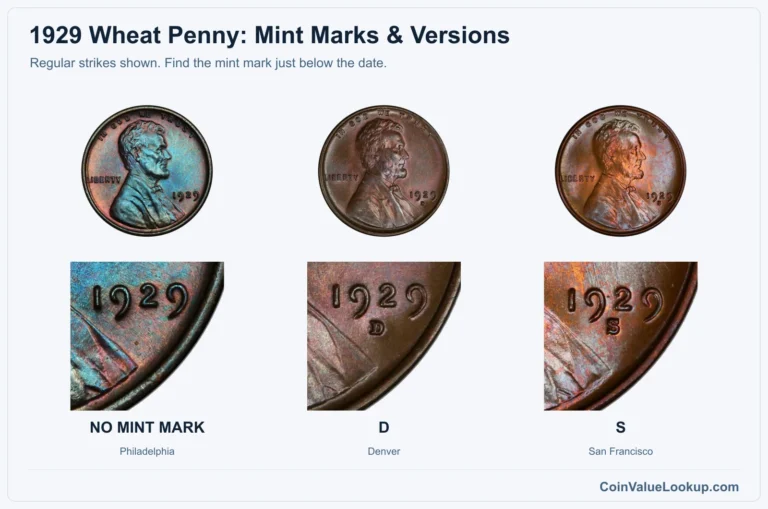
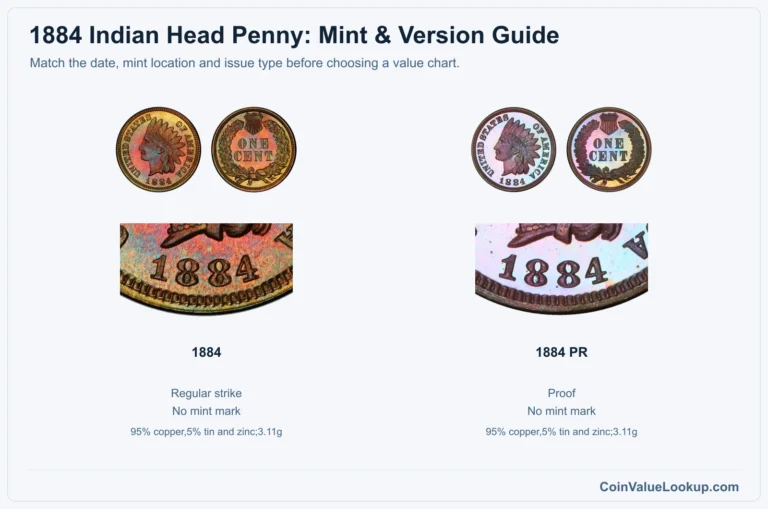
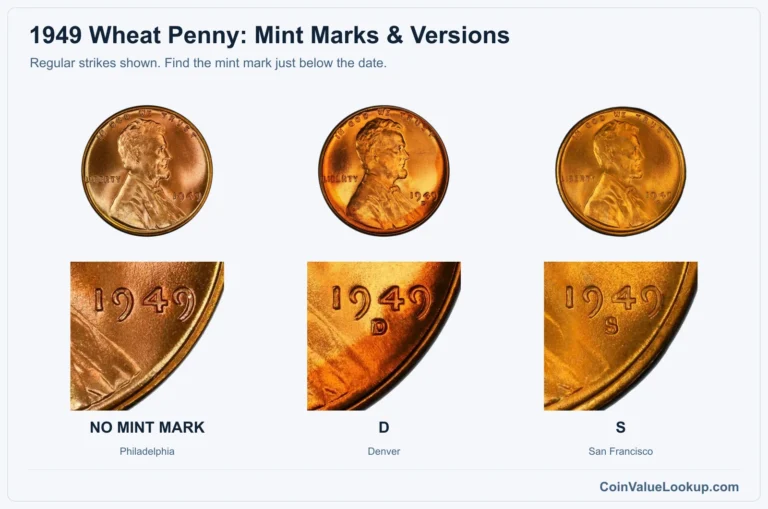
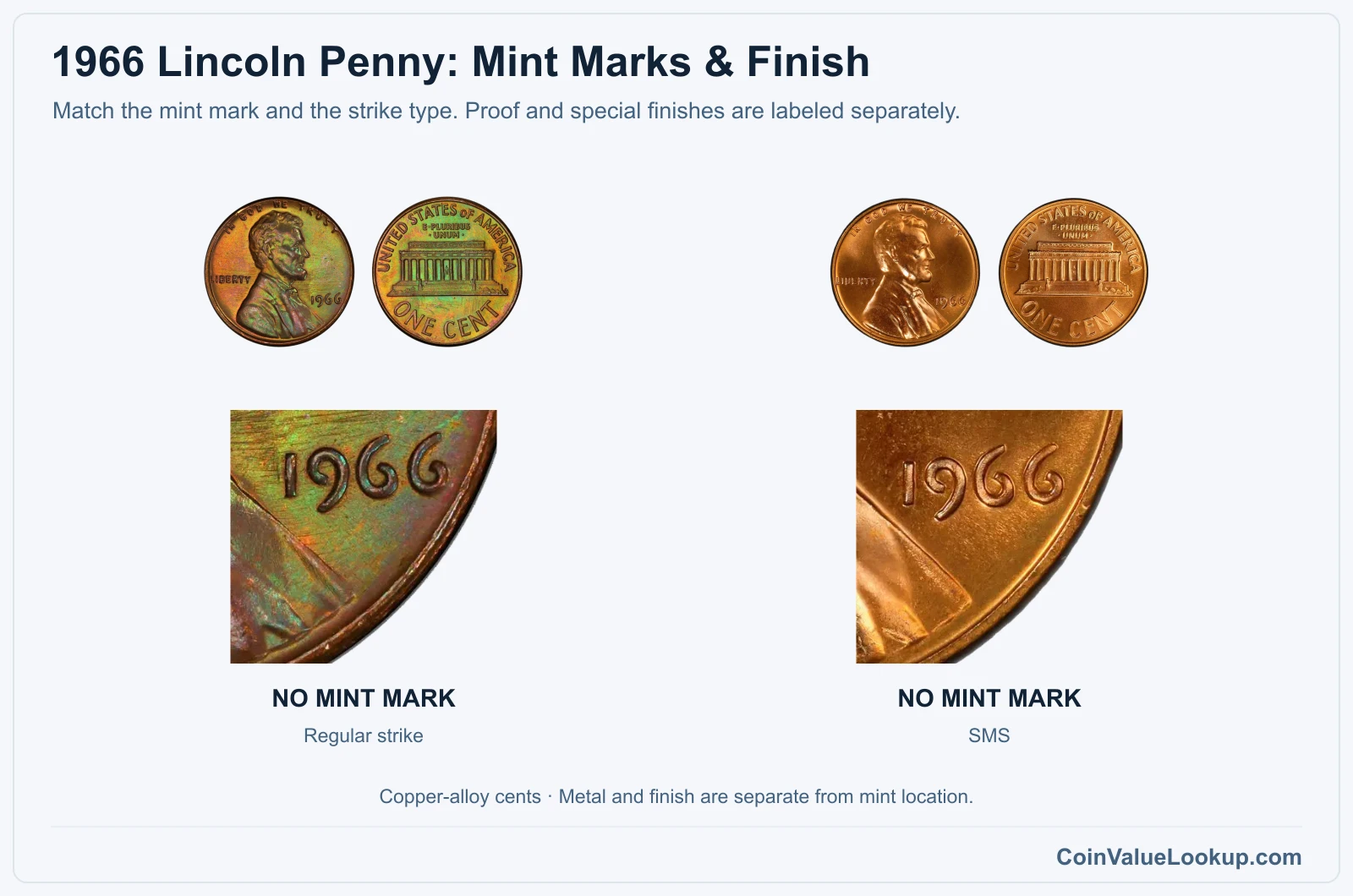
Every normal 1966 cent lacks a mintmark. That absence alone does not tell you which mint made it.
Business strikes and Special Mint Set coins both carry no letter below the date, so you need more than a blank space to tell them apart.
SMS coins were produced at San Francisco without a mintmark, as part of Special Mint Sets that replaced the usual proof and uncirculated sets from 1965 through 1967. They generally show a sharper strike and a distinctive surface compared to ordinary business strikes, but the finish varies.
Compare against known certified SMS examples rather than assuming any shiny penny qualifies.
Copper color designations — Red, Red-Brown and Brown — describe how much original surface color remains, not different metals. A dark brown penny can still be uncirculated, while a bright one may have been cleaned.
Check for unnatural shine or hairlines before deciding a coin is original Red.
Step 2: Check Your 1966 Lincoln Penny Grade
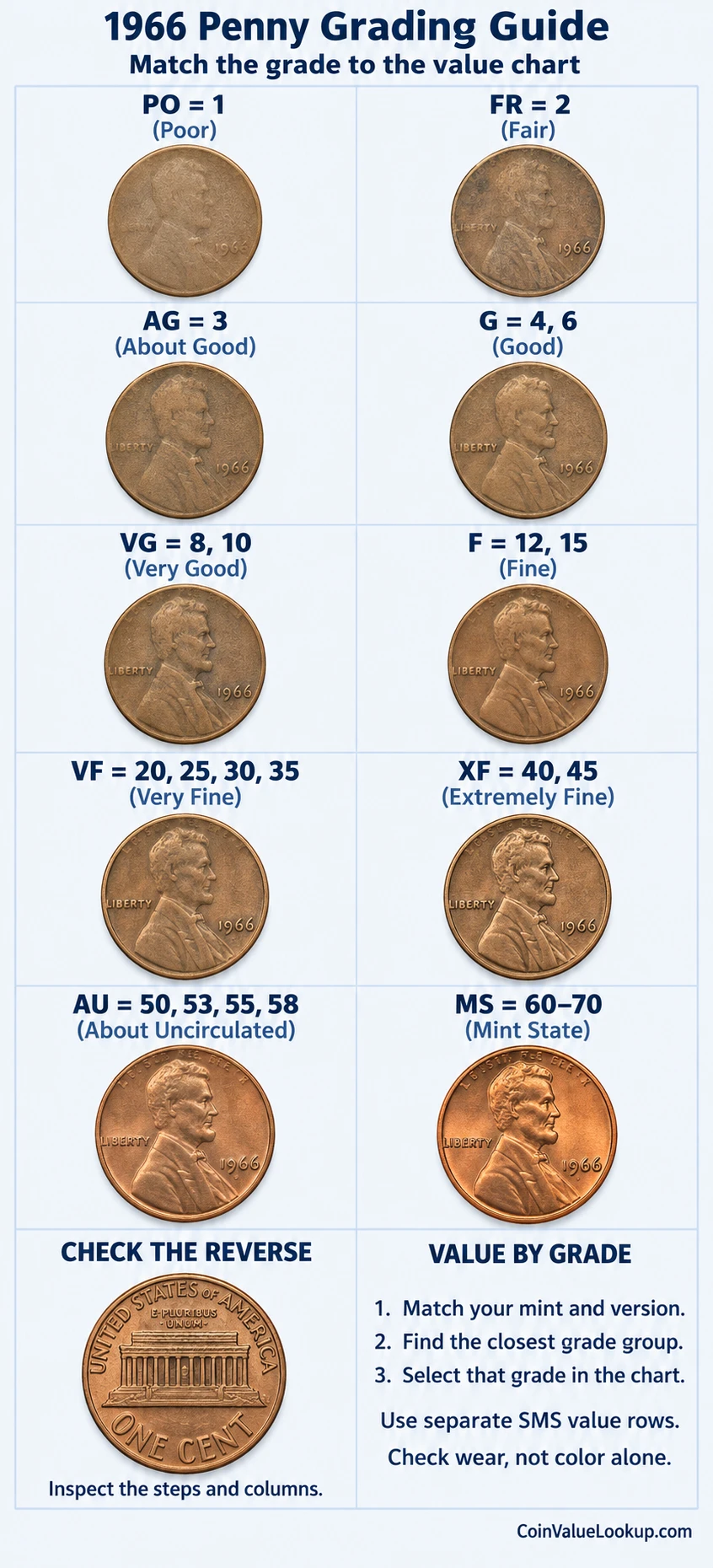
Start on the obverse. Lincoln's cheekbone, jawline and the hair detail above the ear show wear first.
On the reverse, look at the roof of the Memorial and the tops of the columns.
Separate contact marks from actual wear. A bag-marked coin with full luster is uncirculated despite those dings.
A coin with smooth, flat high points has been in circulation, no matter how clean it looks.
Use the comparison image to match your coin's wear pattern against known grade examples. Dark copper toning does not mean a coin is worn, and bright copper does not guarantee mint state — cleaning leaves telltale hairlines under magnification.
SMS finish and copper-color designation are tracked separately from the numerical grade, so make sure you are comparing apples to apples.
Step 3: Check 1966 Lincoln Penny Value by Mint and Version
1966 Lincoln Penny — No Mint Mark — Business
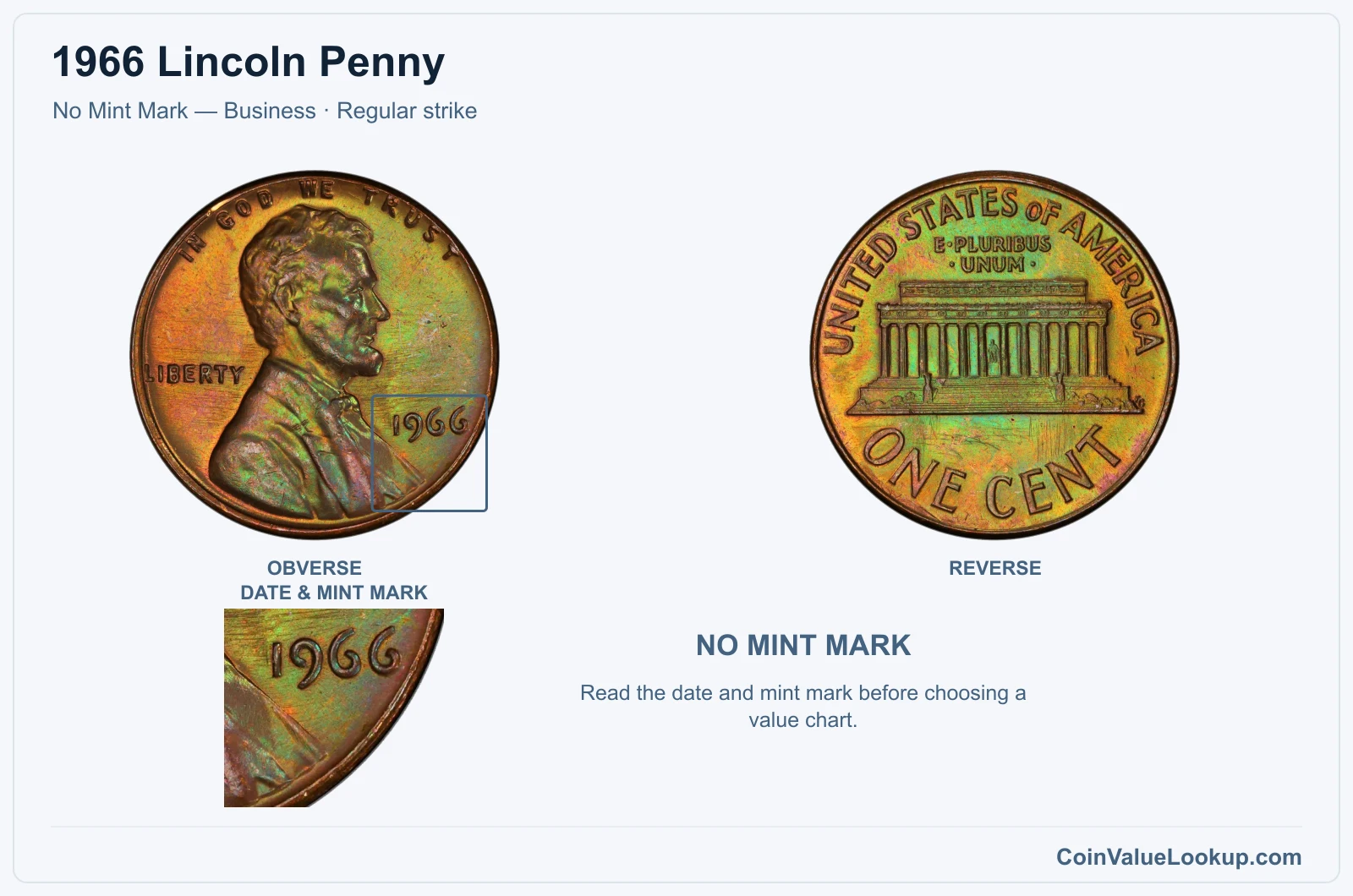
This is the standard 1966 Lincoln cent you will find in pocket change. It weighs about 3.11 grams, is struck on a 95% copper / 5% zinc planchet, and carries no mintmark.
The USA Coin Book guide estimate for MS65 is $1.24. That is a guide figure, not a guaranteed offer.
Color matters at the uncirculated level. A full Red designation commands more interest than Red-Brown or Brown at the same grade.
Most survivors in circulated condition are worth face value. Match your coin's wear level and copper color before drawing any pricing conclusion.
Range Grade
Price1966 No Mint Mark — Business (BN) Price1966 No Mint Mark — Business (RB) Price1966 No Mint Mark — Business (RD) Auction Records Appraisal PO PO 1
—
Coin Identifier FR FR 2
—
Coin Identifier AG AG 3
—
Coin Identifier G G 4
—
Coin Identifier
G 6
—
Coin Identifier VG VG 8
—
Coin Identifier
VG 10
—
Coin Identifier F F 12
—
Coin Identifier
F 15
—
Coin Identifier VF VF 20
—
Coin Identifier
VF 25
—
Coin Identifier
VF 30
—
Coin Identifier
VF 35
—
Coin Identifier XF XF 40
—
Coin Identifier
XF 45
—
Coin Identifier AU AU 50
—
Coin Identifier
AU 53
—
Coin Identifier
AU 55
—
Coin Identifier
AU 58
—
Coin Identifier MS MS 60
—
Coin Identifier
MS 61
—
Coin Identifier
MS 62
—
Coin Identifier
MS 63
—
Coin Identifier
MS 64
Coin Identifier
MS 65
Coin Identifier
MS 66
Coin Identifier
MS 67
—
—
Coin Identifier
MS 68
—
—
—
—
—
MS 69
—
—
—
—
—
MS 70
—
—
—
—
—
1966 Lincoln Penny — No Mint Mark — Special Mint Set
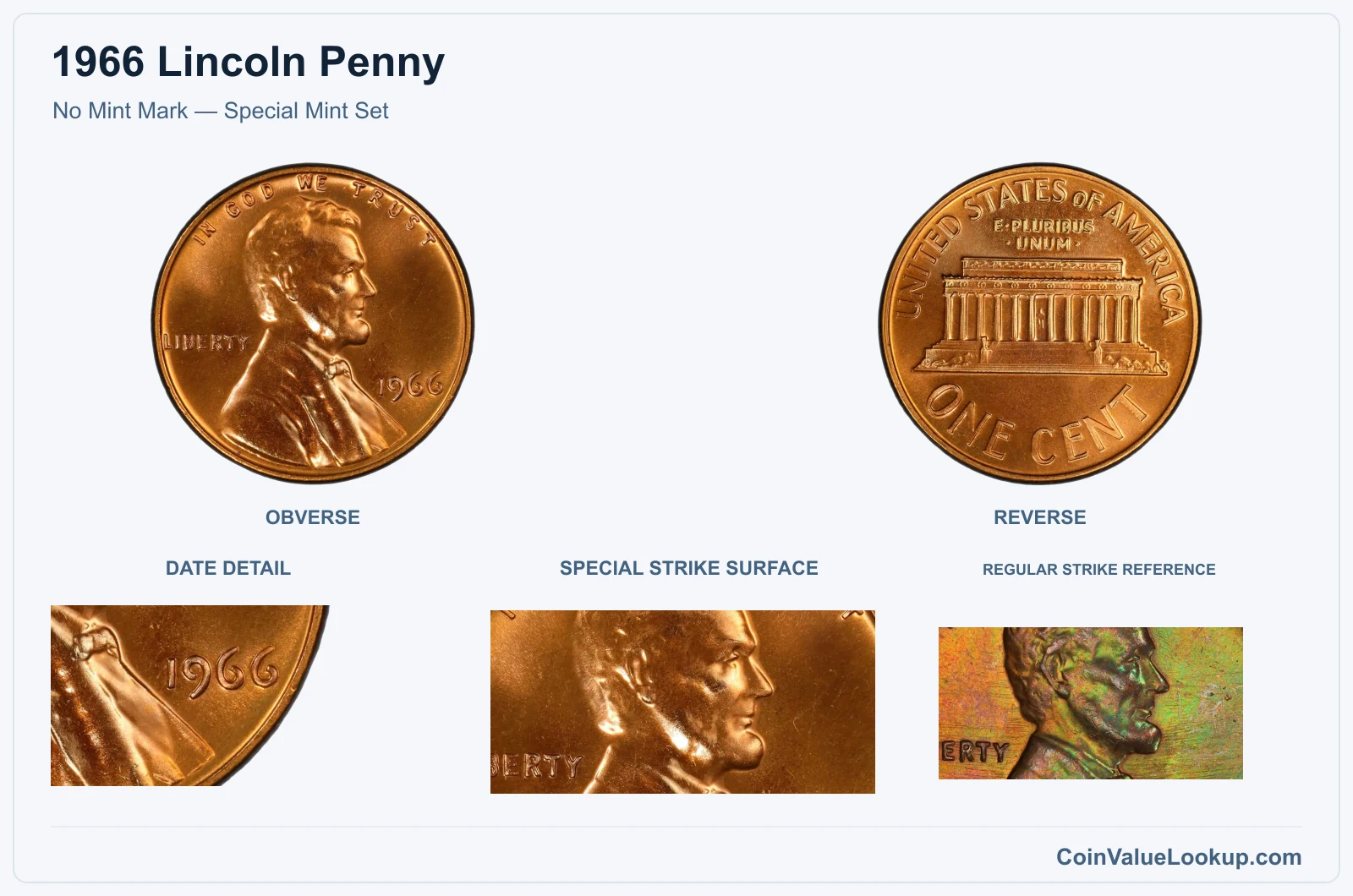
The 1966 Special Mint Set cent was struck at San Francisco without a mintmark, as part of the SMS program that ran from 1965 to 1967. These replaced the regular proof and uncirculated sets during that period.
SMS coins typically show a sharper strike and a different surface quality compared to ordinary business strikes, but the finish is not uniform across all examples. Some approach a proof-like mirror, others do not.
Do not diagnose SMS from brightness alone — compare against certified examples or coins still in their original government packaging.
Coin Value Lookup is a good place to look up guides for this and other Lincoln cent dates when you are trying to narrow down what you have.
Because SMS coins vary in finish, color and possible cameo contrast, there is no single adopted price to quote here. Value depends on authenticated identity, grade and color designation.
Professional certification is the clearest path to establishing what a particular SMS cent is worth.
Range Grade
Price Auction Records Appraisal SP SP 1
—
Coin Identifier
SP 2
—
Coin Identifier
SP 3
—
Coin Identifier
SP 4
—
Coin Identifier
SP 6
—
Coin Identifier
SP 8
—
Coin Identifier
SP 10
—
Coin Identifier
SP 12
—
Coin Identifier
SP 15
—
Coin Identifier
SP 20
—
Coin Identifier
SP 25
—
Coin Identifier
SP 30
—
Coin Identifier
SP 35
—
Coin Identifier
SP 40
—
Coin Identifier
SP 45
—
Coin Identifier
SP 50
—
Coin Identifier
SP 53
—
Coin Identifier
SP 55
—
Coin Identifier
SP 58
—
Coin Identifier
SP 60
—
Coin Identifier
SP 61
—
Coin Identifier
SP 62
—
Coin Identifier
SP 63
—
Coin Identifier
SP 64
Coin Identifier
SP 65
Coin Identifier
SP 66
Coin Identifier
SP 67
Coin Identifier
SP 68
Coin Identifier
SP 69
Coin Identifier
SP 70
—
—
—
1966 Lincoln Penny Error List
1. 1966 Lincoln Penny — Struck on a Clad Dime Blank
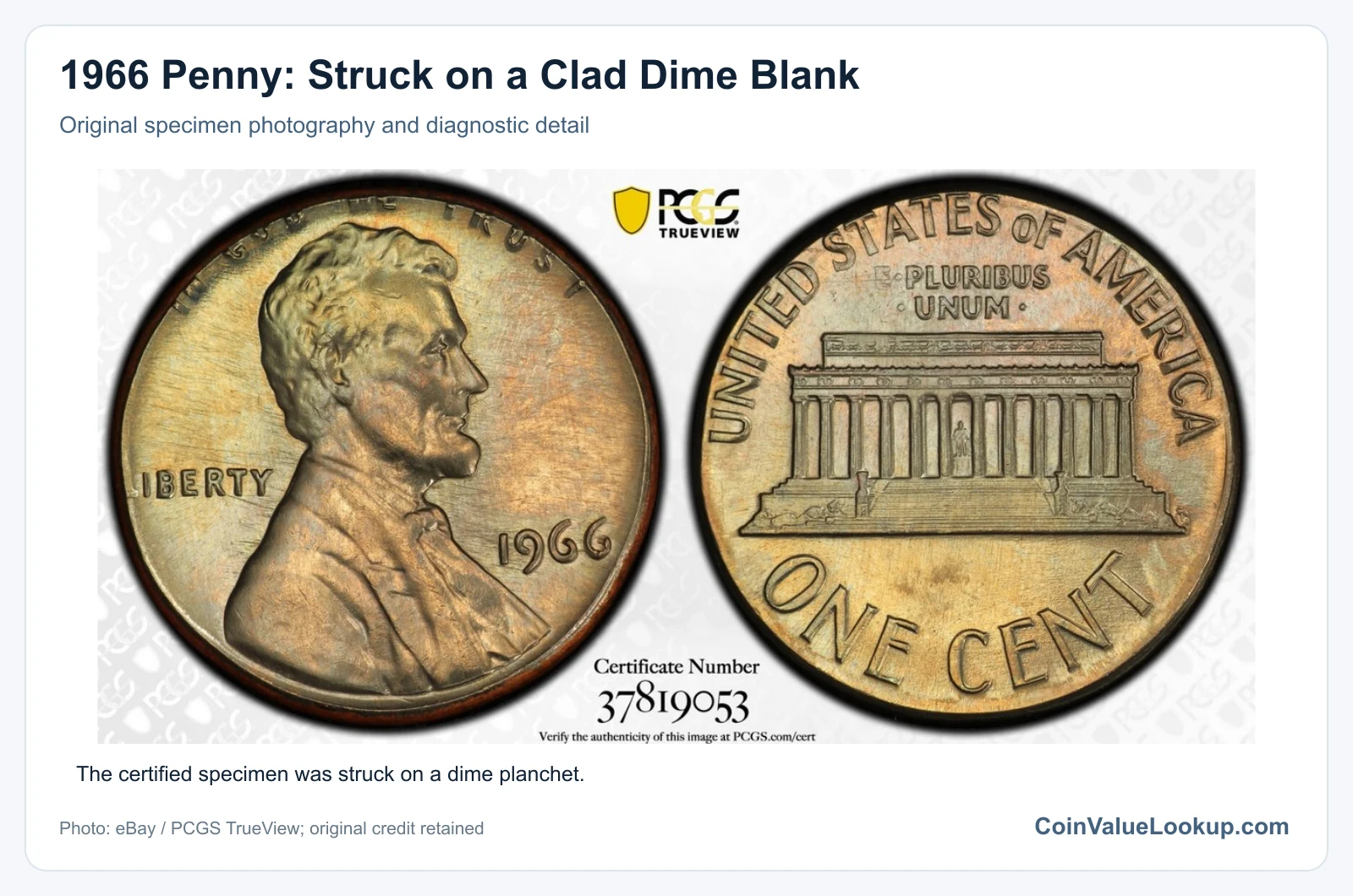
A 1966 cent struck on a clad dime planchet is a wrong-metal error. The coin carries the Lincoln cent design but was struck on a smaller, lighter copper-nickel-clad blank intended for a dime.
The expected weight is around 2.19 grams instead of the normal 3.11 grams.
To identify one, check the weight and diameter first. The coin will be noticeably smaller than a normal cent.
Look at the edge — a genuine clad dime blank may show the copper core sandwiched between nickel-alloy layers. The surface color will lean silvery rather than copper.
Do not confuse this with a silver-plated cent or any penny that simply looks lighter in color. A PCGS XF45 example sold for $204 at Heritage Auctions in March 2025.
That is one sale, not a guaranteed market range.
2. 1966 Lincoln Penny — Curved Clipped Planchet
A curved clipped planchet means the blank was punched from strip metal that overlapped a previous punch hole. The result is a missing curved bite from the edge of the coin.
Genuine clips have specific pre-strike characteristics: the metal thins toward the clip, and the rim opposite the clip may show a slight weakness called the Blakesley effect. If the missing section has sharp, straight or jagged edges, it was probably cut after minting.
An NGC MS63 Red-Brown example of a 1966 clipped cent sold for $84 at Heritage Auctions in July 2021. Weight on that piece was about 1.8 grams.
Post-mint damage and edge corrosion can mimic a clip, so look carefully at the boundary and the opposing rim area.
3. 1966 Lincoln Penny — Obverse Lamination
A lamination error on a 1966 cent appears as a peeling, flaking or missing strip of metal on the obverse surface. This happens when the planchet has an internal separation within the copper alloy.
Look for a raised flap or a smooth recessed area that follows the coin's surface rather than cutting across the design at random angles. The boundaries tend to be gradual, not sharp gouges.
Keep any attached metal intact — peeling it off destroys both the coin and its value.
Do not mistake scratches, scrapes or corrosion for a lamination. This is a solid copper-alloy cent, so plating blisters are not applicable here.
An NGC MS63 Brown example sold for $61 at Heritage Auctions in July 2021. Condition, size and location of the lamination all affect what a particular coin is worth.
4. 1966 Lincoln Penny — Doubled Die Obverse
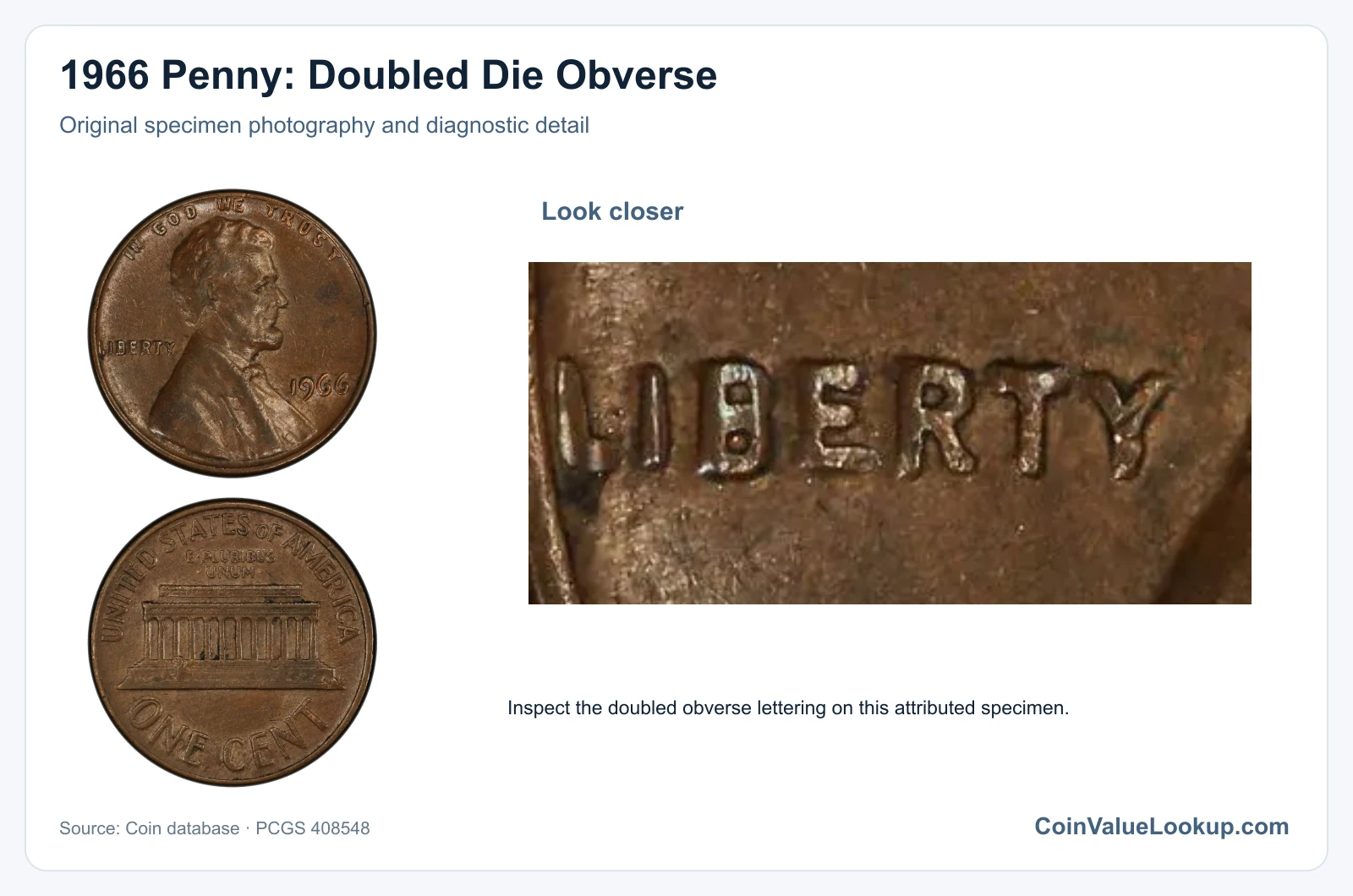
Doubled die obverse varieties have been reported for the 1966 cent. The doubling appears as consistent separation or notching on obverse design elements — letters, the date, or parts of Lincoln's profile.
To check, compare your coin's obverse lettering and details against a known normal 1966 cent under the same lighting. True hub doubling shows a repeatable, directional spread.
It looks like the design was stamped slightly off from itself.
Machine doubling is the common lookalike and it appears as a flat, shelf-like distortion on the high points. It carries no premium.
Reflections and worn die contours can also fool you under certain angles. Value for a genuine doubled die depends on the specific variety, how visible the doubling is and the coin's condition.
Professional authentication is strongly recommended.
5. 1966 Lincoln Penny — Doubled Die Reverse
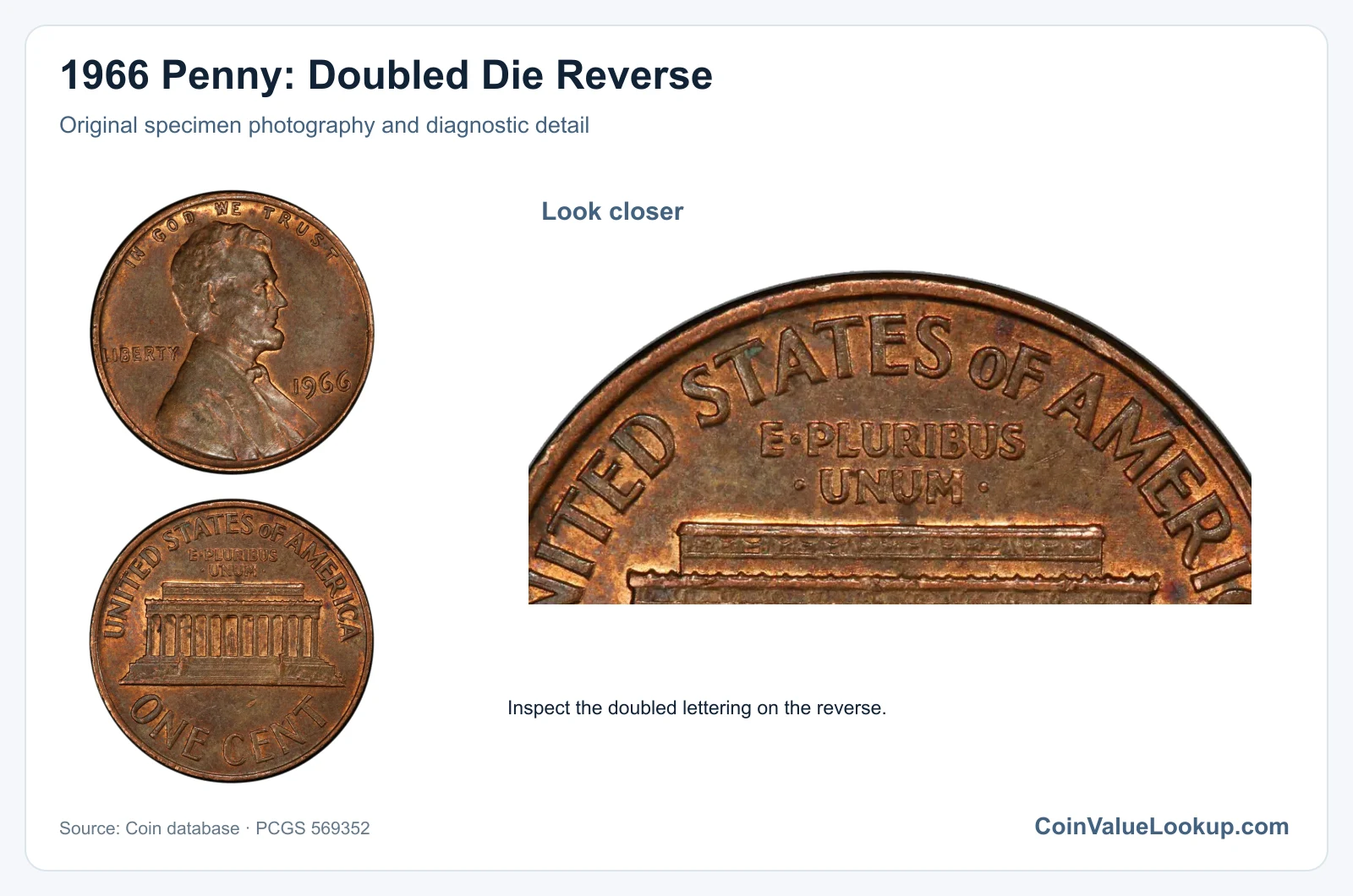
Doubled die reverse varieties are also reported for the 1966 cent. These show consistent doubling on reverse design elements such as the Memorial columns, the legend or the denomination.
Compare your reverse lettering and building details against a normal example under magnification. Genuine doubled dies produce clean, repeatable separation in a specific direction.
If the doubling appears as a flat shelf with no real depth, that is likely machine doubling — which is mechanical damage, not a collectible variety.
Random nicks, reflections and lighting tricks can create illusions of doubling, so use consistent angles and a loupe. Value depends on the specific die, the strength of the doubling and condition.
No adopted price range is available; individual assessment with authentication is the way to go.
6. 1966 Lincoln Penny — Off-Center Strike
Off-center strikes happen when the planchet is not seated properly between the dies. The result is a displaced design with an unstruck crescent of blank metal on one side.
The most desirable off-center errors show a significant displacement — usually 10% or more — while still keeping the date fully visible. A coin missing the date is much harder to attribute and less collectible.
Look for the smooth, unstruck area and confirm the design shift is uniform, not caused by post-mint flattening.
A clipped planchet or a one-sided die misalignment can look similar at first glance. Clips have a curved missing section with specific edge characteristics, while an off-center strike shifts the entire design.
Value depends on the percentage off-center, date visibility and overall condition.
7. 1966 Lincoln Penny — Die Break / Cud
Die breaks and cuds occur when a piece of the die cracks or falls away. On the coin, this shows up as a raised irregular blob of metal.
A full cud connects to the rim and replaces part of the normal design.
Smaller interior die cracks are more common and generally less valuable than rim cuds. Look for a raised feature that is part of the coin's strike, not a blob of solder or corrosion sitting on top.
The boundary should be sharp where the break meets the normal design.
Do not confuse a rim dent or contact mark with a die break. Dents are recessed; die breaks are raised.
Corrosion can also create lumpy surfaces that mimic breaks. Value depends on the size, location and visual impact of the break.
No specific price is available for this date — each piece needs individual evaluation.
8. 1966 Lincoln Penny — Double / Multiple Strike
A double or multiple strike means the coin was hit by the dies more than once, with the coin shifting between impressions. This creates overlapping or displaced design images that are clearly separate from each other.
Look for two distinct impressions of the design, often rotated or offset. The key distinction from a doubled die is that a double strike produces full separate impressions, while a doubled die shows subtle separation within a single impression.
Coins that were squeezed in a vise or had impressions added after leaving the mint can mimic this error. Genuine double strikes show proper strike characteristics on both impressions.
Condition, the degree of separation and date visibility all influence value. No adopted price is available, so authentication and individual assessment are necessary.
9. 1966 Lincoln Penny — Retained Struck-Through Material
A retained struck-through error occurs when foreign material — a fragment of metal, thread or debris — gets caught between the die and the planchet during striking and stays embedded in the coin. The result is a localized depression, an obstruction impression or an area of incomplete design.
Look for a distinct impressed shape or texture that differs from normal wear. Grease-filled dies produce a different effect (smooth, filled-in areas) and should be described separately.
A retained struck-through will often have sharper boundaries and sometimes the actual foreign object is still visible.
Wear, scratches, cleaning marks and ordinary weak strikes can all look like struck-through areas to the untrained eye. Value depends on the size, visibility and nature of the retained material.
No price is adopted for this category on the 1966 cent.
10. 1966 Lincoln Penny — Die Cap / Capped-Die Strike
A capped-die strike is a dramatic multi-step error. A coin sticks to one of the dies and keeps getting hit, gradually forming a cap shape over the die.
Subsequent coins struck through that cap receive a distorted, brockage-like impression.
There are two collectible forms here: the cap itself, which becomes progressively cupped and shows a mirror-image design on one side, and the coins struck underneath that cap, which display a mushy or incuse impression. Both sides of the coin need to be examined.
A bent coin, vise damage or a weak strike can produce a superficially similar appearance. Genuine die caps have progressive deformation consistent with repeated striking.
Value varies widely based on the stage of the cap and overall condition. No specific price is adopted, so professional evaluation is the path forward.
11. 1966 Lincoln Penny — Bonded / Stacked-Planchet Strike
A bonded or stacked-planchet strike happens when two or more planchets are fed into the press simultaneously. They are struck together and fuse under the pressure of the dies, creating a multi-layered coin.
Genuine bonded pairs show matching separation surfaces if split apart, or a clearly thicker-than-normal coin if still joined. The design on the outer faces will be struck, while the inner contact surfaces show metal-flow evidence from the bonding.
The main lookalike is coins that have been glued, welded or mechanically pressed together after minting. These lack the die-struck characteristics on their outer faces and the genuine bonding texture between layers.
Authentication is essential for this category. No adopted price is available for a 1966 bonded pair, and value depends on condition and how clearly the error can be demonstrated.