1941 Jefferson Nickel Coin Value: How Much Is It Worth?
A 1941 Jefferson Nickel in typical circulated condition carries a guide estimate of roughly $0.24 to $1.24 at VF20, depending on the mint. Uncirculated examples jump to about $15 at MS65 for ordinary business strikes.
Proof coins, Full Steps designations and authenticated error varieties occupy separate price categories entirely. Condition and mintmark matter here, so let's sort it out.
Fast Way to Identify Your 1941 Jefferson Nickel
The quickest way to start figuring out what you have is to upload clear photos of the front and back of your coin. Our identifier can give you a preliminary read on the year, mintmark and general type.
It is not a substitute for professional authentication or grading, but it helps you zero in on which version you are holding before you dig deeper.
1941 Jefferson Nickel Value
Upload both sides of your 1941 Jefferson Nickel.
Front Obverse
Upload photo
Back Reverse
Upload photo
Which 1941 Jefferson Nickel Versions Are Worth Money?
- Uncirculated examples with undisturbed luster and strong Monticello steps can carry a meaningful premium, but a Full Steps designation should be confirmed by a third-party grading service before applying those higher comparables.
- Philadelphia proof strikes are a distinct manufacturing finish with mirrored fields and sharp design edges; they occupy their own price category and should not be compared to business strikes.
Step 1: Identify Your 1941 Jefferson Nickel Mint Mark and Version
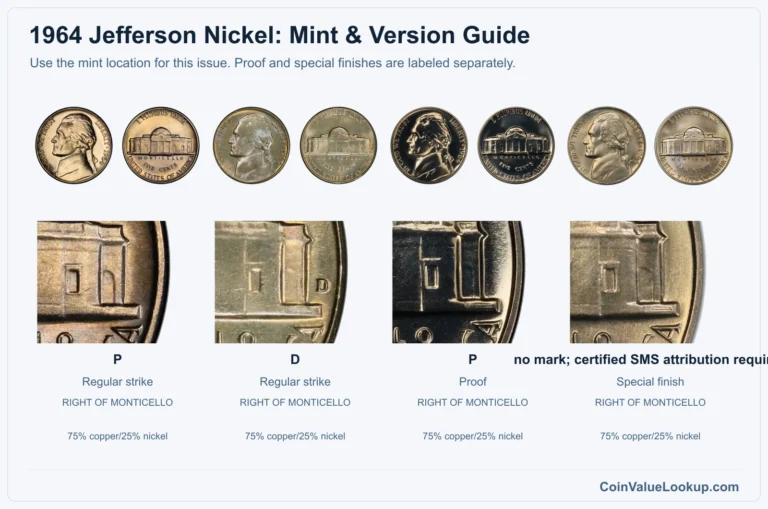
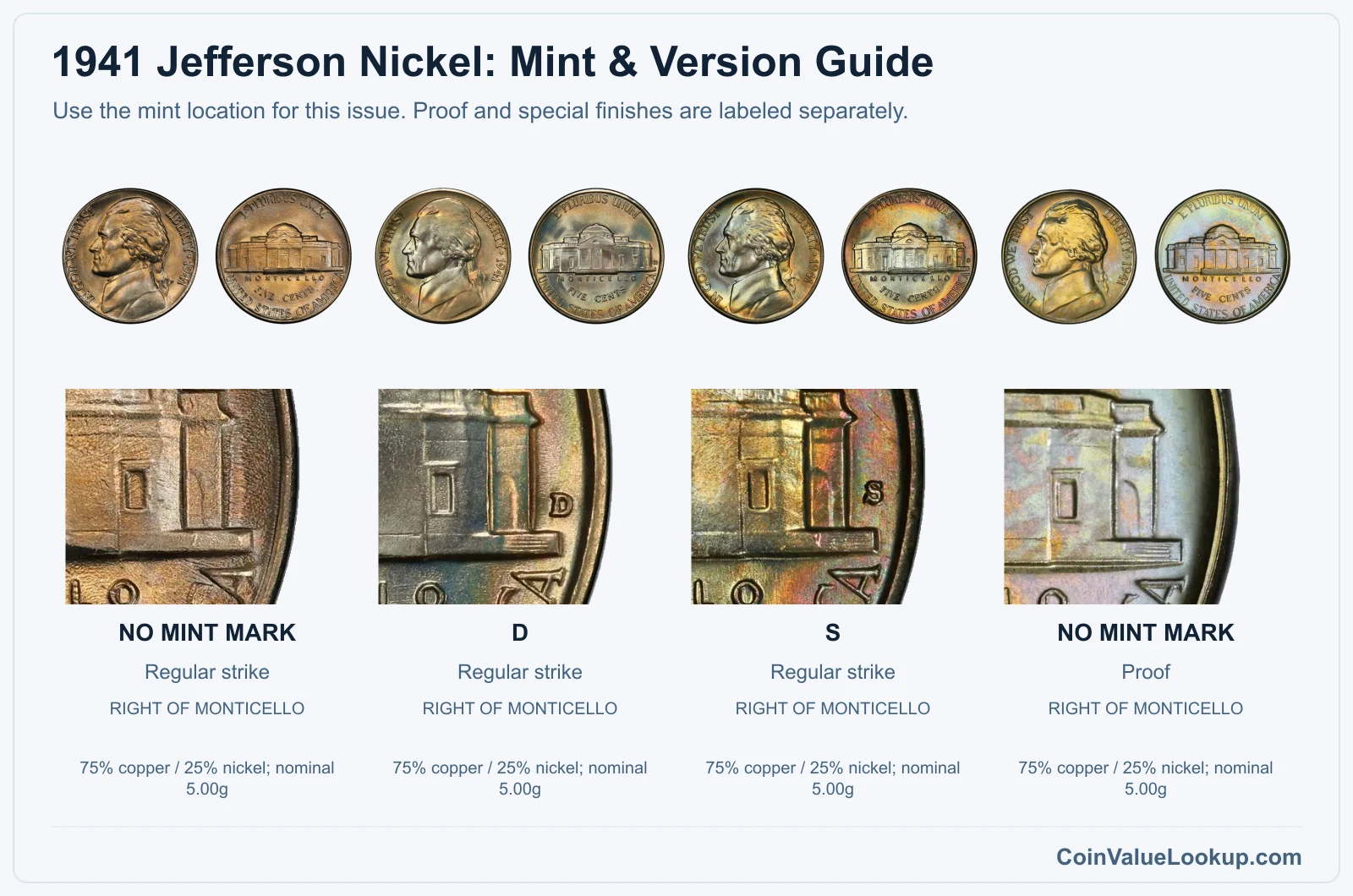
Philadelphia-struck 1941 nickels carry no mintmark at all. For the Denver and San Francisco issues, look for a small "D" or "S" to the right of Monticello on the reverse.
All regular 1941 Jefferson Nickels are 75% copper and 25% nickel, weighing a nominal 5.00 grams with a 21.2 mm diameter. The wartime silver alloy with its large mintmark above the dome did not begin until 1942, so do not confuse one for the other.
Color alone cannot tell you the composition. Environmental toning, corrosion and old cleaning can make a copper-nickel coin look odd.
Photograph both sides clearly, including the date and mintmark area, and note any obvious damage like scratches, holes or bent edges. Separating normal honest wear from corrosion, polishing or mounting damage is important before estimating value.
Step 2: Check Your 1941 Jefferson Nickel Grade
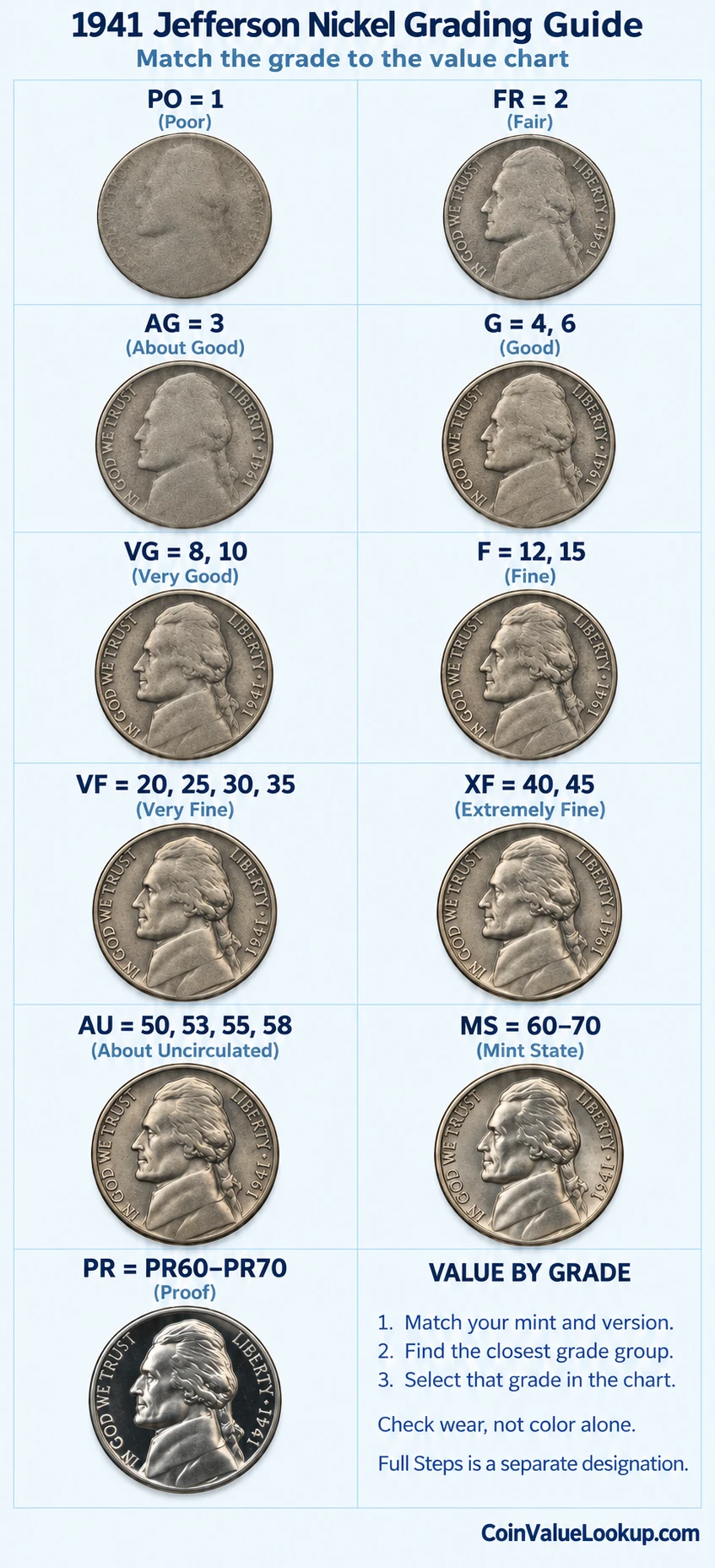
Start on the obverse. Jefferson's cheekbone is the first high point to show wear, followed by the hair detail above his ear.
On the reverse, check the roof lines and columns of Monticello. If those areas still show sharp detail and the coin has full original luster with no friction, you are in Mint State territory.
Compare your coin to the reference image to judge where it falls on the wear scale. A coin with obvious flatness on the cheek and hair but readable features is solidly circulated.
One with just a trace of cabinet friction on the highest points might grade AU.
Full Steps is a separate designation applied only to Mint State coins. It requires at least five clearly separated steps on Monticello's base.
Weak steps can result from a soft strike, not just from wear, so they are not a shortcut for overall grading. If you believe your coin qualifies for a Full Steps premium, third-party certification is the way to confirm it.
Step 3: Check 1941 Jefferson Nickel Value by Mint and Version
1941 Jefferson Nickel
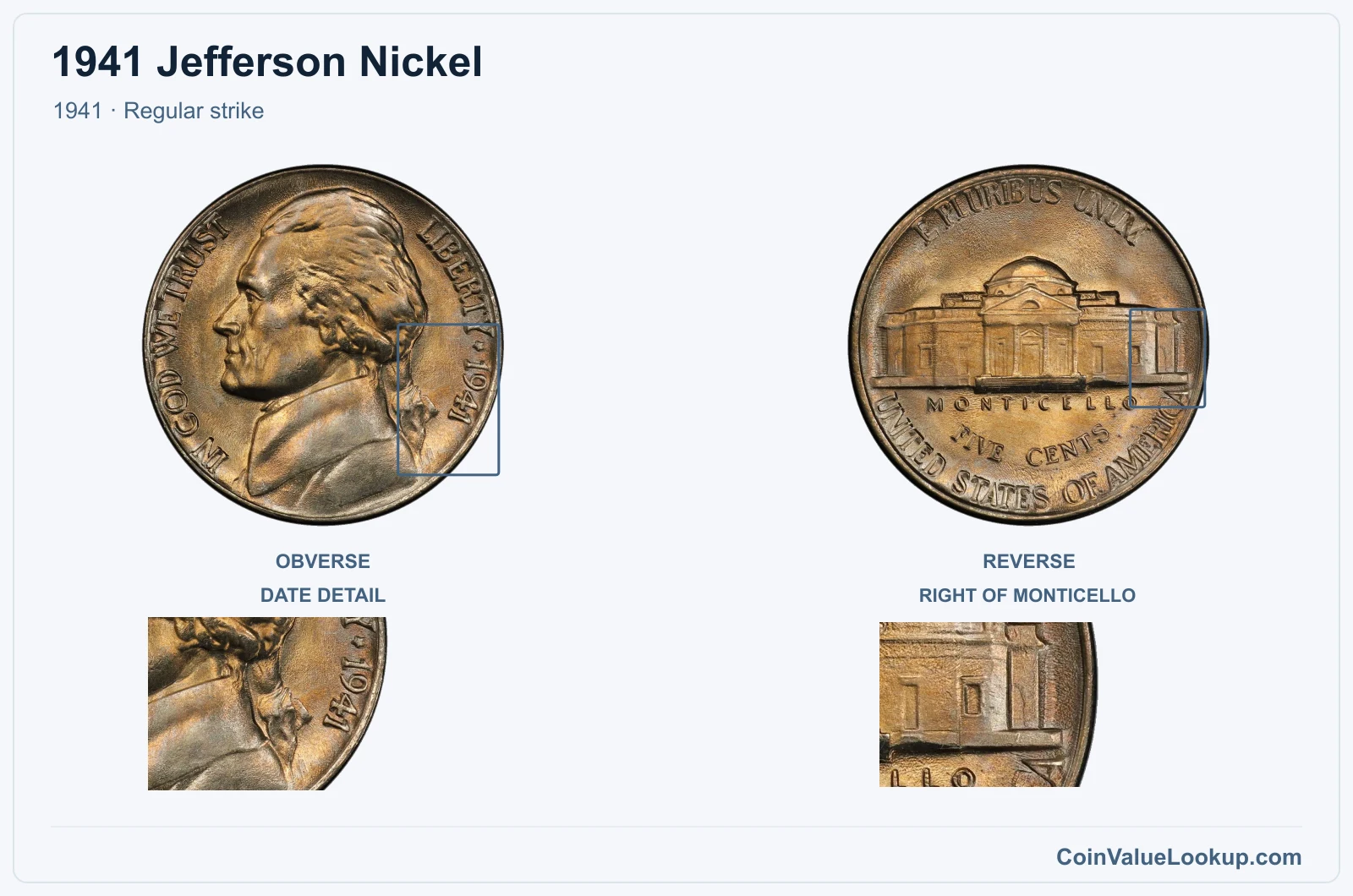
The 1941 Philadelphia nickel has no mintmark. It is the most commonly encountered issue of the year.
A USA Coin Book guide estimate places it around $0.24 at VF20, $1.05 at MS60 and $15 at MS65 for regular business strikes.
Look to the right of Monticello on the reverse to confirm there is no small letter present. Do not confuse this pre-war copper-nickel issue with the later wartime silver nickels, which carry a large mintmark above the dome.
Full Steps coins command their own premiums, but that designation requires certification.
| Range | Grade | Price | Auction Records | Appraisal |
|---|---|---|---|---|
| PO | PO 1 | — | Coin Identifier | |
| FR | FR 2 | — | Coin Identifier | |
| AG | AG 3 | — | Coin Identifier | |
| G | G 4 | — | Coin Identifier | |
| G 6 | — | Coin Identifier | ||
| VG | VG 8 | — | Coin Identifier | |
| VG 10 | — | Coin Identifier | ||
| F | F 12 | — | Coin Identifier | |
| F 15 | — | Coin Identifier | ||
| VF | VF 20 | — | Coin Identifier | |
| VF 25 | — | Coin Identifier | ||
| VF 30 | — | Coin Identifier | ||
| VF 35 | — | Coin Identifier | ||
| XF | XF 40 | — | Coin Identifier | |
| XF 45 | — | Coin Identifier | ||
| AU | AU 50 | — | Coin Identifier | |
| AU 53 | — | Coin Identifier | ||
| AU 55 | — | Coin Identifier | ||
| AU 58 | — | Coin Identifier | ||
| MS | MS 60 | — | Coin Identifier | |
| MS 61 | — | Coin Identifier | ||
| MS 62 | — | Coin Identifier | ||
| MS 63 | — | Coin Identifier | ||
| MS 64 | Coin Identifier | |||
| MS 65 | Coin Identifier | |||
| MS 66 | Coin Identifier | |||
| MS 67 | Coin Identifier | |||
| MS 68 | Coin Identifier | |||
| MS 69 | — | — | — | |
| MS 70 | — | — | — |
1941 Jefferson Nickel — PR
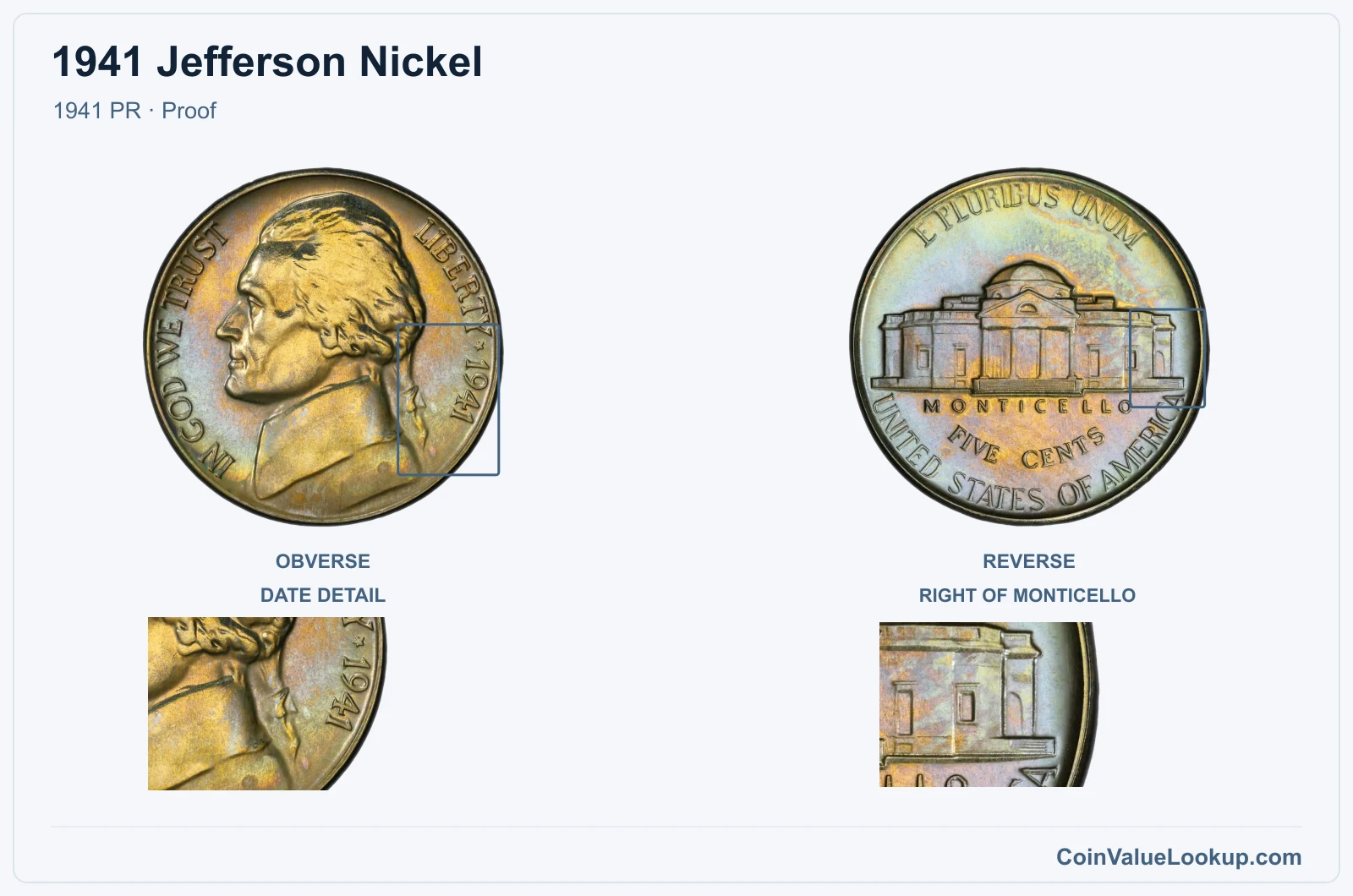
The 1941 Proof was struck at Philadelphia using specially prepared dies and planchets. Proof coins show mirrored fields and exceptionally sharp design elements.
A USA Coin Book guide estimate places the PR65 at about $92.
These are not simply well-preserved business strikes. A genuine proof has protected, reflective fields that cannot be replicated by polishing a regular coin.
If you think you have one, examine the fields under a single light source for that deep mirror surface. Proofs from this era were sold directly to collectors, so most surviving examples were carefully stored.
Coin Value Lookup is a good starting point if you want to compare your coin against other Jefferson Nickel years and denominations before deciding whether to pursue professional grading.
| Range | Grade | Price | Auction Records | Appraisal |
|---|---|---|---|---|
| PR | PR 1 | — | Coin Identifier | |
| PR 2 | — | Coin Identifier | ||
| PR 3 | — | Coin Identifier | ||
| PR 4 | — | Coin Identifier | ||
| PR 6 | — | Coin Identifier | ||
| PR 8 | — | Coin Identifier | ||
| PR 10 | — | Coin Identifier | ||
| PR 12 | — | Coin Identifier | ||
| PR 15 | — | Coin Identifier | ||
| PR 20 | — | Coin Identifier | ||
| PR 25 | — | Coin Identifier | ||
| PR 30 | — | Coin Identifier | ||
| PR 35 | — | Coin Identifier | ||
| PR 40 | — | Coin Identifier | ||
| PR 45 | — | Coin Identifier | ||
| PR 50 | — | Coin Identifier | ||
| PR 53 | — | Coin Identifier | ||
| PR 55 | — | Coin Identifier | ||
| PR 58 | — | Coin Identifier | ||
| PR 60 | Coin Identifier | |||
| PR 61 | — | Coin Identifier | ||
| PR 62 | Coin Identifier | |||
| PR 63 | Coin Identifier | |||
| PR 64 | Coin Identifier | |||
| PR 65 | Coin Identifier | |||
| PR 66 | Coin Identifier | |||
| PR 67 | Coin Identifier | |||
| PR 68 | Coin Identifier | |||
| PR 69 | — | — | — | |
| PR 70 | — | — | — |
1941 Jefferson Nickel — D
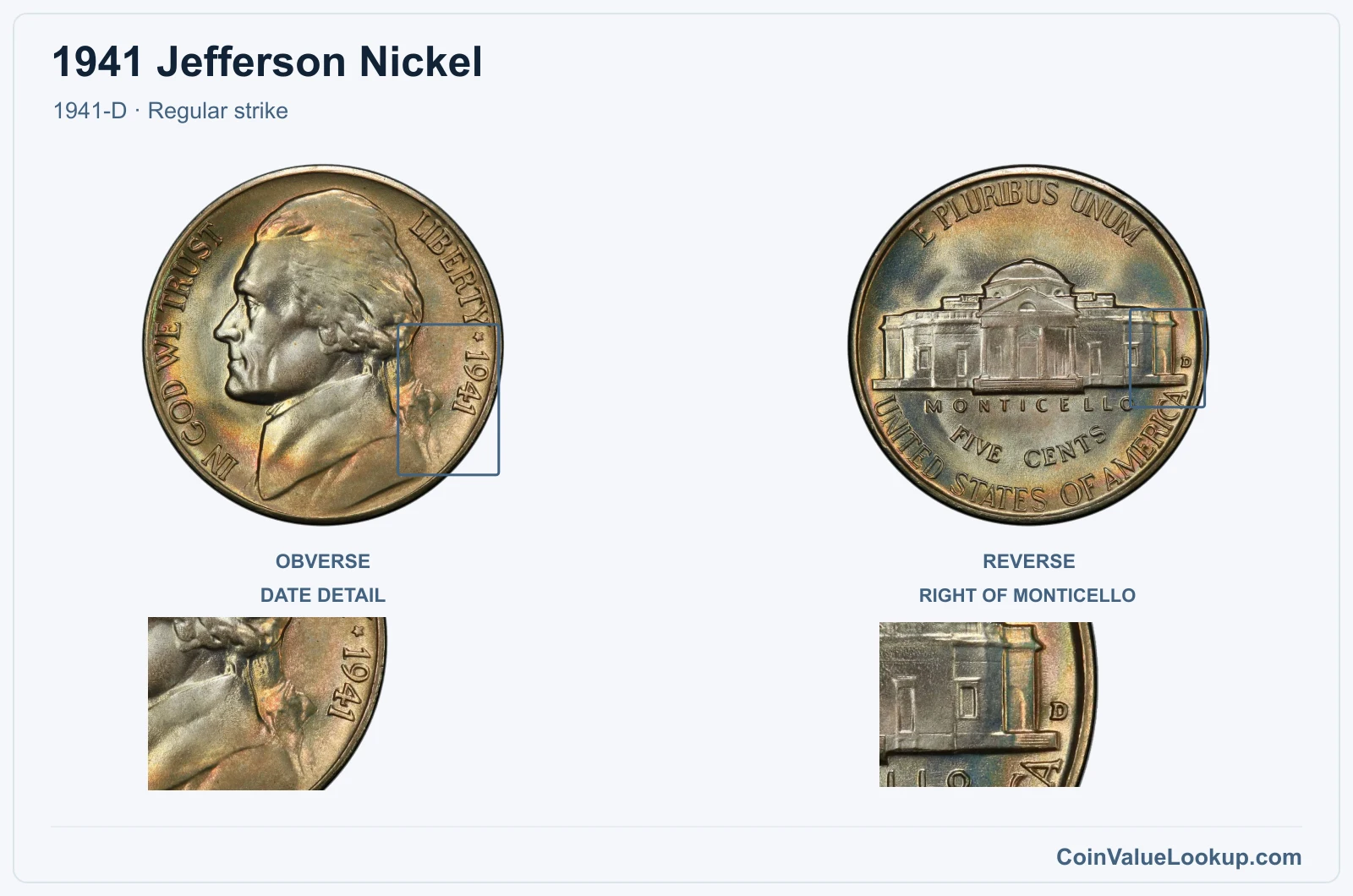
The 1941-D carries a small "D" mintmark to the right of Monticello on the reverse. USA Coin Book guide estimates place it at about $1.24 at VF20, $6.25 at MS60 and $15 at MS65.
Circulated Denver pieces are common in pocket change collections, but Mint State survivors with clean surfaces and strong strikes are a different story. As with all 1941 nickels, this is the standard copper-nickel alloy, not the wartime silver composition.
Check the mintmark placement carefully; it should be small and positioned beside Monticello, not above the dome.
| Range | Grade | Price | Auction Records | Appraisal |
|---|---|---|---|---|
| PO | PO 1 | — | Coin Identifier | |
| FR | FR 2 | — | Coin Identifier | |
| AG | AG 3 | — | Coin Identifier | |
| G | G 4 | — | Coin Identifier | |
| G 6 | — | Coin Identifier | ||
| VG | VG 8 | — | Coin Identifier | |
| VG 10 | — | Coin Identifier | ||
| F | F 12 | — | Coin Identifier | |
| F 15 | — | Coin Identifier | ||
| VF | VF 20 | — | Coin Identifier | |
| VF 25 | — | Coin Identifier | ||
| VF 30 | — | Coin Identifier | ||
| VF 35 | — | Coin Identifier | ||
| XF | XF 40 | — | Coin Identifier | |
| XF 45 | — | Coin Identifier | ||
| AU | AU 50 | — | Coin Identifier | |
| AU 53 | — | Coin Identifier | ||
| AU 55 | — | Coin Identifier | ||
| AU 58 | — | Coin Identifier | ||
| MS | MS 60 | — | Coin Identifier | |
| MS 61 | — | Coin Identifier | ||
| MS 62 | — | Coin Identifier | ||
| MS 63 | — | Coin Identifier | ||
| MS 64 | Coin Identifier | |||
| MS 65 | Coin Identifier | |||
| MS 66 | Coin Identifier | |||
| MS 67 | Coin Identifier | |||
| MS 68 | Coin Identifier | |||
| MS 69 | — | — | — | |
| MS 70 | — | — | — |
1941 Jefferson Nickel — S
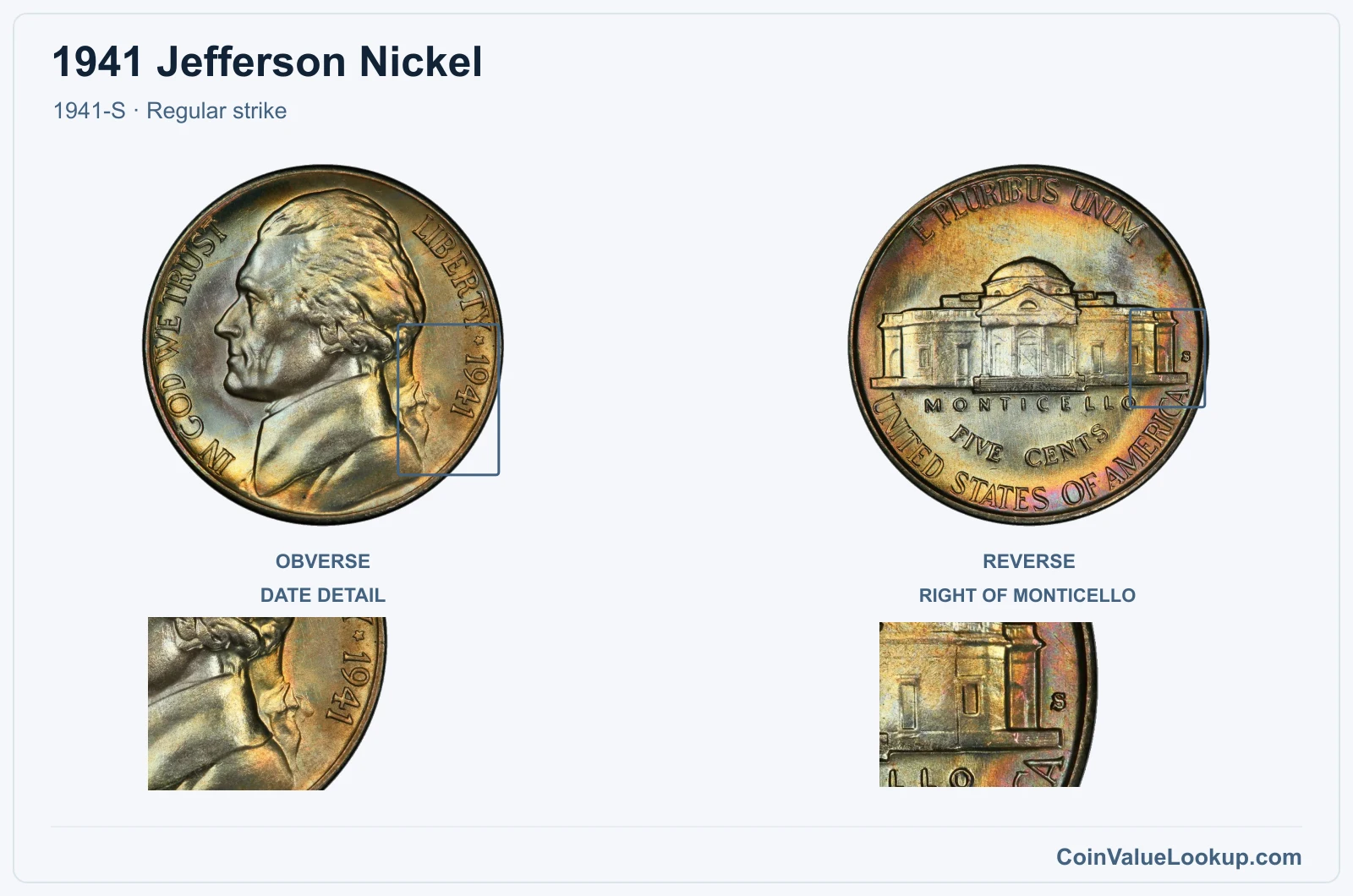
The 1941-S shows a small "S" mintmark to the right of Monticello. Guide estimates from USA Coin Book are about $1.24 at VF20, $6.25 at MS60 and $15 at MS65.
San Francisco strikes from this year are on par with Denver in terms of guide pricing at these grades. In practice, strike quality can vary, and finding a clean MS65 or better example with full detail is harder than the modest price might suggest.
Confirm the "S" is genuine and not an added letter by checking for natural die flow around the mintmark.
| Range | Grade | Price | Auction Records | Appraisal |
|---|---|---|---|---|
| PO | PO 1 | — | Coin Identifier | |
| FR | FR 2 | — | Coin Identifier | |
| AG | AG 3 | — | Coin Identifier | |
| G | G 4 | — | Coin Identifier | |
| G 6 | — | Coin Identifier | ||
| VG | VG 8 | — | Coin Identifier | |
| VG 10 | — | Coin Identifier | ||
| F | F 12 | — | Coin Identifier | |
| F 15 | — | Coin Identifier | ||
| VF | VF 20 | — | Coin Identifier | |
| VF 25 | — | Coin Identifier | ||
| VF 30 | — | Coin Identifier | ||
| VF 35 | — | Coin Identifier | ||
| XF | XF 40 | — | Coin Identifier | |
| XF 45 | — | Coin Identifier | ||
| AU | AU 50 | — | Coin Identifier | |
| AU 53 | — | Coin Identifier | ||
| AU 55 | — | Coin Identifier | ||
| AU 58 | — | Coin Identifier | ||
| MS | MS 60 | — | Coin Identifier | |
| MS 61 | — | Coin Identifier | ||
| MS 62 | — | Coin Identifier | ||
| MS 63 | — | Coin Identifier | ||
| MS 64 | Coin Identifier | |||
| MS 65 | Coin Identifier | |||
| MS 66 | Coin Identifier | |||
| MS 67 | Coin Identifier | |||
| MS 68 | — | — | — | |
| MS 69 | — | — | — | |
| MS 70 | — | — | — |
1941 Jefferson Nickel Error List
1. 1941 Jefferson Nickel — Struck on a cent planchet
This error occurs when a copper-alloy cent blank accidentally feeds into a nickel press and receives the Jefferson design. The result is a coin that is visibly smaller than a normal nickel, weighs about 3.2 grams instead of the standard 5.0 grams, and shows copper-red or brown coloring.
The design near the rim will appear cropped or stretched because the smaller planchet could not capture the full die impression. A Heritage Auctions sale in July 2021 recorded an NGC MS66 RB example at $2,400.
Watch out for lookalikes: copper-plated nickels, environmentally toned coins, ground-down edges or novelty souvenir pieces can mimic the appearance. Weight is the first reality check.
If your coin weighs close to 5 grams, it is a normal nickel regardless of its color. Third-party certification is essential for this type of error.
2. 1941 Jefferson Nickel — Off-center strike
An off-center strike happens when the planchet is not seated properly between the dies. The design shifts to one side, leaving an unstruck crescent of blank metal on the opposite edge with the border missing entirely in that area.
A Heritage Auctions sale in September 2010 recorded a 1941 nickel struck approximately 15% off-center, graded NGC MS65 Full Steps, at $373.75. The date and mintmark must still be visible for the coin to be attributed to this year.
Do not confuse a genuine off-center strike with a misaligned die, which shifts one side slightly but still shows a mostly normal opposite face. Post-strike damage like trimming or cutting can also mimic a missing border.
The unstruck crescent on a real off-center coin will be smooth, flat blank metal.
3. 1941 Jefferson Nickel — Brockage and double-struck mated pair
A brockage and double-struck mated pair is a compound error involving two coins from the same event. One coin failed to eject and remained stuck in the press, imprinting an incuse mirror image of its design onto the next blank.
The companion piece is double struck, broadstruck and indented from the collision.
A Heritage Auctions sale in August 2010 recorded a pair of 1941 nickels, both graded NGC MS65 with one receiving the Six Full Steps designation, at $2,760 for both coins together — not each.
The key diagnostic is the incuse, reversed image on one coin that exactly mirrors the design on its mate. Lookalikes include vise-job impressions made outside the mint, two unrelated coins presented together, or a normal raised reverse mistaken for a brockage.
Both coins must be present and attributable to the same striking event.
4. 1941 Jefferson Nickel — Ragged clipped planchet
A ragged clipped planchet results from an irregular shortage of metal along the strip edge before the blank was punched. The affected area shows a rough, uneven rim where metal simply was not present during striking.
To identify this error, look at the struck rim near the clip. Genuine clips show characteristic metal flow as the die tried to form a rim over missing material.
The edge in the clipped zone will differ in texture from the normal struck edge elsewhere on the coin.
Value depends on the authenticated identity of the coin, its condition and the severity of the clip. A saw cut, plier bite or corroded broken edge can look similar, so third-party authentication is important.
Do not assume a missing chunk automatically qualifies as a mint error.
5. 1941 Jefferson Nickel — Repunched Mintmark
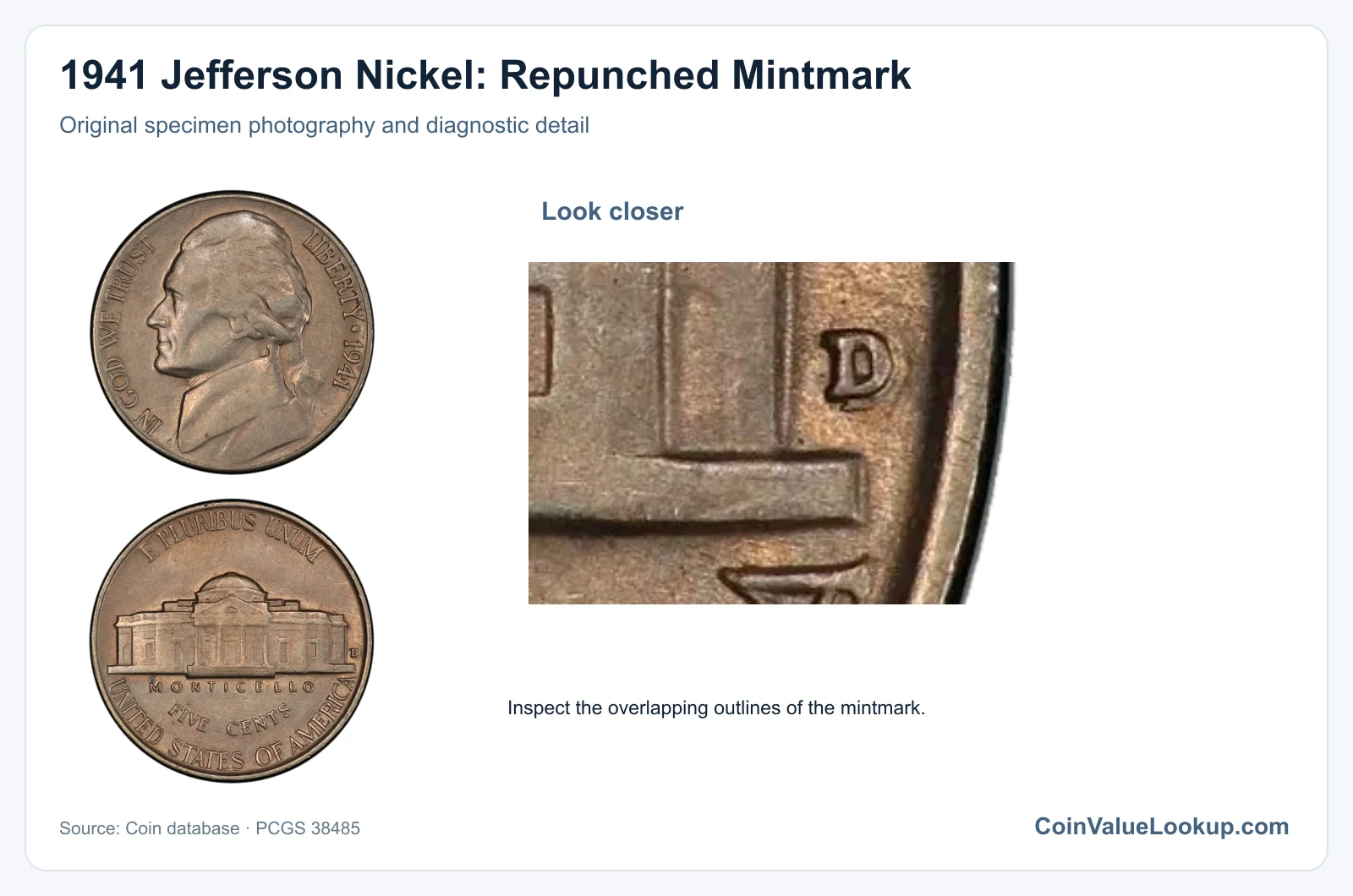
The 1941-D/D Repunched Mintmark is a known variety for this year. It results from the mintmark punch being applied more than once in slightly different positions, leaving traces of the earlier impression visible around or beneath the final "D."
Inspect the mintmark area to the right of Monticello under magnification. You are looking for remnants of a second "D" that do not align with the primary punch.
Compare your coin side by side with a normal 1941-D at the same magnification to see whether extra letter outlines are genuinely present.
Machine doubling, die chips and corrosion around the mintmark can all mimic a repunched mark. Value depends on condition, the visibility of the repunching and verification of the specific variety.
6. 1941 Jefferson Nickel — Doubled Die Reverse
A Doubled Die Reverse on a 1941 nickel shows duplicated design elements on the back of the coin, caused by a misaligned hub impression during die production. This is a die variety, meaning every coin struck from that die carries the same doubling.
Compare the reverse lettering and architectural details of Monticello against a normal example. Genuine hub doubling will show consistent, directional separation in the affected areas.
Do not confuse this with machine doubling, which produces flat, shelf-like distortion rather than the rounded, separated profiles of a true doubled die. Reflections under certain lighting and random surface damage can also create misleading impressions.
Value depends on the coin's condition and how visible the doubling is. Certification helps confirm the variety.
7. 1941 Jefferson Nickel — Die Crack / Die Chip
Die cracks appear as raised lines on the coin's surface, created when a crack in the steel die transfers as a ridge of metal during striking. Die chips are small raised blobs from a piece of the die breaking away.
Both are collected as minor die-state varieties.
On a 1941 nickel, look for fine raised lines that cross design elements or open fields. An interior chip will appear as a small raised lump, while a crack that extends to the rim is sometimes called a cud if enough die metal has broken away.
These should not be confused with incuse scratches, corrosion lines or foreign material stuck to the surface. Scratches are recessed; die cracks are raised.
Value depends on the size, location and condition of the coin, along with collector interest in the specific die state.
8. 1941 Jefferson Nickel — Lamination / Split Planchet
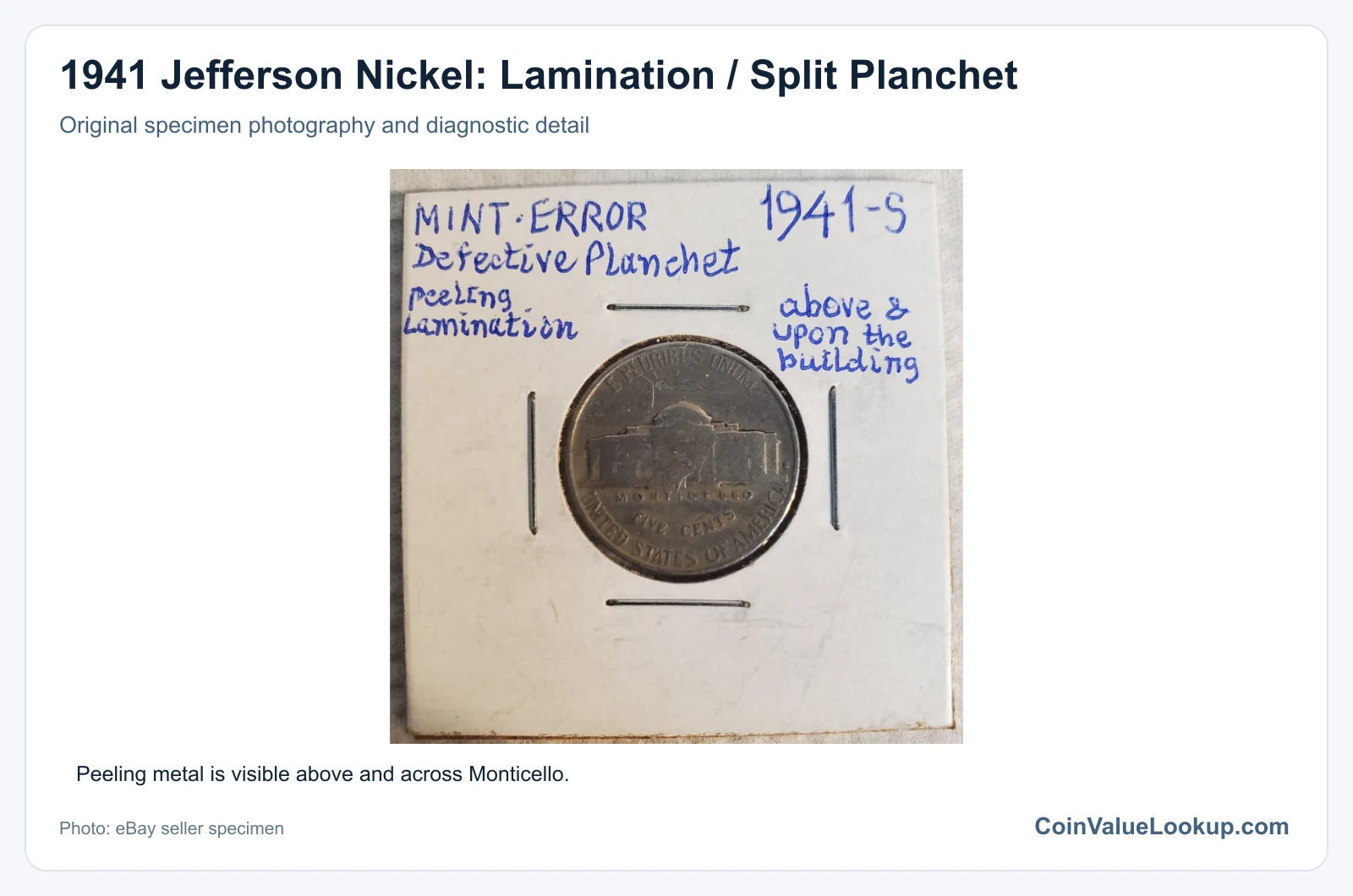
A lamination error on a 1941 nickel appears as peeling, flaking or separated layers of metal on the coin's surface. This happens when impurities or gas pockets within the planchet alloy cause the metal to split apart during or after striking.
Look for a retained flap of metal that can sometimes be lifted, or a smooth cavity where a layer has already separated. Photograph the edge of the coin alongside the affected face, since the layered separation is often visible at the rim.
Scraping damage, corrosion pitting and deliberately cut coins can resemble a lamination at first glance. The difference is that a genuine lamination follows the contour of the alloy's internal structure rather than showing tool marks or external force patterns.
Value varies with the coin's condition and how dramatic the separation is.