1891 Liberty Nickel Coin Value: How Much Is It Worth?
The 1891 Liberty Nickel is a Philadelphia-only issue that still turns up in collections and old accumulations. A well-worn example in G4 condition runs about $8.64 based on a USA Coin Book guide estimate, while an uncirculated MS63 piece is listed around $265.
Proofs exist too, with a PR63 anchor near $344. Condition, strike quality, and whether the coin is a business strike or proof all matter.
Fast Way to Identify Your 1891 Liberty Nickel
Snap clear photos of both the front and back of your 1891 Liberty Nickel and upload them here for a preliminary identification. Good lighting and a flat background help.
This step can confirm the design type, spot obvious problems, and point you toward the right value range, though it is not a substitute for professional authentication or grading.
1891 Liberty Nickel Value
Upload both sides of your 1891 Liberty Nickel.
Front Obverse
Upload photo
Back Reverse
Upload photo
Which 1891 Liberty Nickel Versions Are Worth Money?
- Business strikes in MS63 or better carry a meaningful premium over circulated examples, with the USA Coin Book guide listing MS63 around $265.
- Proof strikes in PR63 are listed near $344; original reflective fields without heavy hairlines support the proof premium.
- A confirmed wrong-planchet or off-metal strike would be a significant find, but any lightweight suspect needs professional authentication first.
- Error categories like counterbrockage, off-center strikes, and defective planchets are reported for this date and can add value when genuine and well-preserved.
Step 1: Identify Your 1891 Liberty Nickel Mint Mark and Version
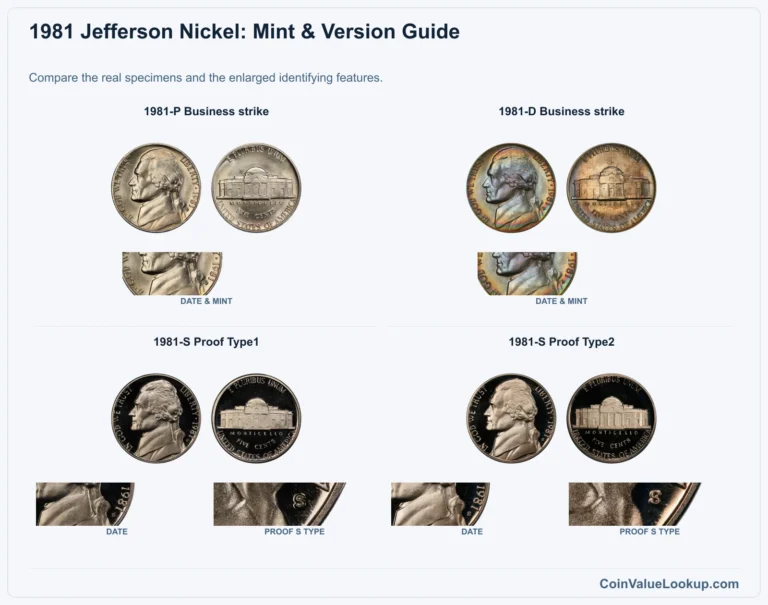
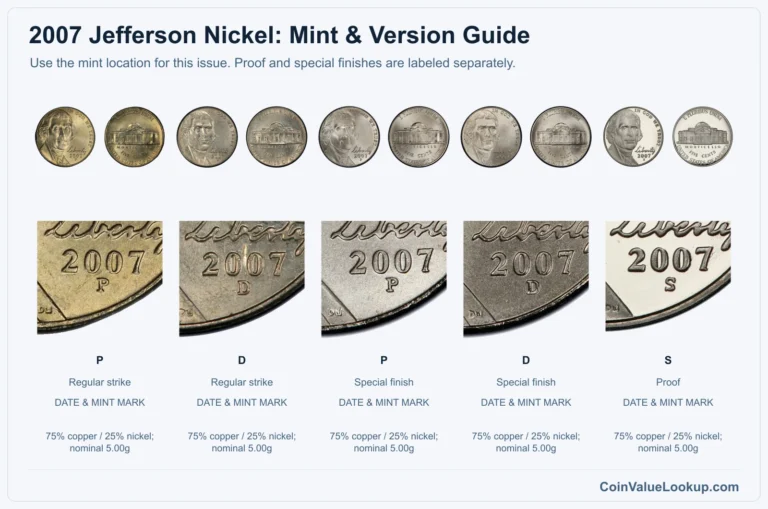
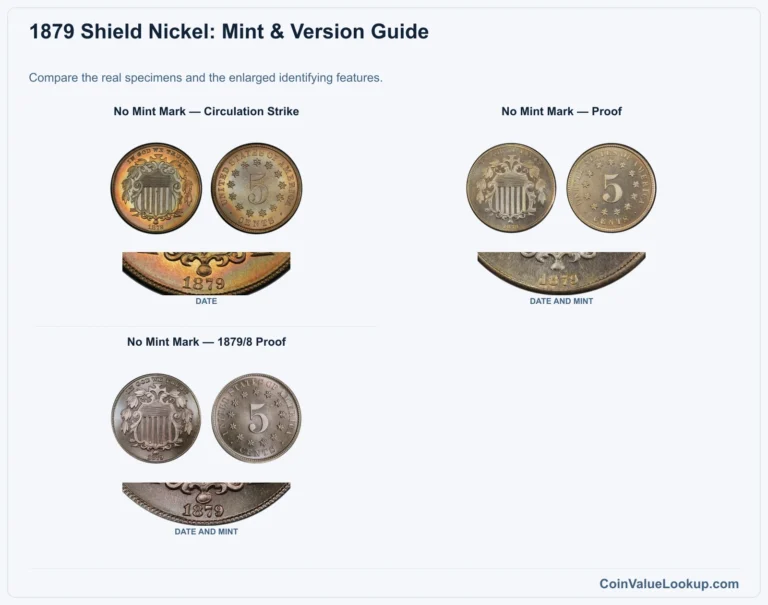
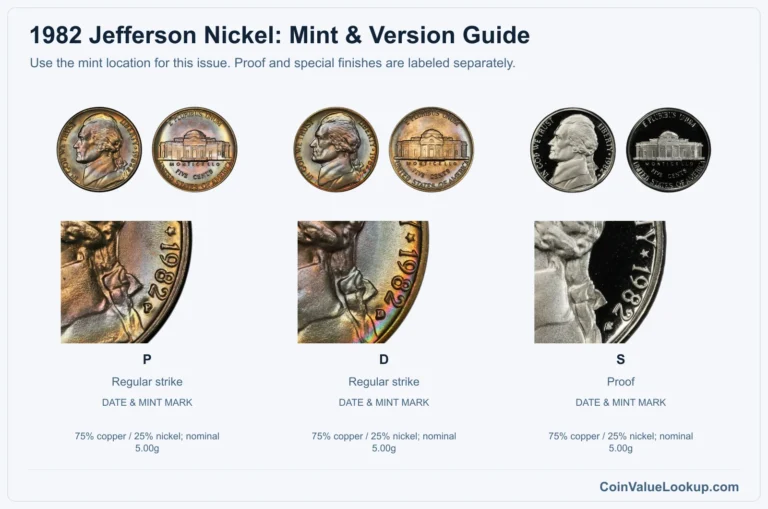
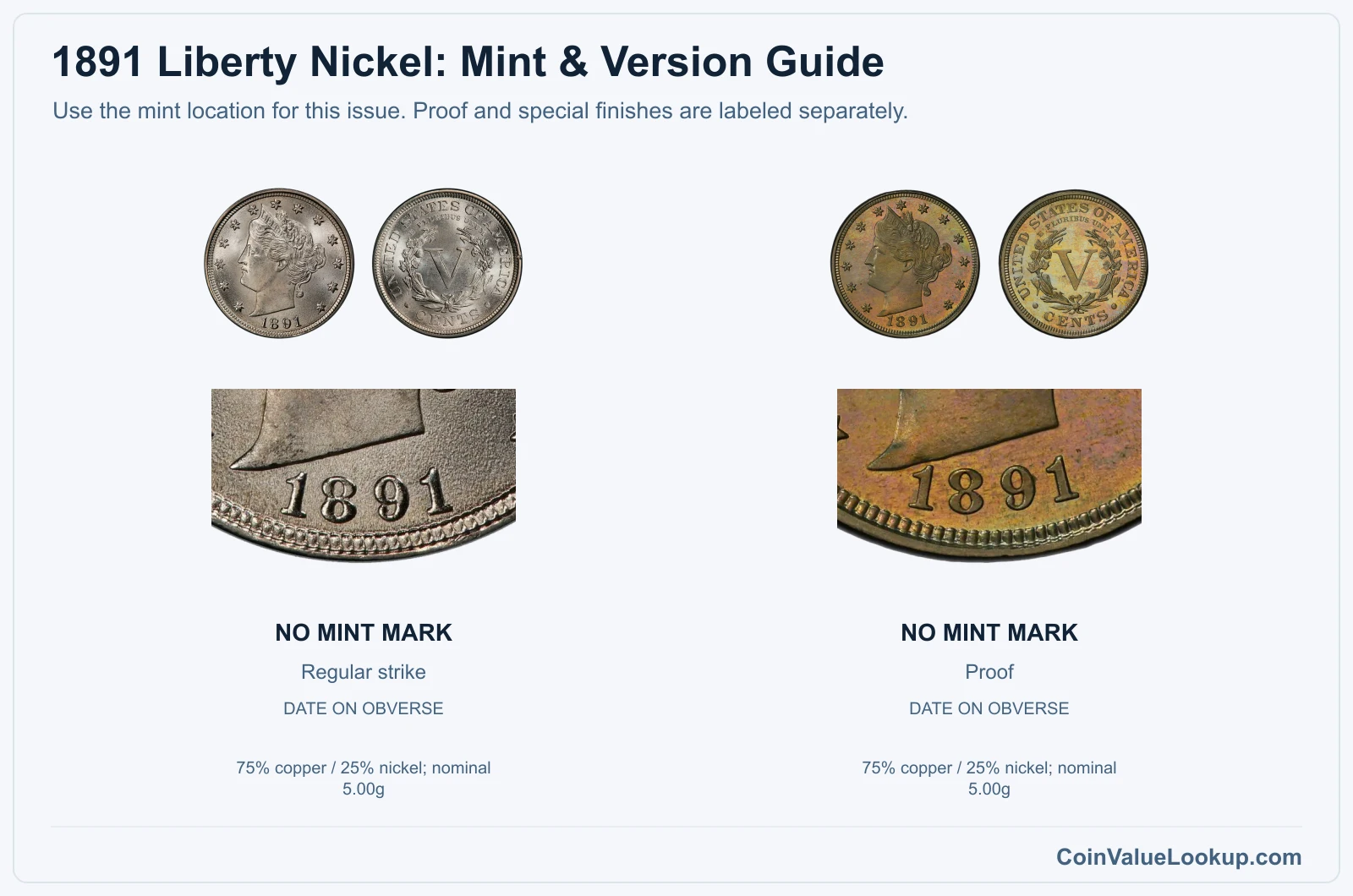
Every regular 1891 Liberty Nickel was struck at Philadelphia, so there is no mintmark to hunt for. Do not expect a D or S variant for this date.
The coin is 75% copper and 25% nickel, nominally 5 grams and 21.2 mm across, with a plain edge. All 1891 nickels carry the With CENTS reverse, which shows the Roman numeral V inside a wreath with the word CENTS below it.
The earlier No CENTS design had been retired years before.
Both business strikes and proofs were produced. A lightweight coin that does not match the expected 5-gram weight should be examined carefully; authentication is needed before anyone calls it a wrong-planchet strike rather than a damaged or altered piece.
Step 2: Check Your 1891 Liberty Nickel Grade
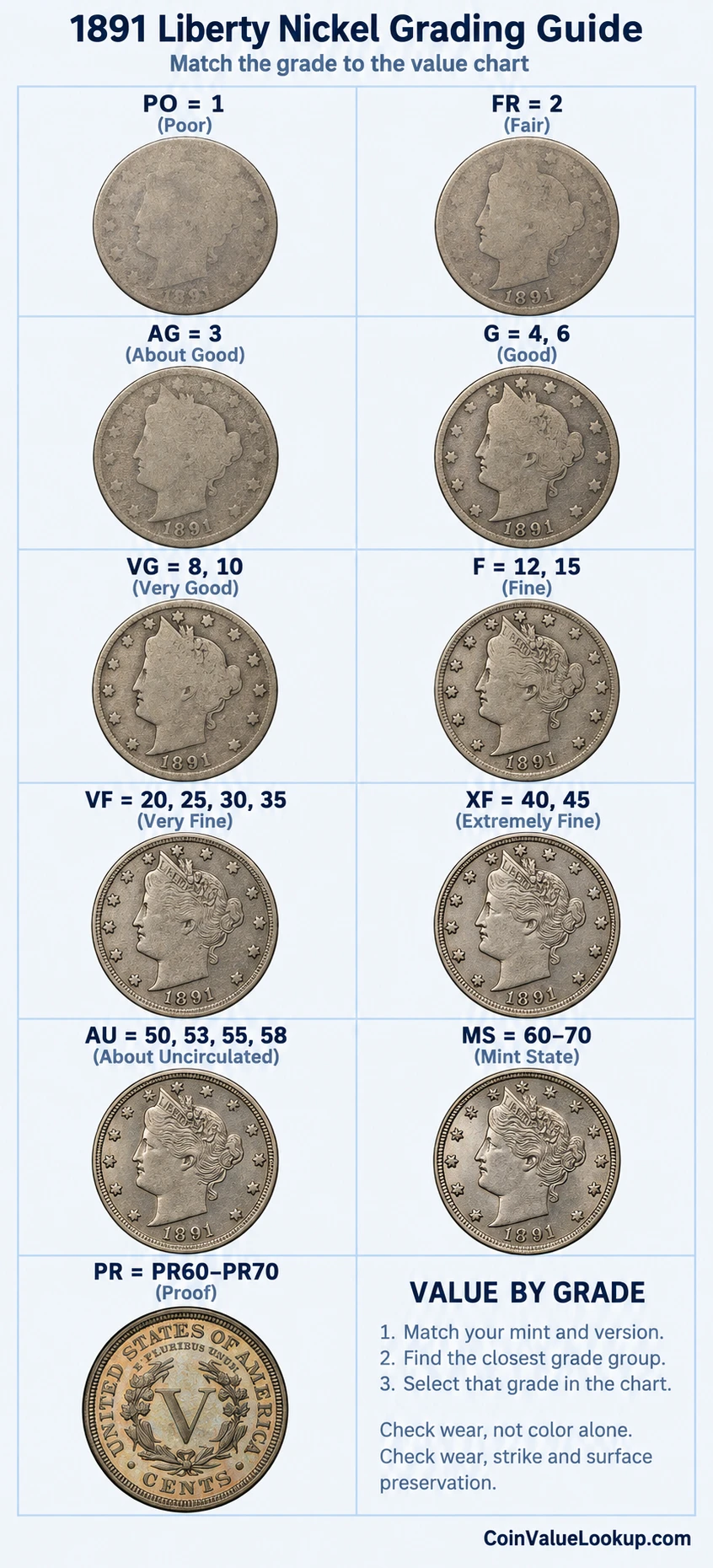
Start on the obverse. The word LIBERTY on the coronet should be your first stop, because its letters wear from the top down.
High hair curls above the forehead and the cheek below the eye lose detail early, so check those next.
Flip to the reverse. The ears of corn and the wreath leaves show progressive flattening as a coin circulates.
Compare what you see against the reference image provided.
Weak details alone do not prove wear. Liberty Nickels sometimes came off the press with soft strikes, especially in the hair and corn areas.
Look at the overall luster and field quality. A coin with full mint frost but mushy hair curls is likely weakly struck, not circulated.
For mint-state pieces, contact marks and bagmarks matter more than anything. Proofs are a manufacturing method, not a grade above Mint State.
Examine the fields for reflectivity, check rims for handling marks, and look for hairlines from old cleanings.
Step 3: Check 1891 Liberty Nickel Value by Mint and Version
1891 Liberty Nickel — No Mint Mark — With CENTS Circulation
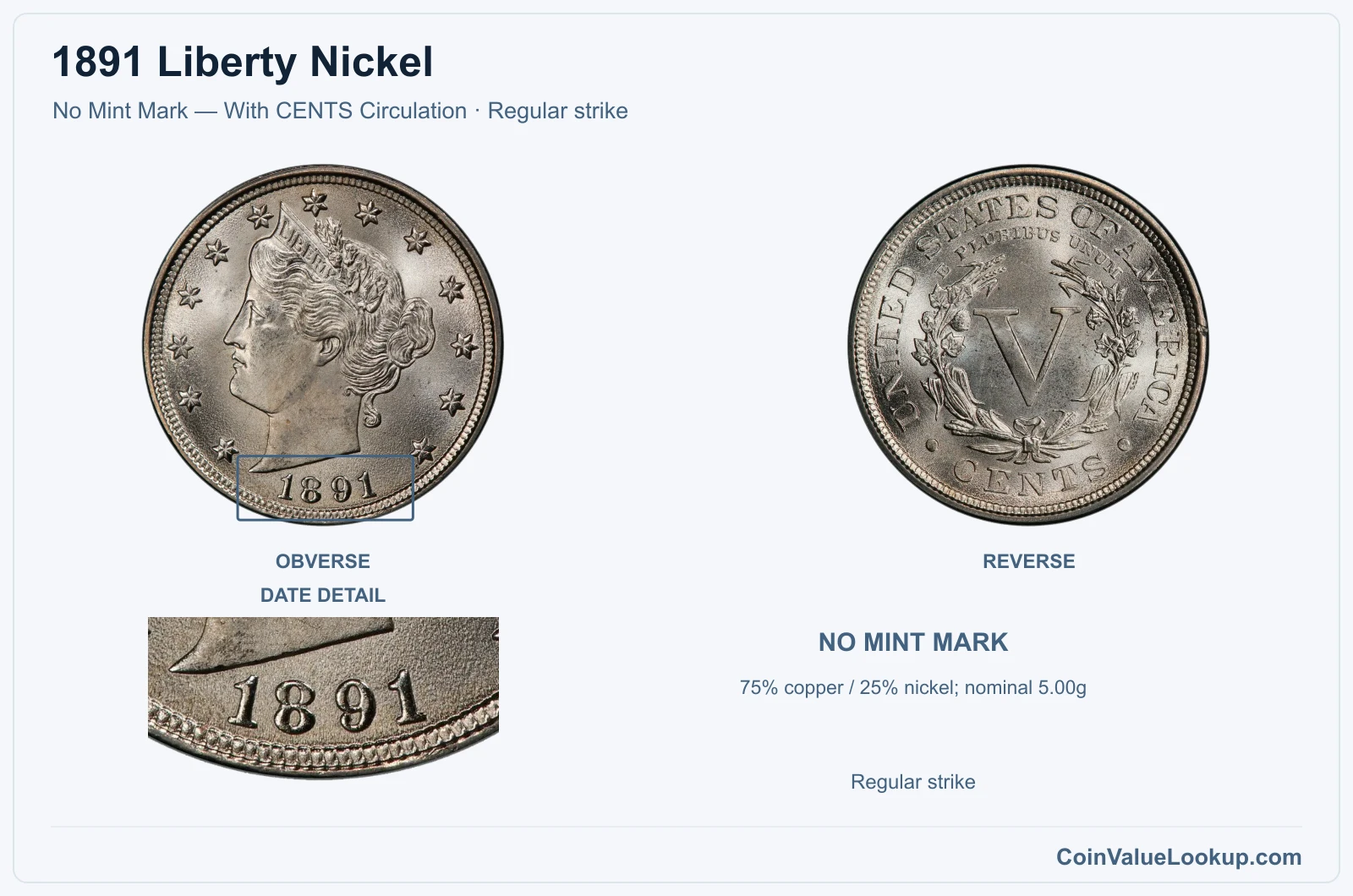
This is the standard 1891 Liberty Nickel business strike, produced at Philadelphia with no mintmark. It is composed of 75% copper and 25% nickel at a nominal weight of 5 grams.
The reverse carries the With CENTS design.
A USA Coin Book guide snapshot places a G4 example around $8.64, climbing to roughly $265 at MS63. Those are retail guide estimates from a single snapshot, not guaranteed sale prices.
Circulated coins in lower grades are common and affordable.
If your coin feels noticeably light on a scale, do not assume it is a wrong-planchet error. Have it weighed precisely and authenticated before drawing conclusions.
Range Grade
Price Auction Records Appraisal PO PO 1
—
Coin Identifier FR FR 2
—
Coin Identifier AG AG 3
—
Coin Identifier G G 4
—
Coin Identifier
G 6
—
Coin Identifier VG VG 8
—
Coin Identifier
VG 10
—
Coin Identifier F F 12
—
Coin Identifier
F 15
—
Coin Identifier VF VF 20
—
Coin Identifier
VF 25
Coin Identifier
VF 30
—
Coin Identifier
VF 35
Coin Identifier XF XF 40
—
Coin Identifier
XF 45
—
Coin Identifier AU AU 50
—
Coin Identifier
AU 53
Coin Identifier
AU 55
Coin Identifier
AU 58
Coin Identifier MS MS 60
Coin Identifier
MS 61
—
Coin Identifier
MS 62
Coin Identifier
MS 63
Coin Identifier
MS 64
Coin Identifier
MS 65
Coin Identifier
MS 66
Coin Identifier
MS 67
Coin Identifier
MS 68
—
—
—
MS 69
—
—
—
MS 70
—
—
—
1891 Liberty Nickel — No Mint Mark — With CENTS Proof
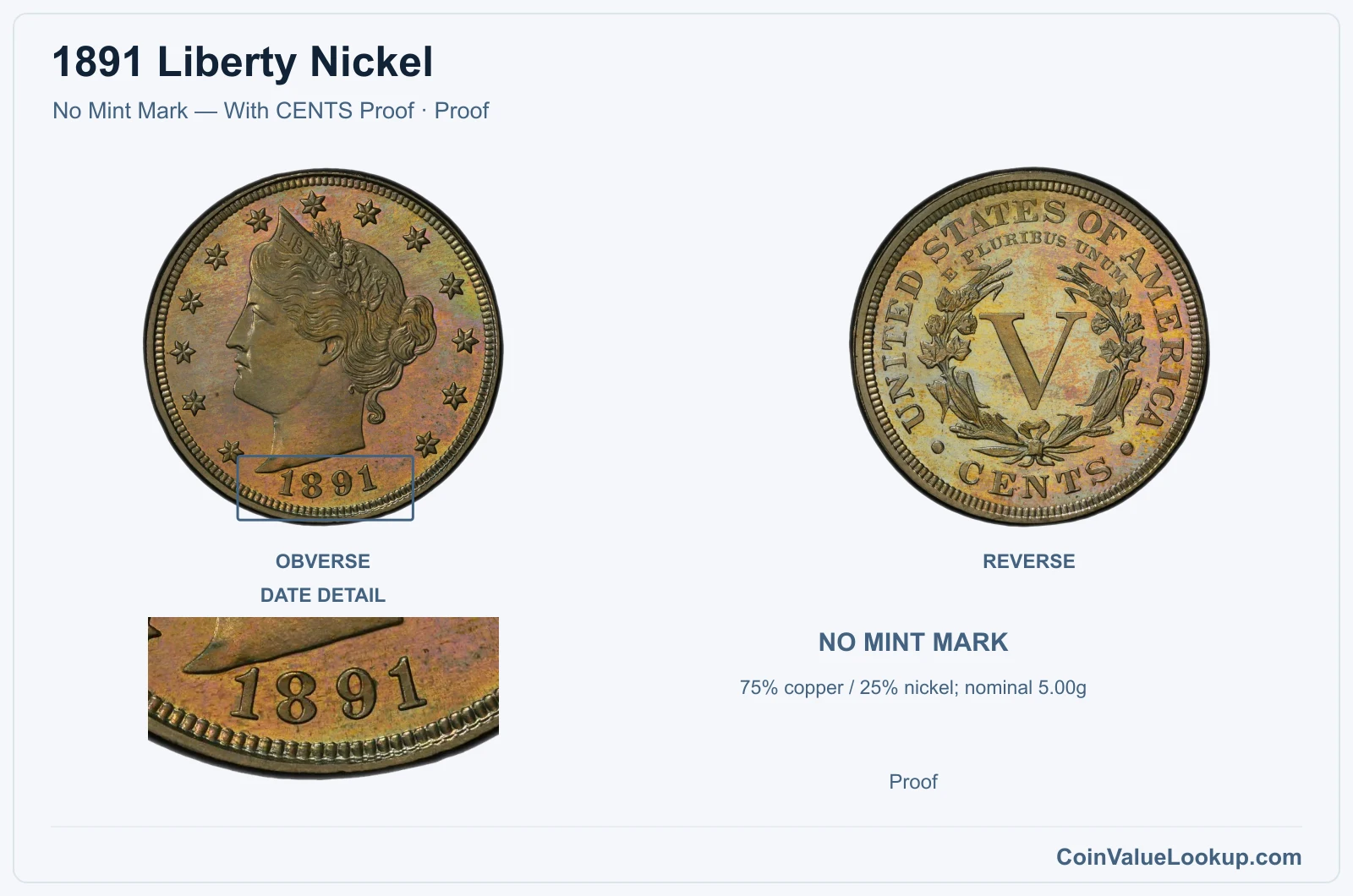
Philadelphia also struck proof 1891 Liberty Nickels for collectors. These were made with polished dies and specially prepared planchets, producing mirror-like fields and sharp detail.
The USA Coin Book guide lists a PR63 proof at approximately $344. That figure is a single guide estimate, not a market guarantee.
When evaluating a proof, look at the fields under angled light for reflectivity, and check for hairlines or cleaning. Rim sharpness should be crisp and even all the way around.
Coin Value Lookup is a useful starting point for looking up guides on Liberty Nickels and other series if you want to compare your coin against published references.
As with the business strike, a lightweight proof needs authentication. Show both faces plus the edge when submitting photos so the field character and rim detail are visible.
Range Grade
Price Auction Records Appraisal PR PR 1
—
Coin Identifier
PR 2
—
Coin Identifier
PR 3
—
Coin Identifier
PR 4
—
Coin Identifier
PR 6
—
Coin Identifier
PR 8
—
Coin Identifier
PR 10
—
Coin Identifier
PR 12
—
Coin Identifier
PR 15
—
Coin Identifier
PR 20
—
Coin Identifier
PR 25
—
Coin Identifier
PR 30
—
Coin Identifier
PR 35
—
Coin Identifier
PR 40
—
Coin Identifier
PR 45
—
Coin Identifier
PR 50
—
Coin Identifier
PR 53
—
Coin Identifier
PR 55
—
Coin Identifier
PR 58
—
Coin Identifier
PR 60
—
Coin Identifier
PR 61
—
Coin Identifier
PR 62
Coin Identifier
PR 63
Coin Identifier
PR 64
Coin Identifier
PR 65
Coin Identifier
PR 66
Coin Identifier
PR 67
Coin Identifier
PR 68
—
Coin Identifier
PR 69
—
—
—
PR 70
—
—
—
1891 Liberty Nickel Error List
1. 1891 Liberty Nickel — Partial Counterbrockage
A partial counterbrockage on an 1891 Nickel shows a displaced, expanded extra design element in positive relief on the coin's surface. This happens when an already-brockaged coin acts as an intermediary in a subsequent strike, transferring a raised impression rather than the sunken, mirror-image impression you see on a standard brockage.
The key distinction: a regular brockage is incuse and reversed, while a counterbrockage is raised and reads normally but appears spread out or distorted. Ordinary doubled dies look completely different because the doubling follows the original design contours closely.
Post-mint squeeze marks from vises or machinery can mimic extra design elements, so examine the surrounding metal flow carefully. Value depends on how visible and dramatic the counterbrockage is, plus the coin's overall condition.
No specific price range is established here; individual assessment by a specialist is warranted.
2. 1891 Liberty Nickel — Off-Center Strike
An off-center 1891 Liberty Nickel has its design shifted to one side, leaving a blank crescent of unstruck metal on the opposite edge. Reported examples for this date range from roughly 10% to 40% off-center.
The date must remain visible to confirm the year, which is critical for value. A coin struck far enough off-center to lose the date is much harder to attribute and therefore less desirable to most collectors.
Do not confuse an off-center strike with a straight clip, which removes a curved section of metal but still shows a centered design. One-sided die misalignment or post-mint flattening can also look suspicious but lack the telltale unstruck crescent.
Value depends on the percentage of offset, date visibility, and condition, so no specific price is stated here.
3. 1891 Liberty Nickel — Defective Planchet
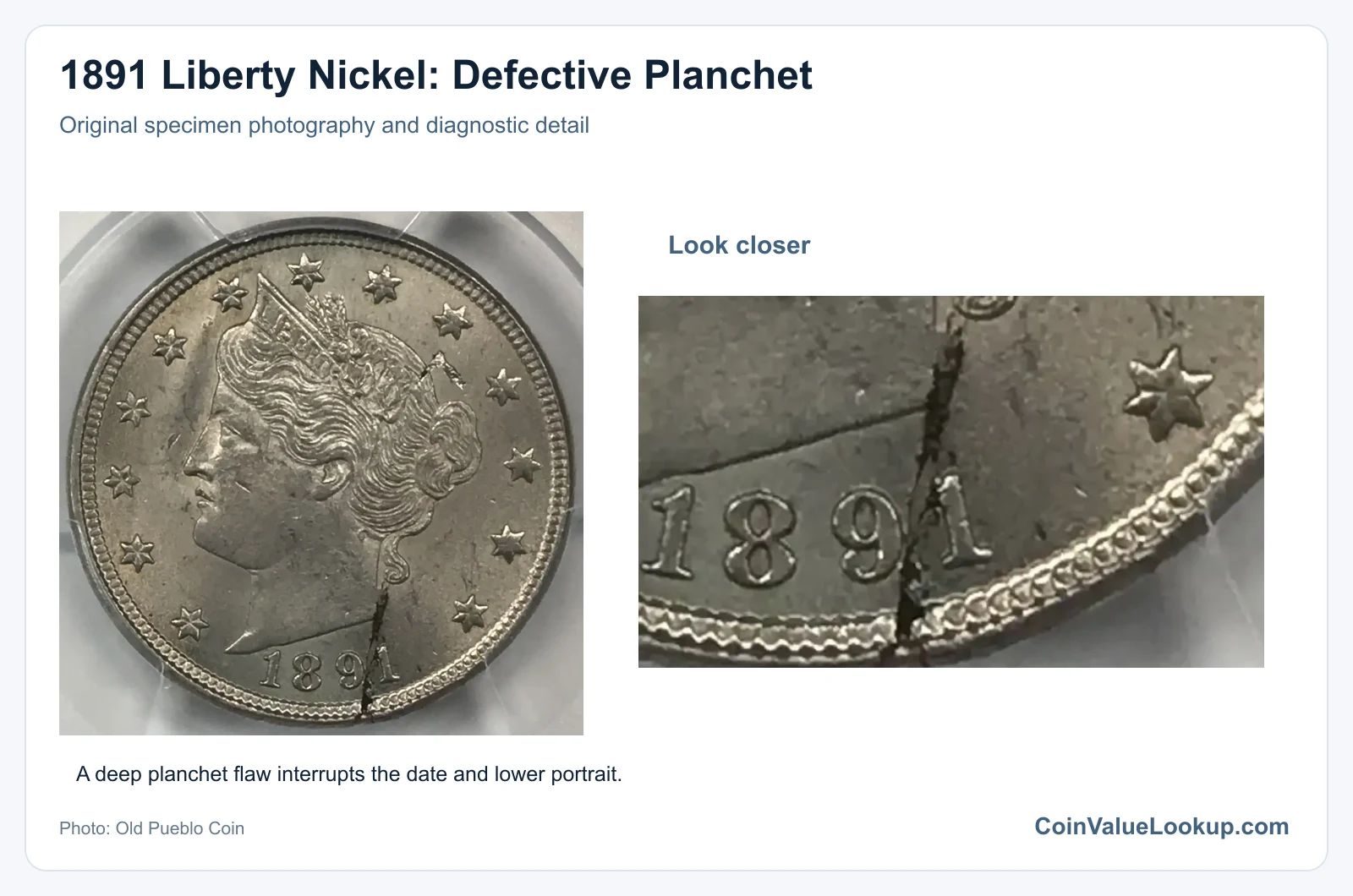
A defective-planchet 1891 Liberty Nickel shows a flaw in the metal blank itself, visible as a void, crack, lamination, or irregular surface that was present before the coin was struck. The struck design typically wraps into or around the defect, confirming it originated at the blank stage rather than afterward.
When photographing a suspected defective planchet, capture both faces and the edge so the relationship between the flaw and the surrounding struck design is clear.
Post-mint damage can look similar. Gouges, corrosion pits, and deliberate metal removal all create voids, but they cut through the existing design rather than being overlaid by it.
Compare carefully. Value varies with the size and visual impact of the flaw and the coin's overall preservation; no numerical price range is adopted for this category.
4. 1891 Liberty Nickel — Wrong Planchet / Off-Metal Strike
A wrong-planchet 1891 Liberty Nickel would have been struck on a blank intended for a different denomination or even a foreign coin. The result is a piece whose weight, diameter, or edge character does not match the standard 5-gram, 21.2 mm, plain-edge specification.
Before getting excited, weigh the coin on an accurate scale. Many lightweight Liberty Nickels turn out to be corroded, acid-treated, or simply worn thin.
Plating, environmental damage, and deliberate alteration can all change a coin's appearance and heft without involving a mint error.
If the weight and diameter genuinely do not match, professional authentication is essential. Do not assign a specific foreign-planchet attribution on your own.
Value depends on which planchet was used, how complete the strike is, and overall condition. No price range is stated here because each confirmed example requires individual evaluation.