1891 Liberty Seated Dime Coin Value: How Much Is It Worth?
The 1891 Liberty Seated Dime holds a special place as the final year of the Seated Liberty dime series. USA Coin Book retail guide estimates range from about $22 at G4 to $441 at MS63 across the regular Philadelphia, New Orleans, and San Francisco business strikes.
Actual value depends on your coin's specific mint, condition, and variety, so identifying what you have is the first step.
Fast Way to Identify Your 1891 Liberty Seated Dime
The fastest way to get a preliminary identification of your 1891 Seated dime is to upload clear photos of both the front and back. That lets us check your mintmark, surface condition, and any obvious variety features.
Snap both sides in good light, keep the coin flat, and avoid glare from direct overhead bulbs.
1891 Liberty Seated Dime Value
Upload both sides of your 1891 Liberty Seated Dime.
Front Obverse
Upload photo
Back Reverse
Upload photo
Which 1891 Liberty Seated Dime Versions Are Worth Money?
- The 1891-O O Over Horizontal O variety carries USA Coin Book guide estimates of about $77 at G4 up to $6,834 at MS63, making it the standout version to check for among circulation strikes.
- Philadelphia Proof dimes from 1891 are listed at about $725 at PR63 in the USA Coin Book guide, reflecting their limited Proof-only mintage.
- The 1891-O Branch-Mint Proof is a rare certified issue with polished dies and broad borders; no guide price is adopted, so individual assessment is needed.
- The 1891 Philadelphia Doubled Die Obverse is a recognized variety; value depends on the severity of doubling and the coin's authenticated condition.
- Even regular 1891-O business strikes reach roughly $441 at MS63 per the guide, the highest among standard mint issues this year.
Step 1: Identify Your 1891 Liberty Seated Dime Mint Mark and Version
Start by confirming the seated Liberty figure on the obverse and ONE DIME inside an agricultural wreath on the reverse. The date 1891 should be visible at the bottom of the obverse.
Half dimes are smaller and lighter, so if your coin measures roughly 17.9mm with a reeded edge and weighs around 2.50 grams, you have a dime.
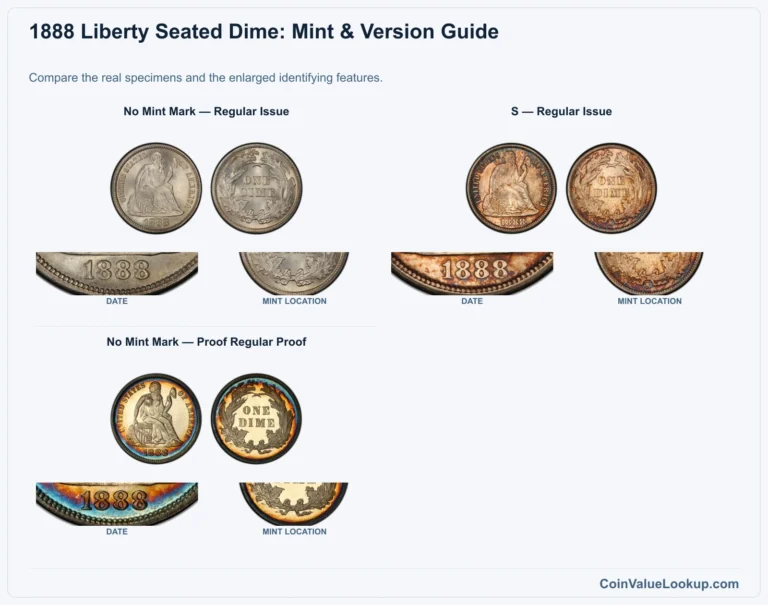
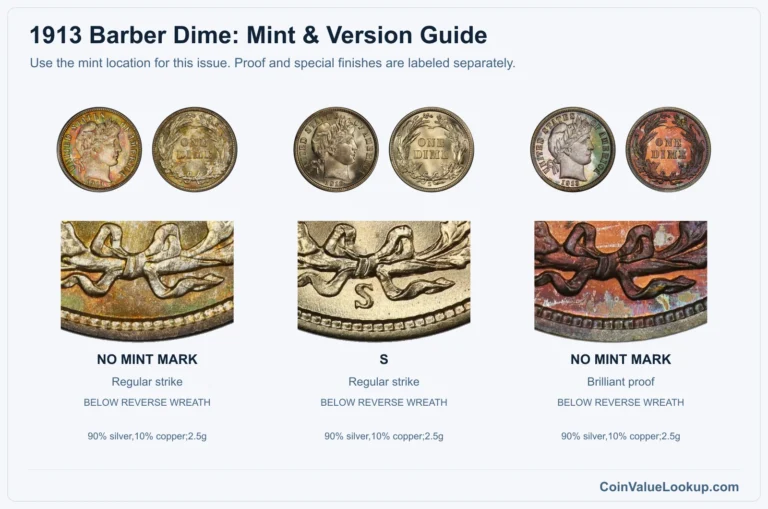
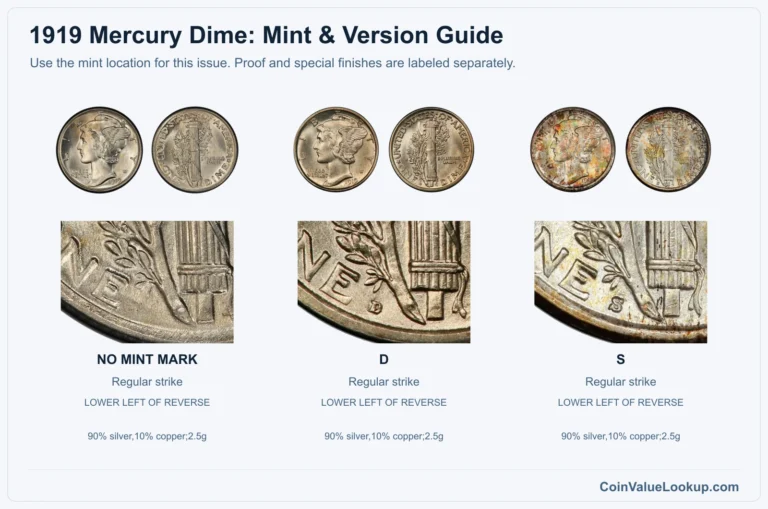
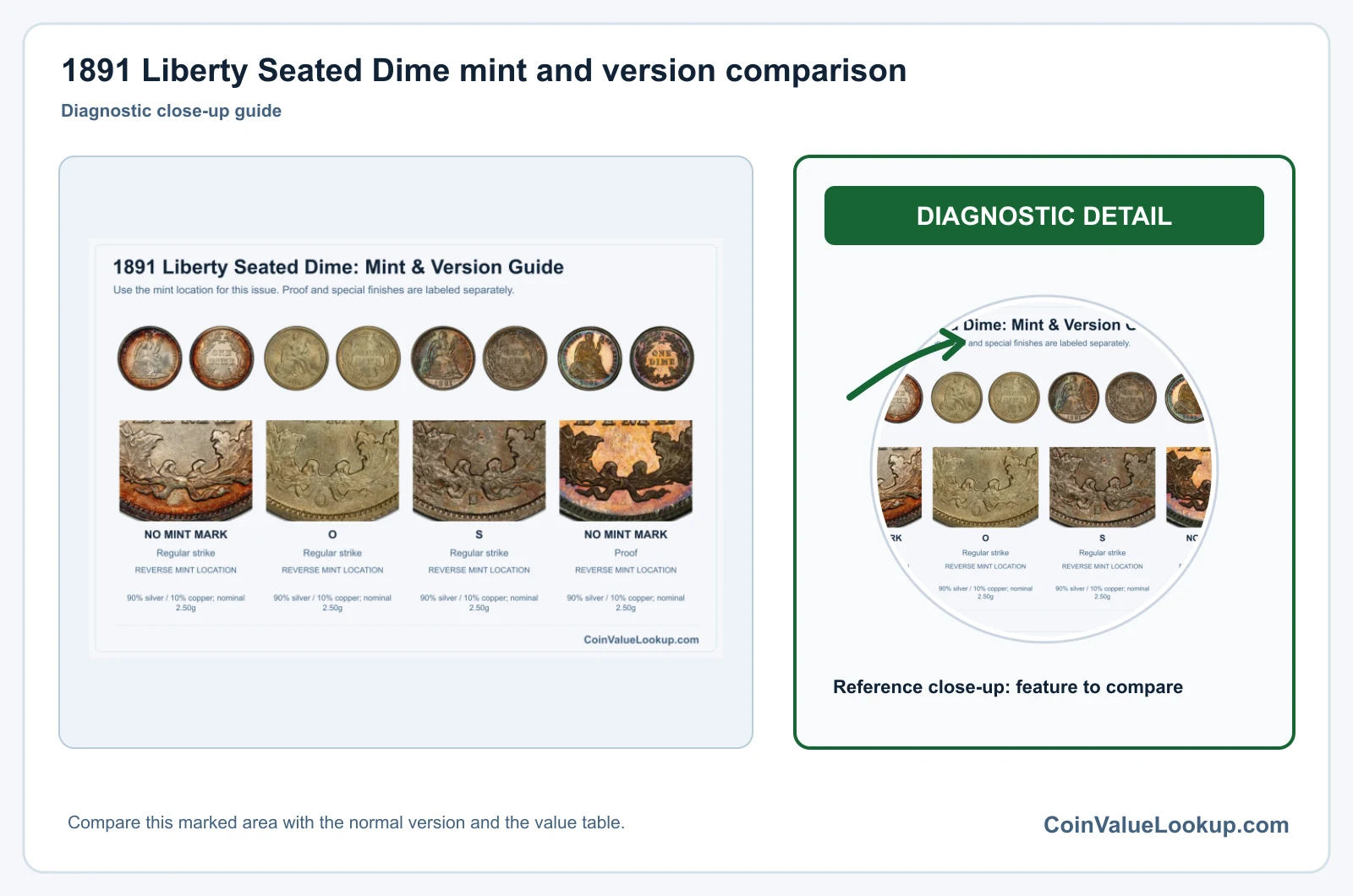
Now flip it over and look at the reverse, just below or within the wreath. Philadelphia coins carry no mintmark at all.
An "O" means New Orleans, and an "S" means San Francisco.
If you see an O mintmark, look closely with magnification. Some 1891-O dimes show a horizontal O beneath the normal upright O, which is the O Over Horizontal O variety and a much more valuable coin.
A separate reported variety shows remnants of a small inverted S beneath the O mintmark; that is the over-mintmark, distinct from the horizontal O.
All regular 1891 Seated dimes are struck in 90% silver and 10% copper. Philadelphia also produced Proof dimes this year, and NGC has described a rare branch-mint Proof from New Orleans with polished dies and broad borders.
Polished or cleaned circulation strikes are not Proofs, no matter how shiny they look.
Step 2: Check Your 1891 Liberty Seated Dime Grade
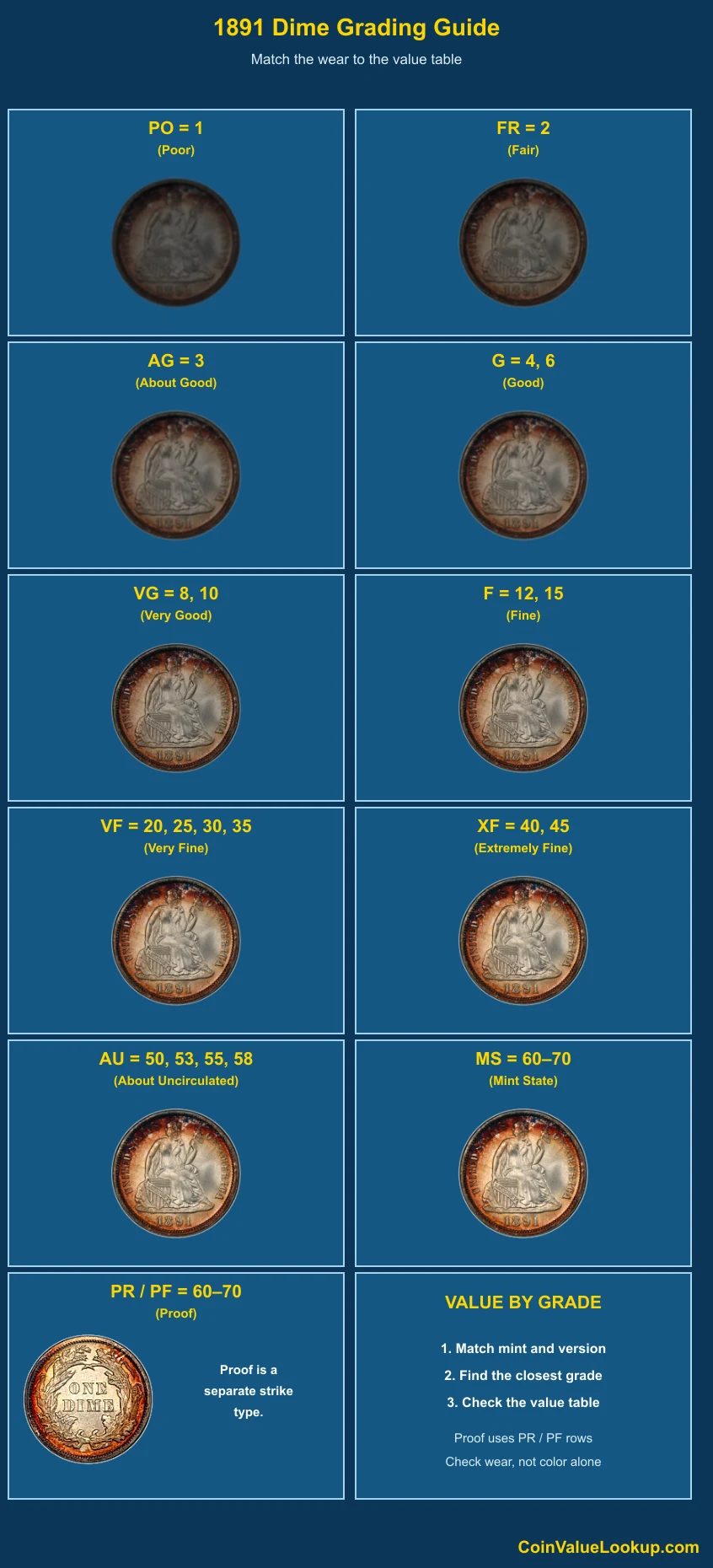
Focus first on Liberty's head and the area around her knee and breast. These are the highest points and the first to show friction.
On a well-preserved coin, the shield lines remain sharp and the wreath leaves on the reverse retain full detail.
Compare your coin's surfaces to the reference image. At G4, Liberty's outline is visible but most interior detail is gone.
By MS63, the coin should show full luster with only minor contact marks.
Luster matters as much as detail. A coin with sharp design but dull, cleaned surfaces grades lower than one with honest wear and original skin.
Weak strikes from tired dies can mimic wear, so check both sides together; if the reverse wreath is mushy alongside a soft obverse, the die may have been worn rather than the coin circulated.
Proof coins have mirror-like fields from specially prepared dies. Look for squared rims and deliberate preparation.
Brilliance alone does not make a Proof.
Step 3: Check 1891 Liberty Seated Dime Value by Mint and Version
1891 Liberty Seated Dime — No Mint Mark — Regular Issue
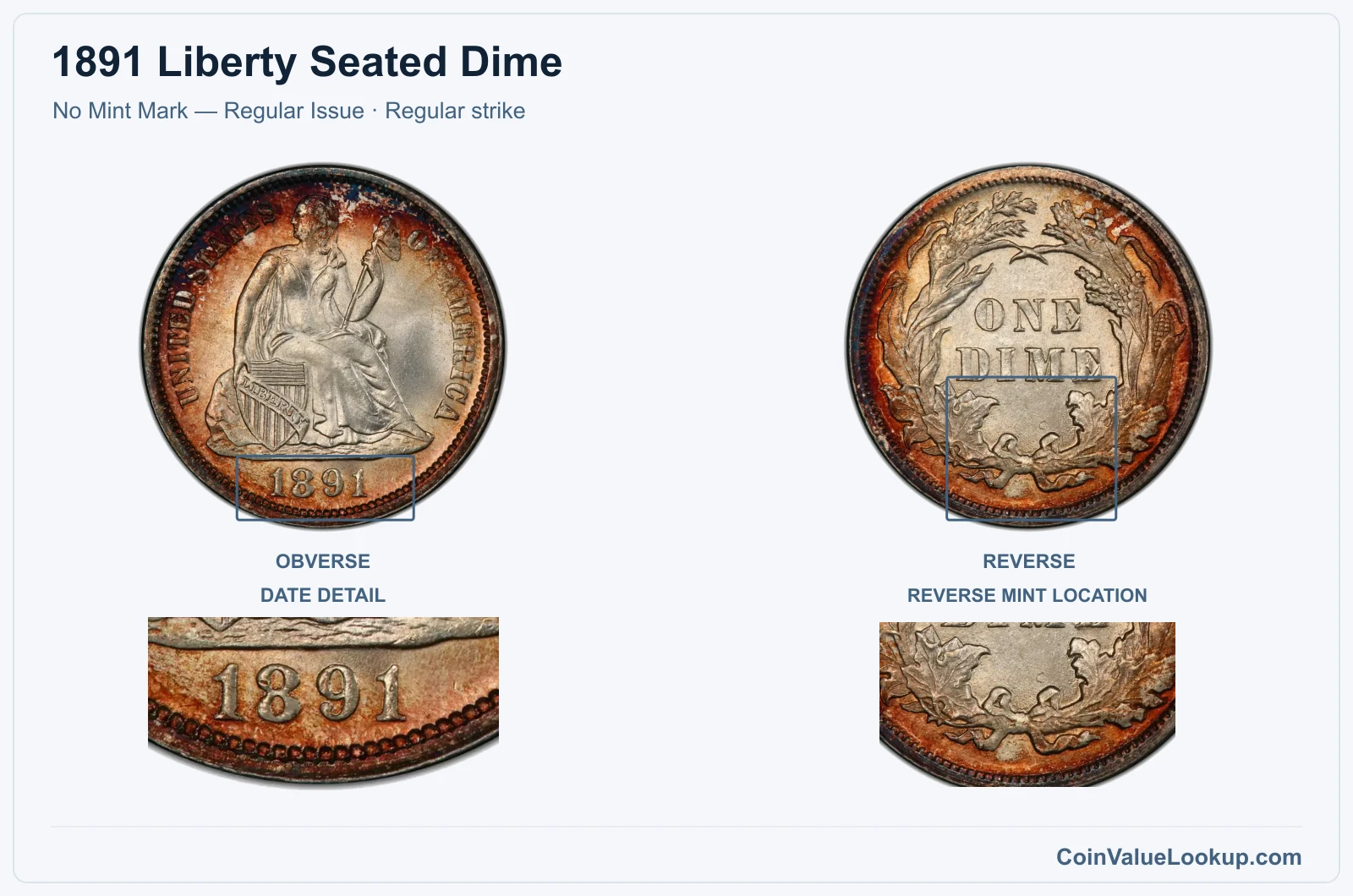
The 1891 Philadelphia dime has no mintmark anywhere on the coin. It features the Legend Obverse design with an agricultural wreath reverse, struck in 90% silver.
USA Coin Book guide estimates place this issue at about $22 in G4 and around $316 in MS63.
This was the last year the Philadelphia Mint produced Seated Liberty dimes for circulation before the Barber design took over in 1892. Millions were struck, so finding one in lower grades is not difficult.
The challenge is locating examples with full, original luster.
Range Grade
Price Auction Records Appraisal PO PO 1
—
Coin Identifier FR FR 2
—
Coin Identifier AG AG 3
—
Coin Identifier G G 4
—
Coin Identifier
G 6
—
Coin Identifier VG VG 8
—
Coin Identifier
VG 10
—
Coin Identifier F F 12
Coin Identifier
F 15
—
Coin Identifier VF VF 20
Coin Identifier
VF 25
—
Coin Identifier
VF 30
Coin Identifier
VF 35
—
Coin Identifier XF XF 40
—
Coin Identifier
XF 45
Coin Identifier AU AU 50
Coin Identifier
AU 53
Coin Identifier
AU 55
Coin Identifier
AU 58
Coin Identifier MS MS 60
Coin Identifier
MS 61
Coin Identifier
MS 62
Coin Identifier
MS 63
Coin Identifier
MS 64
Coin Identifier
MS 65
Coin Identifier
MS 66
Coin Identifier
MS 67
Coin Identifier
MS 68
Coin Identifier
MS 69
—
—
—
MS 70
—
—
—
1891 Liberty Seated Dime — O — Regular Issue
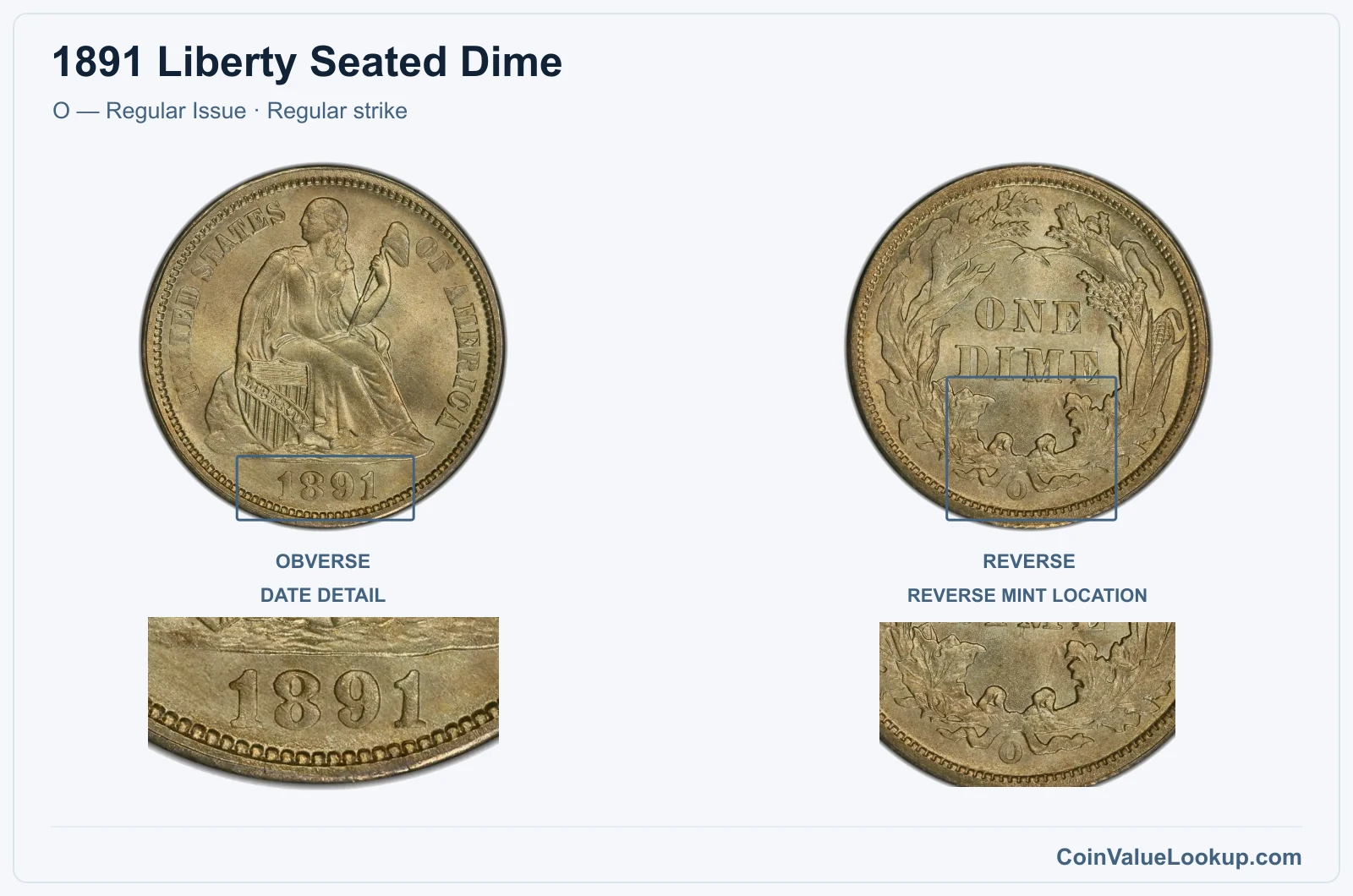
Look for the "O" mintmark on the reverse to confirm a New Orleans issue. This coin shares the same 90% silver composition and Legend Obverse design as its Philadelphia counterpart.
USA Coin Book estimates run about $22 at G4 to roughly $441 at MS63.
The MS63 guide figure is the highest among the three regular business-strike mints this year. Before assuming yours is a plain regular issue, inspect that O mintmark carefully under magnification for any traces of a horizontal O or remnants of another letter underneath.
Those varieties command very different premiums.
Range Grade
Price Auction Records Appraisal PO PO 1
—
Coin Identifier FR FR 2
Coin Identifier AG AG 3
—
Coin Identifier G G 4
—
Coin Identifier
G 6
—
Coin Identifier VG VG 8
—
Coin Identifier
VG 10
Coin Identifier F F 12
—
Coin Identifier
F 15
—
Coin Identifier VF VF 20
—
Coin Identifier
VF 25
—
Coin Identifier
VF 30
—
Coin Identifier
VF 35
—
Coin Identifier XF XF 40
Coin Identifier
XF 45
Coin Identifier AU AU 50
Coin Identifier
AU 53
Coin Identifier
AU 55
Coin Identifier
AU 58
Coin Identifier MS MS 60
Coin Identifier
MS 61
Coin Identifier
MS 62
Coin Identifier
MS 63
Coin Identifier
MS 64
Coin Identifier
MS 65
Coin Identifier
MS 66
Coin Identifier
MS 67
Coin Identifier
MS 68
—
—
—
MS 69
—
—
—
MS 70
—
—
—
1891 Liberty Seated Dime — O — O Over Horizontal O
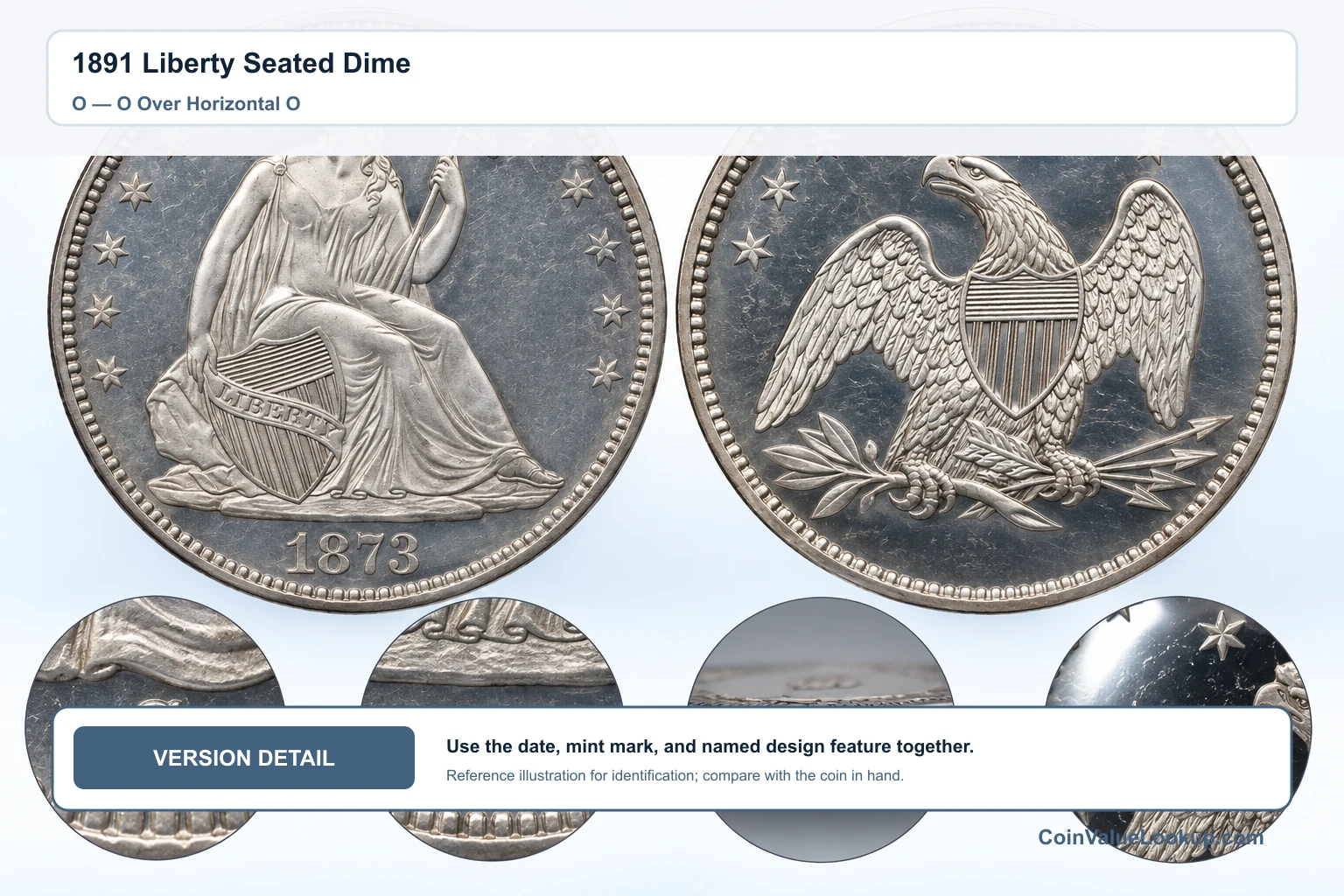
This is the coin to hunt for. The 1891-O O Over Horizontal O shows a normally oriented O mintmark punched over an earlier O that was placed sideways.
Under magnification you can see curved remnants of the horizontal O extending beyond the edges of the final upright letter.
USA Coin Book guide estimates range from about $77 at G4 to approximately $6,834 at MS63. That is a massive jump over the regular O-mint issue.
Even in lower circulated grades, this variety commands a healthy premium.
Coin Value Lookup is a good starting point if you want to compare guide values across different Seated dime dates and mints. It can help you narrow down what you are looking at before seeking professional authentication.
Ordinary-issue reference: Ordinary-issue reference only: The table below shows prices for the 1891-O Liberty Seated Dime (regular strike). It does not represent the value of the specific O — O Over Horizontal O variety or its variety premium. Year, mint, metal and strike type are matched; the specific variety is not priced by this table.
Range Grade
Price Auction Records Appraisal PO PO 1
—
Coin Identifier FR FR 2
Coin Identifier AG AG 3
—
Coin Identifier G G 4
—
Coin Identifier
G 6
—
Coin Identifier VG VG 8
—
Coin Identifier
VG 10
Coin Identifier F F 12
—
Coin Identifier
F 15
—
Coin Identifier VF VF 20
—
Coin Identifier
VF 25
—
Coin Identifier
VF 30
—
Coin Identifier
VF 35
—
Coin Identifier XF XF 40
Coin Identifier
XF 45
Coin Identifier AU AU 50
Coin Identifier
AU 53
Coin Identifier
AU 55
Coin Identifier
AU 58
Coin Identifier MS MS 60
Coin Identifier
MS 61
Coin Identifier
MS 62
Coin Identifier
MS 63
Coin Identifier
MS 64
Coin Identifier
MS 65
Coin Identifier
MS 66
Coin Identifier
MS 67
Coin Identifier
MS 68
—
—
—
MS 69
—
—
—
MS 70
—
—
—
1891 Liberty Seated Dime — S — Regular Issue
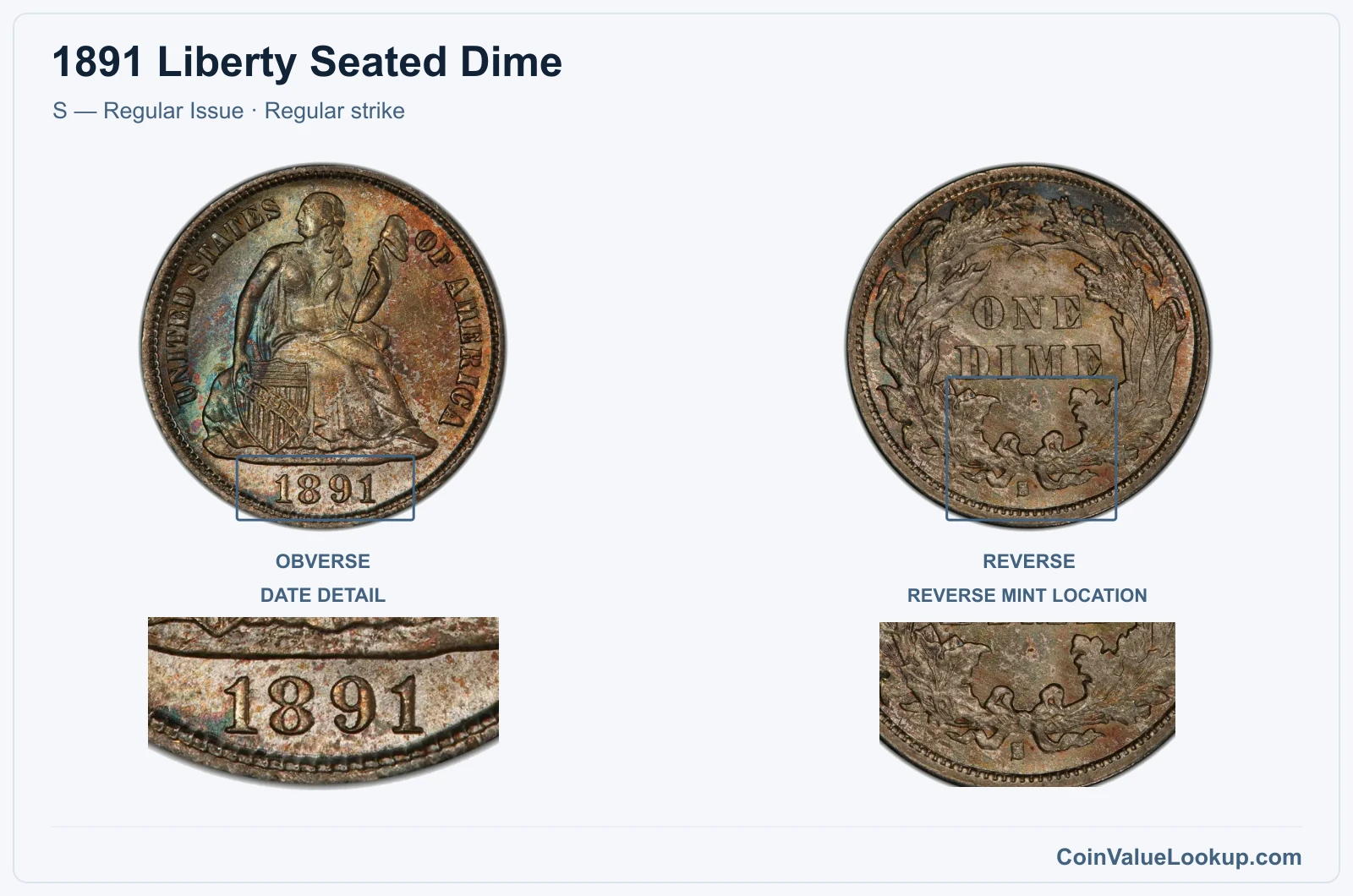
The San Francisco issue carries an "S" mintmark on the reverse. Same 90% silver, same Legend Obverse design.
USA Coin Book guide estimates sit at about $22 in G4 and around $379 at MS63.
San Francisco Seated dimes from this final year turn up regularly in circulated grades. Uncirculated examples with original surfaces are scarcer and worth inspecting closely for strike quality, since San Francisco dies sometimes show softness on Liberty's head.
Range Grade
Price Auction Records Appraisal PO PO 1
—
Coin Identifier FR FR 2
—
Coin Identifier AG AG 3
—
Coin Identifier G G 4
—
Coin Identifier
G 6
—
Coin Identifier VG VG 8
—
Coin Identifier
VG 10
—
Coin Identifier F F 12
—
Coin Identifier
F 15
—
Coin Identifier VF VF 20
—
Coin Identifier
VF 25
—
Coin Identifier
VF 30
—
Coin Identifier
VF 35
—
Coin Identifier XF XF 40
—
Coin Identifier
XF 45
Coin Identifier AU AU 50
—
Coin Identifier
AU 53
Coin Identifier
AU 55
Coin Identifier
AU 58
Coin Identifier MS MS 60
Coin Identifier
MS 61
Coin Identifier
MS 62
Coin Identifier
MS 63
Coin Identifier
MS 64
Coin Identifier
MS 65
Coin Identifier
MS 66
Coin Identifier
MS 67
Coin Identifier
MS 68
Coin Identifier
MS 69
—
—
—
MS 70
—
—
—
1891 Liberty Seated Dime — No Mint Mark — Proof Regular Proof
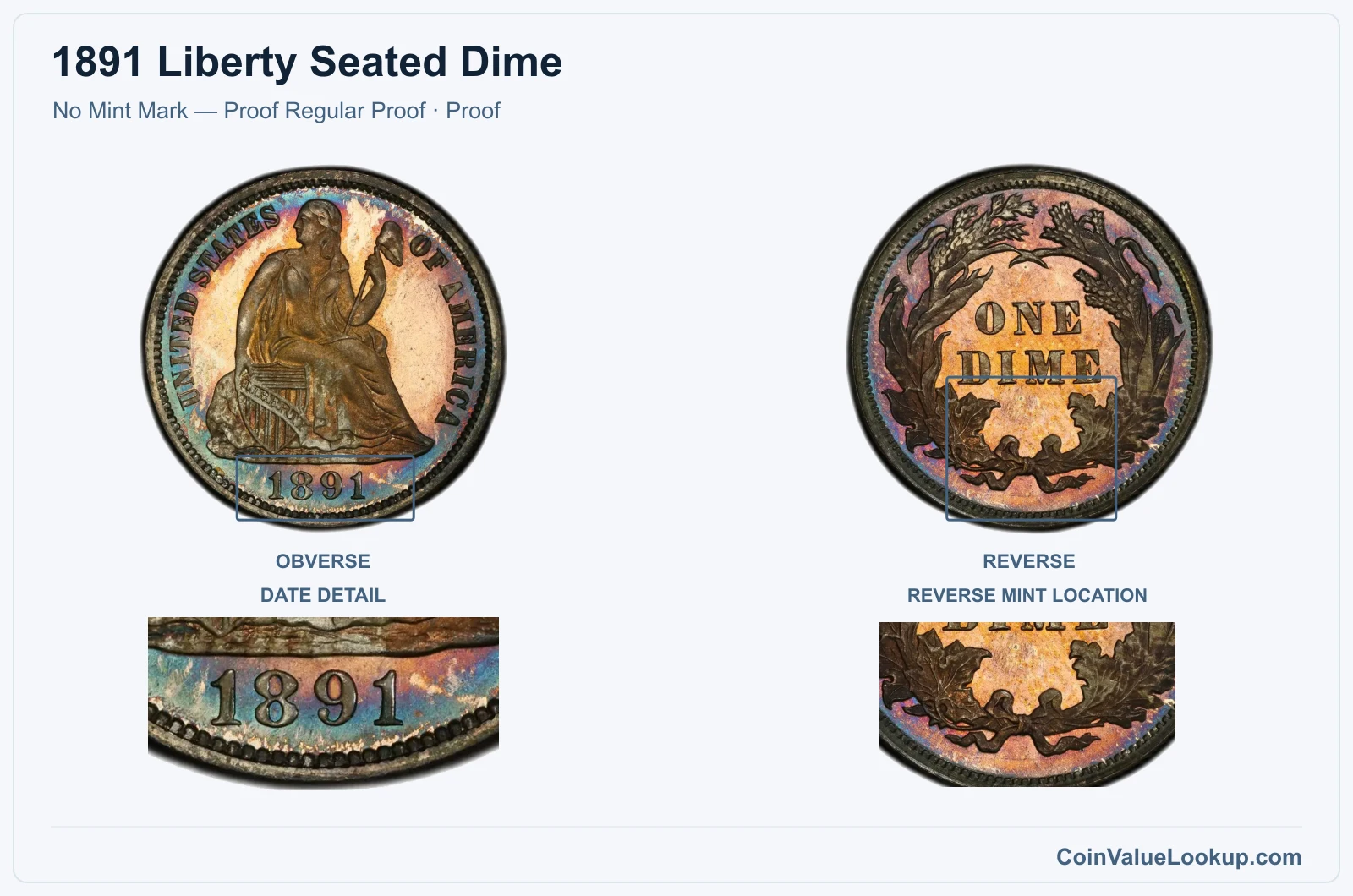
Philadelphia struck Proof dimes in 1891 using specially prepared dies and polished planchets. The result is a coin with deeply mirrored fields and sharp, squared rims.
USA Coin Book lists a guide estimate of about $725 at PR63.
To tell a real Proof from a polished circulation strike, look for the combination of mirror-like fields, full design sharpness, and broad, flat rims. Hairlines from handling are common on Proofs and will lower the grade, but the underlying mirror surface should still be visible when the coin is tilted under a light.
A shiny business strike does not have the same field depth or rim profile.
Range Grade
Price Auction Records Appraisal PR PR 1
—
Coin Identifier
PR 2
—
Coin Identifier
PR 3
—
Coin Identifier
PR 4
—
Coin Identifier
PR 6
—
Coin Identifier
PR 8
—
Coin Identifier
PR 10
—
Coin Identifier
PR 12
—
Coin Identifier
PR 15
—
Coin Identifier
PR 20
—
Coin Identifier
PR 25
—
Coin Identifier
PR 30
—
Coin Identifier
PR 35
—
Coin Identifier
PR 40
—
Coin Identifier
PR 45
—
Coin Identifier
PR 50
—
Coin Identifier
PR 53
—
Coin Identifier
PR 55
—
Coin Identifier
PR 58
—
Coin Identifier
PR 60
Coin Identifier
PR 61
Coin Identifier
PR 62
Coin Identifier
PR 63
Coin Identifier
PR 64
Coin Identifier
PR 65
Coin Identifier
PR 66
Coin Identifier
PR 67
Coin Identifier
PR 68
Coin Identifier
PR 69
—
—
—
PR 70
—
—
—
1891 Liberty Seated Dime — No Mint Mark — Doubled Die Obverse
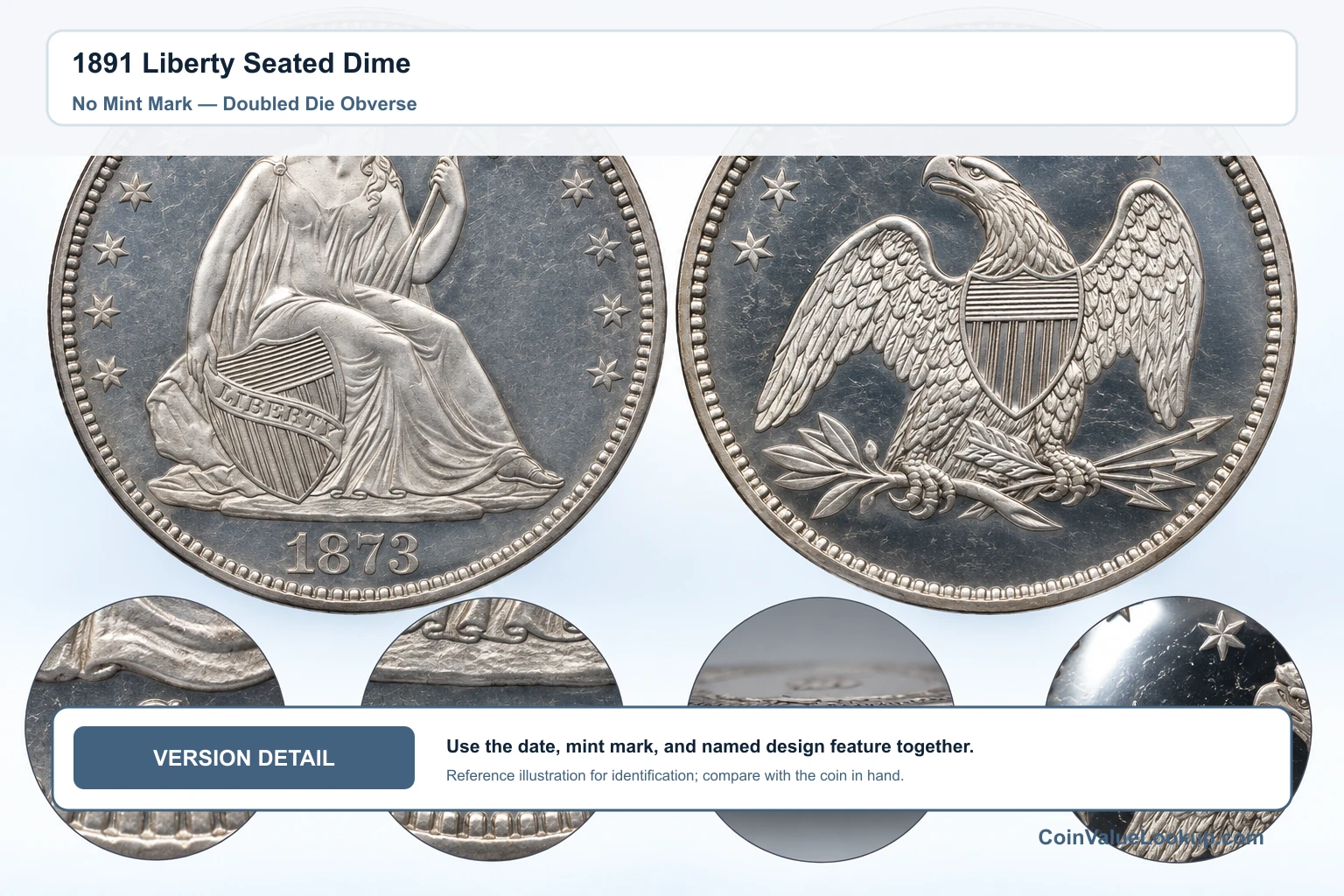
The 1891 Philadelphia Doubled Die Obverse is a recognized variety showing consistent doubling on obverse design elements. Under magnification, compare the lettering and Liberty's features to a normal 1891 dime.
Genuine hub doubling produces separation or notching that appears uniform across multiple design elements, not just a flat shelf on one side of the letters.
No guide price range is adopted for this variety. Value depends on the severity and visibility of the doubling, along with the coin's overall condition and whether it has been authenticated by a grading service.
If you think you see doubling, compare carefully under consistent lighting before drawing conclusions.
Ordinary-issue reference: Ordinary-issue reference only: The table below shows prices for the 1891 Liberty Seated Dime (regular strike). It does not represent the value of the specific No Mint Mark — Doubled Die Obverse variety or its variety premium. Year, mint, metal and strike type are matched; the specific variety is not priced by this table.
Range Grade
Price Auction Records Appraisal PO PO 1
—
Coin Identifier FR FR 2
—
Coin Identifier AG AG 3
—
Coin Identifier G G 4
—
Coin Identifier
G 6
—
Coin Identifier VG VG 8
—
Coin Identifier
VG 10
—
Coin Identifier F F 12
Coin Identifier
F 15
—
Coin Identifier VF VF 20
Coin Identifier
VF 25
—
Coin Identifier
VF 30
Coin Identifier
VF 35
—
Coin Identifier XF XF 40
—
Coin Identifier
XF 45
Coin Identifier AU AU 50
Coin Identifier
AU 53
Coin Identifier
AU 55
Coin Identifier
AU 58
Coin Identifier MS MS 60
Coin Identifier
MS 61
Coin Identifier
MS 62
Coin Identifier
MS 63
Coin Identifier
MS 64
Coin Identifier
MS 65
Coin Identifier
MS 66
Coin Identifier
MS 67
Coin Identifier
MS 68
Coin Identifier
MS 69
—
—
—
MS 70
—
—
—
1891 Liberty Seated Dime — O — Branch-Mint Proof
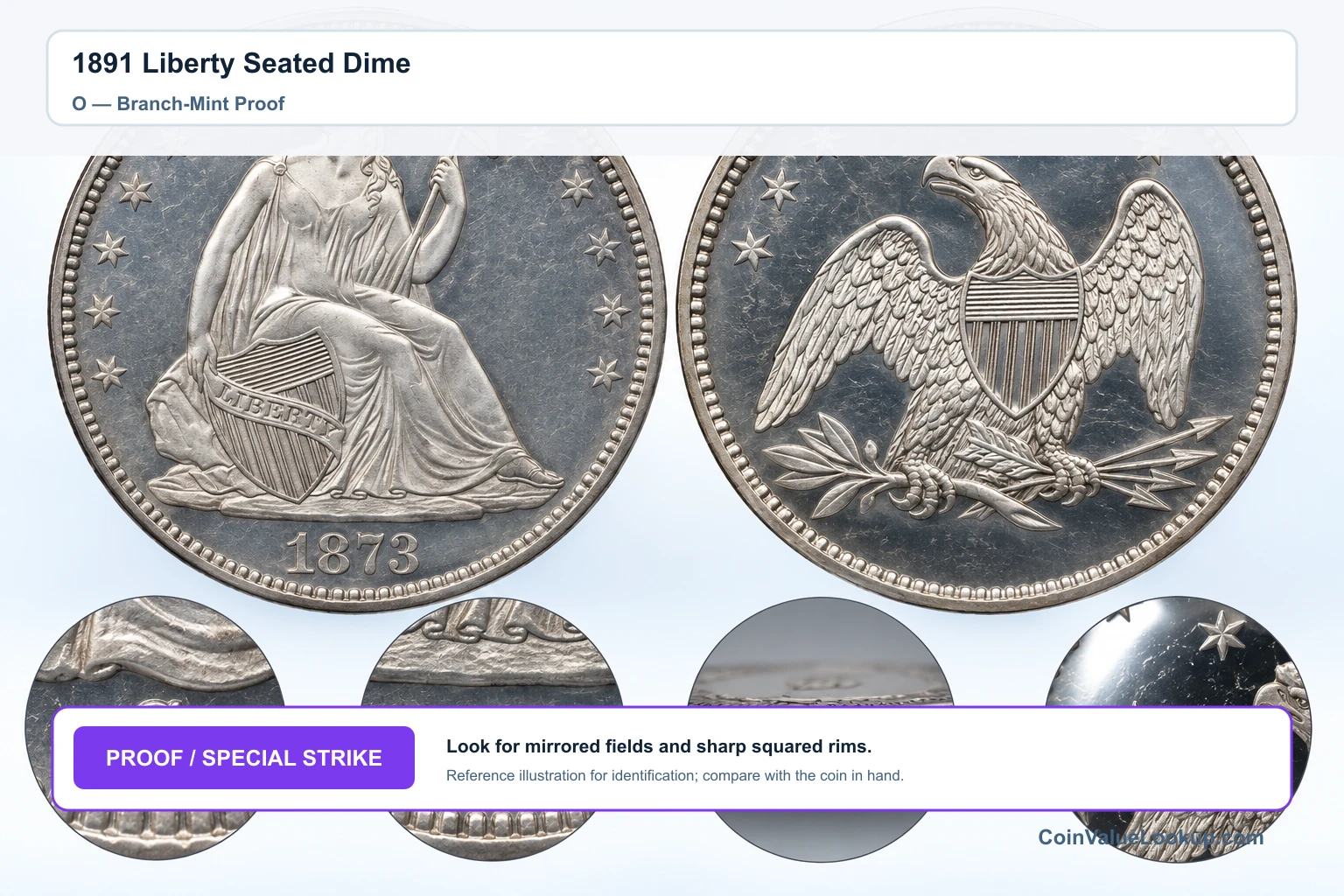
NGC has described a certified 1891-O branch-mint Proof, a coin struck at New Orleans with polished dies, broad borders, and mirrorlike fields. This is not the regular Philadelphia Proof issue and is not a prooflike circulation strike that happens to look shiny.
Genuine branch-mint Proofs from this era are rare. Look for evidence of deliberate die preparation: unusually sharp design elements, broad squared rims, and deep mirror fields distinct from ordinary luster.
A prooflike business strike may flash nicely, but it lacks the squared rim profile and overall precision of a true Proof.
No guide price is adopted for this variety, so individual assessment based on authenticated identity and condition is essential. Professional certification is the practical path for confirming a coin like this.
1891-O Liberty Seated Dime Branch-Mint Proof Value by Grade
Reliable grade-by-grade prices are not currently available. This exceptionally rare branch-mint Proof does not have a dependable grade-by-grade table in the current price feed. Ordinary 1891-O circulation-strike and prooflike values are not substitutes.
1891 Liberty Seated Dime Error List
1. 1891 Liberty Seated Dime — Repunched Date
A repunched date on the 1891 Seated dime shows remnants of an earlier date-punch position alongside the final numerals. Look for traces of extra digits, partial ghost numbers, or misaligned numeral outlines near the 1, 8, 9, or 1 at the base of the obverse.
This is distinct from a doubled die, which affects the entire obverse design through a hub error. A repunched date is a localized punch placement issue limited to the date digits themselves.
Damaged numerals from contact or machine doubling can mimic a repunched date. Machine doubling produces a flat, shelf-like displacement rather than distinct, rounded numeral outlines.
No specific price range is adopted for this variety; value depends on how visible the repunching is and the coin's overall condition.
2. 1891 Liberty Seated Dime — Misplaced Date
A misplaced date occurs when a digit from the date punch appears outside its intended location, typically in the denticles or on the shield area above the normal date position. Look for recognizable fragments of numerals in unusual spots.
The key diagnostic is matching the shape of the stray element to an actual date digit. Random die scratches or polish lines will not replicate the curved profile of a 1, 8, or 9.
Tilt the coin under a single light source and compare the suspicious mark to the corresponding digit in the date.
No guide price range is adopted. Value depends on the visibility of the misplaced digit, the coin's condition, and collector demand for the specific variety.
3. 1891 Liberty Seated Dime — Doubled Die Obverse
A Doubled Die Obverse on the 1891 dime shows consistent separation or notching on obverse design elements like the legend lettering, Liberty's features, or the stars. The doubling should appear uniform across multiple elements when examined under steady magnification.
Compare your coin to a known normal 1891 dime. Genuine hub doubling creates rounded, raised secondary images, not the flat shelves typical of machine doubling.
Worn die contours and light reflections can also fool the eye, so consistent lighting is critical.
No guide price range is adopted for this error. The coin's value depends on the strength and location of the doubling, the specific die pair involved, and overall condition.
Authentication is recommended before assuming a premium.
4. 1891 Liberty Seated Dime — Die Crack / Die Chip
Die cracks appear as thin, raised lines on the coin's surface, created when the steel die develops fractures during use. On an 1891 Seated dime, these can run through lettering, across Liberty's figure, or from the rim inward.
A die chip is a small raised blob where a piece of the die face broke away.
Distinguish these from incuse scratches, which are recessed into the surface rather than raised above it. Corrosion or foreign material stuck to a coin also sits on the surface but lacks the sharp, linear profile of a genuine crack.
A die crack connecting to the rim with a larger section of missing die is called a cud, covered separately below. No specific price range is adopted; value depends on the crack's size, location, and the coin's grade.
5. 1891 Liberty Seated Dime — Repunched Mintmark
A repunched mintmark on an 1891 Seated dime shows traces of an earlier mintmark punch position beneath or beside the final letter. This applies to the O and S mint issues, since Philadelphia coins carry no mintmark.
Under magnification, look for a secondary outline of the same letter offset slightly from the primary mintmark. Compare at consistent magnification to a known normal example from the same mint.
Machine doubling around the mintmark creates a flat shelf rather than a distinct second impression. Die chips or corrosion near the letter can also look like extra metal but will lack the recognizable letterform shape.
No price range is adopted; value depends on visibility, the specific die, and the coin's condition.
6. 1891 Liberty Seated Dime — Over-Mintmark
The 1891-O over-mintmark variety is reported as an O punched over an inverted small S. This is a separate variety from the O Over Horizontal O, which involves two orientations of the same letter.
Here, you are looking for remnants of a differently shaped letter beneath the O.
Under magnification, traces of the earlier S should be visible as curves or serifs that do not match the round profile of the O. Compare to a normal 1891-O mintmark at the same magnification to spot the difference.
A repunched O or a die chip near the mintmark can create extra metal that mimics another letter. The distinguishing factor is whether the underlying shape matches a known S form.
No guide price is adopted; value depends on visibility, authentication, and condition.
7. 1891 Liberty Seated Dime — Clashed Dies
Clashed dies occur when the obverse and reverse dies strike each other without a planchet between them. The impact transfers design elements from one die onto the face of the other.
On the struck coin, you see faint traces of the opposing design in the fields.
For an 1891 Philadelphia dime, look for ghostly outlines of the wreath on the obverse field or traces of Liberty's figure on the reverse. These transferred features will align with the expected position of the opposing die's design.
Scratches, random raised lines, or brockage marks can mimic clash evidence. True clashing produces symmetrical, design-consistent marks in predictable locations.
No price range is adopted; value depends on the strength of the clash imprint and the coin's overall condition.
8. 1891 Liberty Seated Dime — Die Break / Cud
A cud is a major die break at the rim where a section of the die has broken away entirely. The result is a raised, featureless blob of metal connected to the rim, replacing whatever design was in that area.
On an 1891 Philadelphia dime, this has been reported as a die-state feature.
Distinguish a cud from a rim dent, which is recessed rather than raised. Interior die chips sit within the field and do not connect to the rim.
Corrosion can produce rough raised areas but lacks the smooth, flat profile of a genuine cud.
No price range is adopted for this error. Value depends on the size and location of the cud and the coin's grade.
Larger cuds affecting prominent design elements tend to draw more collector interest.
9. 1891 Liberty Seated Dime — Off-Center Strike
An off-center strike happens when the planchet is not seated properly between the dies, resulting in a displaced design and an unstruck crescent of blank metal. On an 1891 Seated dime, a visible date is important for identification and value.
The percentage of off-center displacement matters. A 5% shift is subtle and may only show as uneven rim width, while a 50% shift leaves half the coin blank.
Collectors generally prefer dramatic shifts that still show the full date.
A clipped planchet has a curved bite missing from the edge but the design is centered normally. Post-mint damage from a vise or press can flatten one side but will show damage marks rather than a clean unstruck area.
No price range is adopted; value depends on the percentage, date visibility, and condition.
10. 1891 Liberty Seated Dime — Lamination / Split Planchet
A lamination error on an 1891 Seated dime shows peeling metal, a retained flap, or visible separation within the silver alloy. This results from impurities or gas pockets in the planchet that did not bond properly during rolling.
Photograph the edge alongside the affected face to document the depth and extent of the separation. A retained flap that lifts but remains attached to the coin is more collectible than a missing layer that left only a void.
Scraping, corrosion, or a deliberately split coin can look similar. Genuine lamination follows the metal's rolling direction and has a natural, layered appearance rather than tool marks or chemical pitting.
No price range is adopted; value depends on size, visual impact, and the coin's overall grade.
11. 1891 Liberty Seated Dime — Struck-Through Error
A struck-through error occurs when foreign material gets trapped between the die and the planchet during striking. The result is a localized depression, an impression of the object, or an area of incomplete design on the coin's surface.
On an 1891 Seated dime, look for a smooth, recessed area that does not match normal wear patterns. Grease fill-throughs tend to produce soft, undefined zones in the design, while a retained foreign object may leave a recognizable shape or texture in the depression.
Ordinary wear, scratches, and cleaning can create smooth spots that look like struck-through areas. The difference is that a genuine struck-through typically has sharp boundaries and sits below the surrounding design plane.
No price range is adopted; value depends on the size, clarity of the impression, and the coin's condition.