1920 Walking Liberty Half Dollar Coin Value: How Much Is It Worth?
The 1920 Walking Liberty Half Dollar is a 90% silver coin that draws collector attention for both its metal content and its scarcity in higher grades. Guide estimates for the three business-strike branches range from about $43.00 in well-worn condition up to $6,849.00 for a choice uncirculated example, depending on mint and grade.
These are guide anchors, not guaranteed selling prices or current silver-melt quotes. Condition, mintmark and original surfaces all play a role in where a specific coin falls within that span.
Fast Way to Identify Your 1920 Walking Liberty Half Dollar
Want a quick read on your 1920 Walker? Upload clear photos of both the front and back of your coin.
Our identifier can offer a preliminary identification of the mint, version and approximate condition based on those images. It is not a substitute for professional authentication or certified grading, but it gives you a solid starting point before you dig deeper.
1920 Walking Liberty Half Dollar Value
Upload both sides of your 1920 Walking Liberty Half Dollar.
Front Obverse
Upload photo
Back Reverse
Upload photo
Which 1920 Walking Liberty Half Dollar Versions Are Worth Money?
- The 1920-D half dollar commands the highest guide estimate at the MS63 level among the three branches, reflecting the difficulty of finding Denver-mint examples in uncirculated condition.
- The 1920-S is another tough coin in higher grades, with a guide estimate of $4,089.00 at MS63 for problem-free pieces.
- The Philadelphia issue (no mintmark) is the most accessible of the three in lower grades, but still carries solid value at MS63 with a guide estimate of $878.00.
- Several mint-made error types have been reported for 1920 Walkers, including doubled dies and off-center strikes; condition and the visibility of the error affect desirability.
Step 1: Identify Your 1920 Walking Liberty Half Dollar Mint Mark and Version
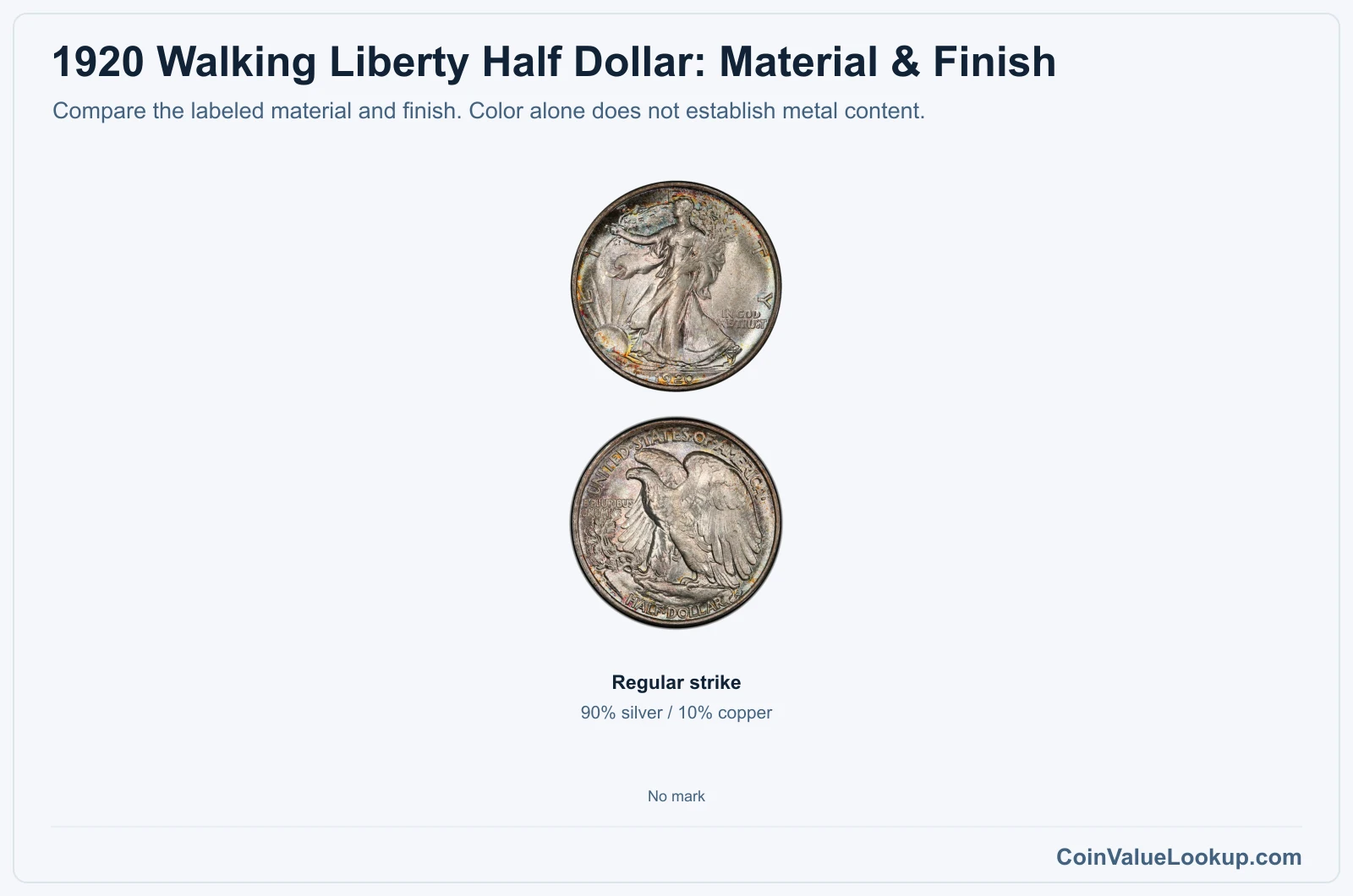
All three 1920 branches share the same composition: 90% silver and 10% copper at a nominal weight of 12.50 grams. Toning or color variation does not change the underlying alloy.
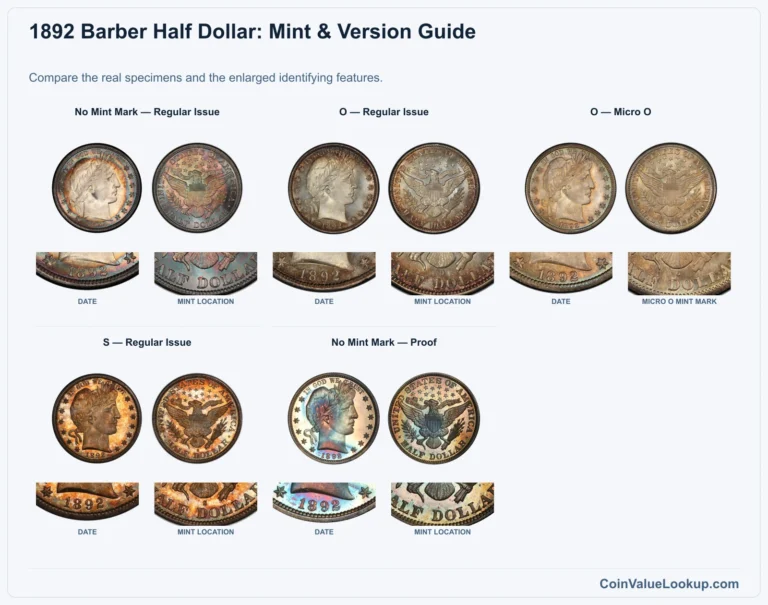
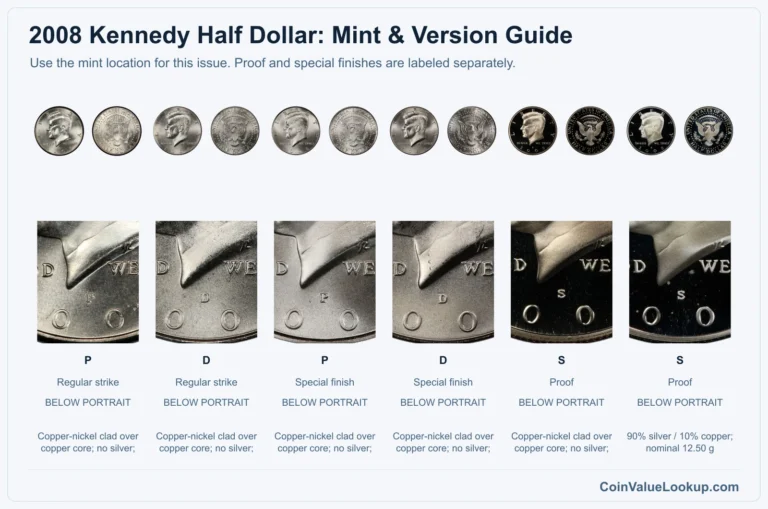
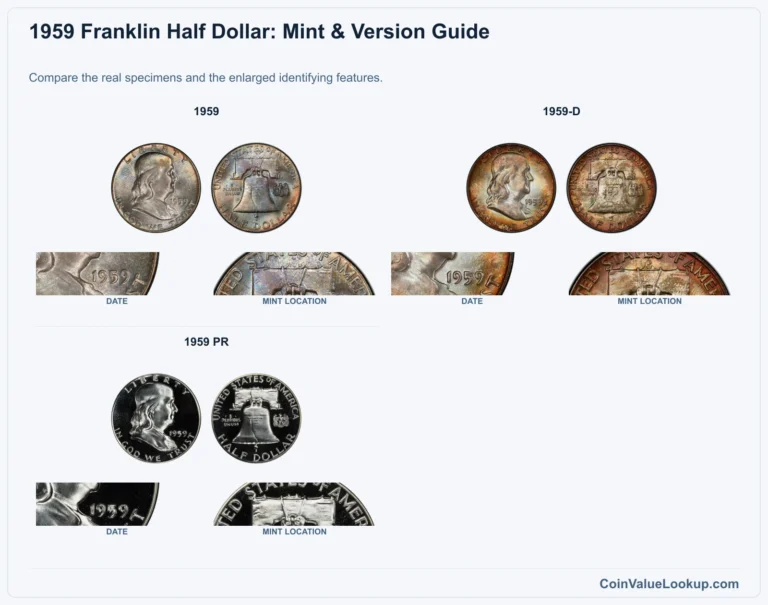
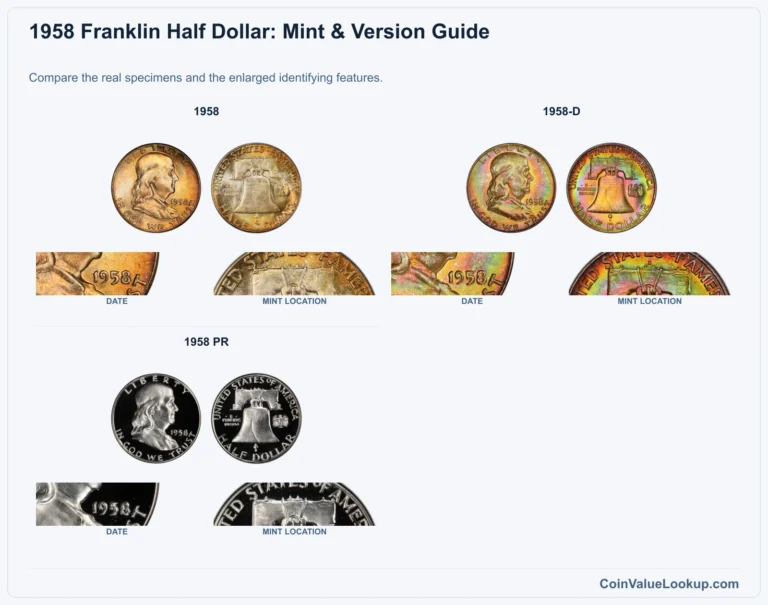
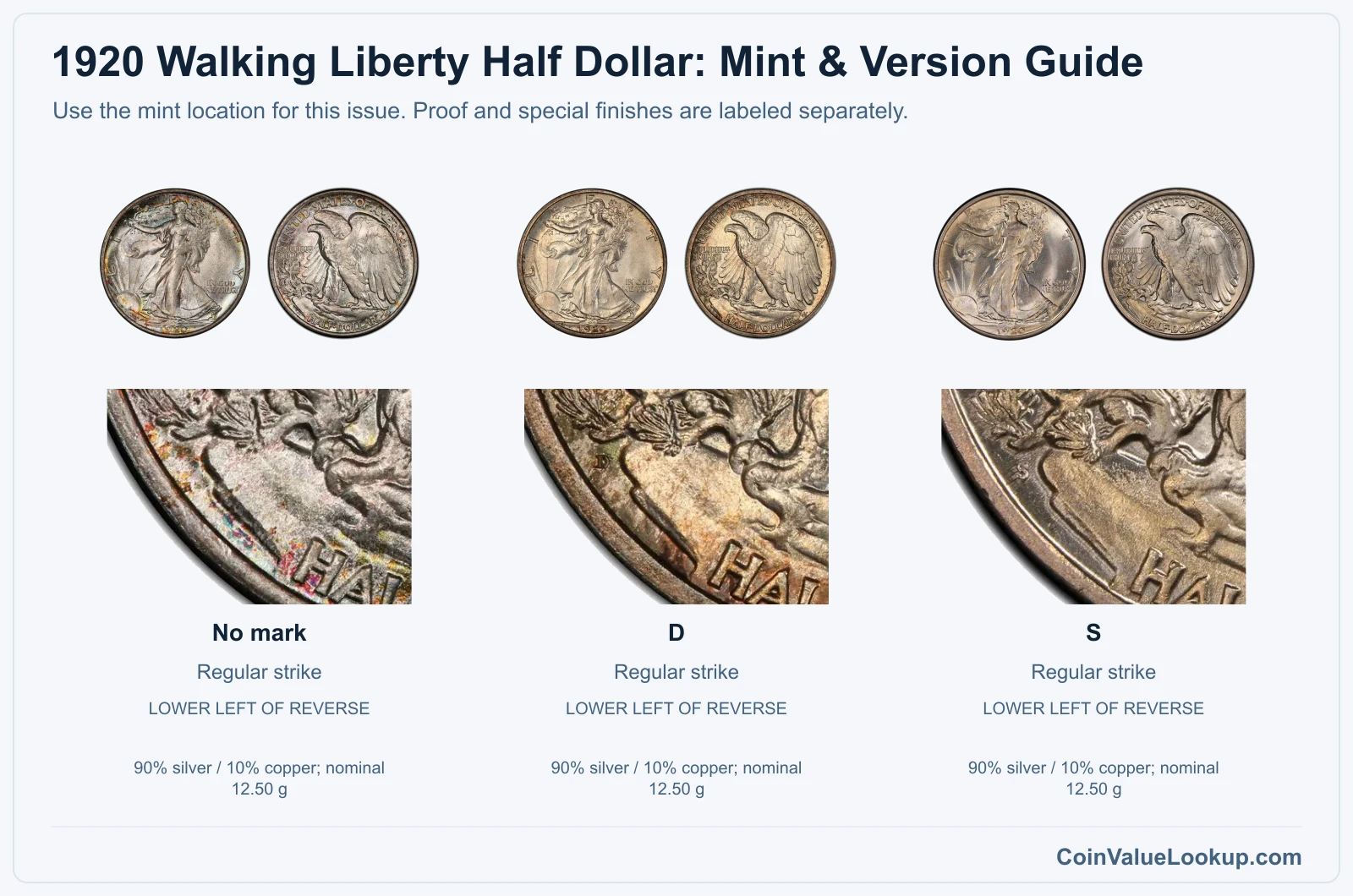
For 1920-dated coins the mintmark sits on the reverse, at the lower left near the rim, roughly at the 8 o'clock position. A "D" means Denver, an "S" means San Francisco, and no mark at all means Philadelphia.
Earlier Walking Liberty dates (1916 and the first part of 1917) placed D and S mintmarks on the obverse below IN GOD WE TRUST, so do not confuse those locations with the 1920 layout.
This year was struck only as regular business issues at all three mints. No proof manufacture has been reported for 1920.
If someone offers you a "proof 1920 Walker," proceed with extreme caution.
Weak central detail is common on Walking Liberty half dollars, especially the hand holding the branches, Liberty's head and the eagle's breast feathers. A soft strike is not the same thing as wear.
Evaluate luster and actual surface smoothing before deciding a coin is circulated.
Step 2: Check Your 1920 Walking Liberty Half Dollar Grade
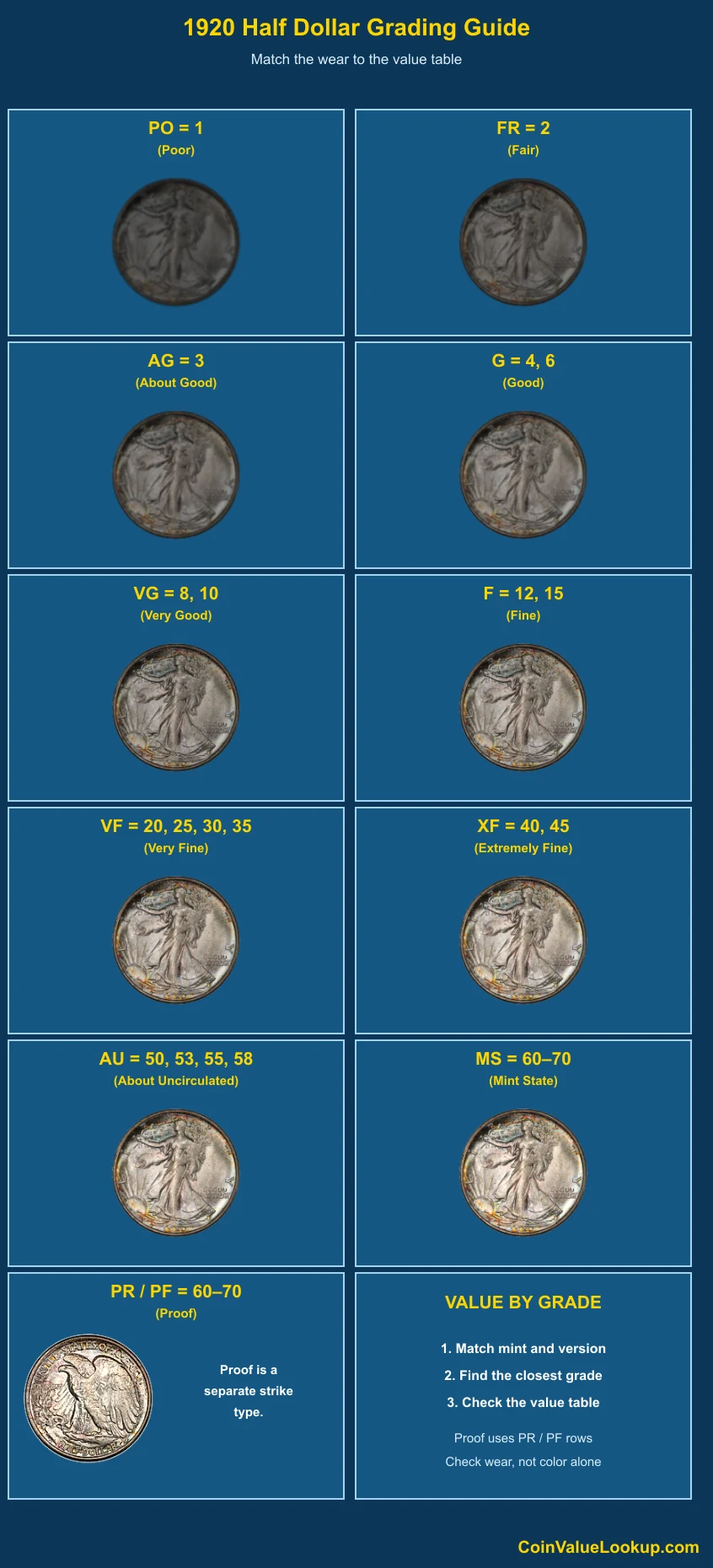
Start with Liberty's head, the left hand holding the olive branches, and the area around the knee and skirt lines. These are the first spots to show genuine wear, appearing as smooth, luster-free patches rather than merely soft details.
Flip the coin over and check the eagle's breast, legs and the tops of the wing feathers. Matching wear on both sides is normal circulation loss; mismatched softness often points to a strike issue on one side only.
Use the comparison image to gauge where your coin sits. A Good-4 example will show Liberty as a full outline with little interior detail, while a Mint State coin retains complete luster across both sides even if the central design is a bit mushy from the strike.
The trap with Walkers is calling a weakly struck mint-state coin "AU" because the head or hand looks flat. If the surrounding fields still carry unbroken cartwheel luster and there is no actual friction on the high points, the coin may grade higher than it first appears.
Original surfaces matter too: a cleaned or harshly dipped coin will not command the same value as one with honest, untouched toning.
Step 3: Check 1920 Walking Liberty Half Dollar Value by Mint and Version
1920 Walking Liberty Half Dollar
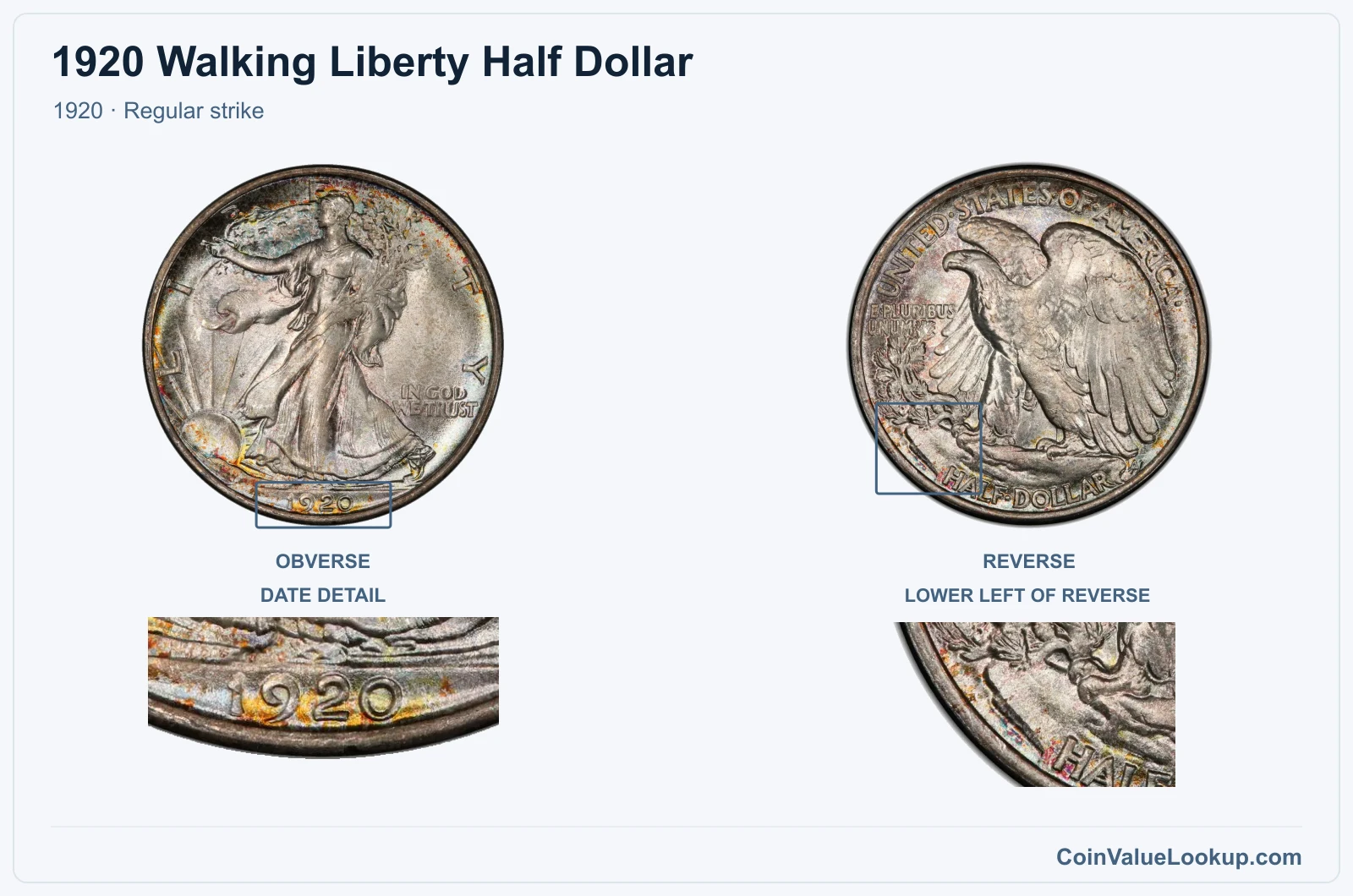
The 1920 Philadelphia half dollar carries no mintmark. Look at the reverse lower left to confirm the spot is blank.
In well-circulated Good-4 condition, a USA Coin Book guide estimate places this coin at about $43.00. Jump to an uncirculated MS63 grade and the same guide lists roughly $878.00.
Those are guide anchors, not offers to buy. A cleaned or damaged coin will trade well below those figures even if the technical grade matches.
Strong original luster and minimal contact marks are what separate a coin that meets the guide from one that disappoints.
Coin Value Lookup is a good starting point if you are trying to look up value guides for other dates and denominations in the Walking Liberty series or beyond.
Range Grade
Price Auction Records Appraisal PO PO 1
—
Coin Identifier FR FR 2
—
Coin Identifier AG AG 3
—
Coin Identifier G G 4
—
Coin Identifier
G 6
—
Coin Identifier VG VG 8
—
Coin Identifier
VG 10
—
Coin Identifier F F 12
Coin Identifier
F 15
Coin Identifier VF VF 20
Coin Identifier
VF 25
Coin Identifier
VF 30
Coin Identifier
VF 35
Coin Identifier XF XF 40
Coin Identifier
XF 45
Coin Identifier AU AU 50
Coin Identifier
AU 53
Coin Identifier
AU 55
Coin Identifier
AU 58
Coin Identifier MS MS 60
Coin Identifier
MS 61
Coin Identifier
MS 62
Coin Identifier
MS 63
Coin Identifier
MS 64
Coin Identifier
MS 65
Coin Identifier
MS 66
Coin Identifier
MS 67
—
—
—
MS 68
—
—
—
MS 69
—
—
—
MS 70
—
—
—
1920 Walking Liberty Half Dollar — D
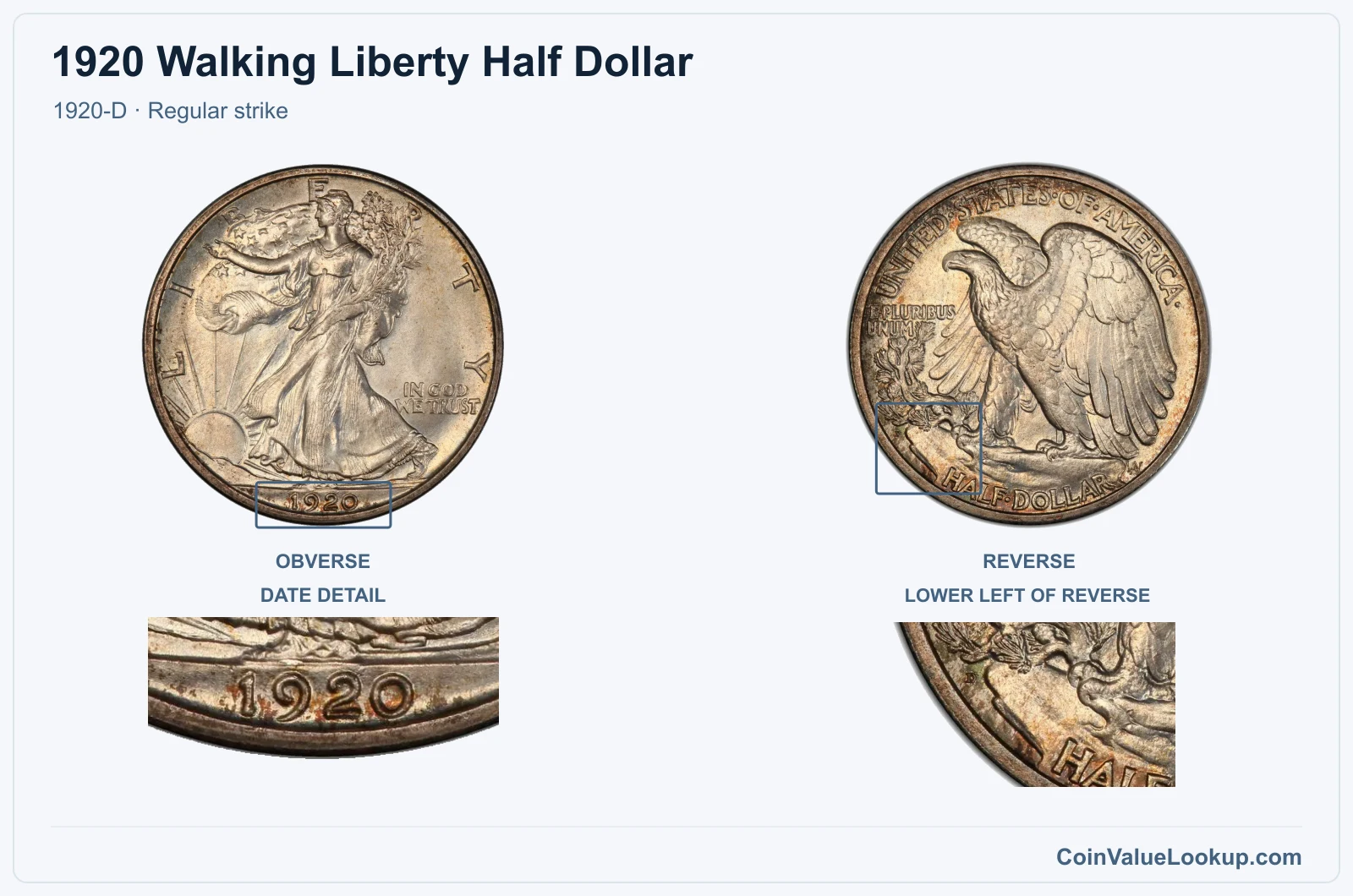
Denver struck the 1920-D, marked with a small "D" on the reverse lower left. This is the branch that climbs most dramatically in value as condition improves.
A USA Coin Book guide estimate puts Good-4 at about $48.00, only a few dollars above the Philadelphia coin. At MS63, though, the estimate jumps to $6,849.00.
That enormous spread tells you something: very few 1920-D halves survived without significant wear. Finding one with full luster and clean surfaces is genuinely difficult.
Silver content supports a floor price in any grade, but collectors pursuing an uncirculated Denver example face stiff competition and correspondingly high asking prices. As always, cleaned or damaged coins are not equivalent to problem-free originals at the same technical grade.
Range Grade
Price Auction Records Appraisal PO PO 1
—
Coin Identifier FR FR 2
—
Coin Identifier AG AG 3
—
Coin Identifier G G 4
—
Coin Identifier
G 6
Coin Identifier VG VG 8
Coin Identifier
VG 10
Coin Identifier F F 12
Coin Identifier
F 15
Coin Identifier VF VF 20
Coin Identifier
VF 25
Coin Identifier
VF 30
Coin Identifier
VF 35
Coin Identifier XF XF 40
Coin Identifier
XF 45
Coin Identifier AU AU 50
Coin Identifier
AU 53
Coin Identifier
AU 55
Coin Identifier
AU 58
Coin Identifier MS MS 60
—
Coin Identifier
MS 61
Coin Identifier
MS 62
Coin Identifier
MS 63
Coin Identifier
MS 64
Coin Identifier
MS 65
Coin Identifier
MS 66
Coin Identifier
MS 67
—
—
—
MS 68
—
—
—
MS 69
—
—
—
MS 70
—
—
—
1920 Walking Liberty Half Dollar — S
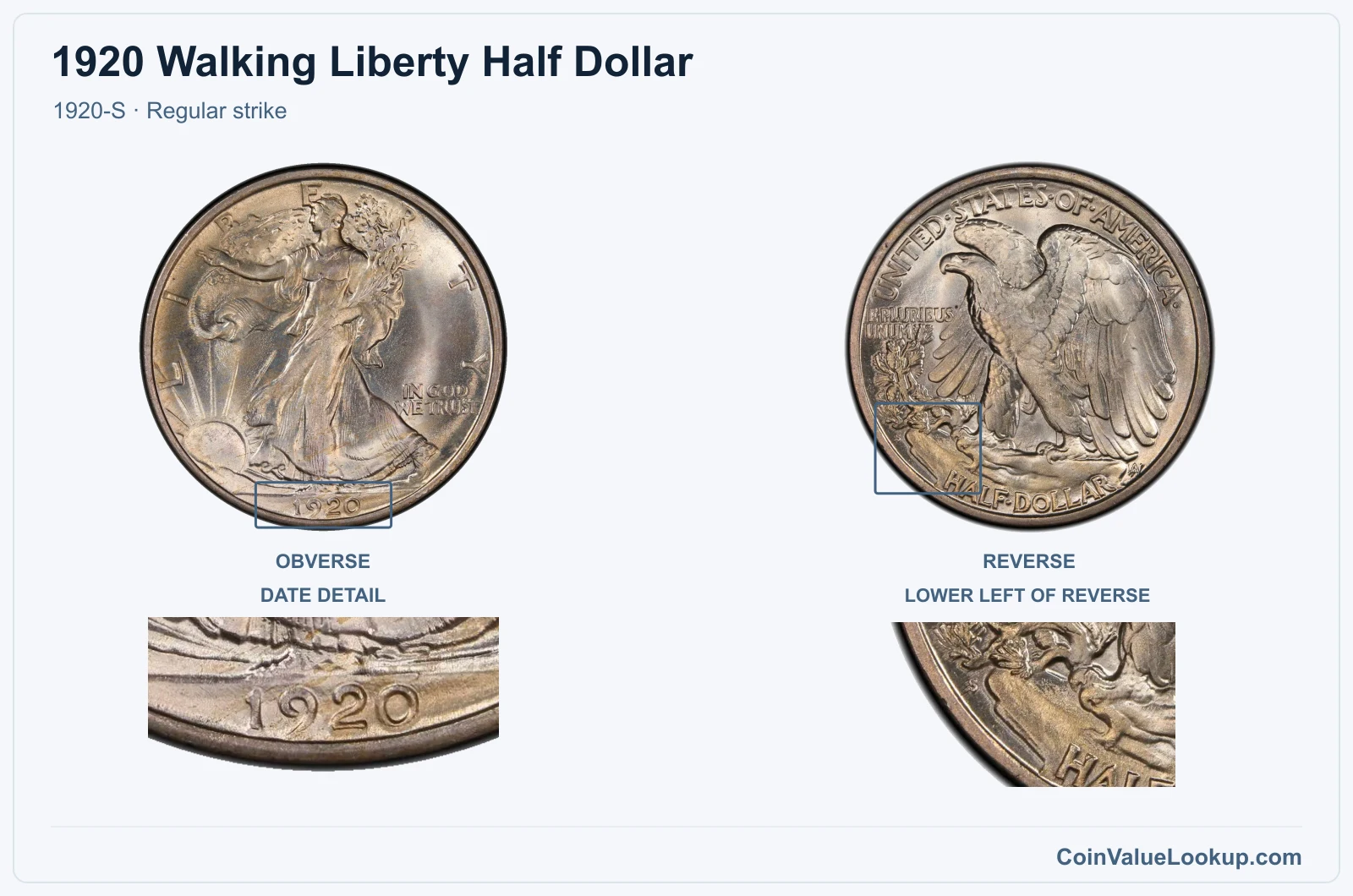
The San Francisco issue carries an "S" mintmark at the reverse lower left. A USA Coin Book guide estimate for Good-4 is about $48.00, matching the Denver coin in lower grades.
At MS63 the estimate rises to $4,089.00, which is substantial though less than the Denver branch.
Like its Denver counterpart, the 1920-S is frequently encountered with soft strikes on Liberty's head and hand. Do not mistake that weakness for wear.
Check the luster in the surrounding fields first. If the fields are still bright and undisturbed, the coin may be uncirculated despite the mushy central details.
Original surfaces and the absence of cleaning are critical to realizing guide-level values.
Range Grade
Price Auction Records Appraisal PO PO 1
—
Coin Identifier FR FR 2
—
Coin Identifier AG AG 3
—
Coin Identifier G G 4
Coin Identifier
G 6
Coin Identifier VG VG 8
Coin Identifier
VG 10
Coin Identifier F F 12
Coin Identifier
F 15
Coin Identifier VF VF 20
Coin Identifier
VF 25
Coin Identifier
VF 30
Coin Identifier
VF 35
Coin Identifier XF XF 40
Coin Identifier
XF 45
Coin Identifier AU AU 50
Coin Identifier
AU 53
Coin Identifier
AU 55
Coin Identifier
AU 58
Coin Identifier MS MS 60
—
Coin Identifier
MS 61
Coin Identifier
MS 62
Coin Identifier
MS 63
Coin Identifier
MS 64
Coin Identifier
MS 65
Coin Identifier
MS 66
Coin Identifier
MS 67
—
—
—
MS 68
—
—
—
MS 69
—
—
—
MS 70
—
—
—
1920 Walking Liberty Half Dollar Error List
1. 1920 Walking Liberty Half Dollar — Doubled Die Obverse
Doubled die obverse errors have been reported on 1920 Walking Liberty half dollars. The diagnostic to watch for is consistent separation or notching on obverse lettering or design elements.
Under magnification, compare your coin's letters and Liberty's features against a normal example photographed in matching light.
The key distinction is between a true doubled die and ordinary machine doubling. A doubled die shows a clear secondary image with distinct, raised separation.
Machine doubling tends to produce a flat shelf of displaced metal that lacks the sharp definition of a genuine hub doubling event. Worn die contours or odd reflections can also mimic doubling to the untrained eye.
No specific price range is available for this error. Value depends on the visibility of the doubling, the overall condition of the coin and which particular die is involved.
Professional authentication is recommended before paying a premium.
2. 1920 Walking Liberty Half Dollar — Doubled Die Reverse
Doubled die reverse errors have also been reported for the 1920 half dollar. On the reverse, examine the legends, the eagle's feathers and the rock details for signs of a secondary, slightly displaced impression.
A loupe of at least 5x helps.
True hub doubling on the reverse will show consistent directional separation across multiple elements, not just one isolated letter. Machine doubling and random post-strike damage are the most common lookalikes.
Machine doubling typically leaves a flat, shelf-like distortion rather than a rounded secondary image, and it can appear on just one side of a letter.
No adopted price range exists for this error on 1920 halves. The coin's condition, the strength of the doubling and market demand for the specific die all influence what a collector would pay.
Have any suspected doubled die authenticated by a reputable third-party grading service before assuming premium value.
3. 1920 Walking Liberty Half Dollar — Off-Center Strike
Off-center strikes have been reported on 1920 Walking Liberty half dollars. This error occurs when the planchet is not properly seated between the dies, producing a displaced design with an unstruck crescent along part of the rim.
The most desirable off-center errors retain the full date, since a missing date makes identification difficult and reduces collector interest. Look for a clean, crescentic blank area and a design that is shifted uniformly in one direction.
Do not confuse an off-center strike with a clipped planchet, a one-sided misalignment or post-mint damage such as a coin that was flattened by machinery after leaving the press. Genuine off-center pieces show the entire design shifted, not just one edge missing.
No specific price data is available. Value depends on the percentage of off-center displacement, whether the date is visible and the coin's overall condition.
4. 1920 Walking Liberty Half Dollar — Clipped Planchet
Clipped planchet errors have been reported for 1920 half dollars. A clip occurs when the blank is punched from strip metal that overlaps a previously punched hole, leaving a curved missing section.
Straight clips and ragged clips from strip-end irregularities are also possible.
To verify a genuine clip, look for a characteristic weakness in the design and rim directly opposite the missing area, sometimes called the Blakesley effect. The edge at the clip itself should show natural metal flow rather than a sharp, filed cut.
Lookalikes include coins that have been deliberately filed, notched or corroded along one edge. Post-mint damage usually produces sharp, unnatural edges and lacks the opposite-side weakness of a genuine planchet clip.
No price range is available for this error on 1920 Walkers. The clip's size, location and the coin's overall grade and surface quality all factor into collector interest.
5. 1920 Walking Liberty Half Dollar — Double / Multiple Strike
Double or multiple strike errors have been reported on 1920 Walking Liberty half dollars. A double strike means the coin received two (or more) impressions from the dies, with the planchet shifting or rotating between strikes.
The result is two distinct, overlapping design images.
Look for clearly separated impressions where you can trace two outlines of Liberty or two sets of lettering at different angles or positions. The relationship between the strikes, meaning how far apart and at what rotation, is part of what defines the error and affects its appeal.
Do not confuse a double strike with a doubled die, which is a single impression from a defective die. Also watch for post-mint alterations where someone has pressed a coin against another object to create a false secondary image.
No adopted price is available. Value depends on the drama of the displacement, the coin's grade and the completeness of both impressions.