1924 Wheat Penny Coin Value: How Much Is It Worth?
A 1924 Wheat Penny can range from roughly $0.30 in well-worn Good-4 condition up to around $721 at the MS63 grade level, depending on which mint produced it. Those figures span the three mint branches — Philadelphia, Denver and San Francisco — and do not cover major varieties or mint errors, which are valued separately.
Original surfaces, color and the degree of wear all affect what a particular coin will bring.
Fast Way to Identify Your 1924 Wheat Penny
The quickest way to start figuring out what you have is to upload clear photos of both the front and back of your coin. That gives enough detail for a preliminary identification of the mint, general condition and any obvious variety features.
Good lighting at a slight angle helps show wear and surface details that flat overhead shots can hide.
1924 Wheat Penny Value
Upload both sides of your 1924 Wheat Penny.
Front Obverse
Upload photo
Back Reverse
Upload photo
Which 1924 Wheat Penny Versions Are Worth Money?
- The 1924-D is the key-date branch — even a well-worn Good-4 example lists around $38 in guide estimates, climbing to roughly $721 at MS63.
- The 1924-S commands a solid premium over Philadelphia, with guide values near $2.50 in Good-4 and approximately $438 at MS63.
- Collectible mint errors such as doubled dies, off-center strikes or repunched mintmarks on any 1924 branch can carry additional value based on authenticated identity and severity.
Step 1: Identify Your 1924 Wheat Penny Mint Mark and Version
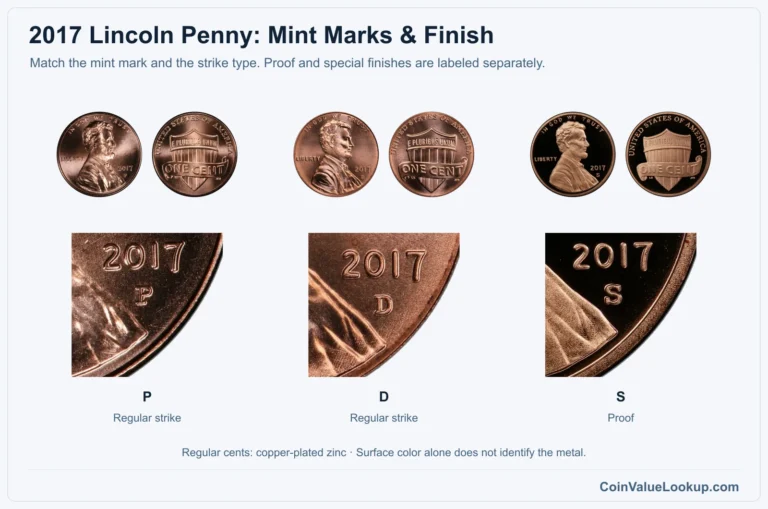
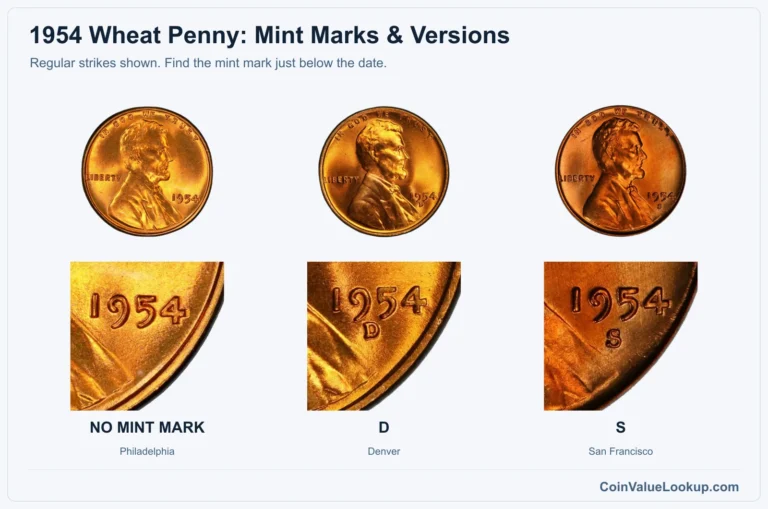
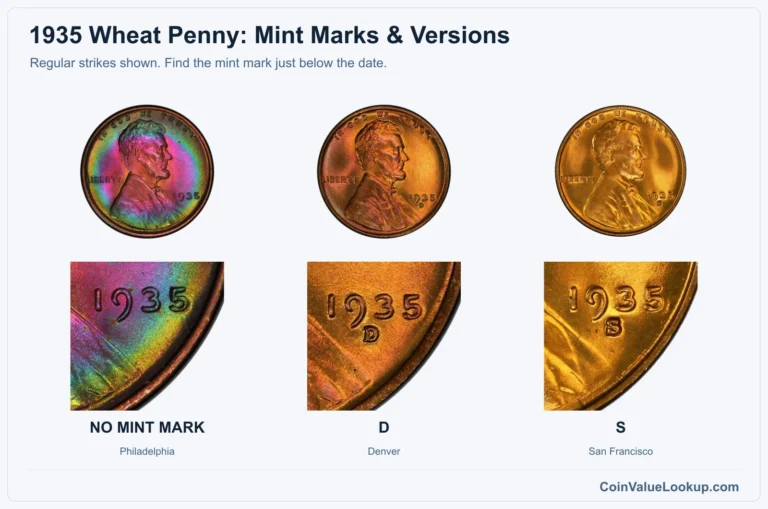
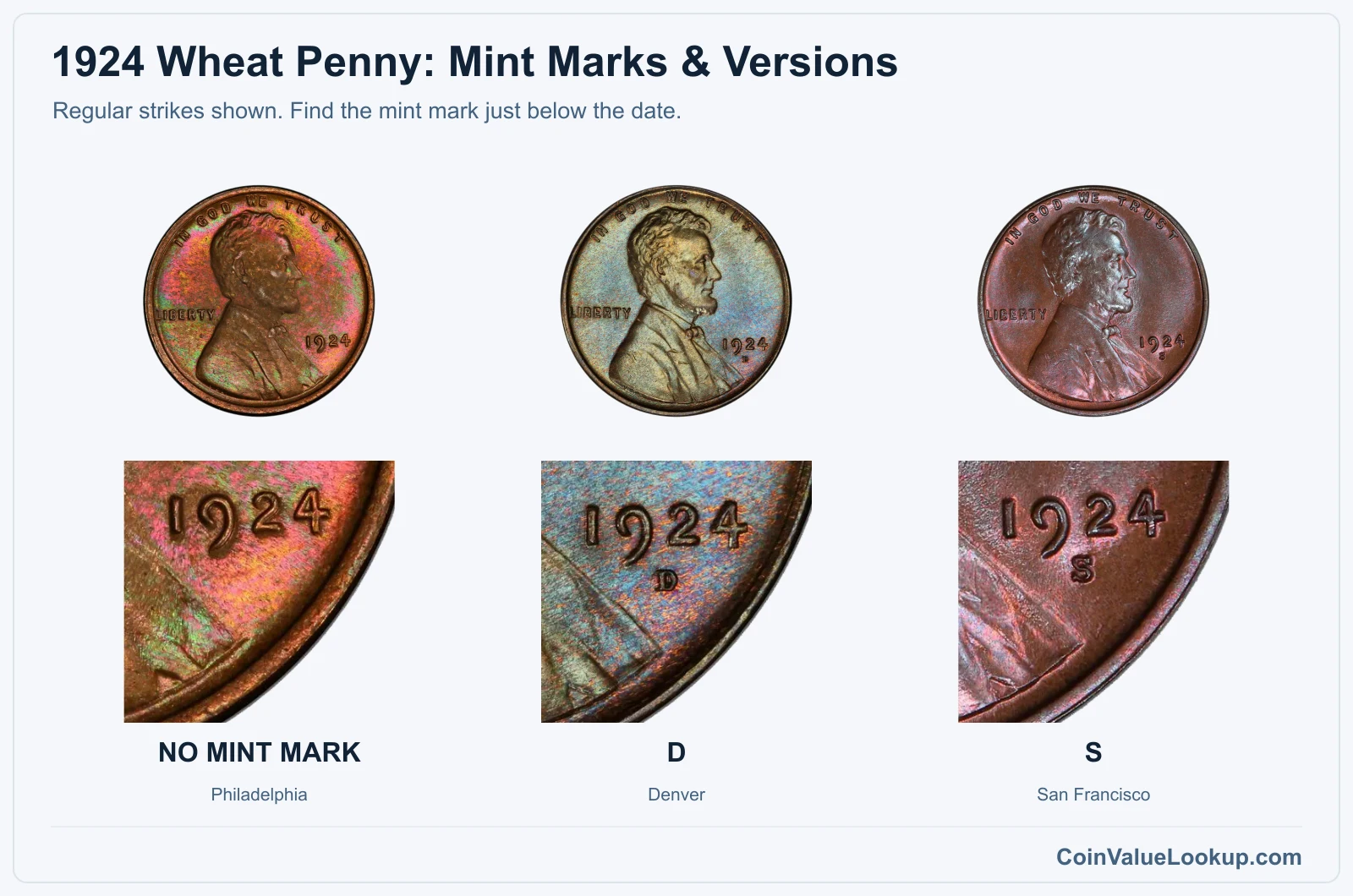
Flip the coin over to the obverse and look just below the date on Lincoln's right side. If there is no small letter there, you have a Philadelphia strike.
A tiny "D" means Denver, and an "S" means San Francisco. All three mints struck this date.
Every 1924 cent is a standard Wheat Reverse Lincoln cent — Lincoln's bust on the front, two wheat ears framing ONE CENT on the back. The composition is 95% copper with 5% tin and zinc, weighing about 3.11 grams with a plain edge.
No proof cents were manufactured this year, so every genuine 1924 penny is a business strike.
The Denver issue is the key date among the three branches, carrying a significant premium even in low grades. San Francisco pieces in sharp, original condition also deserve separate attention.
Treat each mint as its own coin when looking up values — a Philadelphia example and a Denver example are worlds apart in the market.
Step 2: Check Your 1924 Wheat Penny Grade
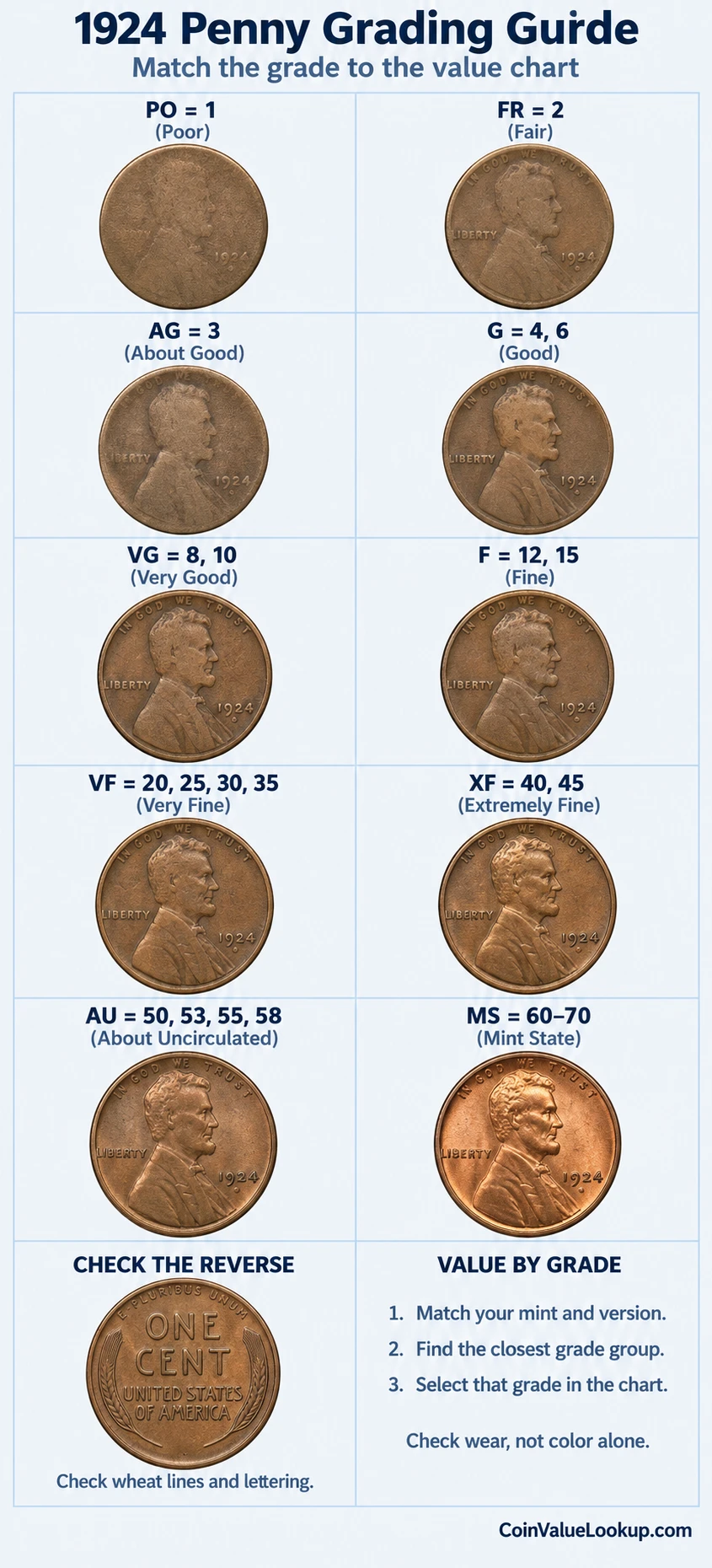
Start with Lincoln's cheekbone and jawline. Those are the highest points on the obverse and the first places to lose detail.
In lower grades like Good-4, the portrait is a smooth outline with almost no hair strands visible. As you move up through Fine and Very Fine, individual hair strands above the ear start to separate.
On the reverse, check the wheat stalks. In well-worn coins the parallel lines inside each ear merge together.
In About Uncirculated pieces, only the very tips of the stalks show a touch of friction. A true Mint State coin retains full original luster with no wear at all on the high points.
Weak strikes can fool you. A softly struck coin may look worn when it actually never circulated — the detail was simply never there.
Compare your coin to the reference image at matching angles before concluding it has wear.
Color matters separately from grade. Red, red-brown and brown describe the surface tone, not the level of preservation.
Cleaning and corrosion reduce collector appeal regardless of how sharp the details remain, so always note those surface conditions independently.
Step 3: Check 1924 Wheat Penny Value by Mint and Version
1924 Wheat Penny
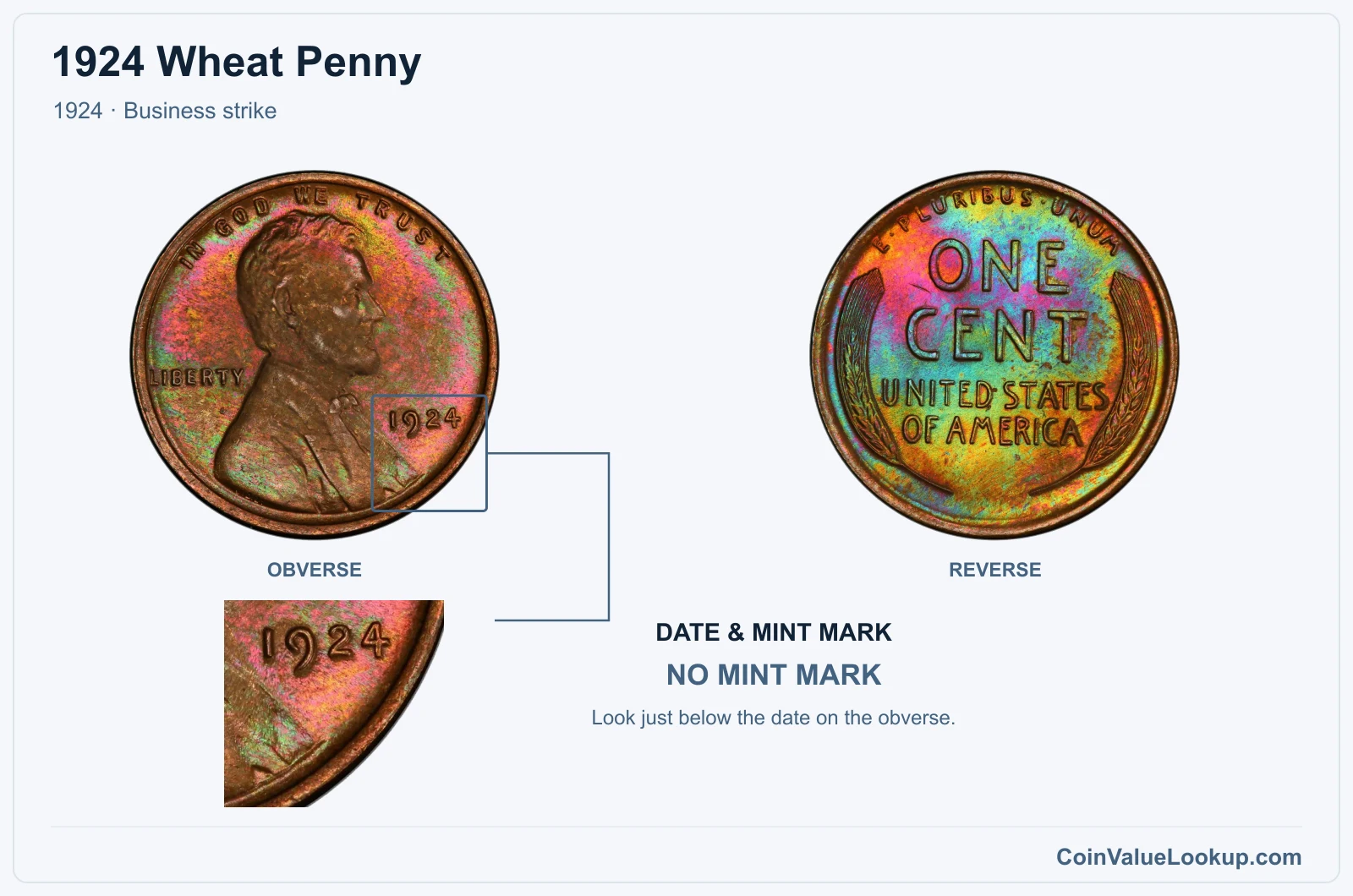
The 1924 Philadelphia cent has no mintmark below the date. It is the most common branch of the three mints this year, and circulated examples turn up regularly in rolls and collections.
Guide estimates place a Good-4 around $0.30 and an MS63 near $61.
Original brown surfaces with no cleaning are what most collectors look for in circulated grades. At the Mint State level, strong luster and minimal contact marks separate average coins from desirable ones.
Color is not specified in the guide figures cited here, so do not assume those numbers reflect a certified red designation.
Coin Value Lookup is a handy starting point if you want to compare this date against other Wheat Pennies in the series or check values across different years.
| Range | Grade | Price | Auction Records | Appraisal |
|---|---|---|---|---|
| PO | PO 1 | — | Coin Identifier | |
| FR | FR 2 | — | Coin Identifier | |
| AG | AG 3 | — | Coin Identifier | |
| G | G 4 | — | Coin Identifier | |
| G 6 | — | Coin Identifier | ||
| VG | VG 8 | — | Coin Identifier | |
| VG 10 | — | Coin Identifier | ||
| F | F 12 | — | Coin Identifier | |
| F 15 | — | Coin Identifier | ||
| VF | VF 20 | — | Coin Identifier | |
| VF 25 | — | Coin Identifier | ||
| VF 30 | — | Coin Identifier | ||
| VF 35 | — | Coin Identifier | ||
| XF | XF 40 | — | Coin Identifier | |
| XF 45 | — | Coin Identifier | ||
| AU | AU 50 | Coin Identifier | ||
| AU 53 | — | Coin Identifier | ||
| AU 55 | — | Coin Identifier | ||
| AU 58 | — | Coin Identifier | ||
| MS | MS 60 | — | Coin Identifier | |
| MS 61 | — | Coin Identifier | ||
| MS 62 | Coin Identifier | |||
| MS 63 | Coin Identifier | |||
| MS 64 | Coin Identifier | |||
| MS 65 | — | Coin Identifier | ||
| MS 66 | — | Coin Identifier | ||
| MS 67 | — | — | — | |
| MS 68 | — | — | — | |
| MS 69 | — | — | — | |
| MS 70 | — | — | — |
1924 Wheat Penny — D
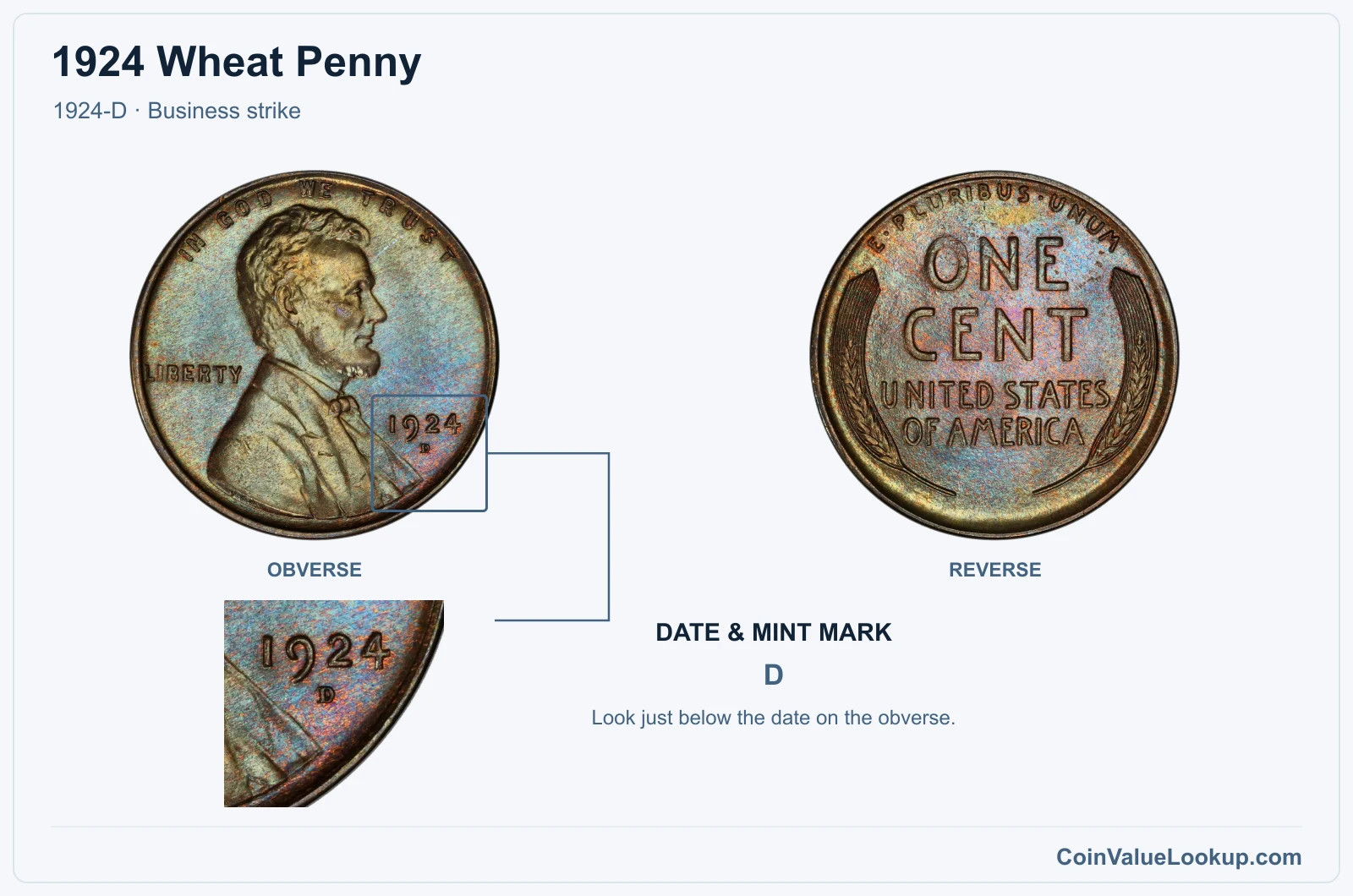
The 1924-D is the coin that makes people dig through jars. Denver struck far fewer cents this year, and the "D" mintmark below the date turns an ordinary-looking penny into a genuinely scarce piece.
Guide estimates start around $38 even in Good-4 and reach approximately $721 at MS63.
That kind of spread tells you something: most surviving examples are well worn, and anything above Very Fine gets expensive fast. Because of its value, the 1924-D attracts altered coins — particularly Philadelphia pieces with added mintmarks.
Examine the D carefully under magnification; it should sit naturally in the field, not perched on top of disturbed metal.
Original surfaces matter enormously here. A lightly circulated example with honest brown patina will outperform a cleaned or corroded coin that technically grades higher on detail alone.
If you think you have one, professional authentication is worth the fee.
| Range | Grade | Price | Auction Records | Appraisal |
|---|---|---|---|---|
| PO | PO 1 | — | Coin Identifier | |
| FR | FR 2 | — | Coin Identifier | |
| AG | AG 3 | — | Coin Identifier | |
| G | G 4 | — | Coin Identifier | |
| G 6 | — | Coin Identifier | ||
| VG | VG 8 | Coin Identifier | ||
| VG 10 | Coin Identifier | |||
| F | F 12 | Coin Identifier | ||
| F 15 | Coin Identifier | |||
| VF | VF 20 | Coin Identifier | ||
| VF 25 | Coin Identifier | |||
| VF 30 | Coin Identifier | |||
| VF 35 | Coin Identifier | |||
| XF | XF 40 | Coin Identifier | ||
| XF 45 | Coin Identifier | |||
| AU | AU 50 | Coin Identifier | ||
| AU 53 | Coin Identifier | |||
| AU 55 | Coin Identifier | |||
| AU 58 | Coin Identifier | |||
| MS | MS 60 | — | Coin Identifier | |
| MS 61 | Coin Identifier | |||
| MS 62 | Coin Identifier | |||
| MS 63 | Coin Identifier | |||
| MS 64 | Coin Identifier | |||
| MS 65 | Coin Identifier | |||
| MS 66 | Coin Identifier | |||
| MS 67 | — | — | — | |
| MS 68 | — | — | — | |
| MS 69 | — | — | — | |
| MS 70 | — | — | — |
1924 Wheat Penny — S
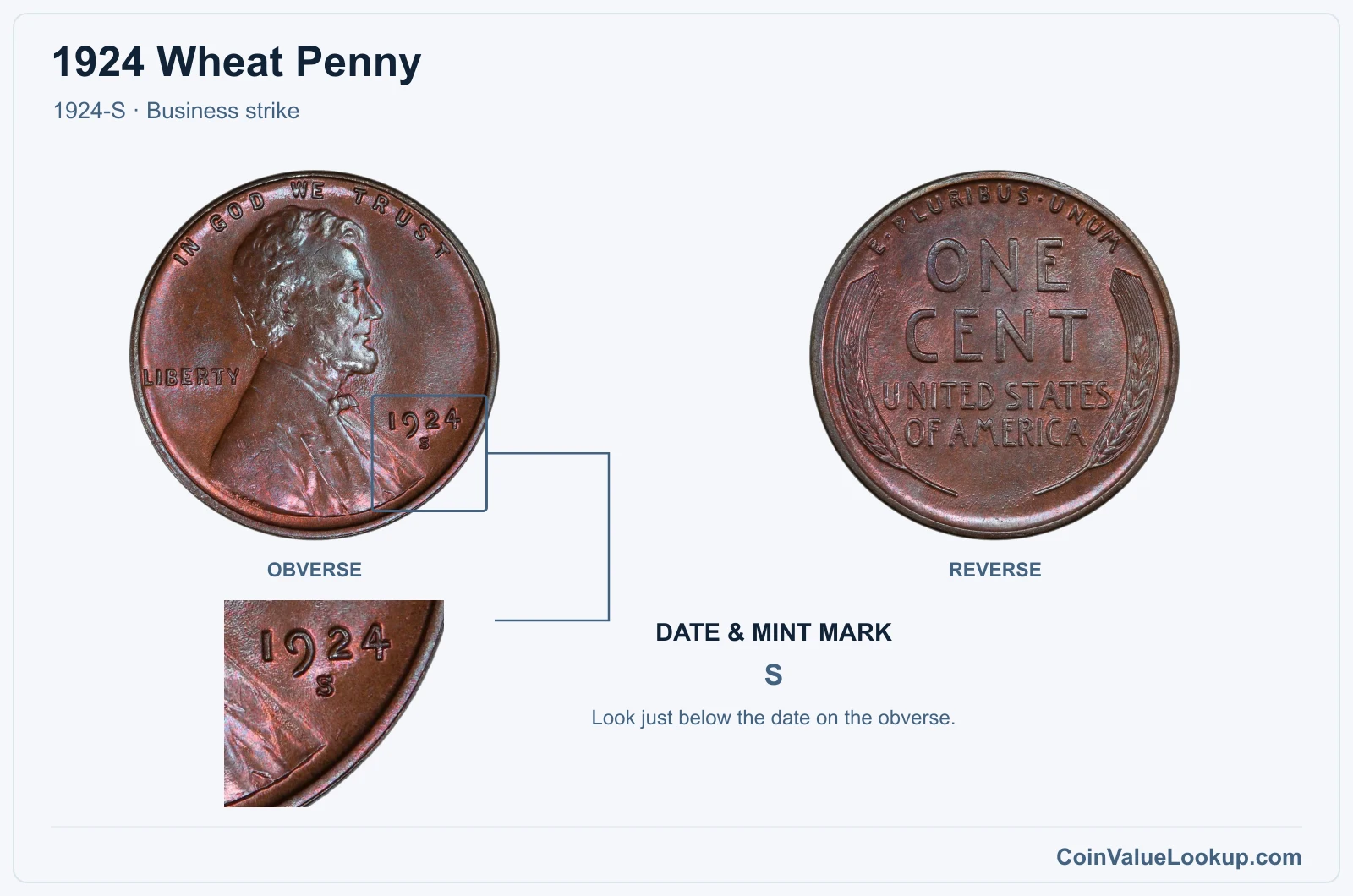
Look for the small "S" mintmark below the date. The 1924-S sits in a middle ground — not as common as the Philadelphia issue, not as scarce as the Denver.
Guide values run about $2.50 in Good-4 and climb to roughly $438 at MS63.
Sharp original examples with good eye appeal are genuinely hard to find. Many survivors show heavy wear or problems like corrosion from decades in circulation.
A clean, problem-free Fine or better example is worth careful inspection and fair pricing.
As with all three mints this year, the guide figures do not specify color grade. A certified red Mint State piece would likely trade above the MS63 anchor shown here, while a dull brown coin might trade below it.
Match the exact condition of your coin before drawing conclusions.
| Range | Grade | Price | Auction Records | Appraisal |
|---|---|---|---|---|
| PO | PO 1 | — | Coin Identifier | |
| FR | FR 2 | — | Coin Identifier | |
| AG | AG 3 | — | Coin Identifier | |
| G | G 4 | — | Coin Identifier | |
| G 6 | — | Coin Identifier | ||
| VG | VG 8 | — | Coin Identifier | |
| VG 10 | — | Coin Identifier | ||
| F | F 12 | — | Coin Identifier | |
| F 15 | — | Coin Identifier | ||
| VF | VF 20 | — | Coin Identifier | |
| VF 25 | Coin Identifier | |||
| VF 30 | Coin Identifier | |||
| VF 35 | Coin Identifier | |||
| XF | XF 40 | Coin Identifier | ||
| XF 45 | Coin Identifier | |||
| AU | AU 50 | Coin Identifier | ||
| AU 53 | Coin Identifier | |||
| AU 55 | Coin Identifier | |||
| AU 58 | Coin Identifier | |||
| MS | MS 60 | — | Coin Identifier | |
| MS 61 | Coin Identifier | |||
| MS 62 | Coin Identifier | |||
| MS 63 | Coin Identifier | |||
| MS 64 | Coin Identifier | |||
| MS 65 | Coin Identifier | |||
| MS 66 | — | Coin Identifier | ||
| MS 67 | — | — | — | |
| MS 68 | — | — | — | |
| MS 69 | — | — | — | |
| MS 70 | — | — | — |
1924 Wheat Penny Error List
1. 1924 Wheat Penny — Doubled Die Obverse
A Doubled Die Obverse on a 1924 Wheat cent shows consistent separation or notching in the obverse lettering or design elements — the date numerals, LIBERTY, or IN GOD WE TRUST are the usual places to check. The doubling will repeat in the same direction on every affected area because it originates from a misaligned hub impression during die making.
Compare your coin to a normal 1924 cent under the same lighting and magnification. True hub doubling produces a distinct second image with rounded, shelf-like edges.
Machine doubling — which is far more common and worth very little — tends to look flat and shelf-like in only one direction, often with a shiny appearance in the displaced area.
No specific price range is adopted for this category. Value depends on the authenticated identity of the die, severity of the doubling and the coin's overall condition.
Professional attribution is the practical path if you spot promising doubling.
2. 1924 Wheat Penny — Doubled Die Reverse
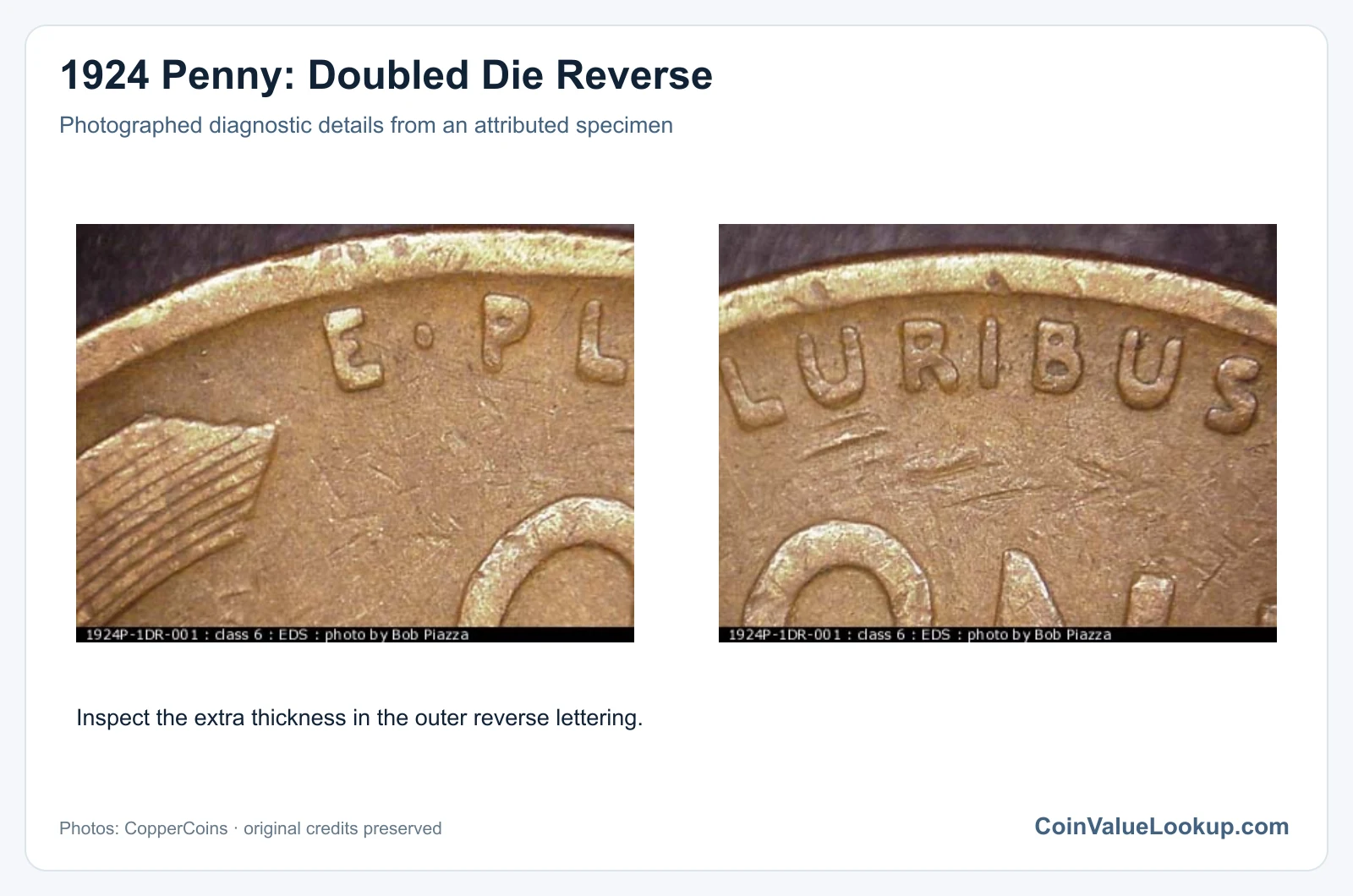
A Doubled Die Reverse affects the back of the coin — look at the wheat ear lines, ONE CENT, UNITED STATES OF AMERICA, or E PLURIBUS UNUM for consistent separation between a primary and secondary image. The doubling should appear in the same relative direction across multiple elements.
Hold the coin at an angle under a single directed light source. True die doubling keeps its appearance regardless of how you tilt the coin, while machine doubling or reflections often shift or disappear as the angle changes.
Random nicks and damage lack the systematic repetition of a genuine doubled die.
No reliable price range is available for this category from the current data. Each doubled die reverse is valued individually based on its authenticated die identity, the strength of the doubling, and overall coin grade.
Professional grading services can confirm the variety.
3. 1924 Wheat Penny — Repunched Mintmark
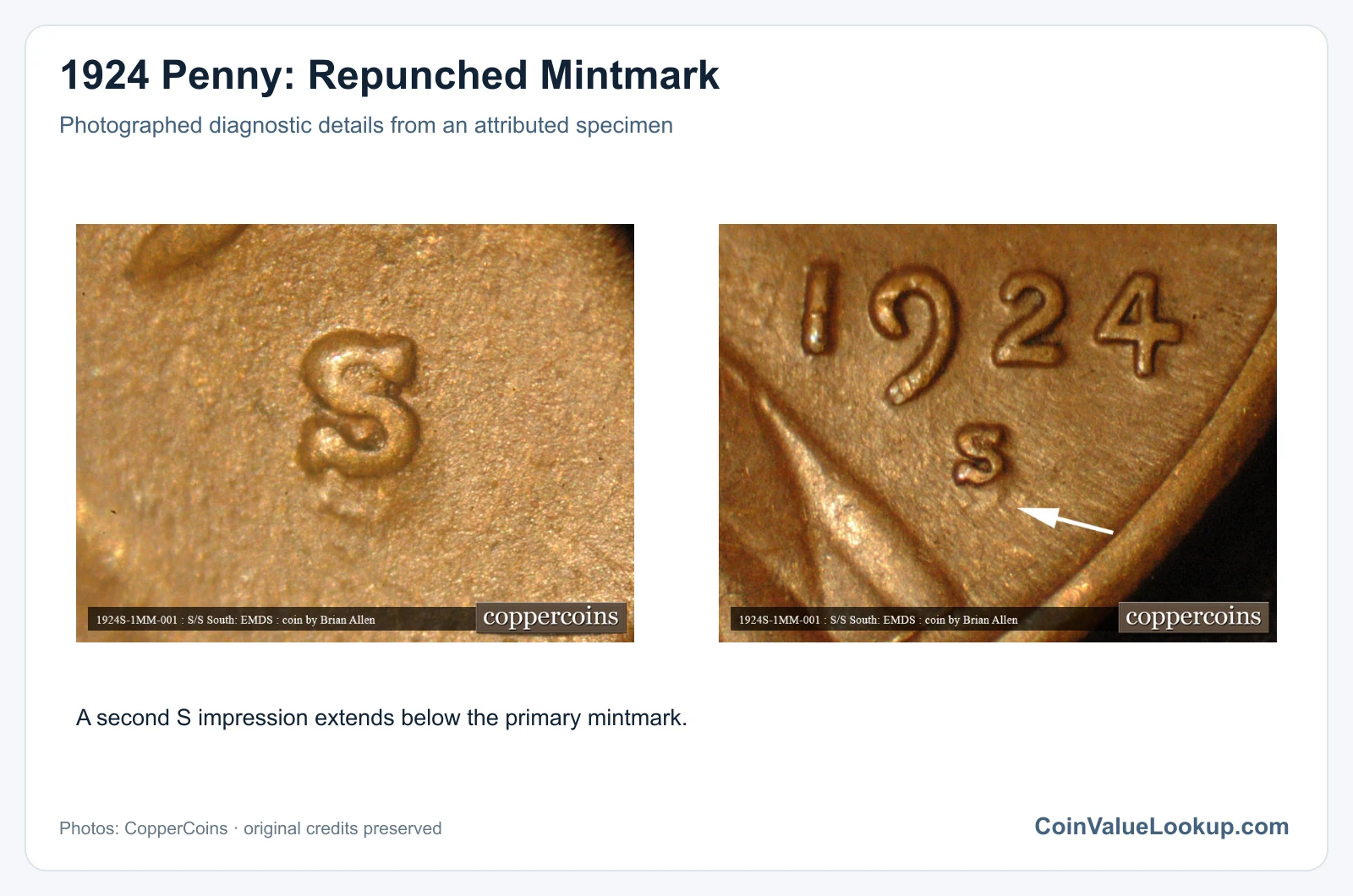
A Repunched Mintmark occurs when the mintmark punch was applied more than once in slightly different positions. On a 1924-D or 1924-S, you may see traces of a second D or S peeking out from behind or beside the primary letter.
Philadelphia coins have no mintmark and therefore cannot show this variety.
Use at least 5x magnification and compare your mintmark to a known normal example at the same scale. A repunched mintmark will show remnants of a complete or partial second letter — sometimes just a serif or curve — in a position that is distinct from the final punch.
Die chips, corrosion around the letter, or machine doubling can create similar visual noise but lack the clear outline of a second punch.
Pricing depends on the specific die, the clarity of the repunching and the coin's condition. No numerical range is adopted here; individual assessment by a grading service is the safest approach.
4. 1924 Wheat Penny — Off-Center Strike
An off-center strike happens when the planchet is not seated properly between the dies. The result is a design that is shifted to one side, leaving a blank crescent of unstruck metal on the opposite edge.
The degree of displacement matters — a 5% shift is minor, while 50% or more is dramatic.
The date must be visible and legible for the coin to be attributed to 1924 with confidence. A heavily off-center piece without a readable date might be interesting to look at, but it cannot be confirmed as this year's issue.
Do not confuse an off-center strike with a clipped planchet or one-sided die misalignment, both of which produce different shapes of missing design. Post-mint damage from being hit or squeezed can also flatten one side, but the blank crescent and metal flow of a genuine off-center are distinctive.
Value depends on the percentage of displacement, date visibility, mint and overall condition.
5. 1924 Wheat Penny — Die Break / Cud
A die break leaves a raised, irregular blob of metal on the coin's surface where a chunk of the die cracked away. When that break extends to the rim, it is called a cud — a flat, featureless raised area that interrupts both the design and the rim edge.
Look for a smooth, raised lump that follows the boundary of the missing die fragment. The design beneath it is gone, replaced by the void in the broken die.
Smaller interior die cracks appear as thin raised lines and are less dramatic but still collectible.
Do not confuse a cud with a rim dent or ding, which pushes metal inward rather than raising it. Corrosion pits and interior die chips also create raised features, but they lack the connection to the rim and the clean boundary of a true cud.
No specific price range is adopted. Value is driven by size, location, visual impact and the coin's condition.
6. 1924 Wheat Penny — Lamination / Split Planchet
A lamination error on a 1924 cent shows as peeling, flaking or separation within the copper alloy. The metal may lift in a thin flap, leave a void where material detached, or split the planchet into layers visible from the edge.
These flaws originate from impurities or improper mixing in the alloy before striking.
Photograph both faces and the edge together to document the full extent. A retained flap is generally more desirable than a missing flap, because it shows the error more completely.
Scraping damage, environmental corrosion or a deliberately shaved coin can mimic a lamination. The key difference is that a genuine lamination follows the metal's internal structure — the peeling or void looks natural and often has a slightly different color or texture where the layers separated.
Post-mint damage tends to show tool marks or sharp, unnatural edges. Pricing requires individual assessment based on size, location and overall coin condition.
7. 1924 Wheat Penny — Clipped Planchet
A clipped planchet means the blank was cut from the metal strip in a position that overlapped a previously punched hole or the strip's edge. The result is a coin missing a curved, straight or irregular section of metal.
Most clips are crescent-shaped.
Look at the missing area's edge texture. A genuine clip shows the same smooth, rounded edge as the rest of the coin, because the blank was clipped before striking.
You will often see weakness in the design directly opposite the clip — this is called the Blakesley effect, and it results from uneven metal flow during striking.
A filed notch, deliberate cut or corrosion-eaten edge will have sharp, rough or pitted surfaces that differ from the rest of the rim. Those post-mint alterations lack the Blakesley effect.
No numerical price range is adopted for this category; value depends on clip size, shape, date visibility and coin grade.
8. 1924 Wheat Penny — Defective Planchet
A defective planchet error covers a range of flaws in the metal blank itself — voids, irregular thickness, surface pitting or inclusions that were present before the coin was struck. The struck design will flow around or over these defects, confirming they existed in the blank rather than being added later.
Document both faces and the edge to show how the design interacts with the flaw. If the design detail is impressed into the surface around the defect, that is strong evidence it was struck that way.
Post-mint gouges, corrosion pits or deliberate metal removal typically cut through the design rather than being overlaid by it.
These errors vary widely in appearance and severity. A tiny void may be a minor curiosity, while a dramatically misshapen blank is more visually striking and desirable.
No specific price range is adopted here; each coin needs individual evaluation based on the nature of the defect, its size and the coin's overall condition.