1937 Washington Quarter Coin Value: How Much Is It Worth?
The 1937 Washington quarter is a 90% silver coin that still turns up in old collections and junk-silver bins. Circulated examples start around $16.43 in well-worn condition, while a gem uncirculated 1937-S from San Francisco can reach roughly $427 at the MS65 level according to guide estimates.
Proof strikes and the Philadelphia doubled-die obverse variety occupy their own pricing tiers well above ordinary issues.
Fast Way to Identify Your 1937 Washington Quarter
Want a quick read on your 1937 quarter? Upload clear photos of the front and back, and our identifier will give you a preliminary take on which mint and version you might have.
It cannot authenticate, certify a grade, or confirm error varieties, but it is a solid starting point before you dig deeper.
1937 Washington Quarter Value
Upload both sides of your 1937 Washington Quarter.
Front Obverse
Upload photo
Back Reverse
Upload photo
Which 1937 Washington Quarter Versions Are Worth Money?
- The 1937-S (San Francisco) is the scarcer regular-issue mint for this year, with guide estimates reaching about $427 at MS65 — noticeably higher than Philadelphia or Denver at the same grade.
- The 1937 Doubled Die Obverse from Philadelphia carries a dramatic premium, with guide values around $11,100 at MS65 and a documented Heritage auction result of $5,040 for an MS65 example in 2018.
- 1937 Proof quarters, struck only at Philadelphia with mirror fields, are estimated around $446 at PR65 — a separate category from business strikes regardless of how shiny a circulated coin may look.
- Even common 1937 and 1937-D quarters hold silver value and start around $16.43 in low grades, rising sharply in uncirculated condition.
Step 1: Identify Your 1937 Washington Quarter Mint Mark and Version
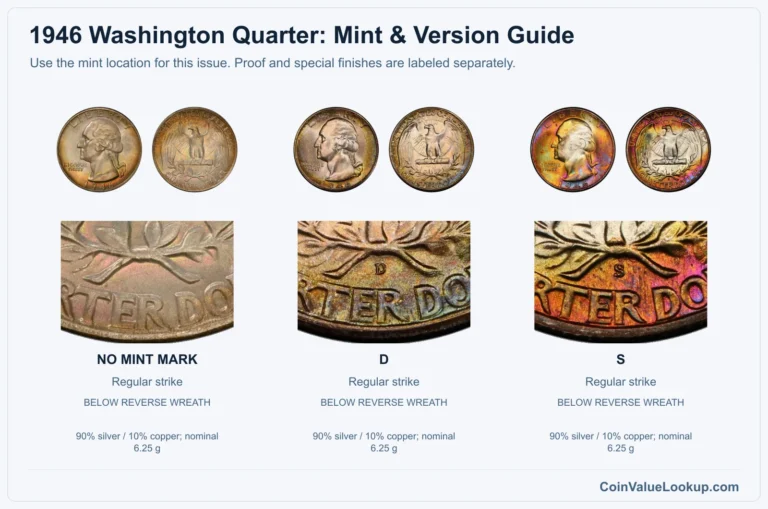
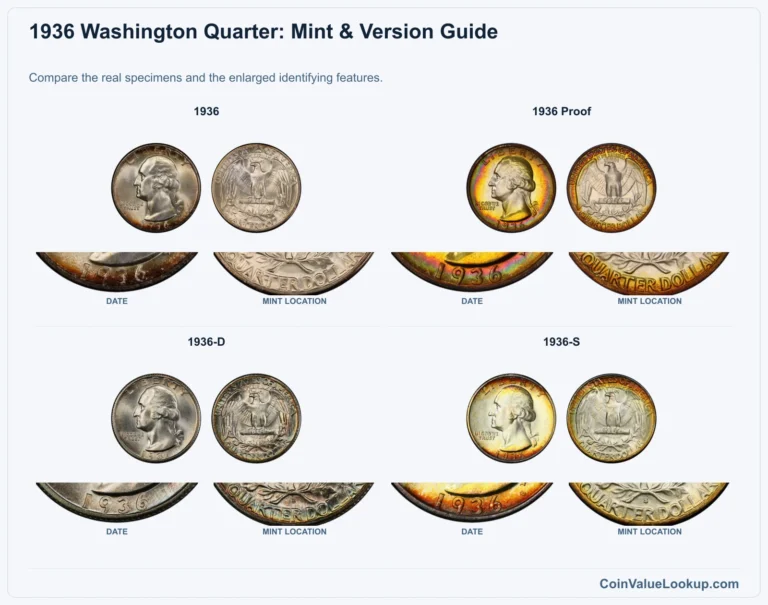
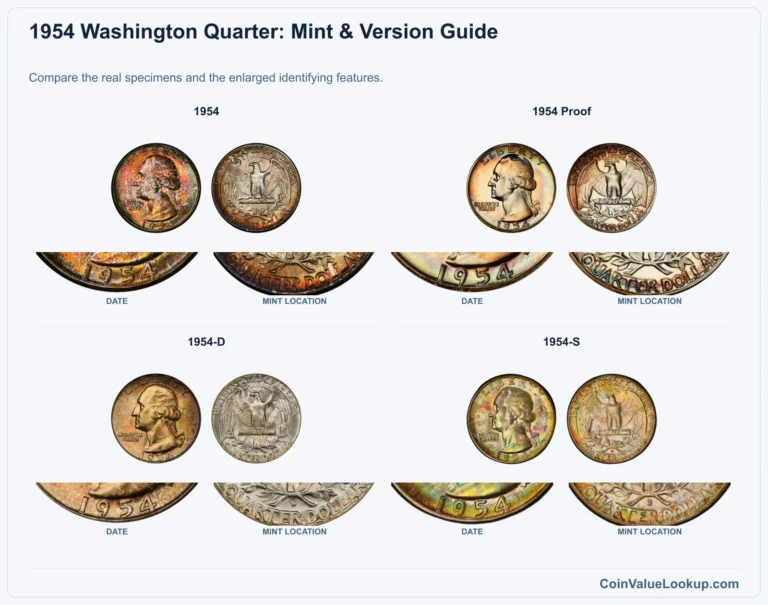
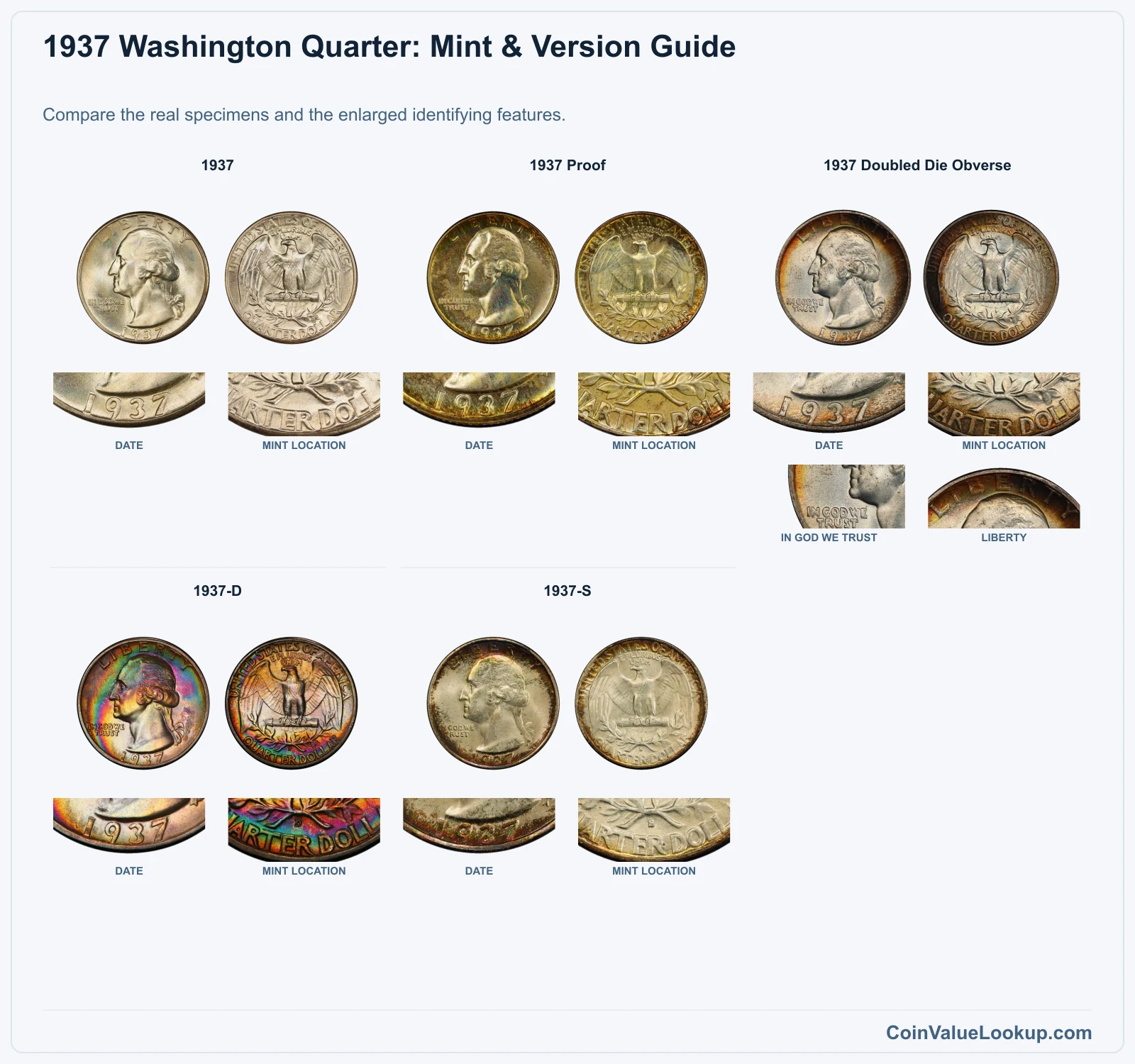
Flip the coin to the reverse and look directly below the wreath. A small "D" means Denver, an "S" means San Francisco, and a blank space means Philadelphia.
All three mints struck this date, but San Francisco produced fewer coins, making the 1937-S the scarcer ordinary issue.
Every genuine 1937 Washington quarter is struck in 90% silver and 10% copper, weighing about 6.25 grams with a diameter near 24.3 mm. The edge should be fully reeded with no visible copper stripe — a copper-nickel sandwich line would mean you have a later clad coin, not a 1937.
Philadelphia also struck proof versions this year, recognizable by their mirror-like fields and razor-sharp detail. A separate doubled-die obverse variety exists from the Philadelphia mint as well.
Ordinary toning, wear, or the absence of a mintmark are not errors — they are normal for this date.
Step 2: Check Your 1937 Washington Quarter Grade
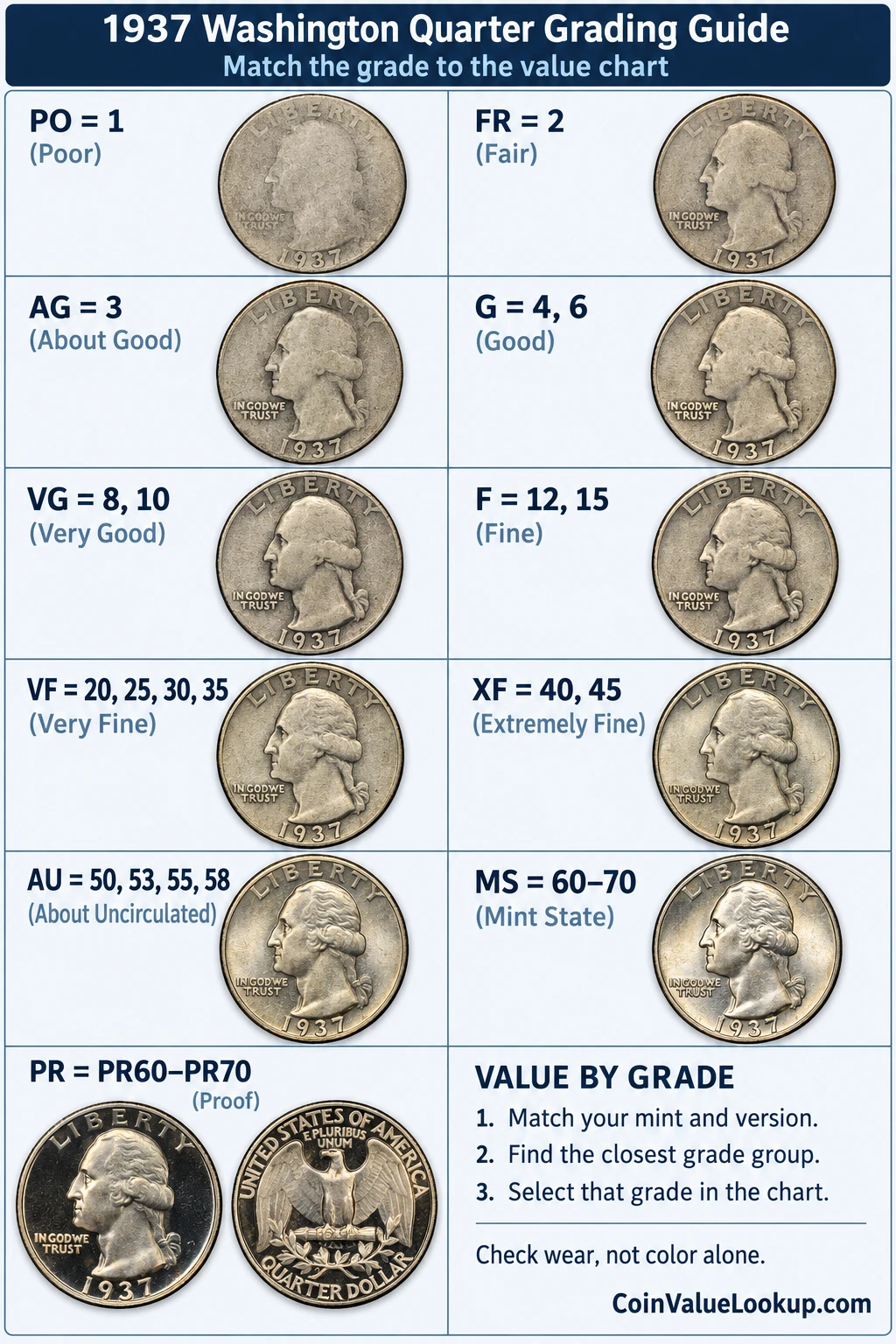
Start with the hair above Washington's ear. On a lightly worn coin, the highest waves flatten first and luster breaks there before anywhere else.
A coin with full, unbroken luster across the cheek, jaw, and hair waves is a candidate for Mint State grades.
On the reverse, check the eagle's breast feathers and wing tips. Weak detail there can signal either wear or a soft strike, and mixing those up is a common mistake.
A weakly struck coin may still have cartwheel luster in protected areas; a worn coin will not.
Use the comparison image to see where detail disappears at different grade levels. Also look for hairline scratches under light — cleaned coins lose their original skin and can look deceptively bright.
Shine alone does not equal a high grade.
Step 3: Check 1937 Washington Quarter Value by Mint and Version
1937 Washington Quarter
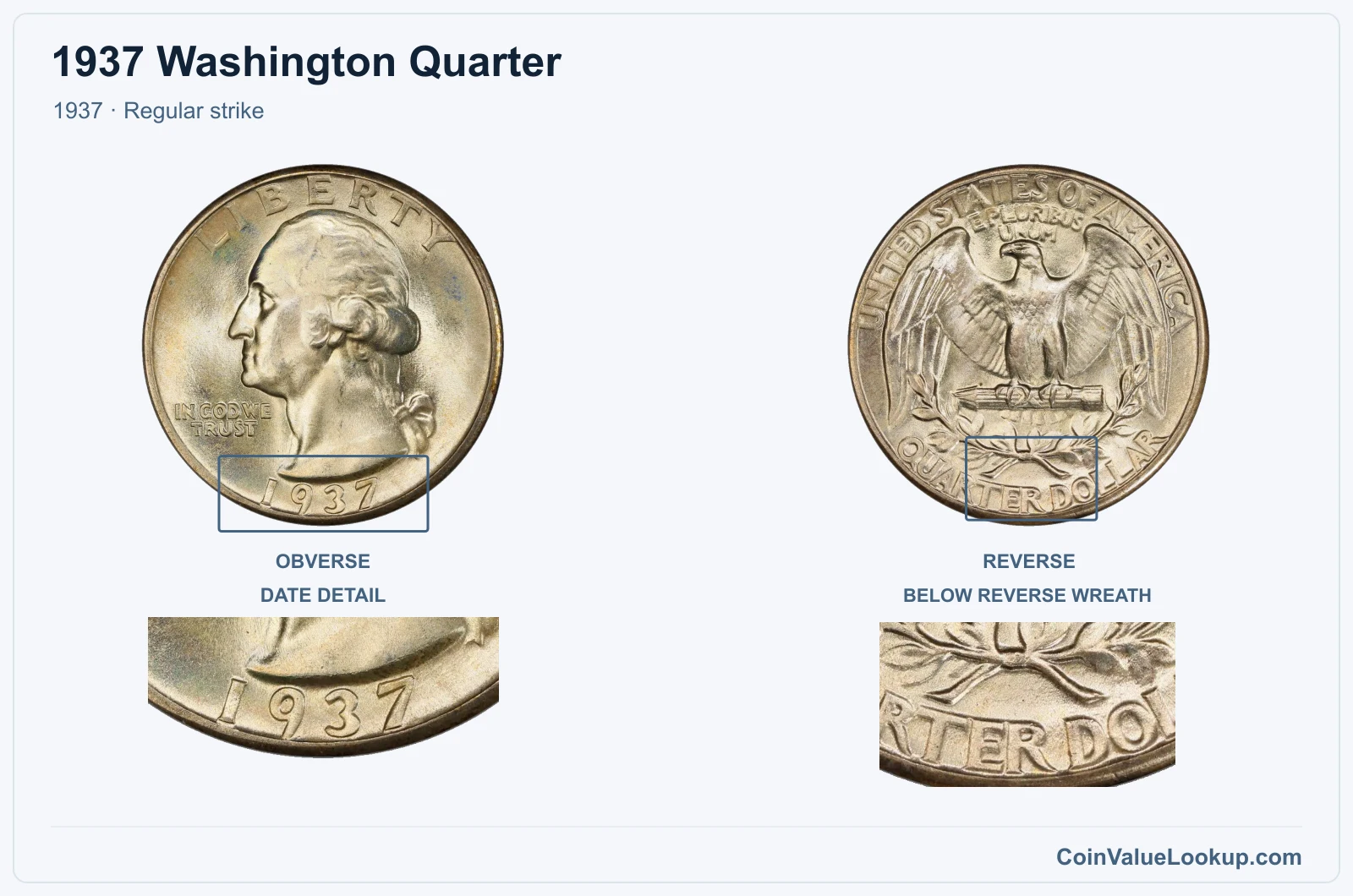
The 1937 Philadelphia quarter has no mintmark below the reverse wreath. It is the most available of the three regular-issue mints for this date.
Guide estimates place a well-worn Good-4 example around $16.43, climbing to roughly $46 at MS60 and about $126 at MS65.
Don't confuse this issue with the doubled-die obverse variety, which is also a Philadelphia coin but commands far higher premiums. A normal 1937 Philadelphia quarter is a solid, affordable piece of the silver Washington series.
| Range | Grade | Price | Auction Records | Appraisal |
|---|---|---|---|---|
| PO | PO 1 | — | Coin Identifier | |
| FR | FR 2 | — | Coin Identifier | |
| AG | AG 3 | — | Coin Identifier | |
| G | G 4 | — | Coin Identifier | |
| G 6 | — | Coin Identifier | ||
| VG | VG 8 | — | Coin Identifier | |
| VG 10 | — | Coin Identifier | ||
| F | F 12 | — | Coin Identifier | |
| F 15 | — | Coin Identifier | ||
| VF | VF 20 | — | Coin Identifier | |
| VF 25 | — | Coin Identifier | ||
| VF 30 | — | Coin Identifier | ||
| VF 35 | — | Coin Identifier | ||
| XF | XF 40 | — | Coin Identifier | |
| XF 45 | — | Coin Identifier | ||
| AU | AU 50 | — | Coin Identifier | |
| AU 53 | — | Coin Identifier | ||
| AU 55 | — | Coin Identifier | ||
| AU 58 | Coin Identifier | |||
| MS | MS 60 | — | Coin Identifier | |
| MS 61 | — | Coin Identifier | ||
| MS 62 | Coin Identifier | |||
| MS 63 | Coin Identifier | |||
| MS 64 | Coin Identifier | |||
| MS 65 | Coin Identifier | |||
| MS 66 | Coin Identifier | |||
| MS 67 | Coin Identifier | |||
| MS 68 | Coin Identifier | |||
| MS 69 | — | — | — | |
| MS 70 | — | — | — |
1937 Washington Quarter — Proof
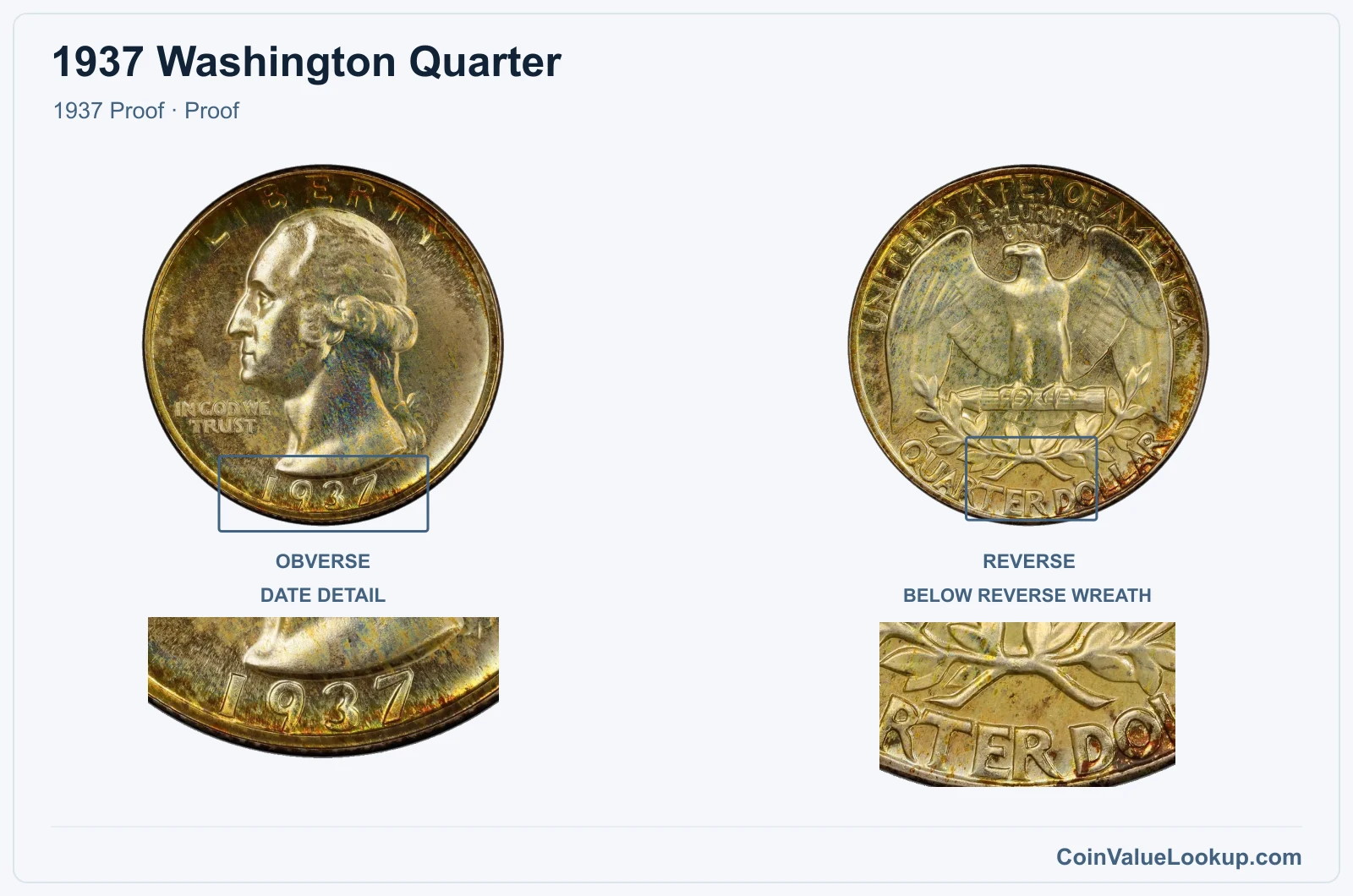
Philadelphia struck proof quarters in 1937 with fully mirrored fields and exceptionally sharp design elements. These were made for collectors, not for commerce.
A PR65 example carries a guide estimate of about $446.
Proof is a method of manufacture, not a grade above Mint State. Coins that have been polished or lightly circulated do not become proofs by virtue of looking shiny.
Genuine proofs display uniform reflective surfaces and crisp, squared-off rims that business strikes simply lack. If you think you have one, the fields will practically act as a mirror.
| Range | Grade | Price | Auction Records | Appraisal |
|---|---|---|---|---|
| PR | PR 1 | — | Coin Identifier | |
| PR 2 | — | Coin Identifier | ||
| PR 3 | — | Coin Identifier | ||
| PR 4 | — | Coin Identifier | ||
| PR 6 | — | Coin Identifier | ||
| PR 8 | — | Coin Identifier | ||
| PR 10 | — | Coin Identifier | ||
| PR 12 | — | Coin Identifier | ||
| PR 15 | — | Coin Identifier | ||
| PR 20 | — | Coin Identifier | ||
| PR 25 | — | Coin Identifier | ||
| PR 30 | — | Coin Identifier | ||
| PR 35 | — | Coin Identifier | ||
| PR 40 | — | Coin Identifier | ||
| PR 45 | — | Coin Identifier | ||
| PR 50 | — | Coin Identifier | ||
| PR 53 | — | Coin Identifier | ||
| PR 55 | — | Coin Identifier | ||
| PR 58 | — | Coin Identifier | ||
| PR 60 | Coin Identifier | |||
| PR 61 | Coin Identifier | |||
| PR 62 | Coin Identifier | |||
| PR 63 | Coin Identifier | |||
| PR 64 | Coin Identifier | |||
| PR 65 | Coin Identifier | |||
| PR 66 | Coin Identifier | |||
| PR 67 | Coin Identifier | |||
| PR 68 | Coin Identifier | |||
| PR 69 | — | — | — | |
| PR 70 | — | — | — |
1937 Washington Quarter — Doubled Die Obverse
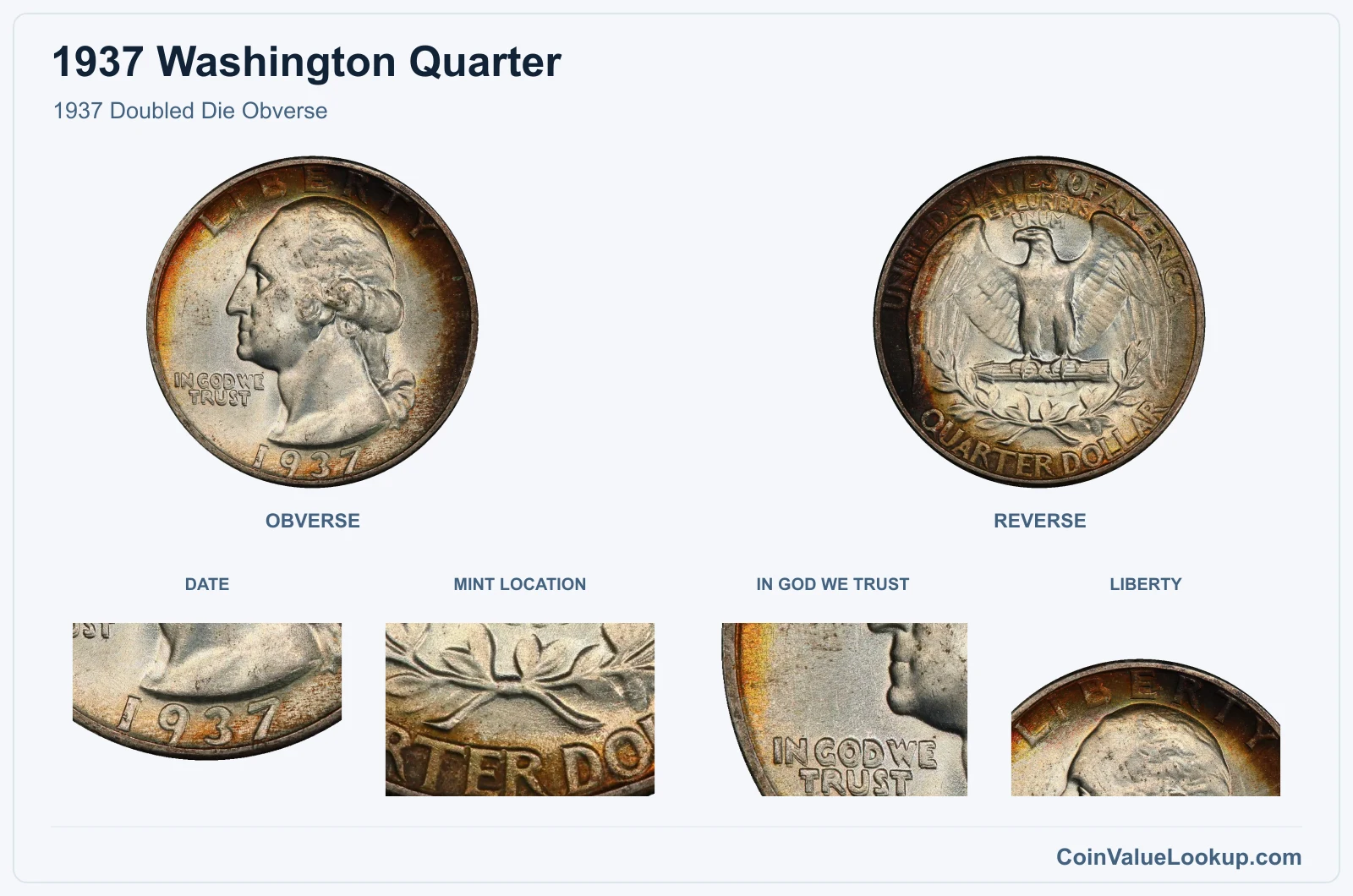
The 1937 Doubled Die Obverse is a Philadelphia-struck variety with prominent die doubling visible on the motto, date, and the tip of Washington's nose. It is the headline variety for this year, and values reflect that status.
Guide estimates run from about $290 in Good-4 up to approximately $2,777 at MS60, reaching around $11,100 at MS65.
Because this is a Philadelphia coin, there is no mintmark. Confirm the doubling carefully — it should appear as a consistent, raised duplication on die-made elements.
More detail on distinguishing genuine doubling from lookalikes is covered in the error section below.
| Range | Grade | Price | Auction Records | Appraisal |
|---|---|---|---|---|
| PO | PO 1 | — | Coin Identifier | |
| FR | FR 2 | — | Coin Identifier | |
| AG | AG 3 | Coin Identifier | ||
| G | G 4 | Coin Identifier | ||
| G 6 | — | Coin Identifier | ||
| VG | VG 8 | Coin Identifier | ||
| VG 10 | — | Coin Identifier | ||
| F | F 12 | Coin Identifier | ||
| F 15 | Coin Identifier | |||
| VF | VF 20 | Coin Identifier | ||
| VF 25 | — | Coin Identifier | ||
| VF 30 | — | Coin Identifier | ||
| VF 35 | Coin Identifier | |||
| XF | XF 40 | Coin Identifier | ||
| XF 45 | Coin Identifier | |||
| AU | AU 50 | Coin Identifier | ||
| AU 53 | Coin Identifier | |||
| AU 55 | Coin Identifier | |||
| AU 58 | Coin Identifier | |||
| MS | MS 60 | — | Coin Identifier | |
| MS 61 | — | Coin Identifier | ||
| MS 62 | Coin Identifier | |||
| MS 63 | Coin Identifier | |||
| MS 64 | Coin Identifier | |||
| MS 65 | Coin Identifier | |||
| MS 66 | Coin Identifier | |||
| MS 67 | — | — | — | |
| MS 68 | — | — | — | |
| MS 69 | — | — | — | |
| MS 70 | — | — | — |
1937 Washington Quarter — D
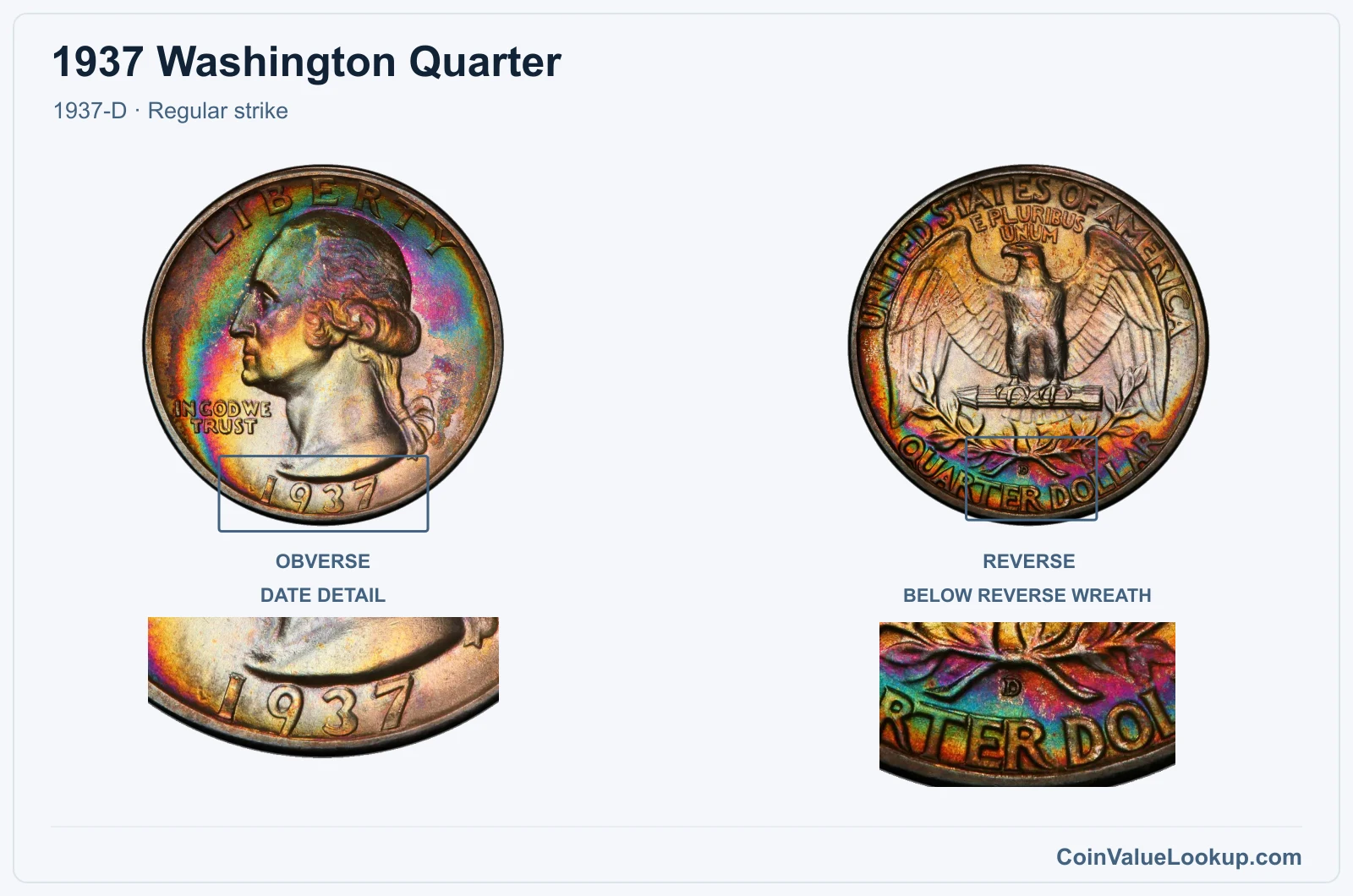
The 1937-D carries a small "D" mintmark below the eagle's tail feathers on the reverse. Denver production was substantial, so this is not a scarce issue by any stretch.
Guide estimates start around $16.43 at Good-4, rise to about $95 at MS60, and sit near $171 at MS65.
It is worth less than the San Francisco issue at upper grades but more than Philadelphia in the MS60 range. Original, untouched surfaces matter more than raw age when it comes to value.
| Range | Grade | Price | Auction Records | Appraisal |
|---|---|---|---|---|
| PO | PO 1 | — | Coin Identifier | |
| FR | FR 2 | — | Coin Identifier | |
| AG | AG 3 | — | Coin Identifier | |
| G | G 4 | — | Coin Identifier | |
| G 6 | — | Coin Identifier | ||
| VG | VG 8 | — | Coin Identifier | |
| VG 10 | — | Coin Identifier | ||
| F | F 12 | — | Coin Identifier | |
| F 15 | — | Coin Identifier | ||
| VF | VF 20 | — | Coin Identifier | |
| VF 25 | — | Coin Identifier | ||
| VF 30 | — | Coin Identifier | ||
| VF 35 | Coin Identifier | |||
| XF | XF 40 | — | Coin Identifier | |
| XF 45 | — | Coin Identifier | ||
| AU | AU 50 | — | Coin Identifier | |
| AU 53 | — | Coin Identifier | ||
| AU 55 | Coin Identifier | |||
| AU 58 | Coin Identifier | |||
| MS | MS 60 | — | Coin Identifier | |
| MS 61 | — | Coin Identifier | ||
| MS 62 | Coin Identifier | |||
| MS 63 | Coin Identifier | |||
| MS 64 | Coin Identifier | |||
| MS 65 | Coin Identifier | |||
| MS 66 | Coin Identifier | |||
| MS 67 | Coin Identifier | |||
| MS 68 | — | Coin Identifier | ||
| MS 69 | — | — | — | |
| MS 70 | — | — | — |
1937 Washington Quarter — S
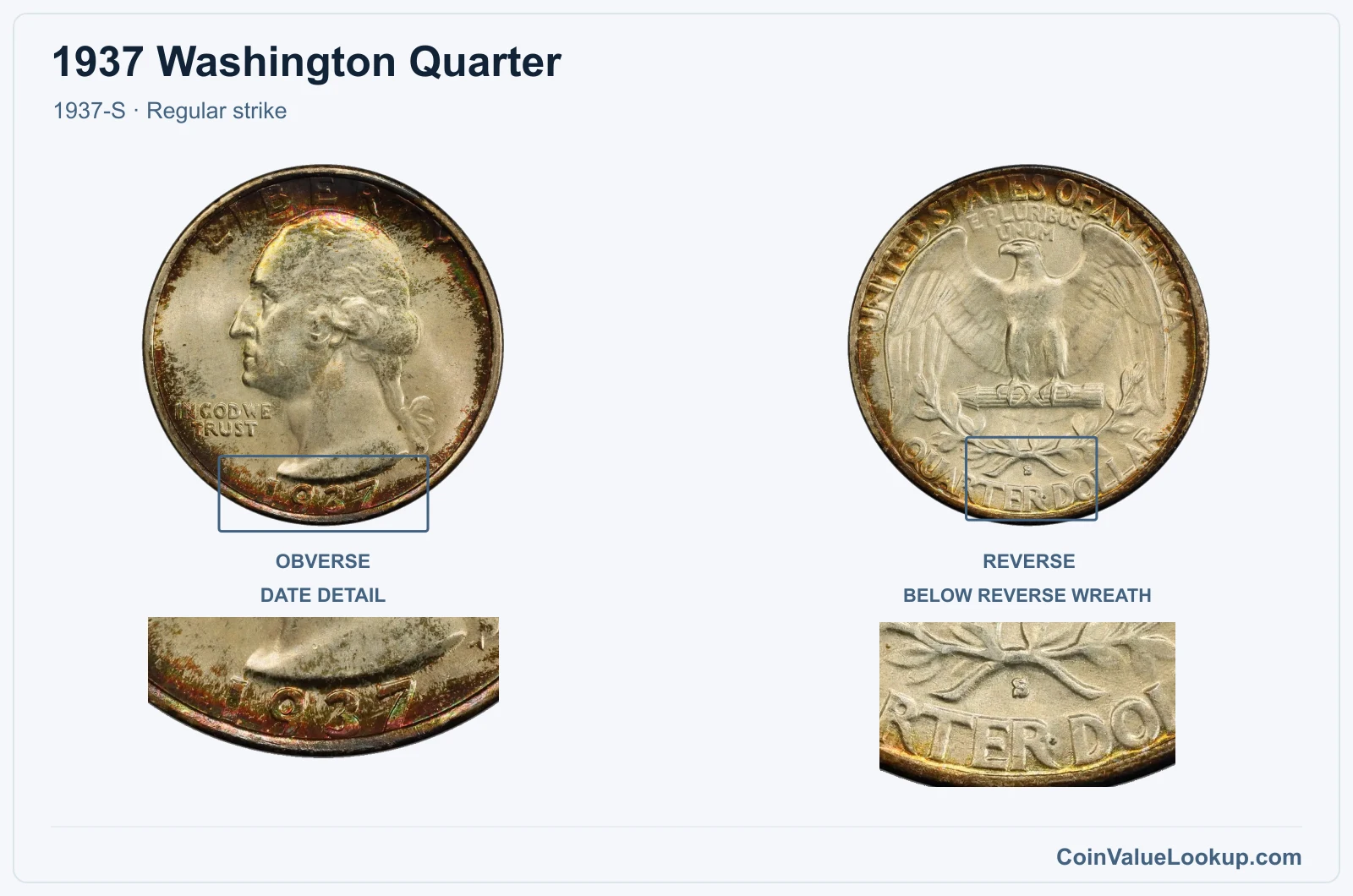
San Francisco's 1937-S is the scarcer of the three regular business-strike mints for this date. That relative scarcity shows up clearly in pricing: a Good-4 starts around $20, an MS60 jumps to about $215, and an MS65 is estimated near $427 — the highest guide figure among the ordinary strikes.
Coin Value Lookup is a handy place to compare Washington quarter values across different years and mints if you are building a set or just curious about what else is out there.
Look for the small "S" below the wreath on the reverse. Coins with strong original luster and minimal contact marks will command the best premiums here.
| Range | Grade | Price | Auction Records | Appraisal |
|---|---|---|---|---|
| PO | PO 1 | — | Coin Identifier | |
| FR | FR 2 | — | Coin Identifier | |
| AG | AG 3 | — | Coin Identifier | |
| G | G 4 | — | Coin Identifier | |
| G 6 | — | Coin Identifier | ||
| VG | VG 8 | — | Coin Identifier | |
| VG 10 | — | Coin Identifier | ||
| F | F 12 | — | Coin Identifier | |
| F 15 | — | Coin Identifier | ||
| VF | VF 20 | — | Coin Identifier | |
| VF 25 | — | Coin Identifier | ||
| VF 30 | — | Coin Identifier | ||
| VF 35 | — | Coin Identifier | ||
| XF | XF 40 | — | Coin Identifier | |
| XF 45 | — | Coin Identifier | ||
| AU | AU 50 | — | Coin Identifier | |
| AU 53 | — | Coin Identifier | ||
| AU 55 | Coin Identifier | |||
| AU 58 | Coin Identifier | |||
| MS | MS 60 | — | Coin Identifier | |
| MS 61 | Coin Identifier | |||
| MS 62 | Coin Identifier | |||
| MS 63 | Coin Identifier | |||
| MS 64 | Coin Identifier | |||
| MS 65 | Coin Identifier | |||
| MS 66 | Coin Identifier | |||
| MS 67 | Coin Identifier | |||
| MS 68 | — | — | — | |
| MS 69 | — | — | — | |
| MS 70 | — | — | — |
1937 Washington Quarter Error List
1. 1937 Washington Quarter — Doubled Die Obverse
The 1937 Doubled Die Obverse is specific to the Philadelphia mint. The key diagnostic is strong, consistent doubling on the date numerals and the motto, plus a visible doubled contour at the tip of Washington's nose.
All three elements should align as part of the same die impression — not random marks in different directions.
Genuine die doubling produces raised, shelf-like secondary images that mirror the original design. Machine doubling, by contrast, tends to look flat, mushy, and shelf-like in a smeared direction rather than a crisp secondary image.
Scratches and post-strike damage will not follow the contours of the design lettering the way a true doubled die does.
A single PCGS MS65 example sold through Heritage Auctions in February 2018 for $5,040. That is one documented sale, not a broad market range, so individual results will vary depending on grade, eye appeal, and surfaces.
If you suspect you have this variety, professional attribution is the smart next step.