1943 Wheat Penny Coin Value: How Much Is It Worth?
A 1943 Wheat penny is one of the most recognizable wartime coins in the series. Standard examples are zinc-coated steel, not copper, and guide estimates run from about $0.18 in Good-4 condition to $25 at MS65, depending on the mint.
Proofs, the famous bronze wrong-planchet errors, and varieties like the boldly doubled Denver mintmark are priced separately from those anchors. Original surfaces, wear level, and color all affect what a buyer will actually pay.
Fast Way to Identify Your 1943 Wheat Penny
Snap clear photos of the front and back of your 1943 penny and upload them here for a preliminary identification. The tool can help you figure out which mint struck your coin and flag obvious version differences.
It is not a substitute for professional authentication or certified grading, but it is a solid first step before you dig deeper.
1943 Wheat Penny Value
Upload both sides of your 1943 Wheat Penny.
Front Obverse
Upload photo
Back Reverse
Upload photo
Which 1943 Wheat Penny Versions Are Worth Money?
- The 1943 Bronze (Philadelphia) is a wrong-planchet error struck on a leftover copper blank; it requires professional authentication since copper-plated steel fakes far outnumber genuine examples.
- The 1943-D Bronze and 1943-S Bronze are equally rare wrong-planchet errors from the Denver and San Francisco mints, each needing weight and magnet verification.
- The 1943-D/D boldly doubled mintmark variety carries guide values from about $19 in G4 to $1,244 at MS65, far above a normal Denver steel cent.
- Among standard steel cents, the 1943-S commands the highest guide estimates, reaching about $25 at MS65.
- Strong original zinc surfaces without corrosion or cleaning add appeal across all three mint branches.
Step 1: Identify Your 1943 Wheat Penny Mint Mark and Version
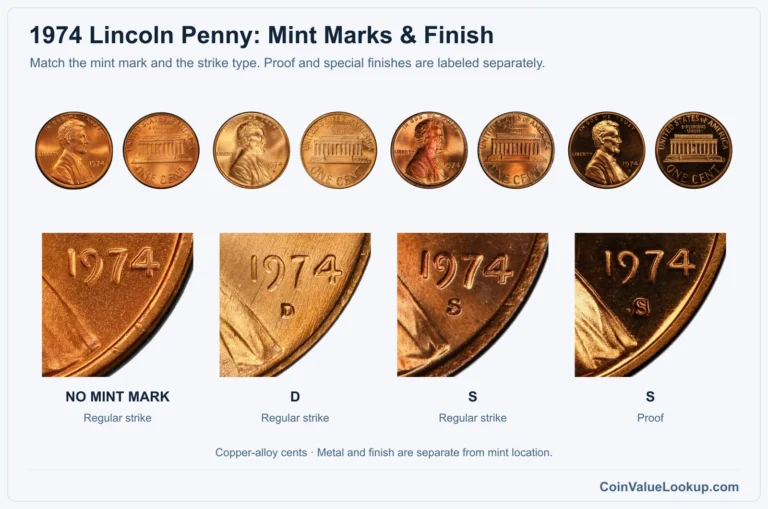
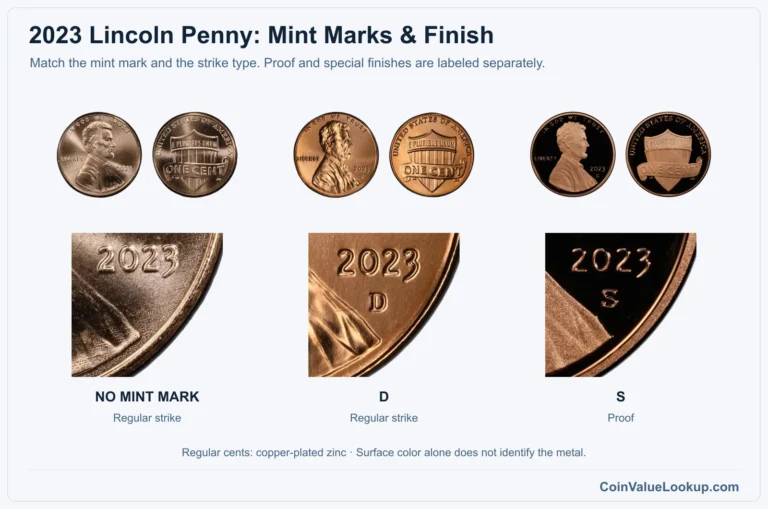
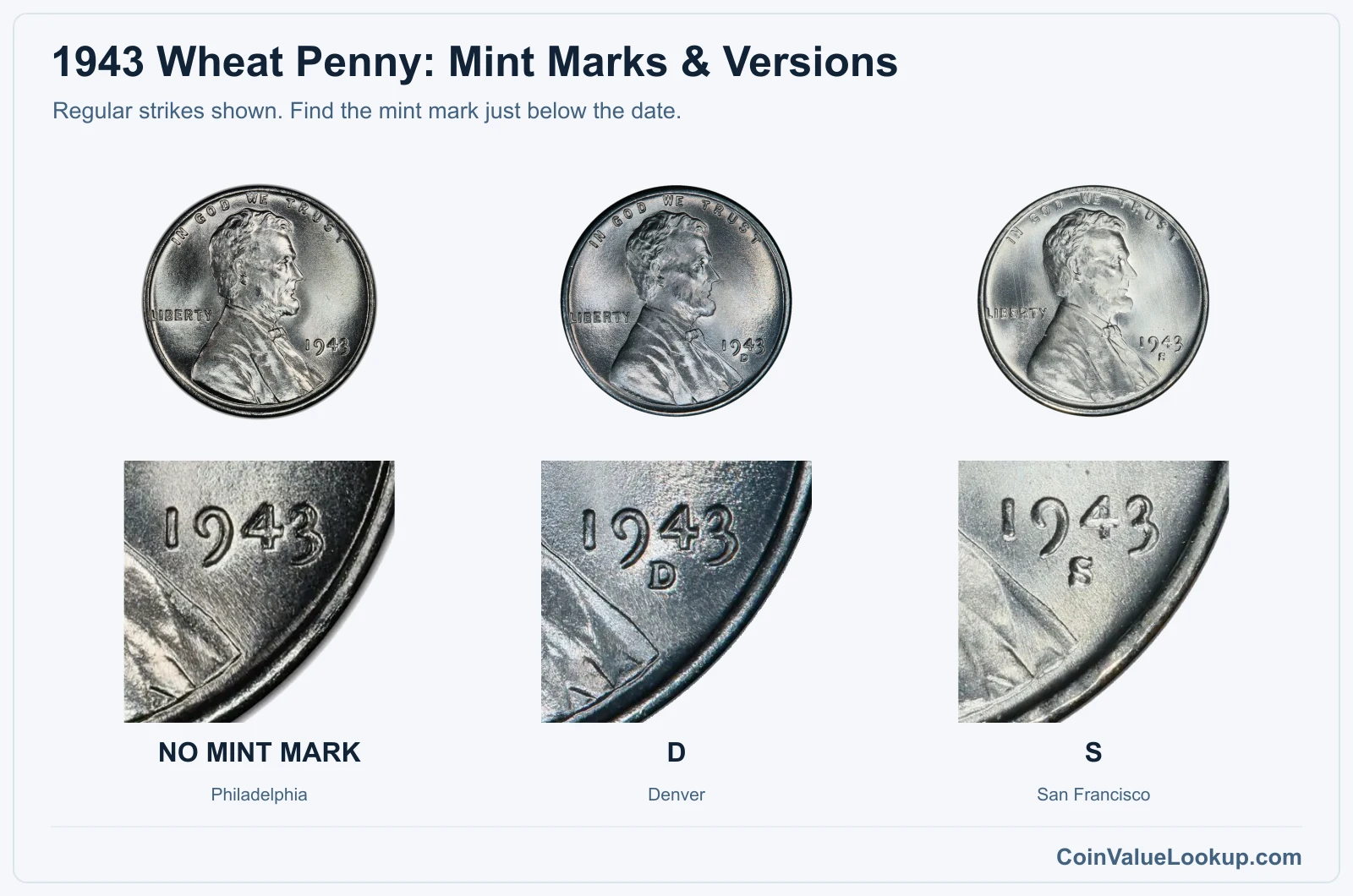
Start by checking below the date for a mintmark. No letter means Philadelphia.
A "D" means Denver. An "S" means San Francisco.
All three mints produced standard zinc-coated steel cents this year.
The quickest test for your coin's composition is a magnet. A normal 1943 cent is magnetic and weighs about 2.70 grams.
If your coin does not stick to a magnet and weighs closer to 3.11 grams, you may have an extremely rare bronze wrong-planchet error, but you could also have a copper-plated steel cent or an altered date from a 1948 penny. Both fakes are common.
Denver coins deserve a second look at the mintmark. A boldly doubled "D" (the D/D variety) is a collectible variety with its own pricing.
Use magnification and compare the mintmark outline to a normal single-punch D.
Surface color on a steel cent ranges from bright silvery to dark gray or even rusty. Color and corrosion affect value but do not by themselves determine the grade.
Step 2: Check Your 1943 Wheat Penny Grade
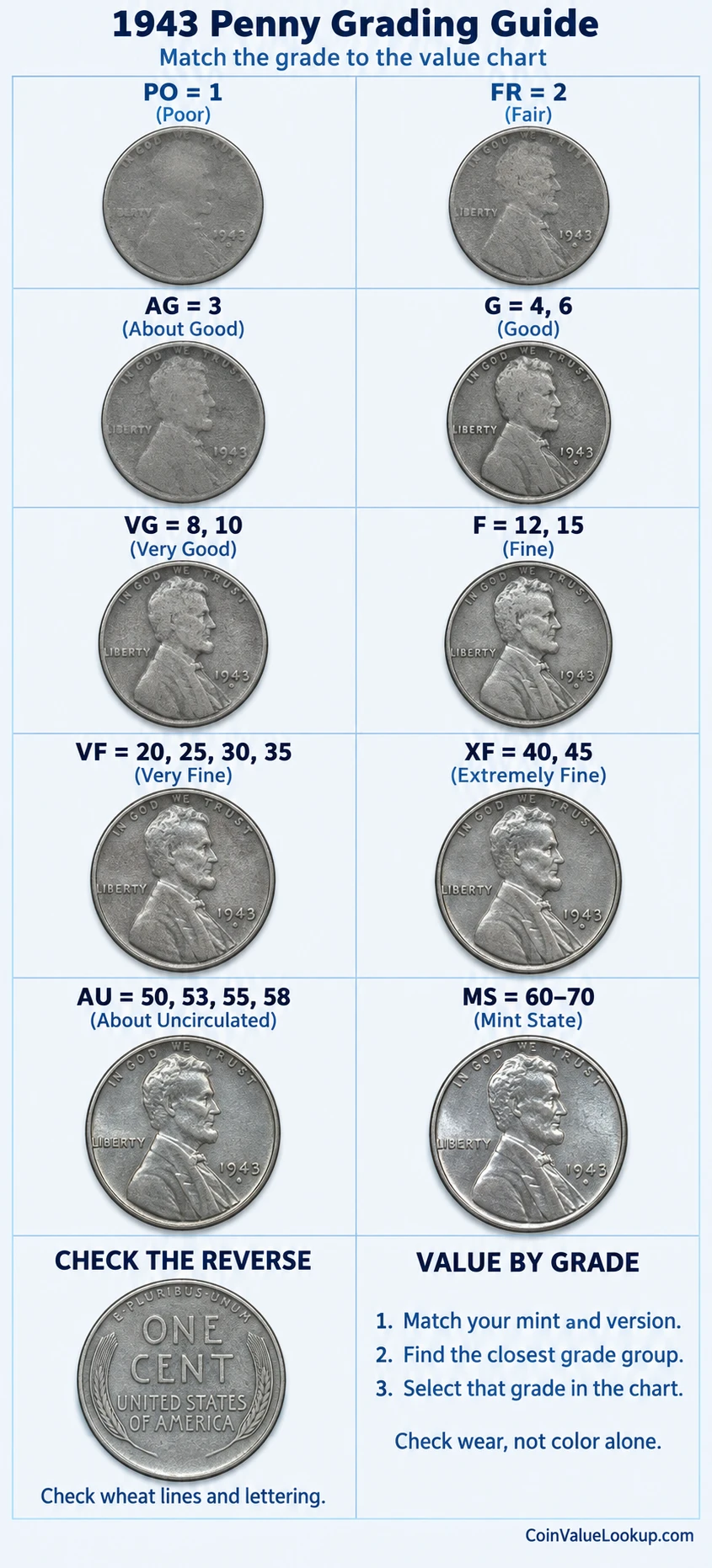
Focus on Lincoln's cheek, jawline, and hair detail above the ear. These are the highest points and show wear first.
A coin in Good-4 will have a smooth, flat portrait with an outline but little interior detail. Fine-12 brings back some hair strands.
Mint State coins retain full luster across the entire surface with no wear on the high points.
Flip the coin over and examine the wheat stalks. Weak separation between individual grain lines is a wear indicator, but a soft original strike can mimic the same look, so compare both sides.
Use the comparison image to match your coin's detail against known grade benchmarks. On steel cents especially, corrosion, spots, and cleaned surfaces are separate value factors.
A bright, re-processed steel cent is not the same as one with original zinc coating intact.
Step 3: Check 1943 Wheat Penny Value by Mint and Version
1943 Wheat Penny
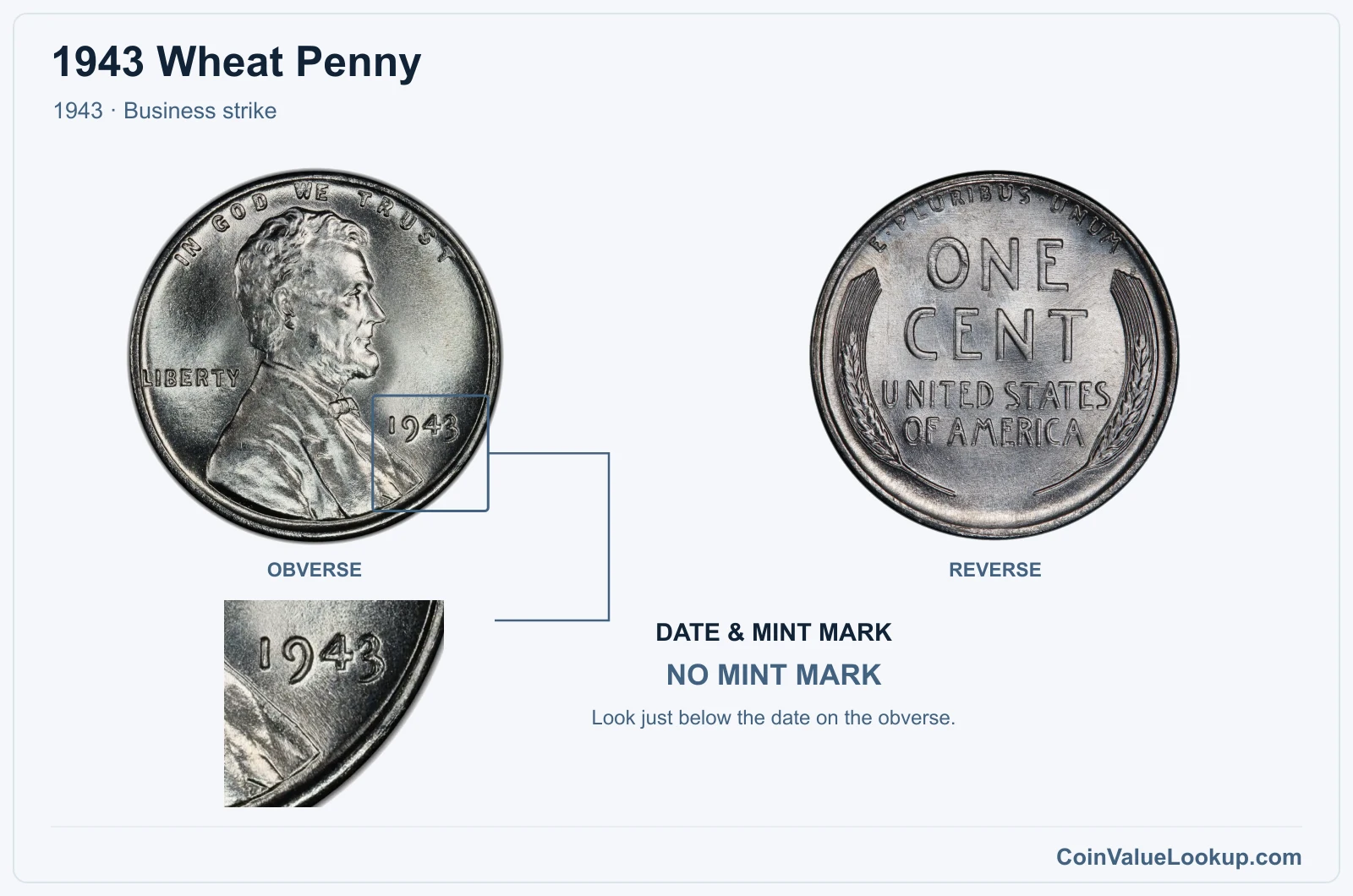
The standard 1943 Philadelphia steel cent has no mintmark below the date. It is zinc-coated steel, weighs about 2.70 grams, and sticks to a magnet.
Guide estimates place this coin at roughly $0.18 in Good-4 and $10 at MS65. Most surviving examples show some degree of surface spotting or zinc loss, so a coin with clean, original coating intact will trade at the stronger end of its grade range.
Check the date digits carefully; altered 1948 pennies are a well-known fake.
| Range | Grade | Price | Auction Records | Appraisal |
|---|---|---|---|---|
| PO | PO 1 | — | Coin Identifier | |
| FR | FR 2 | — | Coin Identifier | |
| AG | AG 3 | — | Coin Identifier | |
| G | G 4 | — | Coin Identifier | |
| G 6 | — | Coin Identifier | ||
| VG | VG 8 | — | Coin Identifier | |
| VG 10 | — | Coin Identifier | ||
| F | F 12 | — | Coin Identifier | |
| F 15 | — | Coin Identifier | ||
| VF | VF 20 | — | Coin Identifier | |
| VF 25 | — | Coin Identifier | ||
| VF 30 | — | Coin Identifier | ||
| VF 35 | — | Coin Identifier | ||
| XF | XF 40 | Coin Identifier | ||
| XF 45 | Coin Identifier | |||
| AU | AU 50 | Coin Identifier | ||
| AU 53 | Coin Identifier | |||
| AU 55 | Coin Identifier | |||
| AU 58 | Coin Identifier | |||
| MS | MS 60 | — | Coin Identifier | |
| MS 61 | Coin Identifier | |||
| MS 62 | Coin Identifier | |||
| MS 63 | Coin Identifier | |||
| MS 64 | Coin Identifier | |||
| MS 65 | Coin Identifier | |||
| MS 66 | Coin Identifier | |||
| MS 67 | Coin Identifier | |||
| MS 68 | Coin Identifier | |||
| MS 69 | — | — | — | |
| MS 70 | — | — | — |
1943 Wheat Penny — Bronze
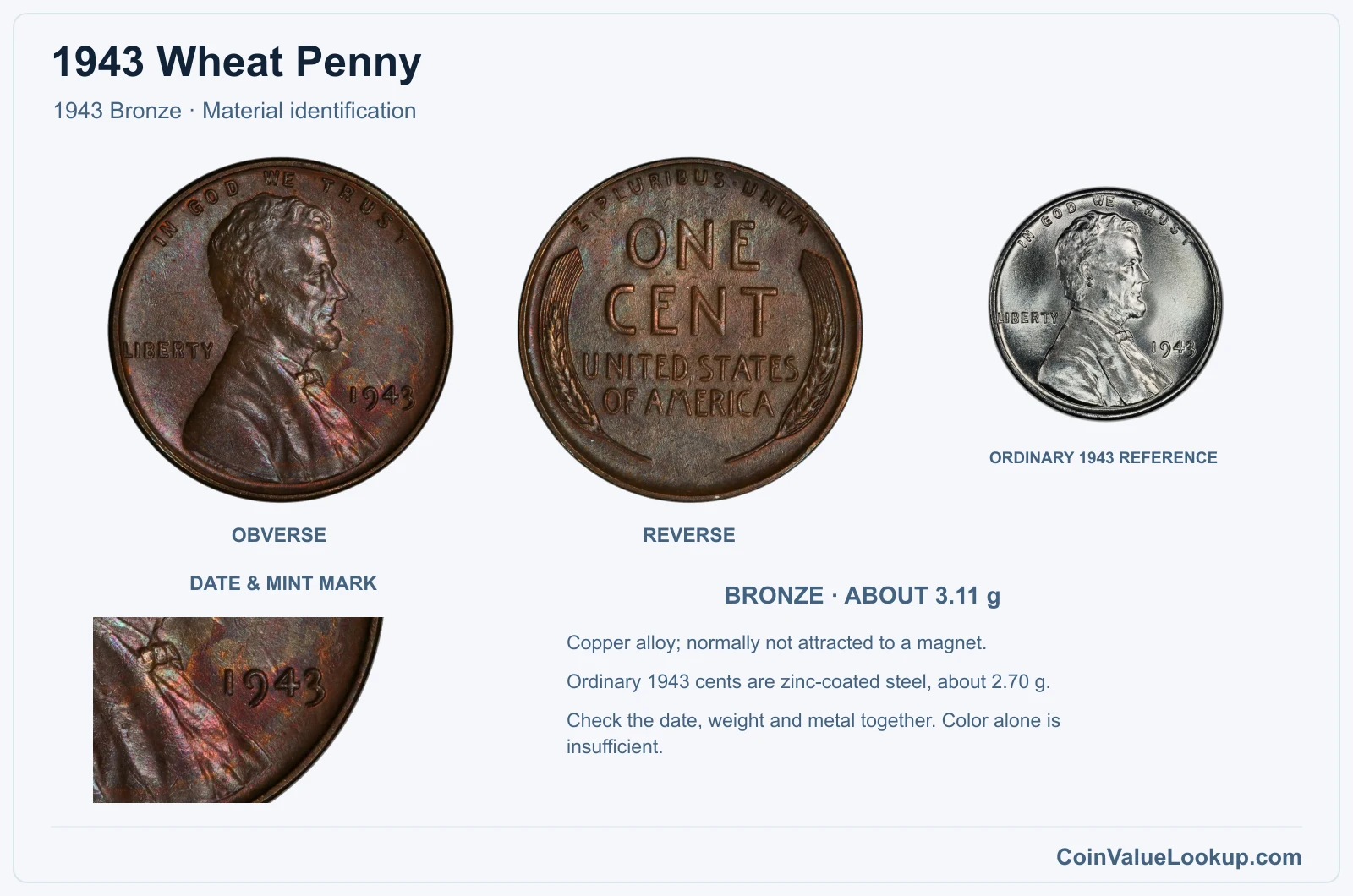
The 1943 Bronze from Philadelphia is a transitional wrong-planchet error. Instead of the wartime steel blank, this coin was struck on a leftover 95% copper planchet weighing about 3.11 grams.
It will not stick to a magnet. That magnet test is your first screening step, but it is not the last, because copper-plated steel cents are extremely common fakes.
Genuine examples are rare enough that each one needs individual assessment by a professional grading service. Condition and authenticated identity drive the value, and no standard guide range applies.
If your coin passes the magnet and weight tests, the next move is third-party certification, not an online sale.
| Range | Grade | Price | Auction Records | Appraisal |
|---|---|---|---|---|
| PO | PO 1 | — | Coin Identifier | |
| FR | FR 2 | — | Coin Identifier | |
| AG | AG 3 | — | Coin Identifier | |
| G | G 4 | — | Coin Identifier | |
| G 6 | — | Coin Identifier | ||
| VG | VG 8 | — | Coin Identifier | |
| VG 10 | — | Coin Identifier | ||
| F | F 12 | — | Coin Identifier | |
| F 15 | — | Coin Identifier | ||
| VF | VF 20 | — | Coin Identifier | |
| VF 25 | — | Coin Identifier | ||
| VF 30 | — | Coin Identifier | ||
| VF 35 | — | Coin Identifier | ||
| XF | XF 40 | — | Coin Identifier | |
| XF 45 | Coin Identifier | |||
| AU | AU 50 | Coin Identifier | ||
| AU 53 | Coin Identifier | |||
| AU 55 | Coin Identifier | |||
| AU 58 | Coin Identifier | |||
| MS | MS 60 | — | Coin Identifier | |
| MS 61 | Coin Identifier | |||
| MS 62 | Coin Identifier | |||
| MS 63 | — | — | — | |
| MS 64 | — | — | — | |
| MS 65 | — | — | — | |
| MS 66 | — | — | — | |
| MS 67 | — | — | — | |
| MS 68 | — | — | — | |
| MS 69 | — | — | — | |
| MS 70 | — | — | — |
1943 Wheat Penny — D
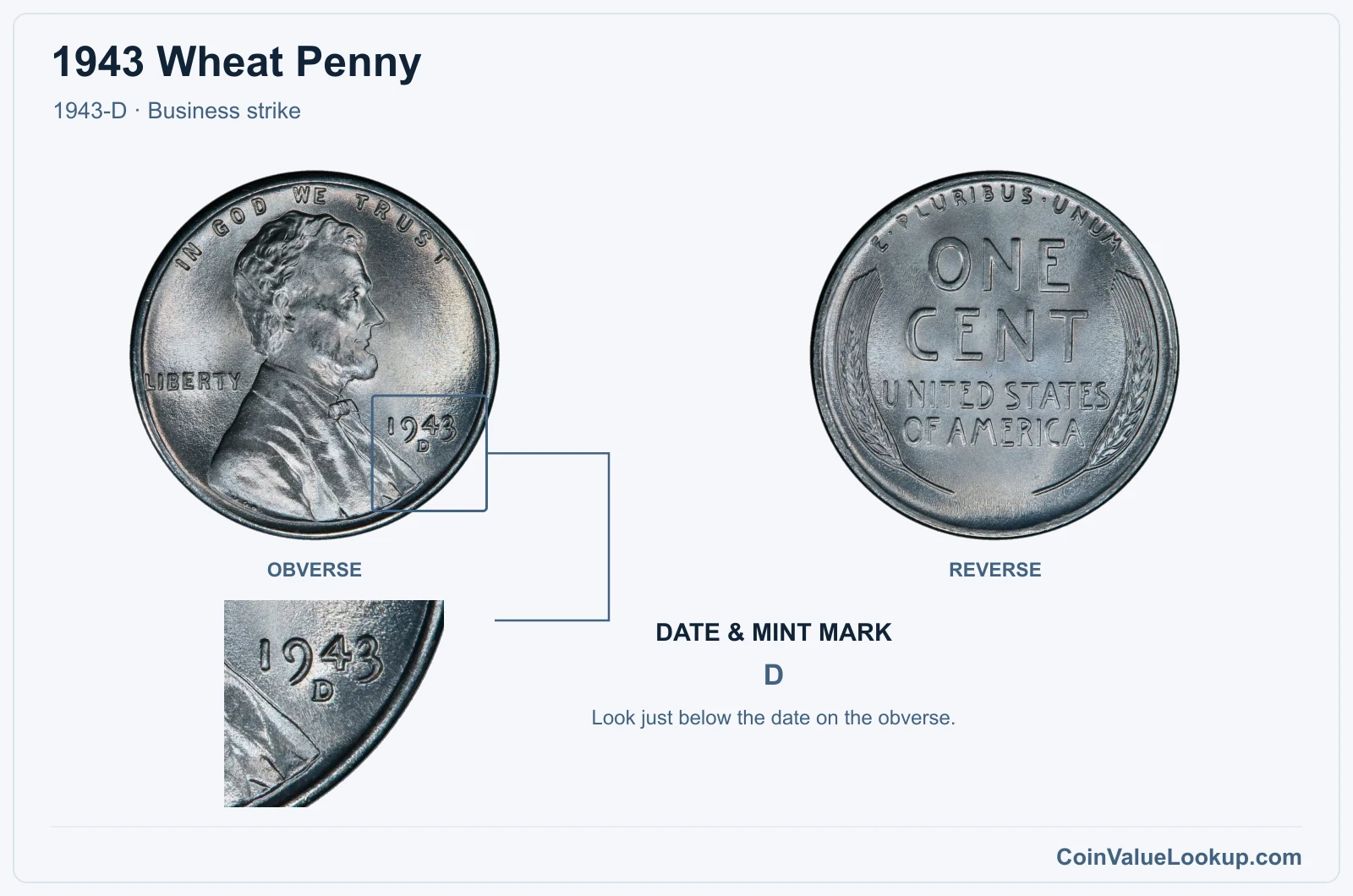
The 1943-D is a zinc-coated steel cent struck in Denver, identifiable by the small "D" mintmark below the date. Guide estimates run about $0.24 at Good-4 up to $12 at MS65.
Coin Value Lookup is a handy place to compare values across different Wheat penny dates and mints if you are sorting through a group of steel cents. It can save time when you are trying to figure out which coins in a batch are worth a closer look.
As with all steel cents, original surface quality matters. Rust stains or stripped zinc coating will hold a coin well below its grade-based guide value.
| Range | Grade | Price | Auction Records | Appraisal |
|---|---|---|---|---|
| PO | PO 1 | — | Coin Identifier | |
| FR | FR 2 | — | Coin Identifier | |
| AG | AG 3 | — | Coin Identifier | |
| G | G 4 | — | Coin Identifier | |
| G 6 | — | Coin Identifier | ||
| VG | VG 8 | — | Coin Identifier | |
| VG 10 | — | Coin Identifier | ||
| F | F 12 | — | Coin Identifier | |
| F 15 | — | Coin Identifier | ||
| VF | VF 20 | — | Coin Identifier | |
| VF 25 | — | Coin Identifier | ||
| VF 30 | — | Coin Identifier | ||
| VF 35 | — | Coin Identifier | ||
| XF | XF 40 | — | Coin Identifier | |
| XF 45 | — | Coin Identifier | ||
| AU | AU 50 | Coin Identifier | ||
| AU 53 | — | Coin Identifier | ||
| AU 55 | — | Coin Identifier | ||
| AU 58 | — | Coin Identifier | ||
| MS | MS 60 | — | Coin Identifier | |
| MS 61 | Coin Identifier | |||
| MS 62 | — | Coin Identifier | ||
| MS 63 | Coin Identifier | |||
| MS 64 | Coin Identifier | |||
| MS 65 | Coin Identifier | |||
| MS 66 | Coin Identifier | |||
| MS 67 | Coin Identifier | |||
| MS 68 | Coin Identifier | |||
| MS 69 | — | — | — | |
| MS 70 | — | — | — |
1943 Wheat Penny — D/D
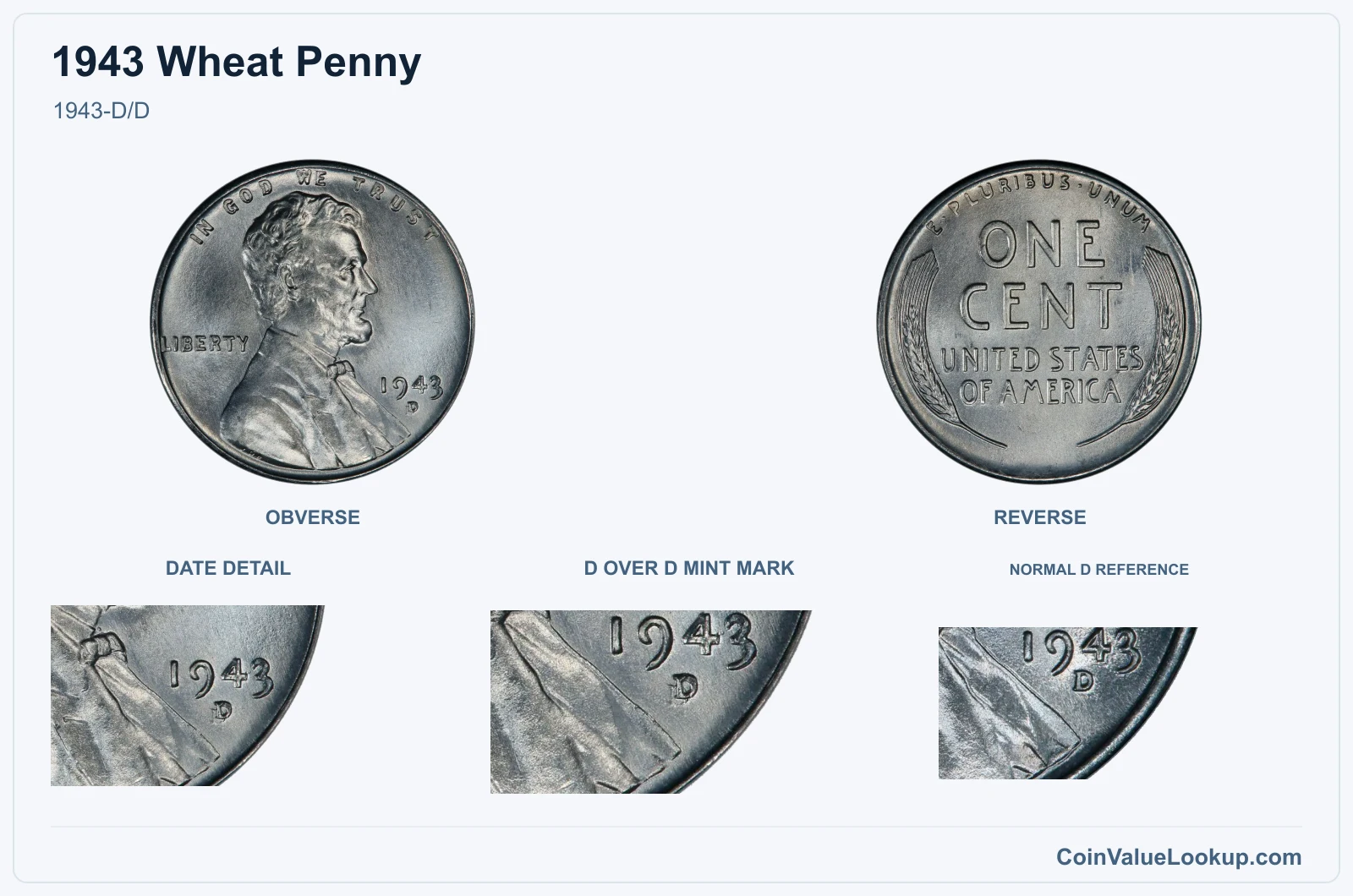
The 1943-D/D features a boldly doubled Denver mintmark, where the "D" was punched into the die at least twice in noticeably different positions. Under magnification you will see a clear secondary outline or a thick, spread appearance to the letter that a normal single-punch D does not have.
This variety commands a serious premium. Guide estimates start around $19 in Good-4 and climb to roughly $1,244 at MS65.
That is a hundred times the value of an ordinary 1943-D in the same grade. When inspecting a Denver steel cent, always take a close look at the mintmark with a loupe.
Machine doubling, which shows flat shelf-like distortion rather than rounded separation, is not the same thing and does not carry the same premium.
| Range | Grade | Price | Auction Records | Appraisal |
|---|---|---|---|---|
| PO | PO 1 | — | Coin Identifier | |
| FR | FR 2 | — | Coin Identifier | |
| AG | AG 3 | — | Coin Identifier | |
| G | G 4 | — | Coin Identifier | |
| G 6 | — | Coin Identifier | ||
| VG | VG 8 | — | Coin Identifier | |
| VG 10 | — | Coin Identifier | ||
| F | F 12 | — | Coin Identifier | |
| F 15 | — | Coin Identifier | ||
| VF | VF 20 | — | Coin Identifier | |
| VF 25 | — | Coin Identifier | ||
| VF 30 | — | Coin Identifier | ||
| VF 35 | — | Coin Identifier | ||
| XF | XF 40 | — | Coin Identifier | |
| XF 45 | — | Coin Identifier | ||
| AU | AU 50 | — | Coin Identifier | |
| AU 53 | — | Coin Identifier | ||
| AU 55 | — | Coin Identifier | ||
| AU 58 | — | Coin Identifier | ||
| MS | MS 60 | Coin Identifier | ||
| MS 61 | Coin Identifier | |||
| MS 62 | Coin Identifier | |||
| MS 63 | Coin Identifier | |||
| MS 64 | Coin Identifier | |||
| MS 65 | Coin Identifier | |||
| MS 66 | Coin Identifier | |||
| MS 67 | Coin Identifier | |||
| MS 68 | — | — | — | |
| MS 69 | — | — | — | |
| MS 70 | — | — | — |
1943 Wheat Penny — S
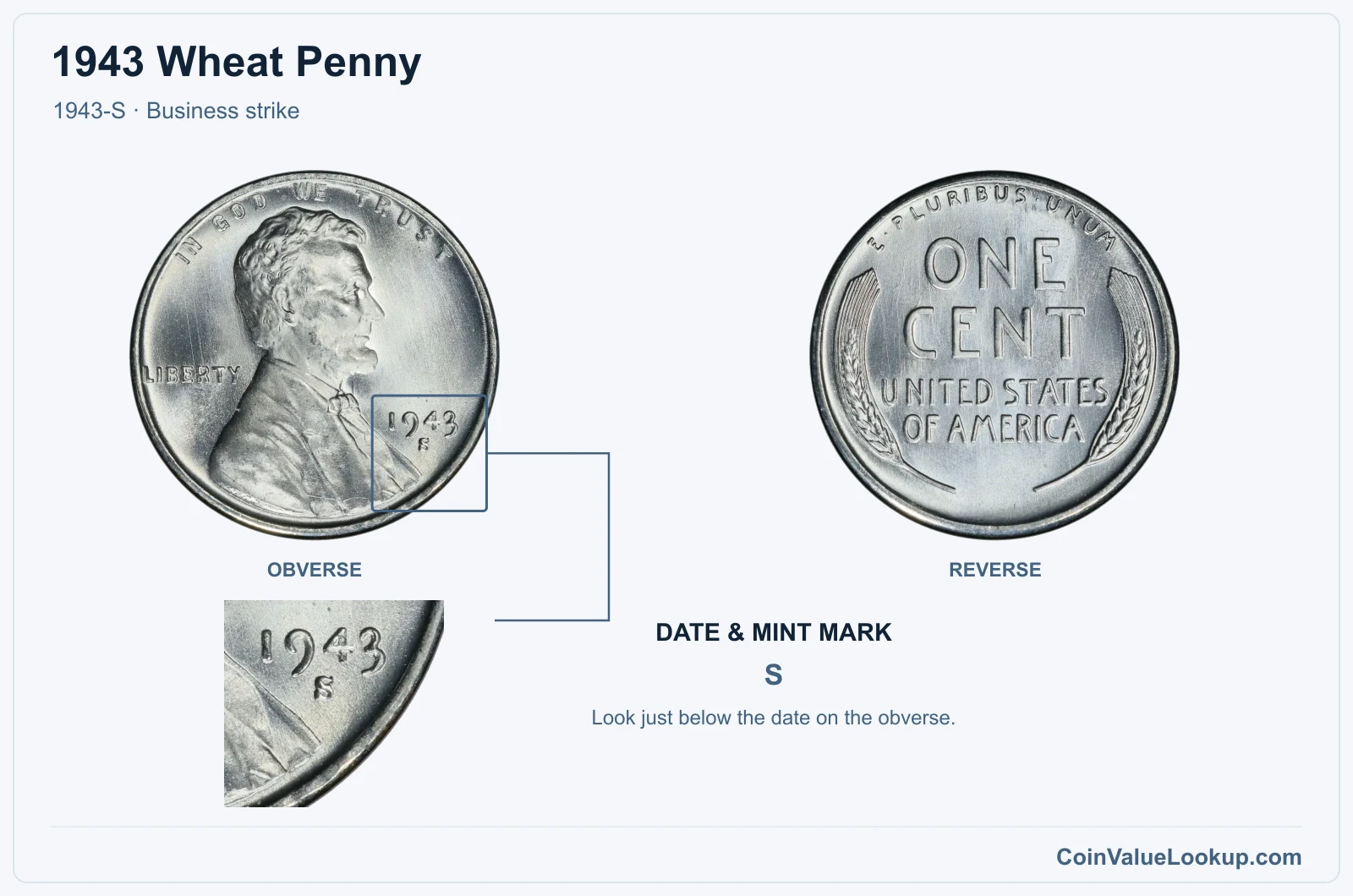
The 1943-S was struck in San Francisco and carries an "S" mintmark below the date. Among the three standard steel-cent mints, the San Francisco issue has the highest guide anchor at about $25 in MS65, with circulated examples starting around $0.30 in Good-4.
Those are modest numbers, but a fully lustrous, spot-free MS65 example is harder to locate than the price might suggest, because steel surfaces corrode easily over eight decades.
| Range | Grade | Price | Auction Records | Appraisal |
|---|---|---|---|---|
| PO | PO 1 | — | Coin Identifier | |
| FR | FR 2 | — | Coin Identifier | |
| AG | AG 3 | — | Coin Identifier | |
| G | G 4 | — | Coin Identifier | |
| G 6 | — | Coin Identifier | ||
| VG | VG 8 | — | Coin Identifier | |
| VG 10 | — | Coin Identifier | ||
| F | F 12 | — | Coin Identifier | |
| F 15 | — | Coin Identifier | ||
| VF | VF 20 | — | Coin Identifier | |
| VF 25 | — | Coin Identifier | ||
| VF 30 | — | Coin Identifier | ||
| VF 35 | — | Coin Identifier | ||
| XF | XF 40 | Coin Identifier | ||
| XF 45 | — | Coin Identifier | ||
| AU | AU 50 | Coin Identifier | ||
| AU 53 | Coin Identifier | |||
| AU 55 | Coin Identifier | |||
| AU 58 | Coin Identifier | |||
| MS | MS 60 | — | Coin Identifier | |
| MS 61 | Coin Identifier | |||
| MS 62 | Coin Identifier | |||
| MS 63 | Coin Identifier | |||
| MS 64 | Coin Identifier | |||
| MS 65 | Coin Identifier | |||
| MS 66 | Coin Identifier | |||
| MS 67 | Coin Identifier | |||
| MS 68 | Coin Identifier | |||
| MS 69 | — | — | — | |
| MS 70 | — | — | — |
1943 Wheat Penny — D Bronze
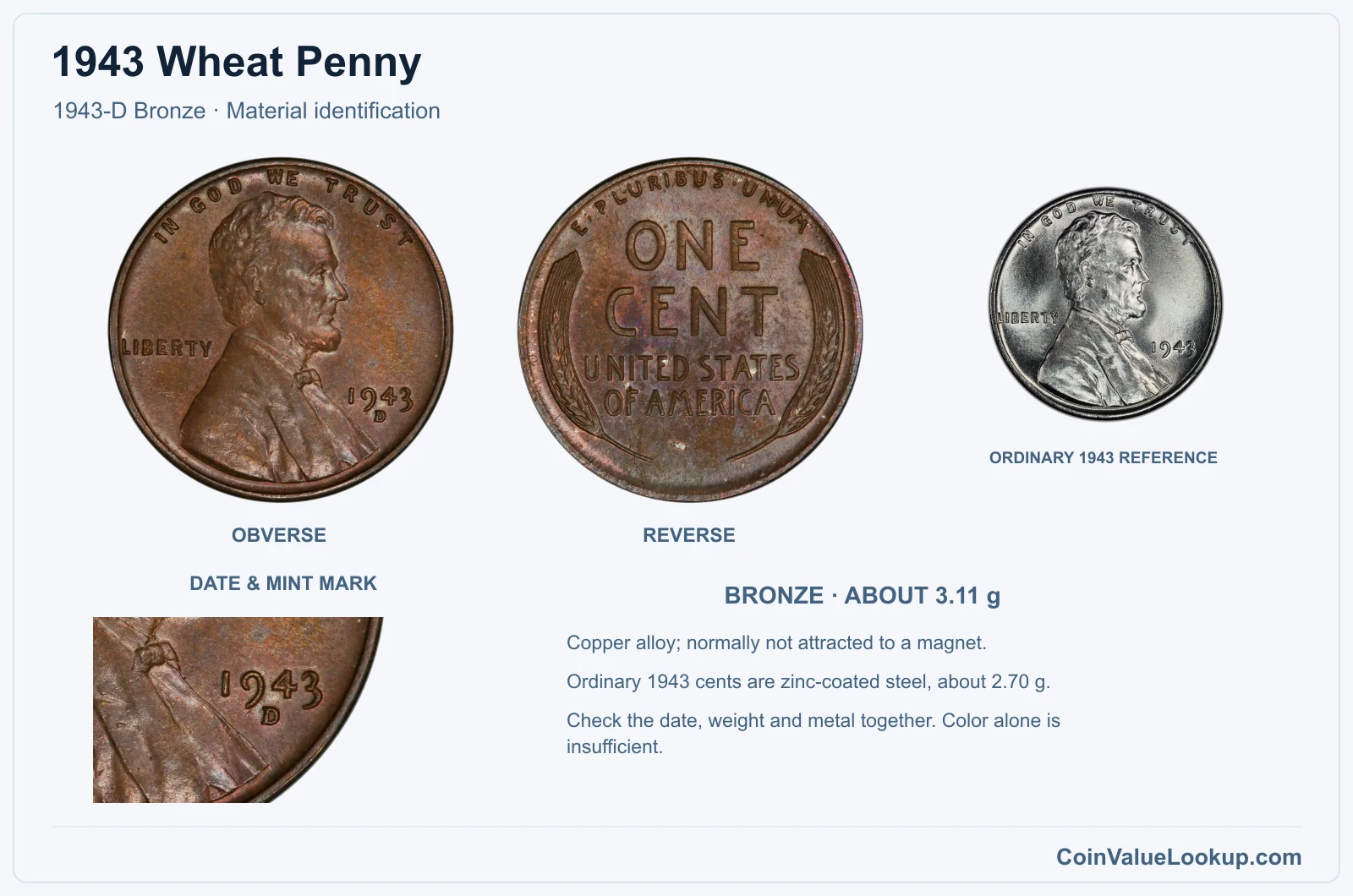
The 1943-D Bronze is an extremely rare wrong-planchet error from the Denver Mint. Like its Philadelphia counterpart, it was struck on a 95% copper planchet instead of the standard zinc-coated steel.
It weighs about 3.11 grams and will not respond to a magnet.
Because copper-plated steel cents and altered-date fakes are so common, any coin claiming to be a 1943-D Bronze needs professional third-party authentication before you assign serious value. There is no standard guide price range for this coin; each authenticated example is assessed individually based on its condition and provenance.
If you think you have one, weigh it first and test with a magnet before spending money on grading fees.
Range Grade
Price Auction Records Appraisal PO PO 1
—
Coin Identifier FR FR 2
—
Coin Identifier AG AG 3
—
Coin Identifier G G 4
—
Coin Identifier
G 6
—
Coin Identifier VG VG 8
—
Coin Identifier
VG 10
—
Coin Identifier F F 12
—
Coin Identifier
F 15
—
Coin Identifier VF VF 20
—
Coin Identifier
VF 25
—
Coin Identifier
VF 30
—
Coin Identifier
VF 35
—
Coin Identifier XF XF 40
—
Coin Identifier
XF 45
—
Coin Identifier AU AU 50
—
Coin Identifier
AU 53
—
Coin Identifier
AU 55
—
Coin Identifier
AU 58
—
Coin Identifier MS MS 60
—
Coin Identifier
MS 61
—
Coin Identifier
MS 62
—
Coin Identifier
MS 63
—
Coin Identifier
MS 64
Coin Identifier
MS 65
—
—
—
MS 66
—
—
—
MS 67
—
—
—
MS 68
—
—
—
MS 69
—
—
—
MS 70
—
—
—
1943 Wheat Penny — S Bronze
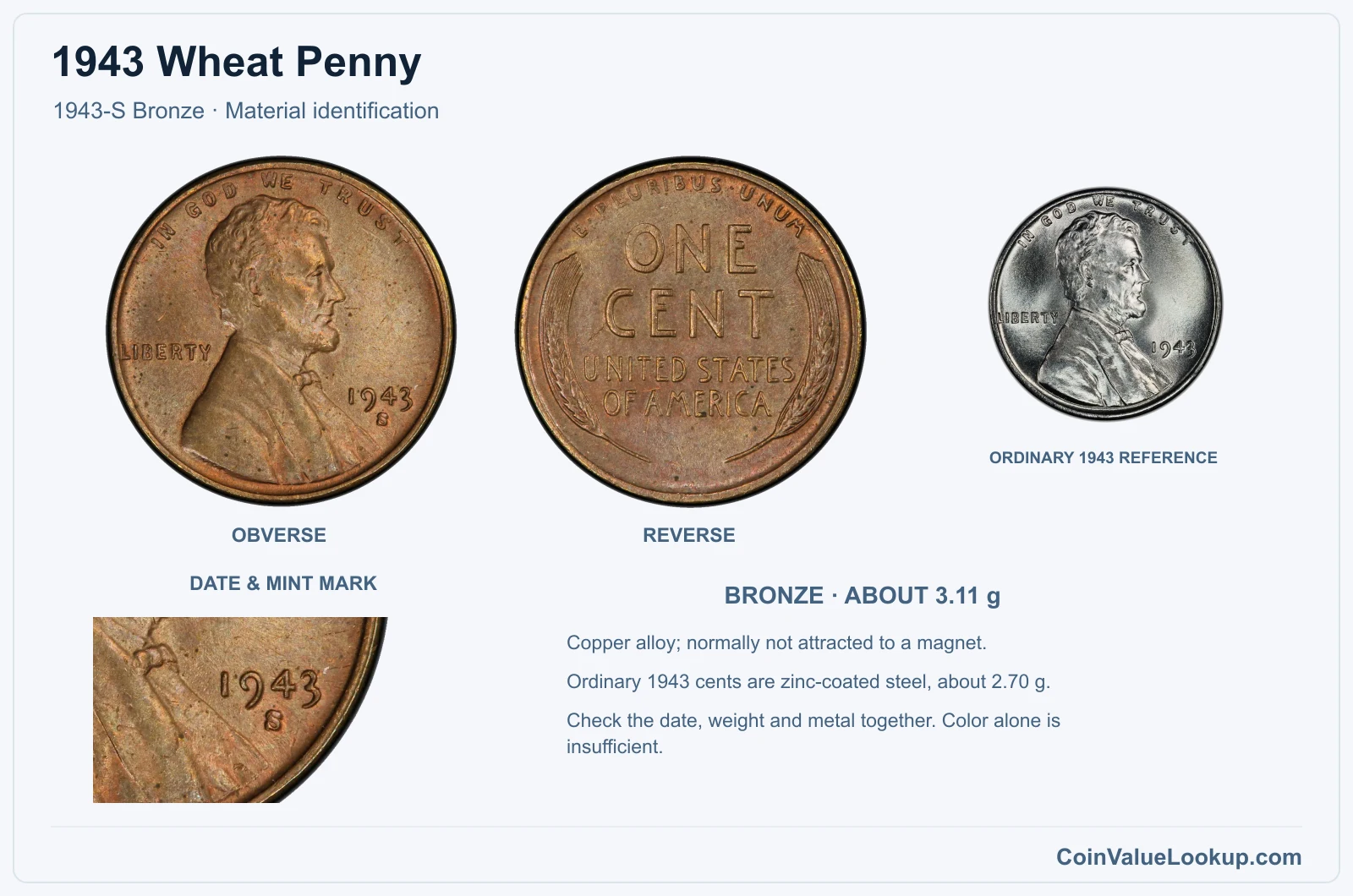
The 1943-S Bronze is the San Francisco version of the wrong-planchet error, struck on a leftover copper blank rather than a steel one. It weighs about 3.11 grams, is nonmagnetic, and is just as rare as the Philadelphia and Denver bronze errors.
The same warnings apply here. Copper-plated steel cents that look bronze on the surface are everywhere, and an altered 1948-S can fool a casual glance.
A magnet, a precise scale, and close examination of the date style are your first-line defenses. Authenticated identity and condition determine the value of a genuine piece, so no blanket guide range is applicable.
Professional certification is the necessary next step for any serious candidate.
Range Grade
Price Auction Records Appraisal PO PO 1
—
Coin Identifier FR FR 2
—
Coin Identifier AG AG 3
—
Coin Identifier G G 4
—
Coin Identifier
G 6
—
Coin Identifier VG VG 8
—
Coin Identifier
VG 10
—
Coin Identifier F F 12
—
Coin Identifier
F 15
—
Coin Identifier VF VF 20
—
Coin Identifier
VF 25
—
Coin Identifier
VF 30
—
Coin Identifier
VF 35
Coin Identifier XF XF 40
—
Coin Identifier
XF 45
—
Coin Identifier AU AU 50
—
Coin Identifier
AU 53
Coin Identifier
AU 55
Coin Identifier
AU 58
Coin Identifier MS MS 60
—
—
—
MS 61
—
—
—
MS 62
—
—
—
MS 63
Coin Identifier
MS 64
—
—
—
MS 65
—
—
—
MS 66
—
—
—
MS 67
—
—
—
MS 68
—
—
—
MS 69
—
—
—
MS 70
—
—
—
1943 Wheat Penny Error List
1. 1943 Wheat Penny — Doubled Die Obverse
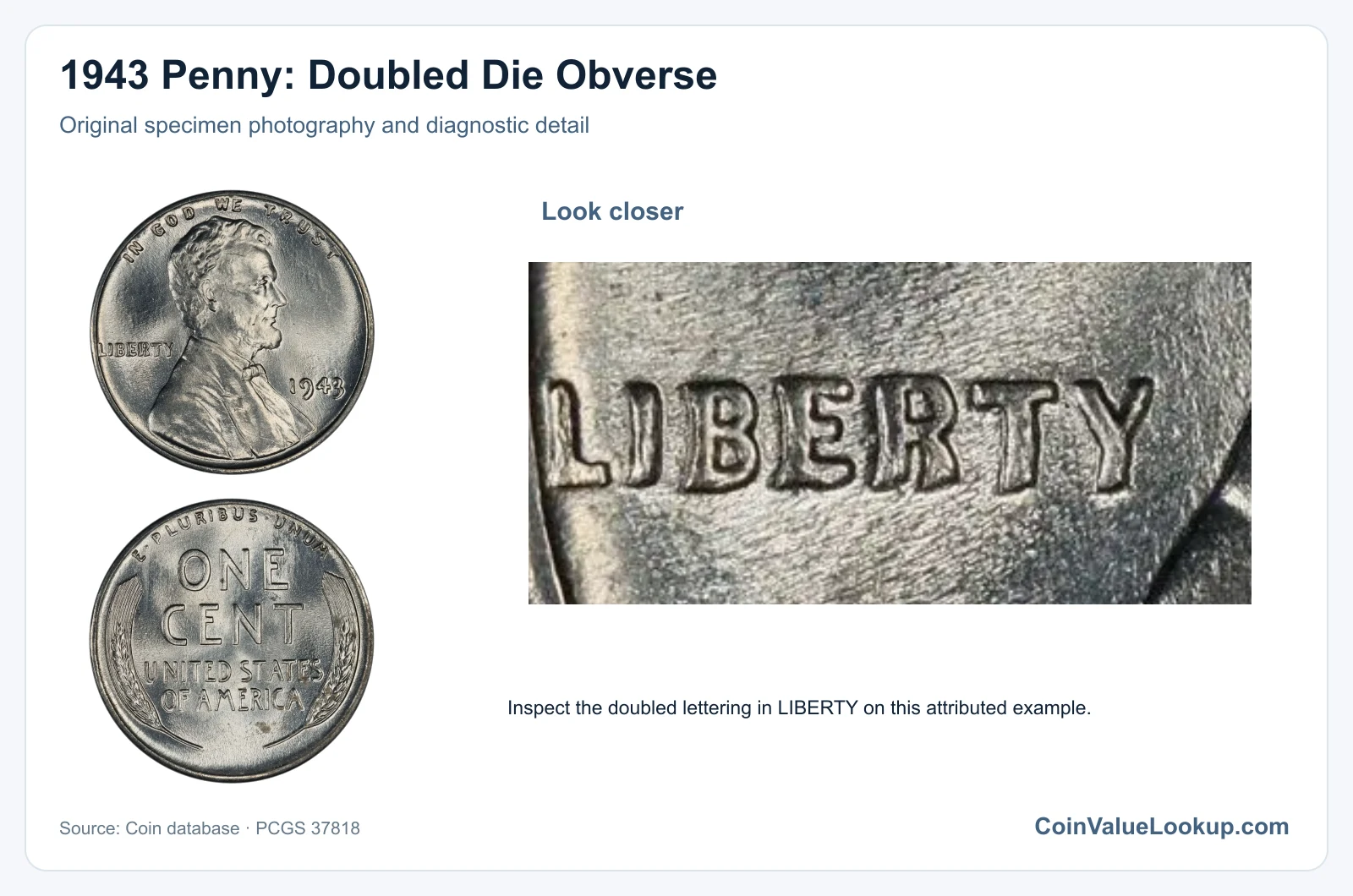
A doubled die obverse on a 1943 Wheat cent shows consistent doubling in the obverse lettering or design elements. Under magnification, look for separation or notching on the letters of LIBERTY, IN GOD WE TRUST, or the date digits.
The doubling should appear uniform across the affected area, not random.
Do not confuse this with machine doubling, which produces flat, shelf-like distortion rather than the rounded, separated profiles of a true doubled die. Reflections and worn die contours can also mimic doubling at first glance.
Each coin with suspected doubling should be assessed individually based on its authenticated identity and condition.
2. 1943 Wheat Penny — Doubled Die Reverse
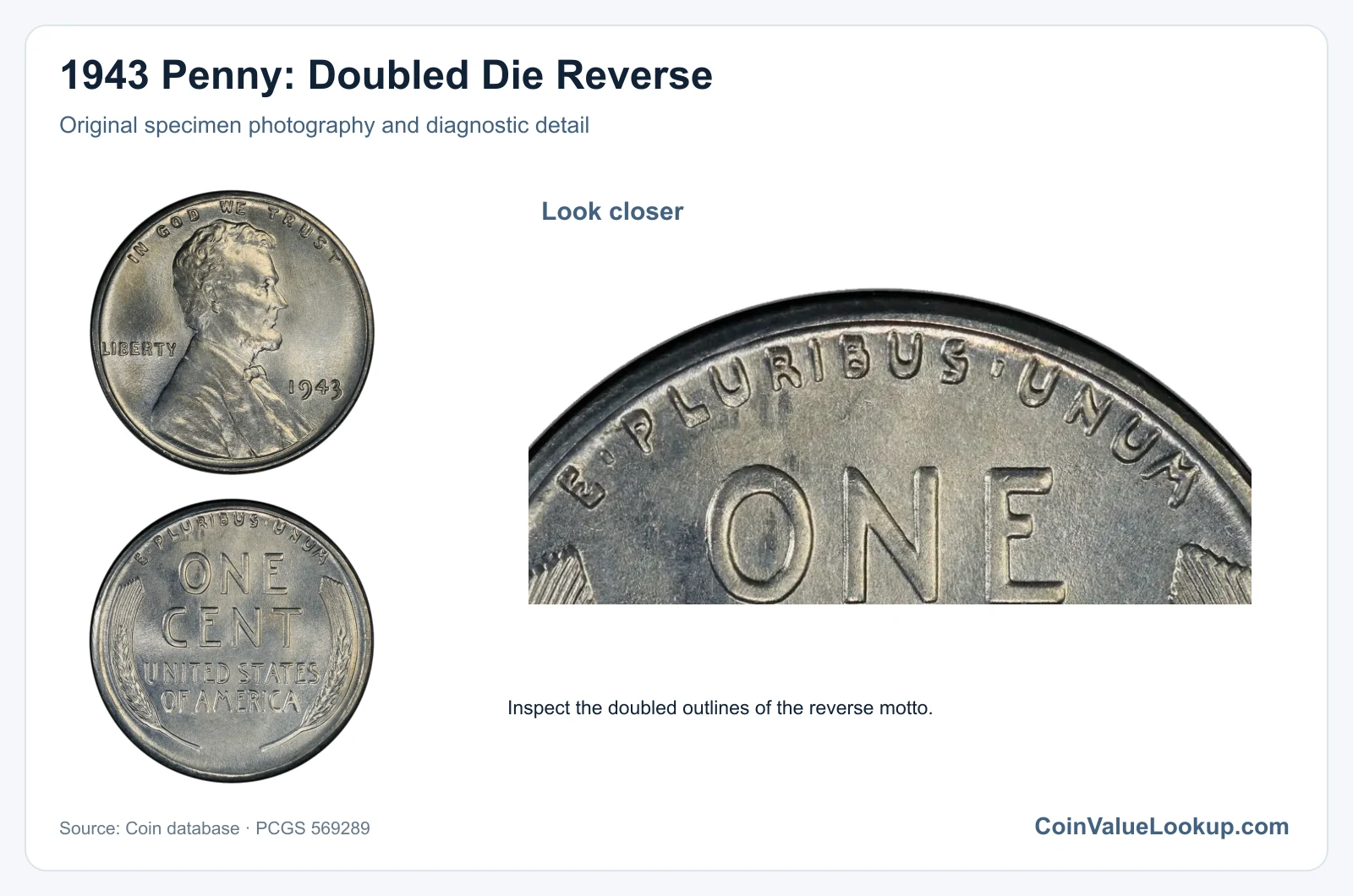
A doubled die reverse on the 1943 cent will show consistent doubling on the reverse legends, such as ONE CENT, UNITED STATES OF AMERICA, or E PLURIBUS UNUM, or on the wheat stalk design contours. Compare your coin's reverse to a normal example under matching light and magnification.
Machine doubling is the most common lookalike. It tends to show flat, shelf-like displacement rather than the rounded, clearly separated letter profiles of a genuine doubled die.
Random damage and scratches can also create misleading lines. Value depends on the strength and visibility of the doubling, authenticated identity, and overall condition.
3. 1943 Wheat Penny — Repunched Mintmark
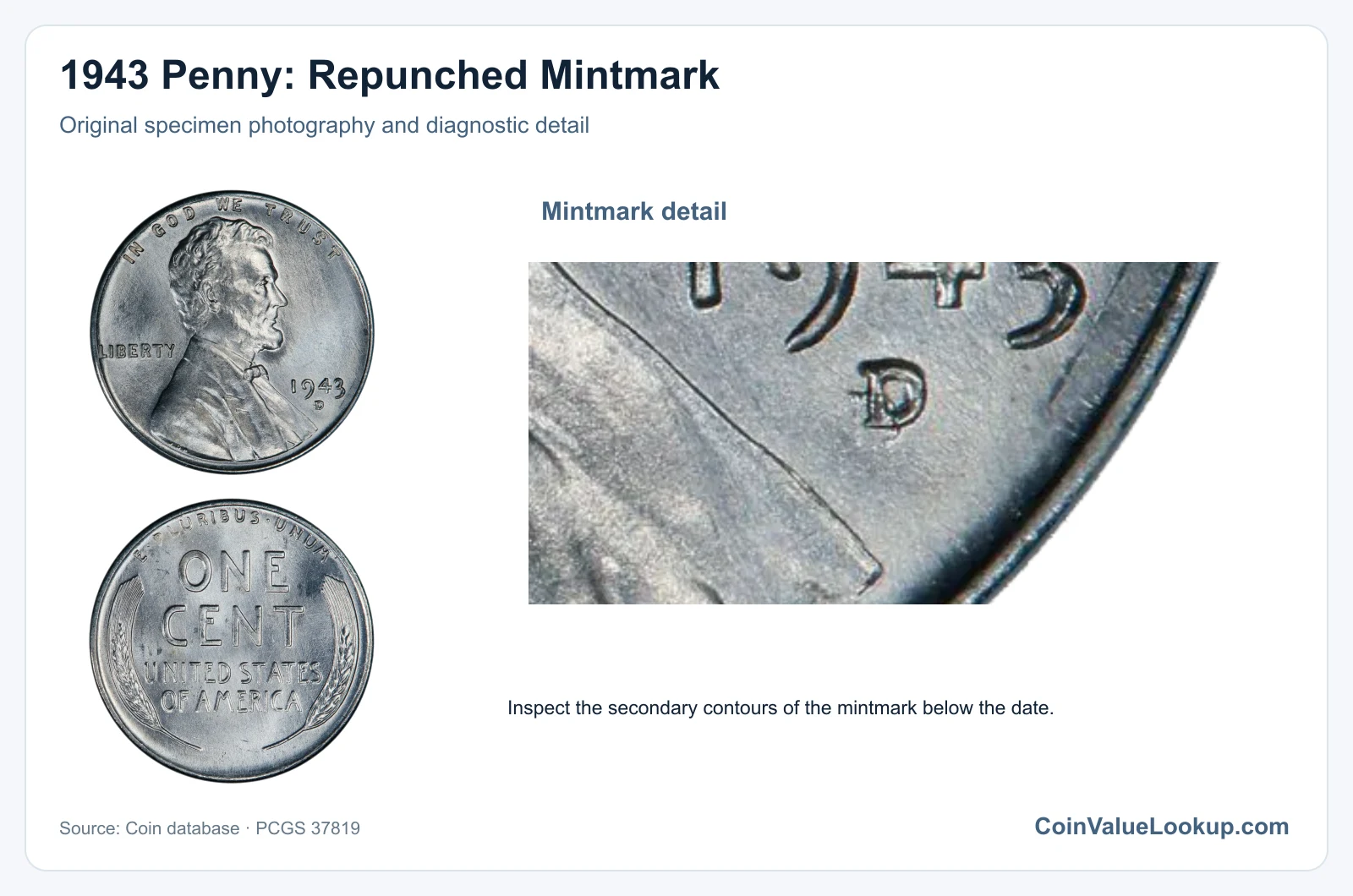
A repunched mintmark occurs when the mintmark punch was applied more than once, leaving traces of a second position. This applies only to Denver (D) and San Francisco (S) coins; Philadelphia had no mintmark to repunch.
Inspect the mintmark area under magnification for remnants of a differently angled or offset letter underneath or beside the primary punch. Compare side by side with a normal single-punch mintmark at the same magnification.
Machine doubling around the mintmark, die chips, and corrosion can create similar visual noise but lack the distinct secondary letter form. Value depends on the prominence of the repunching and the coin's authenticated condition.
4. 1943 Wheat Penny — Wrong Planchet / Off-Metal Strike
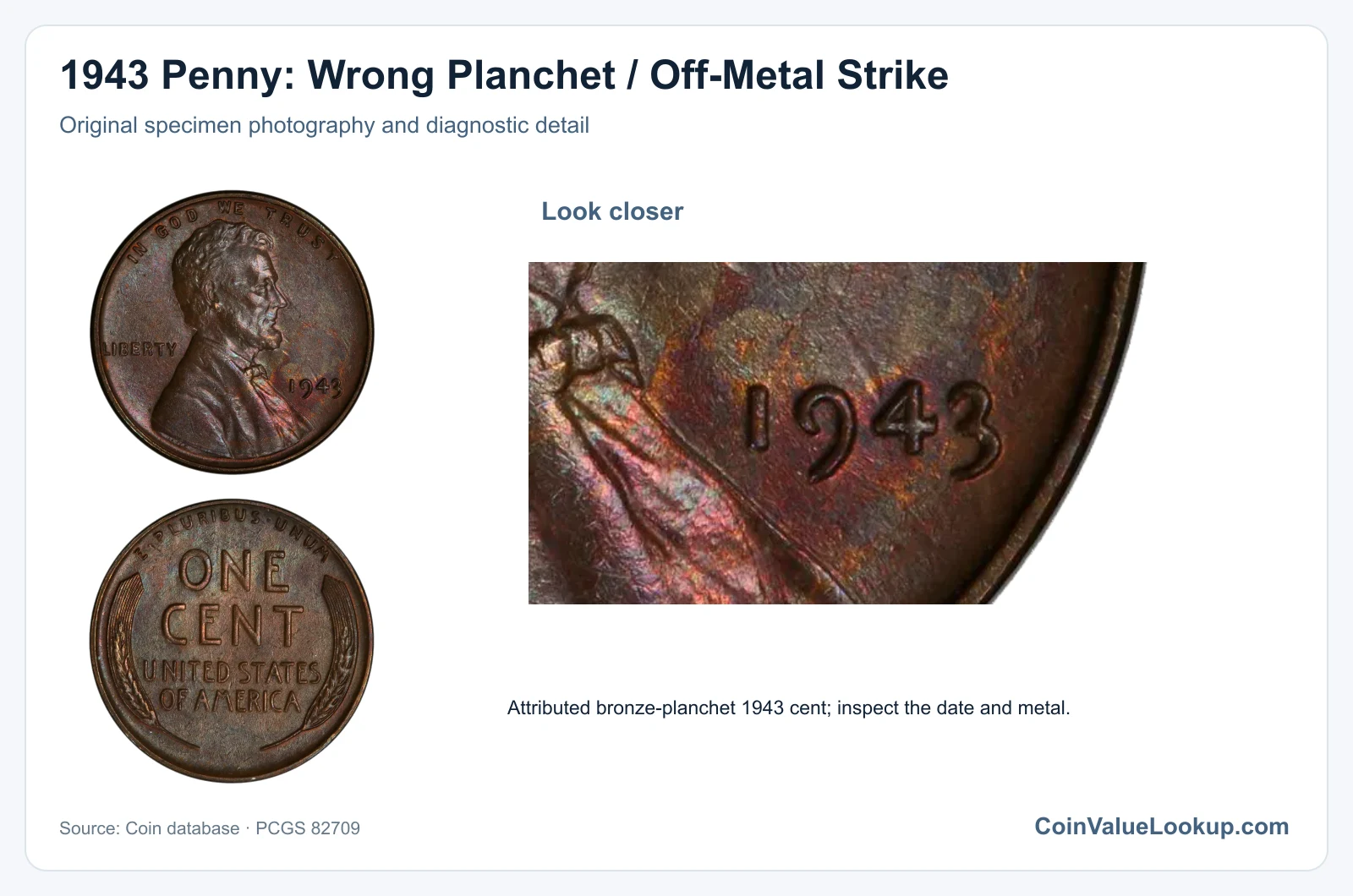
The most famous 1943 error is the wrong-planchet strike on a bronze blank instead of the standard zinc-coated steel. Test with a magnet first: steel cents are magnetic, bronze ones are not.
Then weigh the coin. A genuine bronze 1943 should be about 3.11 grams versus 2.70 grams for steel.
Copper-plated steel cents are the number one lookalike. People have also tooled 1948 cents to make the "8" look like a "3." Examine the date carefully under magnification, paying attention to the shape and spacing of each digit.
Any candidate needs professional third-party authentication. Value is assessed individually by authenticated identity, condition, and the specific mint involved.
5. 1943 Wheat Penny — Off-Center Strike
An off-center strike happens when the planchet is not seated properly between the dies, producing a displaced design and an unstruck crescent of blank metal. The value of an off-center 1943 steel cent depends heavily on how much of the design is missing and whether the date is still fully visible.
A date-visible example is far more collectible.
Do not confuse an off-center strike with a clipped planchet or one-sided die misalignment. Post-mint flattening from a vice or hammer can also shift the design appearance, but it will show damage marks rather than a clean unstruck crescent.
Each off-center coin is assessed individually by its authenticated identity and condition.
6. 1943 Wheat Penny — Die Crack / Die Chip
Die cracks appear as thin raised lines on the coin's surface, tracing the path of a fracture in the die. Die chips are small raised blobs where a piece of the die face broke away.
Both are common on heavily used wartime dies.
Show the raised feature in context with the whole coin. A die crack is raised because it filled a groove in the die; incuse scratches, corrosion lines, and foreign material stuck to the surface are all flat or recessed and do not qualify.
An interior chip is distinct from a rim-connected cud. Value depends on size, location, and the coin's overall condition.
7. 1943 Wheat Penny — Die Break / Cud
A cud is a major die break that connects to the rim, leaving a raised, featureless blob where part of the design should be. It forms when a chunk of the die breaks away entirely.
The coin will show a smooth raised area at the rim and missing design detail in that zone.
Do not mistake a rim dent, corrosion buildup, or a small interior die chip for a cud. A genuine cud has a clear boundary between the normal struck design and the blank raised area, and it always touches the rim.
Value is assessed individually based on the cud's size, location, and the coin's authenticated condition.
8. 1943 Wheat Penny — BIE Die Break
The BIE variety is a specific type of die break that creates a raised vertical line or blob between the letters B and E in LIBERTY. It sits in the space where the letter "I" would logically appear, which is how it got its nickname, even though it is not an engraved letter.
Under magnification, you should see a raised bridge or lump of metal between B and E that is not part of the original design. Dirt, scratches, or added material can look similar at low magnification but will not show the smooth, die-origin character of a genuine break.
Value depends on the prominence of the break and overall coin condition.
9. 1943 Wheat Penny — Double / Multiple Strike
A double or multiple strike occurs when a coin is struck more than once by the dies, producing two or more separate, often displaced or rotated impressions of the design. This is different from a doubled die, which is a single strike from a die that already has doubling engraved into it.
Look for clearly separated ghost images of the portrait, lettering, or date. The second impression will often be offset or tilted relative to the first.
Post-mint impressions added by a vice or deliberate re-striking outside the mint do not qualify. Each example is assessed individually based on the number and displacement of strikes and the coin's authenticated condition.
10. 1943 Wheat Penny — Struck-Through Error
A struck-through error happens when foreign material sits between the die and the planchet during striking, leaving a localized depression or incomplete design on the finished coin. On 1943 steel cents, grease-filled dies and small debris were not unusual given wartime production speed.
Look for a clearly defined area where the design is weak or absent, distinct from overall wear. A grease fill-in tends to be smooth and rounded, while a retained foreign object may leave an impression of its own texture.
Ordinary wear, cleaning marks, and weak strikes from a tired die are common lookalikes. Each struck-through coin is assessed individually by its authenticated identity and the nature of the obstruction.
11. 1943 Wheat Penny — Die Cap / Capped-Die Strike
A die cap forms when a struck coin adheres to the upper die and is carried along for subsequent strikes. The adhered coin gradually cups around the die, and later coins struck beneath it receive a distorted, brockage-like impression on one side.
You may encounter either the capped coin itself, which will be noticeably cupped or bowl-shaped, or a coin struck under that cap, which will show a flattened or mirrored secondary image. A bent coin, vise damage, or a normal weak strike can superficially resemble a cap strike but will lack the characteristic progressive cupping and design transfer.
Professional authentication is essential for confirming this error.
12. 1943 Wheat Penny — Unplated / Partly Unplated Planchet
An unplated or partly unplated 1943 cent was struck on a steel planchet that never received its full zinc coating, or received it only partially. The exposed steel has a dull gray appearance without the brighter zinc luster.
Under magnification, look for uniform bare-steel surfaces and edges that show no evidence of zinc having been stripped away after minting. Rust, chemically removed zinc, and reprocessed steel cents are the main lookalikes.
Post-mint zinc loss from corrosion or deliberate stripping is far more common than a genuine mint error. Check the edges carefully; a factory-unplated blank tends to show consistent bare metal, while a stripped coin often has residual zinc traces in protected areas.
13. 1943 Wheat Penny — Clashed Dies
Clashed dies occur when the obverse and reverse dies strike each other without a planchet between them. The impact transfers traces of each die's design onto the opposing die face.
Subsequent coins struck by those dies will carry faint outlines of the opposite side's design in the fields.
On a 1943 steel cent, look for ghost-like traces of the wheat stalks on the obverse or Lincoln's profile outline on the reverse, aligned where the opposite design would be during normal striking. Scratches, random raised lines, and brockage impressions can mimic clash marks but will not align consistently with the opposing die's design.
Each clashed-die coin is assessed individually by condition and the strength of the clash.
14. 1943 Wheat Penny — Clipped Planchet
A clipped planchet error results when the blank is punched from strip metal that overlaps a previously punched hole or the edge of the strip, leaving a missing section. The clip can be curved, straight, or ragged depending on how it occurred.
On the finished coin, look for a missing portion with a distinct boundary. The metal flow near the clip often produces weakness in the design directly opposite the missing area, called the Blakesley effect.
That weakness helps distinguish a genuine clip from a post-mint edge cut, filed notch, or corrosion damage, none of which produce the opposite-side weakness. Each clipped coin is assessed individually by the clip's size, shape, and the coin's overall authenticated condition.