1948 Washington Quarter Coin Value: How Much Is It Worth?
A 1948 Washington Quarter in ordinary circulated condition carries a guide starting point around $16.43, while selected uncirculated examples at MS65 grade reach up to $65 depending on the mint. These are retail estimates from published guides, not guaranteed sale prices.
Three mint branches exist — Philadelphia, Denver, and San Francisco — all struck in 90% silver, plus a recognized 1948-S prooflike surface variety that can command serious money in high grade.
Fast Way to Identify Your 1948 Washington Quarter
The quickest way to get a preliminary identification of your 1948 quarter is to upload clear photos of both the front and back. Good lighting helps capture the mintmark and surface details that matter for narrowing down the version and approximate grade.
A sharp, well-lit image pair lets us point you in the right direction before you invest in professional grading.
1948 Washington Quarter Value
Upload both sides of your 1948 Washington Quarter.
Front Obverse
Upload photo
Back Reverse
Upload photo
Which 1948 Washington Quarter Versions Are Worth Money?
- The 1948-S Prooflike quarter is the standout branch — a single MS67 PL example sold for $2,880 at Heritage in June 2024, reflecting the premium placed on mirror-like business-strike surfaces from San Francisco.
- The 1948-D in MS65 carries the highest ordinary guide estimate at $65, making Denver mint uncirculated pieces worth checking carefully.
- A 1948-S/S Repunched Mintmark specimen graded MS64 sold for $4,000 at Heritage in March 2018 — a single attributed example recorded by PCGS, so confirmed RPM coins carry real weight.
- All three mints produced 90% silver quarters, so even well-worn examples hold baseline silver-content value starting around $16.43 at the G4 grade level.
Step 1: Identify Your 1948 Washington Quarter Mint Mark and Version
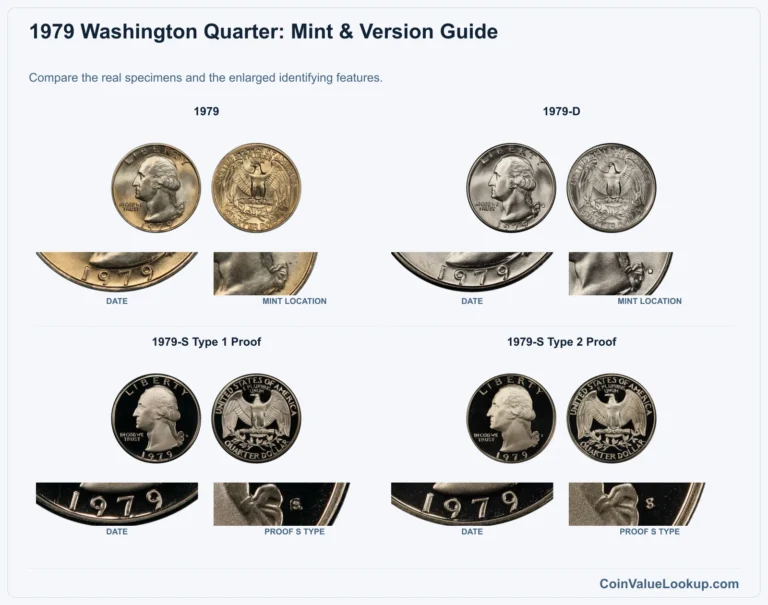
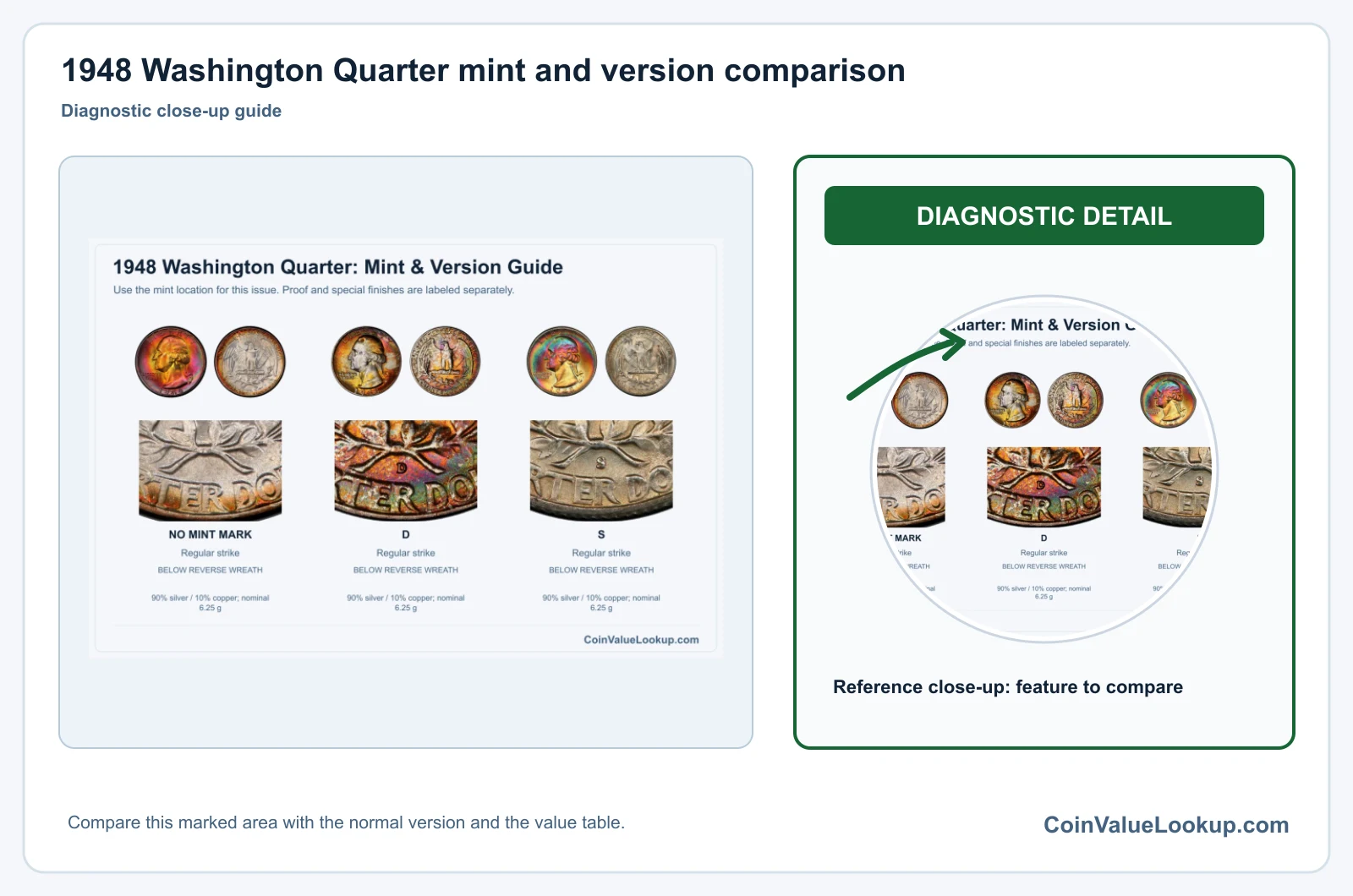
Start with the date on the obverse — you should see 1948 clearly. Flip the coin over and look below the wreath on the reverse for a small mintmark letter.
A "D" means Denver, an "S" means San Francisco, and a blank space means Philadelphia, which used no mintmark in this era.
All three mints struck the same composition: 90% silver and 10% copper, weighing about 6.25 grams and measuring roughly 24.3 mm across. The design shows George Washington facing left on the obverse, with an eagle holding arrows and olive branches on the reverse.
There is also a recognized 1948-S prooflike branch. These are business strikes with unusually reflective, mirror-like fields — not proofs.
The U.S. Mint did not produce proof quarters in 1948. If your San Francisco coin has glassy, reflective surfaces rather than the normal satin luster of a business strike, it may qualify for the prooflike designation, but that requires professional attribution.
Don't assume unusual-looking damage or the absence of a mintmark creates a premium error. Philadelphia coins simply lack a mintmark by design.
Step 2: Check Your 1948 Washington Quarter Grade
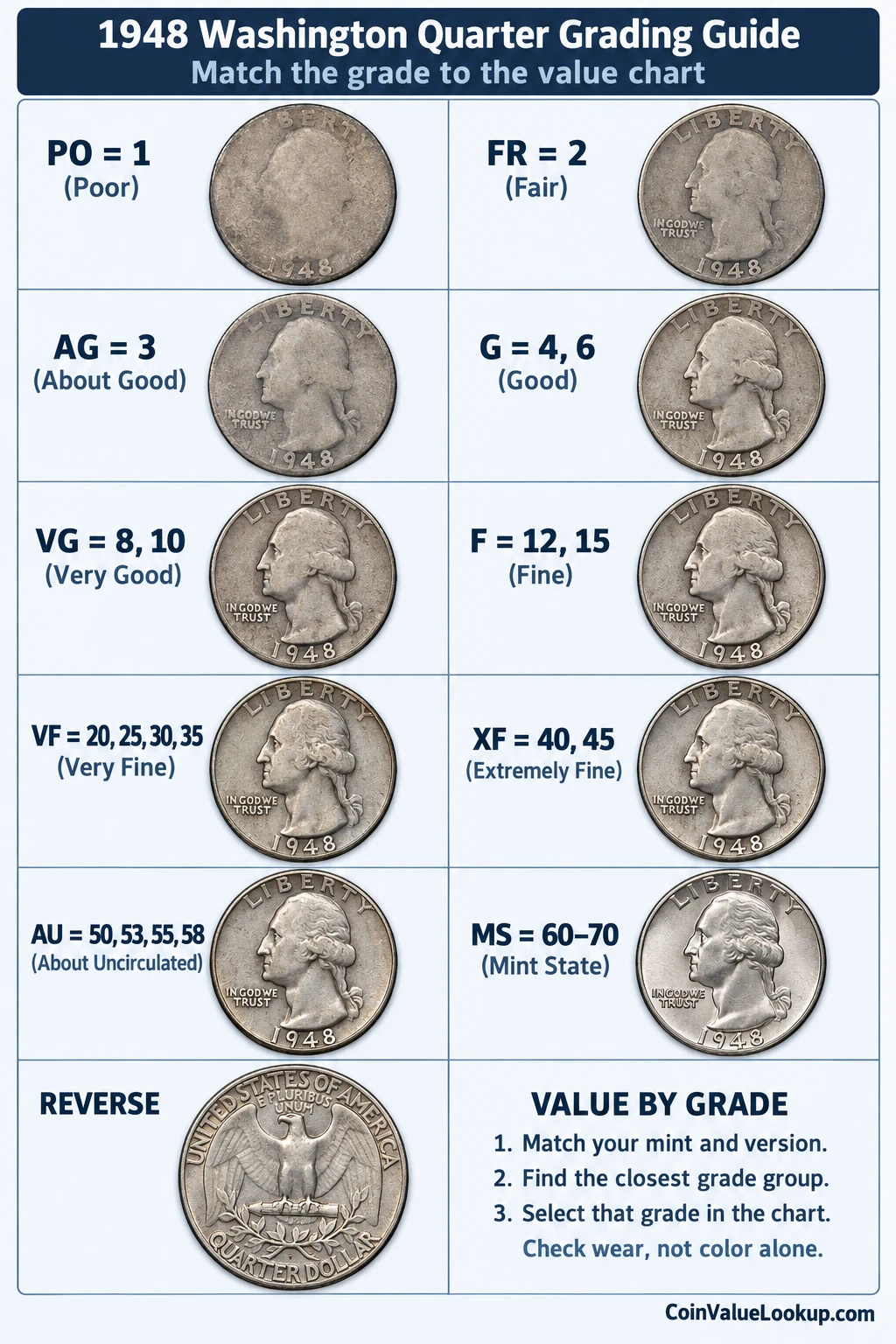
When grading a 1948 Washington Quarter, focus first on the hair detail above the ear and the cheek and jawline on the obverse. These are the highest points of the design and the first places to lose detail from circulation wear.
On the reverse, check the eagle's breast feathers for flattening.
The key distinction is between genuine wear — which shows luster loss alongside detail flattening — and a weak strike, which can look similar but retains underlying luster in the fields. A weakly struck coin and a lightly worn coin are not the same thing, and they're valued differently.
Use the comparison image to judge your coin's condition against known grade examples. Also inspect the fields for cleaning lines, which appear as fine parallel scratches, and check the rim for nicks and contact marks.
These surface problems lower the effective grade even when the design detail looks sharp.
Coin Value Lookup is a handy place to look up guides for Washington Quarters and other series when you want to compare values across different years and mints.
Step 3: Check 1948 Washington Quarter Value by Mint and Version
1948 Washington Quarter
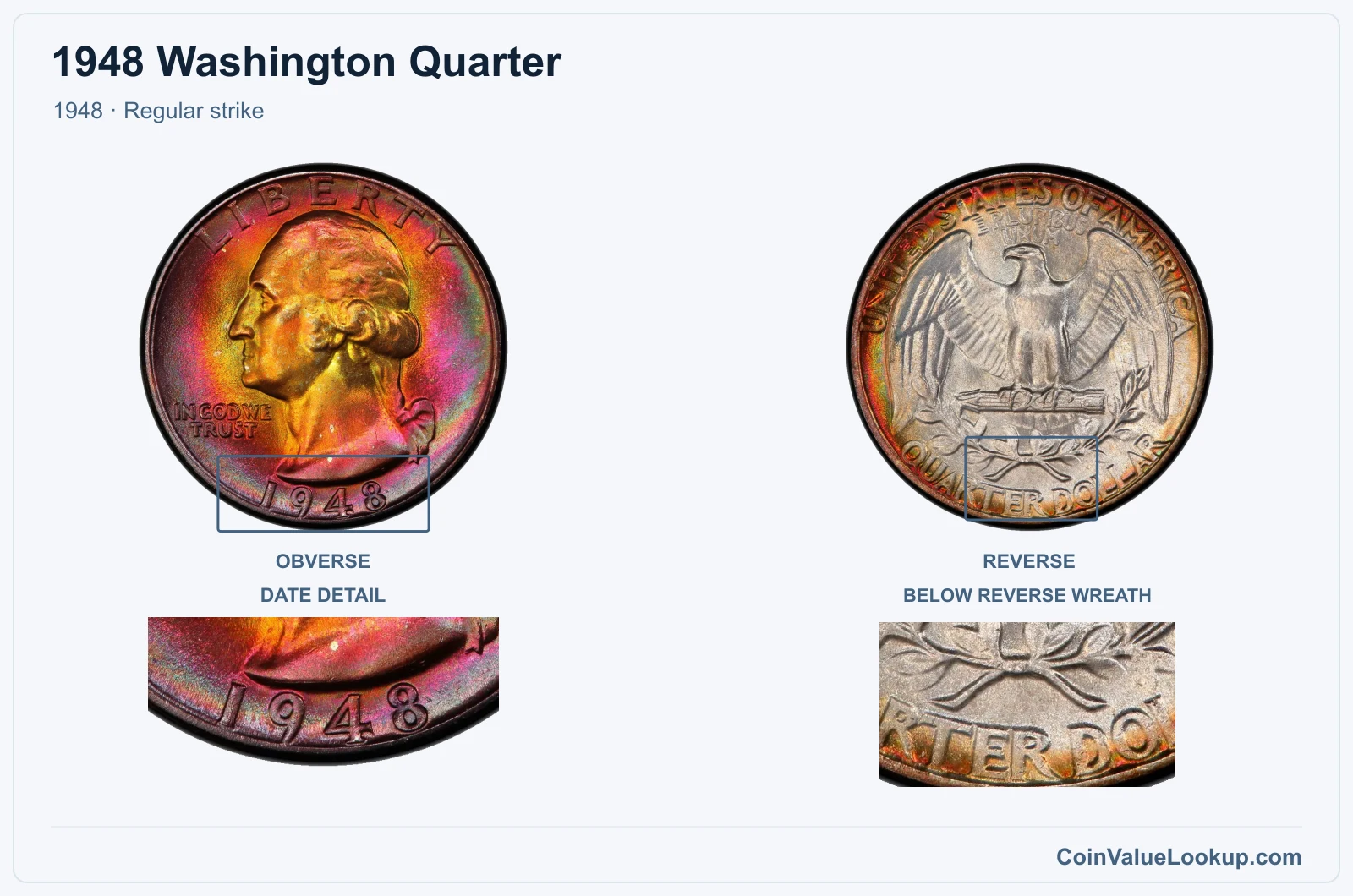
The 1948 Philadelphia quarter has no mintmark — just a blank space below the reverse wreath. That's normal, not an error.
In 90% silver at 6.25 grams, even a worn example in G4 condition guides at about $16.43 according to USA Coin Book estimates.
At the uncirculated level, an MS60 guides around $20, and a gem MS65 reaches roughly $39. The jump between those two grades reflects the importance of clean surfaces and strong luster.
Philadelphia coins from this year are common enough in lower grades but become harder to find with full original surfaces at the gem level.
| Range | Grade | Price | Auction Records | Appraisal |
|---|---|---|---|---|
| PO | PO 1 | — | Coin Identifier | |
| FR | FR 2 | — | Coin Identifier | |
| AG | AG 3 | — | Coin Identifier | |
| G | G 4 | — | Coin Identifier | |
| G 6 | — | Coin Identifier | ||
| VG | VG 8 | — | Coin Identifier | |
| VG 10 | — | Coin Identifier | ||
| F | F 12 | — | Coin Identifier | |
| F 15 | — | Coin Identifier | ||
| VF | VF 20 | — | Coin Identifier | |
| VF 25 | — | Coin Identifier | ||
| VF 30 | — | Coin Identifier | ||
| VF 35 | — | Coin Identifier | ||
| XF | XF 40 | — | Coin Identifier | |
| XF 45 | — | Coin Identifier | ||
| AU | AU 50 | — | Coin Identifier | |
| AU 53 | — | Coin Identifier | ||
| AU 55 | — | Coin Identifier | ||
| AU 58 | — | Coin Identifier | ||
| MS | MS 60 | — | Coin Identifier | |
| MS 61 | — | Coin Identifier | ||
| MS 62 | Coin Identifier | |||
| MS 63 | Coin Identifier | |||
| MS 64 | Coin Identifier | |||
| MS 65 | Coin Identifier | |||
| MS 66 | Coin Identifier | |||
| MS 67 | Coin Identifier | |||
| MS 68 | Coin Identifier | |||
| MS 69 | — | — | — | |
| MS 70 | — | — | — |
1948 Washington Quarter — D
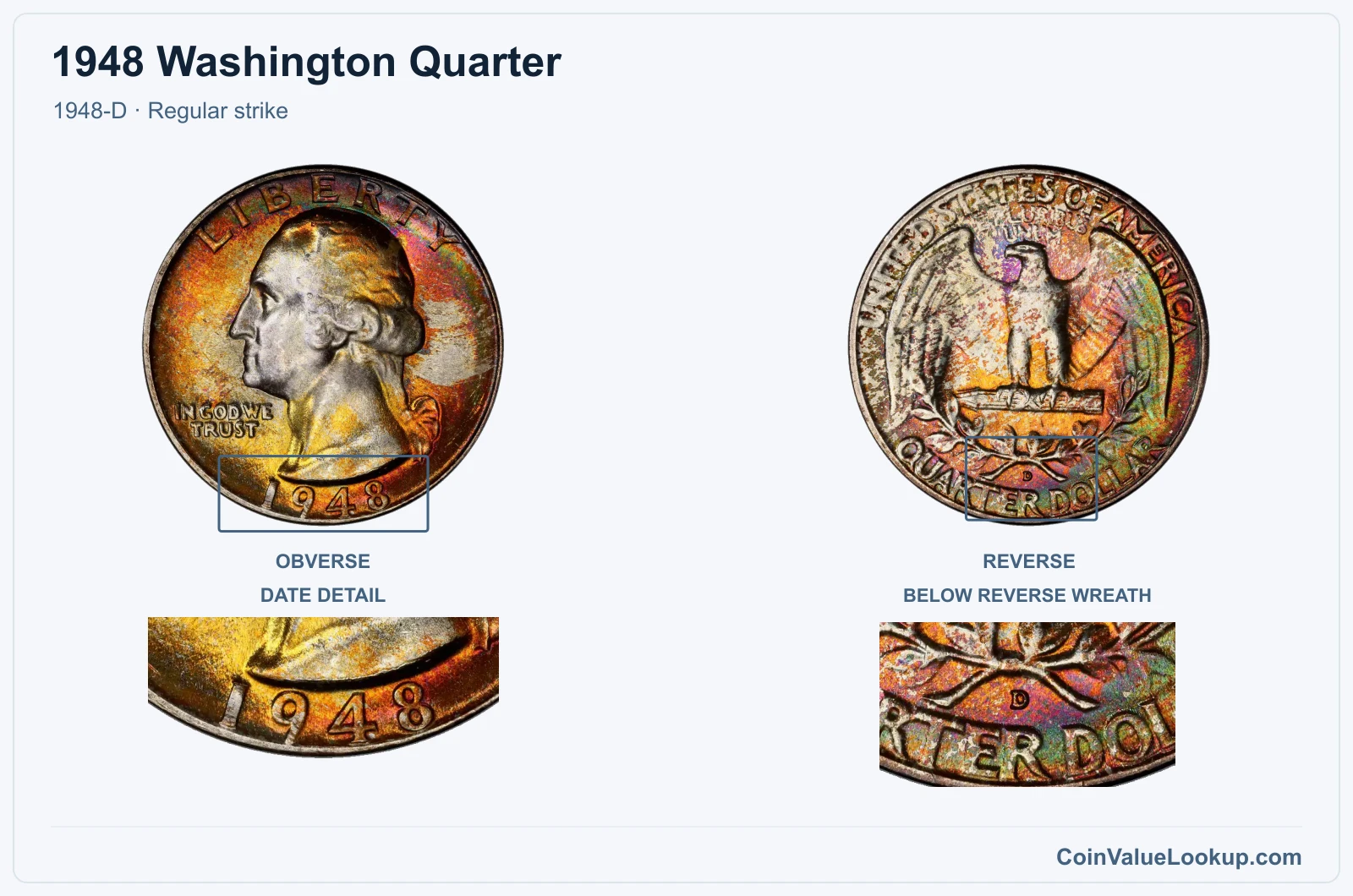
Look for a small "D" mintmark below the wreath to confirm a Denver issue. Same silver alloy, same design, but the 1948-D carries higher guide values in uncirculated grades than its Philadelphia sibling.
A G4 example guides at about $16.43, on par with the other mints for circulated pieces. The gap opens up higher on the scale: MS60 guides around $24 and MS65 reaches approximately $65, the highest ordinary guide figure among the three 1948 mint branches.
If you have a Denver quarter with clean, lustrous surfaces and minimal bag marks, it is worth a closer look at that grade boundary.
| Range | Grade | Price | Auction Records | Appraisal |
|---|---|---|---|---|
| PO | PO 1 | — | Coin Identifier | |
| FR | FR 2 | — | Coin Identifier | |
| AG | AG 3 | — | Coin Identifier | |
| G | G 4 | — | Coin Identifier | |
| G 6 | — | Coin Identifier | ||
| VG | VG 8 | — | Coin Identifier | |
| VG 10 | — | Coin Identifier | ||
| F | F 12 | — | Coin Identifier | |
| F 15 | — | Coin Identifier | ||
| VF | VF 20 | — | Coin Identifier | |
| VF 25 | — | Coin Identifier | ||
| VF 30 | — | Coin Identifier | ||
| VF 35 | — | Coin Identifier | ||
| XF | XF 40 | — | Coin Identifier | |
| XF 45 | — | Coin Identifier | ||
| AU | AU 50 | — | Coin Identifier | |
| AU 53 | — | Coin Identifier | ||
| AU 55 | — | Coin Identifier | ||
| AU 58 | Coin Identifier | |||
| MS | MS 60 | — | Coin Identifier | |
| MS 61 | — | Coin Identifier | ||
| MS 62 | — | Coin Identifier | ||
| MS 63 | Coin Identifier | |||
| MS 64 | Coin Identifier | |||
| MS 65 | Coin Identifier | |||
| MS 66 | Coin Identifier | |||
| MS 67 | Coin Identifier | |||
| MS 68 | Coin Identifier | |||
| MS 69 | — | — | — | |
| MS 70 | — | — | — |
1948 Washington Quarter — S
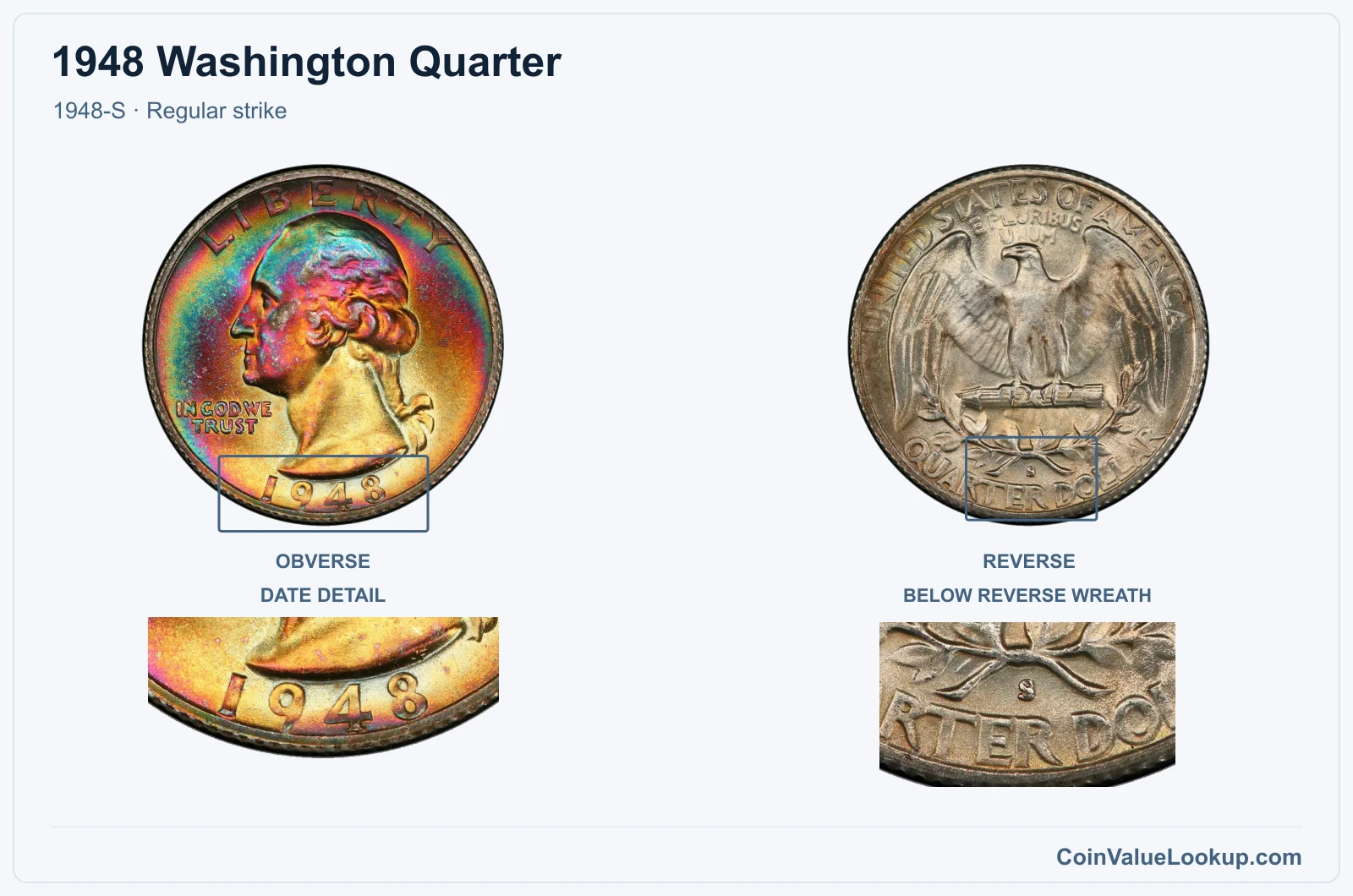
The 1948-S carries a small "S" mintmark below the reverse wreath. In circulated condition it guides at the same $16.43 baseline as the other mints at G4.
Uncirculated values come in at about $20 for MS60 and $54 for MS65, placing it between Philadelphia and Denver for gem-grade pricing.
San Francisco quarters from this year are also the host mint for two special attributions — the prooflike surface variety and the repunched mintmark — so any 1948-S is worth examining under magnification before dropping it into a common-date pile.
| Range | Grade | Price | Auction Records | Appraisal |
|---|---|---|---|---|
| PO | PO 1 | — | Coin Identifier | |
| FR | FR 2 | — | Coin Identifier | |
| AG | AG 3 | — | Coin Identifier | |
| G | G 4 | — | Coin Identifier | |
| G 6 | — | Coin Identifier | ||
| VG | VG 8 | — | Coin Identifier | |
| VG 10 | — | Coin Identifier | ||
| F | F 12 | — | Coin Identifier | |
| F 15 | — | Coin Identifier | ||
| VF | VF 20 | — | Coin Identifier | |
| VF 25 | — | Coin Identifier | ||
| VF 30 | — | Coin Identifier | ||
| VF 35 | — | Coin Identifier | ||
| XF | XF 40 | — | Coin Identifier | |
| XF 45 | — | Coin Identifier | ||
| AU | AU 50 | — | Coin Identifier | |
| AU 53 | — | Coin Identifier | ||
| AU 55 | — | Coin Identifier | ||
| AU 58 | — | Coin Identifier | ||
| MS | MS 60 | — | Coin Identifier | |
| MS 61 | — | Coin Identifier | ||
| MS 62 | — | Coin Identifier | ||
| MS 63 | Coin Identifier | |||
| MS 64 | Coin Identifier | |||
| MS 65 | Coin Identifier | |||
| MS 66 | Coin Identifier | |||
| MS 67 | Coin Identifier | |||
| MS 68 | Coin Identifier | |||
| MS 69 | — | — | — | |
| MS 70 | — | — | — |
1948 Washington Quarter — S Prooflike Quarter
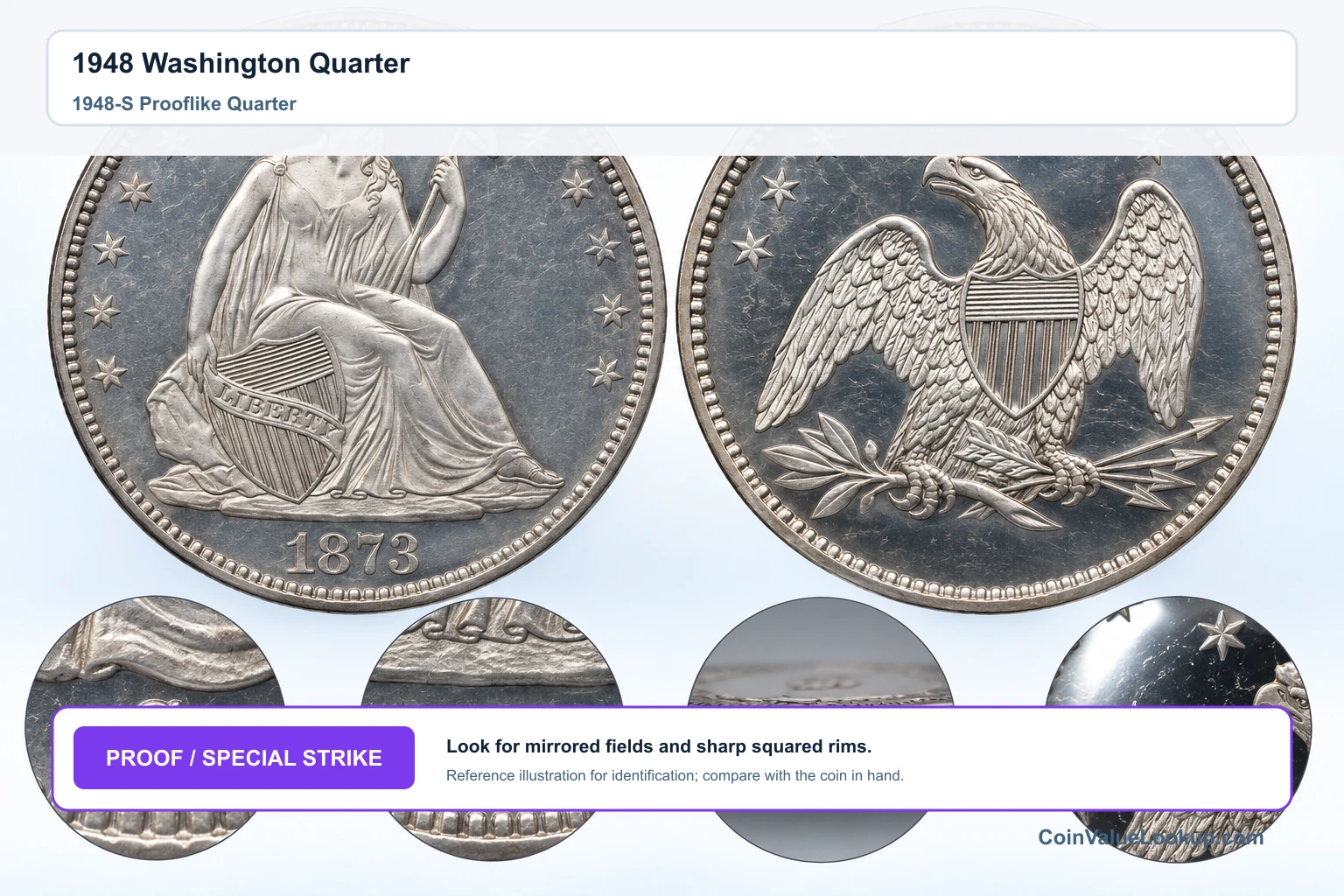
This is not a proof. The U.S. Mint stopped making proof coins during the wartime period and had not resumed them by 1948.
A 1948-S Prooflike quarter is a regular business strike that happened to receive mirror-like reflective fields, likely from freshly polished dies early in a die run.
PCGS recognizes this variety with a PL designation. One example graded MS67 PL sold for $2,880 at a Heritage auction in June 2024.
That price reflects an exceptional grade for a single attributed coin and should not be assumed as a baseline for lower-grade prooflike pieces — no lower-grade pricing curve is available.
To qualify, the coin needs genuinely reflective fields, not just clean luster. Professional attribution is essential because polished or cleaned coins can mimic mirror surfaces to an untrained eye.
Look for deep reflections in the flat areas surrounding Washington's portrait and the eagle.
Ordinary-issue reference: Ordinary-issue reference only: The table below shows prices for the 1948-S Washington Quarter (regular strike). It does not represent the value of the specific 1948-S Prooflike Quarter variety or its variety premium. Year, mint, metal and strike type are matched; the specific variety is not priced by this table.
Range Grade
Price Auction Records Appraisal PO PO 1
—
Coin Identifier FR FR 2
—
Coin Identifier AG AG 3
—
Coin Identifier G G 4
—
Coin Identifier
G 6
—
Coin Identifier VG VG 8
—
Coin Identifier
VG 10
—
Coin Identifier F F 12
—
Coin Identifier
F 15
—
Coin Identifier VF VF 20
—
Coin Identifier
VF 25
—
Coin Identifier
VF 30
—
Coin Identifier
VF 35
—
Coin Identifier XF XF 40
—
Coin Identifier
XF 45
—
Coin Identifier AU AU 50
—
Coin Identifier
AU 53
—
Coin Identifier
AU 55
—
Coin Identifier
AU 58
—
Coin Identifier MS MS 60
—
Coin Identifier
MS 61
—
Coin Identifier
MS 62
—
Coin Identifier
MS 63
Coin Identifier
MS 64
Coin Identifier
MS 65
Coin Identifier
MS 66
Coin Identifier
MS 67
Coin Identifier
MS 68
Coin Identifier
MS 69
—
—
—
MS 70
—
—
—
1948 Washington Quarter Error List
1. 1948 Washington Quarter — Repunched S Mintmark
The 1948-S/S Repunched Mintmark shows a second impression of the S mintmark overlapping the primary S below the reverse wreath. Under magnification, you should see a distinct secondary S contour — not just an irregular bump, scratch, or photographic shadow.
PCGS has recorded this variety. A single attributed specimen graded MS64 sold for $4,000 at Heritage in March 2018.
That is one coin at one grade, so treat it as an example rather than a guaranteed market price.
Machine doubling is the most common lookalike. It produces a flat, shelf-like distortion rather than a clearly doubled die-made impression.
Wear marks, scratches, or added metal from damage also do not match the crisp repeated contour of a genuine repunched mintmark. If you think you see doubling on your S, compare it carefully against the attributed specimen before drawing conclusions.
2. 1948 Washington Quarter — Broadstrike
A broadstrike happens when a coin is struck without the normal collar die that constrains the blank's edge. The result is a quarter that spreads outward, appearing slightly wider than normal with a distorted or absent rim, while the full design is still present on both faces.
The 1948 quarter has been listed in broadstrike error searches. Condition, the degree of visible spread, and overall eye appeal all affect what such a coin is worth, but no specific price range is available for this error on a 1948 quarter.
Don't confuse a broadstrike with an off-center strike, which shifts the design and leaves a blank crescent. Also rule out coins that were flattened or squeezed after leaving the mint — post-mint damage lacks the characteristic even metal flow and altered edge profile of a genuine broadstrike.
3. 1948 Washington Quarter — Lamination / Split Planchet
A lamination error occurs when the metal planchet separates into layers, creating a visible peel, flap, or split within the coin's body. On a 1948 silver quarter, this might appear as a raised flap of metal or a missing patch where a layer has broken away entirely.
This error type has been listed for 1948 quarters. The value depends on the size and visibility of the affected area and the coin's overall condition, but no specific price range is available.
When photographing a suspected lamination, capture the edge and the affected face together — this helps show the depth of the separation. Lookalikes include surface scraping, corrosion pitting, and coins that have been deliberately cut or gouged.
Genuine lamination follows the internal structure of the alloy rather than showing tool marks or external chemical damage.
4. 1948 Washington Quarter — Off-Center Strike
An off-center strike occurs when the planchet is not properly seated between the dies, resulting in a displaced design and an unstruck crescent of blank metal on one side. The date should still be visible for the coin to be identifiable and collectible as a 1948 quarter.
This error has been listed for 1948 quarters. Value depends on the percentage of off-center displacement, whether the date is readable, and overall condition, but no specific price range is available.
A clipped planchet — where a curved bite is missing from the edge — can look similar at first glance but affects only one section of the rim without shifting the entire design. One-sided die misalignment or post-mint flattening can also mimic off-center appearance.
A genuine off-center strike shows a consistent blank crescent opposite the shifted design, with normal strike depth on the impressed portion.