1949 Jefferson Nickel Coin Value: How Much Is It Worth?
The 1949 Jefferson nickel is a coin worth investigating before you toss it in a jar. Ordinary uncirculated examples range from about $1.88 at MS60 up to $30 at MS65, depending on mint.
The real prize is the D over S overmintmark variety, which can reach $612 in MS65. Full Steps designations, authenticated errors, and strong original luster all push values higher still.
Fast Way to Identify Your 1949 Jefferson Nickel
Want a quick read on your 1949 nickel? Upload clear photos of both the front and back of your coin.
Our identifier can offer a preliminary identification of your coin's mint, version, and general condition. It is not a substitute for professional authentication or grading, but it gives you a solid starting point.
1949 Jefferson Nickel Value
Upload both sides of your 1949 Jefferson Nickel.
Front Obverse
Upload photo
Back Reverse
Upload photo
Which 1949 Jefferson Nickel Versions Are Worth Money?
- The 1949-D D/S overmintmark variety commands guide values of about $249 at MS60 and $612 at MS65 — many times the price of a normal Denver nickel.
- Mint State coins with strong original luster and fully separated Monticello steps can significantly outperform ordinary worn examples from any mint.
Step 1: Identify Your 1949 Jefferson Nickel Mint Mark and Version
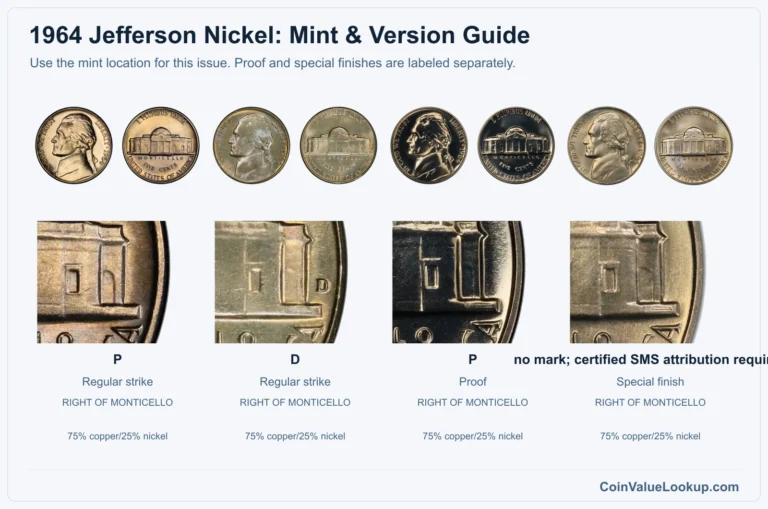
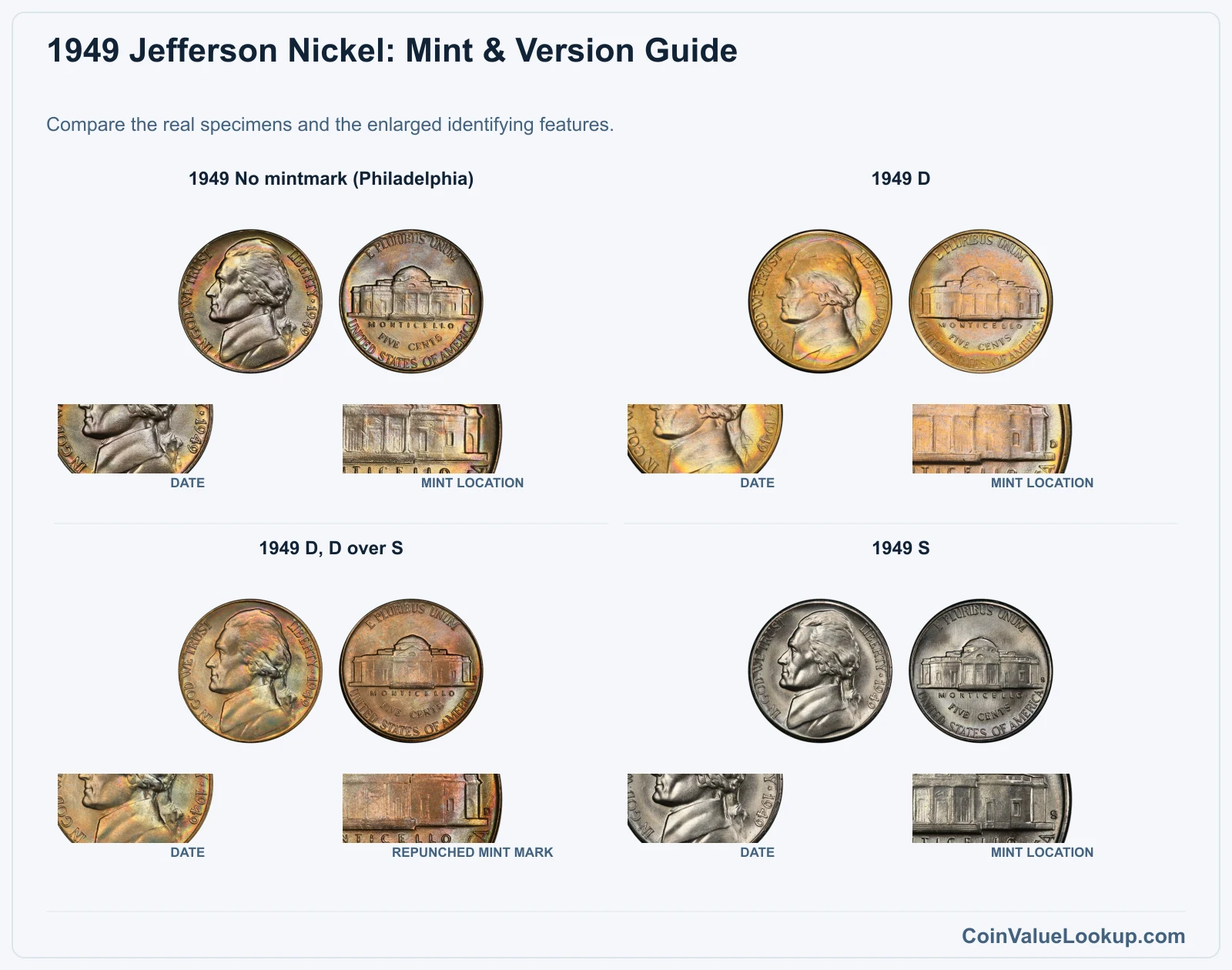
Start with the date on the obverse — it should read 1949. Then flip to the reverse and look to the right of Monticello for a small mintmark.
No letter means Philadelphia. A "D" means Denver, and an "S" means San Francisco.
Here is the critical step: if you see a D mintmark, grab a loupe and look closely for remnants of an S underneath it. That D over S variety is a completely different animal in terms of value.
All regular 1949 nickels are struck in 75% copper and 25% nickel, weigh a nominal 5.00 grams, and measure 21.2 mm with a plain edge. There were no proof nickels made in 1949 — proof production resumed in 1950 at Philadelphia.
A polished business strike is not a proof, no matter how shiny it looks.
Step 2: Check Your 1949 Jefferson Nickel Grade
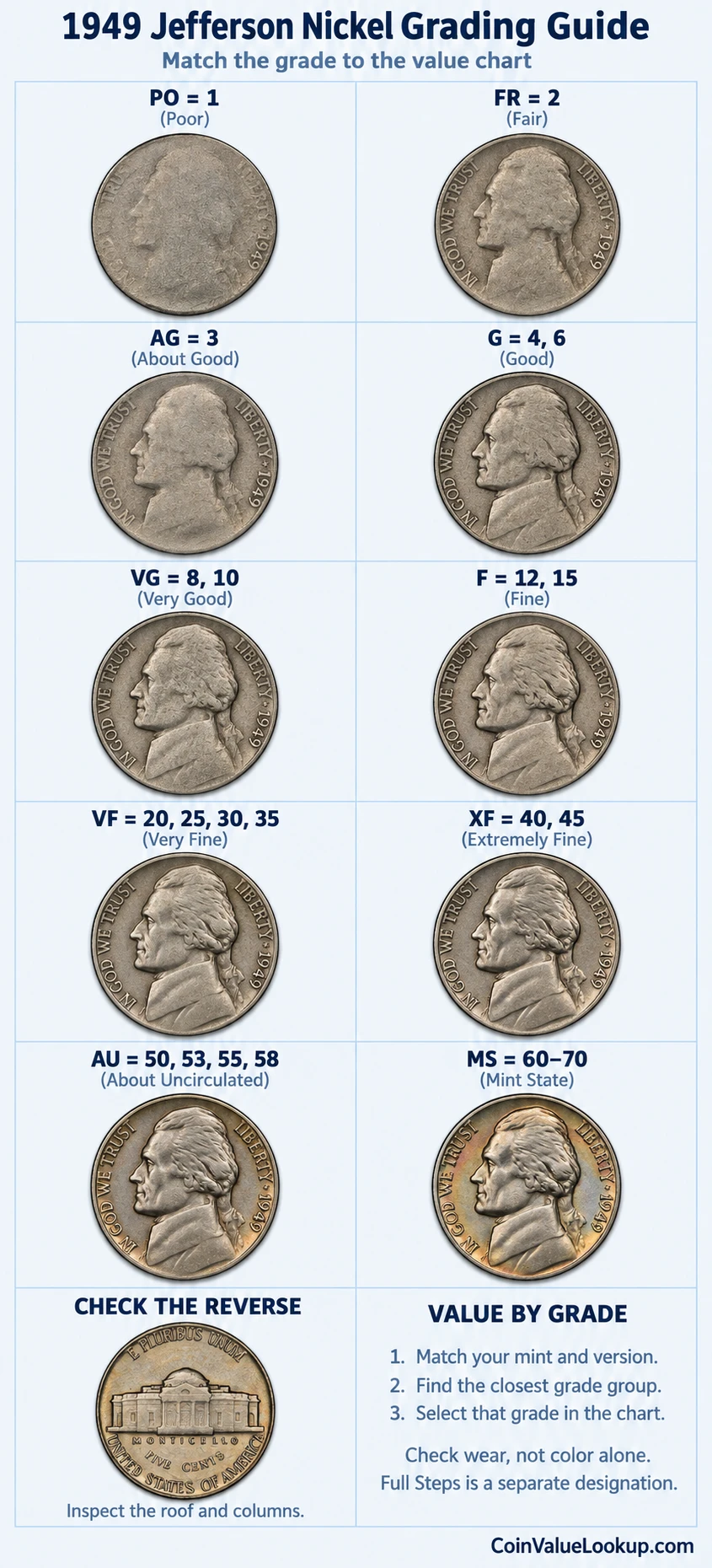
Focus on two areas. On the obverse, check Jefferson's cheek and the hair detail above his ear — these are the first spots to show wear.
On the reverse, examine the Monticello roof lines and column definition.
Luster matters as much as detail. A coin can have sharp features but show bag marks and dull surfaces that keep it in lower Mint State grades.
Use the comparison image to gauge where your coin falls.
The steps at the base of Monticello deserve special attention. The PCGS Full Steps designation requires at least five clearly separated steps on a coin graded MS60 or above.
Weak steps from a soft strike are not the same as wear, but either way, interrupted steps disqualify a coin from that premium designation.
Step 3: Check 1949 Jefferson Nickel Value by Mint and Version
1949 Jefferson Nickel — No mintmark (Philadelphia)
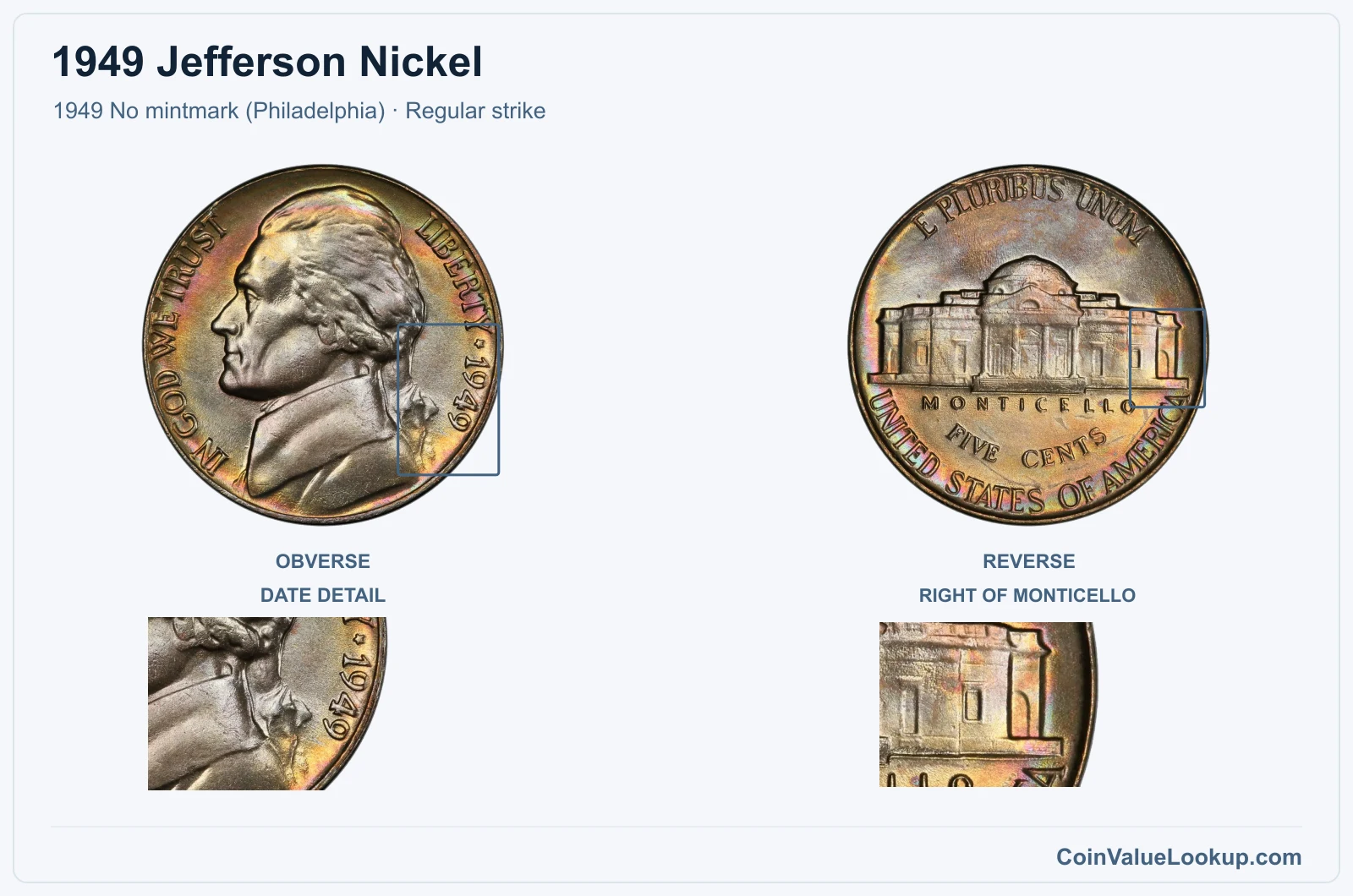
The 1949 Philadelphia nickel carries no mintmark. It is struck in 75% copper and 25% nickel at 5.00 grams.
In uncirculated condition, the USA Coin Book guide places it around $3.08 at MS60 and about $30 at MS65.
Worn circulated examples are common enough that no separate circulated guide price is provided here. The value jump happens when you find a piece with full original luster and clean surfaces.
Full Steps examples carry an additional premium beyond these ordinary Mint State figures.
| Range | Grade | Price | Auction Records | Appraisal |
|---|---|---|---|---|
| PO | PO 1 | — | Coin Identifier | |
| FR | FR 2 | — | Coin Identifier | |
| AG | AG 3 | — | Coin Identifier | |
| G | G 4 | — | Coin Identifier | |
| G 6 | — | Coin Identifier | ||
| VG | VG 8 | — | Coin Identifier | |
| VG 10 | — | Coin Identifier | ||
| F | F 12 | — | Coin Identifier | |
| F 15 | — | Coin Identifier | ||
| VF | VF 20 | — | Coin Identifier | |
| VF 25 | — | Coin Identifier | ||
| VF 30 | — | Coin Identifier | ||
| VF 35 | — | Coin Identifier | ||
| XF | XF 40 | — | Coin Identifier | |
| XF 45 | — | Coin Identifier | ||
| AU | AU 50 | — | Coin Identifier | |
| AU 53 | — | Coin Identifier | ||
| AU 55 | — | Coin Identifier | ||
| AU 58 | — | Coin Identifier | ||
| MS | MS 60 | — | Coin Identifier | |
| MS 61 | — | Coin Identifier | ||
| MS 62 | — | Coin Identifier | ||
| MS 63 | Coin Identifier | |||
| MS 64 | Coin Identifier | |||
| MS 65 | Coin Identifier | |||
| MS 66 | Coin Identifier | |||
| MS 67 | Coin Identifier | |||
| MS 68 | — | — | — | |
| MS 69 | — | — | — | |
| MS 70 | — | — | — |
1949 Jefferson Nickel — D
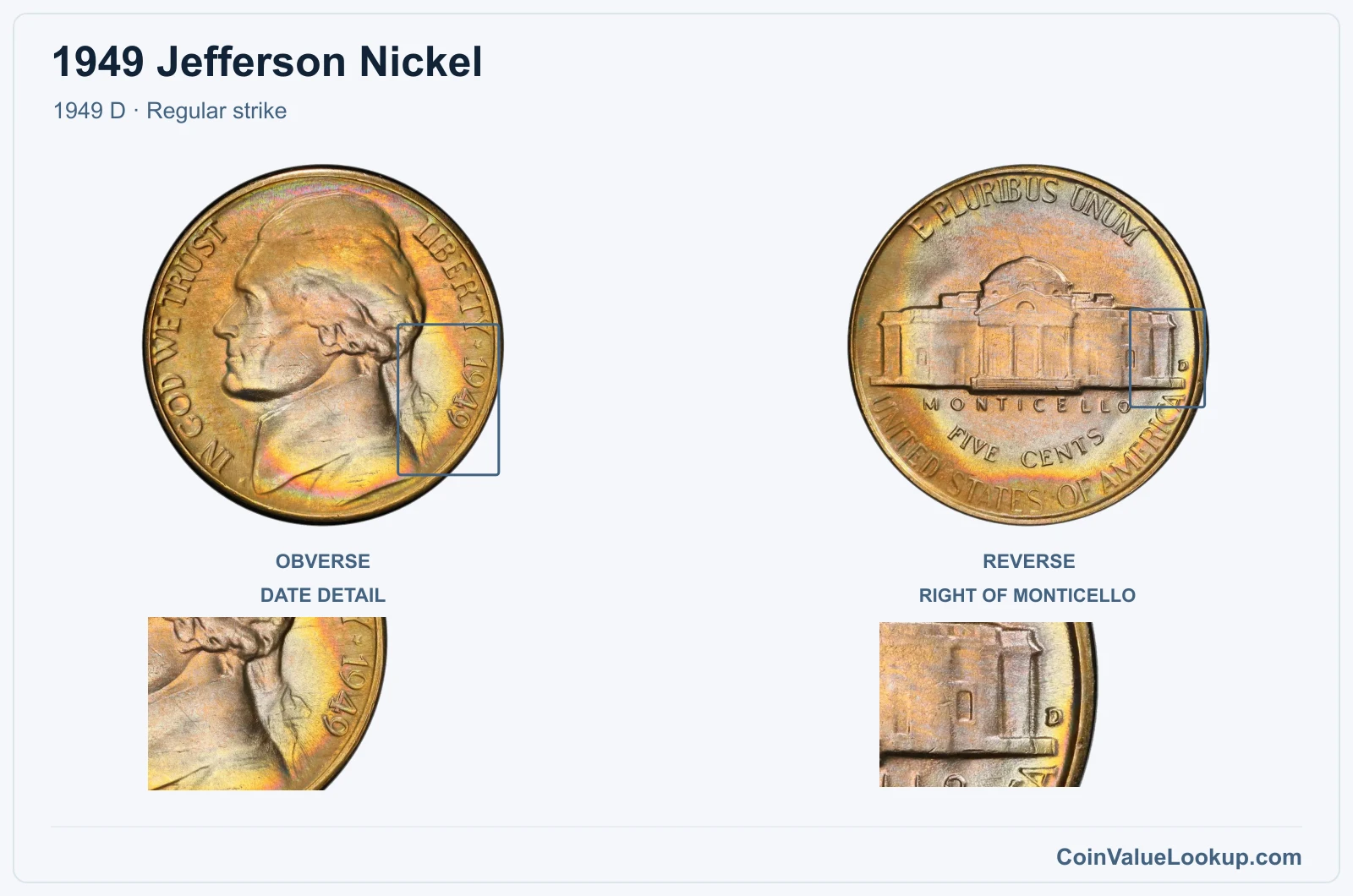
The 1949-D is the Denver mint issue, identified by a small "D" to the right of Monticello on the reverse. Same alloy, same weight, same design.
Guide estimates put it near $1.88 at MS60 and about $25 at MS65.
Before you price yours as a regular D, check that mintmark carefully. The much more valuable D over S variety shares this date and mint — the only difference is what's hiding under that D.
| Range | Grade | Price | Auction Records | Appraisal |
|---|---|---|---|---|
| PO | PO 1 | — | Coin Identifier | |
| FR | FR 2 | — | Coin Identifier | |
| AG | AG 3 | — | Coin Identifier | |
| G | G 4 | — | Coin Identifier | |
| G 6 | — | Coin Identifier | ||
| VG | VG 8 | — | Coin Identifier | |
| VG 10 | — | Coin Identifier | ||
| F | F 12 | — | Coin Identifier | |
| F 15 | — | Coin Identifier | ||
| VF | VF 20 | — | Coin Identifier | |
| VF 25 | — | Coin Identifier | ||
| VF 30 | — | Coin Identifier | ||
| VF 35 | — | Coin Identifier | ||
| XF | XF 40 | — | Coin Identifier | |
| XF 45 | — | Coin Identifier | ||
| AU | AU 50 | — | Coin Identifier | |
| AU 53 | — | Coin Identifier | ||
| AU 55 | — | Coin Identifier | ||
| AU 58 | — | Coin Identifier | ||
| MS | MS 60 | — | Coin Identifier | |
| MS 61 | — | Coin Identifier | ||
| MS 62 | — | Coin Identifier | ||
| MS 63 | — | Coin Identifier | ||
| MS 64 | Coin Identifier | |||
| MS 65 | Coin Identifier | |||
| MS 66 | Coin Identifier | |||
| MS 67 | Coin Identifier | |||
| MS 68 | — | — | — | |
| MS 69 | — | — | — | |
| MS 70 | — | — | — |
1949 Jefferson Nickel — D, D over S
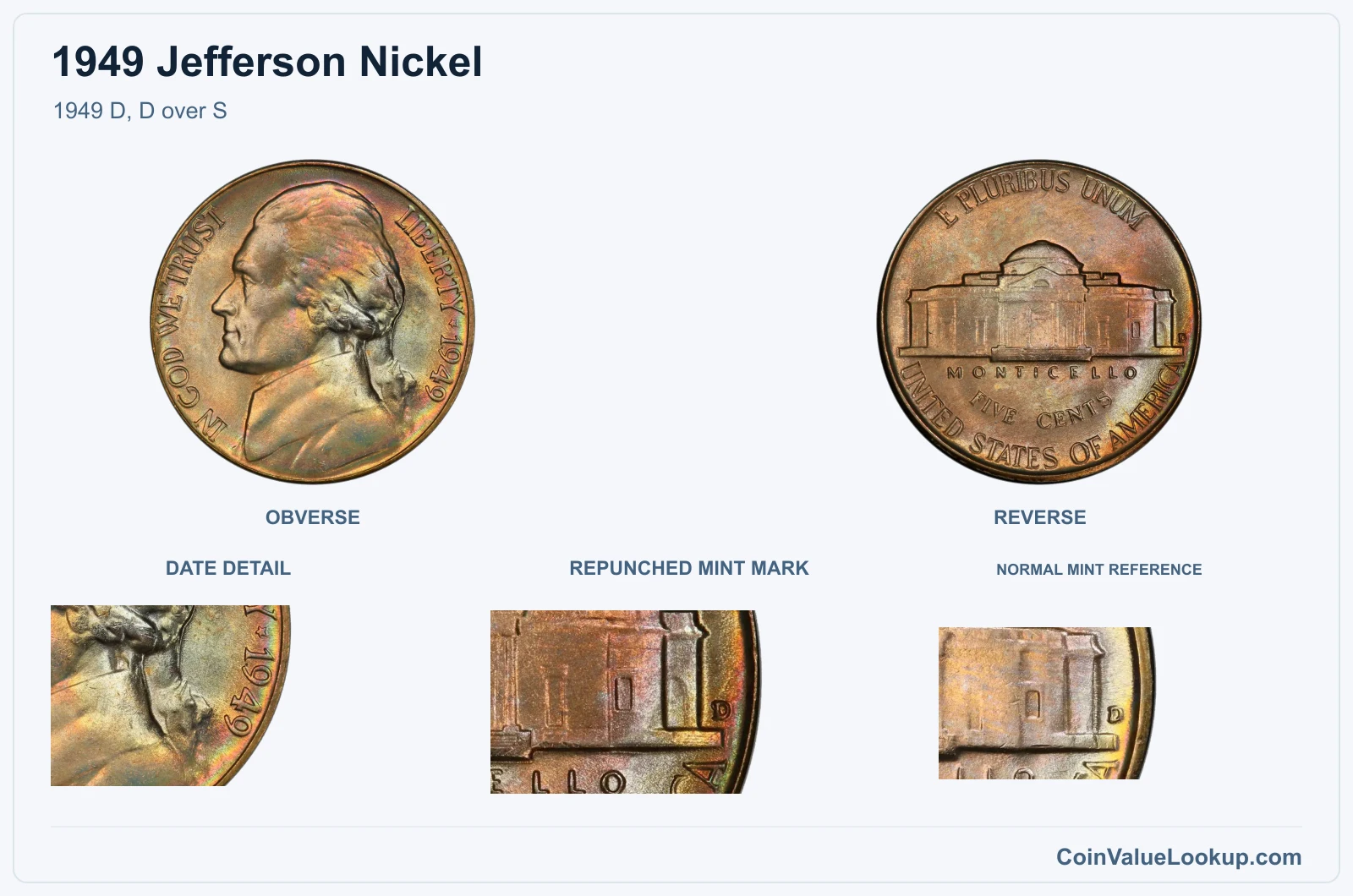
This is the one that gets people excited for good reason. The 1949-D D/S overmintmark shows a Denver "D" punched over the remnants of a San Francisco "S" on the reverse.
Under magnification you can see traces of the curved S extending beyond the edges of the D.
Guide values reflect the scarcity: roughly $249 at MS60 and around $612 at MS65, per the USA Coin Book guide. Full Steps prices are not included in those figures.
Coin Value Lookup is a useful starting point if you want to compare your nickel's details against other Jefferson nickel years and mints. You can look up guides across the series to put your coin in context.
To confirm this variety, compare your mintmark against a known genuine attributed example at the same magnification. A scratch or stray metal near the mintmark is not the same thing as a true overmintmark — the remnant S should show consistent letter shape and position.
| Range | Grade | Price | Auction Records | Appraisal |
|---|---|---|---|---|
| PO | PO 1 | — | Coin Identifier | |
| FR | FR 2 | — | Coin Identifier | |
| AG | AG 3 | — | Coin Identifier | |
| G | G 4 | — | Coin Identifier | |
| G 6 | — | Coin Identifier | ||
| VG | VG 8 | — | Coin Identifier | |
| VG 10 | — | Coin Identifier | ||
| F | F 12 | — | Coin Identifier | |
| F 15 | — | Coin Identifier | ||
| VF | VF 20 | — | Coin Identifier | |
| VF 25 | — | Coin Identifier | ||
| VF 30 | — | Coin Identifier | ||
| VF 35 | — | Coin Identifier | ||
| XF | XF 40 | — | Coin Identifier | |
| XF 45 | — | Coin Identifier | ||
| AU | AU 50 | — | Coin Identifier | |
| AU 53 | — | Coin Identifier | ||
| AU 55 | — | Coin Identifier | ||
| AU 58 | Coin Identifier | |||
| MS | MS 60 | — | Coin Identifier | |
| MS 61 | — | Coin Identifier | ||
| MS 62 | — | Coin Identifier | ||
| MS 63 | — | Coin Identifier | ||
| MS 64 | Coin Identifier | |||
| MS 65 | Coin Identifier | |||
| MS 66 | Coin Identifier | |||
| MS 67 | Coin Identifier | |||
| MS 68 | — | — | — | |
| MS 69 | — | — | — | |
| MS 70 | — | — | — |
1949 Jefferson Nickel — S
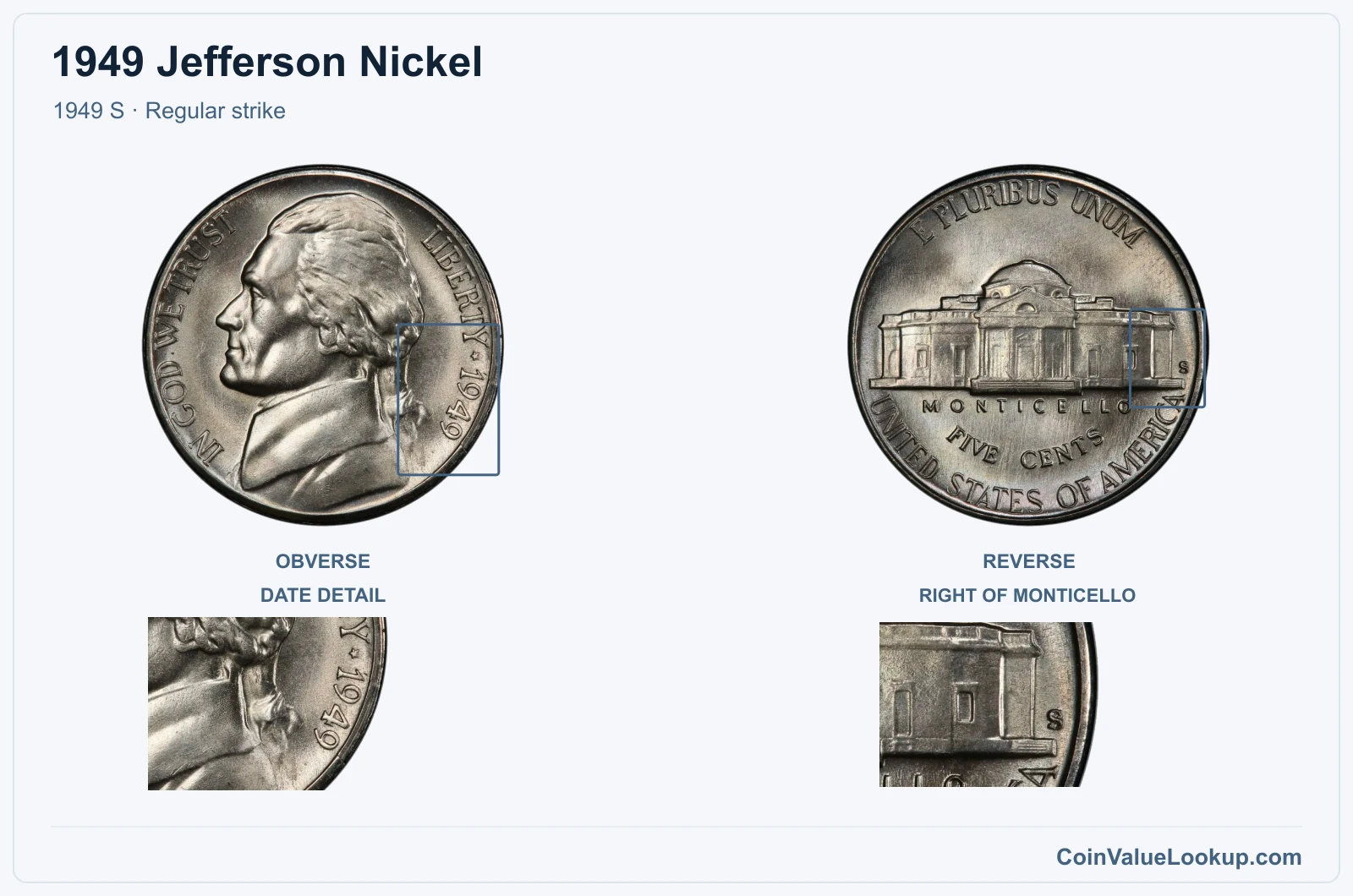
The 1949-S comes from San Francisco and carries a small "S" mintmark to the right of Monticello. It is the same 75% copper and 25% nickel composition at 5.00 grams.
Guide estimates from USA Coin Book run about $3.62 at MS60 and roughly $30 at MS65. As with the other mints, Full Steps coins carry a separate premium above those figures.
Worn examples are common and not individually priced in the guide data provided here.
Designation-specific values: The prices below apply only to coins certified Full Steps (FS). They do not represent prices for coins without that designation.
Range Grade
Price Auction Records Appraisal PO PO 1
—
Coin Identifier FR FR 2
—
Coin Identifier AG AG 3
—
Coin Identifier G G 4
—
Coin Identifier
G 6
—
Coin Identifier VG VG 8
—
Coin Identifier
VG 10
—
Coin Identifier F F 12
—
Coin Identifier
F 15
—
Coin Identifier VF VF 20
—
Coin Identifier
VF 25
—
Coin Identifier
VF 30
—
Coin Identifier
VF 35
—
Coin Identifier XF XF 40
—
Coin Identifier
XF 45
—
Coin Identifier AU AU 50
—
Coin Identifier
AU 53
—
Coin Identifier
AU 55
—
Coin Identifier
AU 58
—
Coin Identifier MS MS 60
—
Coin Identifier
MS 61
—
Coin Identifier
MS 62
—
Coin Identifier
MS 63
Coin Identifier
MS 64
Coin Identifier
MS 65
Coin Identifier
MS 66
Coin Identifier
MS 67
Coin Identifier
MS 68
—
—
—
MS 69
—
—
—
MS 70
—
—
—
Grade-by-grade prices for this exact issue are currently unavailable.
1949 Jefferson Nickel Error List
1. 1949 Jefferson Nickel — D over S mintmark
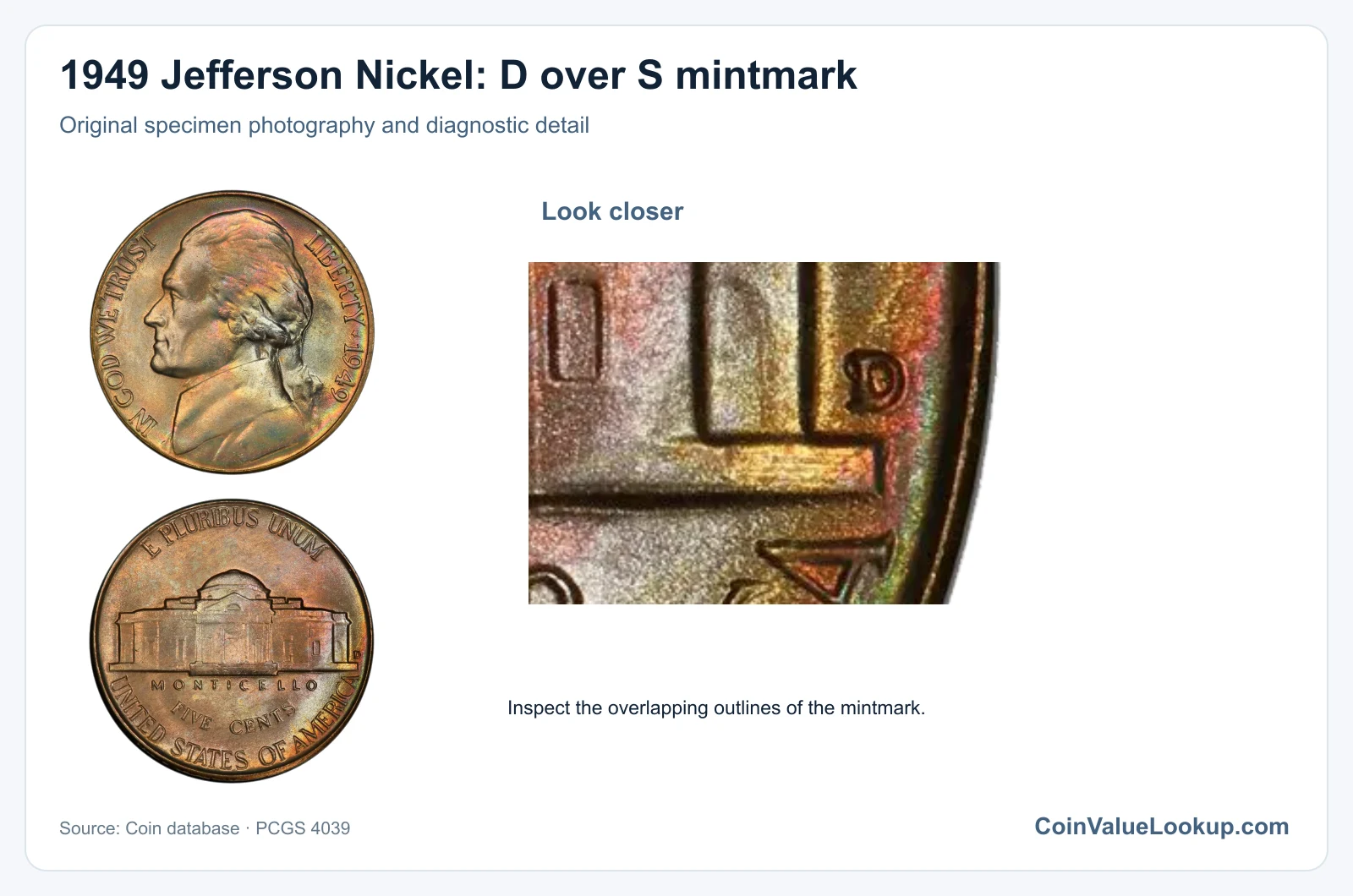
The D over S overmintmark is a recognized variety on the 1949 Jefferson nickel. It shows remnants of an S mintmark beneath the D on the reverse, to the right of Monticello.
Under a loupe, you should see the curved strokes of the S extending beyond the outline of the D in a consistent, deliberate pattern.
The guide values are substantial: about $249 at MS60 and roughly $612 at MS65, not including any Full Steps premium. That makes careful examination worthwhile.
Watch out for lookalikes. A scratch, loose metal, or machine doubling near the mintmark can mimic parts of this variety.
The key is that a genuine overmintmark shows a complete letter shape positioned as a normal S would be — not random lines or flat shelves.
2. 1949 Jefferson Nickel — Struck on a cent planchet
A 1949 nickel struck on a cent planchet is exactly what it sounds like: the nickel dies came down on a copper cent blank instead of the correct nickel blank. The result is a coin with Jefferson nickel designs on a lighter, smaller, copper-colored planchet.
It will not weigh the normal 5.00 grams and peripheral lettering may appear cropped or stretched because the blank is the wrong size.
A Philadelphia example has been certified by PCGS as MS61 Brown. No numerical price range is adopted here because value depends on the specific coin's condition, authentication, and error severity.
Each piece requires individual assessment by a grading service.
Do not confuse this with a normal nickel that has been copper-plated, chemically toned, or physically reduced in size after striking. Correct alloy confirmation and proper date and mint attribution are required.
3. 1949 Jefferson Nickel — Off-center strike
An off-center strike happens when the planchet is not properly seated between the dies, leaving an unstruck crescent on one side and an incomplete rim on the opposite edge. The design shifts noticeably away from center.
A 1949-S example graded NGC MS66 Five Full Steps with approximately 10% off-center displacement sold through Heritage Auctions in September 2010 for $690. That gives you a reference point, though the exact value of any off-center coin depends on the percentage of misalignment, whether the date is fully visible, and overall condition.
Do not confuse an off-center strike with a single-die misalignment, an ordinary weak strike, or a coin that has been physically cut. A genuine off-center coin shows matching displacement on both sides and natural metal flow at the edge.
4. 1949 Jefferson Nickel — Doubled Die Obverse
Doubled die obverse varieties have been reported for the 1949 Jefferson nickel. On a doubled die, you will see consistent separation or notching on obverse design elements — letters, date digits, or portions of Jefferson's portrait — when compared to a normal coin under the same lighting.
The key distinction is consistency. True die doubling produces uniform, repeatable separation across affected design elements.
Machine doubling, by contrast, leaves a flat shelf or shadow that lacks the sharp raised profile of a genuine doubled die.
No specific price range is adopted here. Value depends on the visibility of the doubling, the coin's overall condition, and which specific variety it matches.
Authentication by a grading service is the surest path to confirming the variety.
5. 1949 Jefferson Nickel — Repunched Mintmark
Repunched mintmark varieties exist for the 1949 nickel. These occur when the mintmark punch was applied more than once in slightly different positions, leaving remnants of the earlier impression visible beside or beneath the final mark.
To check, inspect the mintmark area under magnification and compare it side by side with a normal example at the same magnification. You are looking for traces of a second, offset mintmark letter — not just fuzz or roughness.
Machine doubling, a die chip, or simple corrosion around the mintmark can look similar at first glance. A genuine repunched mintmark shows a recognizable letter form in the offset position.
No numerical price range is adopted; value depends on the coin's condition and the visibility of the repunching. Professional attribution is recommended.
6. 1949 Jefferson Nickel — Clipped Planchet
Clipped planchet errors have been reported on the 1949 nickel. A clip occurs when the blank is punched from strip metal that overlaps a previously punched hole, leaving a missing curved, straight, or ragged section along the rim.
Look at the edge texture and metal flow. A genuine clip often produces a corresponding area of design weakness on the opposite side of the coin, known as the Blakesley effect.
That weakness helps confirm the clip happened before striking.
Do not confuse a clip with a filed notch, a deliberate edge cut, or corrosion that ate away part of the rim. Filed or cut edges show tool marks and lack the natural metal-flow characteristics of a mint-produced error.
No specific price range is adopted here; value depends on the size and type of clip, overall condition, and authentication.