1952 Wheat Penny Coin Value: How Much Is It Worth?
A 1952 Wheat Penny in circulated condition starts around $0.06 at Fine-12 and can reach roughly $4.96 at MS63, depending on the mint branch. Those guide figures cover ordinary Philadelphia, Denver and San Francisco business strikes.
Proofs, major varieties and errors carry separate pricing. Original surfaces, color and wear all affect what a buyer will actually offer.
Fast Way to Identify Your 1952 Wheat Penny
The quickest way to get a preliminary identification of your 1952 Wheat Penny is to upload clear photos of the front and back. That lets us check mintmark placement, surface condition and any obvious anomalies.
Snap both sides in good light, avoiding glare, and you will get a starting point for figuring out what you have.
1952 Wheat Penny Value
Upload both sides of your 1952 Wheat Penny.
Front Obverse
Upload photo
Back Reverse
Upload photo
Which 1952 Wheat Penny Versions Are Worth Money?
- The 1952-S in MS63 carries the highest listed guide value among business strikes at roughly $4.96, making San Francisco mint-state examples worth checking carefully.
- Philadelphia proofs (1952 PR) are listed around $61 at PR63, well above any circulation strike, so confirming proof status matters.
- Denver and Philadelphia business strikes are common but still worth sorting by grade; MS63 examples guide at $3.62 (Philadelphia) and $2.50 (Denver).
- Recognized error categories such as doubled die obverse, off-center strikes and repunched mintmarks can carry premiums assessed individually by authenticated identity and condition.
Step 1: Identify Your 1952 Wheat Penny Mint Mark and Version
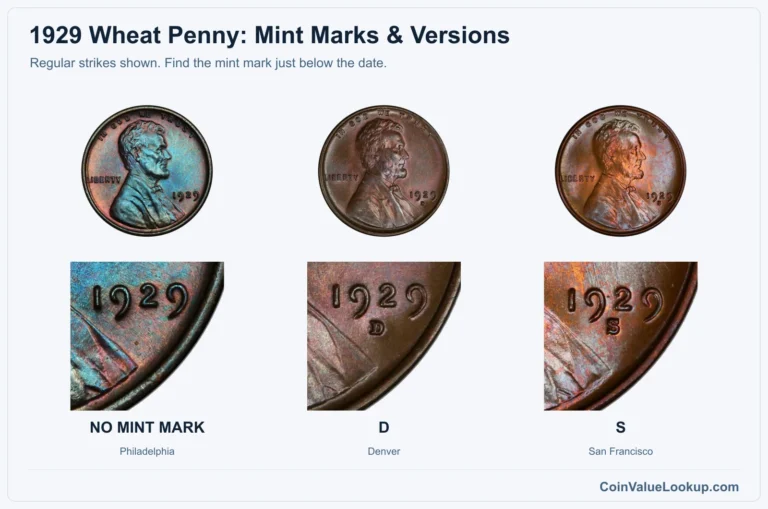
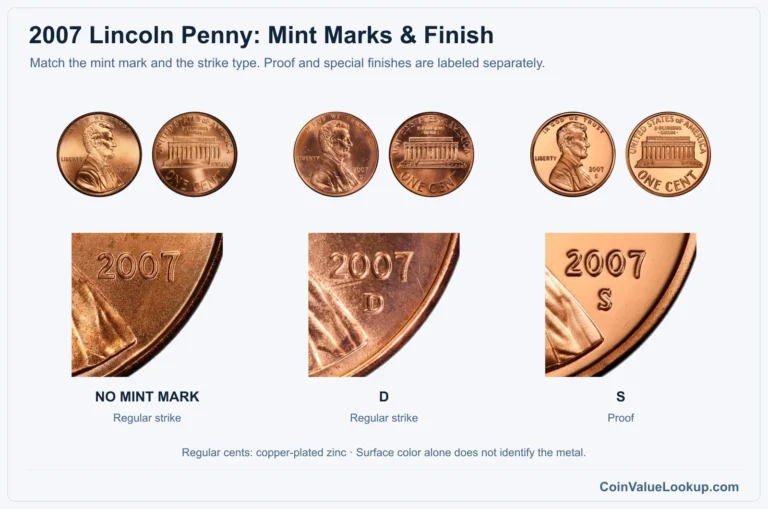
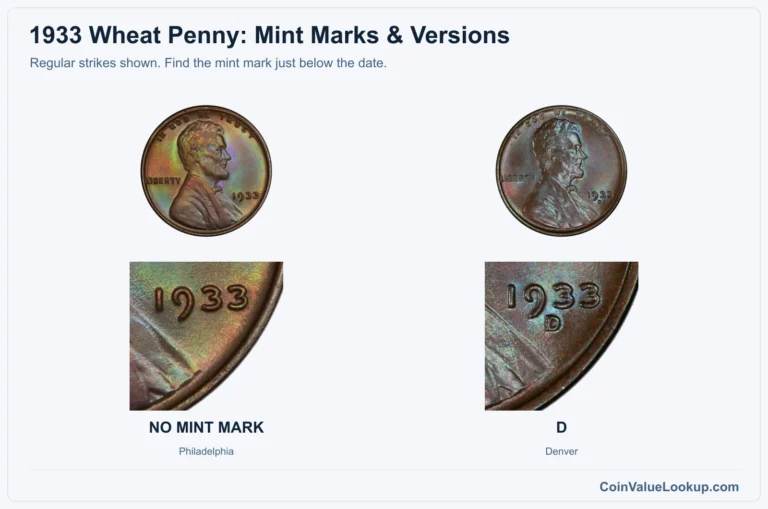
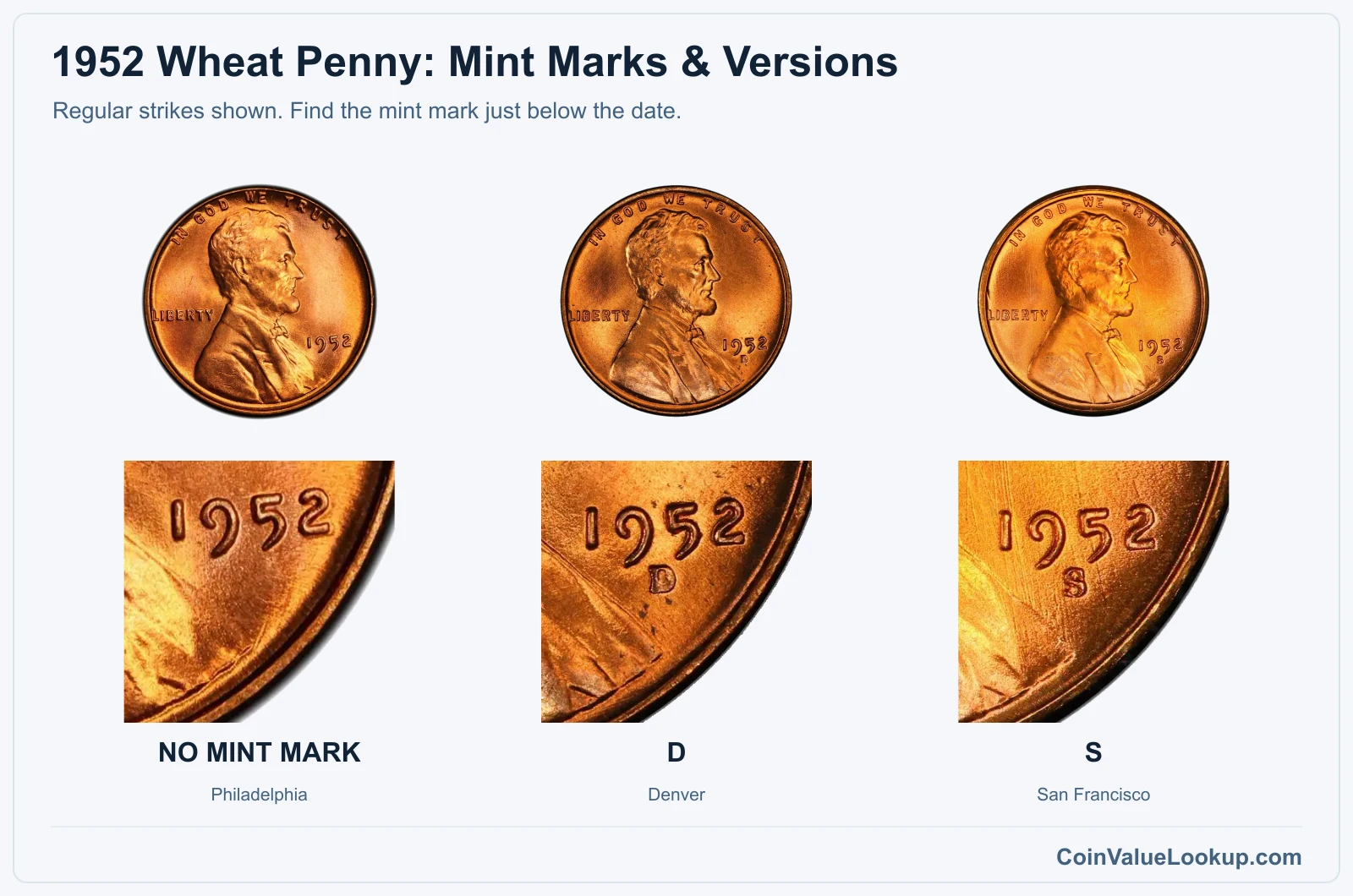
Flip your coin to the obverse and look just below the date. No letter means Philadelphia.
A small "D" means Denver. A small "S" means San Francisco.
That single detail determines which price column applies to your coin, so get it right first.
All four collectible branches of the 1952 cent share the same design: Lincoln's portrait on the obverse, two wheat ears framing "ONE CENT" on the reverse. The coin is 95% copper with 5% tin and zinc, weighs about 3.11 grams and has a plain edge.
If yours feels oddly light or heavy, that is worth investigating.
Philadelphia also produced brilliant proof cents in 1952, struck for collectors on specially prepared dies. A proof has deeply mirrored fields and razor-sharp detail that no amount of careful circulation handling can replicate.
A polished circulated cent is not a proof, no matter how shiny someone made it. If you are unsure, compare the fields under magnification: proofs show a liquid-mirror surface, not the cartwheel luster of a mint-state business strike.
Color matters too. Red, red-brown and brown are separate surface descriptions used by grading services.
They affect value but do not by themselves establish a grade. A brown uncirculated coin is still uncirculated; it just commands less than a fully red example.
Step 2: Check Your 1952 Wheat Penny Grade
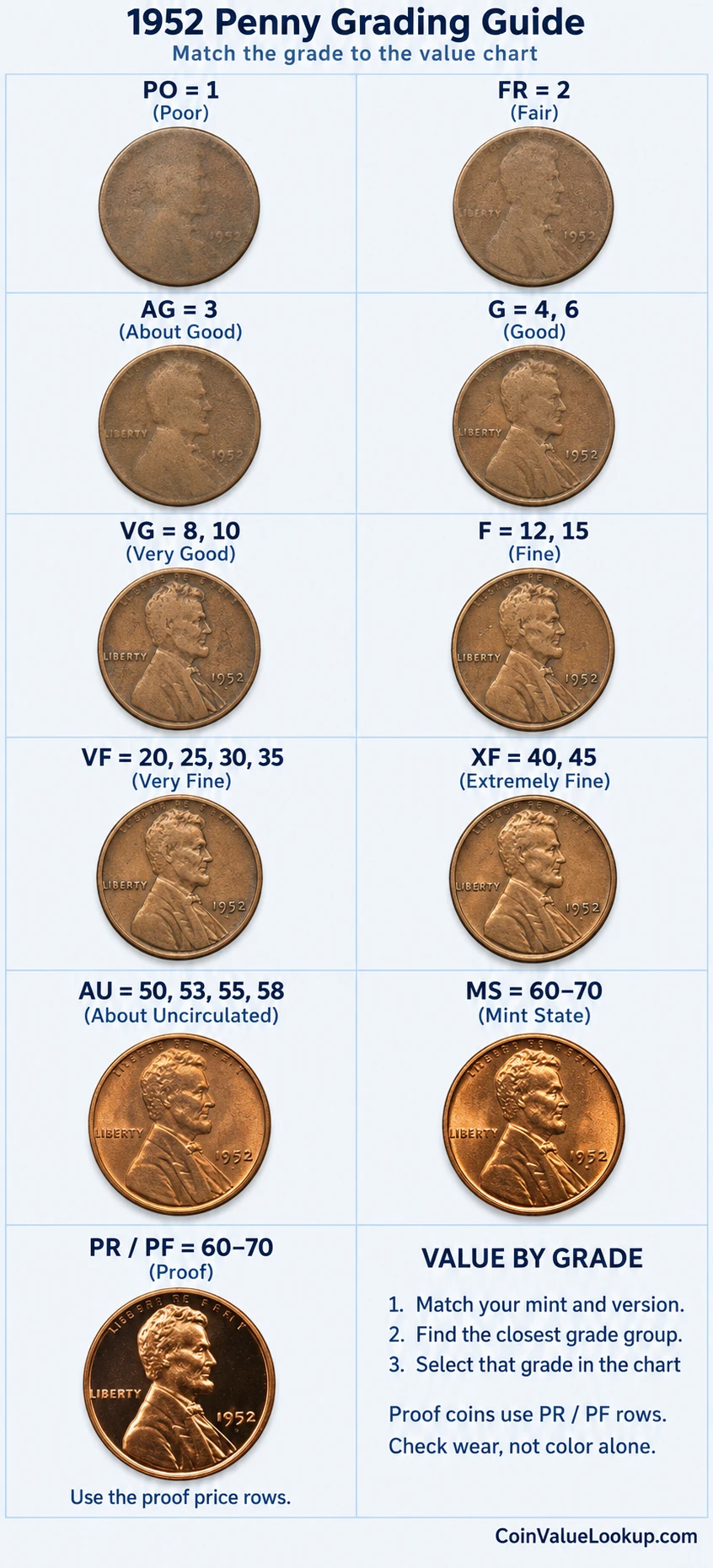
Start with Lincoln's cheekbone, jawline and the fine hair strands above his ear. These are the highest points and the first places wear shows up.
On the reverse, check the individual wheat grains and the horizontal lines between the stalks. Use the comparison image to match your coin's wear pattern to a known grade.
A coin grading Fine-12 will show moderate wear across those high points but still retain clear major details. At MS63, the coin should be fully lustrous with no wear, though minor contact marks or blemishes are acceptable.
Do not confuse a weak strike with wear. Some 1952 cents left the press with soft detail, especially on the hair curls.
A weakly struck coin still has original luster in the protected areas; a worn coin does not.
Cleanings, spots, corrosion and environmental damage are separate factors that reduce a coin's appeal regardless of the technical grade. A cleaned MS63 coin will not sell like an original one.
When comparing your coin to the reference image, pay attention to the overall surface quality as much as the sharpness of the design.
Step 3: Check 1952 Wheat Penny Value by Mint and Version
1952 Wheat Penny
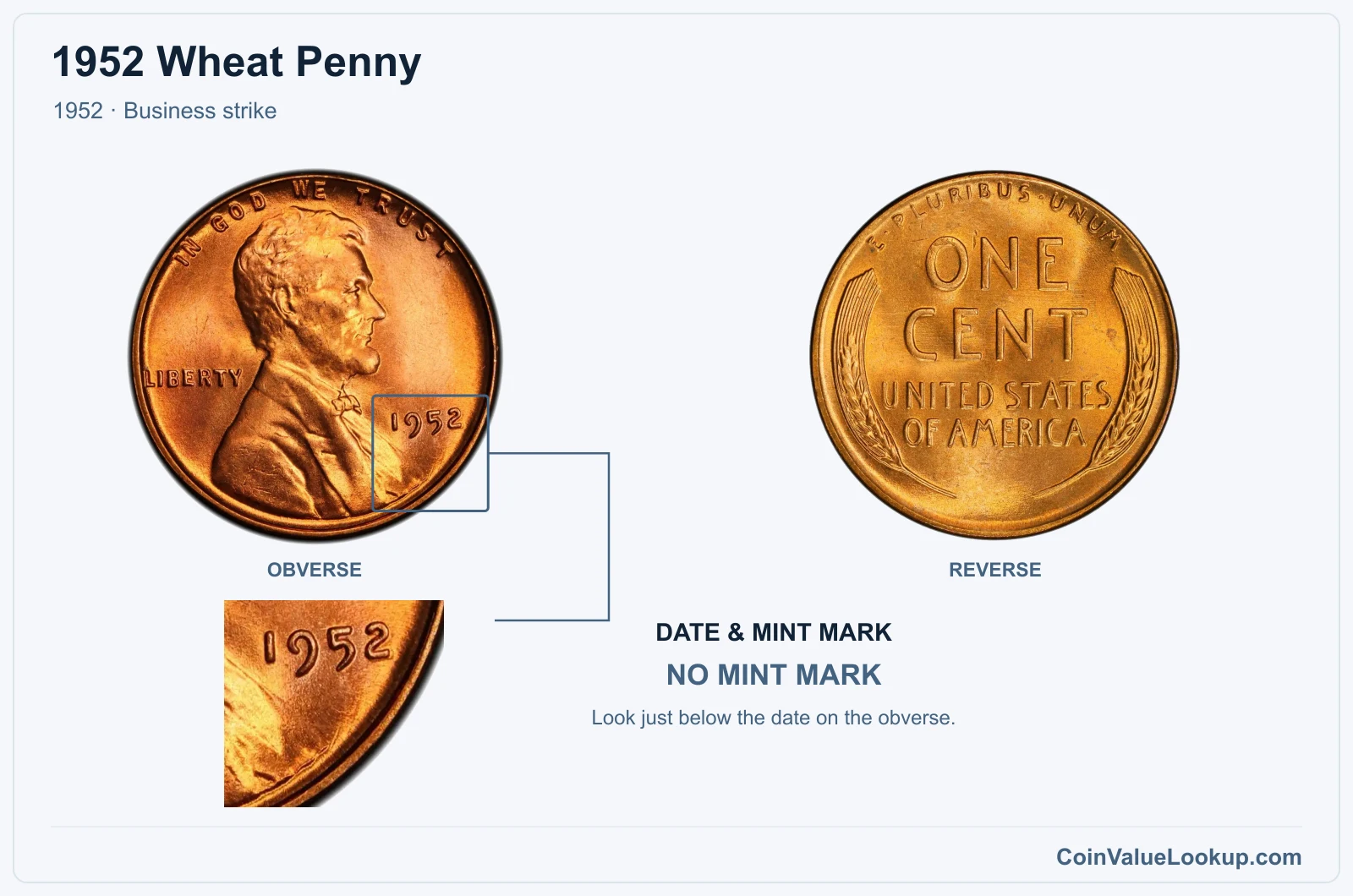
The 1952 Philadelphia cent has no mintmark below the date. It is the baseline issue for this year.
In circulated grades like Fine-12, guide estimates sit around $0.06, which is basically just above face value. Push into uncirculated territory at MS63, and the guide lists roughly $3.62.
That MS63 figure assumes original surfaces. A coin that has been cleaned or shows spots will not command the same price even if wear is absent.
Color is not specified in these guide anchors, so do not assume that number reflects a certified full-red coin. Match your coin's actual surfaces to the grade before drawing conclusions.
| Range | Grade | Price | Auction Records | Appraisal |
|---|---|---|---|---|
| PO | PO 1 | — | Coin Identifier | |
| FR | FR 2 | — | Coin Identifier | |
| AG | AG 3 | — | Coin Identifier | |
| G | G 4 | — | Coin Identifier | |
| G 6 | — | Coin Identifier | ||
| VG | VG 8 | — | Coin Identifier | |
| VG 10 | — | Coin Identifier | ||
| F | F 12 | — | Coin Identifier | |
| F 15 | — | Coin Identifier | ||
| VF | VF 20 | — | Coin Identifier | |
| VF 25 | — | Coin Identifier | ||
| VF 30 | — | Coin Identifier | ||
| VF 35 | — | Coin Identifier | ||
| XF | XF 40 | — | Coin Identifier | |
| XF 45 | — | Coin Identifier | ||
| AU | AU 50 | — | Coin Identifier | |
| AU 53 | — | Coin Identifier | ||
| AU 55 | — | Coin Identifier | ||
| AU 58 | — | Coin Identifier | ||
| MS | MS 60 | — | Coin Identifier | |
| MS 61 | — | Coin Identifier | ||
| MS 62 | — | Coin Identifier | ||
| MS 63 | — | Coin Identifier | ||
| MS 64 | Coin Identifier | |||
| MS 65 | Coin Identifier | |||
| MS 66 | Coin Identifier | |||
| MS 67 | Coin Identifier | |||
| MS 68 | — | — | — | |
| MS 69 | — | — | — | |
| MS 70 | — | — | — |
1952 Wheat Penny — D
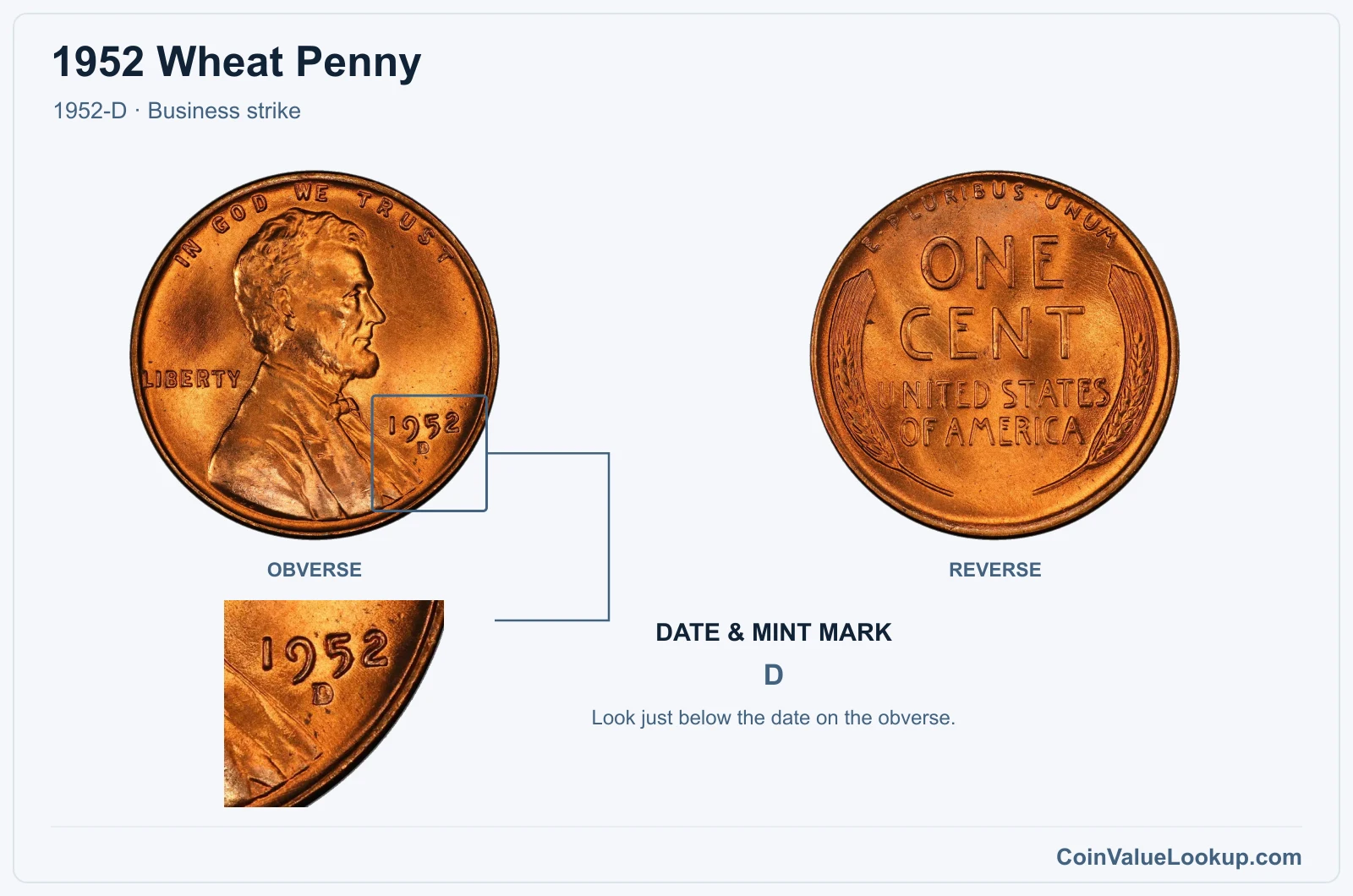
Look for the small "D" mintmark below the date. Denver produced plenty of these, so circulated examples at Fine-12 guide around $0.06.
At MS63 the guide lists about $2.50, the lowest among the three mints at that grade.
Denver strikes from this era can sometimes show softer detail on the hair above Lincoln's ear, which is a strike characteristic rather than wear. Check luster in the fields to distinguish the two.
As with all branches, original surfaces without cleaning or corrosion are what collectors prefer.
Coin Value Lookup is a good starting point if you want to compare your 1952-D against other dates and mints in the Wheat Penny series.
| Range | Grade | Price | Auction Records | Appraisal |
|---|---|---|---|---|
| PO | PO 1 | — | Coin Identifier | |
| FR | FR 2 | — | Coin Identifier | |
| AG | AG 3 | — | Coin Identifier | |
| G | G 4 | — | Coin Identifier | |
| G 6 | — | Coin Identifier | ||
| VG | VG 8 | — | Coin Identifier | |
| VG 10 | — | Coin Identifier | ||
| F | F 12 | — | Coin Identifier | |
| F 15 | — | Coin Identifier | ||
| VF | VF 20 | — | Coin Identifier | |
| VF 25 | — | Coin Identifier | ||
| VF 30 | — | Coin Identifier | ||
| VF 35 | — | Coin Identifier | ||
| XF | XF 40 | — | Coin Identifier | |
| XF 45 | — | Coin Identifier | ||
| AU | AU 50 | — | Coin Identifier | |
| AU 53 | — | Coin Identifier | ||
| AU 55 | — | Coin Identifier | ||
| AU 58 | — | Coin Identifier | ||
| MS | MS 60 | — | Coin Identifier | |
| MS 61 | — | Coin Identifier | ||
| MS 62 | — | Coin Identifier | ||
| MS 63 | — | Coin Identifier | ||
| MS 64 | Coin Identifier | |||
| MS 65 | Coin Identifier | |||
| MS 66 | Coin Identifier | |||
| MS 67 | Coin Identifier | |||
| MS 68 | — | — | — | |
| MS 69 | — | — | — | |
| MS 70 | — | — | — |
1952 Wheat Penny — S
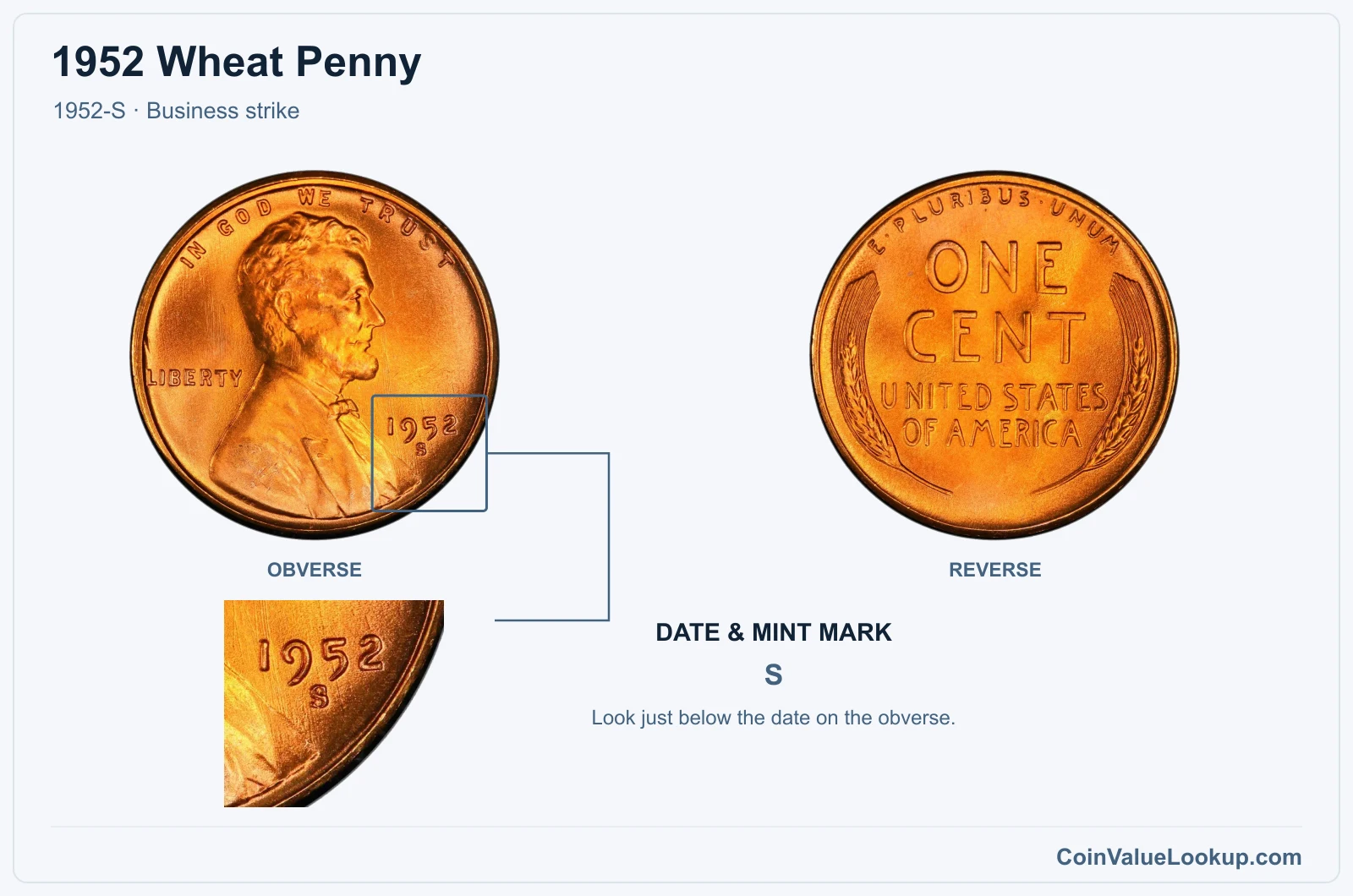
The 1952-S carries a small "S" mintmark below the date and edges out the other two mints in MS63 guide value at roughly $4.96. In circulated Fine-12 condition it guides at about $0.08, just a touch above the Philadelphia and Denver issues.
San Francisco cents from 1952 can be well-struck, and a nice original example with good luster is the kind of coin that stands out in a Wheat Penny set. That modest premium at MS63 reflects the combination of collector demand and relative availability in higher grades.
Still, color and surface quality matter; these guide anchors do not specify a certified color designation, so treat them as starting points.
| Range | Grade | Price | Auction Records | Appraisal |
|---|---|---|---|---|
| PO | PO 1 | — | Coin Identifier | |
| FR | FR 2 | — | Coin Identifier | |
| AG | AG 3 | — | Coin Identifier | |
| G | G 4 | — | Coin Identifier | |
| G 6 | — | Coin Identifier | ||
| VG | VG 8 | — | Coin Identifier | |
| VG 10 | — | Coin Identifier | ||
| F | F 12 | — | Coin Identifier | |
| F 15 | — | Coin Identifier | ||
| VF | VF 20 | — | Coin Identifier | |
| VF 25 | — | Coin Identifier | ||
| VF 30 | — | Coin Identifier | ||
| VF 35 | — | Coin Identifier | ||
| XF | XF 40 | — | Coin Identifier | |
| XF 45 | — | Coin Identifier | ||
| AU | AU 50 | — | Coin Identifier | |
| AU 53 | — | Coin Identifier | ||
| AU 55 | — | Coin Identifier | ||
| AU 58 | — | Coin Identifier | ||
| MS | MS 60 | — | Coin Identifier | |
| MS 61 | — | Coin Identifier | ||
| MS 62 | — | Coin Identifier | ||
| MS 63 | Coin Identifier | |||
| MS 64 | Coin Identifier | |||
| MS 65 | Coin Identifier | |||
| MS 66 | Coin Identifier | |||
| MS 67 | Coin Identifier | |||
| MS 68 | Coin Identifier | |||
| MS 69 | — | — | — | |
| MS 70 | — | — | — |
1952 Wheat Penny — PR
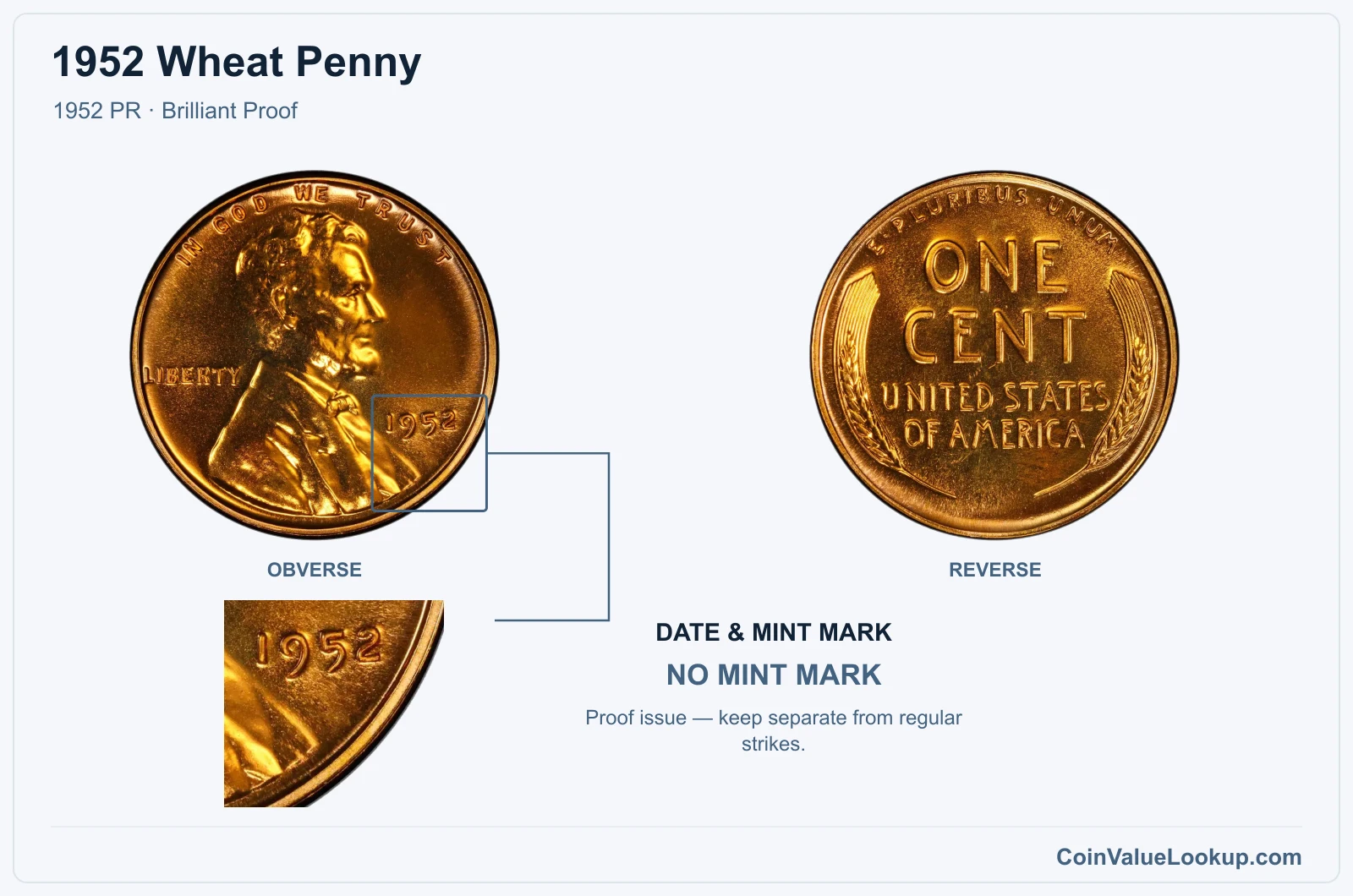
The 1952 Proof was struck at Philadelphia on polished dies for direct sale to collectors. It carries no mintmark, same as the business-strike Philadelphia cent, so identification depends on the coin's surfaces rather than a letter.
Genuine proofs show deeply mirrored fields with sharp, squared-off rims and complete design detail that business strikes rarely match.
At PR63 the guide lists approximately $61, a significant step above any circulation issue of the year. Cameo and deep cameo contrast designations describe the degree of frost on the devices against those mirrored fields; they are not errors or separate die varieties.
A polished or dipped circulation cent can fool a beginner, but under magnification it will lack the reflective depth and die-polish lines of a true proof. If you think you have one, professional authentication is the safest route.
| Range | Grade | Price | Auction Records | Appraisal |
|---|---|---|---|---|
| PR | PR 1 | — | Coin Identifier | |
| PR 2 | — | Coin Identifier | ||
| PR 3 | — | Coin Identifier | ||
| PR 4 | — | Coin Identifier | ||
| PR 6 | — | Coin Identifier | ||
| PR 8 | — | Coin Identifier | ||
| PR 10 | — | Coin Identifier | ||
| PR 12 | — | Coin Identifier | ||
| PR 15 | — | Coin Identifier | ||
| PR 20 | — | Coin Identifier | ||
| PR 25 | — | Coin Identifier | ||
| PR 30 | — | Coin Identifier | ||
| PR 35 | — | Coin Identifier | ||
| PR 40 | — | Coin Identifier | ||
| PR 45 | — | Coin Identifier | ||
| PR 50 | — | Coin Identifier | ||
| PR 53 | — | Coin Identifier | ||
| PR 55 | — | Coin Identifier | ||
| PR 58 | — | Coin Identifier | ||
| PR 60 | — | Coin Identifier | ||
| PR 61 | — | Coin Identifier | ||
| PR 62 | — | Coin Identifier | ||
| PR 63 | Coin Identifier | |||
| PR 64 | Coin Identifier | |||
| PR 65 | Coin Identifier | |||
| PR 66 | Coin Identifier | |||
| PR 67 | Coin Identifier | |||
| PR 68 | Coin Identifier | |||
| PR 69 | — | — | — | |
| PR 70 | — | — | — |
1952 Wheat Penny Error List
1. 1952 Wheat Penny — Over-Mintmark
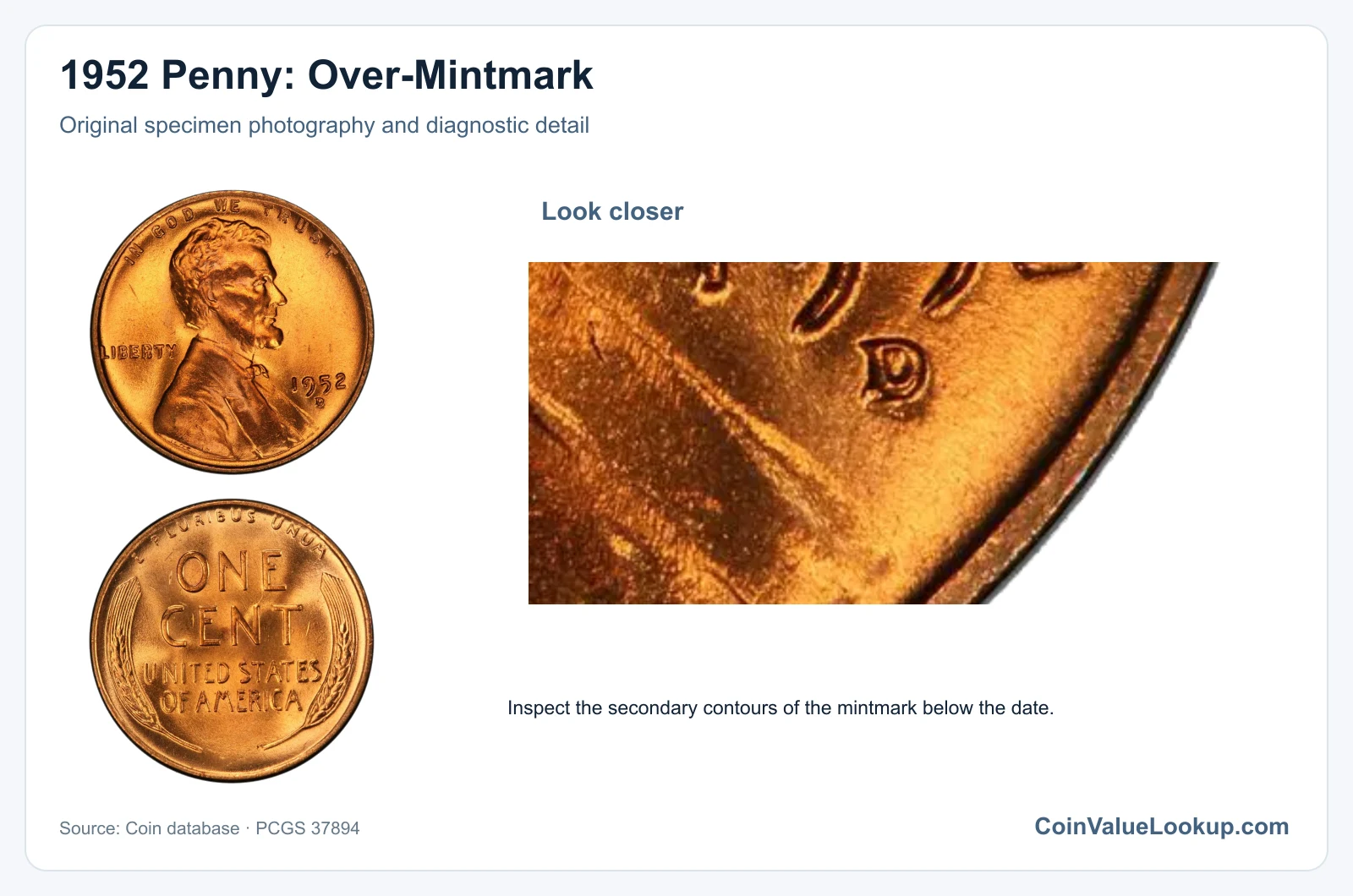
An over-mintmark on a 1952 Wheat cent means remnants of a different mintmark letter are visible beneath the final punch. For example, you might see traces of an S lurking under a D, or vice versa.
This happened when a die originally intended for one mint was re-punched for another.
To spot one, examine the mintmark area under at least 5x magnification. Look for an outline or partial letter that does not match the top punch.
The leftover impression will be consistent across all examples from that die, not random.
Do not confuse this with a repunched mintmark, which involves the same letter placed twice. Die chips or corrosion near the mintmark can also mimic the appearance.
No specific price range is adopted for this category; value depends on the authenticated identity of the over-mintmark, the coin's grade and the strength of the remnant letter. Professional grading confirmation is the standard path for these.
2. 1952 Wheat Penny — Doubled Die Obverse
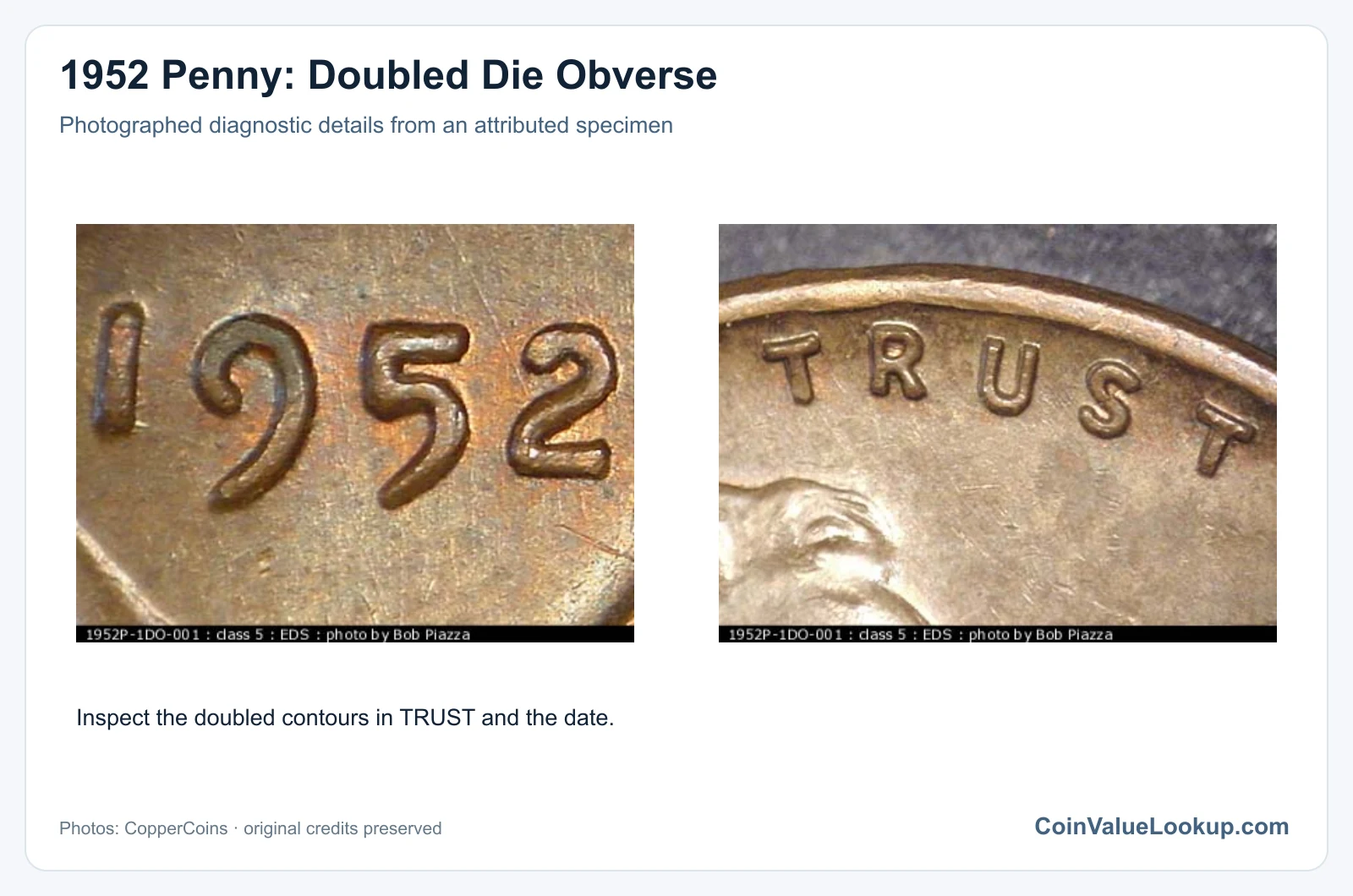
A doubled die obverse on a 1952 cent shows a consistent doubling of design elements on the front of the coin, usually visible in the lettering of LIBERTY, IN GOD WE TRUST, or the date numerals. The doubling appears as a distinct separation or notching on the letters, not a flat mushy shelf.
The key distinction is consistency. Every coin struck from that die will show the same doubling in the same direction.
Compare your coin to a normal 1952 cent under the same lighting and magnification.
Machine doubling, which is far more common, produces a flat, shelf-like distortion and adds almost nothing to value. Reflections or worn die contours can also mimic doubling to an untrained eye.
No specific price range is adopted for 1952 doubled die obverse cents; each coin's value depends on the authenticated variety, severity of doubling and overall condition.
3. 1952 Wheat Penny — Off-Center Strike
An off-center strike occurs when the planchet is not properly seated between the dies. The result is a displaced design with an unstruck crescent of blank metal along one edge.
The more dramatic the shift, the more visually striking the coin.
Collectors generally prefer off-center examples that still show a complete, readable date, because that confirms the year and mint. A 1952 cent struck 10-15% off-center with the date intact is more desirable than one shifted so far the date is lost.
Do not confuse an off-center strike with a clipped planchet, which removes a curved bite from the edge before striking, or with post-mint damage like a coin flattened unevenly. No supported price range is adopted here; value depends on the degree of the misalignment, date visibility and the coin's overall condition as confirmed by professional authentication.
4. 1952 Wheat Penny — Wrong Planchet / Off-Metal Strike
A wrong-planchet error means the 1952 cent dies struck a blank intended for a different denomination or even a different country's coinage. The result is a coin with Lincoln's portrait and wheat ears on a planchet that does not match the expected weight, diameter or edge of a standard cent.
To evaluate a suspect coin, weigh it and measure it. A normal 1952 cent is about 3.11 grams with a 19mm diameter and plain edge.
If your coin diverges significantly from those specs while still showing a genuine 1952 cent design, you may have something unusual.
Plating loss, acid treatment, corrosion and deliberate alteration can all make a normal cent look odd. These are far more common than genuine off-metal errors.
No price range is adopted for this category; value is assessed individually based on authenticated identity, the specific wrong planchet involved and the coin's condition.
5. 1952 Wheat Penny — Double / Multiple Strike
A double or multiple strike shows two or more separate impressions of the die on the same planchet. You will see a clearly displaced or rotated second image of Lincoln or the wheat reverse overlapping the first.
The result looks chaotic compared to a normal coin.
The key diagnostic is that each impression is complete or nearly complete, and you can see the relationship between them, one shifted or rotated relative to the other. This is different from a doubled die, where the doubling comes from the die itself and appears identical on every coin struck from it.
Post-mint alterations, such as pressing two coins together, can simulate the look but will lack the proper metal flow and strike characteristics. No supported price range is adopted for 1952 double-strike cents.
Value depends on the number of impressions, degree of displacement and overall condition, assessed through professional authentication.
6. 1952 Wheat Penny — Brockage
A brockage on a 1952 Wheat cent occurs when a previously struck coin sticks to one die and acts as an impression plate for the next blank fed into the press. The result is one normal side and one side showing an incuse, mirror-image version of that same design, pressed into the surface by the stuck coin above.
The mirrored design will be sunken into the surface rather than raised, and it reads backward. This is a dramatic-looking error that is genuinely scarce on any date.
Do not confuse a brockage with a die clash, which transfers faint ghostly outlines from the opposing die but does not produce a full incuse mirror image. Coins pressed together outside the mint can also mimic brockage but lack proper striking pressure characteristics.
No price range is adopted; each piece is evaluated individually based on authenticated identity, visual impact and condition.
7. 1952 Wheat Penny — Repunched Mintmark
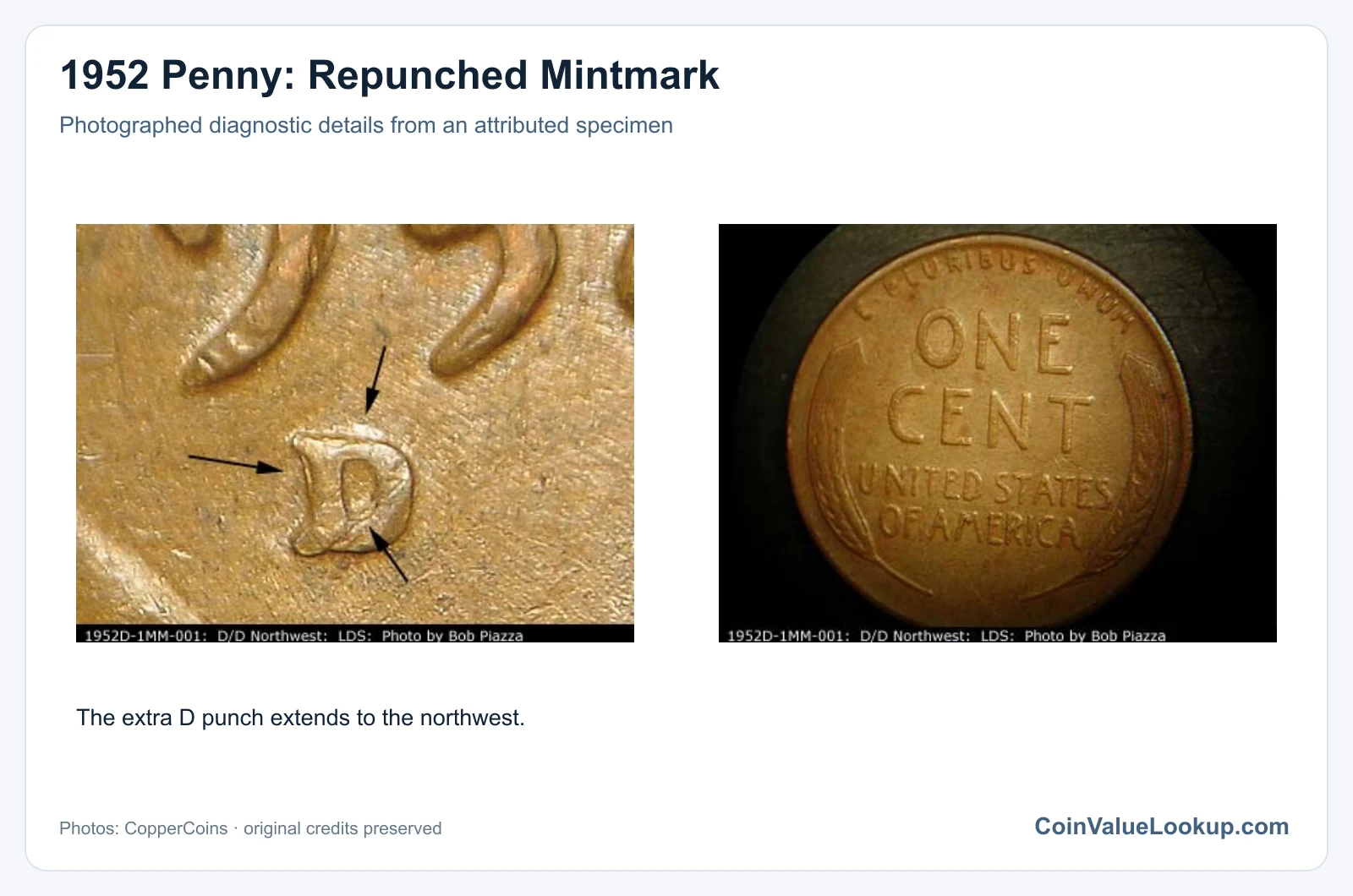
A repunched mintmark applies only to the branch-mint issues, the 1952-D and 1952-S. Philadelphia coins carry no mintmark, so there is nothing to repunch.
This error shows traces of a previous position of the same letter visible near the final mintmark.
Under magnification, look for a shadow or partial outline of the D or S offset slightly from the primary mark. The remnant will be consistent, not random, and should appear the same way on every coin struck from that particular die.
Machine doubling near the mintmark, die chips and corrosion can all create similar-looking anomalies. The difference is that a true repunched mintmark shows a distinctly separate punch impression, not a flat shelf or irregular buildup.
No specific price range is adopted; value depends on the authenticated identity of the repunch, its visibility and the coin's overall grade and surface quality.