1878 Indian Head Penny Coin Value: How Much Is It Worth?
The 1878 Indian Head penny is a solid collectible from the bronze era of this long-running series. Guide estimates for a regular Philadelphia business strike range from about $43 in G4 (a well-worn but readable coin) to around $498 in MS63 (a choice uncirculated example with good luster).
Proofs, major varieties, and mint errors each require their own evaluation beyond those anchors.
Fast Way to Identify Your 1878 Indian Head Penny
Want a quick read on your 1878 Indian Head cent? Upload clear photos of both the front and back of your coin for a preliminary identification.
Good lighting and a steady shot help distinguish key details like surface finish, remaining color, and wear patterns that affect which branch your coin falls into.
1878 Indian Head Penny Value
Upload both sides of your 1878 Indian Head Penny.
Front Obverse
Upload photo
Back Reverse
Upload photo
Which 1878 Indian Head Penny Versions Are Worth Money?
- Business strikes in MS63 condition carry a guide value near $498, reflecting the premium for original uncirculated surfaces on a 19th-century bronze cent.
- Proof examples at PR63 list around $344; genuine proof status must be verified through manufacturing characteristics, not just appearance.
- Remaining original red or red-brown color on uncirculated coins can significantly affect desirability compared to fully toned brown examples.
- Mint errors such as doubled die reverses, die breaks, repunched dates, and misplaced dates are reported for this year and require individual professional assessment.
Step 1: Identify Your 1878 Indian Head Penny Mint Mark and Version
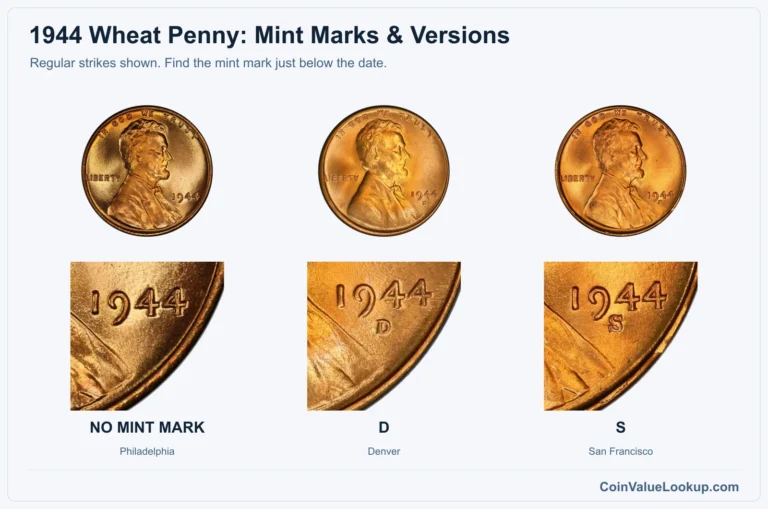
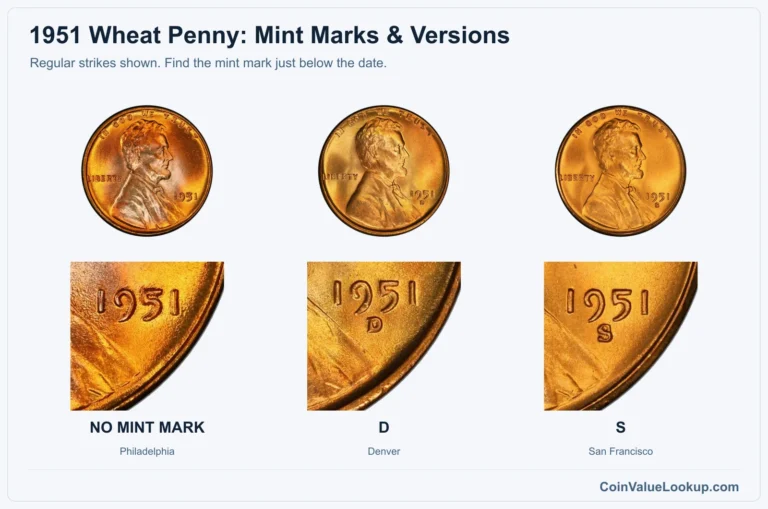
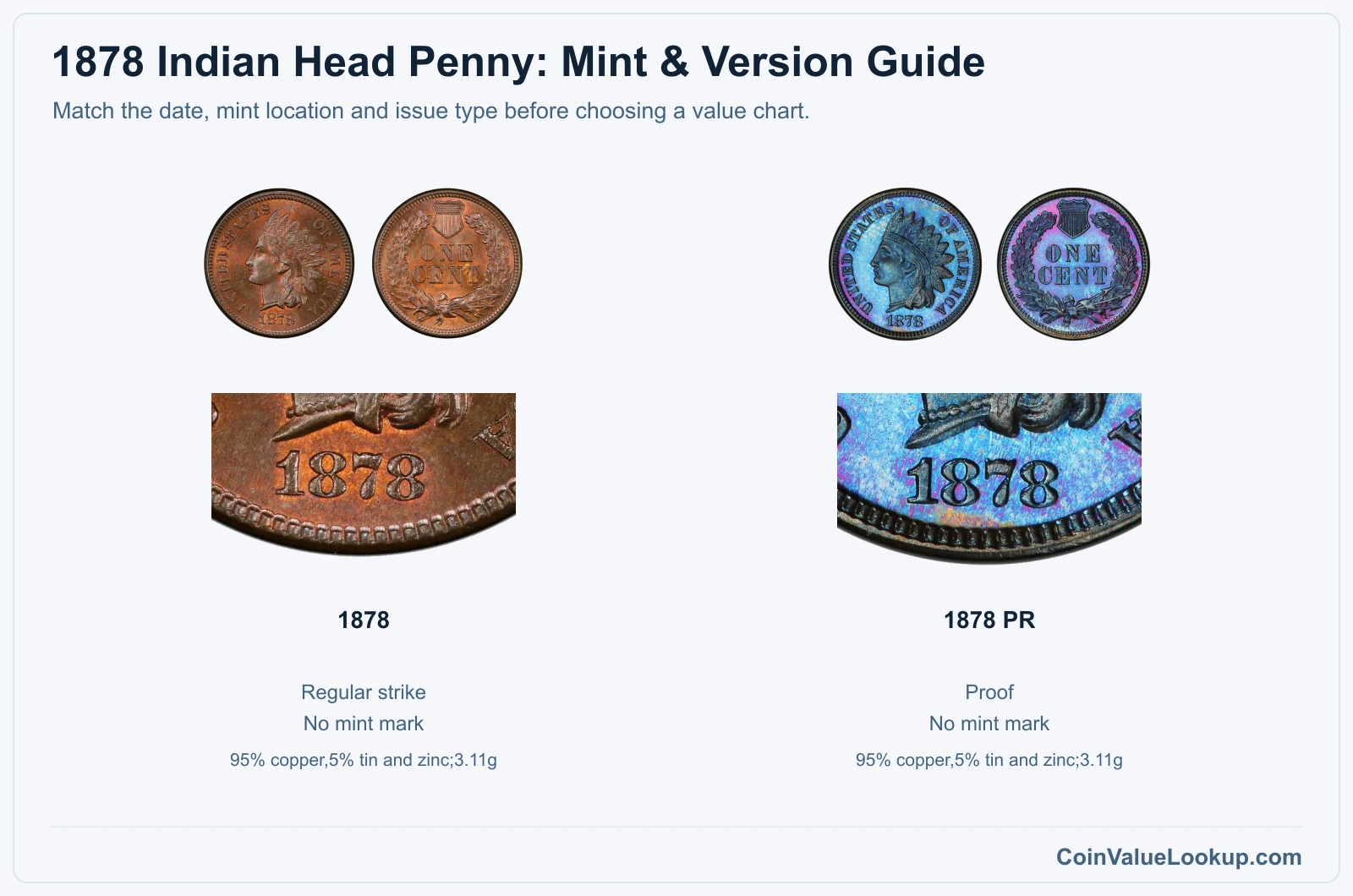
Every regular-issue 1878 Indian Head cent was struck at the Philadelphia Mint, and none carry a mintmark. If you see a small "L" on the ribbon behind the portrait, that is the engraver's initial, not a mint identifier.
The obverse features a Liberty portrait wearing a feathered headdress with the word LIBERTY inscribed on the headband. The reverse shows an oak wreath surrounding the denomination, topped by a small shield.
Make sure you are looking at an Indian Head cent and not a Lincoln cent or a copper-nickel Flying Eagle cent from the 1850s before comparing values.
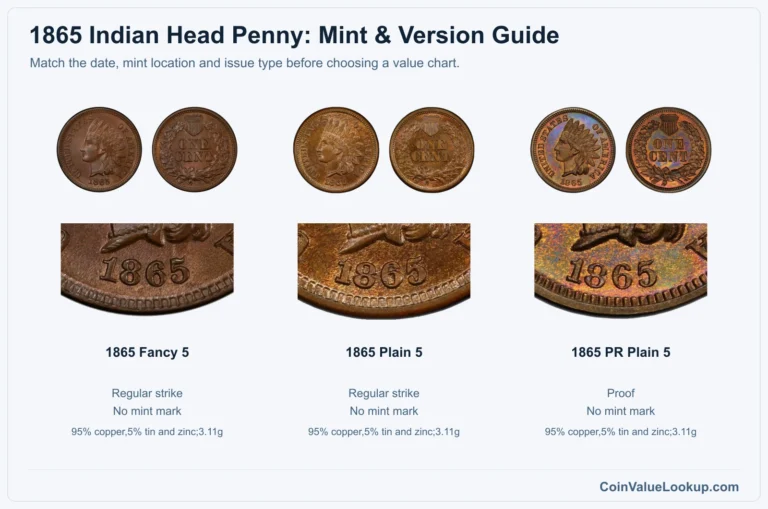
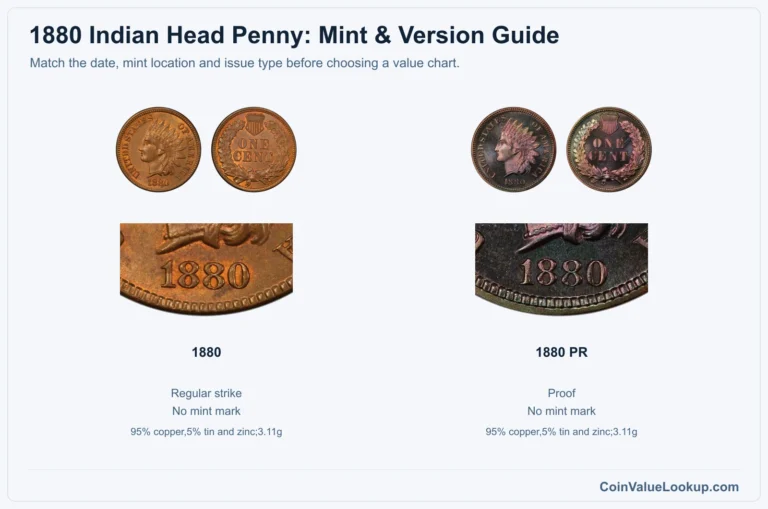
This date exists in two forms: business strikes made for circulation and specially manufactured proofs. Proof status comes from how the coin was made at the mint, not from how shiny or clean it looks today.
A polished business strike is not a proof. Genuine proofs show squared rims, mirrored fields, and fine die preparation marks that differ from ordinary production coins.
If you are unsure, professional authentication is the safest route.
The 1878 cent is bronze, composed of 95% copper with 5% tin and zinc, and weighs 3.11 grams. Color designations like BN (brown), RB (red-brown), and RD (red) describe how much original copper color remains on the surfaces.
They are not separate materials.
Step 2: Check Your 1878 Indian Head Penny Grade
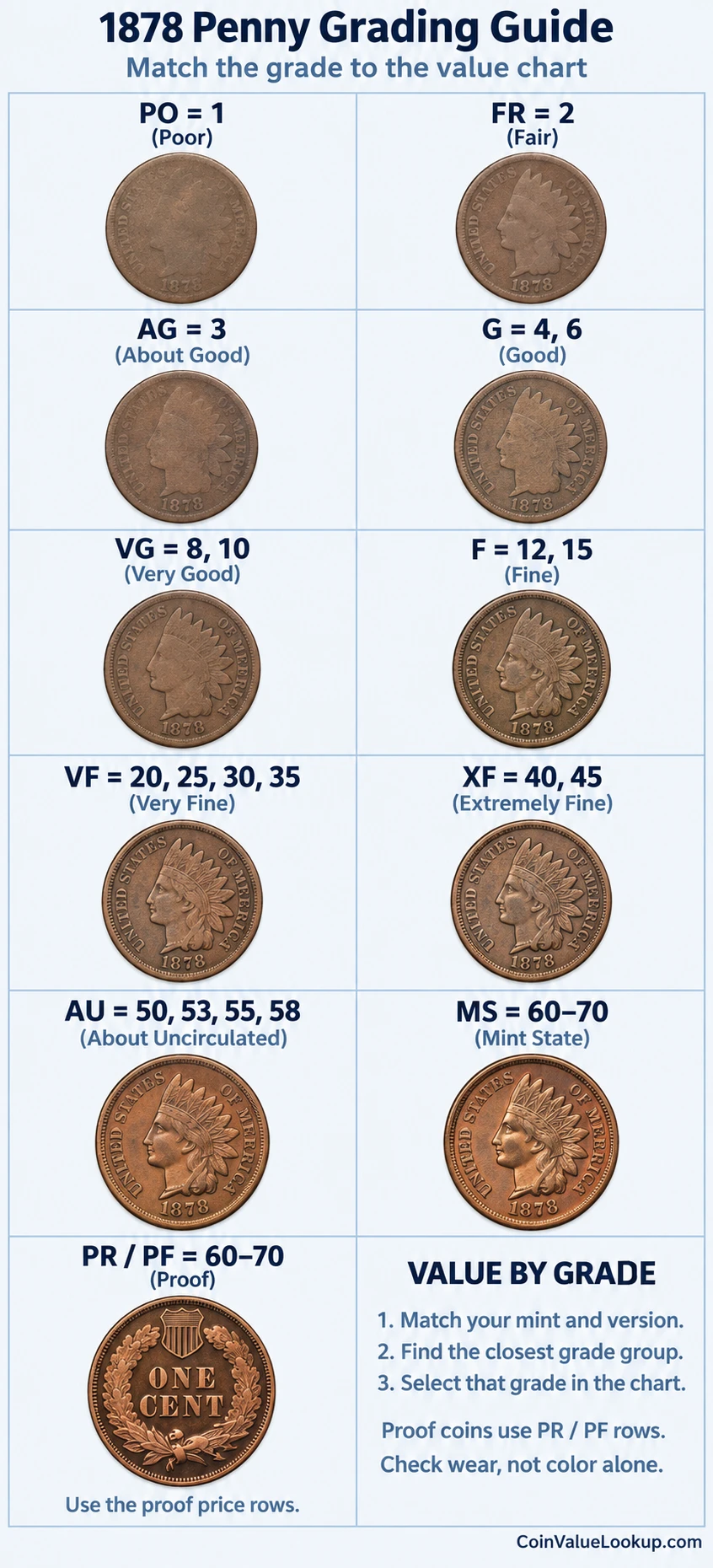
Start with the headband. On a well-struck coin, all letters of LIBERTY should be fully visible in higher grades and progressively fade as wear increases.
In G4, the outline of the portrait is clear but most fine detail is gone. By MS63, you should see full feather separation, hair detail above the ear, and original mint luster across the fields.
Do not grade from one area alone. Check the cheek and hair above the ear on the obverse, then flip to the reverse and examine the high points of the wreath leaves.
A soft original strike can leave feathers or hair looking worn even on an uncirculated coin, so compare several areas before deciding.
Luster matters a lot on bronze cents. An uncirculated coin with full, undisturbed surfaces commands more than one that has been cleaned, polished, or suffered corrosion.
Use the comparison image to match your coin's overall wear pattern, and be honest about any scratches or spots you see.
Step 3: Check 1878 Indian Head Penny Value by Mint and Version
1878 Indian Head Penny
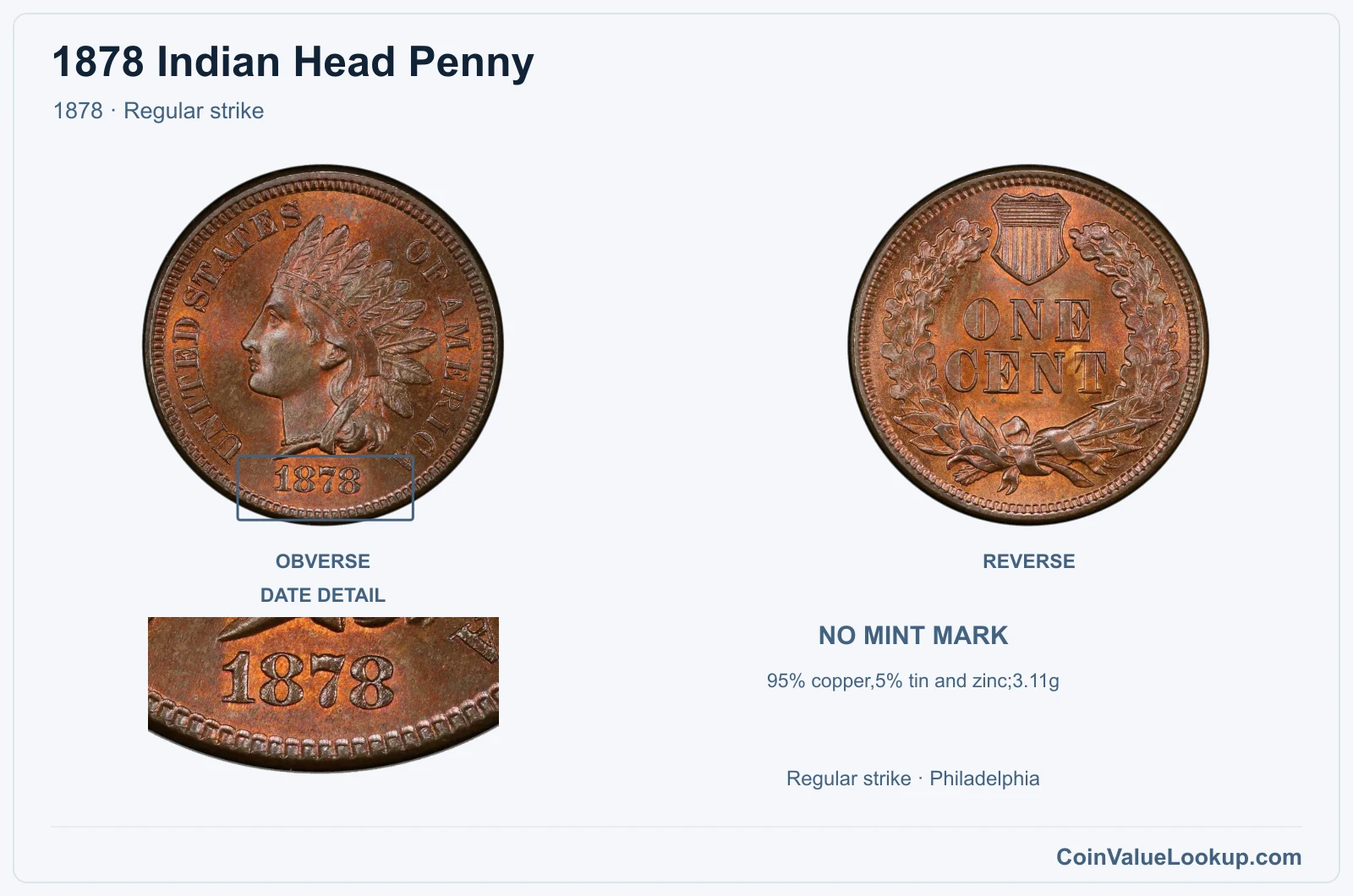
The standard 1878 Indian Head cent is a Philadelphia business strike in bronze, weighing 3.11 grams. There is no mintmark to look for.
At the lower end, a G4 example — where the portrait outline is clear but detail is mostly gone — lists around $43 in one guide. A choice uncirculated MS63 coin, showing strong luster and minimal marks, is estimated near $498 by the same source.
Condition and original surfaces are the main value drivers here. Cleaning, corrosion, or heavy contact marks will pull a coin well below guide figures.
If your coin still has traces of its original copper-red color, that is a plus worth noting when you have it evaluated.
Coin Value Lookup is a handy starting point if you want to look up guides for other dates or denominations in the Indian Head series.
| Range | Grade | Price | Auction Records | Appraisal |
|---|---|---|---|---|
| PO | PO 1 | — | Coin Identifier | |
| FR | FR 2 | — | Coin Identifier | |
| AG | AG 3 | Coin Identifier | ||
| G | G 4 | Coin Identifier | ||
| G 6 | — | Coin Identifier | ||
| VG | VG 8 | — | Coin Identifier | |
| VG 10 | Coin Identifier | |||
| F | F 12 | Coin Identifier | ||
| F 15 | Coin Identifier | |||
| VF | VF 20 | Coin Identifier | ||
| VF 25 | Coin Identifier | |||
| VF 30 | Coin Identifier | |||
| VF 35 | Coin Identifier | |||
| XF | XF 40 | Coin Identifier | ||
| XF 45 | Coin Identifier | |||
| AU | AU 50 | Coin Identifier | ||
| AU 53 | Coin Identifier | |||
| AU 55 | Coin Identifier | |||
| AU 58 | Coin Identifier | |||
| MS | MS 60 | Coin Identifier | ||
| MS 61 | Coin Identifier | |||
| MS 62 | Coin Identifier | |||
| MS 63 | Coin Identifier | |||
| MS 64 | Coin Identifier | |||
| MS 65 | Coin Identifier | |||
| MS 66 | Coin Identifier | |||
| MS 67 | — | — | — | |
| MS 68 | — | — | — | |
| MS 69 | — | — | — | |
| MS 70 | — | — | — |
1878 Indian Head Penny — PR
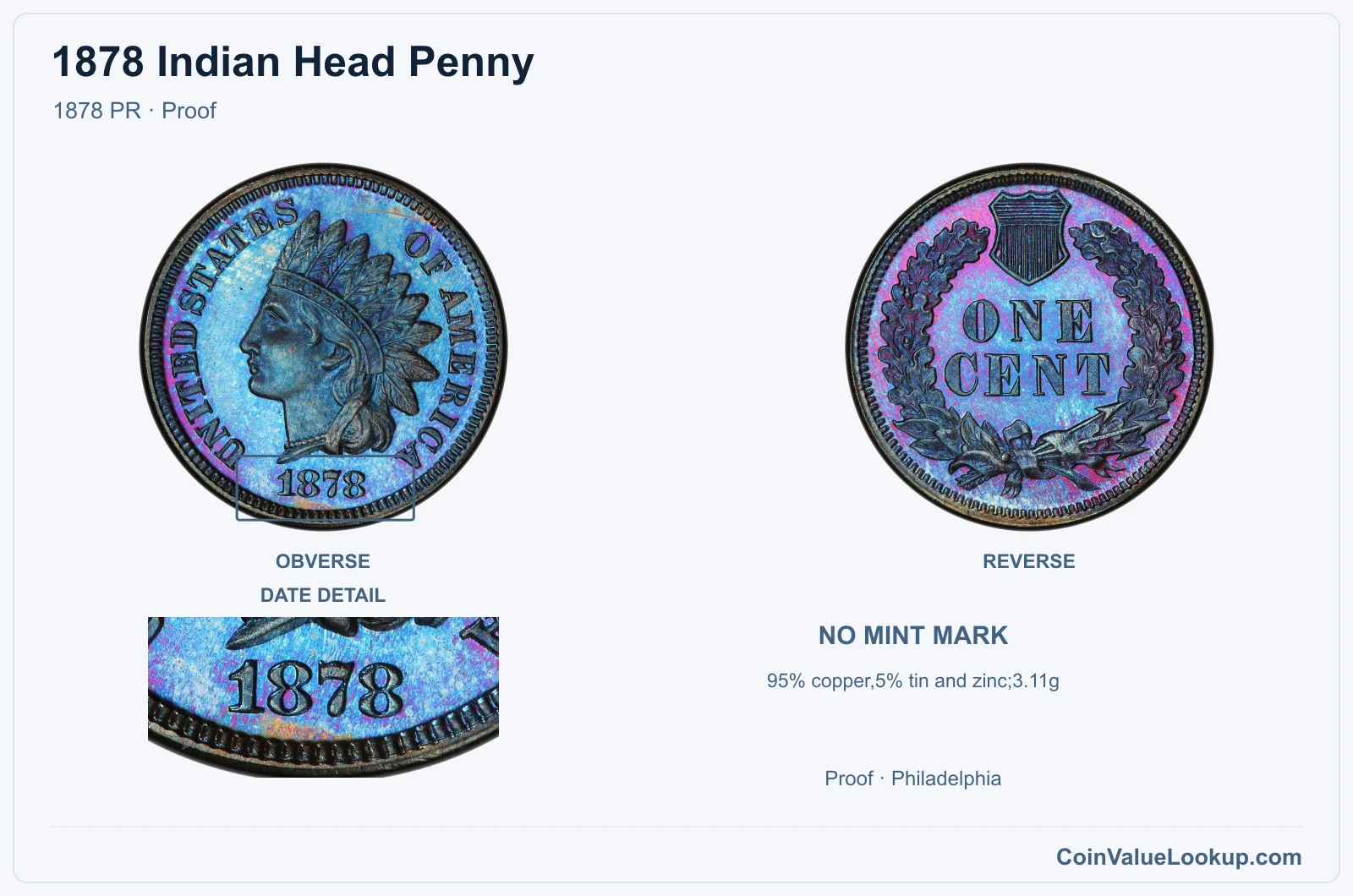
The 1878 proof Indian Head cent was a limited special production from the Philadelphia Mint, struck with polished dies and planchets for collectors. It shares the same bronze composition and design as the business strike but differs in how it was made.
Genuine proofs display squared-off rims, deeply mirrored fields, and sharp design details that stand apart from even the best uncirculated business strikes. A PR63 example carries a guide estimate of about $344.
That may seem lower than a high-grade business strike, but proof and business-strike grading scales measure different things and should not be compared directly.
Be cautious: a business strike that someone has polished to a mirror finish is not a proof. If you suspect you have a proof, professional authentication is strongly recommended before assigning proof value.
| Range | Grade | Price | Auction Records | Appraisal |
|---|---|---|---|---|
| PR | PR 1 | — | Coin Identifier | |
| PR 2 | — | Coin Identifier | ||
| PR 3 | — | Coin Identifier | ||
| PR 4 | — | Coin Identifier | ||
| PR 6 | — | Coin Identifier | ||
| PR 8 | — | Coin Identifier | ||
| PR 10 | — | Coin Identifier | ||
| PR 12 | — | Coin Identifier | ||
| PR 15 | — | Coin Identifier | ||
| PR 20 | — | Coin Identifier | ||
| PR 25 | — | Coin Identifier | ||
| PR 30 | — | Coin Identifier | ||
| PR 35 | — | Coin Identifier | ||
| PR 40 | — | Coin Identifier | ||
| PR 45 | — | Coin Identifier | ||
| PR 50 | — | Coin Identifier | ||
| PR 53 | — | Coin Identifier | ||
| PR 55 | — | Coin Identifier | ||
| PR 58 | — | Coin Identifier | ||
| PR 60 | — | Coin Identifier | ||
| PR 61 | — | Coin Identifier | ||
| PR 62 | Coin Identifier | |||
| PR 63 | Coin Identifier | |||
| PR 64 | Coin Identifier | |||
| PR 65 | Coin Identifier | |||
| PR 66 | — | Coin Identifier | ||
| PR 67 | — | Coin Identifier | ||
| PR 68 | — | — | — | |
| PR 69 | — | — | — | |
| PR 70 | — | — | — |
1878 Indian Head Penny Error List
1. 1878 Indian Head Penny — Die Break / Cud
A die break or cud on an 1878 Indian Head cent appears as a raised, irregular blob of metal on the coin's surface. When the break extends to the rim, it creates what collectors call a cud — a featureless lump that replaces part of the normal design along the edge.
To spot one, look for a smooth raised area that interrupts the expected detail. The boundary between the cud and normal design should be distinct, not gradual.
On the reverse, a cud might displace part of the wreath or lettering; on the obverse, it could obscure portrait details or stars.
Do not confuse a cud with a rim dent from post-mint damage, surface corrosion, or a small interior die chip that does not connect to the rim. Genuine die breaks show consistent relief and no displaced metal around them.
No fixed price range applies here; value depends on the size, location, and condition of both the error and the host coin, so individual professional assessment is the way to go.
2. 1878 Indian Head Penny — Doubled Die Reverse
A doubled die reverse on the 1878 Indian Head cent shows doubling in the reverse design elements — the wreath, shield, or lettering — caused by a misalignment during die production. This is different from the entire coin being struck twice.
To check, compare your coin's reverse legends and wreath contours closely with a known normal example under magnification. Look for a secondary, slightly offset outline on letters like ONE CENT or on the shield's horizontal lines.
The doubling should be consistent across the affected area.
Machine doubling, which is flat and shelf-like, is the most common lookalike. Reflections from lighting and random post-strike damage can also mimic doubling to the naked eye.
Confirmed doubled die reverses on this date require individual assessment based on authenticated identity, the strength of the doubling, and the coin's overall condition. No standard price range is established for this category.
3. 1878 Indian Head Penny — Misplaced Date
A misplaced date on the 1878 Indian Head cent means partial impressions of one or more date digits ended up in the wrong spot — typically embedded in the denticles (the small tooth-like features along the rim) or near the base of the portrait, away from where the final date sits.
This happened when the date punch landed incorrectly before being repositioned for the final strike. Look for faint outlines of a numeral, especially an "8" or "7," in the denticles below the date area.
The shape should clearly match part of a digit, not just a random lump.
Die chips, scratches, and tiny bumps can fool you into seeing digits that are not there. Compare any suspect feature carefully against a reference image of the correctly positioned date.
These varieties are valued individually based on clarity, authenticated identity, and coin condition, with no standard price range available.
4. 1878 Indian Head Penny — Repunched Date
A repunched date on the 1878 Indian Head cent shows remnants of an earlier date-punch impression sitting slightly offset from the final numerals. During production, the date was hand-punched into the working die, and sometimes the first attempt landed a bit off.
The die maker would then re-punch over it, leaving a ghost of the original position.
Look closely at each digit — particularly the "8" and "7" — for traces of a second image peeking out to the north, south, east, or west of the final number. The offset should be consistent with a mechanical re-punch, not random.
This is distinct from a doubled die, which involves the entire hub impression shifting. It also differs from post-mint damage to the date area, which tends to look rough and irregular rather than showing a clean secondary digit outline.
Repunched dates on this issue are assessed individually by authenticated identity, clarity of the repunching, and the coin's overall grade. No fixed price range is established.