1842 Liberty Seated Dime Coin Value: How Much Is It Worth?
The 1842 Liberty Seated Dime spans a wide value range depending on mint, condition and variety. USA Coin Book guide estimates place the Philadelphia issue around $29 in G4 and about $794 in MS63, while the New Orleans coin runs from roughly $47 in G4 up to around $6,261 in MS63.
Proof examples are rare early issues, with a PCGS guide figure near $35,000 at PR64. Sorting out the correct branch — Philadelphia versus New Orleans, business strike versus Proof — is the essential first step before any value lookup.
Fast Way to Identify Your 1842 Liberty Seated Dime
Upload clear photos of the front and back of your 1842 dime for a preliminary identification. The tool can help spot the mintmark location, the With Drapery design detail and obvious die-state features.
It is not a substitute for professional authentication or precise grading, but it gives you a solid starting point before diving deeper.
1842 Liberty Seated Dime Value
Upload both sides of your 1842 Liberty Seated Dime.
Front Obverse
Upload photo
Back Reverse
Upload photo
Which 1842 Liberty Seated Dime Versions Are Worth Money?
- The 1842-O (New Orleans) regular issue carries a significantly higher guide value than Philadelphia across equivalent grades, with the gap widening sharply in uncirculated condition.
- Philadelphia Proofs from 1842 are rare early-date issues, not routine collector products — a PCGS guide figure of $35,000 at PR64 reflects that scarcity.
- Correct identification of the With Drapery design, the mint, and whether strike weakness or genuine wear is present directly affects which value range applies to your coin.
Step 1: Identify Your 1842 Liberty Seated Dime Mint Mark and Version
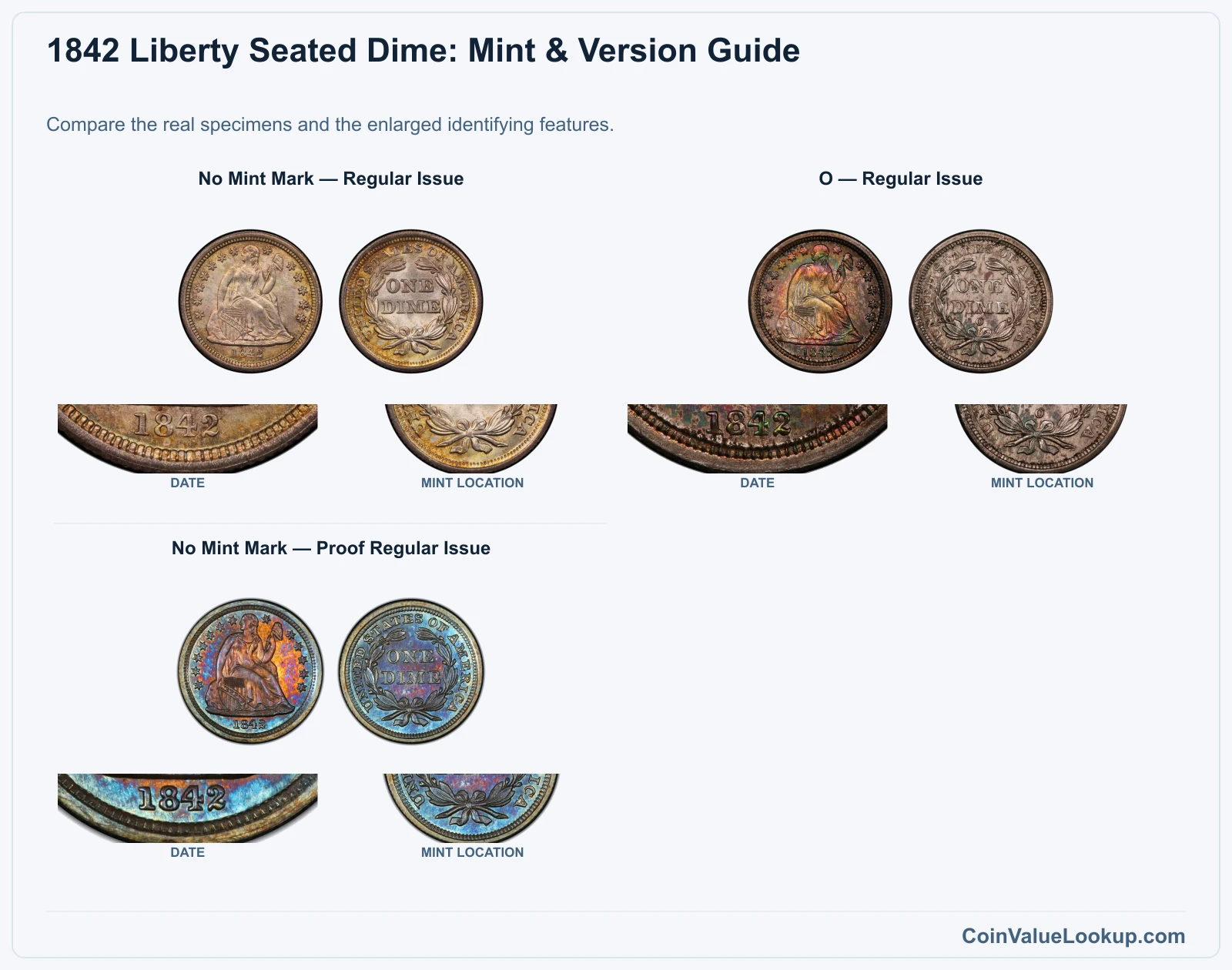
Start by confirming a seated Liberty on the obverse and the words ONE DIME on the reverse inside a small wreath. Half dimes are smaller and say HALF DIME — set those aside.
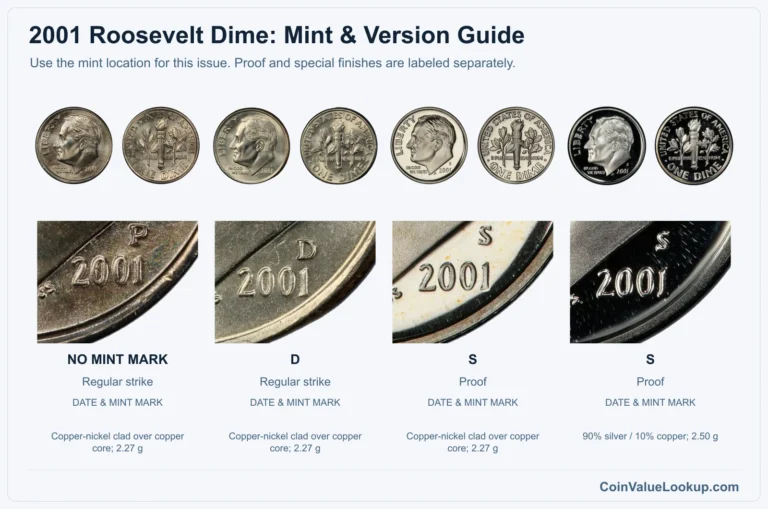
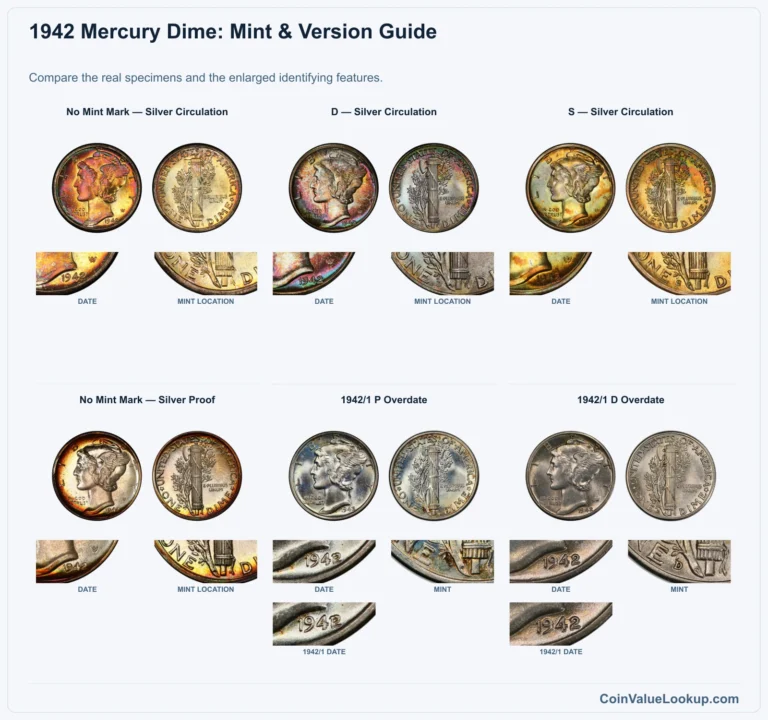
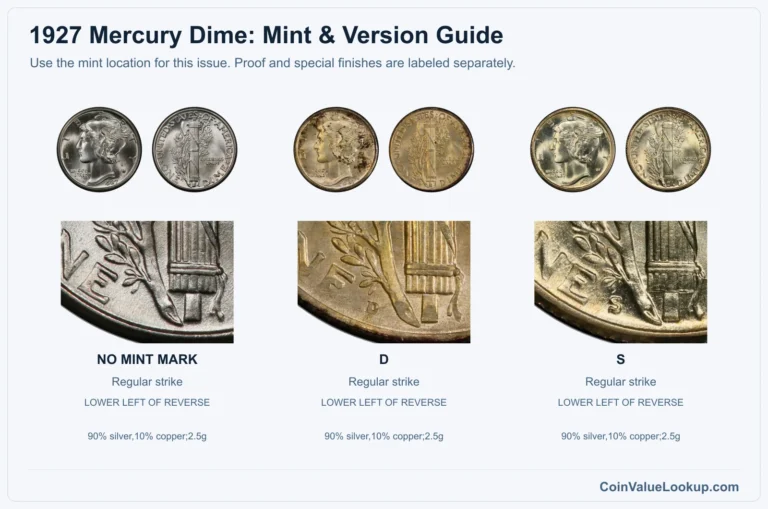
Flip the coin over and look below the wreath for a mintmark. A small "O" means New Orleans.
No letter means Philadelphia.
Both mints struck the With Drapery subtype in 1842, which shows an extra fold of cloth at Liberty's elbow. This is a design element, not damage.
The coin should be 90% silver and 10% copper, weigh about 2.67 grams and have a reeded edge with a diameter of 17.9 mm. If it feels too light or the edge is smooth, something is off.
New Orleans dimes from this year are known for worn and shattered dies, which can make details look mushy even on a coin that has not circulated much. Do not confuse weak striking with heavy wear — they are different problems with different implications for value.
Step 2: Check Your 1842 Liberty Seated Dime Grade
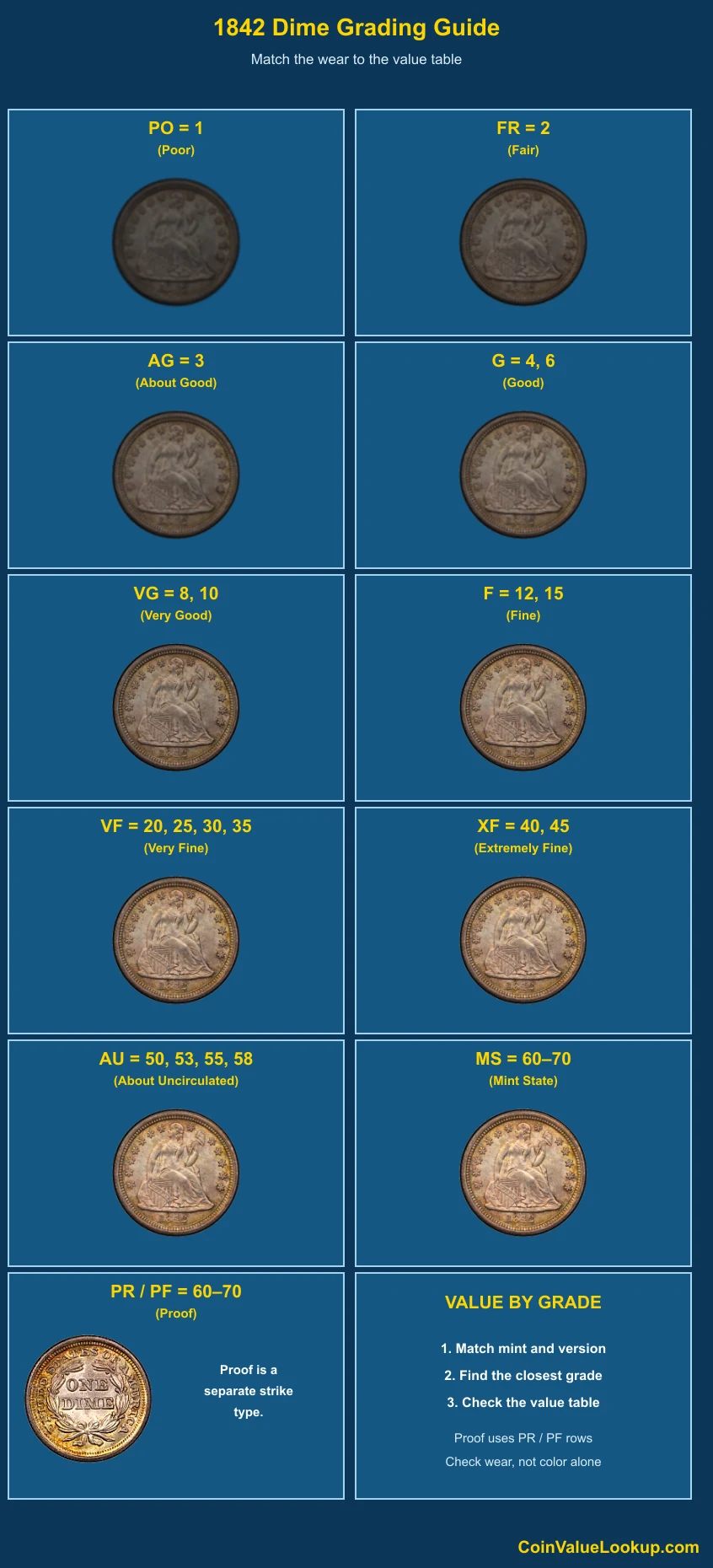
Use the subtype-specific grading comparison image to evaluate your coin. Focus on Liberty's head, the shield on her arm, the gown folds near her feet and the wreath on the reverse.
Wear appears first on the high points of Liberty's knee and breast, then spreads across the shield and head. On heavily worn coins, the stars along the rim start to flatten.
Original luster is a key separator between circulated and uncirculated grades. A coin can look shiny from cleaning but still be worn — that is not the same as original mint luster.
New Orleans pieces often came off tired dies, so some softness in the stars or wreath is a strike issue, not necessarily wear. Compare your coin's weak spots against the known strike characteristics for the O mint before downgrading.
Proof coins have mirrored fields and sharp detail from specially prepared dies. A polished circulation coin is not a Proof, no matter how reflective it looks.
Hairlines on Proof surfaces affect the grade separately from wear.
Step 3: Check 1842 Liberty Seated Dime Value by Mint and Version
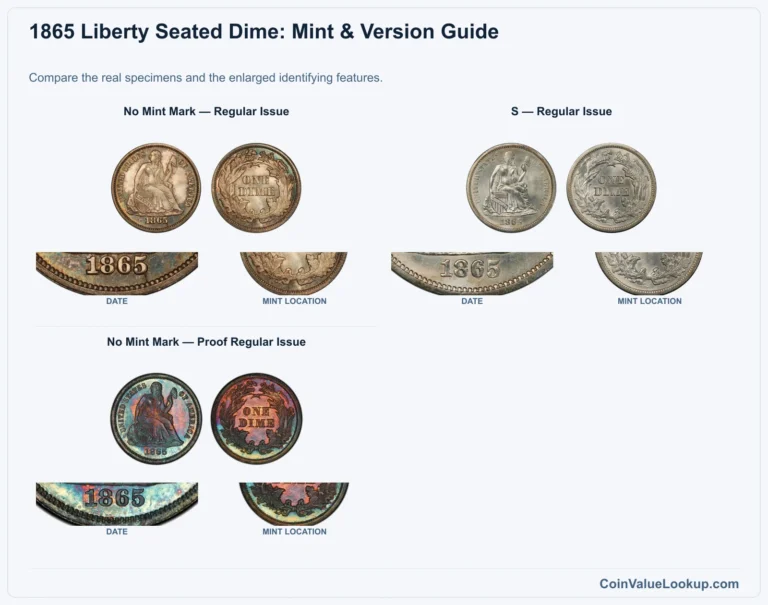
1842 Liberty Seated Dime — No Mint Mark — Regular Issue
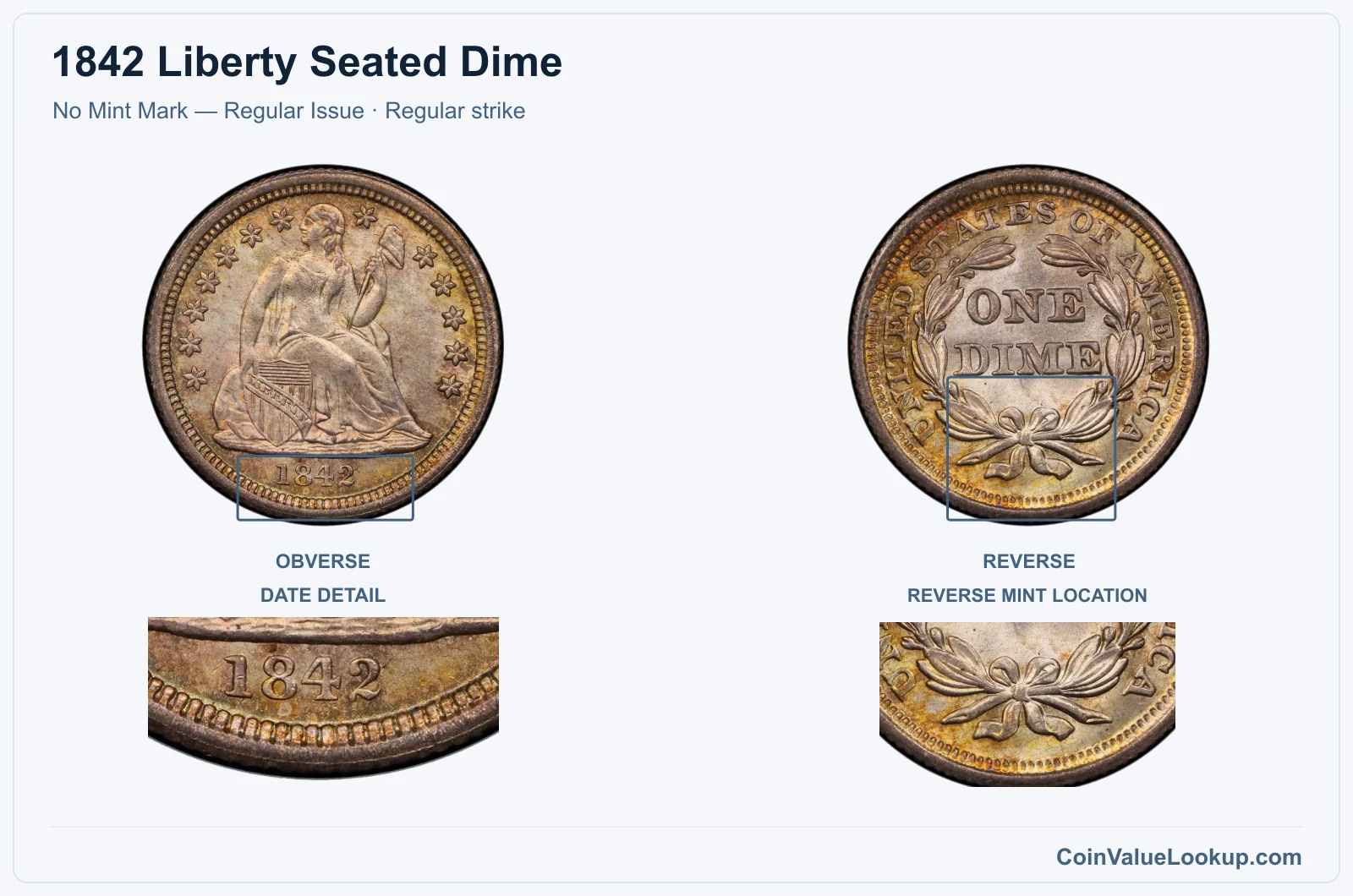
The Philadelphia 1842 dime has no mintmark. Look at the reverse below the wreath — a blank space confirms this branch.
This is a With Drapery business strike on the Stars obverse with a small-wreath reverse bearing the denomination legend. The extra drapery fold at Liberty's elbow is part of the design, so do not mistake it for a die clash or damage.
USA Coin Book guide estimates place this coin around $29 at G4 and about $794 at MS63. Those are retail guide snapshots, not guaranteed sale prices.
Condition drives value steeply here: a well-worn example is affordable, but original uncirculated surfaces push the price up fast.
Before consulting the price chart, confirm you have the correct mint and subtype. A misidentified New Orleans coin sitting in a Philadelphia slot — or vice versa — will give you the wrong number.
Range Grade
Price Auction Records Appraisal PO PO 1
—
Coin Identifier FR FR 2
—
Coin Identifier AG AG 3
—
Coin Identifier G G 4
—
Coin Identifier
G 6
—
Coin Identifier VG VG 8
Coin Identifier
VG 10
—
Coin Identifier F F 12
—
Coin Identifier
F 15
—
Coin Identifier VF VF 20
—
Coin Identifier
VF 25
Coin Identifier
VF 30
Coin Identifier
VF 35
Coin Identifier XF XF 40
—
Coin Identifier
XF 45
Coin Identifier AU AU 50
Coin Identifier
AU 53
Coin Identifier
AU 55
Coin Identifier
AU 58
Coin Identifier MS MS 60
—
Coin Identifier
MS 61
Coin Identifier
MS 62
Coin Identifier
MS 63
Coin Identifier
MS 64
Coin Identifier
MS 65
Coin Identifier
MS 66
Coin Identifier
MS 67
Coin Identifier
MS 68
—
—
—
MS 69
—
—
—
MS 70
—
—
—
1842 Liberty Seated Dime — O — Regular Issue
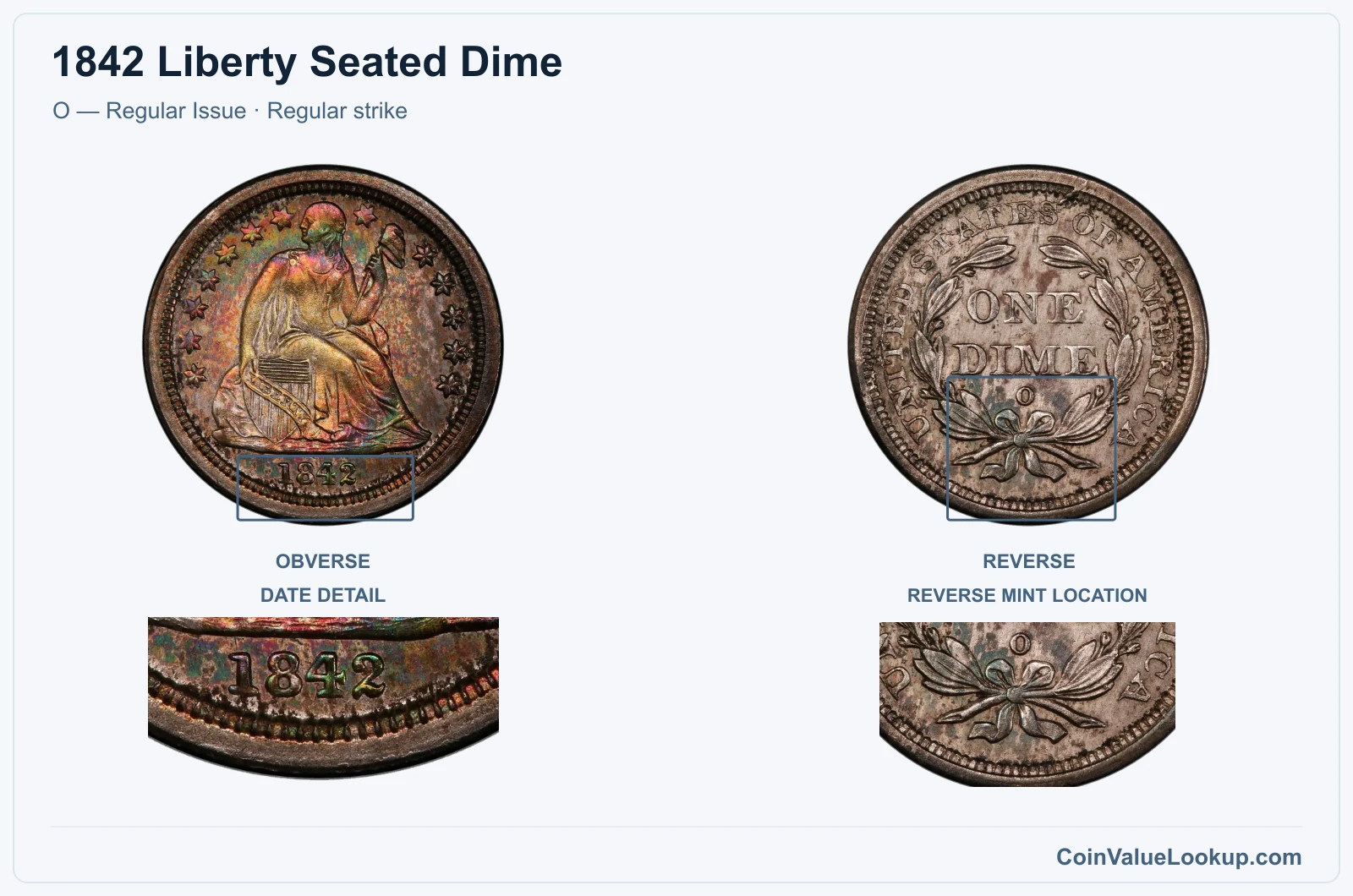
The New Orleans issue carries a small "O" mintmark on the reverse below the wreath. It shares the With Drapery design and Stars obverse with its Philadelphia sibling, but that is where the similarities end.
New Orleans dies from 1842 frequently show heavy wear and even shattering, which leaves coins looking soft in the stars, wreath and Liberty's extremities. This is a manufacturing trait, not post-mint damage.
Separating die-state weakness from actual circulation wear matters a great deal when grading these coins.
Coin Value Lookup is a handy starting point when you need to look up guides for different dates, mints or denominations across the Liberty Seated series.
USA Coin Book guide estimates run from about $47 at G4 to roughly $6,261 at MS63. That steep climb reflects how few New Orleans dimes survived in high grades.
Original surfaces and correct attribution are more important than a shiny appearance — a cleaned coin with detail does not command uncirculated money.
Range Grade
Price Auction Records Appraisal PO PO 1
—
Coin Identifier FR FR 2
—
Coin Identifier AG AG 3
—
Coin Identifier G G 4
—
Coin Identifier
G 6
—
Coin Identifier VG VG 8
—
Coin Identifier
VG 10
—
Coin Identifier F F 12
Coin Identifier
F 15
Coin Identifier VF VF 20
Coin Identifier
VF 25
Coin Identifier
VF 30
Coin Identifier
VF 35
Coin Identifier XF XF 40
Coin Identifier
XF 45
Coin Identifier AU AU 50
Coin Identifier
AU 53
Coin Identifier
AU 55
Coin Identifier
AU 58
Coin Identifier MS MS 60
—
Coin Identifier
MS 61
Coin Identifier
MS 62
Coin Identifier
MS 63
Coin Identifier
MS 64
Coin Identifier
MS 65
Coin Identifier
MS 66
—
—
—
MS 67
—
—
—
MS 68
—
—
—
MS 69
—
—
—
MS 70
—
—
—
1842 Liberty Seated Dime — No Mint Mark — Proof Regular Issue
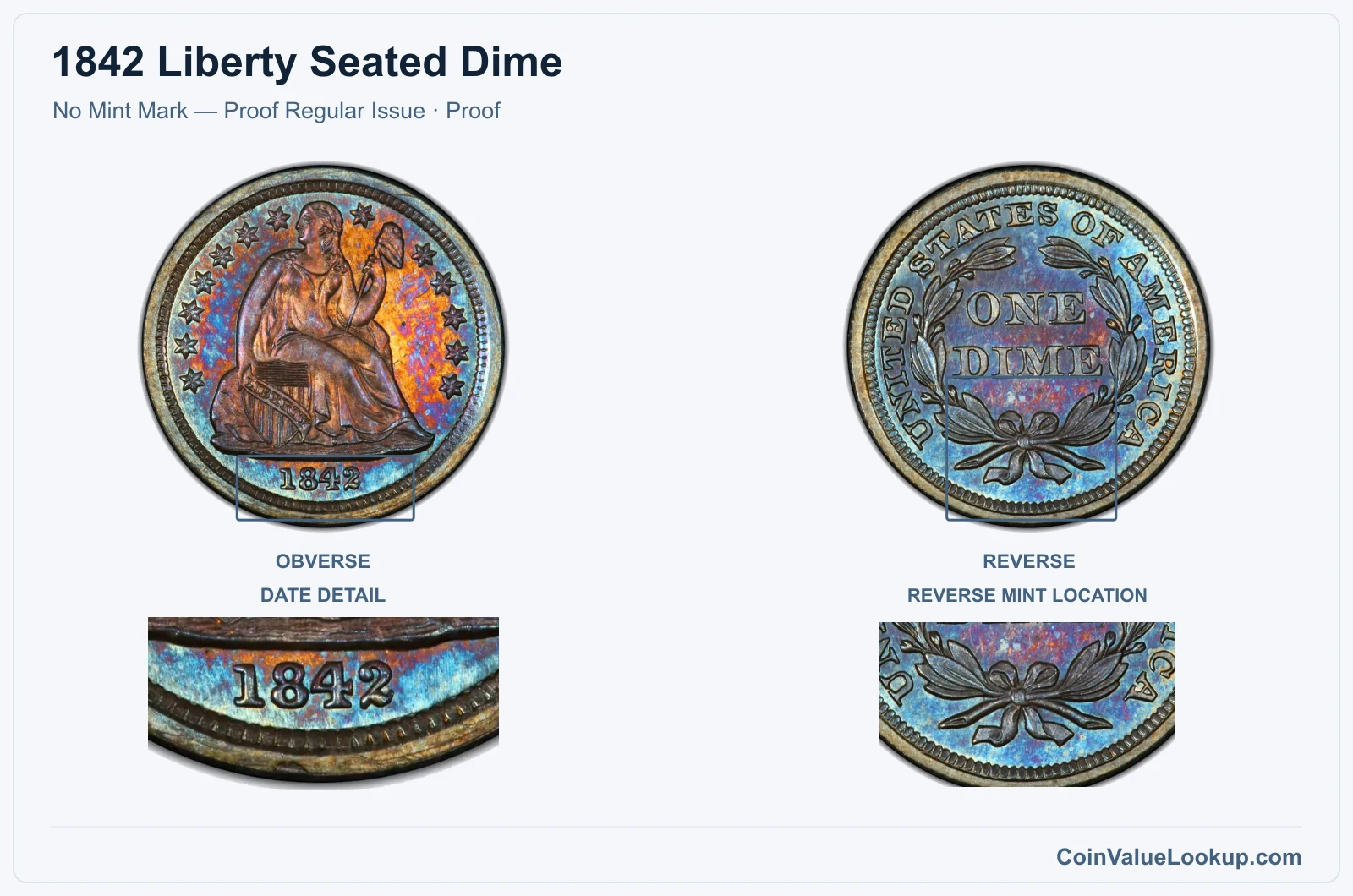
Proof 1842 dimes were struck at Philadelphia on specially prepared dies, producing mirrored fields and sharp design details. There is no mintmark, same as the business strike, so you cannot separate them by mint alone.
These are rare early-date Proofs. They were not mass-produced annual collector products like later 19th-century issues.
The PCGS guide lists a figure around $35,000 at PR64, which gives you a sense of the scarcity involved. That is a single-grade reference point, not a guaranteed realization.
Authentication matters here more than almost anywhere else in the series. A polished circulation coin can mimic reflective fields, but it lacks the die characteristics of a genuine Proof.
Cameo contrast — frosted devices over mirror fields — can appear on legitimate Proofs but is a visual filter, not a separate mint product. Never assume a shiny old dime is a Proof without professional attribution.
Range Grade
Price Auction Records Appraisal PR PR 1
—
Coin Identifier
PR 2
—
Coin Identifier
PR 3
—
Coin Identifier
PR 4
—
Coin Identifier
PR 6
—
Coin Identifier
PR 8
—
Coin Identifier
PR 10
—
Coin Identifier
PR 12
—
Coin Identifier
PR 15
—
Coin Identifier
PR 20
—
Coin Identifier
PR 25
—
Coin Identifier
PR 30
—
Coin Identifier
PR 35
—
Coin Identifier
PR 40
—
Coin Identifier
PR 45
—
Coin Identifier
PR 50
—
Coin Identifier
PR 53
—
Coin Identifier
PR 55
—
Coin Identifier
PR 58
—
Coin Identifier
PR 60
—
Coin Identifier
PR 61
—
Coin Identifier
PR 62
—
Coin Identifier
PR 63
—
Coin Identifier
PR 64
—
Coin Identifier
PR 65
Coin Identifier
PR 66
—
—
—
PR 67
—
—
—
PR 68
—
—
—
PR 69
—
—
—
PR 70
—
—
—
1842 Liberty Seated Dime Error List
1. 1842 Liberty Seated Dime — Die Break / Cud
A die break that extends to the rim is called a cud. On an 1842 dime, it appears as a raised, featureless blob of metal where part of the design should be.
The displaced design stops cleanly at the cud's boundary.
To spot one, look along the entire rim on both sides. Cuds are most visible where they interrupt a star, letter or wreath element.
A small interior die break that does not reach the rim is a different category.
Do not confuse a cud with a rim dent, which is a depression caused by contact damage after striking. Corrosion bumps or interior die chips also look different under magnification — they lack the flat, shelf-like profile that connects to the rim.
No specific price range is established here. The value of a cud depends on its size, location, the coin's overall condition and collector demand for the particular die state.
2. 1842 Liberty Seated Dime — Die Crack / Die Chip
Die cracks show up as thin raised lines running across the coin's surface, following the path of a fracture in the steel die. On 1842 dimes — especially New Orleans strikes from worn dies — cracks can be common and range from subtle hairlines to bold ridges.
A die chip is a small raised blob, usually round or irregular, where a tiny piece of the die face broke away. It stays interior to the design and does not connect to the rim.
Look carefully before calling a line a die crack. Incuse scratches sit below the surface and were inflicted after striking.
Corrosion and foreign material stuck to the coin can also mimic raised features under poor lighting.
No specific price range applies broadly. The crack's length, prominence, the coin's grade and whether the die state is documented all factor into any premium a collector might pay.
3. 1842 Liberty Seated Dime — Die Gouge / Named Raised-Line Variety
A die gouge appears as a raised line or lump of extra metal on the coin's surface, caused by physical damage to the die face rather than a fracture. On an 1842 dime, check near the date, stars and lettering where gouges tend to be most visible.
Some die gouges become recognized named varieties among specialists when they appear in a consistent, distinctive position. The key diagnostic is that the feature is raised and repeats on every coin struck from that die, unlike a random scratch which is incuse and unique to one coin.
Do not confuse a die gouge with an incuse scratch, post-mint damage or an unrelated die crack. A gouge has a different profile — typically broader or more irregular than a crack's clean line.
No adopted price range exists for this category on the 1842 dime. Value depends on the gouge's visibility, its position in the design and the coin's overall condition.
4. 1842 Liberty Seated Dime — Struck-Through Error
A struck-through error occurs when foreign material — grease, a thread, a metal fragment — gets between the die and the planchet during striking. The result is a localized depression or incomplete design area on the finished coin.
On 1842-O dimes, a filled-die state has been reported, where grease or debris packed into the die cavities produced soft or missing details on the struck coin. This is distinct from ordinary die wear, which affects an entire design element gradually rather than leaving a sharply bounded blank zone.
To tell a struck-through from simple wear, look at the edges of the weak area. A struck-through impression often has a defined boundary, while wear feathers out smoothly.
Cleaning scratches and post-mint damage are incuse marks, not the smooth depressions left by an obstruction.
No specific price range is established. Value depends on the size of the affected area, what design element is obscured and the coin's overall grade.