1855 Liberty Seated Dime Coin Value: How Much Is It Worth?
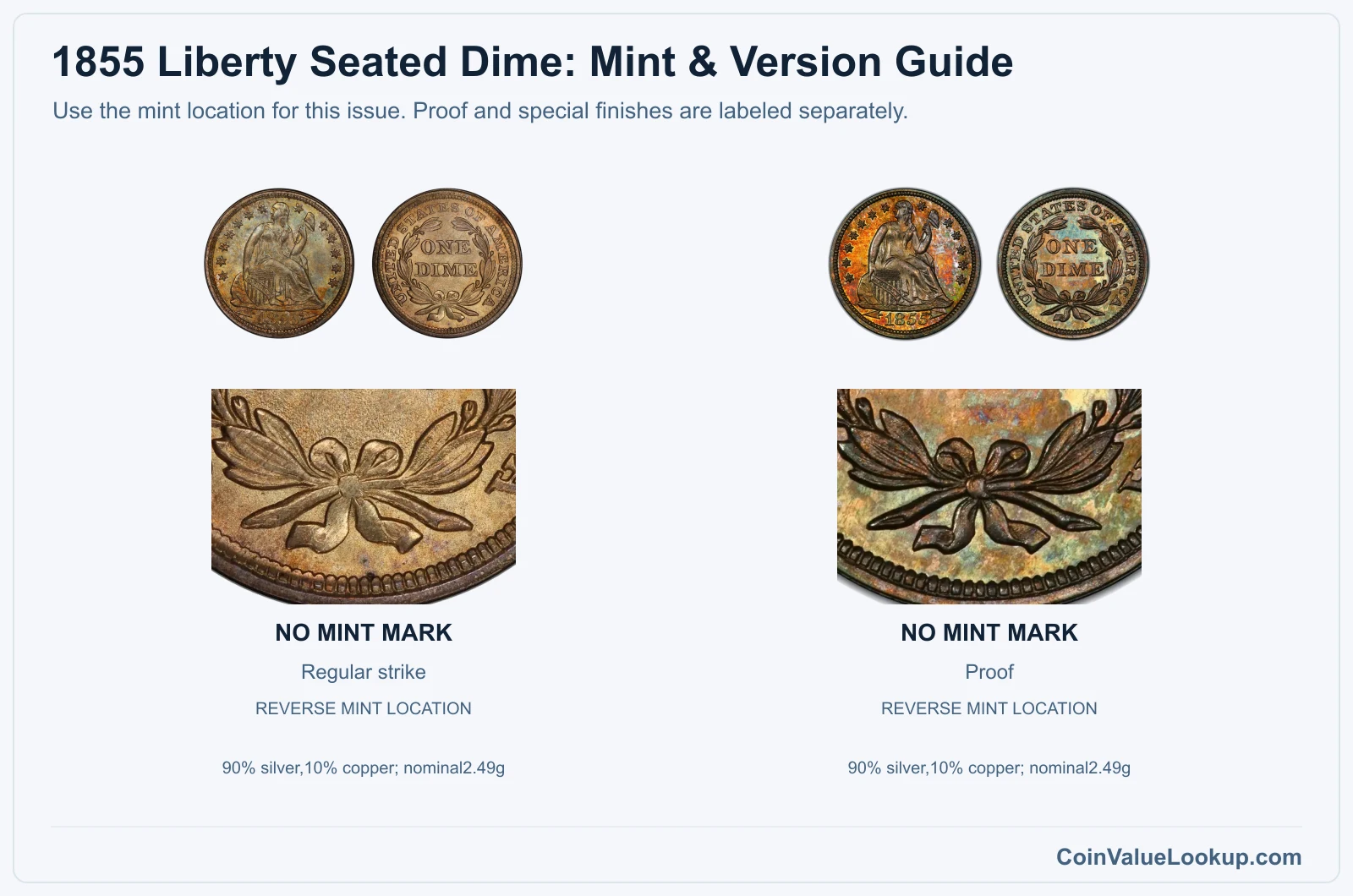
The 1855 Liberty Seated Dime was struck only at the Philadelphia Mint, in the With Arrows subtype. A USA Coin Book guide estimate places this coin at about $29 in G4 and around $1,067 in MS63 for the normal business strike.
Proof examples and error varieties carry separate pricing outside that range.
Fast Way to Identify Your 1855 Liberty Seated Dime
Upload clear photos of both the front and back of your coin for a preliminary identification. Our tool can help you confirm whether you have the correct date, design type, and mint based on what it sees.
Good lighting and a steady shot make a big difference, so skip the blurry phone pics if you can.
1855 Liberty Seated Dime Value
Upload both sides of your 1855 Liberty Seated Dime.
Front Obverse
Upload photo
Back Reverse
Upload photo
Which 1855 Liberty Seated Dime Versions Are Worth Money?
- The normal Philadelphia With Arrows business strike ranges from about $29 at G4 to roughly $1,067 at MS63 per USA Coin Book guide estimates.
- Proof With Arrows examples are rare early-date issues; a PCGS guide estimate places a PR63 example around $10,608.
- Doubled die obverse varieties exist for 1855 and can command a premium depending on the strength and visibility of the doubling.
- Die cracks, rotated dies, and clashed dies have been reported for this date and may add collector interest when clearly visible.
- Original, problem-free surfaces matter far more than a shiny appearance; cleaned or damaged coins lose significant value regardless of the underlying grade.
Step 1: Identify Your 1855 Liberty Seated Dime Mint Mark and Version
Start by confirming you have a seated Liberty on the obverse and the words ONE DIME on the reverse. Half dimes look similar but are smaller, so check the size: a genuine 1855 dime measures 17.9 mm across with a reeded edge.
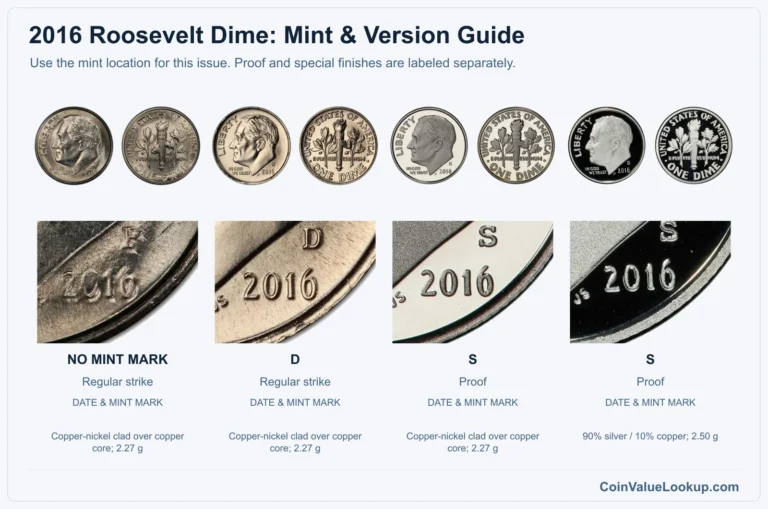
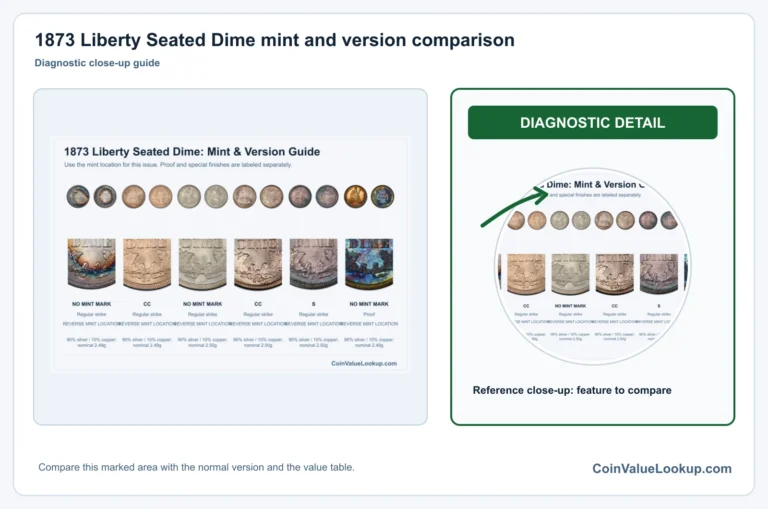
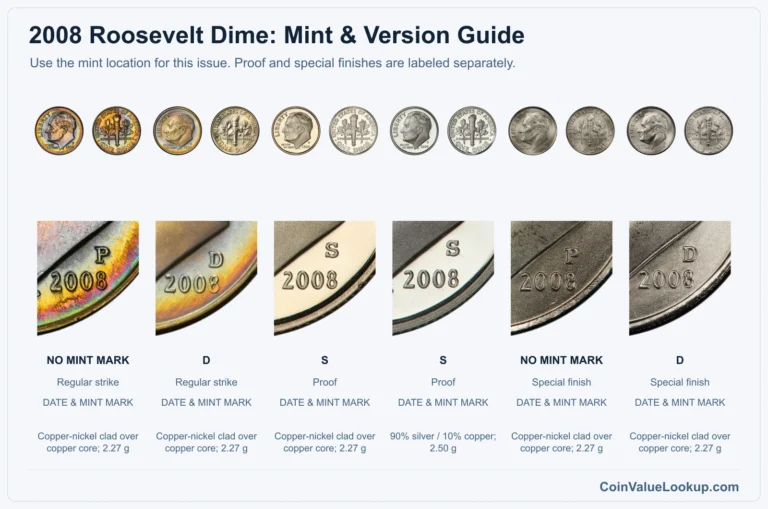
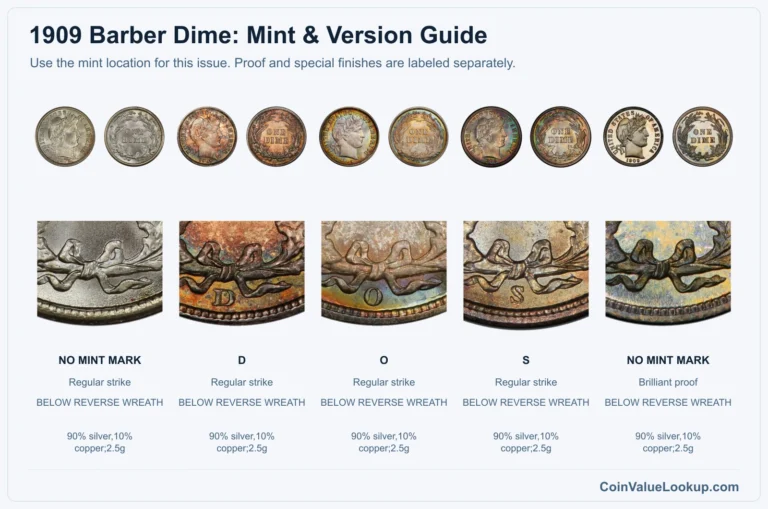
This issue was struck only at Philadelphia, so there should be no mintmark below the wreath on the reverse. If you see a small letter there, you have a different coin.
The 1855 dime belongs to the With Arrows subtype, meaning tiny arrowheads flank the date on the obverse. It weighs about 2.49 grams in 90% silver and 10% copper.
The date and arrows were applied from the same hub, so genuine doubling of the date can indicate a doubled die rather than simple wear or damage.
One caution: a database entry sometimes listed alongside 1855 is actually an 1856 Small Date variety. Make sure the last digit of your date reads 5, not 6.
Step 2: Check Your 1855 Liberty Seated Dime Grade
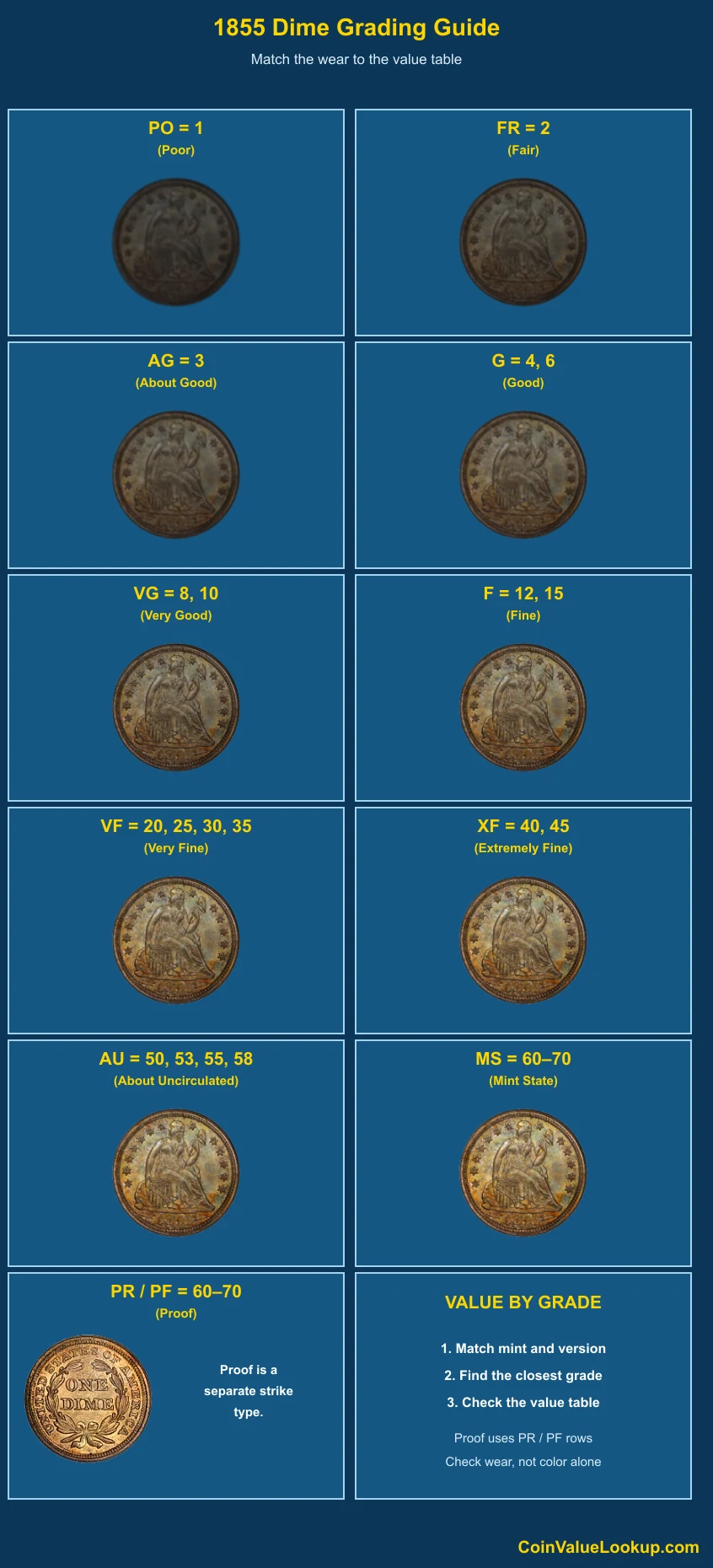
Hold the coin at an angle and check Liberty's head, shield, gown folds, and feet. On higher-grade examples these details are sharp and complete; on worn pieces the head blends into the cap first, followed by the shield lines.
The wreath on the reverse loses its leaf detail from the tips inward as the coin circulates. Compare your coin against the grading image for this specific With Arrows subtype, because strike weakness from worn dies can mimic wear.
Original luster is a big clue. A coin that still has cartwheel luster in protected areas is likely a higher grade than one that has been cleaned to look shiny.
Speaking of cleaning: a polished circulation coin is not a Proof, no matter how reflective you make it.
Proofs have deeply mirrored fields struck from specially prepared dies. They are graded on a separate scale and should never be compared to Mint State coins for condition ranking.
Hairlines from mishandling are the main Proof detractor, so look carefully under good light.
Step 3: Check 1855 Liberty Seated Dime Value by Mint and Version
1855 Liberty Seated Dime — No Mint Mark — With Arrows
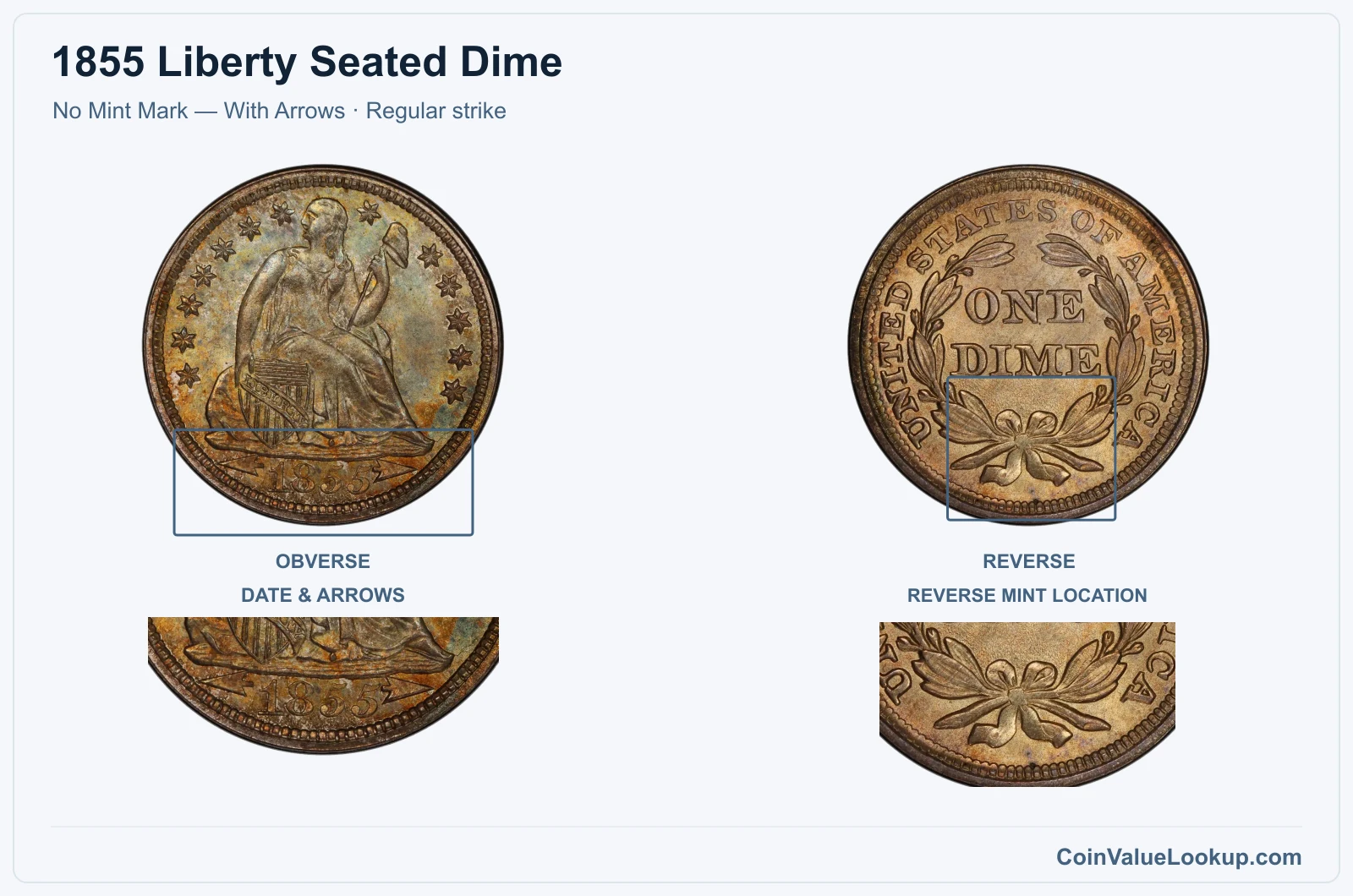
The 1855 No Mint Mark With Arrows dime is a Philadelphia-only issue weighing about 2.49 grams in 90% silver. Look for the two small arrowheads flanking the date on the obverse; this design change reflected a slight weight reduction in the series.
USA Coin Book guide estimates place this coin at roughly $29 in G4 and about $1,067 in MS63. Those are retail guide figures, not guaranteed sale prices, and actual results vary with eye appeal and surface quality.
The date and arrows were hubbed together, so if you notice doubling on the date digits, it may indicate a genuine doubled die rather than simple mechanical doubling. Check the error section below for more on that.
Coin Value Lookup is a good starting point if you want to look up value guides for other dates and denominations in the Liberty Seated Dime series.
Ordinary-issue reference: Ordinary-issue reference only: The table below shows prices for the 1855 Liberty Seated Dime (regular strike). It does not represent the value of the specific No Mint Mark — With Arrows variety or its variety premium. Year, mint, metal and strike type are matched; the specific variety is not priced by this table.
Range Grade
Price Auction Records Appraisal PO PO 1
—
Coin Identifier FR FR 2
—
Coin Identifier AG AG 3
Coin Identifier G G 4
—
Coin Identifier
G 6
—
Coin Identifier VG VG 8
—
Coin Identifier
VG 10
—
Coin Identifier F F 12
—
Coin Identifier
F 15
Coin Identifier VF VF 20
Coin Identifier
VF 25
—
Coin Identifier
VF 30
—
Coin Identifier
VF 35
Coin Identifier XF XF 40
—
Coin Identifier
XF 45
Coin Identifier AU AU 50
Coin Identifier
AU 53
Coin Identifier
AU 55
Coin Identifier
AU 58
Coin Identifier MS MS 60
—
Coin Identifier
MS 61
Coin Identifier
MS 62
Coin Identifier
MS 63
Coin Identifier
MS 64
Coin Identifier
MS 65
Coin Identifier
MS 66
Coin Identifier
MS 67
Coin Identifier
MS 68
Coin Identifier
MS 69
—
—
—
MS 70
—
—
—
1855 Liberty Seated Dime — No Mint Mark — Proof With Arrows
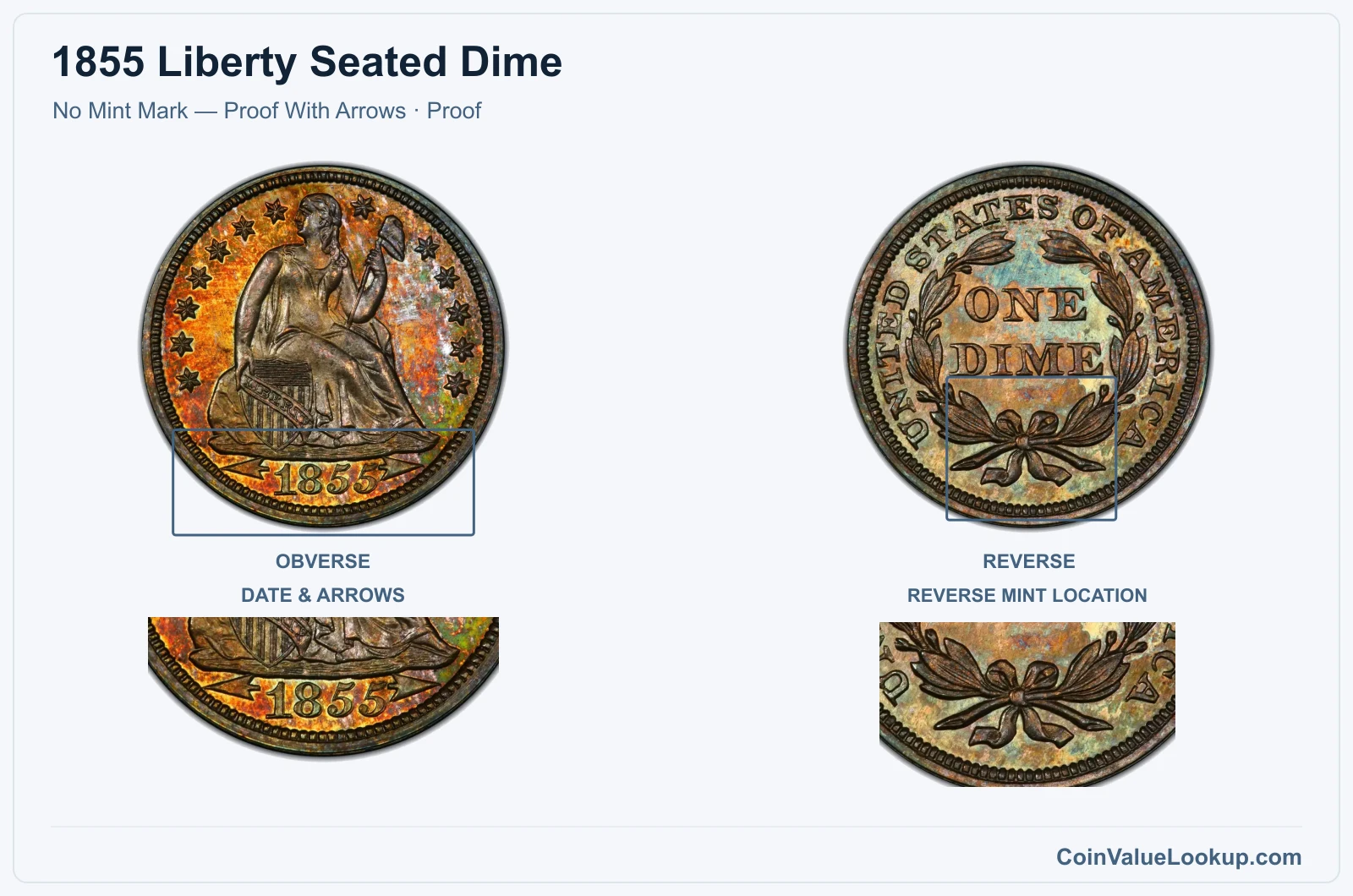
Proof 1855 With Arrows dimes are genuinely rare. These were not mass-produced collector products like later-date Proofs; early Seated Dime Proofs were struck in very small numbers for presentation or special sale.
A PCGS guide estimate places a PR63 example at around $10,608. That figure reflects scarcity, not just condition, and any individual coin's value depends on surface quality, eye appeal, and provenance.
Mirrored fields are the hallmark: a real Proof shows deep, reflective surfaces created by polished dies, not a cleaning job on a business strike. Cameo contrast, where the devices appear frosty against mirror fields, is a separate visual characteristic, not a different mint or variety.
Never confuse a polished coin with a Proof.
Ordinary-issue reference: Ordinary-issue reference only: The table below shows prices for the 1855 Liberty Seated Dime (proof). It does not represent the value of the specific No Mint Mark — Proof With Arrows variety or its variety premium. Year, mint, metal and strike type are matched; the specific variety is not priced by this table.
Range Grade
Price Auction Records Appraisal PR PR 1
—
Coin Identifier
PR 2
—
Coin Identifier
PR 3
—
Coin Identifier
PR 4
—
Coin Identifier
PR 6
—
Coin Identifier
PR 8
—
Coin Identifier
PR 10
—
Coin Identifier
PR 12
—
Coin Identifier
PR 15
—
Coin Identifier
PR 20
—
Coin Identifier
PR 25
—
Coin Identifier
PR 30
—
Coin Identifier
PR 35
—
Coin Identifier
PR 40
—
Coin Identifier
PR 45
—
Coin Identifier
PR 50
—
Coin Identifier
PR 53
—
Coin Identifier
PR 55
—
Coin Identifier
PR 58
—
Coin Identifier
PR 60
—
Coin Identifier
PR 61
—
Coin Identifier
PR 62
—
Coin Identifier
PR 63
Coin Identifier
PR 64
Coin Identifier
PR 65
Coin Identifier
PR 66
Coin Identifier
PR 67
—
—
—
PR 68
—
—
—
PR 69
—
—
—
PR 70
—
—
—
1855 Liberty Seated Dime Error List
1. 1855 Liberty Seated Dime — Doubled Die Obverse
A doubled die obverse on the 1855 dime shows consistent doubling on obverse design elements such as letters, the date, or stars. Because the date and arrows were applied from the same hub, doubling on the date can be a legitimate doubled die indicator rather than a secondary artifact.
To check, compare your coin's obverse lettering and date under magnification with a known normal example. Look for uniform separation or notching on the affected features.
The doubling should appear consistent across the design, pointing in the same direction.
Machine doubling is the most common lookalike. It typically creates a flat, shelf-like appearance rather than the rounded, separated image of a true doubled die.
Reflections and worn die contours can also fool you. Value depends on the specific die pairing, the strength of the doubling, and overall coin condition.
2. 1855 Liberty Seated Dime — Die Crack / Die Chip
Die cracks appear as raised, irregular lines on the coin's surface, left behind when the steel die developed fractures during its working life. On the 1855 dime, these have been reported as a recognized category.
A die chip is a related feature: a small raised blob where a piece of the die broke away.
To identify a genuine die crack, look for a raised line that often connects two design elements or runs from the rim inward. A cud is a more dramatic form where the crack reaches the rim and causes a raised, featureless lump.
Do not confuse die cracks with incuse scratches, corrosion lines, or foreign material stuck to the surface. Scratches are recessed into the metal, while die cracks stand above it.
Value depends on the size, location, and visibility of the crack, along with the coin's overall condition.
3. 1855 Liberty Seated Dime — Rotated Dies
A rotated die error means the obverse and reverse dies were misaligned in rotation when the coin was struck. Normal United States coins use medal alignment: hold the obverse upright, flip the coin top to bottom, and the reverse should also appear upright.
If the reverse is tilted at an angle, you may have a rotated die. Small rotations of a few degrees are common and add little premium.
Larger rotations, say 30 degrees or more, attract more collector interest.
Before getting excited, make sure the rotation is on the actual coin and not just your photograph. A picture can be rotated independently, and holding the coin at a slight angle while flipping can create a false impression.
Value depends on the degree of rotation, the coin's condition, and buyer demand for the specific variety.
4. 1855 Liberty Seated Dime — Clashed Dies
Clashed dies occur when the obverse and reverse dies strike each other without a planchet between them, transferring ghost images of one design onto the other die. On a clashed 1855 dime, you might see faint traces of the wreath in Liberty's fields, or hints of the seated figure on the reverse.
The transferred design elements should align with where the opposite die's features would have made contact. This alignment is the key diagnostic: random scratches or damage will not match the opposing design.
Lookalikes include post-strike scratches, random raised lines from debris, and brockage errors, which involve a previously struck coin acting as a die. A true clash shows mirror-image traces of the correct opposing design in the expected orientation.
Value varies with how visible and dramatic the clash is, combined with the coin's overall grade and surface preservation.