1991 Roosevelt Dime Coin Value: How Much Is It Worth?
Most 1991 Roosevelt dimes you pull from pocket change are worth face value — ten cents, no more. In mint state, a USA Coin Book guide estimate places an MS65 example at about $2.79, and the S clad proof at PR65 comes in around $4.96.
Authenticated error coins and top-grade specimens can trade for considerably more, but those require careful identification first.
Fast Way to Identify Your 1991 Roosevelt Dime
Snap clear photos of both the front and back of your 1991 dime and upload them here. This gives you a preliminary identification of the mint, version and general condition.
It is not a substitute for professional authentication or certified grading, but it is a solid starting point before you dig deeper.
1991 Roosevelt Dime Value
Upload both sides of your 1991 Roosevelt Dime.
Front Obverse
Upload photo
Back Reverse
Upload photo
Which 1991 Roosevelt Dime Versions Are Worth Money?
- 1991-P or 1991-D business strikes in high mint state with clear, fully separated torch bands.
- 1991-S clad proofs with deep mirrors and strong cameo contrast on the devices.
- Off-center strikes on a 1991-P dime — value depends on displacement percentage and date visibility.
- Major die breaks on a 1991-P dime — raised metal fills where the die cracked.
- Double denomination: a 1991-P dime overstruck by 1991 cent dies — one example sold for $747.50 in 2006.
Step 1: Identify Your 1991 Roosevelt Dime Mint Mark and Version
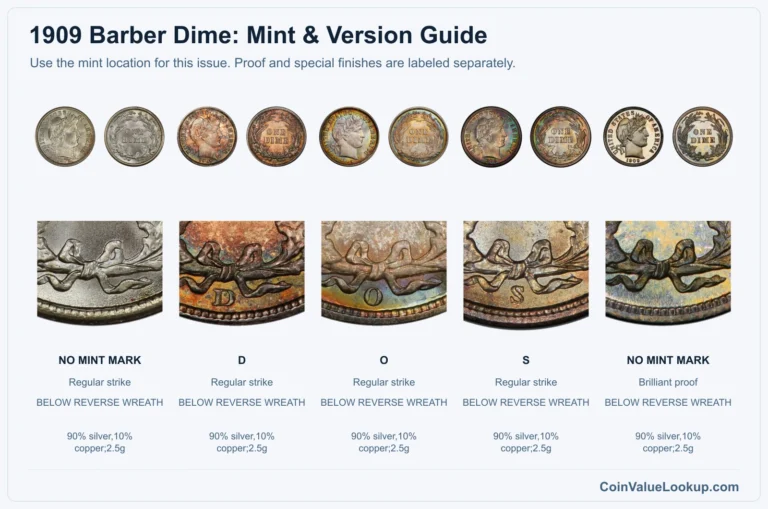
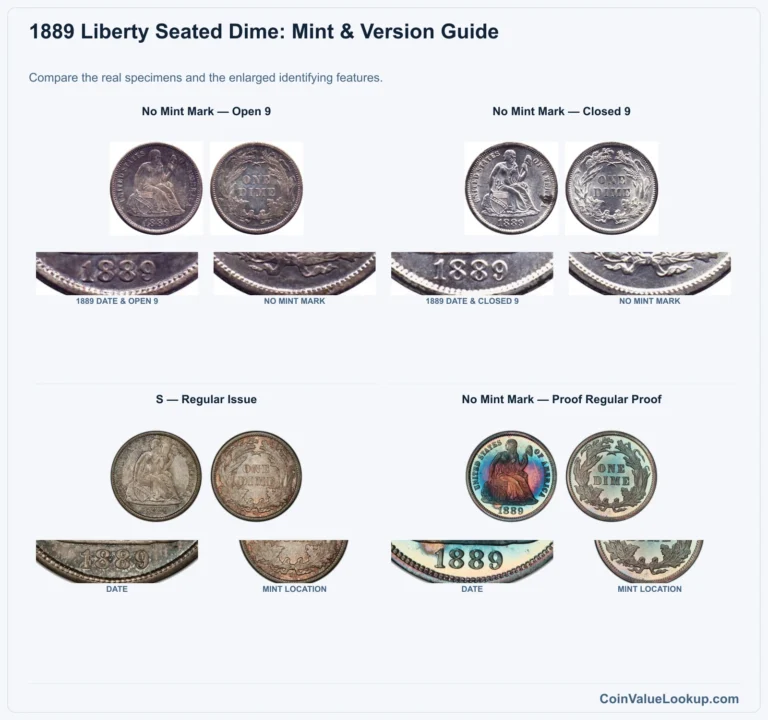
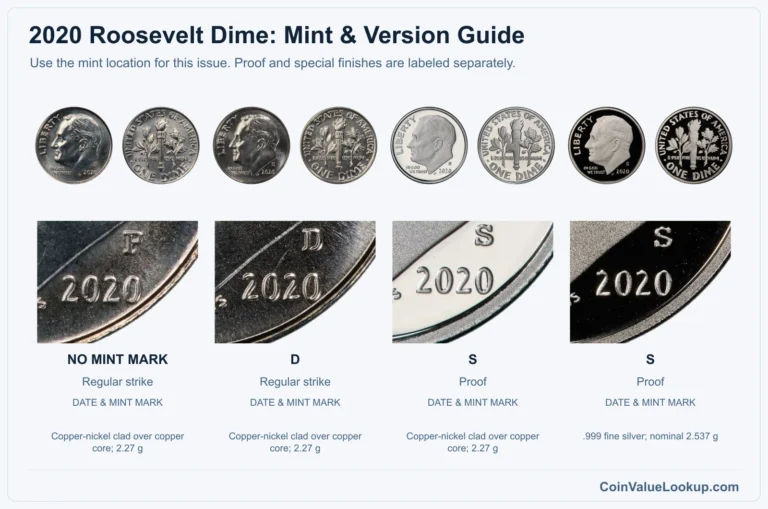
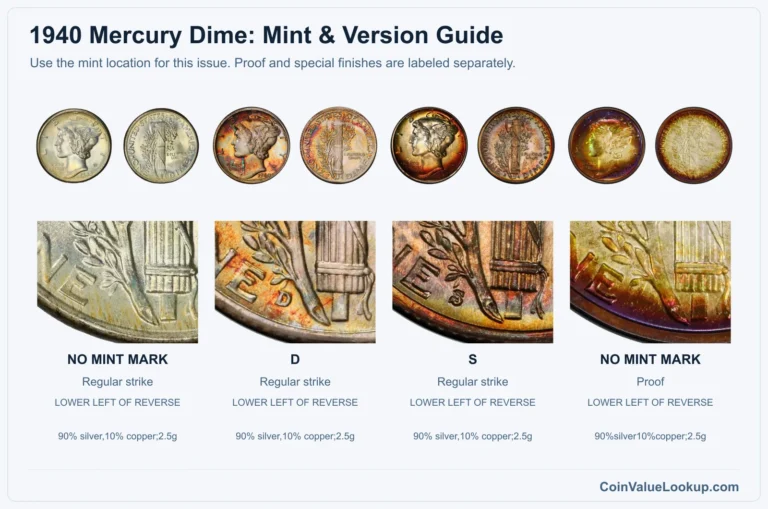
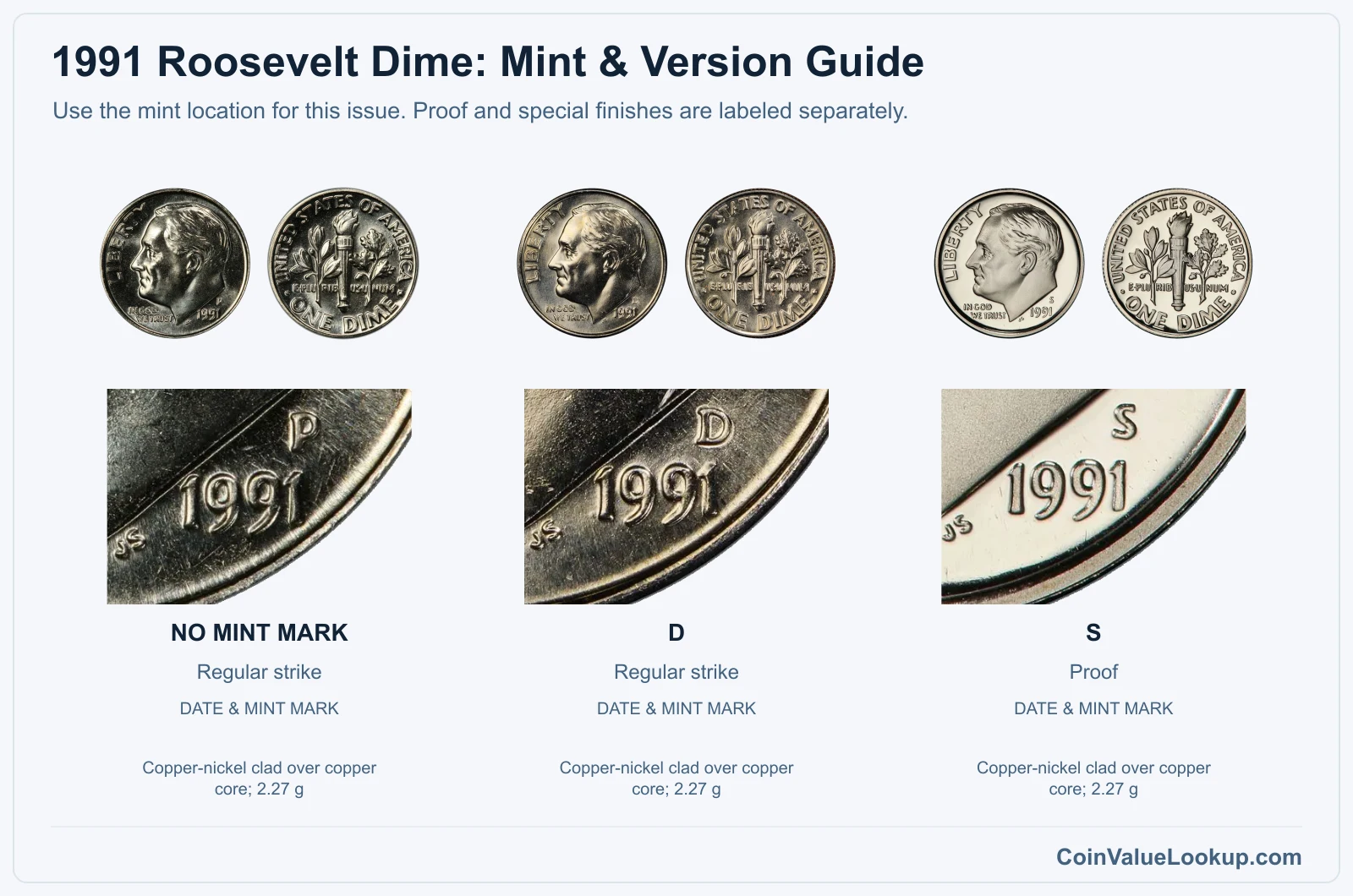
Start by confirming the 1991 date on the obverse, Franklin Roosevelt's portrait, and the torch-with-branches reverse. The mintmark sits on the obverse near the date: look for a P (Philadelphia), D (Denver), or S (San Francisco).
All three versions are copper-nickel clad over a copper core, weighing 2.27 grams and roughly 17.9 mm across. There is no regular silver proof for 1991 — silver S proofs began in 1992.
If you are unsure about the metal, check the edge. A normal clad dime shows a copper stripe sandwiched between silver-toned layers.
Weight and original packaging can also help screen unusual pieces, but anything truly ambiguous in alloy needs professional authentication.
Step 2: Check Your 1991 Roosevelt Dime Grade
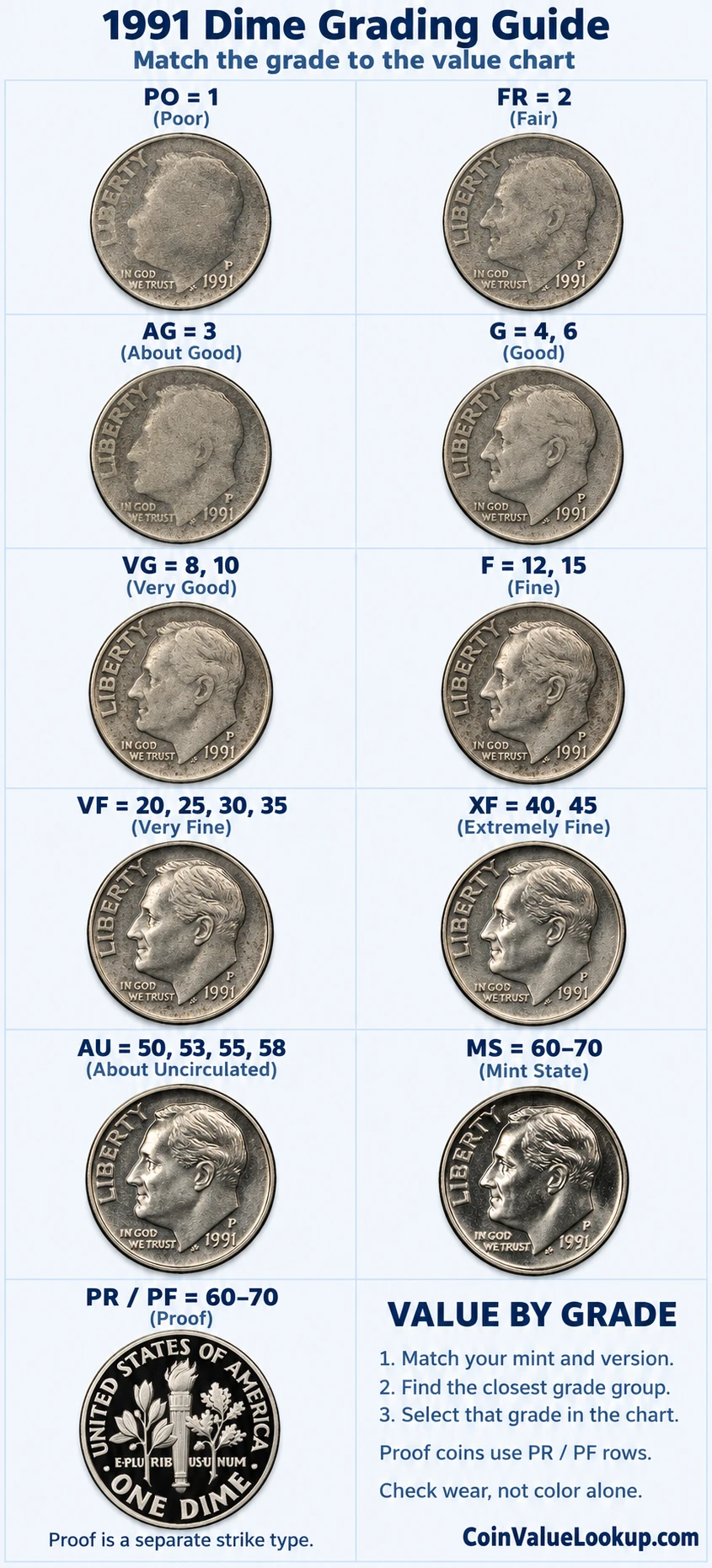
Focus on Roosevelt's cheek, jawline and the hair detail just above his ear. These are the first spots to lose sharpness as a dime circulates.
On the reverse, inspect the torch lines and the leaf detail on both branches.
A coin with full original luster and no wear is mint state. Do not confuse a weakly struck coin with a worn one — a weak strike still shows luster in the flat areas, while genuine wear dulls and smooths them.
Cleaning, scratches and corrosion all reduce a coin's appeal regardless of how little wear it has.
The comparison image above can help you estimate where your coin falls. For business strikes, the Full Bands designation applies when both horizontal band pairs on the torch fully separate — that is a strike-quality feature, not a grade.
Proof finish and cameo contrast are evaluated separately from the numeric grade as well.
Step 3: Check 1991 Roosevelt Dime Value by Mint and Version
1991 Roosevelt Dime — P Business Strike
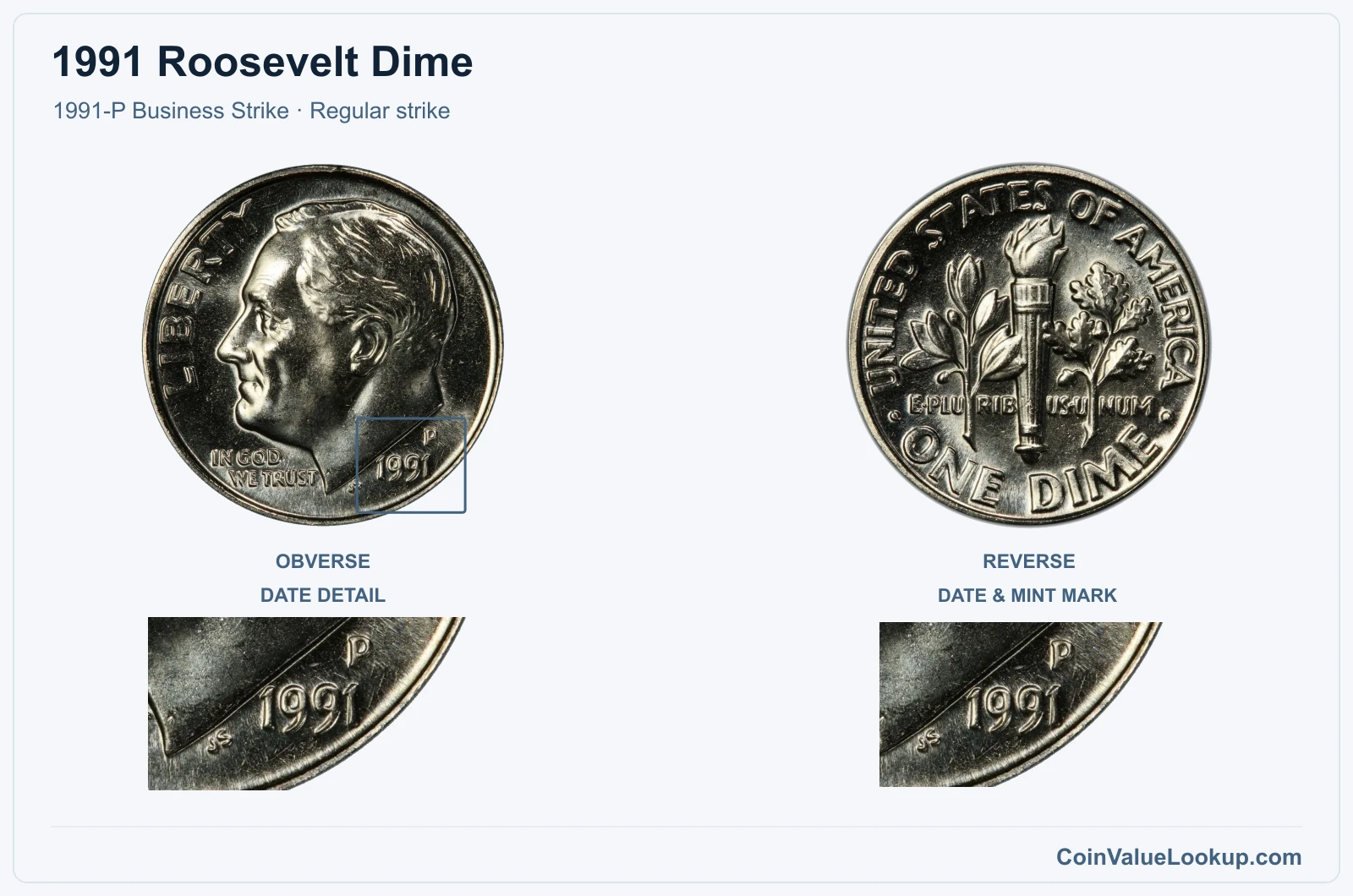
The 1991-P is your everyday Philadelphia business strike. It carries a small P mintmark on the obverse to the right of the date.
The coin is copper-nickel clad over a copper core at 2.27 grams.
In circulated grades, it is a face-value coin. The USA Coin Book guide places an MS65 at $2.79.
Pieces with the Full Bands designation — where both horizontal torch band pairs clearly separate — can carry a premium over coins without that strike quality.
Coin Value Lookup is a handy place to look up guides for Roosevelt dimes and other series when you want to compare across years or mints.
Range Grade
Price Auction Records Appraisal PO PO 1
—
Coin Identifier FR FR 2
—
Coin Identifier AG AG 3
—
Coin Identifier G G 4
—
Coin Identifier
G 6
—
Coin Identifier VG VG 8
—
Coin Identifier
VG 10
—
Coin Identifier F F 12
—
Coin Identifier
F 15
—
Coin Identifier VF VF 20
—
Coin Identifier
VF 25
—
Coin Identifier
VF 30
—
Coin Identifier
VF 35
—
Coin Identifier XF XF 40
—
Coin Identifier
XF 45
—
Coin Identifier AU AU 50
—
Coin Identifier
AU 53
—
Coin Identifier
AU 55
—
Coin Identifier
AU 58
—
Coin Identifier MS MS 60
—
Coin Identifier
MS 61
—
Coin Identifier
MS 62
—
Coin Identifier
MS 63
Coin Identifier
MS 64
Coin Identifier
MS 65
Coin Identifier
MS 66
Coin Identifier
MS 67
Coin Identifier
MS 68
—
—
—
MS 69
—
—
—
MS 70
—
—
—
1991 Roosevelt Dime — D Business Strike
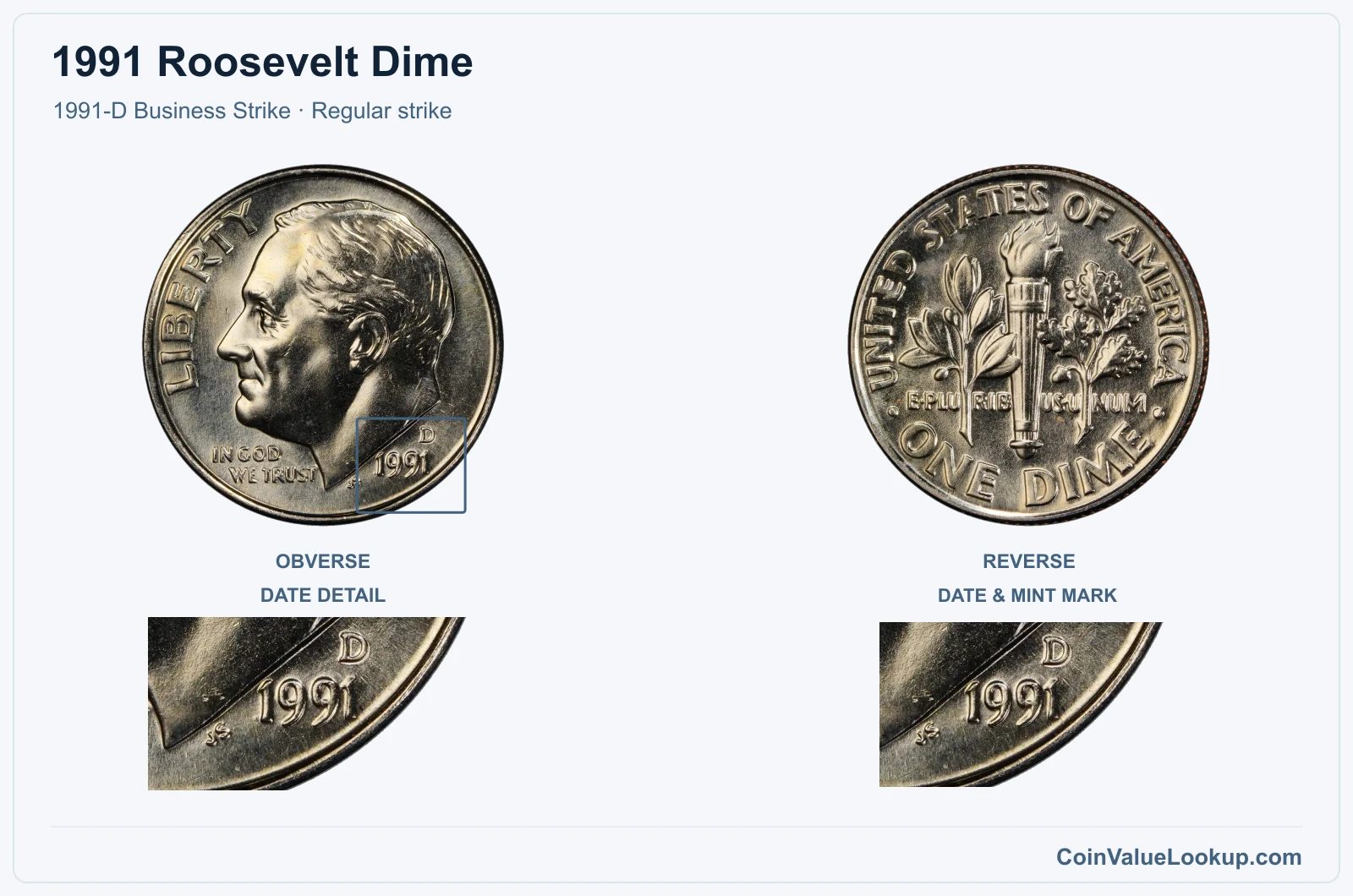
Denver's 1991-D dime is the same copper-nickel clad composition and 2.27-gram weight as the P. Look for the D mintmark on the obverse near the date.
Like the Philadelphia issue, circulated examples trade at face value. A USA Coin Book guide estimate for MS65 is $2.79.
Full Bands examples with well-separated horizontal torch lines are the ones collectors prefer in this grade range, so check the reverse closely before setting a coin aside.
Range Grade
Price Auction Records Appraisal PO PO 1
—
Coin Identifier FR FR 2
—
Coin Identifier AG AG 3
—
Coin Identifier G G 4
—
Coin Identifier
G 6
—
Coin Identifier VG VG 8
—
Coin Identifier
VG 10
—
Coin Identifier F F 12
—
Coin Identifier
F 15
—
Coin Identifier VF VF 20
—
Coin Identifier
VF 25
—
Coin Identifier
VF 30
—
Coin Identifier
VF 35
—
Coin Identifier XF XF 40
—
Coin Identifier
XF 45
—
Coin Identifier AU AU 50
—
Coin Identifier
AU 53
—
Coin Identifier
AU 55
—
Coin Identifier
AU 58
—
Coin Identifier MS MS 60
—
Coin Identifier
MS 61
—
Coin Identifier
MS 62
—
Coin Identifier
MS 63
—
Coin Identifier
MS 64
—
Coin Identifier
MS 65
—
Coin Identifier
MS 66
—
Coin Identifier
MS 67
Coin Identifier
MS 68
—
—
—
MS 69
—
—
—
MS 70
—
—
—
1991 Roosevelt Dime — S Clad Proof
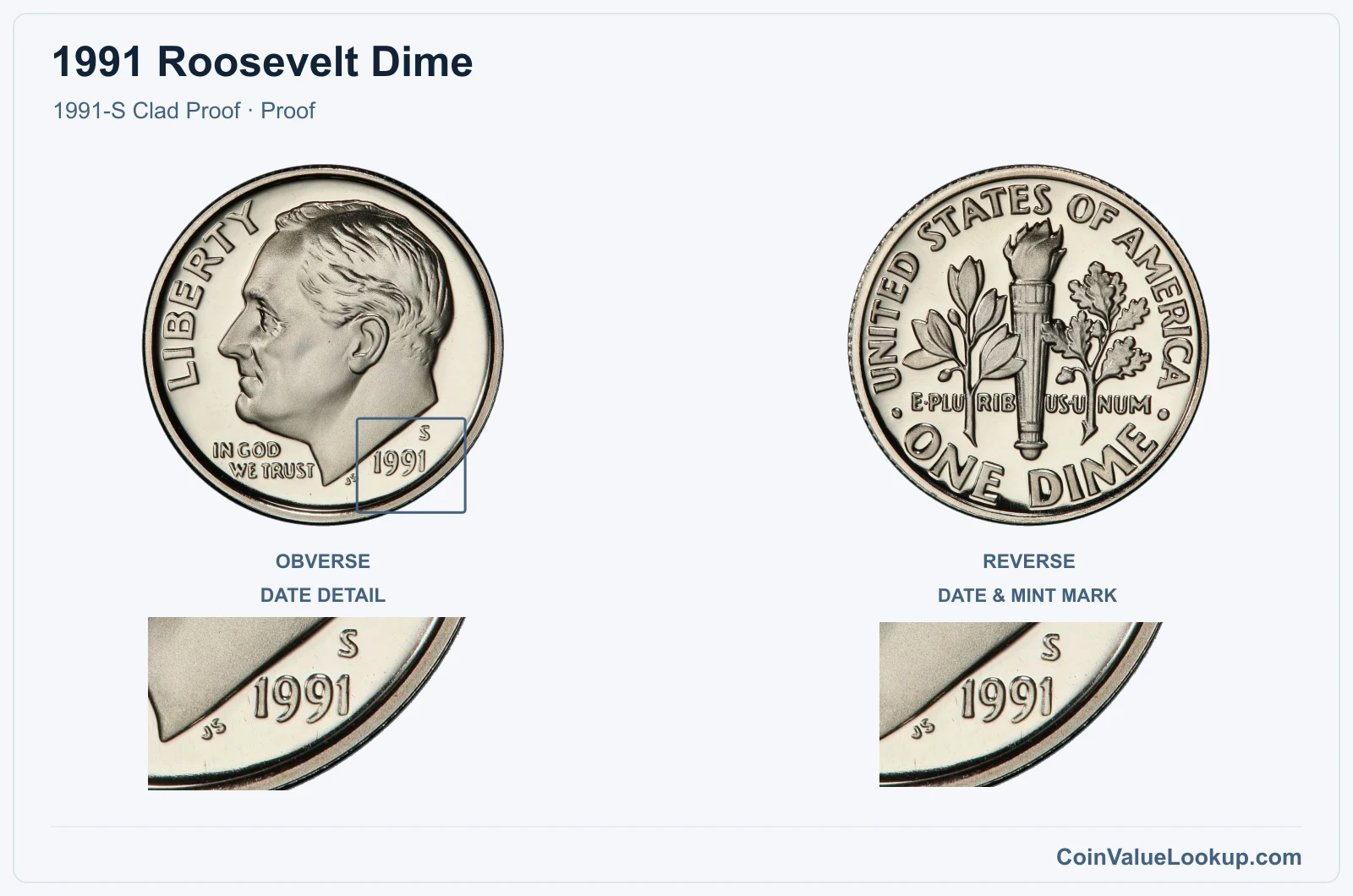
The 1991-S clad proof was struck at San Francisco exclusively for collector sets. Same copper-nickel clad composition, same 2.27-gram weight, but produced with polished dies and specially prepared planchets to create mirror fields and frosted devices.
The USA Coin Book guide estimate is $4.96 at PR65. Proofs with strong cameo or deep cameo contrast — where the frosted portrait and torch stand out sharply against glassy fields — are more desirable than proofs with uniform surfaces.
Remember, proof is a method of manufacture, not a grade above mint state. Handle these by the edges; fingerprints on those mirror fields are painfully visible.
Range Grade
Price Auction Records Appraisal PR PR 1
—
Coin Identifier
PR 2
—
Coin Identifier
PR 3
—
Coin Identifier
PR 4
—
Coin Identifier
PR 6
—
Coin Identifier
PR 8
—
Coin Identifier
PR 10
—
Coin Identifier
PR 12
—
Coin Identifier
PR 15
—
Coin Identifier
PR 20
—
Coin Identifier
PR 25
—
Coin Identifier
PR 30
—
Coin Identifier
PR 35
—
Coin Identifier
PR 40
—
Coin Identifier
PR 45
—
Coin Identifier
PR 50
—
Coin Identifier
PR 53
—
Coin Identifier
PR 55
—
Coin Identifier
PR 58
—
Coin Identifier
PR 60
—
Coin Identifier
PR 61
—
Coin Identifier
PR 62
—
Coin Identifier
PR 63
—
Coin Identifier
PR 64
—
Coin Identifier
PR 65
—
Coin Identifier
PR 66
—
Coin Identifier
PR 67
—
Coin Identifier
PR 68
—
Coin Identifier
PR 69
Coin Identifier
PR 70
Coin Identifier
1991 Roosevelt Dime Error List
1. 1991 Roosevelt Dime — Off-Center Strike
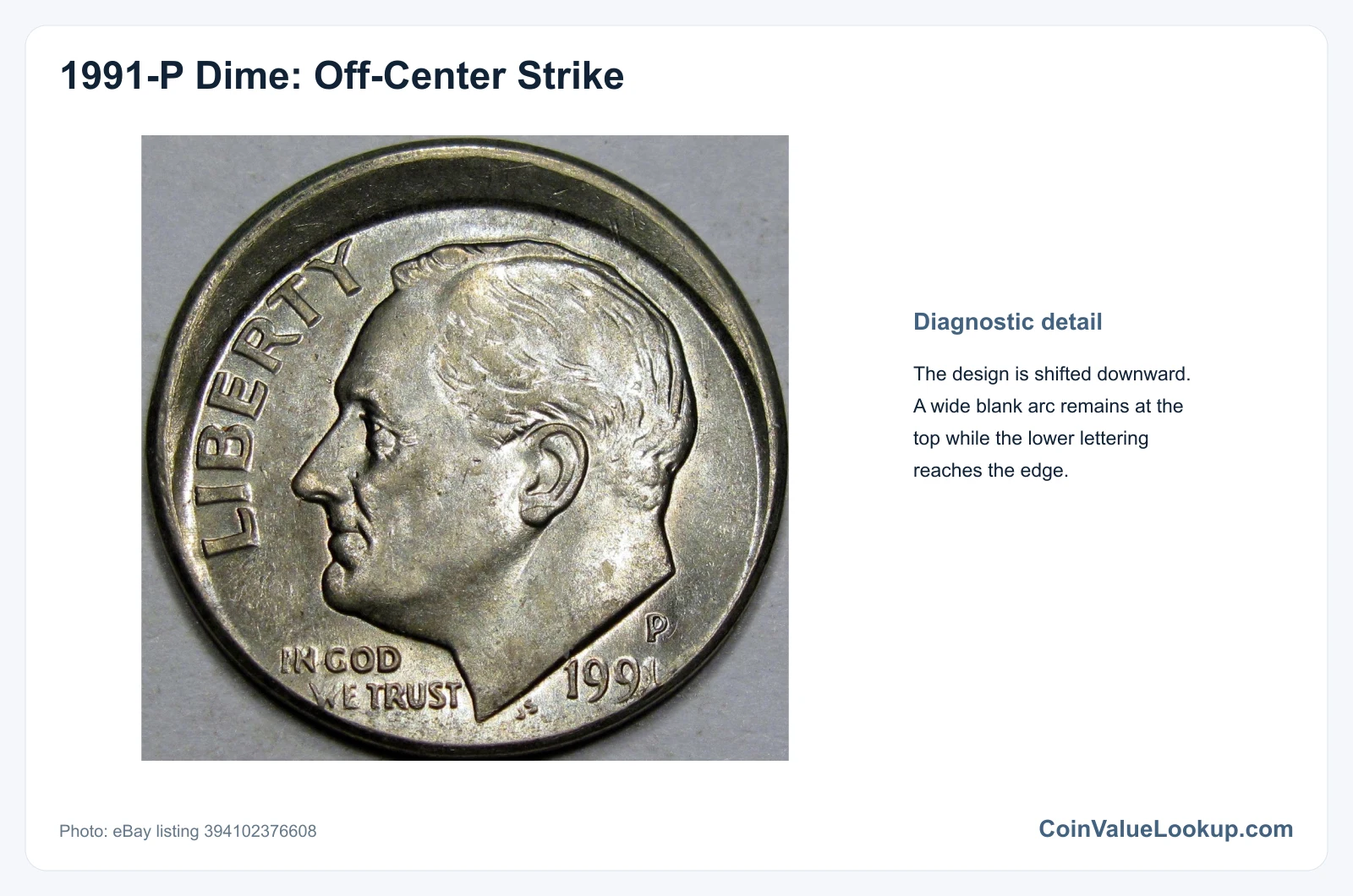
An off-center 1991-P dime results when the planchet feeds into the press misaligned with the dies. The documented specimen shows roughly 20 percent displacement toward the 2 o'clock position on both faces, with the full date and P mintmark still visible.
That date visibility matters — an off-center coin where the date is missing is far harder to attribute and less collectible.
Before getting excited, rule out lookalikes. A misaligned die shifts only one face's design while the other stays centered, and a broadstrike spreads the design outward rather than cropping it.
True off-center errors show both faces displaced in the same direction. Value depends on the percentage of displacement, the condition of the remaining design, and authentication.
No standard price range is established here; each piece is assessed individually.
2. 1991 Roosevelt Dime — Major Die Break
A major die break on a 1991-P dime occurs when part of the die cracks and the broken area fills with raised coin metal during striking. The result is a blob-like raised area that interrupts the normal design.
One authenticated example was certified by ANACS in MS64.
Compare any suspected break carefully to a normal 1991 dime. The raised area should show consistent metal flow and be an integral part of the coin's surface, not sitting on top of it.
Incuse scratches, corrosion blisters and glued-on metal can all mimic a die break to an untrained eye. The size and location of the break, the coin's overall condition, and third-party authentication all factor into value — no standard price range applies here.
3. 1991 Roosevelt Dime — Double Denomination: Cent over Dime
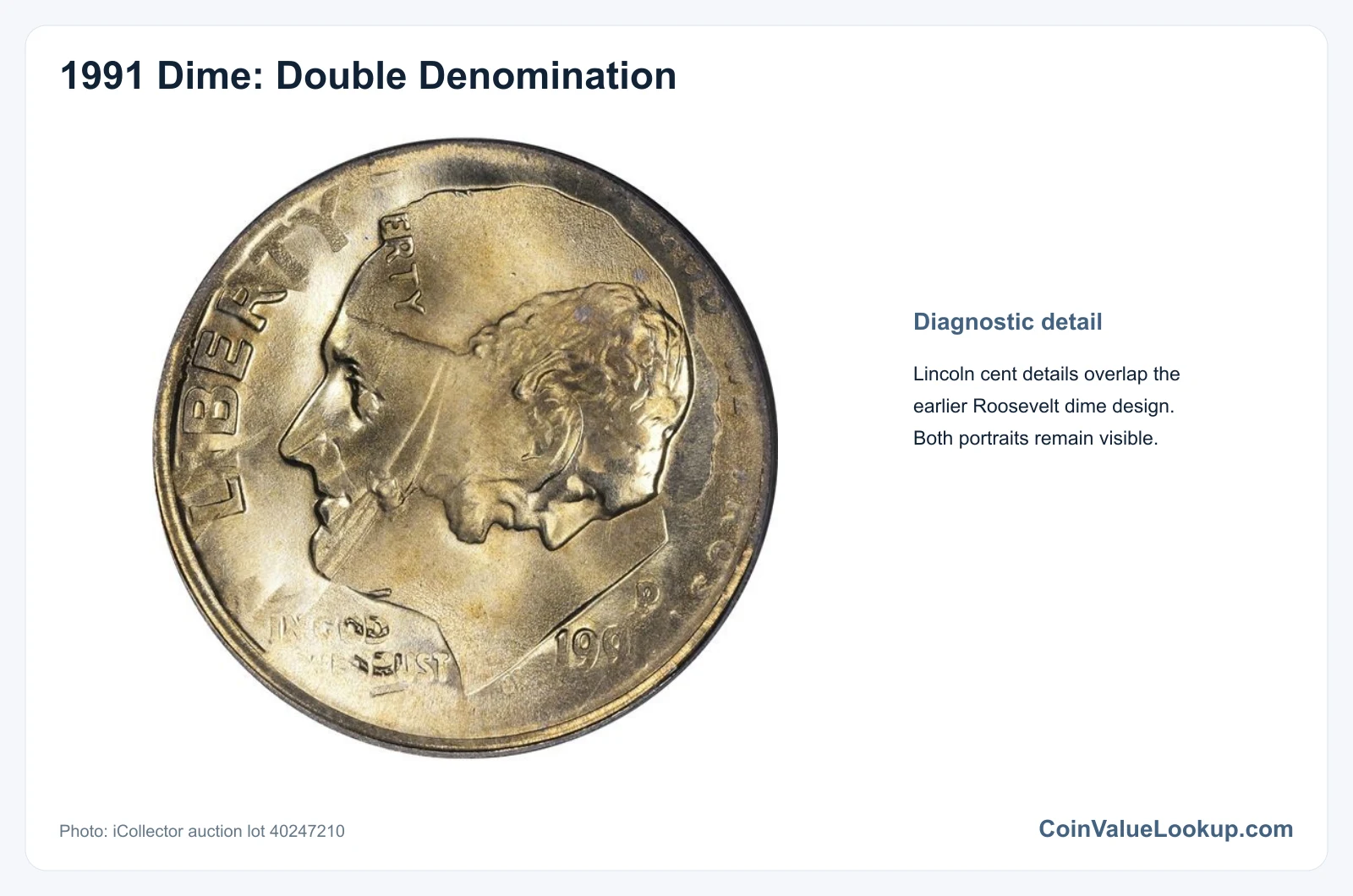
This is the headline error for 1991 dimes. A double denomination occurs when a 1991-P dime planchet gets struck by 1991 Lincoln cent dies, leaving both Roosevelt and Lincoln designs on a single coin.
The dime-sized planchet, the surviving P mintmark and dime date, plus the later Lincoln cent impression are the key diagnostics. Roosevelt's design faces southwest relative to Lincoln's.
One ANACS-certified MS63 specimen sold through Heritage Auctions for $747.50 in April 2006. That is a single recorded sale, not a market range.
Fakes exist — two coins glued together, altered tokens, or a normal dime with post-mint scratches can fool beginners. Genuine double denominations show proper metal flow and strike characteristics on both designs.
Professional authentication is essential for a coin like this.
4. 1991 Roosevelt Dime — Clipped Planchet
A clipped planchet error happens when the blank is punched from strip metal that overlaps a previously punched hole or the strip's edge. The result is a missing curved, straight or ragged section of the coin.
On a 1991 dime, look for the characteristic weakness in the design directly opposite the clip — metal cannot flow evenly when part of the blank is absent.
Check the edge texture at the clip boundary. Genuine clips show the raw shear from the blanking press, not a filed or ground surface.
Corrosion eating away an edge or a deliberate cut with a tool can look similar at first glance. Condition, the size of the missing area, and authentication all affect what a clipped 1991 dime is worth; no standard price range is established for this category.
5. 1991 Roosevelt Dime — Broadstrike
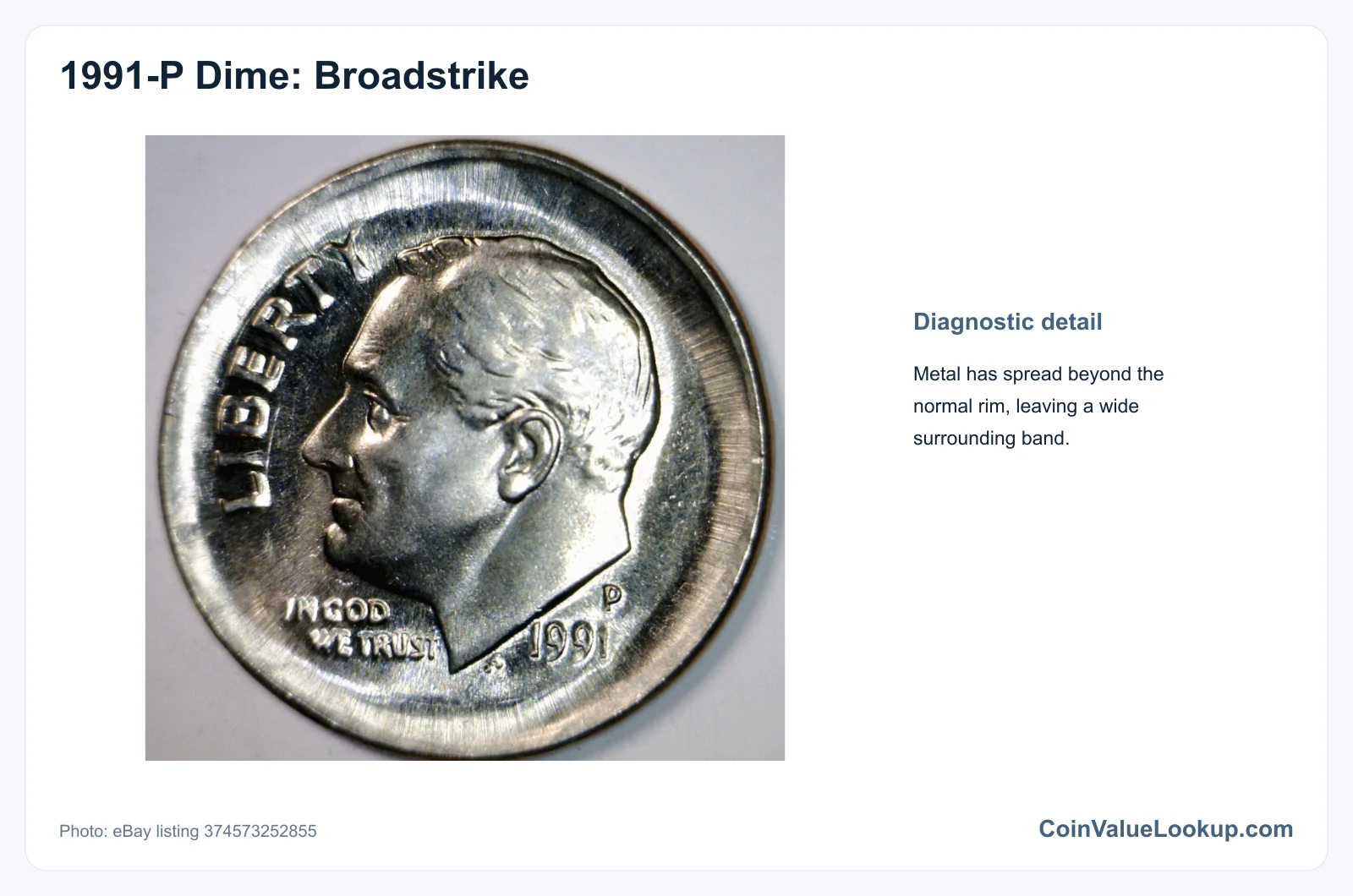
A broadstrike occurs when the collar die — the ring that normally confines the planchet and forms the reeded edge — fails to engage during striking. The coin spreads outward, producing a wider-than-normal piece with a smooth or distorted rim and no proper edge reeding.
The full design is still present, just expanded. That distinguishes a broadstrike from an off-center error, where part of the design is missing entirely.
Also rule out coins that were flattened after leaving the mint — those show damage marks and lack the even metal spread of a genuine broadstrike. Value for a 1991 broadstrike dime depends on the degree of spread, overall condition and professional authentication.
No specific price range is adopted here.
6. 1991 Roosevelt Dime — Missing Clad Layer
A missing clad layer error means one of the outer copper-nickel layers was absent from the planchet before it was struck. The exposed side may show a distinctly different color — the copper core — and the coin will weigh noticeably less than the standard 2.27 grams.
Compare the suspect face, the edge cross-section and the weight against a normal 1991 dime. The edge should show an asymmetric layer structure if only one clad layer is missing.
Toning, environmental damage, deliberate acid stripping and plating can all mimic the look of a missing clad layer on the surface, so a weight check is your best first screen. Value depends on the specific error, condition and authentication; no standard price range is provided here.
7. 1991 Roosevelt Dime — Doubled Die
A doubled die error is created during the die-making process, producing a die that stamps a slightly doubled image onto every coin it strikes. On a 1991 dime, you would look for consistent design separation or notching on lettering, the date, or portrait details — visible under magnification and repeating in the same way on every coin struck from that die.
Do not confuse this with machine doubling, which is flat, shelf-like and caused by die chatter during striking. Machine doubling is common and adds no real premium.
Reflections from proof surfaces and post-mint impressions can also trick the eye. No specific mint or die position is confirmed for this listing, and no price range is adopted.
Authentication by a third-party service is the safest path if you suspect a genuine doubled die.