1889 Liberty Seated Dime Coin Value: How Much Is It Worth?
The 1889 Liberty Seated Dime spans a wide value window depending on mint, finish and condition. USA Coin Book retail guide estimates range from about $22 at G4 for a Philadelphia business strike up to $1,247 at MS63 for the San Francisco issue, with Proof examples occupying their own price tier.
Philadelphia coins come in two normal date-punch styles — Open 9 and Closed 9 — and the San Francisco mint produced its own circulation run. Several die varieties and minting errors have been reported for this date, so a close look at your coin is worthwhile.
Fast Way to Identify Your 1889 Liberty Seated Dime
The quickest way to start figuring out what your 1889 Liberty Seated Dime is worth is to upload clear photos of both the front and back. Our identifier uses those images for a preliminary identification of your coin's mint, date style and general condition.
Snap the photos in even lighting and avoid glare — that helps the tool read the details that matter most.
1889 Liberty Seated Dime Value
Upload both sides of your 1889 Liberty Seated Dime.
Front Obverse
Upload photo
Back Reverse
Upload photo
Which 1889 Liberty Seated Dime Versions Are Worth Money?
- The San Francisco (S) mint issue lists at about $29 in G4 and jumps to roughly $1,247 at MS63 per USA Coin Book, making higher-grade survivors the priciest regular business strikes for this date.
- Philadelphia Proof dimes carry a guide estimate near $725 at PR63 — look for mirror fields and no mintmark to separate these from ordinary strikes.
- The Open 9 and Closed 9 date-punch styles on Philadelphia coins are distinct collectible versions; confirming which you have is essential for accurate identification.
- Several die errors — including Doubled Die Reverse, repunched dates and die breaks — have been reported for 1889 and can affect value depending on visibility and coin condition.
Step 1: Identify Your 1889 Liberty Seated Dime Mint Mark and Version
First, confirm you have the correct denomination. The 1889 dime shows a seated Liberty on the obverse and the legend ONE DIME inside an agricultural wreath on the reverse.
Half dimes are smaller and say HALF DIME; don't mix them up.
All regular-issue 1889 dimes are struck in 90% silver and 10% copper, weigh a nominal 2.50 grams and measure 17.9 mm with a reeded edge. These specs apply to every mint for this year.
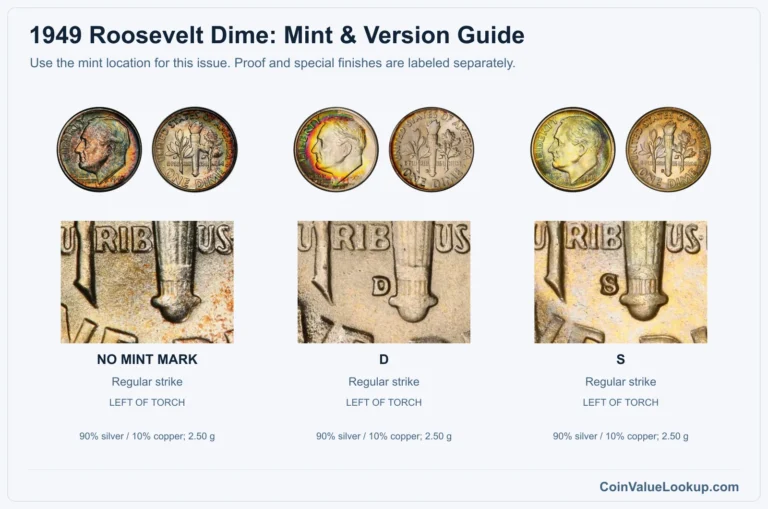
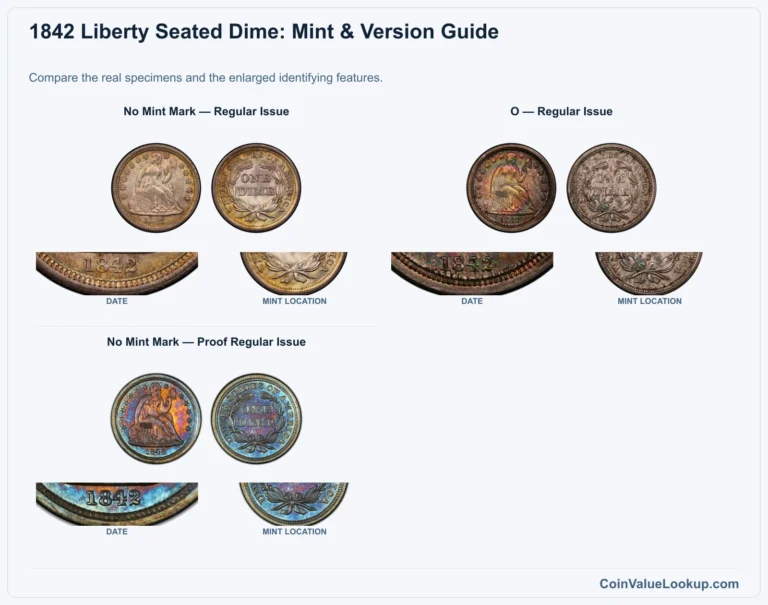
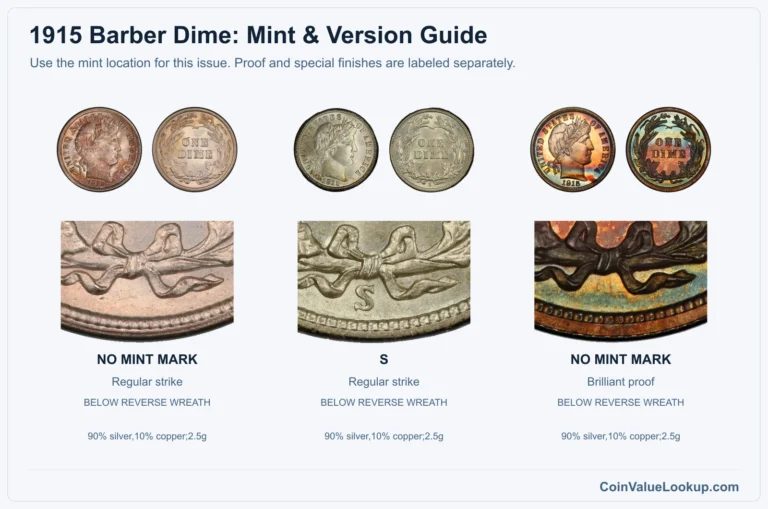
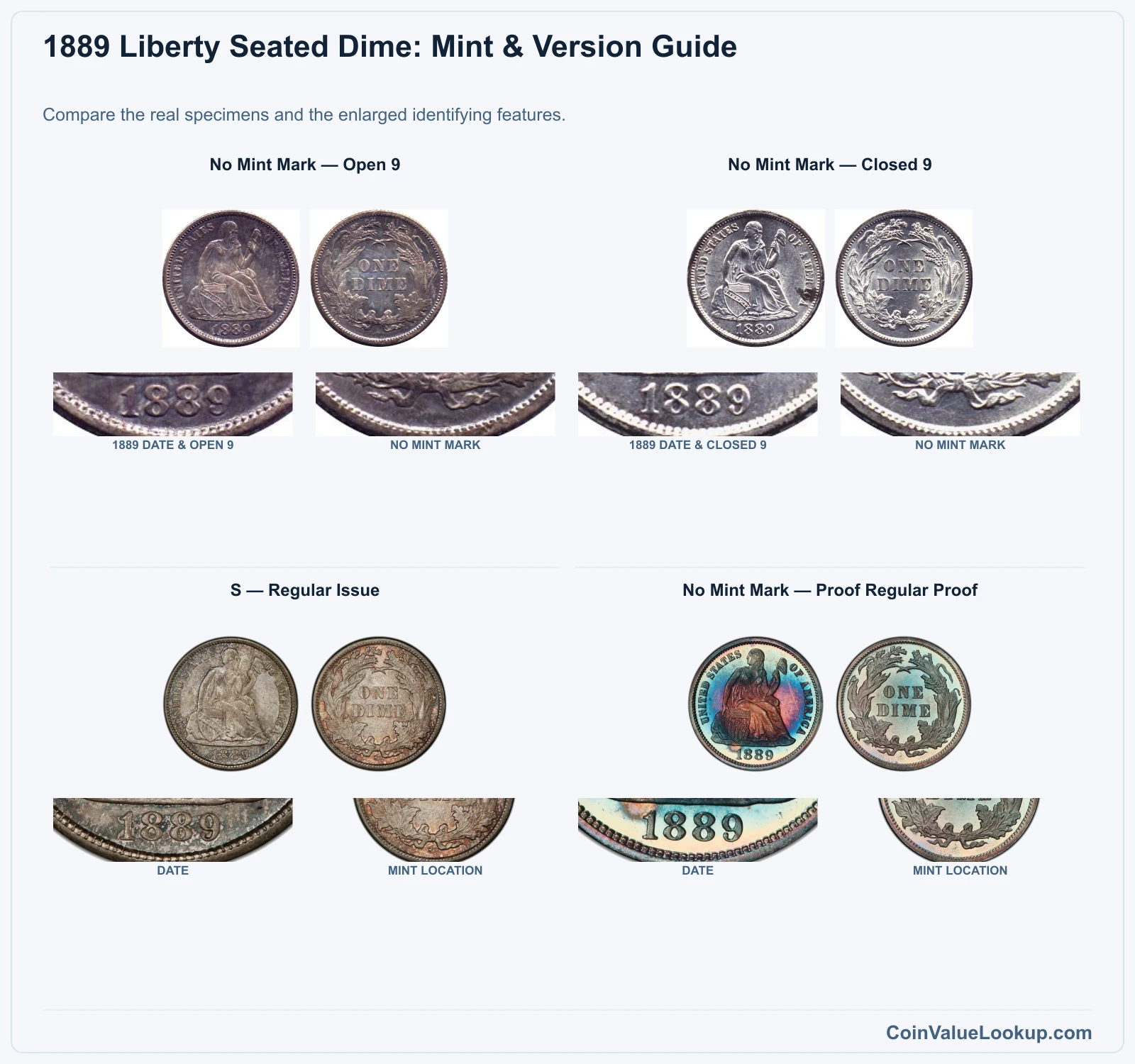
Next, check for a mintmark on the reverse, near the base of the wreath. Philadelphia coins carry no mintmark, while San Francisco pieces show a small "S." No other mint produced dimes in 1889.
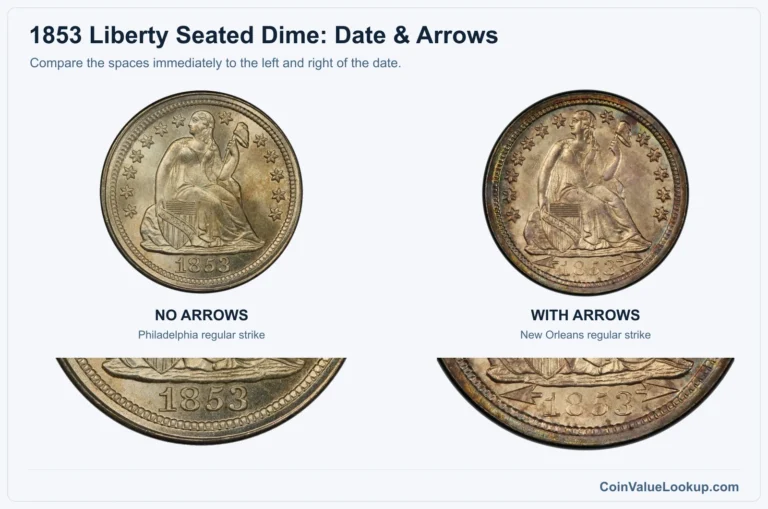
Among Philadelphia strikes, two normal date-punch styles exist: the Open 9, where the loop of the final digit has a visible gap, and the Closed 9, where that loop is fully enclosed. These are ordinary punch variations, not error varieties.
A separate Doubled Die Reverse variety also exists for this date and should not be confused with the punch-style difference.
Proof dimes were made only at Philadelphia. They display mirror-like fields from specially prepared dies.
A polished or cleaned coin is not a Proof, no matter how shiny it looks.
Step 2: Check Your 1889 Liberty Seated Dime Grade
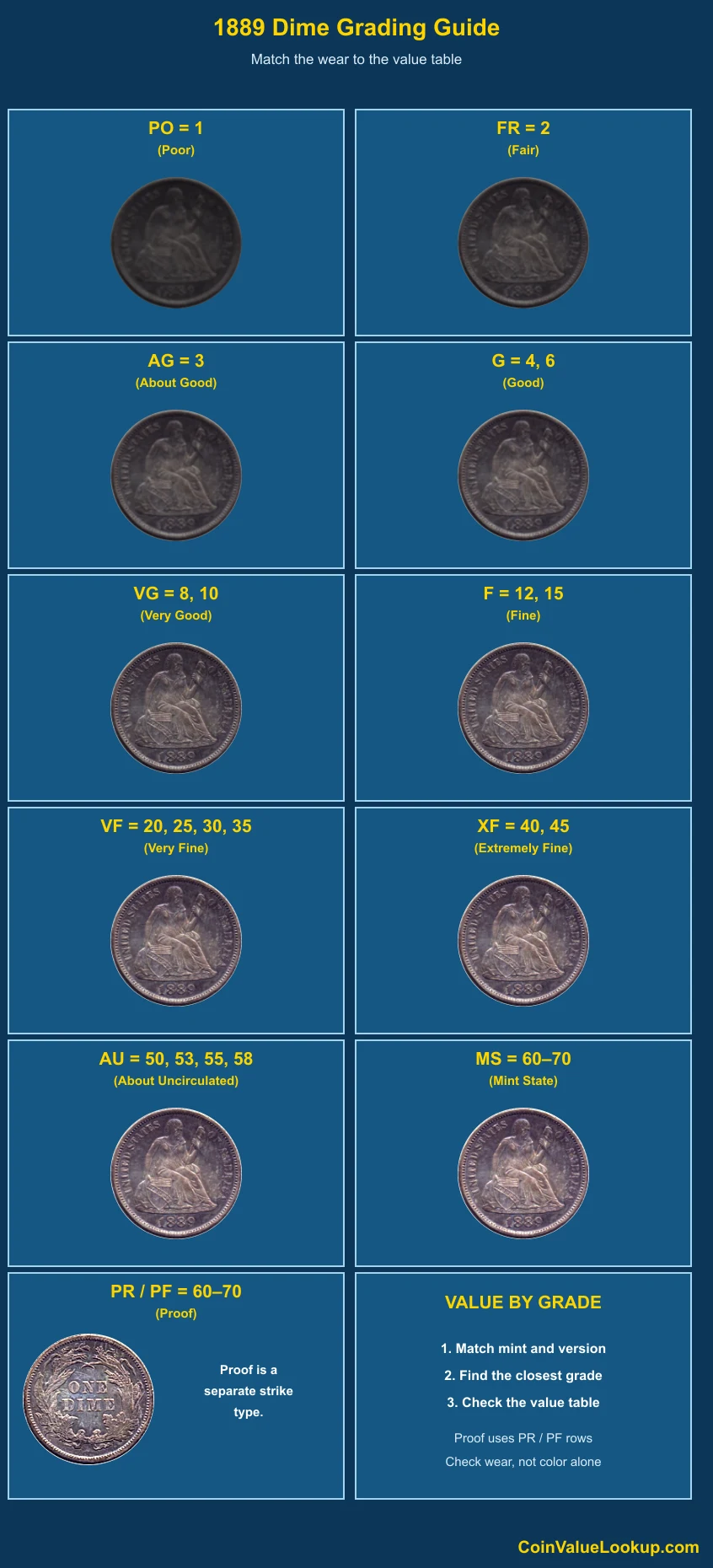
Start with the obverse. On a well-worn coin, Liberty's head and cap will be almost flat, and the shield on her arm loses its horizontal lines early.
The knee and breast are high points that show friction first, so compare those areas carefully against the reference image.
On the reverse, the highest wreath leaves and the ribbon bow wear down as the grade drops. In About Good territory, the date and basic outline survive but little else.
Luster matters a lot for mid-grade and higher coins. A coin grading EF might show nearly full design detail but dulled fields from light circulation.
A true Mint State piece retains original cartwheel luster across both faces.
Weak strikes can mimic wear. Some 1889 dimes left the press with soft detail on Liberty's head or the wreath tips, not because they circulated but because the dies were tired.
Look at the overall surface — if luster is intact but a small area is flat, suspect a strike issue rather than wear.
Proof coins are a separate category entirely. Their mirror fields and sharp rims come from deliberate die preparation.
Hairlines from mishandling reduce a Proof's grade but don't change it into a business strike. Use the comparison image to calibrate your eye for each grade tier.
Step 3: Check 1889 Liberty Seated Dime Value by Mint and Version
1889 Liberty Seated Dime — No Mint Mark — Open 9
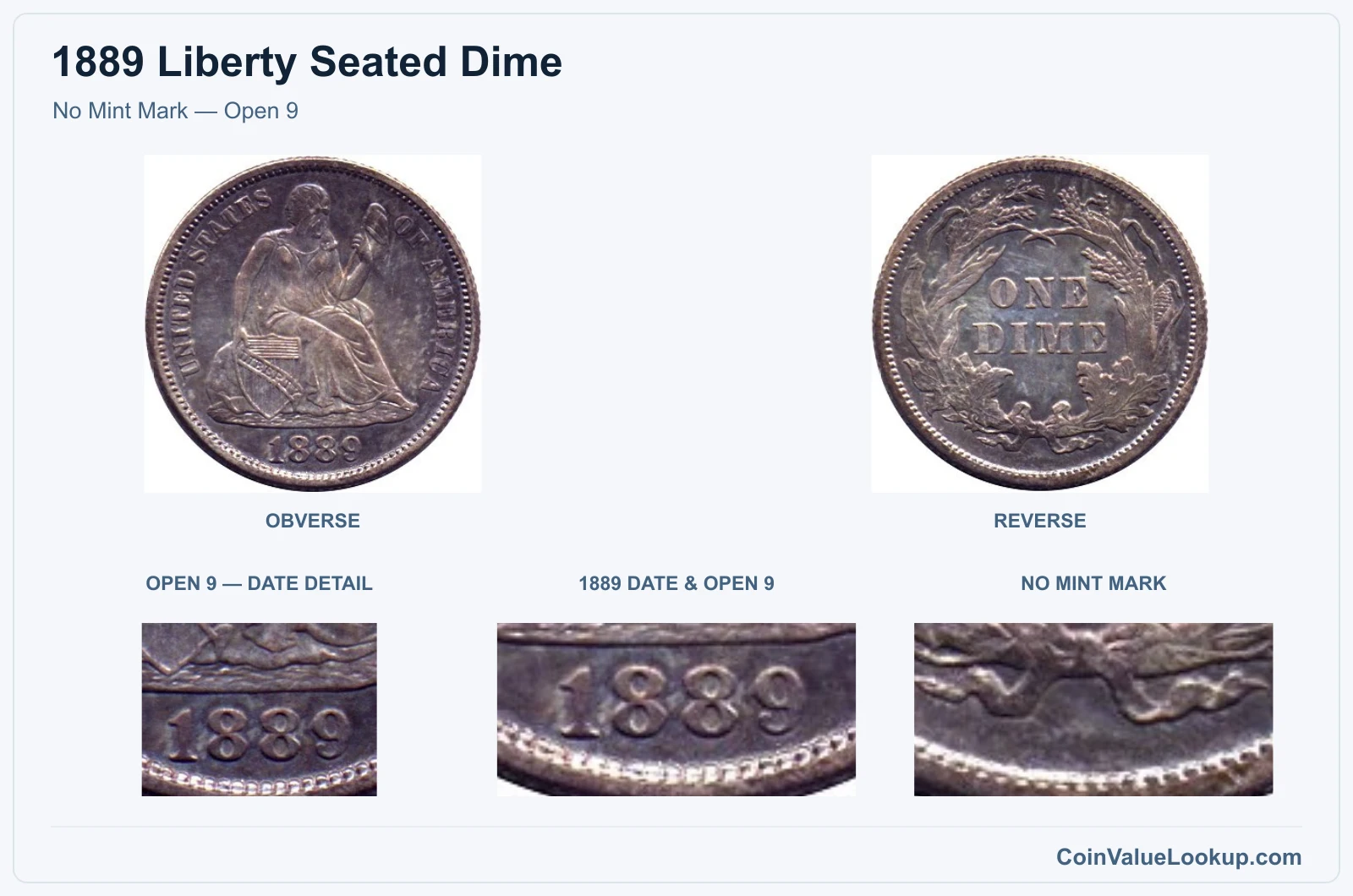
The Philadelphia Open 9 dime is identified by the gap in the loop of the final digit of the date. Hold the coin under magnification and compare the "9" to a confirmed Closed 9 example; if there is a clear opening at the top of the loop, you have the Open 9 punch.
This is a normal date-punch style, not an error. It carries no mintmark.
Currently, no separate price quote has been established for the Open 9 apart from the general Philadelphia guide anchors, so the value of a specific coin depends on its authenticated identity, overall condition and whether any errors are present.
Ordinary-issue reference: Ordinary-issue reference only: The table below shows prices for the 1889 Liberty Seated Dime (regular strike). It does not represent the value of the specific No Mint Mark — Open 9 variety or its variety premium. Year, mint, metal and strike type are matched; the specific variety is not priced by this table.
Range Grade
Price Auction Records Appraisal PO PO 1
—
Coin Identifier FR FR 2
—
Coin Identifier AG AG 3
—
Coin Identifier G G 4
—
Coin Identifier
G 6
—
Coin Identifier VG VG 8
—
Coin Identifier
VG 10
—
Coin Identifier F F 12
Coin Identifier
F 15
—
Coin Identifier VF VF 20
—
Coin Identifier
VF 25
—
Coin Identifier
VF 30
Coin Identifier
VF 35
—
Coin Identifier XF XF 40
—
Coin Identifier
XF 45
Coin Identifier AU AU 50
Coin Identifier
AU 53
Coin Identifier
AU 55
Coin Identifier
AU 58
Coin Identifier MS MS 60
Coin Identifier
MS 61
Coin Identifier
MS 62
Coin Identifier
MS 63
Coin Identifier
MS 64
Coin Identifier
MS 65
Coin Identifier
MS 66
Coin Identifier
MS 67
Coin Identifier
MS 68
—
—
—
MS 69
—
—
—
MS 70
—
—
—
1889 Liberty Seated Dime — No Mint Mark — Closed 9
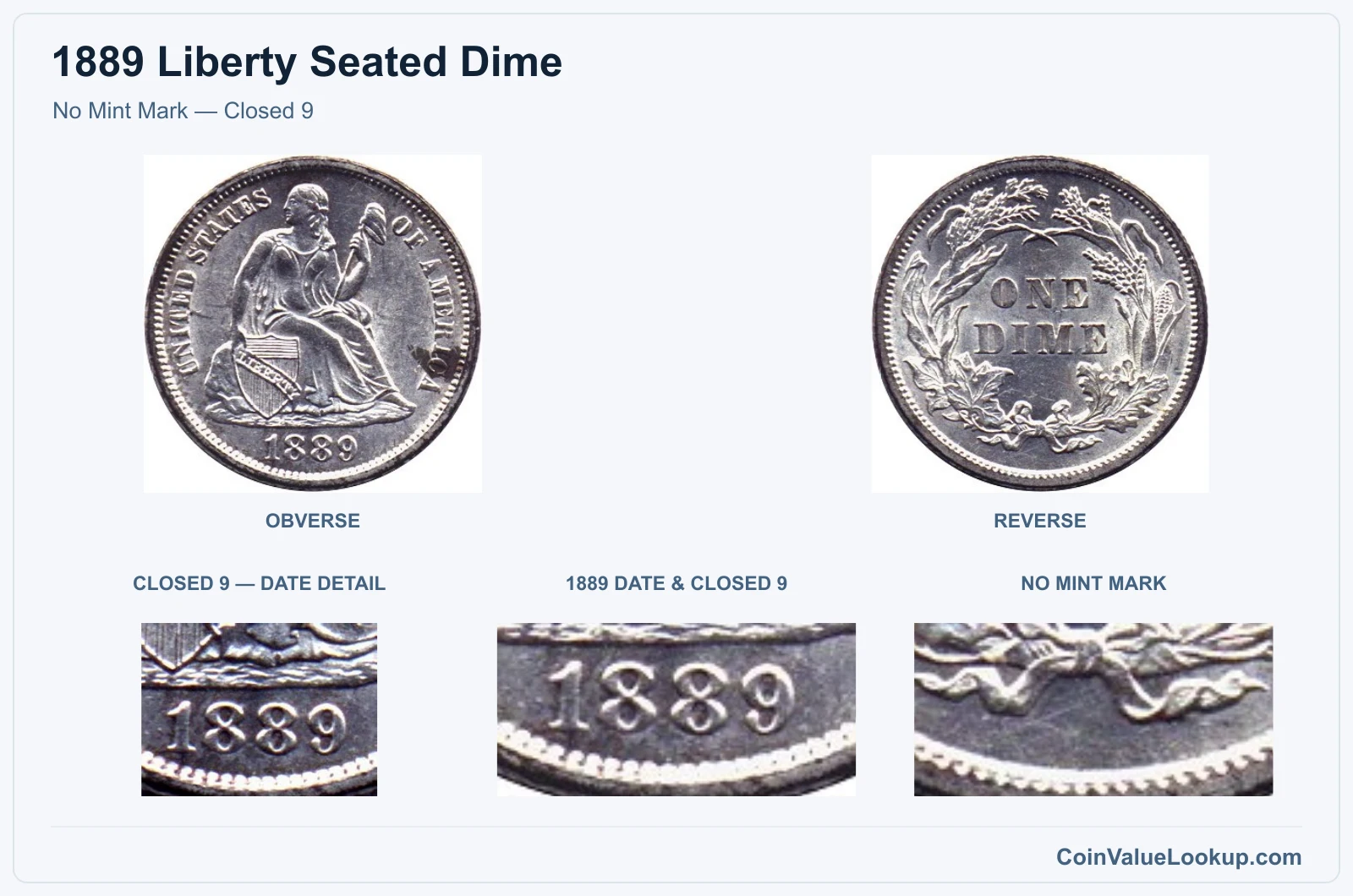
On the Closed 9 variety, the final digit's loop is fully connected with no visible gap. This is the simplest way to tell it apart from the Open 9 — just examine the top of the "9" under magnification.
Like the Open 9, the Closed 9 is a standard Philadelphia date-punch style, not an error or rarity in itself. It also carries no mintmark.
No separate Closed 9 price has been adopted, so its value rests on the coin's authenticated identity, condition and any additional die features. Have both sides examined carefully before drawing conclusions.
Ordinary-issue reference: Ordinary-issue reference only: The table below shows prices for the 1889 Liberty Seated Dime (regular strike). It does not represent the value of the specific No Mint Mark — Closed 9 variety or its variety premium. Year, mint, metal and strike type are matched; the specific variety is not priced by this table.
Range Grade
Price Auction Records Appraisal PO PO 1
—
Coin Identifier FR FR 2
—
Coin Identifier AG AG 3
—
Coin Identifier G G 4
—
Coin Identifier
G 6
—
Coin Identifier VG VG 8
—
Coin Identifier
VG 10
—
Coin Identifier F F 12
Coin Identifier
F 15
—
Coin Identifier VF VF 20
—
Coin Identifier
VF 25
—
Coin Identifier
VF 30
Coin Identifier
VF 35
—
Coin Identifier XF XF 40
—
Coin Identifier
XF 45
Coin Identifier AU AU 50
Coin Identifier
AU 53
Coin Identifier
AU 55
Coin Identifier
AU 58
Coin Identifier MS MS 60
Coin Identifier
MS 61
Coin Identifier
MS 62
Coin Identifier
MS 63
Coin Identifier
MS 64
Coin Identifier
MS 65
Coin Identifier
MS 66
Coin Identifier
MS 67
Coin Identifier
MS 68
—
—
—
MS 69
—
—
—
MS 70
—
—
—
1889 Liberty Seated Dime — S — Regular Issue
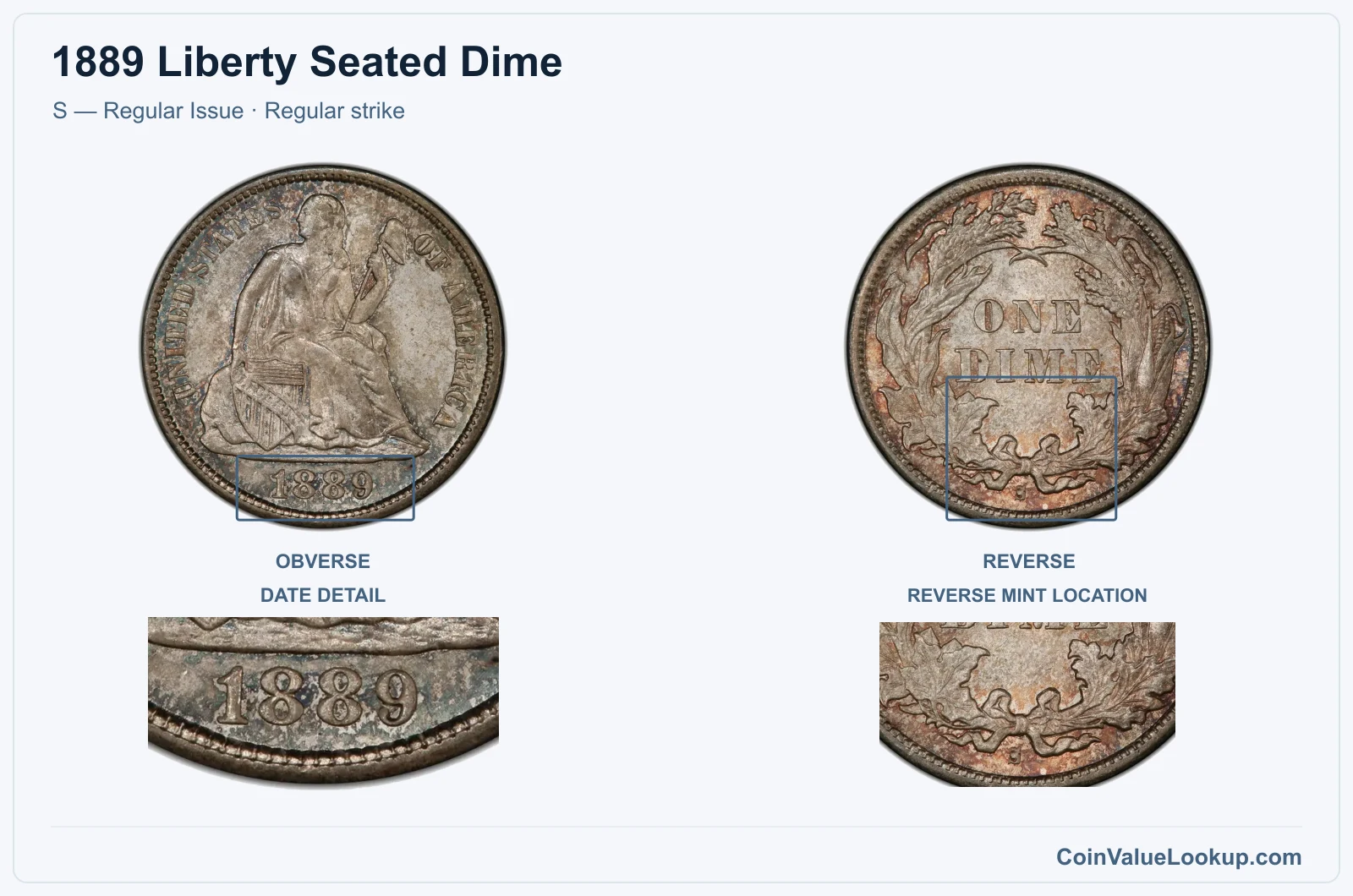
Look for a small "S" mintmark on the reverse beneath the wreath to confirm this as the San Francisco issue. It is the only 1889 dime with a mintmark.
USA Coin Book lists this coin at about $29 in G4 and roughly $1,247 at MS63. That spread tells you condition matters enormously.
Circulated examples are affordable, but original, problem-free Mint State survivors command serious money.
Coin Value Lookup is a handy starting point when you want to look up guide values for other dates and mints in the Liberty Seated Dime series. You can browse by denomination and year to compare your coin against the broader market.
Range Grade
Price Auction Records Appraisal PO PO 1
—
Coin Identifier FR FR 2
—
Coin Identifier AG AG 3
—
Coin Identifier G G 4
—
Coin Identifier
G 6
—
Coin Identifier VG VG 8
—
Coin Identifier
VG 10
—
Coin Identifier F F 12
—
Coin Identifier
F 15
—
Coin Identifier VF VF 20
—
Coin Identifier
VF 25
—
Coin Identifier
VF 30
—
Coin Identifier
VF 35
Coin Identifier XF XF 40
Coin Identifier
XF 45
Coin Identifier AU AU 50
Coin Identifier
AU 53
Coin Identifier
AU 55
Coin Identifier
AU 58
Coin Identifier MS MS 60
—
Coin Identifier
MS 61
Coin Identifier
MS 62
Coin Identifier
MS 63
Coin Identifier
MS 64
Coin Identifier
MS 65
Coin Identifier
MS 66
Coin Identifier
MS 67
—
—
—
MS 68
—
—
—
MS 69
—
—
—
MS 70
—
—
—
1889 Liberty Seated Dime — No Mint Mark — Proof Regular Proof
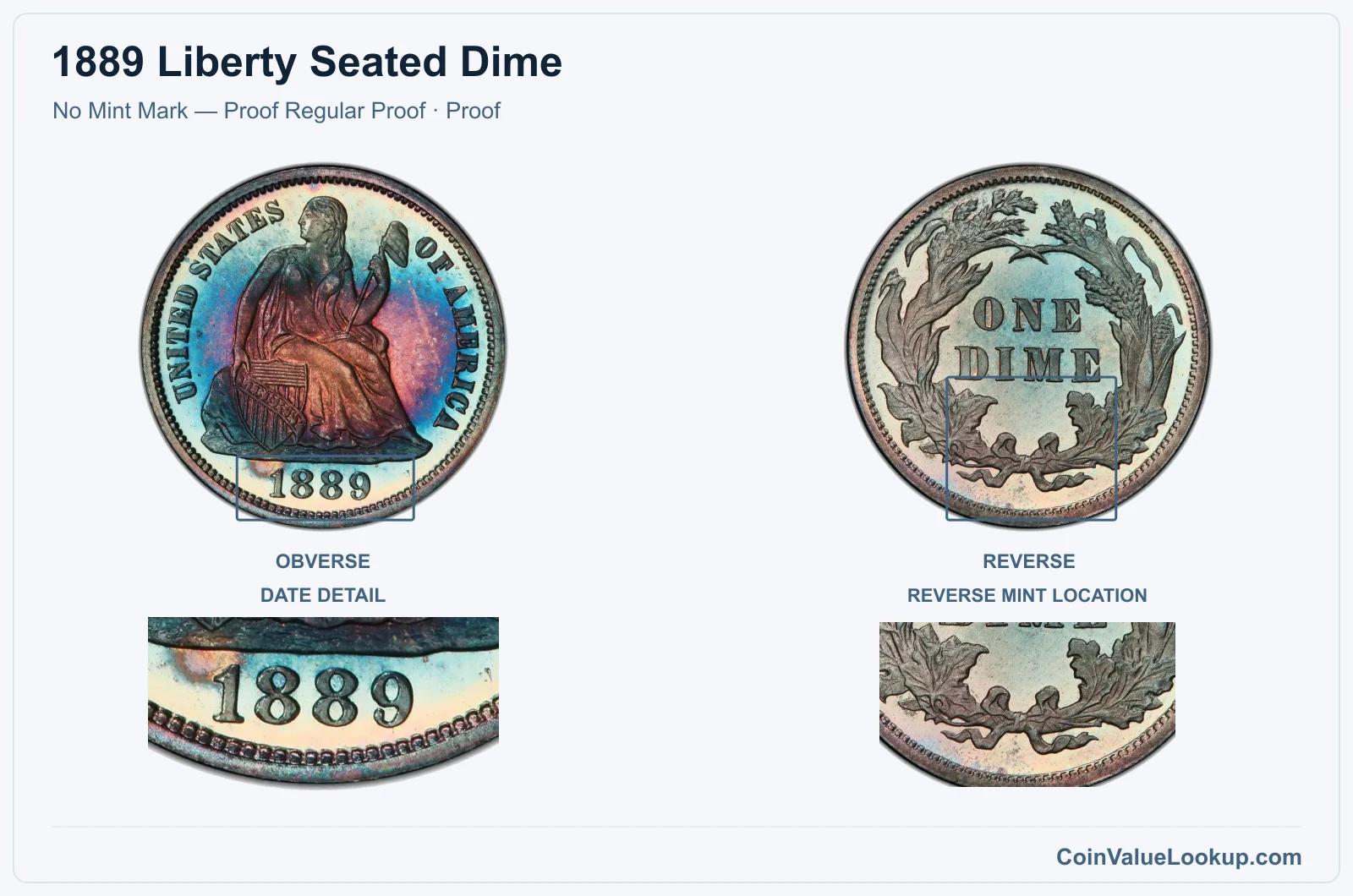
Philadelphia Proof dimes were struck from specially prepared dies onto polished planchets, producing mirror-like fields and sharp design edges. There is no mintmark on these coins.
To confirm a Proof, look for deeply reflective surfaces across the flat areas of both sides and crisp, squared-off rims.
A coin that merely looks shiny is not necessarily a Proof. Polished or cleaned business strikes lack the consistent mirrored depth of a genuine Proof's fields, and their rims typically remain rounded.
Hairlines from improper handling reduce a Proof's grade but do not reclassify it.
USA Coin Book places the regular Proof at approximately $725 in PR63. Condition drives value sharply — hairlines and haze pull the grade down fast.
Range Grade
Price Auction Records Appraisal PR PR 1
—
Coin Identifier
PR 2
—
Coin Identifier
PR 3
—
Coin Identifier
PR 4
—
Coin Identifier
PR 6
—
Coin Identifier
PR 8
—
Coin Identifier
PR 10
—
Coin Identifier
PR 12
—
Coin Identifier
PR 15
—
Coin Identifier
PR 20
—
Coin Identifier
PR 25
—
Coin Identifier
PR 30
—
Coin Identifier
PR 35
—
Coin Identifier
PR 40
—
Coin Identifier
PR 45
—
Coin Identifier
PR 50
—
Coin Identifier
PR 53
—
Coin Identifier
PR 55
—
Coin Identifier
PR 58
—
Coin Identifier
PR 60
—
Coin Identifier
PR 61
Coin Identifier
PR 62
Coin Identifier
PR 63
Coin Identifier
PR 64
Coin Identifier
PR 65
Coin Identifier
PR 66
Coin Identifier
PR 67
Coin Identifier
PR 68
Coin Identifier
PR 69
—
—
—
PR 70
—
—
—
1889 Liberty Seated Dime Error List
1. 1889 Liberty Seated Dime — Repunched Date
A repunched date occurs when the date punch was impressed into the die more than once, slightly offset. On an 1889 dime, look for remnants of an earlier numeral position next to the final date digits — traces might appear as partial extra serifs, ghost outlines or thickened areas on one or more numerals.
This is a die variety, not the same thing as a doubled die, which affects the entire design hub. It is also distinct from simple machine doubling, which produces flat, shelf-like outlines without the sharp, raised secondary image of a true repunched date.
Damage from a hit or scratch can mimic a repunch, so examine the suspect area under magnification. Value depends on the visibility of the repunching, the coin's overall condition and professional authentication.
2. 1889 Liberty Seated Dime — Misplaced Date
A misplaced date shows recognizable fragments of one or more date numerals in an area of the die where they do not belong — typically in the drapery folds or near the scroll beneath Liberty. On an 1889 dime, inspect those zones under magnification for raised contours that match the shape of a "1," "8" or "9."
These fragments are raised because they were punched into the die at the wrong location before the final date was correctly placed. Scratches and random die polish lines can look similar, but they lack the distinct numeral form of a true misplaced date.
No specific price has been established for this variety. Its value depends on how clearly the misplaced digit is visible, the coin's grade and the specific die involved.
3. 1889 Liberty Seated Dime — Doubled Die Reverse
A Doubled Die Reverse on the 1889 dime means the reverse die received a secondary hubbing impression slightly offset from the first, leaving doubled contours on the lettering, wreath or denomination. Compare your coin's reverse legends and wreath details against a normal example — true doubling produces raised, separated outlines with definition.
Machine doubling is the most common lookalike. It leaves flat, shelf-like distortions rather than the sharply raised secondary image of a genuine doubled die.
Reflections from tilting the coin under light can also create an illusion of doubling.
This variety is distinct from the Open 9 and Closed 9 date-punch styles, which are obverse features. No adopted price range exists; value depends on the strength of doubling, the coin's condition and authentication.
4. 1889 Liberty Seated Dime — Die Crack / Die Chip
Die cracks appear as thin, raised lines on the coin's surface where the steel die fractured during use. On 1889 Philadelphia dimes, these have been documented as a die-state feature.
A crack may run between design elements or extend from the rim inward.
Small raised blobs — die chips — form when a tiny piece of the die breaks away, leaving a filled area that strikes up as a raised lump on the coin. An interior chip stays away from the rim, unlike a cud which connects to it.
Lookalikes include incuse scratches (which are recessed, not raised), corrosion pitting and foreign material stuck to the surface. Run a fingernail across the line: a die crack is raised, while a scratch is usually recessed.
Value depends on prominence, location and the coin's overall grade.
5. 1889 Liberty Seated Dime — Clashed Dies
Clashed dies result from the obverse and reverse dies striking each other without a planchet between them. This transfers ghost impressions of one die's design onto the other.
On an 1889 Philadelphia dime, look for faint traces of the wreath or lettering on the obverse fields, or outlines of Liberty's figure on the reverse.
These clash marks align with where the opposite die's features would contact during a normal strike. Random scratches or raised lines from die polish will not line up consistently with the opposing design.
A brockage — where a struck coin sticks to a die and impresses a second coin — produces a much more dramatic mirror image and should not be confused with clashing. No specific price has been adopted; the value of a clashed-die 1889 dime depends on the strength of the transferred image and the coin's condition.
6. 1889 Liberty Seated Dime — Die Break / Cud
A cud is a specific type of die break where a chunk of the die rim fractures and falls away. The result is a raised, featureless blob on the coin that connects to the rim and replaces part of the normal design.
On 1889 Philadelphia dimes, cuds have been documented as a die-state feature.
Check the full rim of your coin carefully — a cud can be small and easy to overlook. Its boundary should show a clear transition from the normal struck design into a flat or lumpy raised area extending to the edge.
Rim dents from post-mint damage are recessed, not raised, so that is the simplest distinction. Corrosion can also roughen a rim but will not produce the characteristic flat plateau of a cud.
Value depends on the cud's size, location and the coin's overall condition.
7. 1889 Liberty Seated Dime — Off-Center Strike
An off-center strike happens when the planchet is not properly seated between the dies, so part of the design is missing and a blank crescent appears on one side. On an 1889 Seated dime, the key is whether the date remains visible — without a readable date, identification is difficult and collector interest drops.
The percentage of off-center shift matters. A slight 5% shift is subtle, while a dramatic 20% or more creates an obvious crescent.
Higher percentages with a visible date tend to attract more attention.
Don't confuse an off-center strike with a straight-clipped planchet, which shows a flat edge rather than a crescent, or with post-mint damage that flattened part of the rim. No price has been adopted for this error; value depends on the degree of the shift, date visibility and condition.
8. 1889 Liberty Seated Dime — Lamination / Split Planchet
A lamination or split planchet occurs when layers within the coin's alloy separate, creating peeling metal, a retained flap or a visible gap along the edge. On an 1889 Seated dime, photograph both the affected face and the edge together so the separation is clear.
Laminations happen because of impurities or gas pockets trapped in the metal during the rolling process. The resulting flaw can range from a small surface flake to a coin that is nearly split in two.
Lookalikes include deliberate cutting, heavy scraping and advanced corrosion, all of which produce different surface textures under magnification. A genuine lamination follows the metal's internal structure rather than showing tool marks.
No specific price range has been adopted for this error on the 1889 dime; value depends on the extent of the separation and the coin's overall condition.