1853 Liberty Seated Dime Coin Value: How Much Is It Worth?
The 1853 Liberty Seated Dime is a coin with real depth because it straddles a major weight change. Retail guide estimates run from about $29 at G4 to roughly $5,625 at MS63 across the normal business-strike issues, while rare Proofs and the scarcer No Arrows type carry their own separate pricing.
Which version you have matters a lot, so read on.
Fast Way to Identify Your 1853 Liberty Seated Dime
The quickest way to start figuring out what you have is to upload clear photos of both the front and back of your coin. Our identifier can give you a preliminary read on the mint, design branch, and general type.
It is not a substitute for professional authentication or precise grading, but it points you in the right direction fast.
1853 Liberty Seated Dime Value
Upload both sides of your 1853 Liberty Seated Dime.
Front Obverse
Upload photo
Back Reverse
Upload photo
Which 1853 Liberty Seated Dime Versions Are Worth Money?
- The 1853 No Arrows Philadelphia dime is the scarcer pre-weight-reduction type, with guide values from about $190 at G4 to roughly $1,882 at MS63.
- The 1853-O With Arrows dime carries a wide value spread, from around $34 at G4 up to about $5,625 at MS63, reflecting how tough it is to find in high grades.
- Proof With Arrows examples are rare early Proofs, not routine collector issues; the guide estimate at PR63 is around $24,605.
- Philadelphia With Arrows dimes include hand-punched and hubbed date/arrows manufacturing variants worth learning to distinguish.
Step 1: Identify Your 1853 Liberty Seated Dime Mint Mark and Version
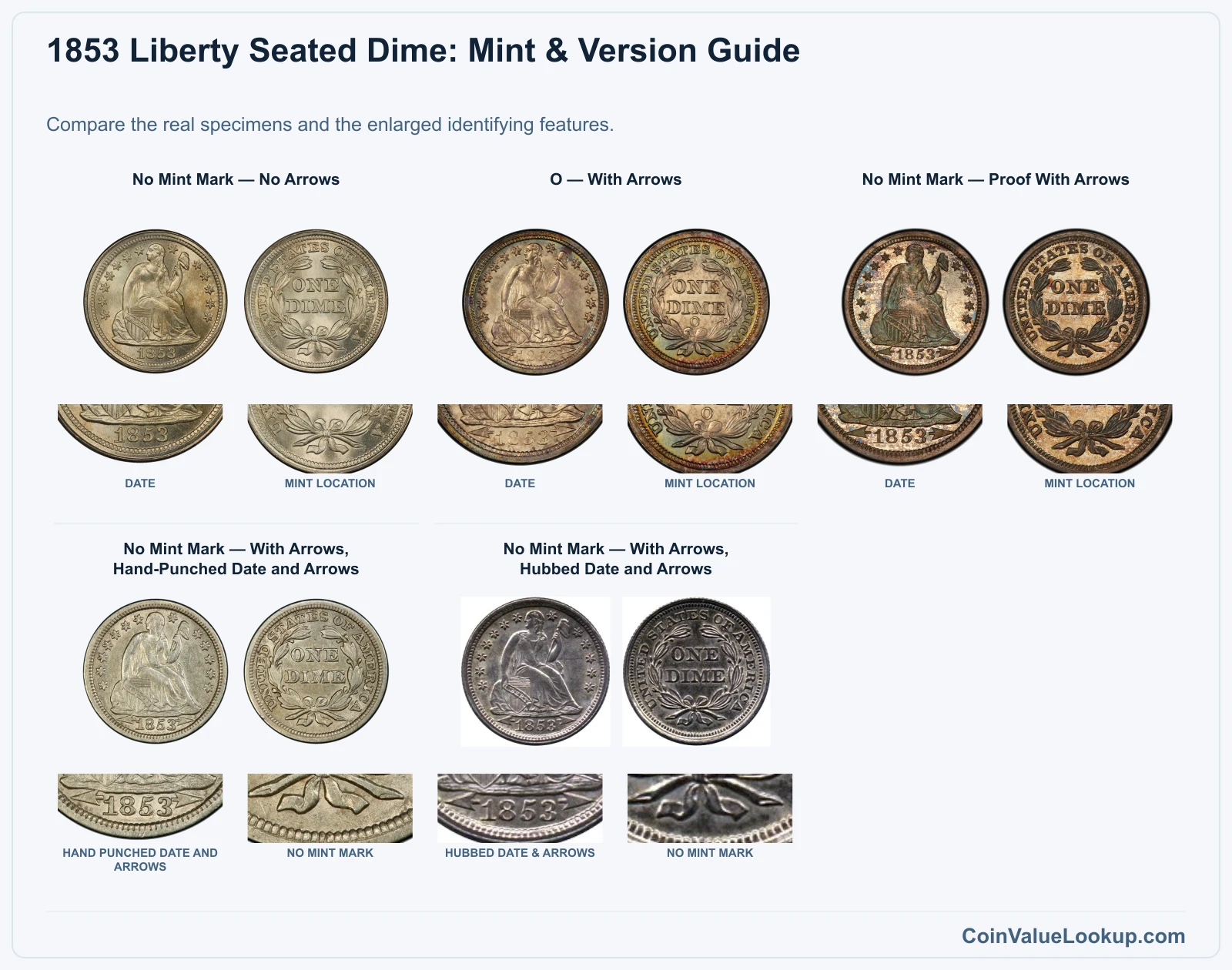
First, confirm you are looking at a seated Liberty obverse paired with a ONE DIME reverse inside a wreath. That rules out the smaller half dime, which trips up more people than you would think.
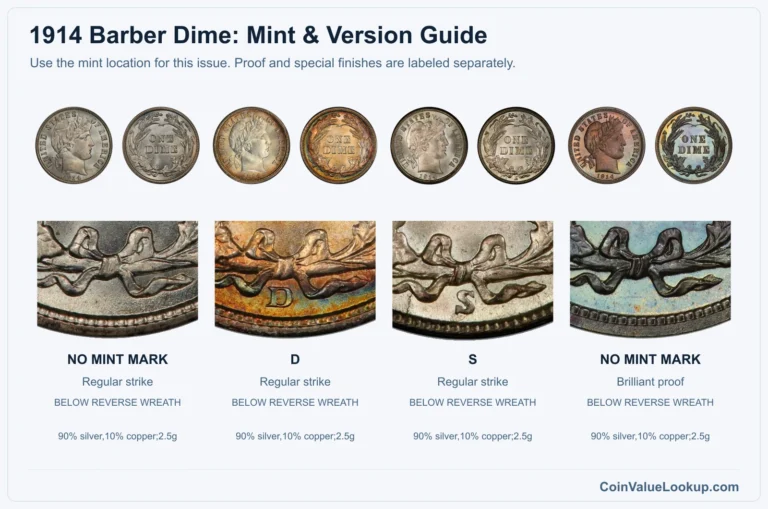
Next, check the date. Then flip the coin and look below the wreath for a mintmark.
Philadelphia coins have no letter; New Orleans coins show an "O" in that spot.
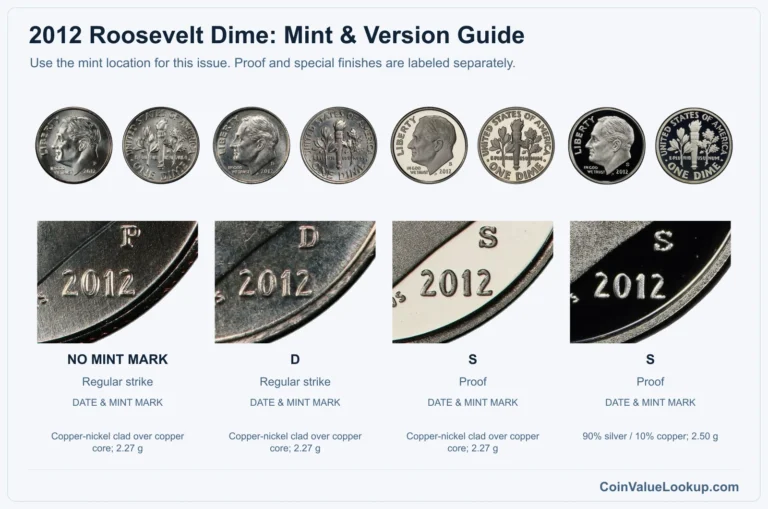
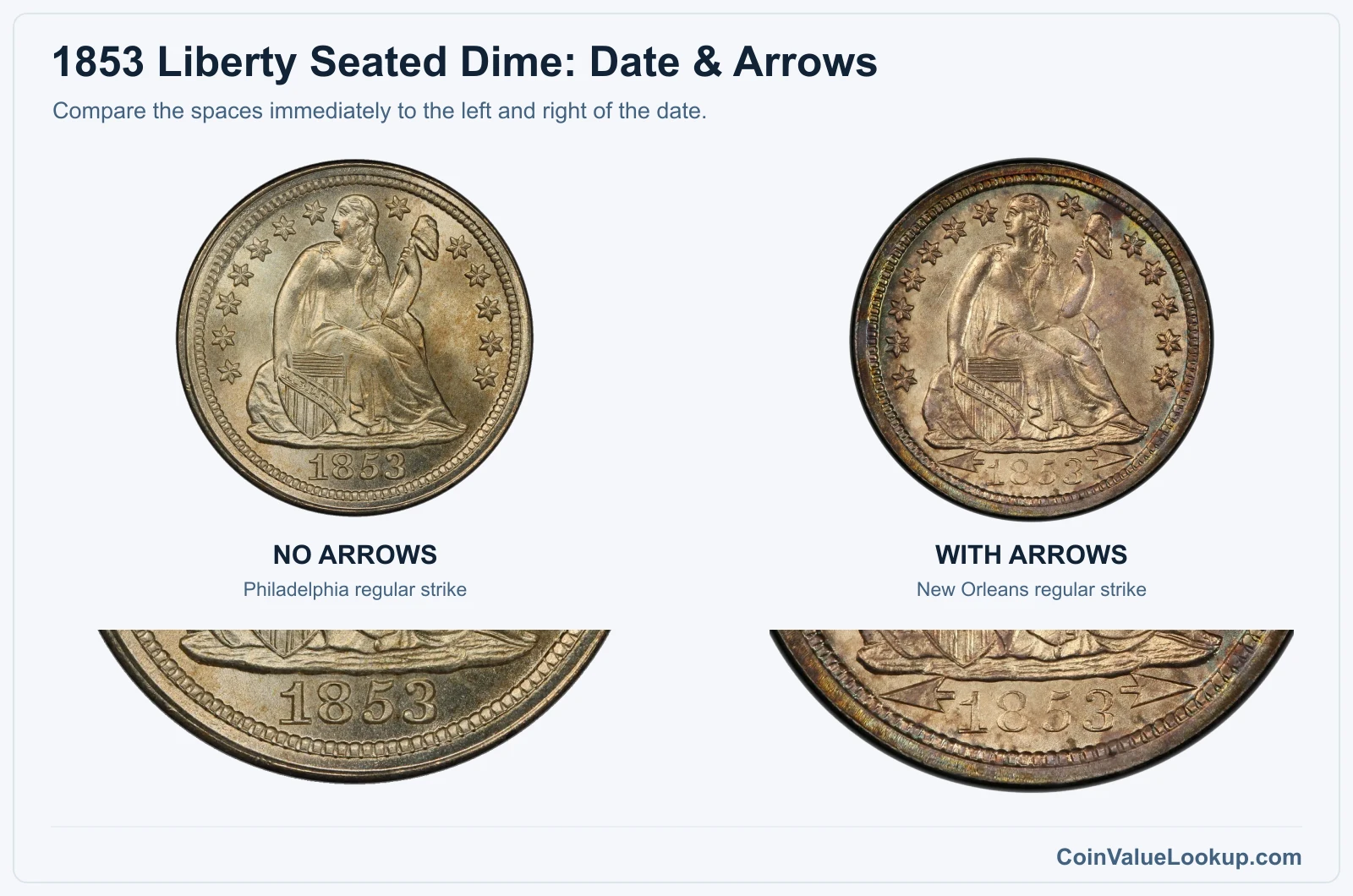
The critical question for 1853 is arrows. Look at the date on the obverse.
If small arrowheads flank the date on both sides, you have the With Arrows type, struck at a reduced weight of about 2.49 grams. If there are no arrows beside the date, you hold the scarcer No Arrows variety, which weighs about 2.67 grams and was struck before the mid-year weight reduction took effect.
All versions are 90% silver and 10% copper, with a 17.9 mm diameter and a reeded edge. A small kitchen scale accurate to 0.1 g can help you confirm which weight standard your coin meets, especially on worn pieces where the arrows might be hard to see.
Step 2: Check Your 1853 Liberty Seated Dime Grade
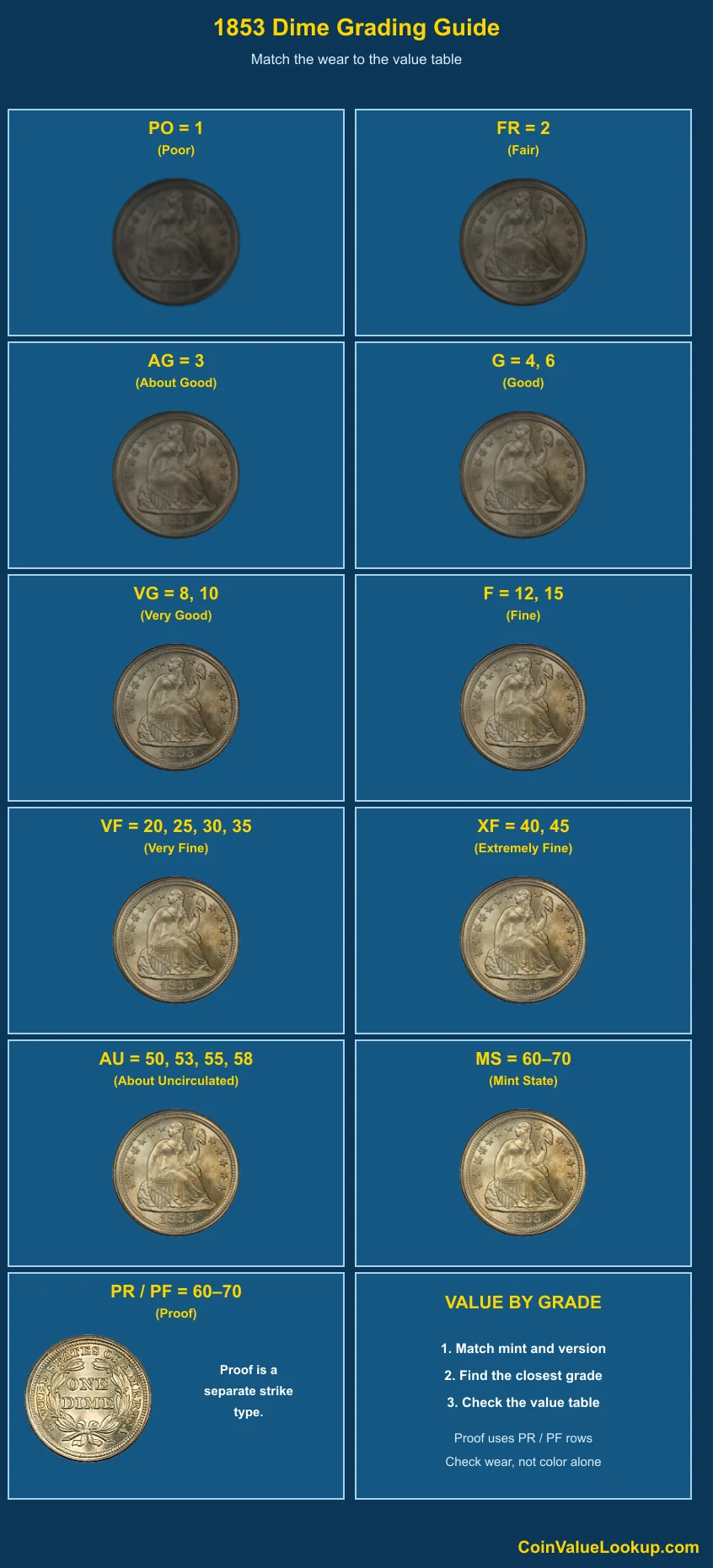
Compare your coin against the grading reference image for the correct subtype, because wear shows up differently on the No Arrows and With Arrows varieties. On the obverse, focus on the shield lines, the folds of Liberty's gown, and the detail on her head and feet.
On the reverse, check the wreath leaves near the base.
Separate actual circulation wear from strike weakness. A coin can look flat in spots because the die was tired, not because the coin saw heavy use.
Luster is your ally here: original mint luster on protected areas tells you the coin did not circulate as long as the soft spots might suggest.
Polished circulation coins are not Proofs. Proof is a special manufacturing method with distinctive mirrored fields, and those pieces need their own grading criteria including hairline assessment.
If someone buffed a dime to make it shiny, that actually lowers its grade.
Step 3: Check 1853 Liberty Seated Dime Value by Mint and Version
1853 Liberty Seated Dime — No Mint Mark — No Arrows
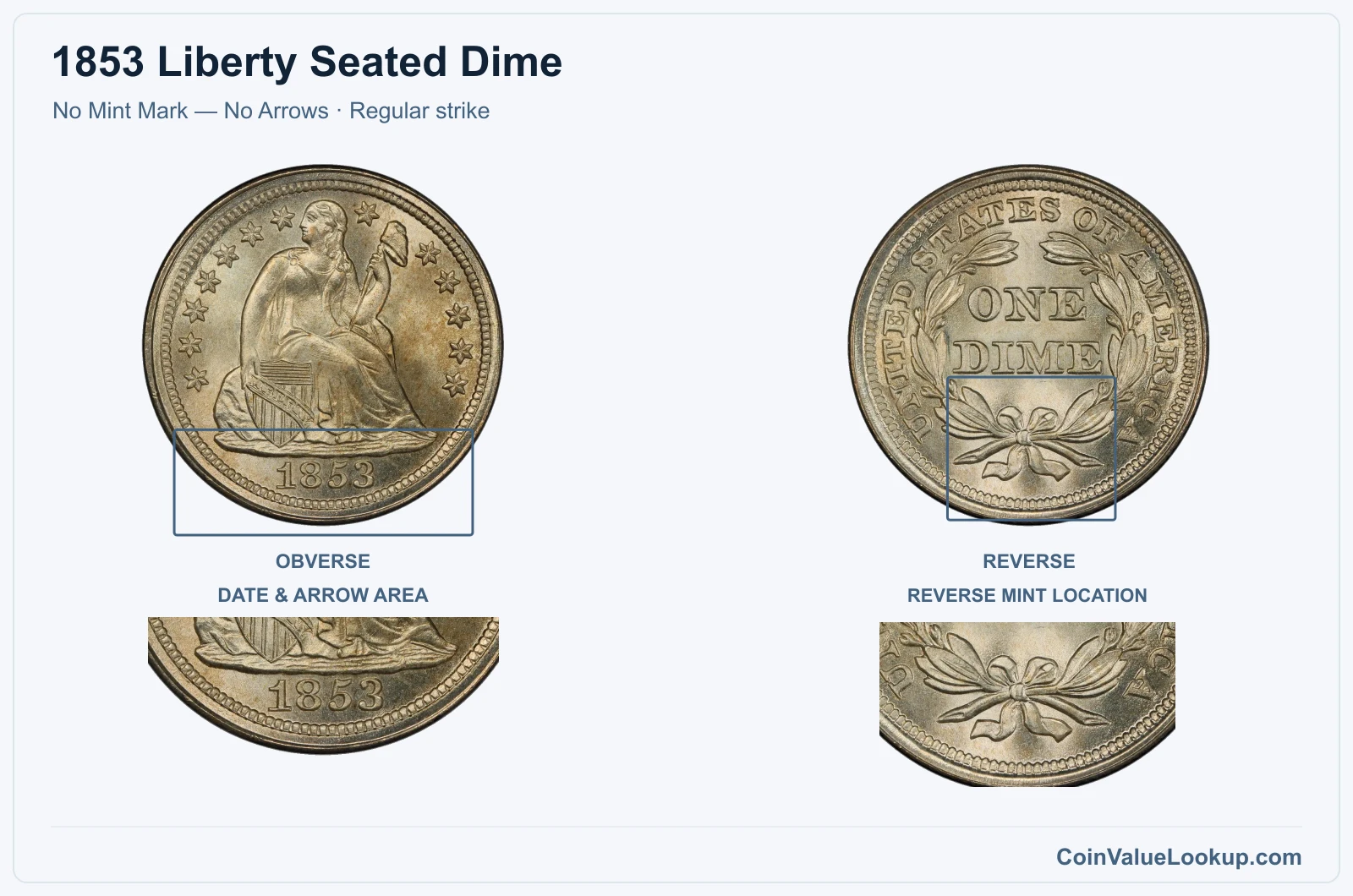
This is the Philadelphia dime struck before the mid-year weight reduction. It carries no mintmark and, crucially, no arrows flanking the date.
The coin weighs approximately 2.67 grams under the old standard.
The design shows stars on the obverse with drapery at Liberty's elbow, and a small wreath with the reverse legend. USA Coin Book guide estimates place this version at about $190 in G4 and roughly $1,882 in MS63.
Those numbers reflect the relative scarcity of the No Arrows type, since far fewer were struck before the changeover. Confirm both the absence of arrows and the heavier weight before assuming you hold this variety.
Range Grade
Price Auction Records Appraisal PO PO 1
—
Coin Identifier FR FR 2
—
Coin Identifier AG AG 3
—
Coin Identifier G G 4
Coin Identifier
G 6
Coin Identifier VG VG 8
Coin Identifier
VG 10
Coin Identifier F F 12
Coin Identifier
F 15
Coin Identifier VF VF 20
Coin Identifier
VF 25
Coin Identifier
VF 30
Coin Identifier
VF 35
Coin Identifier XF XF 40
Coin Identifier
XF 45
Coin Identifier AU AU 50
Coin Identifier
AU 53
Coin Identifier
AU 55
—
Coin Identifier
AU 58
Coin Identifier MS MS 60
Coin Identifier
MS 61
Coin Identifier
MS 62
Coin Identifier
MS 63
Coin Identifier
MS 64
Coin Identifier
MS 65
Coin Identifier
MS 66
Coin Identifier
MS 67
Coin Identifier
MS 68
Coin Identifier
MS 69
—
—
—
MS 70
—
—
—
1853 Liberty Seated Dime — O — With Arrows
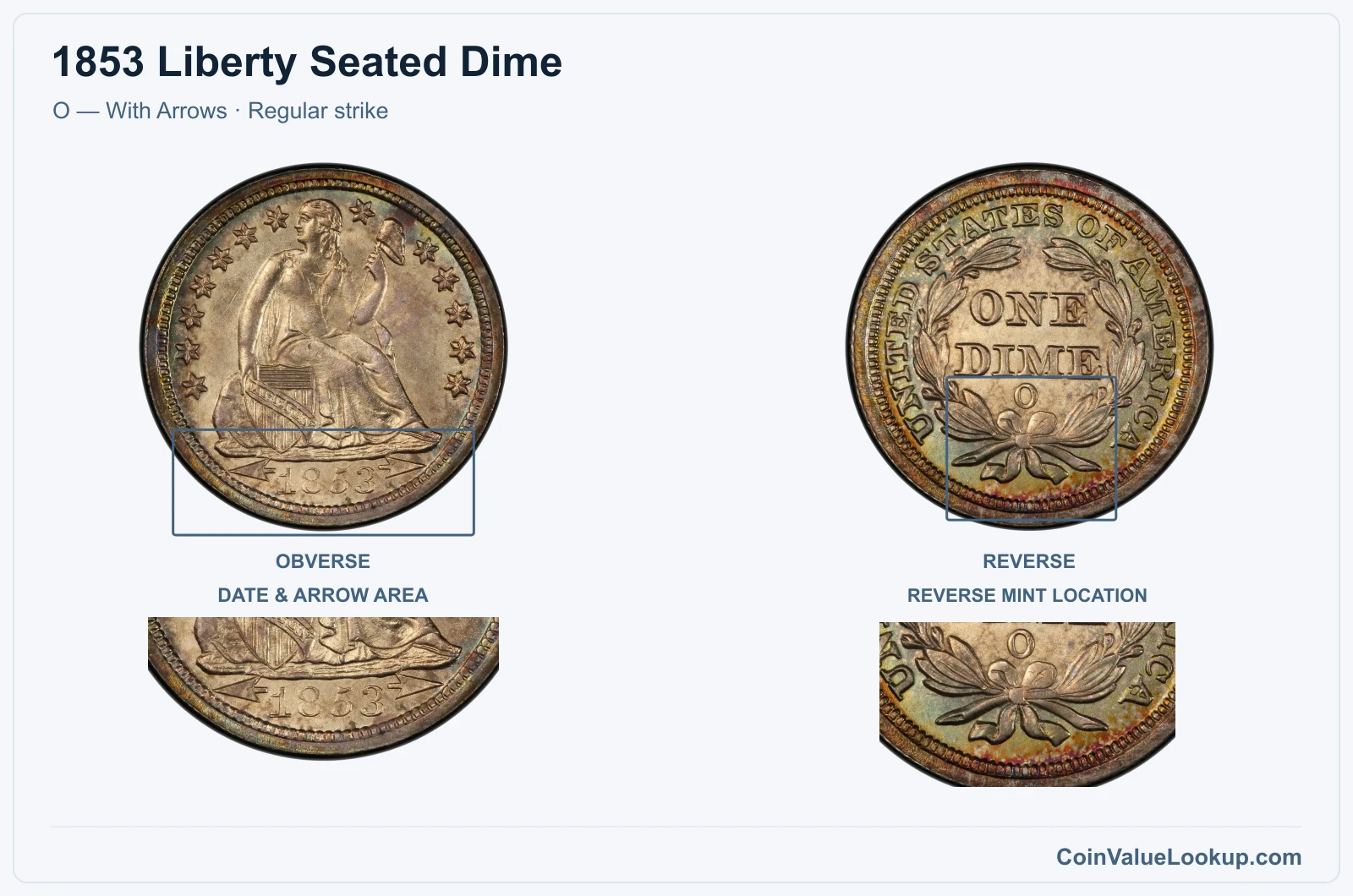
The New Orleans issue displays a small "O" mintmark below the wreath on the reverse and has arrows on both sides of the date. It weighs about 2.49 grams under the new lighter standard.
USA Coin Book guide estimates range from roughly $34 at G4 to approximately $5,625 at MS63. That huge spread exists because survivors in mint condition are genuinely hard to find.
New Orleans dimes saw heavy commercial use in the South and along trade routes, so most surviving examples are well worn. Check for the mintmark carefully on lower-grade pieces, as it can be weak or partially obscured by wear or contact marks.
Range Grade
Price Auction Records Appraisal PO PO 1
—
Coin Identifier FR FR 2
—
Coin Identifier AG AG 3
—
Coin Identifier G G 4
—
Coin Identifier
G 6
—
Coin Identifier VG VG 8
—
Coin Identifier
VG 10
Coin Identifier F F 12
—
Coin Identifier
F 15
—
Coin Identifier VF VF 20
Coin Identifier
VF 25
Coin Identifier
VF 30
Coin Identifier
VF 35
Coin Identifier XF XF 40
Coin Identifier
XF 45
Coin Identifier AU AU 50
Coin Identifier
AU 53
Coin Identifier
AU 55
Coin Identifier
AU 58
Coin Identifier MS MS 60
—
Coin Identifier
MS 61
Coin Identifier
MS 62
Coin Identifier
MS 63
Coin Identifier
MS 64
Coin Identifier
MS 65
Coin Identifier
MS 66
Coin Identifier
MS 67
—
—
—
MS 68
—
—
—
MS 69
—
—
—
MS 70
—
—
—
1853 Liberty Seated Dime — No Mint Mark — Proof With Arrows
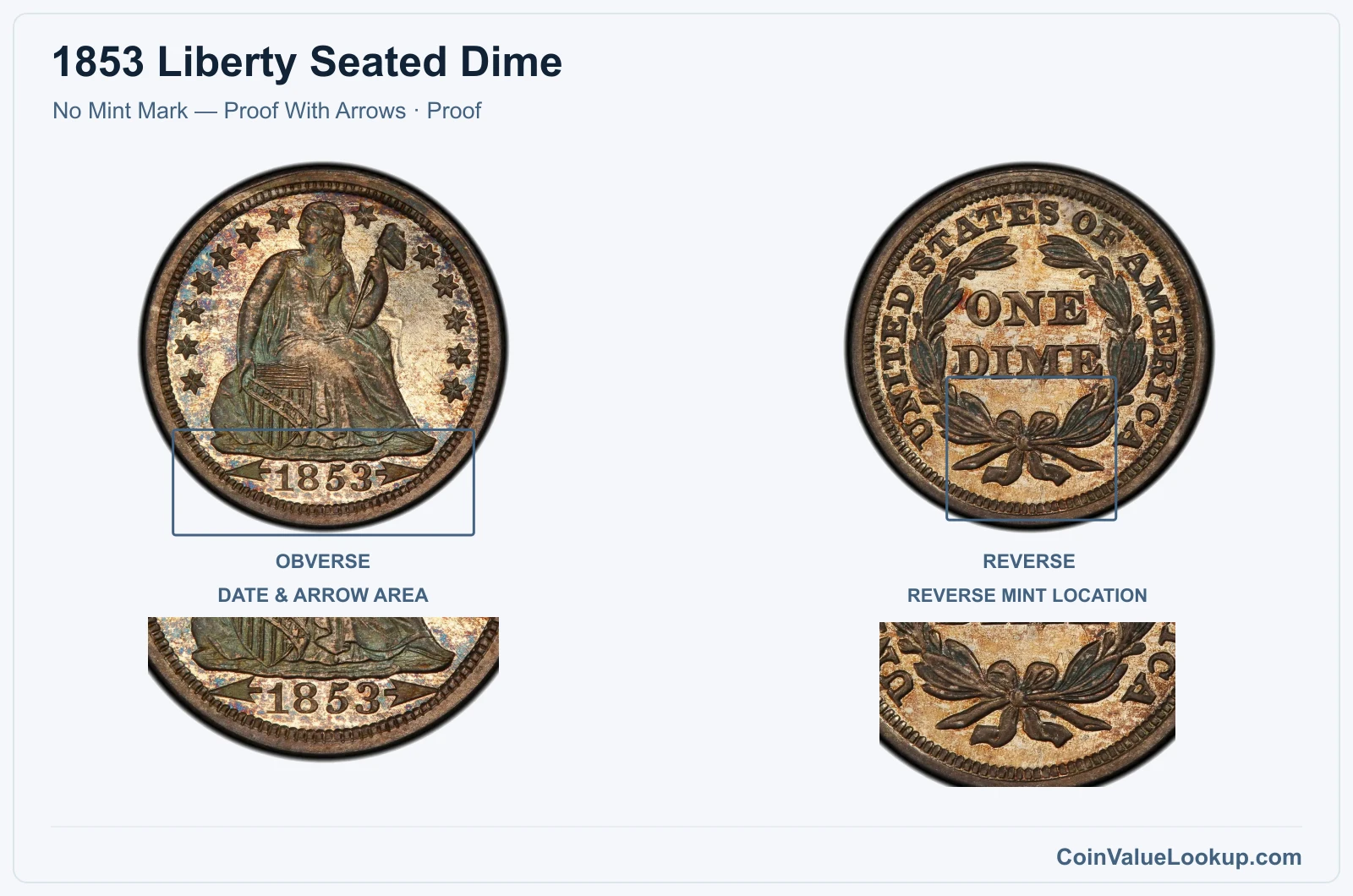
Proof 1853 dimes are With Arrows Philadelphia strikes made with specially prepared dies and planchets. These are rare early Proofs, not the kind of annual collector product the Mint offered in later decades.
The fields should show deep, mirror-like reflectivity, not just a shiny surface from cleaning.
The PCGS guide places the PR63 anchor at about $24,605. That figure reflects extreme rarity and collector demand for a coin that documents the weight transition in proof format.
Cameo contrast, where frosted devices stand out against mirror fields, is a characteristic sometimes seen, but cameo is not a separate mint or type. Never mistake a polished business strike for a Proof; the manufacturing evidence in the fields and rims is what separates them.
Coin Value Lookup is a good starting point if you want to explore other Liberty Seated Dime dates and their guide values before deciding on professional attribution.
Range Grade
Price Auction Records Appraisal PR PR 1
—
Coin Identifier
PR 2
—
Coin Identifier
PR 3
—
Coin Identifier
PR 4
—
Coin Identifier
PR 6
—
Coin Identifier
PR 8
—
Coin Identifier
PR 10
—
Coin Identifier
PR 12
—
Coin Identifier
PR 15
—
Coin Identifier
PR 20
—
Coin Identifier
PR 25
—
Coin Identifier
PR 30
—
Coin Identifier
PR 35
—
Coin Identifier
PR 40
—
Coin Identifier
PR 45
—
Coin Identifier
PR 50
—
Coin Identifier
PR 53
—
Coin Identifier
PR 55
—
Coin Identifier
PR 60
—
—
—
PR 61
—
—
—
PR 62
—
—
—
PR 63
—
Coin Identifier
PR 64
Coin Identifier
PR 65
Coin Identifier
PR 66
Coin Identifier
PR 67
—
—
—
PR 68
—
—
—
PR 69
—
—
—
PR 70
—
—
—
1853 Liberty Seated Dime — No Mint Mark — With Arrows, Hand-Punched Date and Arrows
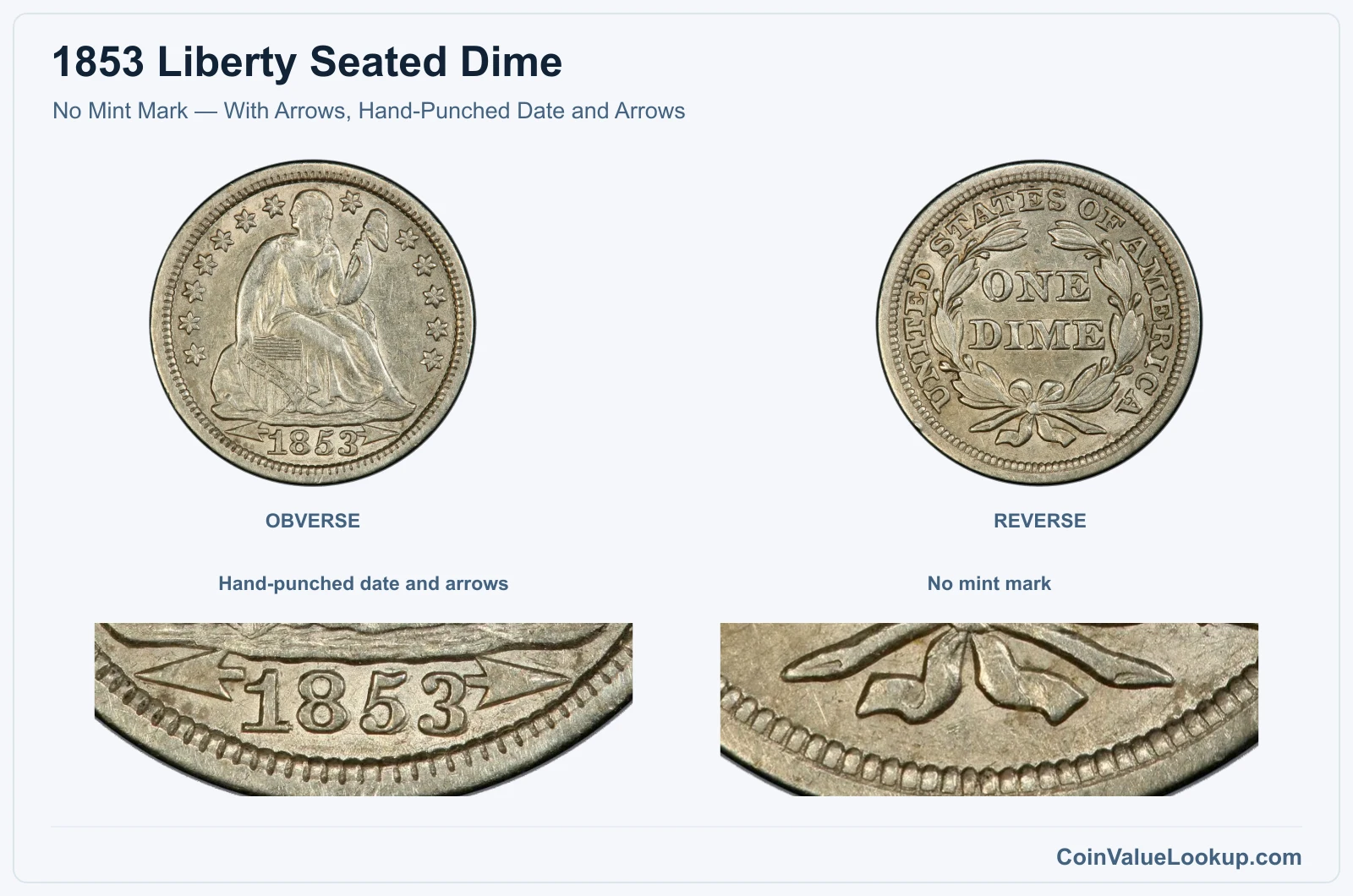
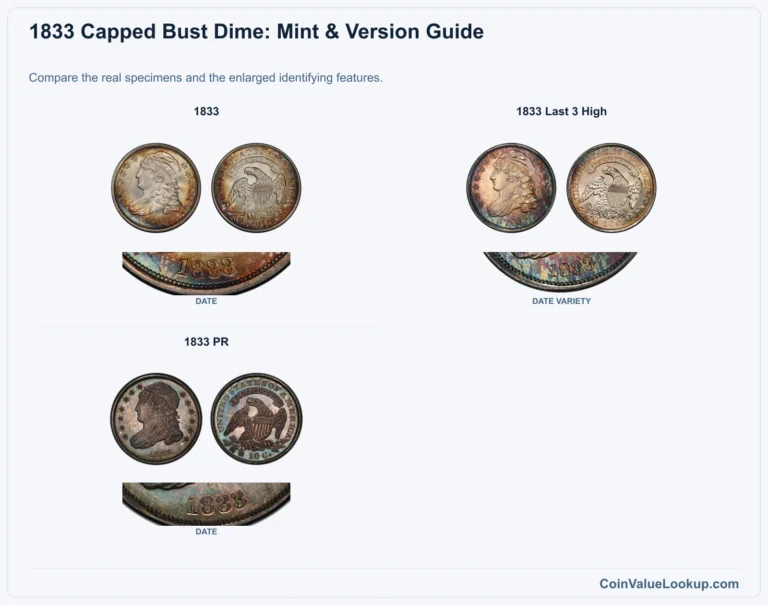
On some 1853 Philadelphia With Arrows dimes, the date numerals and the arrowheads were individually hand-punched into the working die. You can identify these by examining the spacing between the arrows and the date digits, which tends to be slightly irregular compared to the hubbed version.
USA Coin Book guide estimates for pooled Philadelphia With Arrows dimes run about $29 at G4 and roughly $794 at MS63. There is no independently measured premium specifically for the hand-punched group in the available guide data, so treat these figures as a shared baseline.
The distinction matters more for variety specialists than for general value, but knowing which group your coin falls into helps with proper attribution.
Range Grade
Price Auction Records Appraisal PO PO 1
—
Coin Identifier FR FR 2
—
Coin Identifier AG AG 3
—
Coin Identifier G G 4
—
Coin Identifier
G 6
—
Coin Identifier VG VG 8
—
Coin Identifier
VG 10
—
Coin Identifier F F 12
—
Coin Identifier
F 15
—
Coin Identifier VF VF 20
—
Coin Identifier
VF 25
—
Coin Identifier
VF 30
—
Coin Identifier
VF 35
—
Coin Identifier XF XF 40
—
Coin Identifier
XF 45
—
Coin Identifier AU AU 50
—
—
—
AU 53
—
—
—
AU 55
—
—
—
AU 58
—
—
— MS MS 60
—
—
—
MS 61
—
—
—
MS 62
—
—
—
MS 63
—
—
—
MS 64
—
—
—
MS 65
—
—
—
MS 66
—
—
—
MS 67
—
—
—
MS 68
—
—
—
MS 69
—
—
—
MS 70
—
—
—
1853 Liberty Seated Dime — No Mint Mark — With Arrows, Hubbed Date and Arrows
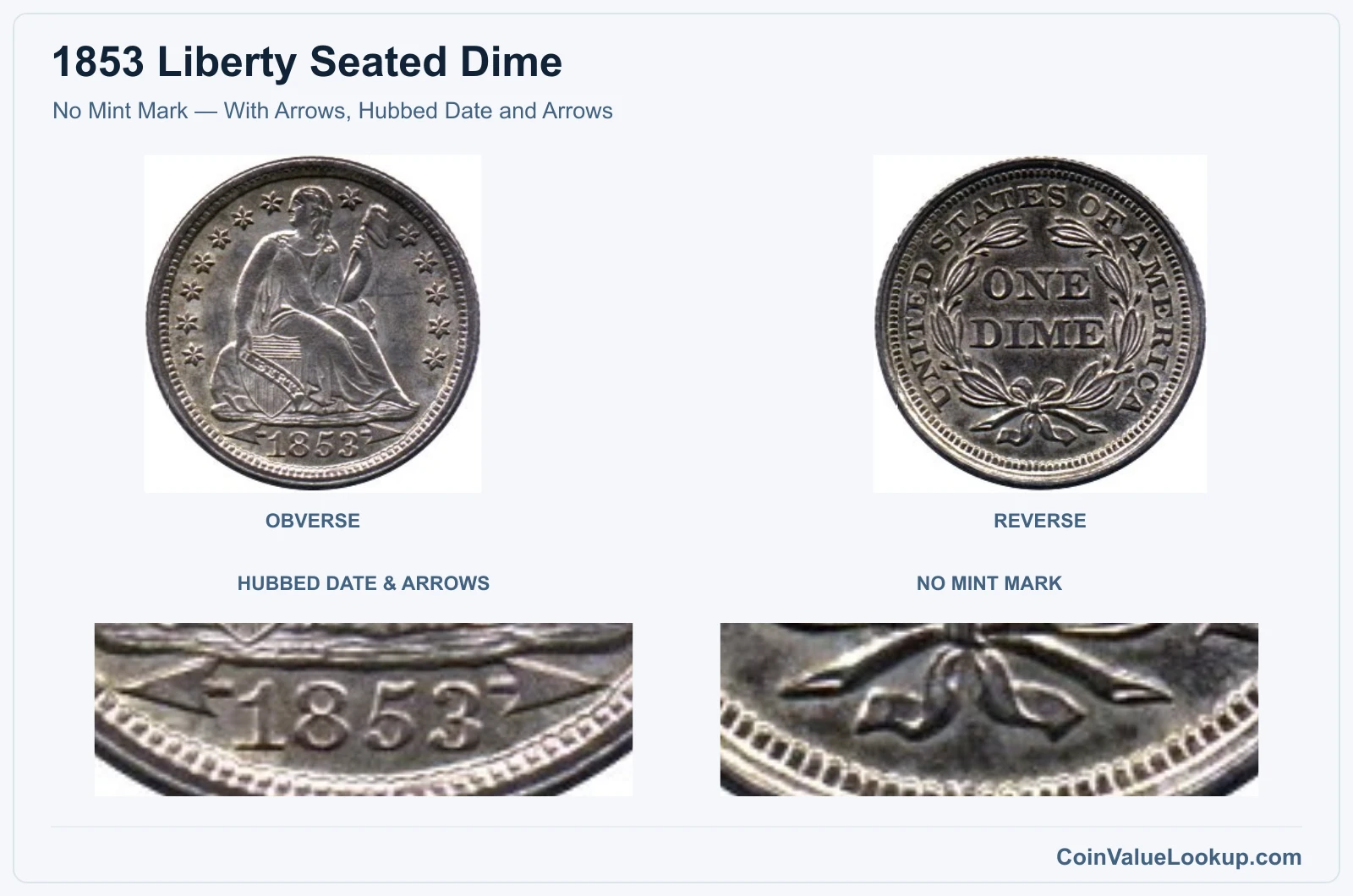
The hubbed version of the 1853 Philadelphia With Arrows dime has its date and arrows applied to the die through a hub, producing more uniform spacing and positioning. Compare the arrow placement and digit alignment side by side with a hand-punched example and the difference becomes apparent.
Guide estimates are the same pooled Philadelphia With Arrows figures: about $29 at G4 and approximately $794 at MS63 per USA Coin Book. As with the hand-punched group, no separate premium is broken out in the available data for this manufacturing variant.
Still, identifying which production method your die used is a worthwhile exercise and adds to the coin's story when properly attributed.
Ordinary-issue reference: Ordinary-issue reference only: The table below shows the related standard issue (1853 Arrows). It does not represent the value of the specific No Mint Mark — With Arrows, Hubbed Date and Arrows variety or its variety premium. The year, mint, metal and strike type are matched; the specific variety is not priced by this table.
Range Grade
Price Auction Records Appraisal PO PO 1
—
Coin Identifier FR FR 2
—
Coin Identifier AG AG 3
Coin Identifier G G 4
—
Coin Identifier
G 6
—
Coin Identifier VG VG 8
—
Coin Identifier
VG 10
—
Coin Identifier F F 12
—
Coin Identifier
F 15
Coin Identifier VF VF 20
Coin Identifier
VF 25
Coin Identifier
VF 30
Coin Identifier
VF 35
Coin Identifier XF XF 40
Coin Identifier
XF 45
Coin Identifier AU AU 50
Coin Identifier
AU 53
Coin Identifier
AU 55
Coin Identifier
AU 58
Coin Identifier MS MS 60
Coin Identifier
MS 61
Coin Identifier
MS 62
Coin Identifier
MS 63
Coin Identifier
MS 64
Coin Identifier
MS 65
Coin Identifier
MS 66
Coin Identifier
MS 67
Coin Identifier
MS 68
Coin Identifier
MS 69
Coin Identifier
MS 70
—
—
—
1853 Liberty Seated Dime Error List
1. 1853 Liberty Seated Dime — Repunched Date
A repunched date on an 1853 dime shows remnants of an earlier position of one or more date numerals beside the final digits. Look closely at the bases and tops of the 1, 8, 5, and 3 for shadowy extra impressions that do not match the final placement.
This happened because the die sinker struck the date punch, noticed it was off, and corrected the position with another blow.
Do not confuse this with machine doubling, which produces flat, shelf-like distortion on the design, or with simple damage to the date area from contact or corrosion. A true repunched date has distinct, offset ghost images of individual numerals.
The value depends on the coin's overall condition and how visible the repunching is; no specific numerical premium is established in the available guide data.
2. 1853 Liberty Seated Dime — Die Crack / Die Chip
Die cracks appear as thin raised lines on the coin's surface, running from one design element toward another or from the rim inward. A die chip looks like a small raised blob, usually near a letter or star.
Both result from the steel die fracturing under repeated striking pressure.
If a crack reaches the rim and a chunk of the die breaks away, the result is called a cud, which leaves a raised, featureless lump along the edge. Do not confuse die cracks with incuse scratches, corrosion lines, or debris stuck to the surface.
Scratches are recessed into the metal; cracks are raised above it. The value impact on an 1853 dime depends on the crack's size, location, and the coin's overall grade.
No set numerical premium applies across the board.
3. 1853 Liberty Seated Dime — Clashed Dies
Clashed dies on the 1853 No Arrows dime occur when the obverse and reverse dies strike each other without a planchet between them. The impact transfers faint impressions of each die's design onto the opposing die, and those ghost images then appear on subsequently struck coins.
Look for traces of the wreath on the obverse in the open field areas, or hints of Liberty's outline on the reverse. The transferred elements should align with where the opposite design would sit during normal striking.
Do not mistake random scratches, raised lines from other causes, or brockage errors for a die clash. Clashes produce design-consistent ghost outlines, not random marks.
Value depends on the strength and visibility of the clash along with the coin's condition; no specific premium figure is available in the current guide data.
4. 1853 Liberty Seated Dime — Rotated Dies
To check for rotated dies, hold your 1853 dime with the obverse facing you right-side up. Now flip the coin on its vertical axis, top to bottom.
On a normally aligned US coin, the reverse should also appear upright. If the reverse is tilted to one side, you have a die rotation.
Minor rotations of a few degrees are common and add little value. Larger rotations, say 45 degrees or more, attract more collector interest.
Make sure you are not simply holding the coin crooked or looking at a rotated photograph. Physical handling of the coin is the reliable test.
The premium for a rotated die on an 1853 dime depends on the degree of rotation and the coin's overall condition; no specific price range is established in the available guide data.