1853 Liberty Seated Half Dollar Coin Value: How Much Is It Worth?
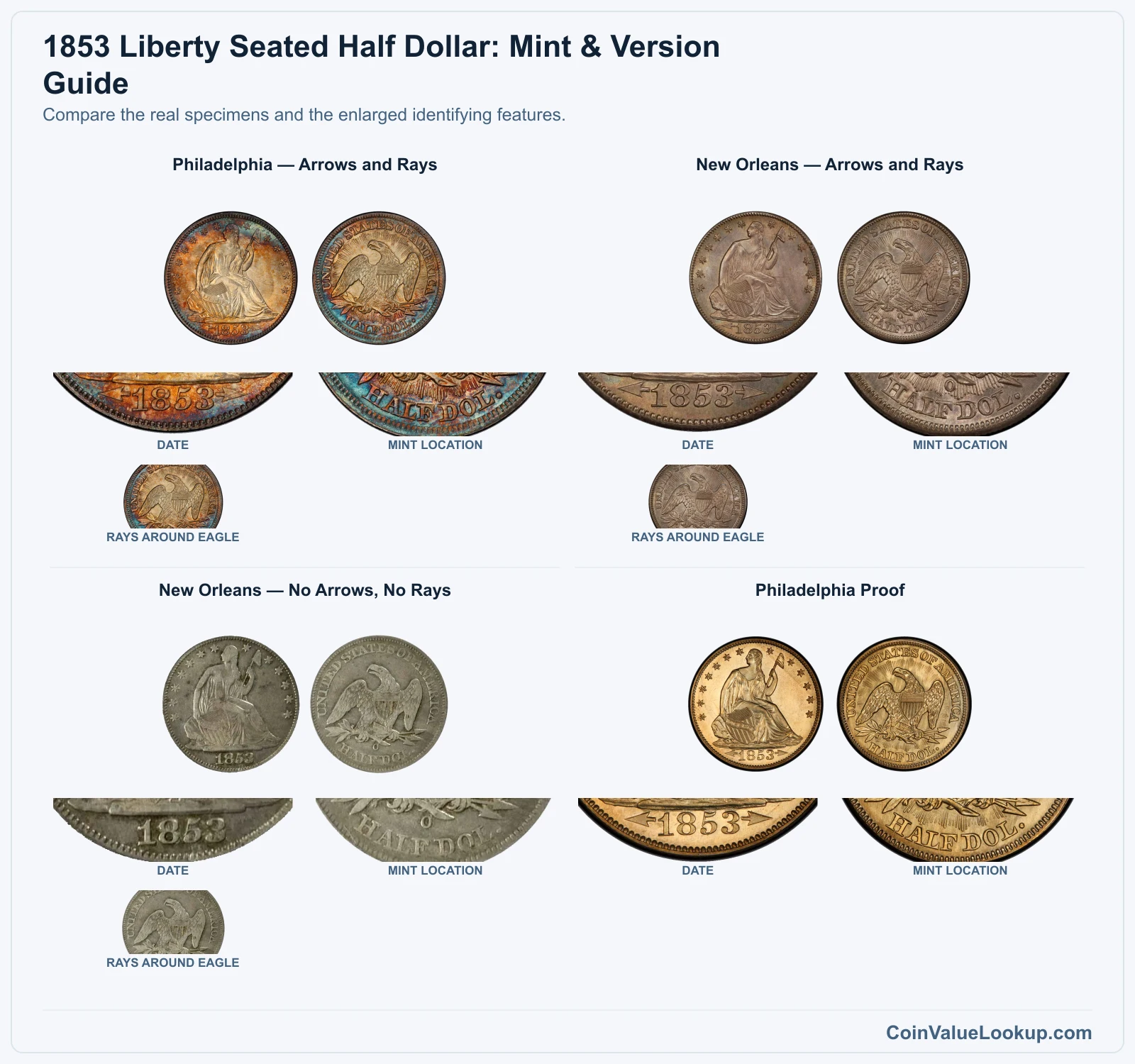
The 1853 Liberty Seated Half Dollar sits at one of the most important crossroads in U.S. coinage — the year the government reduced silver weight to stop hoarding. A typical Philadelphia Arrows and Rays example runs roughly $79 in G4 to $574 near AU50 according to guide estimates.
Grade, mint mark and version drive value sharply, so sorting out exactly what you have matters more than usual with this date.
Fast Way to Identify Your 1853 Liberty Seated Half Dollar
Snap clear photos of both the front and back of your coin and upload them here. The preliminary identification tool can help you figure out which version you are holding — Philadelphia or New Orleans, Arrows and Rays or the much rarer No Arrows issue.
Good lighting and a steady hand go a long way.
1853 Liberty Seated Half Dollar Value
Upload both sides of your 1853 Liberty Seated Half Dollar.
Front Obverse
Upload photo
Back Reverse
Upload photo
Which 1853 Liberty Seated Half Dollar Versions Are Worth Money?
- Philadelphia Arrows and Rays — the standard 1853 issue, with guide values from about $79 at G4 to $574 at AU50.
- New Orleans Arrows and Rays — carries an O mint mark and commands a premium, roughly $91 at G4 up to $947 at AU50 in guide estimates.
- New Orleans No Arrows, No Rays — an extreme rarity struck at the old 13.36-gram weight; guide figures run into the hundreds of thousands, but each authenticated survivor deserves individual evaluation.
- Philadelphia Proof — a scarce collector-manufacture issue; no standard price range applies, and each specimen should be individually assessed after authentication.
Step 1: Identify Your 1853 Liberty Seated Half Dollar Mint Mark and Version
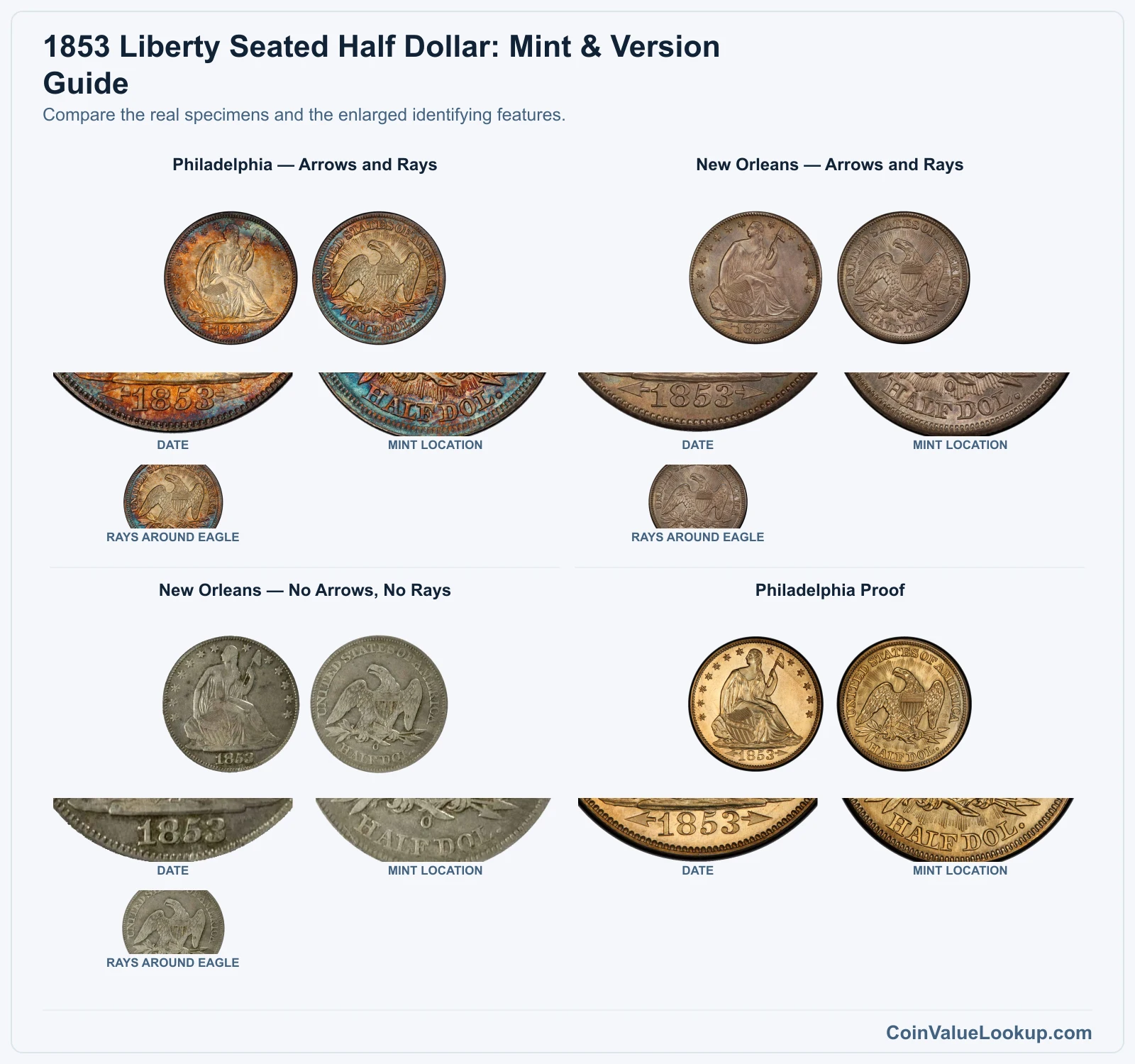
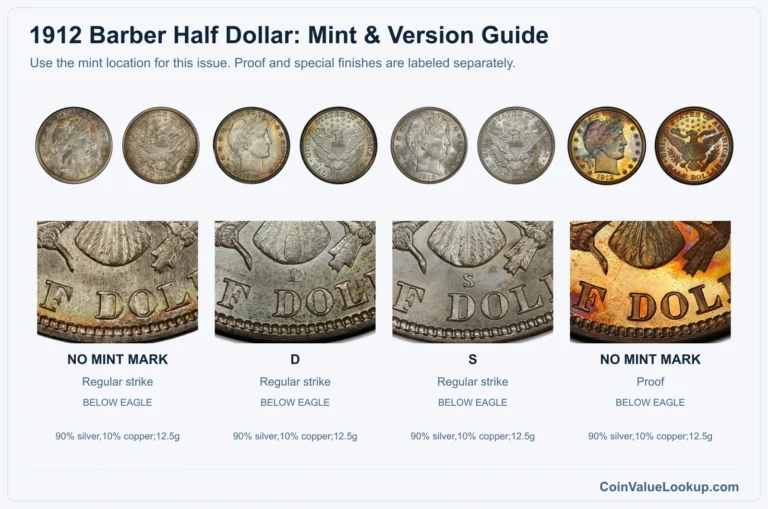
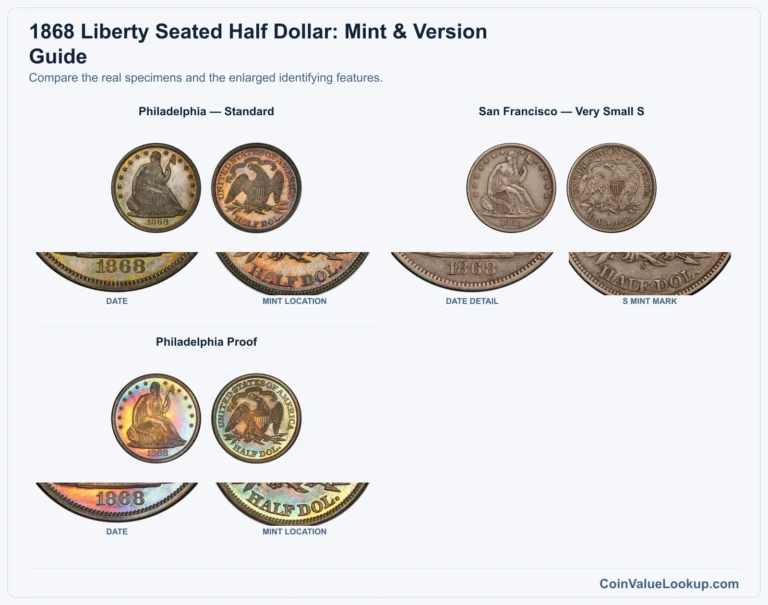
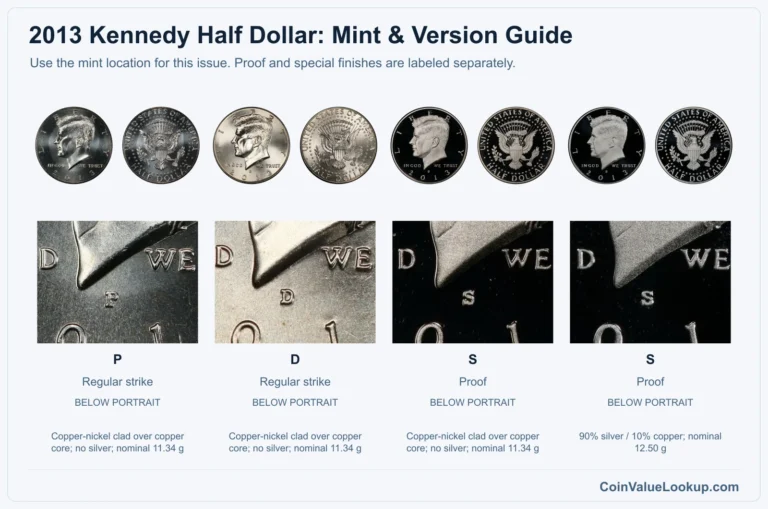
The 1853 half dollar carries the Seated Liberty obverse and a reverse eagle with HALF DOL below — no IN GOD WE TRUST shield motto yet. Flip the coin over and look directly below the eagle: a blank space means Philadelphia, while a small "O" means New Orleans.
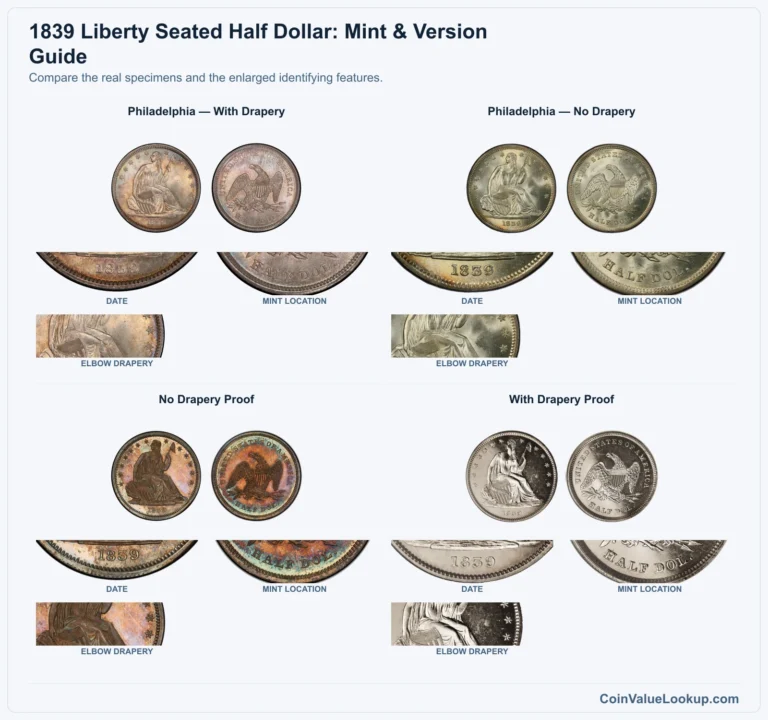
Now check the date side. If tiny arrowheads sit on either side of the 1853 date and the reverse eagle is surrounded by radiating rays, you have the standard new-weight version struck at 12.44 grams in 90% silver and 10% copper.
If your coin shows the O mint mark but has no arrowheads beside the date and no rays around the eagle, you may be looking at the extremely rare 1853-O No Arrows issue. That coin was struck to the older, heavier 13.36-gram standard.
Do not assume a worn common coin with hard-to-see details is this rarity — authentication is essential. The absence of arrows and rays must be genuine design absence, not the result of wear, damage or removed metal.
Proofs also exist from Philadelphia. A Proof is a special manufacturing method using polished dies and planchets, not simply a high-grade coin.
Mirror-like fields alone on a circulation strike do not make it a Proof.
Step 2: Check Your 1853 Liberty Seated Half Dollar Grade
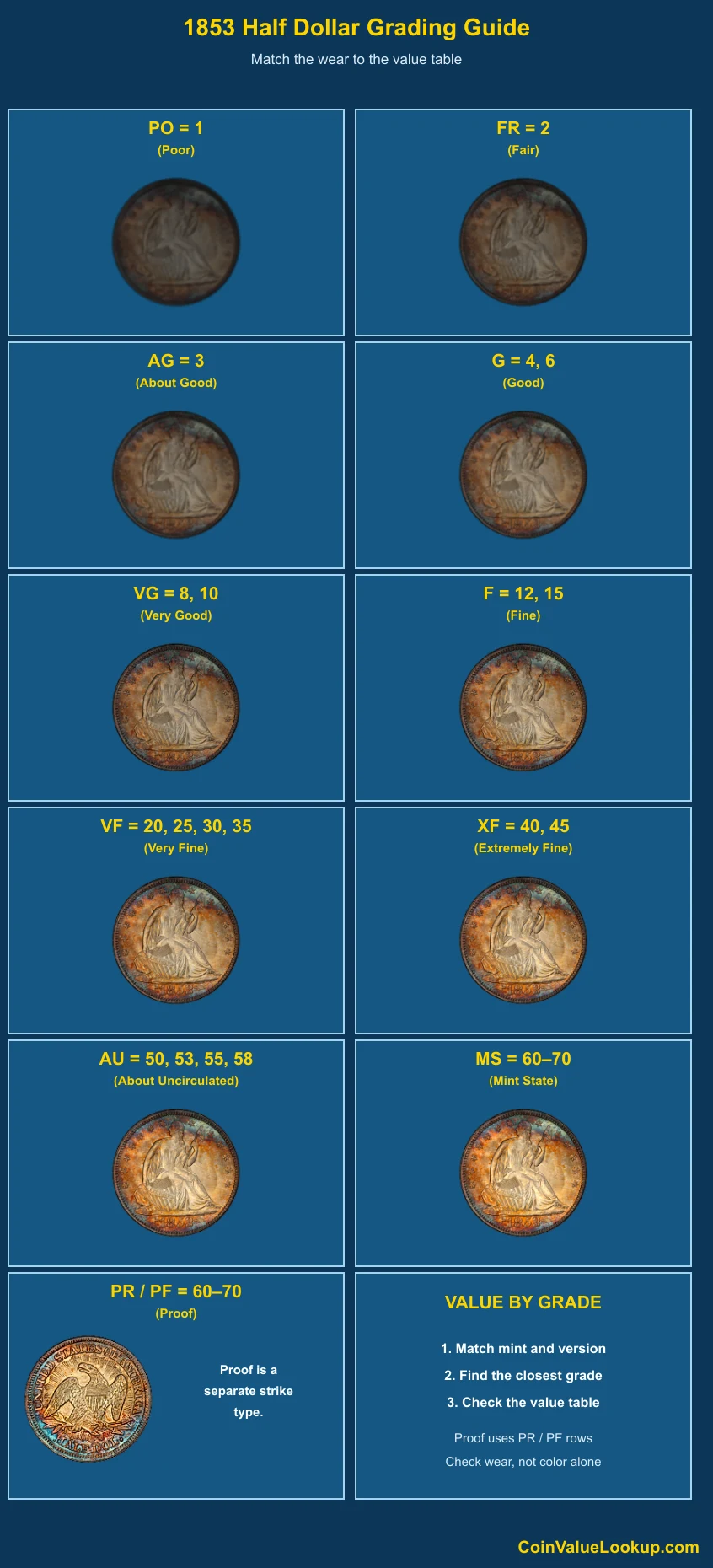
Start with the obverse. Liberty's head, breast, knee and the horizontal shield lines are the first places to lose detail.
On a well-worn G4 coin the seated figure is mostly a silhouette, while at VF20 you should see partial shield lines and moderate definition in the gown folds.
On the reverse, check the eagle's breast feathers, wing tips and claws. These high points wear down predictably.
One trap with this type: flat centers can come from a weak strike at the mint, not just from circulation wear. A weakly struck coin will still show original cartwheel luster in the fields, while a worn coin will not.
Use the comparison image alongside your coin and look for that luster difference.
Photograph both sides and the edge in good light. And please — do not clean the coin.
A natural, original surface is almost always worth more than a scrubbed one, even if the scrubbed one looks shinier to your eye.
Step 3: Check 1853 Liberty Seated Half Dollar Value by Mint and Version
1853 Liberty Seated Half Dollar — Philadelphia — Arrows and Rays
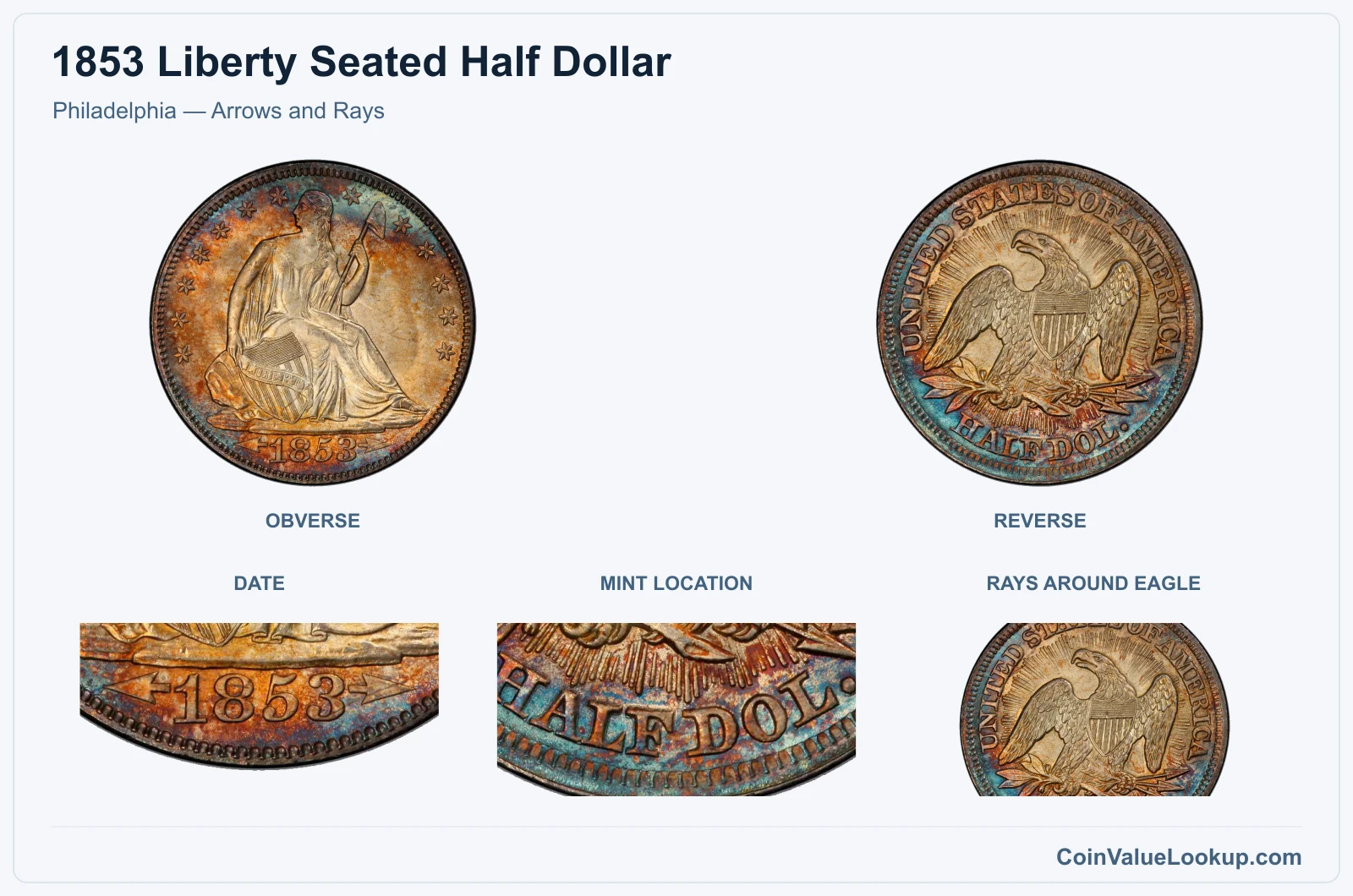
This is the Philadelphia issue most collectors encounter. Look for arrowheads flanking the date on the obverse and rays radiating behind the eagle on the reverse.
No mint mark appears below the eagle. The coin weighs 12.44 grams in 90% silver.
USA Coin Book guide estimates place this version around $79 in G4, $204 in VF20, and $574 in AU50. It was produced in large numbers, so finding one in circulated grades is straightforward.
Higher-grade examples with sharp strikes and original surfaces will naturally command more.
Ordinary-issue reference: Ordinary-issue reference only: The table below shows prices for the 1853 Liberty Seated Half Dollar (regular strike). It does not represent the value of the specific Philadelphia — Arrows and Rays variety or its variety premium. Year, mint, metal and strike type are matched; the specific variety is not priced by this table.
Range Grade
Price Auction Records Appraisal PO PO 1
Coin Identifier FR FR 2
Coin Identifier AG AG 3
Coin Identifier G G 4
—
Coin Identifier
G 6
Coin Identifier VG VG 8
Coin Identifier
VG 10
Coin Identifier F F 12
Coin Identifier
F 15
Coin Identifier VF VF 20
Coin Identifier
VF 25
Coin Identifier
VF 30
Coin Identifier
VF 35
Coin Identifier XF XF 40
Coin Identifier
XF 45
Coin Identifier AU AU 50
Coin Identifier
AU 53
Coin Identifier
AU 55
Coin Identifier
AU 58
Coin Identifier MS MS 60
Coin Identifier
MS 61
Coin Identifier
MS 62
Coin Identifier
MS 63
Coin Identifier
MS 64
Coin Identifier
MS 65
Coin Identifier
MS 66
Coin Identifier
MS 67
Coin Identifier
MS 68
—
—
—
MS 69
—
—
—
MS 70
—
—
—
1853 Liberty Seated Half Dollar — New Orleans — Arrows and Rays
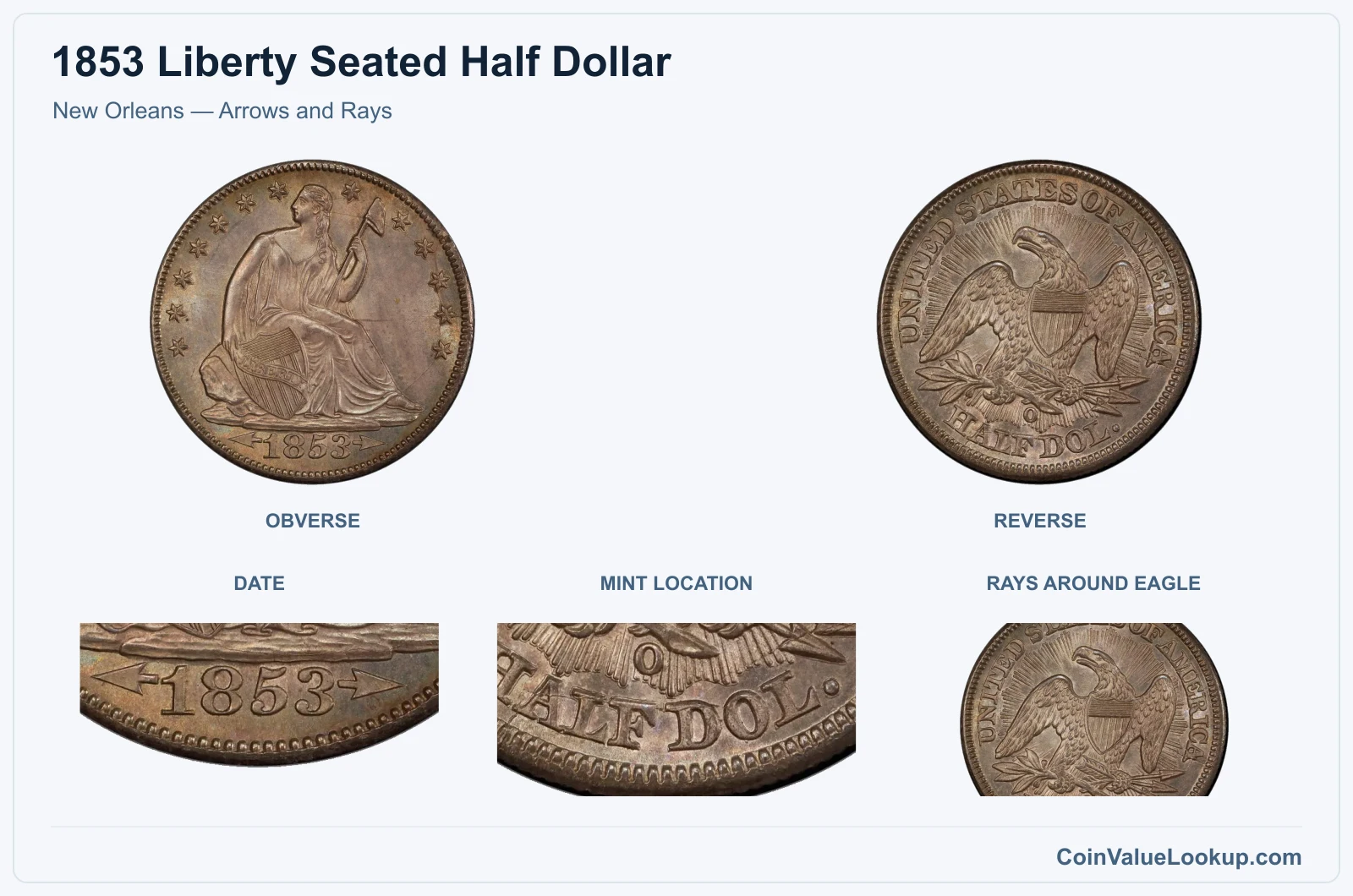
Same design as the Philadelphia coin — arrows beside the date, rays around the eagle — but with a small O mint mark beneath the eagle on the reverse. This was struck at the New Orleans Mint at the new 12.44-gram weight.
Guide estimates from USA Coin Book run about $91 at G4, $267 at VF20, and $947 at AU50, a consistent premium over the Philadelphia version. The O mint mark can be soft on some specimens, so look carefully under good light.
Condition matters a lot here; the jump from VF to AU is steep.
Coin Value Lookup is a useful starting point if you want to compare this coin against other dates and mints in the Seated Liberty half dollar series.
Ordinary-issue reference: Ordinary-issue reference only: The table below shows prices for the 1853-O Liberty Seated Half Dollar (regular strike). It does not represent the value of the specific New Orleans — Arrows and Rays variety or its variety premium. Year, mint, metal and strike type are matched; the specific variety is not priced by this table.
Range Grade
Price Auction Records Appraisal PO PO 1
Coin Identifier FR FR 2
—
Coin Identifier AG AG 3
—
Coin Identifier G G 4
—
Coin Identifier
G 6
Coin Identifier VG VG 8
—
Coin Identifier
VG 10
Coin Identifier F F 12
Coin Identifier
F 15
Coin Identifier VF VF 20
Coin Identifier
VF 25
Coin Identifier
VF 30
Coin Identifier
VF 35
Coin Identifier XF XF 40
Coin Identifier
XF 45
Coin Identifier AU AU 50
Coin Identifier
AU 53
Coin Identifier
AU 55
Coin Identifier
AU 58
Coin Identifier MS MS 60
Coin Identifier
MS 61
Coin Identifier
MS 62
Coin Identifier
MS 63
Coin Identifier
MS 64
Coin Identifier
MS 65
Coin Identifier
MS 66
—
—
—
MS 67
—
—
—
MS 68
—
—
—
MS 69
—
—
—
MS 70
—
—
—
1853 Liberty Seated Half Dollar — New Orleans — No Arrows, No Rays
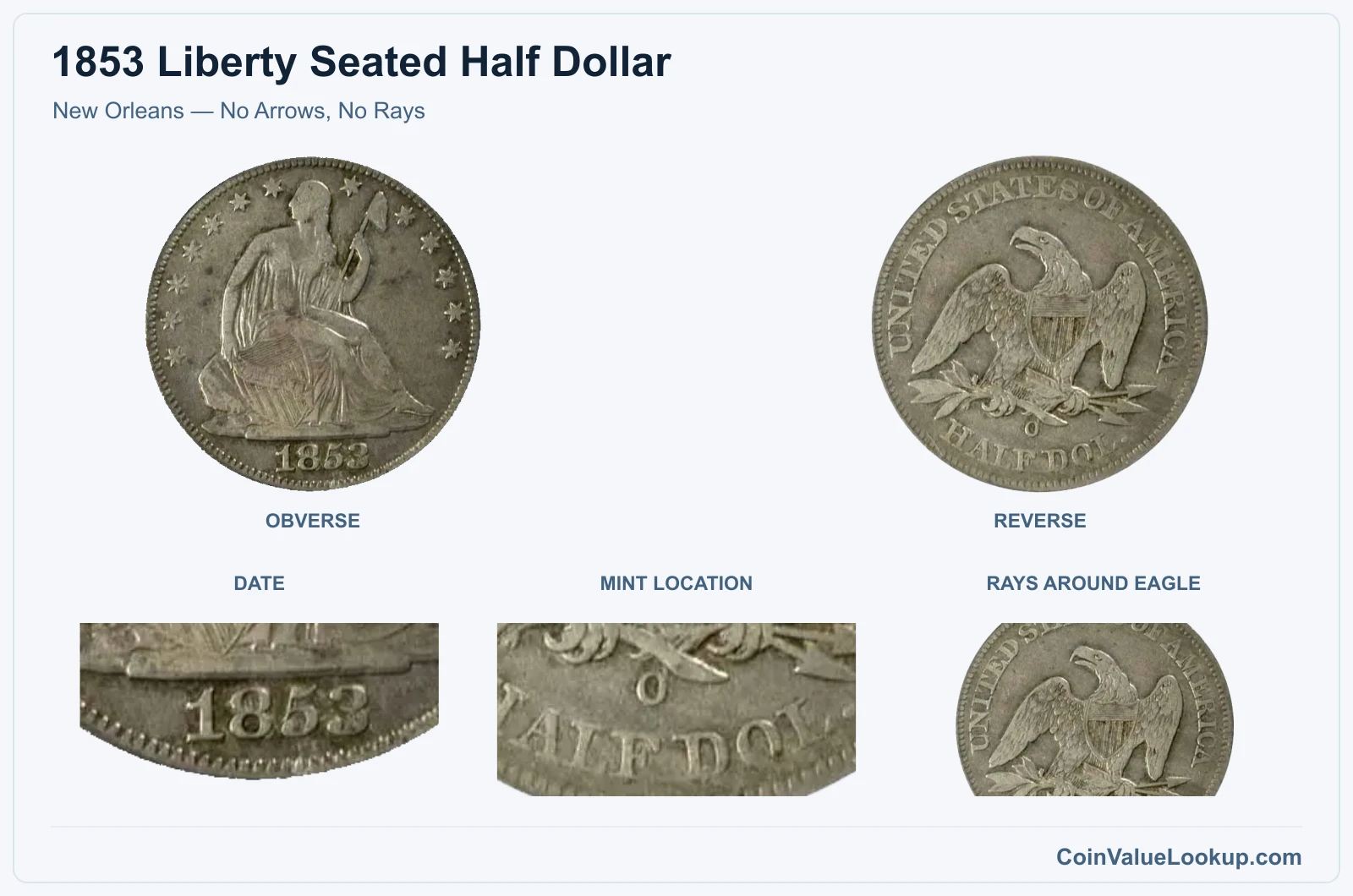
This is the coin that makes 1853 a legendary date. The 1853-O No Arrows, No Rays half dollar was struck at the old 13.36-gram standard before the mid-year weight reduction took effect.
It has no arrowheads beside the date and no rays behind the eagle, but it does carry the O mint mark.
Only a tiny number survive. Guide figures from USA Coin Book suggest roughly $201,400 at G4, $230,285 at VG8, and $604,384 at VF20, but these numbers are approximate anchors for an issue so rare that each authenticated example must be evaluated individually.
Do not assume you have this coin simply because your half dollar looks worn or unusual. The absence of arrows and rays must be a genuine design feature, not the result of damage or heavy wear obscuring them.
Professional authentication is non-negotiable before assigning this identity.
Range Grade
Price Auction Records Appraisal PO PO 1
—
Coin Identifier FR FR 2
—
Coin Identifier AG AG 3
—
Coin Identifier G G 4
—
Coin Identifier
G 6
Coin Identifier VG VG 8
Coin Identifier
VG 10
—
Coin Identifier F F 12
Coin Identifier
F 15
—
Coin Identifier VF VF 20
—
—
—
VF 25
—
—
—
VF 30
—
—
—
VF 35
Coin Identifier XF XF 40
—
—
—
XF 45
—
—
— AU AU 50
—
—
—
AU 53
—
—
—
AU 55
—
—
—
AU 58
—
—
— MS MS 60
—
—
—
MS 61
—
—
—
MS 62
—
—
—
MS 63
—
—
—
MS 64
—
—
—
MS 65
—
—
—
MS 66
—
—
—
MS 67
—
—
—
MS 68
—
—
—
MS 69
—
—
—
MS 70
—
—
—
1853 Liberty Seated Half Dollar — Philadelphia Proof
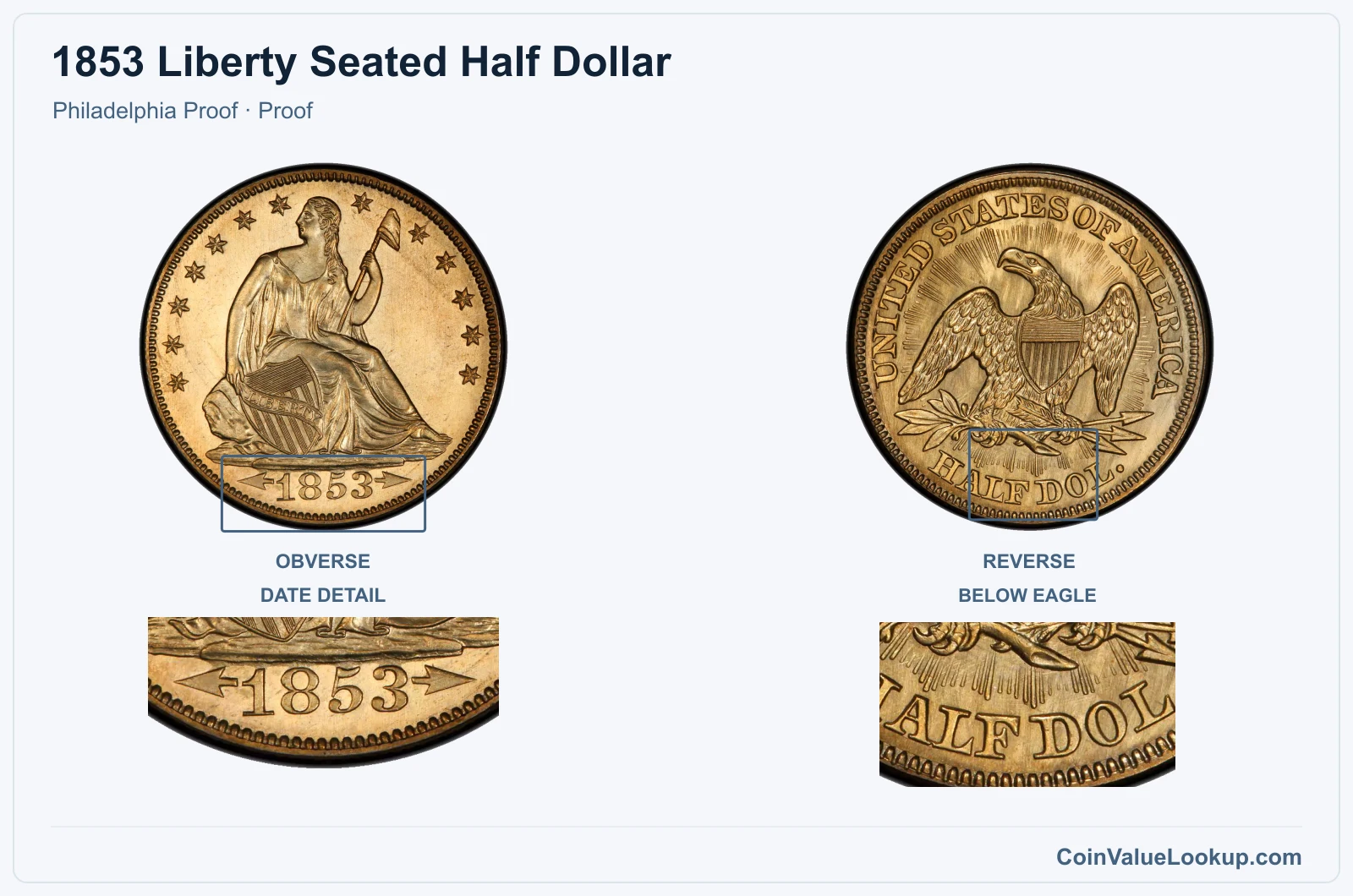
Philadelphia Proof half dollars exist for 1853, struck with the Arrows and Rays design using specially prepared dies and polished planchets. The result is deeply mirrored fields and sharp rims that look nothing like a typical business strike, even a pristine one.
No supported price range is available for this version. Each Proof should be assessed individually based on its authenticated identity, surface quality and eye appeal.
Do not confuse a cleaned or prooflike circulation strike with a genuine Proof — third-party certification is the standard safeguard here.
Range Grade
Price Auction Records Appraisal PR PR 1
—
Coin Identifier
PR 2
—
Coin Identifier
PR 3
—
Coin Identifier
PR 4
—
Coin Identifier
PR 6
—
Coin Identifier
PR 8
—
Coin Identifier
PR 10
—
Coin Identifier
PR 12
—
Coin Identifier
PR 15
—
Coin Identifier
PR 20
—
Coin Identifier
PR 25
—
Coin Identifier
PR 30
—
Coin Identifier
PR 35
—
Coin Identifier
PR 40
—
Coin Identifier
PR 45
—
Coin Identifier
PR 50
—
Coin Identifier
PR 53
—
Coin Identifier
PR 55
—
Coin Identifier
PR 58
—
Coin Identifier
PR 60
—
Coin Identifier
PR 61
—
Coin Identifier
PR 62
—
Coin Identifier
PR 63
Coin Identifier
PR 64
Coin Identifier
PR 65
Coin Identifier
PR 66
—
—
—
PR 67
—
—
—
PR 68
—
—
—
PR 69
—
—
—
PR 70
—
—
—
1853 Liberty Seated Half Dollar Error List
1. 1853 Liberty Seated Half Dollar — Doubled Die Reverse
A Doubled Die Reverse has been reported on 1853 Philadelphia Arrows and Rays half dollars. The doubling is most evident on the HALF DOL lettering, where you can see separated, rounded contours next to each letter rather than crisp single outlines.
Compare suspicious lettering directly against a normal example to see the difference.
This is not machine doubling, which tends to produce flat, shelf-like distortion rather than the rounded secondary image of a genuine doubled die. Reflections, lighting tricks and random contact marks can also mimic doubling at first glance.
A loupe at 5x or higher helps sort it out.
No specific price range is adopted for this error. Value depends on the visibility of the doubling, the overall condition of the coin, and the specific doubled-die variety involved.
2. 1853 Liberty Seated Half Dollar — Clashed Dies
Clashed dies occur when the obverse and reverse dies strike each other without a planchet between them, transferring design elements from one die to the other. An 1853 Philadelphia Arrows and Rays specimen has been documented with clash marks visible on both sides.
What you are looking for are faint outlines of the opposite die's design impressed into the fields — transferred shapes that do not belong. The rays on the reverse are part of the intentional design, not clash evidence, so do not confuse them.
Scratches, random raised lines, or damage from a brockage strike can look superficially similar. True die clash marks follow the geometry of the opposite die and appear in predictable locations.
No numerical price is adopted for this error; value depends on the clarity of the clash, overall coin condition, and collector demand.
3. 1853 Liberty Seated Half Dollar — Die Crack / Die Chip
A die crack on an 1853 Philadelphia half dollar has been documented by an owner as running from the rock detail on the obverse through the arrow and across the bottoms of the date digits. This is an owner observation, not a staff attribution from a grading service.
Die cracks appear as thin raised lines on the coin's surface because metal fills the crack in the die during striking. They follow a continuous path and are raised above the field — that distinguishes them from incuse scratches, corrosion channels, or foreign material stuck to the surface, all of which sit at or below the surface level.
No supported price range is available for this error. The value added depends on the prominence of the crack, where it falls on the design, the coin's grade, and collector interest in the specific variety.