1853 Liberty Seated Quarter Coin Value: How Much Is It Worth?
Adopted guide estimates for 1853 Seated Liberty quarters start near $46 in G4 for the common Arrows and Rays type and reach $12,163 at MS63 for the New Orleans issue. But those are just bookends.
The version you hold — No Arrows, Arrows and Rays, overdate, or O-mint — changes everything. Original surfaces matter far more than shine, and rare proofs or named varieties need their own careful assessment rather than a quick circulated-coin lookup.
Fast Way to Identify Your 1853 Liberty Seated Quarter
The fastest way to start figuring out what your 1853 quarter is worth is to upload clear photos of the front and back. A preliminary identification can help sort out which version you have — No Arrows versus Arrows and Rays, Philadelphia versus New Orleans, possible overdate — before you spend time on anything else.
Sharp, well-lit images make a real difference.
1853 Liberty Seated Quarter Value
Upload both sides of your 1853 Liberty Seated Quarter.
Front Obverse
Upload photo
Back Reverse
Upload photo
Which 1853 Liberty Seated Quarter Versions Are Worth Money?
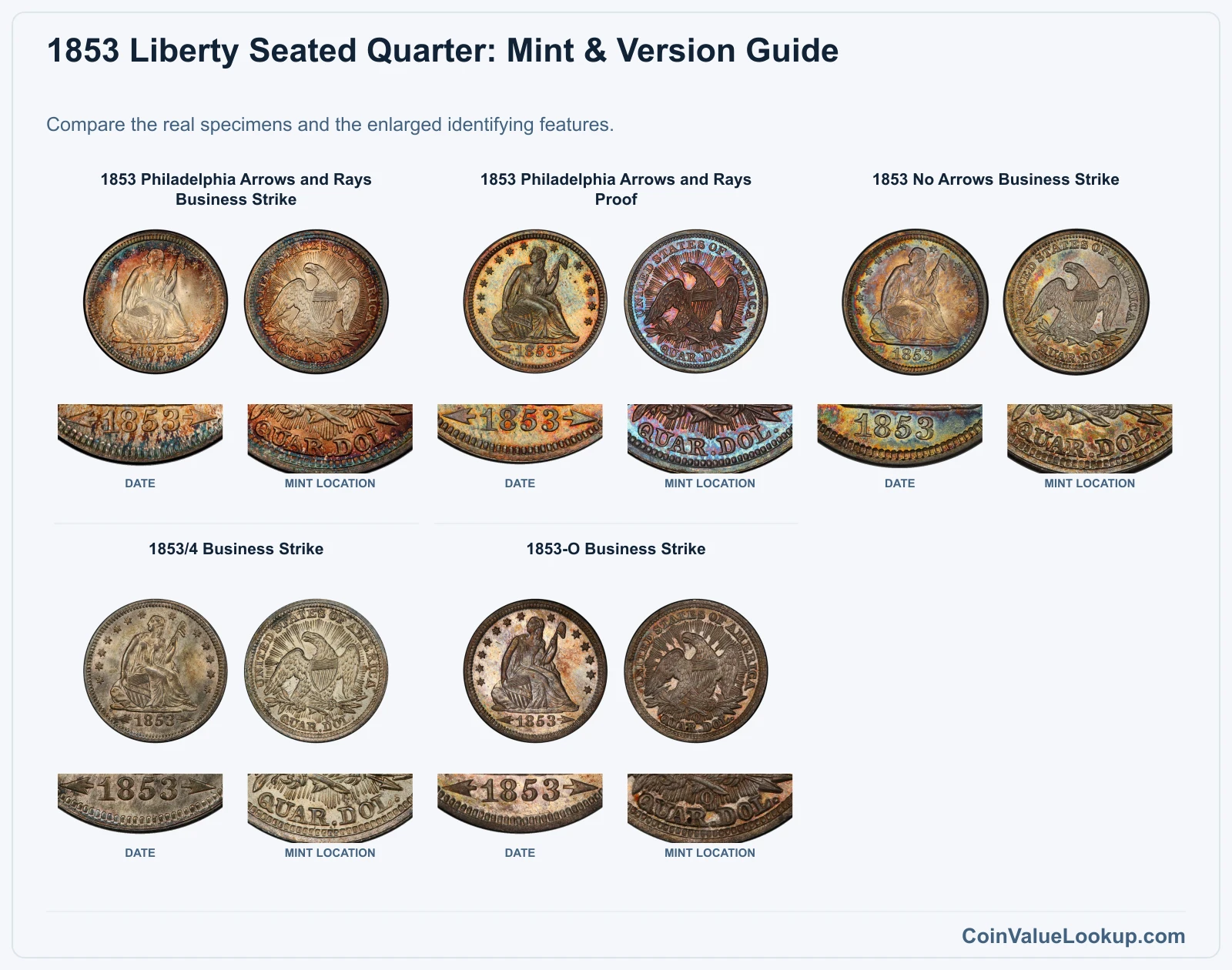
- The 1853 No Arrows, No Rays quarter is the scarcest regular issue, with guide estimates of $1,531 in G4 and $9,341 in MS63 — check for the absence of arrows beside the date and rays behind the eagle.
- The 1853-O Arrows and Rays from New Orleans carries guide estimates up to $12,163 in MS63; look for the O mintmark below the eagle on the reverse.
- The 1853/4 overdate shows a remnant of an underlying 4 beneath the final 3 in the date, with guide estimates reaching $4,950 in MS63.
- Proof 1853 Arrows and Rays quarters exist but require individual expert assessment; no standard guide price is adopted for them.
- A Repunched O mintmark or Filled O die state on the 1853-O can add collector interest, though no standard premiums are established.
Step 1: Identify Your 1853 Liberty Seated Quarter Mint Mark and Version
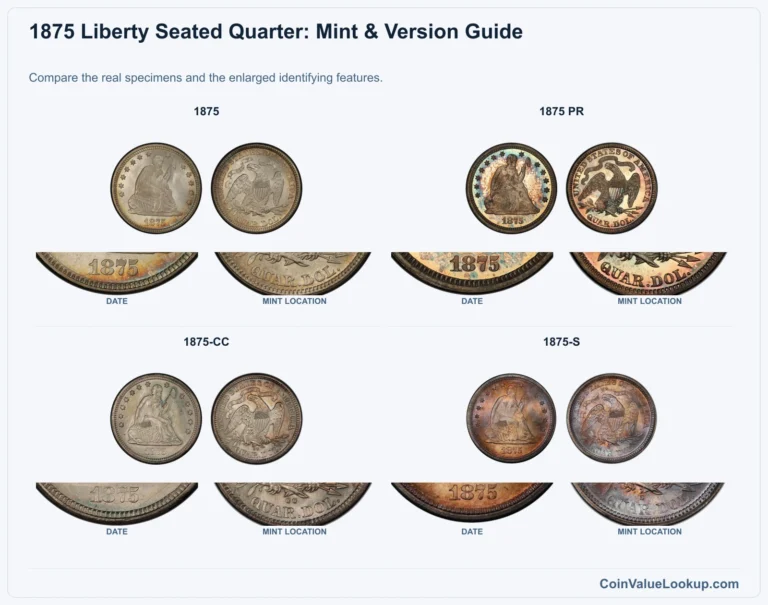
Every 1853 Seated Liberty quarter shares the same basic look: Liberty seated on the obverse, an eagle on the reverse, no motto. The differences hide in the details.
First, check for arrows flanking the date and rays behind the eagle. If both are present, you have the lighter 6.22-gram Arrows and Rays type.
If neither appears, you have the heavier 6.68-gram No Arrows, No Rays type — a genuinely scarce coin, not a defective one missing its arrows.
Next, flip the coin over and look below the eagle for a mintmark. No letter means Philadelphia.
An "O" means New Orleans. San Francisco did not strike quarters until 1855, so an S on an 1853 quarter would be a red flag.
All regular-issue 1853 quarters are 90% silver and 10% copper, roughly 24.3 mm across. A kitchen scale accurate to a tenth of a gram can help: the No Arrows piece should weigh about 6.68 g, while Arrows and Rays versions target 6.22 g.
That weight difference is your first line of defense against altered coins. Be aware that an altered 1858 date can be made to imitate an 1853 No Arrows quarter, so never rely on appearance alone for that scarce type.
Step 2: Check Your 1853 Liberty Seated Quarter Grade
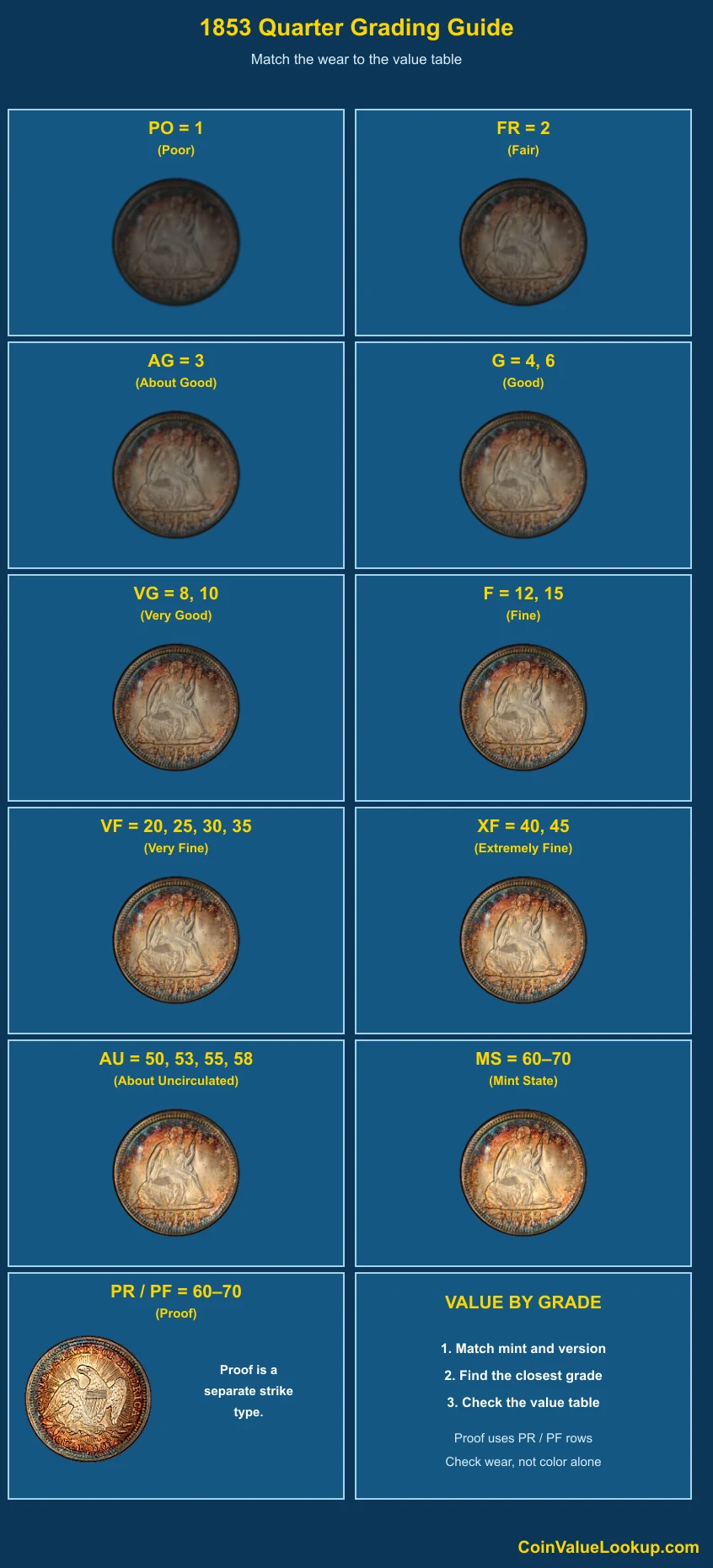
Start with Liberty's head on the obverse. In lower grades the hair detail above her ear is flat, and the word LIBERTY on the shield is weak or gone.
As you move up, check the breast, knee and shield lettering — each should show progressively sharper definition.
On the reverse, the eagle's breast feathers and wing tips wear first. Claws lose their separation next.
Compare your coin to the grading image to see how these areas should look at various grade levels.
A coin that looks bright is not automatically Mint State. Full original luster — an unbroken cartwheel effect under a light — separates a genuinely uncirculated piece from a cleaned one.
Hairlines from polishing, rim dings, and corrosion all reduce value regardless of how much detail remains.
Weak stars or a soft head can result from a poor strike at the mint, not just wear. If the rest of the coin looks sharp but one area is mushy, strike weakness is the likelier culprit.
Step 3: Check 1853 Liberty Seated Quarter Value by Mint and Version
1853 Liberty Seated Quarter — Philadelphia Arrows and Rays Business Strike
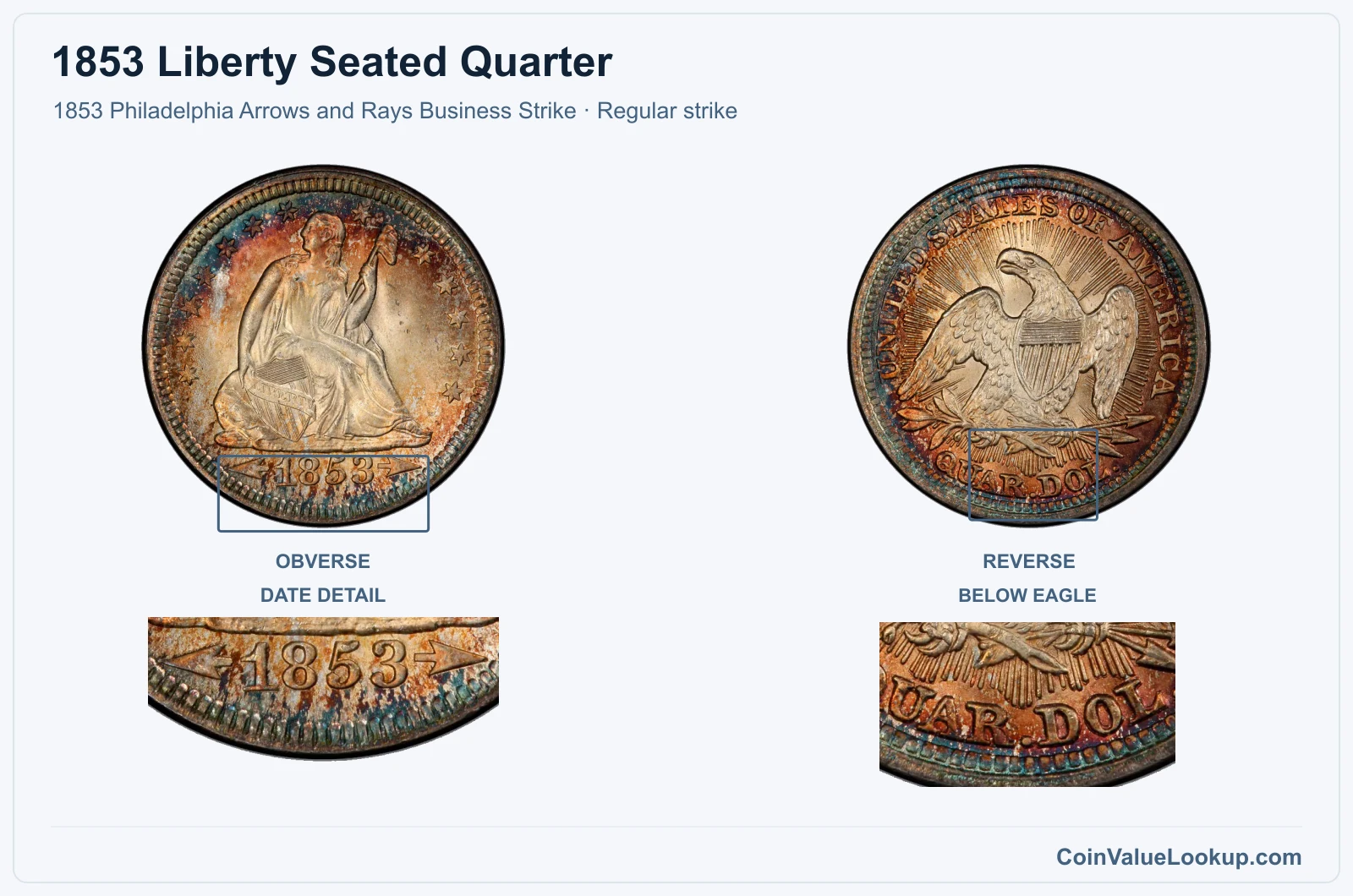
This is the workhorse 1853 quarter — Philadelphia mint, no mintmark, with arrows beside the date and rays behind the eagle on the reverse. It was struck in large numbers after the mid-year weight reduction from 6.68 g to 6.22 g, making it the most available version of the year.
Guide estimates sit at about $46 in G4, $69 in VF20, and $2,120 in MS63. Most survivors are well-worn, so a genuinely uncirculated example with full luster is a different animal entirely.
Confirm the arrows and rays are present and that the date has not been altered from another year.
| Range | Grade | Price | Auction Records | Appraisal |
|---|---|---|---|---|
| PO | PO 1 | Coin Identifier | ||
| FR | FR 2 | — | Coin Identifier | |
| AG | AG 3 | Coin Identifier | ||
| G | G 4 | — | Coin Identifier | |
| G 6 | — | Coin Identifier | ||
| VG | VG 8 | Coin Identifier | ||
| VG 10 | Coin Identifier | |||
| F | F 12 | Coin Identifier | ||
| F 15 | Coin Identifier | |||
| VF | VF 20 | Coin Identifier | ||
| VF 25 | Coin Identifier | |||
| VF 30 | Coin Identifier | |||
| VF 35 | Coin Identifier | |||
| XF | XF 40 | Coin Identifier | ||
| XF 45 | Coin Identifier | |||
| AU | AU 50 | Coin Identifier | ||
| AU 53 | Coin Identifier | |||
| AU 55 | Coin Identifier | |||
| AU 58 | Coin Identifier | |||
| MS | MS 60 | Coin Identifier | ||
| MS 61 | Coin Identifier | |||
| MS 62 | Coin Identifier | |||
| MS 63 | Coin Identifier | |||
| MS 64 | Coin Identifier | |||
| MS 65 | Coin Identifier | |||
| MS 66 | Coin Identifier | |||
| MS 67 | Coin Identifier | |||
| MS 68 | — | — | — | |
| MS 69 | — | — | — | |
| MS 70 | — | — | — |
1853 Liberty Seated Quarter — Philadelphia Arrows and Rays Proof
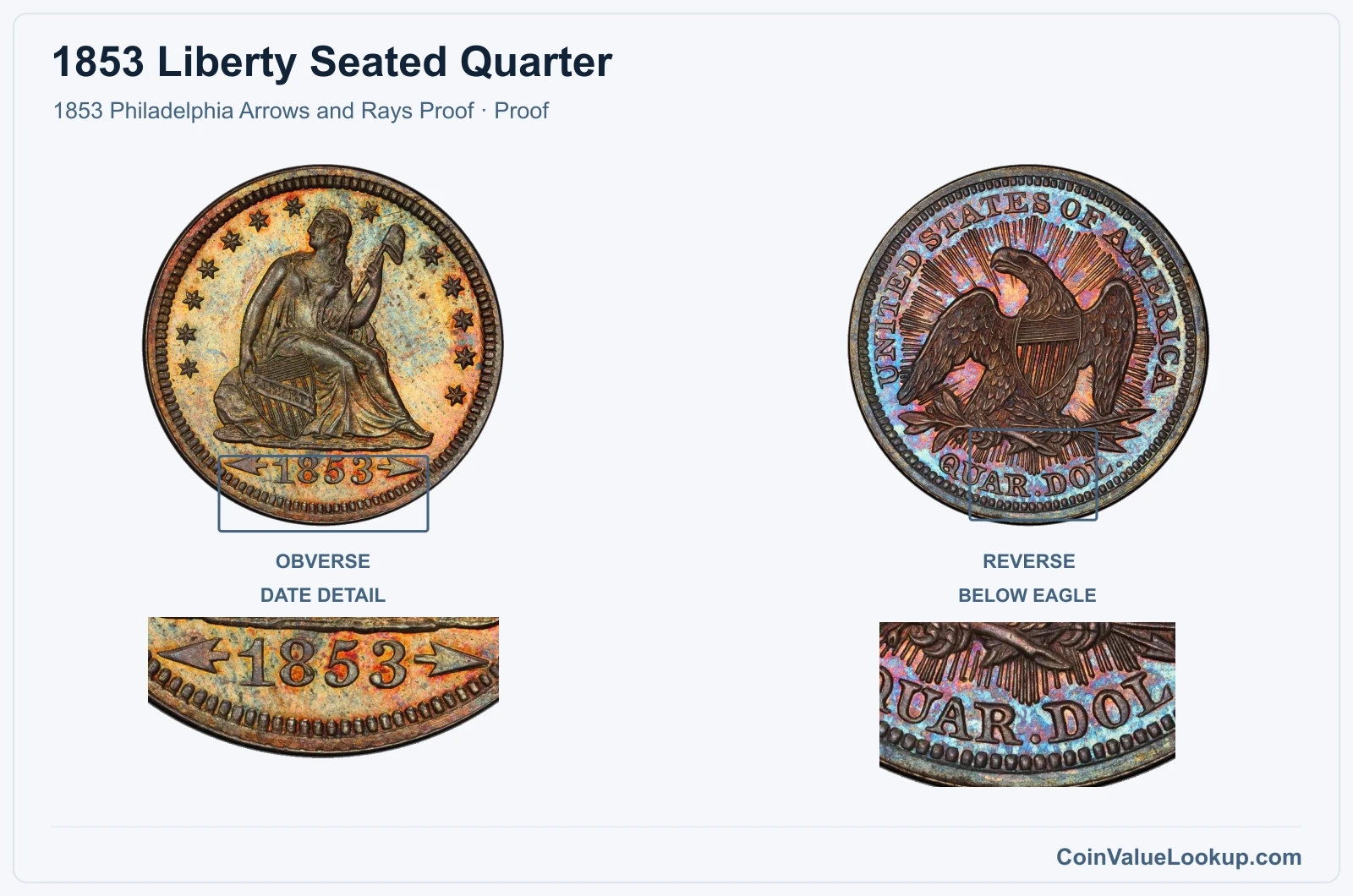
Philadelphia also produced proof examples of the 1853 Arrows and Rays quarter. These share the same 90% silver composition and 6.22-gram target weight as the business strikes, but they were made with specially prepared dies for presentation or collector purposes.
No standard guide price is adopted for the proof version. Each one needs individual assessment based on authenticated identity, condition, and any die characteristics.
Brightness or mirror-like surfaces alone do not confirm proof status — you need genuine specimen comparison and, ideally, third-party certification. If you think you have one, professional authentication is the only responsible next step.
| Range | Grade | Price | Auction Records | Appraisal |
|---|---|---|---|---|
| PR | PR 1 | — | Coin Identifier | |
| PR 2 | — | Coin Identifier | ||
| PR 3 | — | Coin Identifier | ||
| PR 4 | — | Coin Identifier | ||
| PR 6 | — | Coin Identifier | ||
| PR 8 | — | Coin Identifier | ||
| PR 10 | — | Coin Identifier | ||
| PR 12 | — | Coin Identifier | ||
| PR 15 | — | Coin Identifier | ||
| PR 20 | — | Coin Identifier | ||
| PR 25 | — | Coin Identifier | ||
| PR 30 | — | Coin Identifier | ||
| PR 35 | — | Coin Identifier | ||
| PR 40 | — | Coin Identifier | ||
| PR 45 | — | Coin Identifier | ||
| PR 50 | — | Coin Identifier | ||
| PR 53 | — | Coin Identifier | ||
| PR 55 | — | Coin Identifier | ||
| PR 58 | — | Coin Identifier | ||
| PR 60 | — | Coin Identifier | ||
| PR 61 | — | Coin Identifier | ||
| PR 62 | — | Coin Identifier | ||
| PR 63 | Coin Identifier | |||
| PR 64 | Coin Identifier | |||
| PR 65 | Coin Identifier | |||
| PR 66 | — | — | — | |
| PR 67 | Coin Identifier | |||
| PR 68 | — | — | — | |
| PR 69 | — | — | — | |
| PR 70 | — | — | — |
1853 Liberty Seated Quarter — No Arrows Business Strike
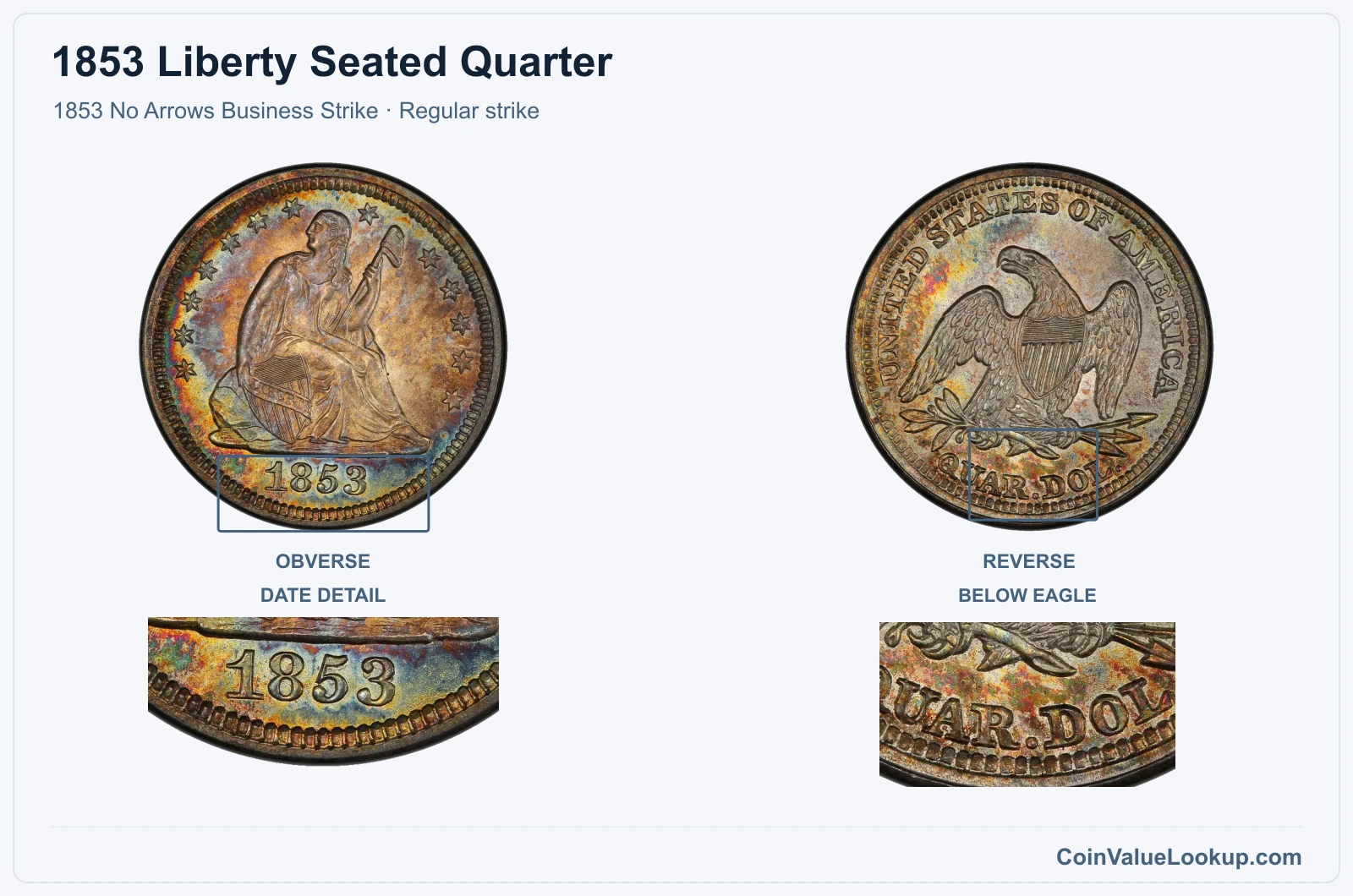
Here is the coin that gets people excited. The 1853 No Arrows, No Rays quarter was struck early in the year before Congress mandated the weight reduction.
It uses the older, heavier 6.68-gram standard — no arrows flank the date and no rays appear behind the eagle.
Guide estimates reflect the scarcity: roughly $1,531 in G4, $4,079 in VF20, and $9,341 in MS63. That price jump is why fakes exist.
An altered 1858 quarter can be made to look like this coin, so weigh it carefully and examine the date under magnification. The absence of arrows is an intentional design distinction, not a manufacturing defect.
If you suspect you have one, professional authentication is strongly recommended before any transaction.
Coin Value Lookup is a good starting point if you want to look up guides for other dates and denominations in the Seated Liberty series while you research your coin.
| Range | Grade | Price | Auction Records | Appraisal |
|---|---|---|---|---|
| PO | PO 1 | — | Coin Identifier | |
| FR | FR 2 | — | Coin Identifier | |
| AG | AG 3 | — | Coin Identifier | |
| G | G 4 | Coin Identifier | ||
| G 6 | — | Coin Identifier | ||
| VG | VG 8 | — | Coin Identifier | |
| VG 10 | Coin Identifier | |||
| F | F 12 | Coin Identifier | ||
| F 15 | Coin Identifier | |||
| VF | VF 20 | Coin Identifier | ||
| VF 25 | Coin Identifier | |||
| VF 30 | Coin Identifier | |||
| VF 35 | Coin Identifier | |||
| XF | XF 40 | Coin Identifier | ||
| XF 45 | Coin Identifier | |||
| AU | AU 50 | Coin Identifier | ||
| AU 53 | — | Coin Identifier | ||
| AU 55 | Coin Identifier | |||
| AU 58 | Coin Identifier | |||
| MS | MS 60 | — | Coin Identifier | |
| MS 61 | — | Coin Identifier | ||
| MS 62 | Coin Identifier | |||
| MS 63 | Coin Identifier | |||
| MS 64 | Coin Identifier | |||
| MS 65 | Coin Identifier | |||
| MS 66 | Coin Identifier | |||
| MS 67 | Coin Identifier | |||
| MS 68 | Coin Identifier | |||
| MS 69 | — | — | — | |
| MS 70 | — | — | — |
1853 Liberty Seated Quarter — /4 Business Strike
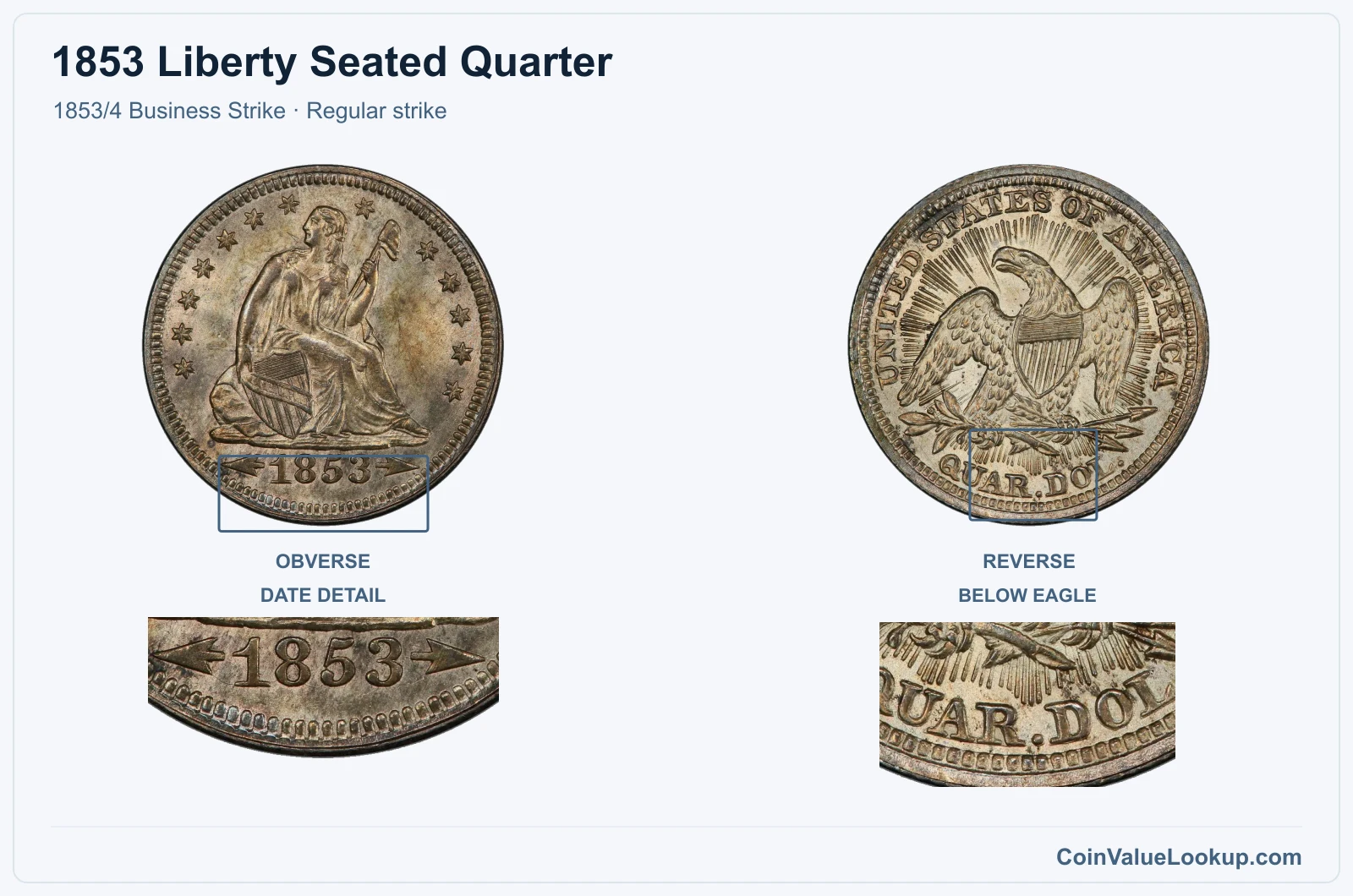
The 1853/4 overdate is one of the more collectible Philadelphia varieties. Look at the base of the 3 in the date — a remnant of an underlying 4 should be visible, evidence that an 1854-dated die was re-engraved with an 1853 date.
A repunched right arrowhead has also been documented on this die pairing.
Guide estimates run about $77 in G4, $321 in VF20, and $4,950 in MS63. The premium over a standard Arrows and Rays quarter is significant, especially in higher grades.
You need good magnification and lighting to confirm the overdate; the underlying digit can be subtle on worn examples. Do not confuse a slightly odd-looking 3 with a genuine overdate — the extra bar from the 4 must be identifiable.
| Range | Grade | Price | Auction Records | Appraisal |
|---|---|---|---|---|
| PO | PO 1 | — | Coin Identifier | |
| FR | FR 2 | — | Coin Identifier | |
| AG | AG 3 | — | Coin Identifier | |
| G | G 4 | Coin Identifier | ||
| G 6 | Coin Identifier | |||
| VG | VG 8 | Coin Identifier | ||
| VG 10 | Coin Identifier | |||
| F | F 12 | Coin Identifier | ||
| F 15 | Coin Identifier | |||
| VF | VF 20 | Coin Identifier | ||
| VF 25 | Coin Identifier | |||
| VF 30 | Coin Identifier | |||
| VF 35 | Coin Identifier | |||
| XF | XF 40 | Coin Identifier | ||
| XF 45 | Coin Identifier | |||
| AU | AU 50 | Coin Identifier | ||
| AU 53 | — | Coin Identifier | ||
| AU 55 | Coin Identifier | |||
| AU 58 | Coin Identifier | |||
| MS | MS 60 | — | Coin Identifier | |
| MS 61 | Coin Identifier | |||
| MS 62 | Coin Identifier | |||
| MS 63 | Coin Identifier | |||
| MS 64 | Coin Identifier | |||
| MS 65 | Coin Identifier | |||
| MS 66 | — | — | — | |
| MS 67 | — | — | — | |
| MS 68 | — | — | — | |
| MS 69 | — | — | — | |
| MS 70 | — | — | — |
1853 Liberty Seated Quarter — O Business Strike
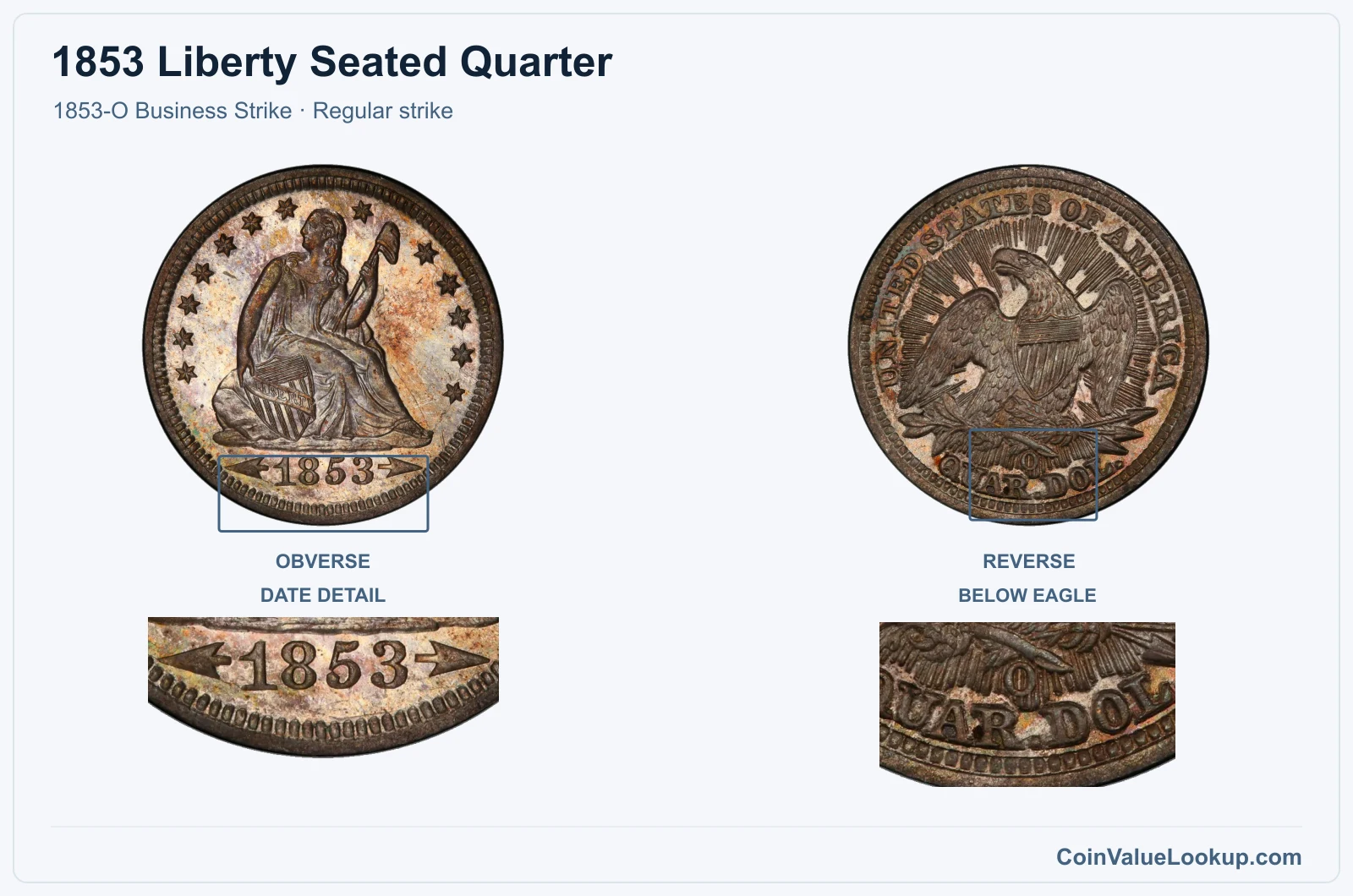
The New Orleans mint produced 1853 Arrows and Rays quarters with an O mintmark on the reverse, below the eagle. In high grades this is the most valuable regular-issue 1853 quarter, with guide estimates of about $77 in G4, $194 in VF20, and $12,163 in MS63.
That MS63 figure reflects genuine scarcity in uncirculated condition — most O-mint quarters saw heavy commercial use. Check the mintmark carefully, because this issue is also home to the Repunched O and Filled O die varieties described in the error section below.
A clear, undamaged O confirms the New Orleans origin. Southern-mint Seated quarters often come with softer strikes, so do not mistake weak detail for excessive wear.
| Range | Grade | Price | Auction Records | Appraisal |
|---|---|---|---|---|
| PO | PO 1 | Coin Identifier | ||
| FR | FR 2 | Coin Identifier | ||
| AG | AG 3 | — | Coin Identifier | |
| G | G 4 | — | Coin Identifier | |
| G 6 | — | Coin Identifier | ||
| VG | VG 8 | Coin Identifier | ||
| VG 10 | — | Coin Identifier | ||
| F | F 12 | — | Coin Identifier | |
| F 15 | — | Coin Identifier | ||
| VF | VF 20 | Coin Identifier | ||
| VF 25 | Coin Identifier | |||
| VF 30 | Coin Identifier | |||
| VF 35 | Coin Identifier | |||
| XF | XF 40 | Coin Identifier | ||
| XF 45 | Coin Identifier | |||
| AU | AU 50 | Coin Identifier | ||
| AU 53 | Coin Identifier | |||
| AU 55 | Coin Identifier | |||
| AU 58 | Coin Identifier | |||
| MS | MS 60 | — | Coin Identifier | |
| MS 61 | Coin Identifier | |||
| MS 62 | — | Coin Identifier | ||
| MS 63 | Coin Identifier | |||
| MS 64 | Coin Identifier | |||
| MS 65 | Coin Identifier | |||
| MS 66 | Coin Identifier | |||
| MS 67 | — | — | — | |
| MS 68 | — | — | — | |
| MS 69 | — | — | — | |
| MS 70 | — | — | — |
1853 Liberty Seated Quarter Error List
1. 1853 Liberty Seated Quarter — 3 over4 Overdate
The 1853/4 overdate is found on Philadelphia Arrows and Rays quarters. The key diagnostic is a horizontal bar from the underlying 4 visible beneath the lower curve of the final 3.
Under magnification you should also see evidence of a repunched right arrowhead on the same die.
Keep the full date and rays in your field of view when examining the coin — context matters. You are looking for an extra die-punched digit, not a strike anomaly or an incorrectly engraved year.
Watch out for altered dates where someone has physically modified the surface to mimic the overdate, or for an ordinary 3 whose shape just looks slightly unusual. The adopted guide estimates for this variety are approximately $77 in G4, $321 in VF20, and $4,950 in MS63.
These are variety-specific guide figures, not a guaranteed purchase offer.
2. 1853 Liberty Seated Quarter — Repunched O Mintmark
This variety appears on 1853-O Arrows and Rays quarters. The diagnostic is an earlier, horizontally oriented O mintmark visible inside the top and bottom of the final upright O on the reverse.
Essentially, the mintmark punch was applied in the wrong orientation first, then corrected.
Some specimens also show a die lump on the rock near Liberty's base, but the repunched mintmark itself is the easiest feature for a beginner to spot under magnification.
Do not confuse debris filling the interior of the O, simple die wear that thickens the letter, or post-mint damage with a genuine repunched mintmark. The earlier impression should be a recognizable letter shape, not random gunk.
No standard numeric premium is currently adopted for this variety, so value depends on individual assessment of the coin's authenticated identity and condition.
3. 1853 Liberty Seated Quarter — Filled O from Die Deterioration
Also found on 1853-O Arrows and Rays quarters, the Filled O results from a specific deteriorated reverse die, not from dirt or corrosion. The center of the O mintmark appears solid rather than open, matching a documented die state.
To confirm it, compare your coin's O directly to a normal open O from the same date. The fill should be consistent with the known die — a smooth, raised area inside the letter, not loose debris you could pick out with a toothpick.
Corrosion, encrusted grime, or a normal mintmark worn nearly shut can all mimic the look.
No standard numeric premium is adopted for this variety. Its value depends on the specific coin's authenticated identity, overall condition, and collector demand at the time of sale.
A specialist attribution service can help distinguish the genuine die state from lookalikes.