1923 Walking Liberty Half Dollar Coin Value: How Much Is It Worth?
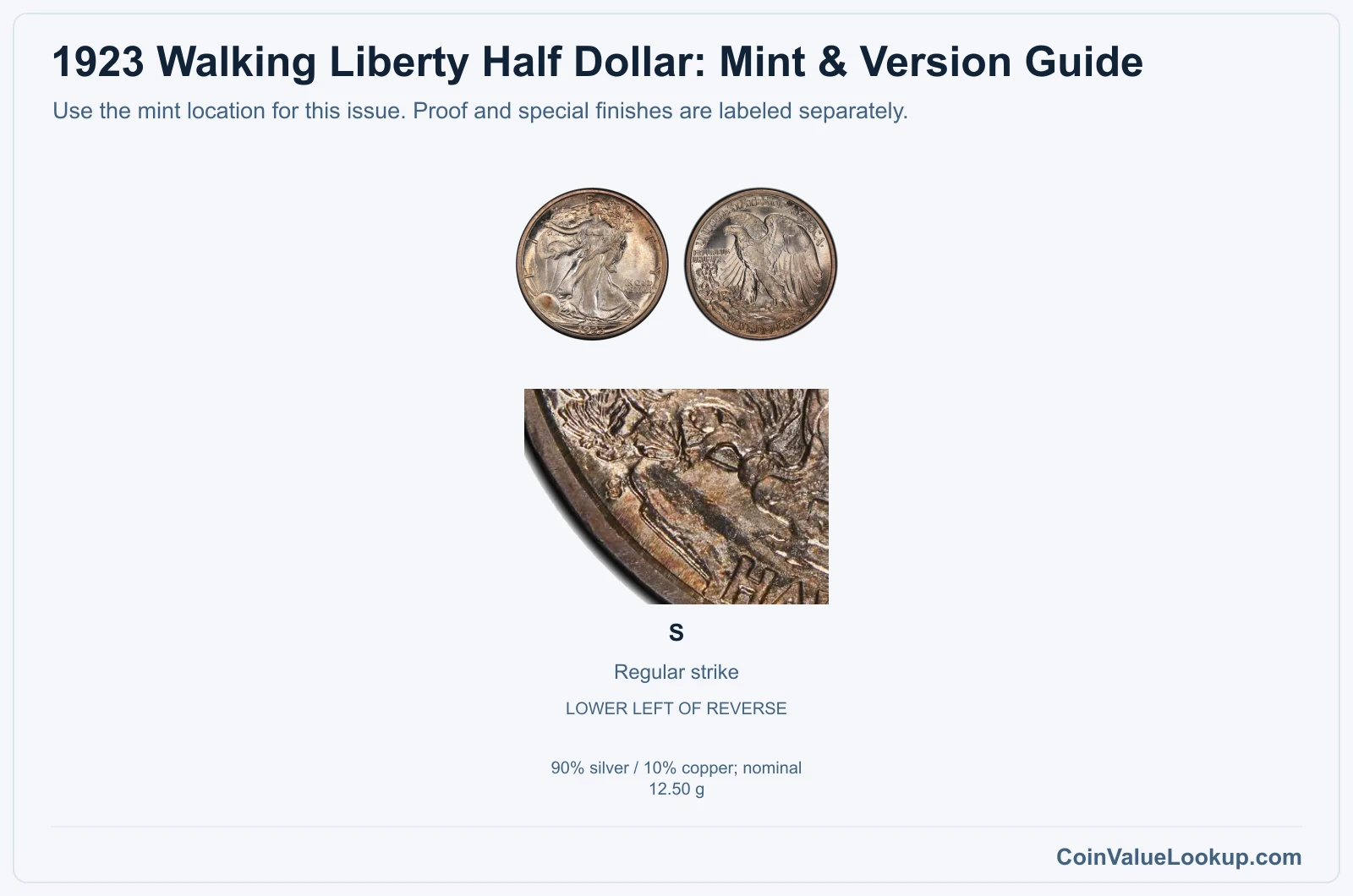
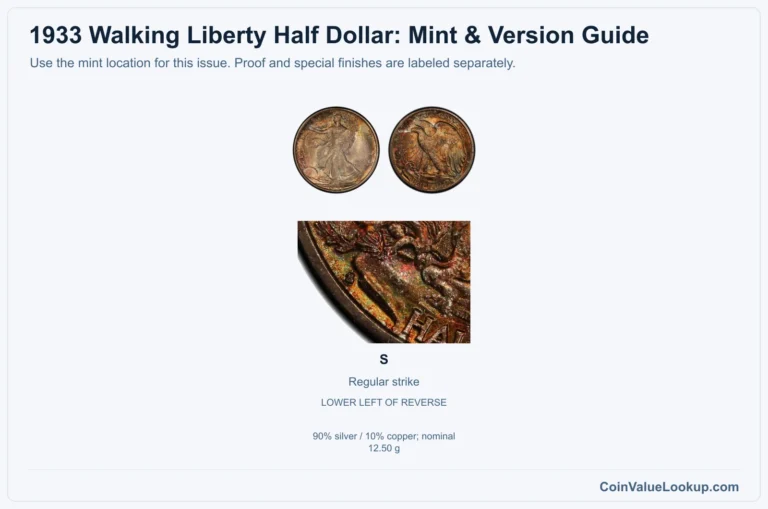
The 1923 Walking Liberty Half Dollar is a 90% silver coin that collectors prize for both its metal content and its classic Adolph Weinman design. Guide estimates for this date range from roughly $44.00 in well-worn condition up to $6,849.00 for a choice uncirculated example, depending on the specific mint branch and grade.
These are guide anchors, not guaranteed sale prices or current silver-melt quotes. Mint, condition, and surface quality all play a role in what your particular coin is worth.
Fast Way to Identify Your 1923 Walking Liberty Half Dollar
The quickest way to start figuring out what you have is to upload clear photos of both the front and back of your coin. Our identifier can offer a preliminary read on the mint, design branch, and approximate condition.
Good lighting and a steady shot make a big difference, so prop the coin on a dark background and snap away.
1923 Walking Liberty Half Dollar Value
Upload both sides of your 1923 Walking Liberty Half Dollar.
Front Obverse
Upload photo
Back Reverse
Upload photo
Which 1923 Walking Liberty Half Dollar Versions Are Worth Money?
- 1923-S business strike: the sole branch this year, with guide values from $44.00 at G4 to $6,849.00 at MS63. Problem-free surfaces and strong central detail matter most for value.
- Off-center strike errors on this date have been reported; no standard price range is established, so individual assessment is important.
Step 1: Identify Your 1923 Walking Liberty Half Dollar Mint Mark and Version
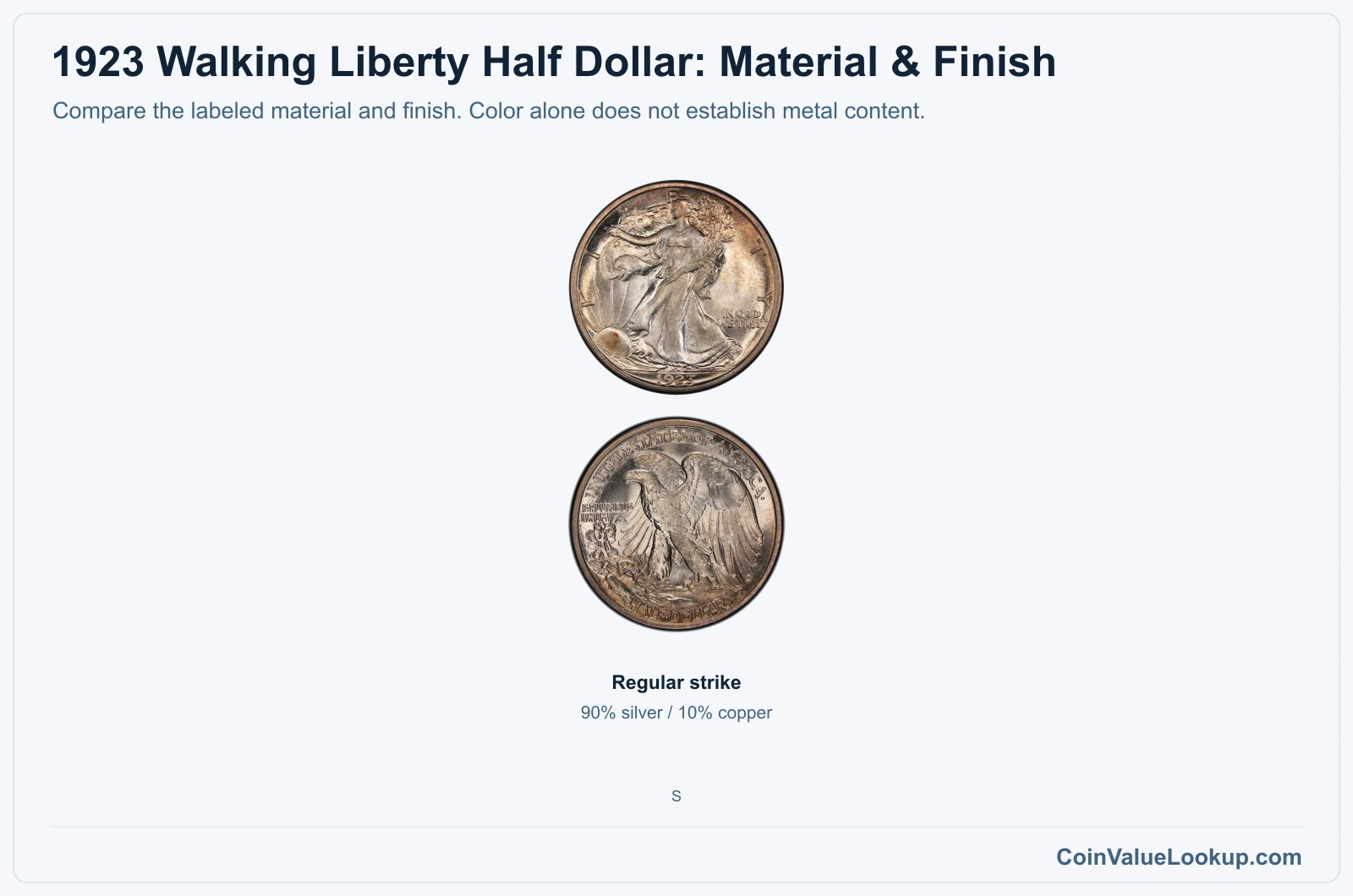
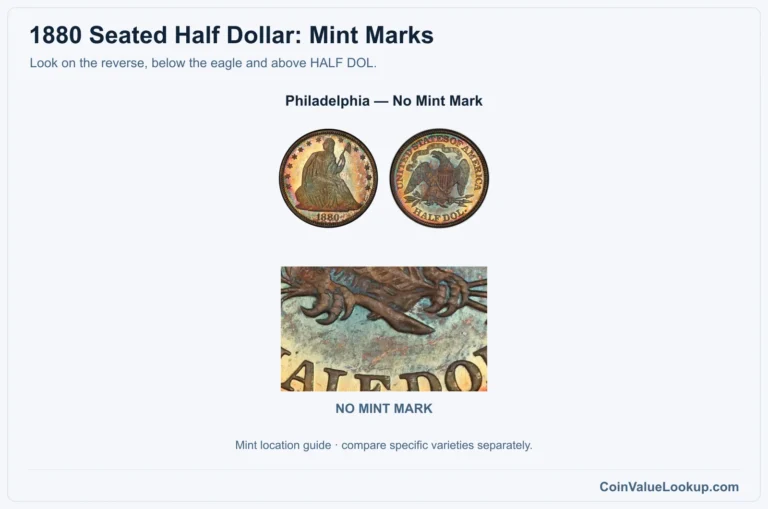
The 1923 Walking Liberty Half Dollar was struck only at the San Francisco Mint, so every genuine example carries an "S" mintmark. That mark sits on the reverse, at the lower left near the 8 o'clock position, tucked between the rim and the rock the eagle stands on.
If you see no mintmark at all, you are likely looking at a different date or a counterfeit.
The coin is composed of 90% silver and 10% copper, with a nominal weight of 12.50 grams. A worn-down piece will weigh slightly less, and toning or color variation does not change the underlying alloy.
If the weight is way off, something is wrong.
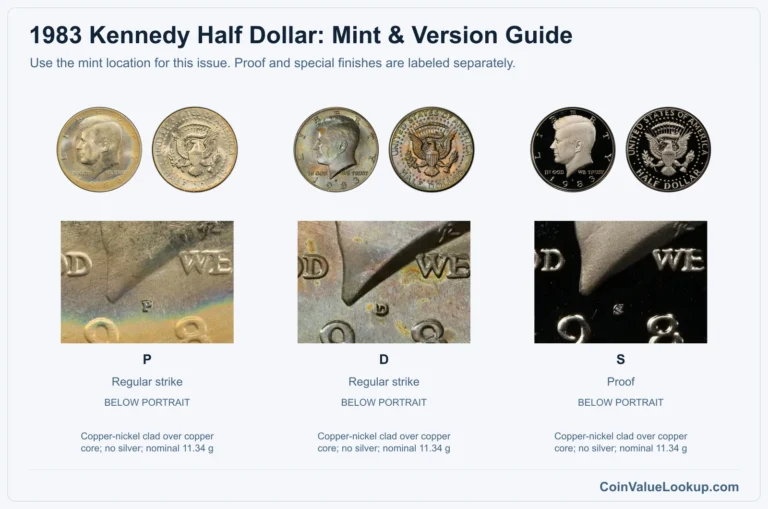
The obverse shows Liberty striding toward the sun, draped in a flag, with branches in her left hand. The reverse features a bald eagle perched on a rock with a pine branch.
There are no proof issues or alternate finishes for this year, so the only branch you need to confirm is 1923-S business strike.
Step 2: Check Your 1923 Walking Liberty Half Dollar Grade
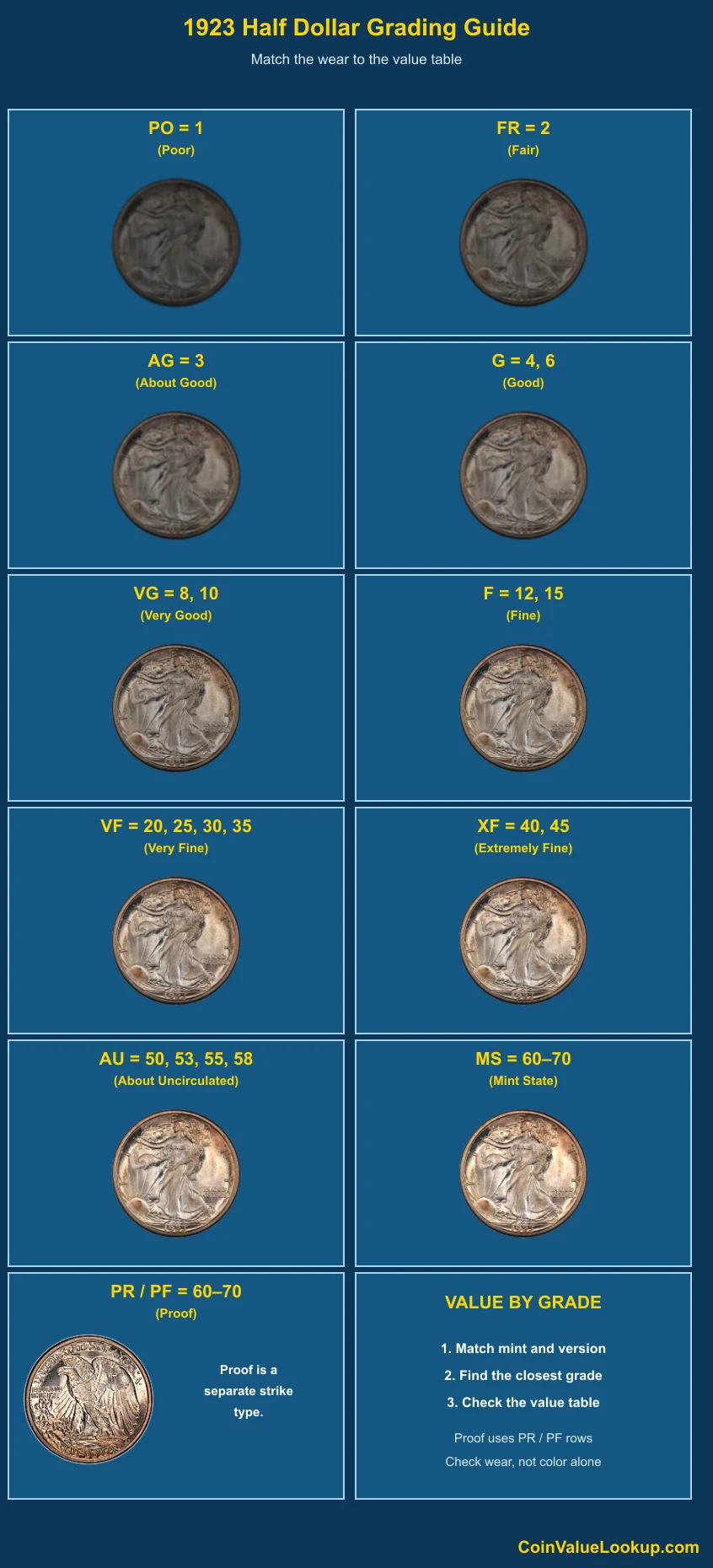
Start with Liberty's head, especially the hair detail along the brow and cap. Then check the breast and the left hand holding the branches.
These are the first areas to show smoothing from circulation.
On the reverse, look at the eagle's breast feathers and the tops of the wing feathers. A coin in Good-4 will have a mostly flat Liberty with a visible outline and date.
An MS63 piece retains full luster and only minor contact marks.
Here is the tricky part with Walkers: weak central strikes are common even on coins that never circulated. If the hand or head detail looks soft but the surrounding luster is unbroken and the fields are free of wear, the coin may be mint state with a mushy strike rather than circulated.
Use the comparison image to separate genuine wear from strike softness. Look for actual friction on high points, not just missing detail.
Step 3: Check 1923 Walking Liberty Half Dollar Value by Mint and Version
1923 Walking Liberty Half Dollar — S
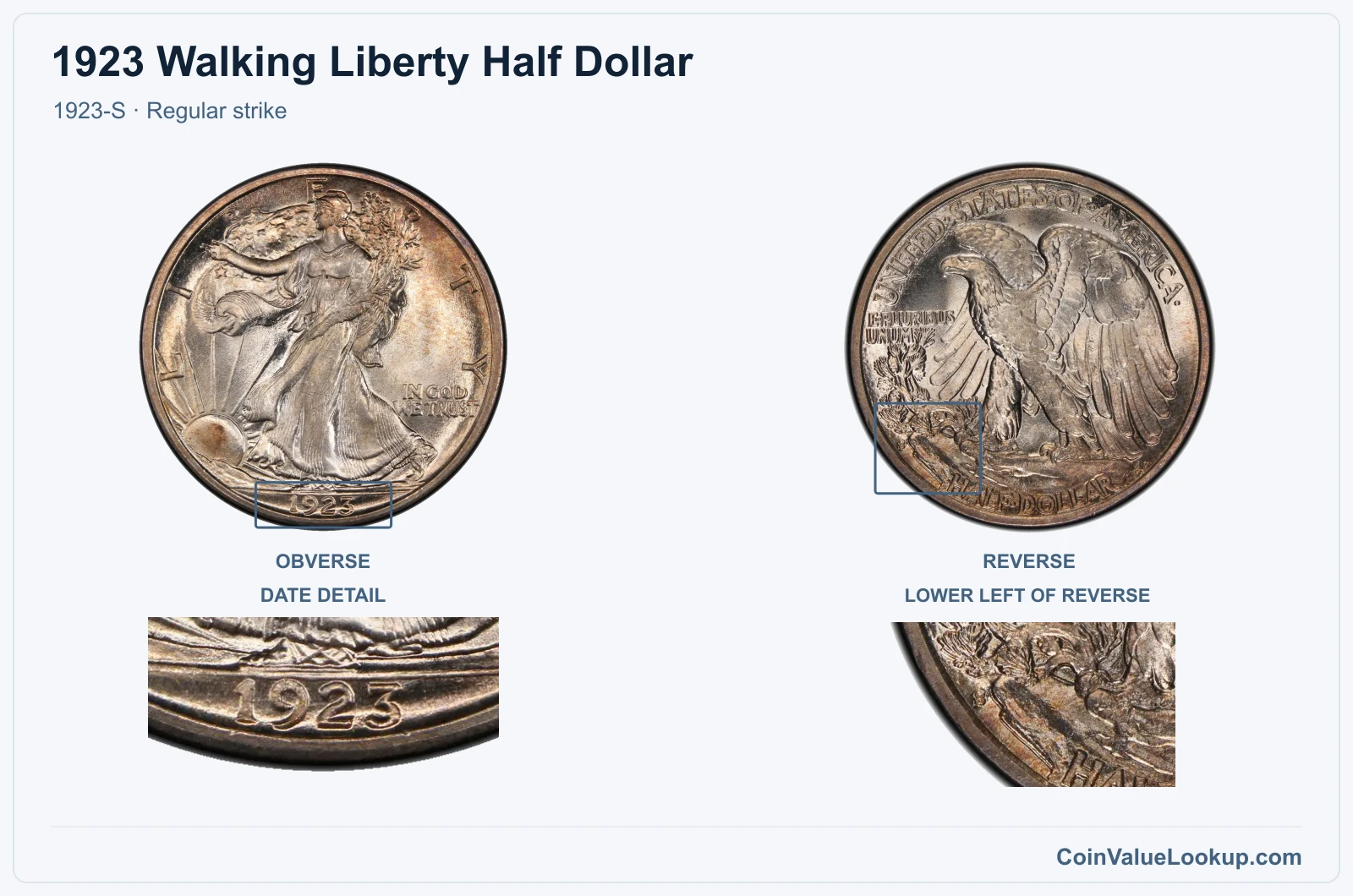
The 1923-S is the only branch minted this year. Look for the small "S" on the reverse lower left, near the rim.
Philadelphia did not produce Walking Liberty halves in 1923, so an absent mintmark is a red flag, not a Philly coin.
Guide estimates place a Good-4 example around $44.00 and a choice MS63 around $6,849.00, according to USA Coin Book. Those are reference anchors, not buy-it-now offers.
Cleaned, scratched, or otherwise damaged coins trade well below problem-free examples at the same technical grade, so original surfaces really do matter.
Coin Value Lookup is a handy starting point if you want to look up other dates and denominations in the Walking Liberty series. You can browse guides to compare how your coin stacks up against the rest of the run.
Range Grade
Price Auction Records Appraisal PO PO 1
—
Coin Identifier FR FR 2
—
Coin Identifier AG AG 3
Coin Identifier G G 4
—
Coin Identifier
G 6
Coin Identifier VG VG 8
Coin Identifier
VG 10
Coin Identifier F F 12
Coin Identifier
F 15
Coin Identifier VF VF 20
Coin Identifier
VF 25
Coin Identifier
VF 30
Coin Identifier
VF 35
Coin Identifier XF XF 40
Coin Identifier
XF 45
Coin Identifier AU AU 50
Coin Identifier
AU 53
Coin Identifier
AU 55
Coin Identifier
AU 58
Coin Identifier MS MS 60
—
Coin Identifier
MS 61
Coin Identifier
MS 62
Coin Identifier
MS 63
Coin Identifier
MS 64
Coin Identifier
MS 65
Coin Identifier
MS 66
Coin Identifier
MS 67
—
Coin Identifier
MS 68
—
—
—
MS 69
—
—
—
MS 70
—
—
—
1923 Walking Liberty Half Dollar Error List
1. 1923 Walking Liberty Half Dollar — Off-Center Strike
An off-center strike happens when the blank enters the press misaligned, so the dies stamp only part of the planchet. The result is a design that is shifted to one side with a crescent-shaped area of unstruck metal along the opposite edge.
On a 1923 Walking Liberty Half Dollar, the date needs to remain visible for the coin to hold strong collector interest.
Condition, the percentage of off-center displacement, and whether the date is fully legible all affect how desirable the error is. No standard price range has been adopted for this particular date, so each piece requires individual evaluation.
Be careful not to confuse a genuine off-center strike with a clipped planchet, a coin that was flattened after leaving the mint, or simple die misalignment where the design is complete but slightly shifted. A true off-center piece will always show that characteristic blank crescent where metal was never struck at all.