1986 Jefferson Nickel Coin Value: How Much Is It Worth?
Most 1986 Jefferson nickels you pull from pocket change are worth face value. Uncirculated examples carry modest guide estimates: roughly $0.61 to $3.62 depending on mint and grade in the MS60 to MS65 range, according to USA Coin Book.
S-mint proofs and authenticated error coins are a different story and deserve their own look. These guide figures are retail estimates, not guaranteed cash offers for any particular coin.
Fast Way to Identify Your 1986 Jefferson Nickel
The quickest way to start figuring out what you have is to snap clear photos of both sides of your coin and upload them here. A front-and-back photo lets us provide a preliminary identification of your mint, finish, and general condition.
This is not a substitute for professional certification, but it points you in the right direction fast.
1986 Jefferson Nickel Value
Upload both sides of your 1986 Jefferson Nickel.
Front Obverse
Upload photo
Back Reverse
Upload photo
Which 1986 Jefferson Nickel Versions Are Worth Money?
- Uncirculated 1986-P and 1986-D nickels with sharp, uninterrupted Monticello steps may qualify for a Full Steps designation, which collectors value above generic Mint State examples.
- The 1986-S proof, graded around PR65, carries a USA Coin Book guide estimate near $8.64; cameo or deep-cameo contrast is a separate distinction that can affect value further.
- A 1986-P nickel struck over a cent sold at Heritage Auctions in September 2019 for $1,020, making confirmed double-denomination strikes one of the most dramatic errors for this date.
- Authenticated striking errors such as triple curved clips, double strikes, and struck-through obverse errors exist for the 1986 date and each commands its own individual market.
Step 1: Identify Your 1986 Jefferson Nickel Mint Mark and Version
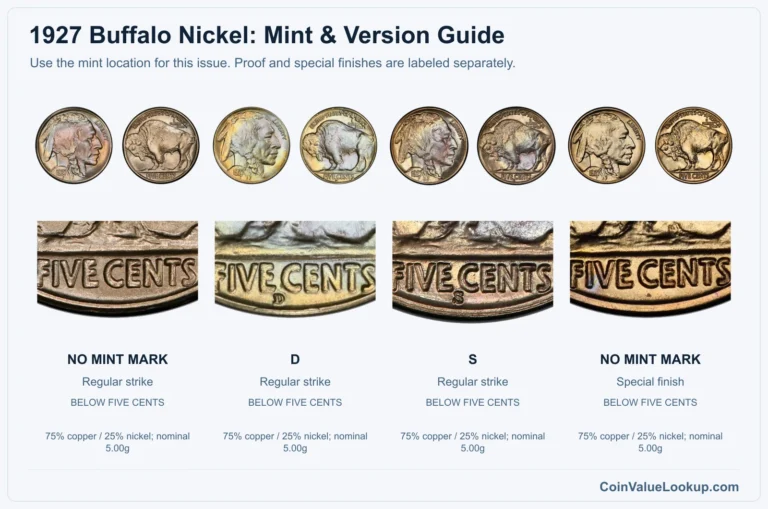
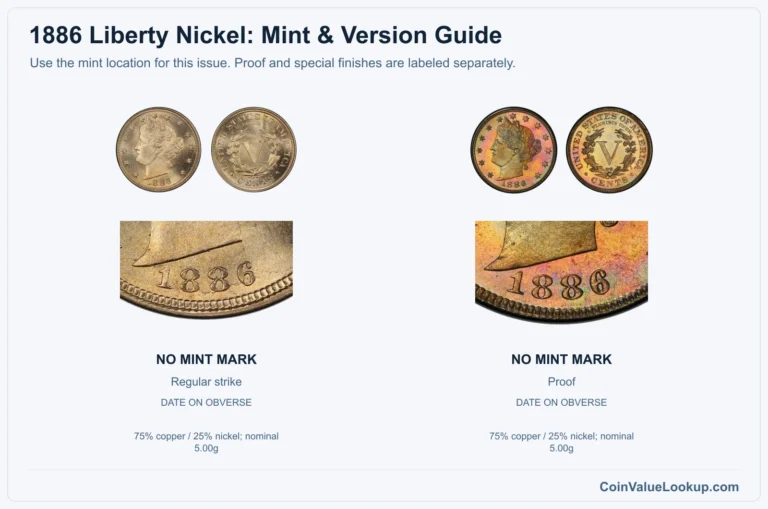
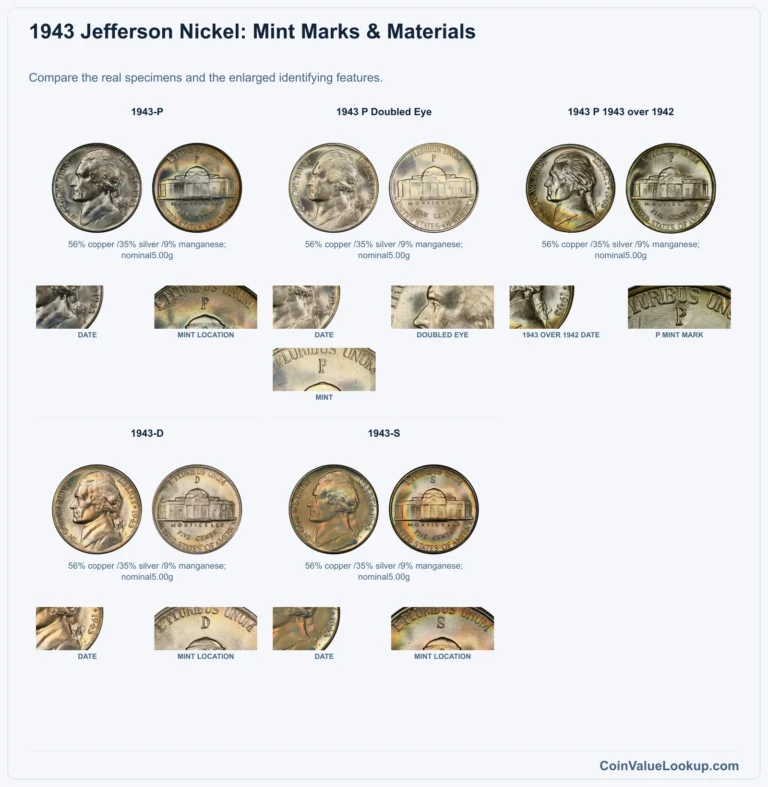
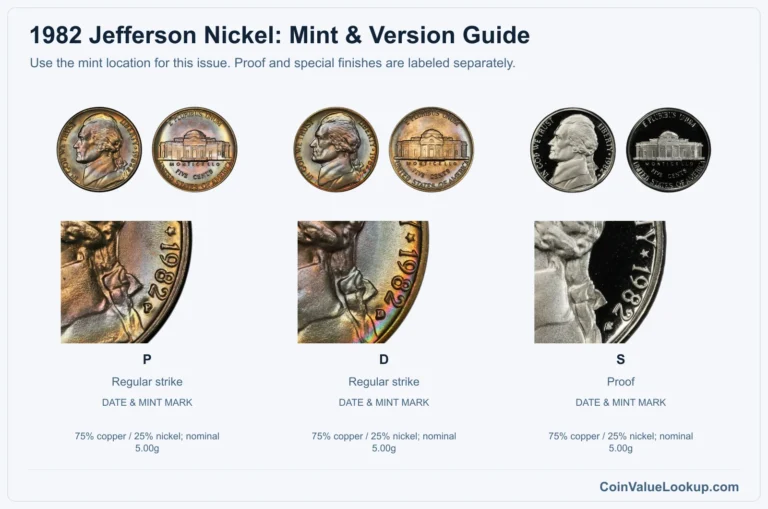
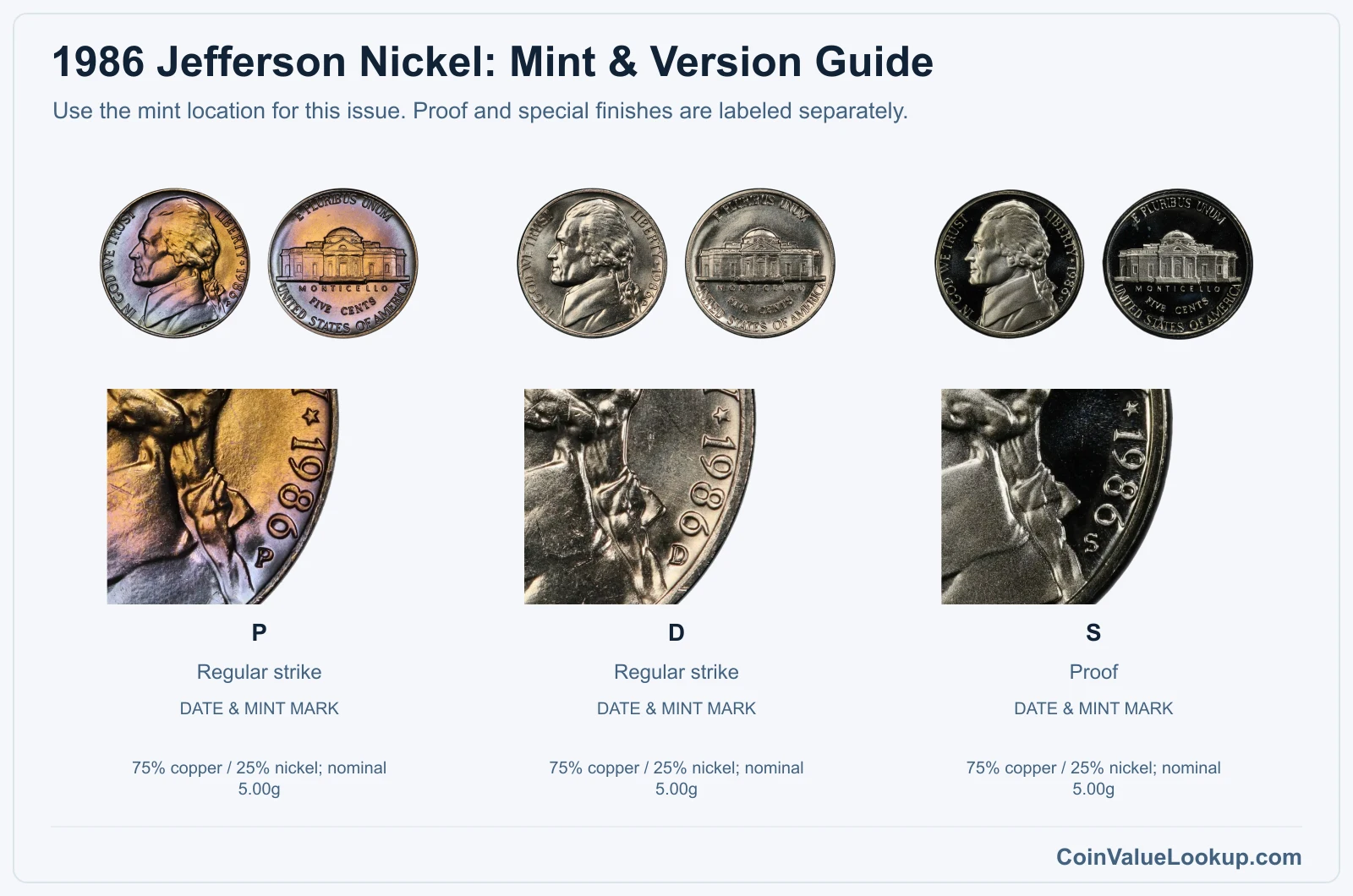
Three versions of the 1986 Jefferson nickel exist: the Philadelphia (P) business strike, the Denver (D) business strike, and the San Francisco (S) proof. The mintmark sits on the obverse, just below the date.
Look for a small "P" or "D" in that spot.
If you see an "S," you have a proof coin, which was struck for collectors and sold in special sets, not released into circulation. All three share the same composition: 75% copper and 25% nickel, weighing about 5 grams with a plain edge and a diameter of 21.2 mm.
Before checking any price chart, confirm which mintmark you have and whether the coin's surfaces look like a normal business strike or a mirror-finish proof. A weak or partially struck "P" is not the same as a missing mintmark variety.
Damage to the letter area does not create a collectible error.
Step 2: Check Your 1986 Jefferson Nickel Grade
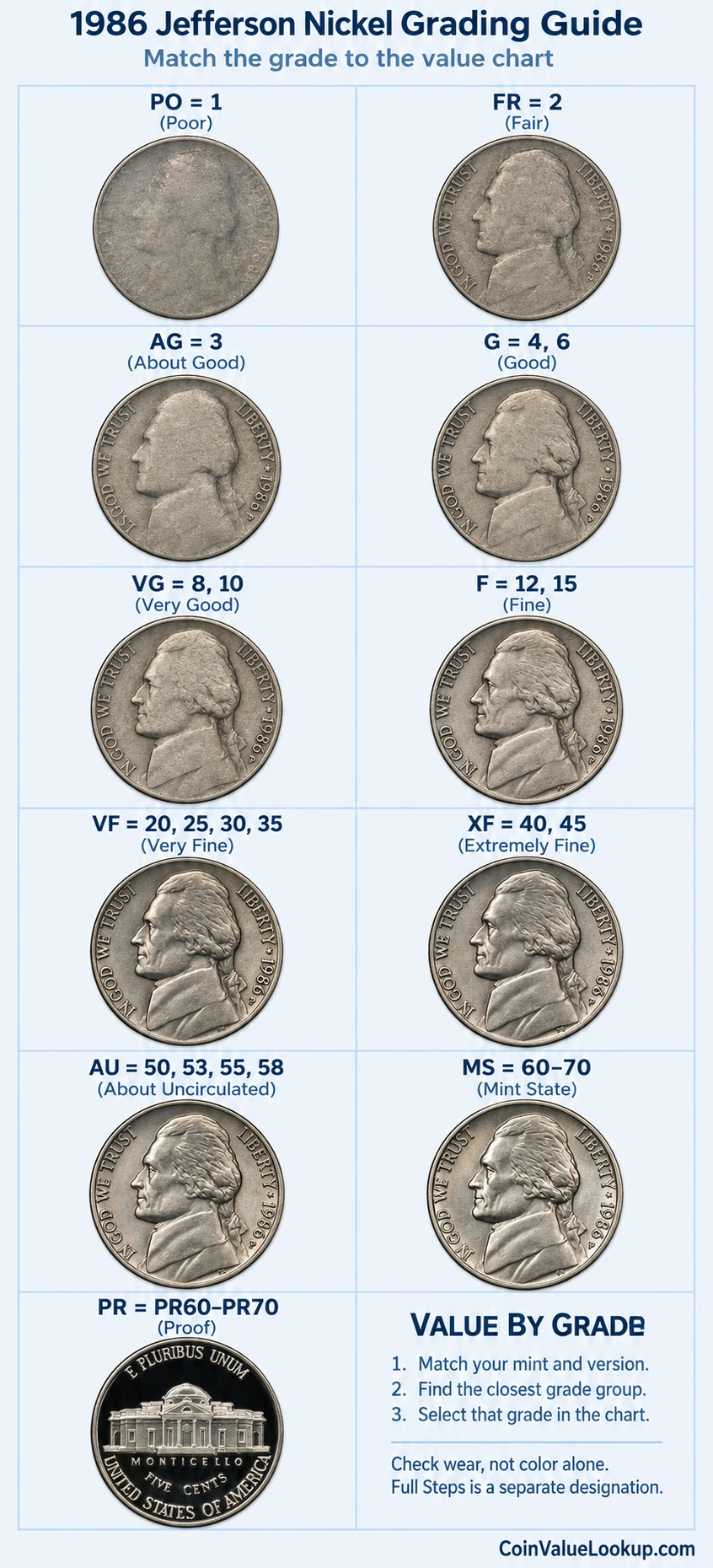
Start with Jefferson's cheek and the hair detail above his ear. On a well-worn coin, the cheek flattens first and luster disappears from high points.
The more original luster and sharp detail you can see, the higher the grade.
Flip to the reverse and check the steps at the base of Monticello. Sharp, uninterrupted steps can indicate a strong strike rather than evidence of wear.
Certified Full Steps is a separate designation applied to qualifying Mint State business strikes; it is not an error or a proof characteristic.
Use the comparison image to match your coin's wear pattern against known grade levels. A coin with full luster and no contact marks may qualify as Mint State, while one with slight friction on the cheek is likely About Uncirculated.
Proof coins are graded on a separate scale, so do not compare a proof's mirror fields to a business strike's cartwheel luster.
Step 3: Check 1986 Jefferson Nickel Value by Mint and Version
1986 Jefferson Nickel — P Business strike
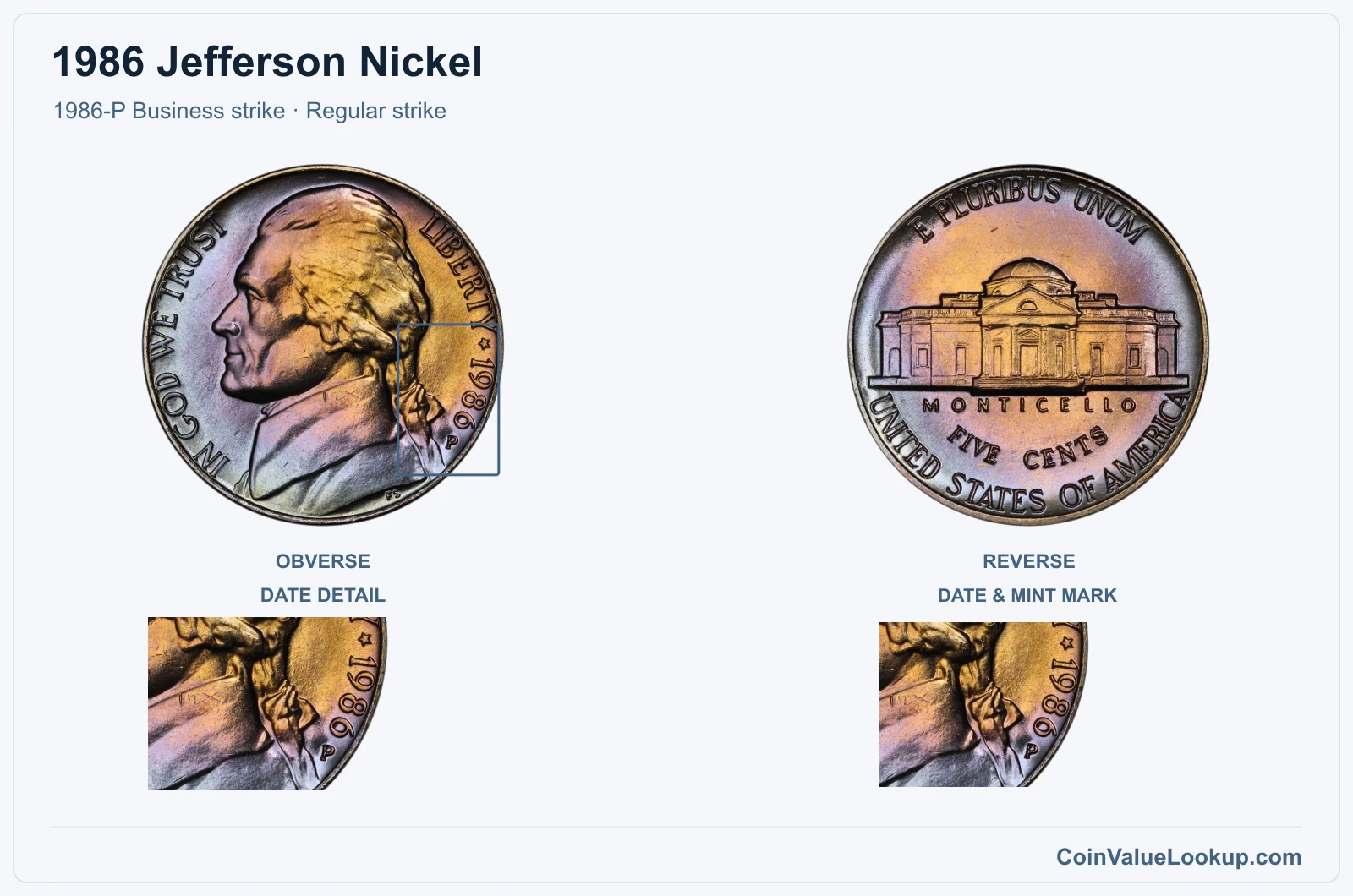
The 1986-P is a standard Philadelphia business strike. It carries the small "P" mintmark on the obverse below the date, a feature that became regular on Philadelphia nickels starting in 1980.
Composition is 75% copper and 25% nickel at a nominal 5 grams.
USA Coin Book lists guide estimates of about $0.61 in MS60 and $3.62 in MS65. Circulated pieces are common and generally worth face value.
The jump in value comes with pristine surfaces and, for those pursuing it, the Full Steps designation on certified coins.
| Range | Grade | Price | Auction Records | Appraisal |
|---|---|---|---|---|
| PO | PO 1 | — | Coin Identifier | |
| FR | FR 2 | — | Coin Identifier | |
| AG | AG 3 | — | Coin Identifier | |
| G | G 4 | — | Coin Identifier | |
| G 6 | — | Coin Identifier | ||
| VG | VG 8 | — | Coin Identifier | |
| VG 10 | — | Coin Identifier | ||
| F | F 12 | — | Coin Identifier | |
| F 15 | — | Coin Identifier | ||
| VF | VF 20 | — | Coin Identifier | |
| VF 25 | — | Coin Identifier | ||
| VF 30 | — | Coin Identifier | ||
| VF 35 | — | Coin Identifier | ||
| XF | XF 40 | — | Coin Identifier | |
| XF 45 | — | Coin Identifier | ||
| AU | AU 50 | — | Coin Identifier | |
| AU 53 | — | Coin Identifier | ||
| AU 55 | — | Coin Identifier | ||
| AU 58 | — | Coin Identifier | ||
| MS | MS 60 | — | Coin Identifier | |
| MS 61 | — | Coin Identifier | ||
| MS 62 | — | Coin Identifier | ||
| MS 63 | — | Coin Identifier | ||
| MS 64 | — | Coin Identifier | ||
| MS 65 | Coin Identifier | |||
| MS 66 | — | Coin Identifier | ||
| MS 67 | — | Coin Identifier | ||
| MS 68 | — | — | — | |
| MS 69 | — | — | — | |
| MS 70 | — | — | — |
1986 Jefferson Nickel — D Business strike
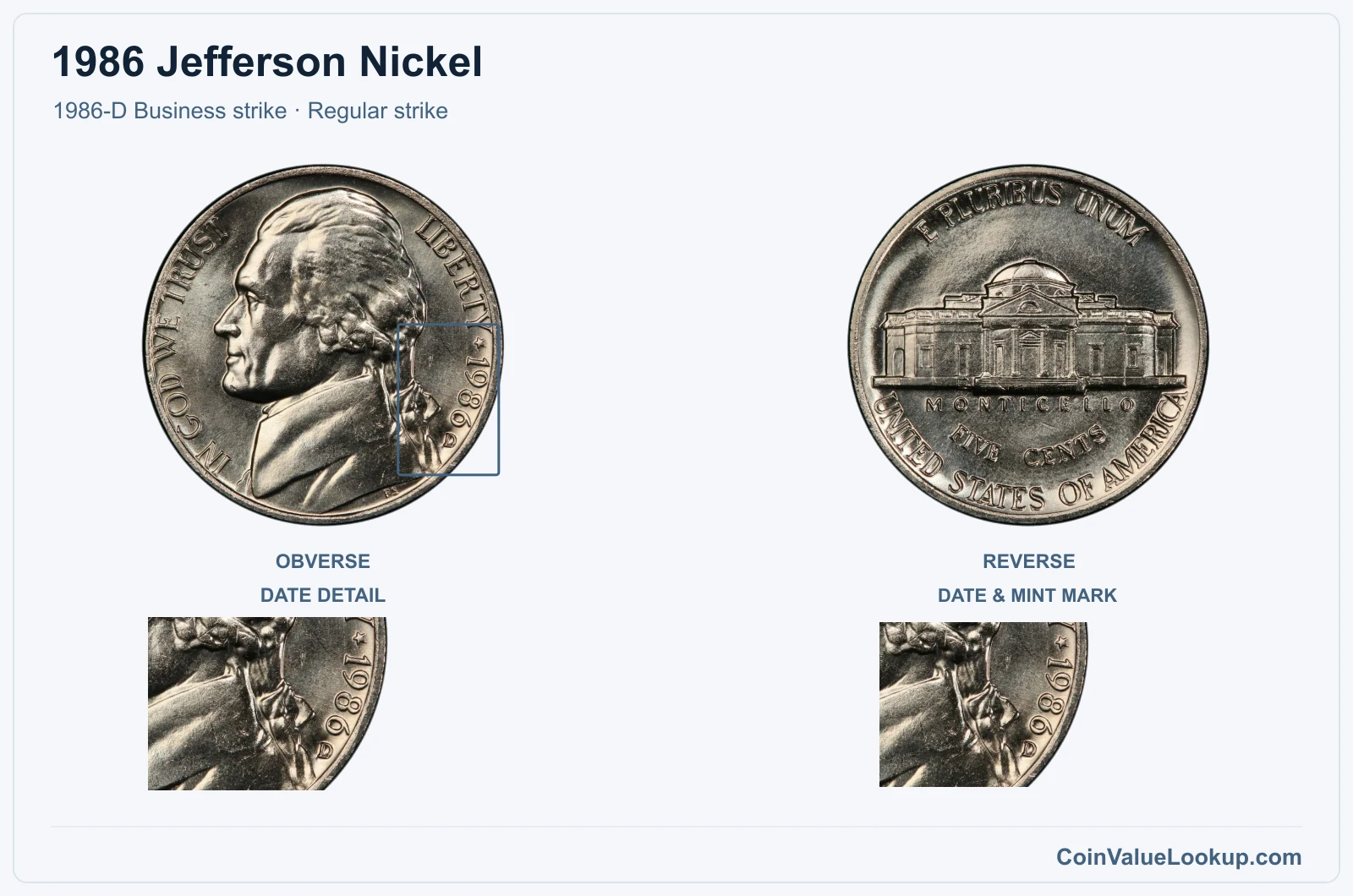
The 1986-D was struck at Denver. Same alloy, same weight, same design.
Look for the "D" below the date on the obverse.
Guide estimates from USA Coin Book place this one at roughly $1.24 in MS60 and $3.62 in MS65. That slight premium over the P-mint at the lower grade is minor.
As with all business-strike nickels, condition drives the real conversation. Worn examples are five-cent coins.
Clean, lustrous examples with sharp detail are the ones worth setting aside.
Coin Value Lookup is a good place to look up guides for other dates and denominations in the Jefferson series if you are sorting through a jar of nickels.
| Range | Grade | Price | Auction Records | Appraisal |
|---|---|---|---|---|
| PO | PO 1 | — | Coin Identifier | |
| FR | FR 2 | — | Coin Identifier | |
| AG | AG 3 | — | Coin Identifier | |
| G | G 4 | — | Coin Identifier | |
| G 6 | — | Coin Identifier | ||
| VG | VG 8 | — | Coin Identifier | |
| VG 10 | — | Coin Identifier | ||
| F | F 12 | — | Coin Identifier | |
| F 15 | — | Coin Identifier | ||
| VF | VF 20 | — | Coin Identifier | |
| VF 25 | — | Coin Identifier | ||
| VF 30 | — | Coin Identifier | ||
| VF 35 | — | Coin Identifier | ||
| XF | XF 40 | — | Coin Identifier | |
| XF 45 | — | Coin Identifier | ||
| AU | AU 50 | — | Coin Identifier | |
| AU 53 | — | Coin Identifier | ||
| AU 55 | — | Coin Identifier | ||
| AU 58 | — | Coin Identifier | ||
| MS | MS 60 | — | Coin Identifier | |
| MS 61 | — | Coin Identifier | ||
| MS 62 | — | Coin Identifier | ||
| MS 63 | — | Coin Identifier | ||
| MS 64 | Coin Identifier | |||
| MS 65 | — | Coin Identifier | ||
| MS 66 | — | Coin Identifier | ||
| MS 67 | — | — | — | |
| MS 68 | — | — | — | |
| MS 69 | — | — | — | |
| MS 70 | — | — | — |
1986 Jefferson Nickel — S Proof
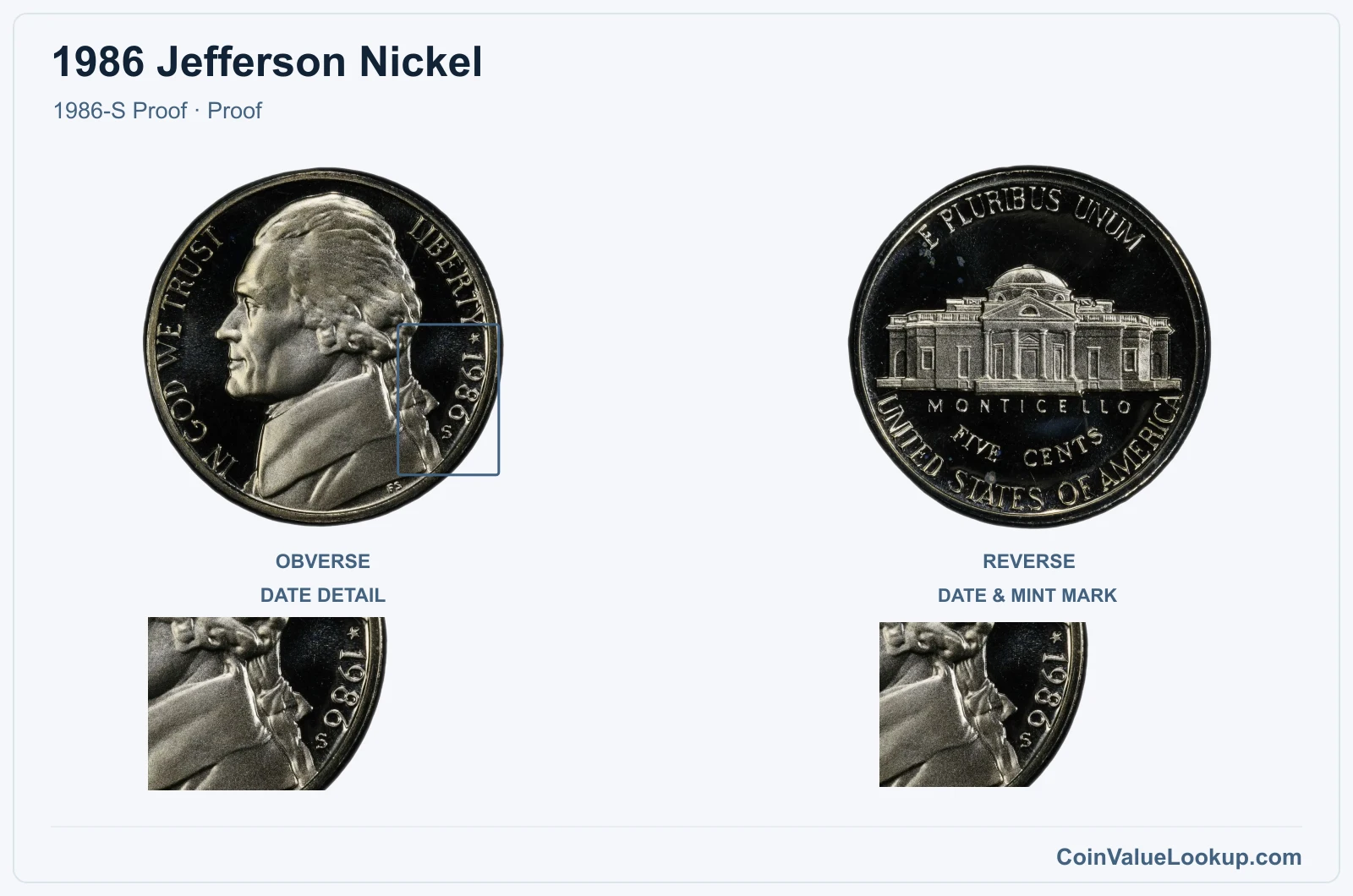
The 1986-S proof was struck at San Francisco exclusively for collector sets. Proof coins have mirror-like fields and sharply struck devices, produced by specially prepared dies and planchets.
USA Coin Book lists a guide estimate of approximately $8.64 at PR65. That figure covers a generic proof grade and does not specifically account for cameo or deep-cameo contrast, which can carry its own premium.
If your coin has frosted devices against deeply mirrored fields, that contrast is worth noting when seeking evaluation. Proof coins should not be compared to business-strike pricing.
| Range | Grade | Price | Auction Records | Appraisal |
|---|---|---|---|---|
| PR | PR 1 | — | Coin Identifier | |
| PR 2 | — | Coin Identifier | ||
| PR 3 | — | Coin Identifier | ||
| PR 4 | — | Coin Identifier | ||
| PR 6 | — | Coin Identifier | ||
| PR 8 | — | Coin Identifier | ||
| PR 10 | — | Coin Identifier | ||
| PR 12 | — | Coin Identifier | ||
| PR 15 | — | Coin Identifier | ||
| PR 20 | — | Coin Identifier | ||
| PR 25 | — | Coin Identifier | ||
| PR 30 | — | Coin Identifier | ||
| PR 35 | — | Coin Identifier | ||
| PR 40 | — | Coin Identifier | ||
| PR 45 | — | Coin Identifier | ||
| PR 50 | — | Coin Identifier | ||
| PR 53 | — | Coin Identifier | ||
| PR 55 | — | Coin Identifier | ||
| PR 58 | — | Coin Identifier | ||
| PR 60 | — | Coin Identifier | ||
| PR 61 | — | Coin Identifier | ||
| PR 62 | — | Coin Identifier | ||
| PR 63 | — | Coin Identifier | ||
| PR 64 | — | Coin Identifier | ||
| PR 65 | — | Coin Identifier | ||
| PR 66 | — | Coin Identifier | ||
| PR 67 | — | Coin Identifier | ||
| PR 68 | Coin Identifier | |||
| PR 69 | Coin Identifier | |||
| PR 70 | Coin Identifier |
1986 Jefferson Nickel Error List
1. 1986 Jefferson Nickel — Struck over a1986cent
This is a double-denomination error: a 1986 nickel struck over an already-struck 1986 Lincoln cent. The surviving cent design is visible beneath the nickel impression, with portions of the cent's date ("986") showing through Jefferson's hair.
The nickel's P mintmark remains sharp.
Do not confuse copper toning or environmental discoloration for an overstrike. The key diagnostic is readable remnants of the cent's design, not just copper color.
A coin pressed against a cent in a vise will show flat, distorted features rather than a properly struck second design.
One example, graded NGC MS64 Red, sold through Heritage Auctions in September 2019 for $1,020. That is a single recorded sale, not a guaranteed market price for every specimen.
2. 1986 Jefferson Nickel — Deep obverse struck-through
A struck-through error occurs when foreign material sits between the die and the planchet during striking. On this 1986-P example, the obstruction blocked part of the obverse die, leaving a deep depression where the normal design should appear.
The authenticated coin was graded NGC MS65 Full Steps, confirming the reverse was well struck despite the obverse anomaly. The specific material that caused the blockage is not identified in the source.
Post-mint damage such as gouges or hammer marks will show displaced metal and sharp edges. A genuine struck-through has smooth contours because the obstruction was present during the strike itself.
Value depends on severity, eye appeal, and condition; each piece is assessed individually.
3. 1986 Jefferson Nickel — Triple curved clips
A clipped planchet error happens when the blank is punched from strip metal that overlaps a previously punched hole. This 1986-P nickel has three separate curved clips, totaling about 10% of the planchet, which makes it a triple curved clip.
Look for the characteristic rim disruptions at each clip site and the way metal flowed unevenly during striking. The Blakesley effect, a weak area of the rim opposite each clip, can also help confirm authenticity.
A PCGS MS64 example exists.
Fakes made with pliers, saws, or grinding will leave tool marks, sharp edges, or heat discoloration. Genuine clips have smooth, curved edges that follow the geometry of the blanking press.
Value depends on the number of clips, overall percentage missing, and the coin's condition.
4. 1986 Jefferson Nickel — Double strike,secondoffcenter
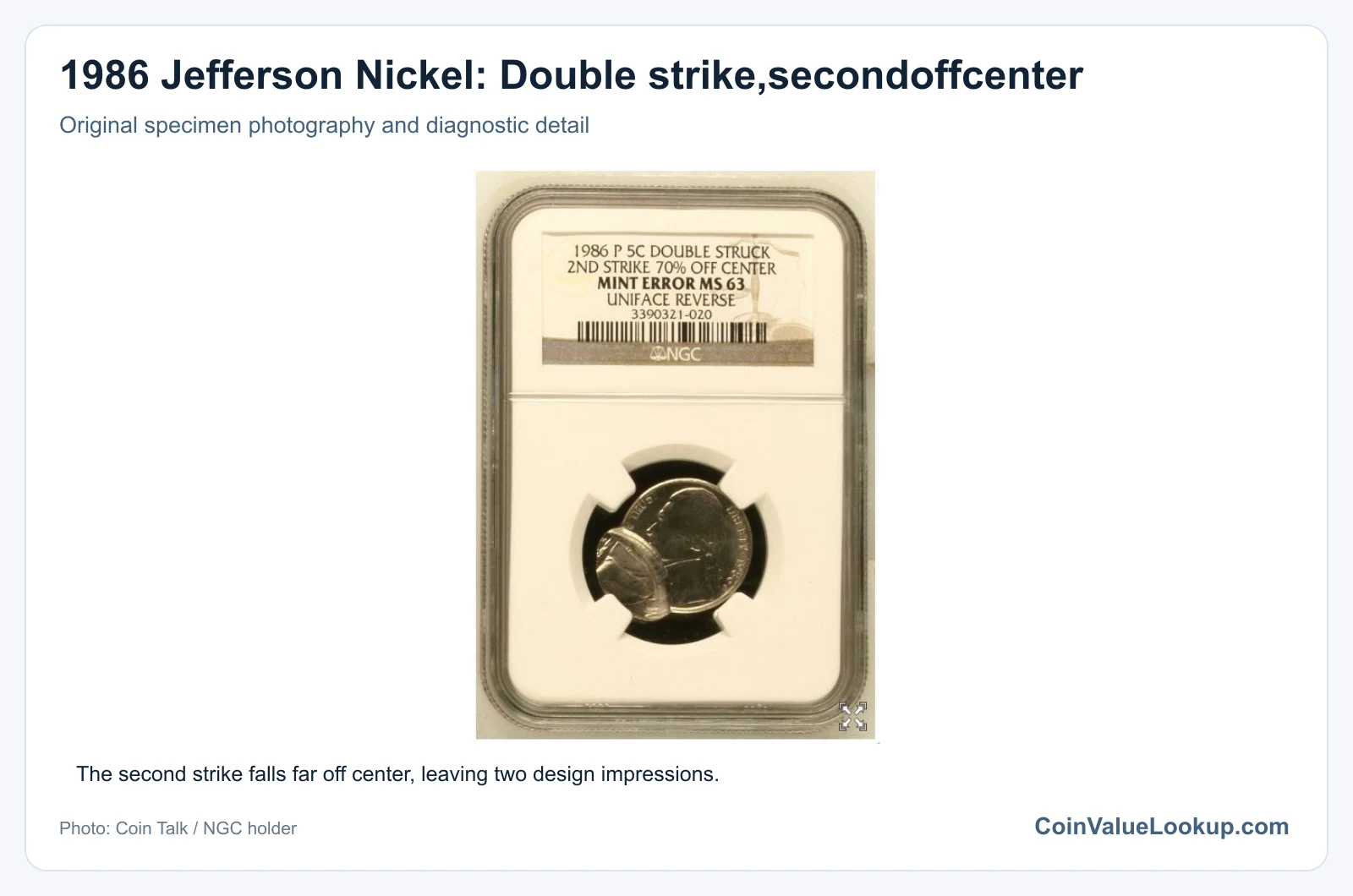
A double-struck coin received two impressions from the dies, with the second strike landing off-center. On this 1986-D nickel, the offset second impression is visible alongside the first, creating overlapping design elements.
The graded example carries an NGC UNC Details designation with noted reverse damage. That means it has uncirculated surfaces but a problem that prevented a straight numeric grade.
Do not describe this coin as a problem-free Mint State piece.
This error looks different from die doubling, which shows subtle separation within a single impression. A true double strike produces two distinct, shifted copies of the design.
Damage-only coins hit outside the mint will lack the uniform pressure and centering characteristics of a genuine second strike. Individual assessment of condition and severity determines value.
5. 1986 Jefferson Nickel — Wrong Planchet / Off-Metal Strike
A wrong-planchet error means the 1986 nickel design was struck on a blank intended for a different denomination or composition. The reported listing is for a 1986-P wrong-planchet strike.
To check, compare your coin's weight, diameter, and edge to normal specifications: 5.00 grams, 21.2 mm, plain edge. A blank from a different denomination will usually differ in at least one of those measurements, and the design may not fill the planchet completely.
Do not assume a coin is off-metal just because it looks odd in color. Plating loss, corrosion, acid exposure, and deliberate alteration can all mimic the appearance of a wrong-metal strike.
Authentication by a grading service is the reliable way to confirm this type of error. Value depends on the specific planchet involved, condition, and completeness of the struck design.
6. 1986 Jefferson Nickel — Doubled Die Obverse
A doubled die obverse means the die itself carried a doubled impression, which then transferred to every coin it struck. The reported listing is for a 1986-D doubled die obverse.
When checking, examine obverse lettering and design elements under magnification and consistent lighting. Genuine die doubling produces consistent separation or notching on affected letters and devices.
It will look the same on every coin struck from that die.
Machine doubling, sometimes called strike doubling, is far more common and shows as a flat, shelf-like distortion without the raised, split profile of true hub doubling. Reflections and worn die contours can also trick the eye.
No specific price range is available for this variety; value depends on the strength of doubling, overall condition, and collector demand.
7. 1986 Jefferson Nickel — Doubled Die Reverse
A doubled die reverse means the reverse die carried a doubled image. The reported listing is for a 1986-D doubled die reverse.
Check the reverse legends, particularly "MONTICELLO" and "E PLURIBUS UNUM," under magnification. Look for consistent, repeatable separation in the lettering rather than flat shelf-like distortion.
True hub doubling will show distinct, raised secondary contours.
Machine doubling is the usual suspect and produces a different look: flat, slightly displaced outlines without the crisp split of genuine doubling. Random nicks and damage can also create misleading shapes.
If you think you have one, compare your coin side-by-side with a confirmed normal example from the same mint. No price range is established here; the error's value depends on the strength of the doubling, visibility, and the coin's grade.
8. 1986 Jefferson Nickel — Misplaced Mintmark
A misplaced mintmark occurs when the mintmark punch lands in an unintended position on the die, leaving a partial or complete letter in an unexpected area of the design. The reported listing is for a 1986-P misplaced mintmark.
To identify one, compare the mintmark position on your coin with a normal 1986-P nickel. On a standard coin, the P sits just below the date.
A misplaced mintmark may appear partially embedded in a nearby numeral or design element.
Surface marks, corrosion, or pareidolia can mimic a faint letter shape in the wrong spot. Confirm under magnification that the mark matches the font style and relief of a genuine mintmark.
No price range is available for this variety; each coin's value depends on the clarity and position of the misplacement, along with overall condition.