1888 Liberty Nickel Coin Value: How Much Is It Worth?
An 1888 Liberty Nickel in well-circulated condition starts around $38 at the G4 grade level, according to a USA Coin Book guide estimate. Move up to a nice uncirculated MS63 example and the same guide places it near $438.
Proofs were struck separately and anchor around $344 in PR63. Condition matters enormously with this date, so read on before assuming what yours is worth.
Fast Way to Identify Your 1888 Liberty Nickel
The quickest way to get a preliminary identification of your 1888 Liberty Nickel is to upload clear photos of the front and back. Good lighting and a steady shot help distinguish wear patterns, surface quality and any unusual doubling or date anomalies.
That initial look can point you toward the right version and a realistic value range.
1888 Liberty Nickel Value
Upload both sides of your 1888 Liberty Nickel.
Front Obverse
Upload photo
Back Reverse
Upload photo
Which 1888 Liberty Nickel Versions Are Worth Money?
- Business strikes in MS63 or higher carry a guide value around $438, far above the $38 starting point for a G4 example.
- Proofs in PR63 anchor near $344 per the USA Coin Book guide; original surfaces and minimal hairlines drive the premium.
- Doubled die obverse and doubled die reverse varieties have been reported for this date and can add value when clearly visible.
- Repunched date examples, where remnants of an earlier punch position appear near the digits, are a known variety worth inspecting.
- Wrong-planchet strikes — such as an 1888 nickel struck on a cent blank — are rare mint errors that attract specialist interest.
Step 1: Identify Your 1888 Liberty Nickel Mint Mark and Version
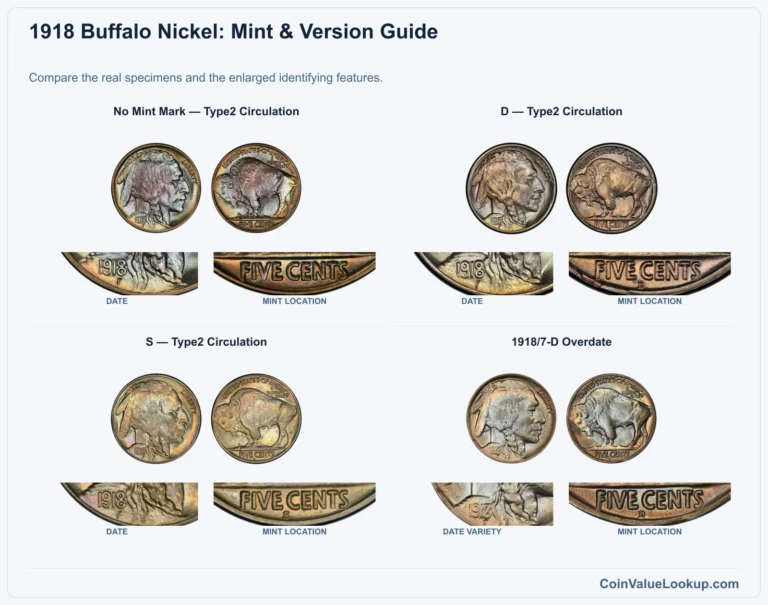
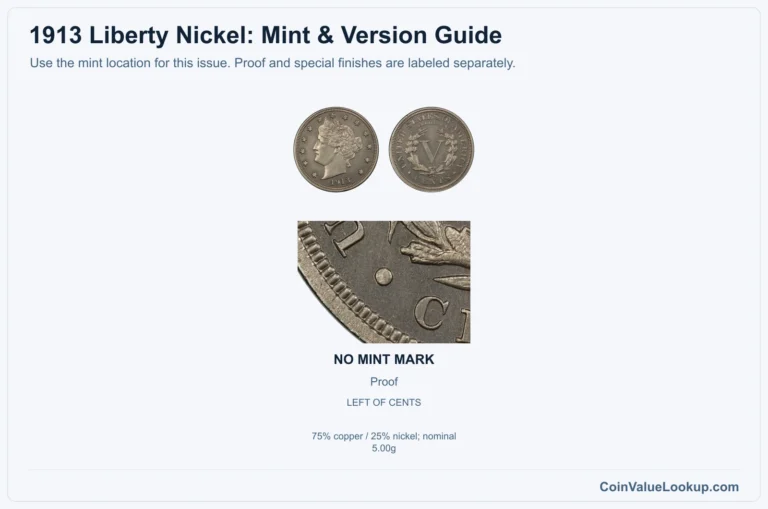
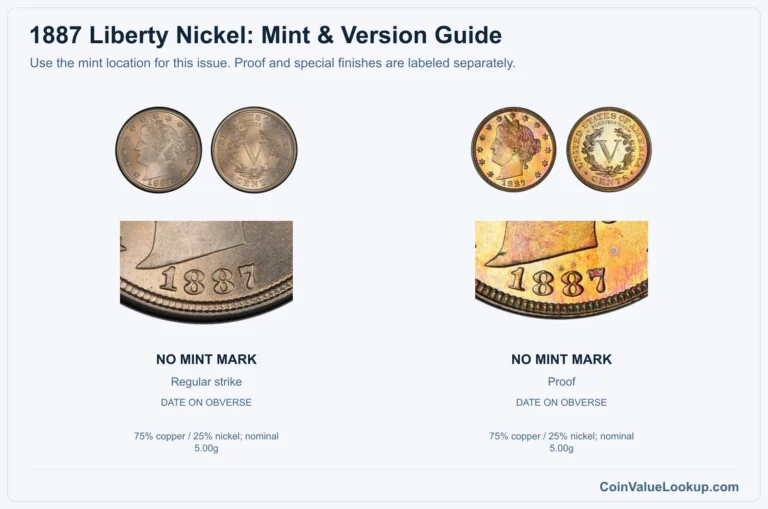
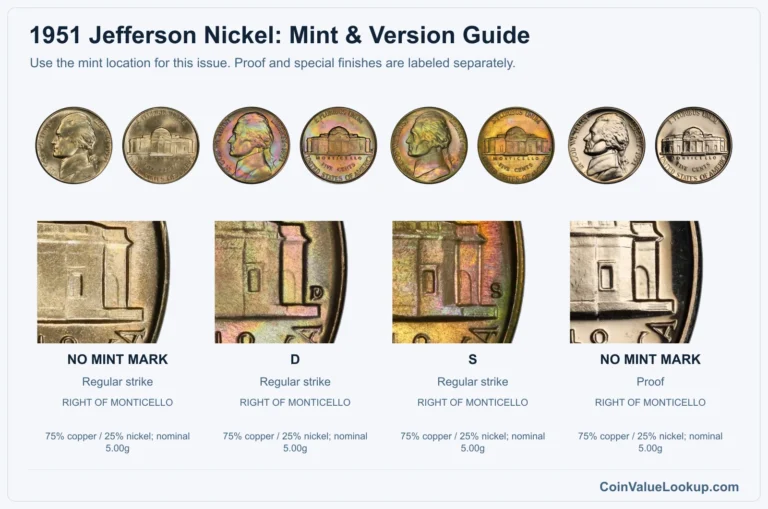
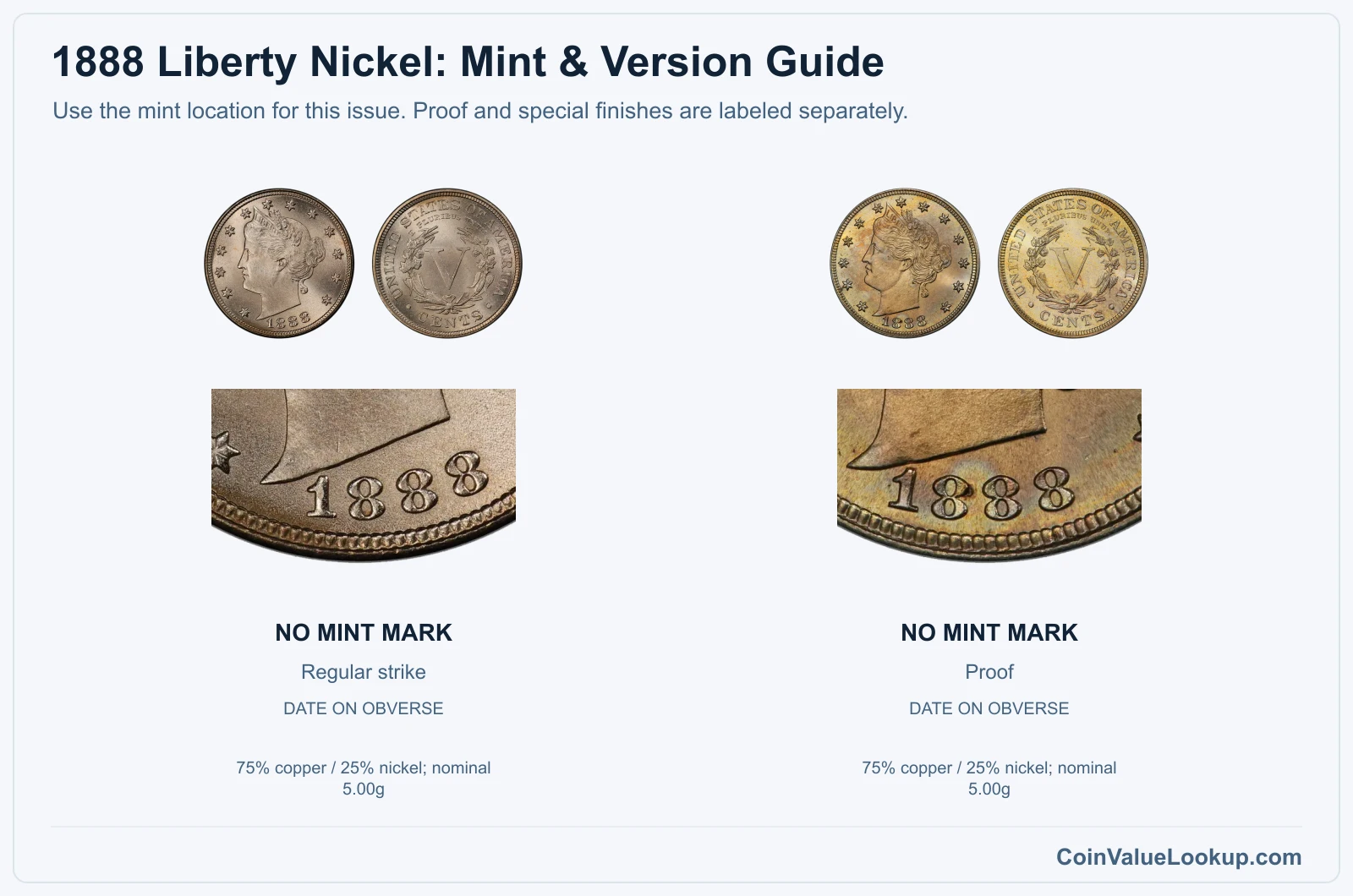
Every regular 1888 Liberty Nickel was struck in Philadelphia, so there is no mintmark to hunt for. Do not look for a D or S on this date — neither exists.
The coin is 75% copper and 25% nickel, weighs about 5 grams, measures 21.2 mm and has a plain edge.
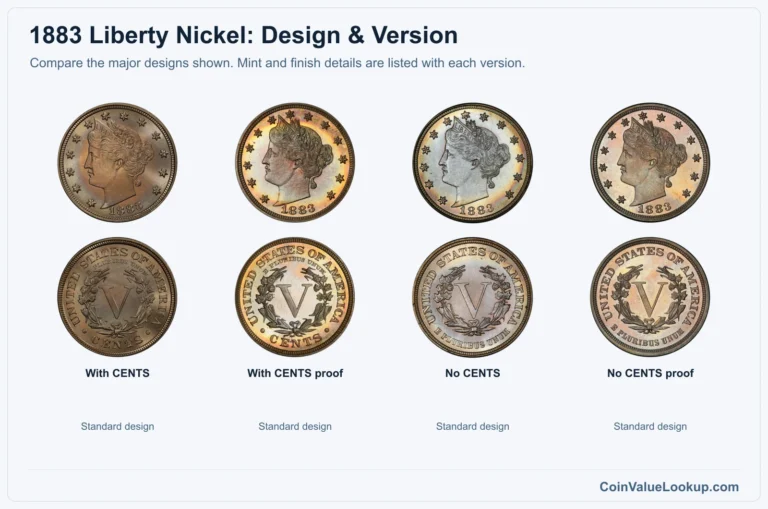
All standard 1888 nickels carry the words CENTS on the reverse, inside the wreath at the bottom. This is part of the normal With CENTS design used from 1883 onward.
There is no regular silver version for this year.
Business strikes and proofs share the same design but differ in how they were made. Proofs show mirror-like fields and sharply defined rims when examined under good light.
If your coin looks like it saw a cash register, it is a business strike.
Step 2: Check Your 1888 Liberty Nickel Grade
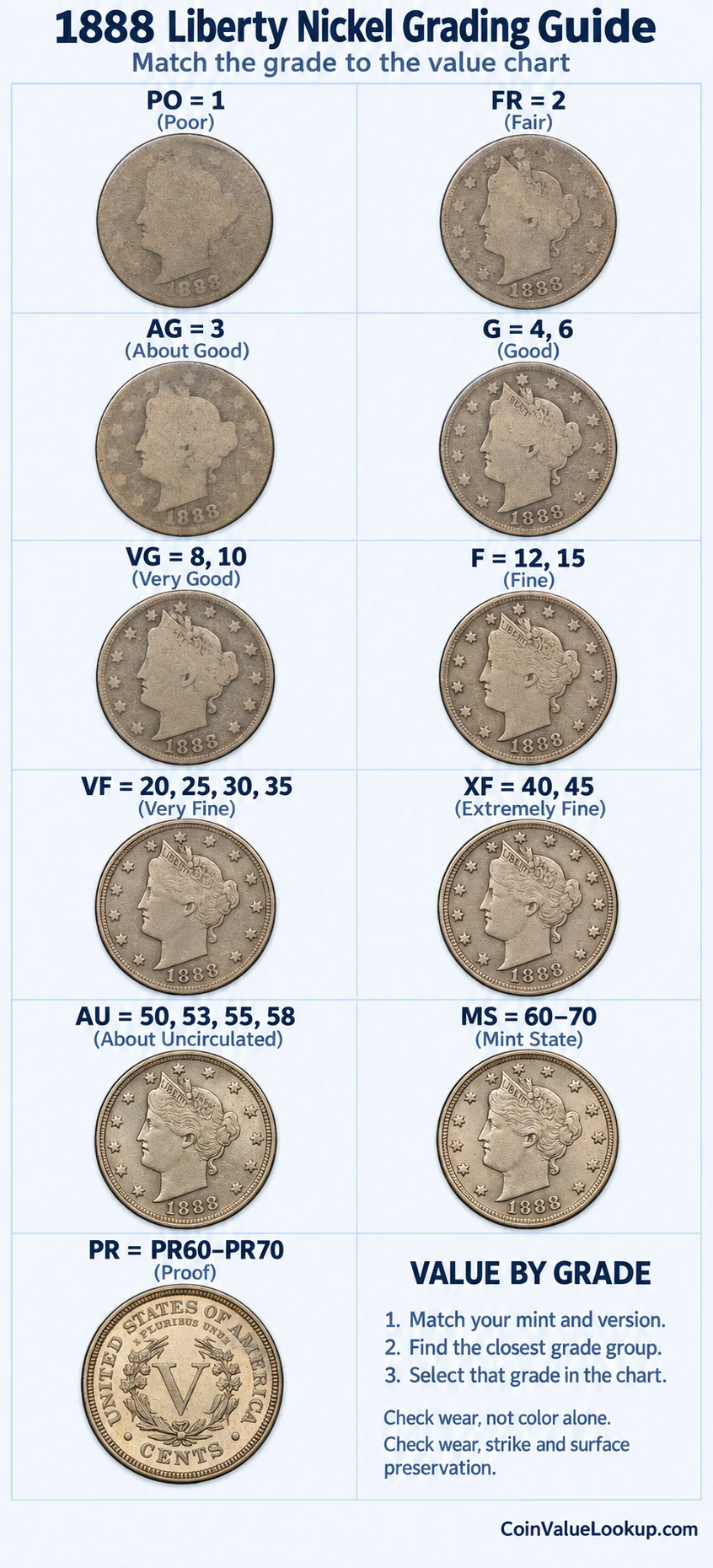
Start by checking the word LIBERTY on the coronet above the forehead. On a well-worn coin those letters blur and eventually vanish.
A coin grading around G4 will show a partial or faint LIBERTY, while a VF example retains full lettering with moderate wear on the high points.
Look at the hair curls above the ear and the cheek area — these are the first places to lose detail. On the reverse, examine the corn ears and wreath leaves for flatness.
But here is the catch: some 1888 nickels left the press with a weak strike, so soft details alone do not prove the coin circulated.
For uncirculated pieces, focus on original luster, the number of contact marks (bag marks from storage) and overall eye appeal. Compare your coin to the reference image to gauge where it falls.
Proofs are a manufacturing method, not a grade above Mint State. Genuine proofs have deeply mirrored fields and squared-off rims.
Inspect for hairlines from old cleaning — they knock the grade down fast.
Step 3: Check 1888 Liberty Nickel Value by Mint and Version
1888 Liberty Nickel — No Mint Mark — With CENTS Circulation
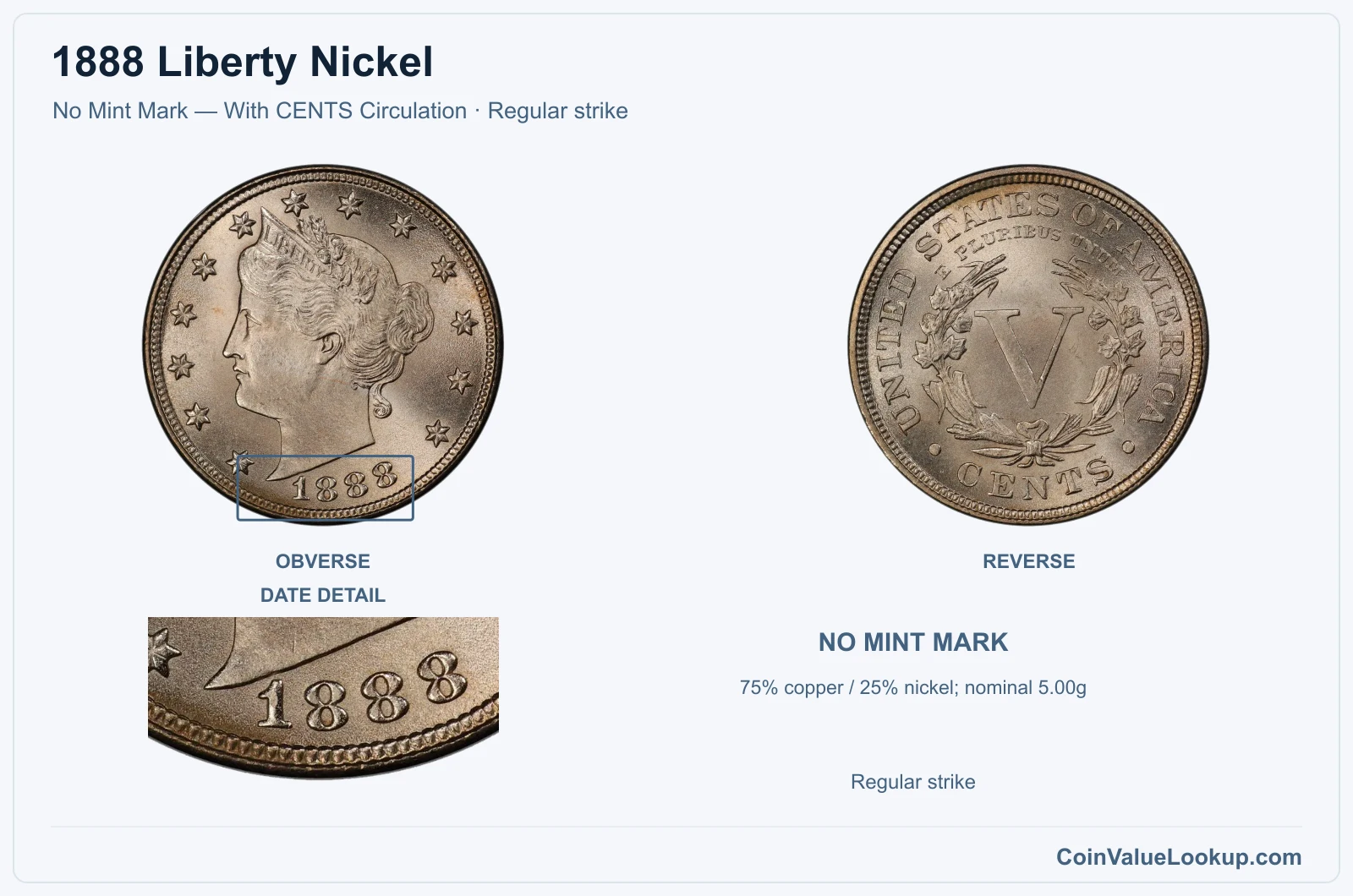
The standard 1888 Liberty Nickel is a Philadelphia business strike on a copper-nickel planchet, weighing about 5 grams. Every regular example carries the With CENTS reverse.
A USA Coin Book guide snapshot places a G4 example around $38 and an MS63 near $438.
That spread tells you most of the surviving population is heavily worn. Finding one with full luster and clean surfaces takes patience.
Weak strikes exist on this date, so a soft hair detail or mushy corn ear does not automatically mean heavy wear — check the fields and cheek for actual friction before downgrading.
Coin Value Lookup is a handy starting point if you want to look up guide values for other Liberty Nickel dates or different series entirely. A quick search there can save you a lot of scrolling.
Range Grade
Price Auction Records Appraisal PO PO 1
—
Coin Identifier FR FR 2
—
Coin Identifier AG AG 3
—
Coin Identifier G G 4
—
Coin Identifier
G 6
—
Coin Identifier VG VG 8
—
Coin Identifier
VG 10
—
Coin Identifier F F 12
—
Coin Identifier
F 15
Coin Identifier VF VF 20
Coin Identifier
VF 25
Coin Identifier
VF 30
Coin Identifier
VF 35
Coin Identifier XF XF 40
Coin Identifier
XF 45
Coin Identifier AU AU 50
Coin Identifier
AU 53
Coin Identifier
AU 55
Coin Identifier
AU 58
Coin Identifier MS MS 60
Coin Identifier
MS 61
Coin Identifier
MS 62
Coin Identifier
MS 63
Coin Identifier
MS 64
Coin Identifier
MS 65
Coin Identifier
MS 66
Coin Identifier
MS 67
—
Coin Identifier
MS 68
—
—
—
MS 69
—
—
—
MS 70
—
—
—
1888 Liberty Nickel — No Mint Mark — With CENTS Proof
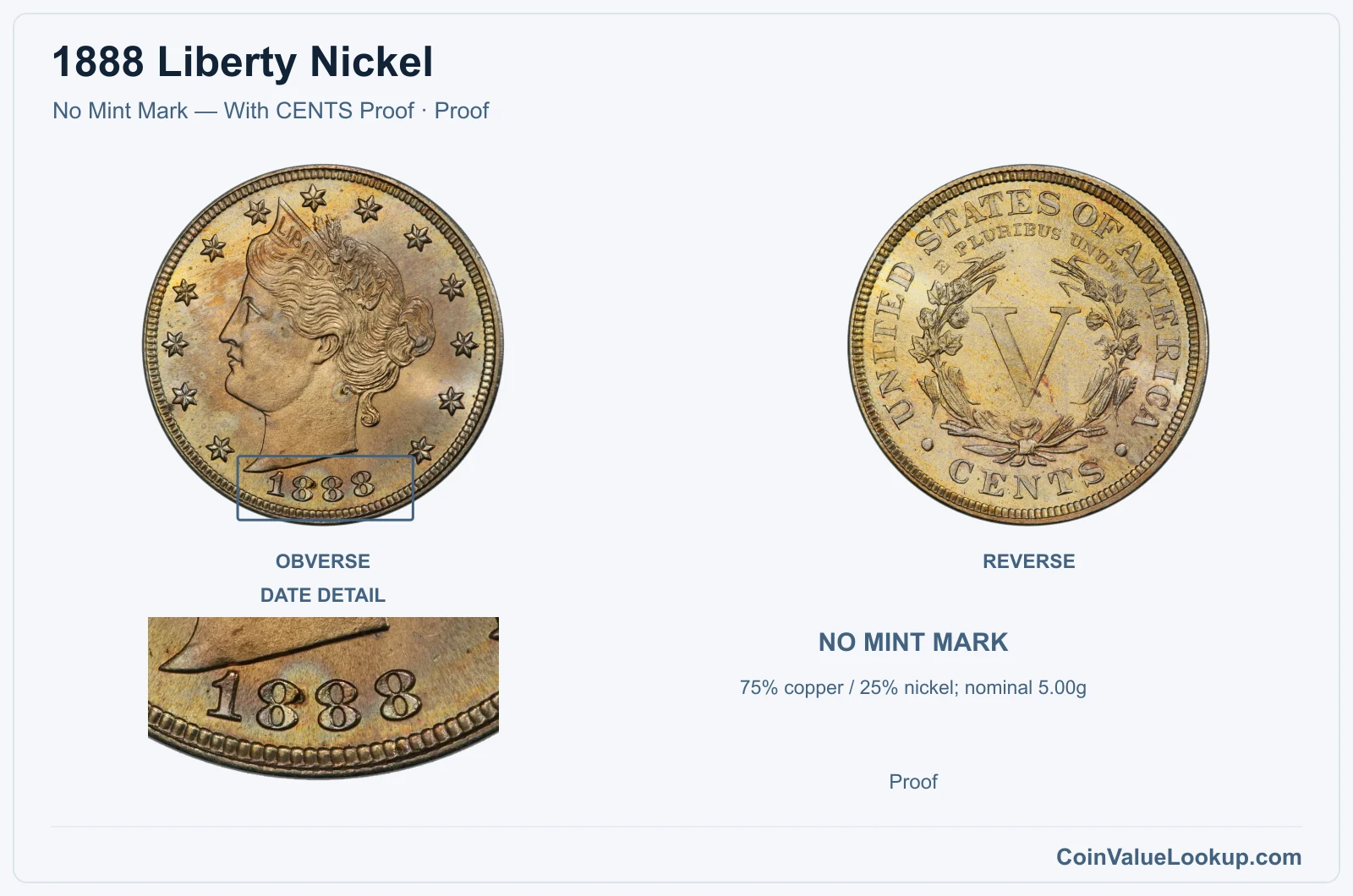
Philadelphia also produced proof 1888 Liberty Nickels for collectors, using polished dies and specially prepared planchets. The same copper-nickel alloy and With CENTS design apply, but the surfaces are distinctly different from business strikes.
A PR63 proof carries a guide estimate of about $344 per USA Coin Book. That is actually a bit below the MS63 business-strike figure, which reflects the relatively healthy proof survival rate for this date compared to pristine mint-state coins pulled from circulation.
When evaluating a proof, examine the fields under angled light for mirror reflectiveness and check rims for the sharp, squared profile that distinguishes a proof from a well-preserved business strike. Hairlines from past cleaning are the most common grade killer.
Show both faces and clear rim detail when seeking identification.
Range Grade
Price Auction Records Appraisal PR PR 1
—
Coin Identifier
PR 2
—
Coin Identifier
PR 3
—
Coin Identifier
PR 4
—
Coin Identifier
PR 6
—
Coin Identifier
PR 8
—
Coin Identifier
PR 10
—
Coin Identifier
PR 12
—
Coin Identifier
PR 15
—
Coin Identifier
PR 20
—
Coin Identifier
PR 25
—
Coin Identifier
PR 30
—
Coin Identifier
PR 35
—
Coin Identifier
PR 40
—
Coin Identifier
PR 45
—
Coin Identifier
PR 50
—
Coin Identifier
PR 53
—
Coin Identifier
PR 55
—
Coin Identifier
PR 58
—
Coin Identifier
PR 60
Coin Identifier
PR 61
—
Coin Identifier
PR 62
Coin Identifier
PR 63
Coin Identifier
PR 64
Coin Identifier
PR 65
Coin Identifier
PR 66
Coin Identifier
PR 67
Coin Identifier
PR 68
Coin Identifier
PR 69
—
—
—
PR 70
—
—
—
1888 Liberty Nickel Error List
1. 1888 Liberty Nickel — Doubled Die Obverse
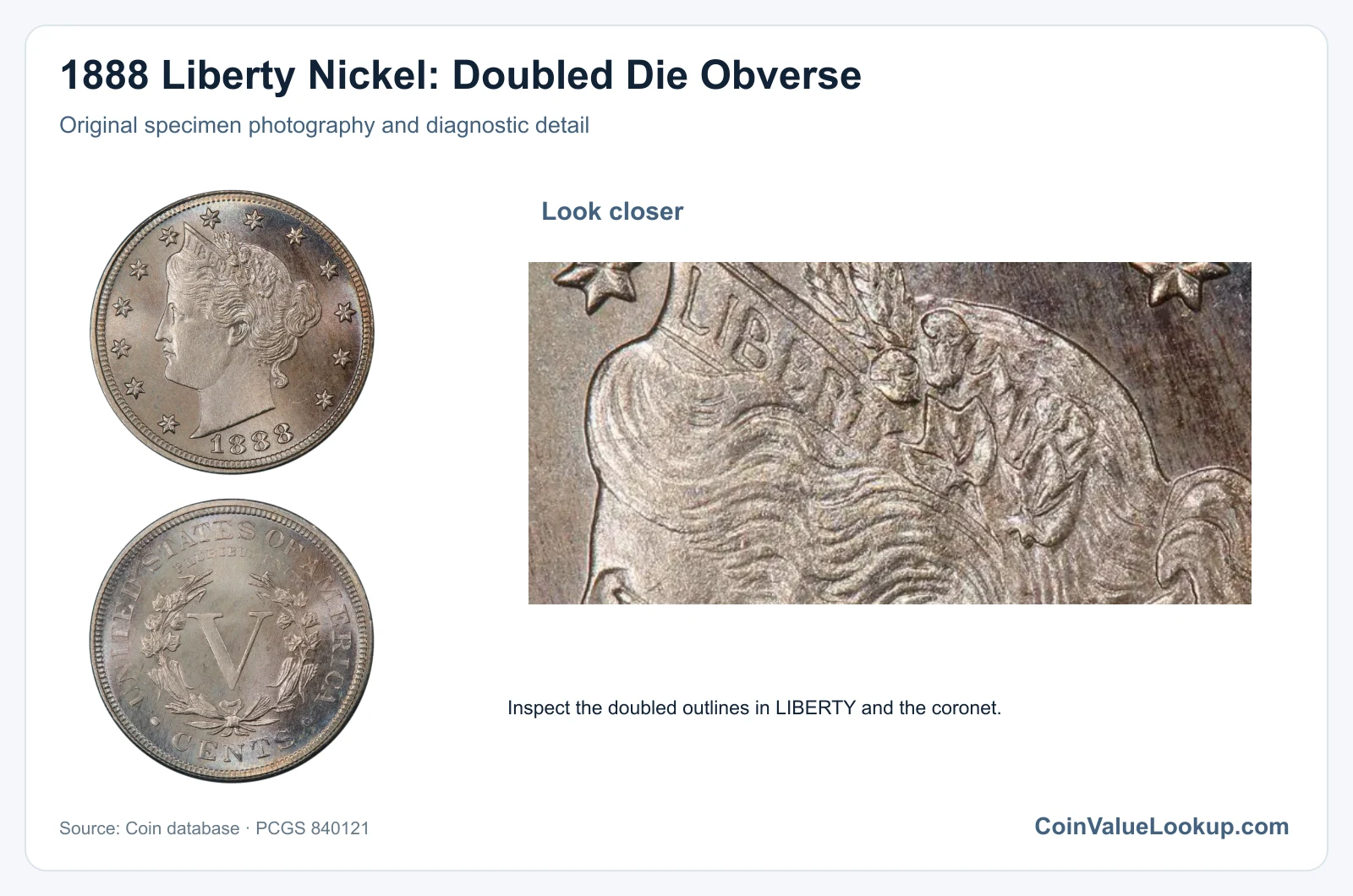
A doubled die obverse has been reported for the 1888 Liberty Nickel. This variety shows consistent separation or notching on obverse design elements — letters, the date or portrait features — caused by a misaligned hub impression during die production.
To check, compare your coin's obverse lettering and date digits against a normal 1888 nickel under the same lighting. Genuine doubling will appear as a uniform, repeatable shift rather than a flat shelf or mushy outline.
Machine doubling, which is far more common and far less valuable, tends to produce a flat, shelf-like distortion without the raised secondary image.
Reflections under magnification can also mimic doubling. No specific price is established here because value depends on the visibility of the doubling, overall coin condition and which die pairing is involved.
A barely visible example carries far less weight than a strong, eye-catching one.
2. 1888 Liberty Nickel — Doubled Die Reverse
Doubled die reverse varieties are also reported for this date. The same hub-doubling mechanism applies, but the affected elements are on the back of the coin — the wreath, CENTS legend or other reverse lettering.
Compare your reverse closely to a known normal example. Look for consistent separation in the lettering rather than smeared or flattened outlines.
Machine doubling on the reverse is a common lookalike that produces flat shelves beside the design elements without the distinct raised secondary image of a true doubled die.
Random damage, corrosion or old cleaning can also distort reverse details enough to fool a quick glance. No numerical price range is established here; the premium depends on the specific die variety, how bold the doubling appears and the coin's overall grade and surface condition.
3. 1888 Liberty Nickel — Repunched Date
Repunched date varieties exist on the 1888 Liberty Nickel. These occurred when a date punch was applied more than once in slightly different positions, leaving remnants of an earlier impression visible beside or beneath the final digits.
This is different from a doubled die, which affects the entire design. A repunched date is localized to the numerals.
Look for ghost digits, extra serifs or misaligned shadows near the 1, 8 or second 8. Magnification in the 5x–10x range is usually enough to spot a clear example.
A damaged date — from a hit, scratch or environmental corrosion — can mimic repunching, so compare against images of confirmed examples when possible. Machine doubling near the date is another common lookalike.
No specific price data is available; value depends on the clarity of the repunching and the coin's condition.
4. 1888 Liberty Nickel — Wrong Planchet / Off-Metal Strike
An 1888 Liberty Nickel struck on a wrong planchet is a genuine mint error where the nickel dies impressed a blank intended for another denomination. A cent-planchet example has been cataloged for this date, and foreign-planchet strikes have also been reported separately.
The giveaway is physical: the coin will differ noticeably in weight, diameter or edge character compared to a standard 5-gram, 21.2 mm nickel blank. The design may be incomplete if the planchet was smaller than intended.
Weigh and measure carefully before drawing conclusions.
Plated coins, acid-treated surfaces, corrosion and deliberate alterations can all change a coin's appearance enough to suggest a wrong metal. Color alone is not proof.
No numerical price is established here, but confirmed wrong-planchet errors are scarce and attract specialist collectors. Condition, the specific planchet involved and third-party attribution all influence what someone will pay.