1889 Liberty Nickel Coin Value: How Much Is It Worth?
The 1889 Liberty Nickel is a Philadelphia-only issue struck in copper-nickel, and it turns up often enough in circulated grades that most collectors can find one without too much trouble. A USA Coin Book guide estimate places the business strike at about $19 in G4 and around $217 in MS63.
Proofs in PR63 sit near $344 in the same guide. Original surfaces and strike quality matter here, so condition is everything.
Fast Way to Identify Your 1889 Liberty Nickel
Snap clear photos of both the front and back of your 1889 Liberty Nickel and upload them to our identifier for a preliminary look at what you have. This step helps sort out the basic version and general condition range before you dig deeper into specifics.
Good lighting and a steady hand go a long way.
1889 Liberty Nickel Value
Upload both sides of your 1889 Liberty Nickel.
Front Obverse
Upload photo
Back Reverse
Upload photo
Which 1889 Liberty Nickel Versions Are Worth Money?
- Business strikes in MS63 or higher carry a meaningful step up in guide value compared to circulated examples, around $217 versus $19 in G4 per USA Coin Book.
- PR63 proofs are listed near $344 in the same guide — original proof surfaces with minimal hairlines drive the premium.
- Repunched date varieties, off-center strikes, and lamination errors have been reported for this date and can carry their own premiums depending on condition and visibility.
Step 1: Identify Your 1889 Liberty Nickel Mint Mark and Version
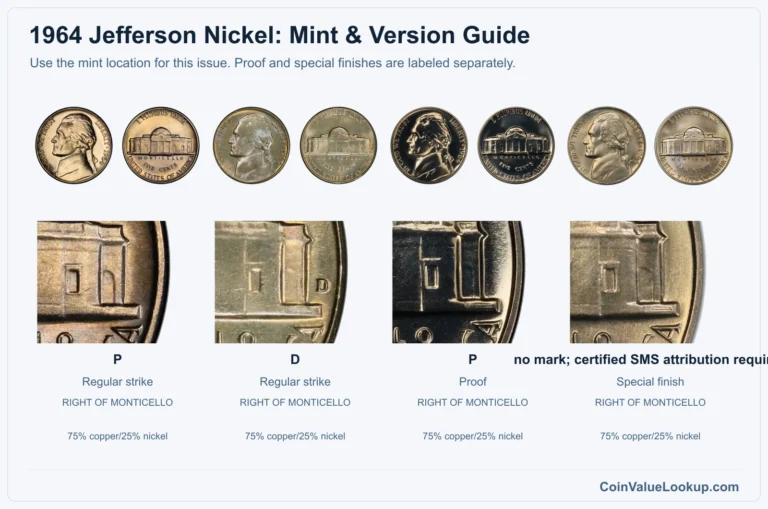
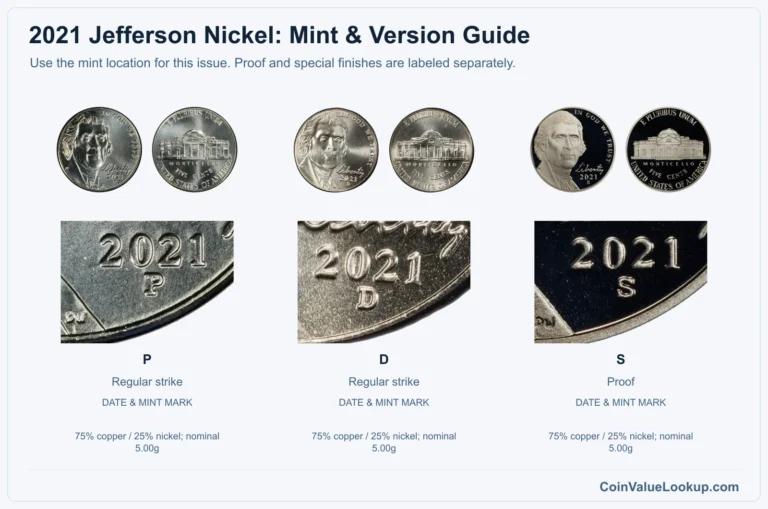
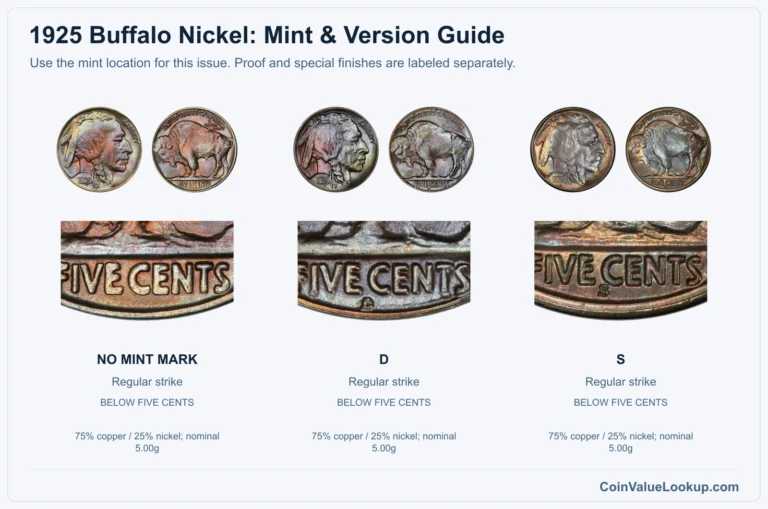
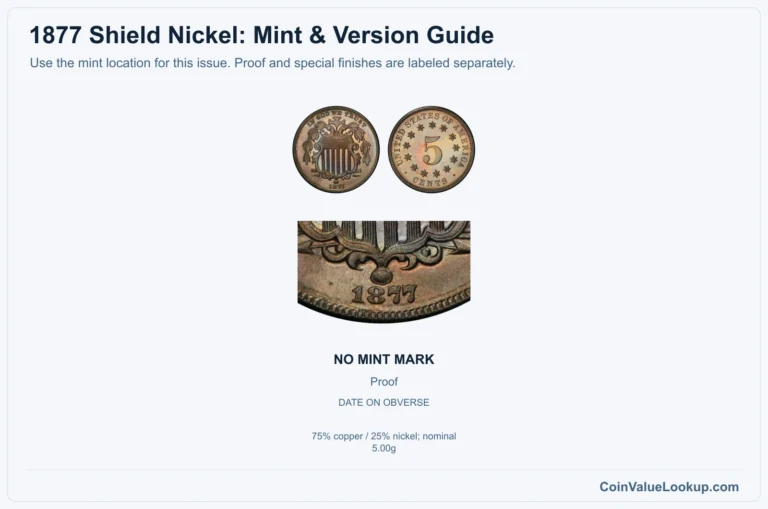
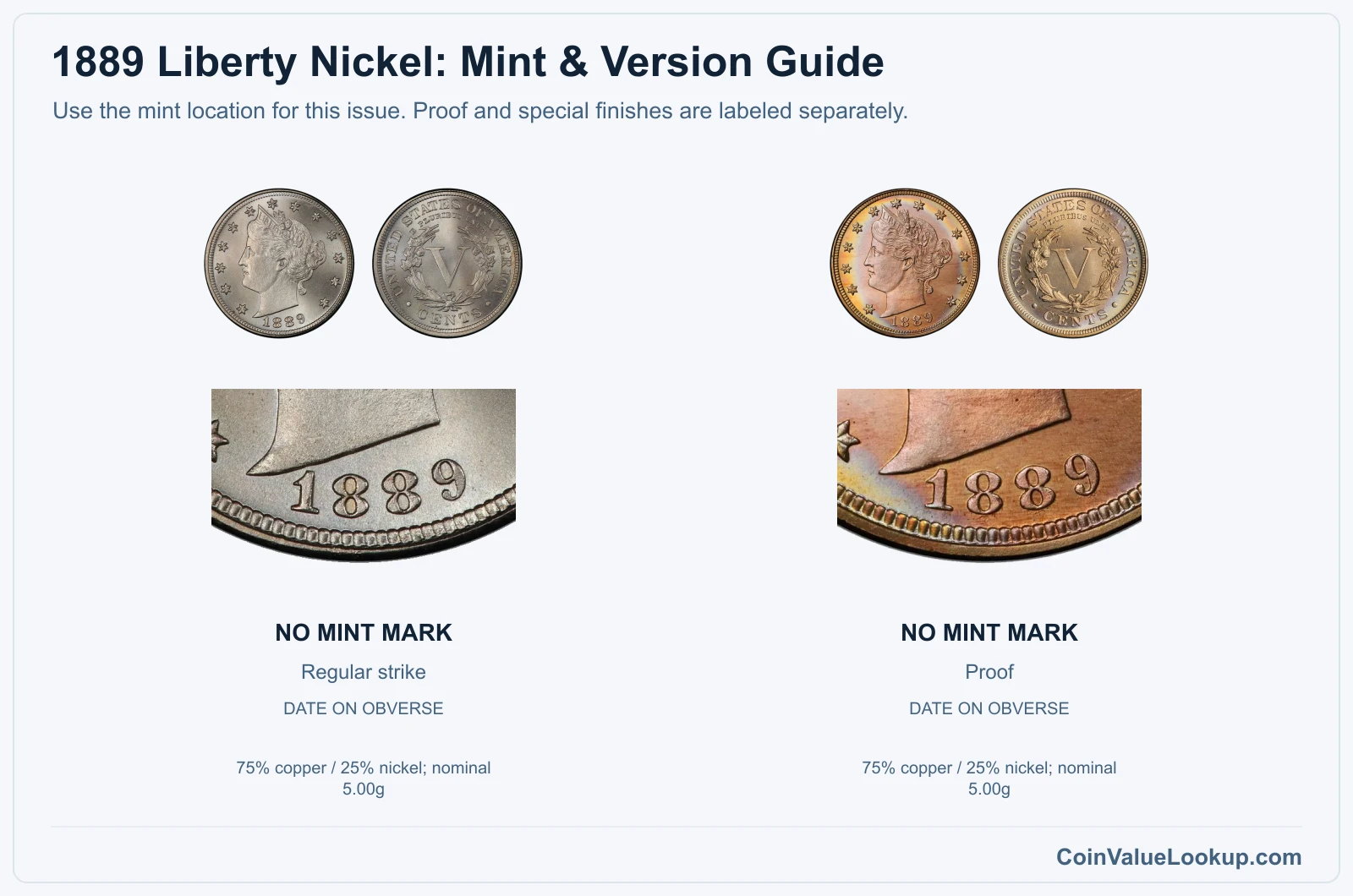
Every 1889 Liberty Nickel was struck at the Philadelphia Mint, so there is no mintmark to look for. If you see a D, S, or any other letter on the coin, you are either looking at the wrong date or a post-mint alteration.
The composition is 75% copper and 25% nickel, with a nominal weight of 5.00 grams, a diameter of 21.2 mm, and a plain edge. There is no regular silver branch for this year.
All genuine 1889 nickels carry the "CENTS" denomination on the reverse, placed below the Roman numeral V inside the wreath. The earlier 1883 "No CENTS" variety does not exist for 1889, so do not confuse the two years.
If your coin lacks the word CENTS entirely, double-check the date.
Step 2: Check Your 1889 Liberty Nickel Grade
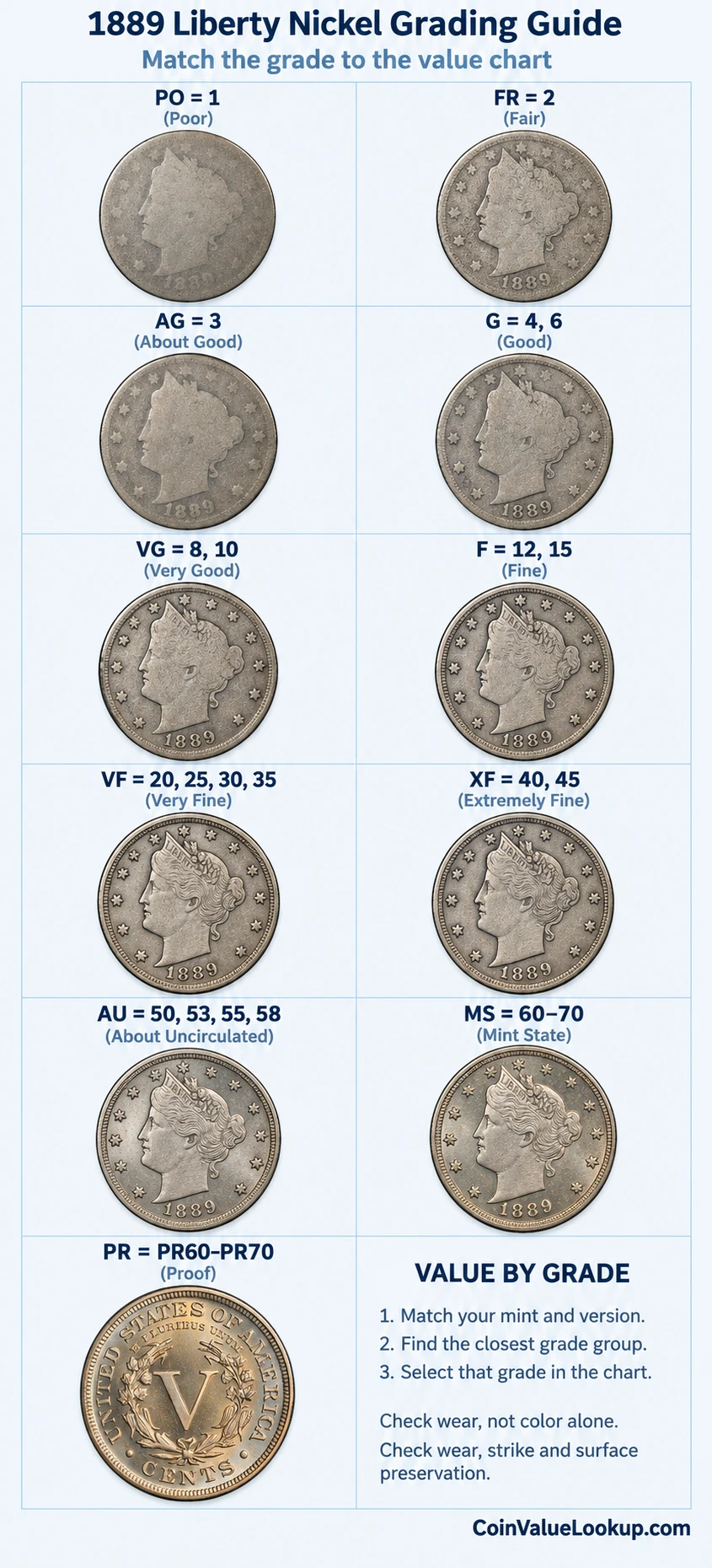
Start with the obverse. The word LIBERTY on the coronet should be fully readable in mid grades and razor-sharp in higher ones.
The high points of the hair curls above the ear and the cheek are the first areas to show friction, so look there for any smoothing or loss of detail.
On the reverse, the individual kernels of the corn ears and the fine lines in the wreath leaves wear down progressively. Compare your coin to the reference comparison image to gauge where it falls.
Weak strikes are common on Liberty Nickels. A soft impression on the hair or corn does not automatically mean the coin circulated — check the fields for luster and contact marks instead.
A coin with full cartwheel luster but mushy details was likely just poorly struck.
Proofs are a manufacturing category, not a grade above Mint State. They have mirrorlike fields and squared-off rims when well preserved.
Hairlines across those reflective surfaces are the main grading concern. Look carefully under angled light.
Step 3: Check 1889 Liberty Nickel Value by Mint and Version
1889 Liberty Nickel — No Mint Mark — With CENTS Circulation
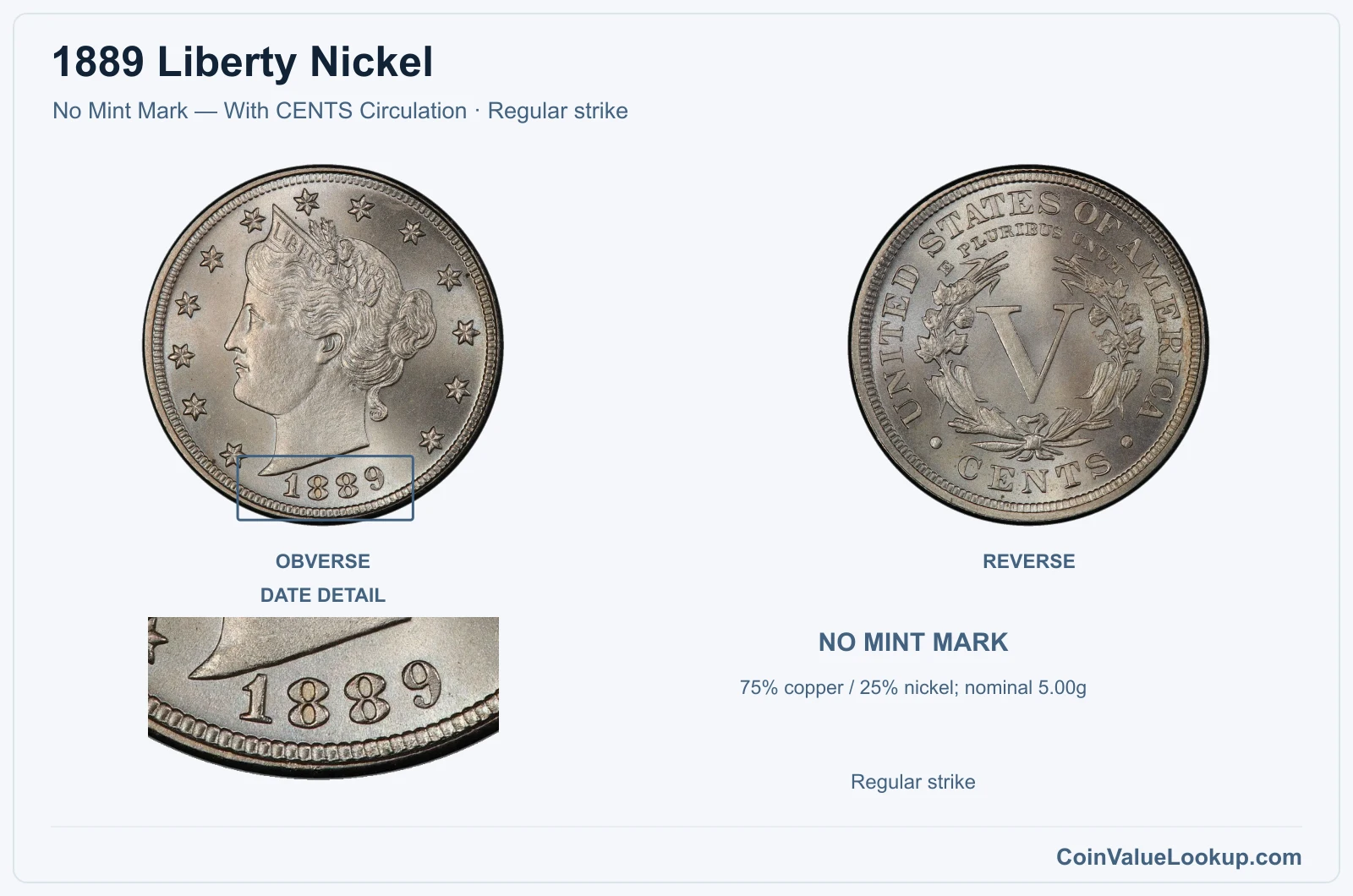
The standard 1889 business strike was produced at Philadelphia with no mintmark. It is composed of 75% copper and 25% nickel, weighs about 5 grams, and carries the "CENTS" reverse design.
USA Coin Book guide estimates place this version at roughly $19 in G4 and about $217 in MS63. Those are retail guide figures from a single February 2026 snapshot, not guaranteed sale prices.
Original surfaces make a real difference. Cleaning, dark environmental toning, or heavy contact marks will pull the value well below guide levels even if the technical grade seems right.
A well-struck example with full luster is what collectors chase.
Range Grade
Price Auction Records Appraisal PO PO 1
—
Coin Identifier FR FR 2
—
Coin Identifier AG AG 3
—
Coin Identifier G G 4
—
Coin Identifier
G 6
—
Coin Identifier VG VG 8
—
Coin Identifier
VG 10
—
Coin Identifier F F 12
—
Coin Identifier
F 15
—
Coin Identifier VF VF 20
Coin Identifier
VF 25
—
Coin Identifier
VF 30
—
Coin Identifier
VF 35
Coin Identifier XF XF 40
Coin Identifier
XF 45
Coin Identifier AU AU 50
Coin Identifier
AU 53
Coin Identifier
AU 55
Coin Identifier
AU 58
Coin Identifier MS MS 60
—
Coin Identifier
MS 61
Coin Identifier
MS 62
Coin Identifier
MS 63
Coin Identifier
MS 64
Coin Identifier
MS 65
Coin Identifier
MS 66
Coin Identifier
MS 67
Coin Identifier
MS 68
—
—
—
MS 69
—
—
—
MS 70
—
—
—
1889 Liberty Nickel — No Mint Mark — With CENTS Proof
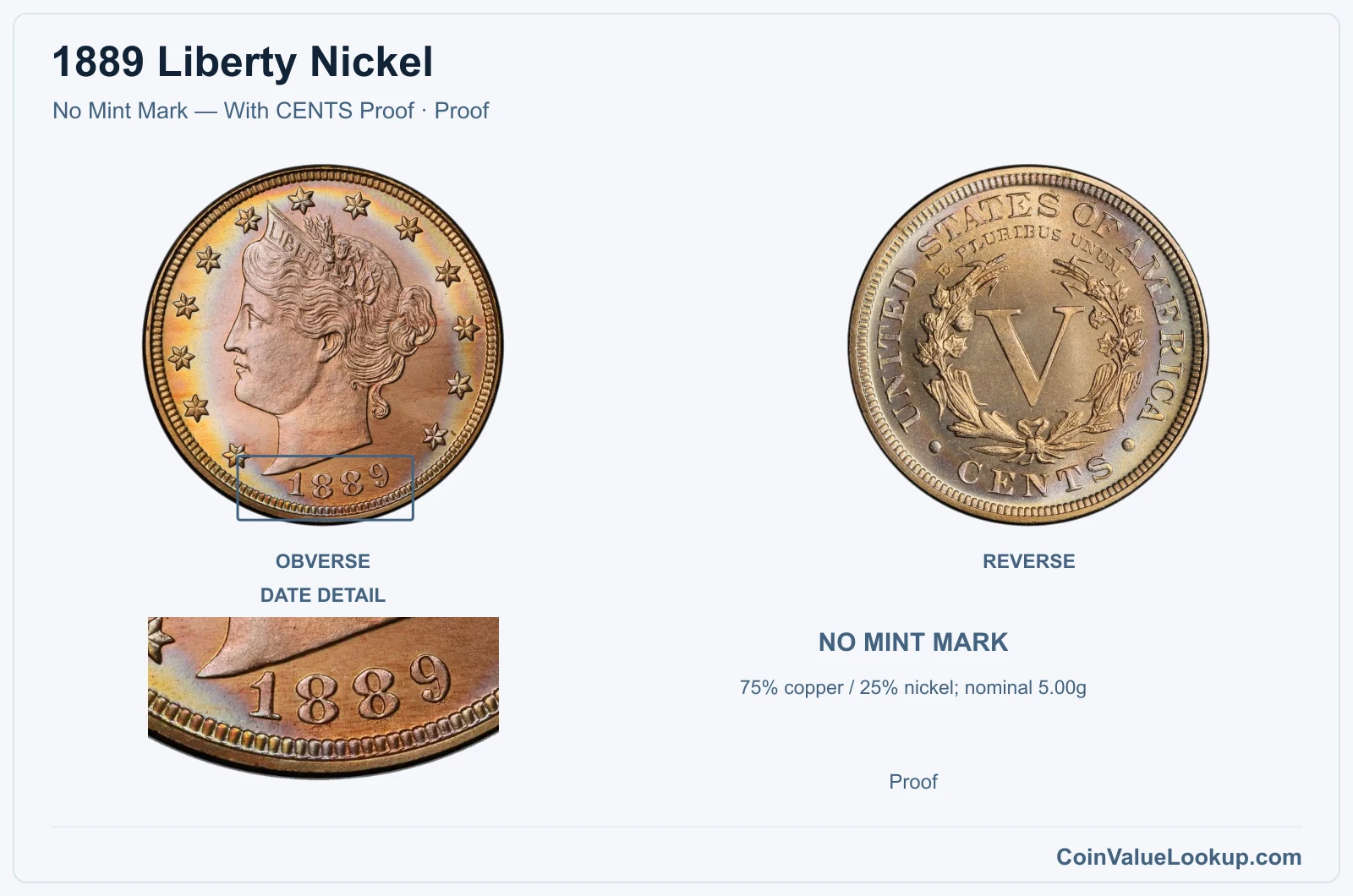
Philadelphia also struck proof versions of the 1889 Liberty Nickel for collectors. These proofs share the same copper-nickel alloy and "CENTS" reverse as the business strikes, but they were made with polished dies and specially prepared planchets, producing mirror-like fields and sharp rims.
A PR63 example is listed near $344 in the USA Coin Book guide. When evaluating a proof, show both faces and pay close attention to the field surfaces and rim detail.
Hairlines from improper handling are the most common flaw that limits proof grades.
Coin Value Lookup is a handy starting point if you are researching other Liberty Nickel dates or different series entirely. You can look up guides organized by year and denomination to compare values across your collection.
Range Grade
Price Auction Records Appraisal PR PR 1
—
Coin Identifier
PR 2
—
Coin Identifier
PR 3
—
Coin Identifier
PR 4
—
Coin Identifier
PR 6
—
Coin Identifier
PR 8
—
Coin Identifier
PR 10
—
Coin Identifier
PR 12
—
Coin Identifier
PR 15
—
Coin Identifier
PR 20
—
Coin Identifier
PR 25
—
Coin Identifier
PR 30
—
Coin Identifier
PR 35
—
Coin Identifier
PR 40
—
Coin Identifier
PR 45
—
Coin Identifier
PR 50
—
Coin Identifier
PR 53
—
Coin Identifier
PR 55
—
Coin Identifier
PR 58
—
Coin Identifier
PR 60
Coin Identifier
PR 61
Coin Identifier
PR 62
Coin Identifier
PR 63
Coin Identifier
PR 64
Coin Identifier
PR 65
Coin Identifier
PR 66
Coin Identifier
PR 67
Coin Identifier
PR 68
Coin Identifier
PR 69
—
—
—
PR 70
—
—
—
1889 Liberty Nickel Error List
1. 1889 Liberty Nickel — Repunched Date
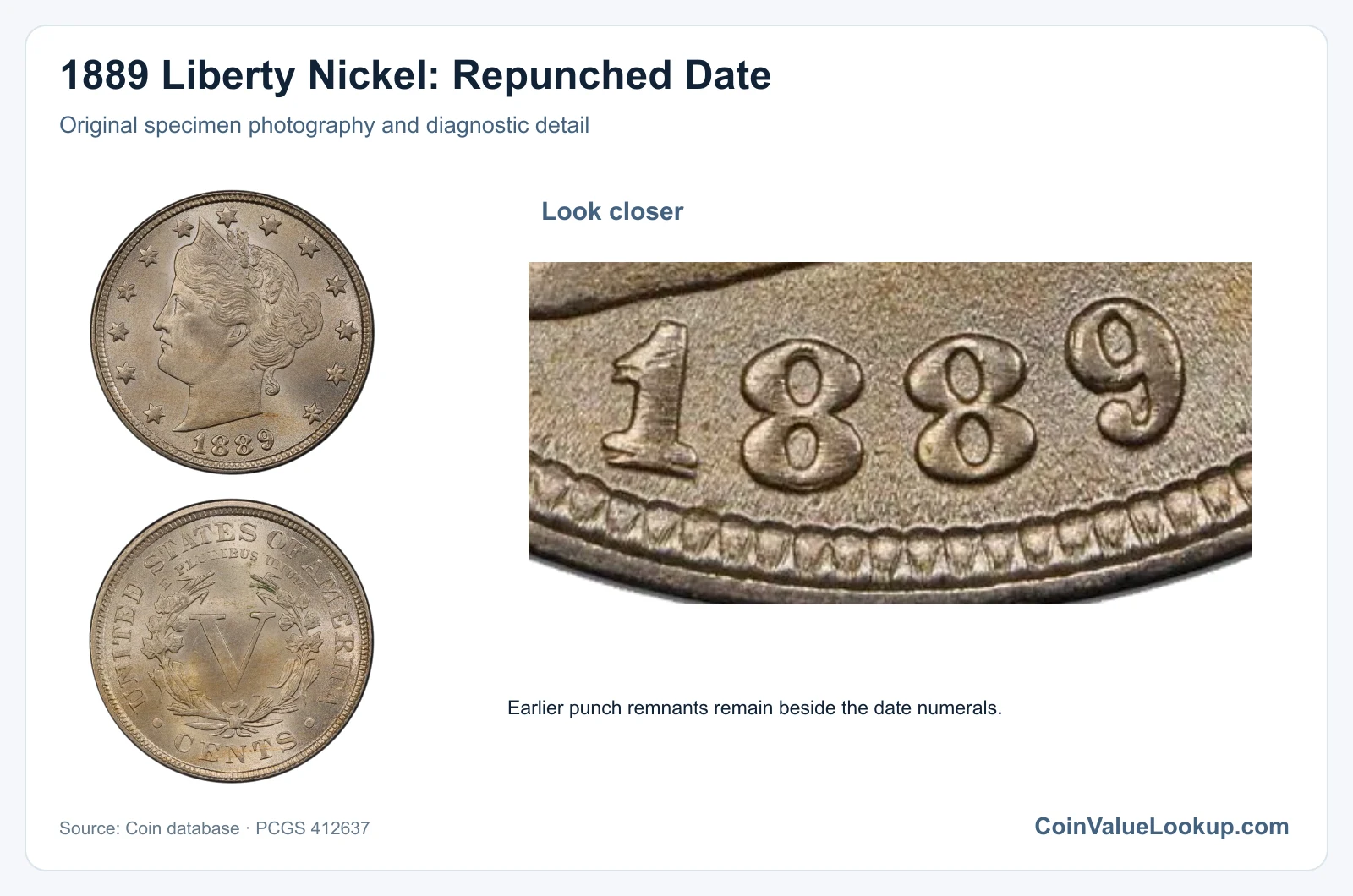
A repunched date on the 1889 Liberty Nickel shows remnants of an earlier punch position next to the final date numerals. You may see traces of a ghost "8" or "9" slightly offset from the primary digit.
This is a die variety, not a struck-doubling event — the date punch itself was placed more than once during die preparation, which is mechanically different from a doubled die where the entire design shifts.
Do not confuse this with a damaged date caused by a hit or scratch, or with machine doubling that produces flat, shelf-like secondary images. True repunching shows rounded traces that match the contour of the numeral.
Condition, the clarity of the repunching, and overall eye appeal all affect what such a piece is worth, so individual assessment matters.
2. 1889 Liberty Nickel — Off-Center Strike
An off-center strike occurs when the planchet is not seated properly between the dies, shifting the entire design to one side and leaving an unstruck crescent of blank metal on the opposite edge. On an 1889 Liberty Nickel, a cataloged example has been noted at roughly 15% off center.
The date must remain visible for the coin to be attributable — and therefore collectible. Without a readable date, it is just a generic Liberty Nickel error, which is far less desirable.
Watch out for lookalikes: a straight-clipped edge, post-mint flattening from a vise, or a coin that simply wore unevenly can mimic an off-center strike at a glance. Value depends on the percentage of displacement, the coin's overall condition, and full date visibility.
3. 1889 Liberty Nickel — Lamination / Split Planchet
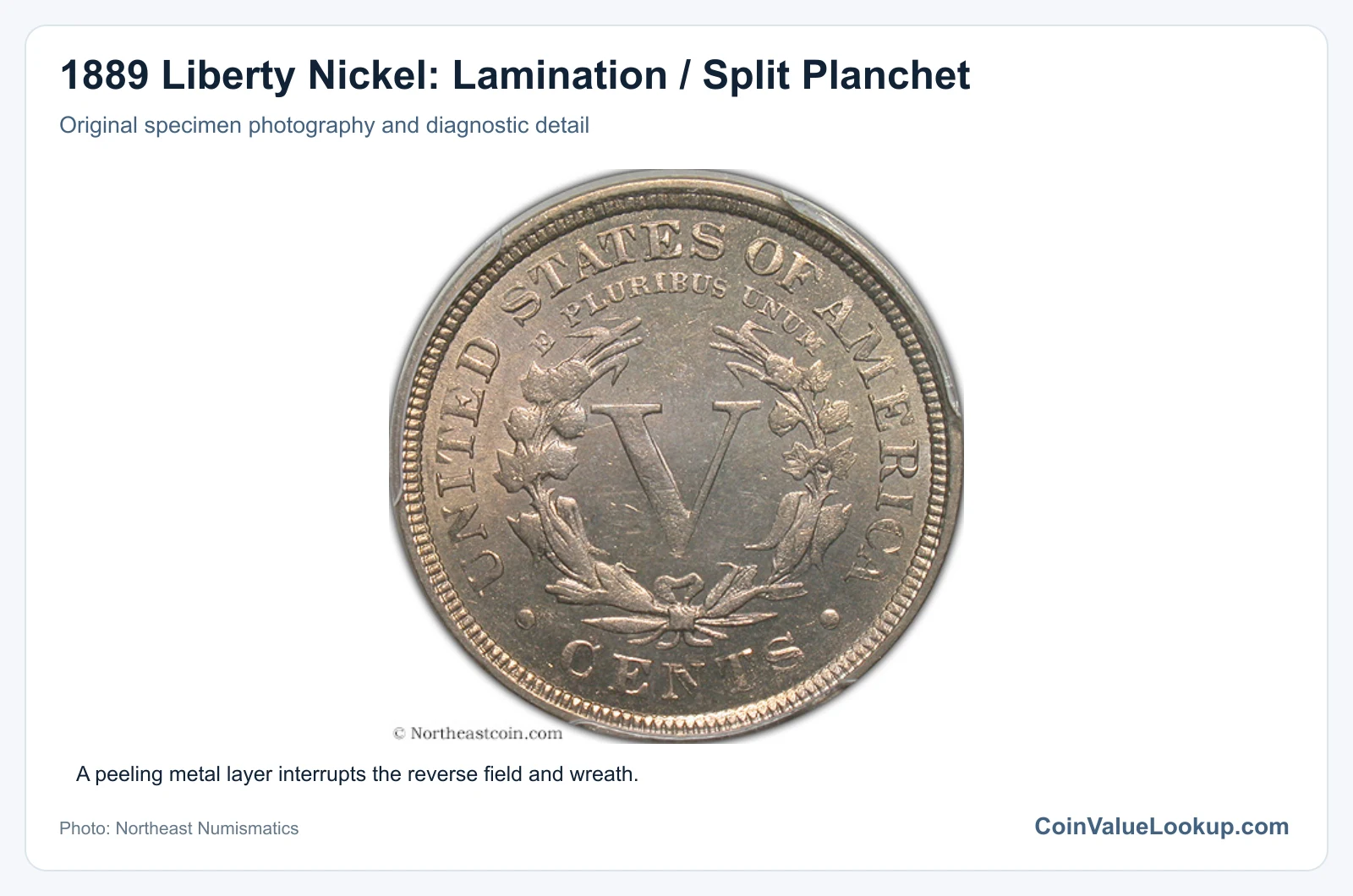
Lamination errors appear as peeling metal, a retained flap, or an internal separation within the copper-nickel alloy. On an 1889 Liberty Nickel, this type of error has been reported and attributed by a major grading service.
When photographing one, capture the edge profile alongside the affected face — this helps show the depth and nature of the split.
The key distinction is between a genuine planchet flaw created before or during striking and post-mint damage. Scraping, corrosion pitting, or a deliberately cut surface can look superficially similar.
A true lamination usually follows the coin's contour and shows no tool marks at its edges. Condition, the size of the affected area, and overall visual impact all factor into how much a lamination error adds to value, so each piece needs its own evaluation.