1903 Barber Quarter Coin Value: How Much Is It Worth?
The 1903 Barber quarter is a 90% silver coin struck across three mints and also produced as a proof at Philadelphia. Guide estimates from USA Coin Book range from about $21.00 to $1,252.00 depending on the specific mint, finish and condition.
That spread is not one price for every coin — a worn Philadelphia piece and an uncirculated San Francisco strike sit in very different territory. Mint, grade and original surfaces all matter.
Fast Way to Identify Your 1903 Barber Quarter
The quickest way to start figuring out what you have is to upload clear photos of both sides of your coin. A front shot shows the date and Liberty's condition, while the back reveals the mintmark under the eagle's tail.
Send us your images for a preliminary identification to help narrow down which version and approximate grade range applies to your quarter.
1903 Barber Quarter Value
Upload both sides of your 1903 Barber Quarter.
Front Obverse
Upload photo
Back Reverse
Upload photo
Which 1903 Barber Quarter Versions Are Worth Money?
- 1903-S quarters carry the highest guide estimate at MS63, listed at $1,252.00 by USA Coin Book — the San Francisco mint version is the one to hope for.
- 1903-O from New Orleans follows closely, with a guide estimate of $1,196.00 at MS63, making well-preserved examples worth a serious look.
- 1903 proof quarters (1903 PR) are listed at $799.00 at PR63 — a collectible Philadelphia proof finish separate from regular strikes.
- Check the mintmark first; a worn common-date Philadelphia piece starts around $21.00 at G4, so mint identity matters enormously.
Step 1: Identify Your 1903 Barber Quarter Mint Mark and Version
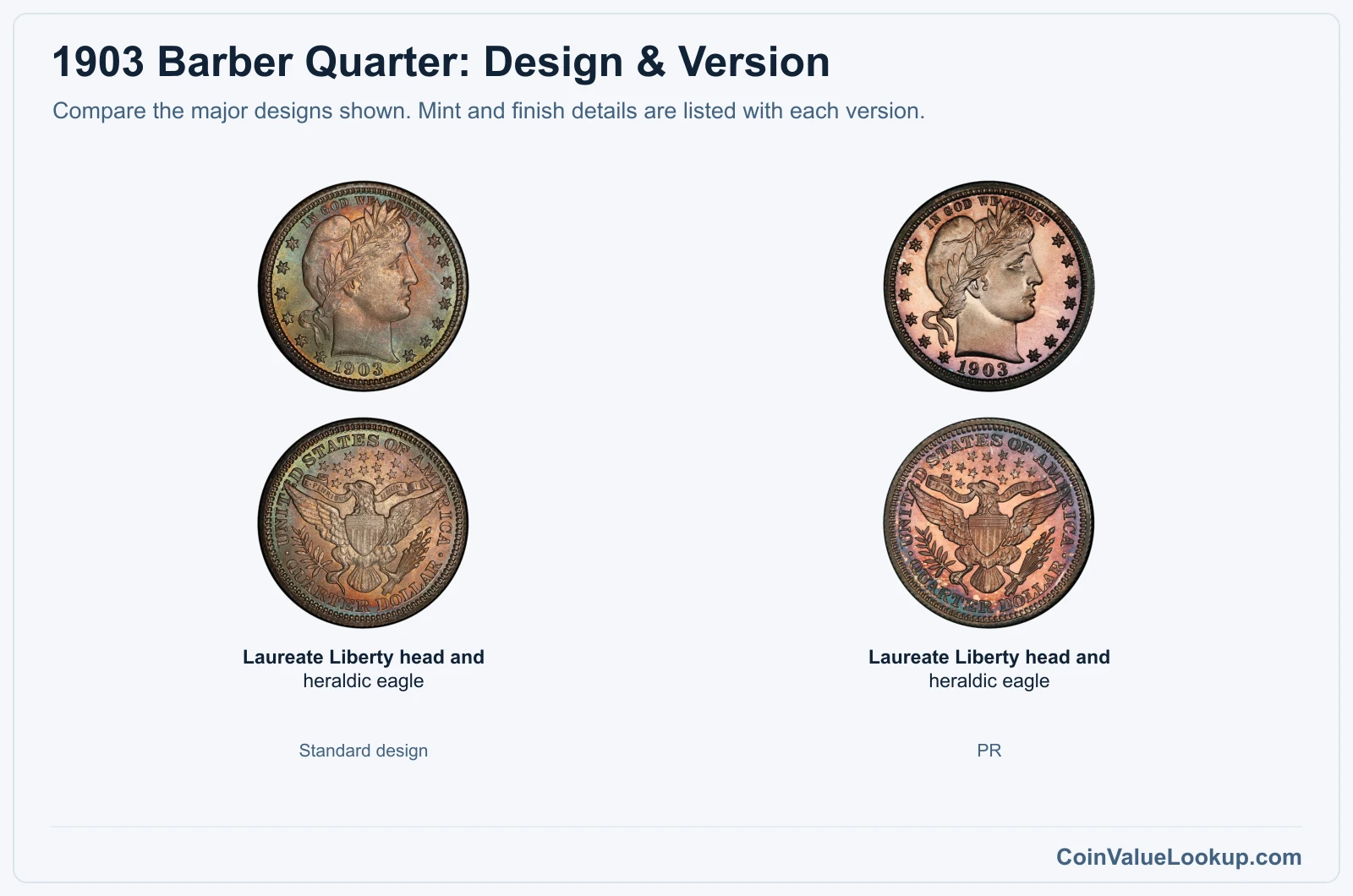
Barber quarters all share the same laureate Liberty head on the obverse and a heraldic eagle on the reverse. The 1903 issue was struck in 90% silver and 10% copper, weighing 6.25 grams.
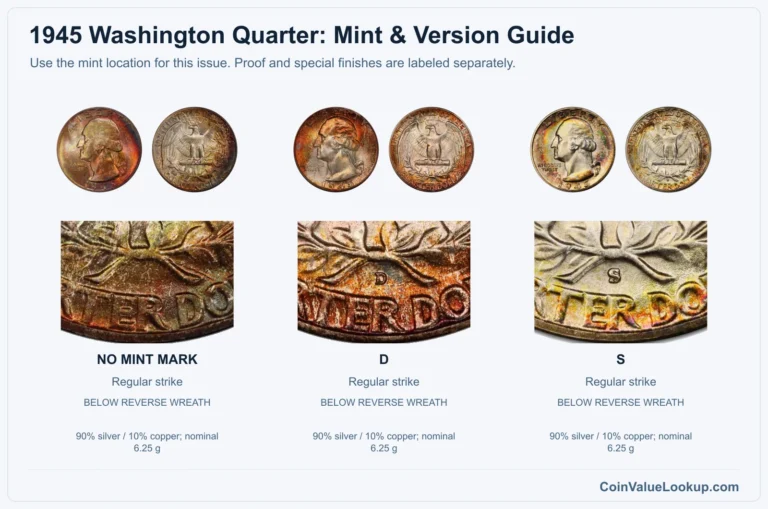
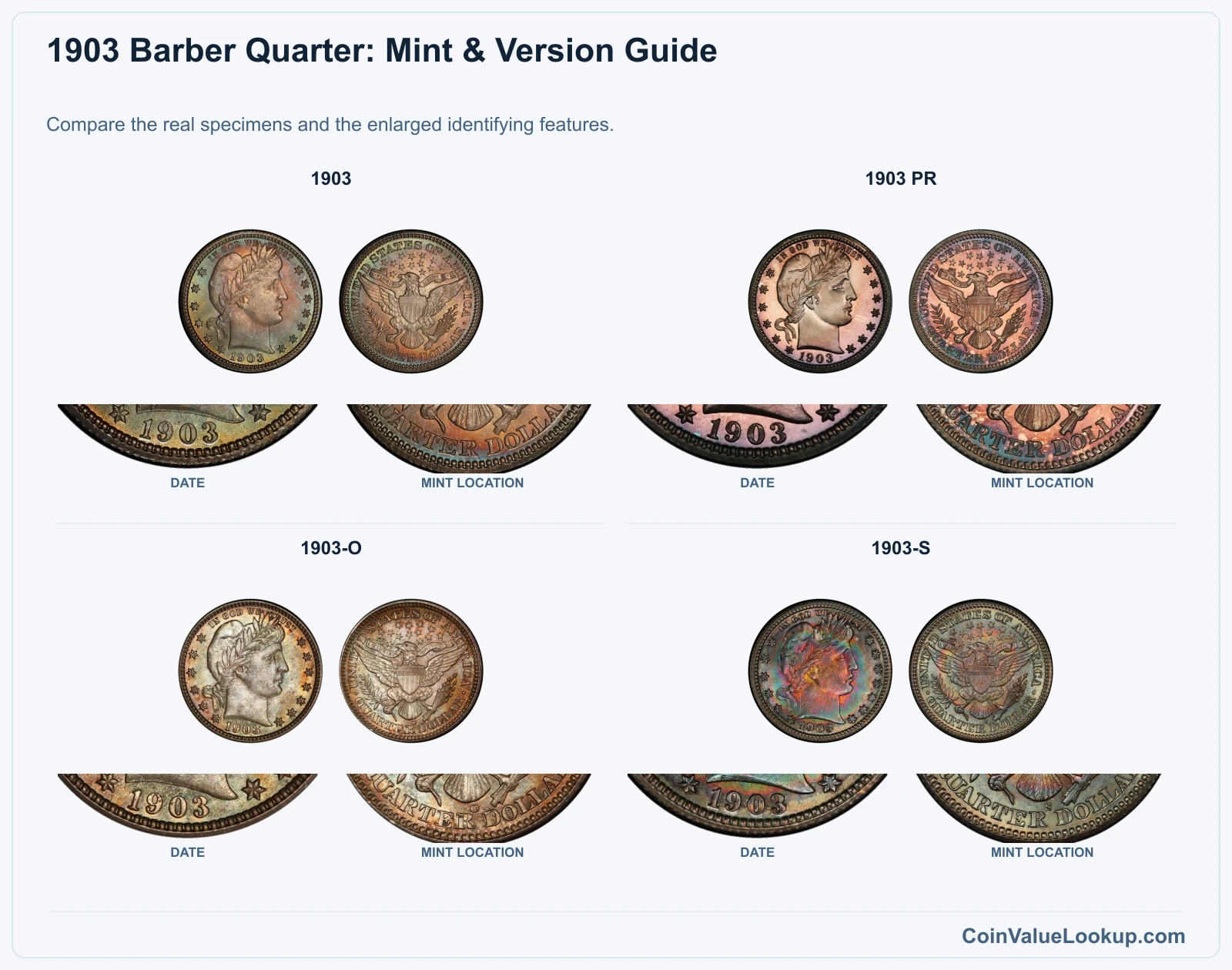
To figure out which branch you have, flip the coin over. Look below the eagle's tail feathers, just above the words QUARTER DOLLAR.
No letter means Philadelphia. An "O" means New Orleans.
An "S" means San Francisco.
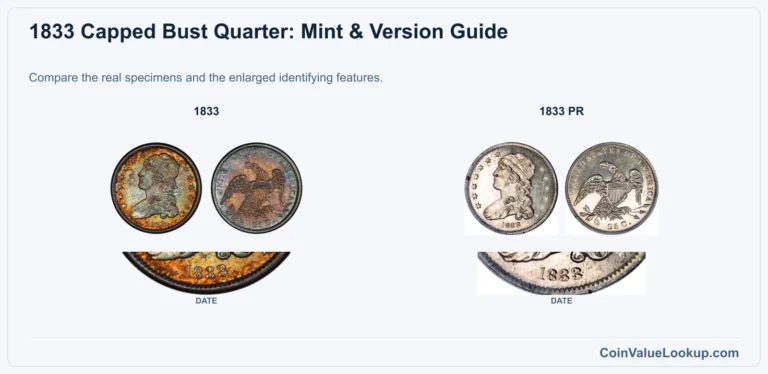
Philadelphia also produced proof versions this year. A proof is a special manufacturing finish — mirror fields, sharp detail from the first strike — not simply a shiny coin.
If you think yours might be a proof, compare it carefully against known examples before assuming.
The four branches for this year are: 1903 (Philadelphia business strike), 1903 PR (Philadelphia proof), 1903-O (New Orleans), and 1903-S (San Francisco). Confirming your branch is the first step before looking at any value guide.
Step 2: Check Your 1903 Barber Quarter Grade
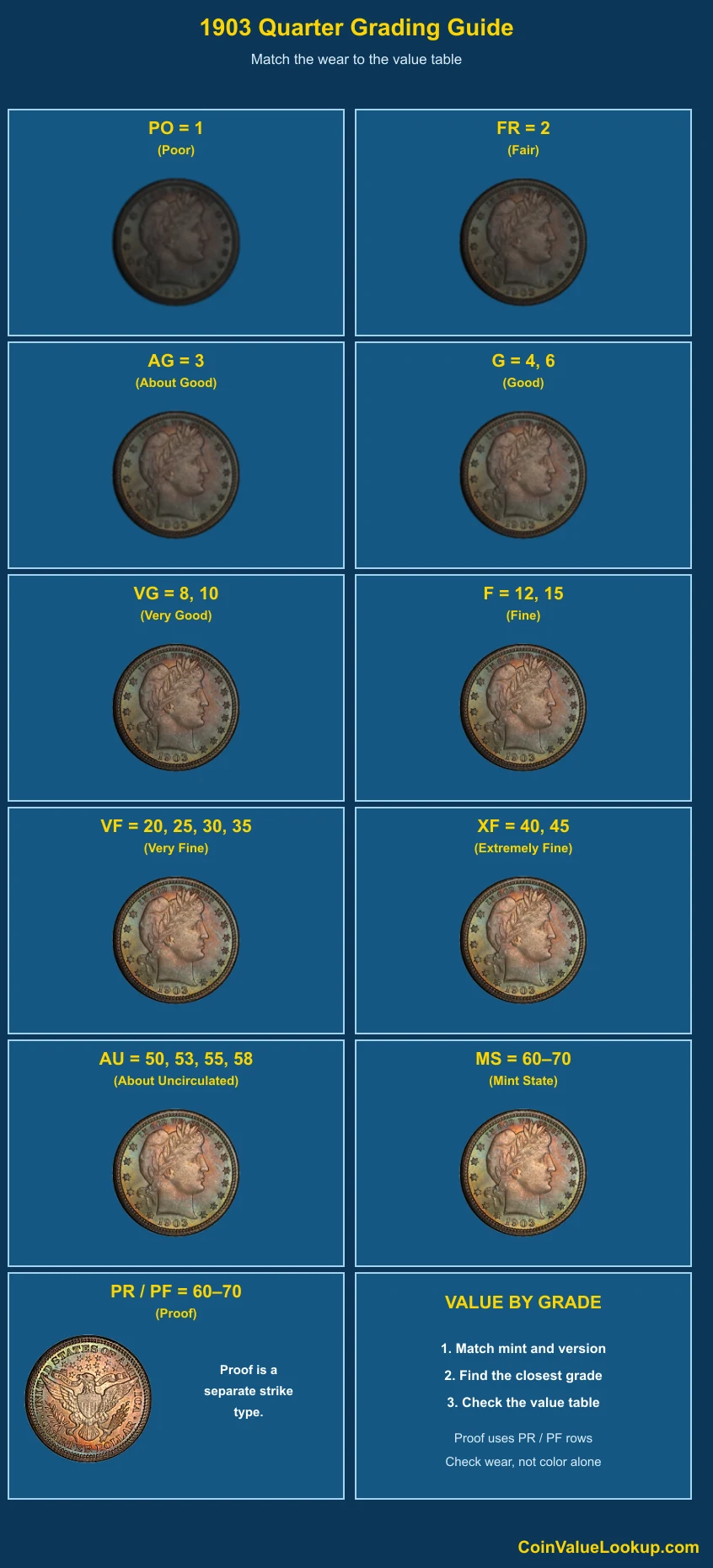
Start with the hair above Liberty's forehead and the detail in her laurel wreath — those wear first. Check her cheek for flatness; a coin that has circulated will show smoothing there before almost anywhere else.
On the reverse, examine the eagle's breast feathers, the tops of the wings and the tail. These high points lose definition early in a coin's life.
The word LIBERTY is stamped into the headband. On a well-worn coin (around Good-4) those letters are mostly gone.
At mid-grades you will see partial letters, and a fully readable LIBERTY generally means the coin still has decent detail. But do not rely on LIBERTY alone — combine it with overall surface wear.
Compare your coin against the grading comparison image. Look at luster alongside wear.
A coin can have weak detail from a soft strike at the mint yet still be uncirculated with full luster. Do not confuse a bright, cleaned surface with original mint luster either — cleaning leaves tiny hairlines visible under magnification and can significantly reduce collector value.
Step 3: Check 1903 Barber Quarter Value by Mint and Version
1903 Barber Quarter
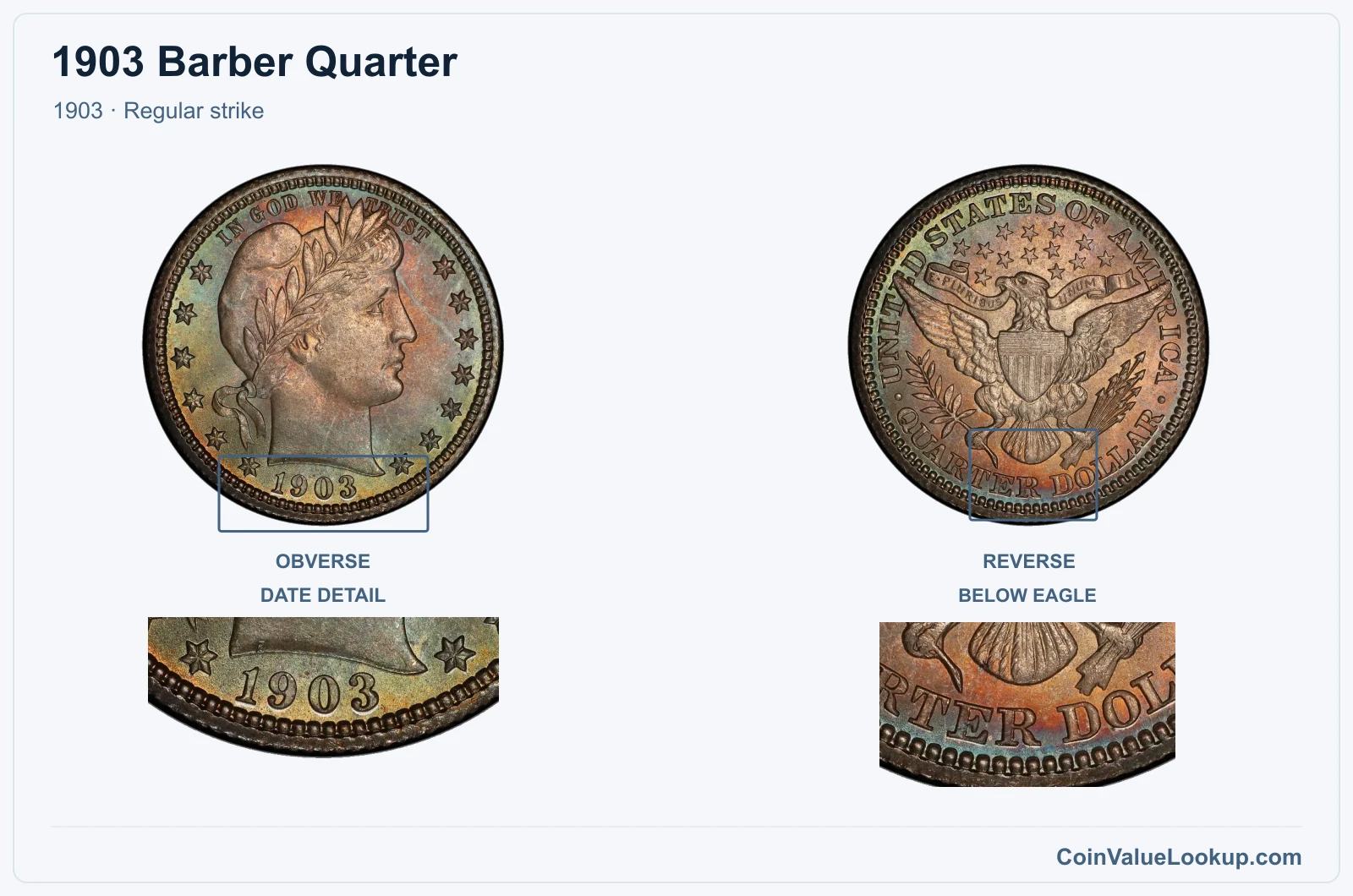
The 1903 Philadelphia business strike carries no mintmark. You will see a blank space below the eagle's tail on the reverse.
This is the most commonly encountered version for the year.
USA Coin Book guide estimates place this coin at about $21.00 in G4 (a heavily worn but identifiable condition), $309.00 at MS60 (just crossing into uncirculated territory), and $565.00 at MS63 (a choice uncirculated piece with decent eye appeal). These are guide estimates, not guaranteed sale prices.
Original surfaces matter. A coin that has been cleaned or damaged will fall below these benchmarks even if the detail level looks right for the grade.
Range Grade
Price Auction Records Appraisal PO PO 1
—
Coin Identifier FR FR 2
—
Coin Identifier AG AG 3
—
Coin Identifier G G 4
—
Coin Identifier
G 6
—
Coin Identifier VG VG 8
—
Coin Identifier
VG 10
—
Coin Identifier F F 12
—
Coin Identifier
F 15
—
Coin Identifier VF VF 20
—
Coin Identifier
VF 25
—
Coin Identifier
VF 30
—
Coin Identifier
VF 35
Coin Identifier XF XF 40
Coin Identifier
XF 45
Coin Identifier AU AU 50
Coin Identifier
AU 53
Coin Identifier
AU 55
Coin Identifier
AU 58
Coin Identifier MS MS 60
—
Coin Identifier
MS 61
Coin Identifier
MS 62
Coin Identifier
MS 63
Coin Identifier
MS 64
Coin Identifier
MS 65
Coin Identifier
MS 66
Coin Identifier
MS 67
—
—
—
MS 68
—
—
—
MS 69
—
—
—
MS 70
—
—
—
1903 Barber Quarter — PR
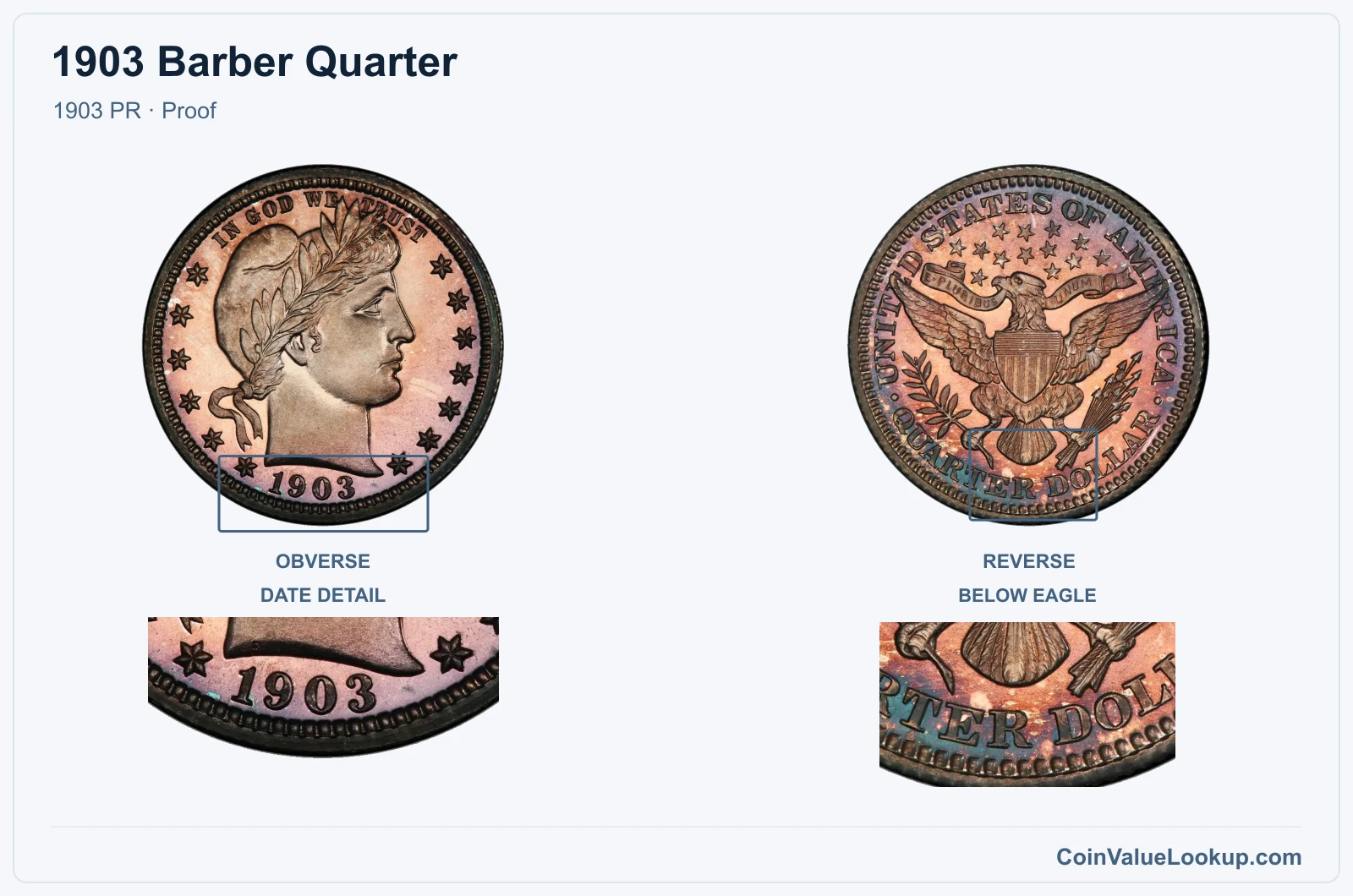
The 1903 proof quarter was struck at Philadelphia using specially prepared dies and polished planchets. It carries no mintmark, same as the regular Philadelphia strike, so identifying it requires examining the surfaces rather than looking for a letter.
Proofs typically show mirror-like fields and sharply defined devices. This is a manufacturing method, not a grade above Mint State.
Surface haze, hairlines from handling, and toning all influence the collector value of a proof.
USA Coin Book lists the 1903 PR at $799.00 in PR63 condition. A shiny business strike is not a proof — the difference is in the reflective field quality and the sharpness of the rim and lettering edges.
If you are unsure, professional authentication is worth considering before making assumptions.
Coin Value Lookup is a useful starting point if you want to look up other Barber quarter dates or different denominations from the same era.
Range Grade
Price Auction Records Appraisal PR PR 1
—
Coin Identifier
PR 2
—
Coin Identifier
PR 3
—
Coin Identifier
PR 4
—
Coin Identifier
PR 6
—
Coin Identifier
PR 8
—
Coin Identifier
PR 10
—
Coin Identifier
PR 12
—
Coin Identifier
PR 15
—
Coin Identifier
PR 20
—
Coin Identifier
PR 25
—
Coin Identifier
PR 30
—
Coin Identifier
PR 35
—
Coin Identifier
PR 40
—
Coin Identifier
PR 45
—
Coin Identifier
PR 50
Coin Identifier
PR 53
—
Coin Identifier
PR 55
—
Coin Identifier
PR 58
Coin Identifier
PR 60
—
Coin Identifier
PR 61
Coin Identifier
PR 62
Coin Identifier
PR 63
Coin Identifier
PR 64
Coin Identifier
PR 65
Coin Identifier
PR 66
Coin Identifier
PR 67
Coin Identifier
PR 68
Coin Identifier
PR 69
—
—
—
PR 70
—
—
—
1903 Barber Quarter — O
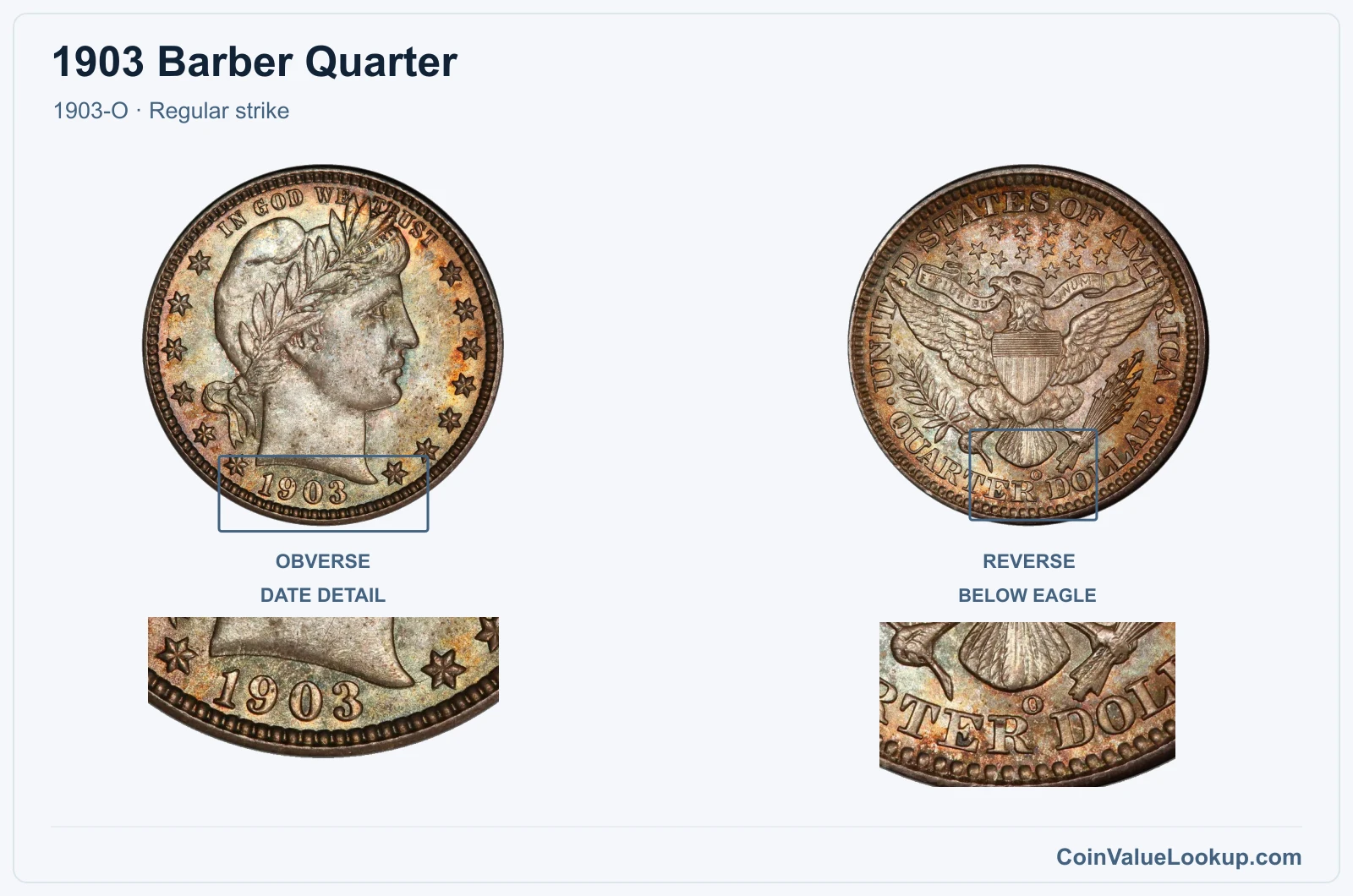
The 1903-O was struck at the New Orleans Mint. Look for a small "O" on the reverse below the eagle's tail feathers.
New Orleans coins from this period can sometimes show softer strikes than their Philadelphia counterparts, so do not confuse a weak strike with wear.
USA Coin Book guide estimates are $23.00 at G4, $593.00 at MS60, and $1,196.00 at MS63. That jump from circulated to uncirculated is steep — surviving uncirculated examples are far less common than worn ones.
Match the mintmark and confirm original surfaces before assuming your coin falls into the higher estimates. Cleaning and environmental damage pull values down regardless of how sharp the detail appears.
Range Grade
Price Auction Records Appraisal PO PO 1
—
Coin Identifier FR FR 2
—
Coin Identifier AG AG 3
—
Coin Identifier G G 4
—
Coin Identifier
G 6
—
Coin Identifier VG VG 8
Coin Identifier
VG 10
—
Coin Identifier F F 12
—
Coin Identifier
F 15
—
Coin Identifier VF VF 20
Coin Identifier
VF 25
Coin Identifier
VF 30
Coin Identifier
VF 35
Coin Identifier XF XF 40
Coin Identifier
XF 45
Coin Identifier AU AU 50
Coin Identifier
AU 53
Coin Identifier
AU 55
Coin Identifier
AU 58
Coin Identifier MS MS 60
—
Coin Identifier
MS 61
Coin Identifier
MS 62
Coin Identifier
MS 63
Coin Identifier
MS 64
Coin Identifier
MS 65
Coin Identifier
MS 66
Coin Identifier
MS 67
Coin Identifier
MS 68
—
—
—
MS 69
—
—
—
MS 70
—
—
—
1903 Barber Quarter — S
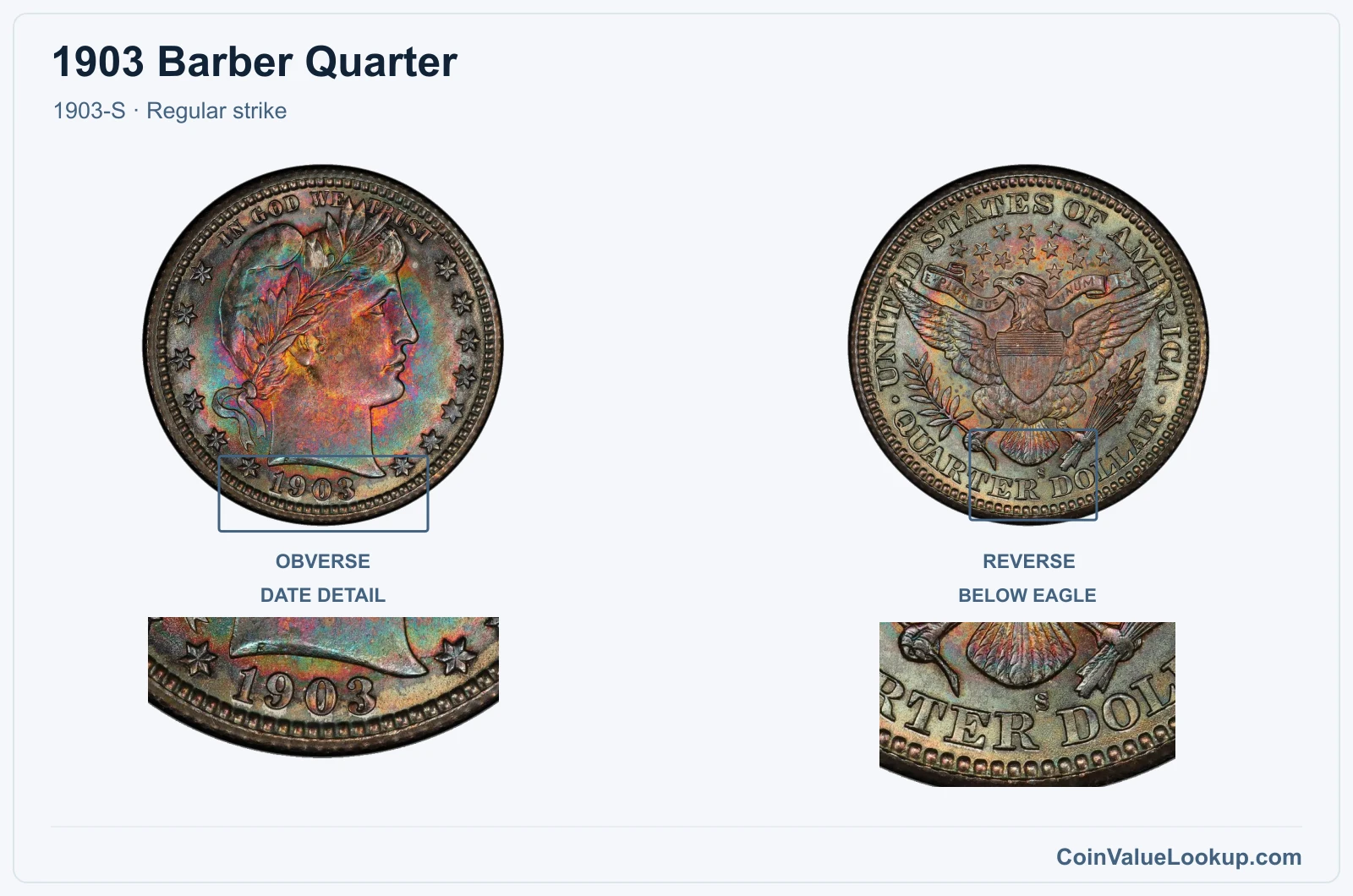
The 1903-S quarter was produced at the San Francisco Mint and carries a small "S" mintmark on the reverse. This version holds the highest guide estimate among the 1903 business strikes.
USA Coin Book lists the 1903-S at $28.00 in G4, $730.00 in MS60, and $1,252.00 in MS63. Even in heavily worn condition it carries a slight premium over the Philadelphia and New Orleans versions at the same grade.
The MS63 figure reflects a coin with original luster, no distracting marks, and good eye appeal. Cleaned or damaged examples will not approach these numbers.
Confirm the "S" mintmark carefully — sometimes it is weakly struck and can be confused with damage or a filled die.
Range Grade
Price Auction Records Appraisal PO PO 1
—
Coin Identifier FR FR 2
—
Coin Identifier AG AG 3
—
Coin Identifier G G 4
—
Coin Identifier
G 6
—
Coin Identifier VG VG 8
—
Coin Identifier
VG 10
Coin Identifier F F 12
—
Coin Identifier
F 15
—
Coin Identifier VF VF 20
Coin Identifier
VF 25
Coin Identifier
VF 30
Coin Identifier
VF 35
Coin Identifier XF XF 40
—
Coin Identifier
XF 45
Coin Identifier AU AU 50
Coin Identifier
AU 53
Coin Identifier
AU 55
Coin Identifier
AU 58
Coin Identifier MS MS 60
—
Coin Identifier
MS 61
—
Coin Identifier
MS 62
Coin Identifier
MS 63
Coin Identifier
MS 64
Coin Identifier
MS 65
Coin Identifier
MS 66
Coin Identifier
MS 67
Coin Identifier
MS 68
—
—
—
MS 69
—
—
—
MS 70
—
—
—
1903 Barber Quarter Error List
1. 1903 Barber Quarter — Misplaced Date
A misplaced date on a 1903-O Barber quarter means remnants of date-punch digits appear somewhere outside the normal date position. During production, a die could receive an initial date impression in the wrong spot before the correct placement was applied.
The misplaced remnants are usually partial and faint.
To check for this, examine the area around and below the normal date under magnification. You are looking for ghostly outlines or partial numerals that do not belong there.
The normal date should still be fully visible in its expected location.
This has been reported specifically for the 1903-O (New Orleans) version. Do not assume a Philadelphia or San Francisco coin has the same variety.
Be careful not to confuse scratches, die cracks, or random contact marks with a genuine misplaced date — those imperfections lack the structured shape of actual numeral remnants. No specific price range is available; the value depends on the visibility of the feature and the coin's overall condition.
2. 1903 Barber Quarter — Repunched Date
A repunched date occurs when the date digits were punched into the working die more than once, with the second impression slightly offset from the first. This leaves visible doubling or shadowing on one or more numerals in the date.
It is distinct from machine doubling, which affects the entire design and typically looks flat and shelf-like.
On a 1903 Barber quarter, look at each digit in the date under magnification. Genuine repunching shows a clear second set of edges near the final numeral positions — often visible as a thickened base or a secondary outline on specific numbers.
Do not confuse a damaged or corroded date with repunching. Damage is random and lacks the consistent offset that characterizes a true repunched die.
No specific price range has been established here; value depends on the strength and clarity of the repunching as well as the coin's condition and surface preservation.
3. 1903 Barber Quarter — Off-Center Strike
An off-center strike happens when the planchet is not properly seated between the dies at the moment of striking. The result is a design that is shifted to one side, leaving an unstruck crescent of blank metal on the opposite edge.
On a 1903 Barber quarter, the key is whether the date remains fully visible — off-center coins with a readable date are generally more collectible than those without.
Look for the displaced design and the telltale blank crescent. The shift can range from a few percent to dramatically off, with moderate shifts often being the sweet spot for collector interest.
Do not confuse an off-center strike with a clipped planchet (which has a curved bite out of the edge), a misaligned die (which shifts one side only), or post-mint damage from being flattened unevenly. No specific price range is available for this error; value depends on the percentage of the shift, date visibility, and the coin's overall condition.