1945 Washington Quarter Coin Value: How Much Is It Worth?
A 1945 Washington quarter is a 90% silver coin struck across three mints during the final year of World War II. Circulated examples start around $16.43 in well-worn condition according to USA Coin Book retail estimates, while selected Gem Uncirculated pieces reach up to about $58 depending on mint and grade.
These are guide estimates, not guaranteed sale prices. Identifying your specific mint version and condition is the first step to understanding what yours might be worth.
Fast Way to Identify Your 1945 Washington Quarter
The quickest way to start figuring out your 1945 quarter's value is to upload clear photos of both the front and back of your coin. This gives a preliminary identification of the mint, general condition, and any obvious features.
Snap them in good lighting against a plain background, and make sure the mintmark area below the eagle's tail feathers on the reverse is visible.
1945 Washington Quarter Value
Upload both sides of your 1945 Washington Quarter.
Front Obverse
Upload photo
Back Reverse
Upload photo
Which 1945 Washington Quarter Versions Are Worth Money?
- Philadelphia (no mintmark) examples in Gem Uncirculated condition can be harder to locate than some neighboring dates, making high-grade pieces worth checking carefully.
- The 1945-D in MS65 condition carries the highest selected guide estimate of the three mints at about $58, per USA Coin Book.
- Broadstrike errors on the 1945 Philadelphia quarter have sold at auction — one example brought $134 at Heritage in 2026, though it had obverse scratches noted by NGC.
- A Doubled Die Obverse variety on the 1945 Philadelphia quarter has been recognized by PCGS, with an MS65 example selling for $552 at Heritage in March 2018.
- The 1945-S Repunched Mintmark variety is a known die variety worth examining under magnification if you have an S-mint coin.
- Off-center strikes and clipped planchet errors have been reported for this date and can carry premiums depending on severity and condition.
Step 1: Identify Your 1945 Washington Quarter Mint Mark and Version
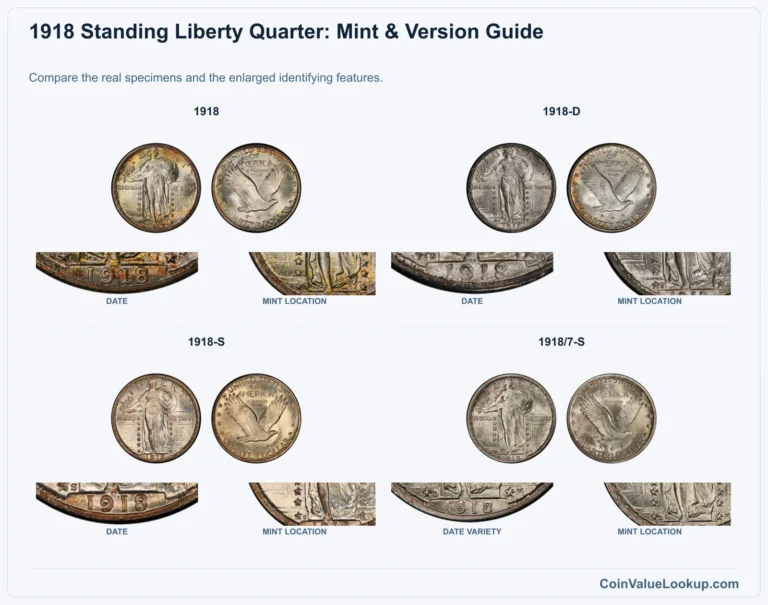
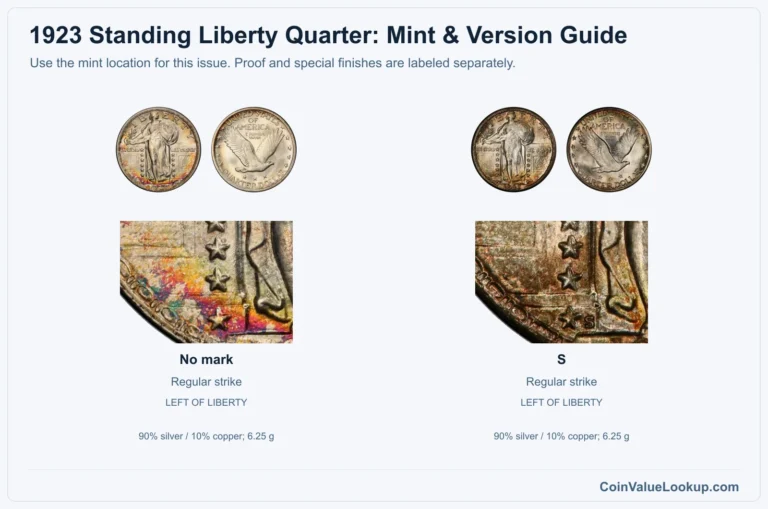
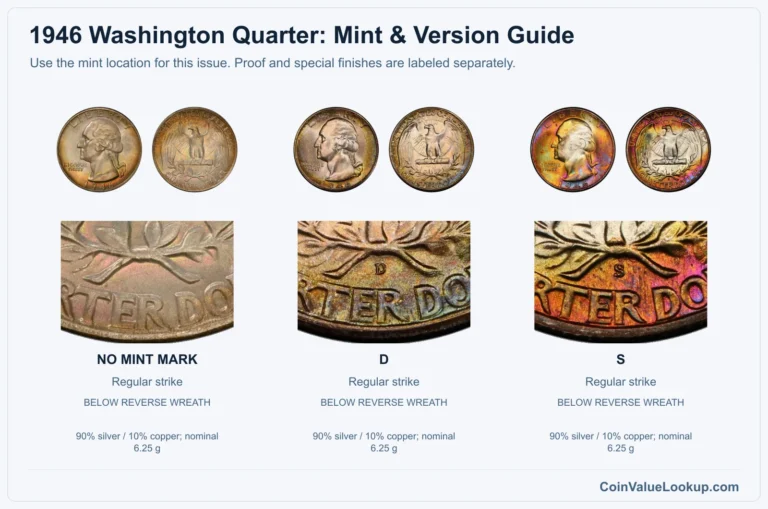
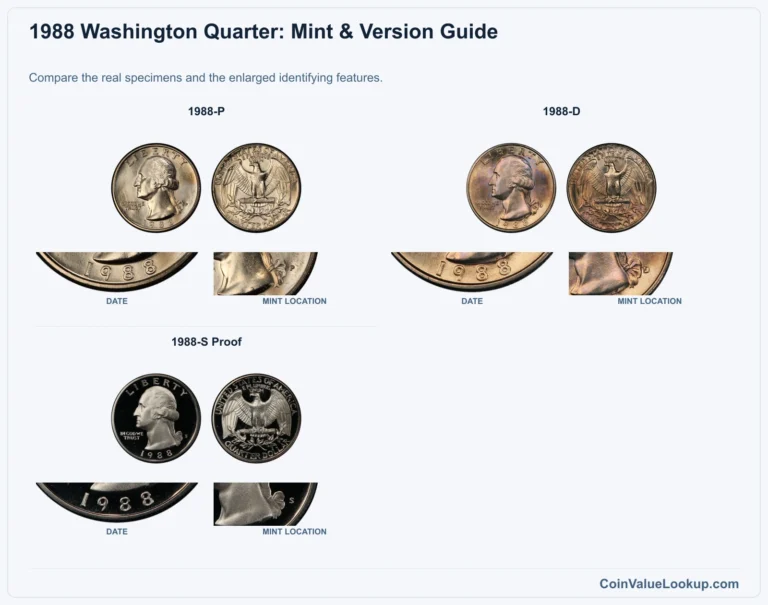
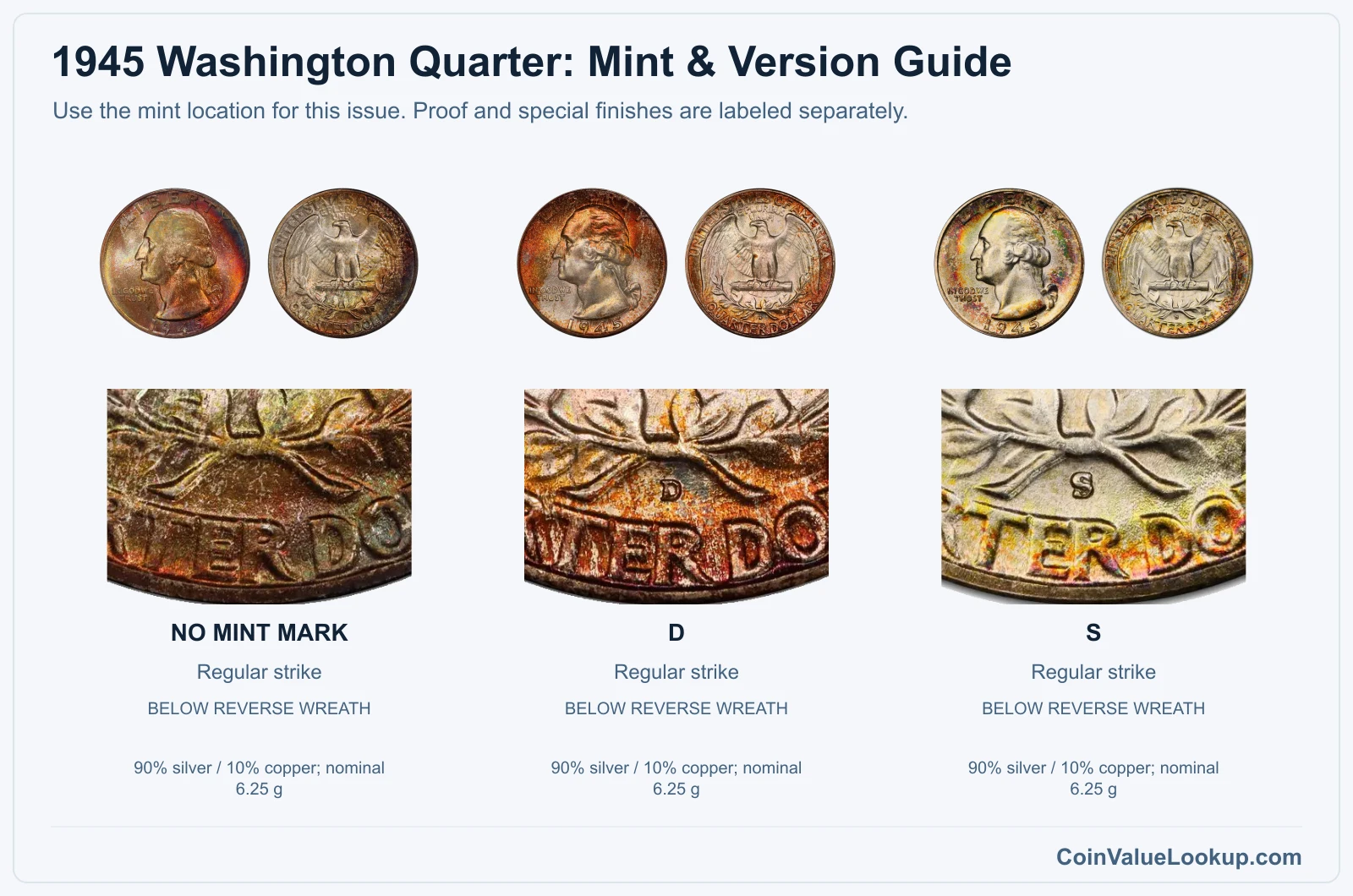
Start with the date on the obverse — you should see 1945 below Washington's bust. Then flip the coin over and look at the reverse, directly below the wreath tied with a bow.
If you see a small "D," it was struck in Denver. A small "S" means San Francisco.
No letter at all means Philadelphia.
Don't confuse a worn or missing mintmark with an error. Philadelphia quarters of this era simply didn't carry a mintmark, so a blank spot there is perfectly normal.
All three versions are struck in the same alloy: 90% silver and 10% copper, weighing approximately 6.25 grams with a diameter of about 24.3 mm. If your coin feels suspiciously light or doesn't match that size, you may have a different denomination or an altered piece.
There was no proof production for 1945. The U.S. Mint halted proof coinage during the war years starting in 1942, so any 1945 quarter you encounter will be a business strike.
If someone offers you a "proof" 1945 Washington quarter, that claim doesn't hold up.
Step 2: Check Your 1945 Washington Quarter Grade
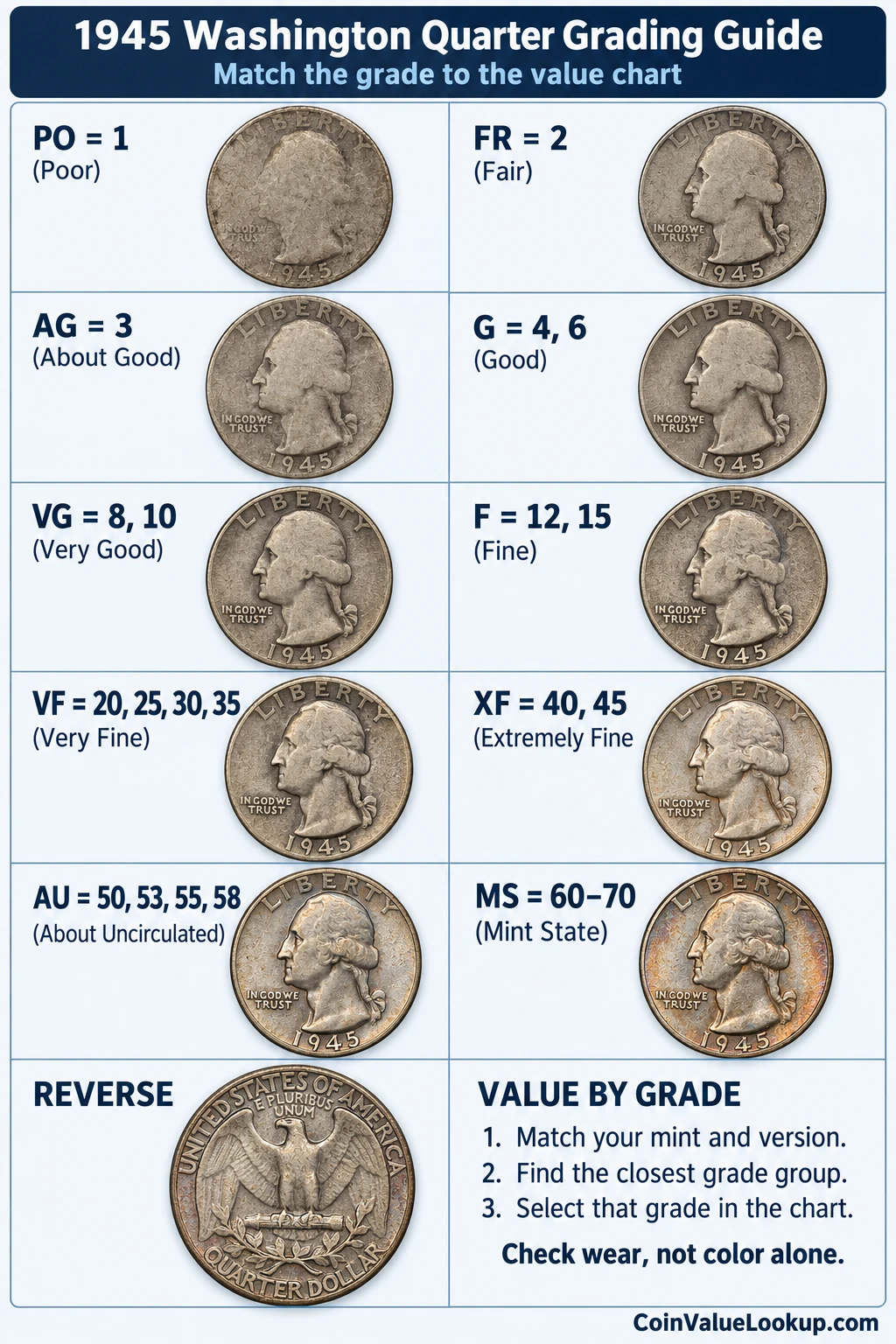
Look at the hair detail above Washington's ear first. On a lightly circulated coin, the waves of hair will show slight flattening but still have visible separation between the strands.
A heavily worn coin will have that area nearly smooth.
The cheek and jawline are next. These high points lose detail quickly in circulation, so compare yours to the reference image to see how much definition remains.
On the reverse, check the eagle's breast feathers. A coin grading around Good-4 will have most breast detail worn flat, while a coin approaching About Uncirculated should show nearly full feather definition with just a touch of rub on the highest points.
One thing that trips people up: weak strikes can look like wear. The difference is luster.
A weakly struck coin still has that original mint sheen in the flat areas, while a worn coin loses luster where the metal has been rubbed away. Check the fields around the devices under a good light to see if original mint luster is present.
Also inspect for cleaning. Hairline scratches running in one direction across the fields usually mean someone took a cloth or abrasive to the surface at some point.
Cleaned coins grade lower than their detail might suggest.
Step 3: Check 1945 Washington Quarter Value by Mint and Version
1945 Washington Quarter
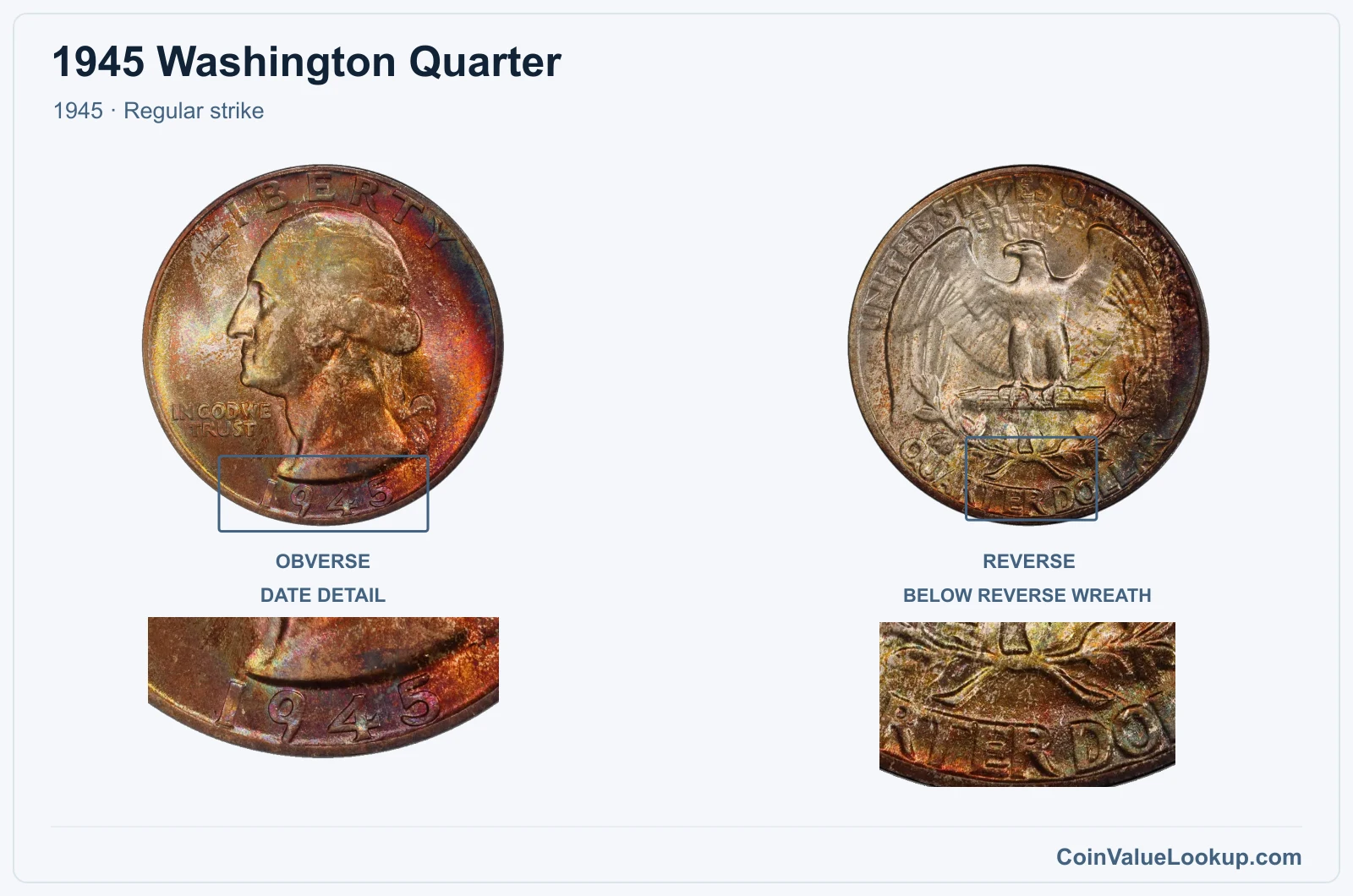
The 1945 Philadelphia quarter has no mintmark — just a blank space below the wreath on the reverse. It was struck in 90% silver and 10% copper at a nominal weight of 6.25 grams.
USA Coin Book retail estimates place a Good-4 example around $16.43 and an MS60 around $20. A Gem MS65 is estimated near $50.
These are guide figures, not offers.
Philadelphia Gem examples from this year can be tougher to find than some nearby dates, so if you have one with clean, original surfaces and strong luster, it may be worth a closer look. Broadstrikes and die varieties exist for this mint and require individual assessment.
| Range | Grade | Price | Auction Records | Appraisal |
|---|---|---|---|---|
| PO | PO 1 | — | Coin Identifier | |
| FR | FR 2 | — | Coin Identifier | |
| AG | AG 3 | — | Coin Identifier | |
| G | G 4 | — | Coin Identifier | |
| G 6 | — | Coin Identifier | ||
| VG | VG 8 | — | Coin Identifier | |
| VG 10 | — | Coin Identifier | ||
| F | F 12 | — | Coin Identifier | |
| F 15 | — | Coin Identifier | ||
| VF | VF 20 | — | Coin Identifier | |
| VF 25 | — | Coin Identifier | ||
| VF 30 | — | Coin Identifier | ||
| VF 35 | — | Coin Identifier | ||
| XF | XF 40 | — | Coin Identifier | |
| XF 45 | — | Coin Identifier | ||
| AU | AU 50 | — | Coin Identifier | |
| AU 53 | — | Coin Identifier | ||
| AU 55 | — | Coin Identifier | ||
| AU 58 | — | Coin Identifier | ||
| MS | MS 60 | — | Coin Identifier | |
| MS 61 | — | Coin Identifier | ||
| MS 62 | — | Coin Identifier | ||
| MS 63 | Coin Identifier | |||
| MS 64 | Coin Identifier | |||
| MS 65 | Coin Identifier | |||
| MS 66 | Coin Identifier | |||
| MS 67 | Coin Identifier | |||
| MS 68 | Coin Identifier | |||
| MS 69 | — | — | — | |
| MS 70 | — | — | — |
1945 Washington Quarter — D
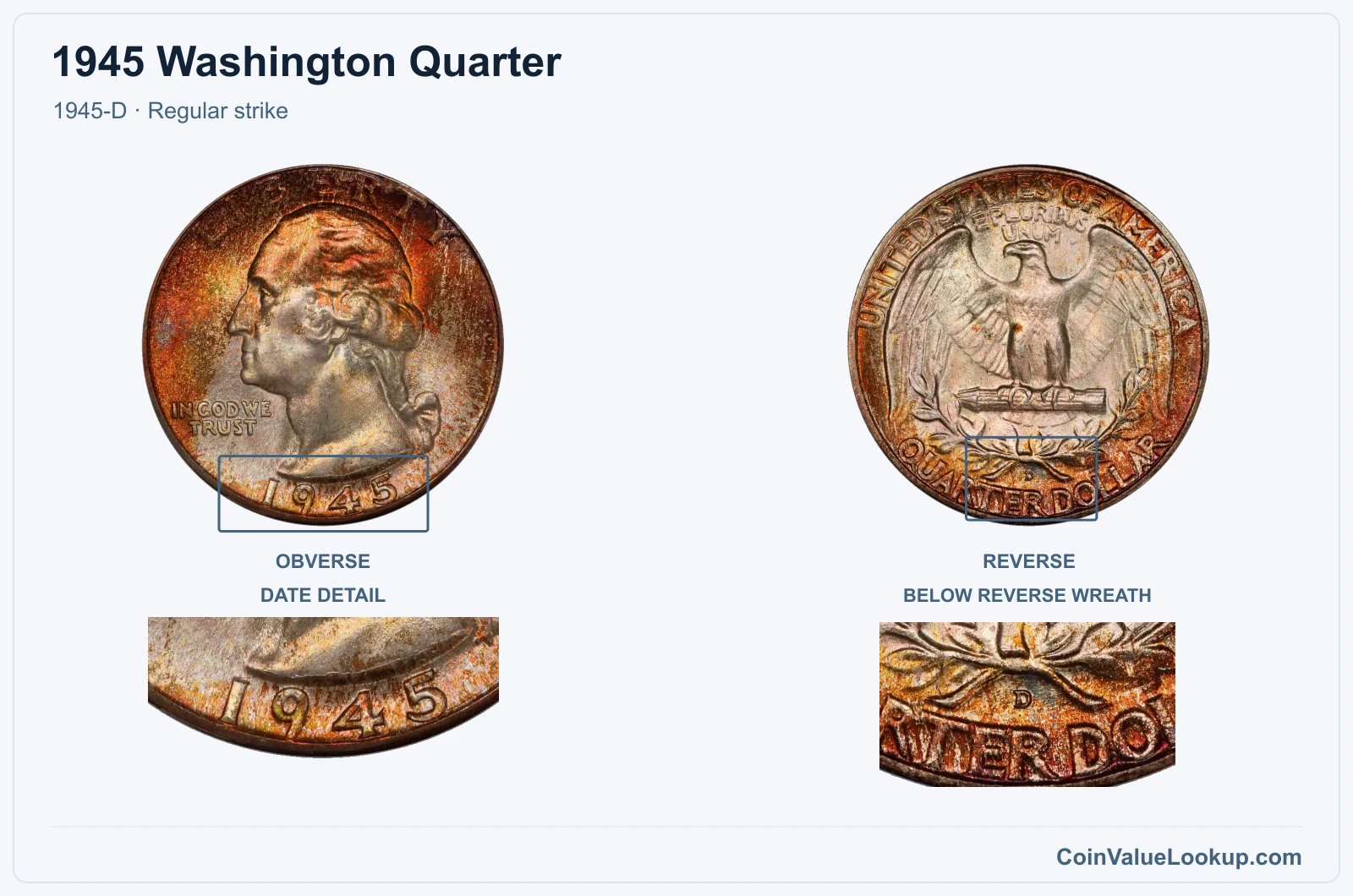
Look for the small "D" mintmark below the wreath on the reverse. This Denver issue shares the same 90% silver composition and 6.25-gram target weight as its Philadelphia and San Francisco siblings.
USA Coin Book estimates put a well-worn Good-4 at about $16.43, an MS60 at roughly $23, and an MS65 at approximately $58 — the highest selected guide figure among the three 1945 mints for that grade. All prices are retail guide estimates from USA Coin Book.
Coin Value Lookup is a good starting point if you want to compare values for this and other Washington quarter dates. You can look up different years and denominations to see where your coins stand.
| Range | Grade | Price | Auction Records | Appraisal |
|---|---|---|---|---|
| PO | PO 1 | — | Coin Identifier | |
| FR | FR 2 | — | Coin Identifier | |
| AG | AG 3 | — | Coin Identifier | |
| G | G 4 | — | Coin Identifier | |
| G 6 | — | Coin Identifier | ||
| VG | VG 8 | — | Coin Identifier | |
| VG 10 | — | Coin Identifier | ||
| F | F 12 | — | Coin Identifier | |
| F 15 | — | Coin Identifier | ||
| VF | VF 20 | — | Coin Identifier | |
| VF 25 | — | Coin Identifier | ||
| VF 30 | — | Coin Identifier | ||
| VF 35 | — | Coin Identifier | ||
| XF | XF 40 | — | Coin Identifier | |
| XF 45 | — | Coin Identifier | ||
| AU | AU 50 | — | Coin Identifier | |
| AU 53 | — | Coin Identifier | ||
| AU 55 | — | Coin Identifier | ||
| AU 58 | — | Coin Identifier | ||
| MS | MS 60 | — | Coin Identifier | |
| MS 61 | — | Coin Identifier | ||
| MS 62 | — | Coin Identifier | ||
| MS 63 | Coin Identifier | |||
| MS 64 | Coin Identifier | |||
| MS 65 | Coin Identifier | |||
| MS 66 | Coin Identifier | |||
| MS 67 | Coin Identifier | |||
| MS 68 | Coin Identifier | |||
| MS 69 | — | — | — | |
| MS 70 | — | — | — |
1945 Washington Quarter — S
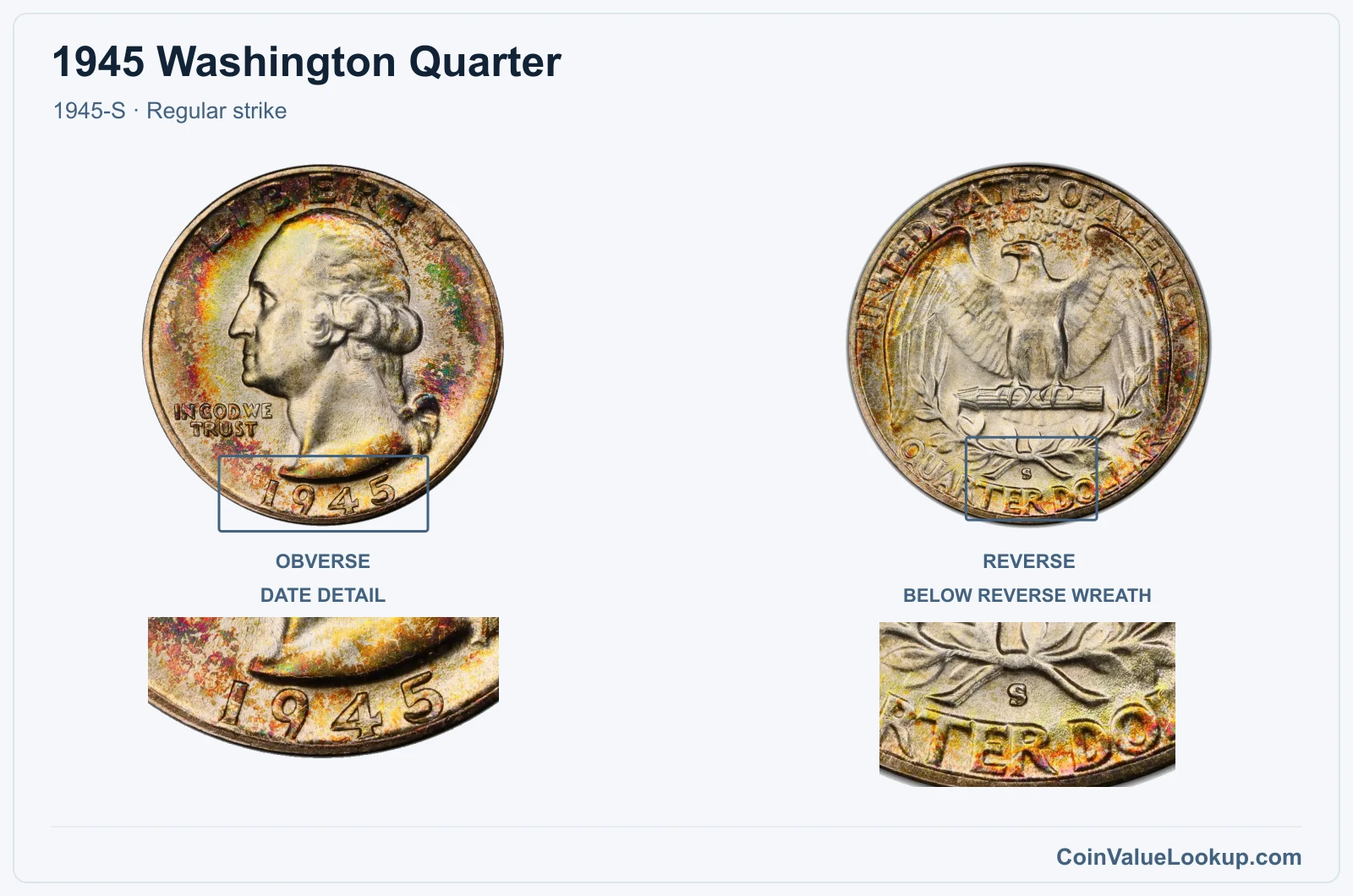
The 1945-S carries a small "S" mintmark below the eagle's tail feathers on the reverse. Same silver alloy, same design, same nominal weight of 6.25 grams.
USA Coin Book estimates a Good-4 at about $16.43, an MS60 around $20, and an MS65 at roughly $50. These are retail guide estimates and not guaranteed prices.
If you have an S-mint coin, it is worth checking the mintmark closely under magnification. A repunched mintmark variety has been reported for this date, so traces of a second punch position could mean you have something more than the ordinary issue.
| Range | Grade | Price | Auction Records | Appraisal |
|---|---|---|---|---|
| PO | PO 1 | — | Coin Identifier | |
| FR | FR 2 | — | Coin Identifier | |
| AG | AG 3 | — | Coin Identifier | |
| G | G 4 | — | Coin Identifier | |
| G 6 | — | Coin Identifier | ||
| VG | VG 8 | — | Coin Identifier | |
| VG 10 | — | Coin Identifier | ||
| F | F 12 | — | Coin Identifier | |
| F 15 | — | Coin Identifier | ||
| VF | VF 20 | — | Coin Identifier | |
| VF 25 | — | Coin Identifier | ||
| VF 30 | — | Coin Identifier | ||
| VF 35 | — | Coin Identifier | ||
| XF | XF 40 | — | Coin Identifier | |
| XF 45 | — | Coin Identifier | ||
| AU | AU 50 | — | Coin Identifier | |
| AU 53 | — | Coin Identifier | ||
| AU 55 | Coin Identifier | |||
| AU 58 | — | Coin Identifier | ||
| MS | MS 60 | — | Coin Identifier | |
| MS 61 | — | Coin Identifier | ||
| MS 62 | — | Coin Identifier | ||
| MS 63 | Coin Identifier | |||
| MS 64 | Coin Identifier | |||
| MS 65 | Coin Identifier | |||
| MS 66 | Coin Identifier | |||
| MS 67 | Coin Identifier | |||
| MS 68 | Coin Identifier | |||
| MS 69 | — | — | — | |
| MS 70 | — | — | — |
1945 Washington Quarter Error List
1. 1945 Washington Quarter — Broadstrike
A broadstrike happens when the retaining collar around the coin fails during striking, allowing the metal to spread outward beyond its normal diameter. The result is a coin that looks wider than usual with a distorted or missing rim, but the design is still fully present and centered.
To identify one, compare the rim and overall diameter to a normal 1945 quarter. A broadstrike will show the peripheral design elements spreading outward rather than being sharply contained.
The coin remains round and complete — that is what separates it from an off-center strike, where part of the design is missing entirely because the blank was misaligned.
Watch out for coins that have been squeezed, ground down, or otherwise altered after leaving the mint. Those lack the consistent metal flow of a genuine strike-made expansion.
One 1945 Philadelphia broadstrike with obverse scratches, graded Uncirculated Details by NGC, sold for $134 at Heritage in June 2026.
2. 1945 Washington Quarter — Doubled Die Obverse
A Doubled Die Obverse on this date shows raised, duplicated contours on the obverse design elements — the kind of doubling created when the die itself received a second, slightly shifted impression during its manufacture. PCGS has recognized a DDO variety for the 1945 Philadelphia quarter.
To check yours, compare the obverse lettering and design details against a normal 1945 quarter under magnification. You are looking for a consistent second set of raised outlines that follow the same displacement direction across multiple features.
No specific pickup letter or location was supplied for this variety, so compare carefully across the full obverse.
Machine doubling is the most common lookalike. It produces a flat, shelf-like distortion rather than a fully rounded second image.
Wear, scratches, or added metal also do not replicate a die-made doubled pattern. An MS65 example sold for $552 at Heritage in March 2018 according to PCGS records, showing this variety can carry real value in high grade.
3. 1945 Washington Quarter — Repunched Mintmark
A repunched mintmark occurs when the mintmark punch was applied more than once in slightly different positions on the working die, leaving traces of the earlier placement visible alongside the final letter. This variety has been reported on the 1945-S quarter.
To check, examine the "S" mintmark on the reverse under magnification. Look for remnants of a second "S" peeking out from behind or beside the primary mark — partial serifs, extra curves, or a slightly offset outline.
Compare directly to a normal 1945-S mintmark at the same magnification.
Die chips, corrosion around the mintmark, and machine doubling can all mimic a repunched mintmark to the untrained eye. A die chip adds irregular lumps of metal, while machine doubling creates flat shelving rather than a distinct second impression.
Condition, visibility of the secondary punch, and the specific variety all factor into value.
4. 1945 Washington Quarter — Off-Center Strike
An off-center strike happens when the blank planchet is not properly seated between the dies before the press fires. The result is a coin with part of the design missing and a corresponding crescent of blank, unstruck metal on the opposite side.
The amount of displacement matters a lot. A 5% off-center is subtle, while a 50% shift is dramatic.
Coins that retain a visible date despite a significant off-center percentage tend to be the most desirable to collectors.
Don't confuse an off-center strike with a clipped planchet, which shows a missing portion of the blank itself rather than a shifted design. One-sided die misalignment and post-mint flattening can also mimic off-center characteristics.
On a genuine off-center coin, the unstruck area will be smooth and consistent with the original planchet surface. Value depends on condition, the degree of displacement, and whether the date remains readable.
5. 1945 Washington Quarter — Clipped Planchet
A clipped planchet error means the blank itself was incomplete before it was struck. This happens when the punch that cuts blanks from a metal strip overlaps a previously punched hole, producing a blank with a curved bite missing from the edge.
Clips can be curved, straight, or ragged depending on where in the production process things went wrong. A helpful diagnostic is the Blakesley effect — a zone of weakness on the rim directly opposite the clip, caused by reduced metal flow during striking.
Compare the edge texture at the clipped area to the rest of the coin. A genuine clip will show the original planchet edge or a natural fracture, not a filed notch, deliberate cut, or corrosion pit.
The surrounding design near the clip may also show slight weakness from the missing metal.
Value depends on the size and type of clip, overall condition of the coin, and how visually dramatic the error appears. Each piece requires individual assessment.