1835 Capped Bust Quarter Coin Value: How Much Is It Worth?
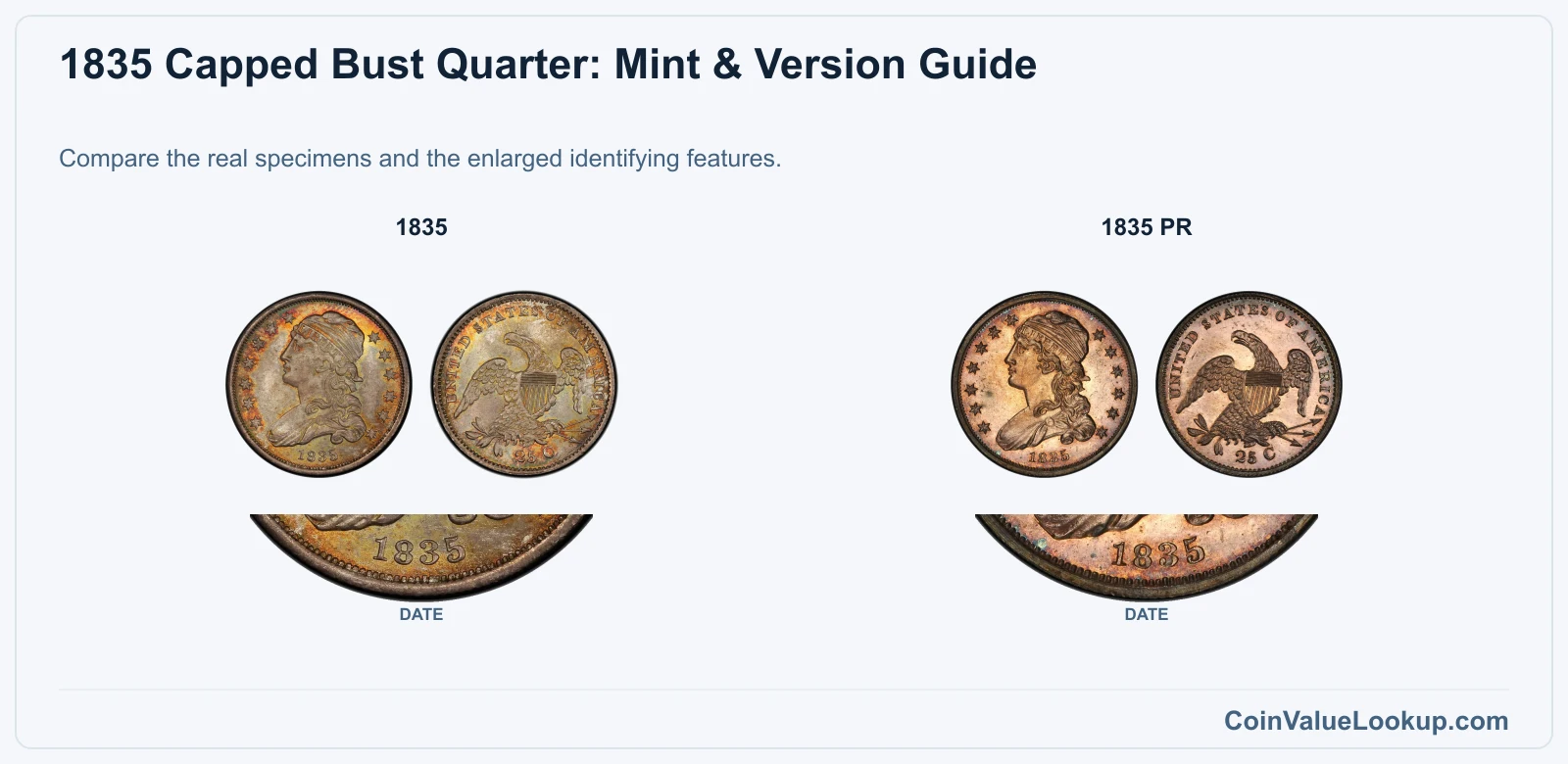
The 1835 Capped Bust quarter is a classic early American silver coin struck at the Philadelphia Mint. Guide estimates for this date range from about $132.00 in well-worn condition up to $4,951.00 at higher mint-state grades, depending on the specific version and condition.
A proof striking also exists, though its value requires individual assessment rather than a simple lookup.
Fast Way to Identify Your 1835 Capped Bust Quarter
Want a quick read on your 1835 quarter? Upload clear photos of the front and back, and the identifier can give you a preliminary identification of your coin's version and approximate condition.
That first step helps you figure out which branch of the guide applies before you dig deeper into grading or authentication.
1835 Capped Bust Quarter Value
Upload both sides of your 1835 Capped Bust Quarter.
Front Obverse
Upload photo
Back Reverse
Upload photo
Which 1835 Capped Bust Quarter Versions Are Worth Money?
- The 1835 business strike can reach around $4,951.00 at the MS63 grade level according to guide estimates — a big jump from the $132.00 G4 figure.
- Proof 1835 quarters exist but have no standard guide price; each one requires individual expert assessment based on authenticated identity and condition.
Step 1: Identify Your 1835 Capped Bust Quarter Mint Mark and Version
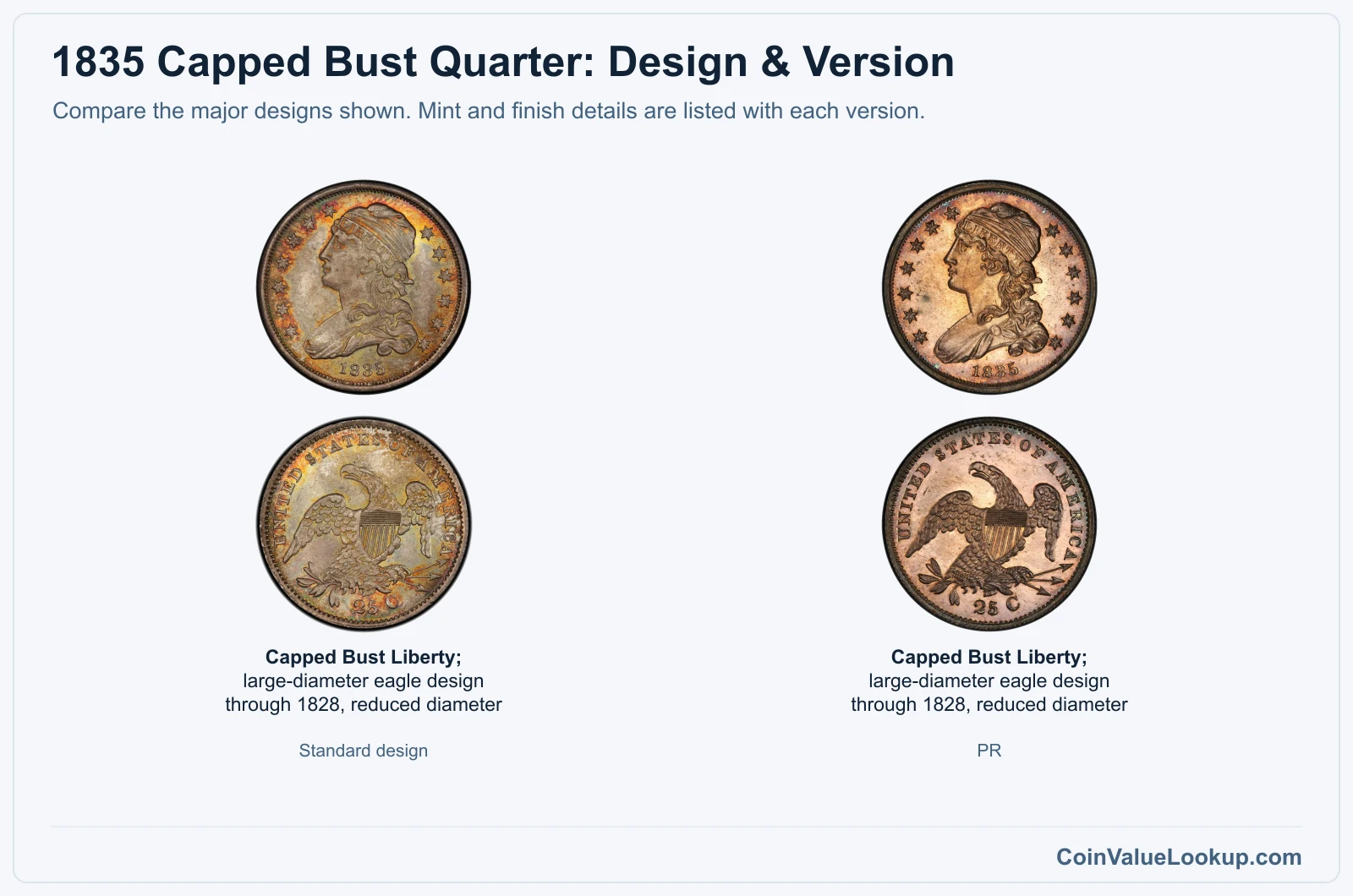
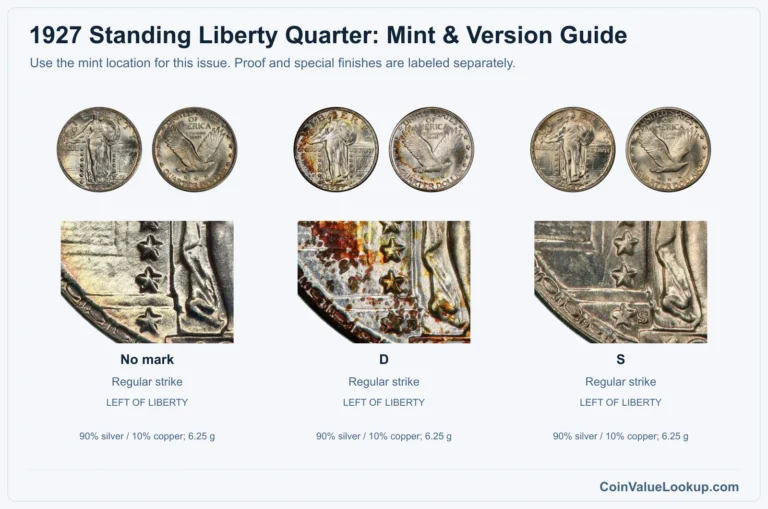
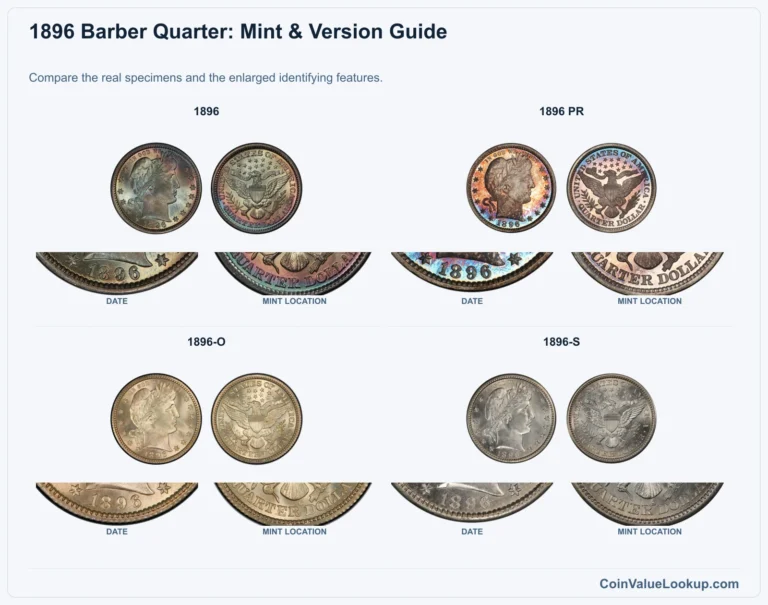
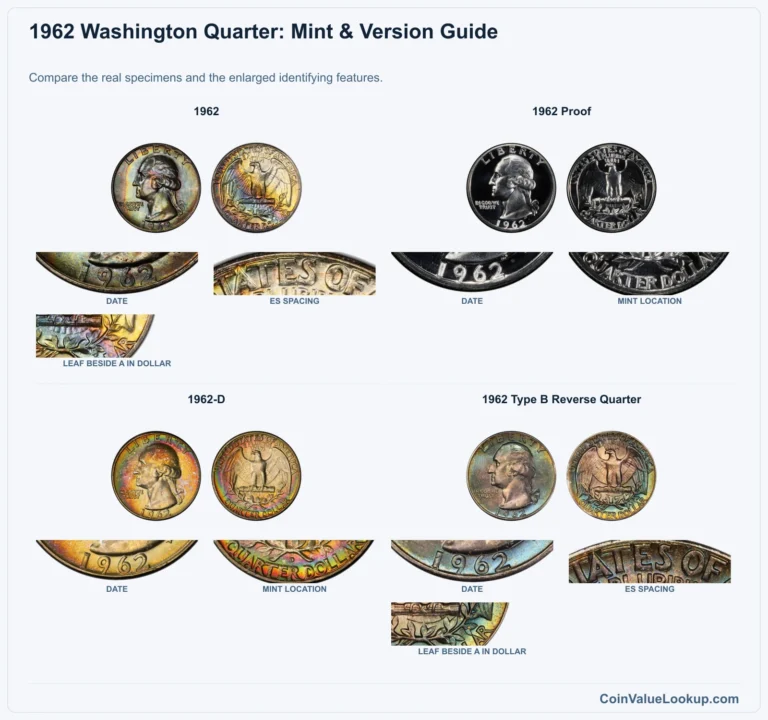
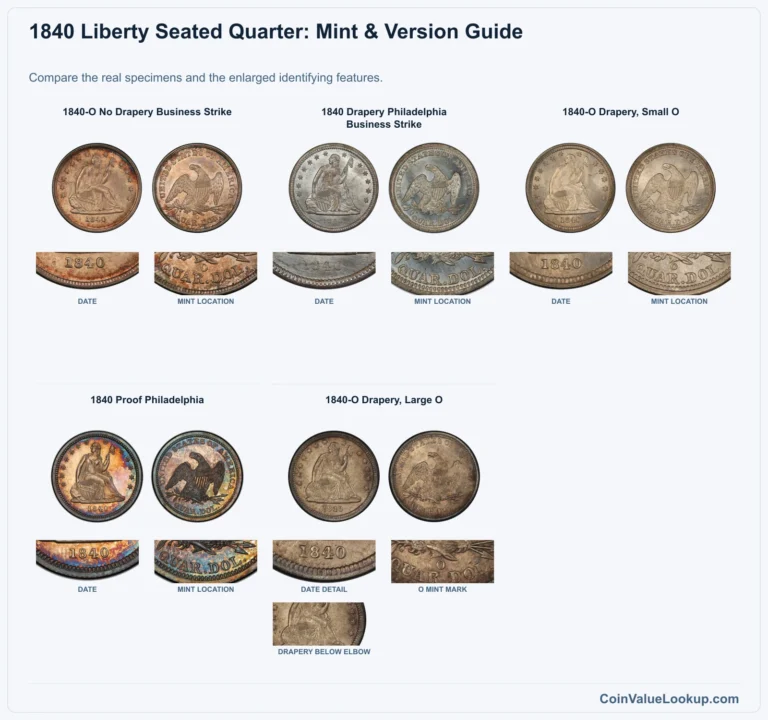
Every 1835 Capped Bust quarter was struck in Philadelphia. There is no mintmark to look for — Philadelphia coins of this era simply lack one.
The design features a capped Liberty bust on the obverse and a reduced-diameter eagle on the reverse. Starting in 1831, the Capped Bust quarter dropped E PLURIBUS UNUM from the reverse and shrank in diameter compared to earlier issues, so if your coin has those words above the eagle, it is a different type entirely.
The metal is a silver-copper alloy, roughly 89.24% silver. Two branches exist for 1835: the regular business strike and a proof issue.
Distinguishing a proof from a business strike matters a lot here. Proof coins were specially manufactured with polished dies and planchets, producing mirror-like fields.
A shiny circulation strike that has been cleaned is not a proof — the surfaces, edge characteristics and overall appearance are fundamentally different. If you suspect a proof, professional authentication is the way to go.
Step 2: Check Your 1835 Capped Bust Quarter Grade
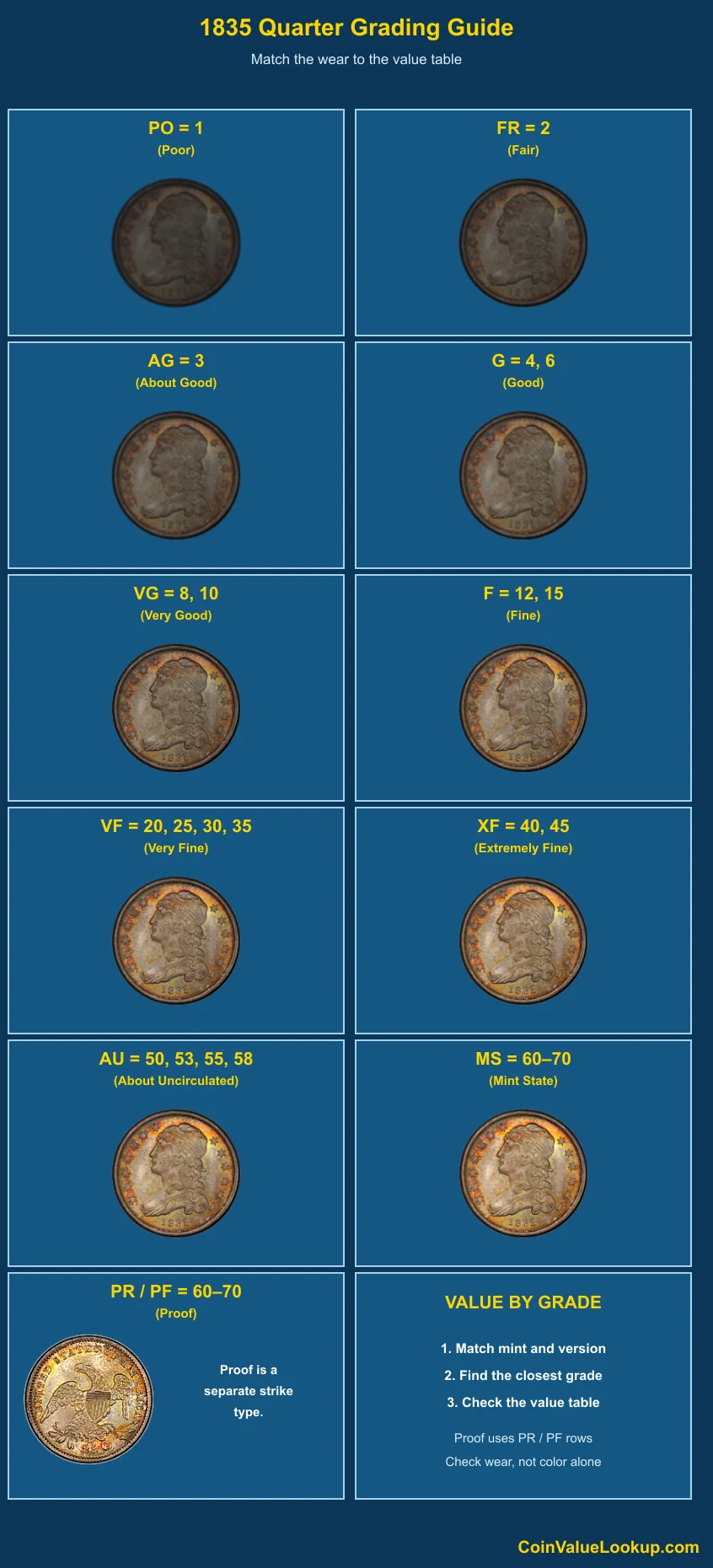
Start by examining the hair detail above Liberty's ear and the folds of the cap. These are the first areas to show wear on a Capped Bust quarter.
On the reverse, check the eagle's breast feathers and the tops of the wings.
A coin graded G4 (Good) will have a smooth, worn portrait with the major outline visible but most fine detail gone. At MS60 (Mint State), the coin should show no wear at all, though it may have contact marks or luster breaks from handling.
MS63 adds eye appeal — fewer marks, better luster.
Don't confuse a weak strike with wear. Some 1835 quarters left the press with soft detail in the high points, even though they were never circulated.
Compare your coin against the reference image to separate genuine wear from original striking softness. Luster is your friend here: a weakly struck but uncirculated coin will still show cartwheel luster in the fields, while a worn coin will not.
Step 3: Check 1835 Capped Bust Quarter Value by Mint and Version
1835 Capped Bust Quarter
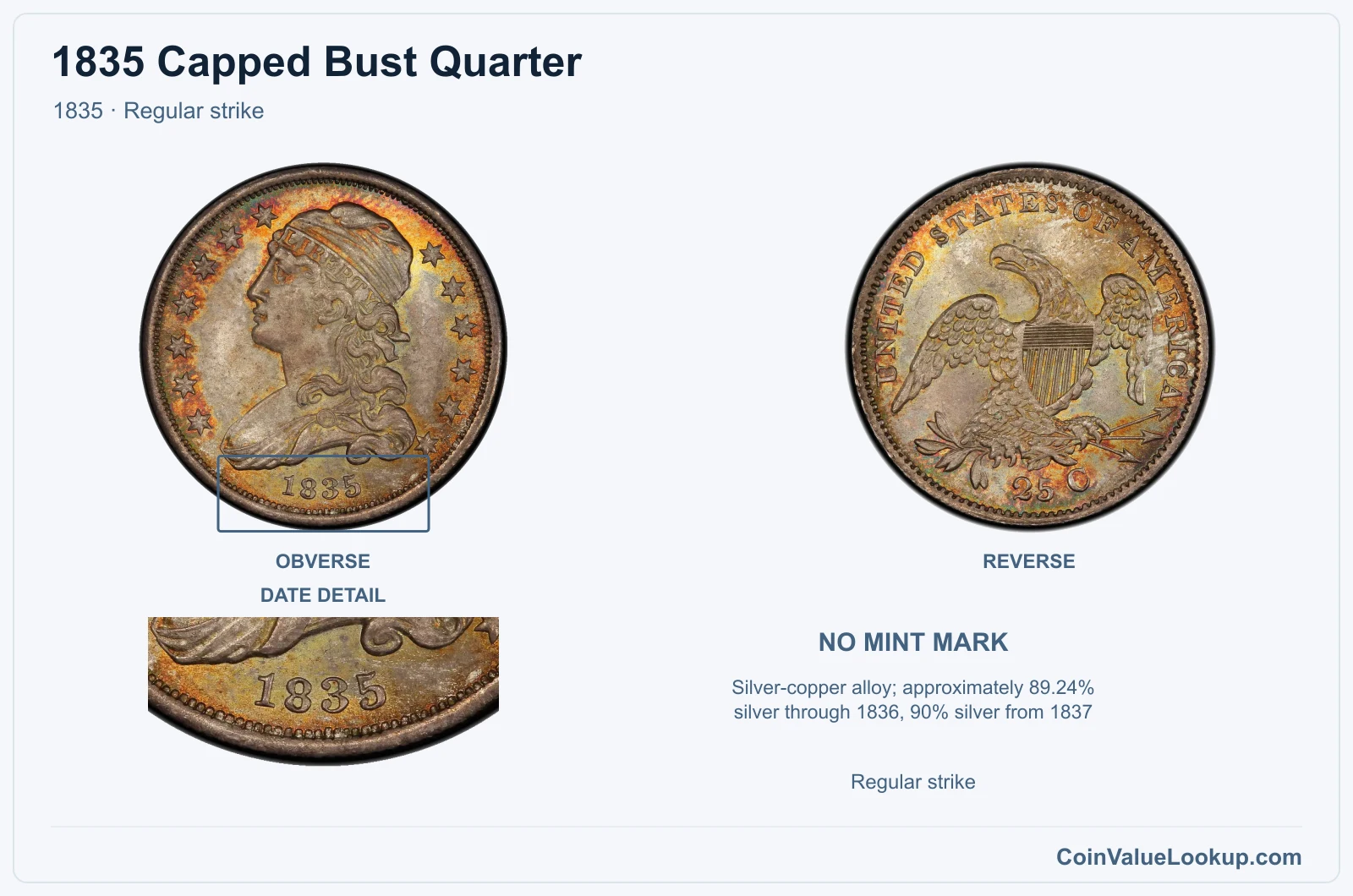
The 1835 business-strike quarter is the version most collectors will encounter. It was produced at Philadelphia with no mintmark, struck in a silver-copper alloy of approximately 89.24% silver.
The reduced-diameter Capped Bust design applies — no E PLURIBUS UNUM on the reverse.
USA Coin Book guide estimates place this coin at about $132.00 in G4, $2,506.00 in MS60, and $4,951.00 in MS63. These are retail guide figures, not guaranteed offers.
Original surfaces matter: a cleaned or damaged coin will trade well below these benchmarks even if the underlying wear grade seems right. Match the mint, design and strike type before comparing your coin's condition to any price column.
Coin Value Lookup is a handy starting point if you want to look up guides for other dates or denominations in the Capped Bust series.
Range Grade
Price Auction Records Appraisal PO PO 1
—
Coin Identifier FR FR 2
—
Coin Identifier AG AG 3
—
Coin Identifier G G 4
Coin Identifier
G 6
Coin Identifier VG VG 8
Coin Identifier
VG 10
Coin Identifier F F 12
Coin Identifier
F 15
Coin Identifier VF VF 20
Coin Identifier
VF 25
Coin Identifier
VF 30
Coin Identifier
VF 35
Coin Identifier XF XF 40
Coin Identifier
XF 45
Coin Identifier AU AU 50
Coin Identifier
AU 53
Coin Identifier
AU 55
Coin Identifier
AU 58
Coin Identifier MS MS 60
Coin Identifier
MS 61
Coin Identifier
MS 62
Coin Identifier
MS 63
Coin Identifier
MS 64
Coin Identifier
MS 65
Coin Identifier
MS 66
Coin Identifier
MS 67
—
—
—
MS 68
—
—
—
MS 69
—
—
—
MS 70
—
—
—
1835 Capped Bust Quarter — PR
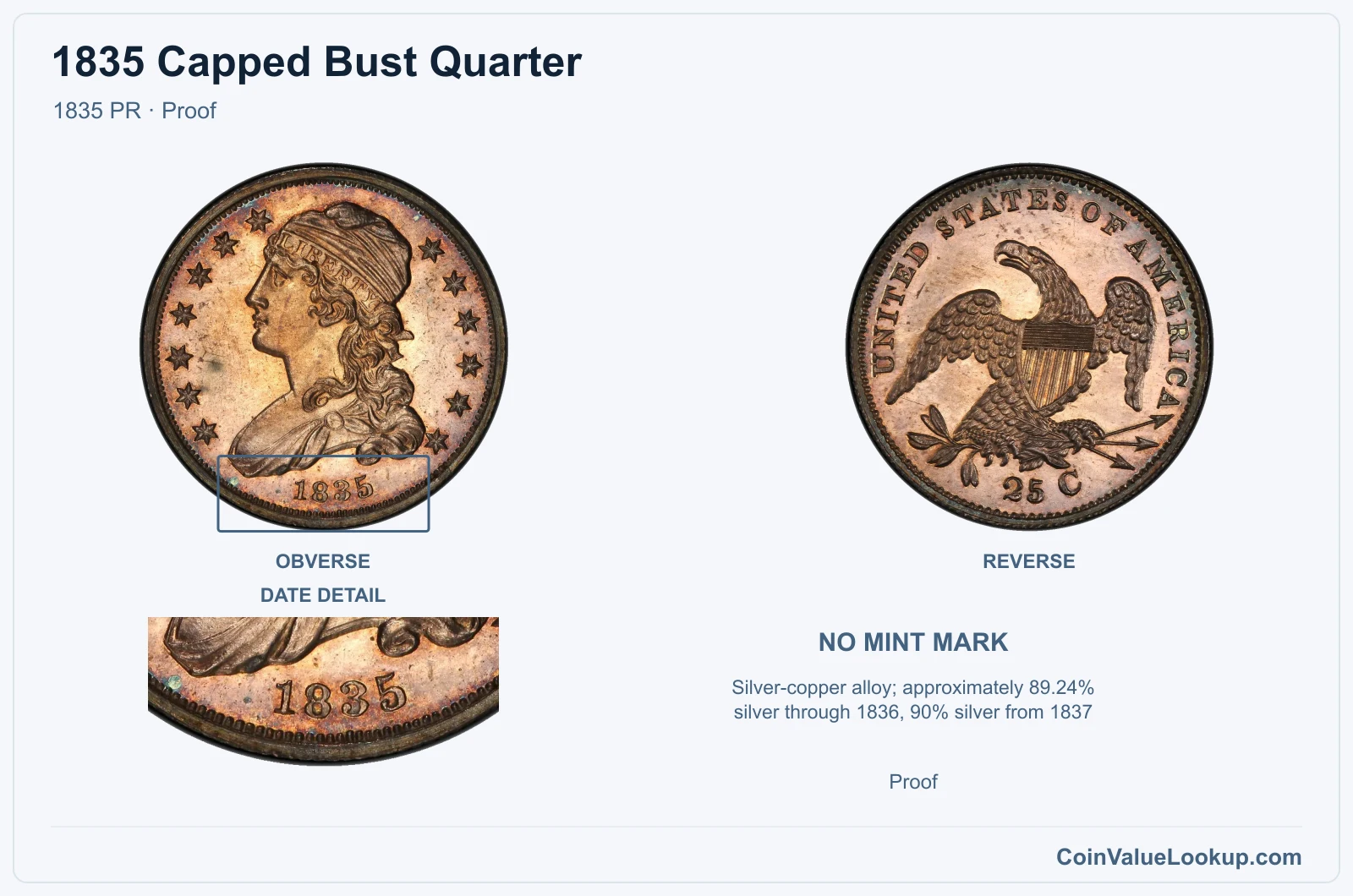
The 1835 proof quarter is a collector-finish striking, not simply a high-grade business strike that happens to be shiny. Proof manufacture involved specially prepared dies and planchets, producing deeply mirrored fields and sharp design details that regular production coins do not display.
No supported numeric guide range has been adopted for this version. Each proof 1835 quarter needs individual assessment based on its authenticated identity, surface preservation, and any hairlines or haze that affect eye appeal.
Professional certification is essentially mandatory if you believe you have one — genuine proofs from this era are rare, and the difference between a proof and a carefully preserved business strike can be subtle to untrained eyes. Don't assume proof status from brightness alone.
Range Grade
Price Auction Records Appraisal PR PR 1
—
Coin Identifier
PR 2
—
Coin Identifier
PR 3
—
Coin Identifier
PR 4
—
Coin Identifier
PR 6
—
Coin Identifier
PR 8
—
Coin Identifier
PR 10
—
Coin Identifier
PR 12
—
Coin Identifier
PR 15
—
Coin Identifier
PR 20
—
Coin Identifier
PR 25
—
Coin Identifier
PR 30
—
Coin Identifier
PR 35
—
Coin Identifier
PR 40
—
Coin Identifier
PR 45
—
Coin Identifier
PR 50
—
Coin Identifier
PR 53
—
Coin Identifier
PR 55
—
Coin Identifier
PR 58
—
Coin Identifier
PR 60
—
Coin Identifier
PR 61
—
Coin Identifier
PR 62
—
Coin Identifier
PR 63
Coin Identifier
PR 64
Coin Identifier
PR 65
—
Coin Identifier
PR 66
—
—
—
PR 67
—
—
—
PR 68
—
—
—
PR 69
—
—
—
PR 70
—
—
—
1835 Capped Bust Quarter Error List
1. 1835 Capped Bust Quarter — Die Break / Cud
Die breaks and cuds have been reported on 1835 Capped Bust quarters. A die break shows up as a raised irregular line across part of the design where the die cracked during use.
A cud is a more dramatic version — a chunk of the die edge broke away entirely, leaving a raised, featureless blob that connects to the rim.
To spot one, look for any raised area that disrupts the normal design or lettering. The blob or line will feel raised, not incised.
Compare it carefully against rim dents, corrosion pitting, or small interior die chips, which can mimic a break at first glance. A true cud will have a smooth, flat top and connect directly to the coin's rim.
No specific price range is adopted for these errors. Value depends on the size, location, and visibility of the break, plus the coin's overall condition.
Larger, more visually dramatic cuds tend to attract more collector interest.
2. 1835 Capped Bust Quarter — Clipped Planchet
Clipped planchet errors have been reported for the 1835 Capped Bust quarter. This error occurs when the blank was incompletely punched from the silver strip before striking, leaving a missing curved, straight, or ragged portion along the edge.
Look for a section of the coin's rim that is absent, with the adjacent design appearing weak or stretched toward the missing area. Weakness on the opposite side of the coin from the clip can also be a confirming clue — metal didn't flow evenly during striking.
Don't confuse a clip with post-mint damage. Filed notches, deliberate edge cuts, and corrosion eating away the rim can all look similar at a glance, but they lack that telltale opposite-side weakness and the characteristic smooth, factory-edge curve of a genuine clip.
No specific price data is adopted for this error. The value depends on the clip's size, shape, and the coin's overall condition.