Top 7 Free Coin Identifiers for Android & iPhone 2026
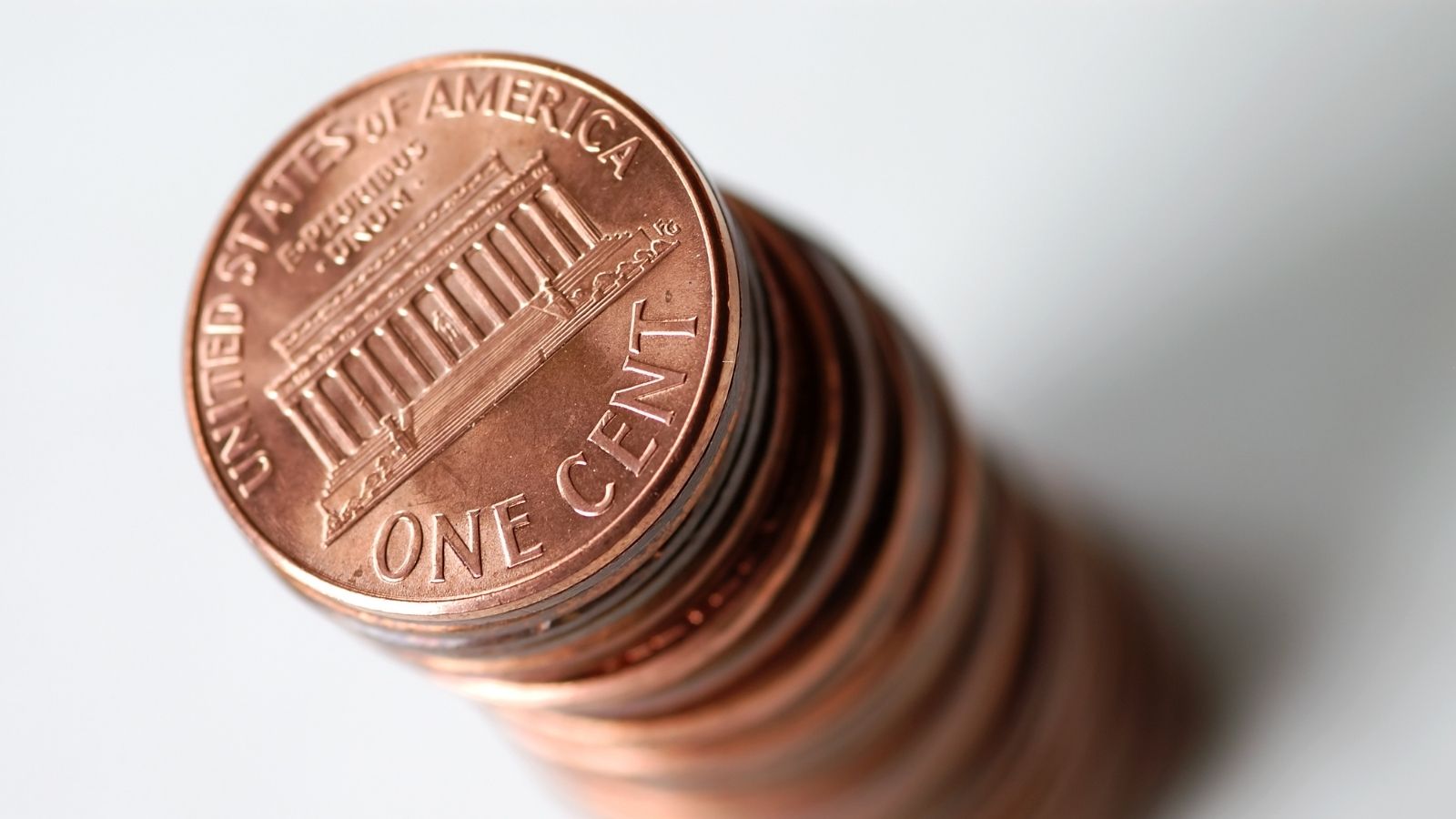
I’ve spent years hunting through coin rolls and estate sales, and the single biggest shift I’ve seen in this hobby isn’t a new coin series or auction house — it’s the smartphone in my pocket. The best free coin identifier apps available today can do in three seconds what used to take me thirty minutes with a magnifying loupe and a catalog. Snap a photo, and you get year, mint mark, grade, and current market value before you’ve set the coin down.
But not all of these apps are created equal. Some excel at identifying US coins with professional-grade accuracy; others shine for global collections. A few are genuine reference powerhouses, while others are lightweight tools perfect for beginners. In this roundup, I’ve tested all seven of the most talked-about free coin identifier apps in 2026 so you can pick the one that actually fits your collection.
Quick Comparison — All 7 Coin Identifier Apps at a Glance
| App | AI Scan ID | Auto Error Detection | World Coins | Grading | Free Access | Best For |
|---|---|---|---|---|---|---|
| Coin Value Checker | ✓ | ✓ | ✗ | ±2–3 pts | Daily scans free | US serious collectors |
| CoinKnow | ✓ | ✓ | ✗ | ±2 pts | Daily scans free | Grade-driven buying/selling |
| Coinoscope | ✓ | ✗ | ✓ | Basic | Daily limits free | World & obscure coins |
| NGC App | ✗ | N/A | NGC only | Verified only | Fully free | Certified coin verification |
| CoinSnap | ✓ | ✗ | ✓ | Moderate | Few scans/day | Beginners, global collections |
| Numiis | ✓ | ✗ | ✓ | Moderate | Trial only | History-focused collectors |
| PCGS CoinFacts | ✗ (manual lookup) | N/A | ✗ | Photograde ref | Fully free | US reference & pricing |
Top 7 Free Coin Identifier Apps
1. Coin Value Checker (formerly CoinHix) — Top Pick
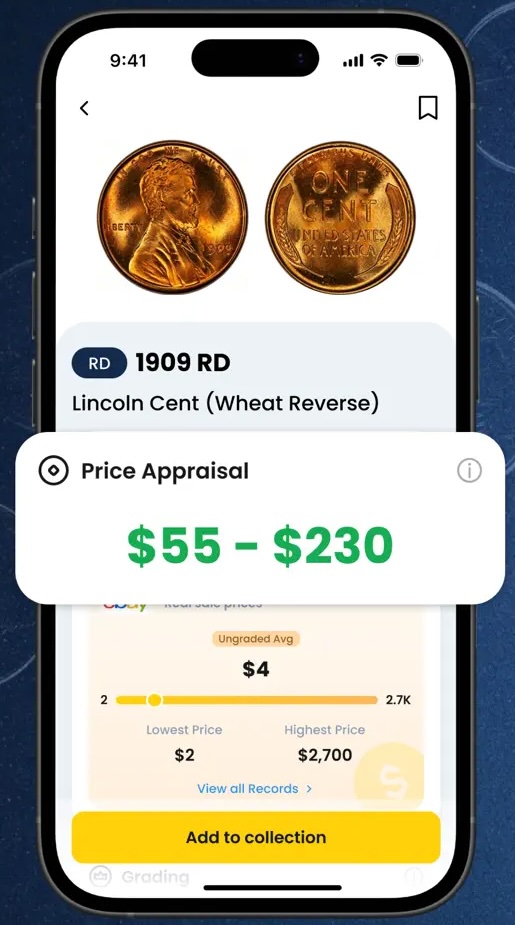
Platform: iOS & Android & Online | Price: Free + Premium | Coverage: US Coins
When I first picked up Coin Value Checker — still known as CoinHix at the time — I expected another basic scanner. What I found instead was the most comprehensive coin value app I’ve used on mobile. Rebranded in early 2025 but carrying everything its predecessor built, Coin Value Checker has quietly become the go-to tool for collectors who treat their collection like an investment portfolio rather than a shoebox of old coins.
The identification engine covers over 300,000 US coin types with a claimed 99% accuracy rate, which in my testing held up well under good lighting conditions. Point the camera at any Lincoln cent, Morgan dollar, or Washington quarter, and the app returns a full profile — year, mint mark, variety designation, and a Sheldon Scale grade accurate to within 2–3 points — faster than I can open a price guide.
Feature Case — Error Detection in Action
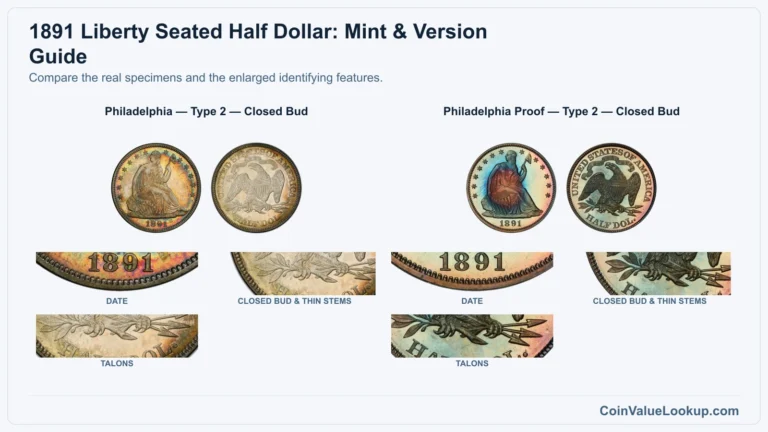
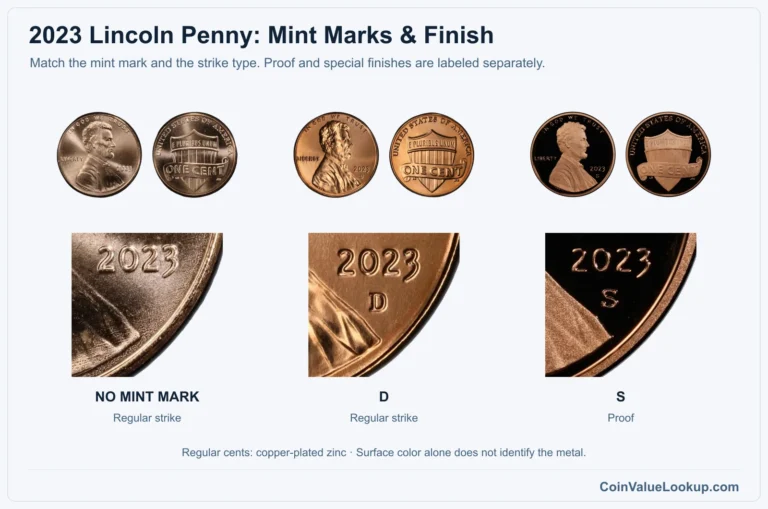
I tested Coin Value Checker with a 1972 Lincoln cent that had been sitting in my collection for years, labeled simply as a circulated example worth a few cents. On the first scan, Coin Value Checker flagged it as a potential 1972 Doubled Die Obverse — a variety where Lincoln’s portrait and the date show visible doubling. That coin, properly identified, catalogs at over $300 in circulated grades. I’d nearly spent it. The automatic error scan runs on every photo without being prompted, catching doubled dies (DDO/DDR), repunched mint marks, and missing mint marks that the naked eye can easily overlook.
What truly sets Coin Value Checker apart from every other free coin identifier app I’ve reviewed is its market intelligence suite. While most apps give you a static price estimate sourced from a catalog last updated who-knows-when, Coin Value Checker provides live price trend charts, auction result tracking, and configurable alerts that notify me when a coin I’m watching sells. I set up a wishlist for a specific 1916-D Mercury Dime and received an alert within a week when one came up at auction. That’s a feature I’d expect to pay a subscription for — here it’s part of the free tier.
Key features include automatic error detection for DDO, DDR, and missing mint marks; a market intelligence suite with trend charts and auction alerts; portfolio tracking with collection value notifications; Sheldon Scale grading at ±2–3 point accuracy; a 300,000+ coin database covering virtually all US types and varieties; and full cloud-synced collection management.
The one limitation worth knowing: Coin Value Checker is entirely focused on US coinage. If I pull out a British florin or a Mexican Libertad, the app won’t help me. For pure American numismatics, though, it’s the most well-rounded free tool available. The recent rebrand brought UI refinements and expanded the favorites system to support duplicate entries — a small but genuinely useful update for collectors who hold multiple examples of the same issue in different grades.
My Verdict: Best all-in-one free coin identifier app for US collectors who want professional accuracy plus real market intelligence. The error detection alone could pay for itself many times over.
Coin Value Checker Android Download
Coin Value Checker iOS Download
2. CoinKnow — 2nd Recommended
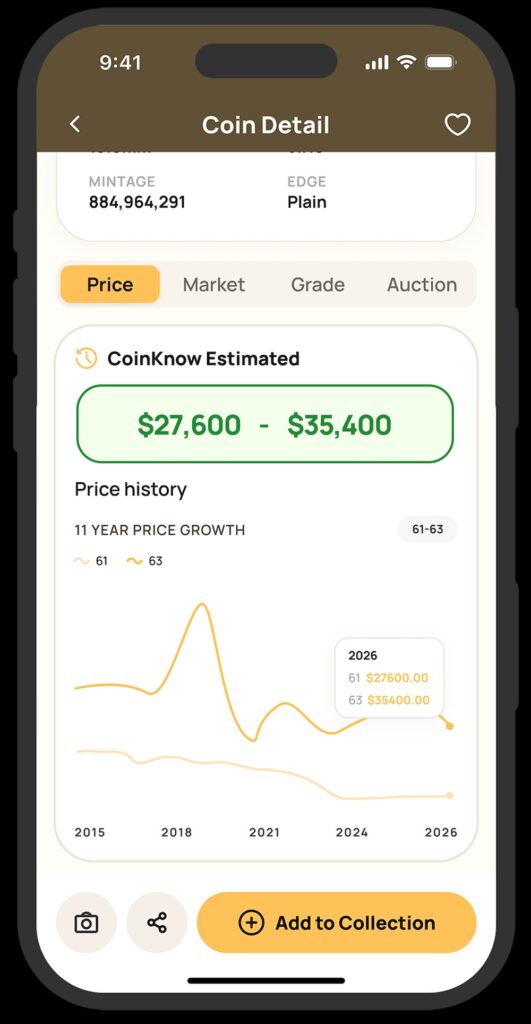
Platform: iOS & Android & Online | Price: Free + $38.99/yr | Coverage: US Coins
If I had to pick a single metric that separates a great coin identifier app from a merely good one, it would be grading precision. Knowing a coin is an MS coin is useful — knowing it’s MS63 versus MS65 could represent a value difference of several hundred dollars on something like a Morgan dollar or early commemorative. CoinKnow from SenseWake Limited is the only free coin identifier app I’ve tested that consistently hits within a 2-point Sheldon Scale margin, and that performance has earned it top rankings from multiple independent review platforms in 2025–2026.
The app launched on Android in early 2025 after establishing itself on iOS, and its narrow focus on US coinage has clearly allowed the development team to fine-tune the AI recognition engine without spreading resources across a global database. The result is an identification experience that feels less like a guessing game and more like a second opinion from a professional dealer.
Feature Case — Copper Color Designation
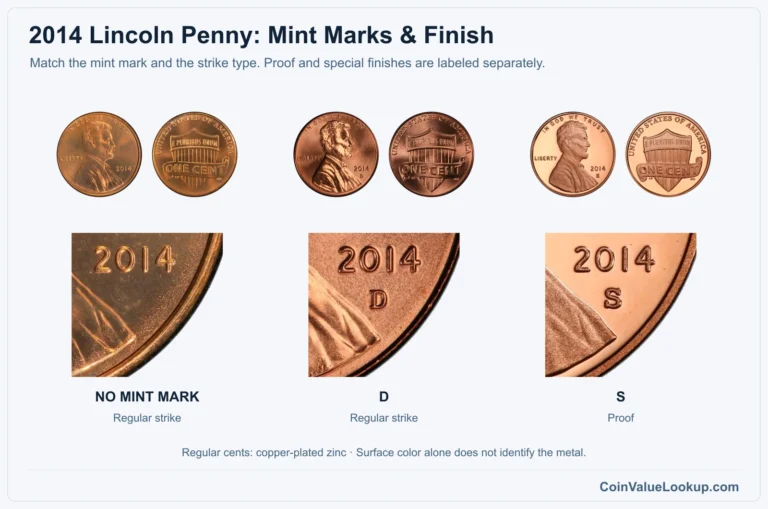
I tested CoinKnow with a batch of Lincoln cents pulled from a collection I’d recently acquired. Most coin apps treat copper as copper — CoinKnow doesn’t. It automatically designated each coin as Red (RD), Red-Brown (RB), or Brown (BN), a distinction that dramatically affects value. My 1909-S VDB in full Red came back correctly classified and priced accordingly at several times the value of the same coin graded Brown. This level of detail — along with Proof finish detection for Cameo and Deep Cameo surfaces — is something I’d normally need a PCGS or NGC certification to confirm.
Pricing data is another area where CoinKnow earns its place at the top. Rather than pulling from a single catalog, the app aggregates from Heritage Auctions results, PCGS price guides, and recent eBay sold listings, updating monthly. That multi-source approach gives me realistic, transaction-based valuations instead of the optimistic estimates I’ve seen in catalog-only apps. When I’m considering a purchase at a coin show, I want to know what the coin actually sold for last month — not what a price guide thought it was worth in 2022.
Key features include ±2-point grading accuracy — the tightest margin in any free coin app; automatic copper color detection (RD/RB/BN); Proof surface recognition for CAM and DCAM finishes; multi-source pricing from Heritage, PCGS guides, and eBay sold data; automatic error detection for DDO, DDR, and missing mint marks; and rare variety recognition covering Wide AM vs Close AM, Small/Large Date designations, and more.
Like Coin Value Checker, CoinKnow is strictly a US coin tool, and photo quality matters significantly — high-clarity images return 98–99% accuracy while blurry photos can drop to the 70–85% range. I’ve learned to use natural light or a simple LED ring light for the best results. Annual subscription pricing is clearly disclosed at $38.99 upfront — a transparency I appreciate compared to apps that hide their costs until after download.
My Verdict: The best choice when grading precision drives your buying and selling decisions. Its copper and Proof detection capabilities go further than any comparable free tool.
3. Coinoscope
Platform: iOS & Android | Price: Free + Pro | Coverage: World Coins
My collection doesn’t stop at the US border, and neither does Coinoscope. Developed by Miccron and boasting over 1.7 million downloads with approximately 180,000 monthly active users, Coinoscope has built itself into the most established global coin identification app available. When I pull out a handful of coins from a European flea market or sort through an inherited collection from a family that traveled extensively, Coinoscope is the app I reach for.
The core experience is built around visual search. I take a photo of a coin — sometimes quite worn, sometimes partially obscured — and the app’s AI engine returns a ranked list of possible matches from its global database. Unlike some apps that commit to a single answer and move on, Coinoscope presents multiple candidates, which I’ve found enormously helpful with older or more obscure pieces where visual similarity across coin types can genuinely mislead even experienced collectors.
Feature Case — Identifying an Unmarked World Coin
I came across an old silver coin in a collection I was cataloging — no country name visible in Latin, the inscriptions in a script I couldn’t immediately place. I ran it through Coinoscope and within seconds received a matched result identifying it as a 19th-century Ottoman silver Mecidiye, complete with the mint year in the Islamic calendar, the sultan’s tughra design, and current market value estimates. The app also surfaced the historical context: the coin’s role in reforming Ottoman currency. Without Coinoscope’s global database, that coin would have sat unidentified for months.
The free tier includes daily-limited coin identification and value estimation, with an optional Pro subscription that removes ads and unlocks unlimited access. A built-in coin market lets users browse listings, which adds a buying and selling dimension that most identification-focused apps lack. Collection management is clean and functional — I can save photos, notes, and search results directly to a personal catalog within the app.
Key features include a global coin database spanning many countries and historical periods; visual search with multiple ranked candidate matches; historical context covering design descriptions, inscriptions, and background; real-time value estimates from live market listings; keyword search for when photos are unclear; and an in-app coin market for buying and selling.
The trade-off versus Coin Value Checker and CoinKnow is breadth over depth. Coinoscope won’t give me the granular grading accuracy or error detection that the US-focused apps provide — for those features, it simply isn’t designed to compete. But for anyone whose collection spans continents or centuries, the global coverage is irreplaceable. The app requires an internet connection for full functionality, which is worth noting for those who catalog coins in areas with spotty connectivity.
My Verdict: Strongest free option for world coins, ancient pieces, and any collection that goes beyond US coinage. The visual candidate-matching approach is genuinely smart.
4. NGC App
Platform: iOS & Android | Price: 100% Free | Coverage: NGC-Certified Coins
I want to be upfront about what the NGC App is and isn’t, because misunderstanding its purpose is the most common source of frustration in the app store reviews. It is not a coin identifier app in the way Coin Value Checker or CoinKnow are. It will not scan an unknown coin from your collection and tell you what it is. What it will do — and does better than any other tool available — is verify, research, and contextualize coins that have already been professionally graded by the Numismatic Guaranty Company.
NGC has been grading coins since 1987 and has certified more than 43 million coins to date. Every one of those coins lives in a tamper-evident holder with a unique certification number and a barcode. The NGC App is the fastest way to interact with that database. I can walk up to any coin at a show, scan the barcode in seconds, and know immediately whether the holder is genuine, whether there are any alerts on that specific certification, and what NGC’s population data shows for that coin in that grade.
Feature Case — Catching a Counterfeit Holder
I was browsing a coin show when I spotted a slabbed 1881-S Morgan Dollar in MS65 at an aggressive price. Something felt slightly off about the label font. I scanned the barcode with the NGC App and received an immediate alert: “POSSIBLE COUNTERFEIT HOLDER — NGC has observed a counterfeit holder with the same NGC certification number.” The app had just saved me from a potentially costly fake. No other tool in my kit could have caught that in under five seconds. This is what the NGC App does that nothing else can replicate.
Beyond fraud prevention, the app provides full NGC Census data — population reports showing exactly how many coins of a given type and grade have been certified. This is critical for understanding true rarity. Images are displayed for nearly 20 million NGC-certified coins, updated weekly. The NGC Registry feature lets me add verified coins directly to my registry collection from within the app, and the NGC Price Guide provides grade-based valuations for US coins derived from actual market transactions.
Key features include instant barcode verification confirming authentic NGC-certified holders; counterfeit alerts flagging known fake holders matching certification numbers; weekly-updated NGC Census population reports by type and grade; a photo archive covering nearly 20 million NGC-graded pieces; NGC Registry integration to add verified coins in-app; and multilingual support in English, Chinese, and German.
The NGC App is entirely free with no subscription tier, no ads, and no upsells — a genuinely generous offering from a major industry institution. Think of it as essential infrastructure rather than a general-purpose coin scanner. If you buy or sell certified NGC coins with any regularity, having this app on your phone isn’t optional — it’s as fundamental as a loupe.
My Verdict: Non-negotiable for anyone who handles certified NGC coins. Pairs perfectly with an identification app like Coin Value Checker or CoinKnow for a complete toolkit.
5. CoinSnap
Platform: iOS & Android | Price: Free + Subscription | Coverage: World Coins
With over 12 million downloads and a 4.48-star rating from more than 110,000 user reviews, CoinSnap is statistically the most popular coin identifier app on both platforms, and that popularity is genuinely earned. Developed by Next Vision Limited, it covers 300,000+ coin types globally and has been refined through CoinSnap 2.0 — a significant update released in July 2025 that brought meaningfully better identification accuracy, cleaner navigation, and improved collection management tools.
The app’s core proposition is speed and accessibility. I can photograph a coin — any coin from virtually any country — and get a basic identification within seconds. For someone just starting out in the hobby, or for a casual collector who has inherited a mixed jar of international pocket change, CoinSnap removes the intimidation factor entirely. The interface is clean, the workflow is intuitive, and the global database is genuinely impressive in its breadth.
Feature Case — Sorting an International Inheritance
A friend recently inherited a collection from a traveling relative — coins from at least 30 countries, none labeled, spanning roughly a century. I helped her work through the pile with CoinSnap. For the common circulation coins — French Francs, German Marks, Mexican Pesos, British Shillings — the app identified everything accurately and quickly, providing the country, denomination, year, and a value context. We cleared through nearly 200 coins in an afternoon. CoinSnap’s global database breadth made it the right tool for this job in a way that a US-focused app simply could not have been.
Where I’ve found CoinSnap’s limitations most clearly is in the finer details that matter to more advanced US collectors. The app doesn’t automatically detect error coins or rare varieties — it has an “Error Coins” educational tab, but the detection itself isn’t built into the scanning engine. Grading is present but not to the precision standard of Coin Value Checker. For common coins, this matters very little; for a potentially valuable 1955 Doubled Die Lincoln cent, it matters enormously. The free tier allows a handful of scans per day before prompting a subscription, which some users find frustrating though the subscription pricing is reasonable.
Key features include status as the most downloaded coin identifier app globally; a 300,000+ coin type database covering 240+ countries; the CoinSnap 2.0 update with improved accuracy and cleaner UI; collection management for saving and organizing scanned coins; an indicative value guide that’s strongest for silver and gold coins; and a beginner-friendly interface designed for new collectors.
CoinSnap is the app I recommend to people who are new to coins and feel overwhelmed by more technical tools. Its approachability is a genuine virtue, and for international collections it remains one of the best options available. Advanced US collectors, however, will likely find it a useful secondary app rather than a primary tool once they’ve experienced the grading depth that Coin Value Checker and CoinKnow offer.
My Verdict: The best entry point for beginners and the go-to for sorting international collections quickly. Less suited for serious US numismatic research.
6. Numiis
Platform: iOS & Android | Price: Free Trial, then Paid | Coverage: World Coins
Most coin apps treat identification as the end of the journey. Numiis treats it as the beginning. Built by Grant Powell — a developer with over 20 years of experience who has shipped apps for major companies across fintech and automotive — Numiis takes a deliberate educational approach that I haven’t seen executed this well anywhere else in the category. If you collect coins because you love history, Numiis will speak your language.
The core identification engine handles global coins with filtering by year, country, and mint mark, and the app’s AI-driven valuation pulls from multiple auction sources, rarity metrics, and current market popularity trends to generate estimates. But the feature that makes Numiis genuinely distinctive is the depth of historical narrative attached to every coin in its database. This isn’t a one-line description — it’s actual context about why a coin exists, who ordered its creation, and what was happening politically and economically at the time of its minting.
Feature Case — The Story Behind a Morgan Dollar
I scanned an 1880-S Morgan Dollar — a coin I’d identified plenty of times — just to see what Numiis would tell me. Instead of a quick price and grade, I got a full narrative explaining the political pressure from Western silver-mining interests in the 1870s that forced Congress to pass the Bland-Allison Act, bringing the Morgan dollar into existence despite Treasury opposition. The app explained the coin’s role in Western expansion, designer George T. Morgan’s background, and why certain mint marks command premiums today due to historical production decisions. I knew the coin’s value before — Numiis made me understand why it mattered.
The app offers a free trial that provides full feature access, after which a paid subscription is required for continued use. Pricing isn’t prominently advertised before download, which is a transparency issue worth noting. It covers global coins and handles international collections well, making it a natural companion for world coin enthusiasts.
Key features include rich historical narratives explaining the full story behind each coin’s creation and context; advanced filtering by country, year, and mint mark; multi-source valuation drawing from auctions, rarity metrics, and popularity trends; strong global coverage for international coins; an expert development pedigree from a seasoned app builder; and a full free trial period with access to all features before committing.
Numiis is a niche recommendation but a sincere one. If you’re a collector who views each coin as a physical artifact of history rather than primarily a financial asset, this app adds a dimension to identification that purely price-focused tools can’t match. It’s not the first app I’d recommend to someone who needs to quickly grade a lot of coins — but it may well become your favorite app to open on a quiet evening with a new acquisition in hand.
My Verdict: Best for history-driven collectors who want to understand their coins, not just price them. The trial period is genuinely worth exploring before committing to a subscription.
7. PCGS CoinFacts
Platform: iOS, Android & Amazon | Price: 100% Free | Coverage: US Coins
Like the NGC App, PCGS CoinFacts requires some important upfront clarification: this is not a coin identifier app that scans unknown coins via photo recognition. It’s something more like the Wikipedia of US numismatics — a comprehensive, expert-maintained reference database covering over 40,000 US coin types, entirely free, with no subscription required and no ads. With over 500,000 downloads and a 4.7-star rating from more than 21,600 reviews, it has clearly found its audience among serious collectors.
The Professional Coin Grading Service has been the industry benchmark for coin authentication since 1986, and PCGS CoinFacts puts that institutional knowledge directly in my pocket. The app merges what used to be three separate PCGS tools — the Price Guide, the Photograde visual grading reference, and the CoinFacts encyclopedia — into a single, seamless experience. Every search returns complete specifications, historical background, professional photographs across all grade levels, current market values, auction prices realized, and population report data.
Feature Case — Pre-Show Research on a Key Date
Before attending a major coin show, I was researching a 1916-D Mercury Dime in what the seller described as VF-30. I opened PCGS CoinFacts, navigated to the 1916-D, and pulled up the full PCGS Photograde comparison — high-resolution photographs of VF-20, VF-25, VF-30, and VF-35 examples graded by PCGS, side by side. I could compare the band detail on the fasces and the cheekbone wear to exactly calibrated professional standards. The population report told me that fewer than 1,200 examples have been certified at VF-30 or below, giving me critical rarity context before I even walked through the door. That preparation is only possible with PCGS CoinFacts.
The app does include one identification shortcut: barcode scanning for coins already certified by PCGS or NGC. Scan the hologram label on a slabbed coin and the full record appears instantly. But for raw, ungraded coins, you’ll need to navigate manually. The daily Rare Coin Market Report push notification is a genuinely useful addition — I’ve discovered several interesting auction results I would otherwise have missed through that feature alone.
Key features include coverage of 40,000+ US coin types in the most complete US numismatic database available; PCGS Photograde with grade-by-grade photo comparisons for visual reference; a full price guide with values across up to 30 grade levels per coin type; population reports with survival and rarity data from the PCGS census; auction prices realized from historical sales records; and completely free access with no ads whatsoever.
PCGS CoinFacts and the NGC App serve complementary purposes. I use both on every significant purchase. CoinFacts for the research and pricing depth before I commit; the NGC App at the point of sale to verify the holder is genuine. Together they form the reference layer of my toolkit, sitting alongside Coin Value Checker or CoinKnow for identification work on raw coins. None of the scanning apps come close to matching the reference depth of CoinFacts — and at zero cost, there’s no reason not to have it installed.
My Verdict: Essential free reference for any serious US collector. Pairs with an AI identification app for a complete toolkit — the research depth here has no equal among free options.
How I’d Build My App Toolkit
The best setup isn’t one app — it’s the right two or three working together, each doing what it does best.
If I’m being practical about what I’d put on a new phone today: Coin Value Checker or CoinKnow handles my day-to-day US coin identification and grading, with automatic error detection running quietly on every scan. The NGC App comes out whenever I’m looking at certified coins, and it’s caught enough suspicious holders to have paid for itself in averted mistakes many times over. PCGS CoinFacts sits open in the background during any research session where I need authoritative pricing context or want to compare my coin against professional-grade photographs.
For collectors whose focus extends beyond US coinage, I’d swap Coinoscope or CoinSnap into the rotation. Both cover international coins well — Coinoscope with its historical depth and visual matching, CoinSnap with raw breadth and ease of use. Numiis earns a slot for anyone whose primary connection to the hobby runs through history rather than market value.
The technology in all seven of these apps would have seemed implausible a decade ago. A smartphone that can grade a coin within two Sheldon Scale points, automatically detect a doubled die, and tell me what it sold for at auction last month — all free, in seconds — is a genuinely remarkable thing. The apps that make it onto my phone are the ones that use that technology in service of what collectors actually need.