1794 Flowing Hair Large Cent Coin Value: How Much Is It Worth?
The 1794 Flowing Hair Large Cent is one of the earliest coins struck by the United States Mint. Guide estimates from USA Coin Book range from about $556 in G4 for the more available varieties up to roughly $1,094,086 in MS65 for the Head of 1793 variety.
Identifying your exact variety matters enormously, because the spread between branches is dramatic even at the same grade.
Fast Way to Identify Your 1794 Flowing Hair Large Cent
Want a quick read on what you have? Upload clear photos of the front and back of your 1794 cent for a preliminary identification.
The tool can help sort out which portrait style and reverse type you are looking at, which is the first step toward understanding value. Sharp, well-lit images make a real difference.
1794 Flowing Hair Large Cent Value
Upload both sides of your 1794 Flowing Hair Large Cent.
Front Obverse
Upload photo
Back Reverse
Upload photo
Which 1794 Flowing Hair Large Cent Versions Are Worth Money?
- The 1794 Starred Reverse carries guide values from about $30,915 in G4 to roughly $812,702 in AU50, driven by the distinctive tiny border stars on the reverse that make it visually unique.
- Head of 1793 cents on a 1794-dated coin list from around $2,728 in G4 up to about $1,094,086 in MS65 per USA Coin Book, reflecting both scarcity and collector demand for the earlier portrait style.
- The No Fraction Bar variety, where the horizontal line in the fraction is genuinely absent, lists from roughly $721 in G4 to about $10,013 in EF40, a meaningful premium over the standard Head of 1794.
- Head of 1795 and Exact Head of 1795 varieties can reach high five- and six-figure guide estimates in top Mint State grades, so even common-looking portrait types deserve a close look.
- Reported mint errors such as die cracks, clashed dies, off-center strikes, clips, and brockages on any 1794 cent are individually assessed based on authenticated identity and severity.
Step 1: Identify Your 1794 Flowing Hair Large Cent Mint Mark and Version
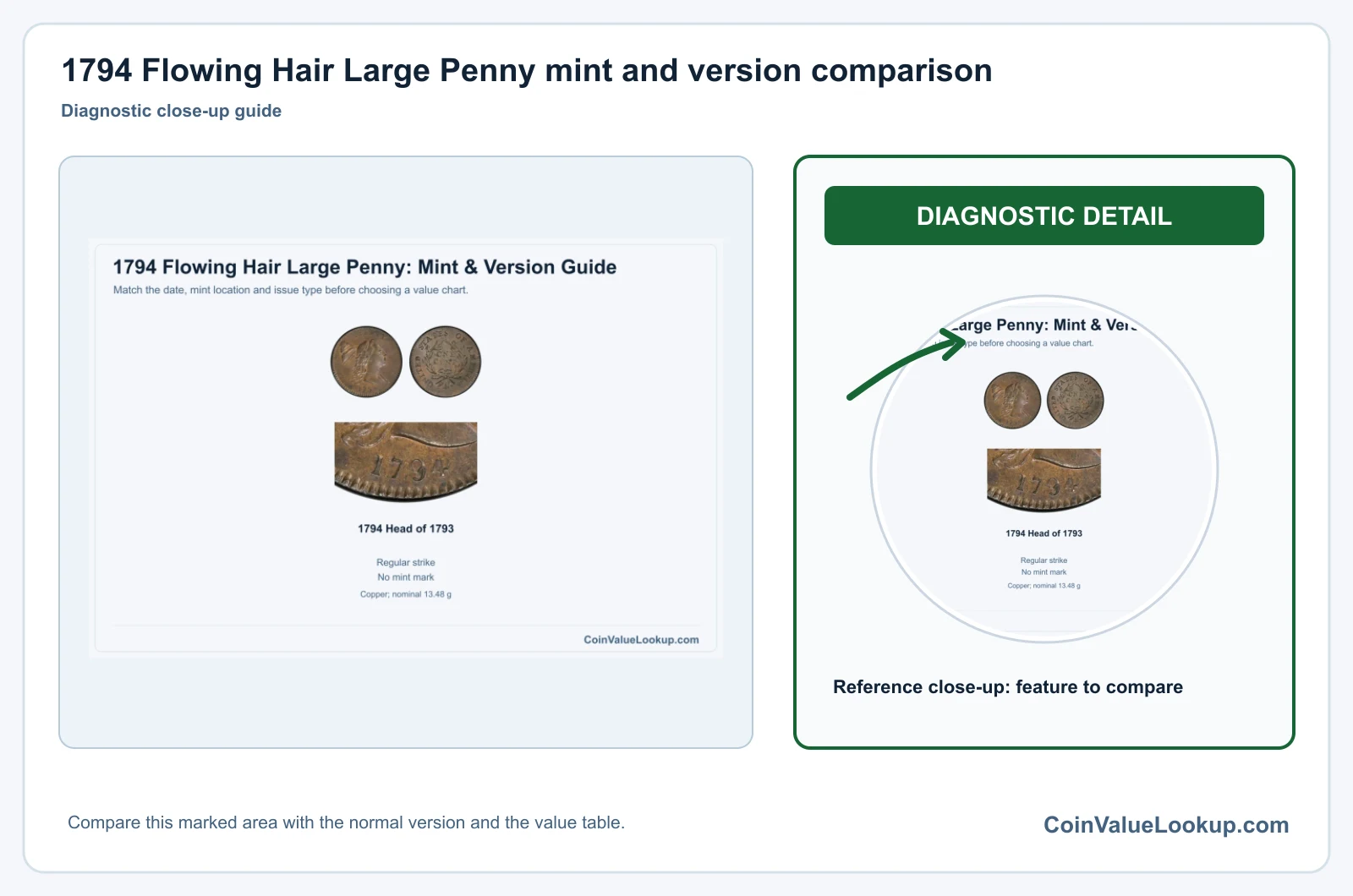
All 1794 Large Cents were struck at Philadelphia with no mintmark, so do not expect a branch-mint letter anywhere on the coin. The key task is figuring out which portrait hub was used: the Head of 1793, Head of 1794, or Head of 1795.
Each portrait differs in the shape and position of Liberty's hair, the size of her cap, and the overall facial style, so compare yours side by side with known examples at equal scale.
Beyond the portrait, check the reverse. The Starred Reverse variety has tiny five-pointed stars punched into the border between the denticles, a feature visible even on well-worn coins under magnification.
The No Fraction Bar variety is missing the horizontal line between the numerals in the fraction 1/100; make sure the bar is truly absent and not just worn away.
Inspect the edge as well. Date-punch shape, legend spacing, and wreath details all help pin down the correct attribution.
Weight can offer supporting evidence since the nominal specification is 13.48 grams of copper, but wear, corrosion, and the loose production tolerances of the 1790s mean weight alone cannot prove authenticity or variety.
Step 2: Check Your 1794 Flowing Hair Large Cent Grade
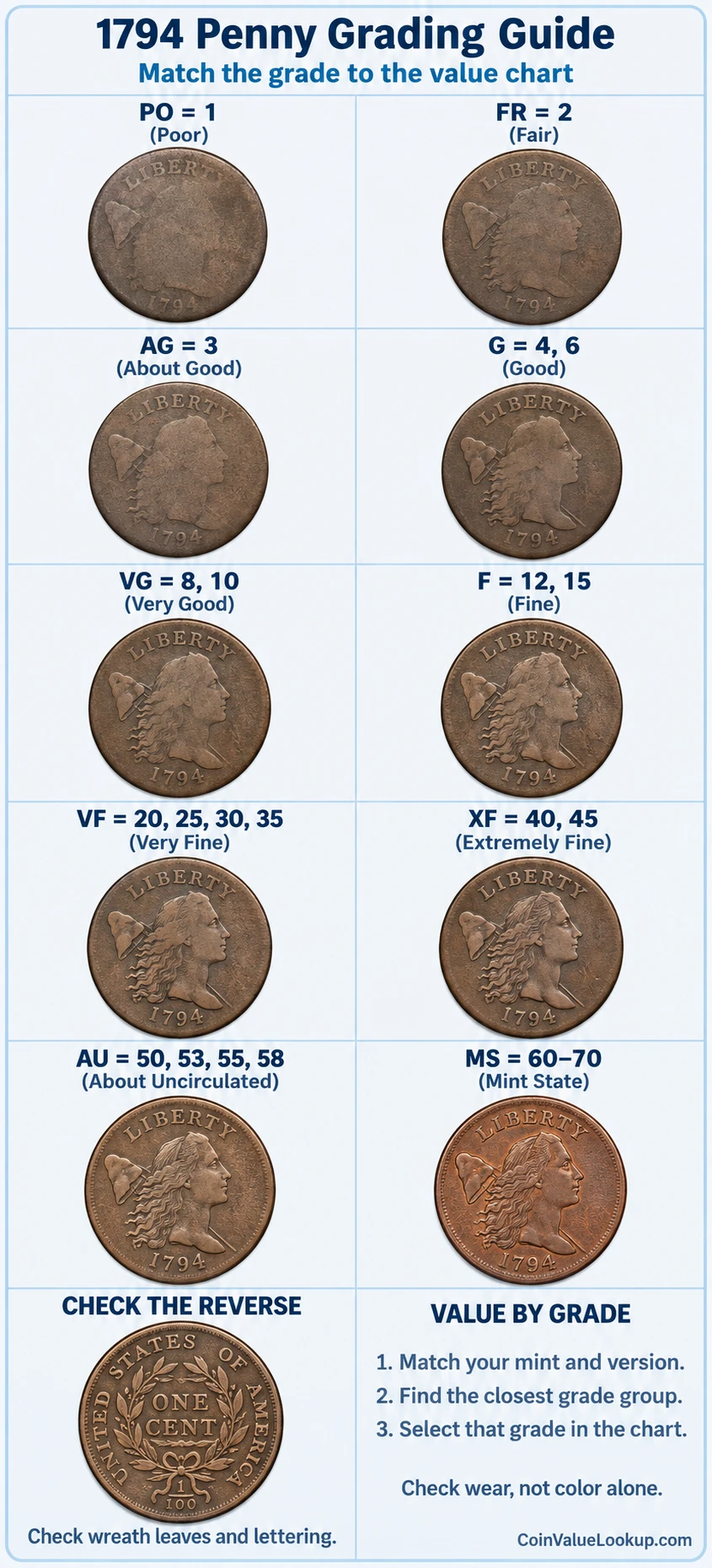
Focus on Liberty's hair detail and the smoothness of her cheek when grading the obverse. On the reverse, check the individual leaf relief in the wreath and the sharpness of the lettering.
Compare your coin to like-type grade images rather than later cent designs, because the standards differ.
Separate honest wear from other problems. A coin that lost detail through decades of pocket carry grades differently from one eaten by corrosion or weakly struck to begin with.
Surface porosity, scratches, and old cleanings can lower market value well below what the remaining detail might suggest.
On copper cents, the color designations BN (brown), RB (red-brown), and RD (red) describe how much original mint color survives. They are not different alloys or separate series.
And "Proof" refers to a specific manufacturing method, not a condition automatically better than Mint State.
Step 3: Check 1794 Flowing Hair Large Cent Value by Mint and Version
1794 Flowing Hair Large Cent — Head of 1793
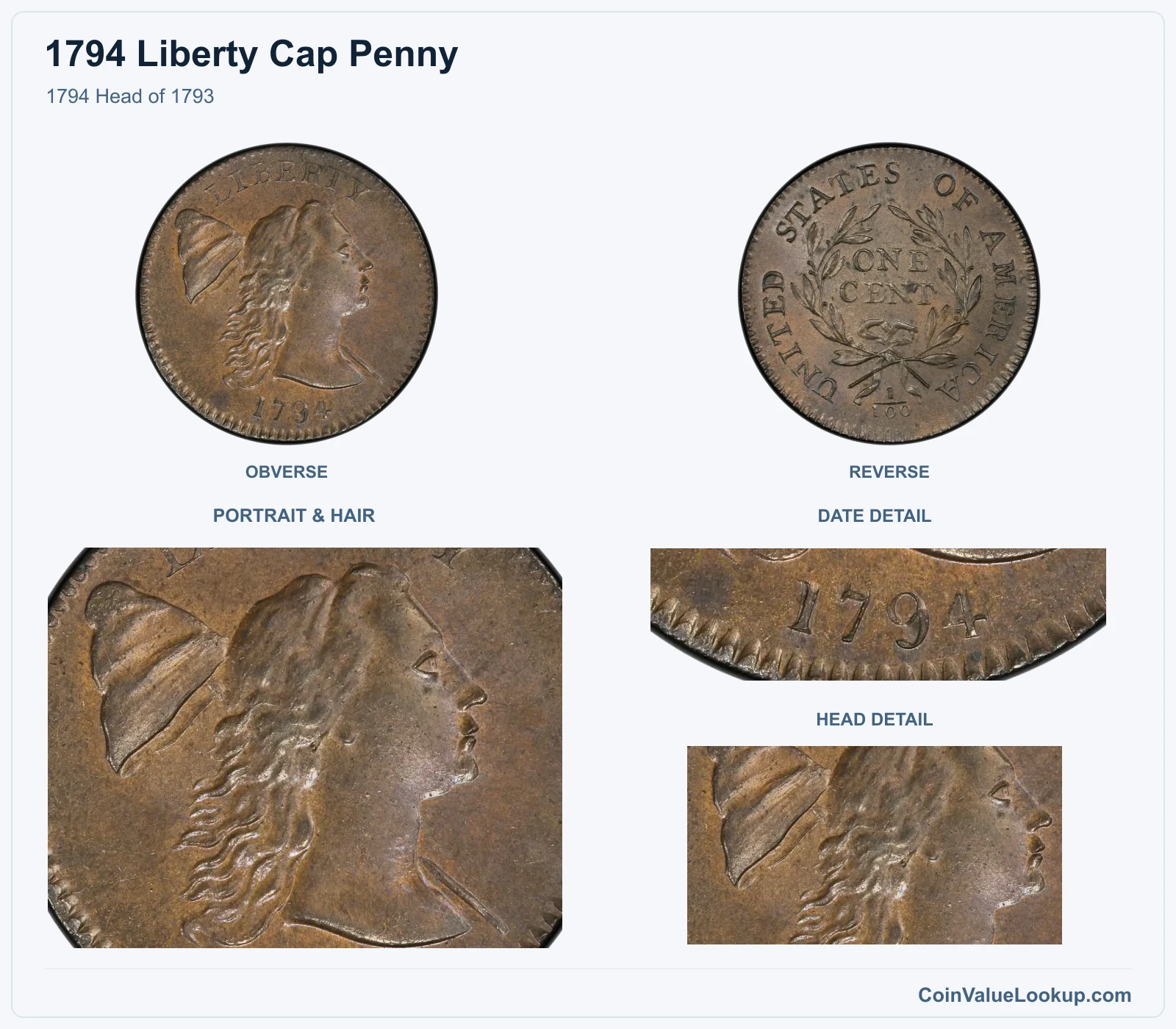
The Head of 1793 variety uses the portrait punch originally prepared for 1793 cents, paired with a 1794-dated die. Liberty's hair and cap style match the 1793 design rather than the later reworkings.
USA Coin Book guide estimates run from about $2,728 in G4 to roughly $1,094,086 in MS65, placing this among the most valued ordinary branches of the date.
To identify it, compare the overall bust profile and hair flow against confirmed Head of 1793 images at equal magnification. The differences from the Head of 1794 portrait are subtle but consistent.
Struck in copper at a nominal 13.48 grams, these were produced at Philadelphia without a mintmark.
| Range | Grade | Price | Auction Records | Appraisal |
|---|---|---|---|---|
| PO | PO 1 | Coin Identifier | ||
| FR | FR 2 | Coin Identifier | ||
| AG | AG 3 | Coin Identifier | ||
| G | G 4 | Coin Identifier | ||
| G 6 | Coin Identifier | |||
| VG | VG 8 | Coin Identifier | ||
| VG 10 | — | Coin Identifier | ||
| F | F 12 | Coin Identifier | ||
| F 15 | Coin Identifier | |||
| VF | VF 20 | Coin Identifier | ||
| VF 25 | Coin Identifier | |||
| VF 30 | — | Coin Identifier | ||
| VF 35 | — | Coin Identifier | ||
| XF | XF 40 | Coin Identifier | ||
| XF 45 | — | Coin Identifier | ||
| AU | AU 50 | — | Coin Identifier | |
| AU 53 | — | Coin Identifier | ||
| AU 55 | Coin Identifier | |||
| AU 58 | Coin Identifier | |||
| MS | MS 60 | — | Coin Identifier | |
| MS 61 | — | Coin Identifier | ||
| MS 62 | — | Coin Identifier | ||
| MS 63 | — | Coin Identifier | ||
| MS 64 | — | Coin Identifier | ||
| MS 65 | — | — | — | |
| MS 66 | — | — | — | |
| MS 67 | — | — | — | |
| MS 68 | — | — | — | |
| MS 69 | — | — | — | |
| MS 70 | — | — | — |
1794 Flowing Hair Large Cent — Head of 1794
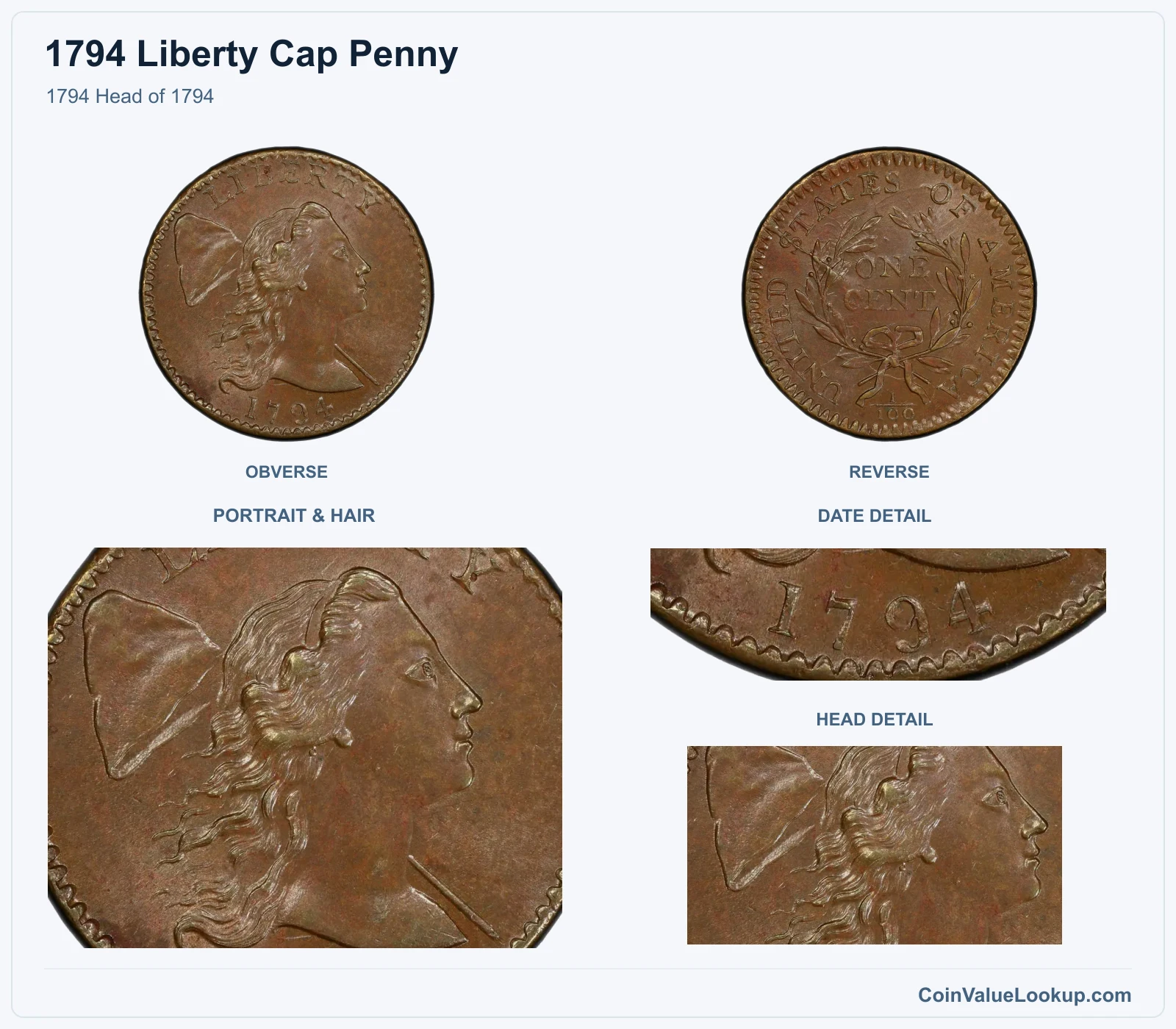
The Head of 1794 variety is the workhorse of the date, using the portrait hub specific to that year. USA Coin Book lists guide values from about $556 in G4 to roughly $6,827 in EF40, with no higher-grade anchors currently published for this branch.
Liberty's hair arrangement and cap proportions differ from both the 1793 and 1795 portrait styles, so a direct side-by-side comparison is essential. Copper, nominally 13.48 grams, struck at Philadelphia.
This is typically the most affordable entry point for a 1794 cent.
| Range | Grade | Price | Auction Records | Appraisal |
|---|---|---|---|---|
| PO | PO 1 | Coin Identifier | ||
| FR | FR 2 | Coin Identifier | ||
| AG | AG 3 | Coin Identifier | ||
| G | G 4 | Coin Identifier | ||
| G 6 | Coin Identifier | |||
| VG | VG 8 | Coin Identifier | ||
| VG 10 | Coin Identifier | |||
| F | F 12 | Coin Identifier | ||
| F 15 | Coin Identifier | |||
| VF | VF 20 | Coin Identifier | ||
| VF 25 | Coin Identifier | |||
| VF 30 | Coin Identifier | |||
| VF 35 | Coin Identifier | |||
| XF | XF 40 | Coin Identifier | ||
| XF 45 | Coin Identifier | |||
| AU | AU 50 | Coin Identifier | ||
| AU 53 | Coin Identifier | |||
| AU 55 | Coin Identifier | |||
| AU 58 | Coin Identifier | |||
| MS | MS 60 | Coin Identifier | ||
| MS 61 | Coin Identifier | |||
| MS 62 | Coin Identifier | |||
| MS 63 | Coin Identifier | |||
| MS 64 | — | Coin Identifier | ||
| MS 65 | Coin Identifier | |||
| MS 66 | Coin Identifier | |||
| MS 67 | — | Coin Identifier | ||
| MS 68 | — | — | — | |
| MS 69 | — | — | — | |
| MS 70 | — | — | — |
1794 Flowing Hair Large Cent — Head of 1795
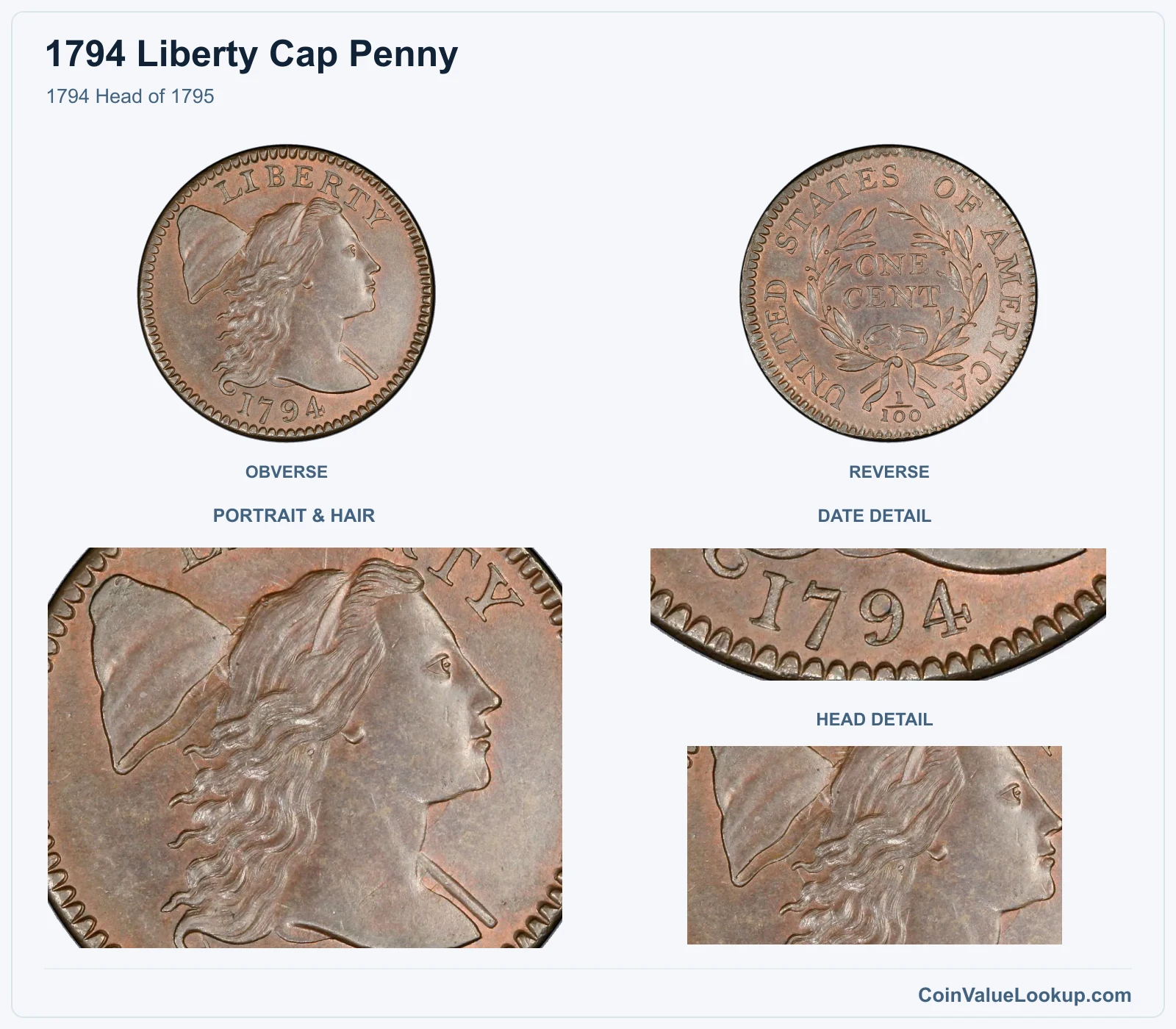
The Head of 1795 variety pairs a 1794-dated obverse with the portrait hub that would become standard on 1795 cents. Guide estimates from USA Coin Book range from about $556 in G4 to roughly $437,961 in MS65, a wide spread that reflects how dramatically condition affects value on early copper.
Look for the distinct hair and cap shape associated with the 1795 portrait. On well-worn examples the differences can be tricky, so work from high-resolution reference images.
Philadelphia strike, copper, nominally 13.48 grams, no mintmark.
| Range | Grade | Price | Auction Records | Appraisal |
|---|---|---|---|---|
| PO | PO 1 | — | Coin Identifier | |
| FR | FR 2 | Coin Identifier | ||
| AG | AG 3 | Coin Identifier | ||
| G | G 4 | Coin Identifier | ||
| G 6 | Coin Identifier | |||
| VG | VG 8 | Coin Identifier | ||
| VG 10 | Coin Identifier | |||
| F | F 12 | Coin Identifier | ||
| F 15 | Coin Identifier | |||
| VF | VF 20 | Coin Identifier | ||
| VF 25 | Coin Identifier | |||
| VF 30 | Coin Identifier | |||
| VF 35 | Coin Identifier | |||
| XF | XF 40 | Coin Identifier | ||
| XF 45 | Coin Identifier | |||
| AU | AU 50 | Coin Identifier | ||
| AU 53 | Coin Identifier | |||
| AU 55 | Coin Identifier | |||
| AU 58 | Coin Identifier | |||
| MS | MS 60 | — | Coin Identifier | |
| MS 61 | Coin Identifier | |||
| MS 62 | — | Coin Identifier | ||
| MS 63 | — | Coin Identifier | ||
| MS 64 | Coin Identifier | |||
| MS 65 | — | Coin Identifier | ||
| MS 66 | — | Coin Identifier | ||
| MS 67 | — | Coin Identifier | ||
| MS 68 | — | — | — | |
| MS 69 | — | — | — | |
| MS 70 | — | — | — |
1794 Flowing Hair Large Cent — Starred Reverse
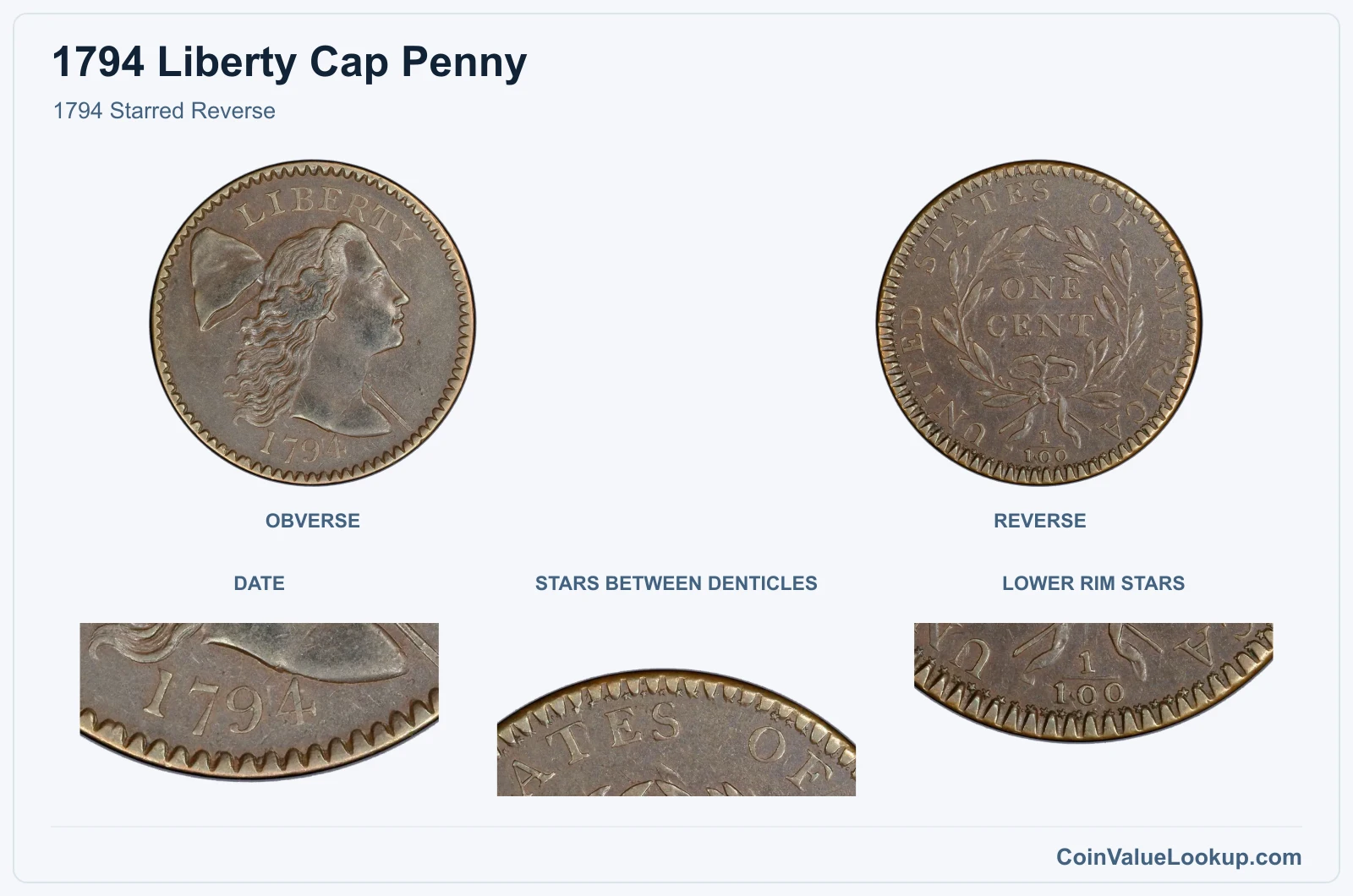
The Starred Reverse is the showpiece of the 1794 series. Tiny five-pointed stars were punched into the border area between the denticles on the reverse die, a feature found on no other Large Cent variety.
Even on heavily worn coins, these stars are usually detectable under magnification.
USA Coin Book guide estimates start at about $30,915 in G4 and climb to roughly $812,702 in AU50. No Mint State anchors are listed, which tells you something about survival rates.
If you think you see border stars on your 1794 cent, examine them carefully under good light; they should be evenly spaced and consistent with a deliberate punch, not random marks or corrosion pits. Philadelphia, copper, nominally 13.48 grams.
| Range | Grade | Price | Auction Records | Appraisal |
|---|---|---|---|---|
| PO | PO 1 | — | Coin Identifier | |
| FR | FR 2 | Coin Identifier | ||
| AG | AG 3 | Coin Identifier | ||
| G | G 4 | Coin Identifier | ||
| G 6 | Coin Identifier | |||
| VG | VG 8 | Coin Identifier | ||
| VG 10 | — | Coin Identifier | ||
| F | F 12 | — | Coin Identifier | |
| F 15 | Coin Identifier | |||
| VF | VF 20 | — | Coin Identifier | |
| VF 25 | — | Coin Identifier | ||
| VF 30 | Coin Identifier | |||
| VF 35 | — | Coin Identifier | ||
| XF | XF 40 | — | Coin Identifier | |
| XF 45 | — | Coin Identifier | ||
| AU | AU 50 | — | Coin Identifier | |
| AU 53 | — | — | — | |
| AU 55 | — | — | — | |
| AU 58 | — | — | — | |
| MS | MS 60 | — | — | — |
| MS 61 | — | — | — | |
| MS 62 | — | — | — | |
| MS 63 | — | — | — | |
| MS 64 | — | — | — | |
| MS 65 | — | — | — | |
| MS 66 | — | — | — | |
| MS 67 | — | — | — | |
| MS 68 | — | — | — | |
| MS 69 | — | — | — | |
| MS 70 | — | — | — |
1794 Flowing Hair Large Cent — No Fraction Bar
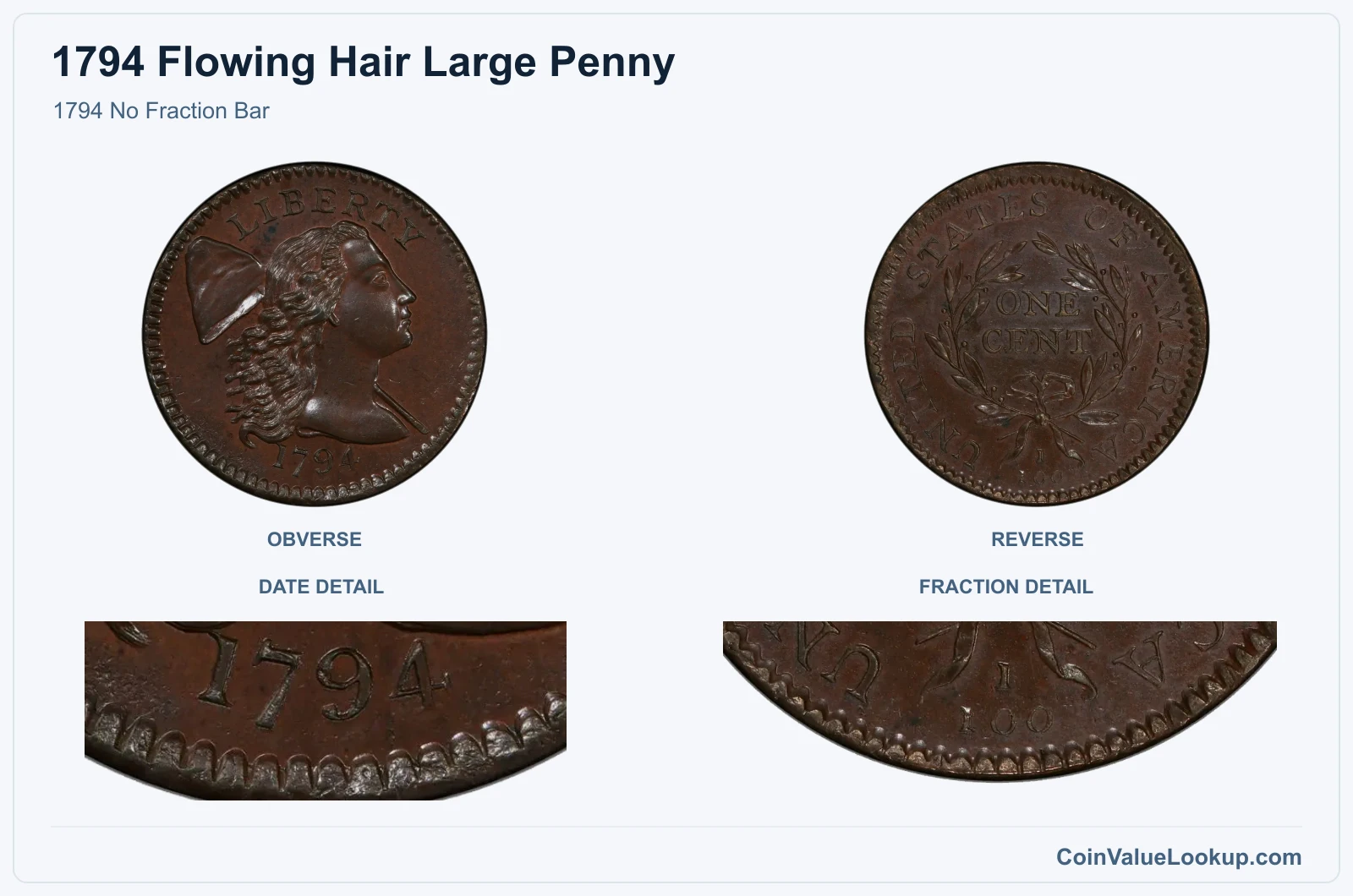
The No Fraction Bar variety is missing the horizontal line between the 1 and 100 in the denomination fraction on the reverse. This must be a genuine die feature, not simply a worn-away bar, so look for sharp surrounding detail that confirms the bar was never there.
USA Coin Book lists guide values from about $721 in G4 to roughly $10,013 in EF40. That is a solid premium over the standard Head of 1794 branch.
Copper, nominally 13.48 grams, Philadelphia production with no mintmark.
If you are researching other early cent varieties or different denominations, Coin Value Lookup is a good place to start. You can browse guides organized by series and year to compare values quickly.
| Range | Grade | Price | Auction Records | Appraisal |
|---|---|---|---|---|
| PO | PO 1 | — | Coin Identifier | |
| FR | FR 2 | — | Coin Identifier | |
| AG | AG 3 | — | Coin Identifier | |
| G | G 4 | — | Coin Identifier | |
| G 6 | — | Coin Identifier | ||
| VG | VG 8 | — | Coin Identifier | |
| VG 10 | — | Coin Identifier | ||
| F | F 12 | Coin Identifier | ||
| F 15 | — | Coin Identifier | ||
| VF | VF 20 | — | Coin Identifier | |
| VF 25 | Coin Identifier | |||
| VF 30 | Coin Identifier | |||
| VF 35 | — | Coin Identifier | ||
| XF | XF 40 | Coin Identifier | ||
| XF 45 | — | Coin Identifier | ||
| AU | AU 50 | Coin Identifier | ||
| AU 53 | — | Coin Identifier | ||
| AU 55 | — | Coin Identifier | ||
| AU 58 | — | Coin Identifier | ||
| MS | MS 60 | — | Coin Identifier | |
| MS 61 | — | Coin Identifier | ||
| MS 62 | — | Coin Identifier | ||
| MS 63 | — | Coin Identifier | ||
| MS 64 | — | Coin Identifier | ||
| MS 65 | Coin Identifier | |||
| MS 66 | — | — | — | |
| MS 67 | — | — | — | |
| MS 68 | — | — | — | |
| MS 69 | — | — | — | |
| MS 70 | — | — | — |
1794 Flowing Hair Large Cent — Exact Head of 1795
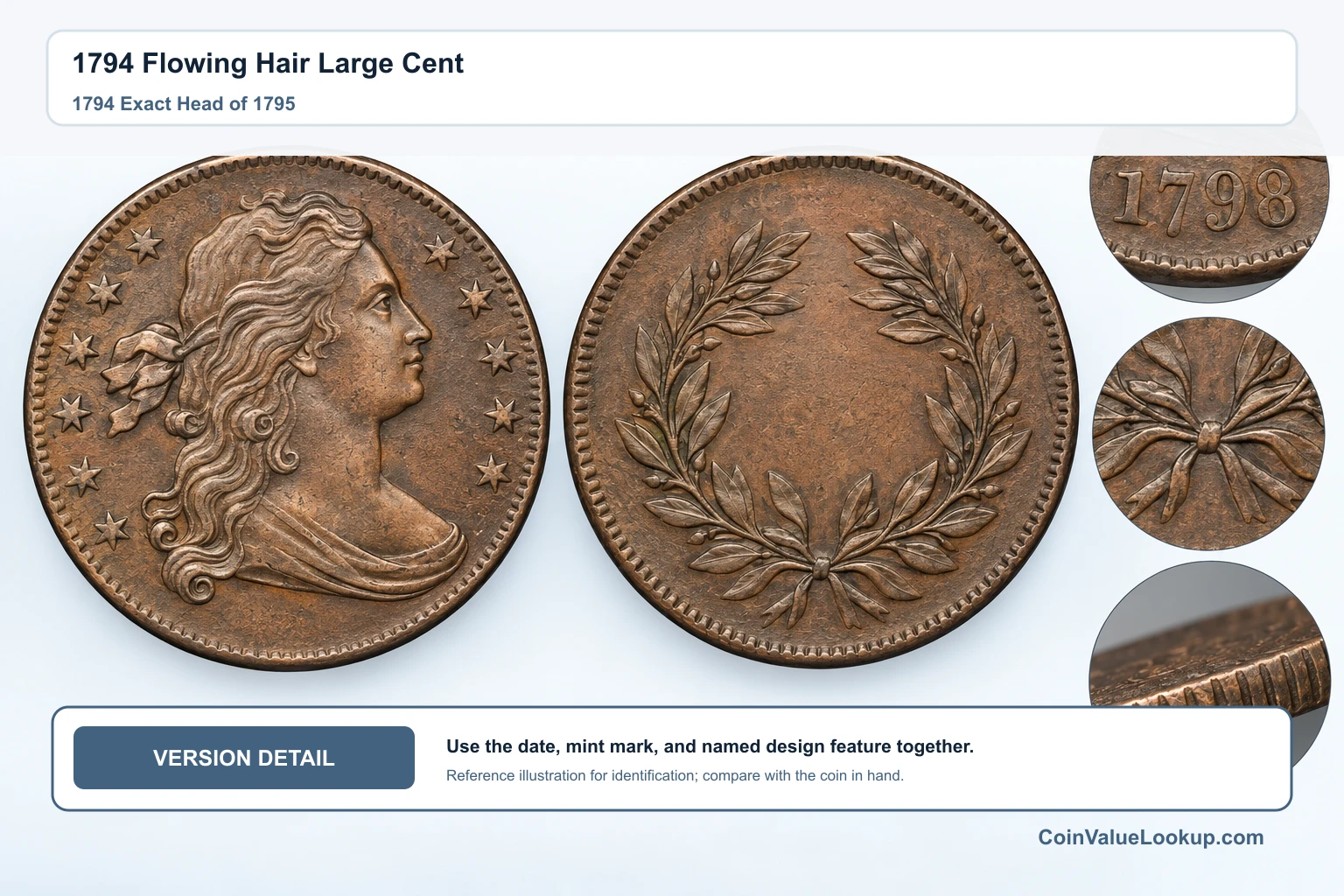
The Exact Head of 1795 is a more precisely attributed variant within the Head of 1795 family. Identifying it requires careful comparison of the named portrait features against the ordinary Head of 1795 branch at equal scale, because the distinctions can be fine.
USA Coin Book guide estimates range from about $612 in G4 to roughly $437,961 in MS65. The coin is copper, struck at Philadelphia, and exact attribution may involve confirming the edge type since early cents were produced under both heavier and lighter weight standards during transitional periods.
If you suspect you have this branch, side-by-side reference images are not optional, they are necessary.
Range Grade
Price Auction Records Appraisal PO PO 1
—
Coin Identifier FR FR 2
—
Coin Identifier AG AG 3
—
Coin Identifier G G 4
—
Coin Identifier
G 6
Coin Identifier VG VG 8
Coin Identifier
VG 10
—
Coin Identifier F F 12
Coin Identifier
F 15
Coin Identifier VF VF 20
Coin Identifier
VF 25
Coin Identifier
VF 30
Coin Identifier
VF 35
Coin Identifier XF XF 40
Coin Identifier
XF 45
Coin Identifier AU AU 50
Coin Identifier
AU 53
Coin Identifier
AU 55
Coin Identifier
AU 58
—
—
— MS MS 60
—
—
—
MS 61
—
—
—
MS 62
—
—
—
MS 63
—
—
—
MS 64
—
—
—
MS 65
—
—
—
MS 66
—
—
—
MS 67
—
—
—
MS 68
—
—
—
MS 69
—
—
—
MS 70
—
—
—
1794 Flowing Hair Large Cent Error List
1. 1794 Flowing Hair Large Cent — Die Crack
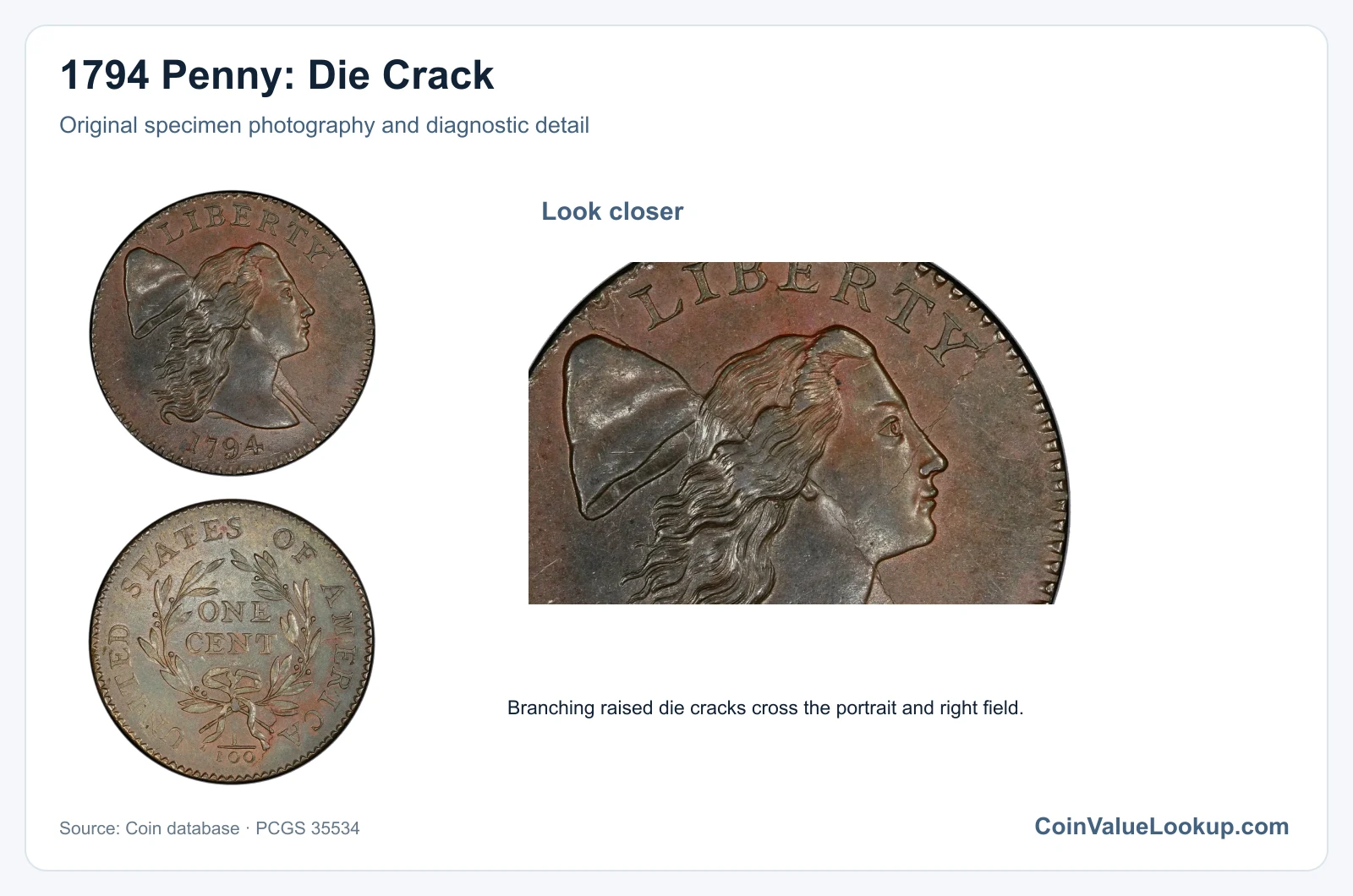
A die crack shows up as a thin raised line running across the surface of the coin, sometimes crossing open fields, sometimes cutting through letters or design elements. These lines formed when the steel die fractured under repeated striking pressure.
On a 1794 Large Cent, look for a line that follows a consistent path and stands slightly above the surrounding surface.
Do not confuse a die crack with an incuse scratch, a corrosion line, or a mark left by a tool. Scratches are typically recessed into the surface, while die cracks are raised.
No specific numeric premium is adopted for this error on 1794 cents; value depends on the authenticated identity of the coin, the severity and visual prominence of the crack, and overall condition.
2. 1794 Flowing Hair Large Cent — Clashed Dies
Clashed dies occur when the obverse and reverse dies strike each other without a planchet between them, transferring faint ghost images of each design onto the opposing die. On subsequent strikes, those ghost impressions appear on the finished coin.
Look for traces of the wreath on the obverse or hints of Liberty's portrait on the reverse, aligned where the opposite design would normally sit.
These traces can be subtle on copper, especially after circulation wear. Do not mistake random scratches, raised lines from die cracks, or brockage impressions for a clash.
No numeric premium is adopted here; each clashed-die 1794 cent is assessed individually based on its authenticated variety, the strength of the clash, and the coin's overall condition.
3. 1794 Flowing Hair Large Cent — Off-Center Strike
An off-center strike happens when the planchet is not properly seated between the dies, producing a coin with a shifted design and an unstruck crescent of blank metal along one edge. The degree of displacement matters enormously.
A 5% off-center coin looks mildly odd; a 30% example is dramatic.
For any off-center 1794 cent, the date must remain visible for the coin to be attributed to this year. Watch out for lookalikes: a clipped planchet, a misaligned die on one side only, or post-mint damage that flattened part of the rim can all mimic an off-center appearance.
No numeric price range is adopted for this error; value is assessed individually based on authenticated identity, the percentage of displacement, and the coin's condition.
4. 1794 Flowing Hair Large Cent — Clipped Planchet
A clipped planchet means a portion of the original copper blank was missing before the coin was struck. The clip can be curved, straight, or ragged, depending on how the blank was cut from the copper sheet.
Look for a section of the rim and adjacent design that is simply absent, with metal flow and weakness on the opposite side sometimes confirming the clip occurred before striking.
Do not confuse a clip with post-mint edge filing, deliberate notching, or corrosion that ate away part of the rim. Genuine clips usually show smooth, consistent edges where the metal was sheared.
No adopted numeric range exists for clipped 1794 cents; each example is valued individually according to its authenticated variety, the size and type of clip, and overall condition.
5. 1794 Flowing Hair Large Cent — Brockage
A brockage occurs when a previously struck coin remains stuck to one die and acts as an improvised die for the next strike. The result is a coin with a normal design on one side and an incuse, mirror-image impression of that same design on the other.
On a 1794 Large Cent this would be unmistakable and extremely rare.
Look at the incuse side carefully: the image should be a true reversed impression, not a vague outline. A die clash can leave faint ghost traces of the opposite design, and two coins pressed together after minting can simulate a brockage, but neither produces the deep, fully mirrored effect of a genuine strike-through brockage.
No numeric price is adopted; any suspected brockage on a 1794 cent requires professional authentication, with value driven by the coin's confirmed identity, the completeness of the brockage, and condition.