1797 Draped Bust Cent Coin Value: How Much Is It Worth?
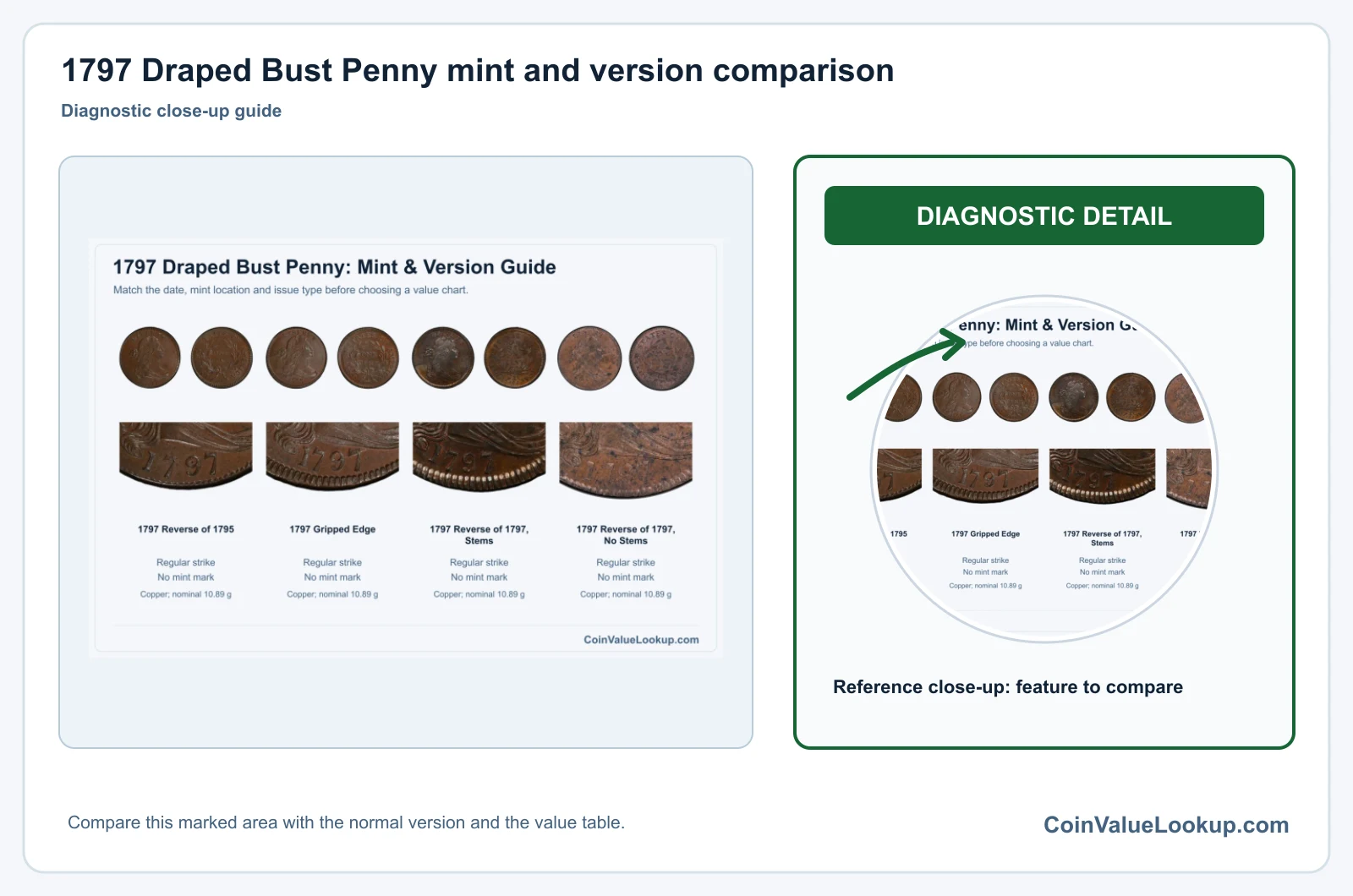
The 1797 Draped Bust Cent is a genuinely scarce early American copper, and sorting out which variety you hold matters a lot. Guide estimates for the ordinary business-strike branches run from roughly $313 in Good-4 condition up to about $8,580 in Extremely Fine-40, depending on the specific reverse type and edge style.
Those figures come from USA Coin Book and reflect variety-level differences, not a single universal price. Identifying your exact branch is the essential first step.
Fast Way to Identify Your 1797 Draped Bust Cent
The fastest way to start figuring out what you have is to upload clear photos of both sides of the coin, plus a close-up of the edge. Our identifier can give you a preliminary read on reverse type and edge variety from those images.
It is not a substitute for professional authentication or grading, but it will point you in the right direction before you invest more time.
1797 Draped Bust Cent Value
Upload both sides of your 1797 Draped Bust Cent.
Front Obverse
Upload photo
Back Reverse
Upload photo
Which 1797 Draped Bust Cent Versions Are Worth Money?
- The 1797 Reverse of 1797 Stemless variety carries the highest listed guide estimate at about $8,580 in EF-40, making it the branch to check for first.
- The Reverse of 1795 and the Gripped Edge varieties both list around $376 in G-4, but diverge at higher grades, so condition matters.
- The Reverse of 1797 with Stems is the most affordable entry point at roughly $313 in G-4, though strong examples in EF-40 still list near $3,632.
- Prominent mint errors such as off-center strikes or brockages on any 1797 variety deserve individual professional assessment.
Step 1: Identify Your 1797 Draped Bust Cent Mint Mark and Version
All 1797 Draped Bust Cents were struck at the Philadelphia Mint, so there is no mintmark to look for. The key sorting job is on the reverse and the edge.
Flip the coin over first. The Reverse of 1795 has a slightly different wreath arrangement than the Reverse of 1797; the fraction style and leaf details differ between the two.
On the 1797 reverse, also check whether small stems appear at the base of the wreath or whether the wreath is stemless.
Now check the edge. A plain edge is smooth, while a gripped edge shows regular indentations running around the rim.
You need to physically roll the coin along your fingertip or a soft surface to feel the difference. Photos sometimes miss it.
Date-punch shape, legend spacing, and wreath layout all help confirm the correct category. Weight can offer supporting evidence since the nominal specification is about 10.89 grams of copper, but wear, corrosion, and the loose production tolerances of the 1790s mean weight alone will not prove anything.
When in doubt, compare your coin against known examples of each variety side by side.
Step 2: Check Your 1797 Draped Bust Cent Grade
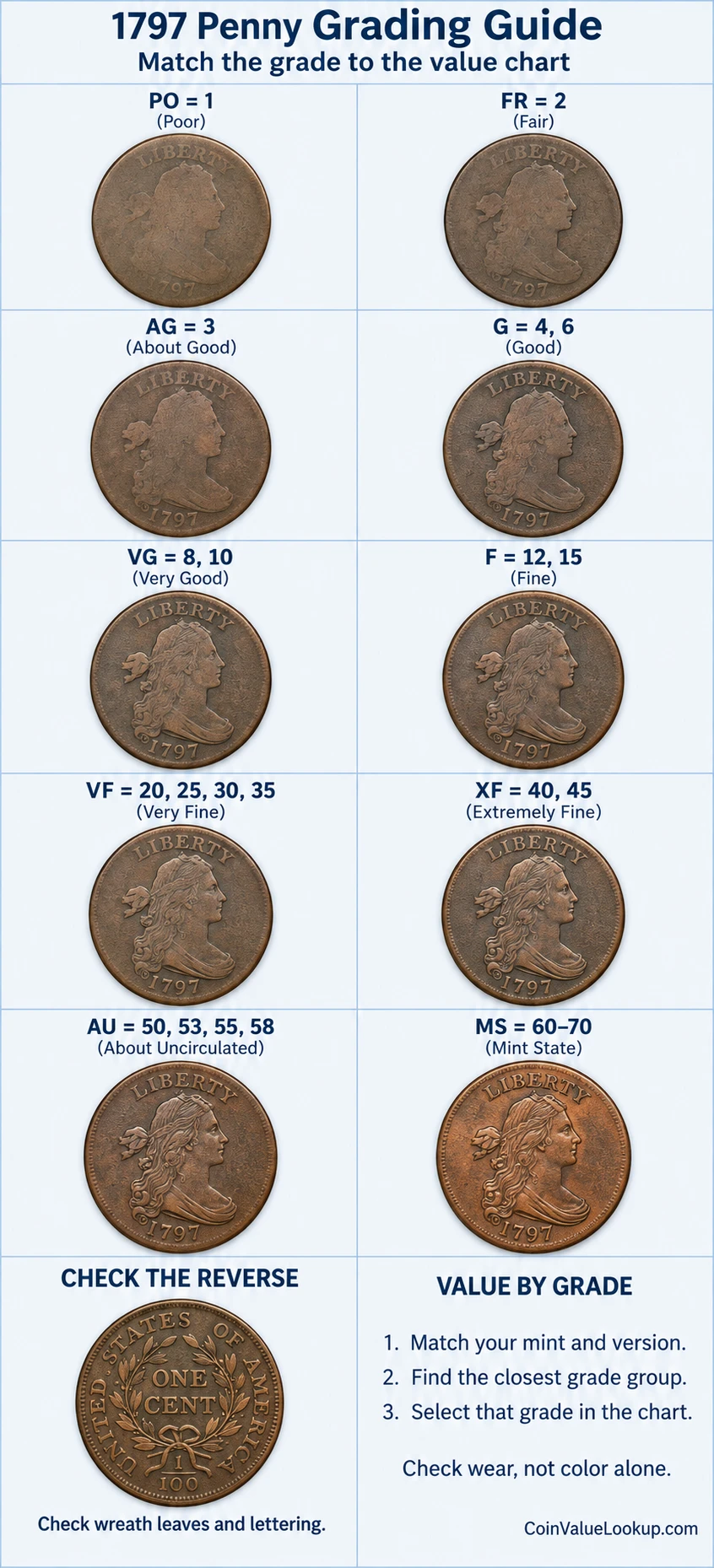
Focus on three areas when judging wear: Liberty's hair detail and cheek on the obverse, leaf relief on the wreath, and the sharpness of the lettering on both sides. In lower grades like Good-4, most hair detail is gone and the portrait is a flat outline, but the date and legends remain readable.
As you move up toward Extremely Fine-40, individual hair strands above the ear become visible and leaf veins on the wreath start to show. Compare your coin against the reference image of the same type at a similar grade.
Do not confuse a weak strike with heavy circulation wear. Some 1797 cents left the press with soft details, especially near the rims.
Likewise, porosity and corrosion eat away surface detail in a way that looks like wear but is actually a surface problem, and that distinction matters for value.
On copper coins you will see color descriptions like BN (brown), RB (red-brown), and RD (red). These describe the remaining original color, not different metals.
Most surviving 1797 cents are solidly brown. Surface problems such as cleaning, heavy corrosion, or tooling can reduce market appeal well below the guide figures listed for a given grade.
Step 3: Check 1797 Draped Bust Cent Value by Mint and Version
1797 Draped Bust Cent — Reverse of 1795
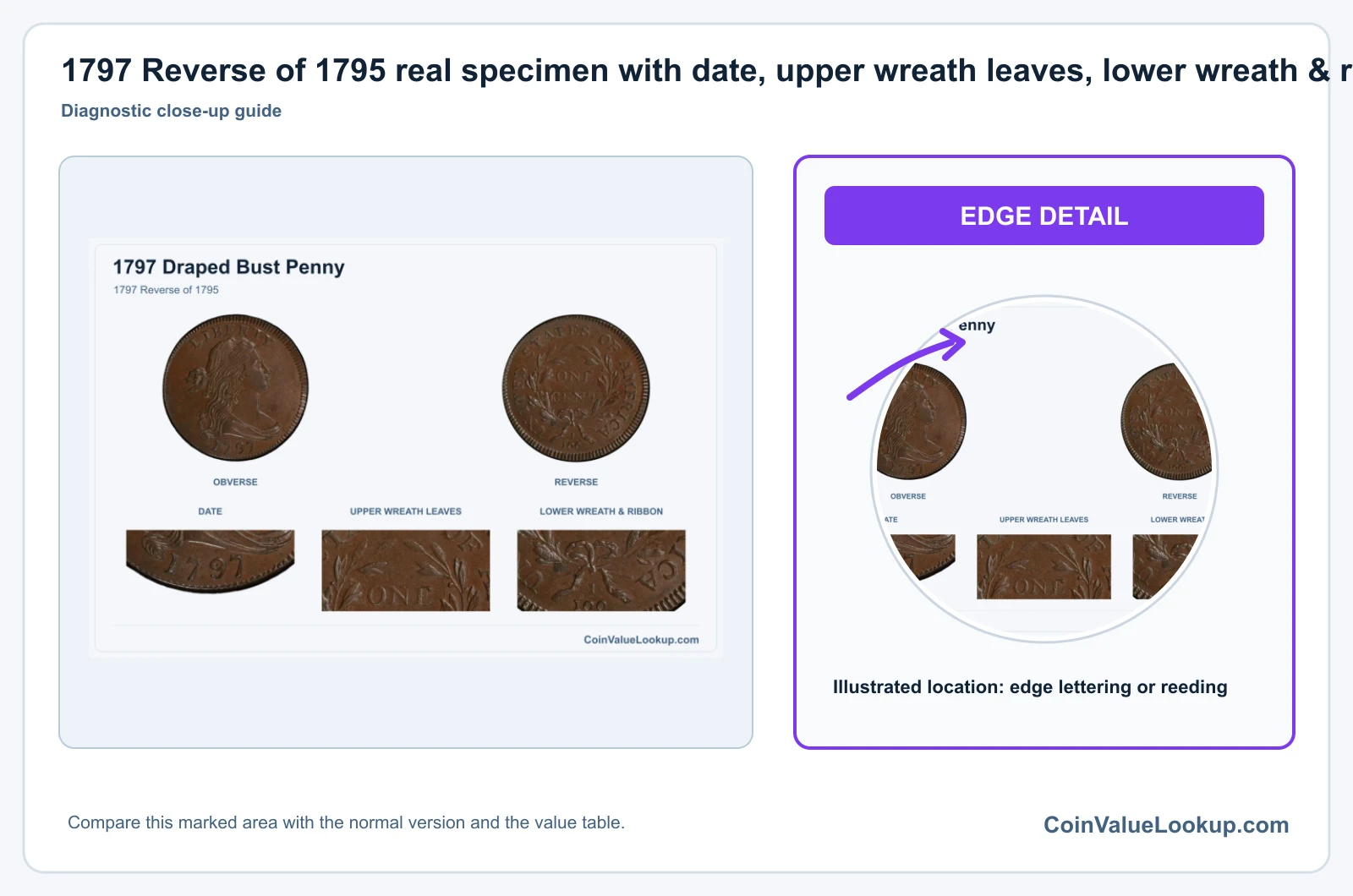
This variety pairs the Draped Bust obverse with the earlier Reverse of 1795 design and a plain edge. Look at the wreath arrangement and fraction style on the reverse to distinguish it from the later 1797 reverse.
The edge should be completely smooth with no grip marks.
USA Coin Book lists this branch at about $376 in Good-4 and around $5,620 in Extremely Fine-40. Those are guide estimates, not guaranteed sale prices, and actual transactions depend on surface quality, color, and sharpness.
A coin with heavy porosity or old cleaning will trade below these figures even if the detail technically matches a given grade.
| Range | Grade | Price | Auction Records | Appraisal |
|---|---|---|---|---|
| PO | PO 1 | — | Coin Identifier | |
| FR | FR 2 | — | Coin Identifier | |
| AG | AG 3 | Coin Identifier | ||
| G | G 4 | Coin Identifier | ||
| G 6 | Coin Identifier | |||
| VG | VG 8 | Coin Identifier | ||
| VG 10 | — | Coin Identifier | ||
| F | F 12 | Coin Identifier | ||
| F 15 | Coin Identifier | |||
| VF | VF 20 | Coin Identifier | ||
| VF 25 | — | Coin Identifier | ||
| VF 30 | — | Coin Identifier | ||
| VF 35 | Coin Identifier | |||
| XF | XF 40 | Coin Identifier | ||
| XF 45 | Coin Identifier | |||
| AU | AU 50 | — | Coin Identifier | |
| AU 53 | — | Coin Identifier | ||
| AU 55 | — | Coin Identifier | ||
| AU 58 | Coin Identifier | |||
| MS | MS 60 | — | Coin Identifier | |
| MS 61 | — | Coin Identifier | ||
| MS 62 | — | Coin Identifier | ||
| MS 63 | — | Coin Identifier | ||
| MS 64 | — | Coin Identifier | ||
| MS 65 | — | Coin Identifier | ||
| MS 66 | — | — | — | |
| MS 67 | — | — | — | |
| MS 68 | — | — | — | |
| MS 69 | — | — | — | |
| MS 70 | — | — | — |
1797 Draped Bust Cent — Gripped Edge
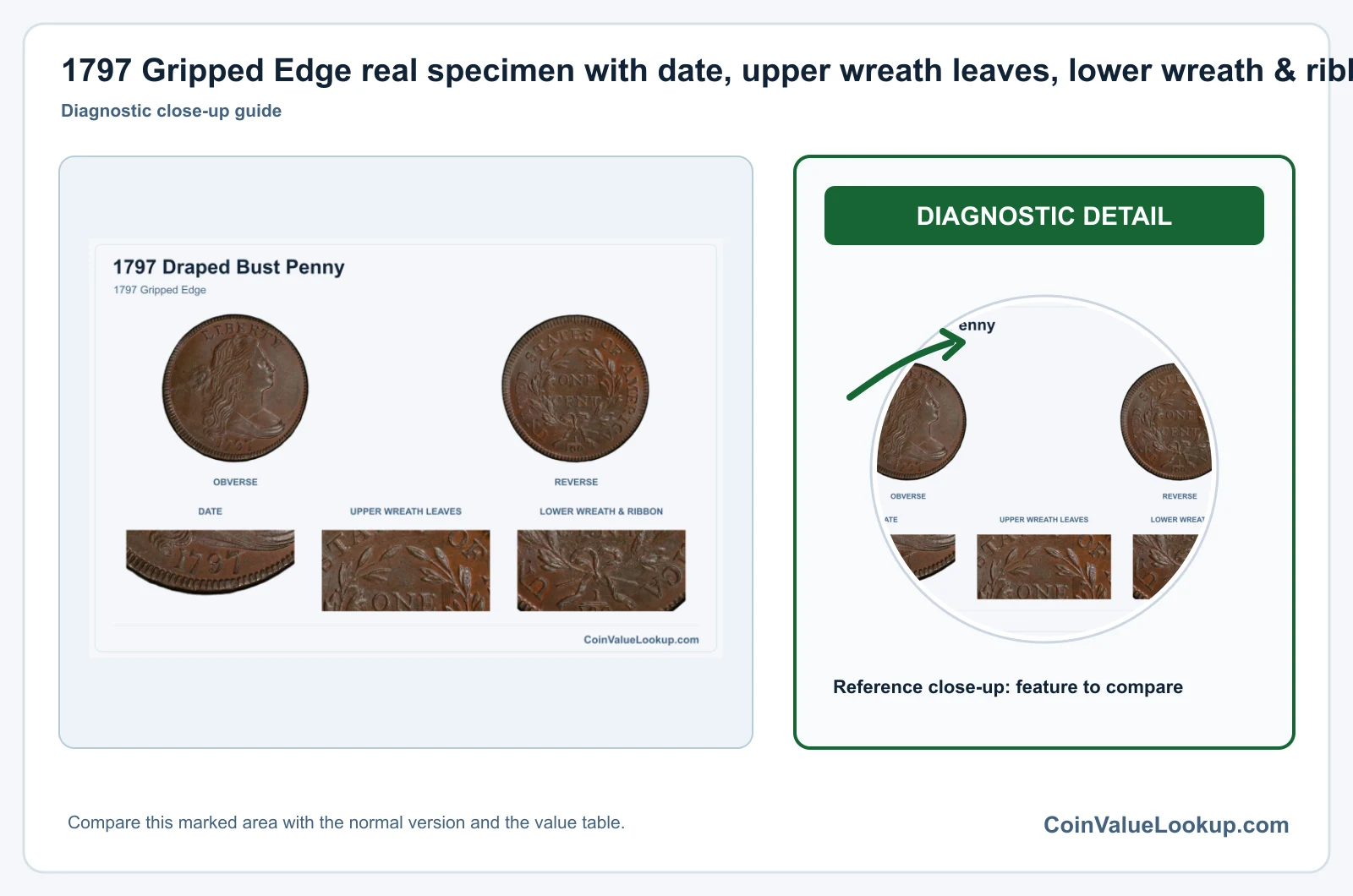
The Gripped Edge variety also uses the Reverse of 1795 design, but its edge carries a series of regular indentations that you can feel when you roll the coin between your fingers. That tactile check is the simplest way to separate it from the plain-edge version.
Guide estimates from USA Coin Book place this variety at roughly $376 in Good-4 and about $4,940 in Extremely Fine-40. The Gripped Edge trails the plain-edge Reverse of 1795 slightly at the top end, so knowing your edge type can change your expectations.
If you are exploring other early copper denominations or want to compare values across the full Draped Bust series, Coin Value Lookup is a good place to start. You can look up guide information for a wide range of dates and types without having to hunt through multiple sources.
| Range | Grade | Price | Auction Records | Appraisal |
|---|---|---|---|---|
| PO | PO 1 | — | Coin Identifier | |
| FR | FR 2 | Coin Identifier | ||
| AG | AG 3 | Coin Identifier | ||
| G | G 4 | Coin Identifier | ||
| G 6 | Coin Identifier | |||
| VG | VG 8 | Coin Identifier | ||
| VG 10 | Coin Identifier | |||
| F | F 12 | Coin Identifier | ||
| F 15 | Coin Identifier | |||
| VF | VF 20 | Coin Identifier | ||
| VF 25 | — | Coin Identifier | ||
| VF 30 | — | Coin Identifier | ||
| VF 35 | Coin Identifier | |||
| XF | XF 40 | — | Coin Identifier | |
| XF 45 | Coin Identifier | |||
| AU | AU 50 | Coin Identifier | ||
| AU 53 | Coin Identifier | |||
| AU 55 | Coin Identifier | |||
| AU 58 | — | Coin Identifier | ||
| MS | MS 60 | — | Coin Identifier | |
| MS 61 | — | Coin Identifier | ||
| MS 62 | — | Coin Identifier | ||
| MS 63 | — | Coin Identifier | ||
| MS 64 | — | Coin Identifier | ||
| MS 65 | — | Coin Identifier | ||
| MS 66 | — | — | — | |
| MS 67 | — | — | — | |
| MS 68 | — | — | — | |
| MS 69 | — | — | — | |
| MS 70 | — | — | — |
1797 Draped Bust Cent — Reverse of 1797, Stems
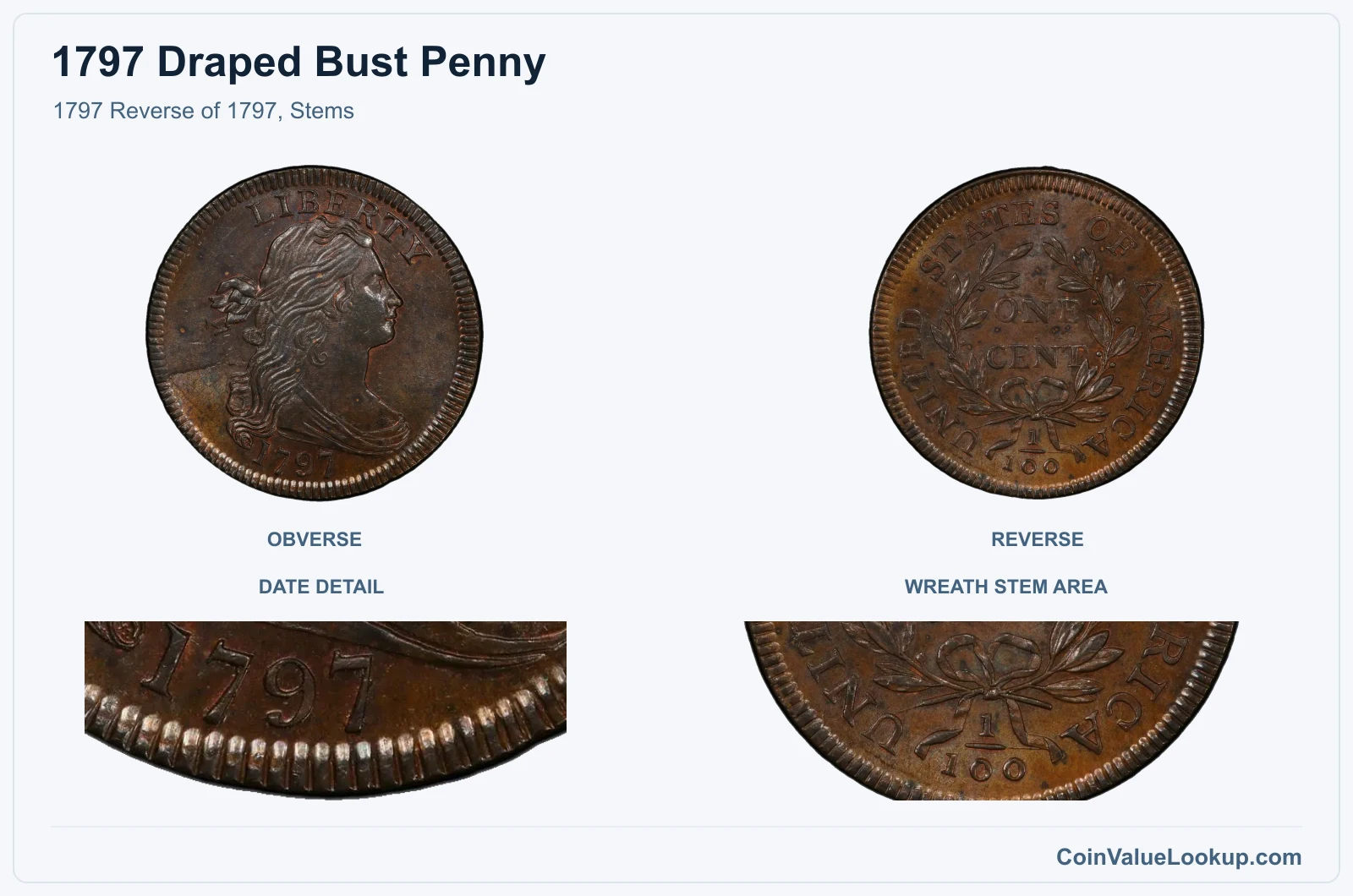
Here the reverse is the 1797-style design and small stems appear at the base of the wreath. This is the most commonly encountered 1797 variety, so it serves as the baseline for the date.
USA Coin Book lists it at about $313 in Good-4 and roughly $3,632 in Extremely Fine-40, the lowest guide range among the four branches. That does not make it cheap by any modern standard.
Even a well-worn example with a clear date is a two-century-old copper coin worth a look.
| Range | Grade | Price | Auction Records | Appraisal |
|---|---|---|---|---|
| PO | PO 1 | Coin Identifier | ||
| FR | FR 2 | Coin Identifier | ||
| AG | AG 3 | Coin Identifier | ||
| G | G 4 | Coin Identifier | ||
| G 6 | Coin Identifier | |||
| VG | VG 8 | Coin Identifier | ||
| VG 10 | Coin Identifier | |||
| F | F 12 | Coin Identifier | ||
| F 15 | Coin Identifier | |||
| VF | VF 20 | Coin Identifier | ||
| VF 25 | Coin Identifier | |||
| VF 30 | Coin Identifier | |||
| VF 35 | Coin Identifier | |||
| XF | XF 40 | Coin Identifier | ||
| XF 45 | Coin Identifier | |||
| AU | AU 50 | Coin Identifier | ||
| AU 53 | Coin Identifier | |||
| AU 55 | Coin Identifier | |||
| AU 58 | Coin Identifier | |||
| MS | MS 60 | Coin Identifier | ||
| MS 61 | Coin Identifier | |||
| MS 62 | Coin Identifier | |||
| MS 63 | Coin Identifier | |||
| MS 64 | Coin Identifier | |||
| MS 65 | Coin Identifier | |||
| MS 66 | Coin Identifier | |||
| MS 67 | — | — | — | |
| MS 68 | — | — | — | |
| MS 69 | — | — | — | |
| MS 70 | — | — | — |
1797 Draped Bust Cent — Reverse of 1797, No Stems
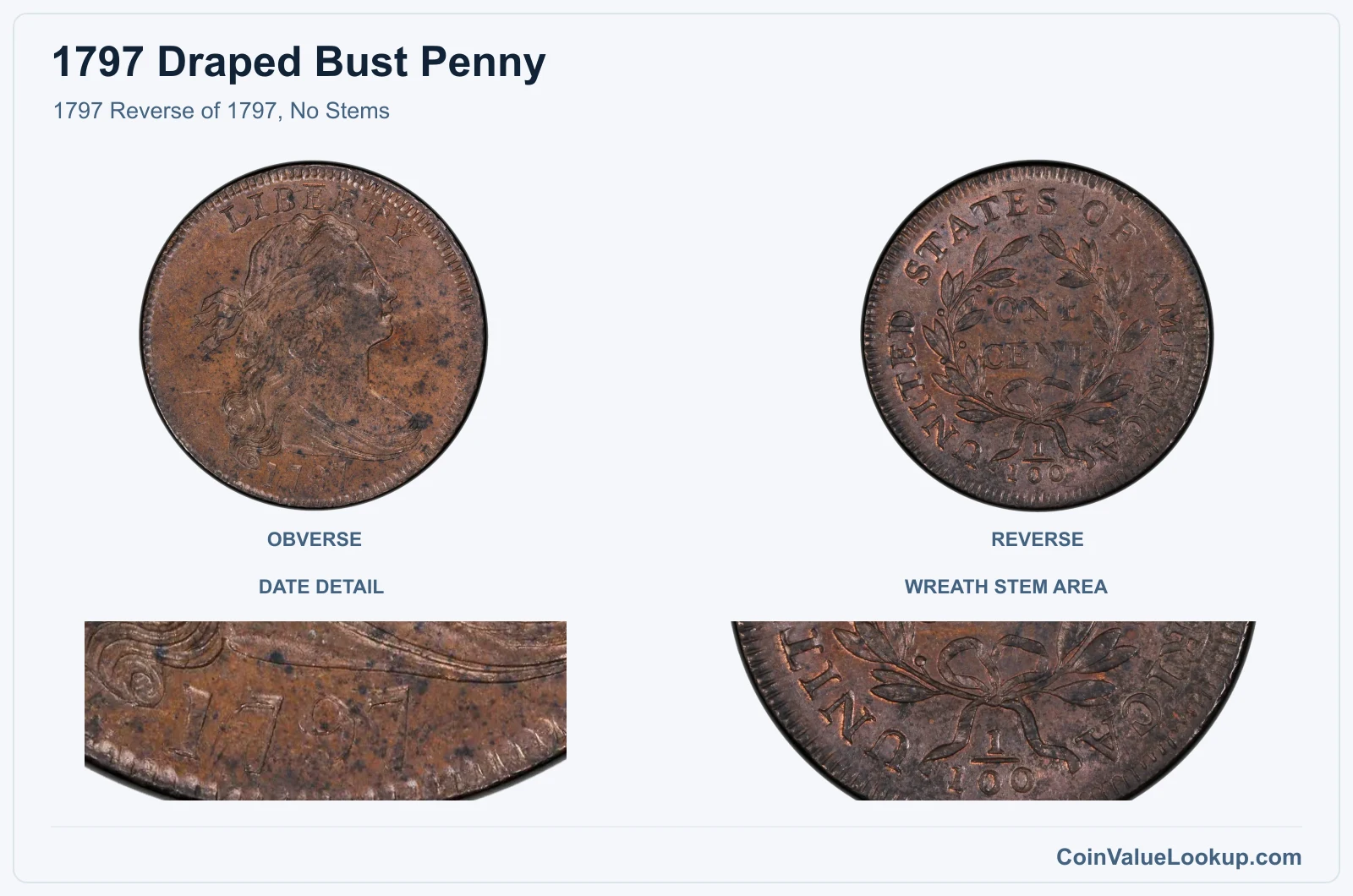
This is the stemless version of the 1797 reverse. Flip your coin and look at the very bottom of the wreath, just above the bow: if no small stems extend from the base, you may have this variety.
It is a subtle difference, so good lighting and magnification help.
The USA Coin Book guide estimate runs from about $376 in Good-4 to approximately $8,580 in Extremely Fine-40, the highest listed figure for any ordinary 1797 Draped Bust Cent branch. That premium reflects relative scarcity compared to the stemmed version.
Confirming the stemless detail on a worn coin can be tricky, so compare carefully against known examples before drawing conclusions.
| Range | Grade | Price | Auction Records | Appraisal |
|---|---|---|---|---|
| PO | PO 1 | — | Coin Identifier | |
| FR | FR 2 | — | Coin Identifier | |
| AG | AG 3 | — | Coin Identifier | |
| G | G 4 | Coin Identifier | ||
| G 6 | Coin Identifier | |||
| VG | VG 8 | Coin Identifier | ||
| VG 10 | Coin Identifier | |||
| F | F 12 | Coin Identifier | ||
| F 15 | — | Coin Identifier | ||
| VF | VF 20 | Coin Identifier | ||
| VF 25 | Coin Identifier | |||
| VF 30 | Coin Identifier | |||
| VF 35 | Coin Identifier | |||
| XF | XF 40 | Coin Identifier | ||
| XF 45 | — | Coin Identifier | ||
| AU | AU 50 | Coin Identifier | ||
| AU 53 | — | Coin Identifier | ||
| AU 55 | Coin Identifier | |||
| AU 58 | — | Coin Identifier | ||
| MS | MS 60 | Coin Identifier | ||
| MS 61 | — | Coin Identifier | ||
| MS 62 | — | Coin Identifier | ||
| MS 63 | — | — | — | |
| MS 64 | — | — | — | |
| MS 65 | — | — | — | |
| MS 66 | — | — | — | |
| MS 67 | — | — | — | |
| MS 68 | — | — | — | |
| MS 69 | — | — | — | |
| MS 70 | — | — | — |
1797 Draped Bust Cent Error List
1. 1797 Draped Bust Cent — Off-Center Strike
An off-center strike happens when the planchet is not seated properly between the dies. The result is a displaced design with an unstruck crescent of blank copper along one side.
The amount of displacement varies; a coin that is 10% off-center looks different from one that is 50% off.
For any off-center 1797 cent, the date must remain visible on the struck portion for the coin to be attributable and collectible as a dated error. Without a readable date, you essentially have an anonymous early copper blank.
Do not confuse an off-center strike with a clipped planchet, one-sided die misalignment, or post-mint flattening from damage. No specific price range is adopted for this error; value depends on the authenticated identity, severity of the mis-strike, and overall condition of the surviving surfaces.
2. 1797 Draped Bust Cent — Clipped Planchet
A clipped planchet error shows a missing curved, straight, or ragged section of the original copper blank. The clip occurred before striking, so the design near the missing area often shows weakness where the metal could not flow completely into the die.
Look at the edge texture around the missing portion. A genuine clip usually displays a smooth or slightly curved boundary consistent with a cutting error at the blank-preparation stage.
Weakness on the opposite side of the coin from the clip can also help confirm it.
Watch out for lookalikes. A post-mint filed edge, a deliberate notch, or heavy corrosion that ate away part of the rim can mimic a clip.
Value for a genuine clipped 1797 cent depends on authenticated identity, the size and type of the clip, and the coin's overall condition. No adopted price range is available for this category.
3. 1797 Draped Bust Cent — Die Crack
Die cracks appear as raised lines running across the coin's surface, crossing fields or devices. They formed when the steel die developed fractures during use, and those fractures transferred as ridges onto every coin struck afterward.
To identify one, look for a thin raised line that follows a consistent path, often starting from the rim. Under magnification, a die crack sits above the surface rather than being cut into it.
That is the key difference from an incuse scratch, which is pressed into the metal.
Corrosion channels and tool marks can also mimic cracks, so compare the suspect line's profile and direction carefully. On early copper, surface granularity sometimes obscures fine cracks.
No specific price range is adopted for die-crack 1797 cents; value would depend on the crack's prominence, the coin's variety, and its authenticated condition.
4. 1797 Draped Bust Cent — Die Break / Cud
A cud is a specific type of die break where a chunk of the die at the rim breaks away completely. The missing piece leaves a raised, featureless blob of metal on the coin that connects directly to the rim.
Interior die breaks that do not touch the rim are related but technically different.
Look for a flat or slightly raised lump along the edge that interrupts the normal design. The boundary between the cud and the remaining design should be fairly sharp, following the fracture line of the broken die.
Do not mistake a rim dent, corrosion buildup, or a small interior die chip for a true cud. Rim damage is depressed, not raised.
No adopted price data exists for cud errors on the 1797 Draped Bust Cent; any example would need individual professional assessment based on size, location, and overall coin condition.
5. 1797 Draped Bust Cent — Clashed Dies
Clashed dies result when the obverse and reverse dies strike each other without a planchet between them. The impact transfers faint impressions of each die's design onto the opposing die face.
Every coin struck afterward carries ghostly traces of the wrong design on one or both sides.
On a 1797 cent, look for faint outlines of the wreath appearing in the obverse field around Liberty, or traces of the portrait showing up among the reverse lettering. These ghost images should align with where the opposite die's features would naturally fall.
Random scratches, raised lines from die polish, or a brockage can look superficially similar. A brockage produces a much stronger, incuse mirror-image impression from another struck coin, not the subtle ghost traces of a clash.
No numeric price range is adopted for clashed-die 1797 cents; each example requires individual evaluation.
6. 1797 Draped Bust Cent — Brockage
A brockage occurs when a previously struck coin sticks to one die and acts as a secondary die for the next blank fed into the press. The result is dramatic: one side shows the normal design, and the other side carries an incuse, mirror-image impression of that same design transferred through the stuck coin.
The mirror-image side will be noticeably spread and slightly distorted compared to the sharp normal face. Check the direction and depth of the incuse impression; it should correspond precisely to the design on the opposite side, just reversed.
A brockage is different from a die clash, which produces only faint ghost traces. It is also different from two coins pressed together after leaving the mint, which would not show proper centering relative to the dies.
No adopted price range exists for brockage errors on the 1797 cent. Any genuine example would be individually assessed based on its authenticated identity, the completeness of the brockage impression, and the coin's condition.