1800 Draped Bust Dime Coin Value: How Much Is It Worth?
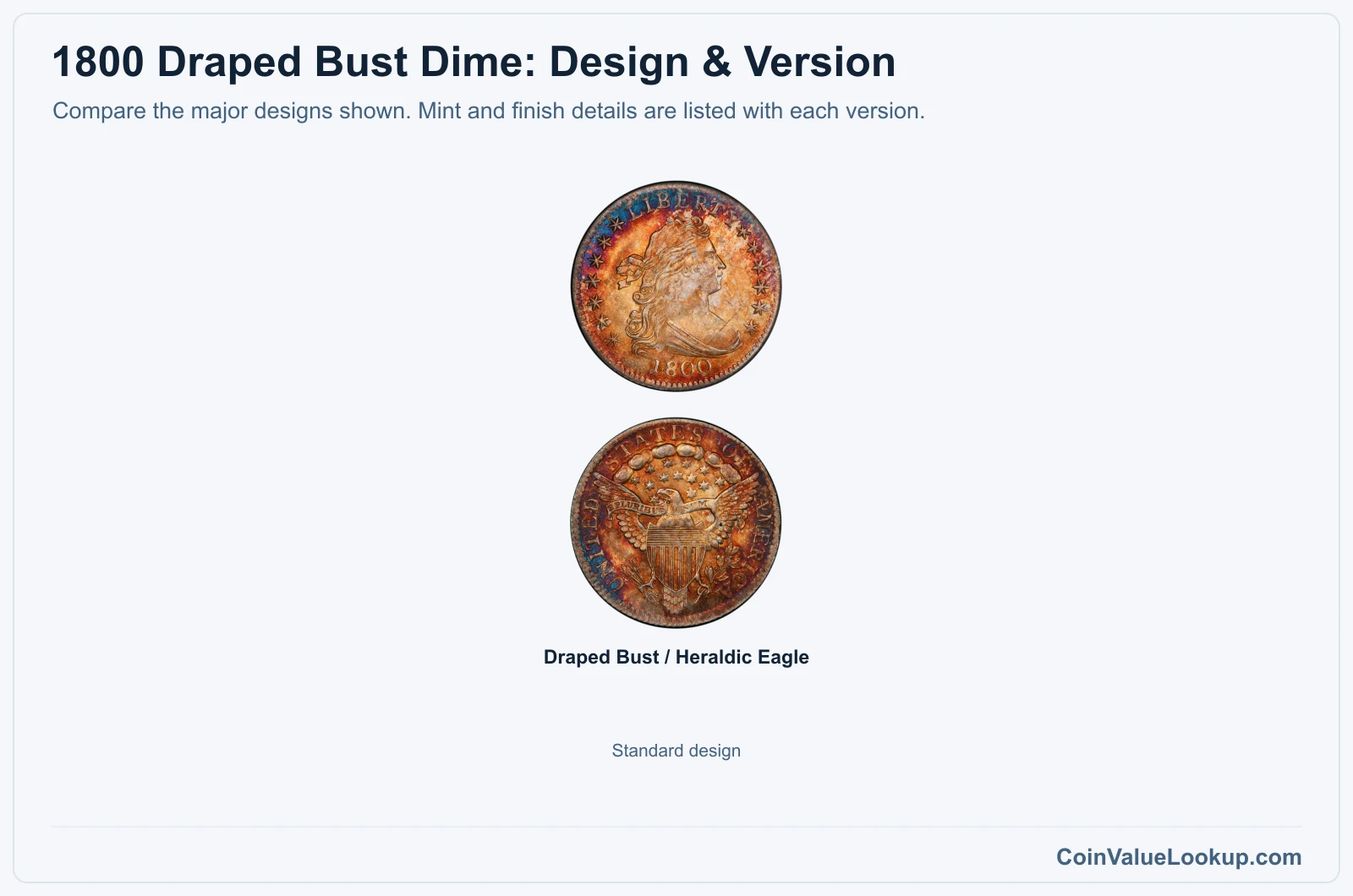
The 1800 Draped Bust Dime is one of the earliest silver dimes struck at the Philadelphia Mint, and surviving examples are genuinely scarce. Guide estimates for this date range from about $1,247.00 in Good-4 condition to around $54,368.00 at the MS63 level, though these are reference anchors tied to specific grades, not guaranteed purchase offers.
Your coin's actual value depends on the exact variety, the degree of honest wear, and whether original surfaces remain intact.
Fast Way to Identify Your 1800 Draped Bust Dime
Upload clear photos of both the front and back of your coin for a preliminary identification. The identifier can help confirm you have the correct denomination, design type, and date.
A Draped Bust dime looks similar to same-era half dimes and silver dollars, so a photo check is a smart first step before digging into values.
1800 Draped Bust Dime Value
Upload both sides of your 1800 Draped Bust Dime.
Front Obverse
Upload photo
Back Reverse
Upload photo
Which 1800 Draped Bust Dime Versions Are Worth Money?
- The 1800 date is a key early issue; even well-circulated examples in the Good-4 range carry guide estimates around $1,247.00.
- High-grade survivors are exceptionally rare; an MS63 example carries a guide estimate near $54,368.00, reflecting how few escaped heavy use.
- Original, uncleaned surfaces with natural toning command stronger collector interest than coins that have been polished or dipped.
- Coins with full, sharp strikes from the hand-operated press are less common and more visually appealing at any grade level.
Step 1: Identify Your 1800 Draped Bust Dime Mint Mark and Version
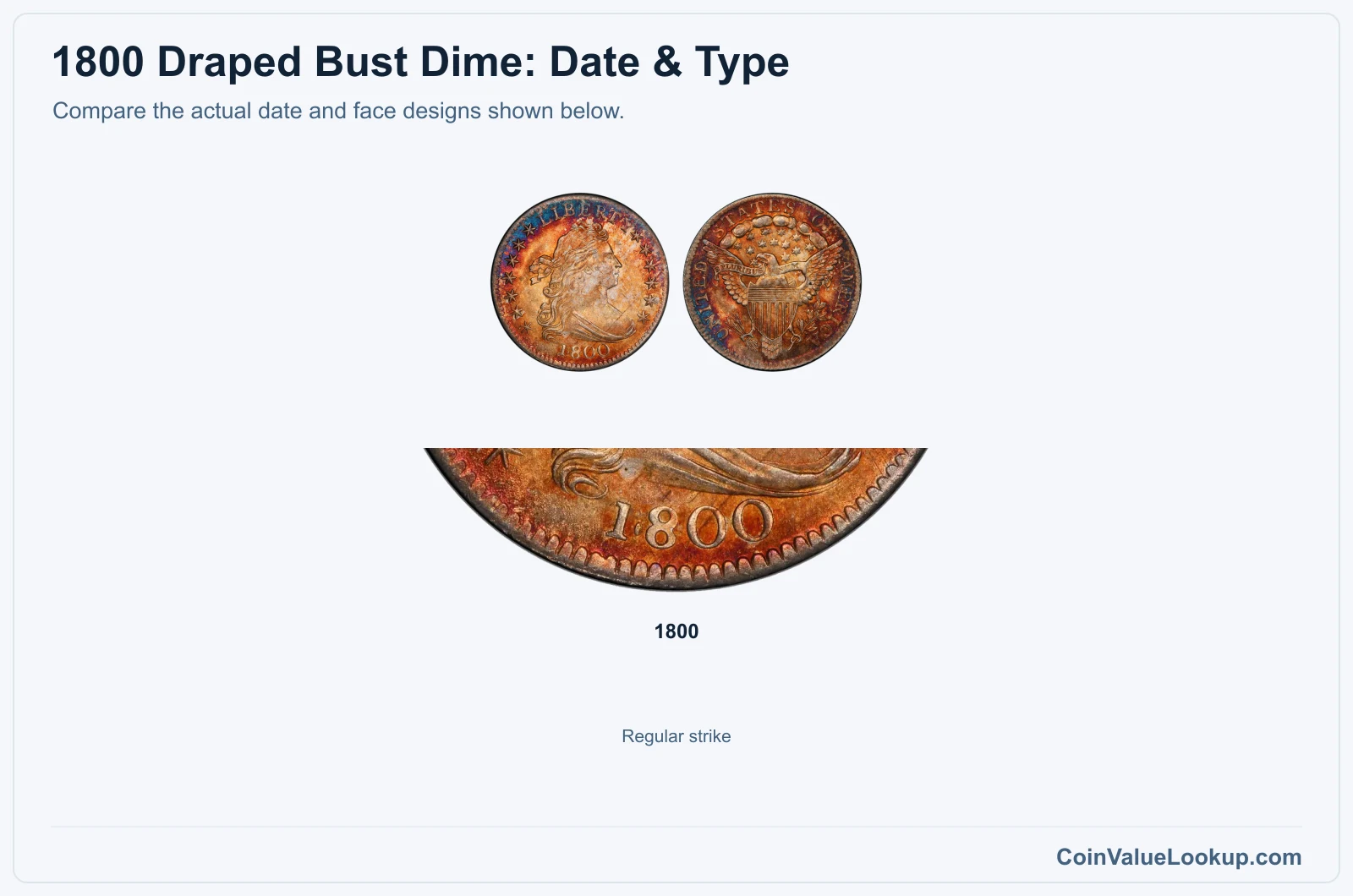
Philadelphia was the only mint striking dimes in 1800, so there is no mintmark to hunt for. The design pairs a Draped Bust portrait of Liberty on the obverse with a Heraldic Eagle on the reverse.
One common mix-up: Draped Bust dimes do not display a "10C" denomination anywhere on the coin. If you are not sure whether you have a dime, a half dime, or even a small-diameter dollar, compare the coin's size carefully.
The dime is roughly 19 mm in diameter, noticeably larger than a half dime but far smaller than a dollar.
The composition is a silver-copper alloy, approximately 89.24% silver. That high silver content gives the coin a distinct heft and color compared to later base-metal dimes.
Confirm the date reads 1800, match the Heraldic Eagle reverse, and verify the size before assigning any value.
Step 2: Check Your 1800 Draped Bust Dime Grade
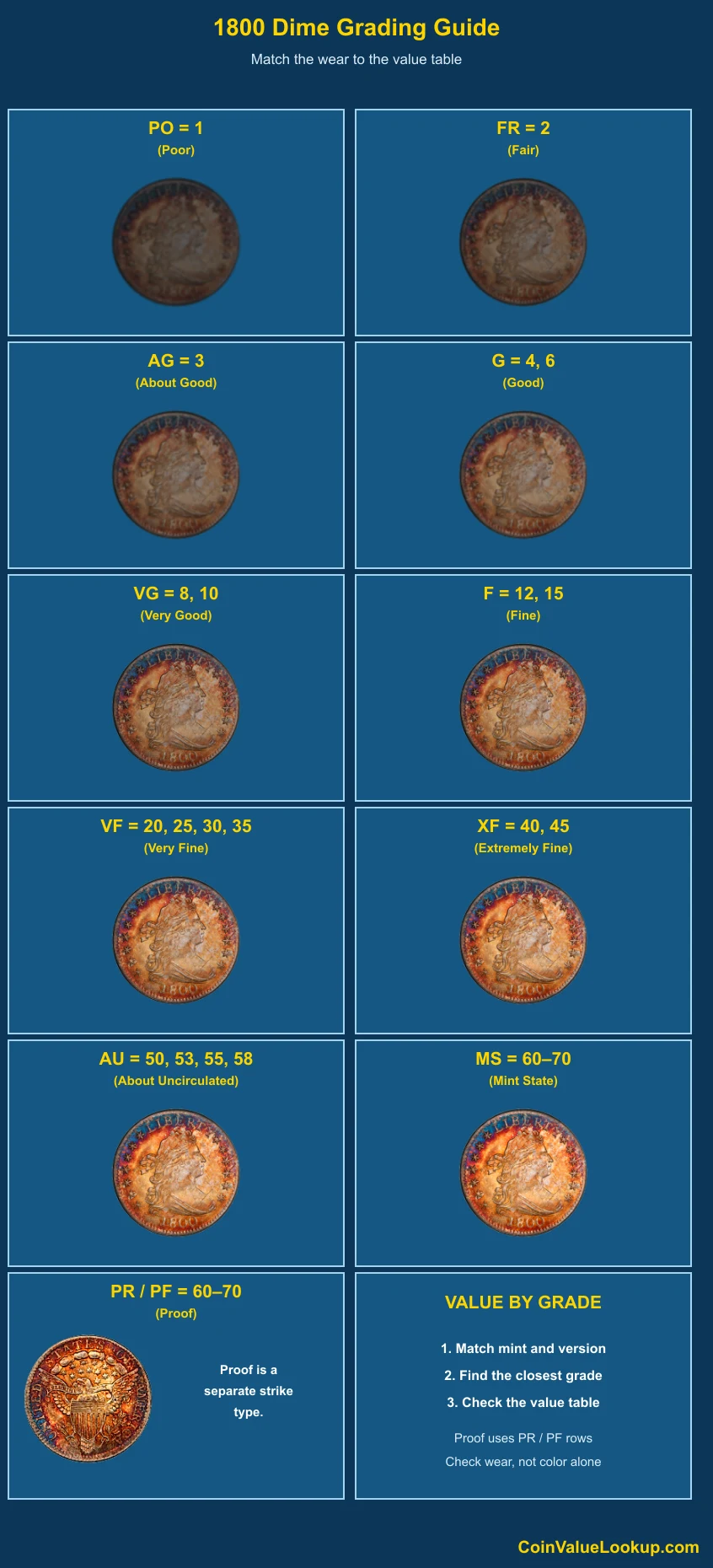
Start by examining the high points on both sides. On the obverse, Liberty's hair above the forehead, the cheek, and the folds of drapery near the bust show wear first.
Flip the coin over: the eagle's breast feathers and wing tips are the reverse's weak spots.
Here is where early dimes get tricky. These were struck on hand-operated screw presses, so even a brand-new coin can show uneven or soft detail in spots.
That is not wear; it is strike weakness. Compare your coin against the provided same-type wear reference image to separate genuine circulation loss from original production softness.
Luster is your friend. A coin with original mint luster in the protected areas probably saw less wear than one that looks uniformly dull.
Contact marks, scratches, and old cleaning all drag the grade and the value down. Whatever you do, do not clean or polish the coin.
A naturally toned, honestly worn example is far more desirable to collectors than a harshly brightened one.
Step 3: Check 1800 Draped Bust Dime Value by Mint and Version
1800 Draped Bust Dime
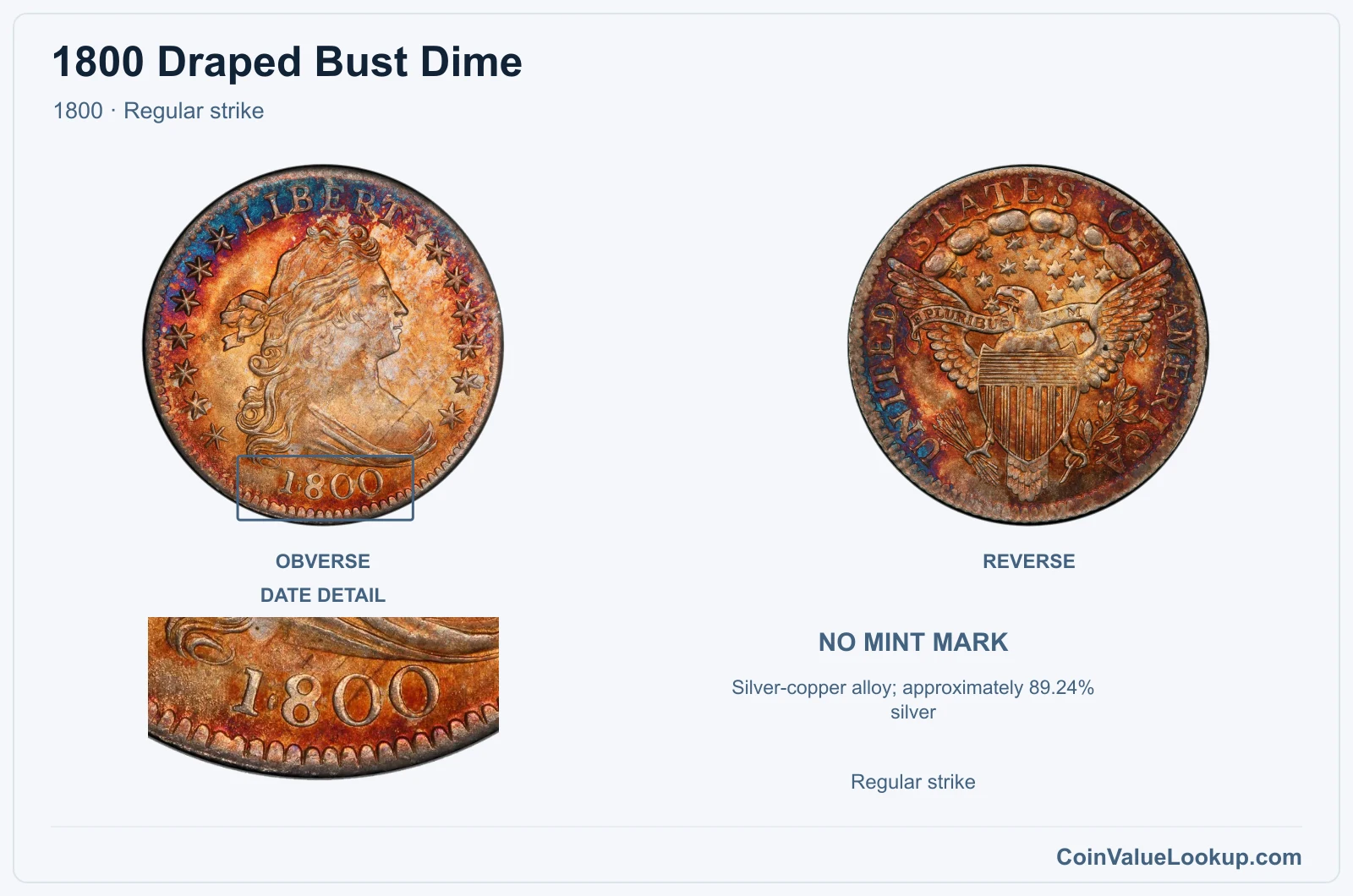
The 1800 Draped Bust Dime was struck only at Philadelphia in a silver-copper alloy of roughly 89.24% silver. The obverse shows Liberty in draped clothing; the reverse features the Heraldic Eagle design used on several denominations of that era.
There is no mintmark.
USA Coin Book guide estimates place this date at approximately $1,247.00 in Good-4 and around $54,368.00 in MS63. Those figures represent opposite ends of the condition spectrum, so your coin's position depends entirely on its actual grade.
Cleaned, scratched, or corroded pieces will fall below these anchors even if overall detail looks decent.
Coin Value Lookup is a useful starting point if you want to compare this dime against other early U.S. silver coins or explore related denominations. Match the date, confirm the Heraldic Eagle reverse, and assess wear honestly before attaching any number to your coin.
Range Grade
Price Auction Records Appraisal PO PO 1
—
Coin Identifier FR FR 2
Coin Identifier AG AG 3
Coin Identifier G G 4
Coin Identifier
G 6
Coin Identifier VG VG 8
—
Coin Identifier
VG 10
Coin Identifier F F 12
Coin Identifier
F 15
—
Coin Identifier VF VF 20
Coin Identifier
VF 25
—
Coin Identifier
VF 30
—
Coin Identifier
VF 35
Coin Identifier XF XF 40
Coin Identifier
XF 45
Coin Identifier AU AU 50
Coin Identifier
AU 53
Coin Identifier
AU 55
Coin Identifier
AU 58
Coin Identifier MS MS 60
Coin Identifier
MS 61
Coin Identifier
MS 62
Coin Identifier
MS 63
Coin Identifier
MS 64
Coin Identifier
MS 65
Coin Identifier
MS 66
Coin Identifier
MS 67
—
—
—
MS 68
—
—
—
MS 69
—
—
—
MS 70
—
—
—