1807 Draped Bust Half Dollar Coin Value: How Much Is It Worth?
The 1807 Draped Bust Half Dollar is a coin that commands real collector attention. Guide estimates for the ordinary Philadelphia issue range from about $300 in G4 to around $3,103 in AU50, according to USA Coin Book.
Actual value depends on grade, surface condition, and whether any die varieties or errors are present. Special versions and high-grade survivors can differ substantially from those anchors.
Fast Way to Identify Your 1807 Draped Bust Half Dollar
Want a quick read on your coin? Upload clear photos of both the front and back, and our identifier can offer a preliminary take on what you have.
This step helps sort out whether your half dollar is the Draped Bust type, the Capped Bust type (a separate coin entirely), or something else. It is not a substitute for professional authentication or exact grading.
1807 Draped Bust Half Dollar Value
Upload both sides of your 1807 Draped Bust Half Dollar.
Front Obverse
Upload photo
Back Reverse
Upload photo
Which 1807 Draped Bust Half Dollar Versions Are Worth Money?
- Philadelphia Draped Bust, Heraldic Eagle: The sole regular issue for this type in 1807, with USA Coin Book guide values from roughly $300 at G4 up to about $3,103 at AU50. Condition drives value steeply.
- Die Crack or Die Chip examples: Coins showing raised irregular lines through the legends or stars may carry additional collector interest, though no standard pricing is established for these.
Step 1: Identify Your 1807 Draped Bust Half Dollar Mint Mark and Version
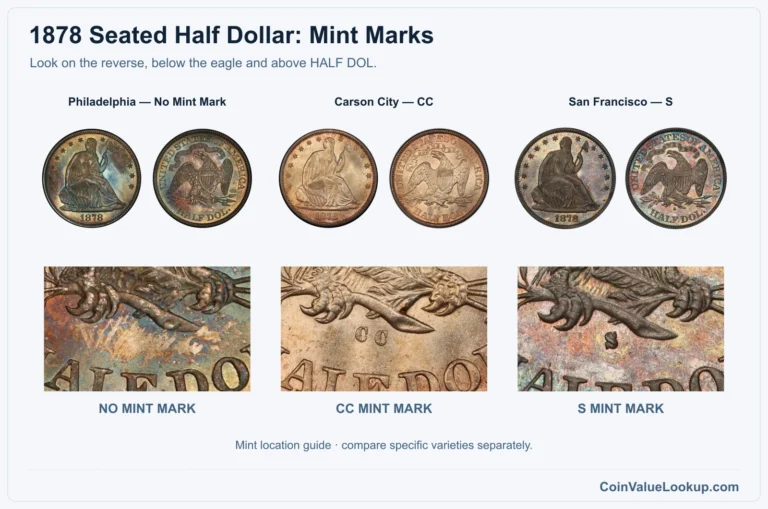
All 1807 Draped Bust Half Dollars were struck at the Philadelphia Mint. No mintmark is expected, so do not look for one.
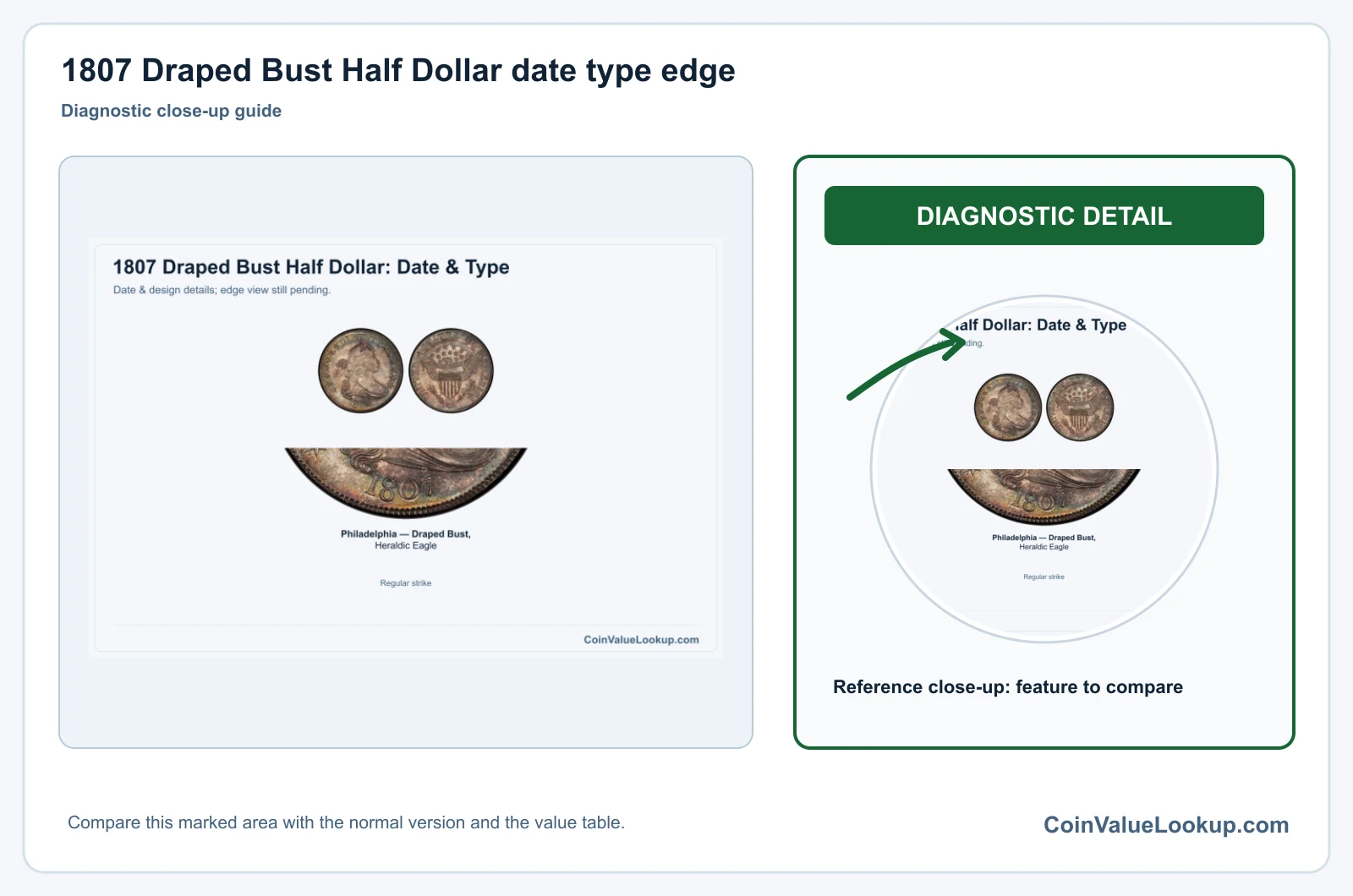
Start with the date. Confirm 1807 is legible, then check the edge for the lettered inscription FIFTY CENTS OR HALF A DOLLAR.
That edge legend confirms the denomination and helps rule out half dimes or other silver.
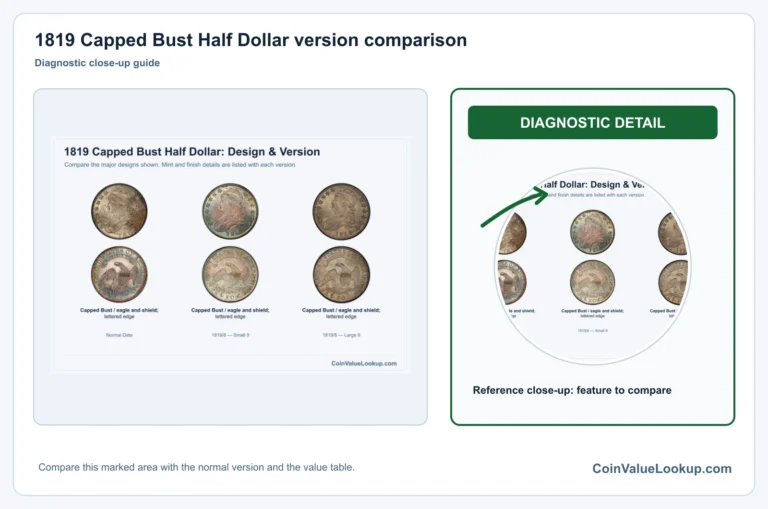
On the obverse, Liberty faces right with flowing, draped hair and no cap. If your coin shows Liberty wearing a cap, you have a Capped Bust half dollar, which is a completely different design type with its own value page.
The two were both made in 1807, so mix-ups are common.
The reverse features a heraldic eagle with a shield on its breast, arrows and olive branch in its talons, and stars above. The nominal diameter is about 32.5 mm and weight roughly 13.48 g.
Weight can be a useful screening clue against counterfeits, but it is not authentication on its own.
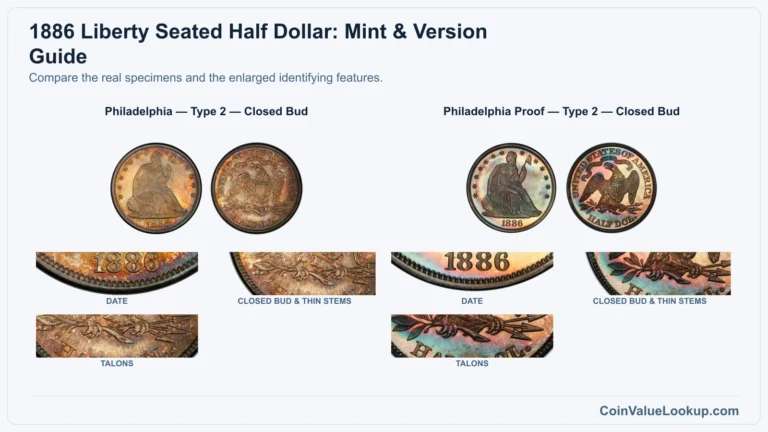
The only major identity here is the Philadelphia Draped Bust, Heraldic Eagle issue. Large Stars, Small Stars, and the so-called Bearded Goddess belong to the Capped Bust series and do not apply.
Step 2: Check Your 1807 Draped Bust Half Dollar Grade
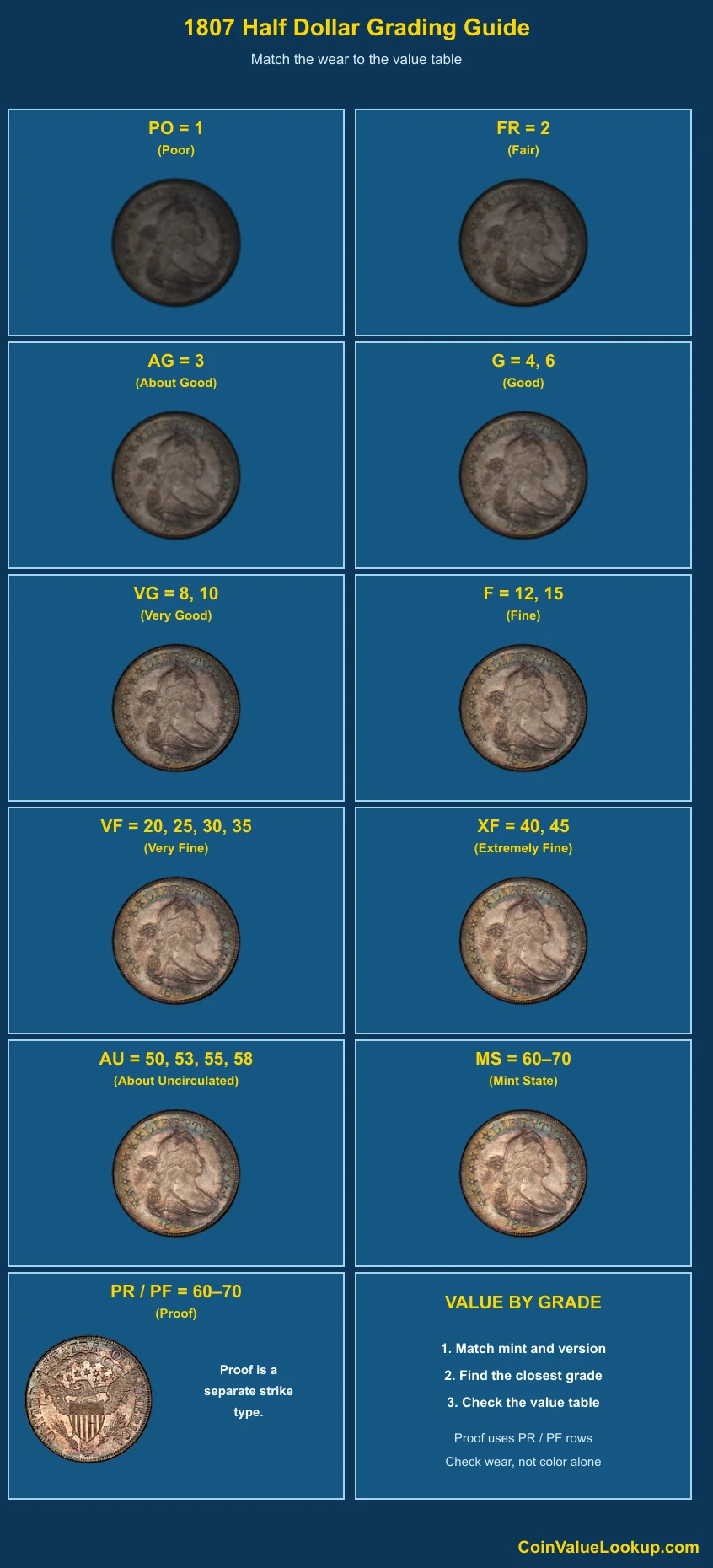
Focus your grading eye on Liberty's hair above the forehead. In higher grades, individual strands are sharp and distinct.
As wear increases, this area flattens first, followed by the cheek and the drapery across the shoulder.
On the reverse, examine the eagle's breast feathers and wing tips. Some Draped Bust coins left the press with soft strikes in these areas, so a mushy eagle does not automatically mean heavy wear.
Look at overall luster: a coin with full detail but no cartwheel shine has likely been cleaned or lightly circulated.
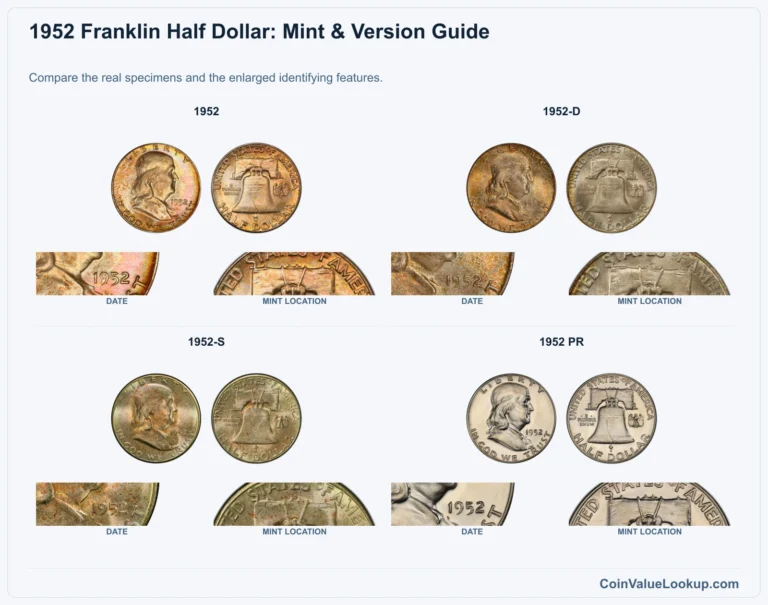
Use the comparison image to match your coin against the same Draped Bust design. Comparing to a modern Kennedy half will mislead you.
Cleaning, holes, plugs, tooling, and deep scratches should be noted separately. A coin with these problems is typically graded as a "Details" coin by services like PCGS or NGC, meaning it does not follow the straight-grade price curve.
A VF-details coin with a hole, for example, will sell for significantly less than a problem-free VF20.
Step 3: Check 1807 Draped Bust Half Dollar Value by Mint and Version
1807 Draped Bust Half Dollar — Philadelphia — Draped Bust, Heraldic Eagle
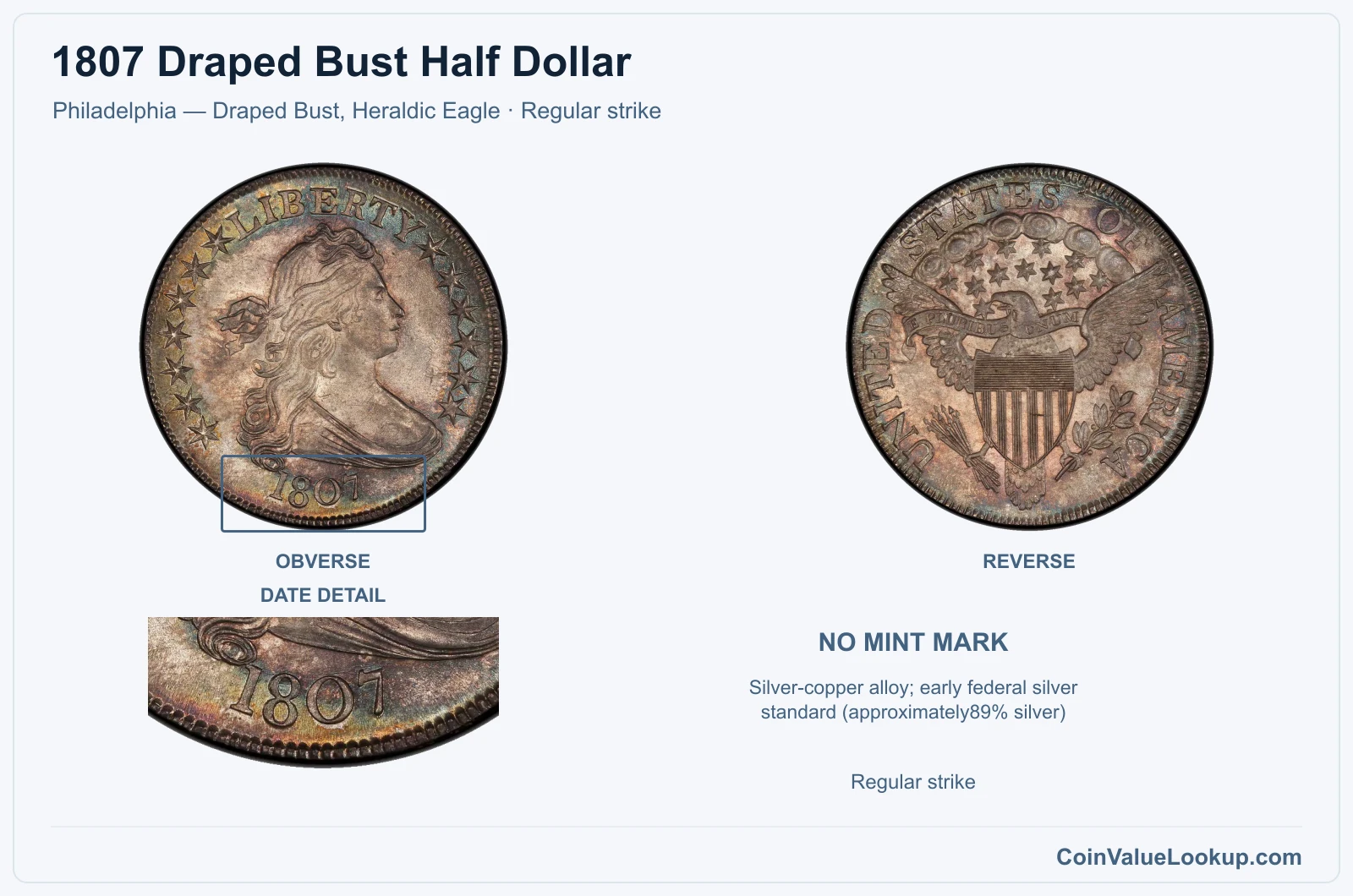
This is the Philadelphia-minted Draped Bust Half Dollar with the Heraldic Eagle reverse, struck in a silver-copper alloy of approximately 89% silver. Liberty faces right with flowing hair and no cap.
If your coin has a capped Liberty, you are on the wrong page.
USA Coin Book lists guide estimates of about $300 in G4 (a well-worn but readable coin), roughly $879 at VF20 (moderate wear with major details clear), and around $3,103 at AU50 (slight friction on the high points, most luster intact). These are guide figures, not guaranteed sale prices.
Coin Value Lookup is a handy starting point if you want to look up guides for other denominations or years alongside this one. It can save you a lot of tab-juggling.
Range Grade
Price Auction Records Appraisal PO PO 1
—
Coin Identifier FR FR 2
Coin Identifier AG AG 3
Coin Identifier G G 4
Coin Identifier
G 6
Coin Identifier VG VG 8
Coin Identifier
VG 10
Coin Identifier F F 12
Coin Identifier
F 15
Coin Identifier VF VF 20
Coin Identifier
VF 25
Coin Identifier
VF 30
Coin Identifier
VF 35
Coin Identifier XF XF 40
Coin Identifier
XF 45
Coin Identifier AU AU 50
Coin Identifier
AU 53
Coin Identifier
AU 55
Coin Identifier
AU 58
Coin Identifier MS MS 60
Coin Identifier
MS 61
Coin Identifier
MS 62
Coin Identifier
MS 63
Coin Identifier
MS 64
Coin Identifier
MS 65
Coin Identifier
MS 66
Coin Identifier
MS 67
—
—
—
MS 68
—
—
—
MS 69
—
—
—
MS 70
—
—
—
1807 Draped Bust Half Dollar Error List
1. 1807 Draped Bust Half Dollar — Die Crack / Die Chip
Die cracks and die chips on 1807 Draped Bust Half Dollars appear as raised, irregular lines running through the legends, stars, or across the fields. On this type, look especially through UNITED and STATES on the reverse, and along the star points on the obverse.
Because these lines are raised above the surface, they are the opposite of scratches, which are incised into the metal.
That raised-versus-incised distinction is the main way to separate a genuine die crack from a post-mint scratch, corrosion line, or foreign material stuck to the surface. A loupe helps.
Scratches feel sharp and cut into the coin; die cracks sit on top like tiny ridges.
No standard numerical premium is established for these. Value depends on how prominent the crack is, where it falls on the design, and the coin's overall grade and surface quality.
A dramatic crack through a major design element on an otherwise attractive coin will draw more bidding interest than a faint hairline crack on a damaged example.