1854 Liberty Seated Quarter Coin Value: How Much Is It Worth?
An 1854 Liberty Seated quarter can be worth anywhere from about $46 in well-worn G4 condition to over $26,000 for the scarce Huge O variety in MS63, according to USA Coin Book guide estimates. That is a wide spread, and the difference comes down to mint, variety and condition.
Matching your coin to the right branch matters more than guessing a grade first.
Fast Way to Identify Your 1854 Liberty Seated Quarter
The quickest way to start figuring out what you have is to upload clear photos of both the front and back of your coin. Our identifier uses those images for a preliminary identification of mint, design details and major variety.
It is not a substitute for professional authentication, but it points you in the right direction before you spend money on a formal opinion.
1854 Liberty Seated Quarter Value
Upload both sides of your 1854 Liberty Seated Quarter.
Front Obverse
Upload photo
Back Reverse
Upload photo
Which 1854 Liberty Seated Quarter Versions Are Worth Money?
- The 1854-O Huge O variety stands apart, with a USA Coin Book guide estimate of $799 in G4 rising to $26,303 in MS63, driven by the oversized mintmark.
- Philadelphia business strikes in MS63 carry a guide estimate around $1,353, a significant step up from the $46 G4 value.
- 1854 proofs exist but are individually assessed; no standard guide price is adopted, so authentication and condition determine value case by case.
- The 1854-O with a normal O mintmark in MS63 lists near $2,120, making original uncirculated examples worth careful inspection.
Step 1: Identify Your 1854 Liberty Seated Quarter Mint Mark and Version
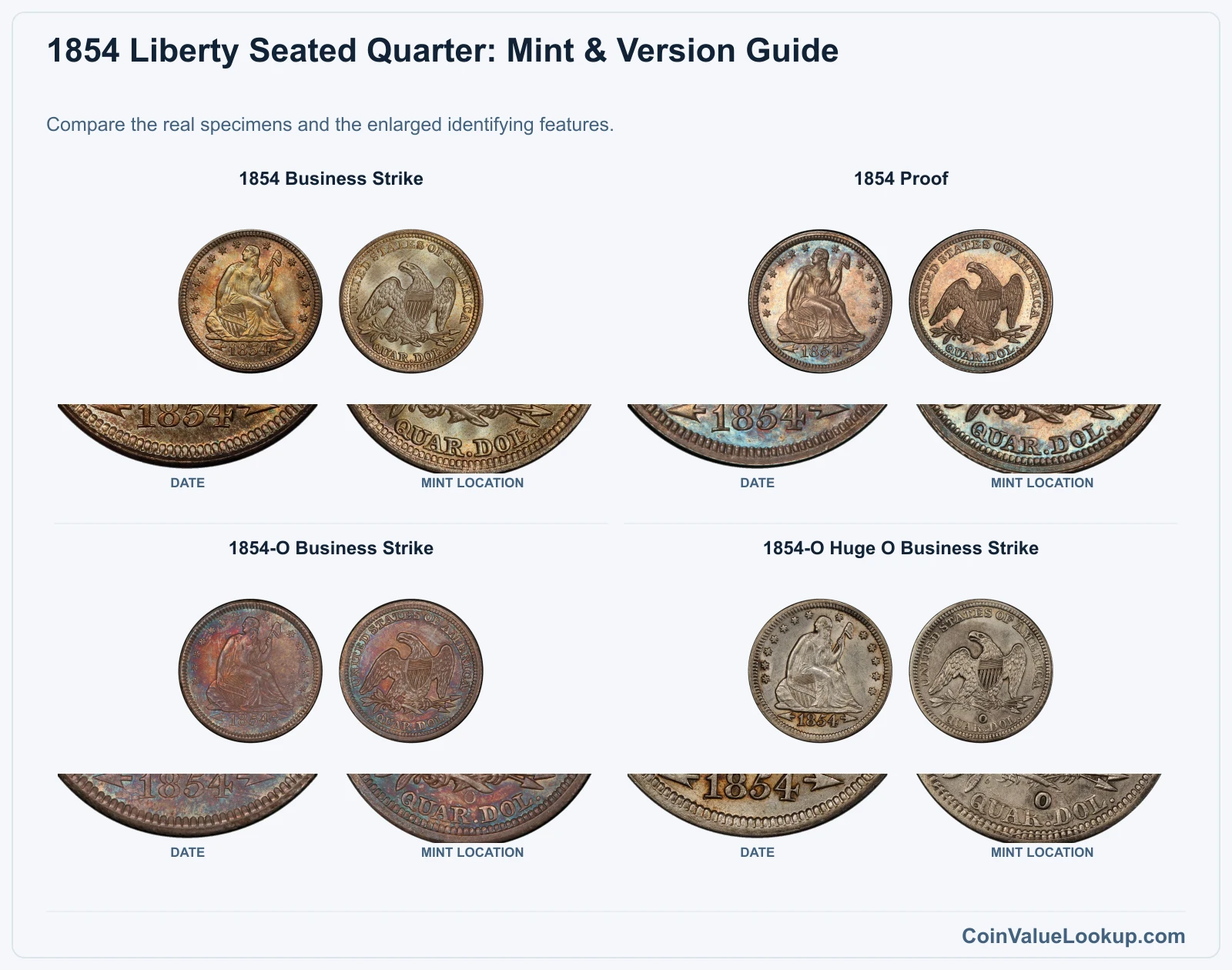
Look at the obverse first. You should see a seated Liberty figure with a date below and small arrows flanking the date.
The reverse shows an eagle without a motto and no rays surrounding it. That combination pins the coin to the 1854-55 Arrows, No Rays subtype.
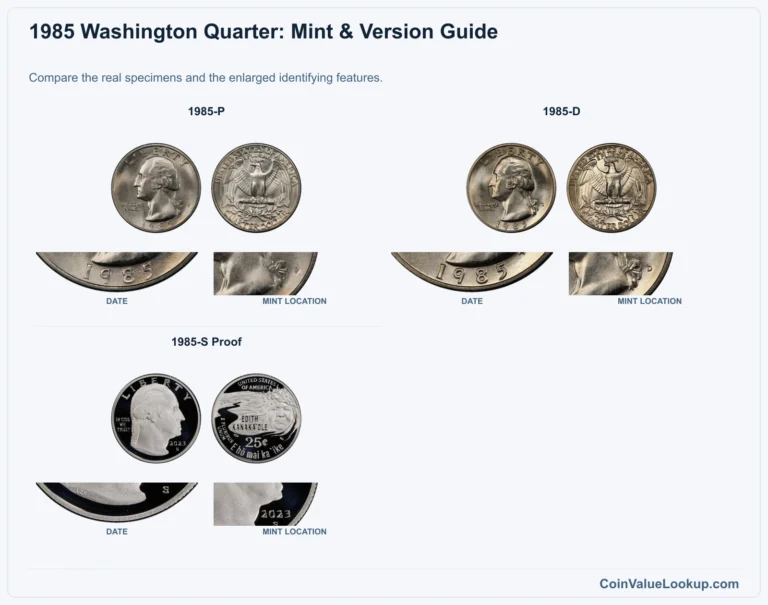
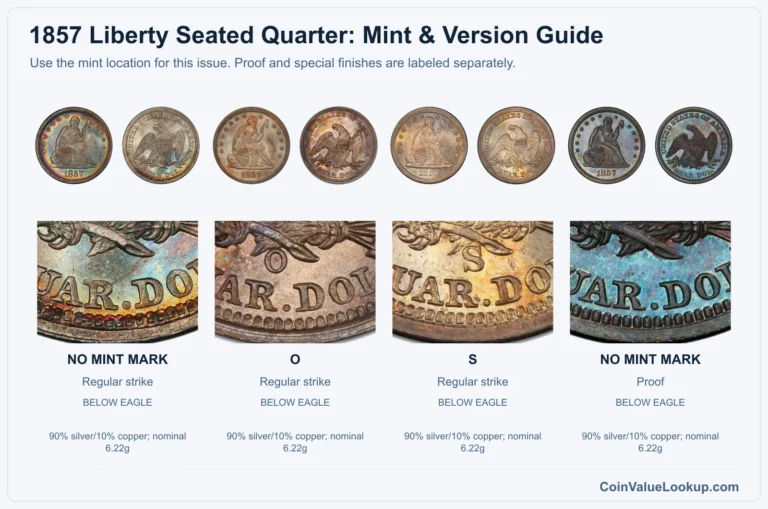
Flip to the reverse and check below the eagle for a mintmark. No letter means Philadelphia.
An O means New Orleans. San Francisco did not strike quarters until 1855, so there is no 1854-S quarter.
If you see an O mintmark, look at it carefully. The ordinary O is relatively small and proportional.
The Huge O is noticeably larger and bolder, visibly oversized compared to a normal mintmark. That single detail separates a $69 coin from a $799 coin in the same G4 grade, so take your time with it.
All 1854 regular-issue quarters are struck in 90% silver and 10% copper, weigh a nominal 6.22 grams, and measure about 24.3 mm. If your coin is significantly lighter or the wrong diameter, it may be damaged or not genuine.
Step 2: Check Your 1854 Liberty Seated Quarter Grade
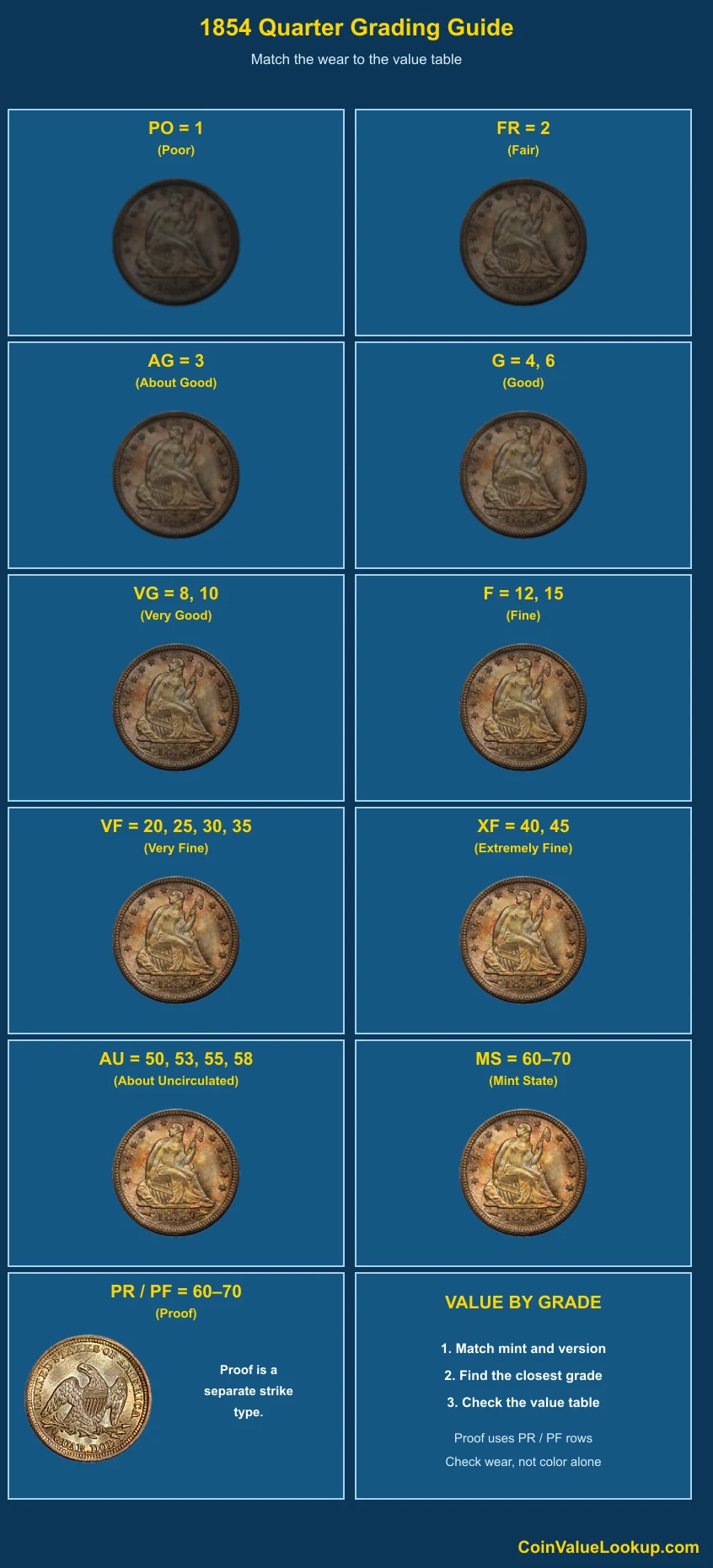
Start with the obverse. Liberty's head, her breast area, the knee beneath the drapery, and the lettering on her shield are the first spots to lose detail as a coin circulates.
In G4 (Good), you will still see an outline of the figure but most interior detail is gone. By VF20, the head, breast and knee show moderate detail and the shield letters are legible.
On the reverse, check the eagle's breast feathers, the individual wing feathers and the claws. These wear in a predictable sequence, and comparing your coin to the reference image above gives you a rough bracket.
Do not confuse a weak strike with actual wear. Some 1854 quarters left the press with soft stars or a mushy head simply because the dies were tired.
Genuine wear rounds off high points and kills luster; a strike weakness tends to affect a localized area while surrounding surfaces stay sharp.
Hairlines from old cleaning, corrosion pitting and rim dings all reduce value below what the apparent wear grade would suggest. A coin that looks AU but has been polished to a mirror shine is not a proof and is not worth proof money.
Proof attribution requires comparison to a genuine specimen, not just reflectivity.
Step 3: Check 1854 Liberty Seated Quarter Value by Mint and Version
1854 Liberty Seated Quarter — Business Strike
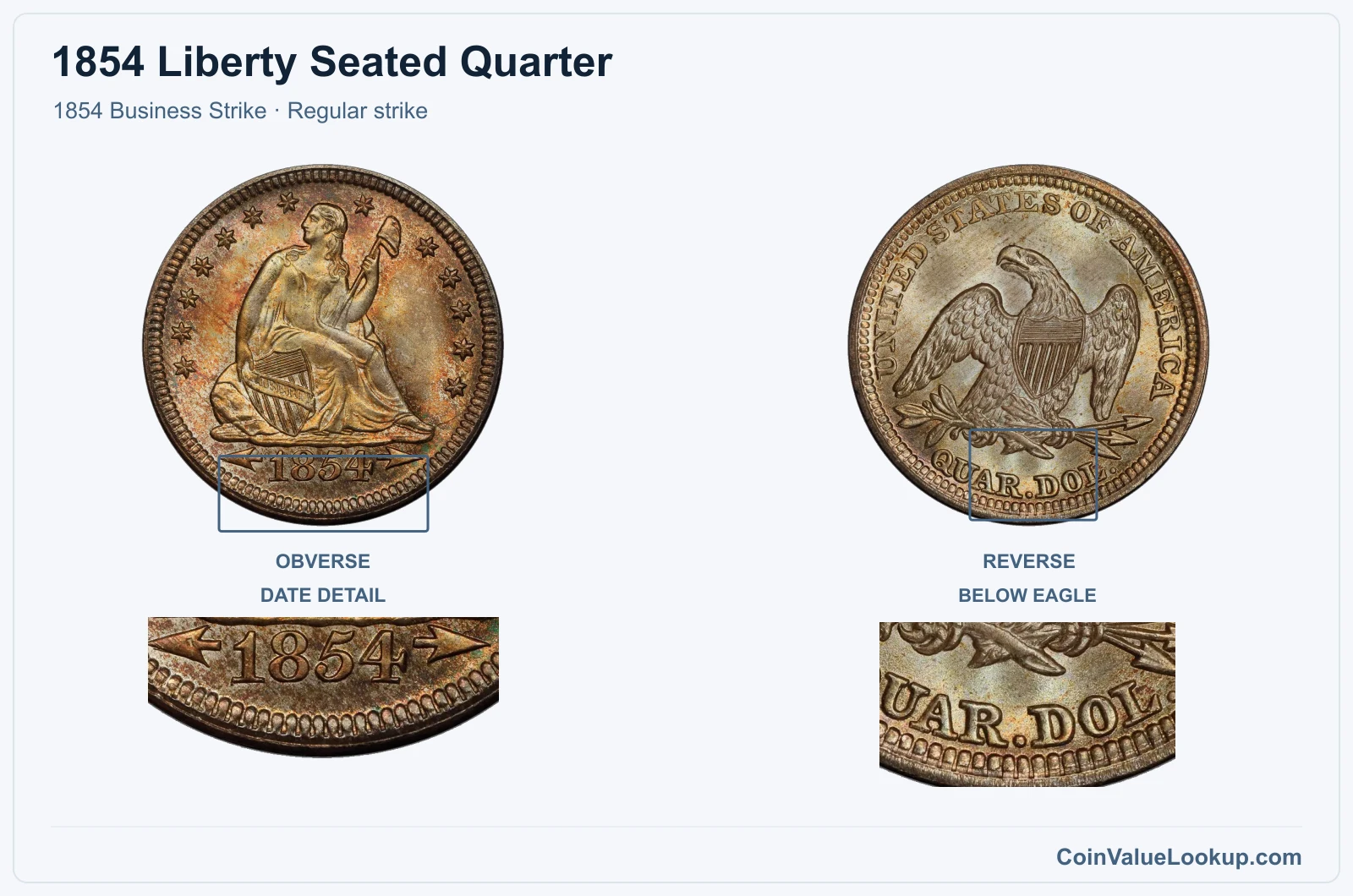
The 1854 Philadelphia business strike has no mintmark below the eagle. It carries the Arrows, No Rays design introduced partway through 1853 when Congress reduced the quarter's weight to 6.22 grams.
The rays that appeared briefly in 1853 are gone.
USA Coin Book guide estimates place this issue at about $46 in G4, $65 in VF20 and $1,353 in MS63. Most survivors are circulated, so finding one with original surfaces and no cleaning in the VF-and-above range is where the value starts to climb.
Look for full luster and sharp shield letters to distinguish a high-grade piece from a cleaned one.
| Range | Grade | Price | Auction Records | Appraisal |
|---|---|---|---|---|
| PO | PO 1 | Coin Identifier | ||
| FR | FR 2 | — | Coin Identifier | |
| AG | AG 3 | — | Coin Identifier | |
| G | G 4 | — | Coin Identifier | |
| G 6 | Coin Identifier | |||
| VG | VG 8 | — | Coin Identifier | |
| VG 10 | — | Coin Identifier | ||
| F | F 12 | — | Coin Identifier | |
| F 15 | — | Coin Identifier | ||
| VF | VF 20 | — | Coin Identifier | |
| VF 25 | Coin Identifier | |||
| VF 30 | Coin Identifier | |||
| VF 35 | Coin Identifier | |||
| XF | XF 40 | Coin Identifier | ||
| XF 45 | Coin Identifier | |||
| AU | AU 50 | Coin Identifier | ||
| AU 53 | Coin Identifier | |||
| AU 55 | Coin Identifier | |||
| AU 58 | Coin Identifier | |||
| MS | MS 60 | — | Coin Identifier | |
| MS 61 | Coin Identifier | |||
| MS 62 | Coin Identifier | |||
| MS 63 | Coin Identifier | |||
| MS 64 | Coin Identifier | |||
| MS 65 | Coin Identifier | |||
| MS 66 | Coin Identifier | |||
| MS 67 | Coin Identifier | |||
| MS 68 | — | — | — | |
| MS 69 | — | — | — | |
| MS 70 | — | — | — |
1854 Liberty Seated Quarter — Proof
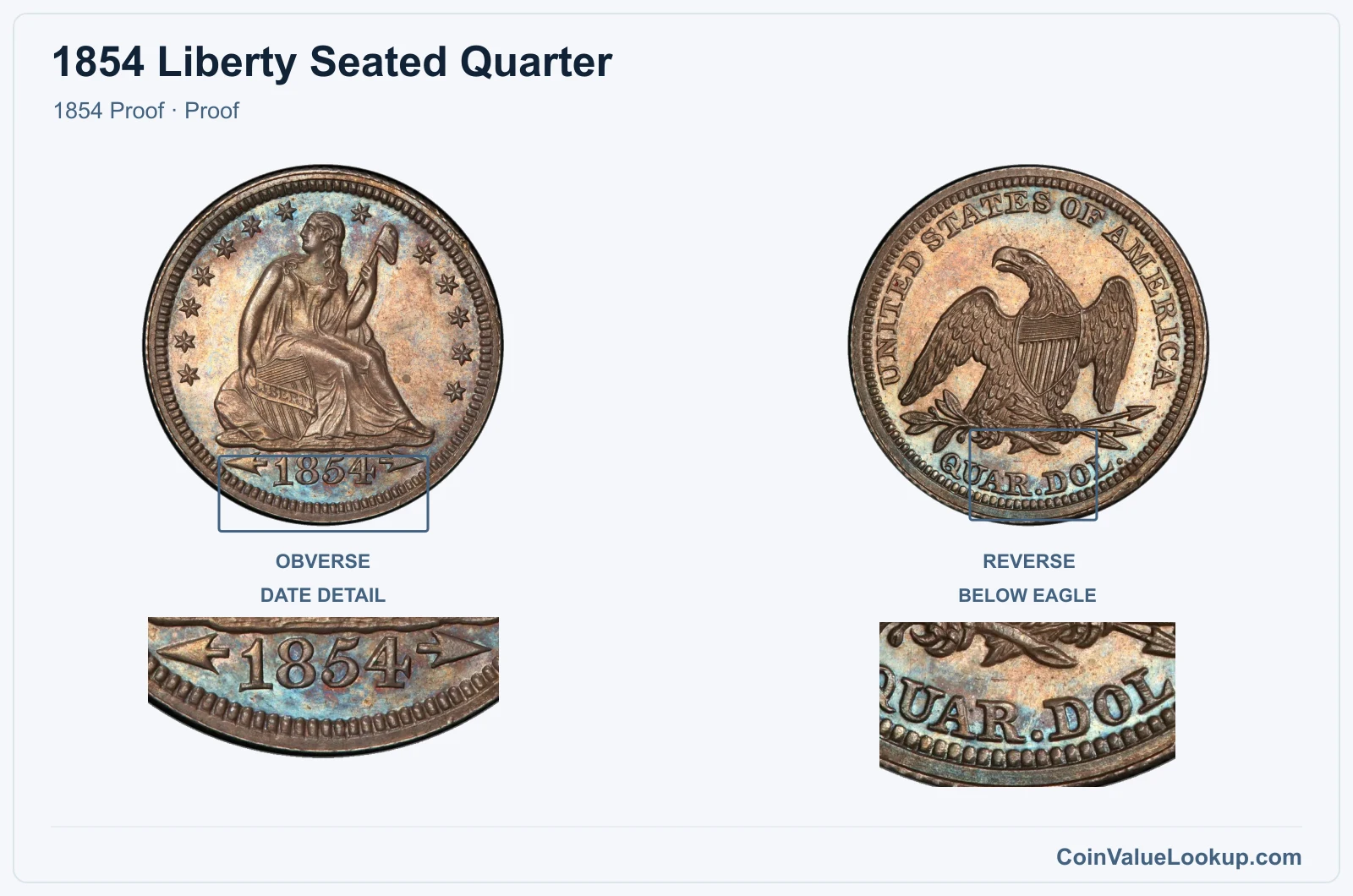
Philadelphia also produced proof 1854 Seated quarters, but these are rare enough that no standard guide price is adopted here. Each proof trades on its own merits: authenticated identity, surface preservation, and whether it has been impaired.
Because these coins share the same Arrows, No Rays design as the business strike, you cannot separate them by appearance alone. Genuine proofs exhibit specific die characteristics confirmed through comparison to known specimens.
Reflectivity by itself is not proof of a proof. If you suspect you have one, professional third-party authentication is the only reliable path to confirming it and establishing value.
Coin Value Lookup is a good starting point for looking up guide values on other dates and denominations in the Seated Liberty quarter series before deciding on next steps.
| Range | Grade | Price | Auction Records | Appraisal |
|---|---|---|---|---|
| PR | PR 1 | — | Coin Identifier | |
| PR 2 | — | Coin Identifier | ||
| PR 3 | — | Coin Identifier | ||
| PR 4 | — | Coin Identifier | ||
| PR 6 | — | Coin Identifier | ||
| PR 8 | — | Coin Identifier | ||
| PR 10 | — | Coin Identifier | ||
| PR 12 | — | Coin Identifier | ||
| PR 15 | — | Coin Identifier | ||
| PR 20 | — | Coin Identifier | ||
| PR 25 | — | Coin Identifier | ||
| PR 30 | — | Coin Identifier | ||
| PR 35 | — | Coin Identifier | ||
| PR 40 | — | Coin Identifier | ||
| PR 45 | — | Coin Identifier | ||
| PR 50 | — | Coin Identifier | ||
| PR 53 | — | Coin Identifier | ||
| PR 55 | — | Coin Identifier | ||
| PR 58 | — | Coin Identifier | ||
| PR 60 | — | Coin Identifier | ||
| PR 61 | — | Coin Identifier | ||
| PR 62 | Coin Identifier | |||
| PR 63 | Coin Identifier | |||
| PR 64 | Coin Identifier | |||
| PR 65 | Coin Identifier | |||
| PR 66 | Coin Identifier | |||
| PR 67 | — | — | — | |
| PR 68 | — | — | — | |
| PR 69 | — | — | — | |
| PR 70 | — | — | — |
1854 Liberty Seated Quarter — O Business Strike
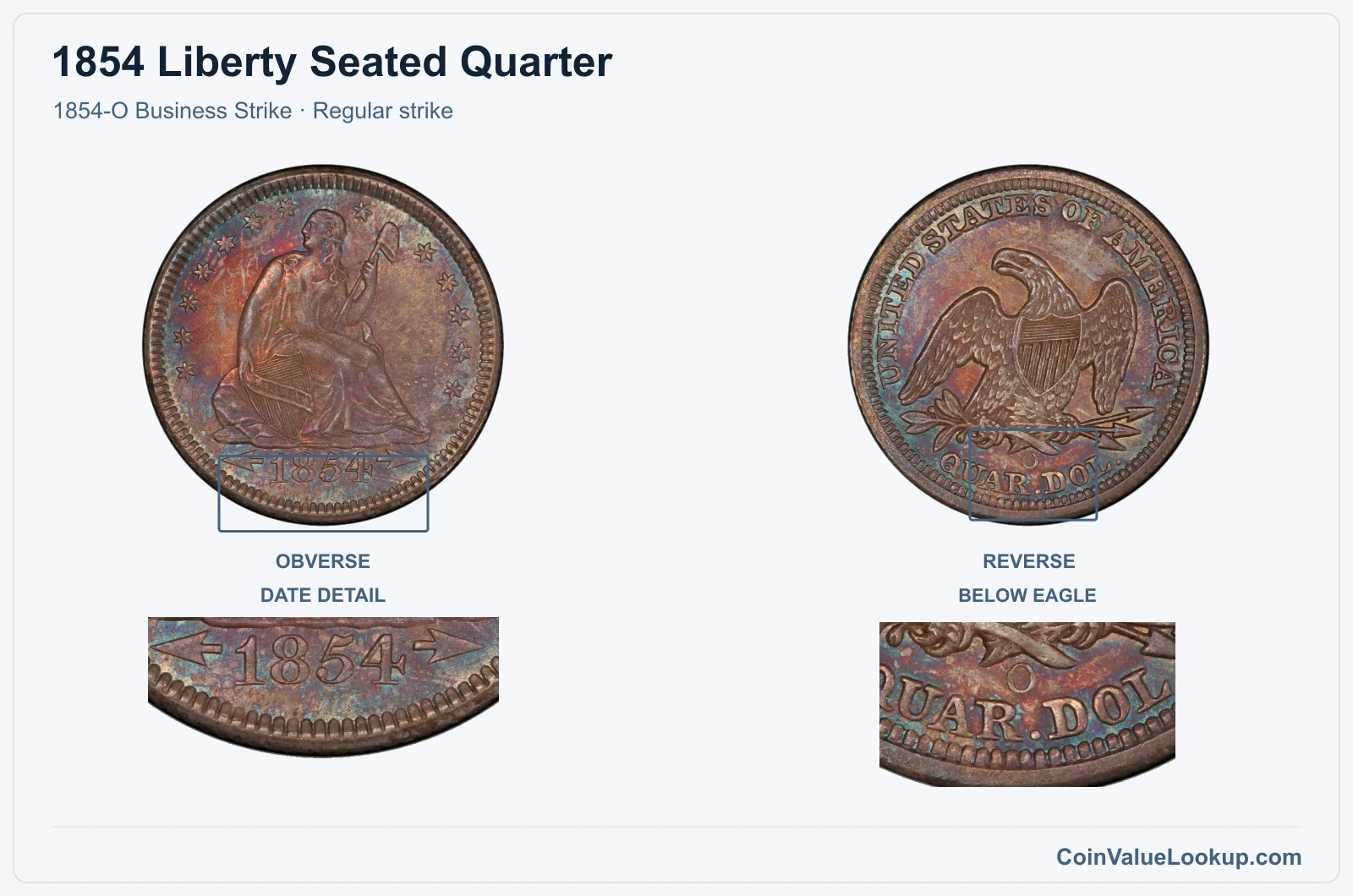
The 1854-O with a normal-sized O mintmark is the standard New Orleans issue. It shares the same Arrows, No Rays reverse and 90% silver composition as the Philadelphia coin.
USA Coin Book guide estimates run about $69 in G4, $100 in VF20 and $2,120 in MS63. Those numbers sit a bit above the Philadelphia issue, but the real action is in telling this coin apart from its Huge O sibling.
Examine the mintmark under magnification. If the O looks proportional to the surrounding design elements, you have the ordinary variety.
| Range | Grade | Price | Auction Records | Appraisal |
|---|---|---|---|---|
| PO | PO 1 | — | Coin Identifier | |
| FR | FR 2 | — | Coin Identifier | |
| AG | AG 3 | — | Coin Identifier | |
| G | G 4 | Coin Identifier | ||
| G 6 | — | Coin Identifier | ||
| VG | VG 8 | — | Coin Identifier | |
| VG 10 | — | Coin Identifier | ||
| F | F 12 | — | Coin Identifier | |
| F 15 | Coin Identifier | |||
| VF | VF 20 | Coin Identifier | ||
| VF 25 | Coin Identifier | |||
| VF 30 | Coin Identifier | |||
| VF 35 | Coin Identifier | |||
| XF | XF 40 | Coin Identifier | ||
| XF 45 | Coin Identifier | |||
| AU | AU 50 | Coin Identifier | ||
| AU 53 | Coin Identifier | |||
| AU 55 | Coin Identifier | |||
| AU 58 | Coin Identifier | |||
| MS | MS 60 | Coin Identifier | ||
| MS 61 | — | Coin Identifier | ||
| MS 62 | Coin Identifier | |||
| MS 63 | Coin Identifier | |||
| MS 64 | Coin Identifier | |||
| MS 65 | Coin Identifier | |||
| MS 66 | Coin Identifier | |||
| MS 67 | Coin Identifier | |||
| MS 68 | — | — | — | |
| MS 69 | — | — | — | |
| MS 70 | — | — | — |
1854 Liberty Seated Quarter — O Huge O Business Strike
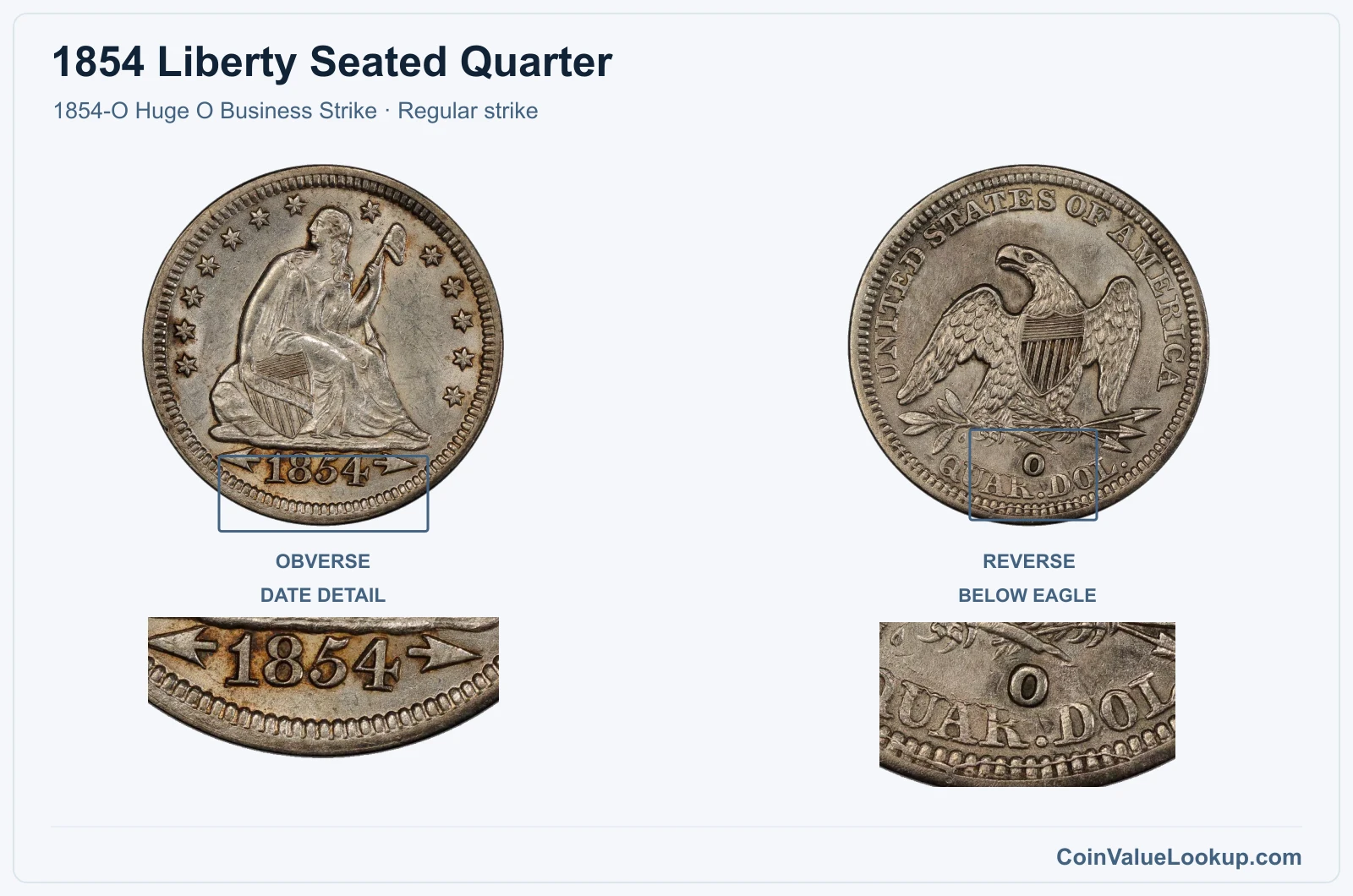
This is the one that gets people's attention. The 1854-O Huge O features a dramatically oversized O mintmark on the reverse, visibly larger than the normal New Orleans mintmark used on other coins of the year.
It is not subtle once you know what to look for.
USA Coin Book guide estimates reflect the premium: about $799 in G4, $1,995 in VF20 and $26,303 in MS63. Even a well-worn example commands serious money compared to the standard O-mint issue.
The key diagnostic is the mintmark itself. Place your coin next to an image of the normal O and the Huge O side by side.
The size difference is unmistakable under moderate magnification, so do not rely on a quick glance. Original, problem-free surfaces are especially important at these price levels.
| Range | Grade | Price | Auction Records | Appraisal |
|---|---|---|---|---|
| PO | PO 1 | — | Coin Identifier | |
| FR | FR 2 | Coin Identifier | ||
| AG | AG 3 | Coin Identifier | ||
| G | G 4 | Coin Identifier | ||
| G 6 | Coin Identifier | |||
| VG | VG 8 | Coin Identifier | ||
| VG 10 | Coin Identifier | |||
| F | F 12 | Coin Identifier | ||
| F 15 | Coin Identifier | |||
| VF | VF 20 | Coin Identifier | ||
| VF 25 | Coin Identifier | |||
| VF 30 | Coin Identifier | |||
| VF 35 | Coin Identifier | |||
| XF | XF 40 | Coin Identifier | ||
| XF 45 | Coin Identifier | |||
| AU | AU 50 | Coin Identifier | ||
| AU 53 | Coin Identifier | |||
| AU 55 | Coin Identifier | |||
| AU 58 | — | Coin Identifier | ||
| MS | MS 60 | — | — | — |
| MS 61 | — | — | — | |
| MS 62 | — | — | — | |
| MS 63 | — | — | — | |
| MS 64 | — | — | — | |
| MS 65 | — | — | — | |
| MS 66 | — | — | — | |
| MS 67 | — | — | — | |
| MS 68 | — | — | — | |
| MS 69 | — | — | — | |
| MS 70 | — | — | — |
1854 Liberty Seated Quarter Error List
1. 1854 Liberty Seated Quarter — Reverse Cud
A documented reverse cud exists on the 1854 Philadelphia Arrows quarter. A cud forms when a chunk of the die breaks away at the rim, leaving a raised blob of extra metal on the struck coin that connects directly to the rim edge.
On this particular coin, the obverse remains fully intact with a complete date, while the reverse carries the large rim-connected cud.
Look for that raised lump along the reverse rim. It should be part of the coin's metal, not something sitting on top.
Solder lumps, post-mint rim damage from a hit, or a similar cud known on an 1856 die are common lookalikes. Confirm the date is 1854 and that the feature is raised and physically connected to the rim before getting excited.
No standard guide price is adopted for this error. Value depends on the authenticated identity of the die pair, the size and visual impact of the cud, and the coin's overall condition.
2. 1854 Liberty Seated Quarter — Crumbled Die around Date and Arrow
On certain 1854-O Arrows quarters, the obverse die developed crumbling around the date and the right arrow. The diagnostic is a filled numeral 4 in the date combined with a raised irregular chunk of metal sitting atop the right arrowhead.
Both features appearing together identify the documented crumbled obverse die.
Do not confuse this with an ordinary dirty or corroded coin. Dirt packed into the 4 can mimic a filled digit, and a random impact beside the date can look like extra metal.
The key is that both the filled 4 and the chunk on the right arrow appear together and are consistent with a die-surface breakdown rather than post-strike damage. Also note that the Huge O mintmark is a separate variety altogether and does not by itself indicate this error.
No standard guide price is adopted. Each example is individually assessed based on authenticated identity, overall condition and the clarity of the error diagnostics.