1857 Liberty Seated Half Dollar Coin Value: How Much Is It Worth?
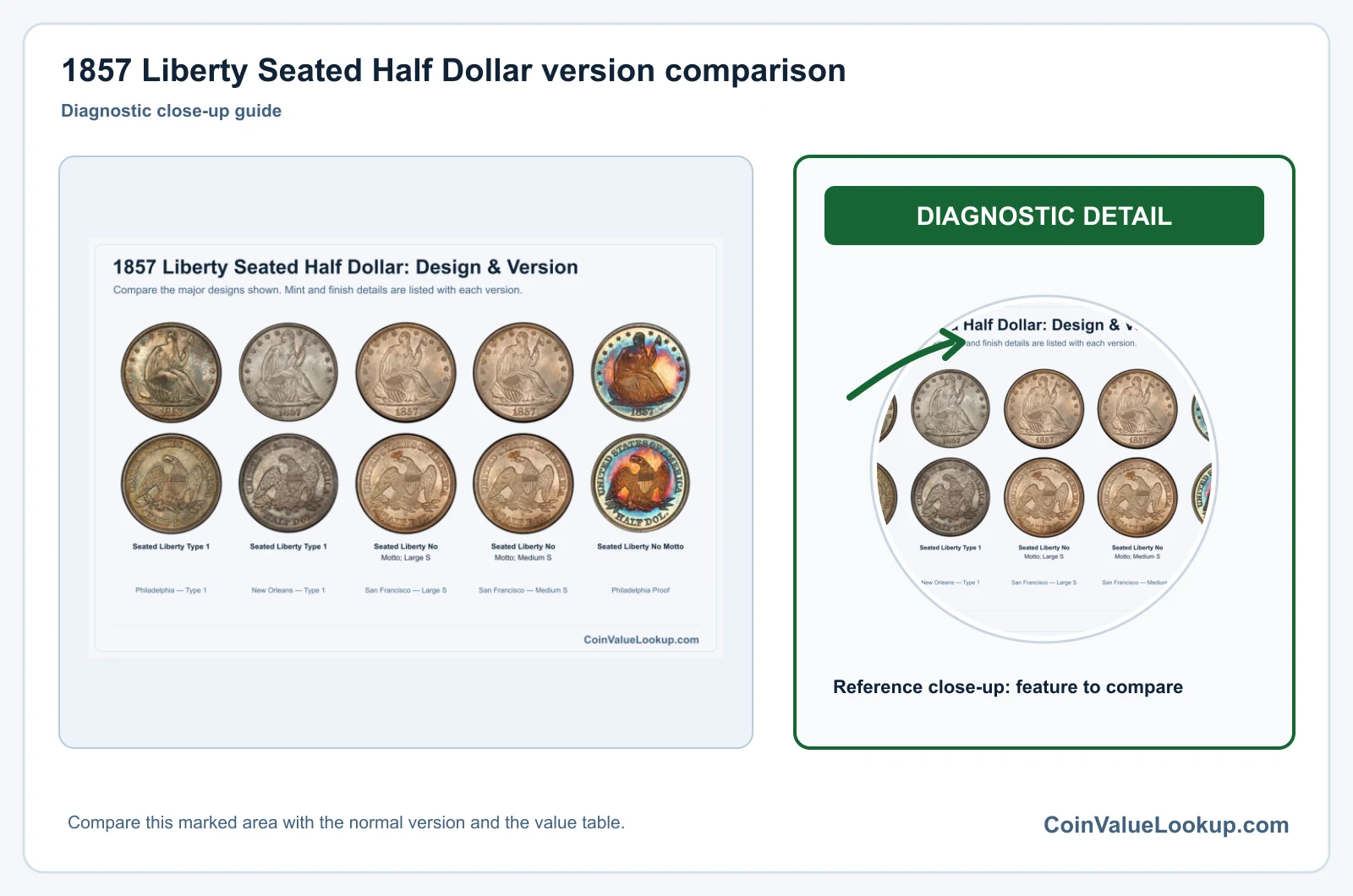
The 1857 Liberty Seated Half Dollar is a 90% silver coin struck at three mints. Philadelphia examples in circulated grades range from roughly $79 in G4 to $456 in AU50 based on USA Coin Book guide estimates.
San Francisco issues carry higher guide values, and Proofs occupy their own pricing tier. Exact worth depends on your coin's mint, version and condition.
Fast Way to Identify Your 1857 Liberty Seated Half Dollar
The quickest way to start is to upload clear photos of both sides of your coin. A front-and-back image lets us provide a preliminary identification of your mint, version and approximate condition.
Snap each side in even lighting, and be sure the date and any mintmark below the eagle are in focus.
1857 Liberty Seated Half Dollar Value
Upload both sides of your 1857 Liberty Seated Half Dollar.
Front Obverse
Upload photo
Back Reverse
Upload photo
Which 1857 Liberty Seated Half Dollar Versions Are Worth Money?
- San Francisco issues (Large S or Medium S) carry the highest circulated guide values, reaching $2,515 in AU50 versus $456 for Philadelphia.
- Philadelphia Proofs are a separate category, with a PR63 guide value of $5,640, and should not be compared to circulation strikes.
- New Orleans examples guide at $630 in AU50, a premium over same-grade Philadelphia coins.
- Die errors such as misplaced dates, clashed dies, die cracks and rotated dies can add collector interest beyond standard guide values.
Step 1: Identify Your 1857 Liberty Seated Half Dollar Mint Mark and Version
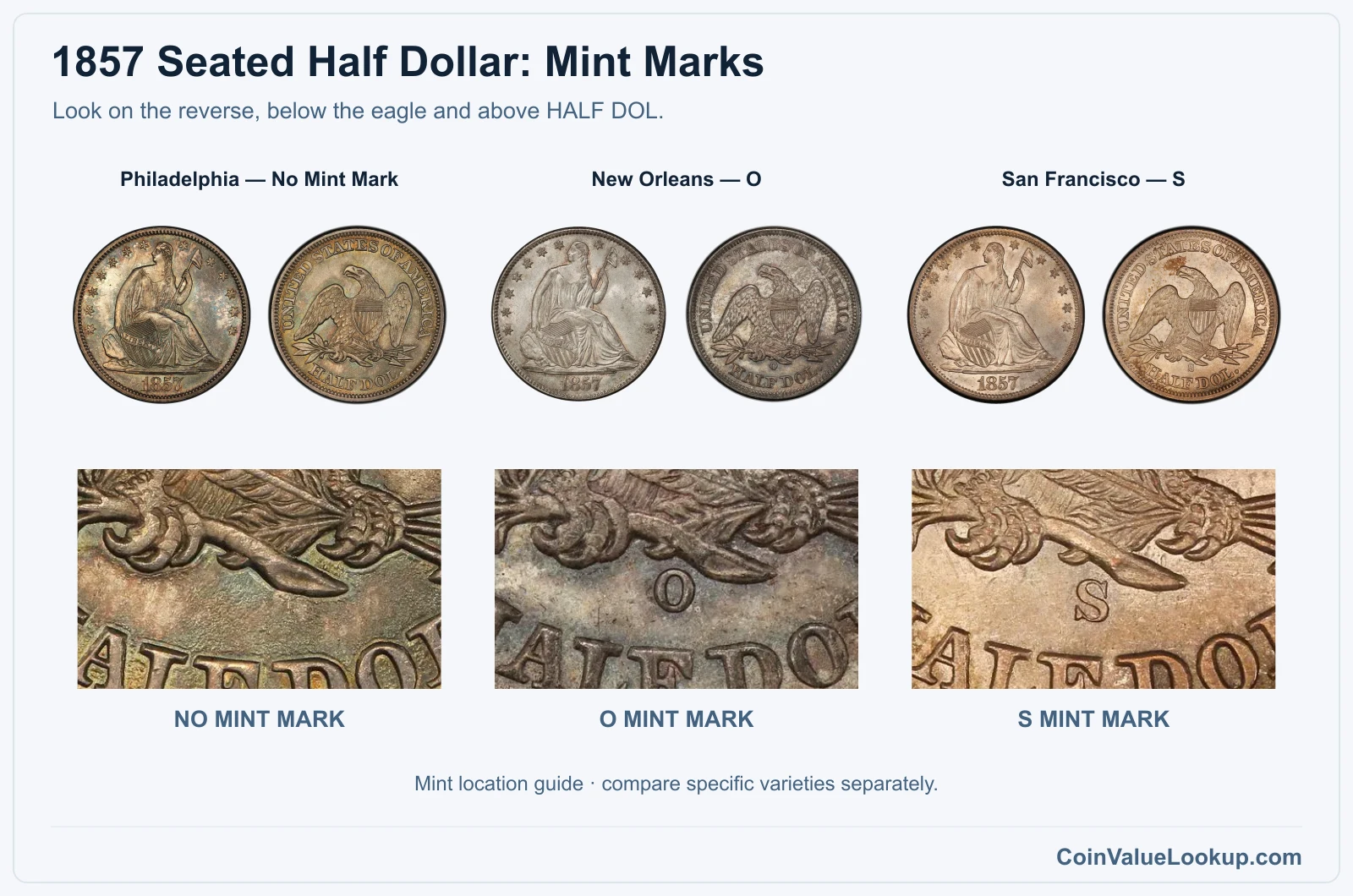
First, confirm you actually have a half dollar. Read the reverse: it says HALF DOL.
If you see HALF DIME or QUAR DOL, you have a different denomination entirely.
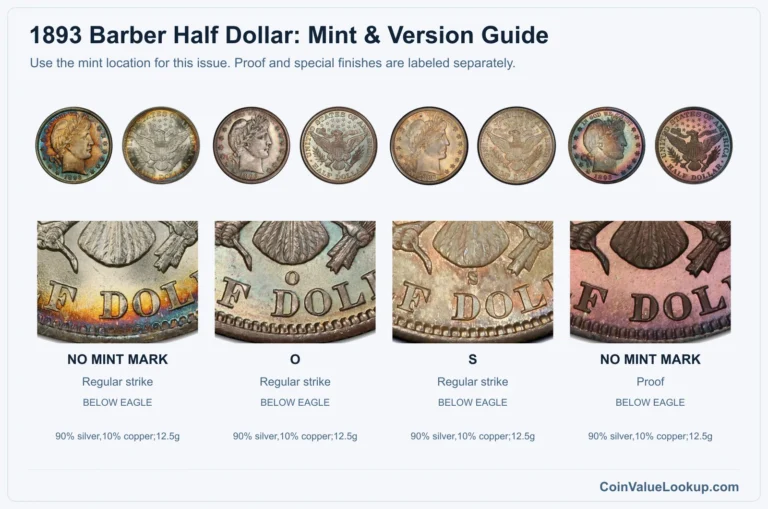
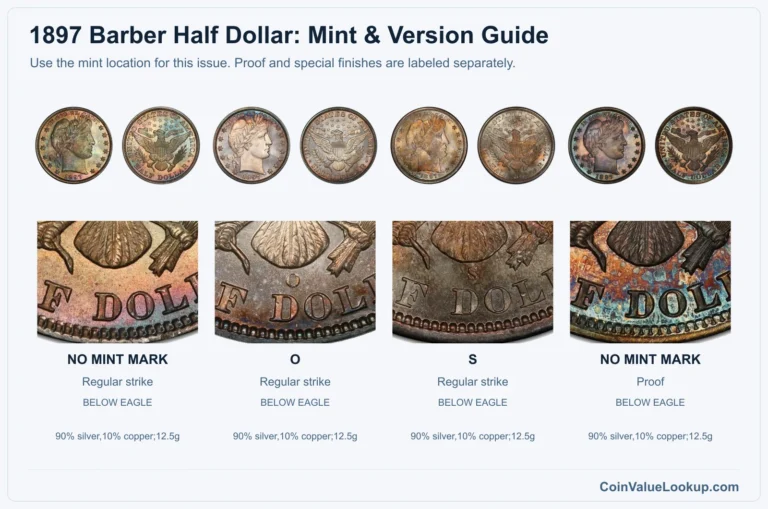
Next, flip the coin over and look below the eagle on the reverse. No letter means Philadelphia.
An O means New Orleans. An S means San Francisco.
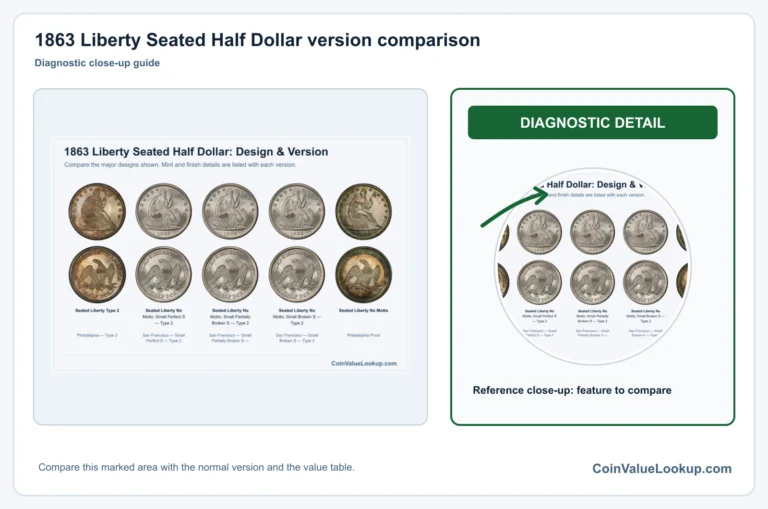
The 1857 half dollar is a No Motto type, meaning no banner reading IN GOD WE TRUST above the eagle. That motto was added in 1866.
If your coin has the motto, it is not an 1857.
The coin weighs about 12.44 grams with a reeded edge. It is 90% silver and 10% copper, so it has real melt value beyond its collectible premium.
San Francisco pieces come in two mintmark punch styles for this date: a Large S and a Medium S. Neither is an error; both are recognized varieties.
Compare your S mintmark to reference images at the same scale to see which punch yours received.
Type 1 versus Type 2 refers to the reverse hub design, specifically the base of the letter L in HALF and whether there is a small lump near the eagle's left leg. Philadelphia began using both hubs in 1858, so 1857 Philadelphia coins are Type 1 only.
Do not confuse hub type with an error.
Step 2: Check Your 1857 Liberty Seated Half Dollar Grade
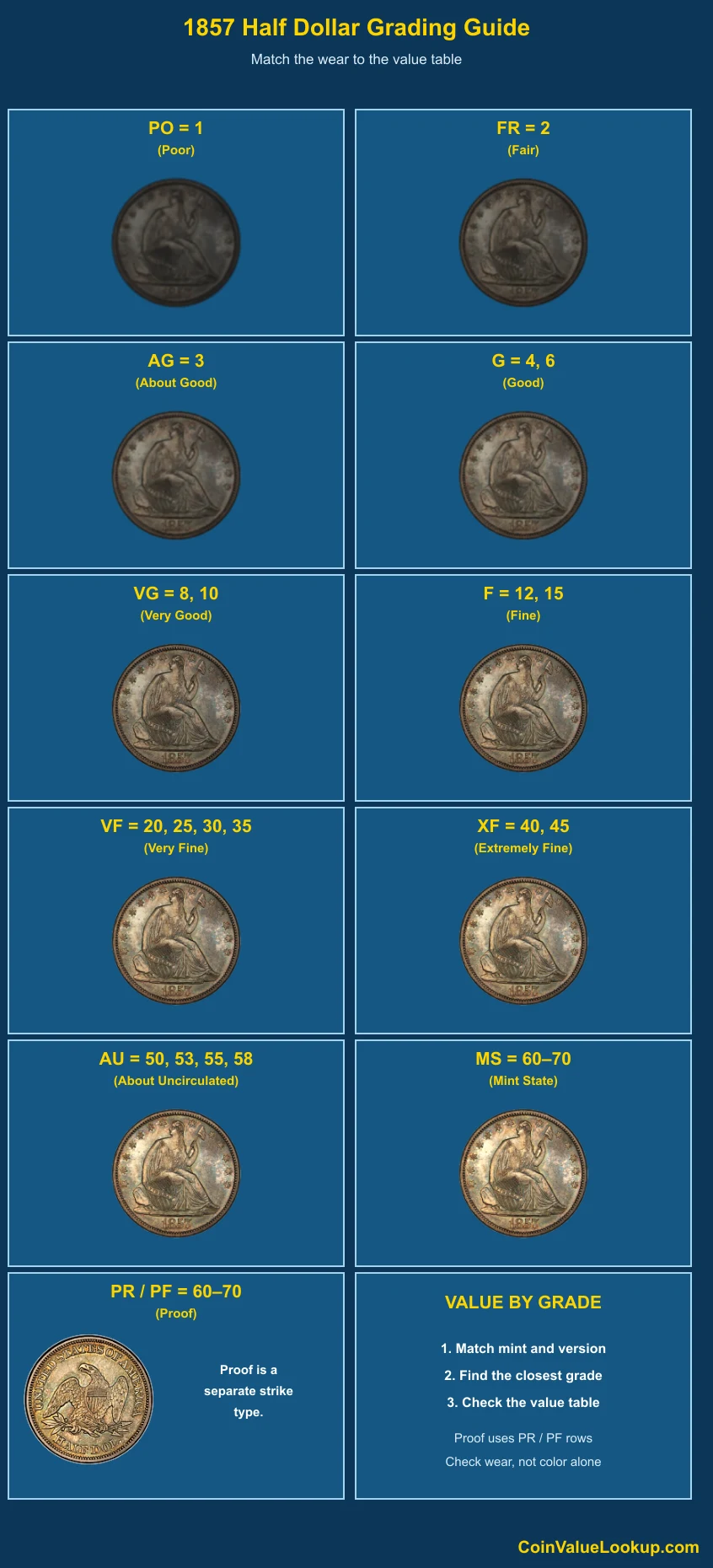
Start with Liberty herself. On a well-worn coin the head, breast and knee flatten first; the shield lines on her lap disappear next.
On the reverse, the eagle's breast feathers and wing tips show early wear.
A common mistake is calling a weakly struck area "wear." Check the surrounding surface for remaining luster and original texture. Genuine wear dulls everything uniformly, while a weak strike leaves luster intact in the flat zone.
Always inspect the edge and both fields for cleaning, scratches or rim damage. A cleaned coin may look bright and appealing, but it trades for significantly less than one with original surfaces.
Use the comparison image to match your coin's remaining detail against known grade benchmarks for this exact type.
Step 3: Check 1857 Liberty Seated Half Dollar Value by Mint and Version
1857 Liberty Seated Half Dollar — Philadelphia — Type 1
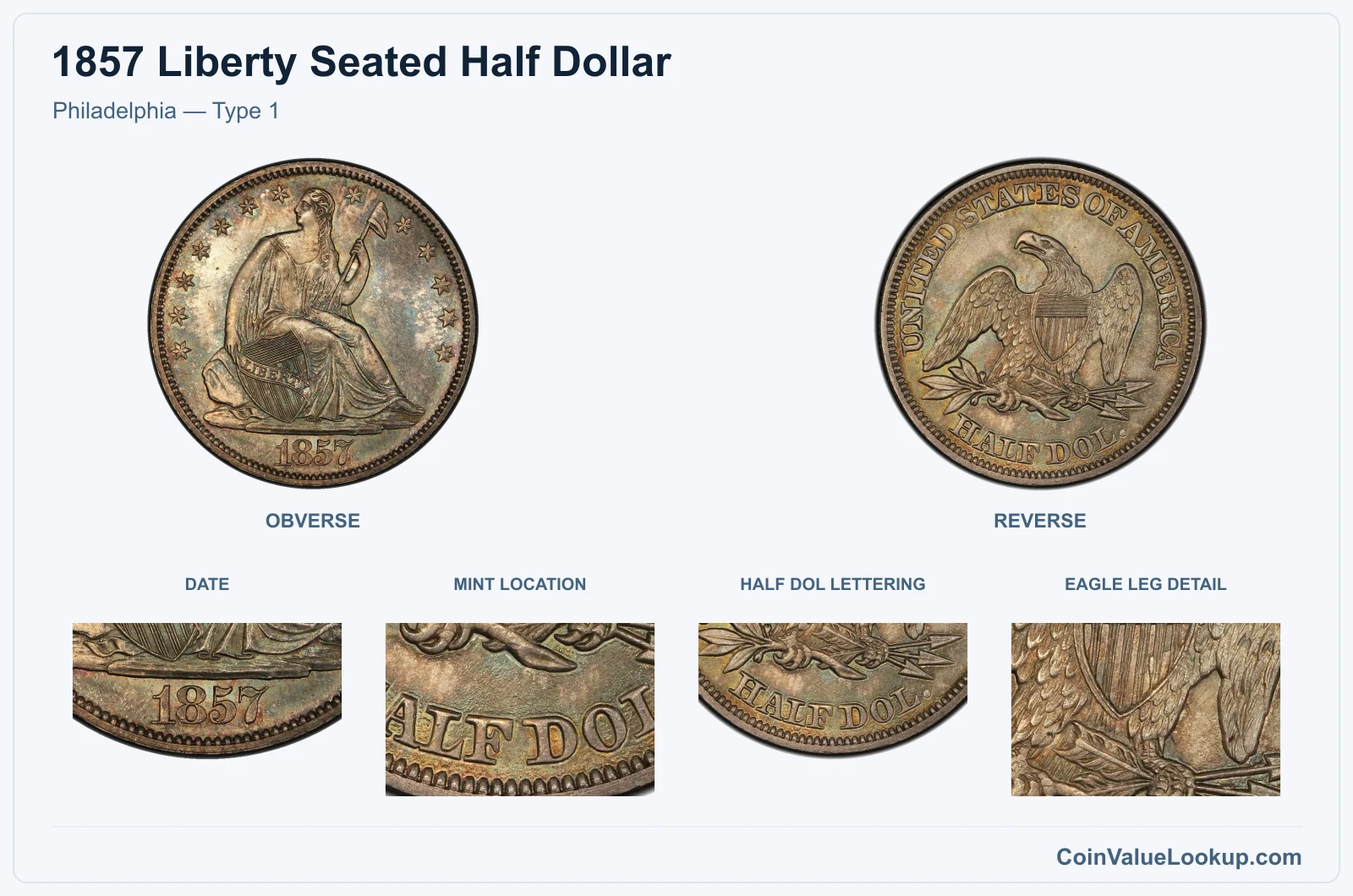
Philadelphia struck the 1857 half dollar without a mintmark and exclusively with the Type 1 reverse hub. Look at the base of the L in HALF: it should be short, and there should be no small lump next to the eagle's left leg.
USA Coin Book guide estimates place this version at $79 in G4, $236 in VF20 and $456 in AU50. These are guide figures, not guaranteed sale prices.
Most surviving examples are well-circulated, so a sharply detailed piece in AU50 stands out.
Coin Value Lookup is a good starting point if you want to compare this date against other years in the Seated Liberty series or look up different denominations.
Ordinary-issue reference: Ordinary-issue reference only: The table below shows prices for the 1857 Liberty Seated Half Dollar (regular strike). It does not represent the value of the specific Philadelphia — Type 1 variety or its variety premium. Year, mint, metal and strike type are matched; the specific variety is not priced by this table.
Range Grade
Price Auction Records Appraisal PO PO 1
—
Coin Identifier FR FR 2
—
Coin Identifier AG AG 3
—
Coin Identifier G G 4
—
Coin Identifier
G 6
—
Coin Identifier VG VG 8
Coin Identifier
VG 10
—
Coin Identifier F F 12
—
Coin Identifier
F 15
—
Coin Identifier VF VF 20
Coin Identifier
VF 25
Coin Identifier
VF 30
Coin Identifier
VF 35
Coin Identifier XF XF 40
Coin Identifier
XF 45
Coin Identifier AU AU 50
Coin Identifier
AU 53
Coin Identifier
AU 55
Coin Identifier
AU 58
Coin Identifier MS MS 60
Coin Identifier
MS 61
Coin Identifier
MS 62
Coin Identifier
MS 63
Coin Identifier
MS 64
Coin Identifier
MS 65
Coin Identifier
MS 66
Coin Identifier
MS 67
—
—
—
MS 68
—
—
—
MS 69
—
—
—
MS 70
—
—
—
1857 Liberty Seated Half Dollar — New Orleans — Type 1
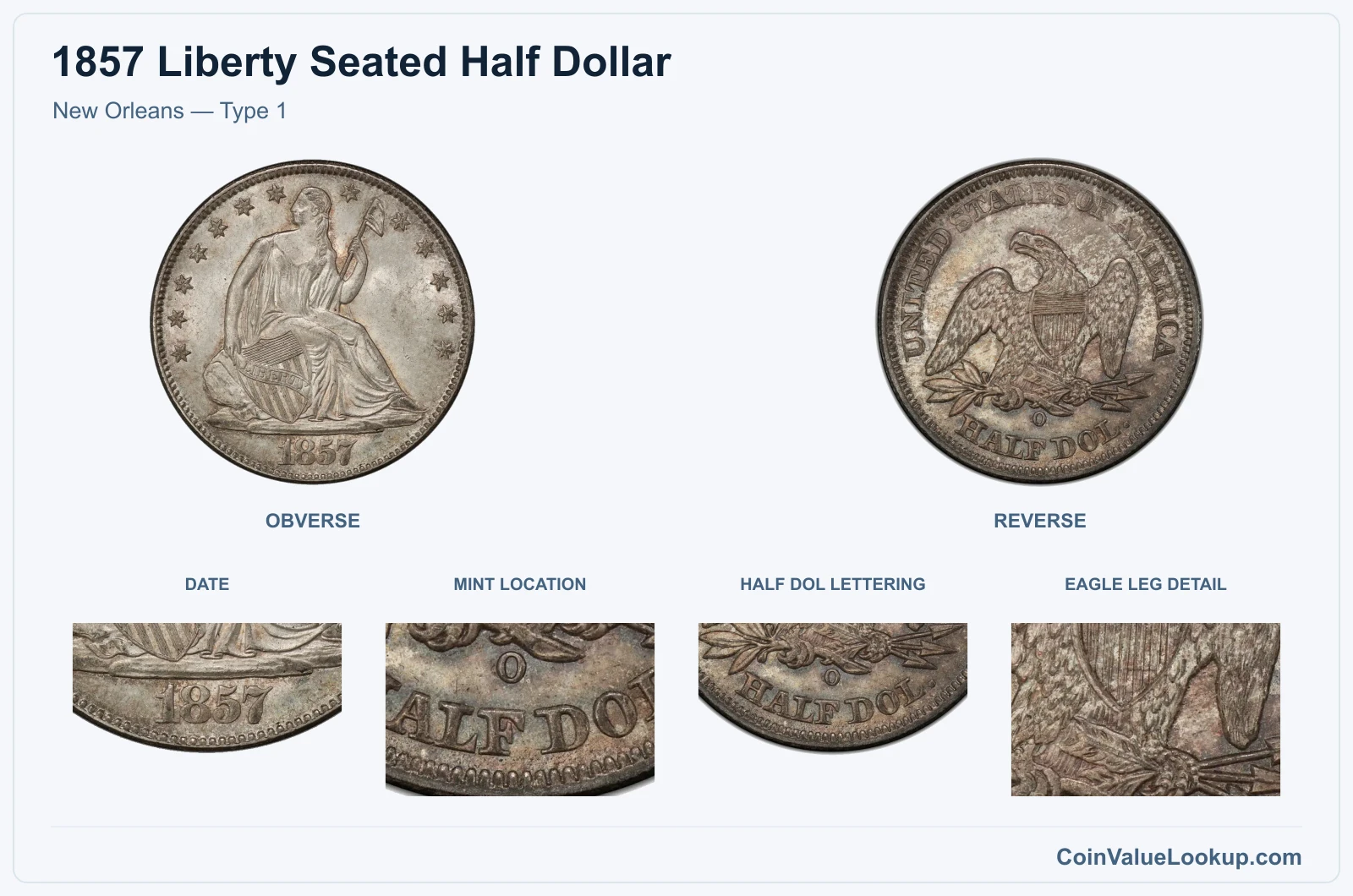
The New Orleans Mint placed an O mintmark below the eagle on its 1857 half dollars. This is also a Type 1 reverse.
Look for the O directly beneath the tail feathers; it can be faint on worn specimens.
Guide estimates from USA Coin Book are $79 in G4, $236 in VF20 and $630 in AU50. That AU50 figure is notably higher than Philadelphia's, reflecting lower survival rates in upper grades.
Some New Orleans halves surface with damage or corrosion from shipwreck recoveries; that is a surface or provenance issue, not a different variety.
Ordinary-issue reference: Ordinary-issue reference only: The table below shows prices for the 1857-O Liberty Seated Half Dollar (regular strike). It does not represent the value of the specific New Orleans — Type 1 variety or its variety premium. Year, mint, metal and strike type are matched; the specific variety is not priced by this table.
Range Grade
Price Auction Records Appraisal PO PO 1
—
Coin Identifier FR FR 2
—
Coin Identifier AG AG 3
—
Coin Identifier G G 4
—
Coin Identifier
G 6
—
Coin Identifier VG VG 8
—
Coin Identifier
VG 10
—
Coin Identifier F F 12
—
Coin Identifier
F 15
Coin Identifier VF VF 20
—
Coin Identifier
VF 25
Coin Identifier
VF 30
Coin Identifier
VF 35
—
Coin Identifier XF XF 40
Coin Identifier
XF 45
Coin Identifier AU AU 50
Coin Identifier
AU 53
Coin Identifier
AU 55
Coin Identifier
AU 58
Coin Identifier MS MS 60
Coin Identifier
MS 61
Coin Identifier
MS 62
Coin Identifier
MS 63
Coin Identifier
MS 64
Coin Identifier
MS 65
Coin Identifier
MS 66
—
—
—
MS 67
—
—
—
MS 68
—
—
—
MS 69
—
—
—
MS 70
—
—
—
1857 Liberty Seated Half Dollar — San Francisco — Large S
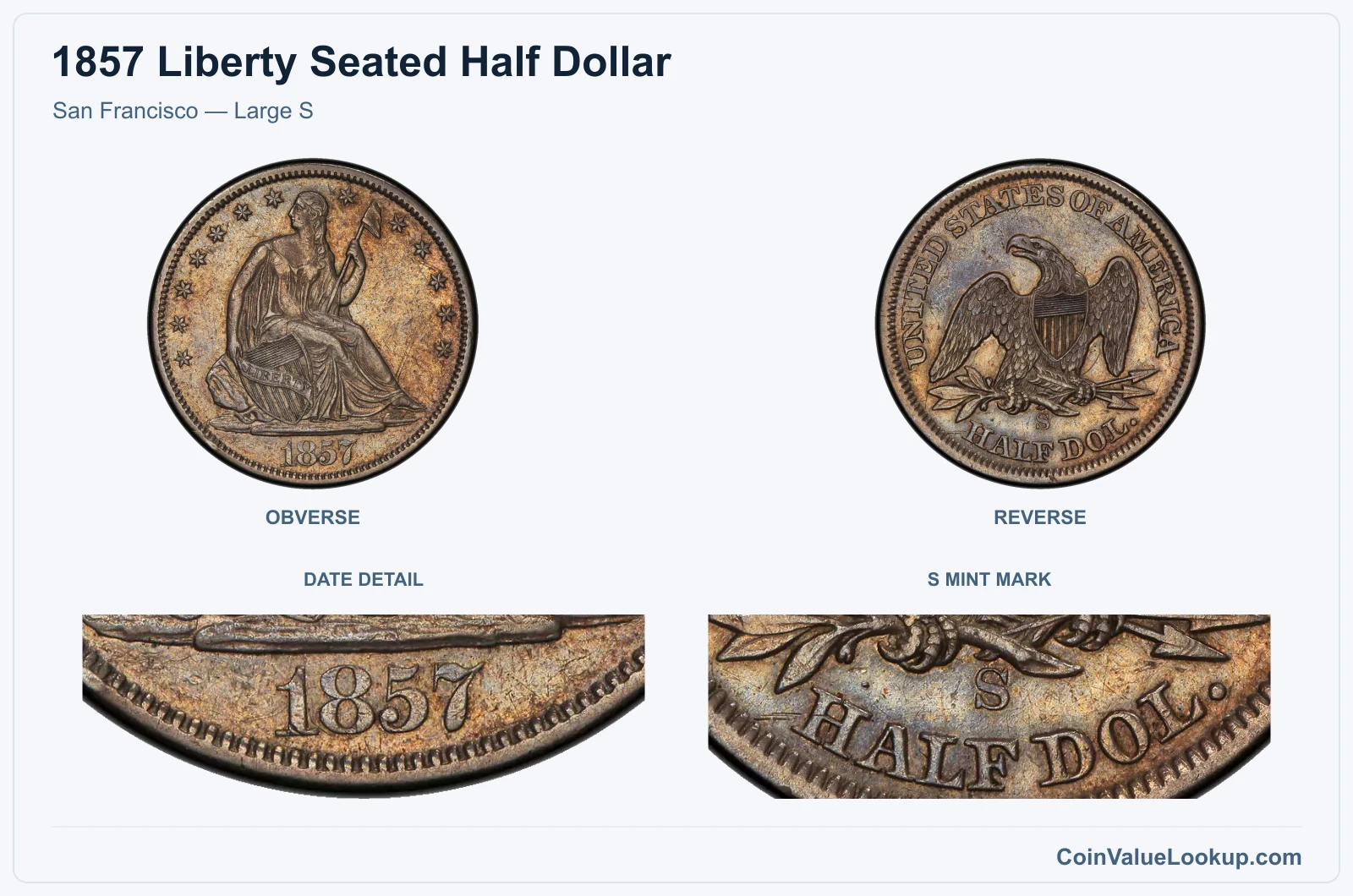
San Francisco's Large S mintmark is the first of two recognized punch styles for 1857. The S sits below the eagle and is relatively tall and bold compared to the Medium S alternative.
Place your coin beside a scale-matched reference photo to judge size accurately; a partially worn or broken punch is not the same as a different style.
USA Coin Book aggregate S-mint guide estimates run $204 in G4, $545 in VF20 and $2,515 in AU50. No separate subtype premium is currently adopted, so both S varieties share that range.
The steep jump to AU50 reflects genuinely scarce high-grade survival for San Francisco issues of this era.
Ordinary-issue reference: Ordinary-issue reference only: The table below shows prices for the 1857-S Liberty Seated Half Dollar (regular strike). It does not represent the value of the specific San Francisco — Large S variety or its variety premium. Year, mint, metal and strike type are matched; the specific variety is not priced by this table.
Range Grade
Price Auction Records Appraisal PO PO 1
—
Coin Identifier FR FR 2
—
Coin Identifier AG AG 3
—
Coin Identifier G G 4
Coin Identifier
G 6
—
Coin Identifier VG VG 8
Coin Identifier
VG 10
Coin Identifier F F 12
—
Coin Identifier
F 15
Coin Identifier VF VF 20
Coin Identifier
VF 25
Coin Identifier
VF 30
Coin Identifier
VF 35
Coin Identifier XF XF 40
Coin Identifier
XF 45
Coin Identifier AU AU 50
Coin Identifier
AU 53
Coin Identifier
AU 55
Coin Identifier
AU 58
Coin Identifier MS MS 60
—
Coin Identifier
MS 61
Coin Identifier
MS 62
Coin Identifier
MS 63
Coin Identifier
MS 64
—
Coin Identifier
MS 65
—
Coin Identifier
MS 66
Coin Identifier
MS 67
—
—
—
MS 68
—
—
—
MS 69
—
—
—
MS 70
—
—
—
1857 Liberty Seated Half Dollar — San Francisco — Medium S
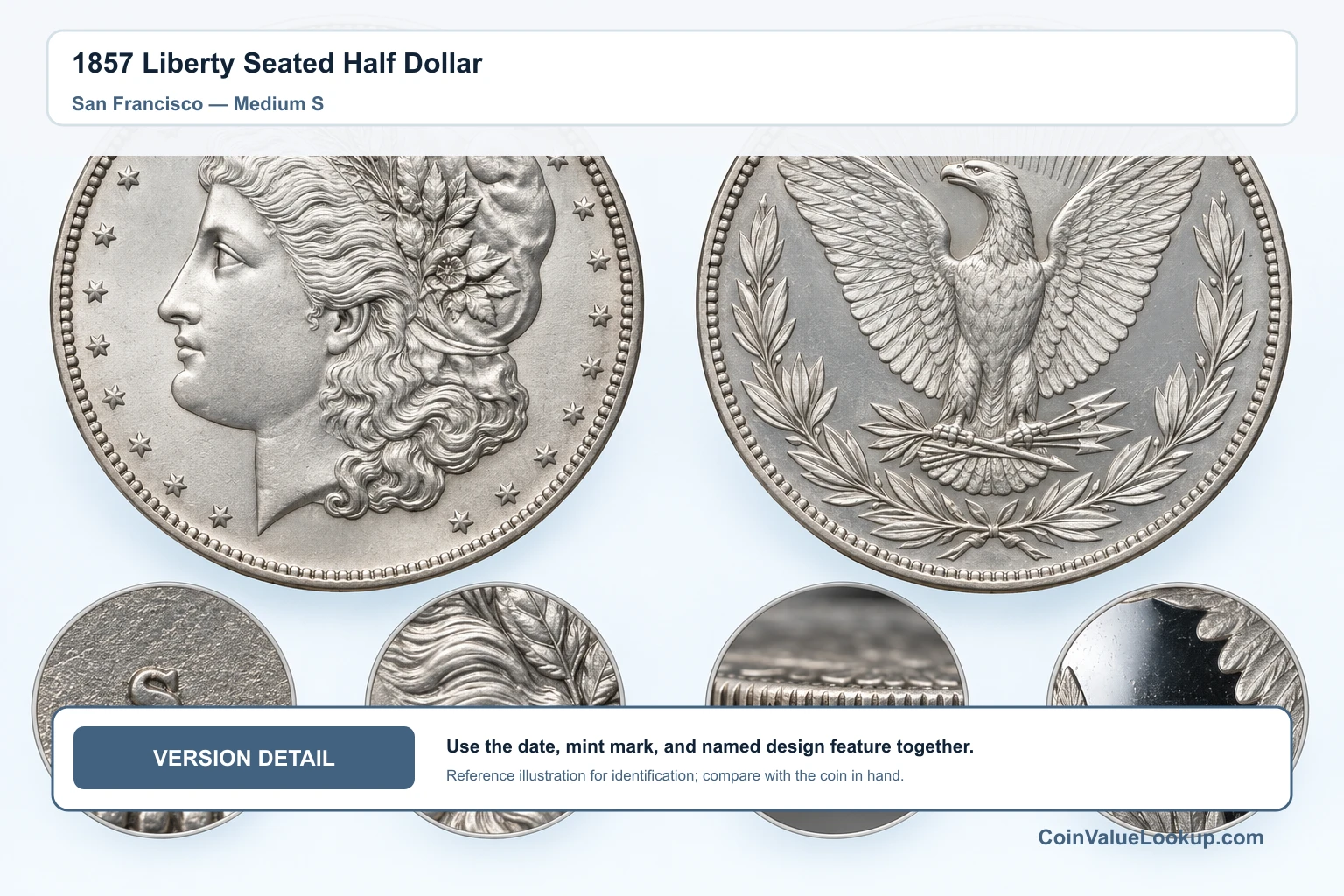
The Medium S is the second recognized mintmark punch used on 1857 San Francisco half dollars. It is smaller and shorter than the Large S but still clearly an S beneath the eagle.
Do not confuse a broken or partially filled Large S with a Medium S; compare overall proportions, not just legibility.
Guide estimates are the same aggregate S-mint figures: $204 in G4, $545 in VF20 and $2,515 in AU50 per USA Coin Book. Until subtype-specific pricing becomes available, both San Francisco mintmark styles are valued within this shared range.
The key is confirming the mintmark is genuine and not tooled.
Ordinary-issue reference: Ordinary-issue reference only: The table below shows prices for the 1857-S Liberty Seated Half Dollar (regular strike). It does not represent the value of the specific San Francisco — Medium S variety or its variety premium. Year, mint, metal and strike type are matched; the specific variety is not priced by this table.
Range Grade
Price Auction Records Appraisal PO PO 1
—
Coin Identifier FR FR 2
—
Coin Identifier AG AG 3
—
Coin Identifier G G 4
Coin Identifier
G 6
—
Coin Identifier VG VG 8
Coin Identifier
VG 10
Coin Identifier F F 12
—
Coin Identifier
F 15
Coin Identifier VF VF 20
Coin Identifier
VF 25
Coin Identifier
VF 30
Coin Identifier
VF 35
Coin Identifier XF XF 40
Coin Identifier
XF 45
Coin Identifier AU AU 50
Coin Identifier
AU 53
Coin Identifier
AU 55
Coin Identifier
AU 58
Coin Identifier MS MS 60
—
Coin Identifier
MS 61
Coin Identifier
MS 62
Coin Identifier
MS 63
Coin Identifier
MS 64
—
Coin Identifier
MS 65
—
Coin Identifier
MS 66
Coin Identifier
MS 67
—
—
—
MS 68
—
—
—
MS 69
—
—
—
MS 70
—
—
—
1857 Liberty Seated Half Dollar — Philadelphia Proof
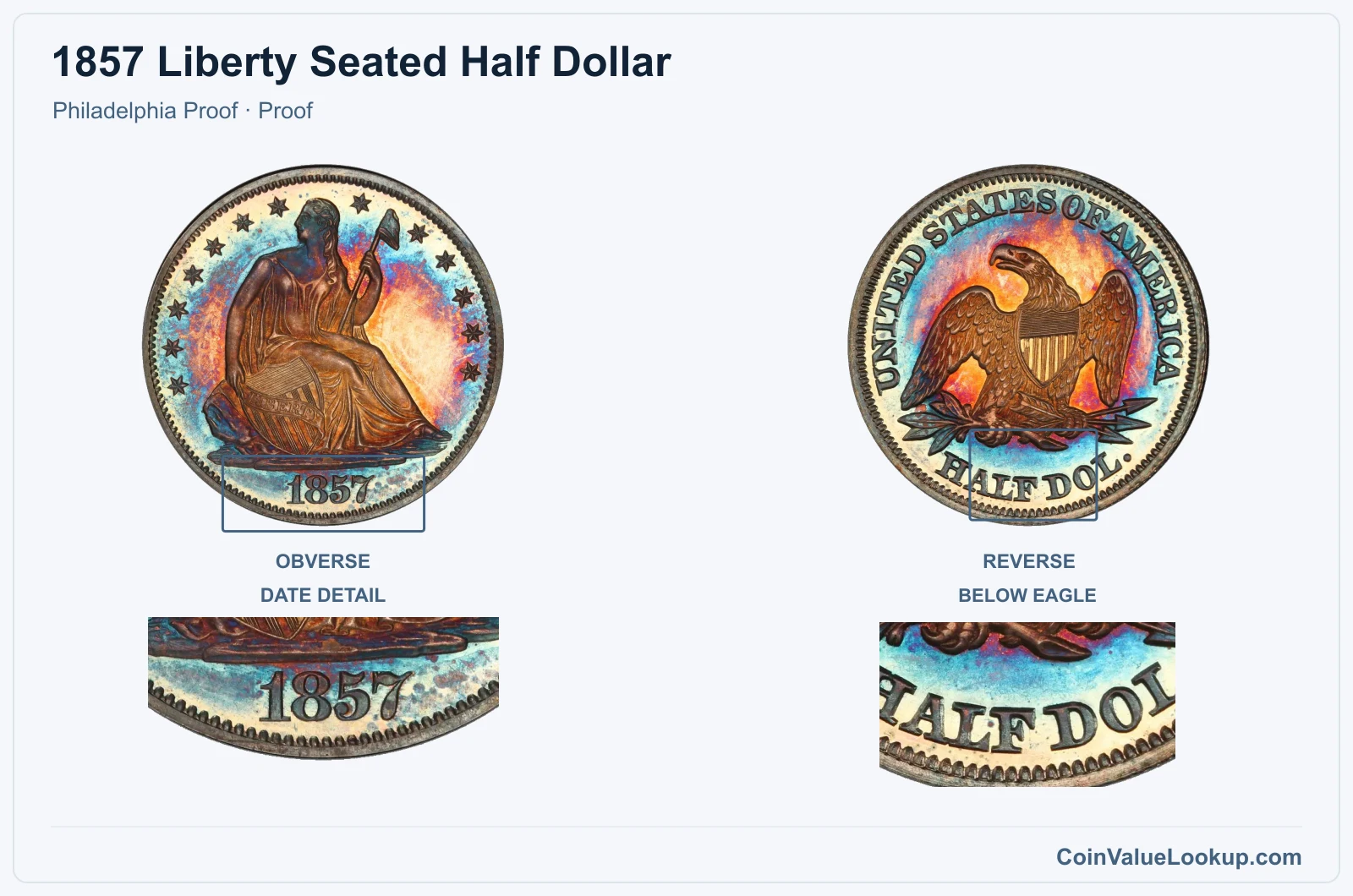
Philadelphia struck a small number of Proof half dollars in 1857 for collectors. These were specially made with polished dies and planchets, producing mirror-like fields and sharp detail from the moment of striking.
A genuine Proof shows squared, well-defined rims and deeply reflective surfaces that circulated coins simply do not have. Do not assume brightness or light cleaning equals Proof manufacture; the surfaces, strike and rim profile must all align.
Cameo and deep cameo designations stay within this Proof branch and indicate varying degrees of frost on the devices.
USA Coin Book lists $5,640 for a PR63 example. That figure reflects the extreme rarity of collector-finish Seated Liberty halves of this period and should not be compared directly to circulation-strike prices.
Range Grade
Price Auction Records Appraisal PR PR 1
—
Coin Identifier
PR 2
—
Coin Identifier
PR 3
—
Coin Identifier
PR 4
—
Coin Identifier
PR 6
—
Coin Identifier
PR 8
—
Coin Identifier
PR 10
—
Coin Identifier
PR 12
—
Coin Identifier
PR 15
—
Coin Identifier
PR 20
—
Coin Identifier
PR 25
—
Coin Identifier
PR 30
—
Coin Identifier
PR 35
—
Coin Identifier
PR 40
—
Coin Identifier
PR 45
—
Coin Identifier
PR 50
—
Coin Identifier
PR 53
—
Coin Identifier
PR 55
—
Coin Identifier
PR 58
—
Coin Identifier
PR 60
Coin Identifier
PR 61
Coin Identifier
PR 62
Coin Identifier
PR 63
Coin Identifier
PR 64
Coin Identifier
PR 65
Coin Identifier
PR 66
Coin Identifier
PR 67
Coin Identifier
PR 68
—
—
—
PR 69
—
—
—
PR 70
—
—
—
1857 Liberty Seated Half Dollar Error List
1. 1857 Liberty Seated Half Dollar — Misplaced Date
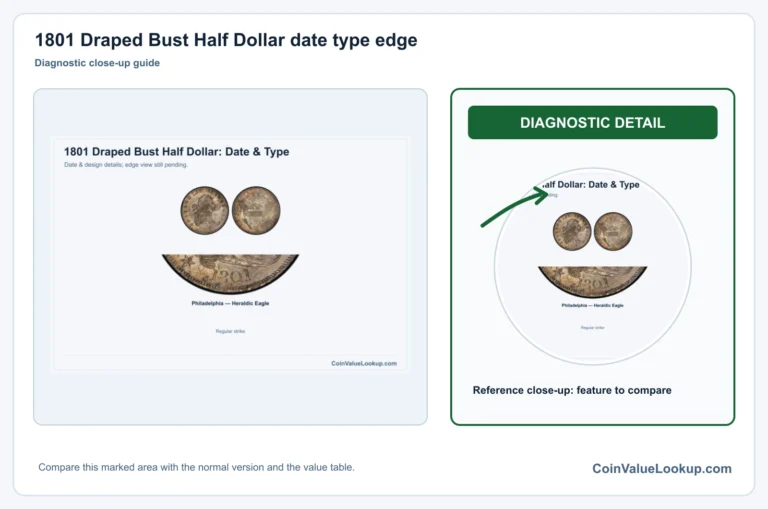
On certain 1857 Philadelphia half dollars, portions of the digits 5 and 7 appear embedded in the rock base above the coin's normal date position. This happened when the date punch was first impressed too high before being corrected to its final location, leaving ghost impressions in the rock detail.
To identify this, examine the rocky support beneath Liberty just above the date. You should see faint but distinct outlines of numerals that do not belong there.
Frame both the normal date and the misplaced digits in your photo when documenting this variety.
Wear, post-mint scratches and tooling marks can mimic displaced numbers. Compare against a reference image of a confirmed example.
No specific price premium is adopted for this error; value depends on the visibility of the displaced digits, overall coin condition and collector demand for die varieties.
2. 1857 Liberty Seated Half Dollar — Clashed Dies
Clashed dies occur when the obverse and reverse dies strike each other without a planchet between them, transferring faint impressions of one design onto the opposite die. The 1857 Philadelphia reference records strong clashes visible on both faces of affected coins.
On the obverse you may see traces of the eagle's outline in Liberty's fields; on the reverse, hints of Liberty's seated figure may ghost into the eagle's surroundings. The key diagnostic is matching the outlines to the opposite die's design elements, not just seeing random lines.
Scratches, bag marks or raised debris lines can look similar. True clash marks follow the contour of the opposing design in a consistent, repeatable pattern across multiple specimens from the same die pair.
No adopted price applies; value depends on clash strength and the coin's overall grade.
3. 1857 Liberty Seated Half Dollar — Die Crack / Die Chip
Die cracks show up as thin raised lines on the coin's surface, created when a steel die develops a fracture during use. On 1857 Philadelphia half dollars, documented examples show raised cracks near the reverse legend and wing area, as well as near the date on the obverse.
These lines are raised because metal flows into the crack in the die face. Not every 1857 coin carries every crack; each path is specific to a particular die and its state of deterioration.
Do not confuse die cracks with incuse scratches, which are recessed into the surface, or with corrosion and surface deposits. A genuine crack is raised, continuous and appears in the same position on every coin struck from that die.
No specific price premium is adopted; value depends on crack prominence, location and the coin's condition.
4. 1857 Liberty Seated Half Dollar — Rotated Dies
A rotated die error means the obverse and reverse are not aligned in the normal 180-degree orientation. An attributed 1857 Philadelphia die pair shows progressive clockwise rotation of approximately 12 to 30 degrees as the dies wore.
To check, hold the coin with the obverse upright, then flip it on its vertical axis. The reverse should appear upside down.
If the reverse is tilted clockwise or counterclockwise from that expected orientation, you may have a rotated die. Greater rotation generally attracts more collector attention.
Be careful: a photograph taken at an angle or a coin turned sideways in a holder is not a die rotation. Both faces must be shown with consistent fixed orientation.
No adopted price premium exists for this error; value hinges on the degree of rotation, the coin's grade and buyer interest in the specific die pair.