1863 Liberty Seated Half Dollar Coin Value: How Much Is It Worth?
The 1863 Liberty Seated Half Dollar is a Civil War-era silver coin that still turns up in collections and estate finds. Philadelphia strikes in circulated grades carry guide estimates from about $141 in G4 to $739 in AU50.
San Francisco issues, collector Proofs, and specific mintmark varieties each follow their own value tracks, so identifying your exact version matters.
Fast Way to Identify Your 1863 Liberty Seated Half Dollar
The quickest way to start figuring out what you have is to snap clear photos of both the front and back of your coin and upload them here. That gives us a basis for preliminary identification — the mint, the mintmark style, and the general condition.
It is not a substitute for professional authentication, but it points you in the right direction fast.
1863 Liberty Seated Half Dollar Value
Upload both sides of your 1863 Liberty Seated Half Dollar.
Front Obverse
Upload photo
Back Reverse
Upload photo
Which 1863 Liberty Seated Half Dollar Versions Are Worth Money?
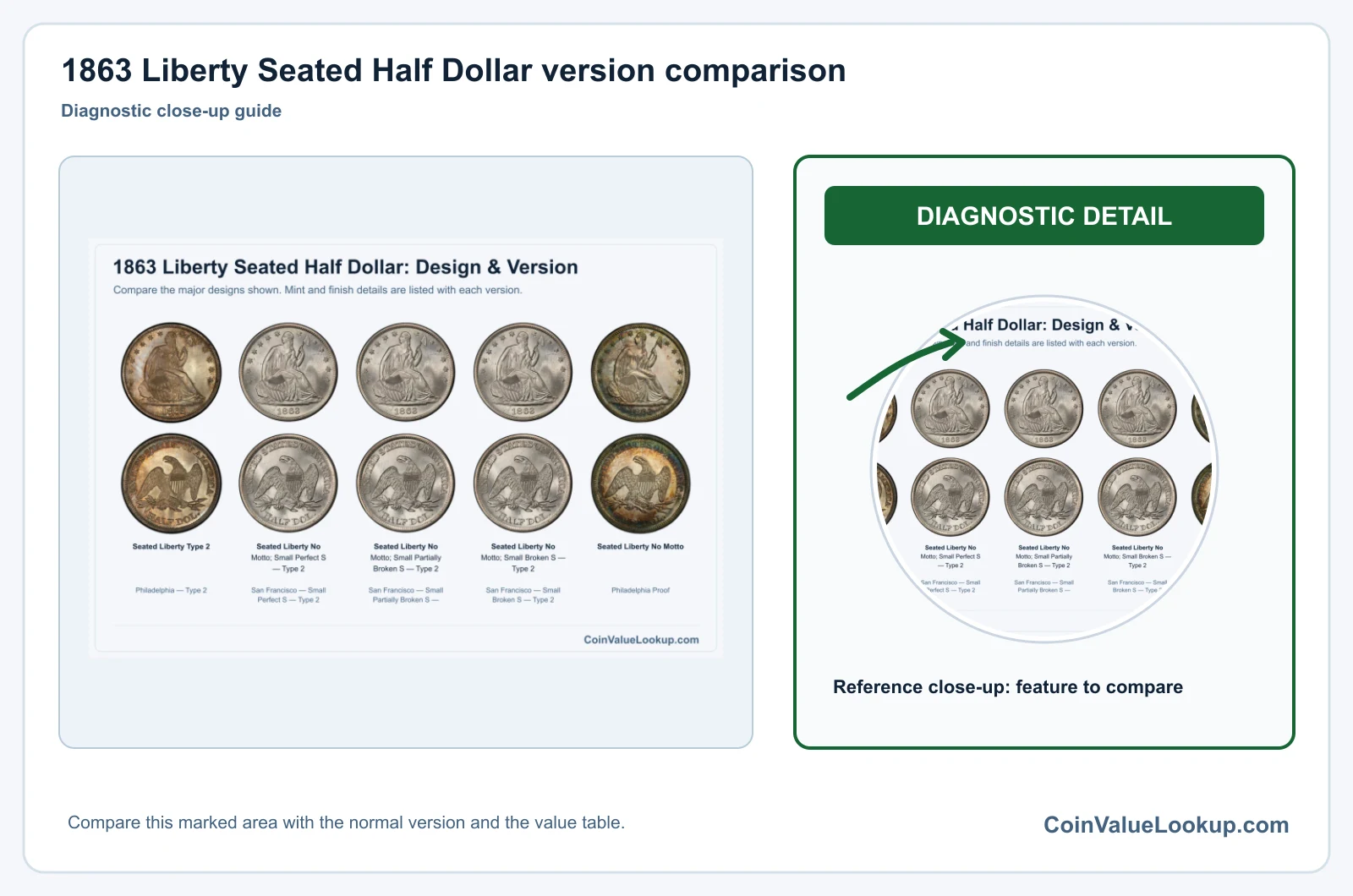
- Philadelphia Type 2 strikes guide around $141 in G4 up to $739 in AU50 — the most commonly encountered version.
- San Francisco issues come in three distinct mintmark punch styles (Perfect S, Partially Broken S, Broken S), each a collectible variety worth examining under magnification.
- Collector Proofs from Philadelphia are scarce; a PR63 example carries a guide estimate near $2,005.
- Mintmark punch differences on San Francisco coins are cataloged varieties, not damage — confirm the S shape carefully before assuming wear or alteration.
Step 1: Identify Your 1863 Liberty Seated Half Dollar Mint Mark and Version
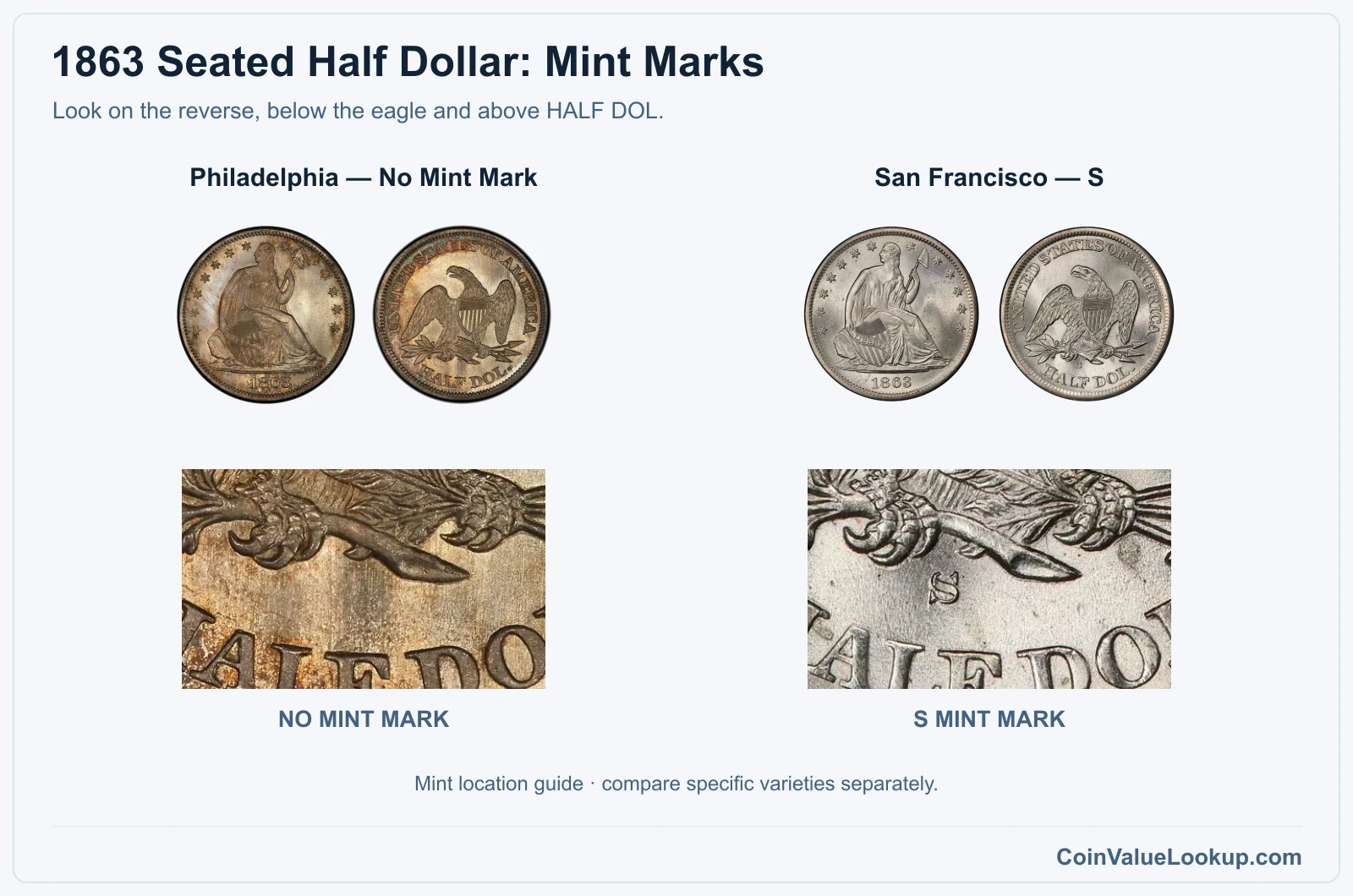
First, flip the coin over and confirm the denomination reads HALF DOL. on the reverse.
That saves you from confusing it with a half dime or quarter, which is easier to do than you might think with worn Seated Liberty coins.
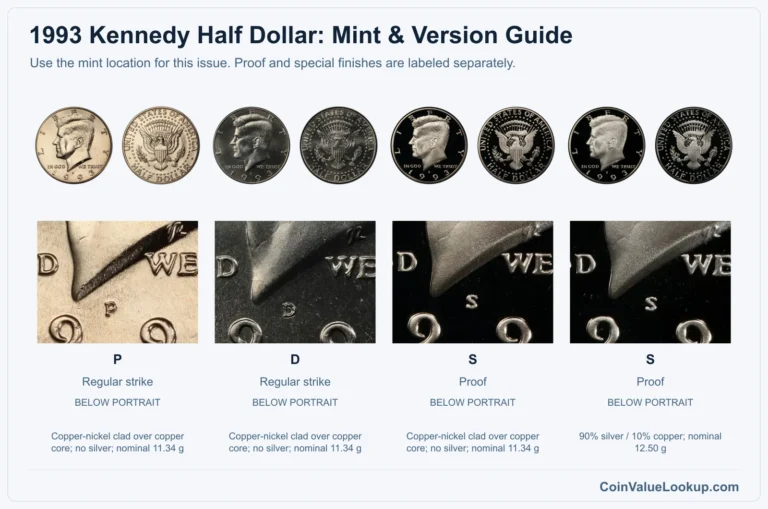
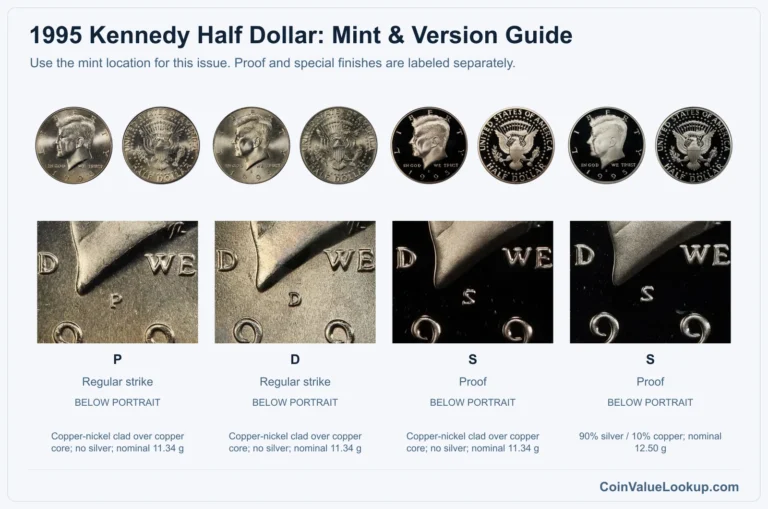
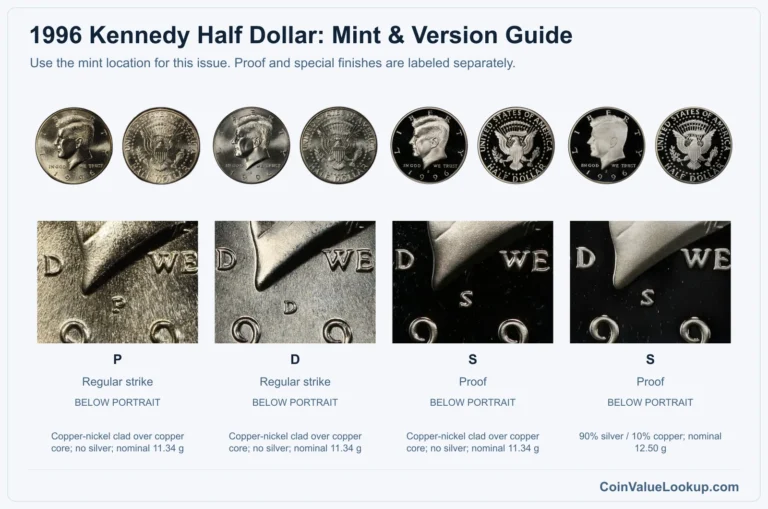
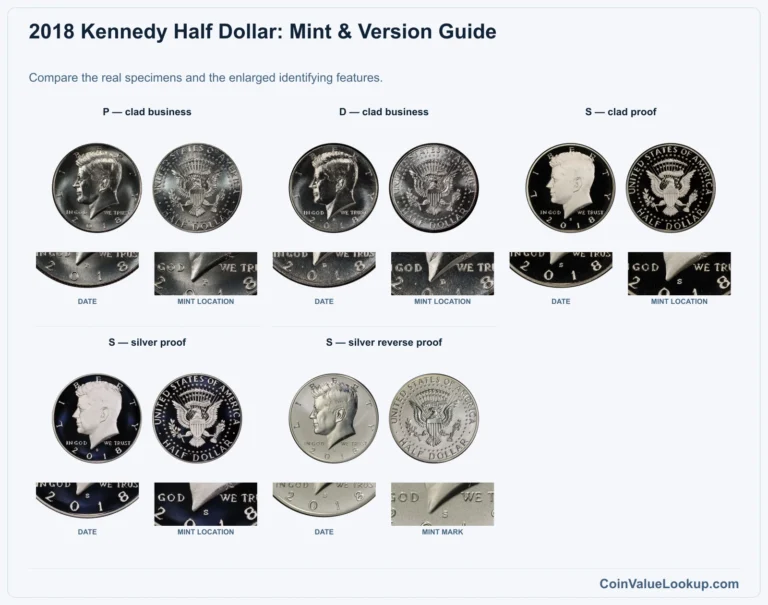
Philadelphia coins carry no mintmark at all. San Francisco coins have an "S" below the eagle on the reverse.
There is no New Orleans issue for 1863.
The coin is 90% silver and 10% copper, weighing about 12.44 grams with a reeded edge. If yours feels too light or has a smooth edge, something is off.
You may see references to Type 1 and Type 2 reverses. On the 1863 half dollar, Type 2 is the standard — look for a longer base on the letter L in HALF and a small lump near the eagle's left leg.
These are die-hub differences, not errors. The motto "In God We Trust" does not appear on this date; that banner was added starting in 1866.
Step 2: Check Your 1863 Liberty Seated Half Dollar Grade
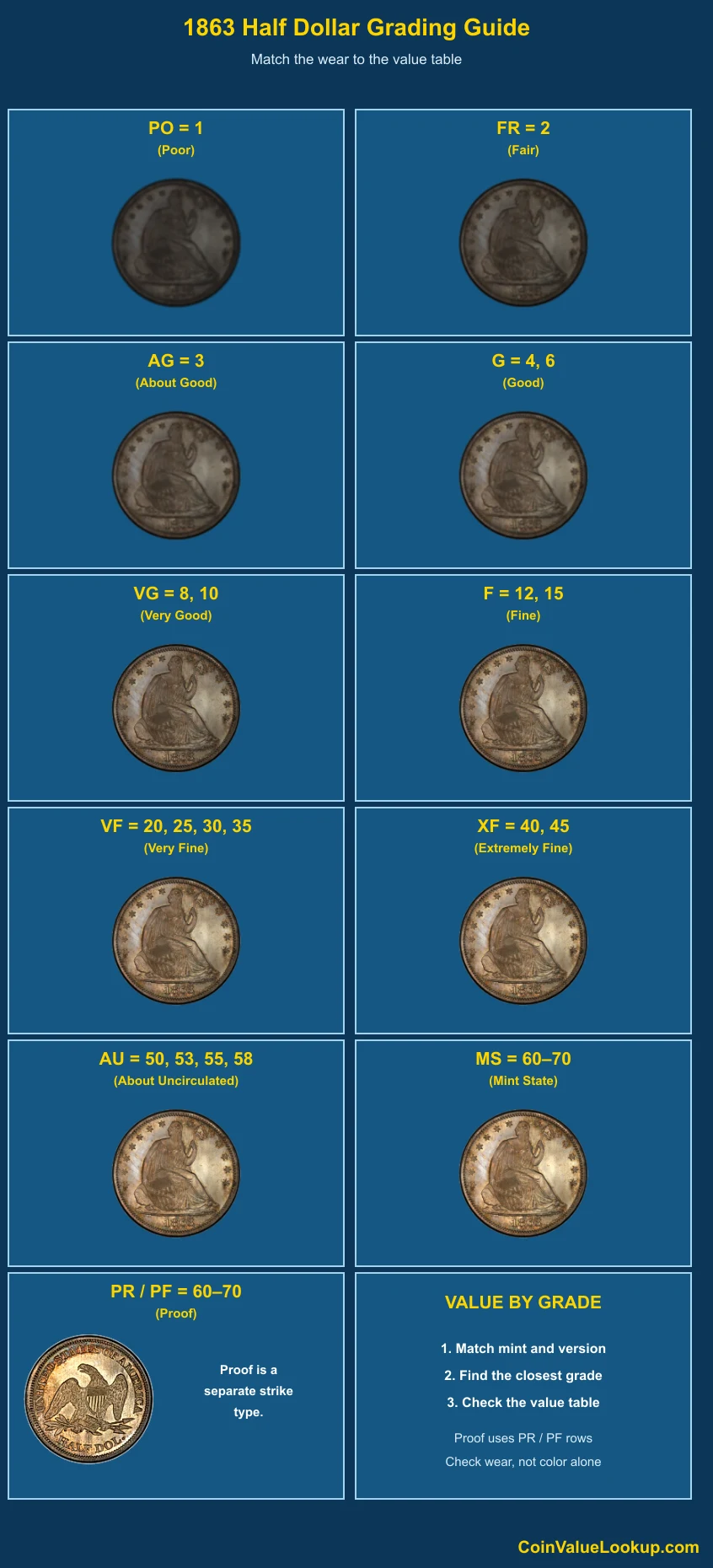
Start with Liberty's head on the obverse. Her hair details above the ear go first, followed by the lines on the shield and the folds across her knee.
On the reverse, check the eagle's breast feathers and wing tips.
A common mistake is calling a weakly struck coin "worn." Weak strikes leave flat areas but the surrounding surfaces still show original luster and a satiny texture. Genuine wear dulls luster and smooths metal evenly across high points.
Check both sides under good light and look at the reeded edge — damage and old cleanings change a coin's value dramatically.
Compare your coin to the condition-comparison image to get a realistic sense of where it falls on the grading scale. A coin that looks VF20 to your eye might actually grade differently once surface problems are accounted for.
Step 3: Check 1863 Liberty Seated Half Dollar Value by Mint and Version
1863 Liberty Seated Half Dollar — Philadelphia — Type 2
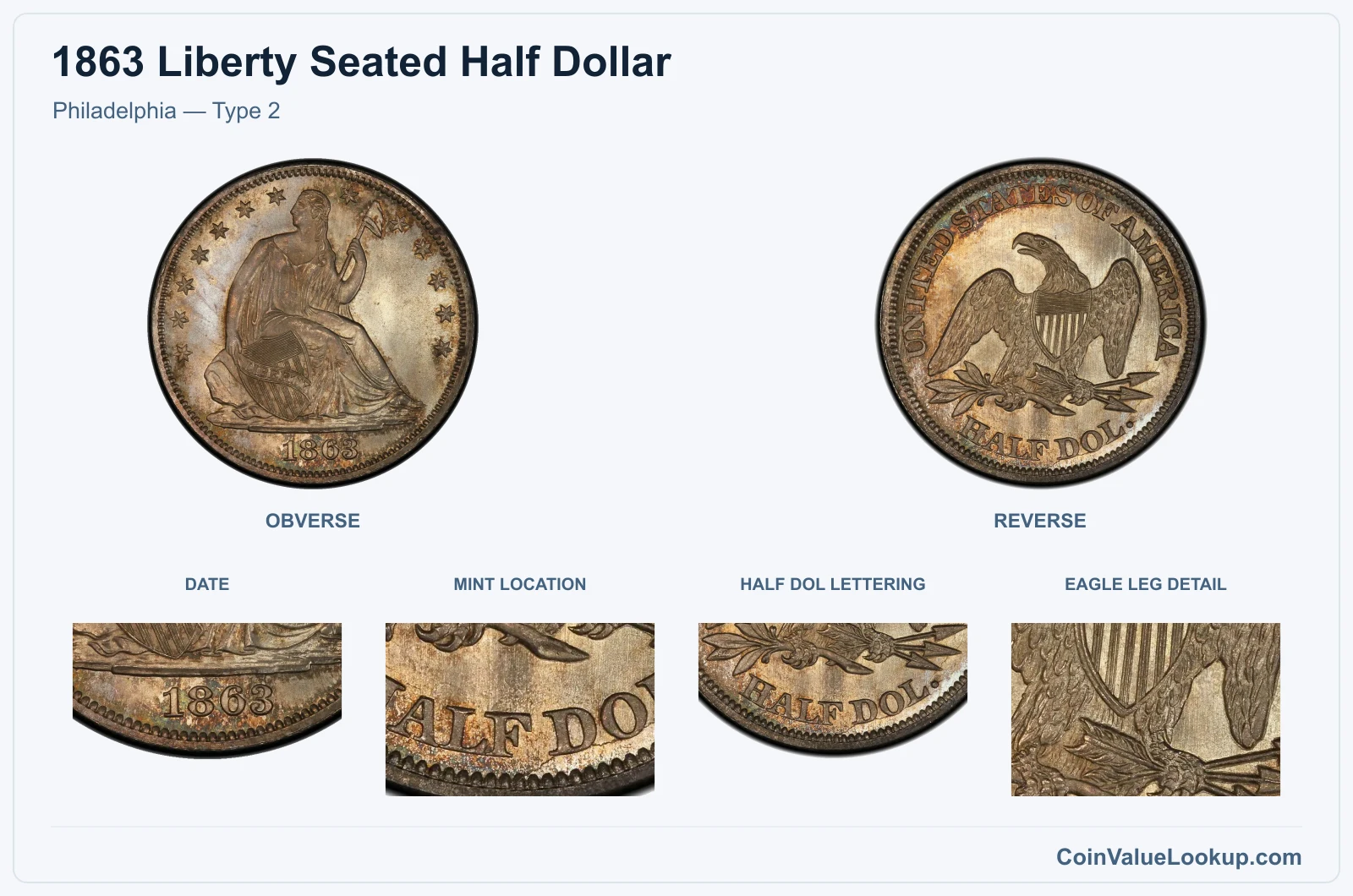
The Philadelphia Type 2 has no mintmark on the reverse. Look for the longer base on the L in HALF and the small lump beside the eagle's left leg — those confirm the Type 2 hub.
Guide estimates from USA Coin Book place this version at roughly $141 in G4, $267 in VF20, and $739 in AU50. These are aggregate Philadelphia figures, not subtype-specific quotes, and they are guide estimates rather than guaranteed sale prices.
Most 1863 half dollars you encounter from Philadelphia will be this version.
Ordinary-issue reference: Ordinary-issue reference only: The table below shows prices for the 1863 Liberty Seated Half Dollar (regular strike). It does not represent the value of the specific Philadelphia — Type 2 variety or its variety premium. Year, mint, metal and strike type are matched; the specific variety is not priced by this table.
Range Grade
Price Auction Records Appraisal PO PO 1
—
Coin Identifier FR FR 2
—
Coin Identifier AG AG 3
—
Coin Identifier G G 4
Coin Identifier
G 6
—
Coin Identifier VG VG 8
—
Coin Identifier
VG 10
Coin Identifier F F 12
Coin Identifier
F 15
—
Coin Identifier VF VF 20
Coin Identifier
VF 25
Coin Identifier
VF 30
Coin Identifier
VF 35
Coin Identifier XF XF 40
Coin Identifier
XF 45
Coin Identifier AU AU 50
Coin Identifier
AU 53
Coin Identifier
AU 55
Coin Identifier
AU 58
Coin Identifier MS MS 60
Coin Identifier
MS 61
Coin Identifier
MS 62
Coin Identifier
MS 63
Coin Identifier
MS 64
Coin Identifier
MS 65
Coin Identifier
MS 66
Coin Identifier
MS 67
Coin Identifier
MS 68
—
—
—
MS 69
—
—
—
MS 70
—
—
—
1863 Liberty Seated Half Dollar — San Francisco — Small Perfect S — Type 2
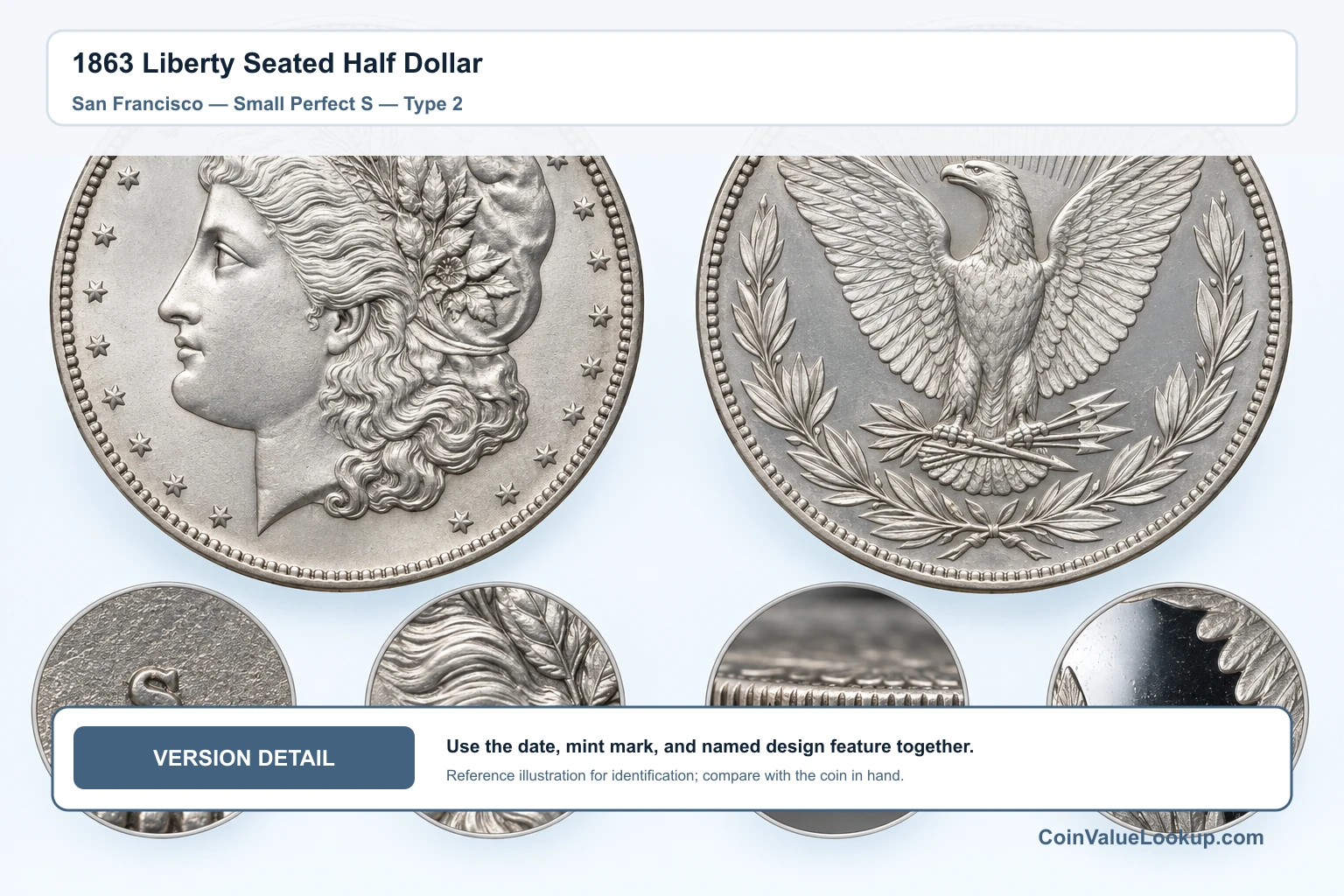
This San Francisco variety uses the Small Perfect S mintmark punch below the eagle. The letter S is small but fully formed with clean, complete curves at top and bottom.
Compare it side by side with the broken-S varieties at similar magnification to be sure.
Aggregate San Francisco guide estimates run about $91 in G4, $331 in VF20, and $739 in AU50. No separate subtype premium is currently adopted for the Perfect S, so treat these as starting points.
A partially broken or worn S is not the same thing as this clean punch — use a loupe and a reference image from the same date.
Coin Value Lookup is a handy place to look up guides for other Liberty Seated dates and denominations while you are sorting through a group.
Ordinary-issue reference: Ordinary-issue reference only: The table below shows prices for the 1863-S Liberty Seated Half Dollar (regular strike). It does not represent the value of the specific San Francisco — Small Perfect S — Type 2 variety or its variety premium. Year, mint, metal and strike type are matched; the specific variety is not priced by this table.
Range Grade
Price Auction Records Appraisal PO PO 1
—
Coin Identifier FR FR 2
—
Coin Identifier AG AG 3
—
Coin Identifier G G 4
—
Coin Identifier
G 6
—
Coin Identifier VG VG 8
Coin Identifier
VG 10
Coin Identifier F F 12
—
Coin Identifier
F 15
—
Coin Identifier VF VF 20
Coin Identifier
VF 25
Coin Identifier
VF 30
Coin Identifier
VF 35
Coin Identifier XF XF 40
Coin Identifier
XF 45
Coin Identifier AU AU 50
Coin Identifier
AU 53
Coin Identifier
AU 55
Coin Identifier
AU 58
Coin Identifier MS MS 60
—
Coin Identifier
MS 61
Coin Identifier
MS 62
Coin Identifier
MS 63
Coin Identifier
MS 64
Coin Identifier
MS 65
Coin Identifier
MS 66
—
—
—
MS 67
—
—
—
MS 68
—
—
—
MS 69
—
—
—
MS 70
—
—
—
1863 Liberty Seated Half Dollar — San Francisco — Small Partially Broken S — Type 2
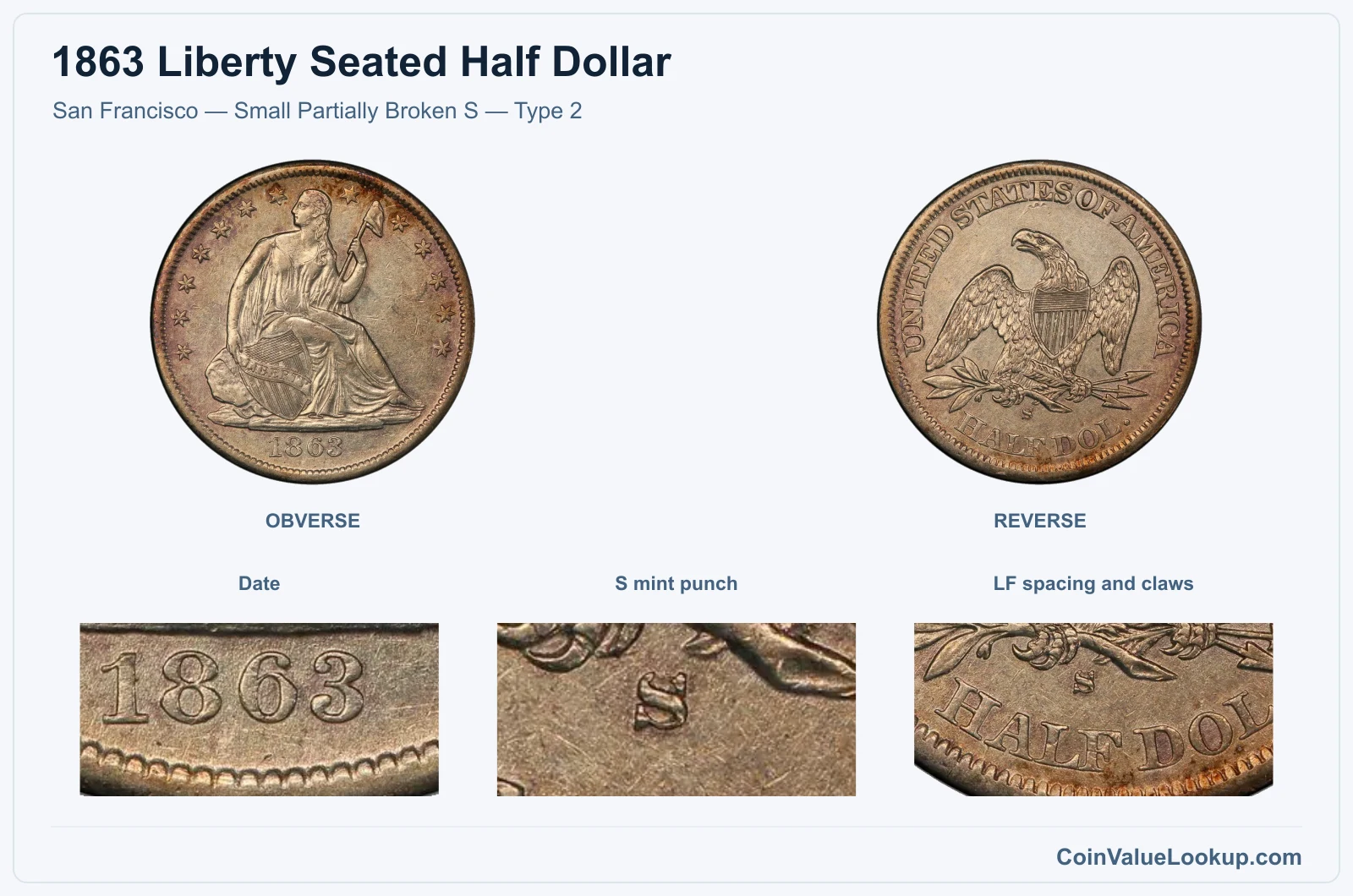
The Small Partially Broken S variety shows an S mintmark where part of the upper curve is incomplete or fading. This is a characteristic of the punch itself, not post-strike damage or heavy circulation wear.
Aggregate San Francisco guide estimates are about $91 in G4, $331 in VF20, and $739 in AU50. No separate subtype premium has been adopted for this particular punch style.
To identify it correctly, compare your coin's S to a scale-matched image of the Perfect S and the fully Broken S from the same year. The break should be consistent and match the cataloged position, not random scratches.
Ordinary-issue reference: Ordinary-issue reference only: The table below shows prices for the 1863-S Liberty Seated Half Dollar (regular strike). It does not represent the value of the specific San Francisco — Small Partially Broken S — Type 2 variety or its variety premium. Year, mint, metal and strike type are matched; the specific variety is not priced by this table.
Range Grade
Price Auction Records Appraisal PO PO 1
—
Coin Identifier FR FR 2
—
Coin Identifier AG AG 3
—
Coin Identifier G G 4
—
Coin Identifier
G 6
—
Coin Identifier VG VG 8
Coin Identifier
VG 10
Coin Identifier F F 12
—
Coin Identifier
F 15
—
Coin Identifier VF VF 20
Coin Identifier
VF 25
Coin Identifier
VF 30
Coin Identifier
VF 35
Coin Identifier XF XF 40
Coin Identifier
XF 45
Coin Identifier AU AU 50
Coin Identifier
AU 53
Coin Identifier
AU 55
Coin Identifier
AU 58
Coin Identifier MS MS 60
—
Coin Identifier
MS 61
Coin Identifier
MS 62
Coin Identifier
MS 63
Coin Identifier
MS 64
Coin Identifier
MS 65
Coin Identifier
MS 66
—
—
—
MS 67
—
—
—
MS 68
—
—
—
MS 69
—
—
—
MS 70
—
—
—
1863 Liberty Seated Half Dollar — San Francisco — Small Broken S — Type 2
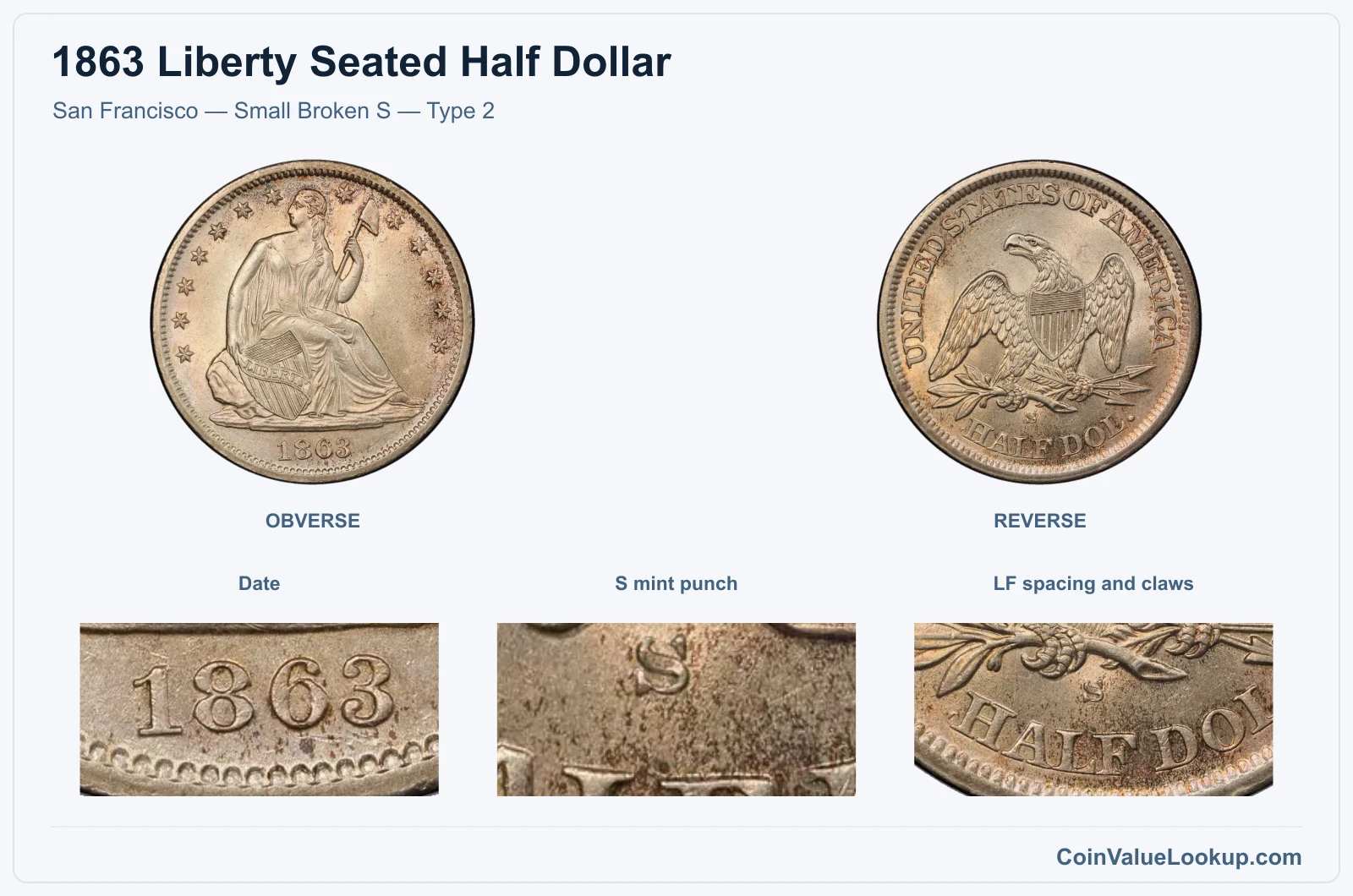
On this variety the S mintmark is more visibly broken — the upper portion of the letter is largely or entirely absent in the punch. It is a cataloged mintmark irregularity, distinct from a coin where wear simply flattened the letter over time.
Aggregate San Francisco guide estimates sit around $91 in G4, $331 in VF20, and $739 in AU50. Again, no separate subtype premium is adopted here.
The key diagnostic is that the break appears in the same location on every example struck from this punch, whereas wear tends to flatten the entire mintmark more evenly. Do not confuse this with a removed or tooled mintmark.
Ordinary-issue reference: Ordinary-issue reference only: The table below shows prices for the 1863-S Liberty Seated Half Dollar (regular strike). It does not represent the value of the specific San Francisco — Small Broken S — Type 2 variety or its variety premium. Year, mint, metal and strike type are matched; the specific variety is not priced by this table.
Range Grade
Price Auction Records Appraisal PO PO 1
—
Coin Identifier FR FR 2
—
Coin Identifier AG AG 3
—
Coin Identifier G G 4
—
Coin Identifier
G 6
—
Coin Identifier VG VG 8
Coin Identifier
VG 10
Coin Identifier F F 12
—
Coin Identifier
F 15
—
Coin Identifier VF VF 20
Coin Identifier
VF 25
Coin Identifier
VF 30
Coin Identifier
VF 35
Coin Identifier XF XF 40
Coin Identifier
XF 45
Coin Identifier AU AU 50
Coin Identifier
AU 53
Coin Identifier
AU 55
Coin Identifier
AU 58
Coin Identifier MS MS 60
—
Coin Identifier
MS 61
Coin Identifier
MS 62
Coin Identifier
MS 63
Coin Identifier
MS 64
Coin Identifier
MS 65
Coin Identifier
MS 66
—
—
—
MS 67
—
—
—
MS 68
—
—
—
MS 69
—
—
—
MS 70
—
—
—
1863 Liberty Seated Half Dollar — Philadelphia Proof
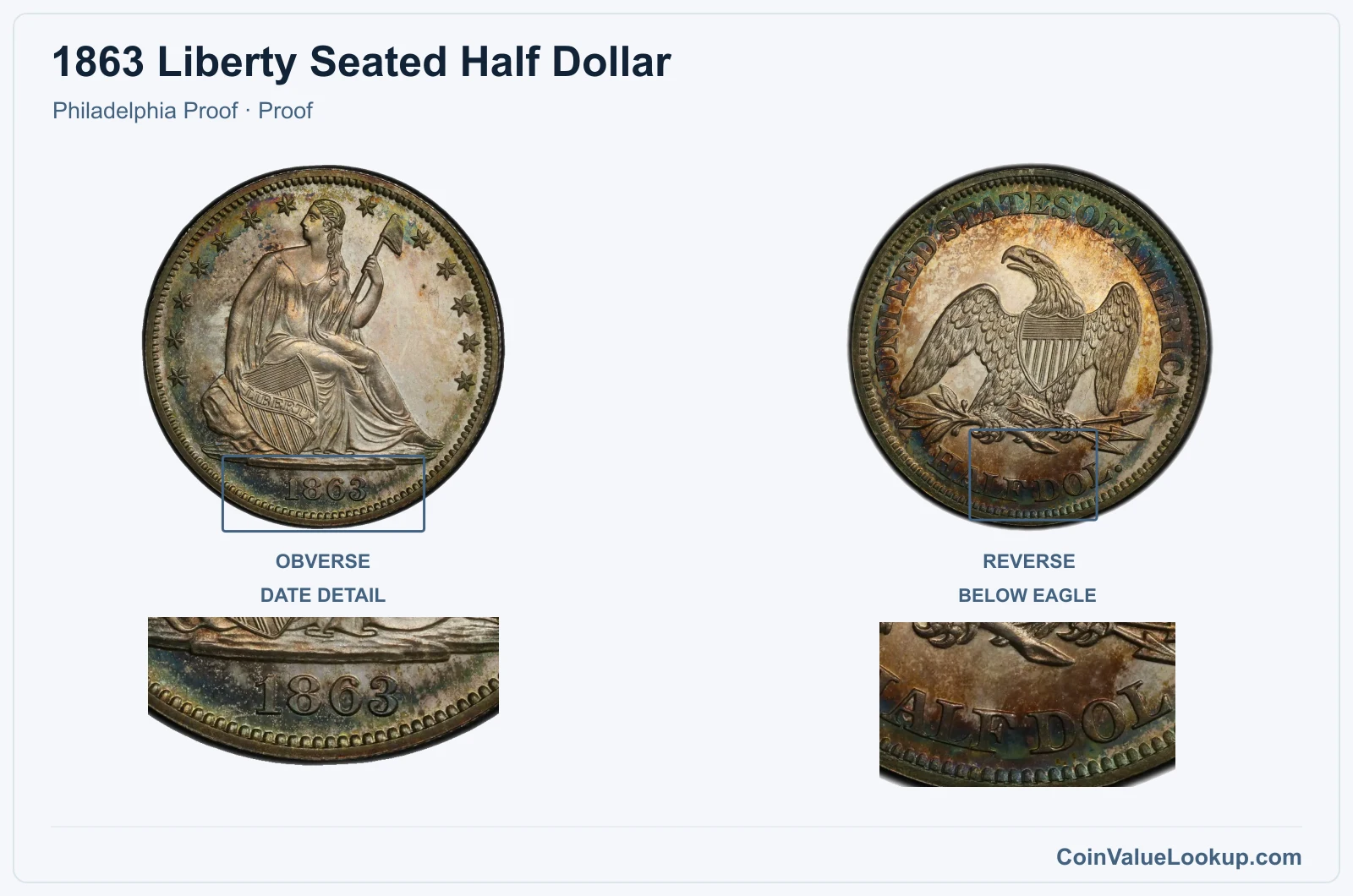
Philadelphia Proofs from 1863 were struck for collectors using specially prepared dies. Genuine Proofs show deeply mirrored fields, sharp squared rims, and full detail that no amount of careful circulation-strike preservation can replicate.
Do not assume your coin is a Proof just because it is shiny — old cleanings can mimic reflectivity.
A PR63 example carries a guide estimate of approximately $2,005 according to USA Coin Book. Cameo and Deep Cameo designations exist within the Proof branch for coins with frosted devices contrasting against mirrored fields.
These are still Proofs — Proof describes how the coin was made, not a grade above Mint State. Professional certification is the standard way to confirm a genuine Proof.
Range Grade
Price Auction Records Appraisal PR PR 1
—
Coin Identifier
PR 2
—
Coin Identifier
PR 3
—
Coin Identifier
PR 4
—
Coin Identifier
PR 6
—
Coin Identifier
PR 8
—
Coin Identifier
PR 10
—
Coin Identifier
PR 12
—
Coin Identifier
PR 15
—
Coin Identifier
PR 20
—
Coin Identifier
PR 25
—
Coin Identifier
PR 30
—
Coin Identifier
PR 35
—
Coin Identifier
PR 40
—
Coin Identifier
PR 45
—
Coin Identifier
PR 50
—
Coin Identifier
PR 53
—
Coin Identifier
PR 55
—
Coin Identifier
PR 58
Coin Identifier
PR 60
Coin Identifier
PR 61
Coin Identifier
PR 62
Coin Identifier
PR 63
Coin Identifier
PR 64
Coin Identifier
PR 65
Coin Identifier
PR 66
Coin Identifier
PR 67
Coin Identifier
PR 68
—
—
—
PR 69
—
—
—
PR 70
—
—
—
1863 Liberty Seated Half Dollar Error List
1. 1863 Liberty Seated Half Dollar — Clashed Dies
Clashed dies occur when the obverse and reverse dies strike each other without a planchet between them, leaving faint mirror-image impressions of the opposite design on each die. On 1863-S half dollars, clash traces have been documented around Liberty's lap and forearm area on the obverse, corresponding to reverse design elements transferred during the impact.
To spot this, look for raised lines or partial outlines that match elements from the other side of the coin. Scratches, random contact marks, and brockage impressions can mimic a clash, so compare what you see against a same-year illustrated example showing the documented positions.
The value of a clashed-die coin depends on the visibility of the clash, the coin's overall condition, and collector demand for that specific die pair.
2. 1863 Liberty Seated Half Dollar — Broken Mintmark Punch / Incomplete S
Some 1863-S half dollars show an S mintmark where the upper portion is partly or fully absent due to an irregularity in the punch itself. This is a cataloged characteristic — the letter was incomplete before it ever touched a planchet, so every coin struck from that punch shows the same break in the same spot.
Do not confuse this with a missing mintmark caused by heavy wear, which tends to flatten the entire letter gradually and evenly. Tooling marks or scratches near the mintmark area can also create a false impression of a break.
Use a loupe and compare your coin to a correctly dated reference photograph showing the expected break location. The value depends on the coin's condition and the visibility of the feature; no specific numerical premium has been adopted for this category.