1941 Wheat Penny Coin Value: How Much Is It Worth?
A 1941 Wheat penny in circulated condition starts around $0.18 at Good-4, while uncirculated examples reach roughly $6.25 at MS63, depending on the mint. Those guide figures cover the standard Philadelphia, Denver and San Francisco business strikes.
Proofs, doubled die varieties and mint errors are priced separately. Original surfaces, color and wear all shape what a given coin actually brings.
Fast Way to Identify Your 1941 Wheat Penny
Snap a clear photo of the front and back of your 1941 penny and upload both images. The identifier can provide a preliminary identification of your coin's mint branch and general condition based on those photos.
It is not a substitute for professional authentication or certified grading, but it gives you a solid starting point for further research.
1941 Wheat Penny Value
Upload both sides of your 1941 Wheat Penny.
Front Obverse
Upload photo
Back Reverse
Upload photo
Which 1941 Wheat Penny Versions Are Worth Money?
- The 1941-D and 1941-S each guide around $6.25 at MS63, the highest listed circulated-to-low-uncirculated anchors among the regular strikes.
- A 1941 Philadelphia proof in PR63 guides at about $50, well above any circulation issue at comparable preservation.
- The 1941 Doubled Die Obverse is a recognized variety whose value depends on authentication, severity and condition rather than a fixed guide range.
- Coins with strong original surfaces and visible, authenticated errors such as off-center strikes or repunched mintmarks may carry premiums that require individual assessment.
Step 1: Identify Your 1941 Wheat Penny Mint Mark and Version
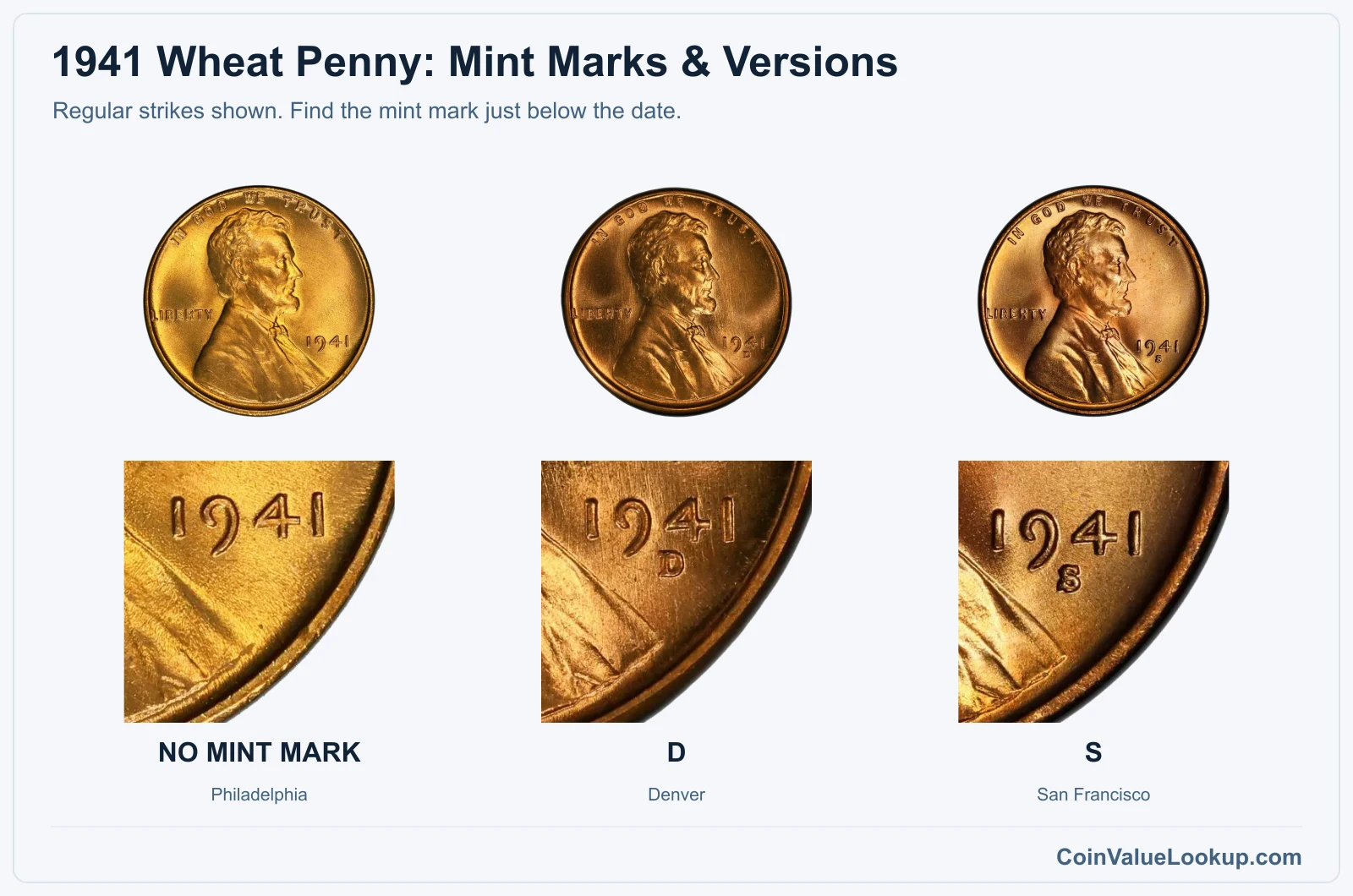
Start by looking below the date on the obverse. No letter means Philadelphia.
A small "D" means Denver, and an "S" means San Francisco. All three mints struck circulation cents this year, and Philadelphia also produced brilliant proof coins for collectors.
Every 1941 cent uses the same Lincoln portrait obverse and wheat-ear reverse design. The composition is 95% copper with 5% tin and zinc, weighing about 3.11 grams with a plain edge.
If your coin is noticeably lighter or has a reeded edge, it is not a standard Wheat cent.
Do not confuse a well-preserved circulation strike with a proof. Proofs were intentionally manufactured with mirrored fields using specially prepared dies and planchets.
A shiny coin you polished in your kitchen is still a business strike, just a damaged one. Color alone, whether red, brown or red-brown, does not determine whether a coin is proof or business strike, nor does it by itself establish a grade.
Step 2: Check Your 1941 Wheat Penny Grade
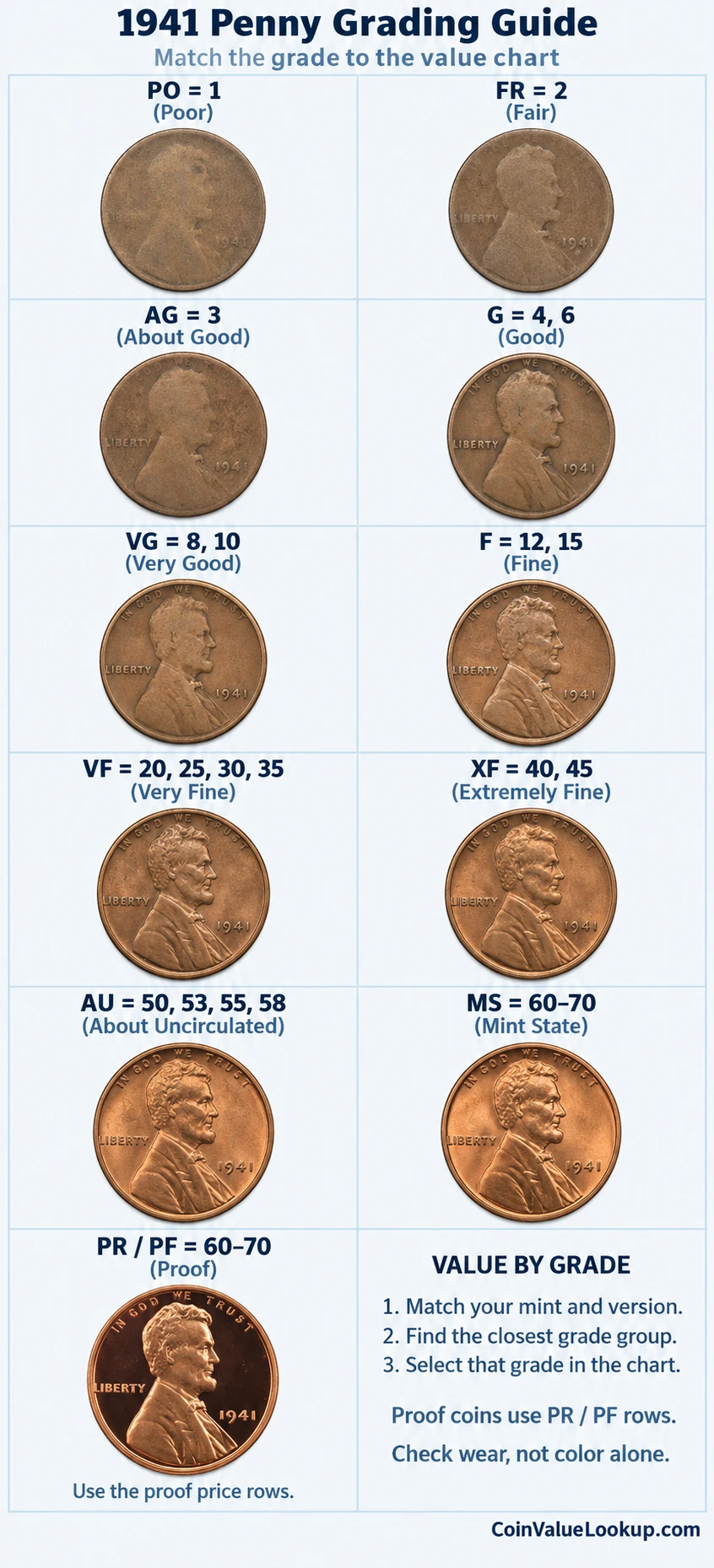
Focus on Lincoln's cheekbone, jawline and the fine hair strands above his ear. These are the highest points and the first places wear appears.
On the reverse, check the individual wheat grains and the parallel lines between the stalks.
A coin grading Good-4 will have a very flat portrait with the outline still visible but most hair detail gone. By contrast, an MS63 coin retains full original luster with only minor contact marks allowed.
Weak strikes exist on 1941 cents, especially from high-volume runs. Soft detail from a mushy strike is not the same as wear from circulation, so compare your coin to the reference image carefully.
Look at whether luster is intact in the flat areas; if it is, the coin may be weakly struck rather than worn.
Corrosion, cleaning, spots and scratches are separate value factors. A cleaned coin that looks shiny is not the same as an original uncirculated coin, and buyers can tell the difference quickly.
Step 3: Check 1941 Wheat Penny Value by Mint and Version
1941 Wheat Penny
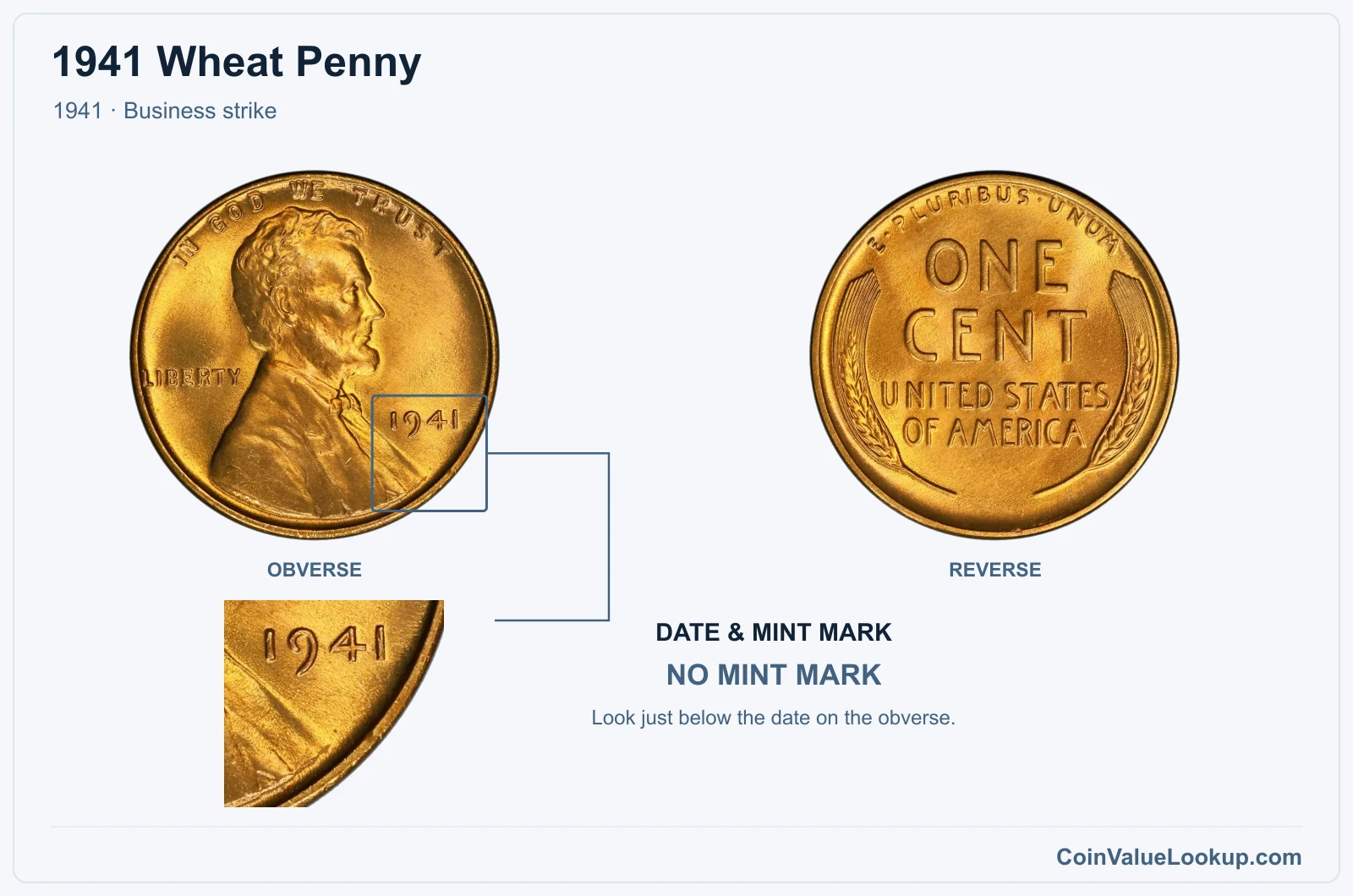
The 1941 Philadelphia cent carries no mintmark below the date. It is the most common branch for this year, and circulated examples are plentiful.
A guide estimate places it around $0.18 in Good-4 and roughly $3.62 in MS63. Those figures assume original, unspecified-color surfaces; certified red examples at higher grades trade differently.
Check for doubling on the date and motto area, because the 1941 DDO variety also comes from Philadelphia.
| Range | Grade | Price | Auction Records | Appraisal |
|---|---|---|---|---|
| PO | PO 1 | — | Coin Identifier | |
| FR | FR 2 | — | Coin Identifier | |
| AG | AG 3 | — | Coin Identifier | |
| G | G 4 | — | Coin Identifier | |
| G 6 | — | Coin Identifier | ||
| VG | VG 8 | — | Coin Identifier | |
| VG 10 | — | Coin Identifier | ||
| F | F 12 | — | Coin Identifier | |
| F 15 | — | Coin Identifier | ||
| VF | VF 20 | — | Coin Identifier | |
| VF 25 | — | Coin Identifier | ||
| VF 30 | — | Coin Identifier | ||
| VF 35 | — | Coin Identifier | ||
| XF | XF 40 | — | Coin Identifier | |
| XF 45 | — | Coin Identifier | ||
| AU | AU 50 | — | Coin Identifier | |
| AU 53 | — | Coin Identifier | ||
| AU 55 | — | Coin Identifier | ||
| AU 58 | — | Coin Identifier | ||
| MS | MS 60 | — | Coin Identifier | |
| MS 61 | — | Coin Identifier | ||
| MS 62 | — | Coin Identifier | ||
| MS 63 | — | Coin Identifier | ||
| MS 64 | — | Coin Identifier | ||
| MS 65 | Coin Identifier | |||
| MS 66 | Coin Identifier | |||
| MS 67 | Coin Identifier | |||
| MS 68 | Coin Identifier | |||
| MS 69 | — | — | — | |
| MS 70 | — | — | — |
1941 Wheat Penny — DDO
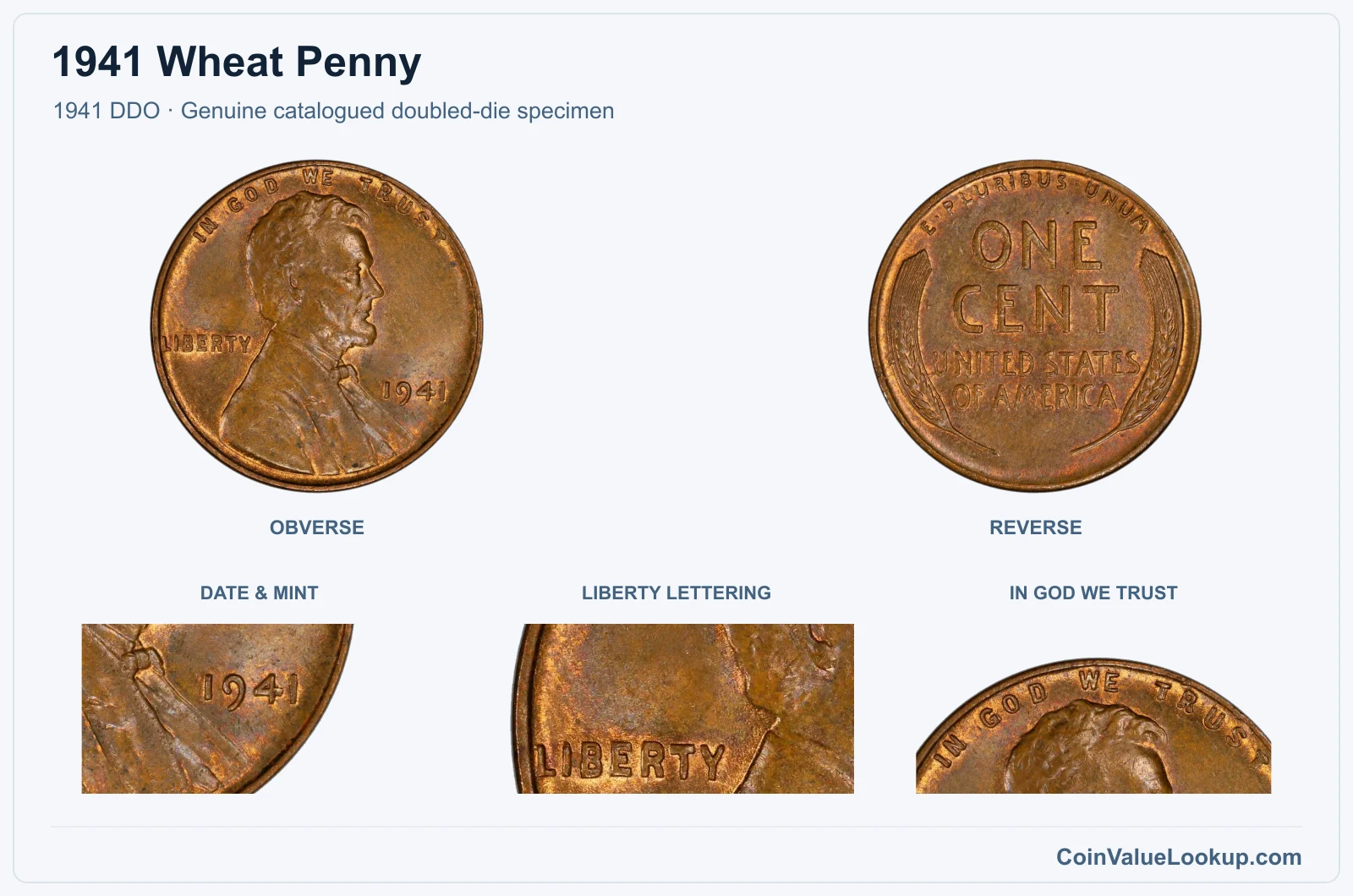
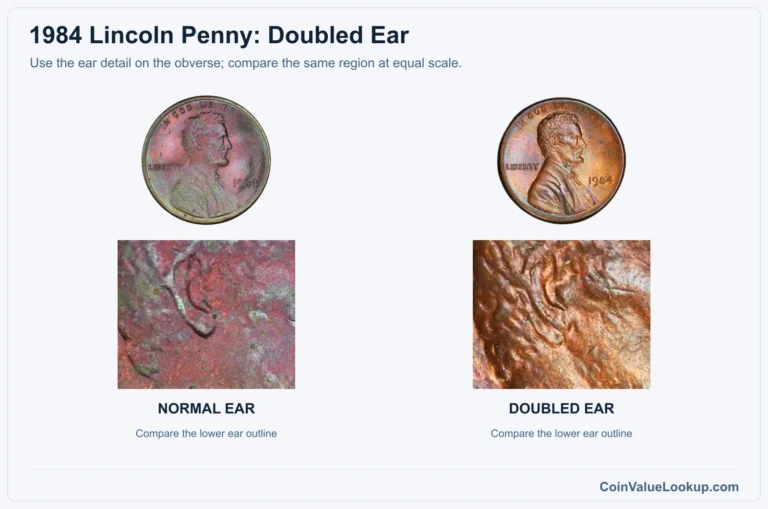
The 1941 Doubled Die Obverse is a Philadelphia-struck variety showing visible doubling on obverse design elements such as the date or motto lettering. To spot it, compare the inscriptions on your coin to a normal 1941 cent under good lighting.
Genuine hub doubling produces consistent separation or notching on affected letters, not the flat shelf look of machine doubling.
No fixed guide price is adopted for this variety. Value depends on the specific doubled die attribution, how strong the doubling is, the coin's grade and whether it has been authenticated by a third-party grading service.
If you suspect you have one, professional authentication is the practical next step.
| Range | Grade | Price | Auction Records | Appraisal |
|---|---|---|---|---|
| PO | PO 1 | — | Coin Identifier | |
| FR | FR 2 | — | Coin Identifier | |
| AG | AG 3 | — | Coin Identifier | |
| G | G 4 | — | Coin Identifier | |
| G 6 | — | Coin Identifier | ||
| VG | VG 8 | — | Coin Identifier | |
| VG 10 | — | Coin Identifier | ||
| F | F 12 | Coin Identifier | ||
| F 15 | — | Coin Identifier | ||
| VF | VF 20 | — | Coin Identifier | |
| VF 25 | — | Coin Identifier | ||
| VF 30 | Coin Identifier | |||
| VF 35 | Coin Identifier | |||
| XF | XF 40 | Coin Identifier | ||
| XF 45 | Coin Identifier | |||
| AU | AU 50 | Coin Identifier | ||
| AU 53 | Coin Identifier | |||
| AU 55 | — | Coin Identifier | ||
| AU 58 | — | Coin Identifier | ||
| MS | MS 60 | — | Coin Identifier | |
| MS 61 | — | Coin Identifier | ||
| MS 62 | Coin Identifier | |||
| MS 63 | Coin Identifier | |||
| MS 64 | — | Coin Identifier | ||
| MS 65 | — | Coin Identifier | ||
| MS 66 | — | Coin Identifier | ||
| MS 67 | — | — | — | |
| MS 68 | — | — | — | |
| MS 69 | — | — | — | |
| MS 70 | — | — | — |
1941 Wheat Penny — D
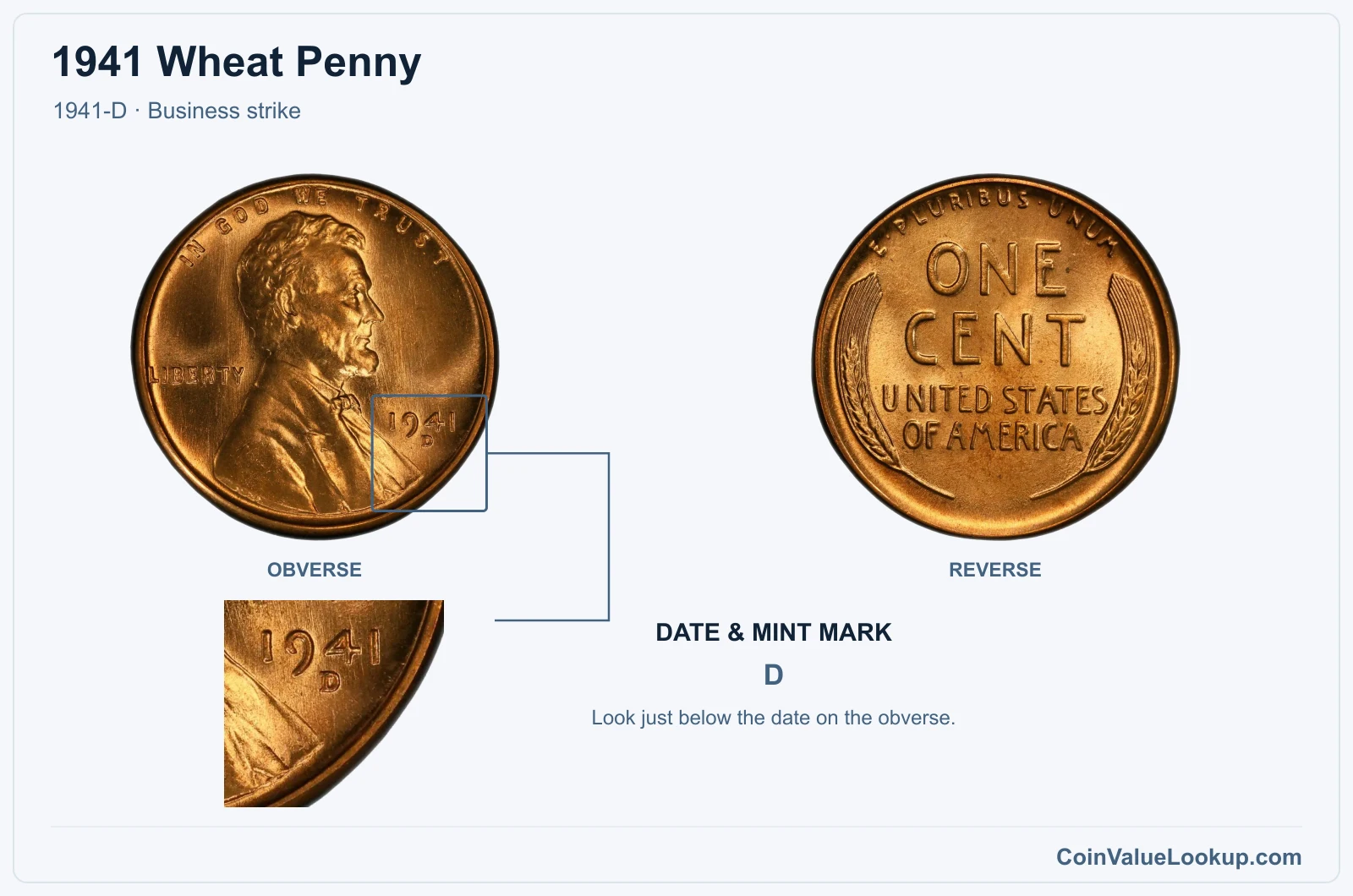
Look for a small "D" mintmark below the date. The 1941-D is the Denver issue and saw heavy production.
Guide estimates run from about $0.18 in Good-4 up to approximately $6.25 at MS63, making it slightly higher than the Philadelphia branch at the MS63 level. As always, those are guide figures for original surfaces with unspecified color.
Check the mintmark closely for any signs of repunching, since repunched mintmark varieties exist on Denver cents of this era.
Coin Value Lookup is a handy place to look up guides for other dates and mints in the Wheat penny series while you are sorting through a pile.
| Range | Grade | Price | Auction Records | Appraisal |
|---|---|---|---|---|
| PO | PO 1 | — | Coin Identifier | |
| FR | FR 2 | — | Coin Identifier | |
| AG | AG 3 | — | Coin Identifier | |
| G | G 4 | — | Coin Identifier | |
| G 6 | — | Coin Identifier | ||
| VG | VG 8 | — | Coin Identifier | |
| VG 10 | — | Coin Identifier | ||
| F | F 12 | — | Coin Identifier | |
| F 15 | — | Coin Identifier | ||
| VF | VF 20 | — | Coin Identifier | |
| VF 25 | — | Coin Identifier | ||
| VF 30 | — | Coin Identifier | ||
| VF 35 | — | Coin Identifier | ||
| XF | XF 40 | — | Coin Identifier | |
| XF 45 | — | Coin Identifier | ||
| AU | AU 50 | — | Coin Identifier | |
| AU 53 | — | Coin Identifier | ||
| AU 55 | — | Coin Identifier | ||
| AU 58 | — | Coin Identifier | ||
| MS | MS 60 | — | Coin Identifier | |
| MS 61 | — | Coin Identifier | ||
| MS 62 | — | Coin Identifier | ||
| MS 63 | — | Coin Identifier | ||
| MS 64 | Coin Identifier | |||
| MS 65 | Coin Identifier | |||
| MS 66 | Coin Identifier | |||
| MS 67 | Coin Identifier | |||
| MS 68 | Coin Identifier | |||
| MS 69 | — | — | — | |
| MS 70 | — | — | — |
1941 Wheat Penny — S
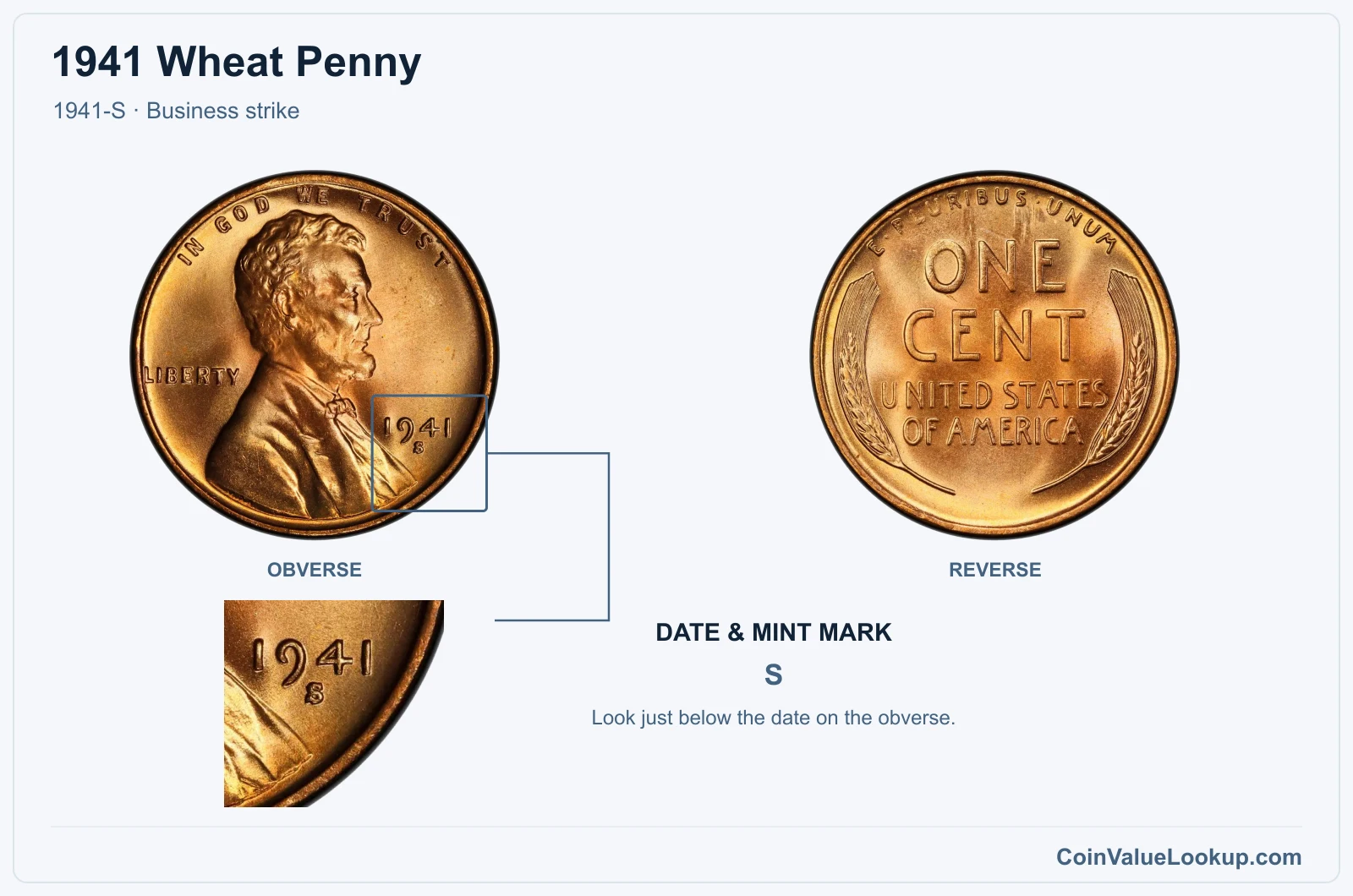
The 1941-S carries a small "S" mintmark below the date, indicating San Francisco production. Guide values sit at roughly $0.18 in Good-4 and about $6.25 at MS63, matching the Denver branch at those anchor grades.
San Francisco cents from this period can sometimes show softer strikes, so examine luster carefully before assuming wear. Also inspect the mintmark for any trace of repunching, which would make it a separate collectible variety.
| Range | Grade | Price | Auction Records | Appraisal |
|---|---|---|---|---|
| PO | PO 1 | — | Coin Identifier | |
| FR | FR 2 | — | Coin Identifier | |
| AG | AG 3 | — | Coin Identifier | |
| G | G 4 | — | Coin Identifier | |
| G 6 | — | Coin Identifier | ||
| VG | VG 8 | — | Coin Identifier | |
| VG 10 | — | Coin Identifier | ||
| F | F 12 | — | Coin Identifier | |
| F 15 | — | Coin Identifier | ||
| VF | VF 20 | — | Coin Identifier | |
| VF 25 | — | Coin Identifier | ||
| VF 30 | — | Coin Identifier | ||
| VF 35 | — | Coin Identifier | ||
| XF | XF 40 | — | Coin Identifier | |
| XF 45 | — | Coin Identifier | ||
| AU | AU 50 | — | Coin Identifier | |
| AU 53 | — | Coin Identifier | ||
| AU 55 | — | Coin Identifier | ||
| AU 58 | — | Coin Identifier | ||
| MS | MS 60 | — | Coin Identifier | |
| MS 61 | — | Coin Identifier | ||
| MS 62 | — | Coin Identifier | ||
| MS 63 | — | Coin Identifier | ||
| MS 64 | Coin Identifier | |||
| MS 65 | Coin Identifier | |||
| MS 66 | Coin Identifier | |||
| MS 67 | Coin Identifier | |||
| MS 68 | Coin Identifier | |||
| MS 69 | — | — | — | |
| MS 70 | — | — | — |
1941 Wheat Penny — PR
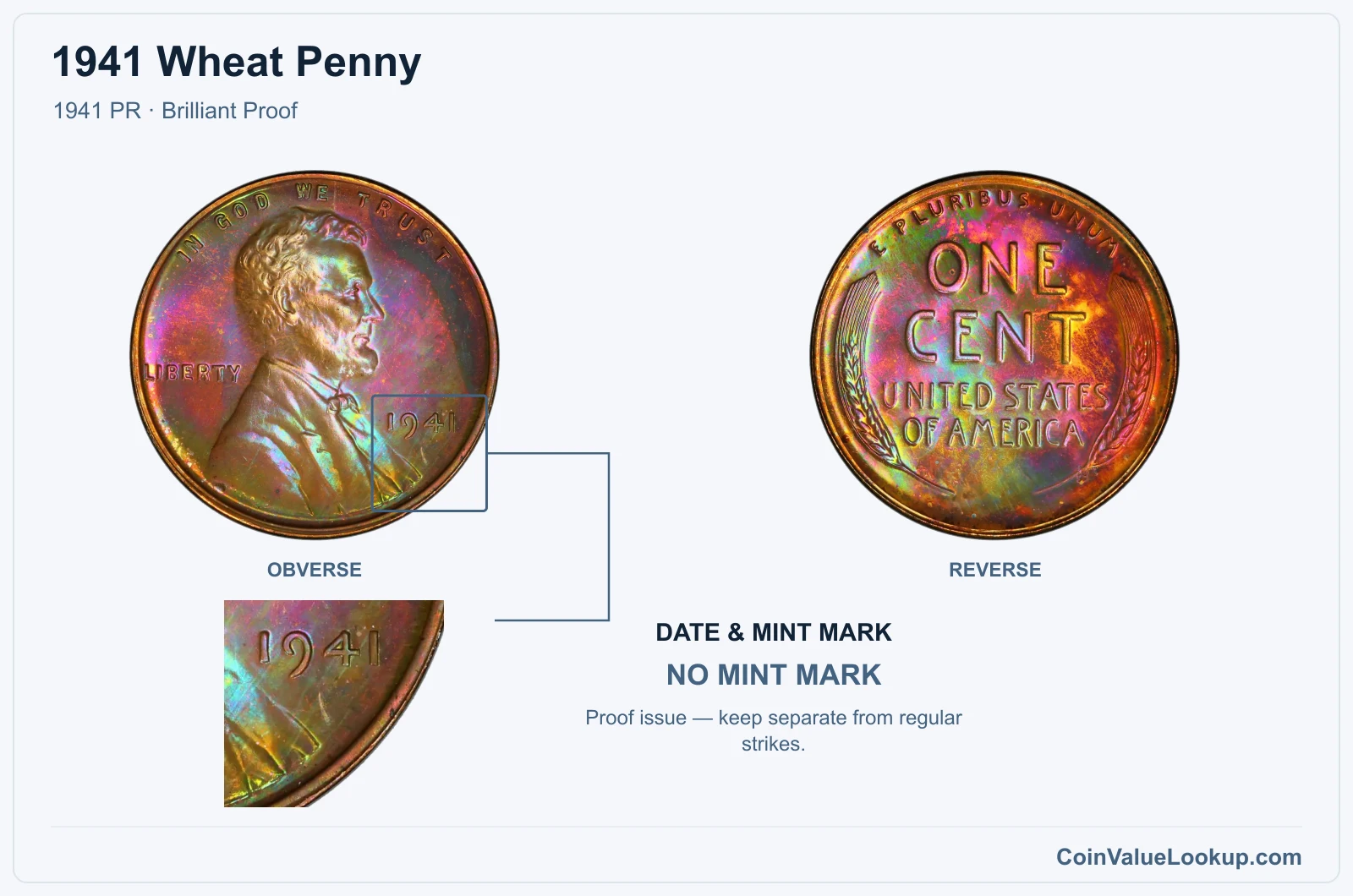
The 1941 proof cent was struck at Philadelphia with brilliant mirrored fields using specially prepared dies and planchets. It carries no mintmark, just like the regular Philadelphia business strike, so the mirror-like surface quality is the key identifier.
A polished circulation coin is not a proof, no matter how shiny it looks.
The guide estimate for a PR63 example is about $50. Cameo and deep cameo contrast designations refer to the degree of frost on the devices against the mirrored fields; they are contrast classifications, not errors.
Color and surface quality matter here as much as in any other series. If you believe you have one, tilt it under a point light source and look for perfectly reflective fields with sharp, squared-off rims.
| Range | Grade | Price | Auction Records | Appraisal |
|---|---|---|---|---|
| PR | PR 1 | — | Coin Identifier | |
| PR 2 | — | Coin Identifier | ||
| PR 3 | — | Coin Identifier | ||
| PR 4 | — | Coin Identifier | ||
| PR 6 | — | Coin Identifier | ||
| PR 8 | — | Coin Identifier | ||
| PR 10 | — | Coin Identifier | ||
| PR 12 | — | Coin Identifier | ||
| PR 15 | — | Coin Identifier | ||
| PR 20 | — | Coin Identifier | ||
| PR 25 | — | Coin Identifier | ||
| PR 30 | — | Coin Identifier | ||
| PR 35 | — | Coin Identifier | ||
| PR 40 | — | Coin Identifier | ||
| PR 45 | — | Coin Identifier | ||
| PR 50 | — | Coin Identifier | ||
| PR 53 | — | Coin Identifier | ||
| PR 55 | — | Coin Identifier | ||
| PR 58 | — | Coin Identifier | ||
| PR 60 | — | Coin Identifier | ||
| PR 61 | — | Coin Identifier | ||
| PR 62 | Coin Identifier | |||
| PR 63 | — | Coin Identifier | ||
| PR 64 | Coin Identifier | |||
| PR 65 | — | Coin Identifier | ||
| PR 66 | — | — | — | |
| PR 67 | — | — | — | |
| PR 68 | — | — | — | |
| PR 69 | — | — | — | |
| PR 70 | — | — | — |
1941 Wheat Penny Error List
1. 1941 Wheat Penny — Doubled Die Obverse
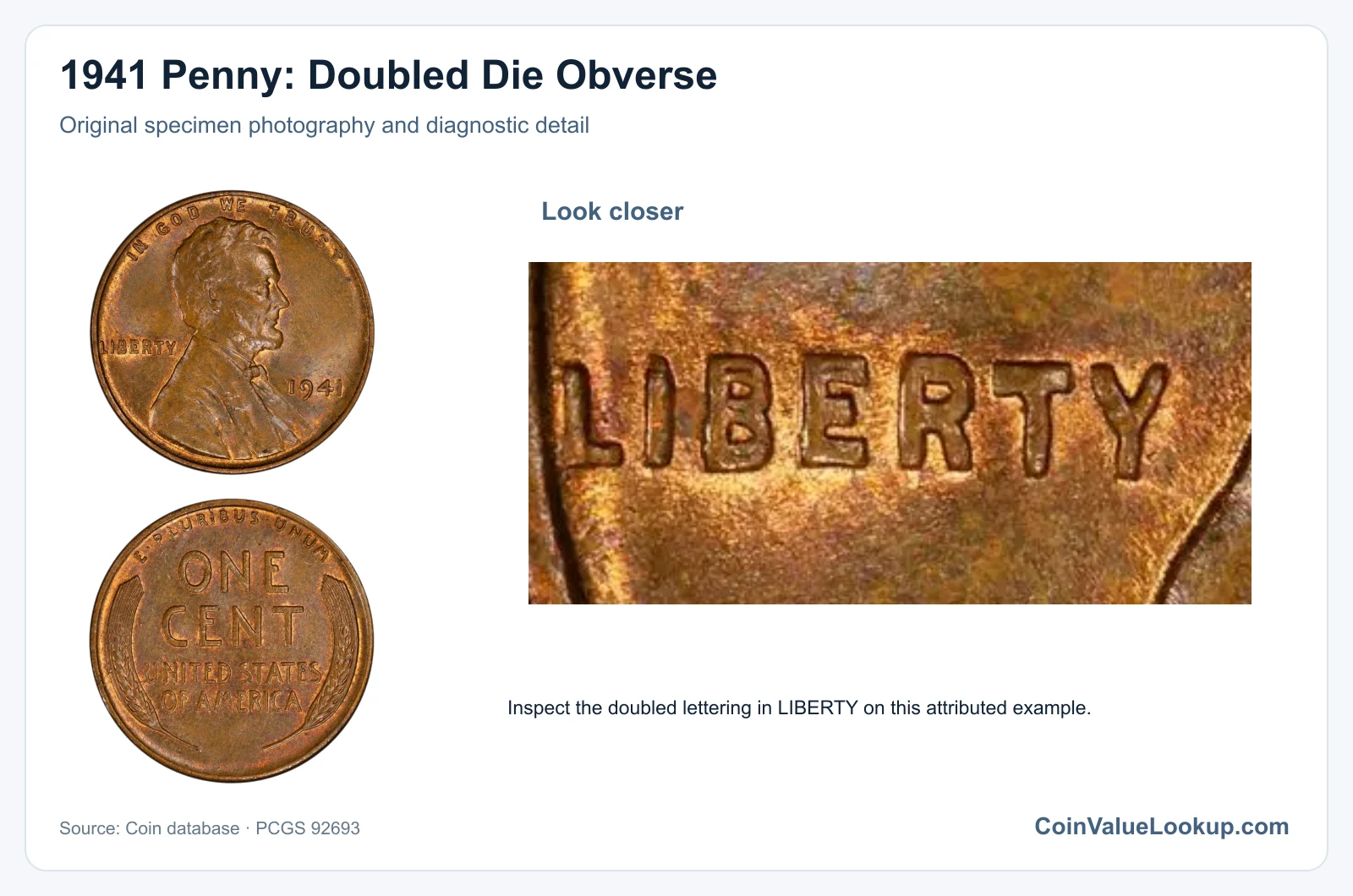
A Doubled Die Obverse on a 1941 Wheat cent shows consistent doubling on obverse lettering or the date, caused by a misaligned hub impression during die production. Under magnification, look for separation or notching on letters in LIBERTY or IN GOD WE TRUST, comparing each character to a known normal example under the same lighting.
The main lookalike is machine doubling, which produces a flat, shelf-like distortion rather than the rounded, separated image of true hub doubling. Worn die impressions and reflections can also mimic doubling at first glance.
No fixed price range is adopted; value depends on authenticated identity, the strength of the doubling and the coin's overall condition.
2. 1941 Wheat Penny — Repunched Mintmark
A Repunched Mintmark occurs when the mintmark punch was applied more than once in slightly different positions, leaving traces of the earlier impression. This applies only to the Denver and San Francisco branches, since Philadelphia cents of this era have no mintmark to repunch.
Under magnification, look for a secondary outline, notch or extra serif near the D or S mintmark. Compare your coin's mintmark to a normal example at the same magnification.
Die chips, corrosion pitting and machine doubling around the mintmark area can all create false positives. No set price range is adopted for this variety; the value of a confirmed RPM depends on the specific attribution, its visibility and the coin's grade as determined through professional authentication.
3. 1941 Wheat Penny — Off-Center Strike
An off-center strike happens when the planchet is not seated properly between the dies, producing a coin with part of the design missing and a blank crescent along one edge. The more dramatic the offset and the more of the date that remains visible, the more collectible the coin tends to be.
Do not confuse an off-center strike with a straight-clipped planchet, which leaves a curved bite out of the edge, or with post-mint damage like a coin flattened unevenly after leaving the press. A genuine off-center error will show the design displaced uniformly relative to the blank.
No specific price range is adopted; each piece is assessed individually based on the percentage off-center, date visibility and overall condition.
4. 1941 Wheat Penny — BIE Die Break
A BIE die break appears as a small raised vertical line or blob between the letters B and E in LIBERTY on the obverse. It is caused by a crack or chip in the die surface that fills with metal during striking.
These are common on well-used Wheat cent dies and are collected as a distinct minor variety.
To confirm one, look for a raised feature that connects to or sits between B and E, appearing as a bump or thin bridge. Dirt lodged between letters, scratches, and bits of foreign material stuck to the surface can all look similar but will not show the same raised-metal character.
No standard price range is adopted; the value depends on the size and clarity of the break and the coin's grade.
5. 1941 Wheat Penny — Lamination / Split Planchet
A lamination error shows as peeling, flaking or separated layers in the planchet metal. On a 1941 cent, you might see a retained flap of copper lifting from the surface or a missing patch where metal has split away.
Photograph both the affected face and the edge of the coin, since the separation is often visible from the side.
This is different from surface scraping, corrosion pitting or deliberate damage. Genuine lamination follows the contour of the planchet and has a layered appearance rather than rough gouging.
No specific price range is adopted for this error. The value of a lamination depends on its size, location and whether the coin is otherwise in collectible condition, assessed on a coin-by-coin basis.
6. 1941 Wheat Penny — Die Crack / Die Chip
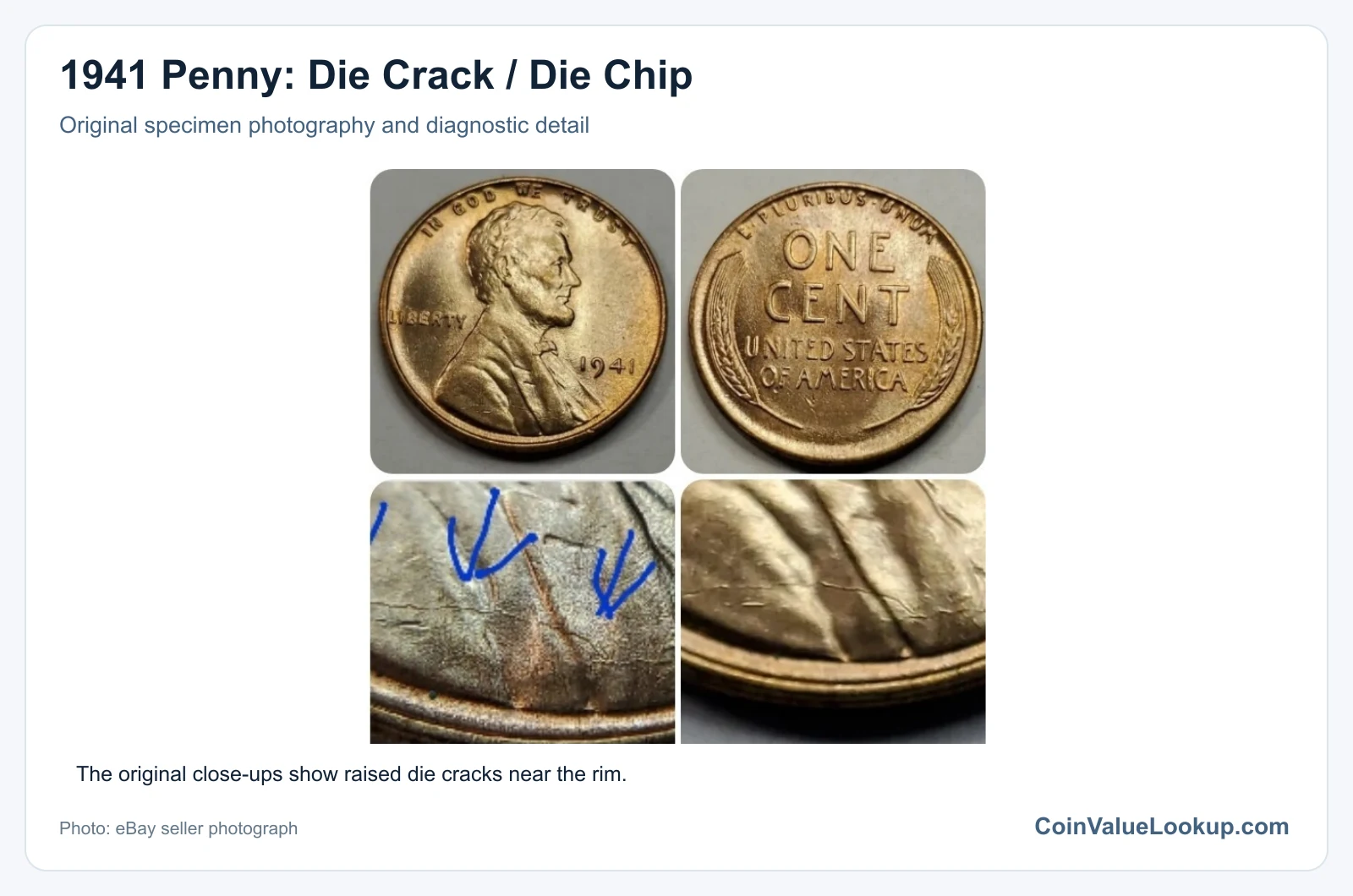
Die cracks show up as thin raised lines running across the coin's surface, while die chips appear as small raised blobs. Both result from fatigue fractures in the steel die.
A crack that reaches the rim and displaces a section of the design is called a cud, which is a more dramatic and typically more collectible form.
To identify a die crack, look for a raised line that follows no part of the intended design. Incuse scratches, which are pressed into the surface rather than raised above it, are post-mint damage and not die cracks.
Corrosion or foreign material on the surface can also mimic a chip. No fixed price range is adopted; the value depends on the size, location and visual impact of the break, along with the coin's overall condition.