1994 Lincoln Penny Coin Value: How Much Is It Worth?
Normal worn 1994 pennies are worth face value, maybe a hair more. A USA Coin Book guide estimate places the no-mintmark and D versions at about $0.36 in MS65 condition, while the S proof is listed around $11.00 in PR65.
The real action is in error coins and specific doubled-die varieties, so check your coin carefully before tossing it back in the jar.
Fast Way to Identify Your 1994 Lincoln Penny
Snap clear, well-lit photos of both the front and back of your 1994 penny and upload them here. Our identifier can give you a preliminary read on mintmark, finish, and any obvious variety markers.
It is not a substitute for professional authentication, but it is a solid first step toward figuring out what you have.
1994 Penny Value
Upload both sides of your 1994 Lincoln Penny.
Front Obverse
Upload photo
Back Reverse
Upload photo
Which 1994 Lincoln Penny Versions Are Worth Money?
- A 1994 no-mintmark doubled-die reverse with extra raised column relief between the final Memorial columns can carry a premium; value depends on authentication, condition, and the strength of the doubling.
- A 1994 no-mintmark cent struck on an unplated zinc blank sold for $99 in NGC MS65 at a Heritage auction in October 2018, illustrating that confirmed mint errors on this date attract collector interest.
Step 1: Identify Your 1994 Lincoln Penny Mint Mark and Version
Every 1994 Lincoln cent is copper-plated zinc, weighing about 2.50 grams with a plain edge. The copper color is only a thin plating layer over a zinc core, so do not assume a copper-colored cent is solid copper.
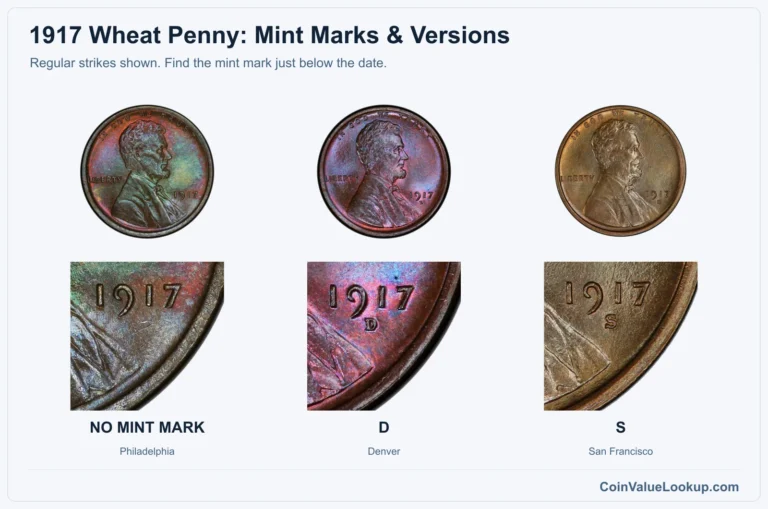
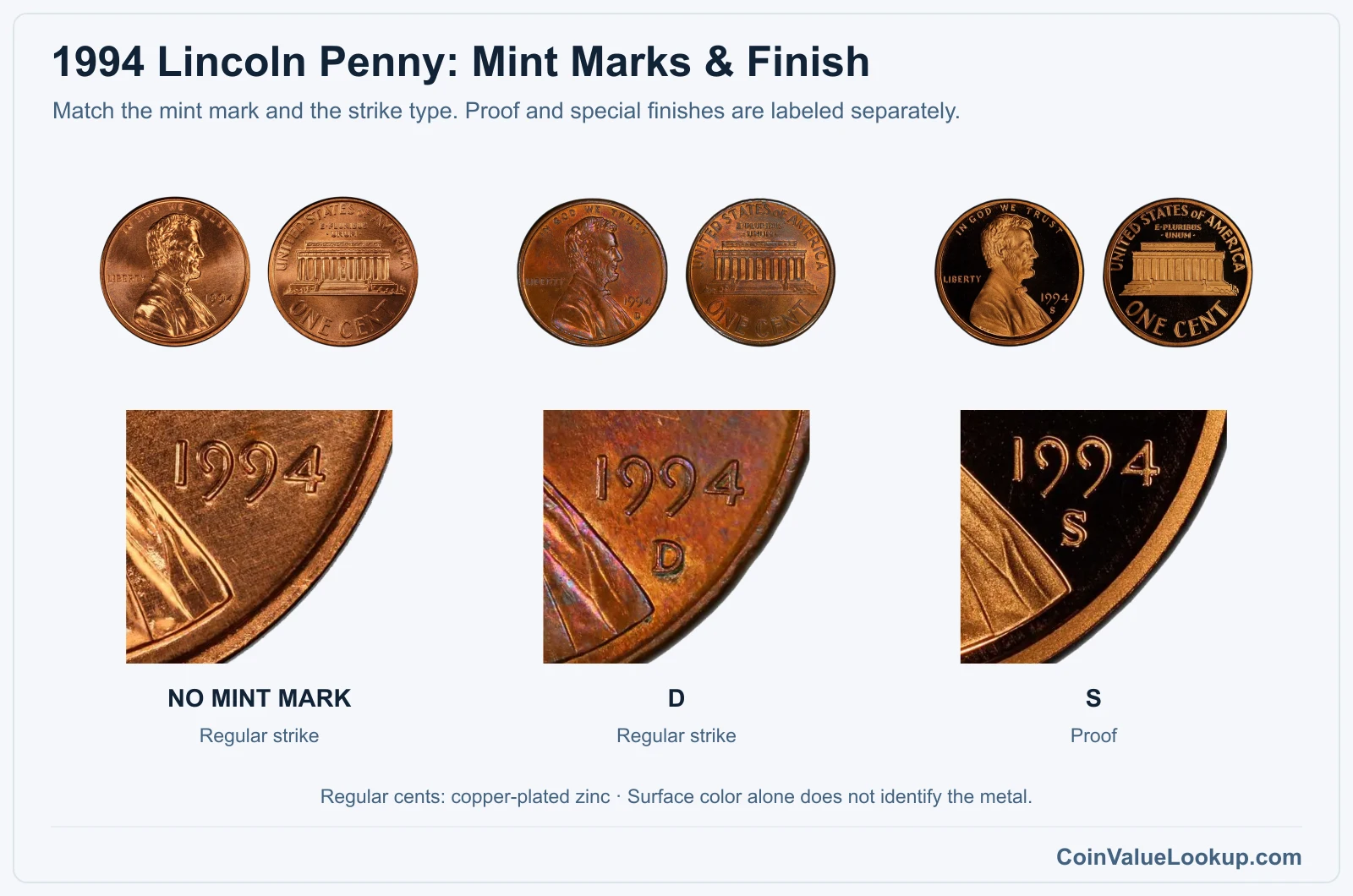
Three branches exist for this year. The Philadelphia issue has no mintmark, the Denver coin carries a small D below the date, and the San Francisco proof has an S in that same spot.
There was no normal circulation strike from San Francisco and no P mintmark on cents during this era.
When evaluating color designations like BN, RB, or RD, remember these describe the remaining copper luster, not a different alloy. Similarly, proof contrast labels such as CAM and DCAM describe the visual contrast between frosted devices and mirrored fields.
These are filters you apply on top of the numerical grade, not separate coin types.
Step 2: Check Your 1994 Lincoln Penny Grade
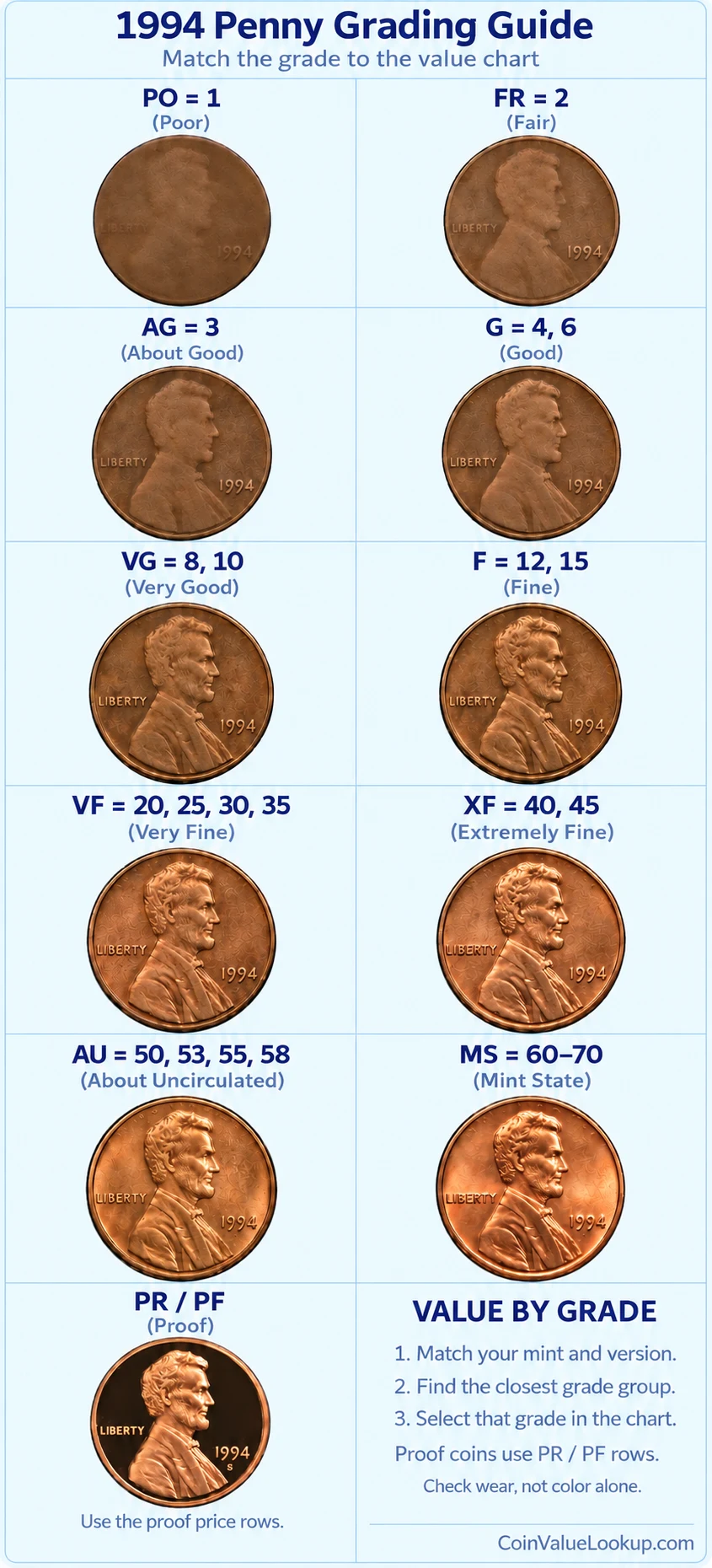
Start by examining Lincoln's cheekbone, jaw, and the fine hair detail above the ear. These are the first spots to lose definition on a circulated cent.
On the reverse, check the roof line and the tall columns of the Lincoln Memorial for any flattening.
Grade is driven by remaining luster, contact marks, and wear, not by how red the coin looks. A coin can be fully red but still show bag marks that hold it below gem grade.
Plating bubbles, splits, or exposed zinc patches are surface problems, not die varieties. They happen after the coin leaves the press and generally do not create collector premiums.
Compare your coin to the grading reference image to judge where it falls on the wear scale.
Step 3: Check 1994 Lincoln Penny Value by Mint and Version
1994 Lincoln Penny
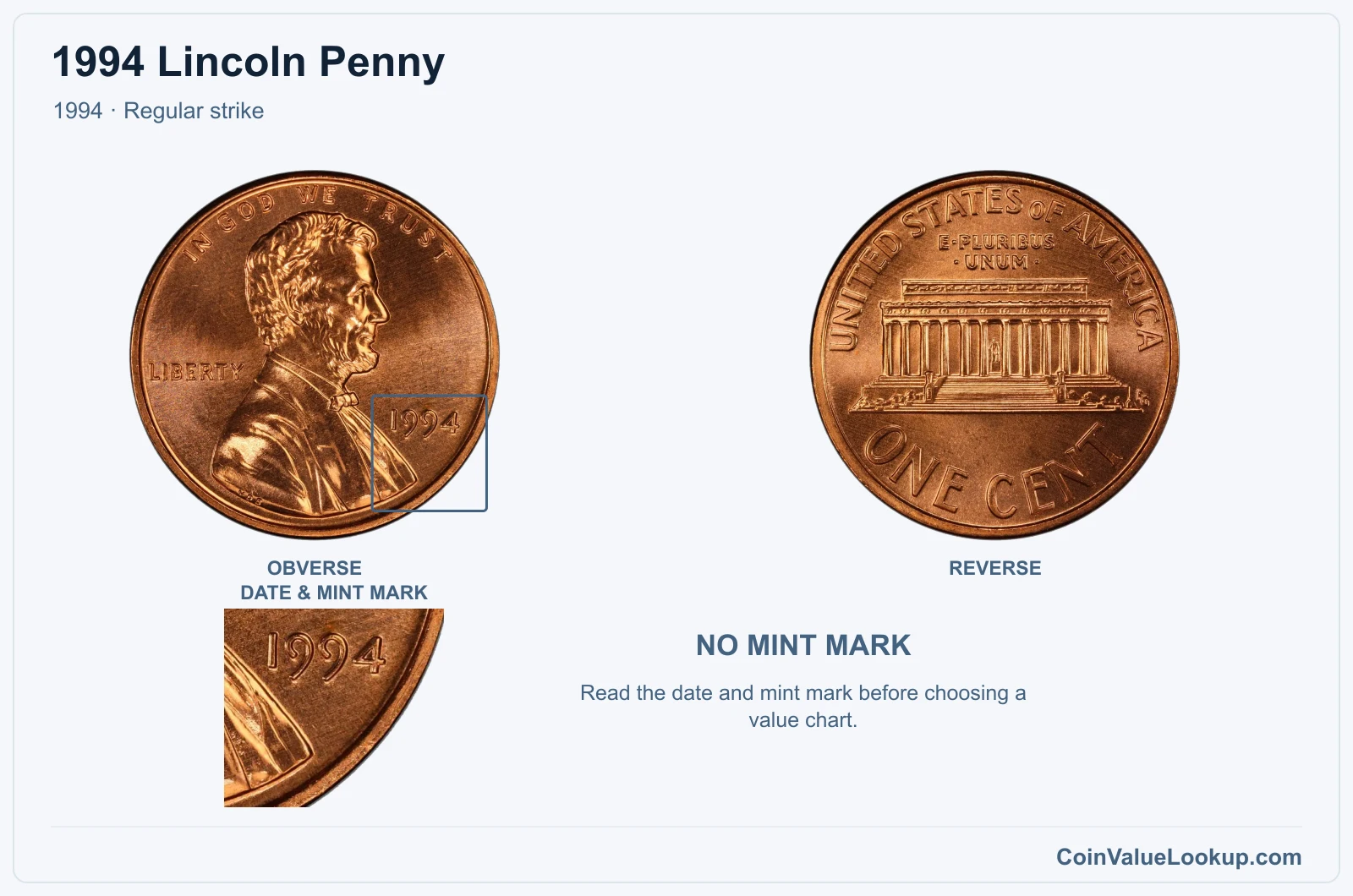
The 1994 Philadelphia cent has no mintmark below the date. It is a copper-plated zinc business strike weighing about 2.50 grams.
Millions were made, so circulated examples are worth one cent. A USA Coin Book guide estimate places this coin at roughly $0.36 in MS65, and even gem examples are common enough that they do not command large premiums.
Focus on surface quality, original luster, and whether the plating is intact. A sharp, problem-free coin with full red luster is the pick of the litter for this branch.
| Range | Grade | Price | Auction Records | Appraisal |
|---|---|---|---|---|
| PO | PO 1 | — | Coin Identifier | |
| FR | FR 2 | — | Coin Identifier | |
| AG | AG 3 | — | Coin Identifier | |
| G | G 4 | — | Coin Identifier | |
| G 6 | — | Coin Identifier | ||
| VG | VG 8 | — | Coin Identifier | |
| VG 10 | — | Coin Identifier | ||
| F | F 12 | — | Coin Identifier | |
| F 15 | — | Coin Identifier | ||
| VF | VF 20 | — | Coin Identifier | |
| VF 25 | — | Coin Identifier | ||
| VF 30 | — | Coin Identifier | ||
| VF 35 | — | Coin Identifier | ||
| XF | XF 40 | — | Coin Identifier | |
| XF 45 | — | Coin Identifier | ||
| AU | AU 50 | — | Coin Identifier | |
| AU 53 | — | Coin Identifier | ||
| AU 55 | — | Coin Identifier | ||
| AU 58 | — | Coin Identifier | ||
| MS | MS 60 | — | Coin Identifier | |
| MS 61 | — | Coin Identifier | ||
| MS 62 | — | Coin Identifier | ||
| MS 63 | — | Coin Identifier | ||
| MS 64 | — | Coin Identifier | ||
| MS 65 | Coin Identifier | |||
| MS 66 | Coin Identifier | |||
| MS 67 | Coin Identifier | |||
| MS 68 | Coin Identifier | |||
| MS 69 | Coin Identifier | |||
| MS 70 | — | — | — |
1994 Lincoln Penny — D
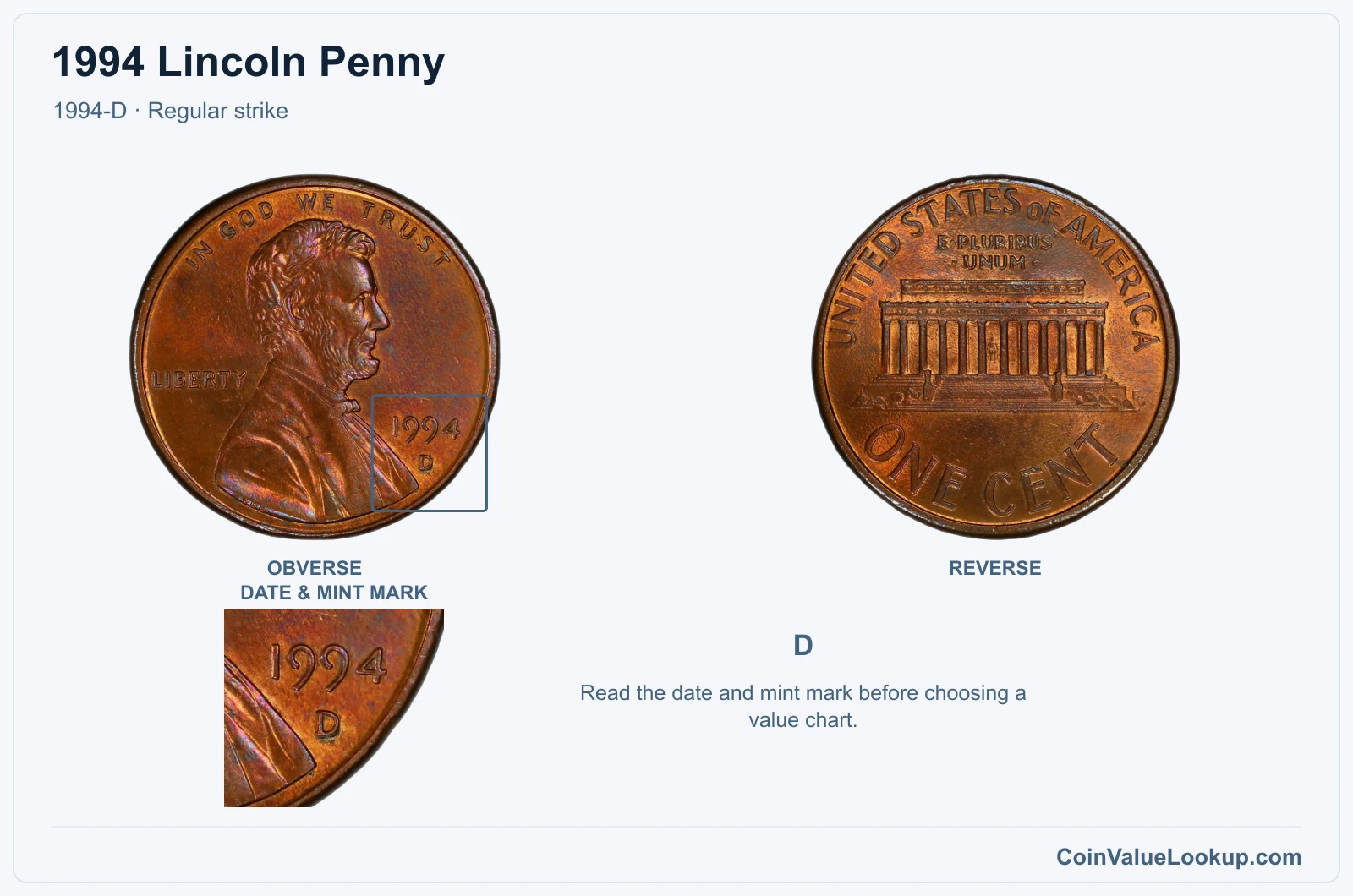
The 1994-D carries a small D mintmark below the date, struck at the Denver Mint. Same copper-plated zinc composition, same 2.50-gram weight.
Guide value sits at about $0.36 in MS65 per USA Coin Book, identical to its Philadelphia sibling. Worn examples are face value.
As with all modern zinc cents, watch for plating deterioration and environmental damage. A clean, fully lustrous specimen in original red is the goal for anyone building a set.
| Range | Grade | Price | Auction Records | Appraisal |
|---|---|---|---|---|
| PO | PO 1 | — | Coin Identifier | |
| FR | FR 2 | — | Coin Identifier | |
| AG | AG 3 | — | Coin Identifier | |
| G | G 4 | — | Coin Identifier | |
| G 6 | — | Coin Identifier | ||
| VG | VG 8 | — | Coin Identifier | |
| VG 10 | — | Coin Identifier | ||
| F | F 12 | — | Coin Identifier | |
| F 15 | — | Coin Identifier | ||
| VF | VF 20 | — | Coin Identifier | |
| VF 25 | — | Coin Identifier | ||
| VF 30 | — | Coin Identifier | ||
| VF 35 | — | Coin Identifier | ||
| XF | XF 40 | — | Coin Identifier | |
| XF 45 | — | Coin Identifier | ||
| AU | AU 50 | — | Coin Identifier | |
| AU 53 | — | Coin Identifier | ||
| AU 55 | — | Coin Identifier | ||
| AU 58 | — | Coin Identifier | ||
| MS | MS 60 | — | Coin Identifier | |
| MS 61 | — | Coin Identifier | ||
| MS 62 | — | Coin Identifier | ||
| MS 63 | — | Coin Identifier | ||
| MS 64 | — | Coin Identifier | ||
| MS 65 | — | Coin Identifier | ||
| MS 66 | — | — | — | |
| MS 67 | — | — | — | |
| MS 68 | — | — | — | |
| MS 69 | — | — | — | |
| MS 70 | — | — | — |
1994 Lincoln Penny — S PR
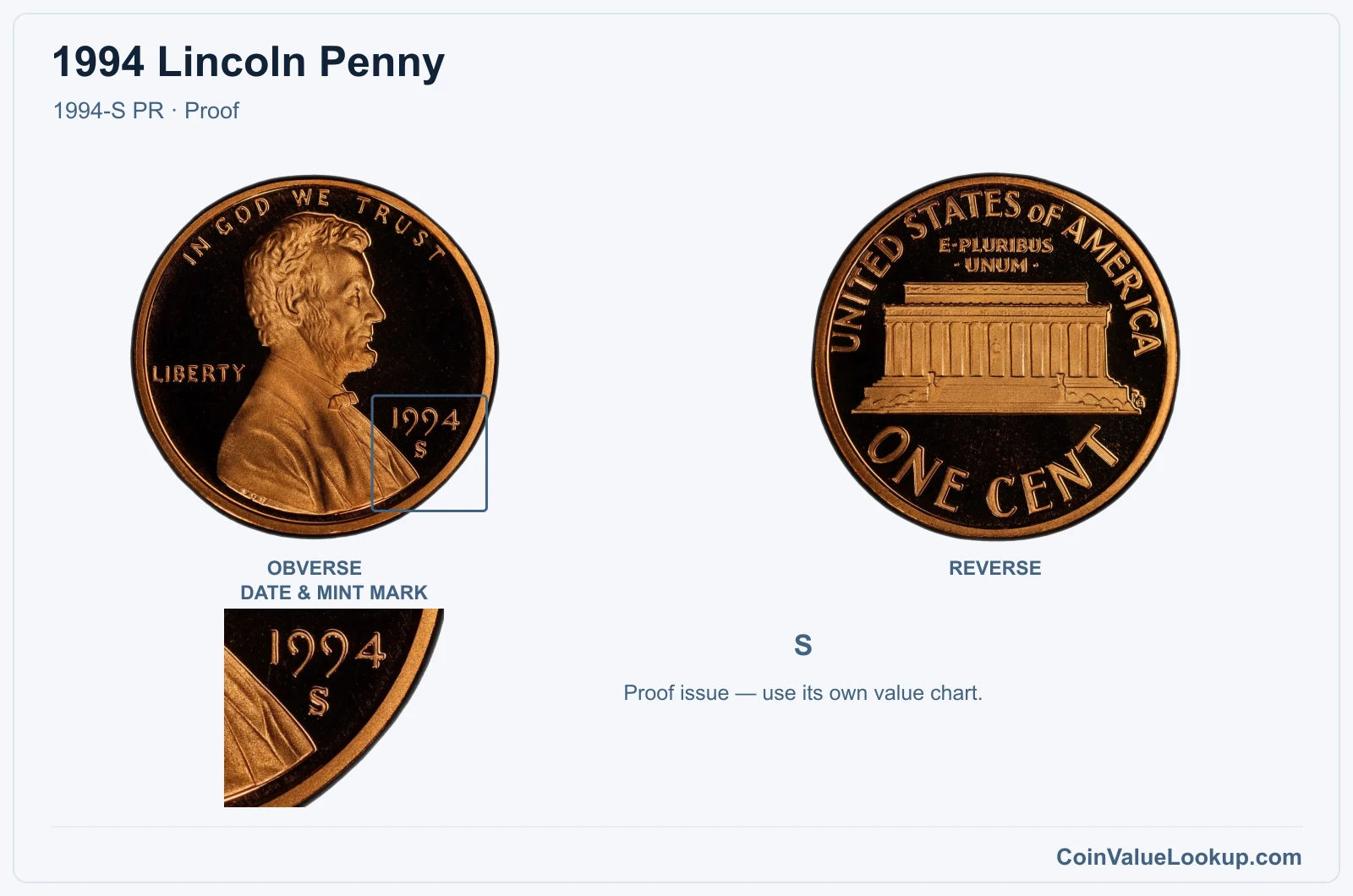
The 1994-S is a proof-only issue from San Francisco, sold in collector sets. It features the S mintmark below the date and has the sharp, mirrored finish characteristic of proof production.
USA Coin Book estimates about $11.00 at PR65.
Proof is a manufacturing method, not a grade above Mint State. When shopping for one, keep contrast labels like CAM and DCAM separate from the numerical grade.
A PR69 Deep Cameo is a different animal from a PR65 with light contrast. Handling marks, haze, and toning all affect the final grade, so inspect the fields carefully under good light.
| Range | Grade | Price | Auction Records | Appraisal |
|---|---|---|---|---|
| PR | PR 1 | — | Coin Identifier | |
| PR 2 | — | Coin Identifier | ||
| PR 3 | — | Coin Identifier | ||
| PR 4 | — | Coin Identifier | ||
| PR 6 | — | Coin Identifier | ||
| PR 8 | — | Coin Identifier | ||
| PR 10 | — | Coin Identifier | ||
| PR 12 | — | Coin Identifier | ||
| PR 15 | — | Coin Identifier | ||
| PR 20 | — | Coin Identifier | ||
| PR 25 | — | Coin Identifier | ||
| PR 30 | — | Coin Identifier | ||
| PR 35 | — | Coin Identifier | ||
| PR 40 | — | Coin Identifier | ||
| PR 45 | — | Coin Identifier | ||
| PR 50 | — | Coin Identifier | ||
| PR 53 | — | Coin Identifier | ||
| PR 55 | — | Coin Identifier | ||
| PR 58 | — | Coin Identifier | ||
| PR 60 | — | Coin Identifier | ||
| PR 61 | — | Coin Identifier | ||
| PR 62 | — | Coin Identifier | ||
| PR 63 | — | Coin Identifier | ||
| PR 64 | — | Coin Identifier | ||
| PR 65 | — | Coin Identifier | ||
| PR 66 | — | Coin Identifier | ||
| PR 67 | Coin Identifier | |||
| PR 68 | Coin Identifier | |||
| PR 69 | Coin Identifier | |||
| PR 70 | Coin Identifier |
1994 Lincoln Penny — No Mint Mark — Doubled Reverse (Extra Columns)
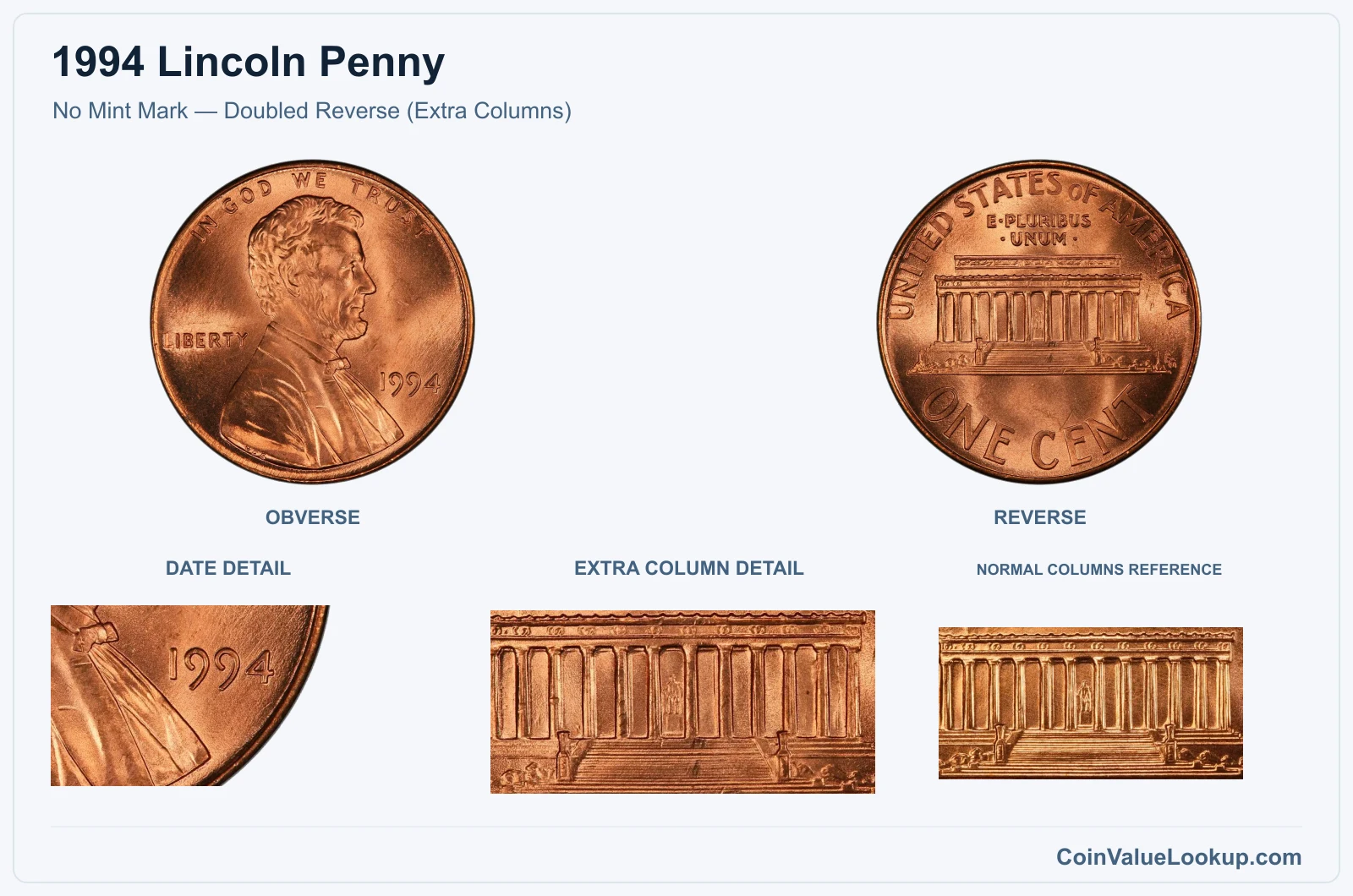
This is the 1994 no-mintmark doubled-die reverse, and it is the variety to hunt for in pocket change. The diagnostic feature is extra raised column relief between the last three columns of the Lincoln Memorial on the reverse.
Compare your coin side-by-side with a normal 1994 reverse and the additional raised lines become apparent.
No reliable numeric price range is available for this variety. Value depends on the coin's authenticated identity, overall condition, and the severity of the doubling.
Professional third-party authentication is the standard route for confirming a genuine doubled die, because shelf doubling, die deterioration, and wavy steps can mimic the appearance to an untrained eye.
Coin Value Lookup is a useful starting point when you want to look up guide values for other Lincoln cent dates and varieties.
Range Grade
Price Auction Records Appraisal PO PO 1
—
Coin Identifier FR FR 2
—
Coin Identifier AG AG 3
—
Coin Identifier G G 4
—
Coin Identifier
G 6
—
Coin Identifier VG VG 8
—
Coin Identifier
VG 10
—
Coin Identifier F F 12
—
Coin Identifier
F 15
—
Coin Identifier VF VF 20
—
Coin Identifier
VF 25
—
Coin Identifier
VF 30
—
Coin Identifier
VF 35
—
Coin Identifier XF XF 40
—
Coin Identifier
XF 45
—
Coin Identifier AU AU 50
—
Coin Identifier
AU 53
—
Coin Identifier
AU 55
—
Coin Identifier
AU 58
—
Coin Identifier MS MS 60
—
Coin Identifier
MS 61
—
Coin Identifier
MS 62
—
Coin Identifier
MS 63
—
Coin Identifier
MS 64
Coin Identifier
MS 65
Coin Identifier
MS 66
Coin Identifier
MS 67
Coin Identifier
MS 68
—
—
—
MS 69
—
—
—
MS 70
—
—
—
1994 Lincoln Penny Error List
1. 1994 Lincoln Penny — Doubled Die Reverse — Extra Columns
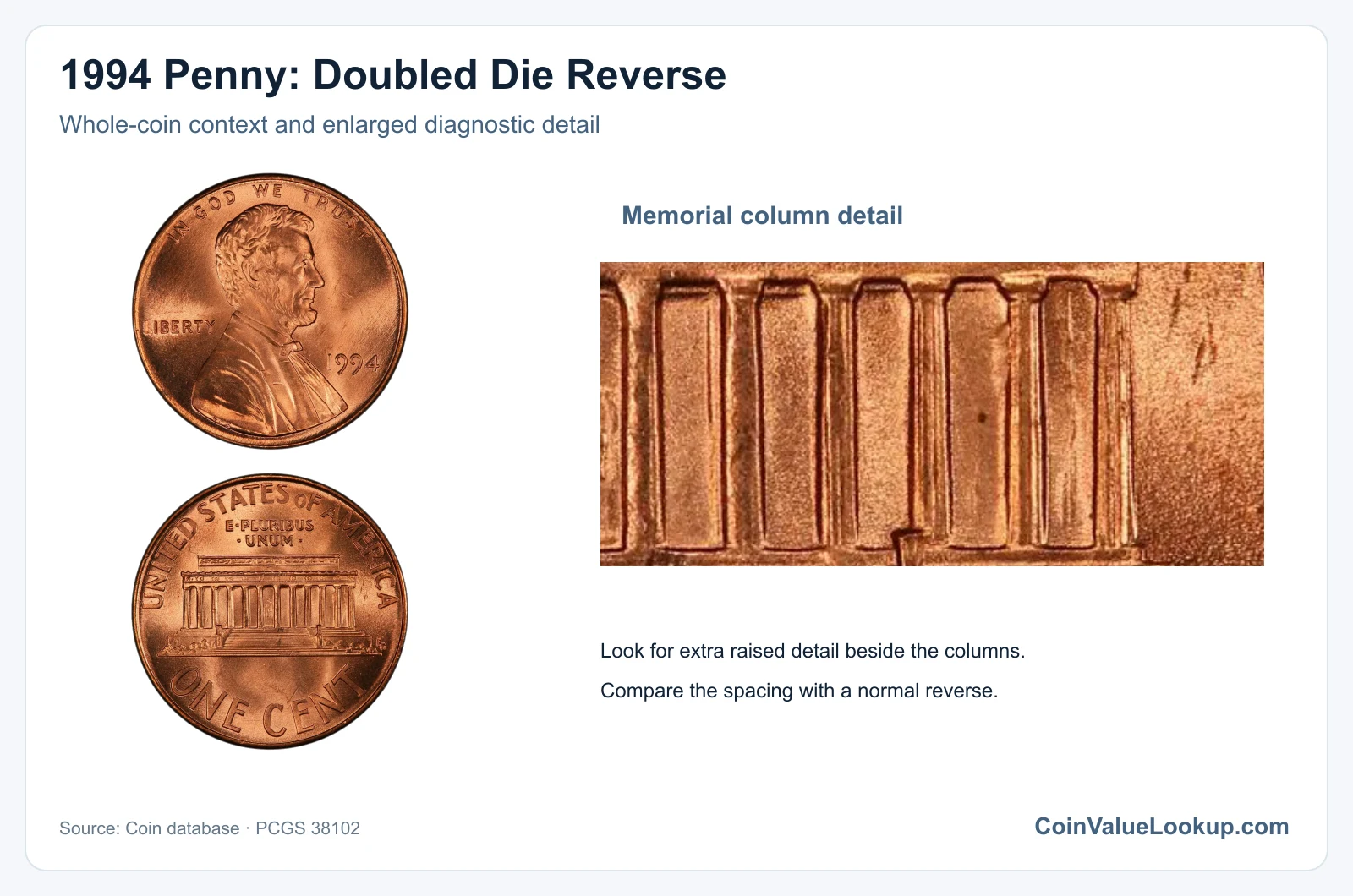
The doubled-die reverse on the 1994 no-mintmark cent shows extra raised column details between the final three Memorial columns. To spot it, compare the reverse of your coin to a normal 1994 cent under magnification.
The additional relief is not subtle once you know what to look for.
Several lookalikes can fool you. Shelf doubling, which is flat and shelf-like rather than raised, is the most common impostor.
Die deterioration and wavy step lines on heavily used dies can also create a doubled appearance. True hub doubling produces raised, well-defined extra detail.
No supported numeric price range is available. The value of a confirmed specimen depends on its authenticated identity, condition, and the strength of the doubling.
Professional grading service attribution is the standard path for selling one at a premium.
2. 1994 Lincoln Penny — Missing Copper Plating
A 1994 no-mintmark cent struck on an unplated zinc blank has a distinctive silvery-gray appearance because the copper plating was never applied before the blank entered the press. The key diagnostic is that the surface retains original mint-strike texture across the zinc, showing it was struck without plating rather than stripped afterward.
The main lookalikes are cents where the copper has been chemically dissolved, physically abraded, or corroded away after minting. Those coins typically show uneven surfaces, pitting, or residual copper traces in protected areas.
Authentication by a third-party grading service confirms the error.
An NGC MS65 example sold through Heritage Auctions for $99 in October 2018. That is a single sale, not a market range.
Plating coverage and overall condition affect what any given piece might bring.
3. 1994 Lincoln Penny — Struck on a Clad Dime Blank
This error occurs when a clad dime planchet ends up in the cent press. The result is a 1994 Lincoln cent design struck on a smaller, lighter blank with the wrong metal composition.
The coin will look undersized with possible incomplete lettering or design around the rim.
To confirm this error, you need to verify the weight and alloy. A normal cent planchet weighs about 2.50 grams of copper-plated zinc, while a dime planchet weighs about 2.27 grams of copper-nickel clad.
Do not rely on appearance alone.
Lookalikes include a normal cent with unusual plating and a cent struck over an already-struck dime, which is a different error category entirely. A PCGS MS66 example sold through Heritage Auctions for $705 in March 2013.
That is one recorded sale, not a general price.
4. 1994 Lincoln Penny — Off-Center Strike
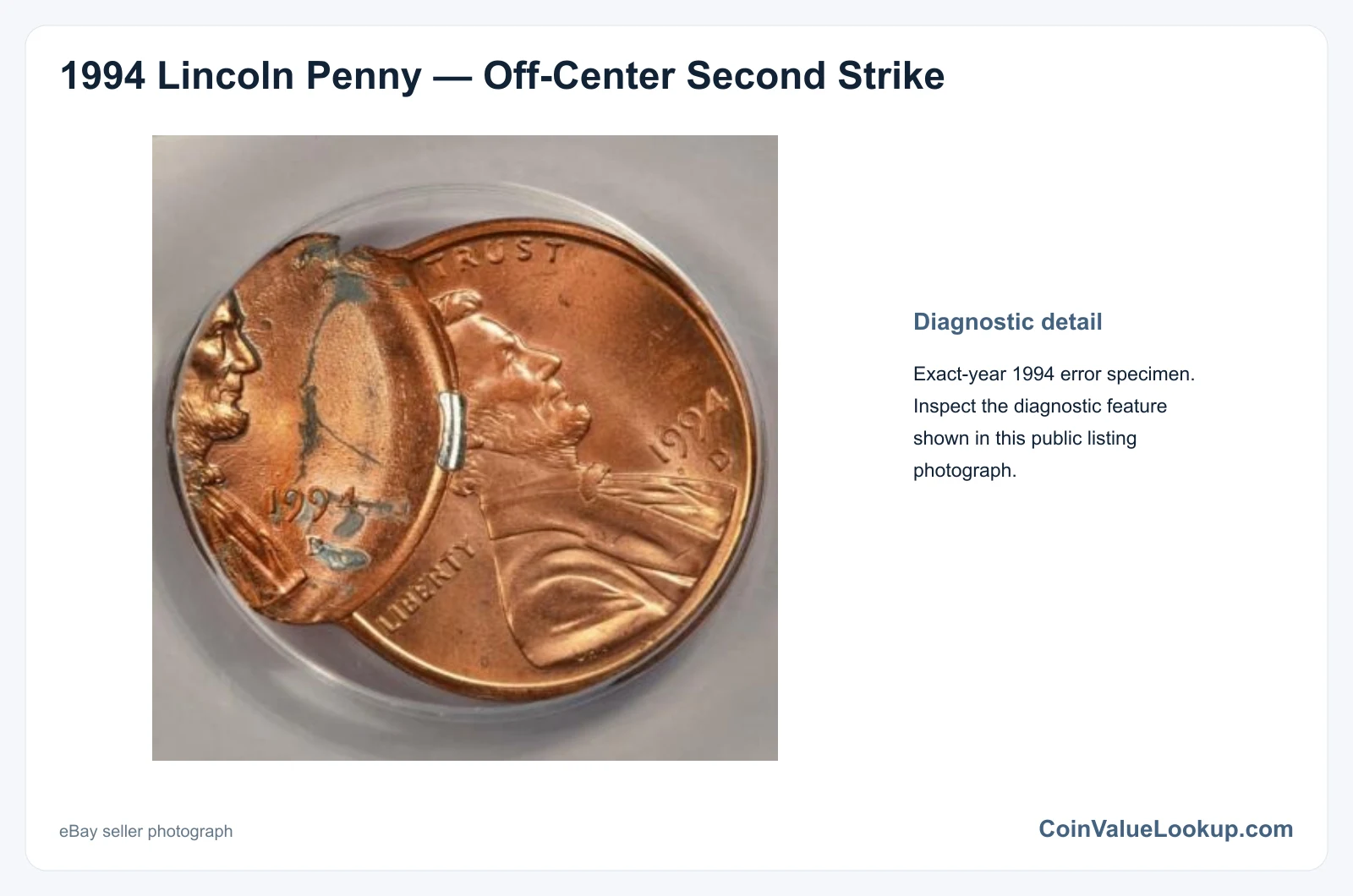
An off-center strike happens when the blank is not properly seated between the dies, producing a design that is shifted to one side with an unstruck crescent of blank metal on the opposite edge. The degree of off-center displacement and whether the date remains visible are the two biggest factors collectors care about.
Do not confuse this with a clipped planchet, which has a curved bite out of the blank before striking, or with one-sided die misalignment. Post-mint damage like a coin being flattened or bent can also mimic an off-center look at first glance but will show metal distortion rather than a clean unstruck crescent.
No numerical price range is available for this error. Condition, the percentage of off-center shift, and date visibility all drive the value on a case-by-case basis.
5. 1994 Lincoln Penny — BIE Die Break
A BIE die break shows up as a small raised vertical line or blob between the letters B and E in LIBERTY on the obverse. It is caused by a crack in the die that fills with metal during striking, leaving a raised mark on the finished coin.
Look closely at LIBERTY under magnification. The raised bridge should connect naturally from the field up toward or between the letters, with the surrounding surface showing normal die texture.
Dirt, scratches, or bits of debris stuck to the coin can mimic this feature, so clean viewing conditions matter.
No numerical price range is available. These minor die breaks are collected as a subset of Lincoln cent varieties, and value depends on the visibility of the break, overall coin condition, and collector demand at the time of sale.