1909 Wheat Penny Coin Value: How Much Is It Worth?
The 1909 Wheat Penny launched the Lincoln cent series, and it comes in several distinct versions that range widely in value. A guide estimate places ordinary circulated examples around $3.62 in Good-4 condition, reaching roughly $498 at MS63 for the scarcer San Francisco issues.
Proofs, the famous VDB varieties, and recognized errors are priced on their own terms. Original surfaces, color and accurate identification of mintmark and reverse type all affect what a particular coin is actually worth.
Fast Way to Identify Your 1909 Wheat Penny
Want a quick read on what you have? Upload clear photos of both the front and back of your 1909 penny and our identifier will give you a preliminary take on the mint, variety and general condition.
This is not a certified grade or authentication, but it is a solid starting point before you dig deeper.
1909 Wheat Penny Value
Upload both sides of your 1909 Wheat Penny.
Front Obverse
Upload photo
Back Reverse
Upload photo
Which 1909 Wheat Penny Versions Are Worth Money?
- The 1909-S VDB is the key date of the entire Wheat cent series, with guide values starting around $860 in Good-4 and reaching roughly $2,498 at MS63.
- San Francisco issues without VDB (1909-S) still carry strong premiums, guided near $103 in Good-4 and $498 at MS63.
- The 1909-S/S (S over horizontal S) repunched mintmark variety commands a small but consistent premium over a normal 1909-S.
- Philadelphia VDB matte proofs are scarce early proof issues, with a guide estimate near $15,252 at PR63.
- A 1909 VDB Doubled Die Obverse, when authenticated, is valued individually based on the strength and identity of the doubling.
- Matte proof 1909 cents without VDB are also collectible, guided around $929 at PR63.
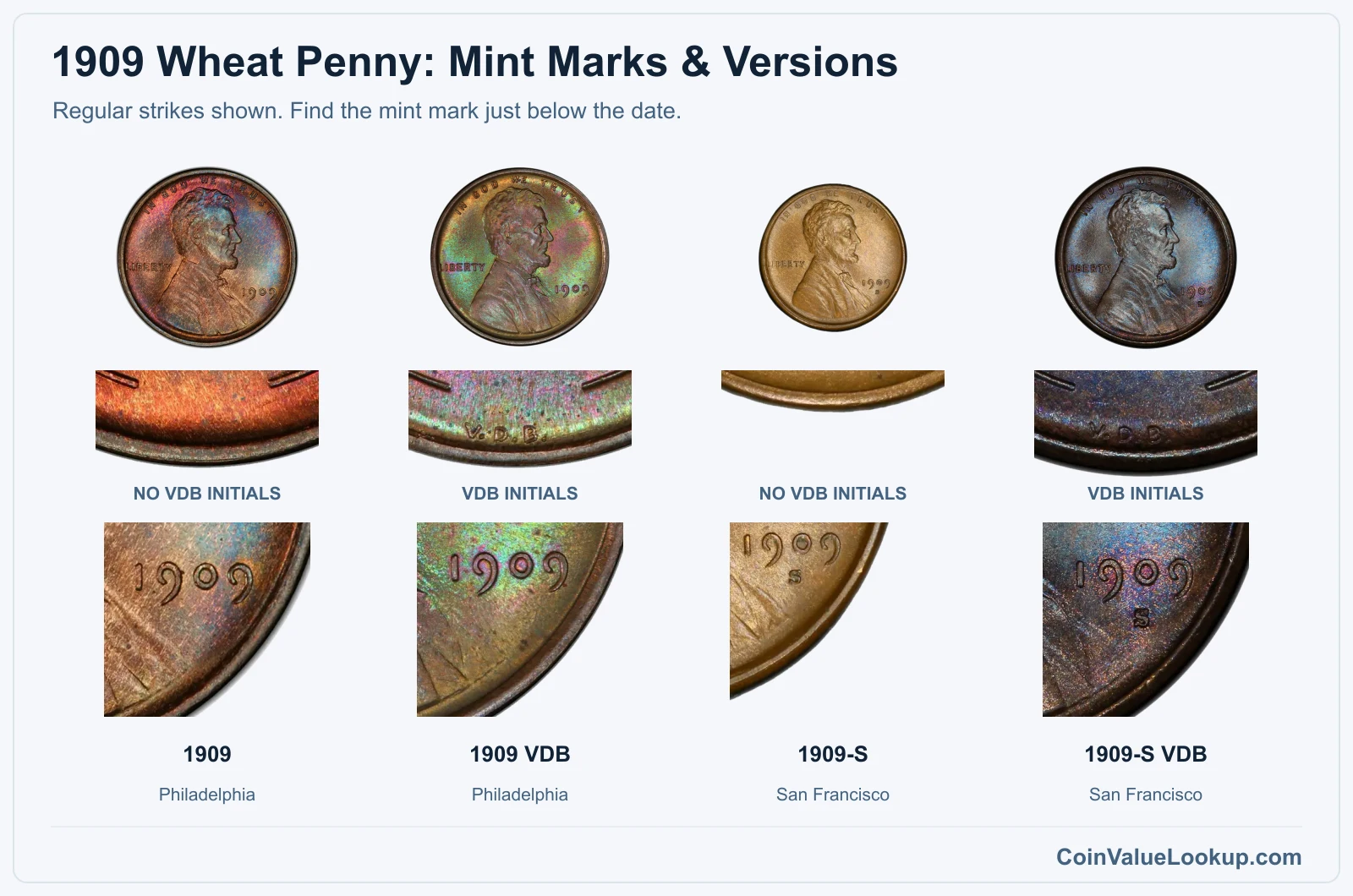
Step 1: Identify Your 1909 Wheat Penny Mint Mark and Version
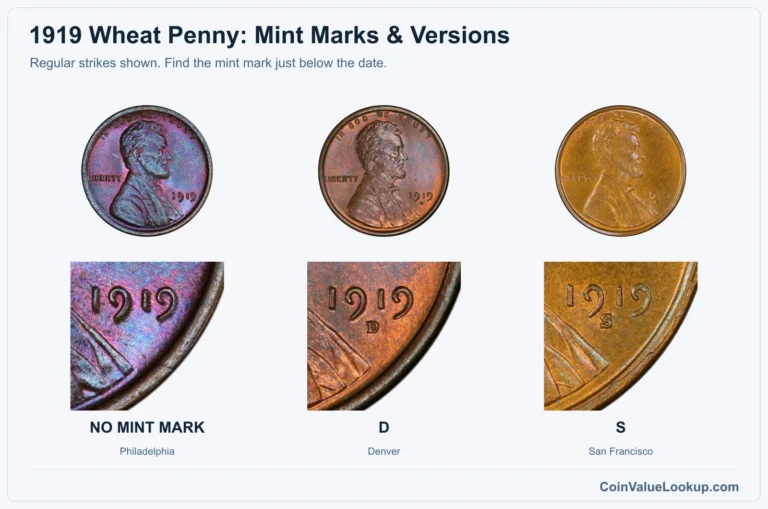
Start by checking below the date on the obverse for a mintmark. No letter means Philadelphia.
An "S" means San Francisco. There is no Denver branch for this date despite Denver producing Lincoln cents later in the series.
Next, flip the coin over. Look at the very bottom of the reverse, between the wheat stalks.
If you see the small letters "VDB" (the designer's initials), you have a VDB variety. If that space is blank, you have the no-VDB version.
This distinction matters enormously for San Francisco coins.
The 1909 Wheat cent is a 95% copper alloy with 5% tin and zinc, weighing about 3.11 grams with a plain edge. If your coin is noticeably lighter or has a reeded edge, it is something else entirely.
Matte proof versions exist for both the VDB and no-VDB Philadelphia issues. These have a distinctive prepared surface with sharp, squared rims.
They are not the mirror-finish proofs you may be used to seeing on modern coins, so do not dismiss one simply because it lacks reflectivity. A matte proof should not be confused with a well-struck business strike that still has good luster.
Step 2: Check Your 1909 Wheat Penny Grade
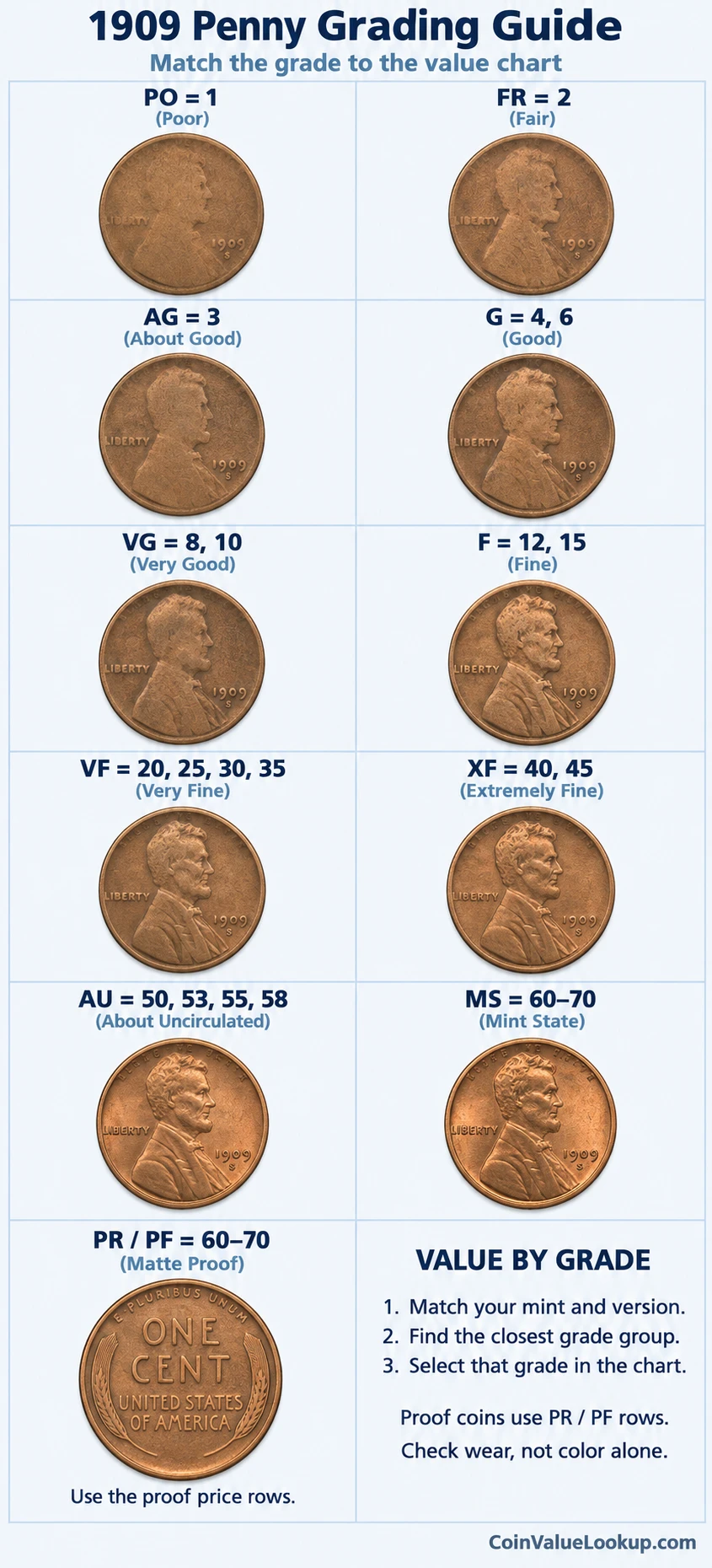
Focus on Lincoln's cheekbone, jawline and the fine hair detail above his ear. These are the highest points and the first places wear shows up.
A coin grading Good-4 will have a smooth portrait with a visible outline but little interior detail. By Fine-12, the hair and jaw gain definition.
On the reverse, check the individual wheat grains and the horizontal lines between the stalks. Finer detail here corresponds to higher grades.
Use the comparison image to match your coin's wear pattern. Keep in mind that a weak original strike can leave soft detail even without wear, so look at the overall luster as a clue.
A coin that still has cartwheel luster across the fields is unlikely to be heavily worn, even if one area looks flat.
Color matters separately from grade. Red, red-brown and brown describe the remaining original copper tone.
Spots, corrosion, and evidence of cleaning all reduce a coin's appeal regardless of how sharp the details are. Do not assume a brown coin is lower grade than a red one; color reflects surface chemistry, not wear.
Step 3: Check 1909 Wheat Penny Value by Mint and Version
1909 Wheat Penny
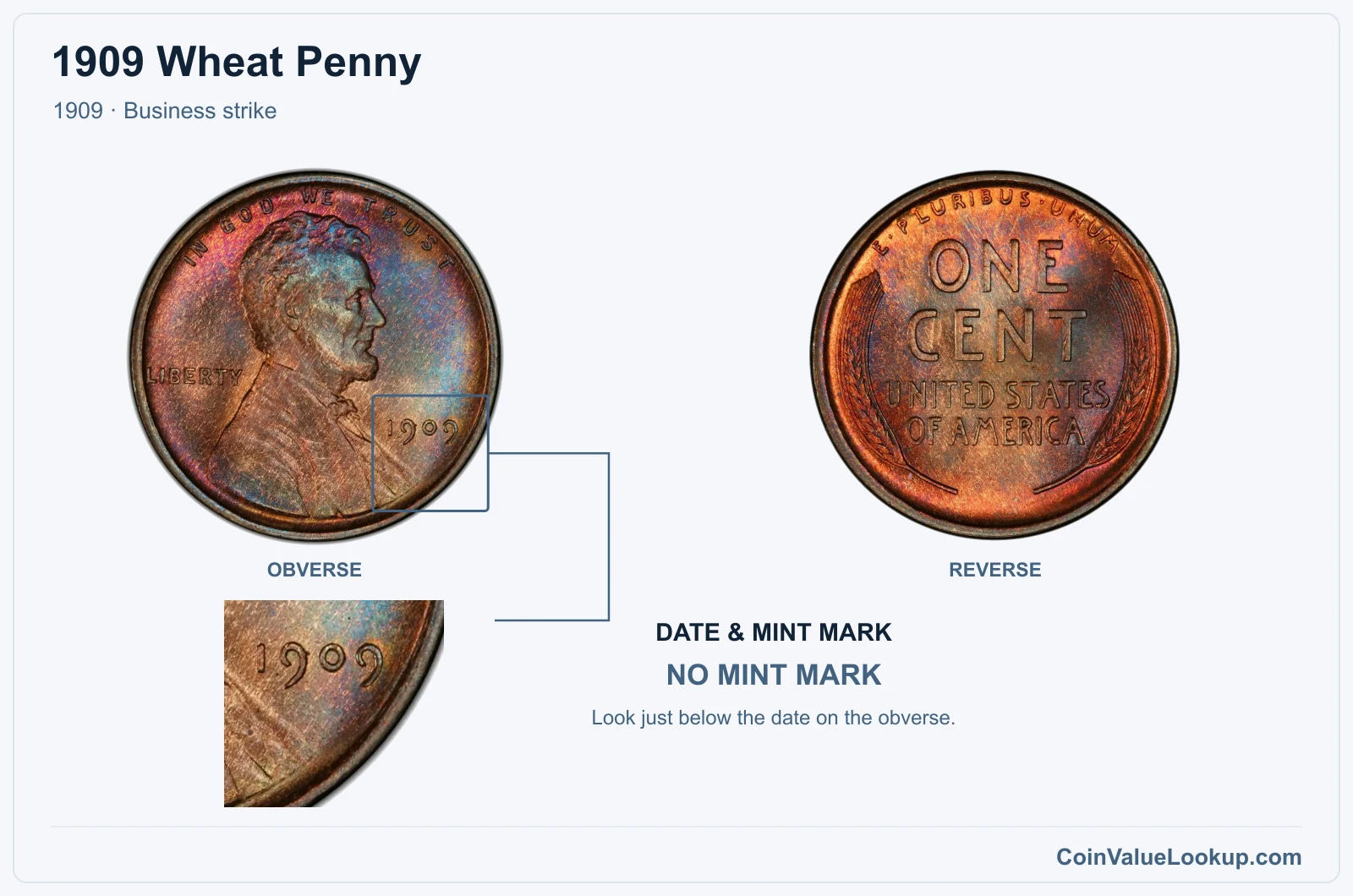
The 1909 Philadelphia no-VDB cent is the most common branch of this first-year issue. Look for no mintmark below the date and no "VDB" initials at the bottom of the reverse.
A guide estimate places this coin at about $3.62 in Good-4 and around $30 at MS63. These are not color-specific values, so a certified red example would typically bring more than a brown one at the same grade.
Still a satisfying coin to own as the very first Lincoln cent type.
| Range | Grade | Price | Auction Records | Appraisal |
|---|---|---|---|---|
| PO | PO 1 | — | Coin Identifier | |
| FR | FR 2 | — | Coin Identifier | |
| AG | AG 3 | — | Coin Identifier | |
| G | G 4 | — | Coin Identifier | |
| G 6 | Coin Identifier | |||
| VG | VG 8 | — | Coin Identifier | |
| VG 10 | — | Coin Identifier | ||
| F | F 12 | Coin Identifier | ||
| F 15 | — | Coin Identifier | ||
| VF | VF 20 | — | Coin Identifier | |
| VF 25 | — | Coin Identifier | ||
| VF 30 | — | Coin Identifier | ||
| VF 35 | — | Coin Identifier | ||
| XF | XF 40 | — | Coin Identifier | |
| XF 45 | — | Coin Identifier | ||
| AU | AU 50 | — | Coin Identifier | |
| AU 53 | — | Coin Identifier | ||
| AU 55 | — | Coin Identifier | ||
| AU 58 | Coin Identifier | |||
| MS | MS 60 | — | Coin Identifier | |
| MS 61 | — | Coin Identifier | ||
| MS 62 | Coin Identifier | |||
| MS 63 | Coin Identifier | |||
| MS 64 | Coin Identifier | |||
| MS 65 | Coin Identifier | |||
| MS 66 | Coin Identifier | |||
| MS 67 | — | — | — | |
| MS 68 | — | — | — | |
| MS 69 | — | — | — | |
| MS 70 | — | — | — |
1909 Wheat Penny — VDB
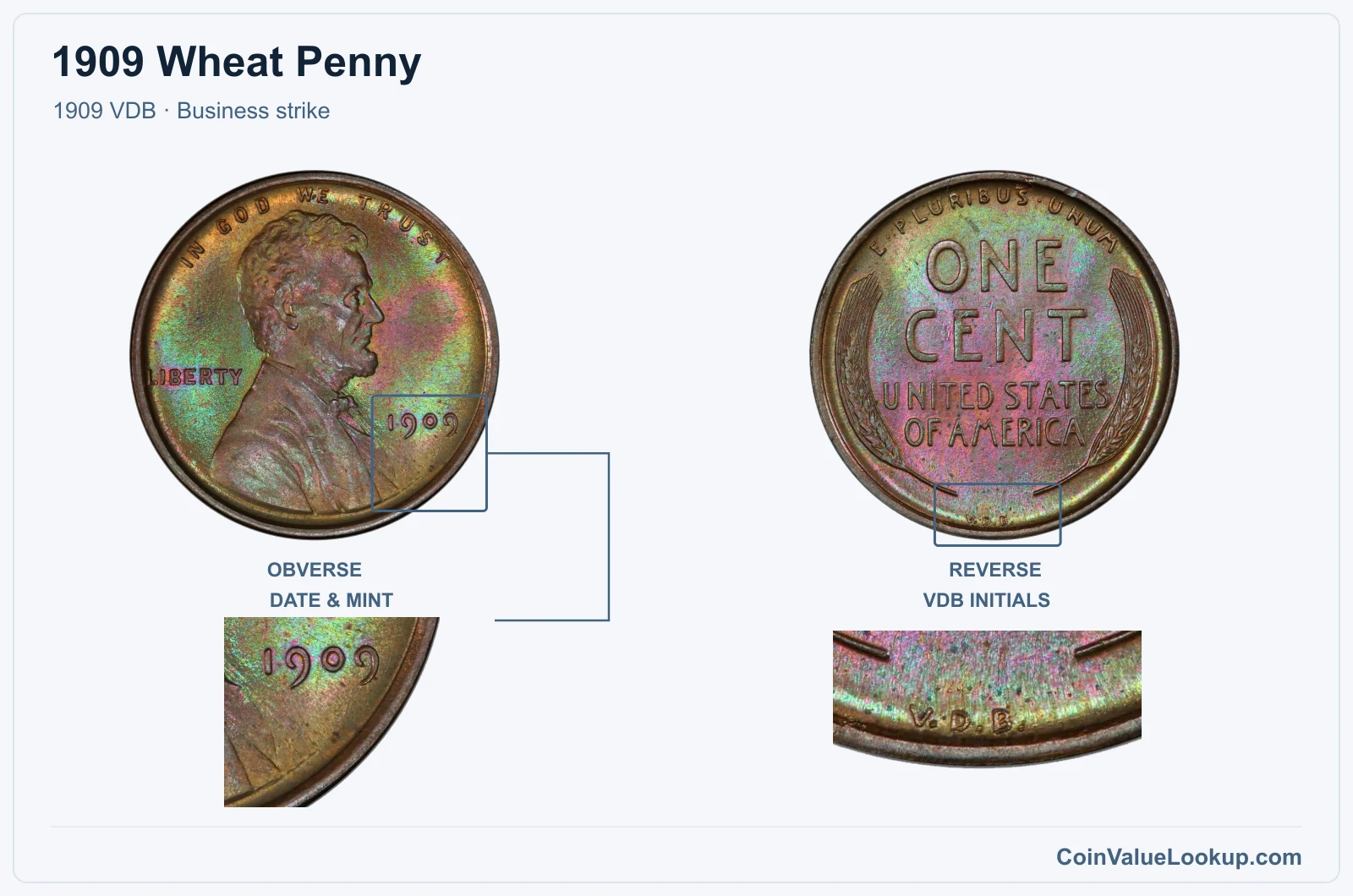
The 1909 VDB from Philadelphia carries the designer Victor David Brenner's initials at the bottom center of the reverse, between the wheat stalks. Public complaints about the prominent initials led the Mint to remove them partway through the year.
Guide values run about $7.29 in Good-4 and roughly $38 at MS63. The premium over the no-VDB version is modest because Philadelphia struck a large quantity before the change.
Check the reverse carefully; worn examples can have faint VDB letters that are easy to miss.
| Range | Grade | Price | Auction Records | Appraisal |
|---|---|---|---|---|
| PO | PO 1 | — | Coin Identifier | |
| FR | FR 2 | — | Coin Identifier | |
| AG | AG 3 | — | Coin Identifier | |
| G | G 4 | — | Coin Identifier | |
| G 6 | Coin Identifier | |||
| VG | VG 8 | — | Coin Identifier | |
| VG 10 | Coin Identifier | |||
| F | F 12 | — | Coin Identifier | |
| F 15 | — | Coin Identifier | ||
| VF | VF 20 | — | Coin Identifier | |
| VF 25 | — | Coin Identifier | ||
| VF 30 | — | Coin Identifier | ||
| VF 35 | — | Coin Identifier | ||
| XF | XF 40 | Coin Identifier | ||
| XF 45 | Coin Identifier | |||
| AU | AU 50 | Coin Identifier | ||
| AU 53 | Coin Identifier | |||
| AU 55 | Coin Identifier | |||
| AU 58 | Coin Identifier | |||
| MS | MS 60 | — | Coin Identifier | |
| MS 61 | Coin Identifier | |||
| MS 62 | Coin Identifier | |||
| MS 63 | Coin Identifier | |||
| MS 64 | Coin Identifier | |||
| MS 65 | Coin Identifier | |||
| MS 66 | Coin Identifier | |||
| MS 67 | — | — | — | |
| MS 68 | — | — | — | |
| MS 69 | — | — | — | |
| MS 70 | — | — | — |
1909 Wheat Penny — VDB DDO
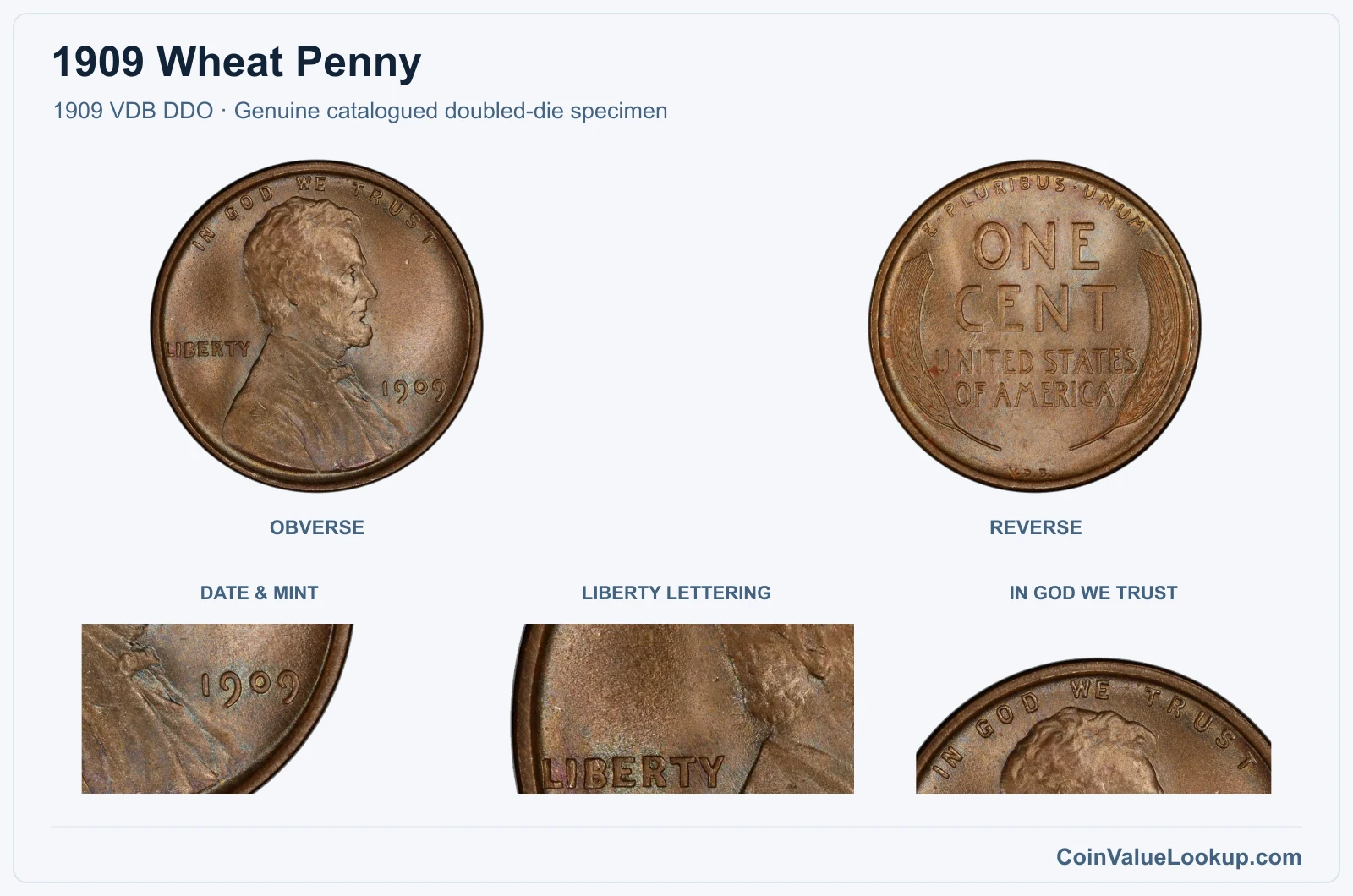
The 1909 VDB Doubled Die Obverse is a Philadelphia business-strike variety showing consistent doubling on the date, motto and LIBERTY. To check, compare the letters and numerals on your coin against a normal 1909 VDB under the same magnification and lighting.
Genuine die doubling produces separation or notching that appears in the same direction across multiple design elements. Machine doubling, by contrast, tends to show a flat shelf on one side of the letters.
No standard guide price is adopted for this variety. Value depends on the specific die pairing, the strength of the doubling and the coin's authenticated condition.
Professional certification matters here because the premium over a normal 1909 VDB can be substantial once the variety is confirmed.
| Range | Grade | Price | Auction Records | Appraisal |
|---|---|---|---|---|
| PO | PO 1 | — | Coin Identifier | |
| FR | FR 2 | — | Coin Identifier | |
| AG | AG 3 | — | Coin Identifier | |
| G | G 4 | — | Coin Identifier | |
| G 6 | — | Coin Identifier | ||
| VG | VG 8 | — | Coin Identifier | |
| VG 10 | — | Coin Identifier | ||
| F | F 12 | Coin Identifier | ||
| F 15 | — | Coin Identifier | ||
| VF | VF 20 | — | Coin Identifier | |
| VF 25 | — | Coin Identifier | ||
| VF 30 | — | Coin Identifier | ||
| VF 35 | — | Coin Identifier | ||
| XF | XF 40 | Coin Identifier | ||
| XF 45 | — | Coin Identifier | ||
| AU | AU 50 | Coin Identifier | ||
| AU 53 | — | Coin Identifier | ||
| AU 55 | Coin Identifier | |||
| AU 58 | Coin Identifier | |||
| MS | MS 60 | — | Coin Identifier | |
| MS 61 | — | Coin Identifier | ||
| MS 62 | Coin Identifier | |||
| MS 63 | Coin Identifier | |||
| MS 64 | Coin Identifier | |||
| MS 65 | — | Coin Identifier | ||
| MS 66 | — | — | — | |
| MS 67 | — | — | — | |
| MS 68 | — | — | — | |
| MS 69 | — | — | — | |
| MS 70 | — | — | — |
1909 Wheat Penny — S
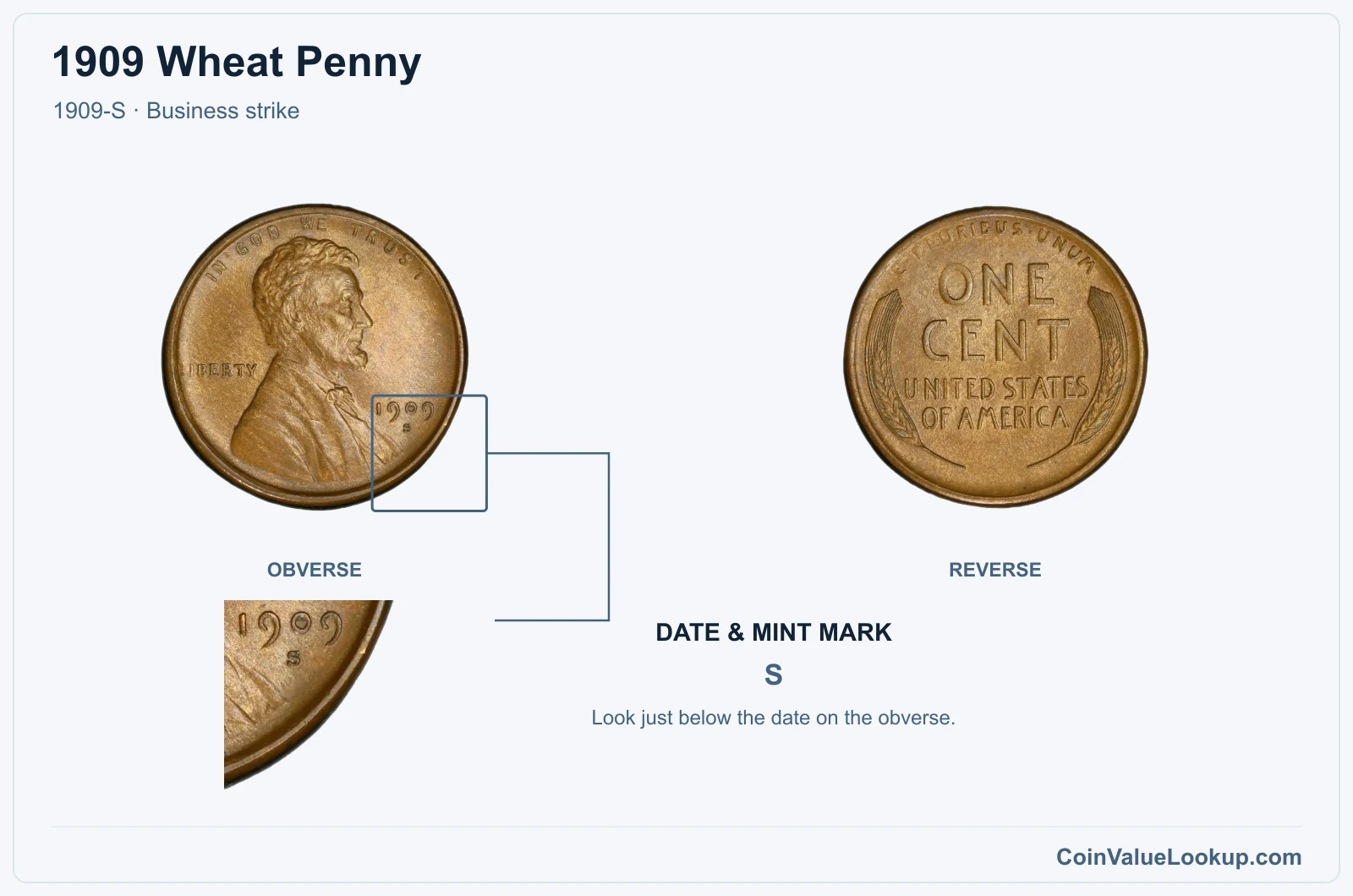
The 1909-S is the no-VDB San Francisco issue. Look for a small "S" mintmark below the date and a blank space at the bottom of the reverse.
This coin has a notably lower mintage than its Philadelphia counterpart, which is why guide estimates start around $103 in Good-4 and climb to about $498 at MS63.
Be sure to distinguish this coin from the 1909-S VDB, which carries the designer's initials on the reverse. The two coins serve very different markets and the price gap is large.
Confirm both sides before drawing conclusions.
Coin Value Lookup is a useful starting point if you want to look up guide values for other dates and mints in the Wheat cent series. It can save you time when sorting through a group of old pennies.
| Range | Grade | Price | Auction Records | Appraisal |
|---|---|---|---|---|
| PO | PO 1 | — | Coin Identifier | |
| FR | FR 2 | — | Coin Identifier | |
| AG | AG 3 | Coin Identifier | ||
| G | G 4 | Coin Identifier | ||
| G 6 | Coin Identifier | |||
| VG | VG 8 | Coin Identifier | ||
| VG 10 | Coin Identifier | |||
| F | F 12 | Coin Identifier | ||
| F 15 | Coin Identifier | |||
| VF | VF 20 | Coin Identifier | ||
| VF 25 | Coin Identifier | |||
| VF 30 | Coin Identifier | |||
| VF 35 | Coin Identifier | |||
| XF | XF 40 | Coin Identifier | ||
| XF 45 | Coin Identifier | |||
| AU | AU 50 | Coin Identifier | ||
| AU 53 | Coin Identifier | |||
| AU 55 | Coin Identifier | |||
| AU 58 | Coin Identifier | |||
| MS | MS 60 | — | Coin Identifier | |
| MS 61 | Coin Identifier | |||
| MS 62 | Coin Identifier | |||
| MS 63 | Coin Identifier | |||
| MS 64 | Coin Identifier | |||
| MS 65 | Coin Identifier | |||
| MS 66 | — | — | — | |
| MS 67 | — | — | — | |
| MS 68 | — | — | — | |
| MS 69 | — | — | — | |
| MS 70 | — | — | — |
1909 Wheat Penny — S/S S/Horizontal S
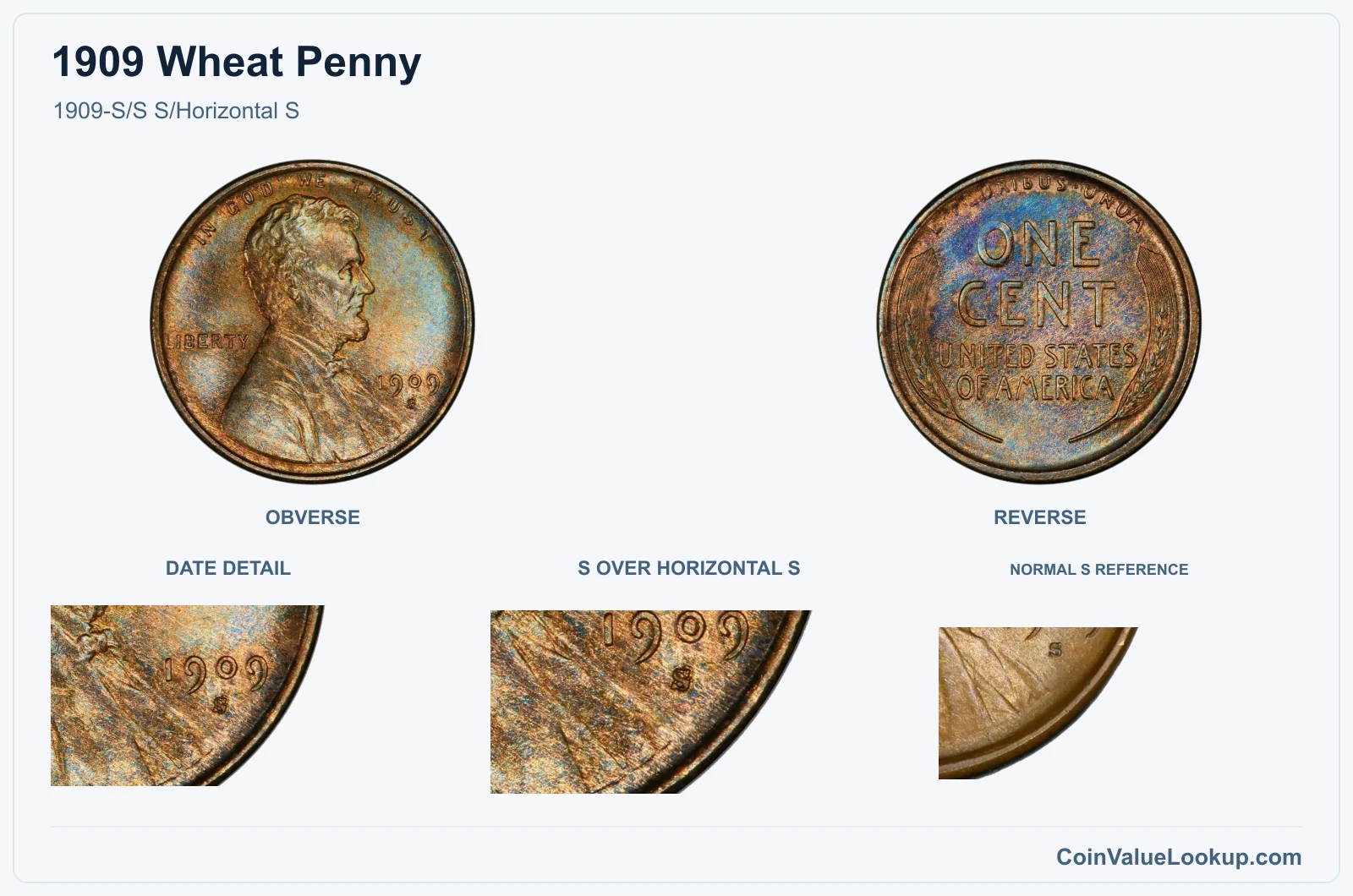
This variety shows an "S" mintmark punched over a previously placed horizontal "S" beneath the date. Under magnification you can see remnants of the underlying sideways letter.
Do not mistake a die chip, corrosion blob or ordinary wear pattern around the mintmark for this variety; the underlying punch should be recognizably letter-shaped and rotated roughly 90 degrees.
Guide values sit slightly above the normal 1909-S, around $117 in Good-4 and $527 at MS63. The premium is modest but consistent.
A clear example with strong remnants of the horizontal S is more desirable than one where the feature is ambiguous. Authentication helps with borderline pieces.
| Range | Grade | Price | Auction Records | Appraisal |
|---|---|---|---|---|
| PO | PO 1 | — | Coin Identifier | |
| FR | FR 2 | — | Coin Identifier | |
| AG | AG 3 | — | Coin Identifier | |
| G | G 4 | — | Coin Identifier | |
| G 6 | Coin Identifier | |||
| VG | VG 8 | Coin Identifier | ||
| VG 10 | Coin Identifier | |||
| F | F 12 | Coin Identifier | ||
| F 15 | Coin Identifier | |||
| VF | VF 20 | Coin Identifier | ||
| VF 25 | Coin Identifier | |||
| VF 30 | Coin Identifier | |||
| VF 35 | Coin Identifier | |||
| XF | XF 40 | Coin Identifier | ||
| XF 45 | Coin Identifier | |||
| AU | AU 50 | Coin Identifier | ||
| AU 53 | Coin Identifier | |||
| AU 55 | Coin Identifier | |||
| AU 58 | Coin Identifier | |||
| MS | MS 60 | — | Coin Identifier | |
| MS 61 | Coin Identifier | |||
| MS 62 | Coin Identifier | |||
| MS 63 | Coin Identifier | |||
| MS 64 | Coin Identifier | |||
| MS 65 | Coin Identifier | |||
| MS 66 | — | Coin Identifier | ||
| MS 67 | — | — | — | |
| MS 68 | — | — | — | |
| MS 69 | — | — | — | |
| MS 70 | — | — | — |
1909 Wheat Penny — S VDB
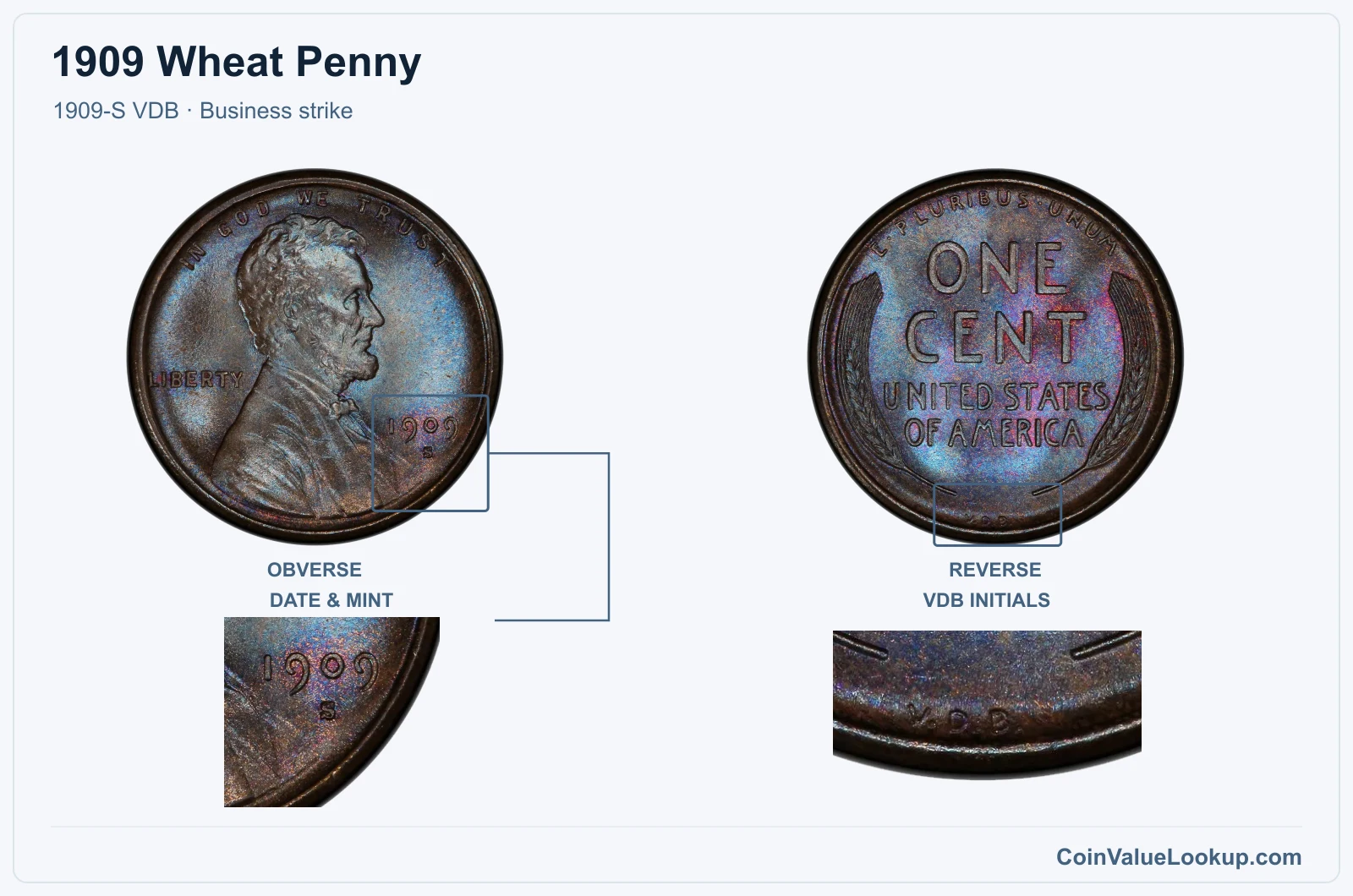
Here it is: the 1909-S VDB, the single most famous regular-issue Lincoln cent. San Francisco struck a small number carrying the VDB initials before the Mint ordered them removed.
Guide estimates place it at roughly $860 in Good-4 and about $2,498 at MS63.
To confirm what you have, you need both an "S" mintmark below the date on the obverse and the letters "VDB" centered at the bottom of the reverse. Counterfeits and altered coins are common for this date, so professional authentication is a good idea before any significant transaction.
Surfaces, color and originality all influence the final price. Even well-circulated genuine examples hold strong value.
| Range | Grade | Price | Auction Records | Appraisal |
|---|---|---|---|---|
| PO | PO 1 | — | Coin Identifier | |
| FR | FR 2 | — | Coin Identifier | |
| AG | AG 3 | — | Coin Identifier | |
| G | G 4 | Coin Identifier | ||
| G 6 | Coin Identifier | |||
| VG | VG 8 | Coin Identifier | ||
| VG 10 | Coin Identifier | |||
| F | F 12 | Coin Identifier | ||
| F 15 | Coin Identifier | |||
| VF | VF 20 | Coin Identifier | ||
| VF 25 | Coin Identifier | |||
| VF 30 | Coin Identifier | |||
| VF 35 | Coin Identifier | |||
| XF | XF 40 | Coin Identifier | ||
| XF 45 | Coin Identifier | |||
| AU | AU 50 | Coin Identifier | ||
| AU 53 | Coin Identifier | |||
| AU 55 | Coin Identifier | |||
| AU 58 | Coin Identifier | |||
| MS | MS 60 | — | Coin Identifier | |
| MS 61 | Coin Identifier | |||
| MS 62 | Coin Identifier | |||
| MS 63 | Coin Identifier | |||
| MS 64 | Coin Identifier | |||
| MS 65 | Coin Identifier | |||
| MS 66 | Coin Identifier | |||
| MS 67 | — | Coin Identifier | ||
| MS 68 | — | — | — | |
| MS 69 | — | — | — | |
| MS 70 | — | — | — |
1909 Wheat Penny — PR
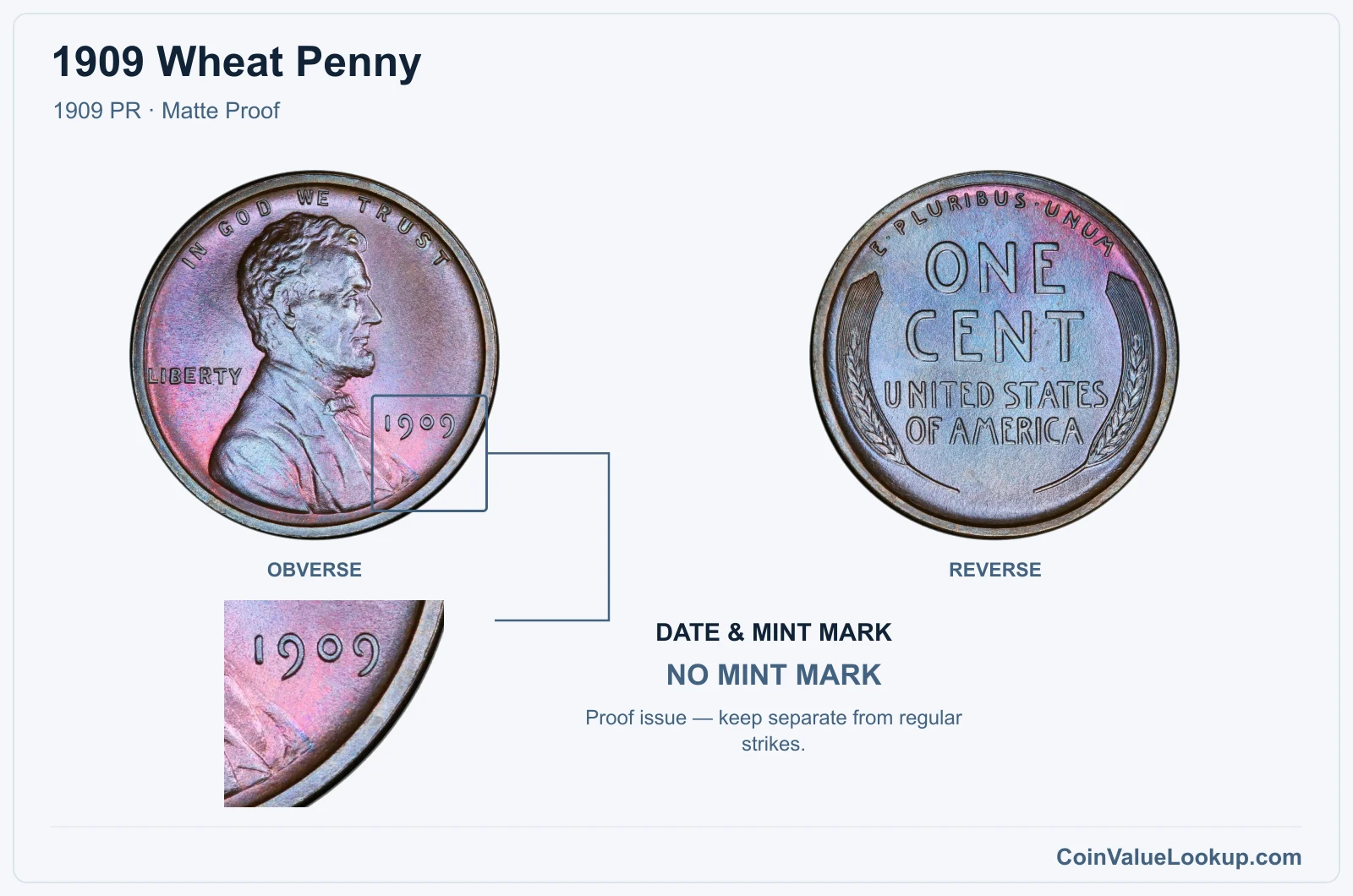
Philadelphia produced matte proof Lincoln cents in 1909 without VDB initials. These have a distinctive granular surface texture with sharp, squared rims and precise detail throughout.
They are not mirrored like modern proofs; the matte finish was an intentional manufacturing choice for early Lincoln proof coinage.
A guide estimate places the 1909 matte proof at about $929 in PR63. Do not confuse a well-struck business strike with strong luster for a matte proof.
The surface preparation, rim profile and overall finish are distinctly different. Certification is practically essential because the matte proof premium is significant.
| Range | Grade | Price | Auction Records | Appraisal |
|---|---|---|---|---|
| PR | PR 1 | — | Coin Identifier | |
| PR 2 | — | Coin Identifier | ||
| PR 3 | — | Coin Identifier | ||
| PR 4 | — | Coin Identifier | ||
| PR 6 | — | Coin Identifier | ||
| PR 8 | — | Coin Identifier | ||
| PR 10 | — | Coin Identifier | ||
| PR 12 | — | Coin Identifier | ||
| PR 15 | — | Coin Identifier | ||
| PR 20 | — | Coin Identifier | ||
| PR 25 | — | Coin Identifier | ||
| PR 30 | — | Coin Identifier | ||
| PR 35 | — | Coin Identifier | ||
| PR 40 | — | Coin Identifier | ||
| PR 45 | — | Coin Identifier | ||
| PR 50 | — | Coin Identifier | ||
| PR 53 | — | Coin Identifier | ||
| PR 55 | — | Coin Identifier | ||
| PR 58 | — | Coin Identifier | ||
| PR 60 | — | Coin Identifier | ||
| PR 61 | — | Coin Identifier | ||
| PR 62 | Coin Identifier | |||
| PR 63 | Coin Identifier | |||
| PR 64 | Coin Identifier | |||
| PR 65 | Coin Identifier | |||
| PR 66 | Coin Identifier | |||
| PR 67 | Coin Identifier | |||
| PR 68 | — | — | — | |
| PR 69 | — | — | — | |
| PR 70 | — | — | — |
1909 Wheat Penny — VDB PR
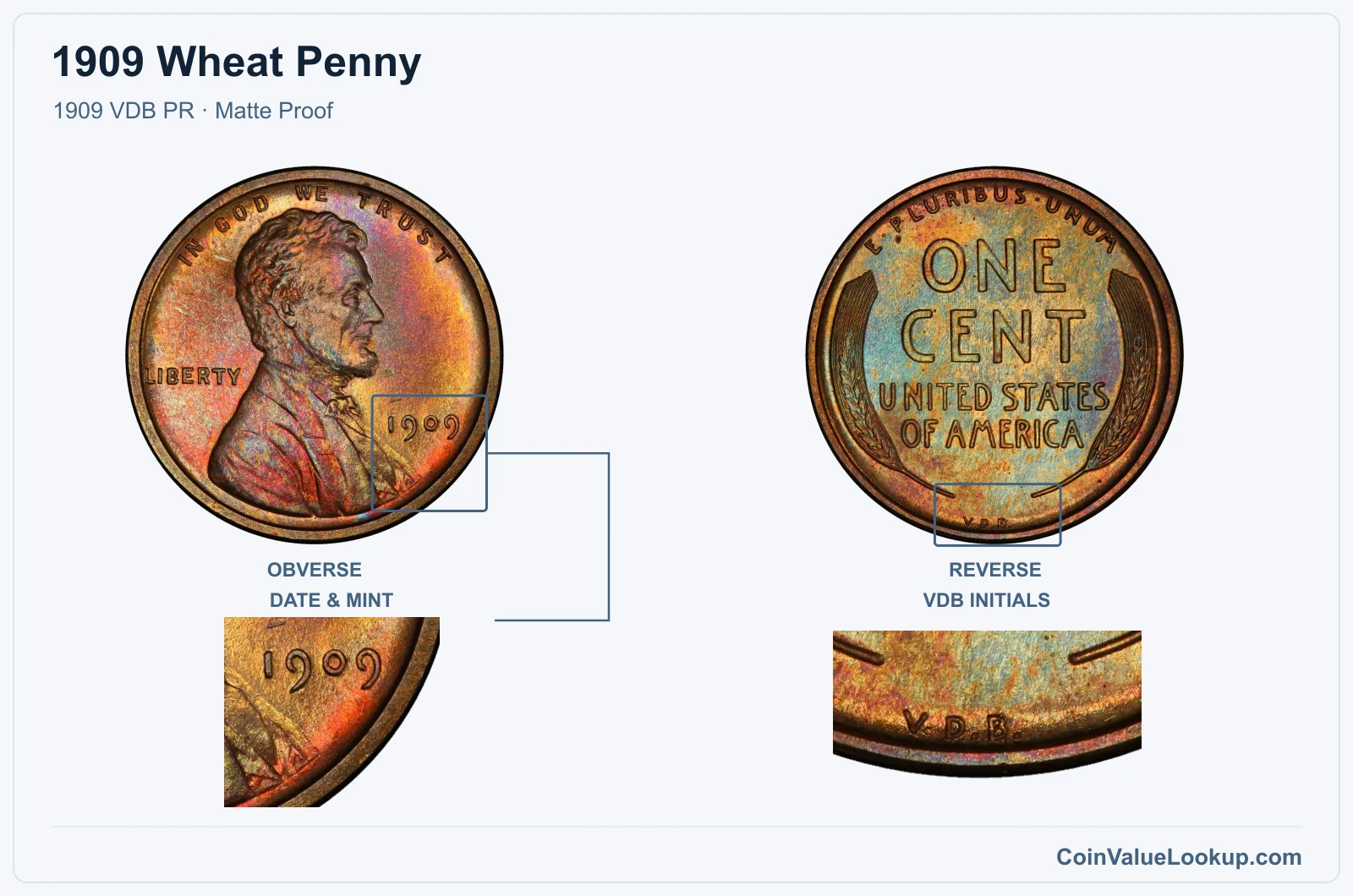
The 1909 VDB matte proof is one of the most desirable early Lincoln cent issues. It combines the matte proof manufacturing finish with the VDB initials on the reverse, produced before those initials were removed mid-year.
A guide estimate places it at roughly $15,252 at PR63, reflecting both its scarcity and collector demand.
Look for the same matte surface texture and squared rims as the no-VDB proof, plus the "VDB" letters at the bottom of the reverse. Because of the value involved, professional certification is strongly recommended.
The difference between a genuine matte proof and a well-preserved business strike can be subtle to an untrained eye, and the financial stakes are high.
| Range | Grade | Price | Auction Records | Appraisal |
|---|---|---|---|---|
| PR | PR 1 | — | Coin Identifier | |
| PR 2 | — | Coin Identifier | ||
| PR 3 | — | Coin Identifier | ||
| PR 4 | — | Coin Identifier | ||
| PR 6 | — | Coin Identifier | ||
| PR 8 | — | Coin Identifier | ||
| PR 10 | — | Coin Identifier | ||
| PR 12 | — | Coin Identifier | ||
| PR 15 | — | Coin Identifier | ||
| PR 20 | — | Coin Identifier | ||
| PR 25 | — | Coin Identifier | ||
| PR 30 | — | Coin Identifier | ||
| PR 35 | — | Coin Identifier | ||
| PR 40 | — | Coin Identifier | ||
| PR 45 | — | Coin Identifier | ||
| PR 50 | — | Coin Identifier | ||
| PR 53 | — | Coin Identifier | ||
| PR 55 | — | Coin Identifier | ||
| PR 58 | — | Coin Identifier | ||
| PR 60 | — | Coin Identifier | ||
| PR 61 | — | Coin Identifier | ||
| PR 62 | Coin Identifier | |||
| PR 63 | Coin Identifier | |||
| PR 64 | Coin Identifier | |||
| PR 65 | Coin Identifier | |||
| PR 66 | Coin Identifier | |||
| PR 67 | — | — | — | |
| PR 68 | — | — | — | |
| PR 69 | — | — | — | |
| PR 70 | — | — | — |
1909 Wheat Penny Error List
1. 1909 Wheat Penny — Repunched Mintmark
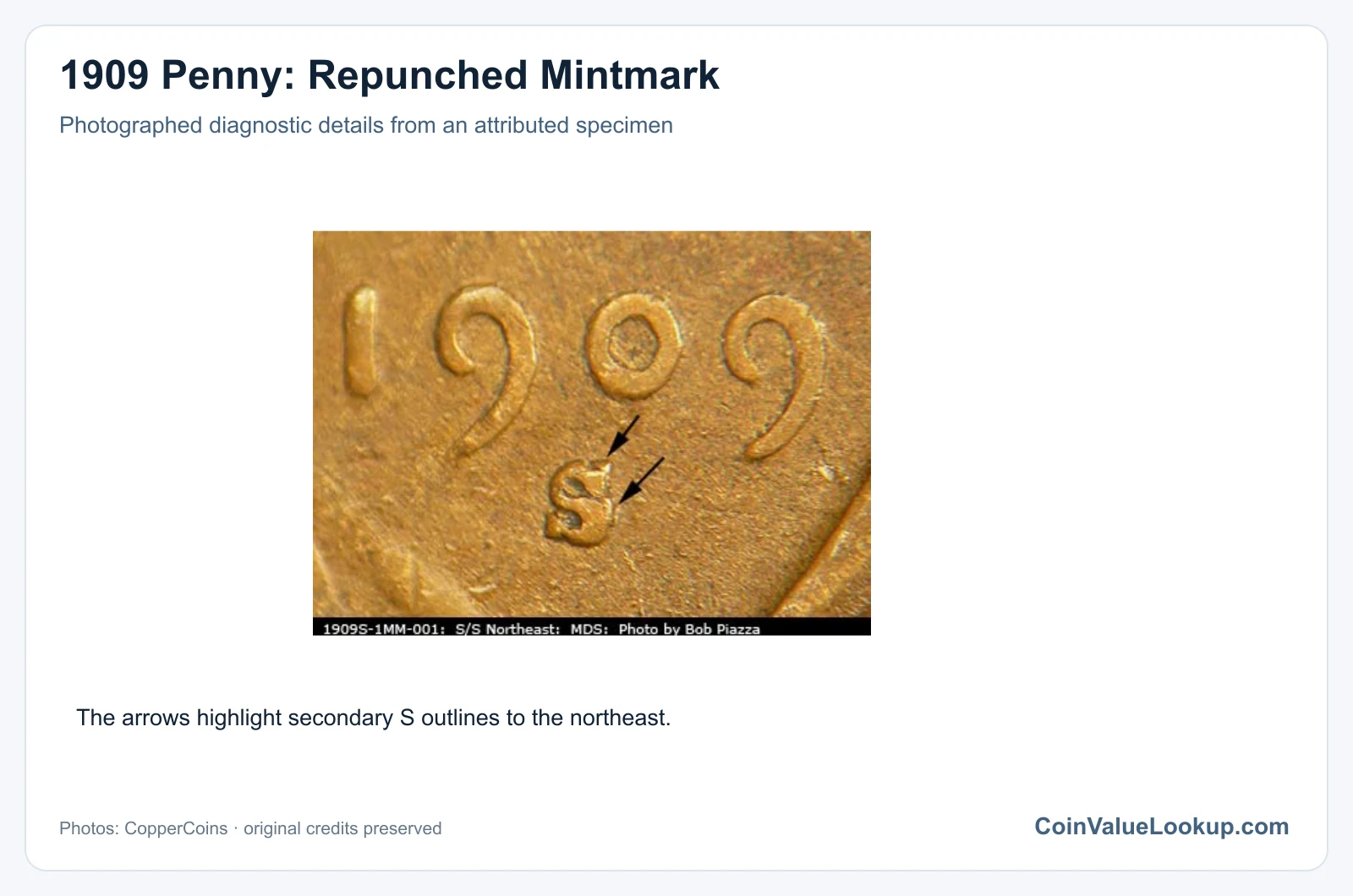
A repunched mintmark on a 1909 Wheat cent applies only to the San Francisco "S" mintmark; Philadelphia coins have no mintmark to repunch. Under magnification, look for traces of an earlier punch position partially visible beneath or beside the final "S." The remnant should be recognizably letter-shaped and in a distinctly different position or angle from the final mark.
Do not confuse a die chip, corrosion pit or machine-doubling shelf around the mintmark area for a repunched mintmark. Compare your coin at the same magnification to a known normal example.
No standard guide price is adopted for this error; value depends on the specific repunch, its clarity and the coin's authenticated condition and grade.
2. 1909 Wheat Penny — Doubled Die Obverse
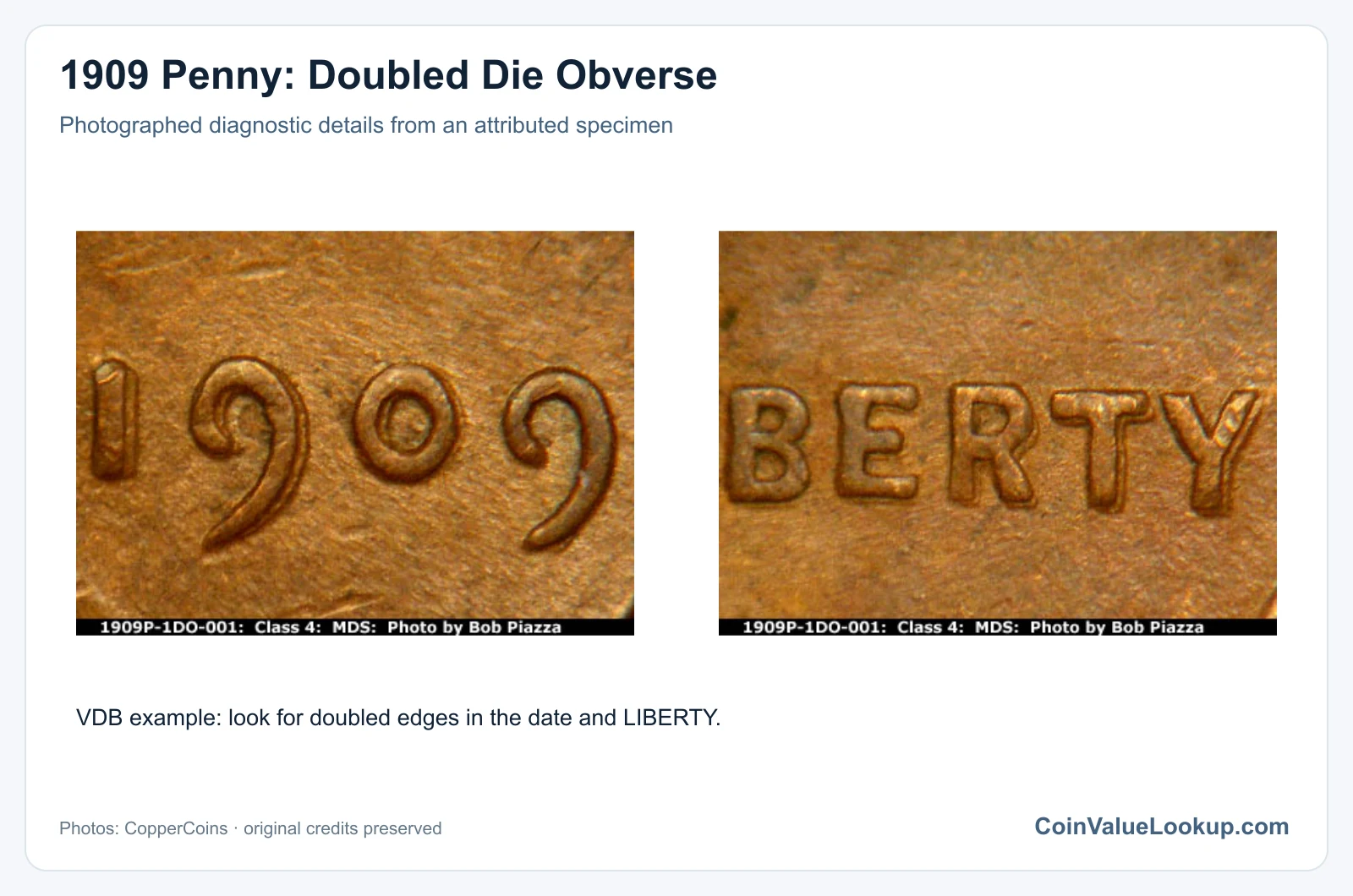
The Doubled Die Obverse on 1909 Wheat cents is associated with the Philadelphia VDB variety. Check the date numerals, the motto and LIBERTY for consistent doubling: separation, notching or extra thickness that appears in the same direction across multiple design elements.
Genuine die doubling differs from machine doubling, which typically produces a flat, shelf-like distortion on one side of letters rather than true separation. Reflections and worn die contours can also mimic doubling under certain lighting.
Use steady, even light and compare closeups of the date and motto against a normal coin at matching magnification.
No standard guide price is adopted. Value is determined individually by the strength of the doubling, the die pairing and the coin's authenticated grade.
3. 1909 Wheat Penny — Clashed Dies
A die clash occurs when the obverse and reverse dies strike each other without a planchet between them, transferring faint mirror-image elements of the opposite design onto each die's face. On a 1909 Wheat cent, look for ghostly traces of the wheat stalks or lettering in the obverse fields, or portions of Lincoln's portrait impressed into the reverse.
These marks will align with where the opposing design would sit during a normal strike. Random scratches, raised lines from a damaged die, or a brockage impression are common lookalikes.
A clash impression follows the geometry of the opposing die consistently.
No standard guide price is adopted for clashed-die 1909 cents. Value depends on the clash's visibility, the coin's overall condition and authentication.
4. 1909 Wheat Penny — Off-Center Strike
An off-center strike happens when the planchet is not properly seated between the dies, resulting in a displaced design and a blank crescent of unstruck metal. The most collectible off-center errors retain a readable date, since without it the coin cannot be attributed to a specific year.
Do not confuse an off-center strike with a clipped planchet (which removes part of the blank before striking) or with post-mint damage such as hammering or flattening. A genuine off-center coin shows the full design elements up to the point where the impression fades into the unstruck area, with normal metal flow.
No standard guide price is adopted for off-center 1909 cents. Value depends on the percentage of offset, date visibility and the coin's authenticated condition.
5. 1909 Wheat Penny — Clipped Planchet
A clipped planchet error means the blank was incomplete before it was struck, leaving a missing curved, straight or ragged section. On a 1909 Wheat cent, look for a portion of the rim and adjacent design that is simply absent, with the metal thinning toward the clip.
The area directly opposite a curved clip often shows slight weakness in the design, known as the Blakesley effect, which helps confirm authenticity.
Lookalikes include post-mint edge cuts, filed notches and corrosion that ate away the rim. Genuine clips have characteristic metal flow at the boundary rather than sharp tool marks.
Compare the edge texture at the clip to the rest of the coin.
No standard guide price is adopted. Value depends on the clip's size, type, visual impact and the coin's authenticated grade.
6. 1909 Wheat Penny — Broadstrike
A broadstrike occurs when the coin is struck without the normal collar die that constrains the planchet's edge and forms the rim. The result is a coin with outward metal spread, a larger-than-normal diameter and a weak or absent rim.
The full design is usually present but spread toward the edges.
Do not confuse a broadstrike with an off-center strike, which shifts the design to one side leaving blank metal. A broadstrike keeps the design roughly centered.
Also rule out post-mint flattening, where someone smashed the coin after it left the press; flattened coins tend to show distorted lettering and unnatural surface marks.
No standard guide price is adopted for broadstruck 1909 cents. Value depends on the degree of spread, overall eye appeal and authenticated condition.