1909 Liberty Nickel Coin Value: How Much Is It Worth?
The 1909 Liberty Nickel is a Philadelphia-only issue, somewhat scarcer than its neighboring dates but still easy to find in circulated grades. A USA Coin Book guide snapshot places the business strike at roughly $3.62 in G4 and around $175 in MS63, while a PR63 proof sits near $344.
Not a key date, but worth a careful look in higher grades.
Fast Way to Identify Your 1909 Liberty Nickel
Snap clear photos of both the front and back of your 1909 Liberty Nickel and upload them here for a preliminary identification. This can help you figure out whether you have a business strike or proof, spot obvious errors, and get pointed in the right direction before investing in professional grading.
1909 Liberty Nickel Value
Upload both sides of your 1909 Liberty Nickel.
Front Obverse
Upload photo
Back Reverse
Upload photo
Which 1909 Liberty Nickel Versions Are Worth Money?
- Business strikes in G4 are guided near $3.62 by USA Coin Book, while MS63 examples jump to around $175, making original high-grade survivors worth close examination.
- Proof examples in PR63 are guided near $344, reflecting their limited original mintage and collector demand for proof Liberty Nickels.
- Coins with recognized mint errors such as laminations, die cracks, or off-center strikes may carry additional premiums depending on the error's visibility and the coin's overall condition.
Step 1: Identify Your 1909 Liberty Nickel Mint Mark and Version
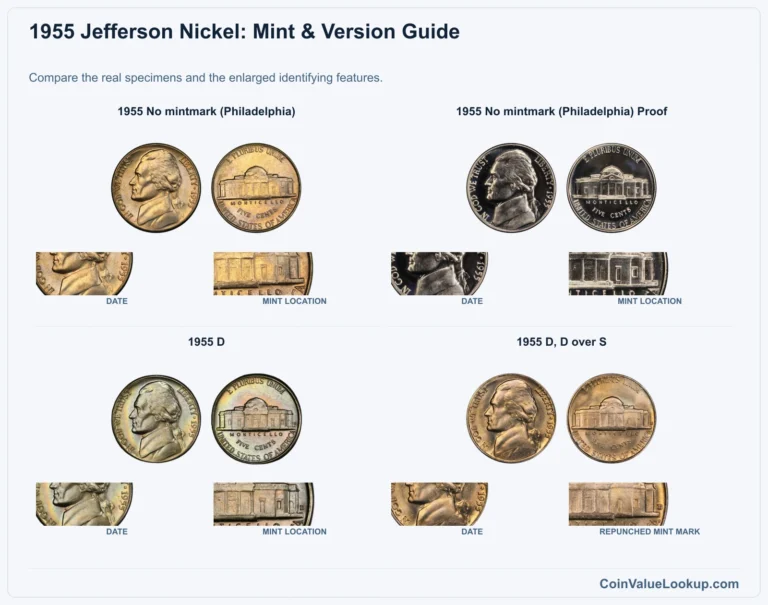
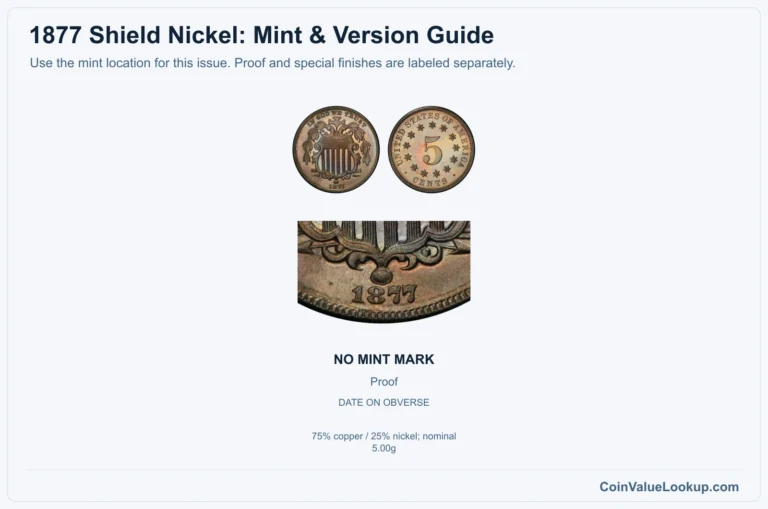
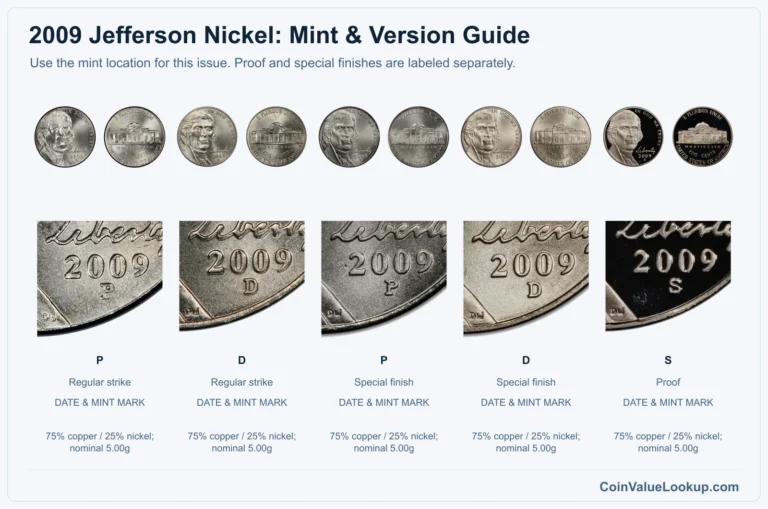
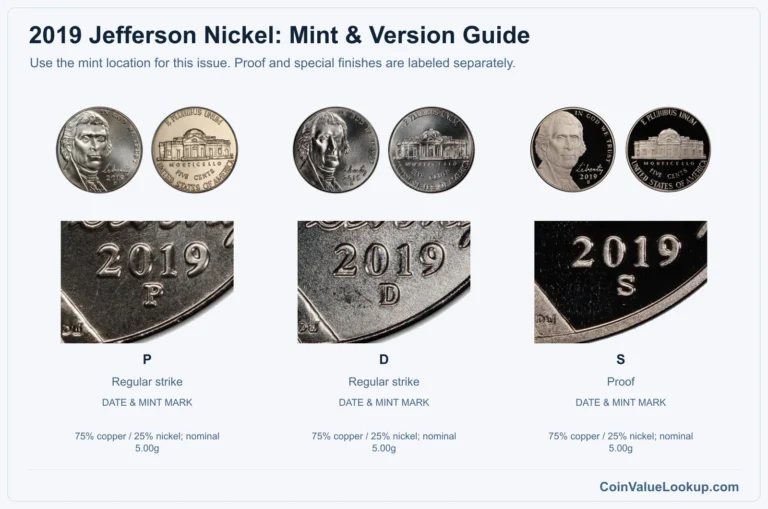
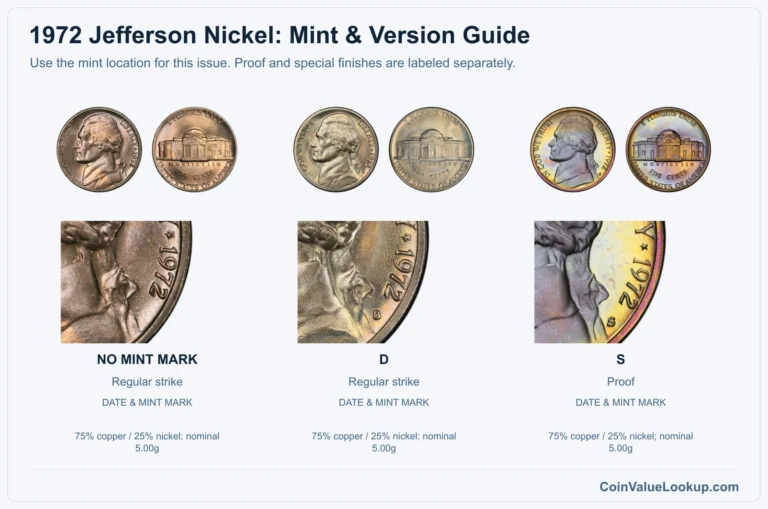
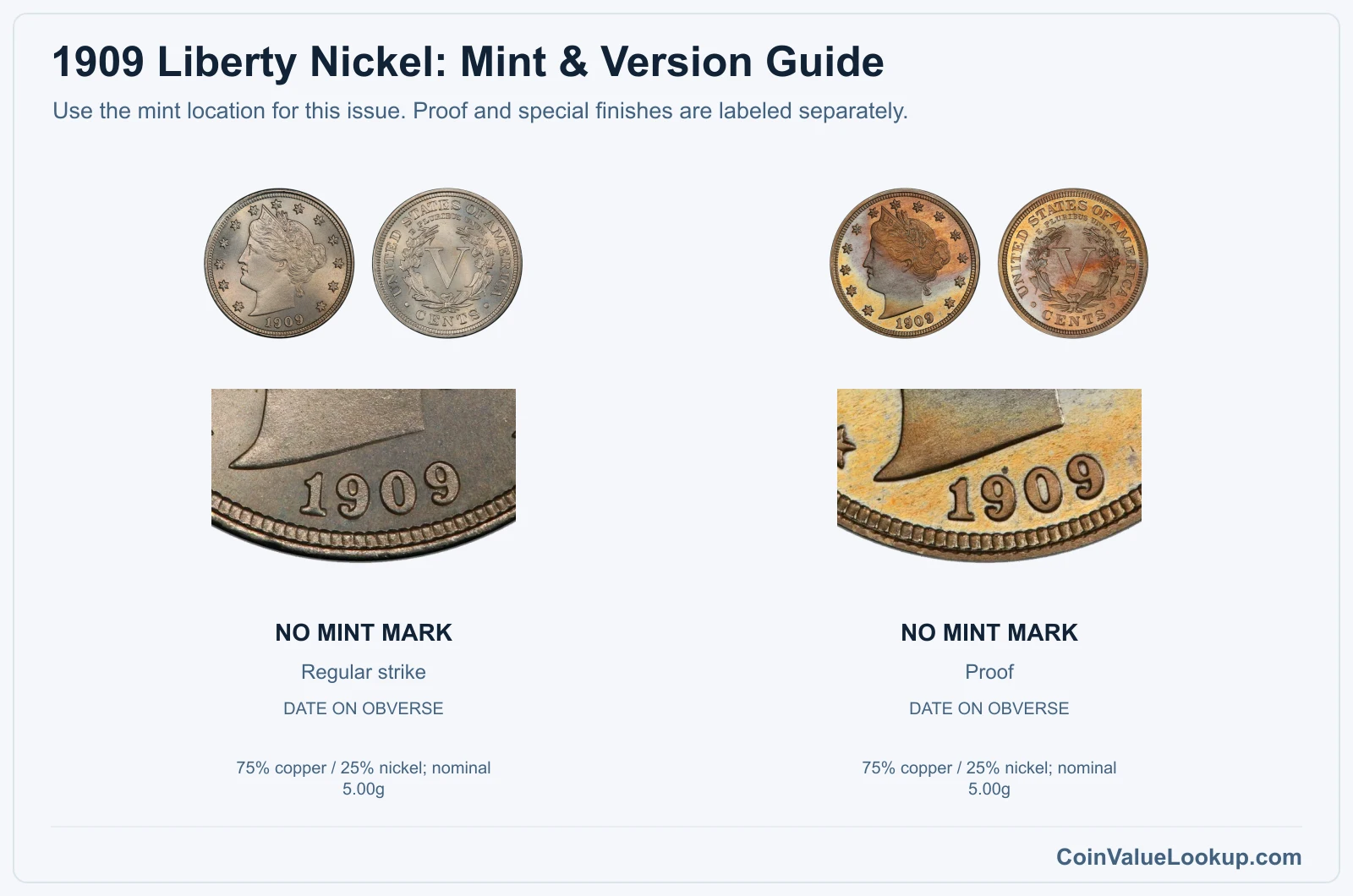
Every 1909 Liberty Nickel was struck at the Philadelphia Mint. There is no mintmark on this coin, and there is no Denver or San Francisco branch issue for this year.
The coin is 75% copper and 25% nickel, weighs about 5 grams, measures 21.2 mm across, and has a plain edge. The reverse reads CENTS below the Roman numeral V.
All regular 1909 nickels carry the With CENTS design, which had been standard since mid-1883.
Do not confuse this coin with the famous 1909-S VDB Lincoln cent. That is a completely different denomination and series.
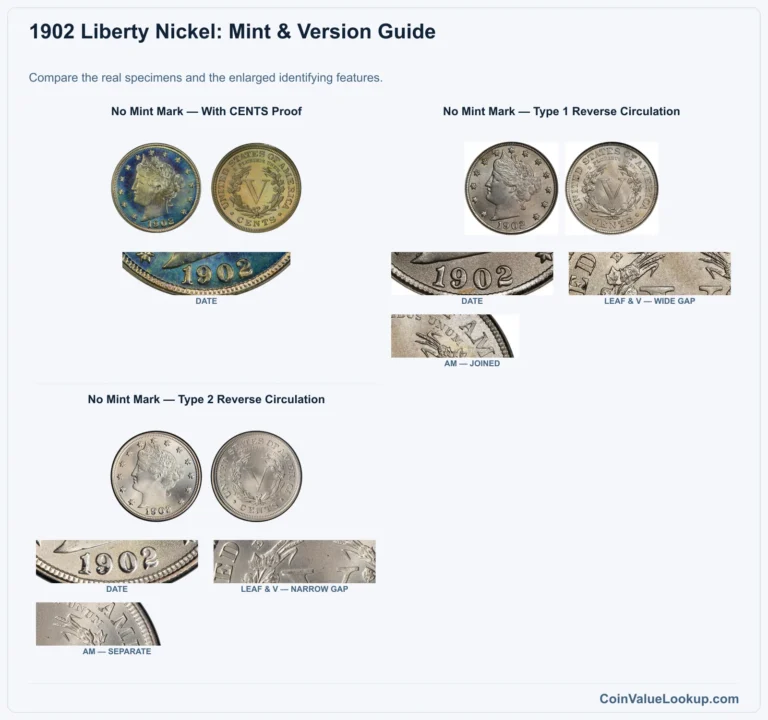
If your coin shows Liberty's head facing left with a coronet and stars on the obverse and a large V surrounded by a wreath on the reverse, you have a Liberty Nickel.
Step 2: Check Your 1909 Liberty Nickel Grade
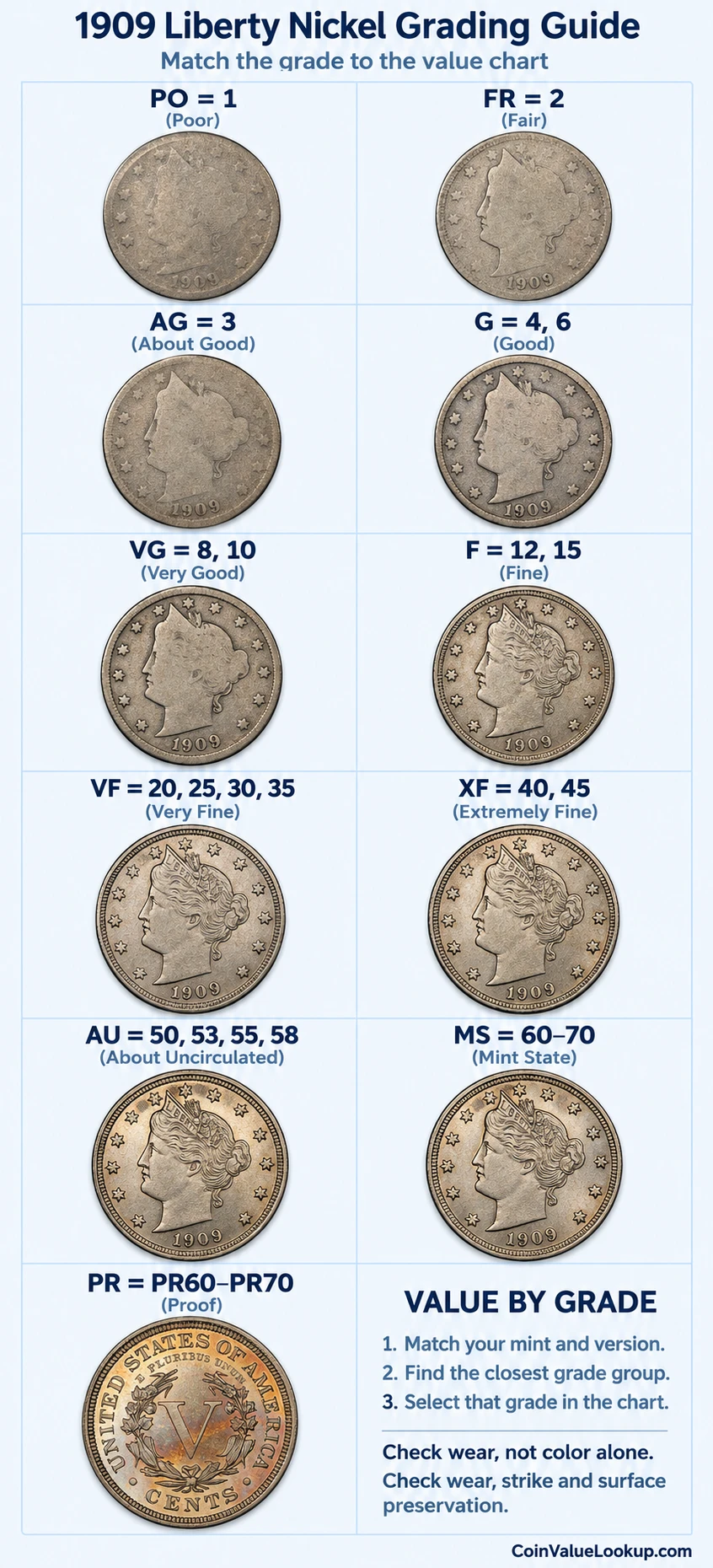
Start with the word LIBERTY on the coronet. On a well-worn coin those letters fade from the outside in, with LI and TY going first.
A G4 coin will show a complete LIBERTY outline but little interior detail. Compare your coin to the reference image to see where your example falls on that spectrum.
Next check the high hair curls above the forehead and Liberty's cheek. These are the first contact points, so wear shows up there early.
A coin with full hair detail, sharp cheek contour, and unbroken luster across the fields is heading into mint-state territory.
Weak details do not always mean circulation wear. Liberty Nickels are known for soft strikes, especially on the reverse corn ears and wreath.
Look at the fields and luster instead of relying on sharpness alone.
Proofs are a manufacturing method, not a grade above Mint State. Proof Liberty Nickels have mirror-like fields and squared-off rims.
Inspect for hairlines from cleaning or mishandling, which are common on older proofs.
Step 3: Check 1909 Liberty Nickel Value by Mint and Version
1909 Liberty Nickel — No Mint Mark — With CENTS Circulation
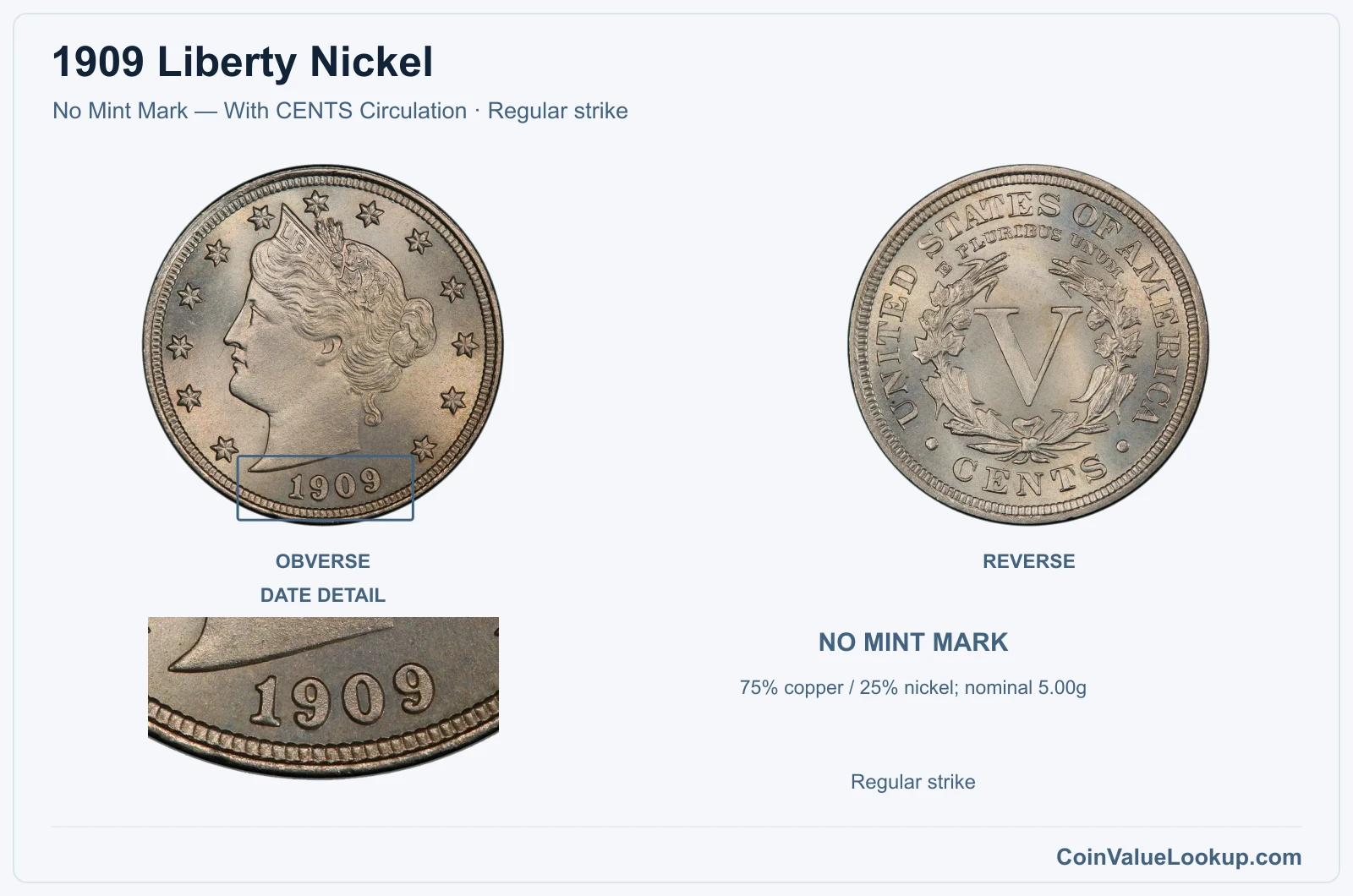
The standard 1909 Liberty Nickel is a Philadelphia business strike with the With CENTS reverse. No mintmark appears anywhere on the coin.
It is composed of 75% copper and 25% nickel, tips the scale at about 5 grams, and has a plain edge.
A USA Coin Book guide estimate places this coin at roughly $3.62 in G4 and around $175 in MS63. The 1909 date is somewhat scarcer than some adjacent years in the series, but it remains obtainable in circulated grades without much trouble.
The real jump in value comes with original, problem-free surfaces in the upper mint-state range.
Coin Value Lookup is a handy place to look up guides for Liberty Nickels and other U.S. coin series when you want a quick reference point for a specific date and grade.
Range Grade
Price Auction Records Appraisal PO PO 1
—
Coin Identifier FR FR 2
—
Coin Identifier AG AG 3
—
Coin Identifier G G 4
—
Coin Identifier
G 6
—
Coin Identifier VG VG 8
—
Coin Identifier
VG 10
—
Coin Identifier F F 12
—
Coin Identifier
F 15
—
Coin Identifier VF VF 20
—
Coin Identifier
VF 25
—
Coin Identifier
VF 30
—
Coin Identifier
VF 35
—
Coin Identifier XF XF 40
—
Coin Identifier
XF 45
—
Coin Identifier AU AU 50
—
Coin Identifier
AU 53
—
Coin Identifier
AU 55
—
Coin Identifier
AU 58
Coin Identifier MS MS 60
Coin Identifier
MS 61
Coin Identifier
MS 62
Coin Identifier
MS 63
Coin Identifier
MS 64
Coin Identifier
MS 65
Coin Identifier
MS 66
Coin Identifier
MS 67
Coin Identifier
MS 68
—
—
—
MS 69
—
—
—
MS 70
—
—
—
1909 Liberty Nickel — No Mint Mark — With CENTS Proof
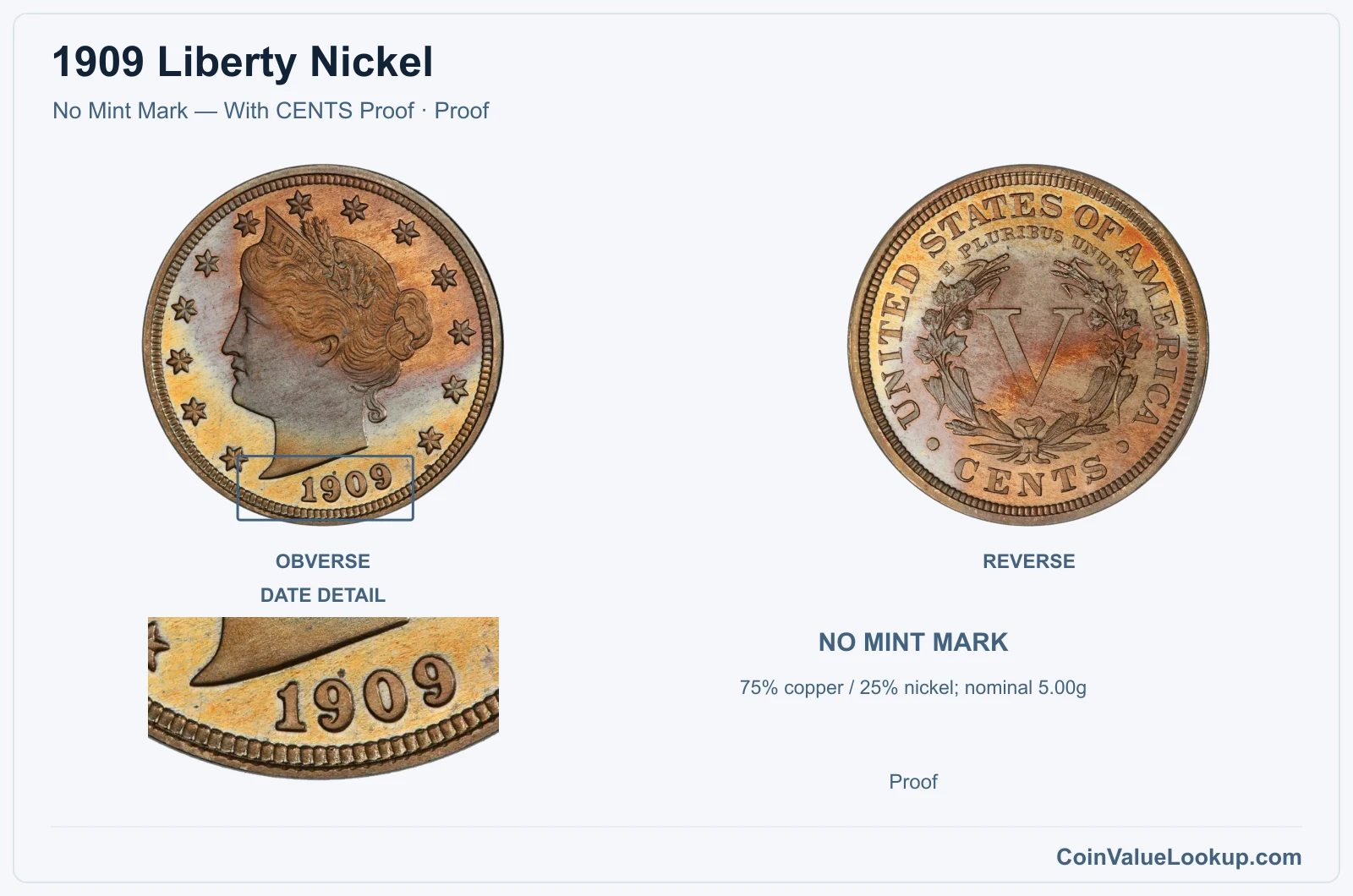
Philadelphia struck proof Liberty Nickels for collectors in 1909, using the same With CENTS design as the business strike but with specially prepared dies and polished planchets. The result is a coin with deeply mirrored fields and crisp, sharp details that business strikes rarely match.
A USA Coin Book guide snapshot places the PR63 at approximately $344. When evaluating a suspected proof, look at the fields under magnification.
They should be glassy and reflective, not merely lustrous. The rims will appear squared rather than rounded.
Hairlines from past cleaning are the most common issue that drags proof grades down.
If you think you have a proof, photograph both sides with the coin tilted slightly so the mirror fields are visible. That reflection is the single best clue separating a proof from a well-struck business coin.
Range Grade
Price Auction Records Appraisal PR PR 1
—
Coin Identifier
PR 2
—
Coin Identifier
PR 3
—
Coin Identifier
PR 4
—
Coin Identifier
PR 6
—
Coin Identifier
PR 8
—
Coin Identifier
PR 10
—
Coin Identifier
PR 12
—
Coin Identifier
PR 15
—
Coin Identifier
PR 20
—
Coin Identifier
PR 25
—
Coin Identifier
PR 30
—
Coin Identifier
PR 35
—
Coin Identifier
PR 40
—
Coin Identifier
PR 45
—
Coin Identifier
PR 50
—
Coin Identifier
PR 53
—
Coin Identifier
PR 55
—
Coin Identifier
PR 58
—
Coin Identifier
PR 60
—
Coin Identifier
PR 61
Coin Identifier
PR 62
Coin Identifier
PR 63
Coin Identifier
PR 64
Coin Identifier
PR 65
Coin Identifier
PR 66
Coin Identifier
PR 67
Coin Identifier
PR 68
Coin Identifier
PR 69
—
—
—
PR 70
—
—
—
1909 Liberty Nickel Error List
1. 1909 Liberty Nickel — Lamination / Split Planchet
A lamination error on a 1909 Liberty Nickel shows up as peeling metal, a retained flap, or a visible split within the coin's alloy. The separation can occur on either face and sometimes extends to the edge, where it is easiest to spot in profile.
When photographing a suspected lamination, capture the edge and the affected face together so the depth and extent of the separation are clear. At least one 1909 nickel with a lamination error has appeared in a certified holder at a lower circulated grade, confirming the type exists for this date.
Condition, the size of the affected area, and overall eye appeal all influence what a lamination error adds to the coin's value. Be careful not to confuse post-mint scraping, corrosion pitting, or a deliberately altered surface with a genuine lamination.
A true lamination follows the metal's internal structure rather than showing random gouging.
2. 1909 Liberty Nickel — Die Crack / Die Chip
Die cracks on a 1909 Liberty Nickel appear as thin raised lines running across the coin's surface. They formed when a working die developed fractures during use, and the metal from the planchet filled those cracks during striking.
A die chip is a small raised blob, usually irregular in shape, from a piece of die that broke away.
A crack that connects to the rim and displaces a section of design is called a cud, and cuds generally draw stronger collector interest than thin interior cracks. Photograph the entire coin so the crack's path and length are visible in context.
Do not mistake incuse scratches, surface corrosion, or bits of foreign material stuck to the coin for a die crack. A genuine die crack is raised above the field, not sunken into it.
The value added depends on the crack's prominence and the coin's overall grade.
3. 1909 Liberty Nickel — Off-Center Strike
An off-center strike happens when the planchet is not seated properly between the dies, producing a shifted design and a blank crescent where no metal was struck. On a 1909 Liberty Nickel, collectors look for examples where the date remains fully visible despite the misalignment, because a readable date is essential for attribution.
The percentage of off-center shift matters. A 5% shift is mild and may barely register visually, while a 10–20% shift with a full date is considerably more desirable.
Photograph both sides so the blank crescent and displaced design are clearly shown.
Do not confuse an off-center strike with a clipped planchet, which has a curved bite taken from the edge before striking, or with post-mint damage from being squeezed or flattened. A genuine off-center coin will show uniform design depth on the struck portion, with the unstruck crescent completely blank.