1909 Barber Quarter Coin Value: How Much Is It Worth?
The 1909 Barber quarter is a 90% silver coin that can range from about $21.00 in well-worn condition to $5,855.00 at the upper end of the guide, depending on version and grade. That is not a single price for every coin.
Which part of the guide applies to yours depends on the mint, whether it is a proof, and its overall condition.
Fast Way to Identify Your 1909 Barber Quarter
The quickest way to start figuring out what your 1909 quarter is worth is to upload clear photos of the front and back. Our identifier can give you a preliminary read on the mint, version, and general condition so you know which part of the guide to check.
Snap both sides in good light and submit them.
1909 Barber Quarter Value
Upload both sides of your 1909 Barber Quarter.
Front Obverse
Upload photo
Back Reverse
Upload photo
Which 1909 Barber Quarter Versions Are Worth Money?
- 1909-O — Guide estimates reach $5,855.00 at MS63, making the New Orleans mint the standout version to check for this date.
- 1909-S — San Francisco strikes carry guide estimates up to $938.00 at MS63, well above the Philadelphia and Denver equivalents.
- 1909 PR — Philadelphia proofs list at $799.00 in PR63; these are a distinct manufacturing finish, not just a shiny business strike.
- Check the mintmark first; a damaged or cleaned coin does not become valuable just because it carries an O or S.
Step 1: Identify Your 1909 Barber Quarter Mint Mark and Version
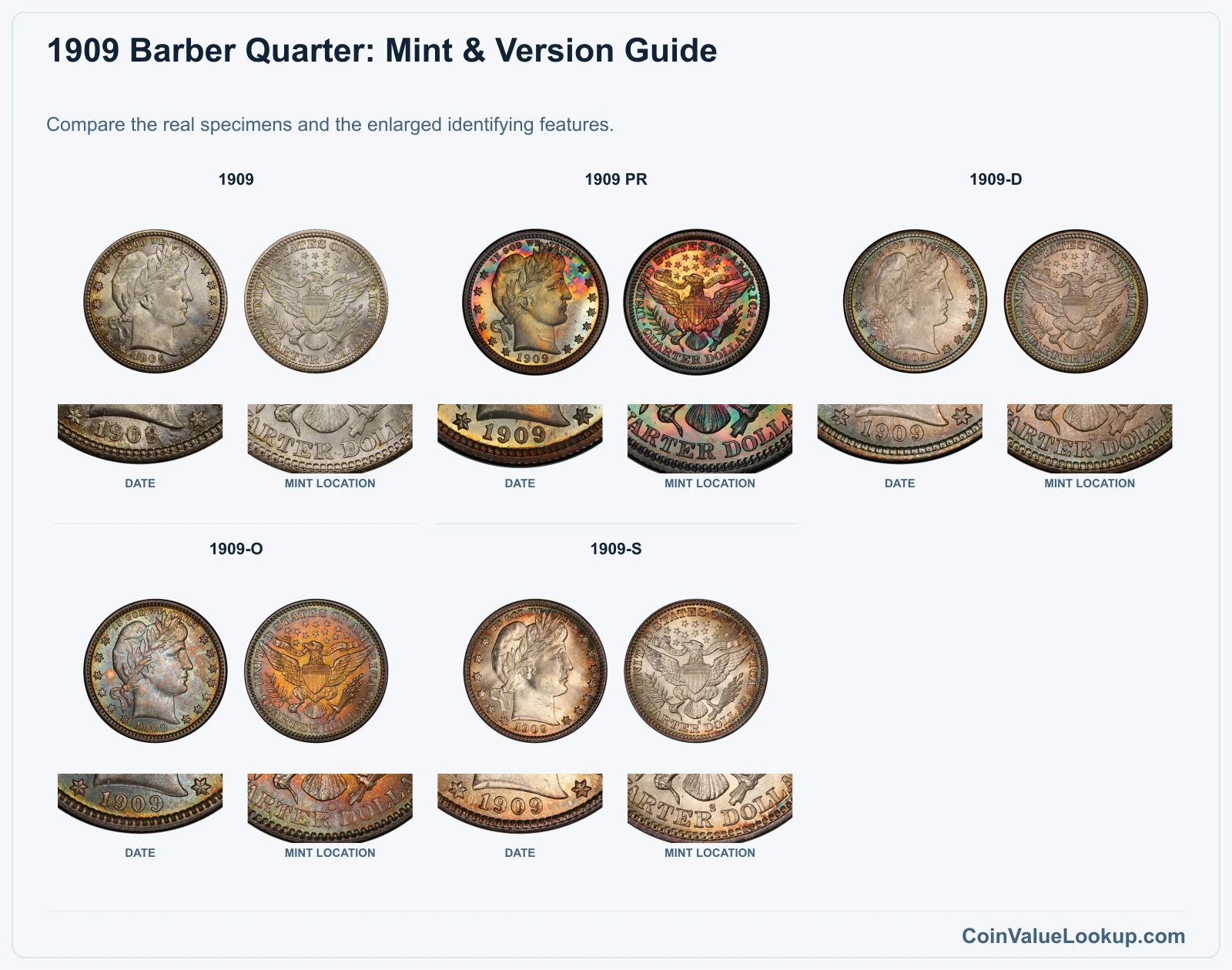
Flip the coin to the reverse side and look below the eagle's tail feathers, just above the words QUARTER DOLLAR. If there is no small letter there, you have a Philadelphia strike.
A tiny O means New Orleans, D means Denver, and S means San Francisco.
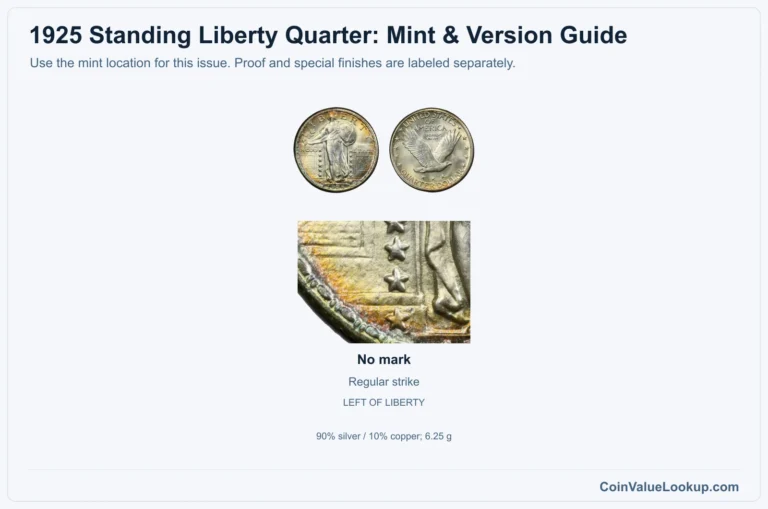
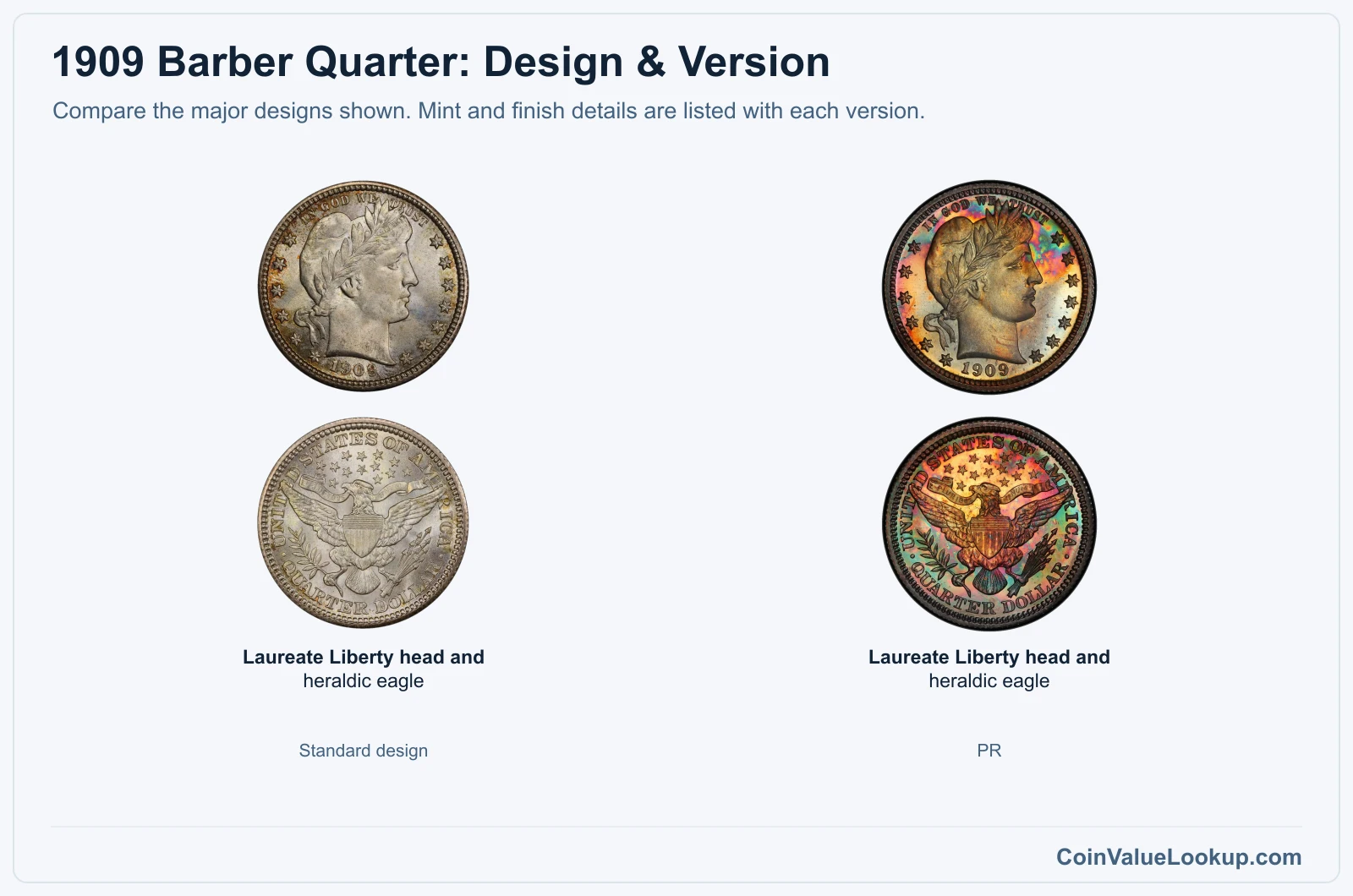
The 1909 Barber quarter is struck in 90% silver and 10% copper, weighing 6.25 grams. The obverse shows a laureate Liberty head, while the reverse carries a heraldic eagle.
Five branches exist for this date: 1909 (Philadelphia business strike), 1909 PR (Philadelphia proof), 1909-D (Denver), 1909-O (New Orleans), and 1909-S (San Francisco). Each has its own value profile, so confirm the mint before you start comparing prices.
Step 2: Check Your 1909 Barber Quarter Grade
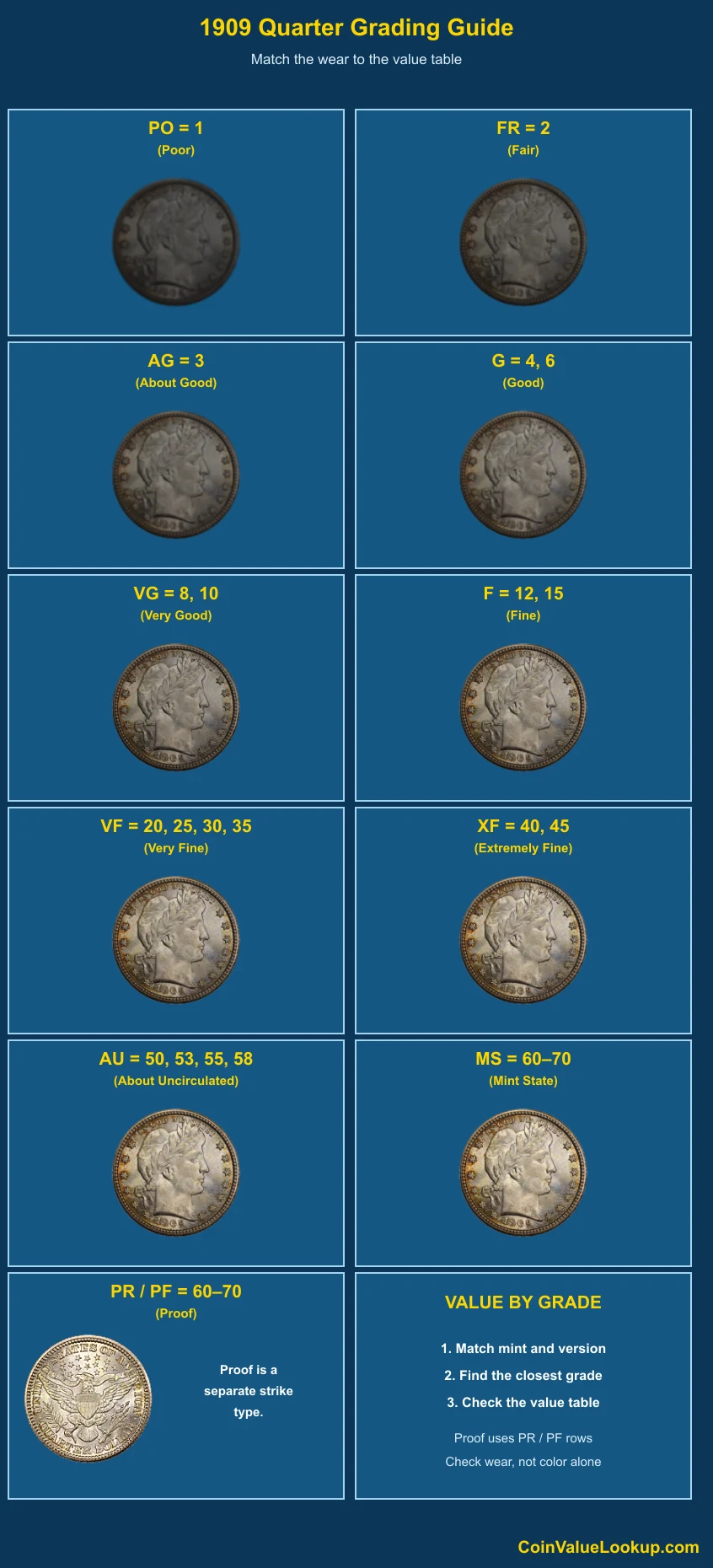
Start with Liberty's hair above the forehead and her cheek. On a well-circulated coin those areas go flat first.
The laurel wreath loses its leaf definition next. On the reverse, check the eagle's breast feathers, wing tops, and tail.
The word LIBERTY appears on the headband. Readable letters indicate a higher grade, but do not rely on LIBERTY alone; some coins lost detail from a weak strike, not from wear.
Compare your coin's wear and remaining luster together using the comparison image. A coin that still has cartwheel luster across the fields but shows soft feathers might be weakly struck rather than worn.
A bright, shiny surface with no luster pattern at all is a red flag for cleaning, which can reduce value regardless of remaining detail.
Step 3: Check 1909 Barber Quarter Value by Mint and Version
1909 Barber Quarter
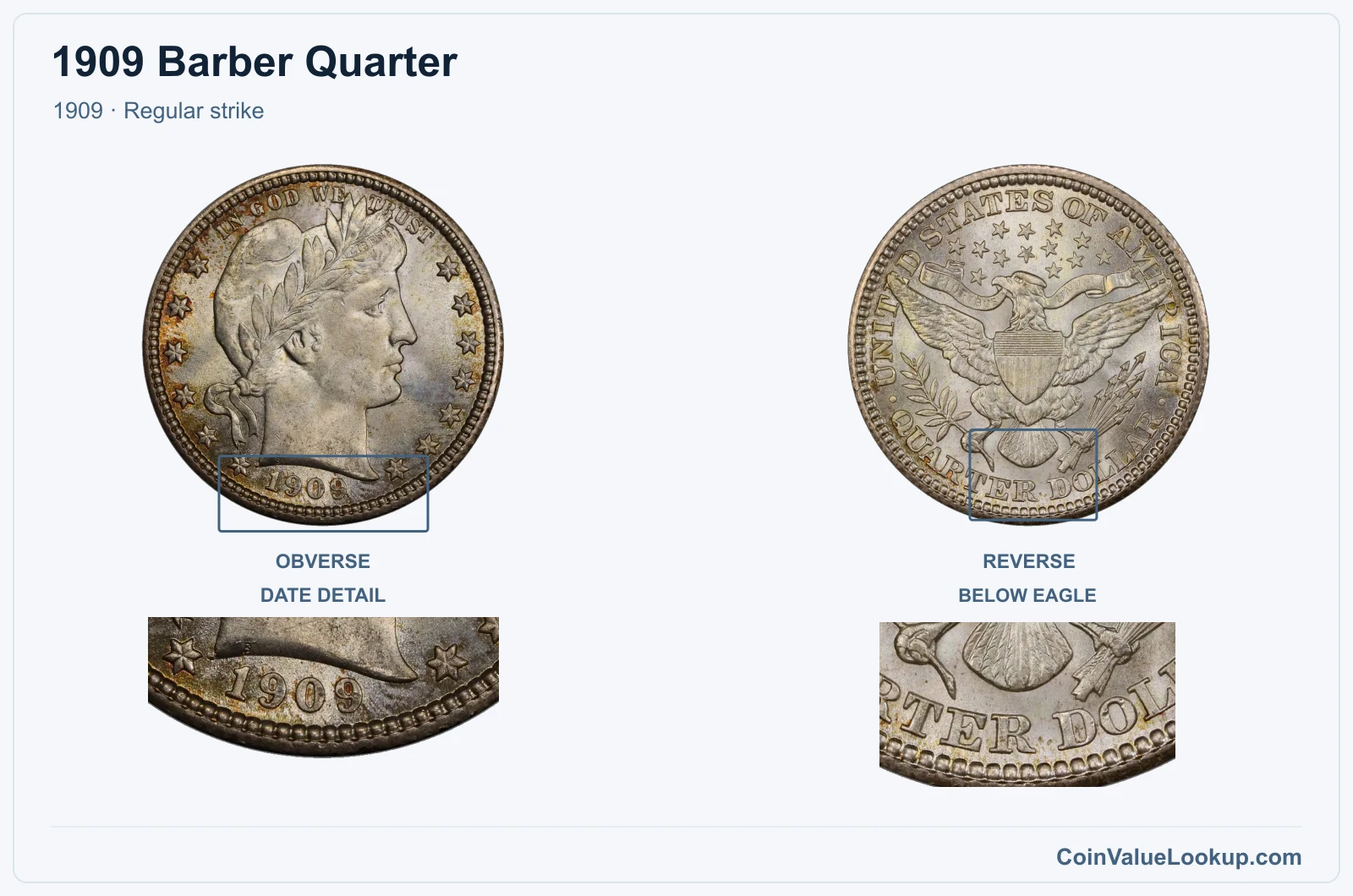
The 1909 Philadelphia business strike has no mintmark on the reverse. In heavily worn Good-4 condition, guide estimates from USA Coin Book place it around $21.00.
Move up to Mint State 60 and the estimate jumps to $309.00, reaching $477.00 at MS63.
Before comparing grades, confirm you have original surfaces. Cleaning strips the natural tone and luster, which pulls the practical value well below these guide figures.
Strike quality also matters; a softly struck example can look worn when it is not.
Range Grade
Price Auction Records Appraisal PO PO 1
—
Coin Identifier FR FR 2
—
Coin Identifier AG AG 3
—
Coin Identifier G G 4
—
Coin Identifier
G 6
—
Coin Identifier VG VG 8
—
Coin Identifier
VG 10
—
Coin Identifier F F 12
Coin Identifier
F 15
—
Coin Identifier VF VF 20
—
Coin Identifier
VF 25
Coin Identifier
VF 30
—
Coin Identifier
VF 35
—
Coin Identifier XF XF 40
Coin Identifier
XF 45
Coin Identifier AU AU 50
Coin Identifier
AU 53
Coin Identifier
AU 55
Coin Identifier
AU 58
Coin Identifier MS MS 60
—
Coin Identifier
MS 61
Coin Identifier
MS 62
Coin Identifier
MS 63
Coin Identifier
MS 64
Coin Identifier
MS 65
Coin Identifier
MS 66
Coin Identifier
MS 67
Coin Identifier
MS 68
—
—
—
MS 69
—
—
—
MS 70
—
—
—
1909 Barber Quarter — PR
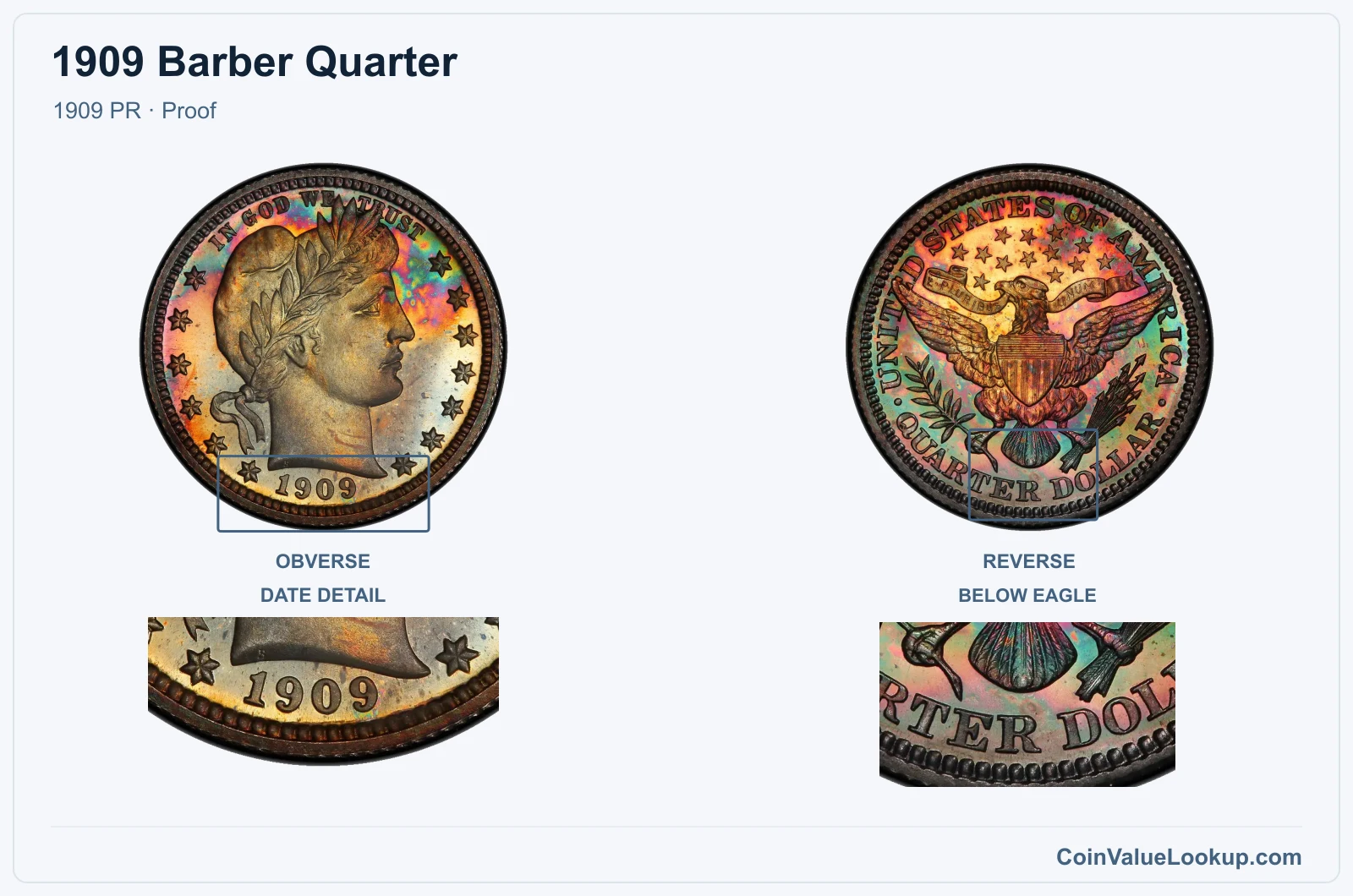
The 1909 proof is a Philadelphia product with no mintmark, but it was made with a completely different manufacturing process than the regular business strike. Proofs have mirrored fields and sharply defined details from specially prepared dies.
USA Coin Book estimates $799.00 at PR63. Surface haze, hairlines from improper storage or handling, and any evidence of cleaning directly affect what a proof is worth.
Do not confuse a shiny circulated coin with a proof; the difference is in the field finish and edge of the devices, not just brightness.
Coin Value Lookup is a handy starting point if you want to look up other dates or denominations in this series alongside your 1909 proof.
Range Grade
Price Auction Records Appraisal PR PR 1
—
Coin Identifier
PR 2
—
Coin Identifier
PR 3
—
Coin Identifier
PR 4
—
Coin Identifier
PR 6
—
Coin Identifier
PR 8
—
Coin Identifier
PR 10
—
Coin Identifier
PR 12
—
Coin Identifier
PR 15
—
Coin Identifier
PR 20
—
Coin Identifier
PR 25
—
Coin Identifier
PR 30
—
Coin Identifier
PR 35
—
Coin Identifier
PR 40
—
Coin Identifier
PR 45
—
Coin Identifier
PR 50
—
Coin Identifier
PR 53
—
Coin Identifier
PR 55
—
Coin Identifier
PR 58
—
Coin Identifier
PR 60
Coin Identifier
PR 61
Coin Identifier
PR 62
Coin Identifier
PR 63
Coin Identifier
PR 64
Coin Identifier
PR 65
Coin Identifier
PR 66
Coin Identifier
PR 67
Coin Identifier
PR 68
Coin Identifier
PR 69
—
—
—
PR 70
—
—
—
1909 Barber Quarter — D
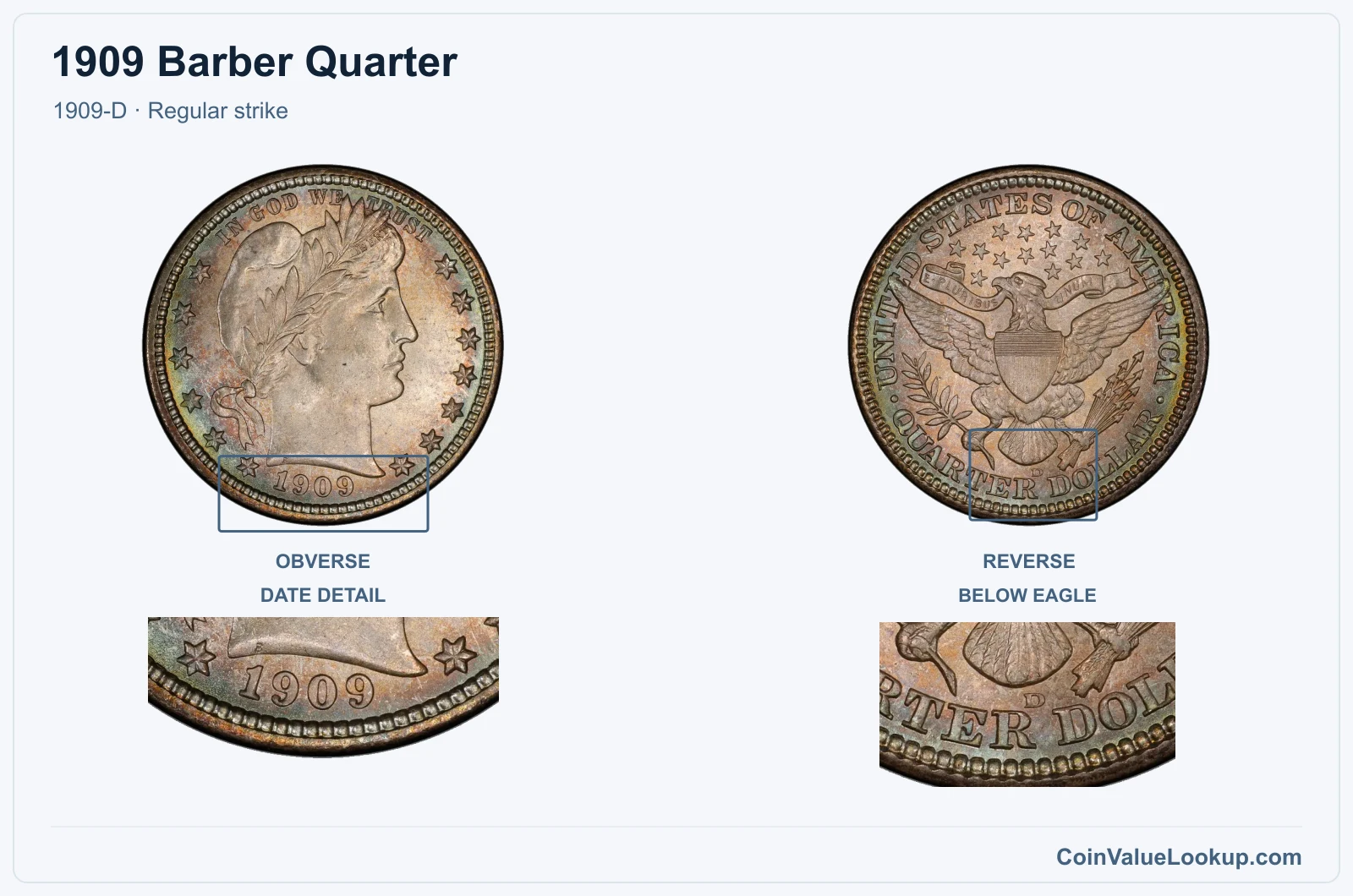
The 1909-D carries a small D mintmark on the reverse below the eagle's tail. Denver business strikes share the same guide anchors as Philadelphia for this date: $21.00 at G4, $309.00 at MS60, and $477.00 at MS63, per USA Coin Book.
Original surfaces and strong strike quality matter for any grade comparison. Coins with damage or heavy cleaning will trade below these estimates regardless of the mintmark.
Range Grade
Price Auction Records Appraisal PO PO 1
—
Coin Identifier FR FR 2
—
Coin Identifier AG AG 3
—
Coin Identifier G G 4
—
Coin Identifier
G 6
—
Coin Identifier VG VG 8
—
Coin Identifier
VG 10
—
Coin Identifier F F 12
—
Coin Identifier
F 15
—
Coin Identifier VF VF 20
Coin Identifier
VF 25
Coin Identifier
VF 30
—
Coin Identifier
VF 35
—
Coin Identifier XF XF 40
Coin Identifier
XF 45
Coin Identifier AU AU 50
Coin Identifier
AU 53
Coin Identifier
AU 55
Coin Identifier
AU 58
Coin Identifier MS MS 60
Coin Identifier
MS 61
Coin Identifier
MS 62
Coin Identifier
MS 63
Coin Identifier
MS 64
Coin Identifier
MS 65
Coin Identifier
MS 66
Coin Identifier
MS 67
Coin Identifier
MS 68
—
—
—
MS 69
—
—
—
MS 70
—
—
—
1909 Barber Quarter — O
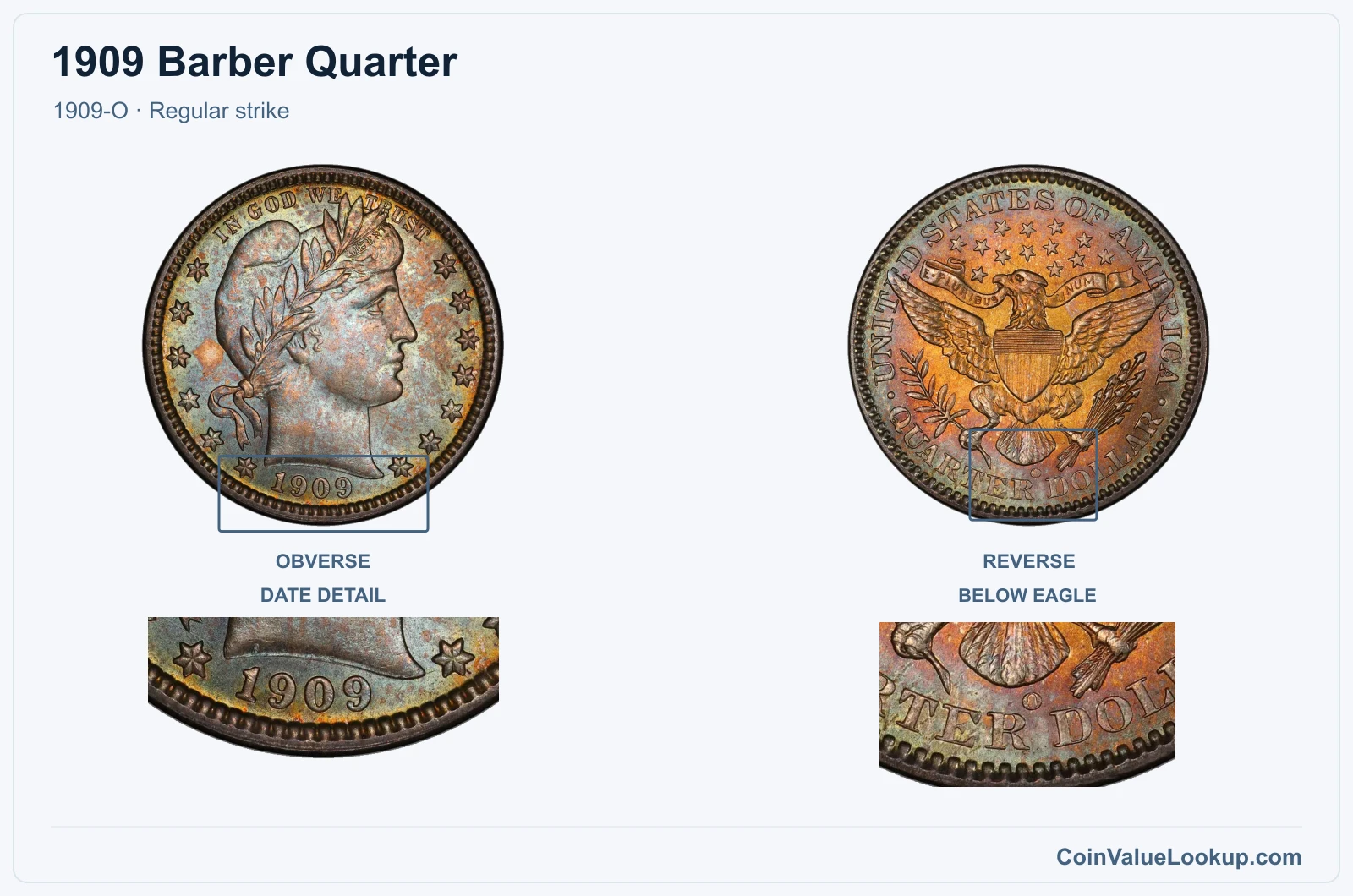
The 1909-O is the big prize for this year. New Orleans quarters from 1909 carry significantly higher guide estimates than any other business-strike mint: $82.00 even in well-worn G4 condition, jumping to $5,230.00 at MS60 and $5,855.00 at MS63 per USA Coin Book.
That steep climb from circulated to uncirculated tells you that surviving mint-state examples are scarce. Look for the O mintmark below the eagle's tail on the reverse.
Confirm the letter shape carefully, because a damaged or corroded area can sometimes be mistaken for a mintmark that is not there.
Original surfaces are critical at these price levels. Cleaning, tooling, or any artificial enhancement will sharply reduce the coin's appeal to collectors.
Range Grade
Price Auction Records Appraisal PO PO 1
—
Coin Identifier FR FR 2
Coin Identifier AG AG 3
Coin Identifier G G 4
Coin Identifier
G 6
Coin Identifier VG VG 8
Coin Identifier
VG 10
Coin Identifier F F 12
Coin Identifier
F 15
Coin Identifier VF VF 20
Coin Identifier
VF 25
Coin Identifier
VF 30
Coin Identifier
VF 35
Coin Identifier XF XF 40
Coin Identifier
XF 45
Coin Identifier AU AU 50
Coin Identifier
AU 53
Coin Identifier
AU 55
Coin Identifier
AU 58
Coin Identifier MS MS 60
—
Coin Identifier
MS 61
Coin Identifier
MS 62
Coin Identifier
MS 63
Coin Identifier
MS 64
Coin Identifier
MS 65
Coin Identifier
MS 66
Coin Identifier
MS 67
Coin Identifier
MS 68
—
—
—
MS 69
—
—
—
MS 70
—
—
—
1909 Barber Quarter — S
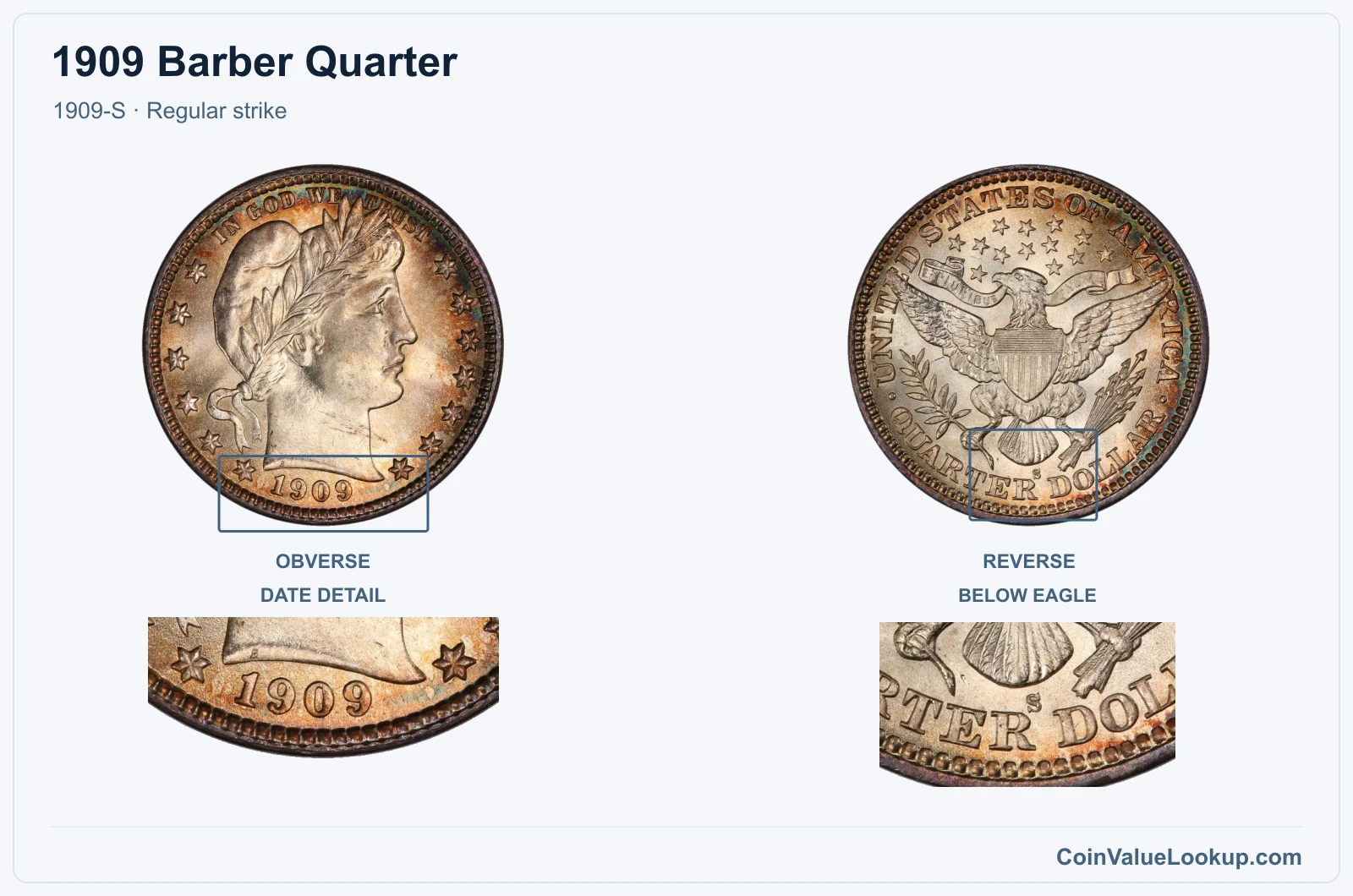
The 1909-S shows an S mintmark on the reverse. San Francisco strikes sit between the common Philadelphia/Denver coins and the much scarcer New Orleans issue in terms of value.
USA Coin Book estimates $21.00 at G4, $447.00 at MS60, and $938.00 at MS63. That MS63 figure is roughly double the Philadelphia equivalent, so condition matters even more here.
Original luster and undamaged surfaces push a San Francisco coin into the upper range; a cleaned or scratched example will not command these guide estimates.
Range Grade
Price Auction Records Appraisal PO PO 1
—
Coin Identifier FR FR 2
—
Coin Identifier AG AG 3
—
Coin Identifier G G 4
—
Coin Identifier
G 6
—
Coin Identifier VG VG 8
—
Coin Identifier
VG 10
Coin Identifier F F 12
—
Coin Identifier
F 15
Coin Identifier VF VF 20
Coin Identifier
VF 25
—
Coin Identifier
VF 30
Coin Identifier
VF 35
Coin Identifier XF XF 40
—
Coin Identifier
XF 45
Coin Identifier AU AU 50
Coin Identifier
AU 53
Coin Identifier
AU 55
Coin Identifier
AU 58
Coin Identifier MS MS 60
Coin Identifier
MS 61
Coin Identifier
MS 62
Coin Identifier
MS 63
Coin Identifier
MS 64
Coin Identifier
MS 65
Coin Identifier
MS 66
Coin Identifier
MS 67
Coin Identifier
MS 68
—
—
—
MS 69
—
—
—
MS 70
—
—
—
1909 Barber Quarter Error List
1. 1909 Barber Quarter — Doubled Die Obverse
A Doubled Die Obverse has been reported for the 1909 Philadelphia Barber quarter. This type of error shows consistent doubling on obverse design elements such as letters or portions of Liberty's portrait.
To check, compare the obverse lettering and details of your coin against a normal 1909 quarter under the same lighting and magnification. Genuine doubled die features show a distinct, repeatable separation or notching on affected areas.
Be careful not to confuse this with machine doubling, which tends to produce a flat, shelf-like distortion rather than a clean secondary image. Reflections off shiny surfaces and worn die contours can also mimic doubling at a glance.
The value of a confirmed DDO depends on the visibility of the doubling and the coin's overall condition, but no specific price range is established here.
2. 1909 Barber Quarter — Repunched Mintmark
A Repunched Mintmark variety has been reported specifically for the 1909-D Barber quarter from Denver. This occurs when the mintmark punch was applied more than once in slightly different positions, leaving traces of the earlier impression.
Inspect the D mintmark closely, ideally under magnification. You are looking for remnants of a second D at a slightly different angle or offset from the primary mark.
Compare your coin to a normal 1909-D at matching magnification so the difference is clear.
Do not mistake a die chip, corrosion around the letter, or machine doubling for a repunched mintmark. Those leave irregular shapes rather than the distinct outline of a second letter.
The value of a confirmed RPM depends on how visible the repunching is and the coin's condition, but no specific guide price is available for this variety.