1909 Barber Half Dollar Coin Value: How Much Is It Worth?
The 1909 Barber Half Dollar spans roughly $44 at G4 to about $2,359 at MS63, depending on which mint struck it and what shape it is in. Three mints produced business strikes this year — Philadelphia, New Orleans, and San Francisco — with no Denver issue.
Proofs and error varieties carry their own separate value considerations.
Fast Way to Identify Your 1909 Barber Half Dollar
Snap clear photos of both the front and back of your coin and upload them here for a preliminary identification. Make sure the date, Liberty's portrait, and the area just below the eagle's tail feathers are all in focus.
That mintmark zone is critical for sorting out which version you have.
1909 Barber Half Dollar Value
Upload both sides of your 1909 Barber Half Dollar.
Front Obverse
Upload photo
Back Reverse
Upload photo
Which 1909 Barber Half Dollar Versions Are Worth Money?
- The 1909-O (New Orleans) commands the highest guide value at MS63 — about $2,359 — partly because it was the last year this mint produced the denomination.
- The 1909-S (San Francisco) lists around $1,408 at MS63, making uncirculated examples well worth identifying carefully.
- Philadelphia Proofs at PR63 carry a guide estimate near $1,363, but genuine Proofs require mirrored fields and sharp rim detail — polishing a business strike does not count.
- Problem-free upper circulated and Mint State coins of any mint can be significantly more valuable than heavily worn examples, so accurate grading matters.
- Check your mintmark and finish before consulting value charts; an unusual mark alone does not establish a valuable error.
Step 1: Identify Your 1909 Barber Half Dollar Mint Mark and Version
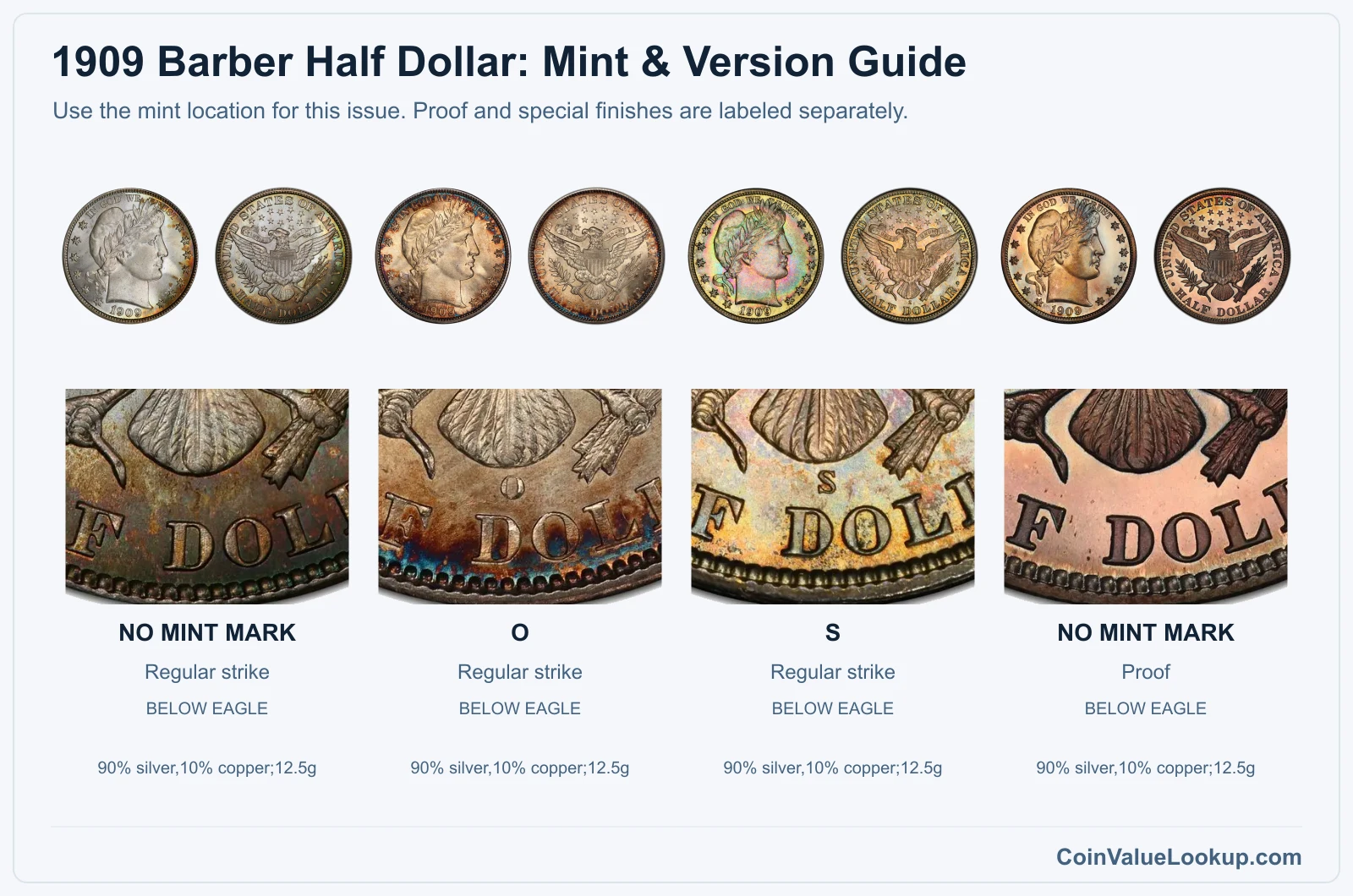
The 1909 Barber Half Dollar shows a right-facing Liberty head on the obverse and a heraldic eagle on the reverse, with HALF DOLLAR spelled out below. The coin is 90% silver and 10% copper, weighs about 12.5 grams, and measures 30.6 mm across with a reeded edge.
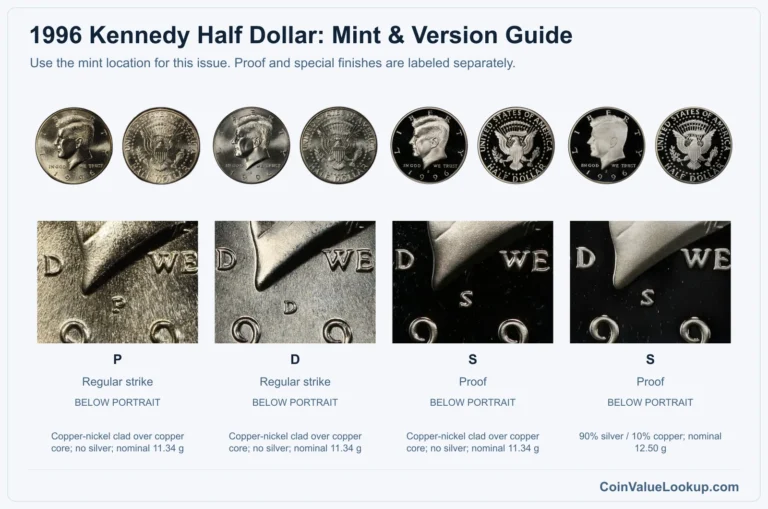
To figure out your mint, flip the coin to the reverse and look directly below the eagle's tail feathers, just above the words HALF DOLLAR. A small "O" means New Orleans.
A small "S" means San Francisco. No letter at all means Philadelphia.
There was no Denver Barber Half in 1909, so if you think you see a "D" there, look again — it is likely damage or misidentification. The 1909-O is the final year New Orleans struck this denomination, which gives it some historical weight among Barber collectors.
Step 2: Check Your 1909 Barber Half Dollar Grade
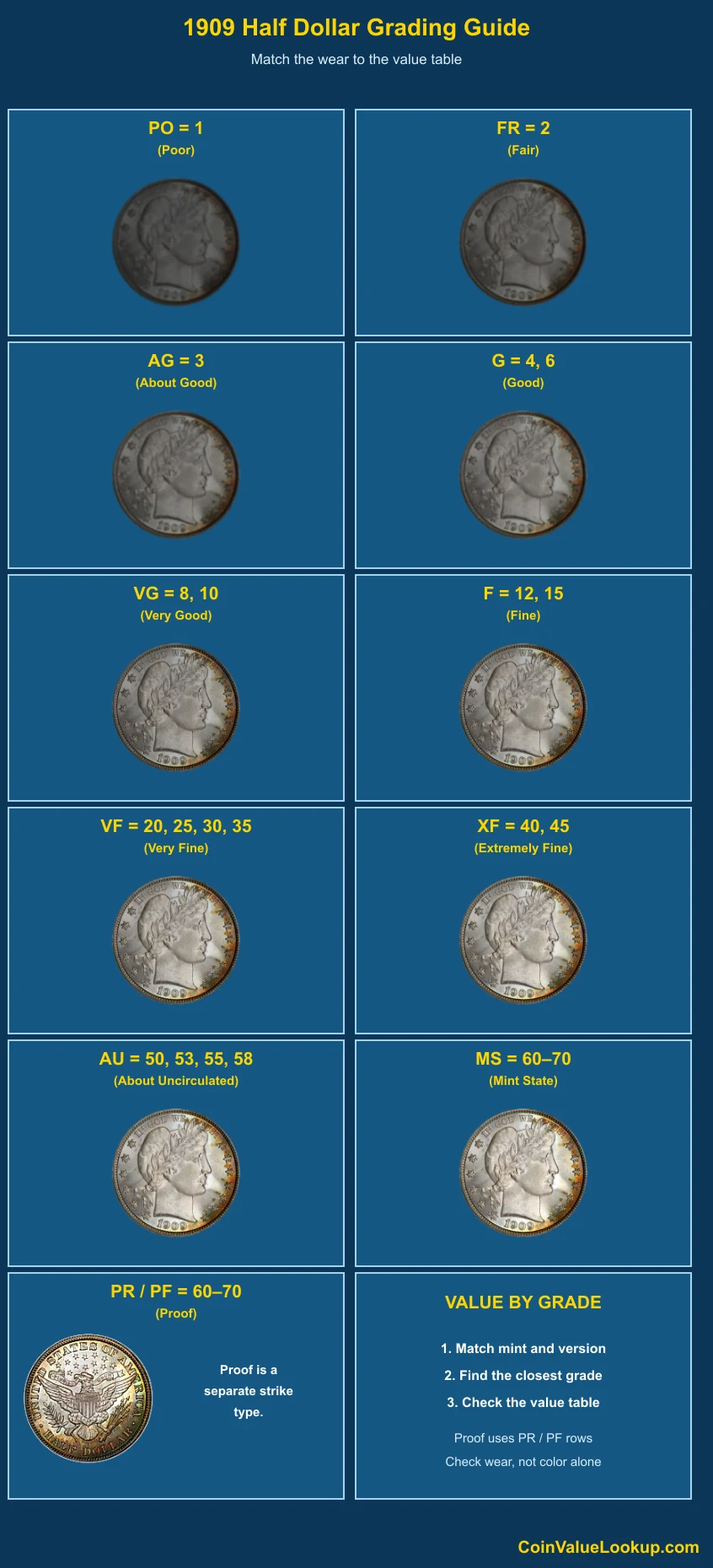
Start with Liberty's cheek and the hair above the ear. In lower grades, these flatten first.
Then check the headband — on well-worn coins the word LIBERTY fades, but do not rely on those letters alone because earlier hub changes affect how quickly they wear.
On the reverse, examine the eagle's head, wing tips, and tail feathers. New Orleans strikes in particular can show softness at the eagle's claws and arrow feathers that looks like wear but is actually a strike characteristic.
Separating genuine friction from a weak strike takes a side-by-side look.
Use the comparison image to match your coin's overall wear pattern. Loss of original luster matters too — a coin with sharp detail but stripped, polished surfaces is not the same as one with natural toning intact.
Proof is a manufacturing finish with mirrored fields, not a grade sitting above Mint State.
Step 3: Check 1909 Barber Half Dollar Value by Mint and Version
1909 Barber Half Dollar — No Mint Mark — Regular Issue
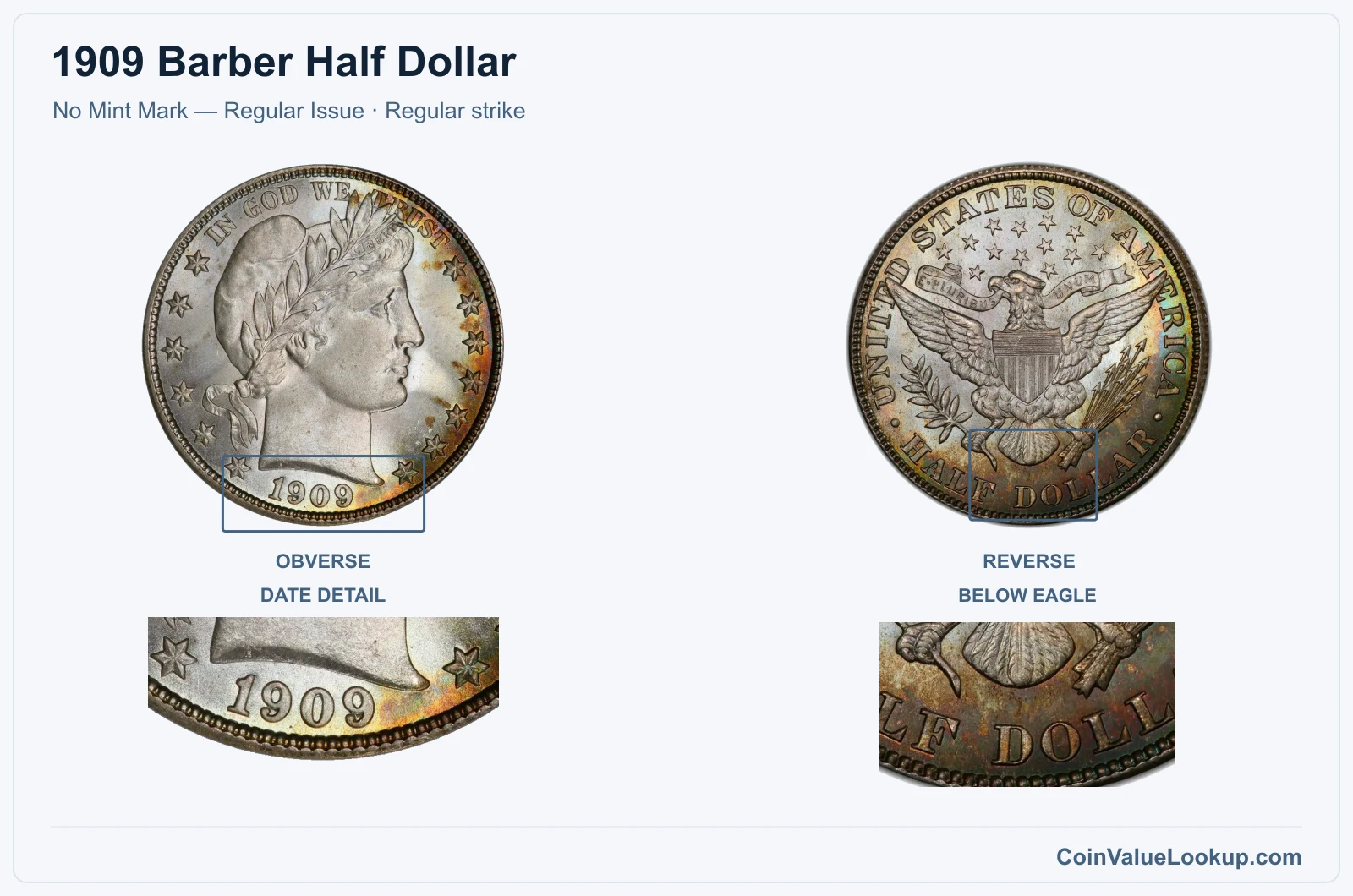
The Philadelphia issue carries no mintmark. At G4, a retail guide places it around $44, climbing to roughly $1,082 at MS63.
That is a big jump, so condition drives everything here.
When examining a no-mintmark 1909, confirm there is genuinely nothing below the eagle's tail — not a worn-off letter or a filled spot. Original surfaces with natural toning are preferred over cleaned or polished coins, even if the cleaned coin appears shinier.
A dipped or whizzed coin loses collector appeal fast.
Range Grade
Price Auction Records Appraisal PO PO 1
—
Coin Identifier FR FR 2
—
Coin Identifier AG AG 3
—
Coin Identifier G G 4
—
Coin Identifier
G 6
Coin Identifier VG VG 8
—
Coin Identifier
VG 10
Coin Identifier F F 12
Coin Identifier
F 15
Coin Identifier VF VF 20
Coin Identifier
VF 25
Coin Identifier
VF 30
Coin Identifier
VF 35
Coin Identifier XF XF 40
Coin Identifier
XF 45
Coin Identifier AU AU 50
Coin Identifier
AU 53
Coin Identifier
AU 55
Coin Identifier
AU 58
Coin Identifier MS MS 60
Coin Identifier
MS 61
Coin Identifier
MS 62
Coin Identifier
MS 63
Coin Identifier
MS 64
Coin Identifier
MS 65
Coin Identifier
MS 66
Coin Identifier
MS 67
Coin Identifier
MS 68
—
—
—
MS 69
—
—
—
MS 70
—
—
—
1909 Barber Half Dollar — O — Regular Issue
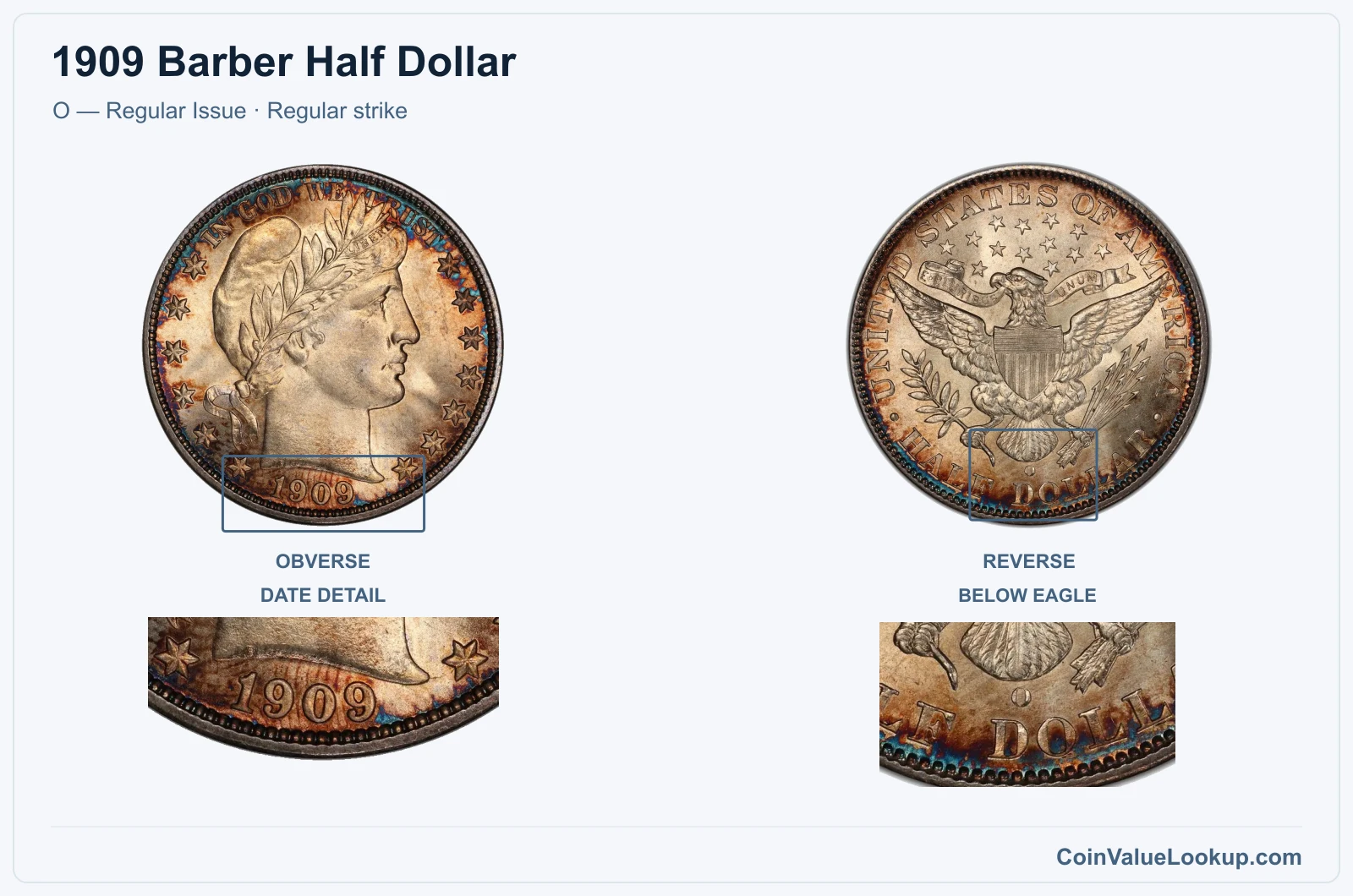
The "O" mintmark sits below the eagle's tail feathers and marks this as a New Orleans product — the last Barber Half from that mint. Guide estimates run from about $52 at G4 to approximately $2,359 at MS63, the highest among the three business-strike versions this year.
New Orleans strikes often show softness at the eagle's claws and arrow feathers that can be mistaken for circulation wear. Before downgrading, compare with a known O-mint example at the same grade.
Original, uncleaned surfaces are essential for top value. This mint also hosts the documented Mumps die-bulge variety and die crack errors, so inspect the portrait and bust area carefully.
Range Grade
Price Auction Records Appraisal PO PO 1
—
Coin Identifier FR FR 2
—
Coin Identifier AG AG 3
—
Coin Identifier G G 4
—
Coin Identifier
G 6
—
Coin Identifier VG VG 8
Coin Identifier
VG 10
Coin Identifier F F 12
Coin Identifier
F 15
Coin Identifier VF VF 20
Coin Identifier
VF 25
Coin Identifier
VF 30
Coin Identifier
VF 35
Coin Identifier XF XF 40
Coin Identifier
XF 45
Coin Identifier AU AU 50
Coin Identifier
AU 53
Coin Identifier
AU 55
Coin Identifier
AU 58
Coin Identifier MS MS 60
—
Coin Identifier
MS 61
Coin Identifier
MS 62
Coin Identifier
MS 63
Coin Identifier
MS 64
Coin Identifier
MS 65
Coin Identifier
MS 66
Coin Identifier
MS 67
Coin Identifier
MS 68
—
—
—
MS 69
—
—
—
MS 70
—
—
—
1909 Barber Half Dollar — S — Regular Issue
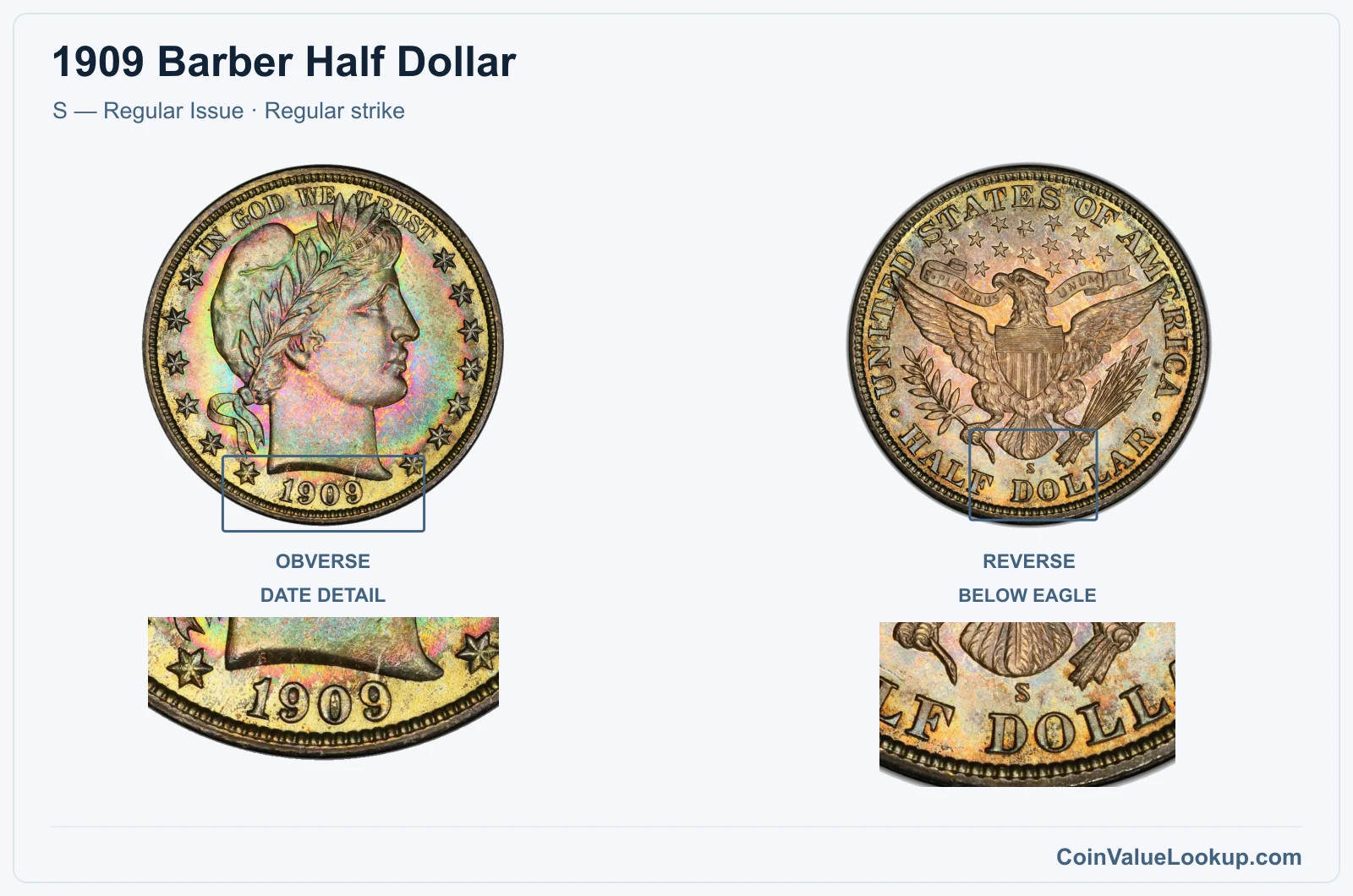
Look for a small "S" below the eagle's tail. The San Francisco version lists around $44 at G4 and roughly $1,408 at MS63 in one retail guide snapshot.
The S mintmark on this date is also associated with a reported inverted-mintmark variety, so pay attention to the orientation of the letter — compare it against a normal S punch at the same scale. As with all Barber halves, original luster and surfaces matter more than any single detail when determining grade and value.
Coin Value Lookup is a good starting point if you are looking up other dates or denominations in the Barber series. You can browse guides organized by coin type and year.
Range Grade
Price Auction Records Appraisal PO PO 1
—
Coin Identifier FR FR 2
—
Coin Identifier AG AG 3
—
Coin Identifier G G 4
—
Coin Identifier
G 6
—
Coin Identifier VG VG 8
Coin Identifier
VG 10
Coin Identifier F F 12
Coin Identifier
F 15
Coin Identifier VF VF 20
Coin Identifier
VF 25
Coin Identifier
VF 30
Coin Identifier
VF 35
Coin Identifier XF XF 40
Coin Identifier
XF 45
Coin Identifier AU AU 50
Coin Identifier
AU 53
Coin Identifier
AU 55
Coin Identifier
AU 58
Coin Identifier MS MS 60
Coin Identifier
MS 61
Coin Identifier
MS 62
Coin Identifier
MS 63
Coin Identifier
MS 64
Coin Identifier
MS 65
Coin Identifier
MS 66
Coin Identifier
MS 67
Coin Identifier
MS 68
—
—
—
MS 69
—
—
—
MS 70
—
—
—
1909 Barber Half Dollar — No Mint Mark — Proof
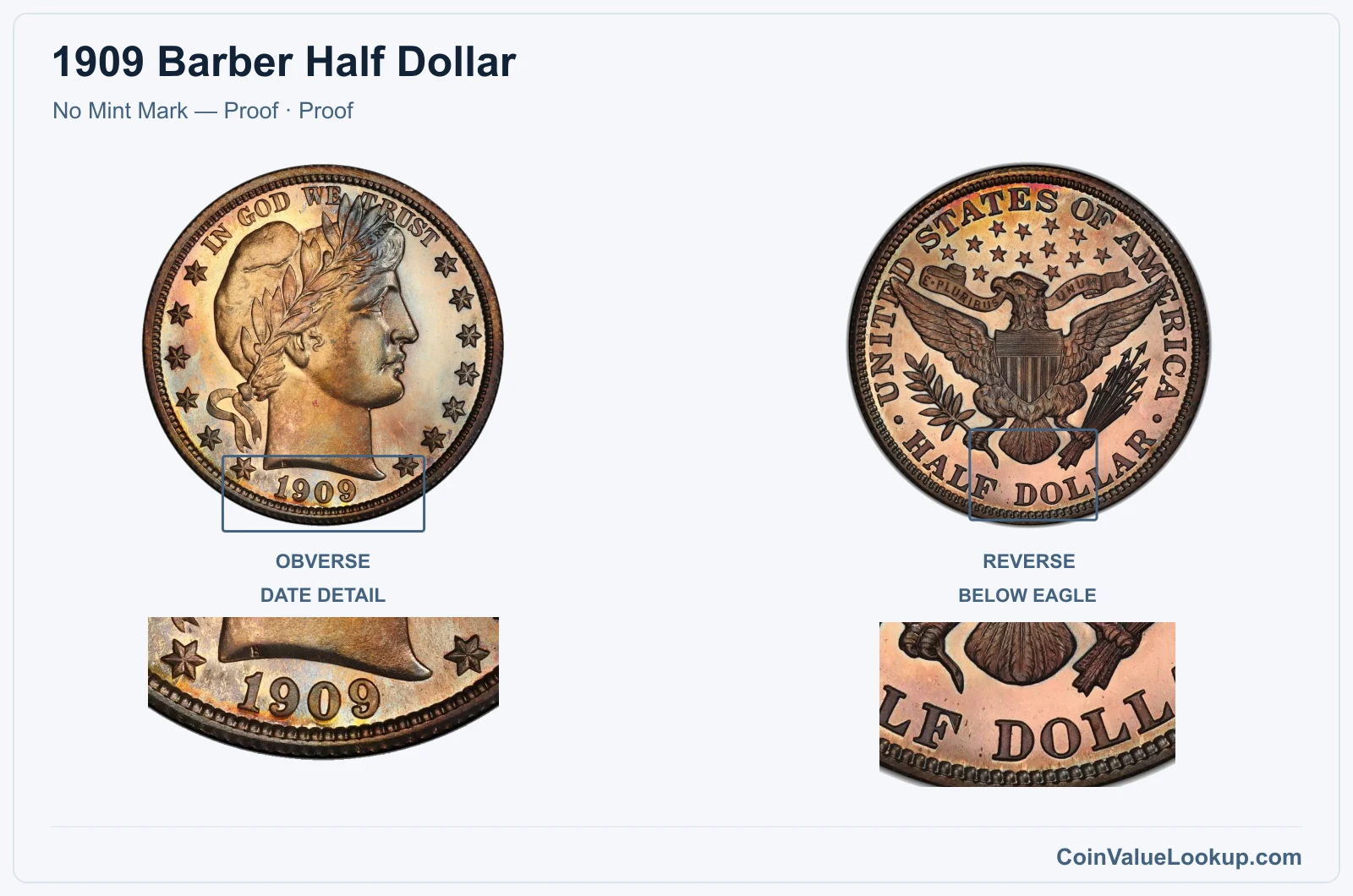
Philadelphia struck Proof Barber Halves for collectors in 1909. A PR63 example carries a guide estimate near $1,363.
Genuine Proofs show deeply mirrored fields, crisp squared-off rims, and full strike detail that business strikes rarely match.
Do not confuse a polished or lightly circulated business strike for a Proof. The mirror finish is applied during manufacturing through specially prepared dies and planchets — no amount of home polishing recreates it.
If the fields look glassy but the rims are rounded, you likely have a cleaned regular issue. A proper attribution from a grading service is the safest way to confirm Proof status.
Range Grade
Price Auction Records Appraisal PR PR 1
—
Coin Identifier
PR 2
—
Coin Identifier
PR 3
—
Coin Identifier
PR 4
—
Coin Identifier
PR 6
—
Coin Identifier
PR 8
—
Coin Identifier
PR 10
—
Coin Identifier
PR 12
—
Coin Identifier
PR 15
—
Coin Identifier
PR 20
—
Coin Identifier
PR 25
—
Coin Identifier
PR 30
—
Coin Identifier
PR 35
—
Coin Identifier
PR 40
—
Coin Identifier
PR 45
—
Coin Identifier
PR 50
—
Coin Identifier
PR 53
—
Coin Identifier
PR 55
—
Coin Identifier
PR 58
Coin Identifier
PR 60
Coin Identifier
PR 61
Coin Identifier
PR 62
Coin Identifier
PR 63
Coin Identifier
PR 64
Coin Identifier
PR 65
Coin Identifier
PR 66
Coin Identifier
PR 67
Coin Identifier
PR 68
Coin Identifier
PR 69
—
—
—
PR 70
—
—
—
1909 Barber Half Dollar Error List
1. 1909 Barber Half Dollar — Inverted Mintmark
On certain 1909-S Barber Halves, the S mintmark was reportedly punched into the die in an inverted orientation. To check, compare your coin's S against a normal same-year S punch at the same magnification — the inverted version will appear rotated or flipped relative to the standard position.
This is not the same as a repunched mintmark, where you see overlapping impressions, or simple post-mint damage that shifted the letter's appearance. The punch itself was placed upside-down during die preparation.
Condition, the clarity of the inversion, and overall eye appeal all affect what a collector would pay, but no firm price range is established here. A clear, undamaged example with strong contrast between the inverted and normal orientation would naturally draw more interest.
2. 1909 Barber Half Dollar — Mumps Die-Bulge Variety
The so-called Mumps variety appears on 1909-O Barber Halves and was documented by Heritage Auctions in the Duckor collection sale. The name comes from a raised swelling on Liberty's neck and jaw area, caused by a bulge in the die itself — not added metal or post-mint damage.
To identify it, compare the neck and jawline of your coin against an ordinary 1909-O at the same grade. The Mumps coin shows a distinct, rounded raised area that looks almost like a medical condition on Liberty's portrait.
Do not confuse this with a rim-connected cud break, a post-mint dent, surface corrosion, or material stuck to the coin. The die bulge is smooth and integrated into the design.
Value depends on the coin's overall condition and how visible the bulge is, but no specific price range is available.
3. 1909 Barber Half Dollar — Die Crack / Die Chip
Die cracks have been reported on 1909-O Barber Halves, with the raised line tracing through the bust tip and truncation area toward the back of Liberty's neck. These cracks form as a die fractures during use, transferring a thin raised line onto every coin struck afterward.
The key diagnostic is that a die crack is raised above the coin's surface, following a path that would not make sense as a scratch or tool mark. Incuse scratches, corrosion lines, and foreign material sitting on the surface can all mimic a crack at first glance, but those features are recessed or sit loosely rather than being part of the struck design.
The value impact depends on the crack's prominence and the coin's grade, though no specific price range is established for this variety.