1951 Jefferson Nickel Coin Value: How Much Is It Worth?
A 1951 Jefferson Nickel in typical circulated condition carries modest value, often close to face. Uncirculated examples are where things get more interesting, with guide estimates ranging from about $2.50 at MS60 up to $30 at MS65 depending on the mint.
Proofs, Full Steps designations, and authenticated errors each occupy their own pricing tier and deserve separate attention.
Fast Way to Identify Your 1951 Jefferson Nickel
Want a quick read on your 1951 nickel? Upload clear photos of both the front and back of your coin.
Our identifier can offer a preliminary identification based on what it sees, helping you figure out which mint struck your coin and whether it might be worth a closer look. It is not a substitute for professional authentication or grading.
1951 Jefferson Nickel Value
Upload both sides of your 1951 Jefferson Nickel.
Front Obverse
Upload photo
Back Reverse
Upload photo
Which 1951 Jefferson Nickel Versions Are Worth Money?
- Uncirculated Philadelphia and Denver coins at MS65 carry guide values around $19, while a San Francisco MS65 reaches about $30.
- Philadelphia proofs in PR65 condition have a guide estimate near $81, with cameo contrast potentially adding further premium when certified separately.
Step 1: Identify Your 1951 Jefferson Nickel Mint Mark and Version
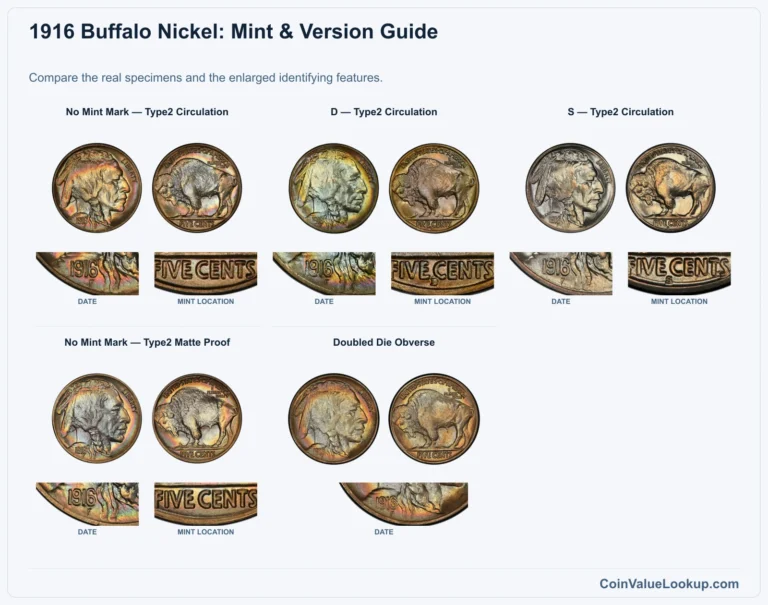
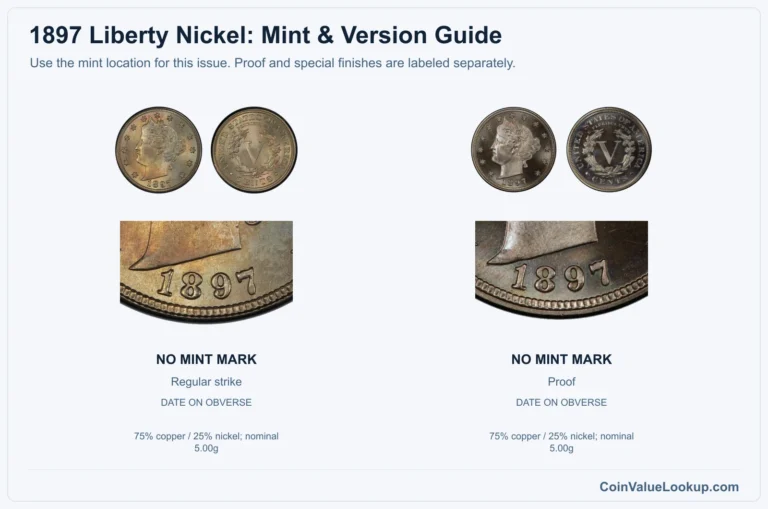
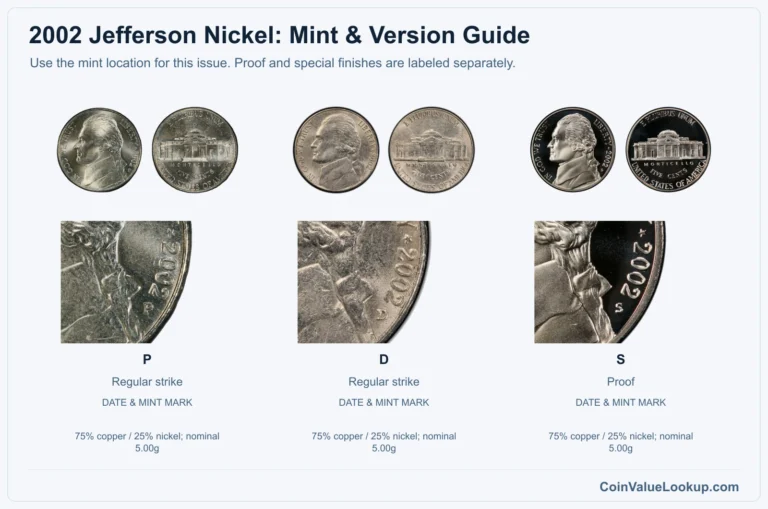
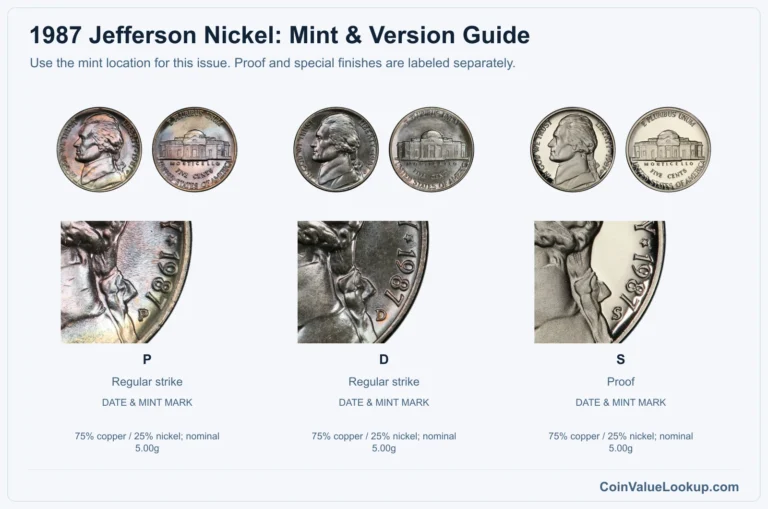
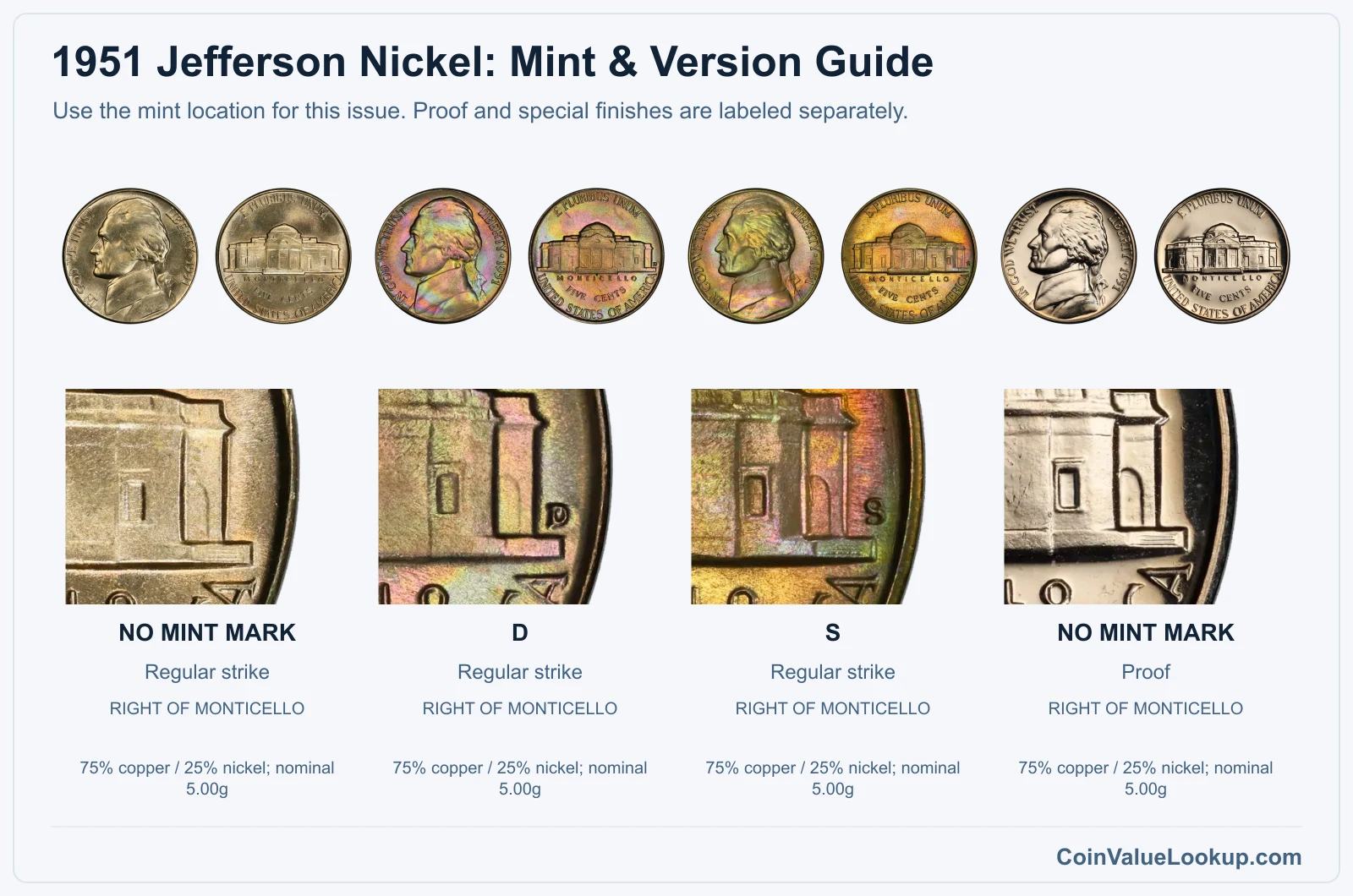
Start with the obverse: the date sits below Jefferson's portrait. If there is no small letter on the reverse to the right of Monticello, you have a Philadelphia strike.
A tiny "D" in that spot means Denver, and an "S" means San Francisco.
All standard 1951 nickels are 75% copper and 25% nickel, weigh 5.00 grams, measure 21.2 mm across, and have a plain edge. There is no silver content in the normal issue, so a silvery sheen is just toning, not a different metal.
Philadelphia also produced collector proofs in 1951. These show deeply mirrored fields and sharply struck devices.
A business strike that has been polished to look shiny is not a proof, no matter how much it gleams. If the fields are not genuinely reflective from the manufacturing process, it is a regular coin someone cleaned.
Step 2: Check Your 1951 Jefferson Nickel Grade
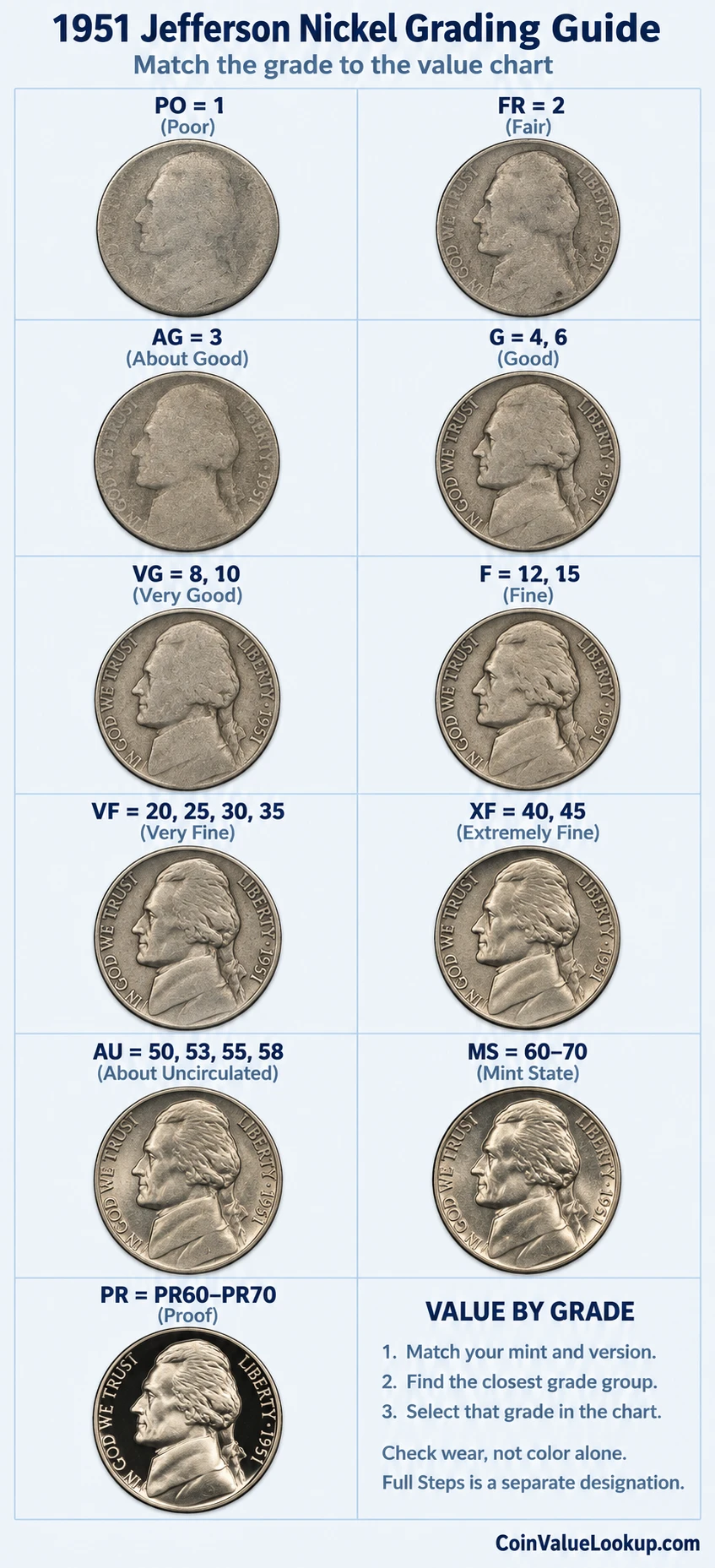
Focus first on Jefferson's cheekbone and the hair detail just above his ear. These are the highest points on the obverse and show friction earliest.
On the reverse, check the roof line and the four columns of Monticello for any smoothing.
Luster matters as much as detail. A coin can have sharp features but dull, cleaned surfaces, which hurts its grade.
Use the comparison image to see how wear progresses across these focal points at different condition levels.
Monticello's steps at the base of the building are a strike-quality indicator, not a wear feature. If those steps are fully separated and uninterrupted, the coin may qualify for the PCGS Full Steps designation on MS60 and above coins.
A weak strike that mushes the steps together is a manufacturing trait, not damage from circulation.
Step 3: Check 1951 Jefferson Nickel Value by Mint and Version
1951 Jefferson Nickel — No mintmark (Philadelphia)
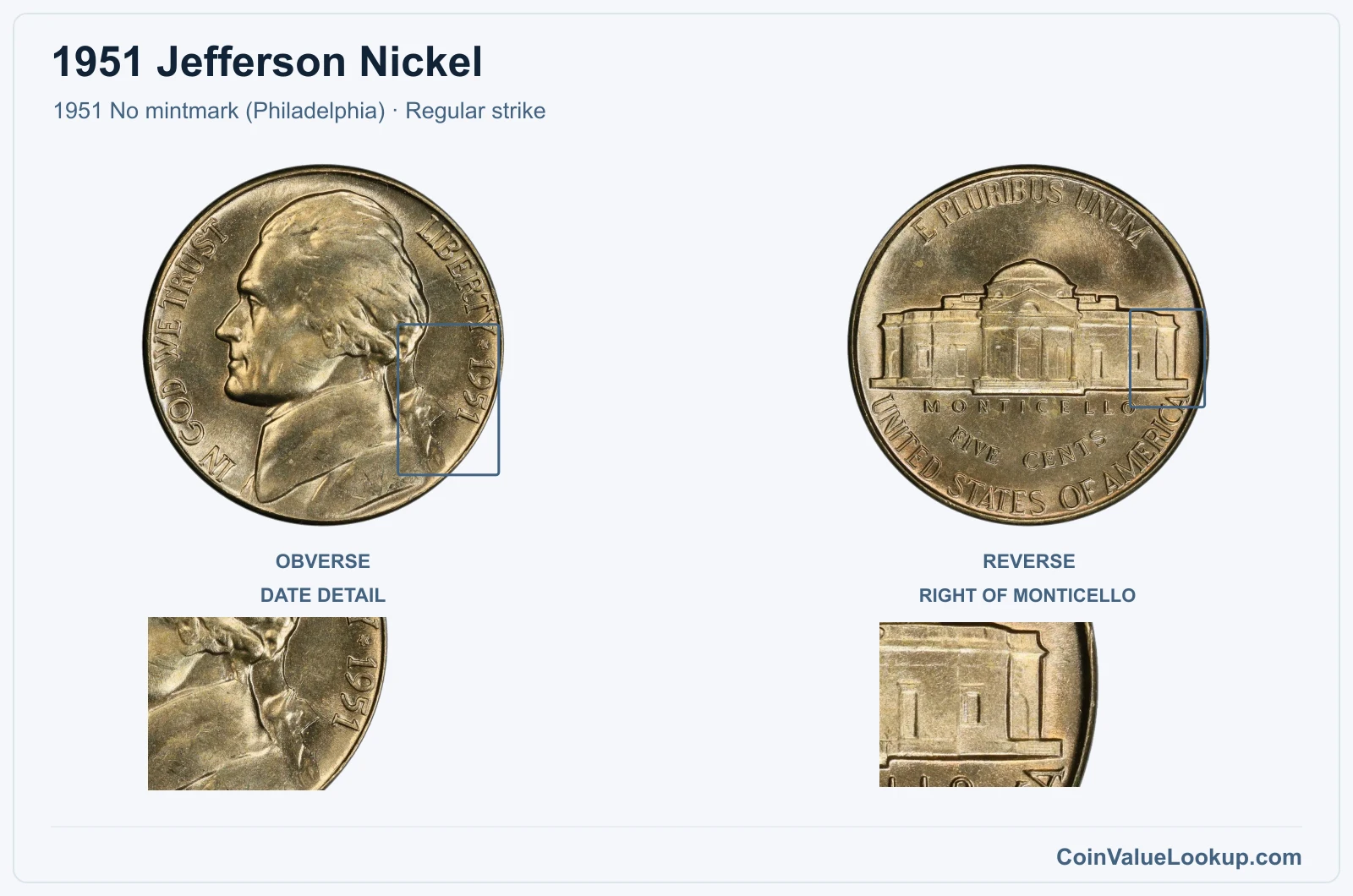
The 1951 Philadelphia nickel has no mintmark. It is the most common branch for the year.
In circulated grades, expect face-value territory. Uncirculated pieces carry USA Coin Book guide estimates of about $2.50 at MS60 and roughly $19 at MS65.
Do not apply that MS65 figure to a worn coin sitting in a junk box. Those are uncirculated-grade estimates only.
Coins with fully separated Monticello steps may qualify for the Full Steps designation, which commands its own premium beyond these standard figures.
| Range | Grade | Price | Auction Records | Appraisal |
|---|---|---|---|---|
| PO | PO 1 | — | Coin Identifier | |
| FR | FR 2 | — | Coin Identifier | |
| AG | AG 3 | — | Coin Identifier | |
| G | G 4 | — | Coin Identifier | |
| G 6 | — | Coin Identifier | ||
| VG | VG 8 | — | Coin Identifier | |
| VG 10 | — | Coin Identifier | ||
| F | F 12 | — | Coin Identifier | |
| F 15 | — | Coin Identifier | ||
| VF | VF 20 | — | Coin Identifier | |
| VF 25 | — | Coin Identifier | ||
| VF 30 | — | Coin Identifier | ||
| VF 35 | — | Coin Identifier | ||
| XF | XF 40 | — | Coin Identifier | |
| XF 45 | — | Coin Identifier | ||
| AU | AU 50 | — | Coin Identifier | |
| AU 53 | — | Coin Identifier | ||
| AU 55 | — | Coin Identifier | ||
| AU 58 | — | Coin Identifier | ||
| MS | MS 60 | — | Coin Identifier | |
| MS 61 | — | Coin Identifier | ||
| MS 62 | — | Coin Identifier | ||
| MS 63 | — | Coin Identifier | ||
| MS 64 | Coin Identifier | |||
| MS 65 | Coin Identifier | |||
| MS 66 | Coin Identifier | |||
| MS 67 | Coin Identifier | |||
| MS 68 | — | — | — | |
| MS 69 | — | — | — | |
| MS 70 | — | — | — |
1951 Jefferson Nickel — No mintmark (Philadelphia) Proof
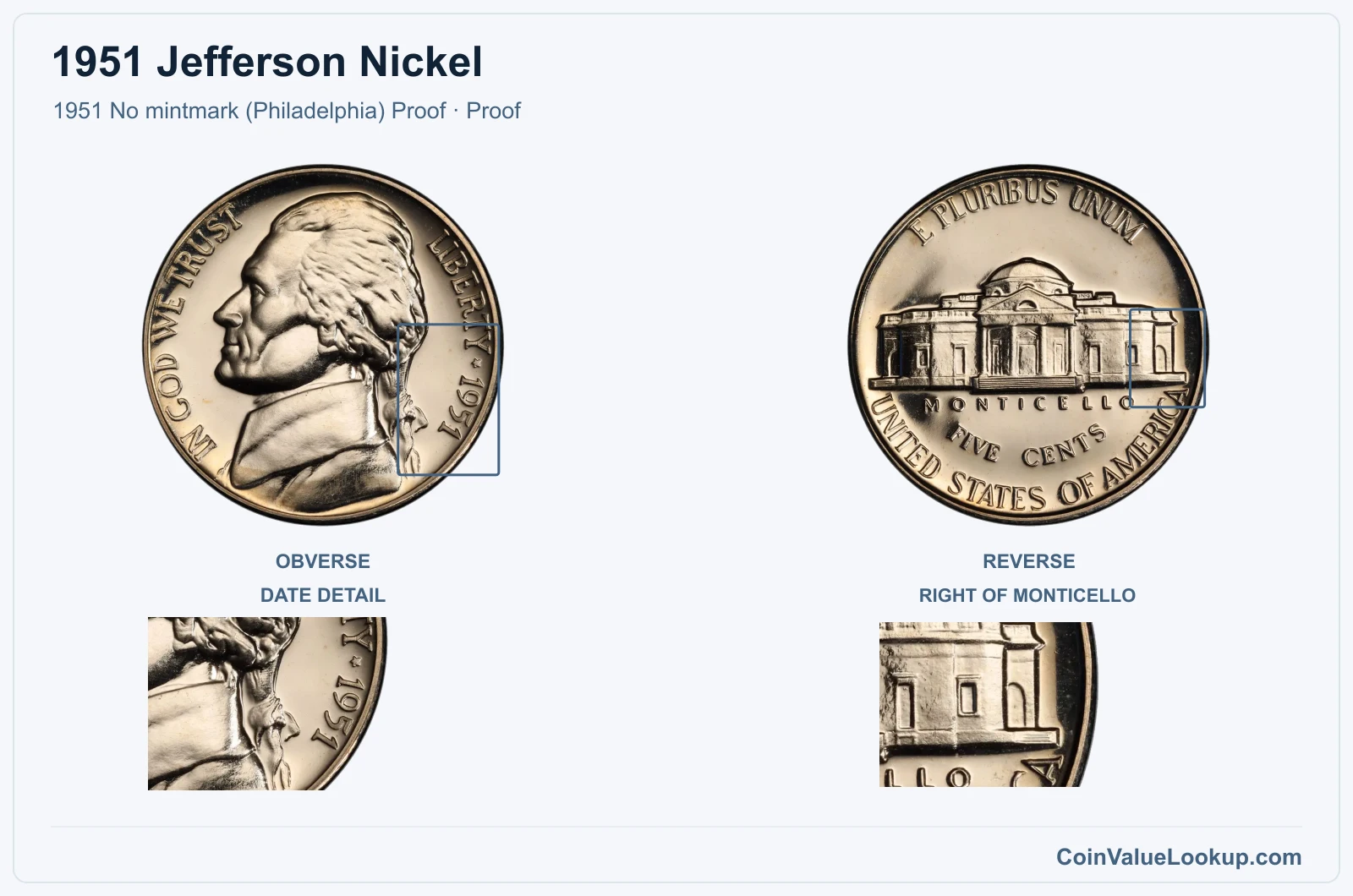
Philadelphia also struck proofs in 1951, again carrying no mintmark. These were made for collectors using specially prepared dies and polished planchets, producing deeply mirrored fields surrounding sharp, frosted devices.
A PR65 example carries a USA Coin Book guide estimate of about $81. Cameo or Deep Cameo contrast, where the devices show heavy frost against mirror fields, is a separate designation and is not reflected in that base proof price.
Hairlines from mishandling are the most common grade limiter on proofs, so check the fields under good light at an angle.
Coin Value Lookup is a good starting point if you want to compare your nickel against other Jefferson Nickel years and see which dates and mints tend to carry premiums.
| Range | Grade | Price | Auction Records | Appraisal |
|---|---|---|---|---|
| PR | PR 1 | — | Coin Identifier | |
| PR 2 | — | Coin Identifier | ||
| PR 3 | — | Coin Identifier | ||
| PR 4 | — | Coin Identifier | ||
| PR 6 | — | Coin Identifier | ||
| PR 8 | — | Coin Identifier | ||
| PR 10 | — | Coin Identifier | ||
| PR 12 | — | Coin Identifier | ||
| PR 15 | — | Coin Identifier | ||
| PR 20 | — | Coin Identifier | ||
| PR 25 | — | Coin Identifier | ||
| PR 30 | — | Coin Identifier | ||
| PR 35 | — | Coin Identifier | ||
| PR 40 | — | Coin Identifier | ||
| PR 45 | — | Coin Identifier | ||
| PR 50 | — | Coin Identifier | ||
| PR 53 | — | Coin Identifier | ||
| PR 55 | — | Coin Identifier | ||
| PR 58 | — | Coin Identifier | ||
| PR 60 | — | Coin Identifier | ||
| PR 61 | — | Coin Identifier | ||
| PR 62 | Coin Identifier | |||
| PR 63 | — | Coin Identifier | ||
| PR 64 | Coin Identifier | |||
| PR 65 | Coin Identifier | |||
| PR 66 | Coin Identifier | |||
| PR 67 | Coin Identifier | |||
| PR 68 | Coin Identifier | |||
| PR 69 | — | — | — | |
| PR 70 | — | — | — |
1951 Jefferson Nickel — D
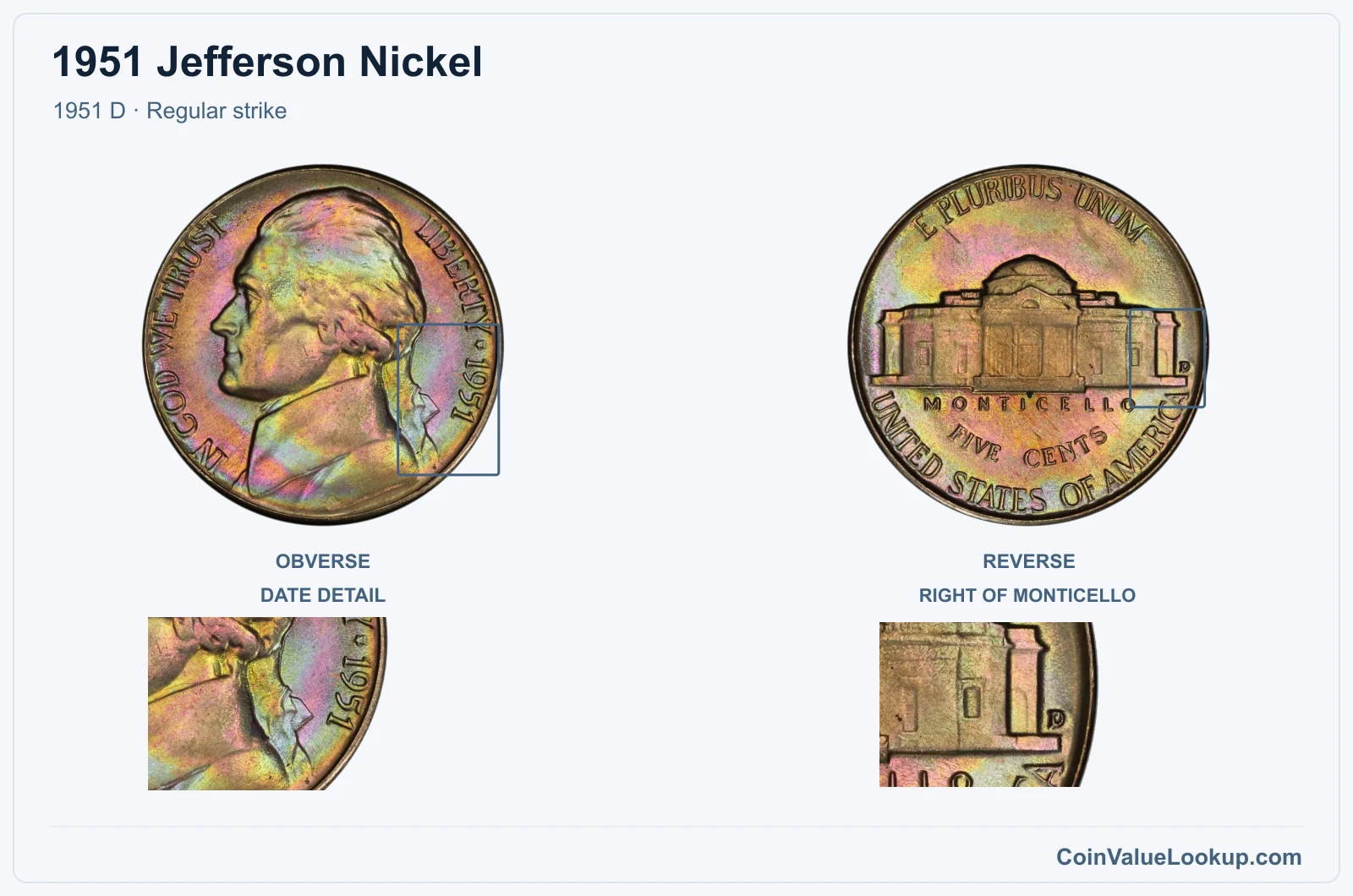
The Denver mint nickel shows a small "D" to the right of Monticello on the reverse. At MS60, the USA Coin Book guide estimate is about $4.26, ticking up to around $19 at MS65.
That slight premium over the Philadelphia version at MS60 reflects typical supply dynamics for this branch. As with other business strikes, worn examples are not priced from uncirculated columns.
Full Steps coins carry a separate, higher value tier not covered by these standard estimates.
| Range | Grade | Price | Auction Records | Appraisal |
|---|---|---|---|---|
| PO | PO 1 | — | Coin Identifier | |
| FR | FR 2 | — | Coin Identifier | |
| AG | AG 3 | — | Coin Identifier | |
| G | G 4 | — | Coin Identifier | |
| G 6 | — | Coin Identifier | ||
| VG | VG 8 | — | Coin Identifier | |
| VG 10 | — | Coin Identifier | ||
| F | F 12 | — | Coin Identifier | |
| F 15 | — | Coin Identifier | ||
| VF | VF 20 | — | Coin Identifier | |
| VF 25 | — | Coin Identifier | ||
| VF 30 | — | Coin Identifier | ||
| VF 35 | — | Coin Identifier | ||
| XF | XF 40 | — | Coin Identifier | |
| XF 45 | — | Coin Identifier | ||
| AU | AU 50 | — | Coin Identifier | |
| AU 53 | — | Coin Identifier | ||
| AU 55 | — | Coin Identifier | ||
| AU 58 | — | Coin Identifier | ||
| MS | MS 60 | — | Coin Identifier | |
| MS 61 | — | Coin Identifier | ||
| MS 62 | — | Coin Identifier | ||
| MS 63 | — | Coin Identifier | ||
| MS 64 | Coin Identifier | |||
| MS 65 | Coin Identifier | |||
| MS 66 | Coin Identifier | |||
| MS 67 | Coin Identifier | |||
| MS 68 | — | — | — | |
| MS 69 | — | — | — | |
| MS 70 | — | — | — |
1951 Jefferson Nickel — S
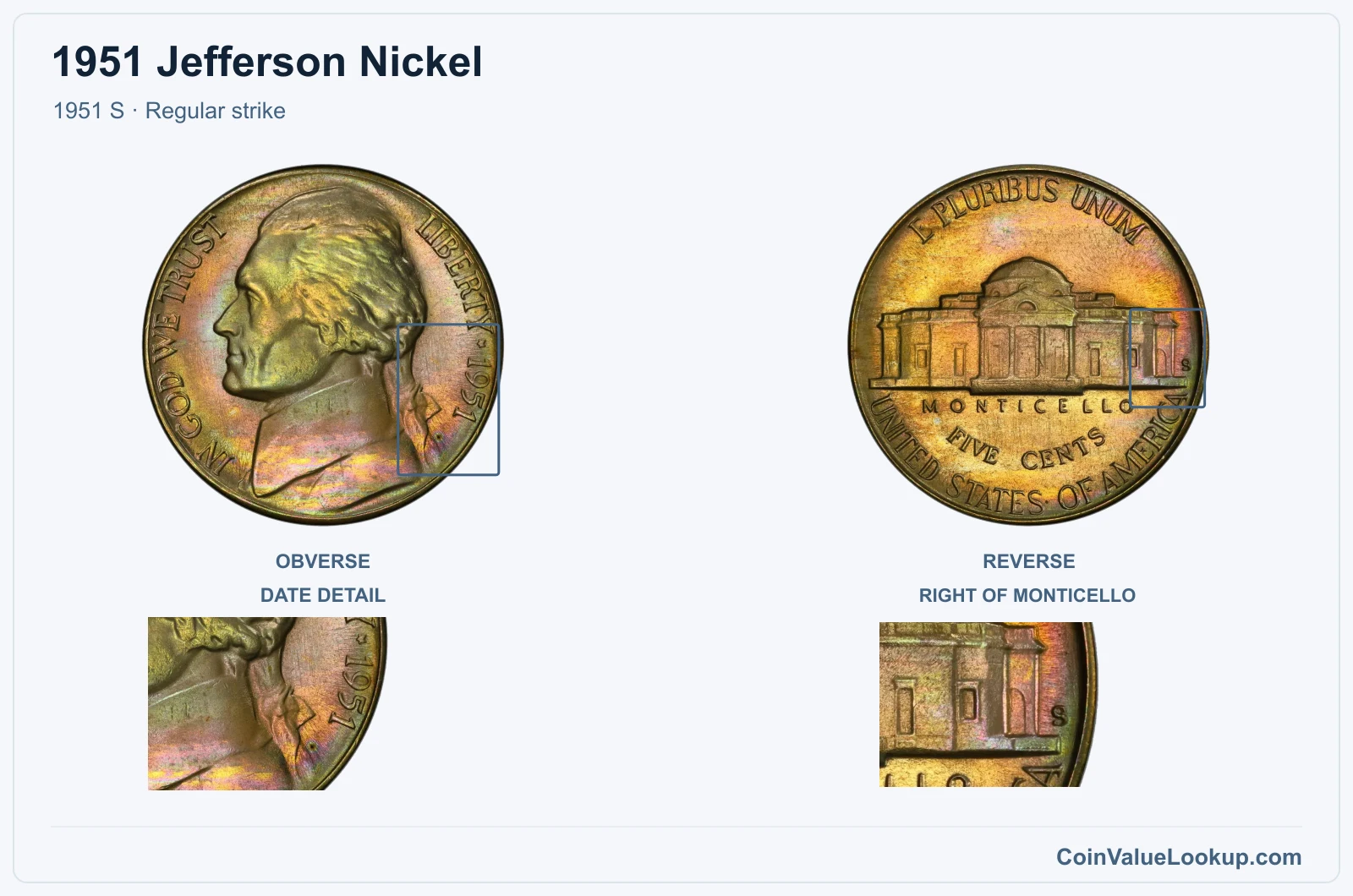
Look for a small "S" mintmark to the right of Monticello. The 1951-S is the standout among the three business-strike mints at gem level.
USA Coin Book guides place it at roughly $2.50 in MS60 but about $30 at MS65, the highest standard uncirculated figure for the year.
That MS65 premium suggests well-struck, fully lustrous survivors are harder to come by from San Francisco in top condition. As always, worn pieces trade near face value, and Full Steps examples are a separate category with their own pricing.
| Range | Grade | Price | Auction Records | Appraisal |
|---|---|---|---|---|
| PO | PO 1 | — | Coin Identifier | |
| FR | FR 2 | — | Coin Identifier | |
| AG | AG 3 | — | Coin Identifier | |
| G | G 4 | — | Coin Identifier | |
| G 6 | — | Coin Identifier | ||
| VG | VG 8 | — | Coin Identifier | |
| VG 10 | — | Coin Identifier | ||
| F | F 12 | — | Coin Identifier | |
| F 15 | — | Coin Identifier | ||
| VF | VF 20 | — | Coin Identifier | |
| VF 25 | — | Coin Identifier | ||
| VF 30 | — | Coin Identifier | ||
| VF 35 | — | Coin Identifier | ||
| XF | XF 40 | — | Coin Identifier | |
| XF 45 | — | Coin Identifier | ||
| AU | AU 50 | — | Coin Identifier | |
| AU 53 | — | Coin Identifier | ||
| AU 55 | — | Coin Identifier | ||
| AU 58 | — | Coin Identifier | ||
| MS | MS 60 | — | Coin Identifier | |
| MS 61 | — | Coin Identifier | ||
| MS 62 | — | Coin Identifier | ||
| MS 63 | — | Coin Identifier | ||
| MS 64 | Coin Identifier | |||
| MS 65 | Coin Identifier | |||
| MS 66 | Coin Identifier | |||
| MS 67 | Coin Identifier | |||
| MS 68 | — | — | — | |
| MS 69 | — | — | — | |
| MS 70 | — | — | — |
1951 Jefferson Nickel Error List
1. 1951 Jefferson Nickel — Struck on a thin planchet
A thin planchet error happens when the blank fed into the press is underweight before striking. A confirmed 1951-S example graded NGC MS66 weighed just 3.5 grams, well below the standard 5.00 grams.
That coin sold through Heritage Auctions in September 2010 for $149.50.
To spot this, look at the edge first. It will appear noticeably thinner than a normal nickel.
The surfaces may still be well preserved, but design details can appear slightly weak due to reduced metal flow from the thinner blank.
Do not confuse this with a coin that has been filed, acid-treated, or simply worn paper-thin from decades of circulation. Genuine thin planchet errors show consistent thickness and proper surface texture.
A coin that looks chemically etched or shows grinding marks is not a mint error. Authentication by a grading service is the safest path to confirmation.
2. 1951 Jefferson Nickel — Doubled die obverse on proof
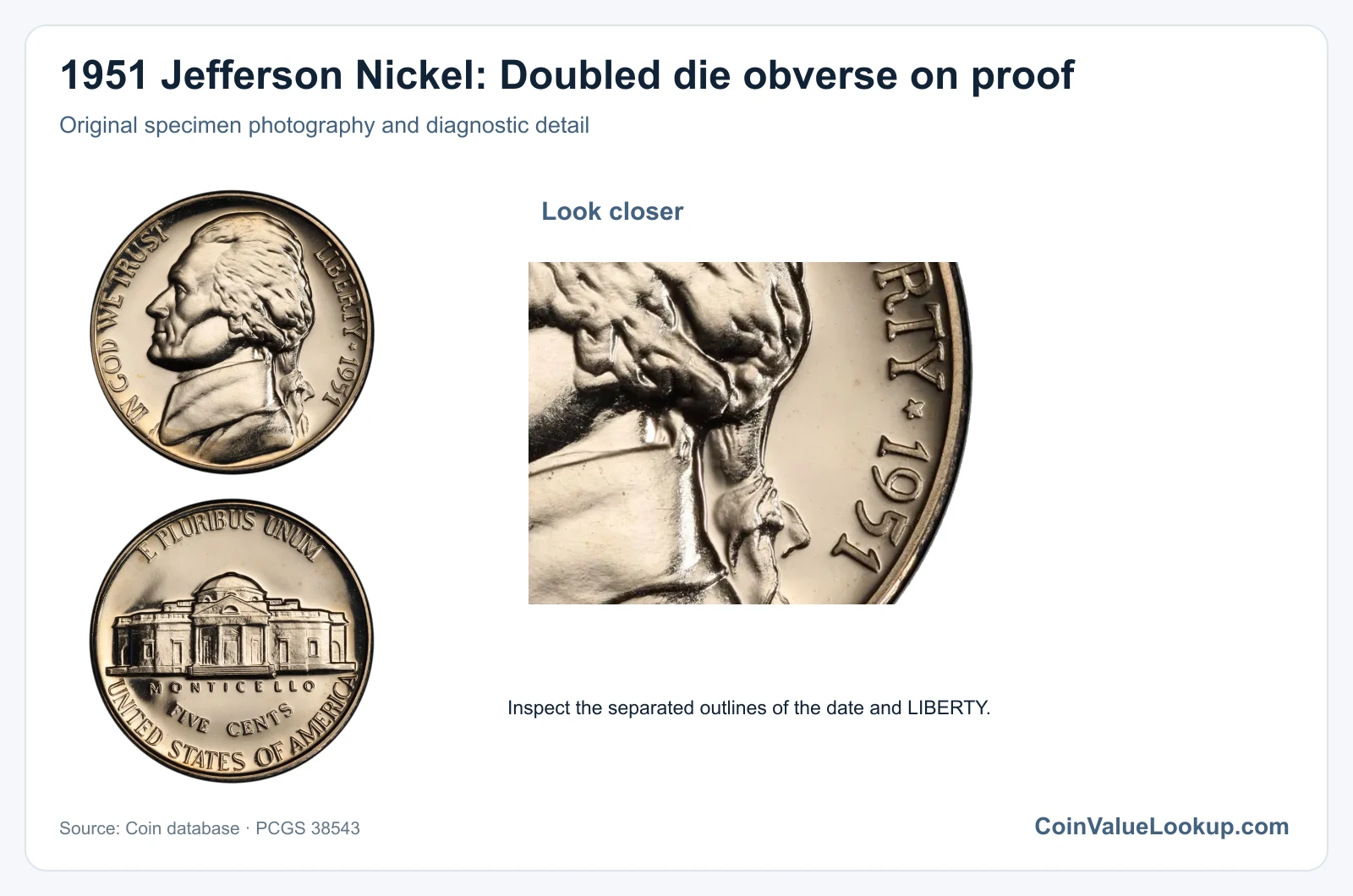
A doubled die obverse variety exists on 1951 Philadelphia proofs. The doubling runs clockwise and affects IN GOD WE TRUST, the portrait, LIBERTY, the star, and the date.
The lower portions of the letters I-N in IN GOD WE TRUST show especially strong tripling, making that area the best place to start your comparison.
You need a known normal proof for side-by-side reference. The extra outlines on the lettering will be consistent and raised, part of the die itself.
Do not confuse this with machine doubling, which produces flat, shelf-like distortion rather than raised secondary images. Glare and hairlines on proof surfaces can also mimic doubling at first glance.
No specific price range is established here; value depends on the authenticated identity of the die variety, the coin's condition, and the severity of the doubling. Professional attribution is essential.
3. 1951 Jefferson Nickel — Doubled die reverse
A doubled die reverse has been documented on 1951 Denver nickels. The doubling is extremely close and centered on E PLURIBUS UNUM.
You will likely need at least 5x magnification to see it clearly. This is not a dramatic, unaided-eye feature.
Key diagnostics include a die scratch running through the upper portions of U-M in UNUM and a die dot positioned above the right arch of Monticello. These markers help confirm you are looking at the correct die pair rather than generic die deterioration.
Flat, shelf-like machine doubling or mushy lettering from a worn die are the most common lookalikes. True hub doubling produces raised, separated secondary images that remain consistent across the affected area.
No established price range is available for this variety; individual value depends on authenticated attribution, the coin's overall condition, and error severity.