1804 Draped Bust Dollar Coin Value: How Much Is It Worth?
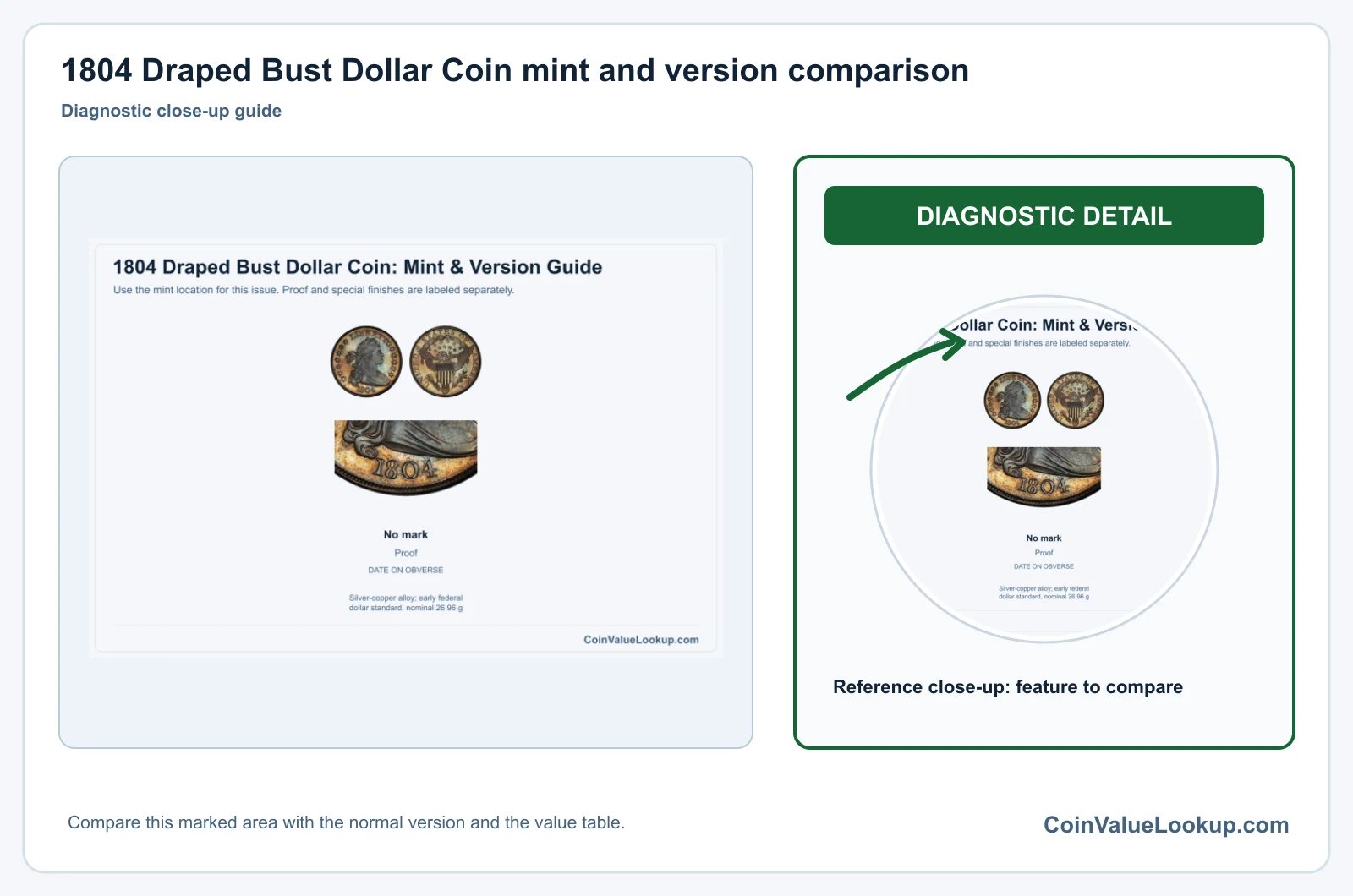
The 1804 Draped Bust Dollar is one of the most storied coins in American numismatics, and guide estimates for the three known classes range from roughly $3,100,440 to $9,168,385 at the PR65 level. Those figures are guide estimates, not guaranteed offers, and your actual coin's value depends on its specific class, pedigree and condition.
Before you assume you are holding a multi-million-dollar rarity, you need to determine which class it belongs to — or whether it is genuine at all.
Fast Way to Identify Your 1804 Draped Bust Dollar
If you believe you have an 1804 Draped Bust Dollar, upload clear photos of the front and back for a preliminary identification. This step helps sort out the design elements, edge style and overall appearance.
It does not replace professional authentication, which is essential for a coin of this magnitude, but it is a practical starting point.
1804 Draped Bust Dollar Value
Upload both sides of your 1804 Draped Bust Dollar.
Front Obverse
Upload photo
Back Reverse
Upload photo
Which 1804 Draped Bust Dollar Versions Are Worth Money?
- 1804 Original Class I PR — the original striking with the first reverse die arrangement; guide estimate of $9,168,385 at PR65.
- 1804 Restrike Class II PR — a later restrike distinguished by edge and pedigree characteristics; guide estimate of $3,100,440 at PR65.
- 1804 Restrike Class III PR — another restrike class sharing the second reverse; guide estimate of $3,100,440 at PR65.
Step 1: Identify Your 1804 Draped Bust Dollar Mint Mark and Version
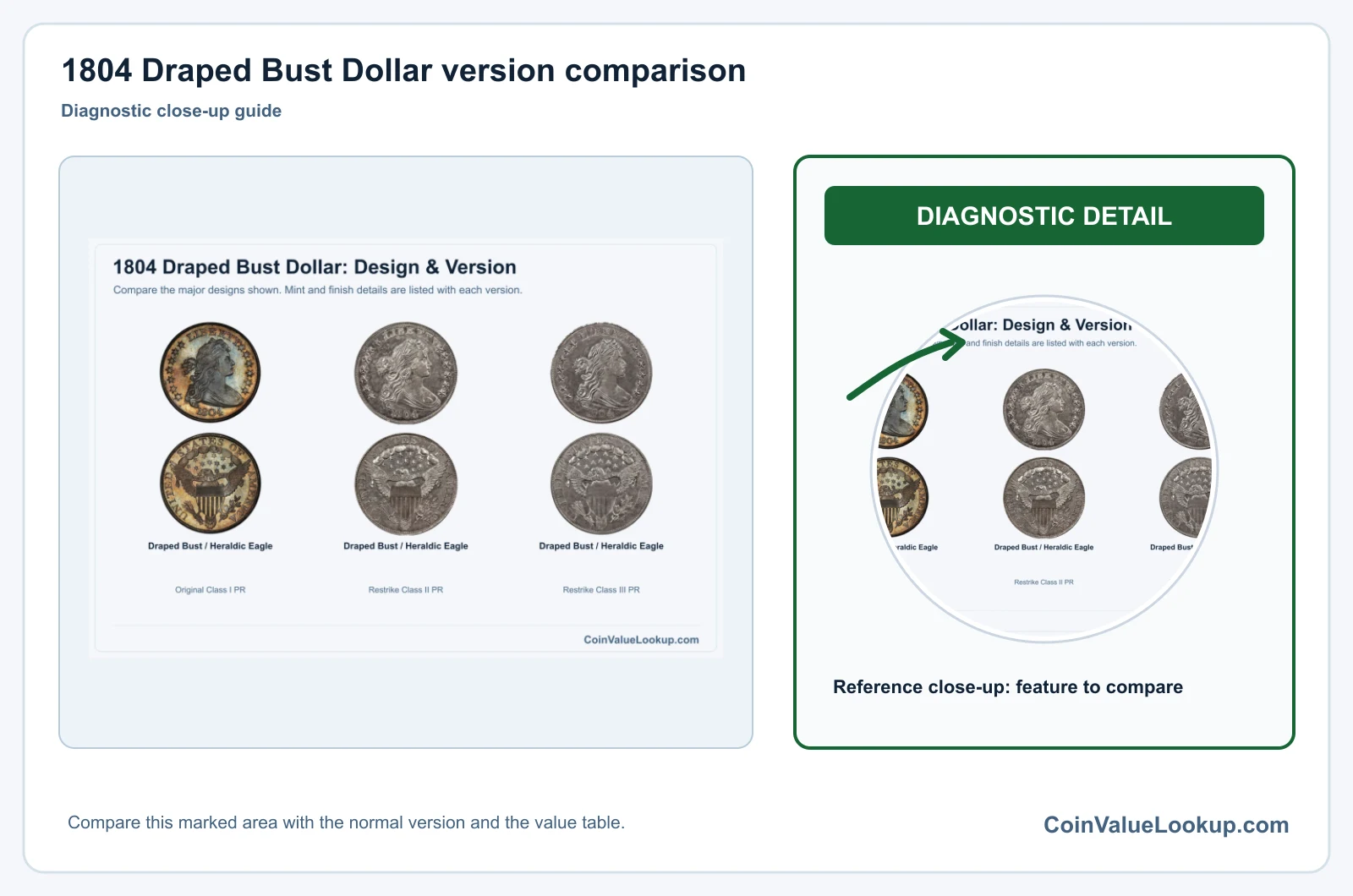
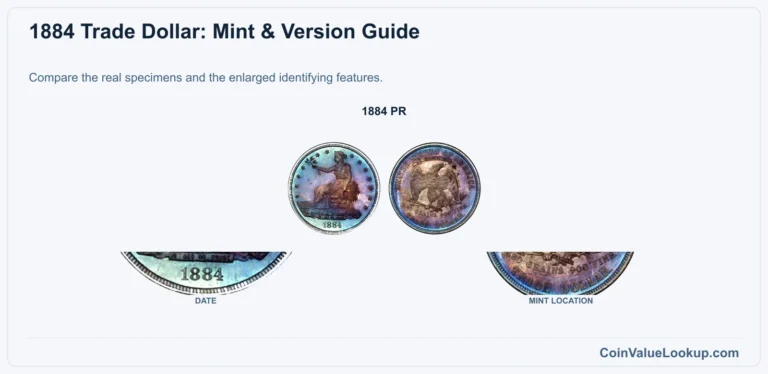
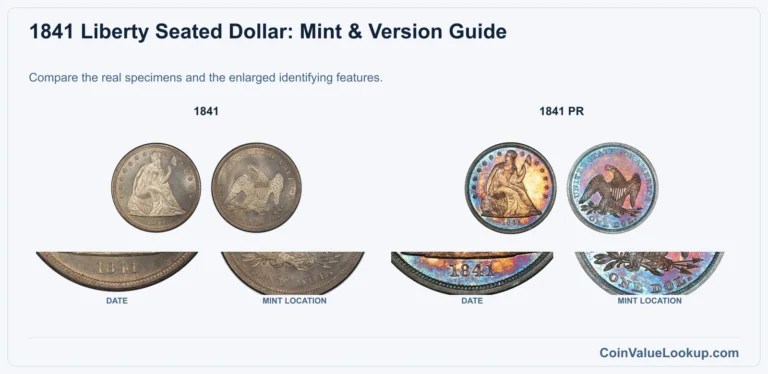
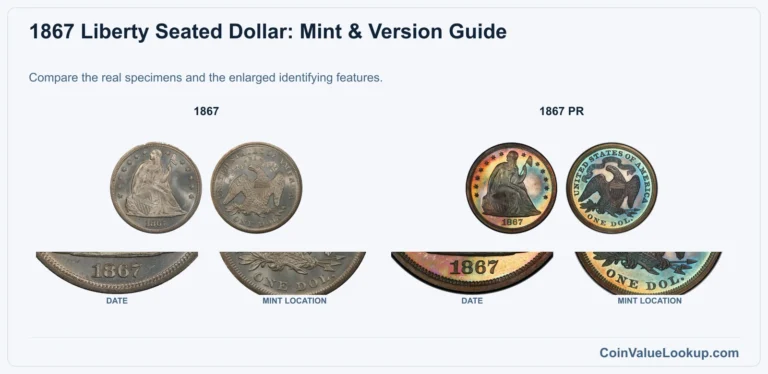
All 1804 Draped Bust Dollars were struck at the Philadelphia Mint, so there is no mintmark to look for. The obverse shows a Draped Bust Liberty facing right, surrounded by stars, with the date 1804 below.
The reverse features a Heraldic Eagle. The edge is lettered.
Here is the critical part: the date on the coin does not mean it was actually struck in 1804. These are later-made dated rarities, not regular circulation dollars from that year.
The three recognized classes — Original Class I, Restrike Class II and Restrike Class III — are distinguished by specialist pedigree tracking and edge characteristics, not by obvious design differences visible to the naked eye.
Class I coins use a specific reverse die arrangement, while Class II and Class III are restrikes produced later, sharing a different reverse. Telling them apart requires expert attribution, not a magnifying glass and good intentions.
The coin is a silver-copper alloy at a nominal weight of 26.96 grams.
Coin Value Lookup is a useful starting point when you want to look up guides for early American dollar types and compare them side by side.
Step 2: Check Your 1804 Draped Bust Dollar Grade
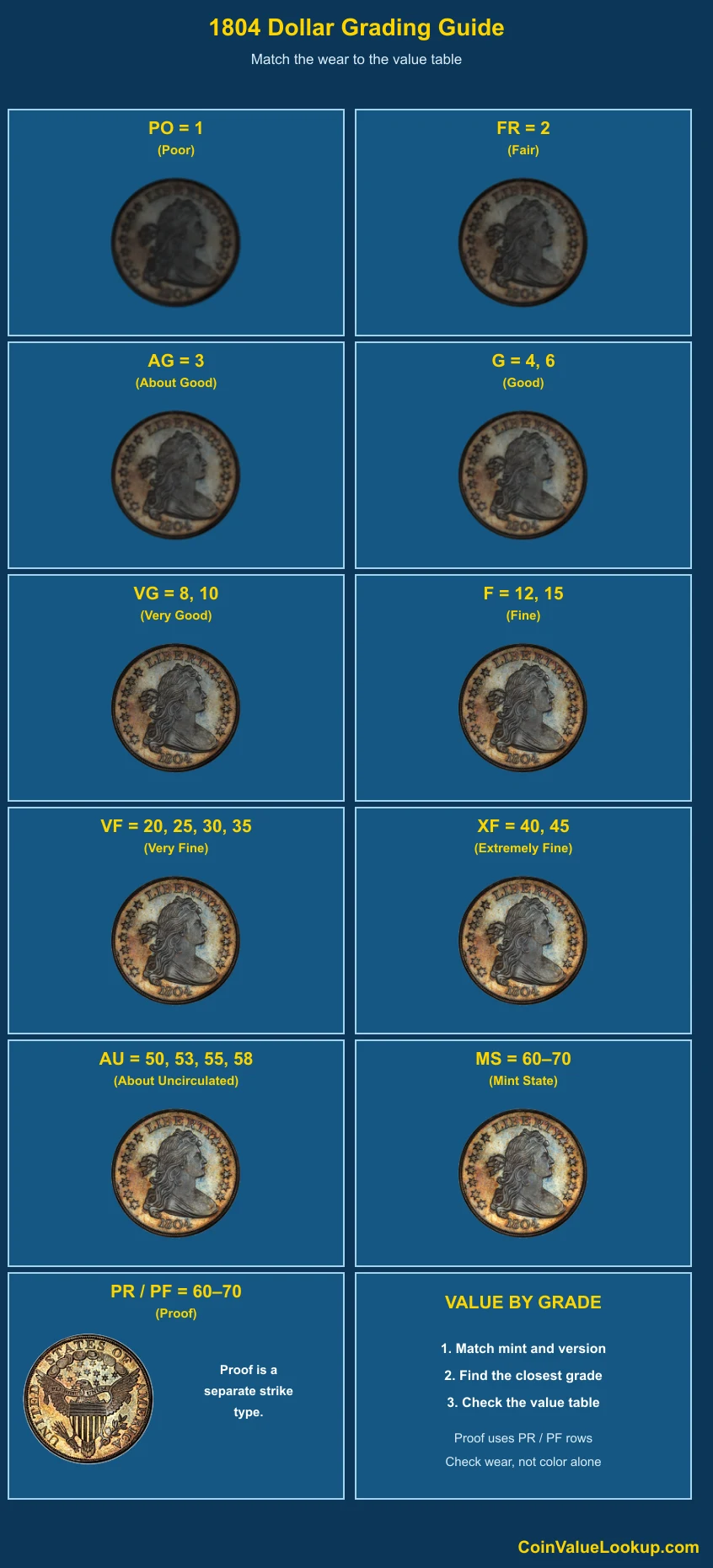
Because all three classes are proof strikes, grading focuses on the quality of surfaces rather than circulation wear. A proof is a manufacturing finish — carefully prepared dies and planchets — not simply a grade above Mint State.
Look at the hair detail above Liberty's forehead and near her ear. On the reverse, check the breast feathers of the eagle.
Any hairlines, contact marks or evidence of cleaning will affect the grade significantly at this level.
The drapery below Liberty's bust should show full, sharp lines on a well-preserved specimen. Compare your coin against the grading image to see how surface quality and reflectivity change across proof grade levels.
Do not confuse strike weakness with wear. These were specially made coins, so most should exhibit strong detail.
Dullness, spots or wiping marks point to mishandling, not circulation.
Step 3: Check 1804 Draped Bust Dollar Value by Mint and Version
1804 Draped Bust Dollar — Original Class I PR
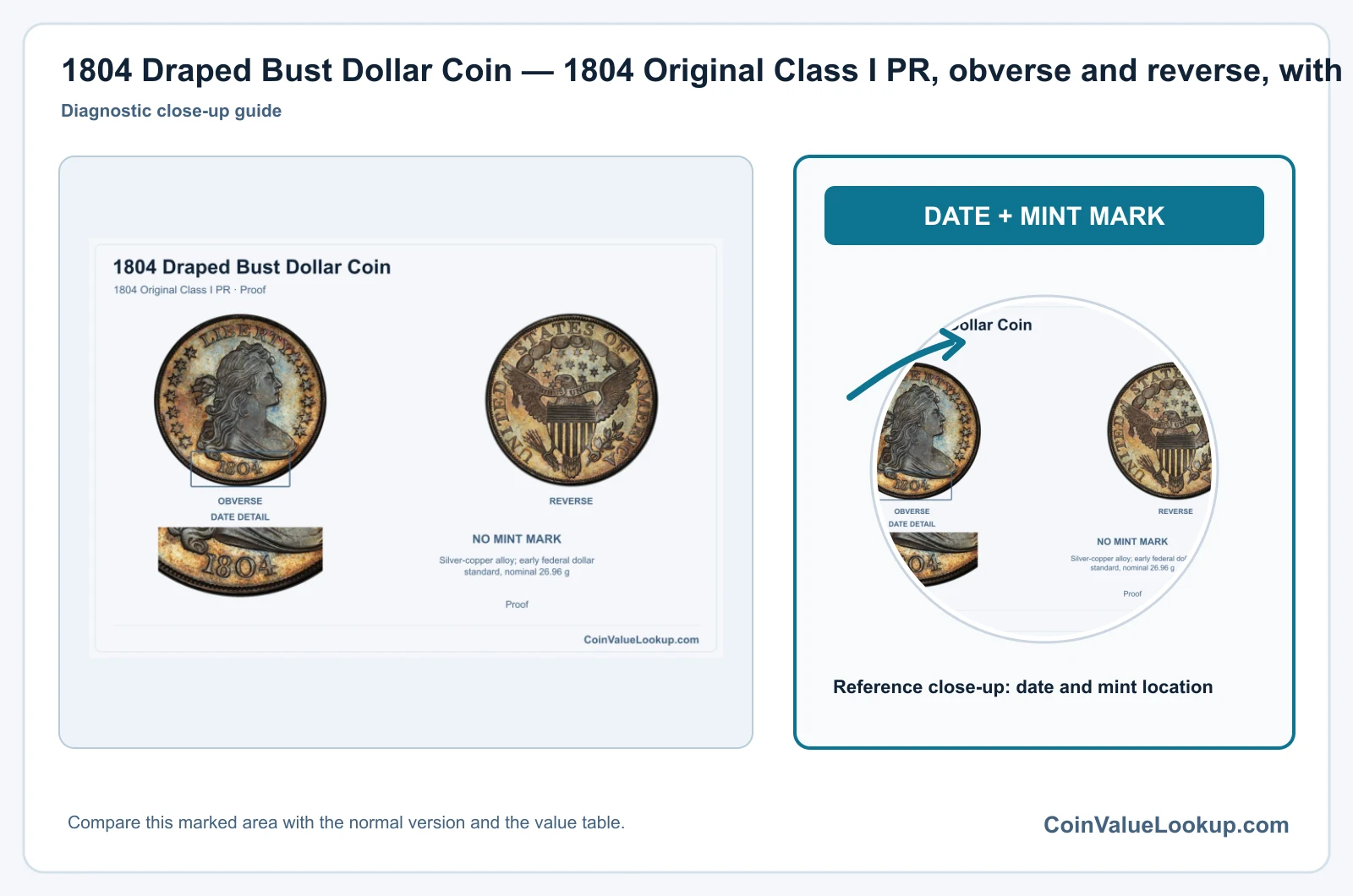
The 1804 Original Class I is the version most collectors think of when they hear "King of American Coins." It carries the first reverse die arrangement (Heraldic Eagle) and is identified by its edge lettering style and documented pedigree, not by any single obvious design cue you can spot at a glance.
At PR65, a USA Coin Book guide estimate places this class at approximately $9,168,385. That is a guide figure, not a standing purchase offer.
Because the date does not reflect the actual year of manufacture, authentication and class attribution by a recognized third-party service are non-negotiable before any transaction. Specialist pedigree and edge classification separate Class I from the restrikes.
Range Grade
Price Auction Records Appraisal PR PR 1
—
Coin Identifier
PR 2
—
Coin Identifier
PR 3
—
Coin Identifier
PR 4
—
Coin Identifier
PR 6
—
Coin Identifier
PR 8
—
Coin Identifier
PR 10
—
Coin Identifier
PR 12
—
Coin Identifier
PR 15
—
Coin Identifier
PR 20
—
Coin Identifier
PR 25
—
Coin Identifier
PR 30
—
Coin Identifier
PR 58
—
Coin Identifier
PR 60
—
—
—
PR 61
—
—
—
PR 62
Coin Identifier
PR 63
—
—
—
PR 64
Coin Identifier
PR 65
Coin Identifier
PR 66
—
—
—
PR 67
—
Coin Identifier
PR 68
Coin Identifier
PR 69
—
—
—
PR 70
—
—
—
1804 Draped Bust Dollar — Restrike Class II PR
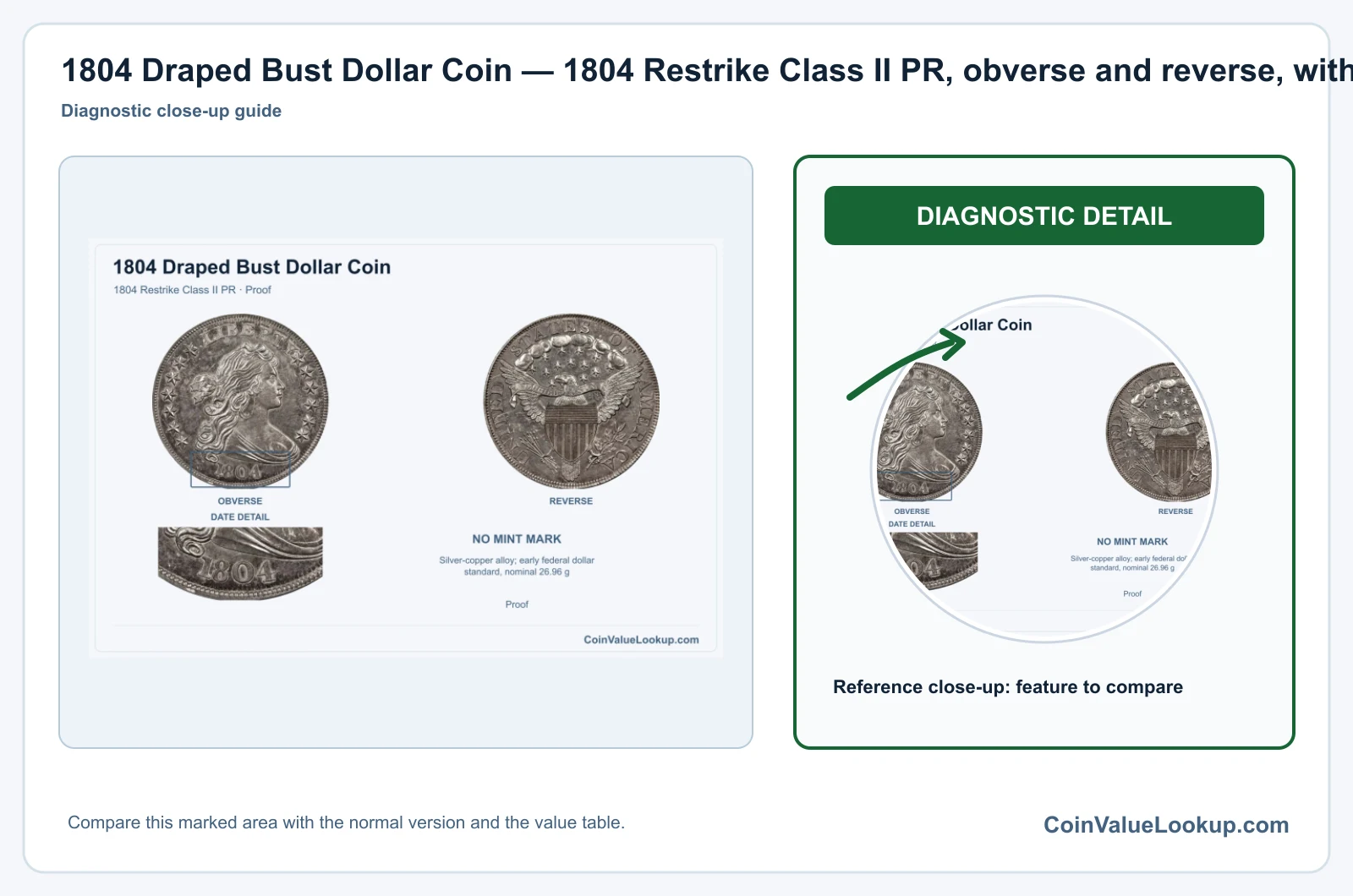
The 1804 Restrike Class II shares the Draped Bust obverse and Heraldic Eagle reverse with the other classes but uses a different reverse die associated with restrikes. It was produced later than the Class I originals.
At PR65, the USA Coin Book guide estimate is approximately $3,100,440. Again, this is a guide estimate, not a guaranteed offer.
Identifying a Class II requires specialist edge and pedigree analysis; visual inspection alone will not get you there. Professional authentication is essential for any coin purporting to be this variety.
Range Grade
Price Auction Records Appraisal PR PR 1
—
Coin Identifier
PR 2
—
Coin Identifier
PR 3
—
Coin Identifier
PR 4
—
Coin Identifier
PR 6
—
Coin Identifier
PR 8
—
Coin Identifier
PR 10
—
Coin Identifier
PR 12
—
Coin Identifier
PR 15
—
Coin Identifier
PR 20
—
Coin Identifier
PR 25
—
Coin Identifier
PR 30
—
Coin Identifier
PR 35
—
Coin Identifier
PR 40
—
Coin Identifier
PR 45
—
Coin Identifier
PR 50
—
Coin Identifier
PR 53
—
Coin Identifier
PR 55
—
Coin Identifier
PR 58
—
Coin Identifier
PR 60
—
Coin Identifier
PR 61
—
Coin Identifier
PR 62
—
Coin Identifier
PR 63
—
Coin Identifier
PR 64
—
—
—
PR 65
—
—
—
PR 66
—
—
—
PR 67
—
—
—
PR 68
—
—
—
PR 69
—
—
—
PR 70
—
—
—
1804 Draped Bust Dollar — Restrike Class III PR
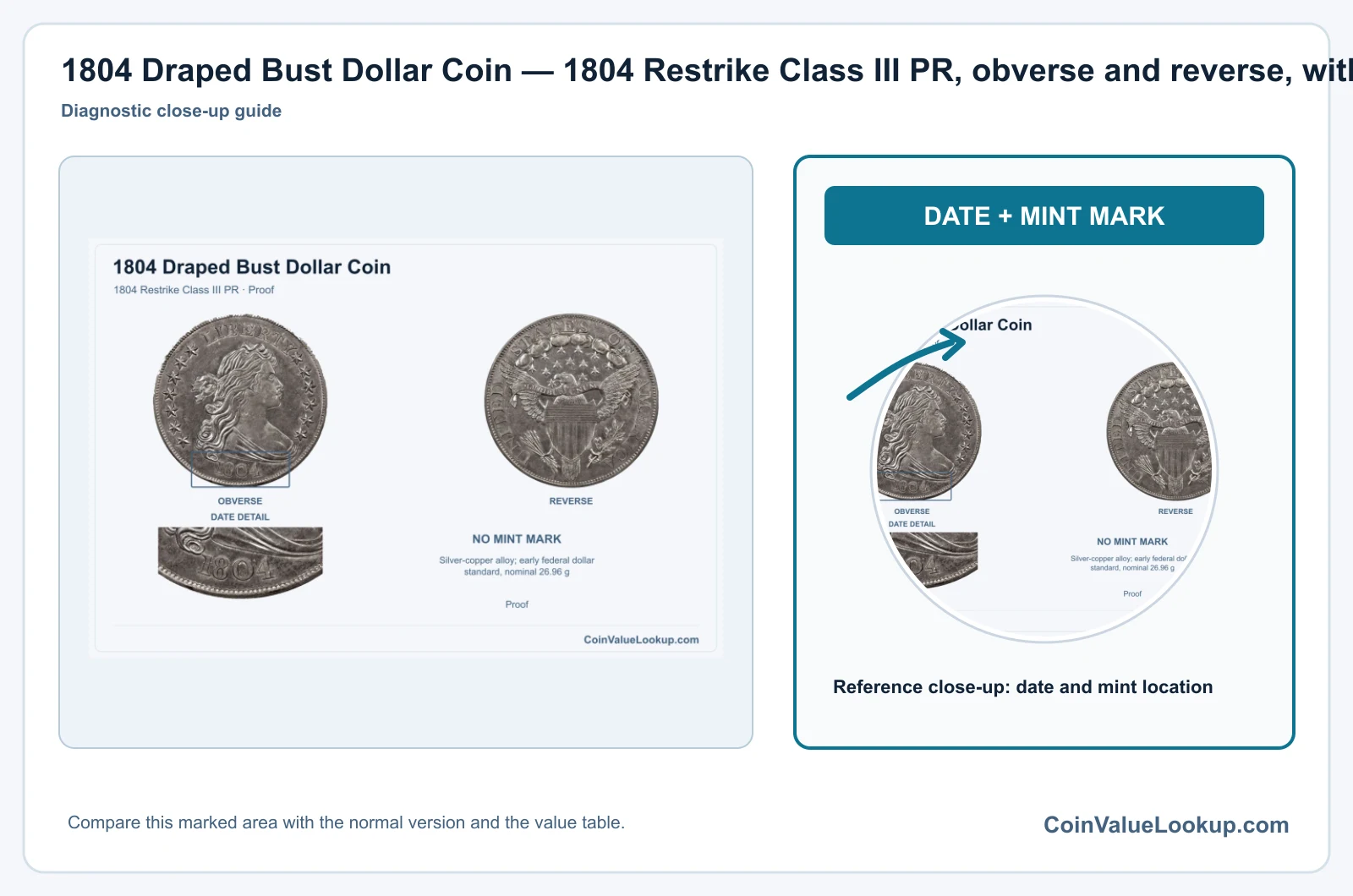
The 1804 Restrike Class III also uses the second reverse die and is another later-produced striking. It shares its guide estimate with Class II — approximately $3,100,440 at PR65 according to USA Coin Book.
Distinguishing Class III from Class II comes down to pedigree and specific physical characteristics cataloged by specialists. Both are extraordinarily rare, and both demand rigorous third-party attribution.
If someone offers you a Class III without documented provenance and professional certification, treat the claim with healthy skepticism.
Range Grade
Price Auction Records Appraisal PR PR 1
—
Coin Identifier
PR 2
—
Coin Identifier
PR 3
—
Coin Identifier
PR 4
—
Coin Identifier
PR 6
—
Coin Identifier
PR 8
—
Coin Identifier
PR 10
—
Coin Identifier
PR 12
—
Coin Identifier
PR 15
—
Coin Identifier
PR 20
—
Coin Identifier
PR 25
—
Coin Identifier
PR 30
—
Coin Identifier
PR 35
—
Coin Identifier
PR 40
—
Coin Identifier
PR 55
Coin Identifier
PR 58
Coin Identifier
PR 60
—
Coin Identifier
PR 61
—
—
—
PR 62
—
—
—
PR 63
—
Coin Identifier
PR 64
—
Coin Identifier
PR 65
Coin Identifier
PR 66
—
—
—
PR 67
—
—
—
PR 68
—
—
—
PR 69
—
—
—
PR 70
—
—
—