1917 Walking Liberty Half Dollar Coin Value: How Much Is It Worth?
The 1917 Walking Liberty Half Dollar is a 90% silver coin that collectors prize for its beautiful design and multiple production branches. Guide estimates for this date range from about $41.00 in well-worn condition up to $6,849.00 for a choice uncirculated example, depending on mint, mintmark position and grade.
These are guide anchors from USA Coin Book, not guaranteed selling prices or current silver-melt quotes. Condition, originality of surfaces and the specific branch you hold all play a role in what your coin is actually worth.
Fast Way to Identify Your 1917 Walking Liberty Half Dollar
Want a quick read on what you have? Upload clear photos of the front and back of your 1917 Walking Liberty Half Dollar for a preliminary identification.
That step helps narrow down which mint and mintmark position your coin belongs to, so you can look up the right value branch. Close-ups of the mintmark area and any unusual features are especially helpful.
1917 Walking Liberty Half Dollar Value
Upload both sides of your 1917 Walking Liberty Half Dollar.
Front Obverse
Upload photo
Back Reverse
Upload photo
Which 1917 Walking Liberty Half Dollar Versions Are Worth Money?
- The 1917-S Obverse mintmark branch carries the highest guide estimate at MS63, listed at $6,849.00, making it the key uncirculated issue for this date.
- The 1917-D Reverse branch jumps sharply in value above Good condition, with an MS63 guide estimate of $2,747.00 versus $44.00 in G4.
- The 1917-D Obverse mintmark variety guides at $1,541.00 in MS63, a notable premium over the Philadelphia issue at the same grade.
- Both mintmark positions on D and S coins are intentional production versions, not errors, so identifying which one you have is essential to accurate pricing.
- Reported mint errors such as doubled die obverse, repunched mintmark, and clipped planchet examples exist for the 1917 date and may carry additional collector premiums.
Step 1: Identify Your 1917 Walking Liberty Half Dollar Mint Mark and Version
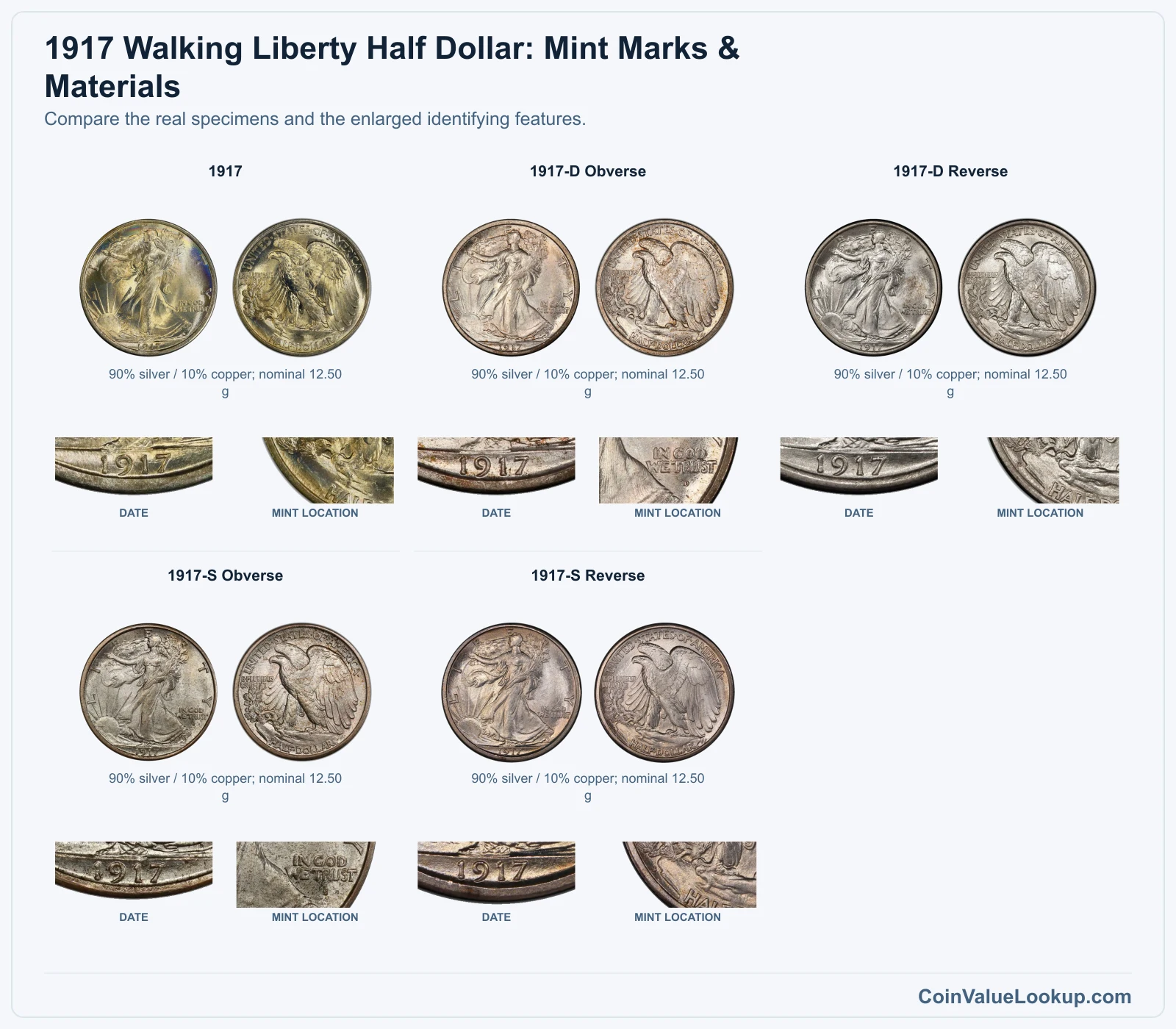
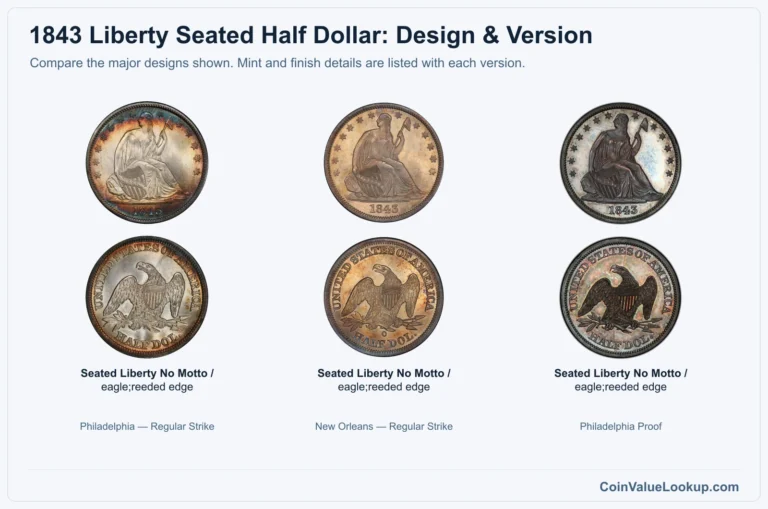
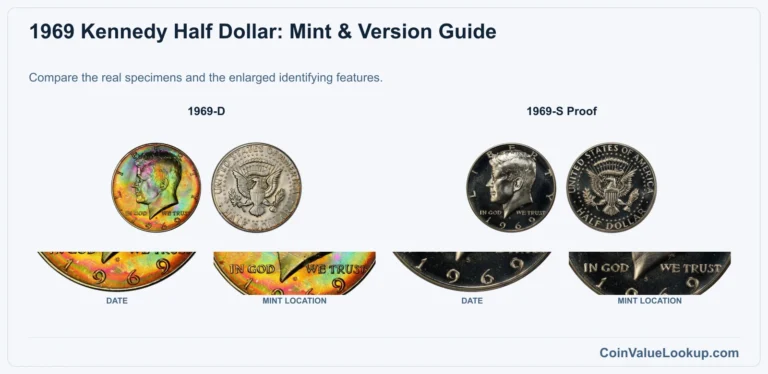
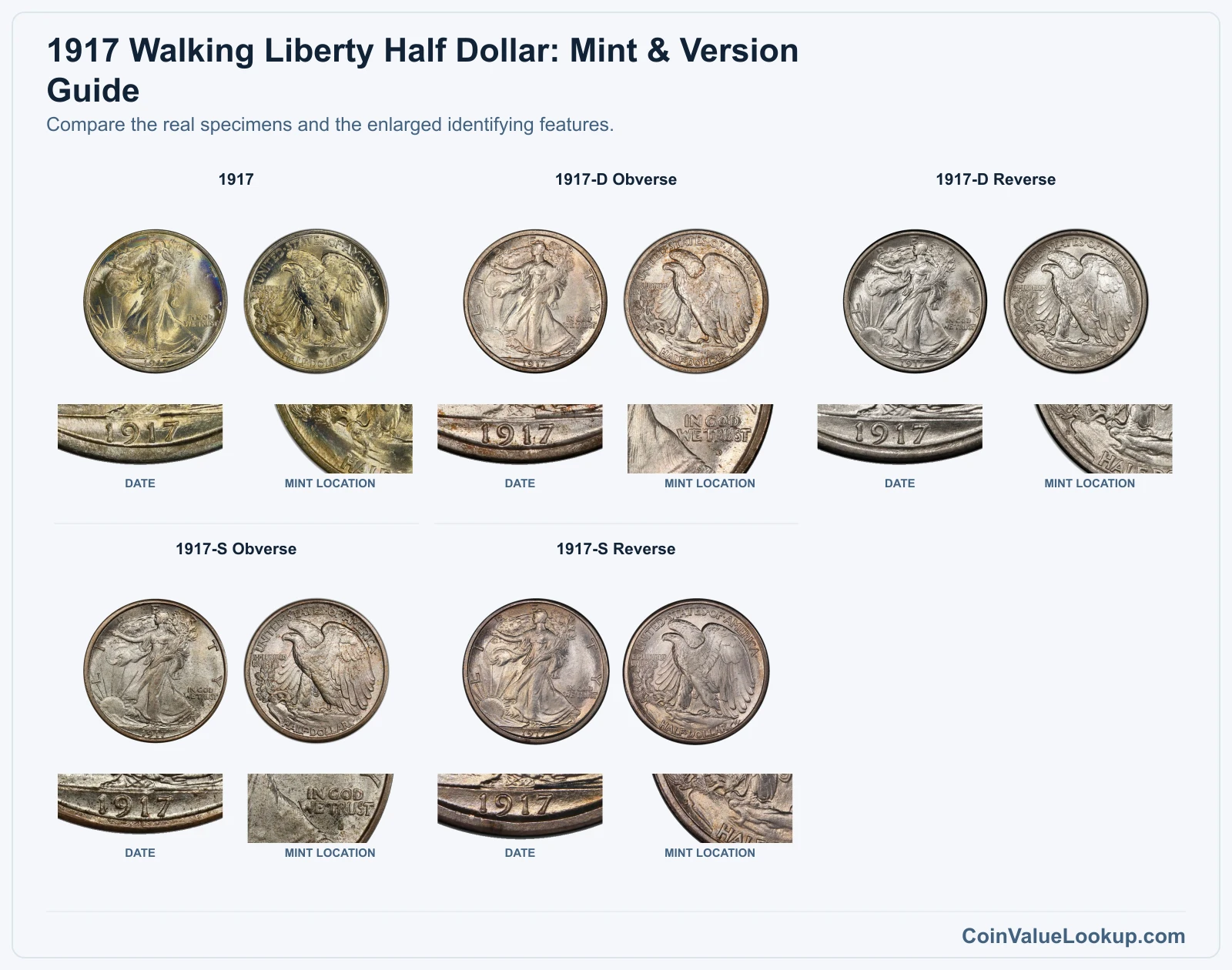
Five business-strike branches exist for 1917: a Philadelphia issue with no mintmark, two Denver issues, and two San Francisco issues. The Denver and San Francisco coins each come in an obverse-mintmark and a reverse-mintmark variety, because the Mint moved the mintmark partway through the year.
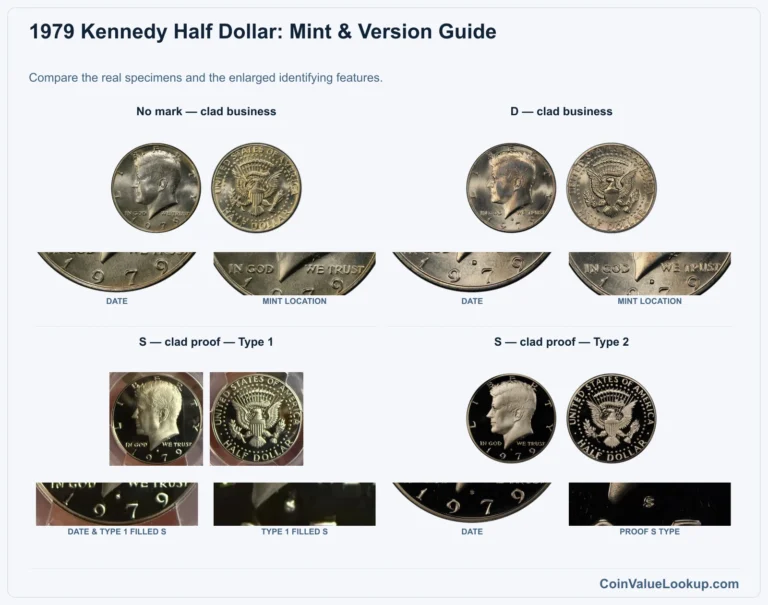
On the obverse-mintmark version, look below the motto IN GOD WE TRUST on Liberty's right side, near the date. On the reverse-mintmark version, the letter sits at the lower left of the back, near the eagle's tail feathers.
Philadelphia coins carry no mintmark at all.
The coin is struck in 90% silver and 10% copper, weighing nominally 12.50 grams. Toning can change the color dramatically but does not alter the alloy.
Make sure you check both sides carefully; mixing up the mintmark position means you could be reading the wrong value column entirely.
Step 2: Check Your 1917 Walking Liberty Half Dollar Grade
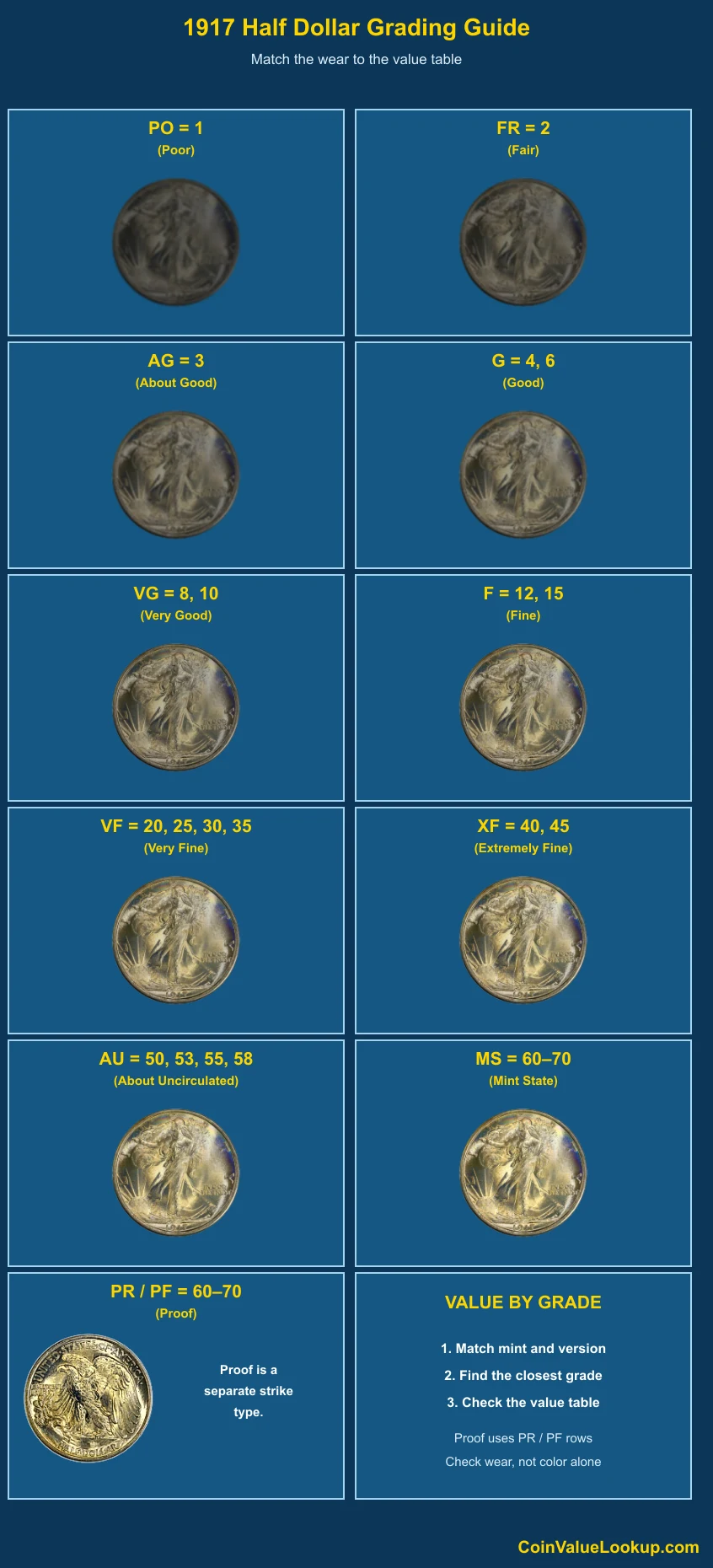
Start with Liberty's head, the details in her left hand, and the lines across her skirt and knee. These high points wear first.
On the reverse, check the eagle's breast feathers, leg and wing tips.
Here is the catch with Walkers: weak central strikes exist on coins that never circulated a day. A soft hand or mushy head does not automatically mean wear.
Look at the surrounding luster instead. If the fields still show original mint frost with no flat, slick patches, you may have a strike issue rather than a grade issue.
Compare your coin to the grading image to see how a circulated example differs from an uncirculated one. Cleaned or damaged pieces trade well below problem-free coins at the same apparent grade, so original surfaces matter a lot.
Step 3: Check 1917 Walking Liberty Half Dollar Value by Mint and Version
1917 Walking Liberty Half Dollar
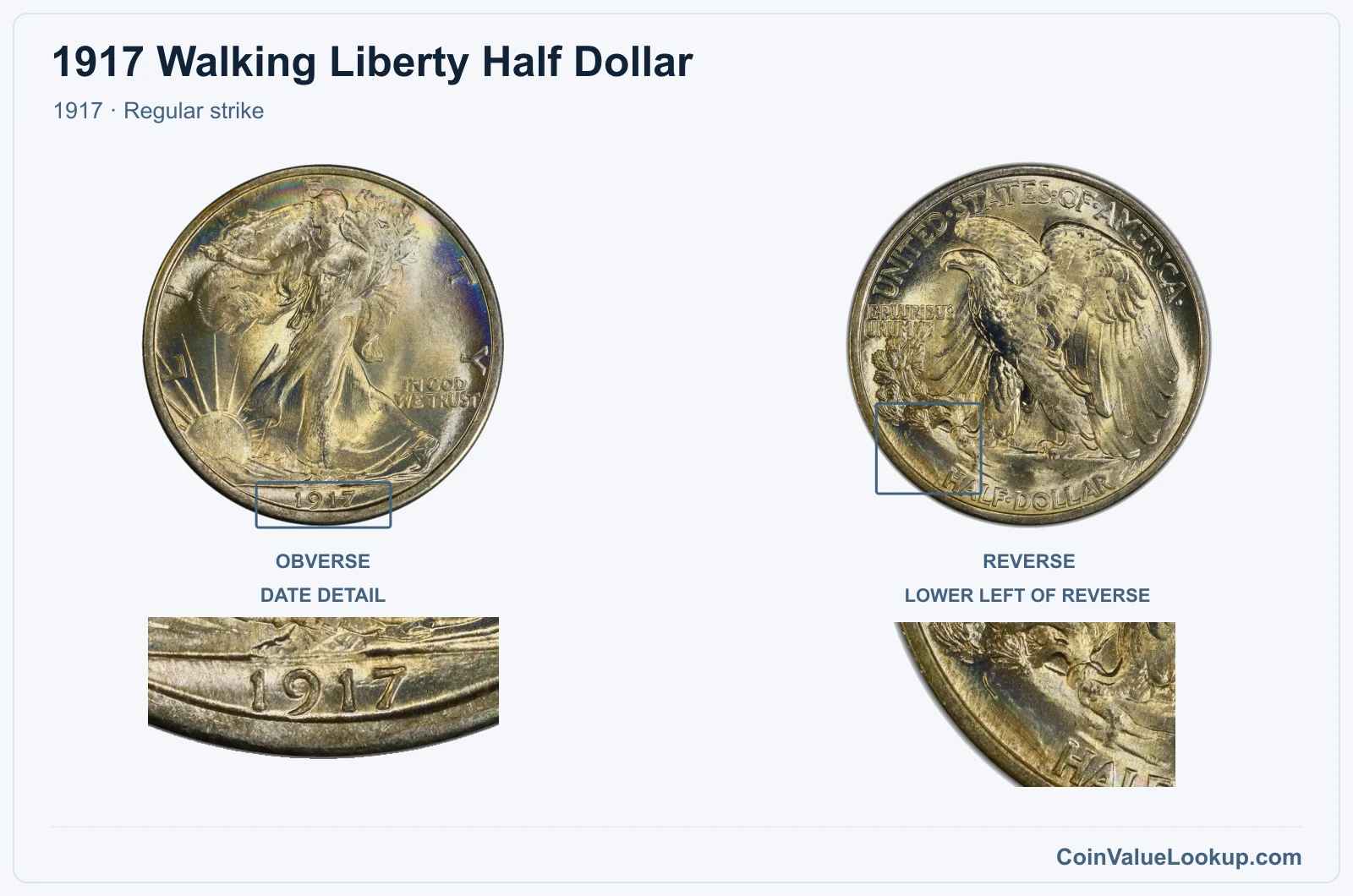
The 1917 Philadelphia half dollar has no mintmark. Look on both sides to confirm nothing appears below IN GOD WE TRUST on the obverse or at the lower left reverse.
USA Coin Book guide estimates place this branch at about $41.00 in G4 and $331.00 in MS63.
This is the most affordable branch of the five at both ends of the grade spectrum. Silver content supports a minimum floor, but cleaned or scratched coins do not bring the same money as original, problem-free pieces.
Check for natural toning and undisturbed luster before assuming full guide value.
Range Grade
Price Auction Records Appraisal PO PO 1
—
Coin Identifier FR FR 2
—
Coin Identifier AG AG 3
Coin Identifier G G 4
—
Coin Identifier
G 6
Coin Identifier VG VG 8
Coin Identifier
VG 10
—
Coin Identifier F F 12
Coin Identifier
F 15
—
Coin Identifier VF VF 20
—
Coin Identifier
VF 25
—
Coin Identifier
VF 30
Coin Identifier
VF 35
Coin Identifier XF XF 40
—
Coin Identifier
XF 45
Coin Identifier AU AU 50
Coin Identifier
AU 53
Coin Identifier
AU 55
Coin Identifier
AU 58
Coin Identifier MS MS 60
Coin Identifier
MS 61
Coin Identifier
MS 62
Coin Identifier
MS 63
Coin Identifier
MS 64
Coin Identifier
MS 65
Coin Identifier
MS 66
Coin Identifier
MS 67
Coin Identifier
MS 68
—
—
—
MS 69
—
—
—
MS 70
—
—
—
1917 Walking Liberty Half Dollar — D Obverse
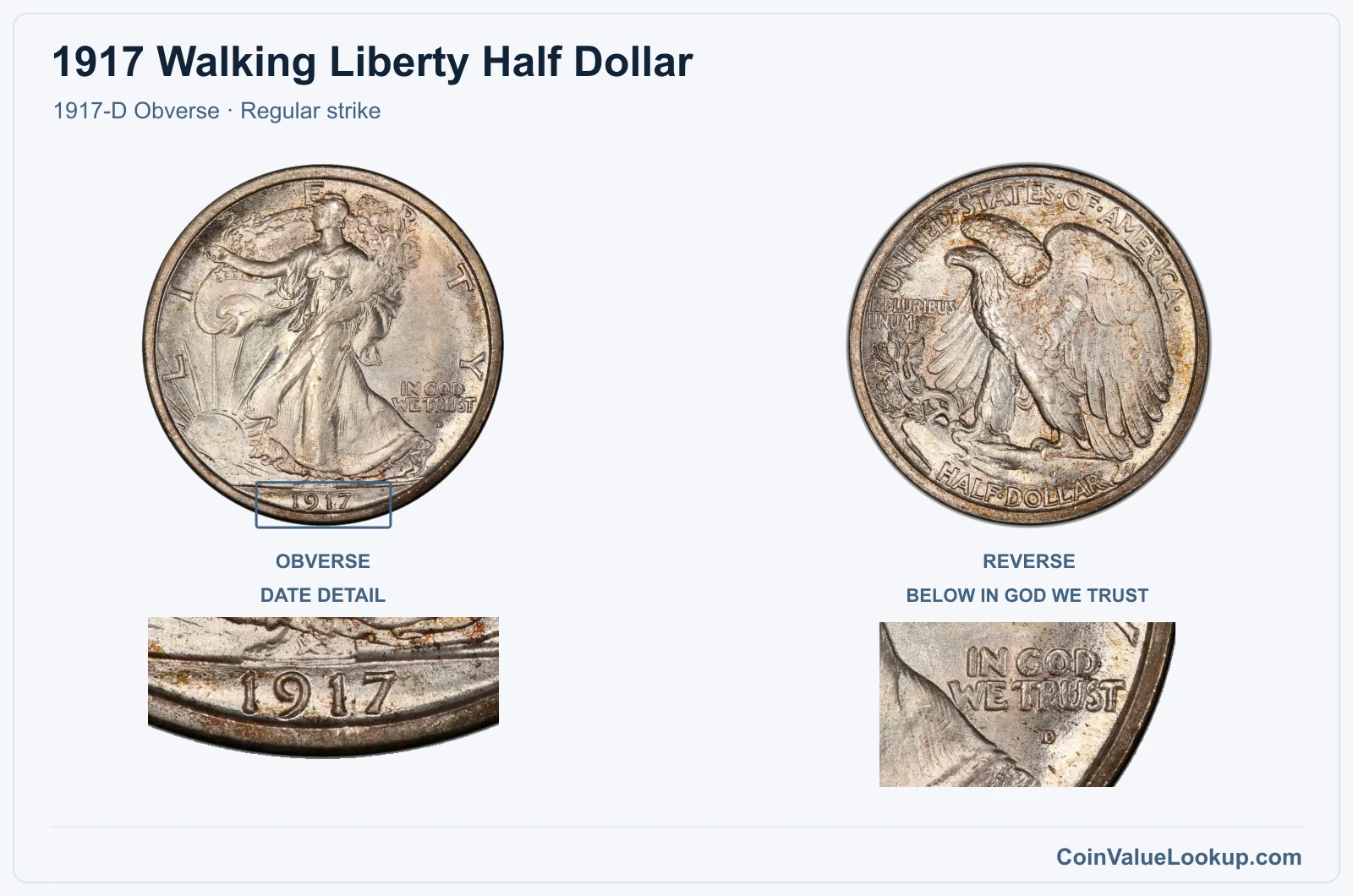
The 1917-D Obverse carries a D mintmark on the front of the coin, positioned below IN GOD WE TRUST near the date. This placement was used early in 1917 before Denver switched the mark to the reverse.
Both positions are deliberate; neither is an error.
USA Coin Book lists this branch at roughly $61.00 in G4 and $1,541.00 in MS63. That large spread between low grade and uncirculated tells you the mint-state survivors are scarce relative to demand.
Confirm the mintmark location with a close-up, because confusing it with the reverse-mintmark Denver coin puts you in the wrong price column entirely.
Coin Value Lookup is a useful starting point if you are sorting through Walking Liberty dates and want to look up guides for other years or denominations.
Range Grade
Price Auction Records Appraisal PO PO 1
—
Coin Identifier FR FR 2
—
Coin Identifier AG AG 3
Coin Identifier G G 4
Coin Identifier
G 6
Coin Identifier VG VG 8
Coin Identifier
VG 10
Coin Identifier F F 12
Coin Identifier
F 15
Coin Identifier VF VF 20
Coin Identifier
VF 25
Coin Identifier
VF 30
Coin Identifier
VF 35
Coin Identifier XF XF 40
Coin Identifier
XF 45
Coin Identifier AU AU 50
Coin Identifier
AU 53
Coin Identifier
AU 55
Coin Identifier
AU 58
Coin Identifier MS MS 60
Coin Identifier
MS 61
Coin Identifier
MS 62
Coin Identifier
MS 63
Coin Identifier
MS 64
Coin Identifier
MS 65
Coin Identifier
MS 66
Coin Identifier
MS 67
—
—
—
MS 68
—
—
—
MS 69
—
—
—
MS 70
—
—
—
1917 Walking Liberty Half Dollar — D Reverse
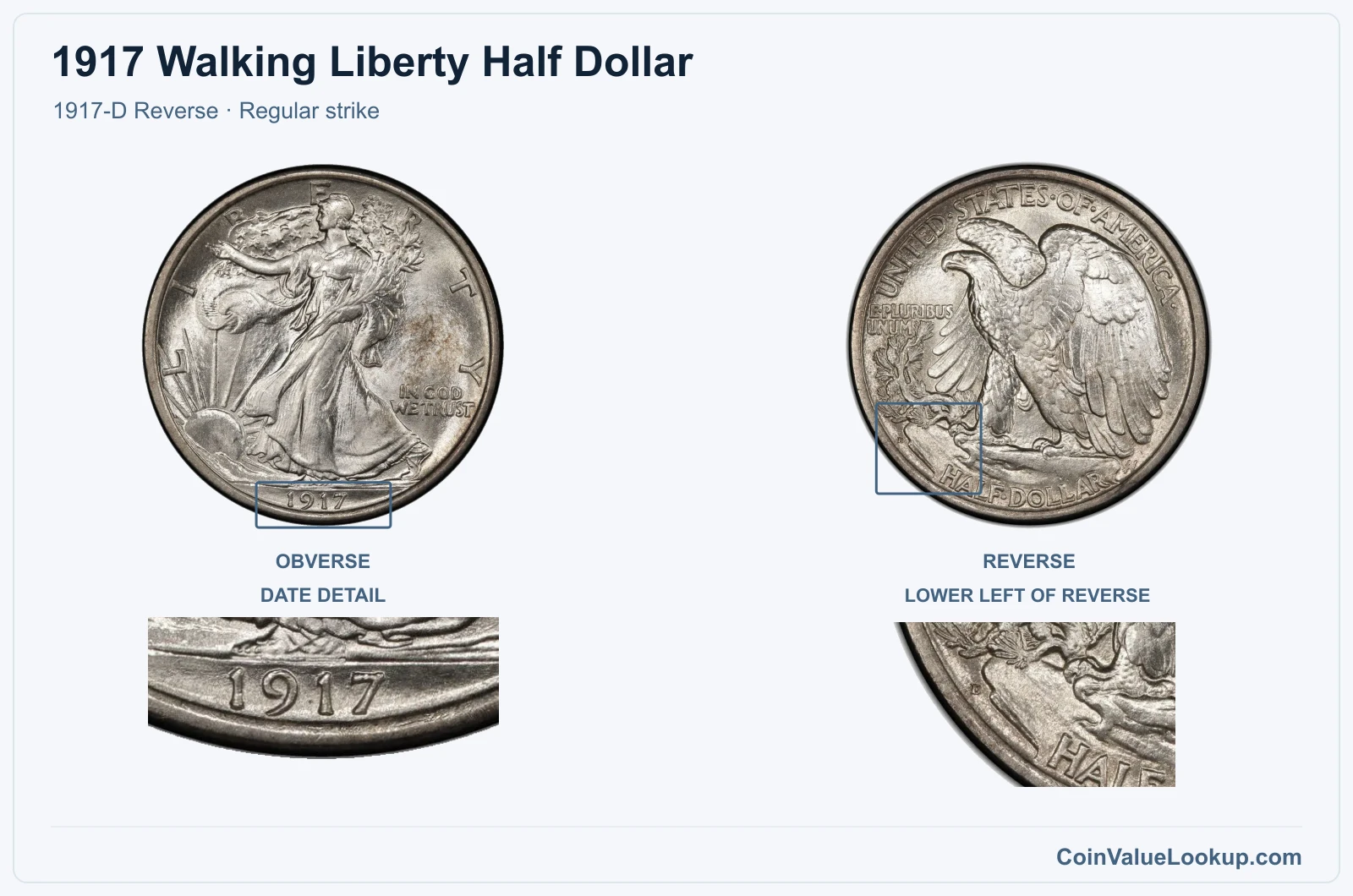
The 1917-D Reverse has its D mintmark on the back of the coin, at the lower left near the eagle's tail feathers. This is the later Denver production position for the year.
Guide estimates from USA Coin Book run about $44.00 in G4 and $2,747.00 in MS63. The uncirculated premium is steep.
In heavily worn grades, this branch trades close to the Philadelphia issue, but in higher conditions the gap widens considerably.
Original surfaces matter here. A lightly circulated example with honest wear will typically appeal to collectors more than a cleaned coin that might look shinier at first glance.
Range Grade
Price Auction Records Appraisal PO PO 1
—
Coin Identifier FR FR 2
—
Coin Identifier AG AG 3
—
Coin Identifier G G 4
Coin Identifier
G 6
Coin Identifier VG VG 8
Coin Identifier
VG 10
Coin Identifier F F 12
—
Coin Identifier
F 15
Coin Identifier VF VF 20
Coin Identifier
VF 25
Coin Identifier
VF 30
Coin Identifier
VF 35
Coin Identifier XF XF 40
Coin Identifier
XF 45
Coin Identifier AU AU 50
Coin Identifier
AU 53
Coin Identifier
AU 55
Coin Identifier
AU 58
Coin Identifier MS MS 60
Coin Identifier
MS 61
Coin Identifier
MS 62
Coin Identifier
MS 63
Coin Identifier
MS 64
Coin Identifier
MS 65
Coin Identifier
MS 66
Coin Identifier
MS 67
—
—
—
MS 68
—
—
—
MS 69
—
—
—
MS 70
—
—
—
1917 Walking Liberty Half Dollar — S Obverse
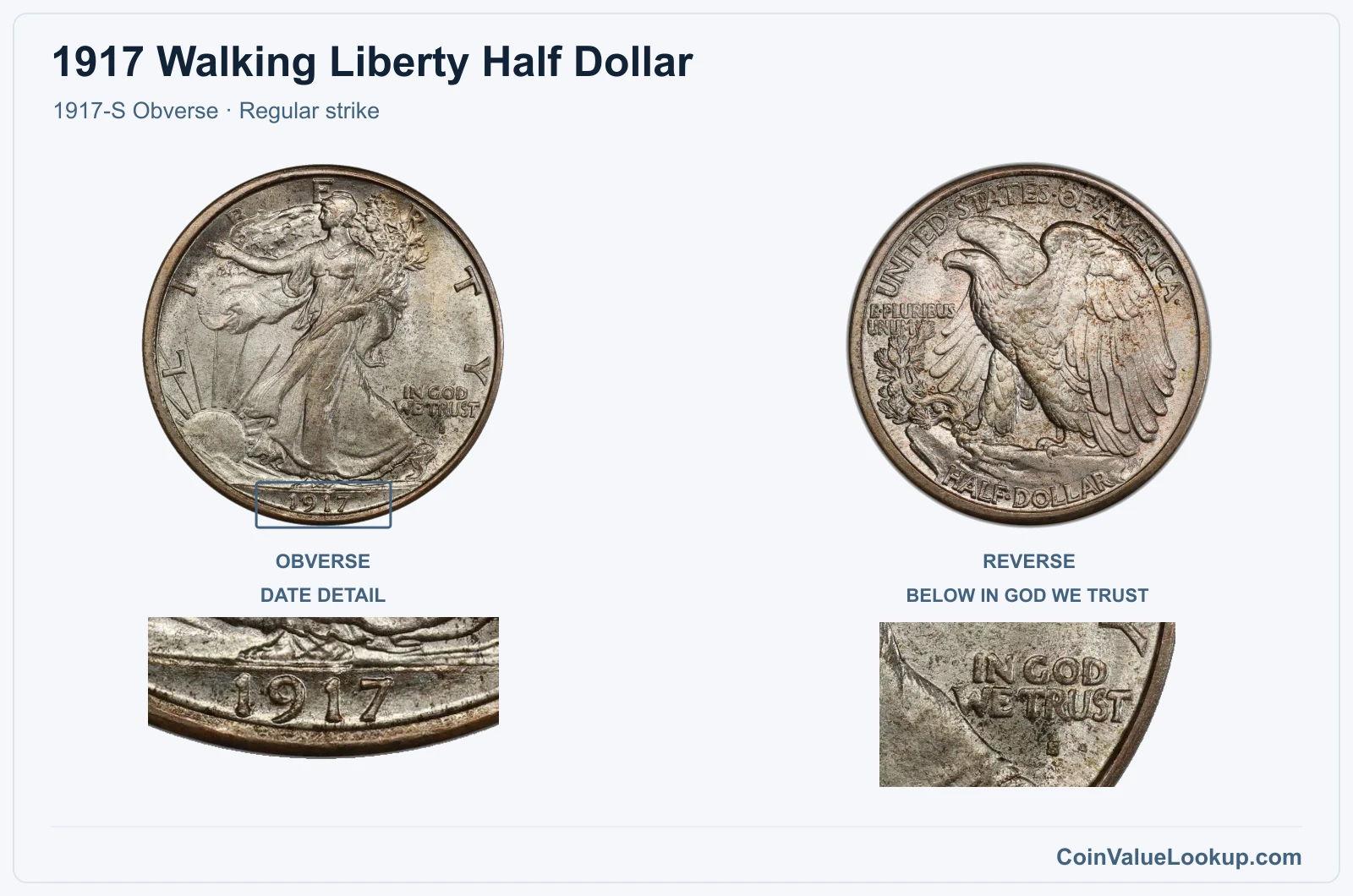
The 1917-S Obverse places an S mintmark on the front, below IN GOD WE TRUST. This is the early San Francisco production for the year, before the mark moved to the reverse.
USA Coin Book guides this branch at about $56.00 in G4 and $6,849.00 in MS63, the highest uncirculated guide figure among all five 1917 branches. Well-preserved examples are clearly tough to find.
Weak strikes on the hand and head are common even on unworn coins, so do not downgrade solely on soft detail without checking the surrounding luster first.
Make sure you verify the mintmark on the obverse with a loupe or close-up photo. The difference between the obverse and reverse S position changes the guide value by thousands of dollars at the MS63 level.
Range Grade
Price Auction Records Appraisal PO PO 1
—
Coin Identifier FR FR 2
Coin Identifier AG AG 3
Coin Identifier G G 4
Coin Identifier
G 6
Coin Identifier VG VG 8
Coin Identifier
VG 10
Coin Identifier F F 12
Coin Identifier
F 15
Coin Identifier VF VF 20
Coin Identifier
VF 25
Coin Identifier
VF 30
Coin Identifier
VF 35
Coin Identifier XF XF 40
Coin Identifier
XF 45
Coin Identifier AU AU 50
Coin Identifier
AU 53
Coin Identifier
AU 55
Coin Identifier
AU 58
Coin Identifier MS MS 60
Coin Identifier
MS 61
Coin Identifier
MS 62
Coin Identifier
MS 63
Coin Identifier
MS 64
Coin Identifier
MS 65
Coin Identifier
MS 66
Coin Identifier
MS 67
Coin Identifier
MS 68
—
—
—
MS 69
—
—
—
MS 70
—
—
—
1917 Walking Liberty Half Dollar — S Reverse
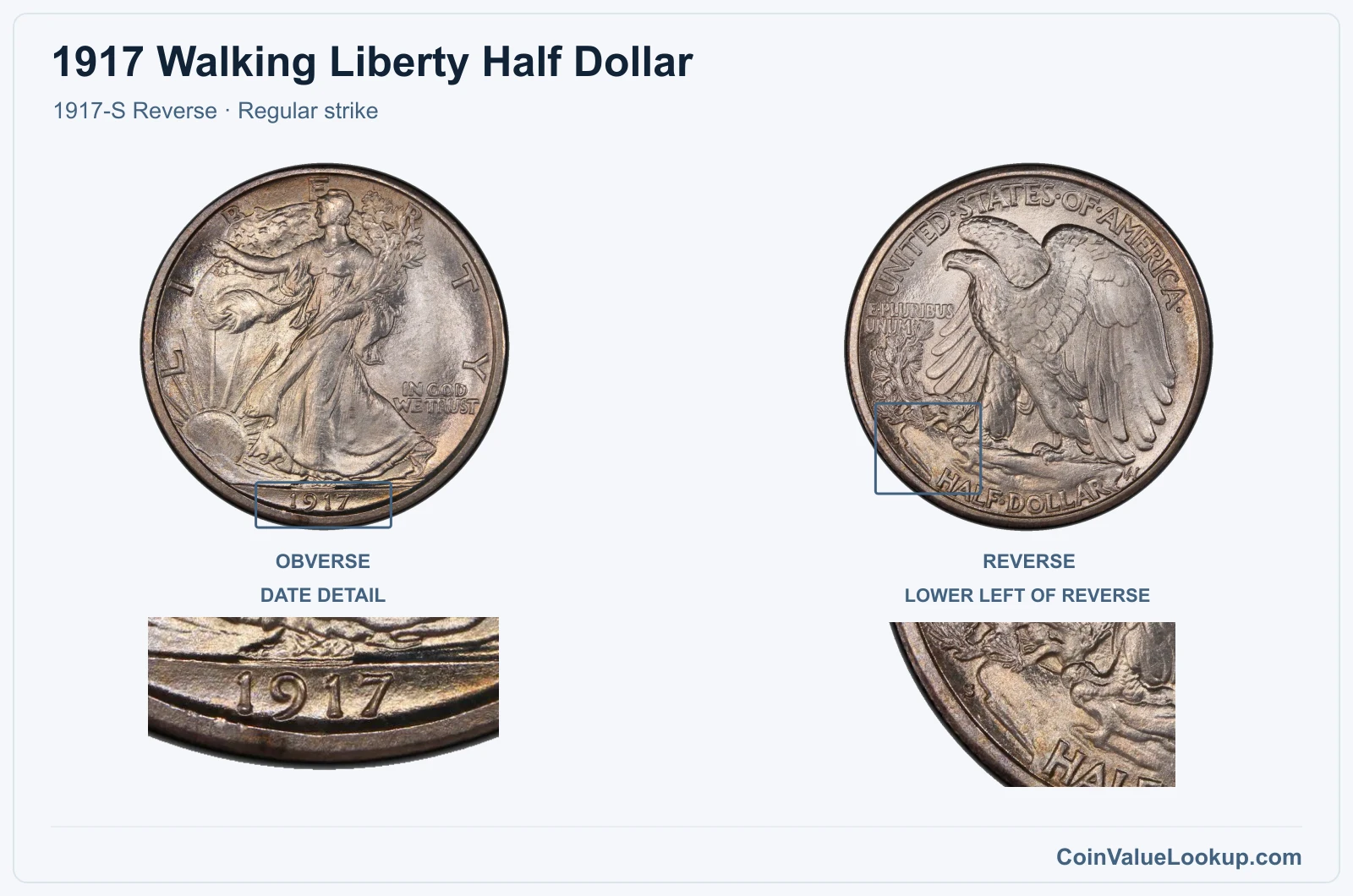
The 1917-S Reverse has an S mintmark on the back of the coin, lower left. This is the later San Francisco mintmark position for the year.
Guide estimates sit at roughly $43.00 in G4 and $2,190.00 in MS63 per USA Coin Book. In worn grades, this branch is priced close to the Philadelphia and D-Reverse issues.
The real separation happens in uncirculated condition.
As with all 1917 Walkers, silver content provides a value floor, but problem-free coins with original surfaces are what collectors chase. A coin with honest wear beats a polished one every time in the marketplace.
Range Grade
Price Auction Records Appraisal PO PO 1
—
Coin Identifier FR FR 2
—
Coin Identifier AG AG 3
—
Coin Identifier G G 4
Coin Identifier
G 6
Coin Identifier VG VG 8
Coin Identifier
VG 10
Coin Identifier F F 12
Coin Identifier
F 15
Coin Identifier VF VF 20
Coin Identifier
VF 25
Coin Identifier
VF 30
Coin Identifier
VF 35
Coin Identifier XF XF 40
Coin Identifier
XF 45
Coin Identifier AU AU 50
Coin Identifier
AU 53
Coin Identifier
AU 55
Coin Identifier
AU 58
Coin Identifier MS MS 60
Coin Identifier
MS 61
Coin Identifier
MS 62
Coin Identifier
MS 63
Coin Identifier
MS 64
Coin Identifier
MS 65
Coin Identifier
MS 66
Coin Identifier
MS 67
Coin Identifier
MS 68
—
—
—
MS 69
—
—
—
MS 70
—
—
—
1917 Walking Liberty Half Dollar Error List
1. 1917 Walking Liberty Half Dollar — Doubled Die Obverse
A doubled die obverse on a 1917 Walking Liberty Half Dollar shows consistent doubling on obverse lettering or design elements. Under magnification, look for separation or notching on letters such as IN GOD WE TRUST, the date, or portions of Liberty's outline.
The doubling should appear uniform and repeatable across multiple letters, not random.
Do not confuse this with machine doubling, which tends to produce a flat, shelf-like appearance without the raised, separated profiles of a true doubled die. Reflections from worn dies can also mimic doubling at certain angles.
Compare your coin side by side with a known normal example under consistent lighting.
No specific price range is adopted for this variety. Value depends on the visibility of the doubling, overall coin condition, and collector demand for the particular die marriage.
2. 1917 Walking Liberty Half Dollar — Off-Center Strike
An off-center strike happens when the planchet is not seated properly between the dies. On a 1917 Walker, this produces a displaced design with an unstruck crescent along part of the rim.
The more dramatic the shift, the more noticeable the blank area.
The date needs to remain visible for the coin to be attributed and valued. A coin struck far enough off-center to lose the date is much harder to sell.
Check that the misalignment is genuine by examining both sides; post-mint damage or one-sided die misalignment can look similar but are not the same thing.
No adopted price range exists for this error. Condition, percentage of off-center shift, and date visibility all influence what a collector would pay.
3. 1917 Walking Liberty Half Dollar — Clipped Planchet
A clipped planchet error on a 1917 half dollar means the blank was incompletely punched from the metal strip before striking. The result is a missing curved, straight or irregularly shaped section of the coin's edge.
Genuine clips usually show a corresponding area of design weakness directly opposite the missing portion, sometimes called the Blakesley effect.
Examine the edge texture carefully. A real clip has a smooth, natural contour where the metal was never present, not a rough or filed surface.
Post-mint cuts, filed notches, and corrosion-eaten edges are common lookalikes that do not carry the same collector interest.
No numerical price range is adopted for this error. The size of the clip, overall condition, and whether the date and key design elements survive all affect value.
4. 1917 Walking Liberty Half Dollar — Repunched Mintmark
A repunched mintmark on a 1917 D or S half dollar shows traces of a previous mintmark punch in a slightly different position. Under magnification, you may see remnants of a second D or S partially visible beneath or beside the final mark.
Since 1917 coins exist with mintmarks in two locations, obverse and reverse, check whichever position your coin uses.
Machine doubling near the mintmark or a small die chip can mimic a repunched mark, so compare your coin at matching magnification against a confirmed normal example. True repunching shows distinct, rounded letter remnants rather than flat or smeared outlines.
No specific price range is adopted. Value depends on the clarity of the repunching, the particular die involved, and the coin's overall grade and eye appeal.
5. 1917 Walking Liberty Half Dollar — Lamination / Split Planchet
A lamination or split planchet error on a 1917 Walking Liberty Half Dollar shows peeling, flaking, or outright separation within the coin's metal. You might see a retained flap of metal still attached, or a section where a layer has broken away, exposing a rough underlayer.
Photograph the edge and affected face together for the clearest documentation.
Genuine lamination errors result from impurities or gas trapped in the planchet before striking. They look distinctly different from post-mint scraping, corrosion pitting, or a coin that has been deliberately cut or gouged.
The separation follows the plane of the metal rather than cutting across it.
No adopted price range exists. Value depends on the size and visibility of the defect, the coin's overall condition, and how clearly the error can be identified.