1944 Mercury Dime Coin Value: How Much Is It Worth?
A 1944 Mercury Dime in well-worn condition (G4) runs about $5.73 according to USA Coin Book guide estimates, while an uncirculated example graded MS65 can reach roughly $34 to $41 depending on the mint. All three mints — Philadelphia, Denver, and San Francisco — struck silver business issues this year, and no proofs were produced.
Coins with original surfaces and fully separated fasces bands on the reverse can command additional premiums beyond the standard guide figures.
Fast Way to Identify Your 1944 Mercury Dime
Want a quick read on your 1944 Mercury Dime? Upload clear photos of the front and back, and our identifier can offer a preliminary take on your coin's mint, version, and general condition.
It is not a substitute for professional authentication or precise grading, but it gives you a useful starting point before deciding on next steps.
1944 Mercury Dime Value
Upload both sides of your 1944 Mercury Dime.
Front Obverse
Upload photo
Back Reverse
Upload photo
Which 1944 Mercury Dime Versions Are Worth Money?
- Philadelphia, Denver, and San Francisco issues are all 90% silver — even a worn example carries meaningful melt value.
- Mint State coins (MS65 range) can reach $34 (Philadelphia) to $41 (Denver or San Francisco) per USA Coin Book estimates.
- Full Bands examples with clearly separated fasces bands trade at premiums above standard Mint State prices.
- Several error categories — doubled die obverse, repunched mintmark, clipped planchet, and others — have been reported for 1944 and are worth checking with magnification.
Step 1: Identify Your 1944 Mercury Dime Mint Mark and Version
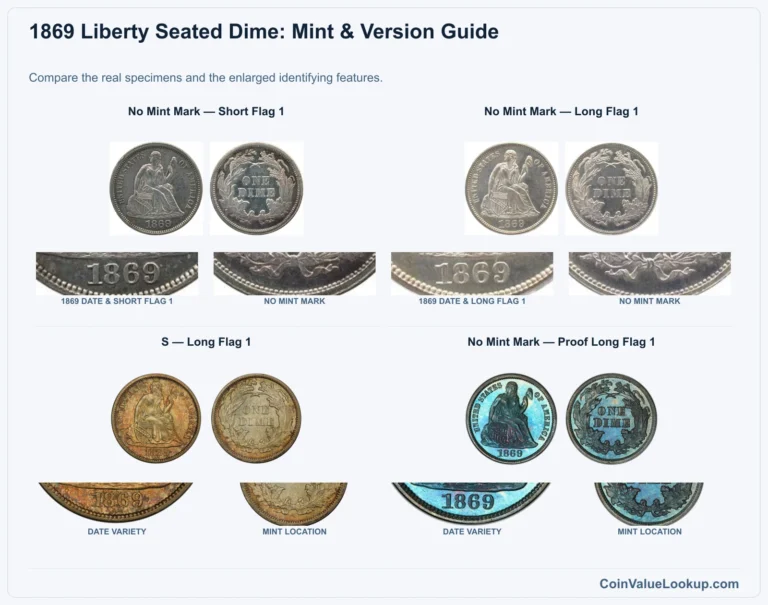
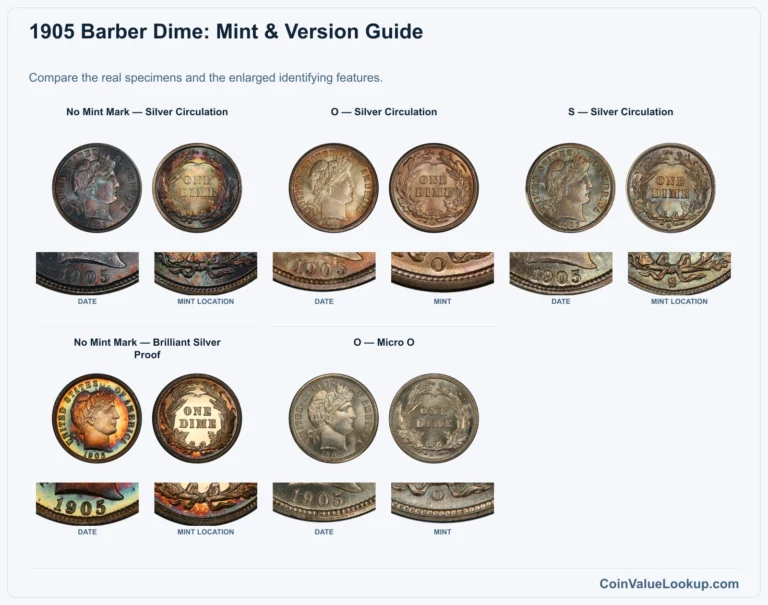
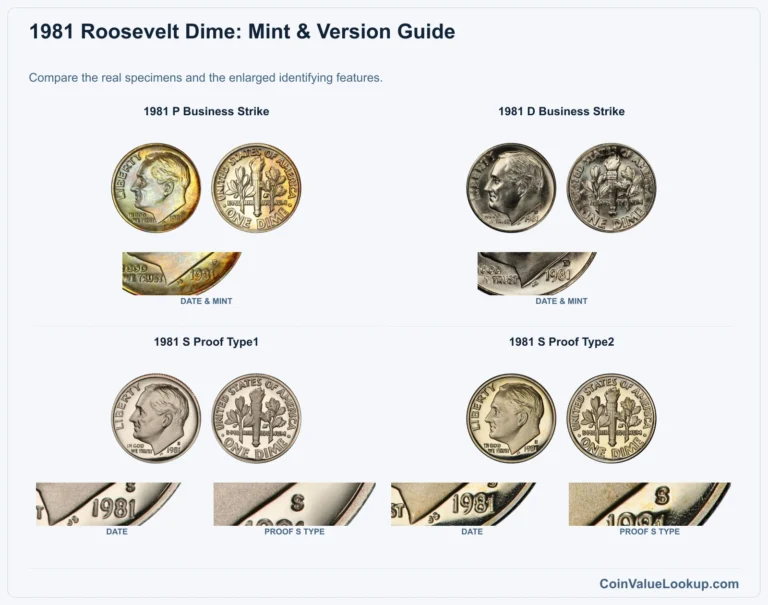
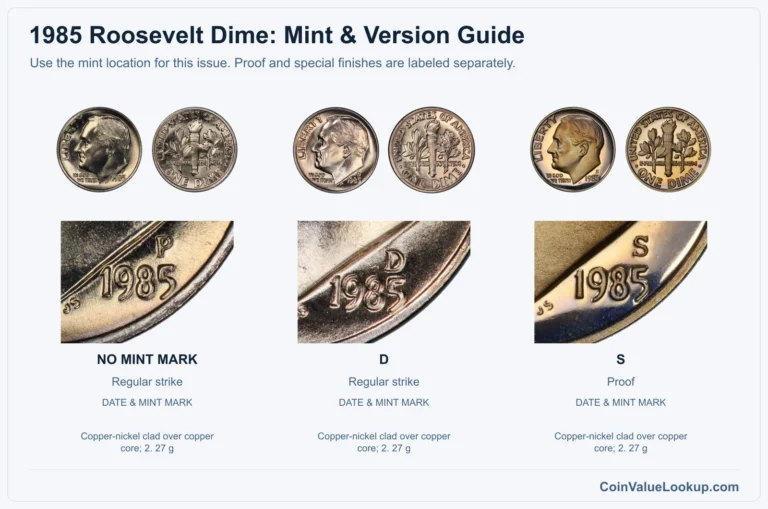
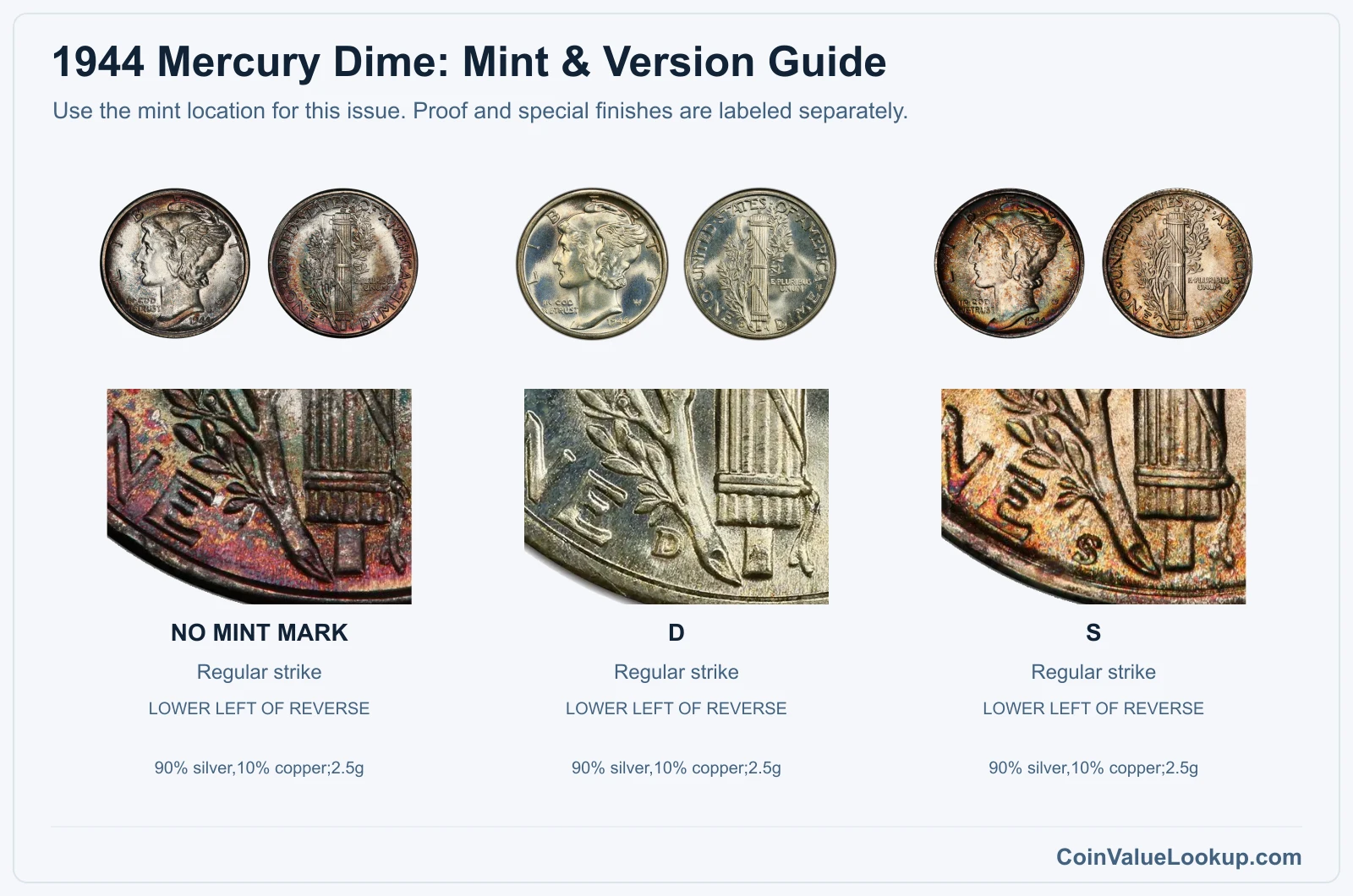
Three business-strike versions exist for 1944: Philadelphia (no mint mark), Denver (D), and San Francisco (S). The mint mark sits on the lower-left reverse, just to the left of the word ONE near the bottom of the fasces bundle.
If you see no letter there, you have the Philadelphia issue.
Don't confuse the small "AW" monogram on the obverse near Liberty's neck with a mint mark — those are designer Adolph Weinman's initials.
Every 1944 dime is struck in 90% silver and 10% copper, weighs about 2.5 grams, and measures 17.9 mm with a reeded edge. There are no proof strikes for this date; Mercury Dime proofs were only made from 1936 through 1942.
Step 2: Check Your 1944 Mercury Dime Grade
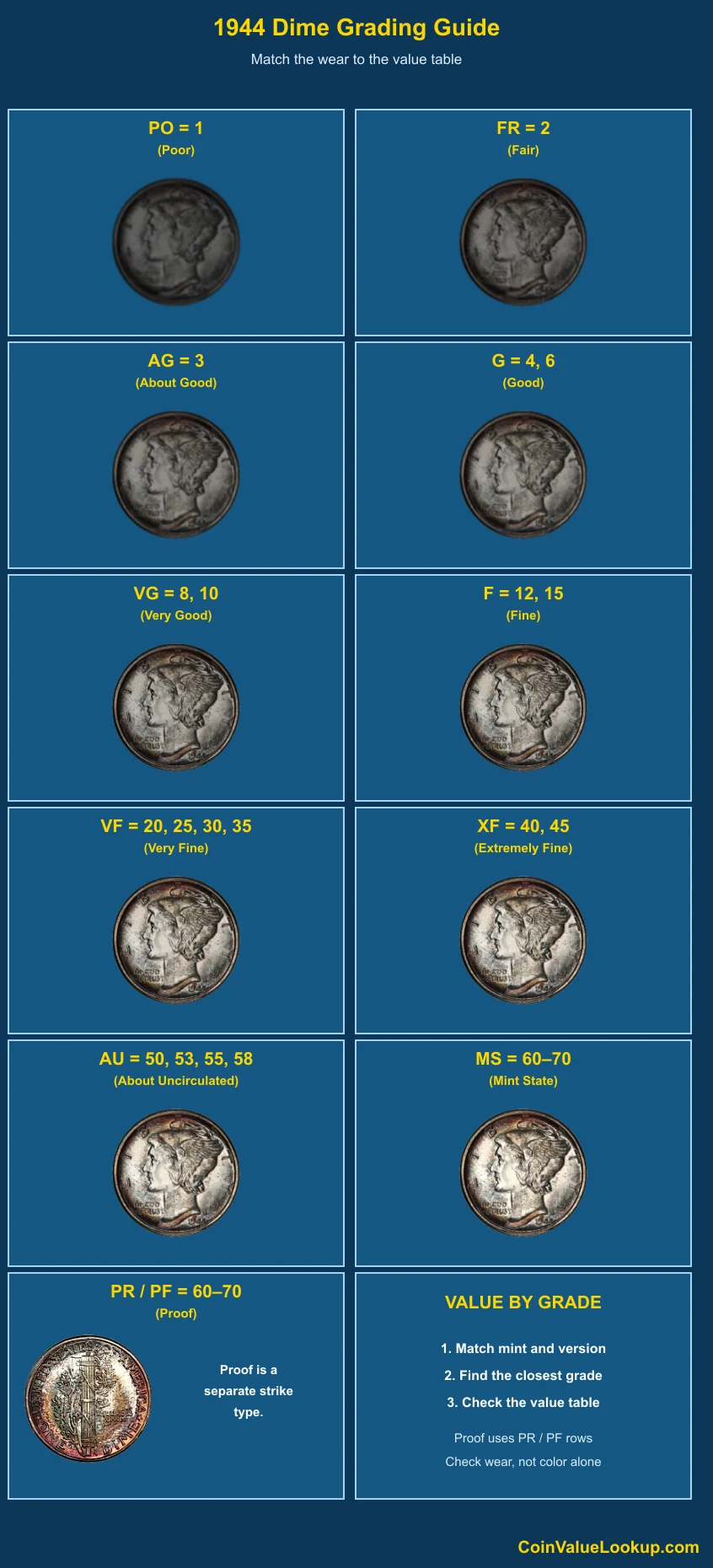
Start by looking at Liberty's hair detail above and in front of the ear. On a well-circulated coin, those strands blend together into a smooth, featureless area.
A coin with sharp individual hair lines and full wing detail on the cap is likely in the Mint State range.
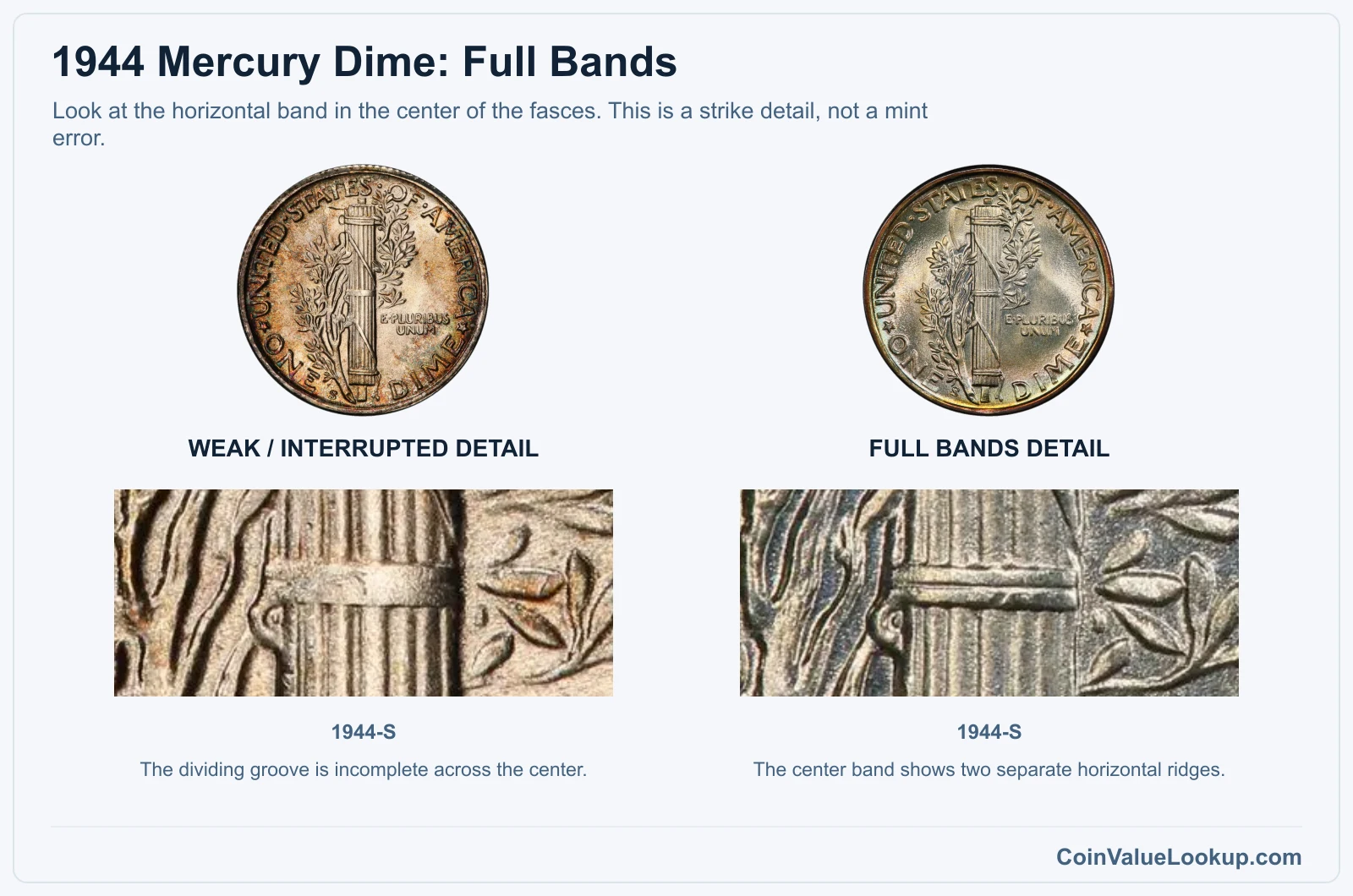
On the reverse, examine the fasces (the bundled rods). The horizontal bands across the center should be distinct.
"Full Bands" (FB) is a separate strike designation that NGC and other services evaluate — it refers to clear separation of the central and outer bands, not a higher grade or an error.
Check for luster across both sides. A coin can look sharp in detail but still show signs of cleaning — unnatural brightness, hairline scratches visible under a light, or a washed-out appearance.
These reduce value.
Use the comparison image to gauge where your coin falls. Weakly struck peripheral legends or soft bands don't automatically mean heavy circulation; some branch-mint strikes simply came off the press that way.
Step 3: Check 1944 Mercury Dime Value by Mint and Version
1944 Mercury Dime — No Mint Mark — Silver Circulation
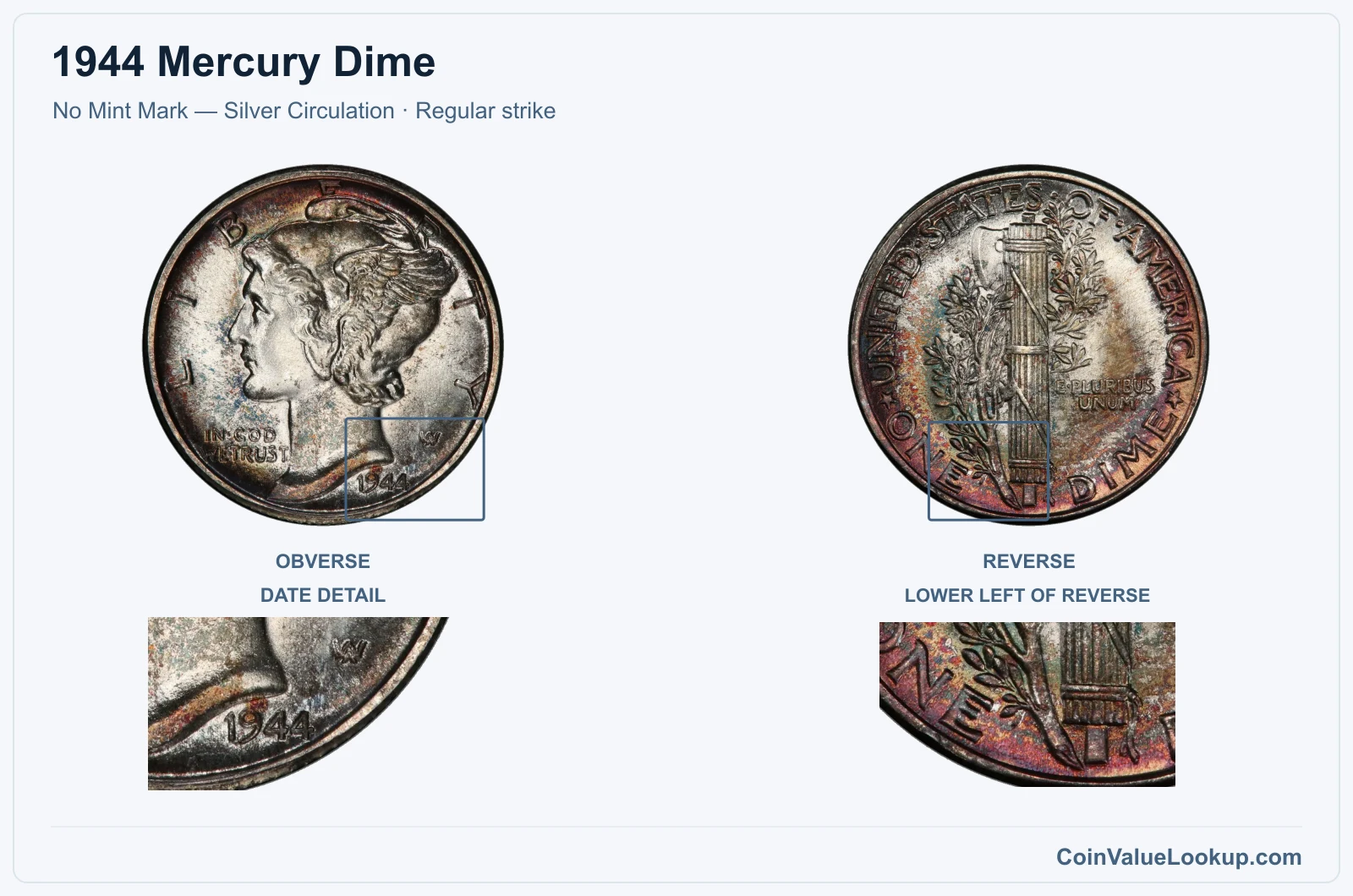
The 1944 Philadelphia dime carries no mint mark on the reverse. In G4 condition, USA Coin Book estimates it at about $5.73; an MS65 example is listed around $34.
These are guide estimates, not guaranteed sale prices.
Philadelphia struck the largest share of Mercury Dimes most years, so finding one is no challenge. The value difference between a circulated survivor and a well-preserved uncirculated piece is significant, though.
Look for complete hair detail, strong wing feathers, and unbroken luster before assuming yours is Mint State.
Coin Value Lookup is a handy place to check other dates and denominations if you are working through a collection or a bag of silver dimes.
Range Grade
Price Auction Records Appraisal PO PO 1
—
Coin Identifier FR FR 2
—
Coin Identifier AG AG 3
—
Coin Identifier G G 4
—
Coin Identifier
G 6
—
Coin Identifier VG VG 8
—
Coin Identifier
VG 10
—
Coin Identifier F F 12
—
Coin Identifier
F 15
—
Coin Identifier VF VF 20
—
Coin Identifier
VF 25
—
Coin Identifier
VF 30
—
Coin Identifier
VF 35
—
Coin Identifier XF XF 40
Coin Identifier
XF 45
—
Coin Identifier AU AU 50
—
Coin Identifier
AU 53
Coin Identifier
AU 55
Coin Identifier
AU 58
Coin Identifier MS MS 60
—
Coin Identifier
MS 61
Coin Identifier
MS 62
Coin Identifier
MS 63
Coin Identifier
MS 64
Coin Identifier
MS 65
Coin Identifier
MS 66
Coin Identifier
MS 67
Coin Identifier
MS 68
Coin Identifier
MS 69
—
—
—
MS 70
—
—
—
1944 Mercury Dime — D — Silver Circulation
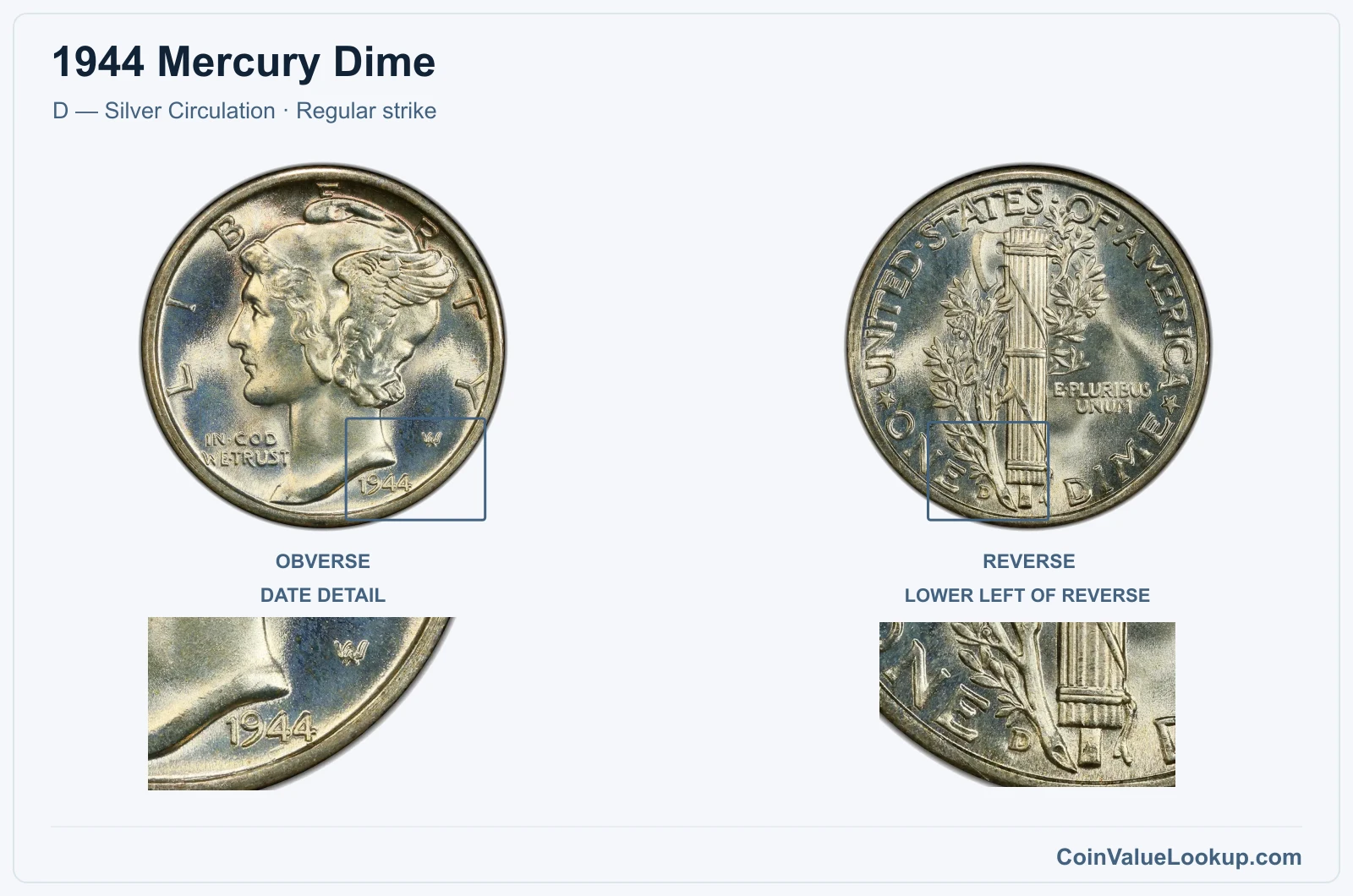
Look for a small "D" to the lower left of ONE on the reverse. A 1944-D in G4 grades at roughly $5.73 per USA Coin Book, climbing to about $41 in MS65.
Denver strikes from this era sometimes show softer detail on the bands, which makes a true Full Bands coin a bit harder to come by. That softness is a strike characteristic, not wear.
Examine the coin's high points — Liberty's hair and the wing — to separate a weakly struck Mint State piece from one that actually saw pocket time.
Range Grade
Price Auction Records Appraisal PO PO 1
—
Coin Identifier FR FR 2
—
Coin Identifier AG AG 3
—
Coin Identifier G G 4
—
Coin Identifier
G 6
—
Coin Identifier VG VG 8
—
Coin Identifier
VG 10
—
Coin Identifier F F 12
—
Coin Identifier
F 15
—
Coin Identifier VF VF 20
—
Coin Identifier
VF 25
—
Coin Identifier
VF 30
—
Coin Identifier
VF 35
—
Coin Identifier XF XF 40
—
Coin Identifier
XF 45
—
Coin Identifier AU AU 50
—
Coin Identifier
AU 53
—
Coin Identifier
AU 55
Coin Identifier
AU 58
Coin Identifier MS MS 60
—
Coin Identifier
MS 61
—
Coin Identifier
MS 62
—
Coin Identifier
MS 63
Coin Identifier
MS 64
Coin Identifier
MS 65
Coin Identifier
MS 66
Coin Identifier
MS 67
Coin Identifier
MS 68
Coin Identifier
MS 69
—
—
—
MS 70
—
—
—
1944 Mercury Dime — S — Silver Circulation
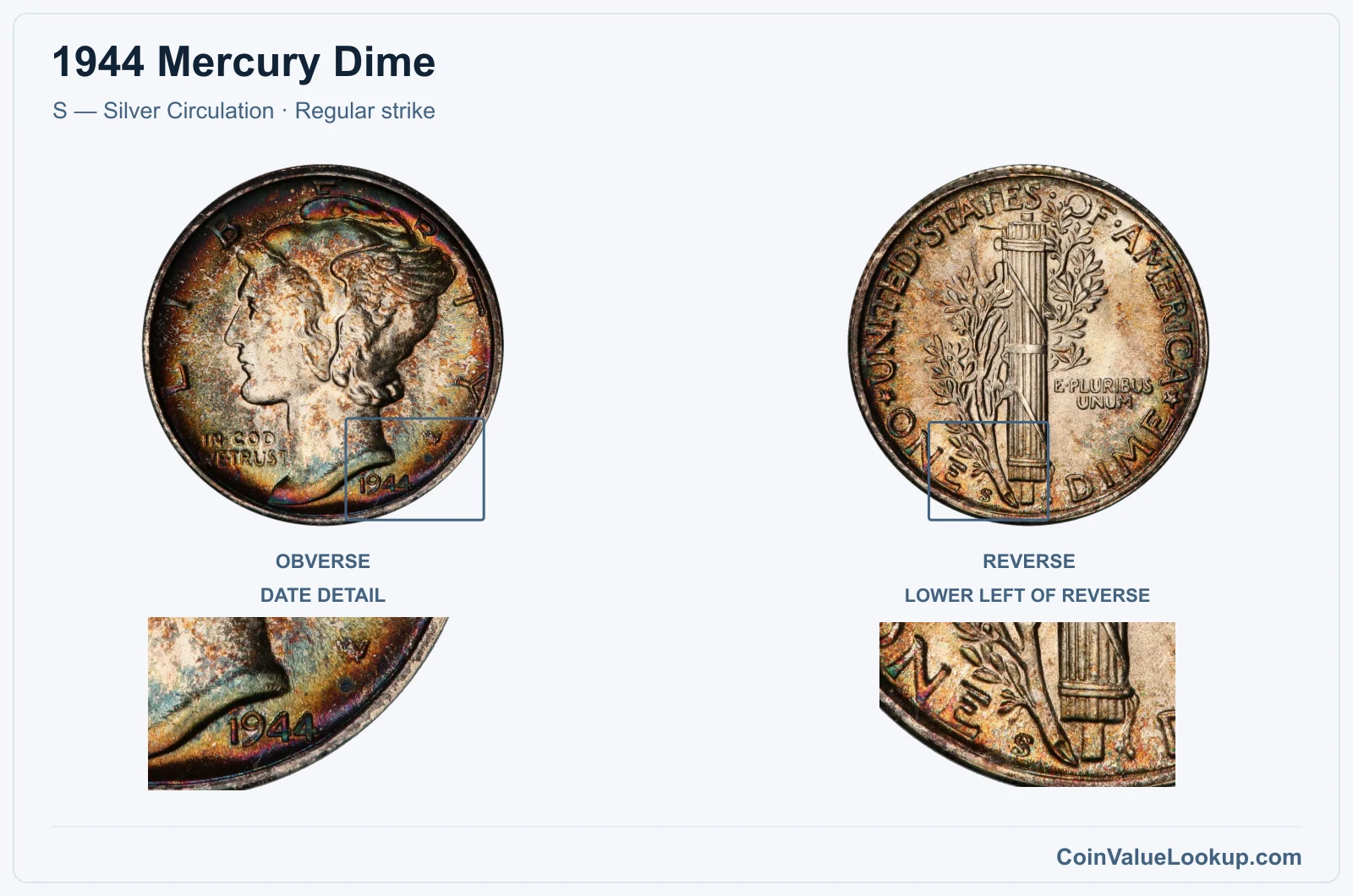
The San Francisco issue shows an "S" mint mark in the same lower-left reverse position. Guide estimates from USA Coin Book place the 1944-S at about $5.73 in G4 and around $41 in MS65.
San Francisco dimes of this period can also exhibit inconsistent strikes, so Full Bands examples stand out. If you have one with bold, fully separated central bands and clean Mint State surfaces, it is worth a closer look — and possibly professional grading to confirm the FB designation.
Different grading services may apply slightly different criteria when evaluating band separation.
Range Grade
Price Auction Records Appraisal PO PO 1
—
Coin Identifier FR FR 2
—
Coin Identifier AG AG 3
—
Coin Identifier G G 4
—
Coin Identifier
G 6
—
Coin Identifier VG VG 8
—
Coin Identifier
VG 10
—
Coin Identifier F F 12
—
Coin Identifier
F 15
—
Coin Identifier VF VF 20
—
Coin Identifier
VF 25
—
Coin Identifier
VF 30
—
Coin Identifier
VF 35
—
Coin Identifier XF XF 40
—
Coin Identifier
XF 45
—
Coin Identifier AU AU 50
—
Coin Identifier
AU 53
—
Coin Identifier
AU 55
—
Coin Identifier
AU 58
Coin Identifier MS MS 60
—
Coin Identifier
MS 61
—
Coin Identifier
MS 62
—
Coin Identifier
MS 63
Coin Identifier
MS 64
Coin Identifier
MS 65
Coin Identifier
MS 66
Coin Identifier
MS 67
Coin Identifier
MS 68
Coin Identifier
MS 69
—
—
—
MS 70
—
—
—
1944 Mercury Dime Error List
1. 1944 Mercury Dime — Doubled Die Obverse
A doubled die obverse on the 1944 dime shows consistent separation or notching on letters, the date, or design elements on the front of the coin. This is not the same as a blurry or "shelf-like" appearance, which is usually machine doubling — a far less collectible phenomenon.
To check, compare your coin's obverse lettering to a known normal example under the same magnification and lighting. True die doubling produces a second, slightly offset impression that remains consistent across multiple design elements.
Machine doubling tends to look flat and directional.
Condition, the strength of the doubling, and which design elements are affected all influence value. No specific price range is established here, so individual assessment by a grading service is the best route.
2. 1944 Mercury Dime — Clipped Planchet
A clipped planchet error means the coin blank was incompletely punched from the silver strip before striking. The result is a missing curved or straight section along the edge, sometimes accompanied by weakness in the design directly opposite the clip — a useful diagnostic because post-mint damage rarely produces that opposite-side softness.
Look at the edge texture where the clip occurs. A genuine clip has a smooth, slightly concave profile consistent with the blanking process.
If the missing section is jagged, filed, or shows tool marks, it is almost certainly damage.
The size and shape of the clip, along with the coin's overall condition, determine how desirable the piece is. No specific price range is adopted for this error, so professional evaluation is recommended.
3. 1944 Mercury Dime — Repunched Mintmark
A repunched mintmark on the 1944 dime means the mint mark punch was applied more than once in slightly different positions, leaving remnants of the earlier strike visible near or beneath the final letter. This affects only the D or S issues — Philadelphia coins have no mint mark to repunch.
Examine the mint mark area at 10x or higher magnification. You are looking for traces of a second letter — a partial curve, serif, or shadow — that do not match the surrounding die surface.
A die chip sitting next to the letter or corrosion around it can mimic a repunched mark, so compare carefully to a confirmed normal example at the same magnification.
Value depends on the visibility and variety. No specific price is established here.
4. 1944 Mercury Dime — Broadstrike
A broadstrike happens when the coin is struck without the retaining collar that normally confines the metal and forms the reeded edge. The result is a dime that is noticeably wider than normal, with the design spreading outward and the rim partially or entirely missing.
The key diagnostic is that the full design is present but expanded — the date, lettering, and central devices are all there, just pushed outward. The edge will be smooth or irregular rather than reeded.
If the design is partially missing instead, you may be looking at an off-center strike, which is a different category.
A coin that was simply squashed flat after leaving the mint will usually show damage marks and lack the uniform metal flow of a genuine broadstrike. Value varies with condition and visual impact; no specific price is adopted here.
5. 1944 Mercury Dime — Struck-Through Error
A struck-through error occurs when foreign material — grease, a thread, a metal fragment — sits between the die and the planchet during the strike. The coin ends up with a localized depression, an impression of the object, or a patch of missing detail where the obstruction blocked the die.
Grease-filled dies tend to produce smooth, featureless areas (often on high-relief portions of the design), while a retained foreign object can leave a distinct shape pressed into the surface. Neither looks like a scratch, a cleaning mark, or ordinary wear — those show different surface textures under magnification.
The type of obstruction, the size of the affected area, and overall coin condition all matter. No numerical price range is established for this error on the 1944 dime, so professional evaluation is the best path.
6. 1944 Mercury Dime — Off-Center Strike
An off-center strike means the planchet was not properly seated in the collar when the dies came together, so the design is shifted to one side and a blank crescent of unstruck metal appears on the opposite edge. The percentage of off-center displacement and whether the date remains visible are the two biggest factors collectors care about.
A small 5% shift is mildly interesting. A 10–20% shift with a readable date gets a lot more attention.
Compare carefully to a clipped planchet — a clip removes part of the blank before striking, while an off-center strike displaces the entire design on a full-size blank.
Post-mint flattening from a vise or hammer can superficially resemble an off-center strike, but it usually distorts the rim unevenly and leaves pressure marks. No specific price is adopted for this category.